
 Weird Stuff
Weird Stuff
Weird Stuff  History
 10 Speeches That Helped Push Nations Into War
 Politics
 10 Wild Campaign Promises That Became Political Legends
 Mysteries
 10 Fresh Clues That Might Crack Old Mysteries
 Weird Stuff
 10 Weirdly Specific Conspiracy Theories from the 1990s
 Movies and TV
 10 Characters Who Never Forgot a Grudge
 Technology
 10 Historical Inventions That Changed War Forever
 Humans
 10 Everyday Concepts That Are Shockingly Modern
 Animals
 10 Animals Everyone Gets Wrong
 Weird Stuff
 10 Bizarre Superstitions That Drive the Stock Market
Weird Stuff 10 Historical Status Symbols That Seem Absurd Today
History 10 Speeches That Helped Push Nations Into War
Politics 10 Wild Campaign Promises That Became Political Legends
Who's Behind Listverse?

Jamie Frater
Head Editor
Jamie founded Listverse due to an insatiable desire to share fascinating, obscure, and bizarre facts. He has been a guest speaker on numerous national radio and television stations and is a five time published author.
More About Us
Mysteries 10 Fresh Clues That Might Crack Old Mysteries
Weird Stuff 10 Weirdly Specific Conspiracy Theories from the 1990s
Movies and TV 10 Characters Who Never Forgot a Grudge
Technology 10 Historical Inventions That Changed War Forever
Humans 10 Everyday Concepts That Are Shockingly Modern
Animals 10 Animals Everyone Gets Wrong
Weird Stuff 10 Bizarre Superstitions That Drive the Stock Market
Top 10 Underrated Fantasy Stories Before 1937
J.R.R. Tolkien changed the face of the fantasy genre when he published “The Hobbit” in 1937 and subsequently his famous “Lord of the Rings” trilogy. But with this defining moment in the genre, many of the great works that preceded Tolkien have been forgotten in time. This list gives you my top ten underrated classics of fantasy prior to the publication of “The Hobbit.”
10
Lud-in-the-Mist
by Hope Mirrlees
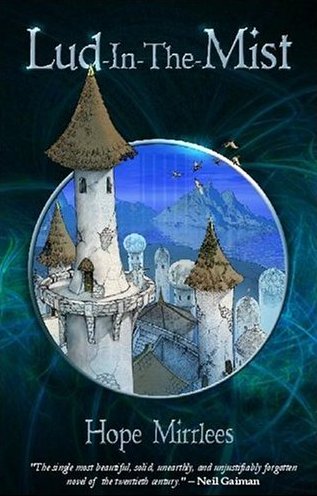
Publication Date: 1926
Probably the most obscure thing I shall mention on this list, this is a rather interesting tale in an alternate world where some rather mundane people live in peace, but are interrupted by a flow of fairy fruit form the neighboring lands. It explores some interesting themes for a high fantasy novel, and it is certainly something different for the well-read fan. I would recommend her other works as highly, but most are a bit difficult to find – all but this one are out of print. Still, if you can procure a copy of anything else by Mirrlees, make sure you take the opportunity. [Read it here.]
9
The Water-Babies
by Charles Kingsley
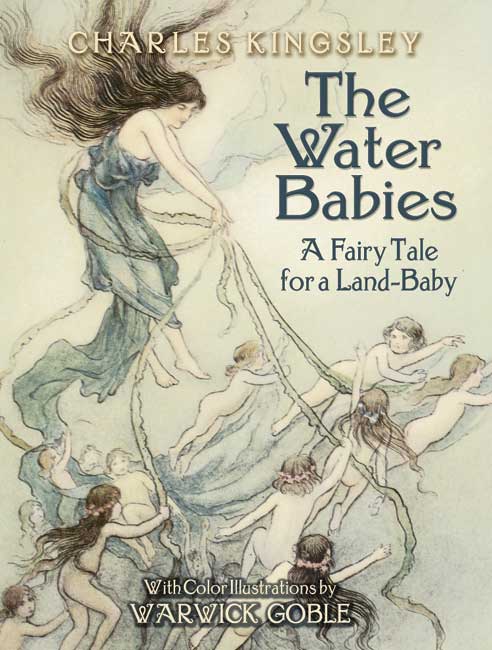
Publication Date: 1863
This is a children’s novel that I might not recommend for the kids, but anybody with an interest in Victorian fairy tales and a bit of controversy absolutely must pick this one up. It has moral messages (in blatant form, as children’s novels are wont to do, to such an extent that one character is named Mrs. Doasyouwouldbedoneby) on a variety of topics, most notably child labor but also on a number of religious and scientific topics. Kingsley himself was a Reverend, but he was not against the at-the-time very controversial publications of Charles Darwin. Look at it in the right perspective, readers, and you’ll find quite the metaphor for the going ons of the time as well as a fun little fairy tale. [Read it here.]
8
The House on the Borderland
by William Hope Hodgson
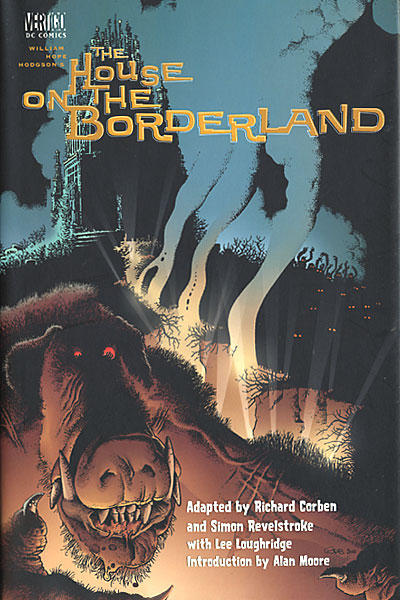
Publication Date: 1908
This is a horror novel, certainly, but this was really the novel that made way for writers of the Lovecraftian-sort (including H.P. himself). It is a darker branch of the fantasy genre, but the cosmic and supernatural horrors found in the House on the Borderland are no less fantastic than anything Tolkien could conjure. If you enjoy the supernatural as much as you do elves and dragons, then this a great story to look to for the origins of your subgenre. [Read it here.]
7
Lost Horizon
by James Hilton
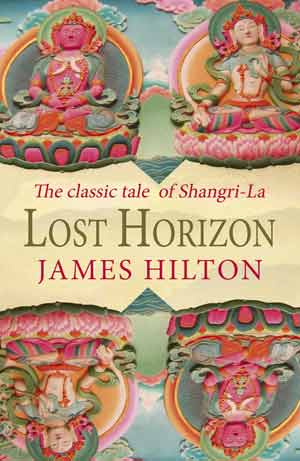
Publication Date: 1933
Here is an instance of an aspect of this novel exceeding the fame of the novel itself. Many of you have probably heard of ‘Shangri-La’. There are a buildings, gardens, albums, songs, a manga series, towns, a region of Saturn’s moon, and a chain of hotels in Hong Kong named after it. In fact, it was even mentioned on another page here on Listverse. But this grand story of immortality, British imperialism, and all you could hope for from a fantasy novel. It is underrepresented for such an influential piece of literature, and it is a very enjoyable read even ignoring the wonderful world of Shangri-La. [Read it here.]
6
The Princess and the Goblin
by George MacDonald
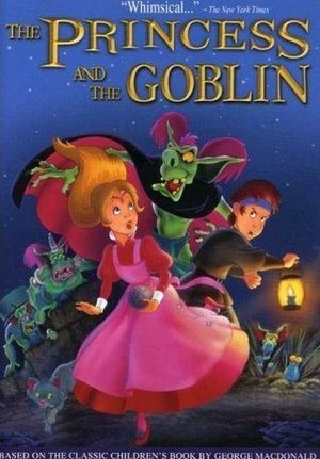
Publication Date: 1872
This is a simple, subtle story of fantasy and wonder in the form of a children’s book. We have the classics: dungeons, goblins, princesses, and adventure. It’s a rich story that can be enjoyed at all ages, and the lessons it teaches are excellent for any readers looking for something to read to your children. Indeed, it is said to be one of Tolkien’s favorites as a child. [Read it here.]
5
The Wind in the Willows
by Kenneth Grahame
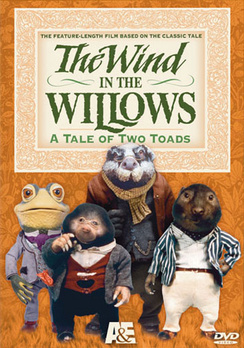
Publication Date: 1908
Adapted into a play by A.A. Milne (author of Winnie the Pooh), as well as into one half of the Disney film “The Adventures of Ichabod and Mr. Toad” (the other half being an adaptation of the Sleepy Hallow story), this is certainly the most famous of the underrated. Still, not many people have read the book and that is what this list is for. This is a cute children’s story about a wealthy toad, a water rat, a humble mole, and their adventures with other anthropomorphic creatures, the god Pan, and of course, a willow tree. [Read it here.]
4
The Worm Ouroboros
by Eric Rücker Eddison
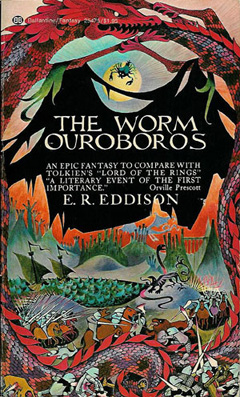
Publication Date: 1922
This is my favorite novel. Written in a mock epic style, Eddison brings us through Mercury, a land divided into kingdoms like Witchland and Demonland, in a journey that spans what seems to be years with epic battles, magical beings, and three brothers. Goldry Bluszco, Lord Juss, and Lord Spitfire. What really makes this story excellent, though, is the ending – if you’d like to think of it as such. [Read it here.]
3
The Well at the World’s End
by William Morris
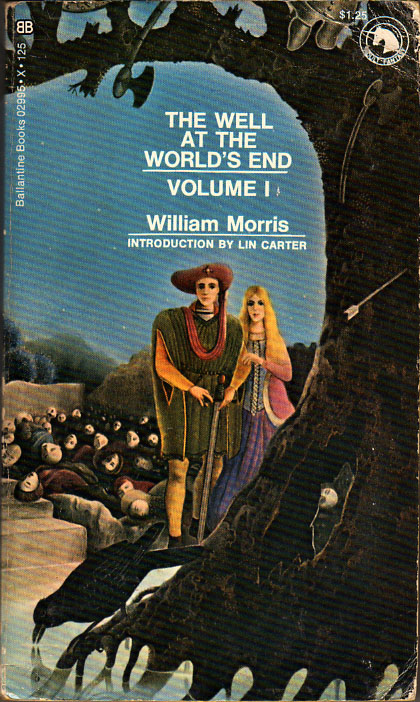
Publication Date: 1896
This book helped codify the classic fantasy story. And, indeed, both C.S. Lewis and J.R.R. Tolkien were influenced greatly by the works of William Morris, this novel in particular. Written in a medieval style, we follow the adventures of a young man on his quest for the eponymous well, one which will grant him immortality. A book of similar influence and greatness by William Morris is “The Wood Beyond the World,” and it is equally worth your time. [Read it here.]
2
The King of Elfland’s Daughter
by Lord Dunsany
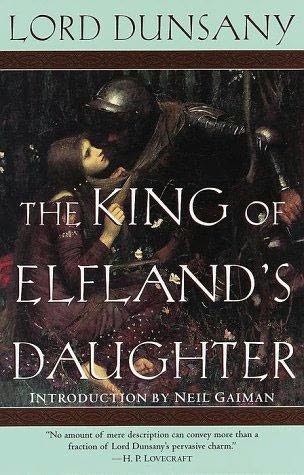
Publication Date: 1924
This position goes less to “The King of Elfland’s Daughter,” and more to Lord Dunsany himself. He may be the most iconic writer of the fantasy genre prior to Tolkien coming about, yet few people know him at all these days. It’s quite a shame. Also, there is a concept album about it with vocals from the lead of Jethro Tull and Christopher Lee. [Read it here.]
1
The Faerie Queene
by Edmund Spenser
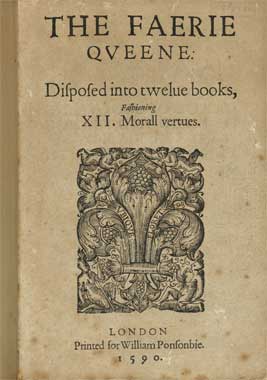
Publication Date: 1590 – 1596
Jumping back three centuries from most of the works on this list, we have the poet Edmund Spenser. This unfinished epic poem was written in praise of Queen Elizabeth I and details a number of faerie tales, Arthurian epics, and classic, fantasy fun. It is also one of the longest poems in the English language, the origin of Spenserian stanza, and the old cliché ‘roses are red, violets are blue’ is found in its earliest form in this poem. How can you not want to pick it up? [Read it here.]
More Great Lists
 Top 10 Most Underrated Synthwave Songs Of All Time
 Top 10 Underrated Acting Performances Of The Last Decade
 Top 10 Fantasy Places That Would Suck In Real Life
 Top 10 Animal Endlings: The Last Of Their Kind…
 Top 10 Movies That Caused Controversy Before Release
 Top 10 Never-Before-Seen Photos Of Earth - 2020
 10 Eerie Quotes From Musicians Who Died Before 30
 10 Legendary Pranksters From Before The Age Of Television
 10 Best Radio Hoaxes You've Never Heard Before
fact checked by
Alex Hanton
More Great Lists