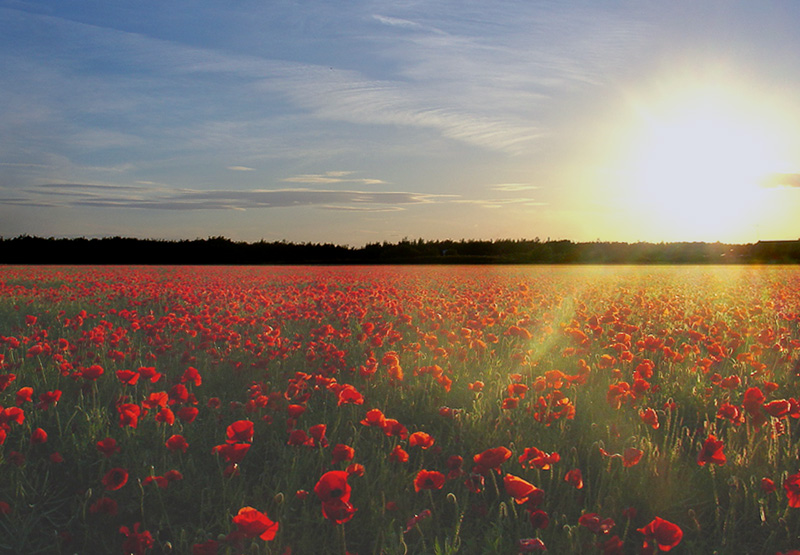
Papaver Somniferum, the Opium Poppy, has been considered one of the most influential, as well as interesting things in the world for thousands of years. For those unfamiliar with it, the poppy produces opium, the euphoric painkiller that is the starting point for heroin. Depictions of the plant have been traced back to the Sumerians of 6000 years ago. The beautiful flower has been worshiped as a gift from the gods, and just the same has been feared for its potential to destroy millions of lives. Rather you see them as divine, or quite the opposite, it’s hard to argue how much influence they’ve had in our world. Here are ten particular areas that the plant and its drug have dramatically impacted.
“Music is a beautiful opiate, if you don’t take it too seriously.” Henry Miller. Think of your favorite rock band from the 70s or 80s. I’ll bet you the shoes on my feet that at least one of their songs was inspired by, or if not, directly refers to heroin. It became popular with the rock community for its mild altering effects. Inspiring romanticism, creativity, joy, fun, and of course pleasure made it a hit to rebellious world. Some songs you might be familiar with that have been thought to refer to the drug – “The Needle and the Damage Done” by Neil Young, “Mr. Brownstone” by Guns N’ Roses, “Heroin” by Velvet Underground, and “Comfortably Numb” by Pink Floyd (that one is probably the most arguable). Courtney Love (above) did well to summarize the relationship between musicians and heroin: “the drug you do if you’re in a fuckin’ four-star hotel and you can order all the goddamn room service that you want and you can just lay in bed and drool all over yourself because you’ve got a million bucks in the bank. That’s the drug you want to do if you want to be a kid forever.”
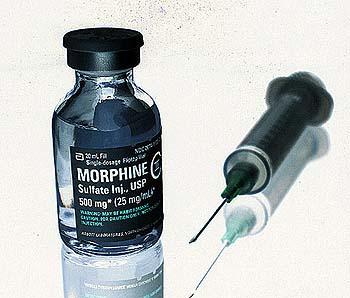
Surgery is thought to have been practiced for centuries, pioneered by ancient civilizations in Egypt, India, Greece and China. The gap between ancient surgery and modern lies heavily on the control of the inevitable pain that comes with it: anesthesia. While local anesthesia is available for us by a completely different plant, the Coca, general anesthesia became possible with the Opium Poppy. The art of putting patients out for surgery made a breakthrough in the 19th century, when Morphine, one of the opiate alkaloids found naturally in opium, was extracted from the plant. With this discovery, surgery was able to advance to the previously unheard of feats we think of commonly today. Soldiers were able to inject themselves with Morphine in the latter half of the Civil War, making the removal of bullets a much less excruciating experience. Nowadays we have other methods of general anesthesia for surgery, such as hypnotics (propofol) and Dissociatives (nitrous oxide), but nevertheless morphine and other opium-derivatives are still commonly used.
Stepping aside from the drug the Opium Poppy produces; let’s focus on the flower itself. At a time referred to as the “common garden poppy”, the plant is widely cultivated for ornamental purposes all over the world. The flower, depending on the particular variety, ranges from red to white and even purple hues. The capsules containing the opium are very interesting looking and easily emphasizes the plant as a poppy. Even the tiny black seeds are used to decorate food, such as cakes and muffins. The poppy seeds you can go get at your local grocer this afternoon are indeed the same species of poppy used to harvest opium. While not trying to drift too far off topic, I’ll note that the common “myth” that someone who consumes poppy seeds can fail a drug test is absolutely true and proven. The seeds contain enough opiate alkaloids to make it show in your system. My advice: let your employer know if you’ve been eating anything with poppy seeds before your drug screening results come back, or you might be looking for a new job.
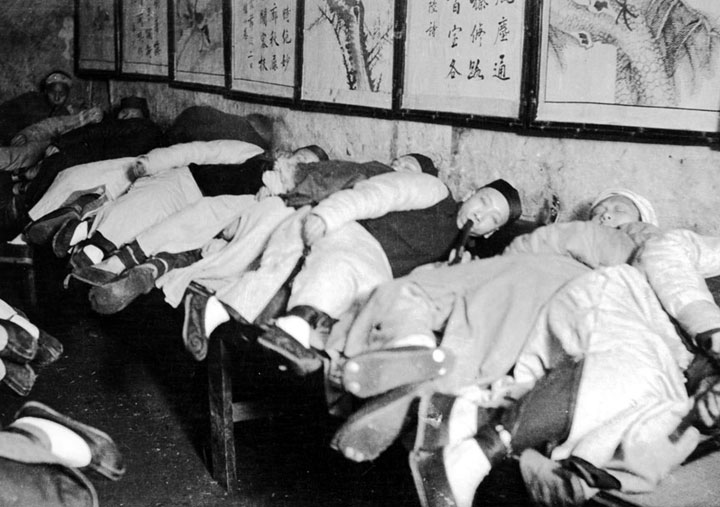
The customs and traditions of societies throughout written history have likely been much more influenced by the Opium Poppy than your high school history teacher let you know. Starting back in Ancient Greece, Homer described opium’s pleasant effects in “The Odyssey”: “…had a happy thought. Into the bowl in which their wine was mixed, she slipped a drug that had the power of robbing grief and anger of their sting and banishing all painful memories. No one who swallowed this dissolved in their wine could shed a single tear that day, even for the death of his mother or father, or if they put his brother or his own son to the sword and he were there to see it done…”. Fast-forward to 19th century China, where the drug was so popular it’s estimated that at least a quarter of Chinese men were addicted to it. It was smoked in opium dens as a pastime, something at first thought to be joyful and social. This was before its addictiveness was well known. The Chinese eventually outlawed it, leading to the Opium Wars in the next section. To this day opiates are used worldwide recreationally and and impact many cultures.
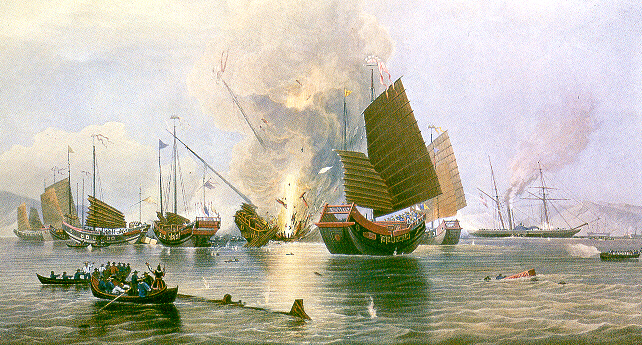
The Opium Wars were two separate affairs between the Chinese and British, both stemming from China’s opium prohibition and its effect on the British Empire’s cash crop. The first war was fought between 1839-1842, and the second 1856-1860. Massive opium production was occurring in British India and acted as a huge source of wealth, as China’s demand for it was unrelenting. When China’s government realized the harmful effects of so many men being addicted to it, it was outlawed. One way to put it: they quit cold turkey. Although the drug was still being smuggled into China, the effects of Britain losing its main source of money were very damaging, and it would lead to war. The British would end up defeating China, and they were forced to allow opium to be imported into the country. Even the Governor-general Lin Zexu’s efforts of destroying millions of pounds of it and arresting some 1700 dealers were futile; it was an entire nation under the spell of the Opium Poppy.
I remember in March I was so excited to see the new Alice in Wonderland movie coming out. I’ve always found the story interesting and I decided to do some research on it and its original author, Lewis Carroll. I was surprised to find that it is popularly held that he was an avid opium user, and that the drug was probably a huge inspiration to the story’s imaginative world and characters. This is disputed by some – but laudanum was popular in his time so it is certainly not improbable that he used it. Authors such as Arthur Conan Doyle, Oscar Wilde, and Charles Dickens were all fans of the Opium Poppy’s inspirational potential, showing just how much of an impact a single plant has had on literature, especially notable in the 19th century. The Wizard of Oz, commonly referred to as one of the greatest and timeless films ever, comes from an opium inspired book. However, you might have been confused by the scene where Dorothy falls deeply asleep in the poppy field before Emerald City. But perhaps the most famous work inspired by opium use is Kubla Khan by Samuel Taylor Coleridge – he was using opium to counter the effects of dysentery and in doing so dreamed up one of the most ravishing poems in the English language.
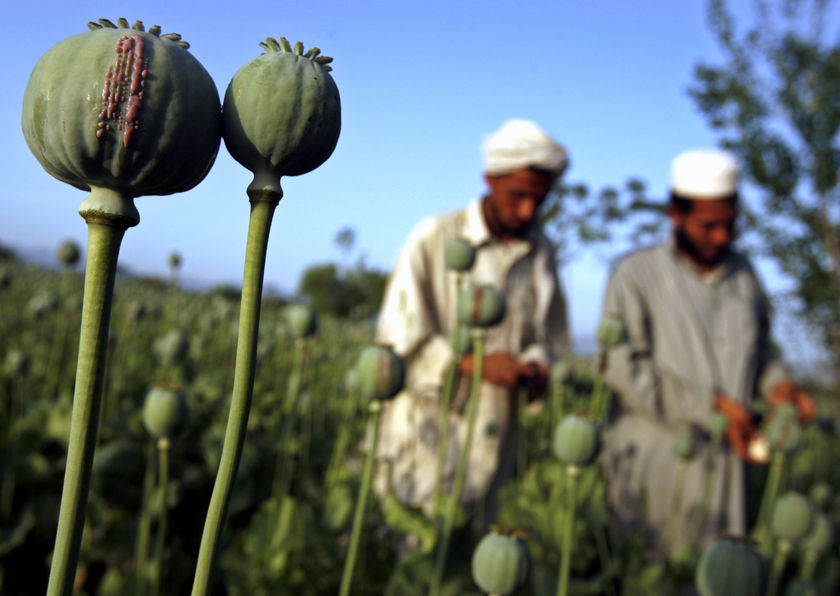
Knowing that the outlawing of opium in China lead to two major wars, it’s obvious that the financial potential of the plant has been huge throughout history. From the opium harvesters of the past, to the Pharmaceutical Companies who use the poppy to produce medicine, to the common street heroin dealers, one thing is clear: Opium Poppy is a cash crop. It’s estimated that growing kilogram of opium costs a farmer about $300. He can sell that to a drug dealer for around $800, making him a hefty little profit. That dealer, after converting the opium to heroin, will make $16,000 on the same amount of product it took $300 and some help from nature to grow. An enjoyable modern depiction of this process is 2006’s “American Gangster”. A man goes from rags to riches after getting connecting from poppy farmers in Vietnam.
While pain relief is of course a key to surgery, it goes much further than that. Opium has been used from the very beginning for its painkilling properties. In some parts of the world, there is no such thing as retirement. A man will work his whole life, and opium’s relief has sometimes been the only way to keep living. It’s been called “God’s own medicine”, and considered divine and sacred by many people. The two alkaloids in it that bind to out brain’s opioid receptors are morphine and codeine. Many opiate derivatives have been discovered from these; heroin (diacetylmorphine) and hydromorphone from morphine, and oxycodone and hydrocodone from codeine. Since these are semi-synthetic, these substances may start from the poppy, but have to be chemically structured in labs by Pharmaceutical Companies
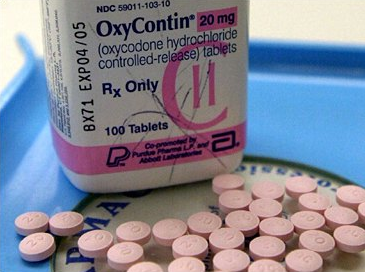
Opium Poppy may be quite easy to grow, but its genetic properties have made pharmaceutical companies billions and billions of dollars. Bayer marketed Aspirin and Morphine as painkillers for uncontrolled use in the 19th century. The rose of morphine’s superiority to aspirin came with the thorn of its unforgiving addictiveness. Finally a solution, the rose without a thorn. A drug with the power of morphine that wouldn’t hook you: heroin! Well, you can guess what comes next, heroin (named for being thought of as a heroic substance) was found to be even more addictive. Opiates were criminalized in the United States, and used legally only when a medical doctor saw fit to let you. In the 20th century many other opium-derivatives were discovered, such as oxycodone (OxyContin, Percoset), hydrocodone (Lortab, Vicodin), and oxymorphone (Opana, Numorphan). Next time your doctor gives you medicine for your sore back or broken foot, chances are that medicine came from the Opium Poppy.
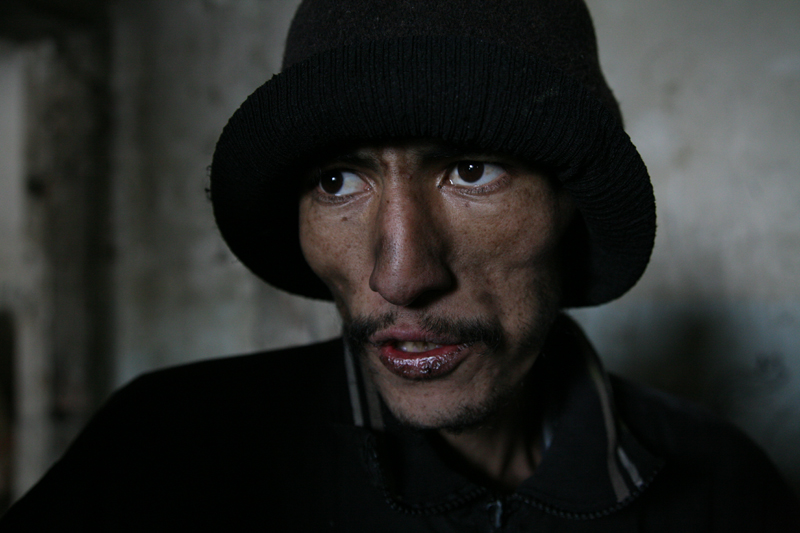
This section really has little need for further description. Opium Poppy introduced society to one of the most harmful and abundant issues of today: drug addiction. With moderate, spiritual opium use addiction wasn’t an issue, but as time went on: chronic use, harmful ways of ingestion, and chemically altering the substance all helped see the downfall of the plant’s “divinity”. It may be the most useful, helpful, and peaceful thing in history. Or it may be the plant responsible for a father’s neglect or a brother’s death. Whichever way you look at it, the Opium Poppy is one of the most influential things to ever grace this Earth.


Brilliant list, lots of things I didn’t know.
Which is what Listverse is all about! =]
I have to say when I saw the title of this list, I wasn’t going to bother reading it, but I’m glad I did! This is an incredibly interesting list and I really enjoyed it!
awesome list! like totally.
Like so many things in life the difference between medicine and poison is dosage. Even too much water will kill. Foood, *****, ambition, and notoriety are all fine things but too much is debilitating. One should not blame the hammer for a smashed thumb.
I was sure I was going to hate this article, but I am glad I read the whole thing!
i love this list. thanks
@henrysmyagent [4]: it may not always be the fault of the thumb either. Some addictions are caused also by socio-economical factors. Poverty, lack of opportunities (in terms of employment etc) can be seen as excuses but can also be seen as reasons. Of course a person must accountable for its actions but we should see the bigger picture here.
Edgar Allan Poe created some of his best work under opium. We wouldnt have the fall of the house of usher, one of my favorites. He was the master!
now i want some heroin..
i can give u bro.
Saw 8 on Sienfeld. Even after seeing that, I never believed that poppy seeds would show up on a drug test.
I’m on 80mg of Oxycontin per day plus a further 15mg Oxynorm.. of course it’s addictive.. the drug problems I had prior to this seem nothing in comparison with the issues facing me now, as coming off of the above, or the diazepam, temazepam or gabapentin all lead to severe withdrawal.
Ever wonder why the substitute for Heroin (Methadone) is more addictive and harder to kick than Heroin itself?
BigPharma’s the biggest and best drug dealer of them all. Congrats *sarc*
@Arsnl [7]: Unless socio-economic factors forcefully stick a needle in your arm they don’t “cause” addiction. Easier access and lower quality of life may present you with the opportunity to shoot heroin but in the end it’s your decision and yours alone.
Is it my imagination… but in #4s picture does the brown stuff on the poppy make the shape of a male appendage?
My husband is also on 80mg of Oxy twice a day (back surgery). He has managed to ween himself of to once a day. The doctor prescribes this despite it’s addictiveness because it’s the only way to keep my husband functional. It’s such a catch 22.
I have severe arthritis and mixed connective tissue disorder for which I take co-codamol (codeine and paracetamol). It really is a wonder drug, but I am always afraid of getting hooked on it so I never take as much as I really should for pain relief. It is wonderful though when you are in real pain and it takes it away.
@Julius [11]: well statistically, the poor that are more likely to become drug addicts. Does that mean the poor are more likely to take bad decisions (cuz maybe of some gene or something) or that maybe society has a part to play in this? Im just refusing to take a side -victim/criminal- when we’re talking about drug addicts. I just think of some people in need of help. (im just talking about non violent cases -the most are like that).
Incredible list! Pain killers shouldnt be taken for granted… Hey! Gotta love number 7s pictaure. First thing that came to my mind on reading the title of this list was BONG!!! Lol!
Poppy flowers are beautiful, arent they…
What was going on in the opium wars is incredibly similar to the Mexico/U.S. today, only not just restricted to that drug. The U.S. has a high demand for it, but getting it to the customer can be very dangerous, which is part of the reason it costs so much.
If people in power were willing to relent and legalize some of the lesser drugs, violence and crime would go way down. Not to mention government income could soar from selling it, the way it’s done now with alcohol and tobacco.
*picture
Doing this mobile web thing is hard to get used to…
I didn’t think I would enjoy the list based off the title, but I was pleasantly surprised with how well it was written….kinda sucked me in there. Learned a few new things today.
I’m glad for nitrous oxide. Without it, I can’t have any dental work done. I have to have that along with the shot….basically I need to be as drugged as possible.
Nice list, brandonladd.
When I broke my hip and had surgery I was on a morphine-on-demand IV drip. Push a button. Zap. Of course you only got a limited dosage at prescribed times no matter how often and hard you pushed the button. I had been in excruciating agony, and that stuff felt so good it scared the heck out of me. My Mom came into my hospital room to find me with a silly grin on my face. She said, “You like that, huh?” I said,”Like is too small a word. I’d have its babies if I could.” After that Vicodan was my friend for awhile. Now that I have gout and general pain from all my previous broken bones I get Norco or Traumadol as needed. Not impressed. Generally if I’m to the point of asking for something for pain, I need something that will knock me on my booty.
Very good list. Well done.
No.7 is kinda startling. It reminds us the dark dark deeds that the former British Empire has participated in and it leaves a black stain in history.
grandma’s lemon poppyseed cake
ok–maybe it didnt change the *world* but……
One of the more educational lists I’ve read here. Very nice!
“To smoke opium from an infant scranium / with feet casually leaned against a tiger.” / Maurice Rollinat (1846-1903).
That’s decatent, and my comment to number five. (It’s my own translation, it probably sucks.)
dope list
This is a really interesting list. I didn’t know half of the things prior to reading it. Haven’t come across a list like this on here for awhile :/
Amazing list. Better be informed about the properties and profound significance of opium throughout history.
@notorioustgb [26]: Lol!
Short and sweet…
@Julius [11]: I’m not an addiction expert, but I believe there’s more involved in addiction than making bad choices to take illicit drugs. On the surface it may look like a lazy or selfish way to live to an outsider, but there’s more to it than that.
I have some friends who are in recovery programs. From conversations with them I hear that there is a school of thought that part of what leads people to substance abuse may by a genetic predisposition to becoming hooked. How many of us know families where there a a large number of alcoholics? Or other families where they hardly drink at all? Sure you could argue the whole question of is it “nature” or “nurture?” But there could be an inheritance factor at play that can’t be overcome by upbringing alone.
Another avenue to this type of sad lifestyle choice is untreated and undiagnosed mental health issues like depression. I’ve heard acquaintances say that the first time they got drunk or high they felt normal and OK for the first time in their lives.
A nonaddictive type person can enjoy an occasional drink and then stop without any further thought. An addictive prone person can’t have just one. They feel a compulsion to keep getting higher or drunker again and again.
This is a pretty original list.
However, I’ve got to say that Pink Floyd’s “Comfortably Numb” isn’t really about heroin. It’s a part of The Wall and details the character Pink being injected with a stimulant by a doctor in order to try to get him to a show on time, but he is “behind the wall” and cut off from reality.
@damyot [13]:
I had shoulder surgery last year and was prescribed hundreds of oxycodone and oxycontin pills over the course of 2-3 months. I was certain I would be addicted. Although I took every one of those little darlin’s, when they were gone I didn’t have any symptoms of addiction or withdrawal. And I consider myself to have an addictive personality. I’m just saying it might not be as bad as all that.
@missmozell [20]:
Same here.. when I was first admitted into hospital I went onto life support, when I came to I had this little button that if I clicked it it would shoot fentanyl (a very strong version of diamorphine) straight into my arm and I could click that bad boy every 5 minutes.. life was good. So I had that for 6 weeks, then I had Oxynorm 10mg tabs every couple of hours and when they sent me home they gave me my Oxycontin script along with an Oxynorm script, along with a diazepam script along with a.. you get the idea.
@magnumto [32]:
This could be down to a number of things.. IE how strong your Oxy tabs were, if you were otherwise occupied and also if they were given for reasons other than pain (mine are for nerve pain + depression + avoidance of withdrawal from the hospital drugs).
I’ll never have to worry about getting addicted to pain killers. I’ve had numerous surgeries over the years and no matter what I’ve been given I’ve had very bad reactions to them.
Wow. Really well written list,brandonladd. And you were right; I was a bit confused when Dorothy fell asleep in the field.
But, I agree with elroxzor99652 [31, “Comfortably Numb” sounds more like it’s talking about a stimulant than a depressant.
drugs are a choice.
of course some people are more likely to get addicted then others, as some people are more likely to end up with red hair or an eleventh toe.
***** nature vs. nurture.
Drugs are drugs. Some people take them and like them, others take them and don’t like them, and others don’t take them at all.
Opium, Coca plant, tobacco, and ***** are all great in small doses(***** even in large doses), but the synthesized versions of all these plants have made them more harmful, incredibly addictive, and outlandishly dangerous.
Look up how much opium is required to make heroin, or how much coca plant is required to make a line of cocaine. The numbers will boggle your mind.
No wonder the ***** kills people.
Poppy seeds could give you a good pain reliever a bit better than aspirin if you eat enough without throwing up, and coca leaves are akin to our modern-day energy drinks(but slightly more mild come-down period).
Both my parents were addicted to cocaine/crack and alcohol for a long period of time. Never had any inclination to try the stuff, but have quit smoking tobacco and drinking alcohol with ease.
Addiction is a mindset, and anyone can overcome it with ease.
Willpower and the decision to be done with something is all it takes.
Fantastic list wll written and informative
Thanks brandonladd well done.
@sodamancer [36]: Addiction is a mindset, and anyone can overcome it with ease.
Wrong.
Don’t forget Coleridge’s poem “Kubla Kahn” which was inspired by an opium dream.
Ok list. Some of these are a bit redundant.
@Dez [22]:
The really scary and insidious part of the Opium Wars is that Britain introduced the drug into China as a LEVERAGE to induce trading. Up until the introduction of opium in a trade position, there was nothing that Brits, (or the rest of the Western world), had, that China was interested in.
China would rather have keep it’s silks and other unique items to itself, and China also understood that to open it’s doors to outside trade would dissolve it’s own strong cultural history.
So it took something as strong and addictive as opium to open China’s closed door policies.
@xyz [9]:
It would take a monumental amount of ingested poppyseed to show up on a drug screen. But even if you do happen to pull a heroin positive, secondary testing will determine the exact cause, and account for such a mundane source.
——-
My kids all arrived by c-section. After having an extremely long and violently nauseous reaction to my surgical morphine with my first child, I asked my next anesthesiologist ( for my second child) if I could use something other than morphine during and after surgery.
He told me that although there are other drugs that can be used, one of the biggest reasons they use morphine is because the peak pain threshold that patients experience after surgery is never as high than if another opioid is used.
In other words…My pain would be more painful if I used another drug for surgical anesthesia.
——
And as for addiction….Sorry Arsnl, there are many factors that are part of addiction, including socio-economic, but in the case of opium, morphine, and heroine, and their derivatives, the addiction is more physical. There is plenty of opioid addiction in the higher classes, it just doesn’t always show up with a needle and a little baggie of brown powder.
@Maggot [38]:
@sodamancer [36]: Addiction is a mindset, and anyone can overcome it with ease.
Wrong.
–
Agreed, Sodamancer has obviously never suffered withdrawal.
It’s more than just saying no and stopping. I’m not going to rant, as I know that comment was merely said in ignorance, rather than a slap towards addicts in general.
Firstly, not all of us become addicted by choice. After being put on heavy opiates while in hospital for 2 1/2 months, I was then sent home with a prescription for 12 different drugs, one of which being 80mg of Oxycontin which is a very strong opiate based pain-killer and anti-depressant.
I tried coming off of these, this is what happened and please bare this in mind the next time you see or hear of someone with an addiction of some kind.
Firstly you get cold sweats, you feel confused. Any kind of ache or pain is intensified, but that’s okay, that’s about 1-2 on the sickness register.
Then your bowels let go and your become extremely nauseous, with the above symptoms also becoming progressively worse. This means that you’re vomiting and suffering from diarrhea at the same time, whilst being so dizzy that often you can’t even make it to the bathroom. This takes you to around 4-5.
So now every every nerve in your body is screaming in pain, you’re freezing cold, sweating because you’re under about four duvet covers, *****ting yourself and throwing up – but those are just physical symptoms right? You just hold out, right? No. You hallucinate. You have intense feelings of dread. If you’ve ever had a close friend die, that feeling, that terrible, terrible feeling inside that feels like the world is ending and you just want to die, that kicks in. Hard. While you’re *****ting all over yourself, laying in your own vomit and your body is losing so much fluid that you can’t even swallow.
I’d make that around the 6-8 right here.
I’m sorry to burst your bubble, but this baby goes right up to 10. You surely don’t know why, so let me tell you. You go into seizures, your entire *****-covered vomit-layered sweat-greased body starts losing total control of all motor functions whilst in your mind the feeling of complete and total dread that the worst possible things imaginable are happening and it’s all because of you.
That’s the 9.9 stage.
What’s 10? Knowing that if you just take the damn pill it will all stop within about five minutes.
So please, in future, spare a thought for people with real, serious addictions. I truly wish it were all in the mind but it’s not. I hope this will help you to understand and empathise with those suffering in this way, rather than assuming that they simply don’t have the willpower.
I’d like to see a list on *****.
@Blondie [42]:
Thank-you for your very candid and descriptive summary of opioid withdrawal.
I was also really appalled by Sodamancer’s flippant comment about addiction, and I don’t think there will be any better responses here, than yours.
Bravo. And I’m also so sorry that you have had this knowledge come firsthand.
Get your facts straight. It’s not true that Lewis Carroll was an opium user!
From Alice-in-wonderland.net:
“No evidence has ever been found that linked Carroll to drug use. Even in his diaries, Carroll has never made any reference to the use of drugs.”
@S4 [43]: I’d like to see a list on *****.
That’s nice. Would you like someone to spoon-feed it to you too?
Loved this list. When reading the list’s tittle i thought that today we’ve got something weak but i was really surprised of how delightful this list actually was. Learned a few things. Neatly done job.
@Julius [11]: I agree with you completely – back in the days before opium, people survived even in the most dire poverty. “Socio-economic” is a catch phrase to excuse bad behavior and allow people to not take responsibility for their own actions.
@deeeziner [41]: One thing I’m having trouble researching, any idea why Opium Poppy couldn’t be grown in mass quantities in China?
@sodamancer [36]: Addiction is a mindset, and anyone can overcome it with ease.
Willpower and the decision to be done with something is all it takes.
This is one of the most ignorant statements I’ve ever read. When a person becomes addicted, more often than not, they are both physically and psychologically addicted. Most WANT to stop, however the severe withdrawals that their body goes through makes that incredibly difficult…and it certainly isn’t “easy” or a matter of “willpower”…
Certainly there have been a lot of bad decisions made by people who have taken what is a truly miracle drug, and abused it to the point of no return. Meanwhile, there are millions of us who have valid reasons to be taking these drugs. The stigma attached to taking them, however, is such that we keep it a secret. I’ve had a NURSE!, a NURSE! take me to task about my drug intake while she was prepping me for surgery.
I have an extremely rare genetic disease which has caused a lot of dreadfully painful problems, and all of doctors, Neurologists, Neurosurgeons, Pain Management doc’s, etc…have told me that the pain will only get worse as time goes by.
Blondie mentioned in post # 11 that she took 80MG Oxycodone a day. I take that 3 x day, plus 80MG Hydrocoodone a day. Plus a bunch of other stuff. All of which is medically required.
Yes, I am physically addicted. Psychologically, that’s another story.
I knew going in that I was going to be addicted. I agreed to it. I had to sign a legal document saying that I understood I would be addicted to the drugs, that I agreed to that, and that I held no one responsible but myself.
I also signed another agreement (and signed a new one when I moved and had to find a new Pain Manager) that I would only take the medications as prescribed.
For the truly needy, the system is in place to take care of your needs.
I doubt the same is true for the street addict. Yet we are both painted with the same brush.
Go figure.
@S4 [43]:
http://listverse.com/2009/01/26/top-10-common-myths-about-*****/
Flashback to the 60′s
@elroxzor99652 [31]: Thank you for clarifying that, that was only problem I had with the list, when you think about it he is being injected with something to “keep you going through the show,” so it could very well be a derivative of opium.
@deeeziner [41]: Well nobody judges people who are addicted to pain killers. And usually fingers are pointed to drug addicts that dont have any “obvious” reason to start using drugs.
Also i was anticipating reactions like jfrater’s. A person that obviously hasnt been raised in a difficult environment.
@jfrater [48]: isnt all this finger pointing colliding with your religion?
Comfortably Numb is NOT about heroin. It’s not even debatable. Roger Waters has said numerous times it’s about him needing an adrenaline shot to get through a gig after a bad bout of food poisoning.
@Packeranatic [54]: haha no prob
You did a professional job on this article. I love opium. Although, I love it so much, I now have to leave it alone. Just that little problem with addiction.
@brandonladd [49]:
Where are the real historians when you need them. Hmmmm
“any idea why Opium Poppy couldn’t be grown in mass quantities in China?”
I think it had something to do with China’s closed door policies. I do believe a lot of Chinese and other Eastern countries DO have their fair share of cultivation these days.
@Arsnl [55]:
Try to convince Kelly Osborne, Rush Limbaugh, and the family of Michael Jackson that the public doesn’t judge the actions and addictions of those who are hooked on prescription painkillers.
“And usually fingers are pointed to drug addicts that dont have any “obvious” reason to start using drugs.”
Truth be told, fingers get pointed at a lot of addictions….your point?
When I was 17, after spending all of this time in the hospital for really low blood pressure and a fast pulse rate, this cardiologist gave me a cardiac ablation. The cardiac ablation was supposed to last four hours, but lasted longer than seven, and when I woke up, I had horrible chest pain. Ten on the pain scale. This pain has not gone away, and this happened on October 23rd, 2003. That doctor gave me a couple of codeine tablets and sent me home, and then would not answer my phone calls after a couple of days. The ERs labeled me a “drug seeker” and a liar, and finally in December, my primary realized that this was a serious problem and put me on morphine after consulting with a cardiologist/specialist. Turns out I have RSD- Reflex Sympathetic Dystrophy. It’s a dreadful nerve pain that will not go away. (I never should have had the procedure in the first place, but since I didn’t have this cardiologist originally, I didn’t know this. Apparently, if you have neurocardiogenic syncope, postural orthostatic tachycardia syndrome and ehlers danlos, procedures and surgeries cause extreme trauma to the body- more than usual.) I started out on 15mg of MSIR (Immediate release morphine sulfate) every 4-6 hours and 30mg of MS Contin (extended release morphine sulfate) every 12. I am currently on 450mg MSIR every 4 hours, 600mg MS Contin every 12, and 1100 micrograms of fentanyl every hour, through a patch. 100mcg patches are the highest they have, so I have eleven patches on my body at all times, which I change every three days. I have never gotten high off of them, or sleepy or woozy.
I try so hard to not take as much as I need, but it is hell. Truly hell. I get nausea from taking it, but if I don’t take it, I get nausea, the shakes, and other horrid side effects. I know I am physically addicted to this stuff, and I hate it. If I never had to take another pill again, I would be the happiest person on the planet. But because of this pain, and the drugs, I cannot work, I had to drop out of doing regular school and do it all online, and have lost the majority of my friends. And I don’t just take the morphine; I have to take Ambien for sleep because of the horrible insomnia that the morphine gives me, Lexapro, Seroquel and Remeron for depression and anxiety, plus a whole host of other meds for other problems that I had before, and that have started after the ablation. I luckily have disability now and Medicaid to pay for my over $7k a month of drugs. Before that, my parents had to pay over $600 a month in copays for them. Opiates have helped me greatly with the pain, but have caused so many other issues. (I still have the tachycardia, by the way. My heart rate gets up to 170 while just laying on the couch and watching TV, and no beta blockers or calcium channel blockers or other drugs have helped bring it down.) I don’t know when this pain will die down. I could always try a ketamine coma, but they only do those overseas, and they’re around $50k, which we cannot afford. So I will have to stay on these drugs, which have been a salvation and a curse, for an undetermined amount of time. At least they exist though, because without them, I likely would have killed myself by January of 2004.