The 20th Century heralded a new world, one with more defined nations, laws and statutes. It saw the invention of many great things, which have made life significantly easier for most of us. It is, however, common opinion that musical tradition has ceased to be creative – that we have stopped creating and just embraced the works of old. This list aims to disprove this and extol the many relatively unknown works composed after 1900.
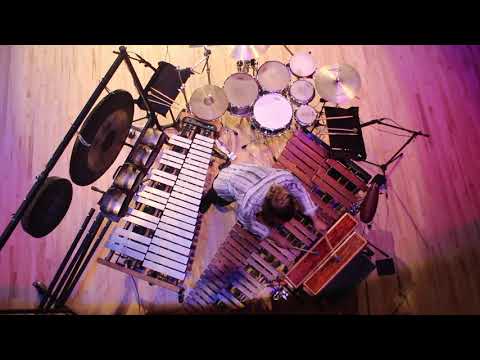
Varèse was a French composer of electronic music, exploiting the new timbres that were created by the popularizing of electricity. He explored timbres, rhythm and dynamics, creating a rather barbaric and often percussive sound.
No composition can reflect Varèse’s style as much as Ionization, composed for 13 percussionists. Amongst the instruments are conventional orchestral bass drums and snare drums, and also unique instruments like the lion’s roar and even fire sirens. This results in an extraordinary sound world, full of unprecedented possibilities and combination.
Stockhausen composed extremely similarly to Varèse (something I just realized when I was ranking up the pieces). He, however, also flirted with the ideas of aleatoric music (see Lutosławski) and serialism (see Berg).
Zyklus is, also, a piece for percussion. The title is German for ‘Circle’, which came from the interesting way the music is to be read. The score can be read from any page, to any direction, and in whatever way the page is set (you can read it upside down).
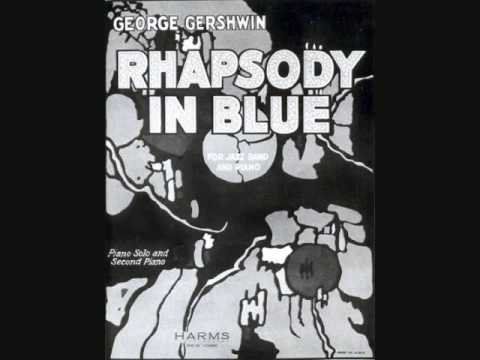
George Gershwin is a quintessentially American composer. He frequently uses the Jazz and Blues scales in his music, instead of the Diatonic scale used by most composers of the Western classical tradition.
His Rhapsody in Blue, a Piano concerto with backing by a Jazz band, is his Magnum Opus, a work that he will be forever remembered by. It has frequently been used as a reference to the 1920′s, the Jazz age, where money was plentiful and life was good. This piece is nostalgic of better times past.
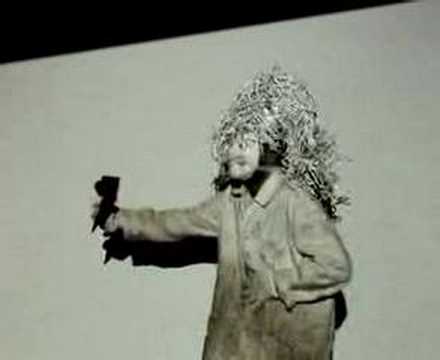
Glass is probably the most recent composer in this list – he continues to compose prolifically. His style has been described as minimalist, reflecting the slowly evolving ostinato in his music. His music also reflects a strong grounding in counterpoint in the style of Mozart and Bach.
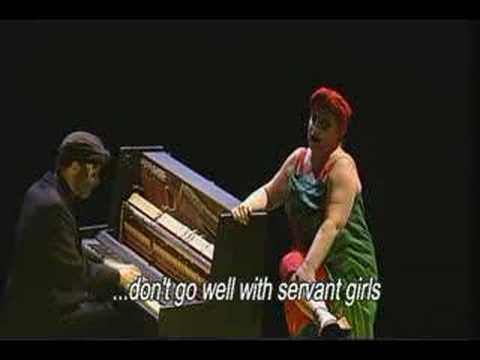
His opera Einstein on the Beach lasts 5 hours with no intermission, so long that audiences are free to enter and leave as they please. This opera is distinct in that it has no story plot. Instead, it shows various scenes, all alluding to parts of Einstein’s theories and life. When premiered, this opera promised to revolutionize the face of opera, and this it did.
Penderecki is a composer that focuses on extended techniques and unique playing styles on conventional instruments and structures. He is possibly best known for his astounding ‘Threnody to the Victims of Hiroshima’. However, as this was already mentioned in another list, I chose his Polish Requiem.
By choosing a Requiem Mass, Penderecki merges one of the oldest form of music (the first Requiem was by Ockeghem in the Renaissance period) with extended playing techniques. He uses wails and short blasts from the choir and voices, instead of the traditional SATB choruses. The addition of a Polish text in the end causes this to be a truly unique composition.
In the late 19th century, Arnold Schönberg devised a new composing technique that threw away centuries of harmony and counterpoint – the Serialist style. Followers became known as the Second Viennese School, with composers such as Anton Webern. Berg, however, is the composer that brought serialism to popular culture.
Wozzeck is an opera based on a surprisingly unheroic plot. What makes this a major stepping-stone for musical history is that this is the first major Opera from the 20th century style, one that incorporates the advant garde ideas of the period. The opera became so popular that it allowed Berg to live his life off royalties.
Copland composes in a distinct style from fellow American George Gershwin. While Gershwin has a style more suited for cities and clubs, Copland incorporates more rural material, including purely American factors, such as cowboys.
The Fanfare for the Common Man was written when Copland was approached to write a fanfare for the opening of the radio. When asked for a dedication, Copland decided to dedicate this to the Common Man, the most pushing factor for America’s victory in WWII.
Cage was a revolutionary – he pioneered the use of unconventional instruments such as keys and paper. One of his most striking innovations is the prepared piano, where he puts in washers and nails into the piano, causing a dry and percussive sound.
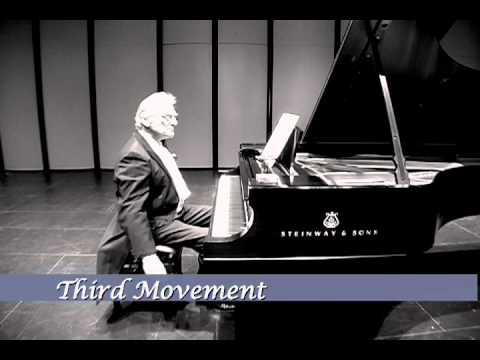
4’33” is essentially what it is, 4 minutes and 33 seconds of music. The music that is heard, however, is not played by the performer. Instead, the performer goes on stage and times the 4 minutes and 33 seconds. The listener hears the accidental sounds in the concert hall, whether it be the air-conditioning or the cars outside. What is thought to be silent is no longer silent, as reflected in the Zen teachings that inspired Cage.
Lutosławski was one of Poland’s greatest composers, standing alongside Chopin and Penderecki. Lutosławski was the first to be awarded Poland’s greatest honour, the Order of the White Eagle, after independence from the Soviet regime. He specializes in aleatoric (chance) music, where each performance would be different.
The Concerto for Orchestra is inspired from Belá Bártok’s own Concerto for Orchestra. He mimics the Baroque form Concerto Grosso, interweaving Polish tunes. The most striking part of this work is the atonal nature of it: it does not conform to major or minor keys. He integrates this new style with the old forms of Passacaglia and Toccata, amongst others and in so doing creates a unique sound world.
Stravinsky is one of the most influential composers ever, being sometimes called ‘Bach on the wrong notes’. He was voted as one of Times’ 100 people of the century. He draws styles and influences from a wide range of composers, composing in serialist forms, neo-classical forms and neo-baroque forms. Stravinsky’s sorting of timbres are interesting too – his ballet Les Noces has an accompaniment of four pianos.
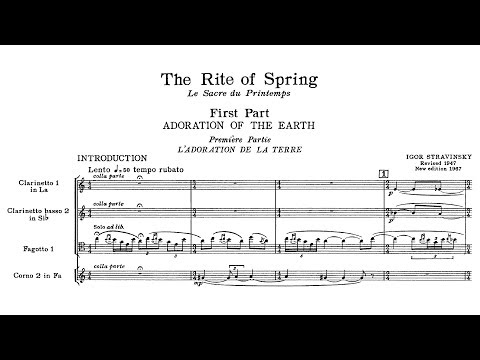
The Rite of Spring is an archetypal representation of Succès de scandale. On the premier, Camille Saint-Saëns stormed out after the first note, citing the high register of the Bassoon to be a misuse of the instrument. All through the performance, the audiences booed the performers, with its primitive rhythm and scandalous outfits. The crowd later attacked the performers. However, this piece soon gained popularity and appealed to audiences, causing this ballet to be one of the most influential works composed.


ever heard of the hungarian suicide song? gloomy sunday is the title i presume. first?
i love the inclusion of cage's piece for any combination of instruments.
i quite often grab my bass or some spoons, and work diligently at perfecting my version of this piece
#3.
______________________________________
What if that's all I wrote for my post is #3. That wouldn't be a good post. It would be bull*****.
4'33'' should not be on the list. It isn't music. It's an experiment with an audience and sound.
Isn't that what music is?
No. Music is something for an audience to listen to and enjoy, not something to allow pretentious "composers" to brag about how "clever" they are.
Did you ever think the idea of music is subjective? And not just something that has to form to your idea of what it is? There is an audience there, they seemed to enjoy the experience. Do you know John Cage? He is a composer, without quotations. This isn't the only thing he's done.
the key word here being “music.” Cage didn’t compose music… or anything else. That’s like me turning in a completely blank white canvas and saying it’s a polar bear caught in a blizzard. It’s pretentious BS.
Perhaps, but this list is entitled “greatest compositions”. 4’33 doesn’t belong here.
I do really like John Cage, but I think I agree with Chesney. I wouldn't really classify 4'33'' as a composition, per se. Maybe something like "Water Walk" should have been up there. That shows Cage in his prime.
I agree that 4'33" is a bit ridiculous. Anyone could go out a record several minutes of sound, but that doesn't mean that it's a masterpiece worth being remembered.
I agree completely! I agree that it is a fascinating audience experiment, it is not music.
4'33" was an experiment, like most music is, that satisfies the requirements of a composition. Would you say that anything that Zappa performed isn't music? Without experimentation and disregarding "rules" music would never change.
Why does music need to "change"? Bach and Mozart did their best work while following the rules, and I doubt you'll find any serious student of music who thinks John Cage or Frank Zappa is superior to those two.
Zappa is the best……. i doubt you'll find any blah blah serious blah blah hoity toity blah blah Zappa is the best……. if you dont beleive me just ask me again and i will assure you.
dont worry I assure you……
I'm a serious student of music with a classical music degree and full time career. I acknowledge Bach and Mozart's superb talents. I think Zappa is superior.
I do admit that one can be creative while still following the rules, look at Bach's use of counterpoint. I never said that Zappa and Cage were superior, only that they were innovative. If no one had taken the chance with instruments early on, you would not have a piano. How would Mozart compose without one? Would he have stuck with a harpsichord?
Actually, he might have stuck with a harpsichord and still made great music. Didn't he compose for strings as well? No piano is needed for that (necessarily).
I was simply trying to illustrate the point that music evolves over time. You're nitpicking, but I'll bite. One has a greater control of dynamic range when using a piano when compared with a harpsichord. Would the piano make him a better composer? Probably not, but it might make his compositions a bit more frustrating.
if beethoven didnt have a piano and only a hapiscord , wouldnt his later music also have been extremly hard to compose ? i dont really know much about hapiscords but they are pretty soft arent they ?
I don't really have a clue, I can only play blues on an outta tune guitar
Bach and Mozart made up the rules. They were revolutionaries in their time.
Great list for people into music composition n all…meh…not interested
No Gustav Mahler's Lied von der erde(The Song of the Earth) ? Or Carl Orff''s Carmina Burana? Or Die Drei groschen oper (the three penny opera) by Kurt Weill? hmmm….I don't know if I like this list
Another inclusion if we look at the electronic music, would be Aphex Twin…..Anyway just my two cents
I'm sorry but Rhapsody in Blue is one of the most influential compositions ever, I reckon it should've been number 1.
A thought-provoking list indeed! I would add, as a biased observer (string player):
Kodály – Sonata for Solo Cello (a phenomenal work which brings a dead musical form – works for unaccompanied string instrument – back to life, probably because nobody had dared write such works since J S Bach);
Berg – Violin Concerto (a powerfully moving work and probably the first great violin concerto since Brahms, some 60 years previously);
Walton – Viola Concerto (the first successful concerto for that instrument and the best of them all, in my opinion).
…'with a smile' is the ultimate composition…
Guess it's already time for a "More Top 10 Compositions of the 20th Century"-list, including:
Carl Orff – Carmina Burana
Richard Strauss – An Alpine Symphony
Steve Reich – Music for 18 Musicians
Samuel Barber – Adagio for Strings
Maurice Ravel – Daphnis et Chloé
Gustav Holst – The Planets
Arvo Pärt – Für Alina / Spiegel im Spiegel / De Profundis / …….no idea which one would be the best in this list.
Sergei Rachmaninoff – Piano Concerto No.2
György Ligeti – Requiem
etc…
there are so many great works…
I completely agree with "Adagio for Strings" but then again, we probably need another list.
yeah I was surprised that Adagio for Strings and something from Steve Reich wasn't up here.
In the description of No. 2 ( Concerto for Orchestra) there's a little mistake.. The spelling of the name Belá Bártok is just wrong.. It's actually Béla Bartók…
good list but not comprehensive enough for the topic. you should definitely follow up with another.
I would have put Rhapsody in Blue a bit higher than number eight…maybe switch places with 4'33''. It's a good list overall, but I can see a need for a 2nd list.
I like the list but,
"Stravinsky’s sorting of timbres are interesting too"
should be, "Stravinsky’s sorting of timbres is interesting too".
Um, where the hell is Ravel's Bolero? I thought it was going to be #1…
The only thing I have to say unequivocally about the impact of Ravel’s Boléro is that when choreographed, it was the only time in the history of the modern Olympics that the sport of Ice Dancing was considered to be cool.
So did I. I was sad when it wasn't.
I agree with all except "Rhapsody in Blue" which is highly overated
Hahaha! I love John Cage!
To the people who said that Mozart and Bach composed following "rules": there were some rules, yes, but they were really only following their ears. It wasn't until the 20th century when music theorists went back and *****yzed all of Bach's chorales that we got the musical "rules" music students have to learn today. As a junior music major, I have to say I approve of this list.
I knew everyone except for Lutosławski– and I personally, after listening to it, perfer Bartok. And the video for the Stravinsky: why didn't you put the remake of the original ballet? Okay. Music geek time over.
Gradus ad Parnassum was written in 1725, and was the predominant text on fugue and counterpoint.
Missing, IMHO are the following:
Olivier Messiaen: Quartet For The End Of Time, Turangalîla Symphony
Charles Ives: Concorde Sonata, The Unanswered Question
Benjamin Britten: War Requiem
Kaikoshru Sorabji: Opus Clavicemballisticum, Gulistan
Dmitri Shostakovich: Symphony 5
Man, this list *really* needs some Steve Reich. I'd say 'Drumming,' though I'm sure some people prefer Piano Phase.
No pierre boulez- le marteau sans maitre? Hmm. But i agree with #1
4'33" is dumb
No Debussy?
In case no one noticed that was me playing 1st violin in # 3 (I am completely self taught)
For some reason 4’33” was the only thing they let me play.
Most of these artists (not all of them obviously) made you think about music composition and whatnot…but in IMHO they are pretty boring. A few of the songs above are alright, but most of it is in a way pretentious and "overly-composed".
And nothing by Sibelius.
I would have included some Miles Davis.
In A Silent Way?
Rhapsody in Blue in my opinion should be a wee bit higher up, overall a good list – Thanks.
John Williams would have been nice to see on this list.
I can´t see why Frank Zappa is not here…
Hurray for ranked lists! I am now able to say that I think Rhapsody in Blue should have been higher (maybe that's because I'm an American). This was a great list, and as people have pointed out, it deserves a follow up. I said it earlier, but in case anyone reads the comments, I'll say it again. I think that John Cage's "Water Walk" should be up there rather than 4'33''. I think it is more representative of his style and also fits the "composition" requirement a little better. I can't remember if a list like this has been done, but maybe something along the lines of "Top 10 Pieces of Experimental Music" is in order? I think 4'33'' would be right at home on that one. Anyway, great list.
Very interesting list. Perhaps better named “Top 10 most innovative/avant-garde compositions of the 20th century”. Most (but not all) of the alternative suggestions in the comments would be better off in a list of “Top 10 most popular works composed in the 20th century”.
Agree that 4’33″ should be on the list.
Agree that Steven Reich ought to be represented somewhere on the list.
Thanks for the post. Musicians will never agree (which doesn’t mean that music is all subjective or that compiling a list like this is a futile exercise).
I lol'd at each one of these pretentious *****s (with some exceptions). Of course I appreciate how they apply innovative theory to their pieces (thanks to my formal music degree) but if your music feels like random noise or is just disgusting to the ear you are doing it wrong. It's like building a tower with the latest and craziest technologies and innovations and make it look ugly as *****.
And John cage is the master of *****s, we can argue a lifetime about the definition of music, but in the real world that isn't music, and he took the pure concept of Zen teaching, that doing nothing is as good as doing something (and everything) and bragged about it.
You know what is missing here? BT's "These Binary Universe"
He programmed the first song of that album in CSound for 4 months, just for a start, and every one of those AMAZING tracks is made of beautiful magic and random glitching that just take it to a level way too high.
It feels just so spiritually right and musically awesome that I feel a little depressed every time I hear it when I think of how many people never heard it and never will.
@alvare et al: Might be a good time to recall that the musical/artistic style of a time period generally reflects the prevailing philosophical thought of that time period. Given that the 20th century was the pinnacle of modernism & post-modernism, it's not surprising that the experimental, anti-aesthetic, anti-establishment sound of the chosen works for the list are characteristic of the 20th century in general.
In other words, what your (or my) opinion is about this type of music isn't the point. I think a lot of it sounds like crap too. And please — the field of music is rife with *****s. Ask anyone who's commented here. Being an ***** doesn't preclude you from the being able to compose notable music. So your ad hominem argument against John Cage doesn't exactly work — it says more about your opinion about John Cage as a person and Zen teaching than his music.
Thanks for bringing "This Binary Universe" to our awareness. I look forward to hearing it and the other works mentioned here with which I am not very familiar.
I enjoyed seeing Rhapsody in Blue and The Rite of Spring on here. I grew up with Disney's Fantasia, the original of which featured The Rite of Spring. For anyone who hasn't seen Fantasia or Fantasia 2000, they are both worth watching for their interesting interpretation of music and animation.
Thank you so much for #4 i've always wondered what piece that may be.
I think Katchutarian’s (sp?) “Sabre Dance” should be included. Ditto for Ravel’s “Bolero”.
Frank Zappa deserves mention too due to the many orchestral pieces he recorded either with the LA Philharmonic or the London Symphony Orchestra. Titles that immediately come to mind are “Strictly Genteel” and “The Duke of Orchestral Prunes”. The mind staggers at this man’s accomplishments; who cares if he threw toilet humour into the mix quite often? The present day composer refuses to die, to quote Varese’s 1921 adage.
On the jazzier side, I’d mention Miles Davis’ “*****es Brew” and John Coltrane’s “A Love Supreme”.
I am confused as to why you picked these compositions, as opposed to any others.
I'd like to nominate Jean Michell Jarre's "Oxygene". A little simplistic, perhaps, but it showed what could be done with electronic music. Remember that this was composed when the state of technology was patch cords and dials, and was well ahead of its time. Extra kudos for his live presentations involving projections against entire skylines.
Yes to Zappa, Reich, Davis and Coltraine. And how has no one mentioned Morricone? It would be good to have a 10 Composers from the last 50 years list, too. Harold Budd, Max Richter, Clint Mansell… I'd even throw in Godspeed You! Black Emperor (though I don't like em), Sigur Ros or Explosions in the Sky (even though they have been declining) because I love post-rock.
Also, Brian Eno!
Robert Fripp, Henry Mancini, there are just too many in a lot of categories, very ambitious list.
I think Rhapsody in Blue should be a little higher up, like maybe in the three spot. As for the current three spot, I suggest we burn it.
I do love Rite of Spring. I had no idea what it was called until now.
No “My Ding-a-Ling” on the list???
Interesting yet, not my cup of tea, kind of list. But scouring through the comments, apparently there a lot of serious music enthsiasts, here. Makes me feel like I’m missing out on something! I found John Cage – 4’33″ to be most unusual, though… But I’m scattered in thought as to if it belongs here. Good job, again, JFrater!
Yipes, I meant good job, derfliegendehollander…
It sucks using mobile internet, sometimes…
Suggestion for 10 More Compositions: Koji Kondo's Super Mario Bros. Overworld theme
#3 is crap and i see that many agree. for me, it doesnt matter whether i love it or loathe it (subjectivity); its more black and white…more logical, and in my opinion, based on the definition of music by the trusted merriam webster below, 4.33 does not qualify. oh, AND i loathe it.
on a positive note, i found einstein on the beach absolutely lovely bc of its ethereal quality and im pleased to have learned of it.
music: the science or art of ordering tones or sounds in succession, in combination, and in temporal relationships to produce a composition having unity and continuity b : vocal, instrumental, or mechanical sounds having rhythm, melody, or harmony
i heard Einstein on the beach for the first time. magnificent.
4'33" at number 3???
Classical Music is dead.
Oh! I love lists like these..
I agree that John Cage's 4'33 should be on a different list, though he does have other great compositions which could easily take it's place, so I'm not fussed.
Also that maybe a Top 10 greatest compositions of the last 50 years? Would be nice to see some Zappa et al on there.. =)
Please define composition, because I had something entirely different in my mind.
21st Century Schizoid Man isn't on this list, but oh well. So few know of King Crimson nowadays I really wonder if there's more than 10 other people besides me that are fans of them.
look for 9 more….
got into them when my cousin was working as a rodie for adrian belew. at one of their shows at the house of blues new orleans, his cd 'side one' had just come out, and when i asked him what it sounded like, in general, adrian replied 'king crimson's ealier *****'
and i like that cd a lot, so i picked up a couple king c. cds….one with adrian belew (so it was released after 1981), and the band's first album…….
not disappointed at all…………..
Dude your not alone, I know and LOVE King Crimson.
John Cage's ''4'33'' is an experiment that challenges people's conception of what constitutes music. Music is made up of a combination of sounds and absence thereof at key places, to space out the different sounds and give them context. As such, silence is an instrumental (no pun intended) part of any composition.
The problem i have is when the juxtaposition of silence figures, laid out on end, for four minutes and thirty-three seconds, is considered by ANY individual to be one of the to ten compositions of the twentieth century. As such, white noise generated by televisions, feedback from any amplifier, and the steady pulse of a motor could be considered one of the greatest compositions also. I have nothing against experimentation, but a composition, by definition, composes. This ''piece'' does nothing but exist as an affront to preconceived notions, which is fine, but does not constitute an exemplary piece by any measure.
you forgot Andre Mathieu… incomplete list
the only thing worth listening on this list is #8, Rhapsody in Blue,
and check this out http://www.youtube.com/watch?v=jK_ShoOL2ao
I am particularly fond of Christopher Rouse's Flute Concerto, especially the third movement "Elegia". Simply breathtaking. Lists like this can be so subjective though.
Have you heard his trombone concerto? Amazing.
Adagio for Strings may have been overused in movie soundtracks, but there’s a damned good reason for that:
It’s the most emotionally stirring piece of music of the 20th century.
(For those unaware, I’m talking about the piece of music that is used quite often, amongst other places, during “Platoon”.)
Wozzeck isn't a serialist piece.
But I'm pretty much in accordance with the first place entry.
"On the premier, Camille Saint-Saëns stormed out after the first note, citing the high register of the Bassoon to be a misuse of the instrument. "
That's friggin ridiculous. It's not surprising if he didn't appreciate the piece, even if he stormed out during, but just imagine a person (composer or not) leaving the concert hall after the FIRST NOTE, or even the first movement.
And this list really should be called "compositions in the classical tradition" or similar because in terms of influence, Lucy in the Sky with Diamonds (or any other big hit, though I'm not fond of the Beatles myself) were tremendously more influential than half the pieces on this list.
Pet Sounds by the Beach Boys. Com’on!
The premise of this list is a bit short sighted, don't you think? Summing up the best of 20th century classical composition in a ten "best" compositions list is an exercise in superfluousness. How are these pieces ranked? By historical significance? Radicalism? Audience reaction? Subjective taste?
I'll be damned if Stravinsky's Rite of Spring would top anybody's "best of" list if there wasn't such a scandal surrounding it (and a silly one at that). John Cage's 4'33" is a performance piece on human perception of sound and music and is not a musical composition.
This list is basically just the "famous American composers of the 20th Century and a few European composers who pioneered in electronic music list."
I'm going to make a list of the top ten motion pictures of the 20th century, and you're going to be damned right that it's going to be just as pointless.
Here's a second for Holst and The Planets. Four and a half minutes of silence beats out The Planets? Never!