American General Stanley McChrystal was recently relieved of command by President Obama, for disparaging comments he made about the administration. He was the latest U.S. general to be sacked for crossing the Commander In Chief. Here, in alphabetical order, is a list of other generals from history who got into trouble of varying severity with their superiors.

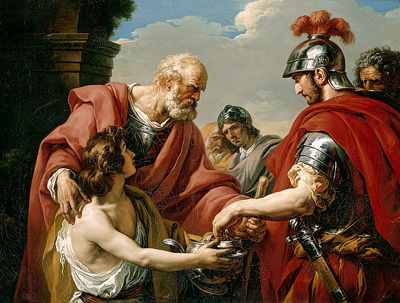
Belisarius was the greatest Byzantine general, under the greatest Byzantine emperor, Justinian I. He fought many battles against the Persians and Bulgars, helped reconquer much of Italy, and put down the Nike rebellion at home. He fell out of favor with Justinian, in part because he overstepped his authority in parleying with the Goths. He stood trial on spurious charges, but was protected by influential family connections. He was later pardoned by Justinian, and spent his final years in peace. There is no truth to the legend that Belisarius was blinded by Justinian, and died as a beggar on the streets of Constantinople.

Thomas Conway was a French general (of Irish birth) who served on the American side in the Revolutionary War. In October of 1777, George Washington strongly opposed the promotion of Conway to be major-general, on the ground that it was unjust to the abler and older American officers. He felt that Conway was a general of no particular distinction, and somewhat of a braggart. However, the Continental Congress refused Conway’s proferred resignation, and the defeats Washington suffered that year caused Conway to ally himself with the victor of Saratoga, General Gates, in attempts to oust Washington as top commander. After a series of intrigues and personality clashes too long to summarize, but collectively known as the “Conway Cabal”, Conway’s disrespect of Washington finally angered Congress to the point where Conway’s resignation in 1778 was accepted, much to his chagrin. After a duel, when he thought he was dying, he wrote Washington a complete apology for all the injury he had done to him. He recovered and served with the French army overseas, and later supported the Royalist side in the French Revolution.

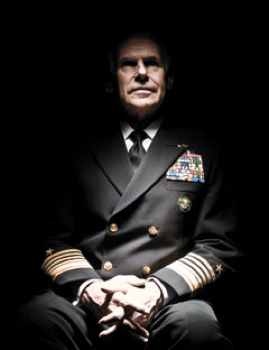
In early 2007, U.S. Navy Admiral William Fallon became the central commander of American troops in the Middle East, including Iraq and Afghanistan. This was the first time a naval commander had held this post. From 2003-2005, Fallon had served as the commander of Fleet Forces Command. He then served as head of the U.S. Pacific command from 2005 to 2007. In this post, Fallon was commander of all the American forces stationed in the Pacific, a total of 300,000 military personnel. However, in 2008 he allowed himself to be profiled by an opponent of the Bush administration in Esquire magazine. In it, he was portrayed as deploring the Bush administration’s perceived saber-rattling towards Iran. Even though he denied a rift with the President, and deplored the article as “poison pen stuff”, he resigned his post. Defense Secretary Gates accepted his resignation, and in a press conference said that the “cumulative” effect of Fallon’s outspokenness had become a distraction.

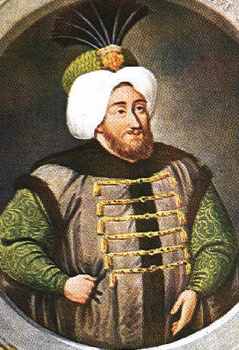
Kara Mustafa Pasha served as captain of the fleet, vizier in the State Council, and deputy grand vizier in the Ottoman Empire, in the 17th century. Succeeding Fazıl Ahmed Pasha as grand vizier, he led unsuccessful campaigns against Poland and then Russia. Meanwhile, a Hungarian revolt against Habsburg rule in 1678 allowed Kara Mustafa Pasha to move against Austria. The Ottoman army, under his command, laid siege to Vienna (July 17–Sept. 12, 1683). Overconfident, he did not exploit early military openings, or even entrench his forces, instead spending more time pursuing the delights of the flesh in his personal compound. Consequently, the Ottoman army was surprised, and defeated by an Austrian-Polish relief force under John III Sobieski, king of Poland. The siege was lifted, and the Ottomans never again threatened so deeply into Europe. The penalty for failure for the Ottoman commander was harsh. Although he blamed and executed scores of his own officers, Kara Mustafa Pasha was strangled with a silken cord, as befitted a high-ranking malefactor, at Belgrade that same year on orders from the sultan. His head was brought to the sultan on a silver dish.

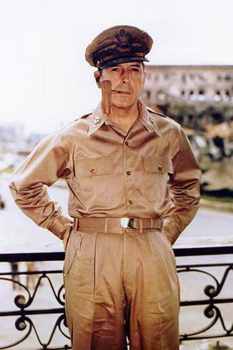
Possibly the greatest prima donna of World War II, MacArthur’s vanity was legendary. He had a Filipino silversmith hammer out a five-star collar emblem, using Filipino, Dutch and Australian silver coins supplied by his aides, when he was promoted to a five-star general, rather than wait for the real stars to arrive in the military mail. His ego only grew during his next posting, as Allied commander during the Korean War. His brilliant landing at Inchon saved the South from being overrun by the communist North. But he blundered in not anticipating China’s entry into the war, and in publicly disagreeing with President Harry Truman over strategy. “I’m going to fire the son a bitch right now,” Truman declared. But such was MacArthur’s prestige and popularity, Truman had to proceed very diplomatically, and even so his own standing with the public took a sizable hit. MacArthur’s standing was such that he gave a farewell address to Congress, which included the famous line “Old soldiers never die, they just fade away.”

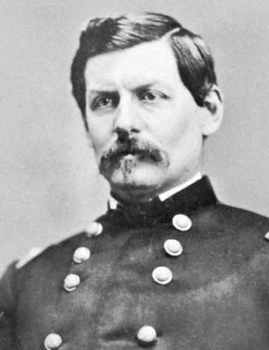
As an organizer and logistician, Union General George Brinton McClellan was a godsend to the Army of the Potomac, early in the American Civil War. The scholarly, well-traveled veteran of the Mexican War and former instructor at West Point was just what the Union, stunned by unexpected defeats by the Confederacy, needed to whip its forces into trim. Even though McClellan himself had been mauled by Stonewall Jackson and Robert E. Lee in the Seven Days Battle, his assumption of command from the defeated General Pope was met with enthusiasm. Unfortunately, he was unused to supreme command. He was as overcautious in the field as he was meticulous behind the lines, time and again allowing Lee to slip away. He complained of lack of support, and consistently overestimated the enemy’s strength. President Abraham Lincoln began to lose patience with him, sending increasingly tart orders for him to get moving: “Are you not overcautious when you assume that you cannot do what the enemy is constantly doing?” “I beg to assure you that I have never written you, or spoken to you, in greater kindness of feeling than now, nor with a fuller purpose to sustain you, so far as in my most anxious judgment, I consistently can. But you must act.” Finally, he was relieved and replaced by General Burnside. He ran and lost against Lincoln for President in 1864, later served as governor of New Jersey, and died of heart failure in 1885

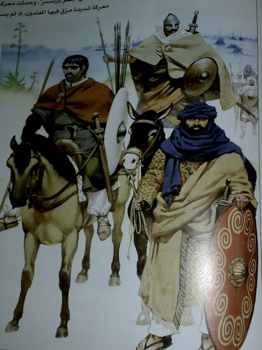
Musa bin Nusair was an Arab from what is now southwestern Saudi Arabia. He was one of the greatest commanders of the Arabian age of conquest, most famously capturing Morocco and invading Spain, conquering it for Islam. He landed on the Iberian peninsula in tandem with an army led by his subordinate–and rival–Tariq bin Ziyad in the early 8th century AD. For the next several years he campaigned successfully, amassing a fantastic amount of treasure and captives. He and Tariq were called back to Damascus by the caliph, al Walid I. They were celebrated as conquering heroes by the people. But al-Walid died soon after, and was succeeded by his brother Sulayman ibd al-Malik. Sulayman demanded that Musa turn over his treasure, and, when he objected, Musa was stripped of his rank and turned out into the streets. His son was beheaded on Sulayman’s orders. He was reported to have spent time as a beggar outside a mosque, and he died, old and broken, while performing the pilgrimage to Mecca.

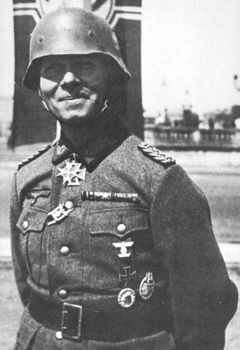
“We have a very daring and skillful opponent against us, and, may I say across the havoc of war, a great general,” said Winston Churchill, in acknowledgment of the formidable gifts of Nazi Germany’s greatest general, Erwin Rommel. His skillful implementation of Heinz Guderian’s blitzkrieg enabled the Wehrmacht to swiftly overrun France, and nearly drive the British from North Africa. It was in the latter theater, far from the meddling interference of Hitler, that Rommel earned his nickname “The Desert Fox”, for his daring and innovative tactics. But by the time of the Allied invasion of France in 1944, Rommel was disillusioned with the war, and with Hitler. He was implicated in the July plot on Hitler’s life, but was too popular with the public to move against openly. When he was injured in an Allied strafing attack on his car, the Gestapo gave him an ultimatum: to commit suicide or he would be tried publicly along with his family. He chose suicide, and his death was attributed to the airplane attack. He was given a fallen hero’s sendoff, that made excellent grist for the Nazi propaganda mill.

General Singlaub was a veteran of World War II, Korea and Vietnam. He was one of the Operation Jedburgh parachute commandos who worked behind the lines with the French Resistance in August 1944. In early 1977, when he was chief of staff of U.S. forces in South Korea, he publicly criticized President Carter’s plan to draw down troop levels in Sthat country. Carter fired him for the breach of discipline on March 21, 1977. Singlaub went on to participate in a number of anti-communist organizations in the Eighties.

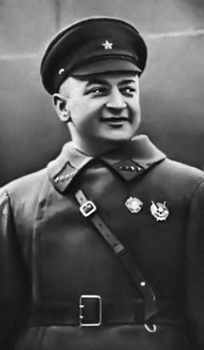
Mikhail Nikolayevich Tukhachevsky was a Marshal Of The Soviet Union, and a gifted military theorist. He was decorated for bravery while serving in tsarist Russia’s army during World War One. He rose to command during the Russian Civil War, carrying out the final Red offensives, and suppressed the sailors’ revolt at Kronstadt in March, 1921. He also quite ruthlessly quashed a number of peasant revolts in the 1920s. He ran afoul of Joseph Stalin during the 1920 war between Russia and Poland, each blaming the other for Russia’s defeat. Never one to give up a grudge, Stalin framed Tukhachevsky as a Trotskyite conspirator, and had him tried, convicted and executed in 1937. His advanced military ideas came back into favor after the initial disasters of the Nazi invasion of Russia in 1941, and Tukhachevsky himself was posthumously rehabilitated in 1963.

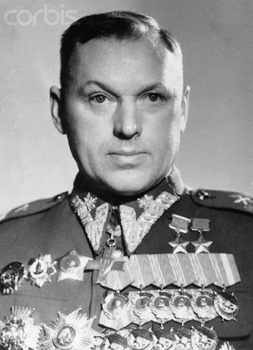
Konstantin Konstantinovich Rokossovsky was one of the generals who became a victim of Stalin’s purge of the Red Army in the late 1930s. His support for the ideas of Marshal Tukhachevsky undoubtedly helped land him in hot water. He was tortured and imprisoned, but unlike so many of his colleagues he was not executed. Even more atypically, he was released and reinstated in a military post in 1940. He rose to high command after the German invasion, and famously escaped with his life after stubbornly disagreeing with Stalin over a matter of strategy. He served to the end of the war, linking up with British General Montgomery, while General Zhukov’s forces captured Berlin.


Interesting list. Although MacArthur was considered a hero of WWII, I was never able to see any particular genius – he seemed to me to be mostly concerned with getting the Philippines back. And speaking of the Philippines, he was the general responsible for it being so woefully unprepared for the Japanese attack. But I'm just an armchair historian.
You're right, Magnumto. Mac wasn't a great general, just a supremely vain one. I dare to say he had more vanity than the infamously pompous Winfield Scott (who was at least a great general).
MacArthur's intense focus on the Philippines actually set the war back several months. We didn't need the Philippine Islands. It cost thousands of lives that weren't really necessary because he was intent upon revenge.
Yep for american generals I’d say patton, bradly, ike then macarthur.
Great list.
On a side note, I think the "greatest prima donna of WWII" title is pretty hard to give to anyone, since there were so many of them. Admiral Ernest King's (one of MacArthur's rivals within the Joint Chiefs of Staff) ego was certainly comparable to, if not greater than, MacArthur's. He was stubborn, disagreeable, and very hostile to all things British. It is reported that he even came close to physically confronting Sir Alan Brooke. He loved flirting with the wives of other offices and was legendary for his bad temperament, which even Roosevelt had a lot of respect for. It would have been fun to watch MacArthur and King clash, which I'm sure they did a good number of times a month.
McArthur is a very famous figure in the Philippines. He also has a monument in Leyte. But I didn’t know he was that primadonna. Haha. He’s a hero to us Filipinos, definitely.
great list. i never knew about any of these except for mcclellan, although rommel and mcarthur feel familiar somewhere way back in the memory banks.
The list could be filled only with russian generals. I think they had a policy. If more than two people knew the generals name then he had to be taken down since he was a threat. Id add also zhukov to the list.
Zhukov was just a bit too popular/competent for Stalin to let him be. He became the Minister of Defense after Stalin's death though, so, at least he survived.
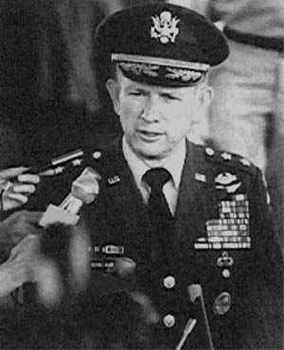
on a side note, the bonus general is wearing a ludicrous amount of medals.
I bet he sqeezed in some spoons there too
but he couldnt have had zhukov killed. He was too popular.
Ps: looking at that ottoman general. Who would have thought there are arab gingers.
I thought Ottoman was a Turkish empire, what's with the Arab comment
Ottoman Turks had a special tax it was called Blood tribute or devşirme, they would take sons from non Muslim families, mostly from Balkans and recruit them into their army. Janissaries, as they were called, made strike force of Ottoman army and many of them risen to prominent positions it the empire and in the army. Kara Mustafa Pasha is one of them.
correction not a "ginger" actually thats a "day-walker" a dangerous cross breed……
Well, historically it makes sense, but it’s still funny
A very interesting list. Well done for including Generals covering such a broad span of both time and nationality. This is one list people won’t complain is too ‘American’.
You think only including five American generals is balanced?
Hey – a great Sunday list. Interesting non-biased reporting, and many names I have hardly come across (or can pronounce!) Great to see a few Russians listed for a change – and that’s not me being ‘pro’ anything; except pro history lists!
Great respect for Rommel and many others on this list for being active, intelligent, and outspoken. The fact that some of those outbursts went against a ‘higher’ command (a command not necessarily in touch with ground logistics or theatre current affairs), is highly commendable in my view – even while ultimately appearing rather foolish.
Generals are a rare breed in that they take risks. Risks make heros, risks win wars, but risks can also make scapegoats.
One example of this has to be another risk-taking hero: General George S. Patton. Patton and Rommel went at it like cat and dog during the North African campain, and Patton was a keen student of Rommel having previously admired his book ‘Infanterie greift an’ (Infantry Attacks), published in 1937. Pattons quick-draw battle planning and ‘unique’ counter manouvers earned him a notorious reputation, so much so that the German high command feared his very name. Unfortunately, his outspokenness and general(s) attitude lead to several incidents in Sicily and Itally; famously the “Sicily slapping incident”; for which he was suspended for ten months and almost lost his career. Patton was eventually reinstated thanks to the Normandy campain in which he played on his reputation to bluff and pre occupy the Nazis.
I suspect the list may come under critisism for this ommission; which I think would be a shame as otherwise it’s pretty solid.
Sorry – why did I type Italy? (or even "Itally") – delete that bit. He never made it into Italy as far as I know (I wonder where I got Italy from? Hmmm).
So, yeah, Patton even spoke out against Eisenhower on a number of occasions too – as can be seen in the movie; and this – coupled with a bold vocabulary and a bad temper sometimes landed him in deep do-dah with the boss.
BTW – Watched the movie again today – still a great movie.
The Bonus General photo is actually David Gilmore with his many decorations for Dark Side of the Moon.
Off topic: Top Gear back tonight – can't wait!
Wow. Thanks for the heads up. Been waiting for top gear.
Well it does bear a resemblance doesn't it? Makes me want to bust out my Live in Gdansk album!
dude——i was listening to 'piper' as i read your comment
i kknow its syd, and not david, but i coulda been listening to eminem or boston or the white stripes or something —
busted out the screaming abdabs boot cd i have — for the 1st time since 2003 or so.
Oh Listverse, how you make me smarter everyday! Love a good history list.
Number 4 was messed up
Musa Ibn Nusair was disgraced by Sulaiman bin Abdalmalik because Sulaiman was purging everybody who was associated with his greatest enemy Hajjaj Bin Yousuf (Musa was one of the greatest generals appointed by Hajjaj). Hajjaj had been the chief advisor to Al-Walid (Sulaiman's elder brother and caliph) and was promoting walid's son to become the next caliph instead of Sulaiman. As a result Sulaiman vowed to kill Hajjaj when he became caliph. However Hajjaj passed away before Sulaiman became the caliph and as a result Sulaiman went after Hajjaj's family and associates.
Only knew about Rommel thanks for the history lesson !
Mikhail Tukhachevsky (#1) was not the only gifted general executed by Stalin – the entire Russian intelligentsia was put up against a wall. 3 out of the 5 Marshalls of the Soviet Union and 60% of the highest ranked staff of the Red Army was executed. The Germans would never get as far if it was not for these despicable murders.
Yes, that was awful. Still, WWII proved true the maxim of Tallyrand: "Russia is never as strong as it looks. Russia is never as weak as it looks."
A great list. I loved it. But i have a question.
After reading th recent comments of General Stanley McChrystal about President Osama’s aides and remembering Commander William Fallon, is it right to criticize th leader of the nation? On one hand, the leader cannot and should not let anyone speak ill publically. Thats understandable. My favourite General Erwin Rommel had to kill himself just because he saw th oncoming defeat and th uselessness of th war. Hitler had him silenced. Marshall Mikhail Tukhachevsky was executed for his views. Stalin had him silenced.
But on the other hand, do th leaders of th country really care about th truth. They send soldiers to die. They live in their own self constructed reality and seldom care about th citizen of th countries (both their own and where they order the soldiers to kill). How can they be told of th ground realities. War on Afghanistan, i can understand. But war on Iraq, i cant. Today, WMD’s are still invisible.
So, should a commander criticize th policies of his government or not? What should he do?
I think the biggest issue with both of the US men you mentioned (especially McChrystal) was not so much that he spoke out against his Commander-in-Chief (although his comments were pretty harsh. Read the Rolling Stone interview if you are interested and have not already), but that he did so in a time of war. Sacrifices need to be made during a time of strife and confusion in a nation's history, and publicly defaming your leader is something that just couldn't be handled at this point in time. Especially with this war, the US is already torn enough about it, and we do not need our leaders beginning to speak out against one another. Especially since I don't think Obama is living in his own "self constructed reality" or anything. I mean, it's hard to truly understand war unless you go to it yourself, but I don't think he is kidding himself regarding the US' place in the Middle East.
So, I think, at least in the case of McChrystal (since I don't know too much about the Fallon case), his resignation was an appropriate course of action given the circumstances. Unfortunate, but appropriate.
You ask. "is it right to criticize th leader of the nation? " The average US citizen is free to express themselves and to criticize the government and any it's leaders. Military officers have different rules because of the position they hold. Article 88 of the (US) Uniform code of Military (UCMJ) "prohibits commissioned officers from speaking or writing "contemptuous words" against the President, the Vice President, Congress, the Secretary of Defense, the Secretary of a military department, the Secretary of Transportation, or the Governor or legislature of any State, Territory, Commonwealth, or possession in which he is on duty or present."
In that case it would be insubordination and also undermine the leadership and the war effort.
Just an aside – I wonder why you write the word "the" as "th"?
If a general is going to slag his superiors, he should resign first.
McArthur help freed the Philippines. He is one of the country's liberator, that's why we owe a lot to him.
Interesting list and topic. Learned a bit for a Sunday.
Excellent list. I was only aware of a few of these. Great job.
And of course Obama had to fire his general. The cornerstone of the military is discipline. This includes the discipline required to keep your mouth shut. He has policy problems, he should have taken it up with his commander and chief. Not the press.
Well stated. Brava!
i am sooo glad so see that the great general tits von chodehoffen is not on this list.
you had me worried there for a minute.
I believe he is on the upcoming list "Top 10 Commanders Who Don't Care When They Get in Touble With Their Chief"
Great list. I didn't know a lot of these, but they were all very interesting. Time for some further reading.
This list just goes to prove that even if you rise the ranks of your country's military by exceeding the model of good soldiering, you are still just a pawn to the desires of the commander in chief.
I would've thought Patton would be here. He was held back a few times and sacked on his view for wanting to attack Russia.
Thanks for using my list, and hope everyone enjoys it!
@TIMOTHYJAMES: I Realise that. And i think Obama is much better that th previous one. He sounds like he genuinely will bring his country out of th puddle. I accept that and I respect that.
@MOONBEAM: i understand u, th beam hit right. And i read th article in th rolling stones. Its not criticism but making fun. He went too far.
But i ask, what do those people in th uniform do who see that something wrong is happening? Am not talking about Iraq or Afghanistan or even Russia. Its a general scenario. Its about whistle blowing. And sometimes in armed forces, like in bureaucracy, somethings do go wrong. Wrong steps are taken. And when th people speak their mind to their superiors, they are told to either shut up or take a hike. Then what to do? Military actions involve loss of lives of soldiers from both th sides. How to complain? (except mailing to wikileaks)
As for ‘th’ instead of ‘the’, am revolving against th tyranny of english teachers who wanted me to ‘cross my i’ and ‘dot th t’. (i know i have lost it. And i still haven’t found what am looking for…)
"th" vs "the" – "Fight the power!" – You crack me up!
Yeah, I thought he was using Lancashire Slang or something – we use 'th' instead of 'the' – which can make us sound rather old fashioned.
@ Kabirbhai – I love your insights. Yes, wrong steps ARE taken in life. But as you point out, the Boss, or the Commander, or the President of the United States (in some peoples realities at least) has to appear whiter than white – Squeeky clean – In charge – and beyond reproach. A 'Buck Stops Here!' guy. He's the Boss! – and he's a role model for all the peoples, in all the nations, all around the world…. (tra-laa-laa)
I'd rather see a guy own up to his limitations and mistakes rather than 'everythings fine! – there's no corruption at all; just us and our power and our huge stacks of money – but no corruption, NO! We all trust each other here. We'll have you secured and squared away – nothing to worry about…!'
But then, as you say, who ya gonna call? What if the Prez is into something crazy – who ya gonna call? Yeah? Well maybe.
Only consider that outside the american military there is a democratic republic not a monarchy.
I quote: – The president has to appear whiter than white – Squeeky clean – In charge – and beyond reproach. A 'Buck Stops Here!' guy. He's the Boss! – and he's a role model for all the peoples, in all the nations, all around the world….
That is cult of personality. It applies to Stalin or a king and collegues;
prez is elected by the people, not to confused with "God's Will". Nothing trascendental about him.
Moreover he has no military background (like the vast majority of politicians).
If ever he will be into something crazy he is prone to be STFU'd.
Democracy has built-in mechanisms for that matter.
I re-read your first comment and I see your point more clearly now. Think about the My Lai massacre from Viet Nam. Some of the soldiers claimed they were "just following orders" while killing at least 100 village men, woman and children. I think your point was more on the lines of, when is it OK for a military person to question authority?
It reminds me of a union representative I once knew who said that while at work you should do what your boss asks unless it's immoral, illegal or dangerous. Except for the dangerous part, I would like to think the same would apply to the military. (Although an unnecessarily dangerous action might still be an acceptable reason to question authority – I don't know.)
Maybe someday all the colors will bleed into one but yes I'm still running.
@ Moonbeam: Thoughtful views there. You keep running girl.
Your insights are a classic moral question. Killing is often seen as highly immoral, illegal, and very dangerous – but if someone tells you to do it, and you're both paid killers 'cus Uncle Sam says so, then thats ok? Right?
This argument has been discussed at length over time, but the way I personally see it is kind of the cop-out hippy way in that it takes seconds to start war, seconds to shake hands and end it, but years of casualties in-between. So how about just skipping the in-between bit? (oh, the idealism!)
"Operation Jedburgh"
Can we have a nice list of behind the lines ops?
Those are really daring things to pull off…
Well I learned some new ***** today
I think Erich von Manstein deserves an honourable mention on this list.
One of the greatest generals of WWII, he orchestrated the attacks on Poland and France and was constantly put in hopeless situations on the eastern front. He openly disagreed with Hitler's firm leadership of the war, but Hitler's paranoia eventually caught up with him and Manstein was removed from the front in 1944. He had been preventing a total collapse of the german army in '42 and '43, but his full potential was never realized.
Good list by the way.
Isn`t that the General that Hitler said to-"We now need National Socialist Order, in order to settle matters in The East, obviously, I cannot expect this of you!" And, You`re too pessimistic General! Here on the Eastern Front, we`ve benn through far more difficult situations before you joined us, and we`ve survived. We`ll get over our present difficulties too!" And he then sent the Soldiers into the Russian winter without winter clothing. And the poor German Soldiers froze to death. Hitler was a retard, when it came to being a military strategist. Don`t you just wish he`d led the German football team today?
General Stanley McChrystal should be added as an addendum to this list. I’m a veteran, and one thing I’ve learned is that while on active duty one should never bad mouth the president, regardless of how they may feel about his competence (or lack thereof), policies, and partisan ideology. Gen. McChrystal’s big mistake was not only in exercising poor judgment but making his comments to a periodical like Rolling Stone.
Overall, this was an excellent list.
Thanks. I put McChrystal in the header, in case you didn't see it.
Shouldn`t General McChrystal be, like, congratulated for critising Obama? He has a right in my opinion to speak about what`s going on. What he should have said is, "Obama. You were against the Iraq farce. Will you realise that this "War," is also a total farce, and we can`t see the bloody point of it. And the fact you got a peace-prize, and you then annouced you`re sending more troops to Afghanistan is a *****-take. And we STILL haven`t caught Osama Bin Laden. Which is why we went into Afghanistan. We didn`t think you were like the idiot who came before you." HE`S the one doing the fighting, not Obama, or the rest of the idiots!
No he shouldn't.He is (woops – was) taking the Presidents coin therefore he does not have the right to speak out publicly against his Superior and paymaster. If he found Obamas policies so bad then it was beholden on him to resign before making such public comment.
Not only that but the tenor of the criticisms was decidedly unprofessional (Joe Bite Me etc) which was probably an even bigger crime than a well framed disagreement over the policy in Afghanistan.
Cheers
Lee
Actually, Isn't that ^^^ what YOU THINK he should have said.
Very cool list! One little nitpicky thing about Belisarius however: I would say that he was in trouble with Justinian not because of his dealings with the enemy but rather because of his popularity with the Roman-Byzantine troops and the people of the empire. Justinian was an extremely jealous and often paranoid ruler. He feared Belisarius being declared Emperor of the West or leading a coup against the imperil household in Constantinople. He didn't really commit any grevious errors in the service of Justinian; rather, he was an extremely effective and loyal general, and for his talents he was disgraced.
Wow. This is a very well-balanced list. I didn’t really know any if the ones on here that were from before the US Civil War. I have a question for you Listversers: what would have happened if Rommel and his family were publicly tried? Would they be “tried” to put on a show that Nazi Germany is fair, or would it just be “he tried to kill Der Führer. DEATH!”?
As with the judiciary in most dictatorships, the outcome would probably have been…ah…scripted.
Rommel has always been a personal favorite of mine. He was a great general. On a personal note: My great uncle was a soldier in the Wehrmacht, under Rommel, he lost both of his legs at Al Elemein. He died in 1999. He had a hand-written letter that Rommel wrote him thanking him for his "personal sacrifice" to the Fatherland that he was very proud of. He left that letter to me in his will, and I treasure it, because it is a real piece of history. It is something that Rommel actually touched and posted. Full disclosure: I am an american, but my grand father emigrated in 1933, leaving the rest of his family behind in Munich. However we have always kept in touch.
Where's Publius Quinctilius Varus? He lost three legions in teutoberg forest.
He committed suicide in the field, before getting into trouble with the higher-ups.
Ah, makes sense.
He committed suicide in the field.
MacArthus was a primadonna? tsk tsk tsk…
What about General Custer? Even though he did die, I’m pretty sure his chief would’ve been *****ed…you know, if he hasn’t already died :S
Custer’s a good pick since he had gone to the War Department with dubious claims of corruption and incompetence against his superiors. Not to mention his rank disobedience at Little Big Horn.
Great list, Sanity! I love history, and this is a great Sunday list, too bad I didn't check in until almost 9 p.m.
I have personal history connections to two of these selections, Conway and McClellan. I'd have to search through the dratted family history to come up with the particulars, but my family fought in both wars. In the Civil War on both sides.
It's too late for me to dig through all of the history right now…we're a fertile family, with branches into everything.
Mucho! You just gave me a huge laugh. I misread your comment (skimming, overtired, not wearing the right reading glasses), as " Where's Publius Quinctilius Varus? He lost three leg's in teutoberg forest"
I thought, "Damn! The guy is cursed with three legs, then he looses all of them in one battle! How much bad luck can one man have?"
Then I took a second look.
Oh well.
i do things like this all the time — being dyslexic and tired and what not
i misread that too —– i just now read it for the 1st time, and did have a fleeting thought of
'ok….now which military job are you eligable for if you have 3 legs?'
needless to say — i never did figure it out, although seggie — had you loged in an hour from now, i may very well have asked thesae 184,739 people — which would undoubtedly generate about 15,893 thumbs down votes.
i believe that would put me ahead of general tits, 7raul7 and james for the 'mook of the universe' award. sooo….you saved me! *thanks*
ollie, it's getting almost scary, the way we both come up with the same extremely weird, off the wall way of thinking…how many people are going to misread "legions" as "legs"?
Two people. That's how many.
Well, three, actually, but Cas is on permanent hiatus.
You're welcome, ollie, always happy to help out my fellow over-tired dyslexics!
Well, I found some info. None of our family fought under General Conway. So that let's us out of that little shindig. I did find some stuff from Valley Forge, and George Washington, though. Pretty interesting.
Did have some family under McClellan, among others. The family was divided unevenly on that war. 500 fought for the Confederacy and 250 for the Union. This was at a time when the entire family lived in one county in Tennessee.
Boyohboy! That must have been one awkward homecoming.
the greatest millitary man in history i see (thankfully) did not make the list , nobody *****s with Colonol Sanders…
I dunno, I hear Popeye gave him a run for his money…
Great list. Being a general seems to be a bit of a hazard as you have to win constantly and not get too pleased with yourself for wining, else you're out..or dead. An honourable mention should go to Julius Caesar who fell out so much with his superiors that he went to war with them. A simplistic view i know, but true to a certain extent and a good example of the extreme. Raglan might also deserve a place. There are so many to choose from just in ancient history it would be impossible to pin down just 10. Parmenion? There I go again. Shutting up now.
What about Billy Mitchell?
I love these types of lists. Seems like a lot of maverick generals in the US military!
FYI it was the Nika riots in Constantinople that Belisarius helped crush, not the Nike riots.
What? No Patton?
Obama is one of the worst presidents ever. His policies are putting the USA on a runaway train to ruination.
That being said no active commander of any military branch should criticize the President or probably a better phrase is disrespect the President.
Say what you want about Obama and his policies but he is President and the office of the President no matter who is in there deserves and demands respect.
What about Hannibal and Caesar? Caesar was unpopular with the senate and Pompey leading to the march across the Rubikon and the leaders of Carthage were envious of Hannibal's victories and therefore didn't supply him with reinforcements when he invaded Italy, dooming the campaign.
Of course neither were stripped of their rank but given that Carthage ceased to be soon after and that Caesar seized power that doesn't seem to be relevant.
What about El Cid? He got disowned by the Spanish then liberated Valencia and handed it back to Spain.
I'd also add Georgy Zhukov
MacArthur was a pompous ass, but he was OUR pompous ass, and a damn good general. Yes, Inchon was brilliant. But also in WWII he saved countless lives on both sides by simply "surrounding" and cuting off a heavily garrisoned and fortified Japanese island and letting it sit there until the war ended, rather than attacking it. This would have been 10 times as big as Iwo Jima had we attacked it. Few generals at the time understood that was possible in the Pacific islands, and the US Navy certainly didn't. The Navy admirals were responsible for the bloody conflicts on Iwo Jima and other islands.
Of course, he also fulfilled his promise to the Phillipeenes. (or however you spell it).
Francisco Fraco, Spanish Civil War 1936-39.
Well, at beginning, Franco was a subordinate general of two another generals which he has the strange “luck” they both died in airplene crashes very soon after the beginning of the war. . Firsts head of Alzamiento nacional or revolt was Gral Sanjurjo, exiled by anterior attempts in Portugal from 1932. The another was Gral. Emilio Mola, more intellectual than the others. The accidents were attributed to heavy baggage in the case of Sanjurjo. Mola had a mechanical failure. Some poeple suspects Franco provoked at less the accident of Mola. This isn’t proved.
Franco’s intentions weren’t so clear. The death of these two main generals seems to decide him to the rebellion against the Spanish Republic.
After victory and during his 40 years of dictatorship in Spain, Franco I think never take an airplane excepting I believe in a modern jet yet by the decade of 1970. He traveled ever in a Rolls- Royce or a Mercedes , gifts of Hitler. When Franco traveled across Spain, roads were closed to the scarce public in general by the Guardia Civil. Franco liked sea and sleeped during his holidays aboard a yatch in the Mar Cantabrico.
Gonzalo de Córdoba: “…his fame aroused the jealousy of so typical a renaissance monarch as Ferdinand II of Aragon. Furthermore, Cordoba was profligate in using the public treasury to reward his captains and soldiers. The death of queen Isabel I in 1504 deprived him of a friend and protector and in 1507 he was recalled. Ferdinand loaded him with titles and fine words, but left him unemployed till his death.”
http://en.wikipedia.org/wiki/Gonzalo_Fern%C3%A1ndez_de_C%C3%B3rdoba
how about Lancelot