
 Politics
Politics
Politics  Mysteries
 10 Fresh Clues That Might Crack Old Mysteries
 Weird Stuff
 10 Weirdly Specific Conspiracy Theories from the 1990s
 Movies and TV
 10 Characters Who Never Forgot a Grudge
 Technology
 10 Historical Inventions That Changed War Forever
 Humans
 10 Everyday Concepts That Are Shockingly Modern
 Animals
 10 Animals Everyone Gets Wrong
 Weird Stuff
 10 Bizarre Superstitions That Drive the Stock Market
 Movies and TV
 10 Films That Were Praised but Got History Wrong
 Our World
 10 Major Cities Being Swallowed by the Earth
Politics 10 Wild Campaign Promises That Became Political Legends
Mysteries 10 Fresh Clues That Might Crack Old Mysteries
Weird Stuff 10 Weirdly Specific Conspiracy Theories from the 1990s
Who's Behind Listverse?

Jamie Frater
Head Editor
Jamie founded Listverse due to an insatiable desire to share fascinating, obscure, and bizarre facts. He has been a guest speaker on numerous national radio and television stations and is a five time published author.
More About Us
Movies and TV 10 Characters Who Never Forgot a Grudge
Technology 10 Historical Inventions That Changed War Forever
Humans 10 Everyday Concepts That Are Shockingly Modern
Animals 10 Animals Everyone Gets Wrong
Weird Stuff 10 Bizarre Superstitions That Drive the Stock Market
Movies and TV 10 Films That Were Praised but Got History Wrong
Our World 10 Major Cities Being Swallowed by the Earth
Top 10 Theater Superstitions
Theater Folk are a superstitious lot, and considering the amount of things that can (and do) go wrong in a performance, it’s not surprising that folklore has popped up giving an explanation to these occurrences. These myths go above and beyond walking under ladders and opening umbrellas inside (although those are adhered to as well!); these are specifically for those working in the arts. In this list I delve into the world of theater superstitions and try to provide the reasons for their existence.
10
The Blues
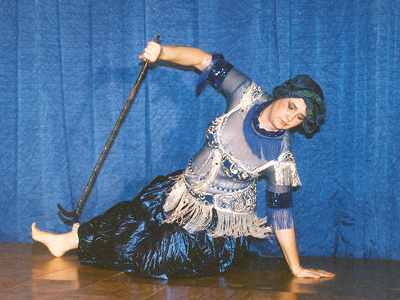
Superstition: It is bad luck to wear the color blue onstage, unless it was countered with something silver.
In the early days of theater costuming, it was extremely difficult to make blue dye, and thus expensive to purchase. Companies that were failing would wear blue garments to try and fool their audience as to their success, and likely go bankrupt due to the cost of the costumes. The silver that countered it was proof of a successful company, as it proved to the audience that they could afford real silver or they had a wealthy backer.
9
Unlucky rule of Three
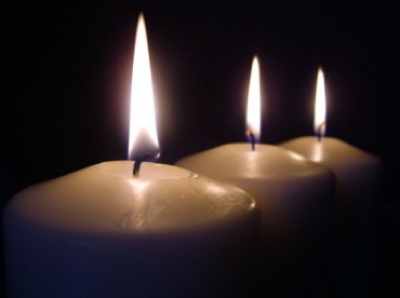
Superstition: Having three lit candles onstage is bad luck.
While it is adhering to the ‘rule of three’ having lit three candles on stage is considered bad luck. It is said that the person nearest to the shortest candle will be the next to marry, or the next to die. Before electric lights were commonplace in theater, the stage was lit by candles, although this is not the origin of the superstition – the unlucky candles had to be on the stage (i.e. – part of the set). Logic prevails on this one as with dim lighting, busy people and highly flammable fresh paint on the set, you are running the risk of burning down the theater.
8
Peacock feathers

Superstition: Peacock Feathers should never be brought on stage, either as a costume element, prop or part of a set as chaos will ensue.
Many veteran thespians tell stories of sets collapsing, curtains catching alight and other disastrous events during performances with peacock feathers. The feather is said to represent a malevolent ‘evil eye’, that bestows a curse on the show. The association between peacock feathers and the evil eye is best illustrated by the Greek myth of Argus, the monster whose body was covered with a hundred eyes, these eyes were transferred to the tail of the Peacock.
7
Graveyard Gift

Superstition: It’s considered good luck traditionally to give the director and/or the leading lady, after closing night, a bouquet of flowers stolen from a graveyard (never give flowers before a performance – They are yet to earn them so it’s bad luck!)
Graveyard flowers are given on closing night to symbolize the death of the show, and that it can now be put to rest. The rational origin is that theater was, as most people who have worked in the industry will tell you, never a greatly profitable profession and despite being macabre, graves were a great source of free flowers.
6
Mirror image

Superstition: It is bad luck to have mirrors on stage.
The myth is that many believe that mirrors are a reflection of the soul and breaking one can mean seven years bad luck, not only for the breaker but for the theater itself. However, having a mirror on stage can cause technical issues, such as reflecting light into the audience or into places never intended to be lit. It can also be a source of distraction for vain actors. The mirror superstition has since been challenged with the successful musical Chorus Line, and its famous mirror scene.
5
Hauntings

Superstitions: Ghosts haunt theaters and should be given one night a week alone on the stage.
Depending on your theater the stories will change, but there is one specific ghost, Thespis, who has a reputation for causing unexplained mischief. Thespis, of Athens (6th BC) was the first person to speak lines as an individual actor on stage, thus the term “Thespian” to refer to a theatrical performer was born. To keep the ghosts of the theater subdued, there should be at least one night a week where the theater is empty, this night is traditionally a Monday night, conveniently giving actors a day off after weekend performances.
4
Ghostly light
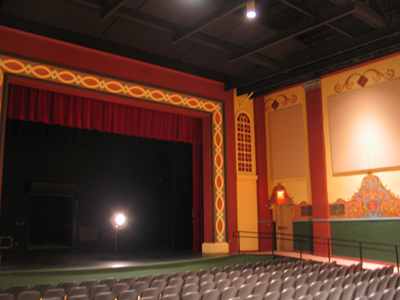
Superstition: There should always be a light burning in an empty theater to ward off ghosts.
Conventionally, the light is placed downstage center, illuminating the space when it is not in use, to keep ghosts with enough light so that they can see, which keeps them at bay. This is another superstition with a practical value: The backstage area of a theater tends to be cluttered with props, set pieces and costumes, so someone who enters a completely darkened space is prone to being injured while hunting for a light switch. It prevents those still living from having to cross the stage in the dark, injuring themselves and leading to new ghosts for the theater. It’s also known as the “Equity Light” or “Equity Lamp”.
3
Whistling
Superstition: It is considered bad luck to whistle on or off stage, as someone (not always the whistler) will be fired.
The reason for this superstition was that before the invention of walkie-talkies or comms, the cues for the theater technicians were coded whistles given by the stage manager. If one was whistling backstage it could call a cue before its due, which could have disastrous outcomes resulting in someone losing their job whether it be the whistler, the stage manager or the technician.
2
Good Luck
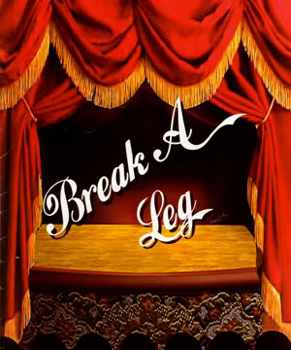
Superstition: To wish someone ‘Good luck’ before a show is bad luck.
Generally, it is considered bad luck to wish someone good luck in a theater, the expression “Break a Leg” replaces the phrase “Good luck”. There are many theories of the origin of this superstition of wishing luck to the actors, but here are a few:
– After a good performance during Elizabethan England, actors were thrown money on the stage and they would kneel down to collect the money thus ‘breaking’ the line of the leg.
– Similarly, for the curtain call, when actors bow or curtsy, they place one foot behind the other and bend at the knee, thus ‘breaking’ the line of the leg.
– If the audience demands numerable curtain calls and the actors are moving on and off stage via the wings they may ‘break the legs’, ‘legs’ being a common name for side curtains/masks.
1
Macbeth
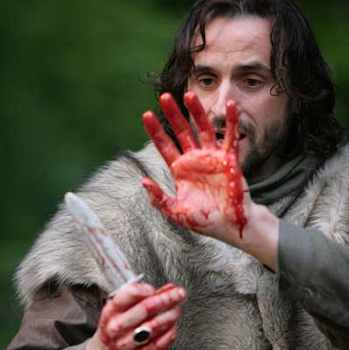
Superstition: Saying the word ‘Macbeth’ in a theater will result in extreme bad luck.
Theater folk avoid using it, referring to the play as ‘The Scottish Play’ or ‘The Bard’s Play’. If the name is spoken in a theater, there is a cleansing ritual one can do to rectify the mistake. The ritual I am familiar with is: The person is required to leave the theater building, spit, curse and spin around three times, before begging to be allowed back inside. Other variants include: Reciting a line from another Shakespearean work, brushing oneself off, running around the theater counter clock-wise, or repeating the name 3 times while tapping their left shoulder.
There are several possible origins for this superstition. One option is to believe in witchcraft. According to one superstition, Shakespeare himself got the words from a coven of real witches, who, after seeing the play weren’t impressed by their portrayal. Another says the props master from the original performance stole a cauldron from said coven, and the witches, again, weren’t impressed. The best witchcraft explanation is that Shakespeare put a curse on the play so that no-one, other than him, would be able to direct it correctly.
Another origin is that there is more swordplay in it than most other Shakespeare plays, and, therefore, more chances for someone to get injured. But the option I believe is most likely is that, due to the plays popularity, it was often run by theaters that were in debt and as a last attempt to increase patronage; the theaters normally went bankrupt soon after.
NB: The superstition is even parodied in an episode of The Simpsons. While visiting London, the Simpson family comes across Sir Ian McKellen outside a theater showing “Macbeth.” Every time “Macbeth” is said, something happens to McKellen.
More Great Lists
 Top 10 Top-Level Domains That Caused Controversies
 Top 10 Best Movies From The Top Genres
 Top 10 Worst Movies From The Top Genres
 Top 10 Ridiculously Over The Top Horror Movie Deaths
 Top 10 More Bizarre Beliefs Held By Top Celebrities
 Top 10 Amazing Feats And Facts About Glass
 Top 10 Interesting Things About The People Of Pompeii
 Top 10 Bizarre Costumed Street Characters And Performers
 Top 10 MIA Fighter Pilots Whose Planes Were Found
fact checked by
Alex Hanton
More Great Lists