Many people who’ve had to proof read documents start to develop a kind of compulsive “tutting” at misused words. Here’s my top ten words that are misused by either professional writers or public speakers who, let’s be honest, should really know better. I’m not being paid for this, so I don’t feel so bad if there are mistakes!

“Refute” means to “disprove with evidence” and yet it’s commonly used, even by professional writers, to mean “rebut” which carries a similar meaning but isn’t quite so strong, as it can also mean “argue against.” The example here (“Simon Cowell refutes ‘scandalous’ claims he helped billionaire hide assets from wife he was divorcing”) is from a recent Daily Mail article. For those outside the UK, the Daily Mail is a newspaper which regularly rages against falling educational standards. A special mention to Sarah Palin who invented a new word “refudiate”; the usage suggests she meant repudiate.

Nowadays, it’s almost universally assumed that “instant” actually means “quickly” or “without intervention.” Obviously, it doesn’t. It actually refers to a precise moment in time. Google Instant is a good example of this word being abused.

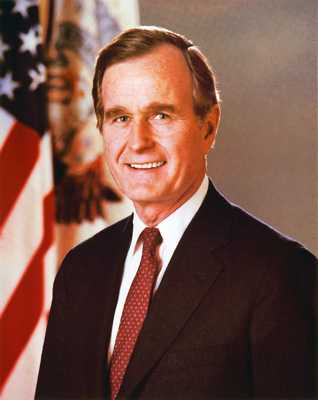
“Enormity” means “extreme evil”, but it’s often used to mean “enormousness”. US President, George HW Bush missed this one when he said after being elected that he “Couldn’t believe the enormity of the situation.” A perfect example of irony (which, in the context I have just used it, is correct).

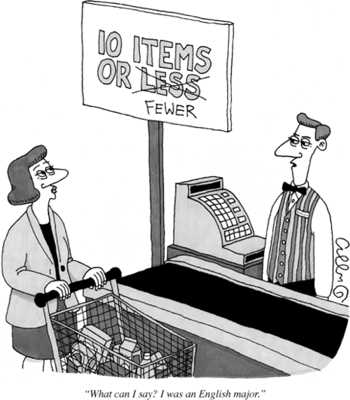
Less is used when comparing quantities that can’t be counted; for example, “I’d like less milk.” If you’re comparing quantities (like bagels, for example) then “fewer” should be used. But you don’t win many competitions with a tie break if you point out that “25 words or less” should actually be “25 words or fewer.” The antonyms “more than” and “greater than” get similarly misused. Programmers will know the comparison operators are referred to as “greater than and less than”; it should really be “greater than and fewer than”.

Chronic is originally a medical term meaning “long term”; it has the same root as “chronometer”. Someone suffering from chronic pain has long term pain. It’s often used to mean “very bad” – in fact “acute” should be used instead. Despite that, it’s easy to find recent examples: “O’Brien: INM in ‘chronic’ state”.

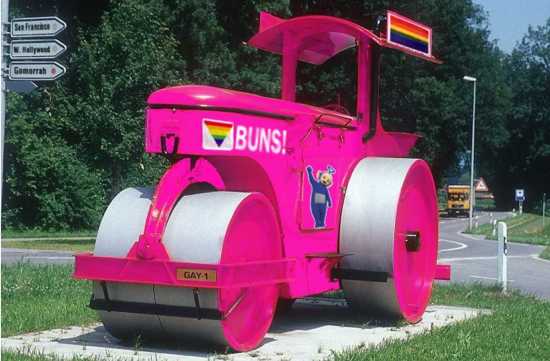
This is such a widely known misused word that examples are less common, as most people know to avoid the term – which should be used to describe something that is actually happening (for example, “He literally danced with joy.”) but should not be used for emphasis (“Steam was literally coming out of his ears.”) This example quotes a, now deceased, reverend gentleman who seemed to rejoice in, frankly, daft opinions, including one about a “literal homosexual steamroller”:

“Panacea” means a cure all; it comes from the same Greek root as “panorama”. It shouldn’t be used to imply a cure for a single thing, and yet here is a newspaper saying: “SOUTH AFRICA: Welfare payments – a panacea for poverty?”

Does “disinterested” mean the same as “uninterested”? No. Here’s an example of misuse: “TomTom Disinterested in Windows Phone 7 Too?”. “Disinterested” means that a party is independent; so a dispute might be settled by a disinterested party. “Uninterested” means the party has no interest. “I asked John if he wanted to go to the cricket, but he was completely uninterested.”

Decimation was a Roman punishment where one in ten men was killed. So when something is decimated, it implies that ten percent of it is destroyed. “Devastate” is almost certainly a better word for most usages and yet: “New York City budget will decimate libraries”.

From the Latin, this means the last in a list of items. But it’s so widely used to indicate the best; a google search for “ultimate phone” gives 307 million hits. I’d argue that the last phone has yet to be made. This is probably the most misused word on the Internet; type “ultimate” into google and thousands of hits come up, pretty much all of them using it as “the best”. However, for a change, this is the ultimate entry in this list.


the site is very useful
thanks for ur efforts
I think you might be missing the point. These ten terms are progressing pieces of the English language; ever changing in meaning and in my opinion are not being ‘misused’ at all. Who are we to say what is the right and wrong use of a word, while it is true that linguistic anarchy would indeed follow such an event such as the collapse of the so-called authoritative English language committee -the Dictionaries- the very first rules of grammar and definitions were indeed made up by men with little linguistic knowledge simply because it seemed correct. Of course Dr. Samuel Johnson gave such ambiguous definitions in his dictionary some of which are of great comedic value, nevertheless, since this time words have entered our language, others have been dismissed and some have grown all new meanings because that is the essence of any language, progress. And whilst I realise that the definitions as we know them in the dictionaries are being flouted they are by no means wrong.
Please add the word revert to the list
How can revert be misused? I’m asking a serious question. Try though I might, I just can’t imagine how to misuse this particular word. I don’t think I’ve ever seen it misused. Maybe I haven’t read the same stuff you have.
While I can agree most people do not understand the meaning of “ultimate,” I have to say that there is also a correctness in the appelation of “the ultimate phone.” OED, in additon to the definiton you have correctly listed, also states that “ultimate” may mean “The final point or result; the end or conclusion; the last step. the ultimate (const. in), the best that can be achieved or imagined; the ‘last word.’” I would argue that to search for “the ultimate phone” would literally mean the end-all, be-all phones. (Much like my iPhone if only it had Flash!) While it is true the last phone has not yet been invented and most likely will not be in our lifetimes, I think ultimate can be used (correctly, at that) in the example you provide.
How about the word ‘Normalcy” coined by President Warren G. Harding
the word should in most studies and engineering reports. It makes any reader feel that “should” is just a wish that won’t be realised.
[...]please check out the web-sites we stick to, which includes this 1, as it represents our picks in the web[...]
[...]please visit the web pages we comply with, including this a single, because it represents our picks from the web[...]
[...]that would be the end of this article. Right here you?ll uncover some internet sites that we feel you?ll enjoy, just click the hyperlinks over[...]
Here is my pet peeve. Picture a bridal shower where there are about 15-20 women. The Bridal Shower ends. And one of the women says “Hey you GUYS, lets go out and celebrate, Well, correct me if I am wrong but doesn’t the word GUY fall into the category of MEN and not WOMEN ?? 15-20 women, to me, has no GUYS to go out and celebrate with. Its all WOMEN or GIRLS. Can someone give me an answer to that ??
[...]here are some links to websites that we link to simply because we assume they are worth visiting[...]
Name
[...]here are some links to websites that we link to simply because we think they may be worth visiting[...]
[...]very few web-sites that take place to become comprehensive below, from our point of view are undoubtedly very well really worth checking out[...]
Name
I really gained a lot here. The word ‘state’ should also be looked into. Many teachers tend to use the word wrongly.
[...]one of our guests not long ago proposed the following website[...]
While this list IS interesting, I contend the most misused English word remains “IS.” Most writers sprinkle the passive verbs “is” and “are” into their prose as frequently as they shake salt and pepper onto their food. We often speak in terms of “is this” or “are that,” and end up writing much the same way. But when you can, use active-voice verbs instead. This practice will make your writing more vibrant and alive. Sometimes you can’t figure out how to use another verb, no matter how hard you try to find an active verb. But use these way-over-used passive problem-words as little as possible. Your readers will appreciate it, even if they don’t know why.
It’s a very informative list, but I think it needs a bit of an update. Some uses of words, although considered incorrect in the past, have been widely accepted and added in dictionaries (for instance, Merriam-Webster).
I hope you are aware of the fact that the top of your web page displays “Listverse Ultimate Top Ten Lists”. While I’m not sure that this displays true situational irony, I did find it to be amusing as I am sure that these are not the last top ten lists, but the best. I did greatly enjoy the list, and was shocked by how often I have misused some of these words.
How about the word “Normalcy” coined by U.S. President, Warren G. Harding
Name
Words are constantly evolving in meaning, in some cases our contemporary take must be accepted by those who read the dictionary like a Bible!
[...]Here are a few of the websites we recommend for our visitors[...]
Useful info. Fortunate me I discovered your site by chance, and I am stunned why this coincidence did not came about earlier! I bookmarked it.
i like your pictures and i like your top ten misused english words
Actually, Panacea was the daughter of Asclepius (Greek mythology). As we all know, an Ancient Greek hospital was an ‘Asclepion’ – a temple to the God Asclepius. The priests of Asclepius were a kind of doctor (but there were universities and people like Hippocrates also). Another of his daughters was the Goddess Hygeia. Guess what she gave her name to. (hygiene, if you’re a stupid Yank.) So, Panacea in turn gave her name to something medical – she was Greek Goddess of ‘Universal Remedy’. So, friend, it does not have the same origin as panorama. The Wikipedia article also states that her cure-all is also used a figurative way as something to fix a large problem. Suck it. (Your list is at nine for the moment.) http://en.wikipedia.org/wiki/Panacea
Don’t worry; I’m studying a course on History of Medicine – I know what I’m on about.
Hello there, You have done a great job. I’ll definitely digg it and in my view recommend to my friends. I’m sure they’ll be benefited from this site.
The word “Sycophant”. Does that refer to a gold digger or someone who schmoozes with upper class people in order to become a high society person themselves. Just Curious and an answer will be returned with a big Thank You
It’s the schmoozer, and not necessarily to become one themselves, but also to bask in their reflected glory and/or power.
A more colloquial expression would be “Brown Nose”.
Thank You very much Michael. The reason that I asked is my Mom died in 1981 and my Dad got remarried only 13 months later to a woman of questionable taste. My Dad was 51 and his new one was 43 and my Dad was her 4th husband. That made my head scratch. My Dad was also fairly successful in life and made a very good salary. Never in my life had I ever encountered such an ***** retentive person and she had a son who flat out refused to get a job which was a big problem and was living under my Dad’s roof. She would go through her paycheck on senseless items like it was nothing and always bragged about personally knowing the Rockefeller family. Anyhow, they divorced in July of 1994 after 11 1/2 years of marriage and cost my father to the tune of $75,000 when it all ended. I hope that I never see her again. Thankfully my Dad is still with us at age 82 and is back to his normal self. Thanks again for correcting me and setting me straight on that word.
I have been surfing online more than three hours as of late, but I never found any fascinating article like yours. It’s beautiful value sufficient for me. In my opinion, if all site owners and bloggers made just right content material as you did, the internet will be much more helpful than ever before.
@ english speaking course. I agree with your statement 100%. Let’s just say that the English Language is a precisely misused tool. Hence the reason that my favorite Television show has always been “All In The Family” with Archie Bunker and his use of the English Language.
I know this list is almost a year old, but since the writing of this literally, ultimate list that will instantly decimate all others and act as a panacea to our chronic language slaughtering epidemic whether it is interested or disinterested in doing so, a new commonly misused term has come to the forefront. It is the word, epic. The enormity of it’s misuse cannot be refuted.
Seriously though. Nothing can be “kind of” epic. Nor can a trip to the grocery store be epic. Thanks, Zuckerberg, for giving everyone such an epic forum to exaggerate. Facebook. Sheesh.
this is my ultimate post
It’s good of you to do this, especially if you’re ‘not being paid’. Still, since you are publishing on the internet surely there is some responsibility to get things right. There are two mistakes in the first two lines of your introduction. 1) ‘ Proof read’ should be one word: proofread; 2) ‘Here’s’ in line two should be ‘Here are’, since you’re describing ‘words’— a plural noun. If you care about language as you say you do, then perhaps you can make these small but important changes. Respectfully, Chris Alexander
One of the most misused words is ‘pretty’. We use it pretty well every day and mostly for things and situations that are not pretty at all. Now that’s pretty bad. I could get pretty mad just thinking about it. Think I’ll finish this now as writing can be pretty exhausting.