15 Memorable Alien Races in Science Fiction
Published on August 13, 2008 - 148 Comments
Let it be said from the start that this list is neither comprehensive nor an attempt to rank the “greatest” aliens. I truly feel the odds are highly in favor of there being more alien races in the universe than science fiction could possibly imagine (and we haven’t met a single one of them yet). But the field has certainly given it the old college try in imagining what they might be like. As such, this list is nothing more or less than some of the aliens I have enjoyed getting to know in the pages of books. Some are foes, some are friends, some are neither or misunderstood decent-folk. In an effort to limit the possibilities at least somewhat, the following criteria apply: Only races found in “books” are included (no short stories or visual media). The book must be good enough to read regardless of how cool the aliens are. The aliens must be fleshed out to where you would know what to expect if suddenly meeting them. They must be unique and memorable. Here then, are a few I think I “know” that are in no particular order.

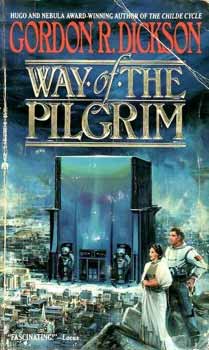
Hard for humans to pronounce, with a deep glottal stop after the first “A”, the Aalaag conquered Earth easily to set the stage for Gordon R. Dickson’s 1987 novel, Way of the Pilgrim. Considered within their own ethos, the Aalaag are extremely just masters — mistreatment of their human “cattle” by one of their kind is a serious offense. But they demand obedience and a rigid code of conduct that rankles the human spirit. Actually, the Aalaag are a conquered race themselves, fleeing from some unnamed but awesomely powerful enemy that took their home worlds. They are in essence warriors, tall and proud, each with a collection of personal arms and possessing a Spartan outlook on their condition. Every single Aalaag views duty as the highest virtue, and all duty is directed towards one day regaining their lost worlds. The races they themselves conquer are used to exploit resources in support of this ultimate goal. Our hero is Shane Evert, a gifted linguist who leads a translator-courier corp in the service of the alien leader, First Captain Lyt Ahn. The book title refers to the use of a Pilgrim as a universal motif of the human condition, which becomes a symbol for the nascent resistance movement. Absorbing, warmly human — at times captivating — the novel is Dickson at his finest, and that is a high level of writing indeed.

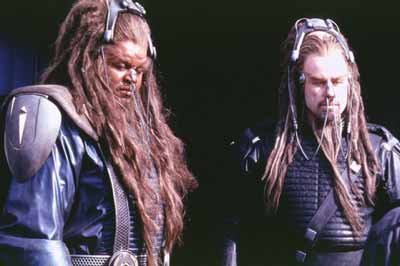
Forget about the absolutely wretched John Travolta movie. Forget about whatever you think of L. Ron Hubbard as the founder of Scientology. Just read his mammoth (1,066 paperback pages) 1982 novel Battlefield Earth. It is rollicking space opera the way space opera is supposed to be. The Psychlos don’t just conquer planets. They don’t just conquer galaxies. They conquer universes. Only they have the secret to instantaneous teleportation. And one of their biggest operations is the Intergalactic Mining Company, which knocks natives back to the Stone Age and then systematically strips their planet of all available ore, almost down to the very core. Oh, and the Psychlos find cruelty to be “delicious.” The crooked — even by their standards — Security Head of Earth is named Terl and he is scheming to get rich by “training” native humans to do some illegal mining for him. Superb characterization of both aliens and humans in a story that moves so briskly, you’ll forget you are reading. A tip of the hat must be made to the Selachees, another alien race in the book that is unique and crucial to the outcome.

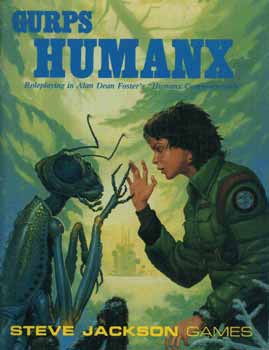
Alan Dean Foster has penned a number of works set in the Human-Thranx (Humanx) Commonwealth, but most deal with well-known characters such as Flinx and Pip, with the Thranx being in the background if appearing at all. One novel, however, thoroughly explored the culture of the Thranx while detailing how humans came to partner with them. That would be 1982’s Nor Crystal Tears, which in large part is written from the Thranx viewpoint. Everything just seems to fit in this novel — by the end of it, you are so much pulling for the insectoid Thranx to form an alliance with humans that you would immediately recognize any instance of Foster not treating a Thranx as a Thranx (even though there is plenty of room for individualism within the species). But he handles the race perfectly. And I happen to really like praying mantises.

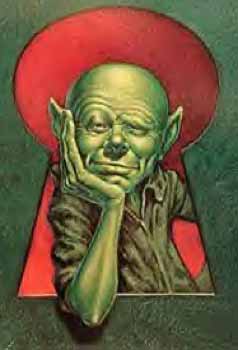
Specifically, the Martians in Fredric Brown’s 1955 novel Martians, Go Home. They literally are little green men, but what they truly are — first, foremost, and always — are assholes. Being an asshole seems to be their major occupation. They invade Earth by the millions literally overnight, speaking English with something like a Brooklyn accent, and proceed to make utter nuisances of themselves. With disastrous, even fatal, results. They can teleport anywhere, and although they can’t be touched, they are substantial enough to where you can’t see through them — auto and plane crashes by the thousands. They like nothing better than to tell you who your wife is sleeping with, give national defense secrets to other countries, comment of human shortcomings — anything to be as big a pain in the ass as possible. This book is almost universally considered a classic of the genre, and I haven’t met anyone who read it and didn’t like it.

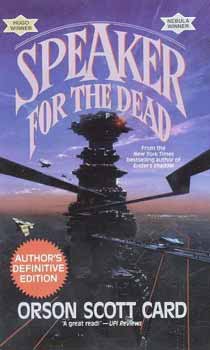
Speaker for the Dead is Orson Scott Card’s 1986 sequel to his justifiably world-famous novel Ender’s Game (a deserved entry on JFrater’s list of science fiction for people who don’t read science fiction). Both novels won both the Hugo and Nebula awards — the first time anyone has accomplished such a back-to-back feat. Speaker is much different in tone, backdrop and subject material, even though Ender is still the major character. Almost certainly many people will disagree with listing pequinos as a classic alien race — arguing instead for the Buggers or even Jane — but it is the rich depiction of the “piggy” society that gets the nod here. Especially because, much to Ender’s chagrin, once again the difficulties of interspecies communication are at the forefront as humans attempt (in vain) to understand the pequinos without disrupting their natural development. Very touching in places, and a must for any sci-fi reader interested in comparative religion. Before that scares you off, I am most decidedly NOT interested in such, but loved the book anyway. If nothing else, the concepts of framling (humans from other planets), ramen (non-humans whom we communicate with as though they were human), and varelse (non-humans with whom no communication is possible, such as intelligent viruses) should be remembered at the inevitable time when we come into contact with interstellar beings.

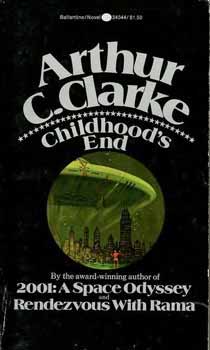
Widely included in university science fiction courses everywhere, Arthur C. Clarke’s 1953 classic Childhood’s End depicts yet another conqueror of Earth — but a benign one, in many ways. The Overlords make life better for everyone and end many of our persistent woes, all while sitting aloof in their gigantic starships positioned over major cities. Mankind adapts, as is his nature. But the Overlords will not reveal themselves for fifty years and the reason why incorporates the Jungian concept of racial memory. No spoiler coming, but this inclusion is probably why so many professors love to teach the novel. Anyway, of course there is a secret to why the Overlords are doing what they do. What happens when that is revealed might best be described as “poignant.”

Larry Niven didn’t need the money but Jerry Pournelle did. Doesn’t really matter, because both guys are science fiction authors whether they’re eating Hamburger Helper or fillet mignon. Together they are one of the most successful collaborations the field has ever seen. 1985’s Footfall is an excellent example. People who don’t read science fiction were reading Niven/Pournelle novels in college during the 80’s while waiting for the next Heinlein to come out. Anyway, anyone who has read the book has to think of the Fithp as elephants. As humans are a culture of individuals, as ants are a colony culture, the Fithp are a herd culture. Excellent treatment of that basic premise — and being herd creatures, they do not understand the concept of diplomatic compromise… you either dominate or you submit. In particular, the internal politics of an intelligent herd engaged in difficult conquest are handled with admirable skill.

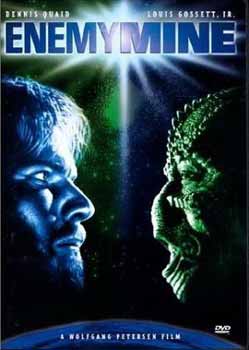
Ok. So a guy publishes a novelette and it wins the Nebula — mere months after the guy publically denounces the awards themselves! Then it wins the Hugo. Along with the John W. Campbell award because, after all, the guy is new. So he’s the first person ever to win all three of those awards in one year. Big deal? Sort of. Along came Hollywood and a somewhat underrated film starring Dennis Quaid and Louis Gossett, Jr. (Gossett got a Best Actor nomination, even though the film wasn’t really a hit.) Suddenly, Barry B. Longyear is a major player in science fiction as a result of 1979’s Enemy Mine. Drac and humans are at war. One human fighter pilot and one alien fighter pilot are marooned on a world where existence is difficult to say the least. They are forced to pool resources just to stay alive. Problem is, the Dracs are hermaphrodites and Jeriba doesn’t need a partner to reproduce. Spoiler alert next sentence: An untimely death and our human is forced to raise the alien progeny as his own. Both the book and the movie are essentially the story of one human and one alien interacting, with a beginning and an ending tacked onto either end. If you’re in the right frame of mind, you’ll cry. You will absolutely know the Drac, especially if you have both seen the movie and read the book. The Drac are included here because they fit the criteria; I own many Longyear books mainly as a result of the sheer pathos in Enemy Mine, but find the majority of his stuff barely readable.

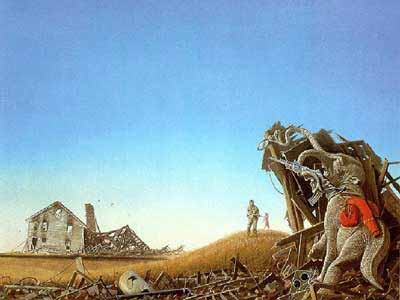
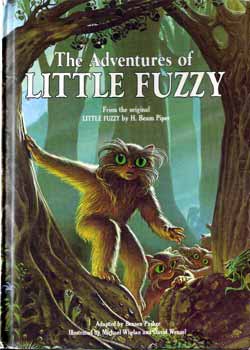
H. Beam Piper solidified his place in science fiction history with the publication of 1962’s Little Fuzzy. The adjectives most used in reviews of this book might well be “delightful” and “charming” and one can’t blame the reviewers for that. Cute and cuddly, the Fuzzies are. But the novel explores a rather important theme: how do we define sapience? Is this lifeform just a critter, over which we can claim dominion, or a thinking creature in its own right, in which case exploitation — and even murder — rears its ugly head? Sequels followed, not always written by the originator — none are as enjoyable as the original.

It’s problematical whether Keith Laumer is best known for his Bolo series of works or what he has done with his James Bond-ish assistant diplomat character Jame Retief. Probably the latter. Lots of stories and novels over several decades. Regardless, these tongue-in-cheek tales of derring-do and human ingenuity in the face of human diplomatic incompetence have sold quite well for many years. In most of them, there is an insidious plot behind whatever the current weird aliens are doing that is being masterminded by the Groaci. No slouches at the diplomatic bargaining table, the Groaci are nonetheless almost incapable of dealing squarely. The books are pun-filled and light-hearted, but the Groaci are badass unless put on a leash. Almost not included on the list, as they are rather a two-dimensional race. Fun, nonetheless.

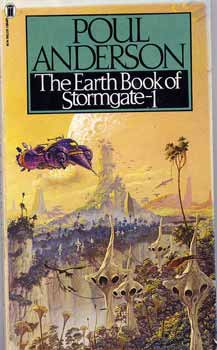
Poul Anderson is undoubtedly one of the deans of American science fiction — his word count alone contains way too many commas. Many of those words were as a result of cranking out short story after short story for the magazines back in the day. He had sort of a “Future History” — a term associated with Robert A. Heinlein which see, — but Anderson’s future history was rather a disjointed one. Many of his stories were set in the backdrop of the so-called “Polesotechic League” which spanned 4,000 years of human interstellar exploration. The League is a thinly-veiled (if veiled at all) allegory of 19th-century robber-baron capitalism. So what about the Ythri? 1978’s The Earth Book Of Stormgate violates a criterion: it’s a story collection, not a novel. But Hloch of the Stormgate Choth introduces each story as a scholar/historian. And the interwoven stories themselves, combined with Hloch’s notes, definitely give the reader a sense of Ythrian culture. The best way to include that race in this list — and they are worthy of inclusion — is via the Earth Book (although Ythrians also appear in other works by Anderson).

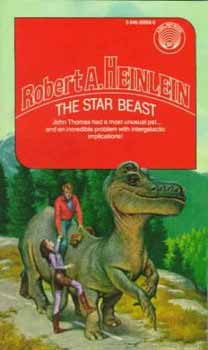
Hard to explain these guys without spoiling everything, but I’ll try. Well over half of Robert A. Heinlein’s 1954 “juvenile” SF novel The Star Beast has played out before the word Hroshii ever appears. But, they’re plenty powerful — and disinclined to negotiate. They’re looking for someone, and they simply will not take no for an answer. The someone they are looking for has a little trouble taking no for an answer, as well. Not truly disobedient, and with no desire to cause harm, just kind of literal-minded in following instructions and always a little hungry. “Lummox” is so a person and more than that, s/he’s a friend!

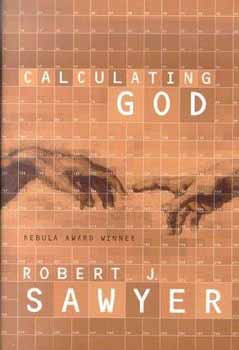
Pretty danged human for being essentially giant spiders. Canadian author Robert J. Sawyer, who is probably today’s foremost purveyor of “hard” science fiction, introduced us to this race in 2000’s Calculating God. Even though the events in the novel deal with the Forhilnors coming to Earth and interacting with a human paleontologist, it could be said that the aliens are simply bystanders… Sawyer uses that encounter to tackle really mind-blowing concepts of creation, cosmology, and why life exists at all. Nevertheless, the reader would love to have Hollus as a dinner guest and would be proud to have that [person] as a friend. Satisfies the criterion of knowing what those folks are really like. But as a digression: Take three good friends. One is a fundamentalist assured of his salvation. The second is an agnostic who feels he believes in God but doesn’t quite know what that means. The third is an atheist who looks strictly to chemical processes. Remember, they are all good friends. Calculating God is the book they should discuss around a campfire.

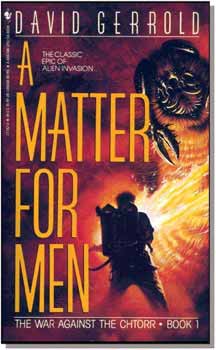
If you don’t know David Gerrold, you nonetheless probably know one thing he did — he wrote the Star Trek episode “The Trouble With Tribbles.” His output includes a number of short stories and novels of varying quality. But in 1983 he published A Matter For Men, volume one in what became known as “The War Against The Chtorr.” Although the “worms” are the most visible face of the Chtorr, what we have here is nothing less than the attempt of an entire biosphere to conquer Earth. Several books resulted, and happily some of the latter ones are just as good as the first. They really have to be read in order, though, as the Chtorran infestation multiplies and human reaction changes accordingly. This comes close to violating a criterion — it would be stretching it to call a Chtorran worm a “person”… even with absolutely zero speciesism. A God maybe, but not a person.

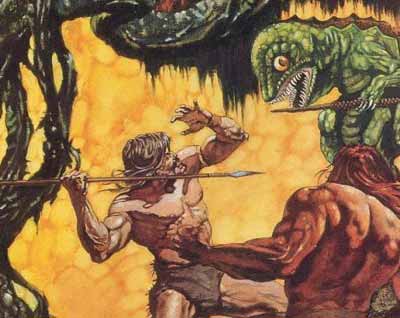
Another rather well-known race, and here’s hoping someone with a real budget will get around to making a movie of Harry Harrison’s 1984 masterpiece West of Eden. It spawned a few sequels (with the usual slight lowering of quality) and is a stunning example of meticulous alien-creation. Although, the Yilane aren’t truly aliens in one sense of the word… this is an alternate evolution of Earth story. Humans are at the hunter-gatherer stage. The Yilane are 4-foot tall, erect intelligent reptiles descended from dinosaurs. Theirs is a matriarchal society whose technology is based almost exclusively on the manipulation of the biological sciences. They literally grow plants and animals that are modified to perform such diverse functions as microscopes, boats, and living blankets. The Yilane are tropical whereas the humans are temperate. But impending climate changes push the two societies towards one another and conflict erupts. Kerrick, the human protagonist, is uniquely situated — he was captured by the Yilane at an early age and raised among them. This upbringing is the true beauty of the book: it allows the author to show the reader the awesomely rich Yilane culture without having to rely heavily on exposition. As Kerrick learns, so do we. And quite an education it happens to be, as readers end up truly knowing a completely alien culture — without any sacrifice in good storytelling whatsoever. Harrison is rather erratic in the quality of his various works — some are horrible, many are craftsman-like, a handful are quite good — but he undoubtedly triumphed with this one.
Contributor: Grubthrower
Related ListsTop 10 Most Influential Science Fiction WritersTop 10 Errors in Science Fiction Movies 15 Astoundingly Beautiful Sci-Fi Images Top 15 Science Fiction Book Series |
SubscriptionsLike this article? Subscribe to the RSS feed to keep 'em coming, or subscribe via email: |
If you find this site helpful, please leave a donation so you can enjoy the spirit of giving too.
Email This Post

1. emmstein - August 13th, 2008 at 3:25 am
wookie????? wookie!!!!!
2. emmstein - August 13th, 2008 at 3:26 am
oh. sorry. [Only races found in “books” are included (no short stories or visual media)].
wookie!!!
3. Rusty - August 13th, 2008 at 3:29 am
My vote is for Ford Prefect representing Betelgeuse - though he started out as a radio character.
4. Iain - August 13th, 2008 at 3:34 am
Probably a major omission here is the David Brin ‘Uplift’ series - which is better quality writing than most of these.
Also CJ Cherryh does a lot of good stuff on the perils and pitfalls of alien interaction.
5. Tempyra - August 13th, 2008 at 3:40 am
Iain: Yeah, the Uplift series is wonderful and many of the alien races in the books are well-fleshed out and complete. I love that series. I’m quite surprised not to see his work mentioned on this list. Still a very cool list, good work Grubthrower
My favourite author on this list would have to be Orson Scott Card; Ender’s Game is a fantastic read.
6. Angharad - August 13th, 2008 at 3:42 am
Yay, Forhilnor! I love that book especially because it points out the bias human science fiction has in making almost every alien humanoid, even while conceding that we’re kind of limited to human actors.
Thank you for this list; I added some more to my amazon wishlist.
7. jfrater - August 13th, 2008 at 3:55 am
I am certainly going to be buying some of the books on this list as well!
8. Tempyra - August 13th, 2008 at 4:04 am
Two more races that I think might fit the criteria for this like are the Eloi and the Morlocks from The Time Machine by H. G. Wells, although they aren’t completely alien.
9. Frank - August 13th, 2008 at 4:12 am
Vogons dude! Gotta admit, I don’t read sci-fi - Hitchhiker’s Guide is the sole exception.
10. Tempyra - August 13th, 2008 at 4:13 am
Oh and The Race from Harry Turtledove’s Worldwar series. Also, what about the sandworms from Frank Herbert’s Dune series - would they count as a ‘race’?
11. jfrater - August 13th, 2008 at 4:17 am
Guys. First sentence of the list: “Let it be said from the start that this list is neither comprehensive nor an attempt to rank the “greatest” aliens“
12. Swifty66 - August 13th, 2008 at 4:17 am
I understand this list just includes alien races in literature, but I always thought the Borg from Star Trek, The Next Generation were really frightening and imaginative. They gave me a few nightmares!
13. romerozombie - August 13th, 2008 at 4:26 am
Definetly gonna picking up a few of these books.
14. Val - August 13th, 2008 at 4:39 am
3. Rusty - August 13th, 2008 at 3:29 am
My vote is for Ford Prefect representing Betelgeuse - though he started out as a radio character.
9. Frank - August 13th, 2008 at 4:12 am
Vogons dude! Gotta admit, I don’t read sci-fi - Hitchhiker’s Guide is the sole exception.
Word! haha gotta love Hitchhiker’s Guide. XD
I must admit I’m not that much into sci-fi, but some of these actually do look interesting. Thanks!
15. romerozombie - August 13th, 2008 at 4:59 am
Hollywood movies are so stale and predictable at the moment - if only they’d adapt some of these really inventive and original novels, they might have a winner on their ahnds. If they don’t cut out all the themes and subtext and turn it into a no-brainer disaster movie starring Tom Cruise…
16. G C - August 13th, 2008 at 5:03 am
Ahhh you missed my favorite, the Tralfalmadorians! Any variation of them would have been fine- the most accepted being the ones from “Slaughterhouse Five.”
17. Jimmy-bob-bob - August 13th, 2008 at 5:12 am
The lack of the original Martians from War of the Worlds is a great disservice. They weren’t characters- they were forces of nature, completely inhuman. Truly frightening.
18. Tempyra - August 13th, 2008 at 5:14 am
jfrater: Dude, aren’t you jumping the gun? No-one said anything about ranking or lack thereof.
19. BlackRainbow - August 13th, 2008 at 5:18 am
Good List…Also an ego-booster
if you don`t recognise any of these aliens,you can consider yourself just a little bit cooler
20. rushfan - August 13th, 2008 at 5:24 am
Cool list. When I was half-asleep and read the title this morning, I thought it was gonna be aliens racing.
21. stewart - August 13th, 2008 at 5:28 am
Since Swifty66 mentioned Borg. I have to add my two cents worth with the amazing discover that the first Star Wars series was shot in the 1960’s. When I watched it as a kid in the early 80’s I was always under the impression that Spock and Kirk were from the 80’s. Its only recently after finding info and stills from the original series on Wiki, that I found out how old the series was. I am so impressed that they managed to do phaser beams back in the 60’s. I wonder how they got it right? Maybe they drew the beams in frame by frame with a blue or red crayon LOL. And those amazing doors that opened and closed by themselves, back in the 80’s they were really super cool. Now we don’t bat an eyelid when we walk into a convenience store and the doors open automatically. So what’s going to be reality in 20 years from now? Will our police have Jedi weapons?
22. deedee0323 - August 13th, 2008 at 5:28 am
What about the Tralfamadorians from Slaughterhouse-Five??
23. Mona - August 13th, 2008 at 5:34 am
Same here. I’m not a big sci-fi reader but I’m definitely going to check out some of these books. Probably Fredric Brown’s “Martians, Go Home”. They sound like fun!
24. glittershrooms - August 13th, 2008 at 5:40 am
I’ll be adding a few books to my already huge “to read” pile which I just realised has no sci-fi titles in it at all. Cool list!
25. Randall - August 13th, 2008 at 5:42 am
Hmmmm…… not sure about this list. I would never have included L. Ron Hubbard’s “Battlefield Earth” or the aliens therein; we’re talking major crap there. Some of these others I would have passed on as well—though I was happy to see Arthur C. Clarke’s Overlords included.
But how about Fred Hoyle’s Black Cloud? How about Campbell’s “Thing” from “Who Goes There?” (technically a novella). Jack Vance’s Pnume? How about Heinlein’s Puppetmasters?
This list seems a tad too heavy on the post 70s sci fi. But maybe that’s just me.
Excellent resource for great aliens is the book from the late 70s, “Barlow’s Guide to Extraterrestrials.” I still have my first edition of that thing.
26. Savanti Romero - August 13th, 2008 at 5:43 am
What of the Bugs from Starship Troopers?
27. Nicolelodeon - August 13th, 2008 at 5:50 am
Yes, I definitely think that the Tralfamadorians from Slaughterhouse-Five should be included on this list.
28. littlegraysheep - August 13th, 2008 at 5:56 am
U FORGOT THE TEKNOPHAGE!!!!! :))
www.teknophage.com/
29. Cedestra - August 13th, 2008 at 5:58 am
Mmmm, I loves me some science-fiction lists. Kudos on the list- not an easy feat. I was trying to come up with additions and nothing’s really striking me. Of course, I know have a LOT of reading to do.
Tempyra: I think Jamie’s reached his zero-tolerance with the inernettes.
30. Gilraen - August 13th, 2008 at 6:05 am
Chanur??? Kif??? Mahendo’sat???
Cherryh is a master at making humans seem alien, and aliens seem normal.
We need a follow-up list!
31. MarkH - August 13th, 2008 at 6:26 am
Wow — the Fithp from the eminently forgettable “Footfall”…but not the Moties from “The Mote in God’s Eye”? Wow. Just…wow.
32. Mom424 - August 13th, 2008 at 6:31 am
Excellent work Grubthrower. So many books, so little time. Glad to see you mention Harry Harrison. Even his lamer stuff shows great narrative skill.
33. pankhudi - August 13th, 2008 at 6:35 am
I am not able to come up with any comment……no idea about science fiction. Always thought it would be boring and not worth giving a try. But seems like I should start reading them now.
Grubthrower: Hey, your descriptions are nice and are evoking some interest. So…nice list.
34. Callie - August 13th, 2008 at 6:43 am
Can I have a little fuzzy as a pet? It looks like fun. I’d name it Popple.
35. Diogenes - August 13th, 2008 at 6:45 am
It looks like the only one i’ve read here is Childhood’s End .
For a budding thirty somethin sci-fi reader who is pretty new to the game, I am still overwhellmed by the shear magnitude of the stuff and am glad theres crazy guys like you Grubthrower, who seem to have read it all–and can succinctly compile a list such as this and share your wealth. Saves me a lot of time scouring in the dark.
I’m in the mood for a book about asshole martians. Sounds great.
Calculating God and Speaker for the Dead seem like a couple of good challenges.
West of Eden i must look up.
I just remembered an early science project i did for school, when i was but a wee lad, where I attempted to show what aliens would look like on different planets, if they existed! I didn’t come close to winning a Hugo or Nebula, or anything.
weird.
It seems i’ve been missing out.
36. Randall - August 13th, 2008 at 7:10 am
An interesting fact:
The fuzzies of L. Beam Piper (along with Heinlein’s Martian Flatcat) were a direct influence on David Gerrold in creating tribbles for the original Star Trek. (He states this his book on the making of the episode… and don’t ask me how I know this. It’s far too embarrassing).
37. RobS. - August 13th, 2008 at 7:15 am
Instead of the Fthip, I would have included Niven’s Pierson’s Puppeteers.
But it’s all subjective, anyhoo.
Fun list.
38. ionmike - August 13th, 2008 at 7:21 am
You forgot Octavia Butler’s Xenogenesis trilogy with the very memorable and mysterious Oankali and Ooloi
39. Ghidoran - August 13th, 2008 at 7:22 am
Never heard of any of these, sorry.
40. Egg - August 13th, 2008 at 7:26 am
“Childhood’s End” looks great, though I’m far from a lover of sci-fi books (movies however…). I always liked the Star Wars aliens, but I know that’s because I view Lucas as a sci-fi Tolkien. Good list? I wouldn’t know content-wise, but the summaries were nice.
41. thirtytwo - August 13th, 2008 at 7:39 am
I got down to number 12 before I realised that this didn’t involve aliens racing each other
42. watching - August 13th, 2008 at 7:50 am
Nice to read about Ender’s Game sequel. It’s on my list of books to buy (thank God I work in a bookshop
).
I like the aliens mentioned in
A Wrinkle in Time, “Aunt Beast” race and whatever the three ‘ladies’ were!
43. oose85 - August 13th, 2008 at 7:50 am
From Star Wars:
Wookie
Hutt
Yuuzon Vong
From Animorphs:
Andalite - can “absorb” DNA from any life form and shapeshift to be an exact replica.
Yerk - A parasite race that can connects itself to the brain of any life form and takes them over.
44. alex - August 13th, 2008 at 7:56 am
…nerds!!
45. AmazingThor - August 13th, 2008 at 8:04 am
Doesn’t fit the criteria because its a short story, but “Black Charlie” is one of the best stories about humans trying to see the world through alien eyes.
46. Gamingboy - August 13th, 2008 at 8:11 am
Agree with most of these, but think that the WoTW Martians should be in (if not just because they were basically first!), the Yuzzhon Vong should be in (they are eligible since they were created for the Star Wars books- never showed up in any of the movies) and the Puppet-Masters from the Heinlein novel of the same name.
Non-Literature candidates: The Time Lords, the Trill (friendlier version of the Puppet-Masters, now that I think about it) and the Body-Snatching pods.
47. antmansbigxmas - August 13th, 2008 at 8:18 am
I guess you were only drawing from literature, even though it wasn’t specified in the list’s title. I would have to completely disagree with this list. While it may be due to the face that I am admittedly no scholar of science fiction, I shouldn’t have to be to be familiar with so-called “memorable” alien races. I didn’t recognize a single specimen on your list. While I don’t disagree that they may be interesting species - your descriptions sound compelling enough - I think you missed the point of “memorable” in that none of these are mainstream enough to be memorable.
48. Blacknimbus - August 13th, 2008 at 8:28 am
Yeah…I would have chosen the Moties over the baby elephants. They were perhaps one of the best efforts at making an completely alien race that was still accessible to most readers.
And I would have included Frederik Pohl’s Heechee. Gateway is one of my favorite novels.
49. Arnaud - August 13th, 2008 at 8:39 am
Aliens from the books by R.Forward: Dragon’s Egg and The Flight of the Firefly are great !…
Because they are totally un-human.
In Dragon’s Egg, they are very small kinda insect-like beings that live a thousand times faster than humans.
In The Flight… they are big blobs of jelly interested especially in mathematics that just discovered astronomy.
Robert Forward in an absolute must-read for any fan of hard-science fiction…
50. stevenh - August 13th, 2008 at 9:07 am
Excellent choices, Grubthrower.
I would have expected Cthulhu from the pen of H.P. Lovecraft as being a complex mythos, influential, and definitely memorable! (though perhaps disqualified as fantasy fiction vs. science fiction). Nonetheless, the aliens that you listed (and that I’ve read) are all quality selections.
Thank you for describing Sawyer’s book - never read it. It looks excellent!
51. smurff - August 13th, 2008 at 9:10 am
Good list a great site - keep up the good work.
52. Cedestra - August 13th, 2008 at 9:30 am
Sadly, Orson Scott Card’s name has been sullied by his political ventures as of late.
Oose85- disqualified: Star Wars are movies (later books).
Animorphs are really, um, juvenile, don’t you think? That’s like tossing the faeries from the Artemis Fowl books.
Oh, and I cheated and looked up the plot to Childhood’s End. Wow- I need to go read that.
53. cparker - August 13th, 2008 at 9:34 am
I am sure I will get guff for this but I do not get this fascination with aliens and science fiction. Instead reading 1,000 page sci fi alien novel spend your time reading classic lit. But to each his own…
54. Daniel Wallin - August 13th, 2008 at 9:52 am
The Yithians from Shadow Out Of Time should be there, the Great Race who figured out the secret to time travel.
55. rushfan - August 13th, 2008 at 9:54 am
Cedestra ~ I was motivated to read some Orson Scott Card after reading some of his political writings online. I had never heard of him before that.
56. Cedestra - August 13th, 2008 at 9:57 am
Rushfan: Interesting. I know a lot who have *stopped* reading him because of his political writings. I, personally, came to a decision a long time ago to hate the person, not his legacy (thus why I will continue to watch/read the Wizard of Oz even though L. Frank Baum was a racist asshole.)
57. Cedestra - August 13th, 2008 at 10:01 am
cparker- Sometimes classic lit and science fiction (fantasy) cross paths. Gulliver’s Travels, many folktales, fairy tales, Beowulf, etc. I enjoy the vehicle science fiction provides to stretch my imagination. The writing tends to be less than fantastic, on an average, but what amazing ideas and plot devices you can come up with by making stuff up!
58. rushfan - August 13th, 2008 at 10:04 am
Cedestra ~ I, too, came to a similar decision. It’s futile to try to boycott public figures (musician, actors, writers) you disagree with if you like their product, but not their personal views. It can be harder when the person insists on telling you their personal opinions on controversial topics (Dixie Chics) but unless you intend to research people’s personal views, you don’t usually know.
59. oose85 - August 13th, 2008 at 10:09 am
51. Cedestra - Even if they are juvinile they are still fit the criteria mentioned above.
As far as star wars, while it is true that it STARTED as movies, the expanded universe brought forth many new aliens that are not in the movies, and gave background and color beyond what the ,ovies would lead one to believe for many of the aliens that debut in the movies.
60. GhostShip - August 13th, 2008 at 10:14 am
DUDE!!! what about James Cameron’s “Aliens”???????
You know, The parasitic, acid-blood, face-hugging, chest-bursting, predator-battling xenomorphs??????
what gives???
That also reminds me, No predator either??
61. Tempyra - August 13th, 2008 at 10:23 am
Should I go read about Orson Scott Card’s political views or not? How unconventional are they? I really like his books but don’t know anything about the man.
62. ABANANA - August 13th, 2008 at 10:27 am
WHAT ABOUT THR LINYAARI OR THE KHLEEVI IN THE ACORNA NOVELS?
63. Tempyra - August 13th, 2008 at 10:29 am
GhostShip: It’s a book list, not a movie list
Uhh… I’m assuming Alien/Predator were never books ‘cos I have no idea actually.
64. rushfan - August 13th, 2008 at 10:32 am
Tempyra ~ He’s not unconventional at all, he’s just not a left-wing nut.
I find him to be very informative.
65. ABANANA - August 13th, 2008 at 10:34 am
THESE WERE BEST SELLING BOOKS. AND THE ALIENS ARE FLESHED OUT AND TEACH ABOUT HUMAN NATURE.
66. rushfan - August 13th, 2008 at 10:34 am
Tempyra ~ Here are some links to a few of his articles:
http://www.realclearpolitics.c.....cott_card/
He also has a weekly column called World Watch:
http://www.ornery.org/essays/warwatch/index.html
67. rushfan - August 13th, 2008 at 10:35 am
Simma down abanana
68. Tempyra - August 13th, 2008 at 10:36 am
rushfan: Thanks for the links, I’m just about to have a read now
69. Tempyra - August 13th, 2008 at 10:40 am
rushfan: Uh… my brain is seeing all the American political talk that it likes to avoid and is telling me to go to bed instead (it’s 3.40a.m.). I’ll look him up on Wikipedia or something later in the day. ‘Night all
70. ABANANA - August 13th, 2008 at 10:41 am
SOOO SOORRYY KEYBOARD- SOME KEYS ARE BROKEN. MY BAD.
71. Shawn - August 13th, 2008 at 10:42 am
Great list, some nice obscure stuff I’m going to have to look into. Thank you for including Robert J. Sawyer as well. Excellent author and I’d highly recommend picking up any book by him. Just about ready to start reading ‘Rollback’.
72. rushfan - August 13th, 2008 at 10:52 am
just messin’ with you, nana
73. cparker - August 13th, 2008 at 10:52 am
Point noted Cedestra
74. Carlyn - August 13th, 2008 at 10:56 am
abanana: agreed! or maybe the dragons from pern?? not a race, per se, but still VERY awesome.
75. Carlyn - August 13th, 2008 at 10:58 am
upon reflection, those dragons were as much a race as any of the other entries on this list. my opinion stands
76. Dana - August 13th, 2008 at 11:36 am
I have never heard of Martian, Go Home but I am taking time to seek it out.
As for Battlefield Earth, after being forced to watch the movie, I can honestly say the book is better. I’m about halfway through it now. However, the book is not one of the better ones I’ve read; it’s just better than the movie.
77. Gringo Joe - August 13th, 2008 at 11:44 am
Squid guy from Star Wars? “IT’S A TRAP!!!”
78. Anon - August 13th, 2008 at 11:49 am
May I offer the famous Egg and Spoon race?
Haven’t got around to reading this topic carefully at all yet, but on a quick scroll am delighted to notice
‘Hitchhiker’s’ so well to the fore. Perhaps, along with Monty Python, Benny Hill (oh yeah?), Bob Hope and Cary Grant, one of Britain’s best exports to the world.
Apropos, I have on my shelves a book co-authored (and certainly completely and wonderfully written) by the late lamented Douglas Adams. It’s called; ‘Last Chance to See’ and describes a global odyssey to visit races (species) of animals on this planet that are in danger themselves of becoming extinct.
79. dischuker - August 13th, 2008 at 12:37 pm
when i first read the title i was thinking of races that aliens partook of. like the alien indianapolis 500 or whatever was in the first star wars.
btw, i have ever only heard of one of these. either i need to read more or this is really obscure.
80. Kreachure - August 13th, 2008 at 12:40 pm
Cool list! I must admit I’ve only heard of a few of these even though I consider myself a fan of the genre.
There’s definitely a lot to choose from, so it’s inevitable that each commenter has his or her personal favorites.
81. Brithombar - August 13th, 2008 at 12:43 pm
Tralfamador guy, Tralfamador.
82. rushfan - August 13th, 2008 at 12:49 pm
dischuker, that’s exactly what I said! (see #20)and that’s the race I thought of, too.
83. jfrater - August 13th, 2008 at 2:31 pm
Guys - don’t forget to buy your books from amazon by clicking on the books on the front page of this site - we make a little bit of money off each thing you buy on amazon which helps pay the bills!
84. Belfrahn - August 13th, 2008 at 3:24 pm
Hi! I am also a sci fi fan so I was pretty shocked to learn that Orson Scott Card is a raging homophobic:
http://www.nauvoo.com/library/card-hypocrites.html
I’ll never buy or read anything from the lunatic again.
85. Anon - August 13th, 2008 at 3:40 pm
dischuker (79) and rushfan (82),
Hence my feeble 78, intended to cover both interpretations.
86. rushfan - August 13th, 2008 at 4:00 pm
Anon ~ Honestly, the first half of your comment made no sense to me, no offense. But I enjoyed the second half as I am a huge fan of Douglas Adams. Have you read Salmon of Doubt?
87. DDRM - August 13th, 2008 at 4:13 pm
Fantastic List! I especially like that you choose aliens that were largely “non humanoid” and exceptionally portrayed in detail and not bowed to shallow pop culture icons like wookies or darleks.
Thranx and Fithp are excellent inclusions. The stories detail their alien view so well it makes the humans seem strange and alien.
To add to the “non humanoid” aliens in books - i recommend “Chaos Mode” by Piers Antony. One of the main viewpoints is alien along the lines of a B.E.M (bug eyed monster) called Burgess.
For the concept it’s based on see
http://www.darkroastedblend.co.....sters.html
88. astraya - August 13th, 2008 at 4:21 pm
The only one of these I have read is Childhood’s End.
I would add the alien races in Julian May’s Milieu series. Five of them - each very, very different, yet fully imagined and described. I wasn’t as convinced by the aliens in the Exile series, though.
89. Shadow - August 13th, 2008 at 4:27 pm
I read ‘Battlefield Earth’ years ago. Unfortunately, I got my copy by purchasing it. Great story, but it could have been told in half the length. If you need an example; just think Stephen King, with writer’s block, trying to forcibly pound out a novel to get passed said writer’s block. Long-winded doesn’t even come close to this book.
So, if you plan to read it it, don’t even bother thinking about doing it all in one night, or even a week.
90. Cahojama - August 13th, 2008 at 5:03 pm
first of all.. Shadow, Battelfield earth may be long, but it NEVER gets boring or “long winded”. I myself have read it, no joke, three times. every time its great :).and then I saw the movie and almost cried in pain at how horrible it was. DONT WATCH THE MOVIE. on another note the enders game series is great. Also, may not be Sci fi but the Rhapsody, Propechy, Destiny, trilogy by elizabeth haydon is a great fanstasy.
91. Yun - August 13th, 2008 at 5:32 pm
Concurrence on the Vogons, and a mention of the Keracks from Robert Forward’s “Camelot 30K” (Although I haven’t read it, myself, so I’m not sure if it fits the “readable” requirement :P)
As for Orson Scott Card:
-He voted for George Bush
-He supports the war in Iraq
That’s it. Nothing “unconventional” about it. Just a bunch of left-wing nutjobs who can’t tell the difference between “I disagree with you” and “you are evil.”
92. ciunas - August 13th, 2008 at 6:01 pm
Arnaud (49): Good on you for mentioning Robert Forward’s The Dragon’s Egg’, a masterpiece of ‘hard’ science fiction. His aliens, the Cheela, are genuinely wonderful, living on a neutron star with a surface temperature of c 8,500°C & a gravity 67 billion times greater than Earth’s. The Cheela are a few mm long but weigh as much as humans; & they live, & evolve, a million times quicker. Their contact with mankind is beautifully realized. Fantastic, mind-boggling stuff.
Thanks for an entertaining list, Grubthrower. V informative for me. Your enthusiasm is infectious. I read science fiction voraciously as a teenager but then lost interest as it became more & more absorbed into popular culture. I’ve read about half of the authors above but only 3 of the books. Most of the stuff I really enjoyed was written years before I was born, in the 40s & 50s, when it was a minority interest genre. As it gradually entered the mainstream so it became diluted & ‘softer’. Material that would have made an interesting short story or novella in the 50s was being turned into interminable, yawn-inducing sagas in the 80s.
Sweeping generalization there, I know. This is a good place to visit to have my prejudices challenged — though I should add that often they’re confirmed as well. I rarely read science fiction nowadays but I’ll order Ender’s Game & Speaker for the Dead in a minute to see what I make of them. (Naturally, jfrater, I’ll get them from Amazon via Listverse…)
93. Anon - August 13th, 2008 at 6:32 pm
rushfan (86),
Thanks, I’ll try to catch up with that Douglas Adams you recommend. In fact I tend to be more of a listener and looker than reader, but it’s appreciated all the same. My book buying gets done in big binges when we visit England, which, sadly, is at less frequent intervals these days. It used to be annually.
Sorry about the first part. Cultural difference maybe? I actual thought everyone would groan. It’s such a terrible pun I almost gave it the bum’s rush. Egg and spoon racing is something that takes place at British (mainly? exclusively) children’s parties. It’s kind of equivalent to a pancake race. Everyone starts out in a line with a hard-boiled egg (raw, if the organisers are playing dirty!) balanced on a tea spoon. The competitors then run the length of the garden. The first to broach the tape with an egg still atop the spoon is adjudged the winner.
94. rushfan - August 13th, 2008 at 6:48 pm
Anon ~ I know what egg and spoon races are.
I think I was just thrown off by the segue from that to Benny Hill and Bob Hope.
95. emmstein - August 13th, 2008 at 7:02 pm
I.. can’t.. understand.. everything.. everyone.. is.. saying.. Thank goodness!!!
96. Darren - August 13th, 2008 at 7:44 pm
I definitely must suggest Kurt Vonnegut’s Tralfamadorians from “Slaughterhouse Five” for their nonlinear perception of time and self-acceptance for ending the universe.
97. segue - August 13th, 2008 at 7:44 pm
35. Diogenes
It looks like the only one i’ve read here is Childhood’s End…
****
I got hooked on sci-fi at the age of 9, when a public library opened 3 blocks from my home. I’d walk there to pick up armfuls of free books to read, a concept which astonished me! At first, the librarian told me I could choose books from the children’s section, but after one quick pass through that, I went back to her and announced that those books were for little children, and I wasn’t little.
She was, apparently, somewhat amused, so she told me to go pick any book at all and bring it to the front desk. I found myself in the sci-fi section, and the name Asimov jumped out at me. So I took the Asimov book, luckily for me it was I, Robot, to the front desk where the librarian made me read several pages, then explain what I had just read.
I must have passed whatever off-the-cuff test she had manufactured for a smart-alecky 9 yr. old, but she made a notation on my library card and from that day on I could check out any book I wanted.
As it turned out, my favorite sci-fi writer was Charles Beaumont.
Beaumont wrote short stories for publication, but was really a screenwriter. Twilight Zone, Outer Limits, the whole gamut of 1950s sci-fi television shows had his name on the scripts.
Sadly, he died young, so never got to really fulfill his talent like his mentor, Ray Bradbury.
Anyway, I read my way through the entire section at the neighborhood library, so I have at least a passing acquaintance with all of these writers.
98. Anon - August 13th, 2008 at 10:20 pm
rushfan,
Yes, I felt egg & spoons were probably pretty universal.
I tried to keep that by isolation as just a one-off throwaway feeble jest, but failed. Sorry …. Ah, me ….
99. goof_ball - August 13th, 2008 at 10:30 pm
good list
100. Sherry - August 13th, 2008 at 11:24 pm
Where are the Atevi?
The Yilane are very cool, but not as fascinating as the Atevi.
101. Arkz_Archduke_of_Geeks - August 14th, 2008 at 1:23 am
wow a list with no aliens from startrek starwars or other modern popular science fiction hmm tho it does sadden me not to see wookies, vulcans, klingons.. or hell i’ll go out on a limb buggers [[starwars, startrek, and orsen scott cards enders series]]
102. Tempyra - August 14th, 2008 at 1:29 am
Arkz_Archduke_of_Geeks: ‘cos it’s a book list not a movie list (or books based on universes created for movies I imagine)
103. BHO - August 14th, 2008 at 6:47 am
The saga of Seven Suns…?? The HYDROGUES!!!
104. rushfan - August 14th, 2008 at 8:19 am
Anon ~ I enjoy reading your posts whether I fully understand them or not.
105. Anon - August 14th, 2008 at 8:30 am
rushfan,
Thanks, that’s appreciated.
106. Anon - August 14th, 2008 at 8:32 am
But I don’t at all mind anyone making constructive remarks. Without feedback one is by way of dancing in the dark. Abusive or stupid comments will either be ignored or get the response they deserve.
107. Sherry - August 14th, 2008 at 8:39 am
This is a great list, I was delighted to see many of my favorite races here. As an insatiable reader with a special love for speculative fiction and biography, I hereby credit you with being a reader not unlike myself.
You and I are both very cool!
(I got started in this genre with stories of Barsoom told by my grandfather before I could even read.)
108. louis - August 14th, 2008 at 9:28 am
How can you have this list without the Kzinti? Or the Green Martians from the John Carter series?
109. Katie - August 14th, 2008 at 9:29 am
I love the very human-like, but incredibly cool alien race in Roger Zelazny’s Chronicles of Amber series.
110. Andy - August 14th, 2008 at 1:02 pm
Nothing from Vernor Vinge. Sad. He has fantastic development of some truly unique alien races.
111. kofeelite - August 14th, 2008 at 1:08 pm
jfrater, how did you get so wicked smart? your lists are so esoteric-i love them! thank you, thank you…
112. fresno bob - August 14th, 2008 at 2:05 pm
totally agree on the Vernor Vinge comment, his aliens blow many of the ones on the list away in terms of fully fleshed out alien races.
113. Diogenes - August 14th, 2008 at 4:15 pm
reply to segue(#97) : nice story. thanks.
I remember ” I, Robot” well, from childhood also-zzz9what were the derectives? 1)never harm a human being 2) never eat my sandwhich and 3) goto the bathroom outside and not on the rug)- and all of those pulp size paperbacks of mine, that i loved, became flip books where i would draw in the margins, on the school bus, little animations . I wish i still had them. i didn’t get to the library untill much later, but am now a habitual visitor. So much so that i wander around at times and am reminded of The Shining maze. and i have whole books of thoughts concerning mazes of madness, devotion, myths, and enlightenment.
naw i’m half foolin about that.
I’ll put Charles Beaumont on my own list, thanks. I haven’t heard of him, but would probably remember a Twighlight Zone episode by him.
i’m getting the feeling that ive deprived my self , more and more of certain nutritious fibers within my youthful developement.
I think of William Blake and the possibility of tapping into youthfull awareness.
114. Diogenes - August 14th, 2008 at 4:19 pm
edit- idont know what that zzz9 is and it’s “directives”.
theres probably other mistakes but i just saw these
115. Arkz_Archduke_of_Geeks - August 14th, 2008 at 4:45 pm
Tempyra: ah yes.. ok that explains the lack of the starwars and startrek aliens… tho they do have books for them they were orginally visual media… well even that granted… i still have to say no buggers?
116. segue - August 14th, 2008 at 6:00 pm
113. Diogenes
reply to segue(#97) : nice story. thanks.
…and all of those pulp size paperbacks of mine, that i loved, became flip books where i would draw in the margins, on the school bus, little animations .
****
Thanks, and wow! Did you do that, too?
I’d do it on any book. I was awful. I’d draw these wonderful little stories in the bottom right hand corners and, if they were school texts, I’d keep on adding to the story until it ran the entire book. I blame Mad Magazine.
When my kids were old enough for school, I’d draw stories on their lunch bags. The stories started in kindergarten, and lasted through high school. They loved them. Even when it was no longer “cool” to take your lunch, they insisted on it, just to get the next installation.
3 kids. 3 story lines. Maybe I’m just mad.
117. Alicia - August 14th, 2008 at 6:29 pm
The first thing I thought when I saw this was ‘pequeninos’.
118. Tempyra - August 14th, 2008 at 8:31 pm
Arkz_Archduke_of_Geeks: The list writer (Grubthrower) chose Speaker for the Dead over - maybe because they were only picking one book per author, I dunno. I liked Ender’s Game more but I guess Orson Scott Card might have described the pequenino race more completely than he did the buggers.
119. Tempyra - August 14th, 2008 at 8:44 pm
I must not be completely awake. My first sentence was meant to look like this:
The list writer (Grubthrower) chose Speaker for the Dead over Ender’s Game - maybe because they were only picking one book per author, I dunno.
120. Denzell - August 14th, 2008 at 9:32 pm
What? No Yeerks? (Animorphs)
121. KT - August 14th, 2008 at 10:12 pm
Another good race to include would be the Tines from the book A Fire Upon the Deep by Vernor Vinge. The Tines were a wolf-like race that ran in packs. They were only sentient in groups larger than 3. One pack was considered a single person as well as a soul. The book was a very good read. I think it even won a Hugo.
122. KT - August 14th, 2008 at 10:22 pm
Did someone else already mention the book Dragon’s Egg? I can’t remember who it’s by, but it had an interesting race. I think they were called the Cheela. They were tiny, blob-like aliens that aged way faster than humans. Whole generations could go by in thirty minutes of our time.
There was also another race in A Fire Upon the Deep which I forgot to mention in my previous comment. They were called the Skroderiders. They were basically sentient plants that used mechanical carts to move around and to store memories.
123. nellerbear - August 14th, 2008 at 11:01 pm
Number 9 was a total trip for me, I remember my dad reading that book when I was around 5-6, that elephant thing scared the crap out of me as I recall. Cool list, I may have some books to read now.
124. Arkz_Archduke_of_Geeks - August 14th, 2008 at 11:19 pm
Tempyra: oh yes your right that probably why though i find things that are vague to be more memorable
125. sharlu - August 15th, 2008 at 12:39 am
oh my goodness! fuzzziesss
126. k1w1taxi - August 15th, 2008 at 4:01 am
Re: Pequininos vs Buggers. The Piggies are a fully developed alien culture while the Buggers as a species remain little more than a cypher. The Piggies are one of the very best Alien Species I have come across.
Others already mentioned include the Cheela, The Fire Upon The Deep species (and yes it did win a Hugo), and most especially the Aliens of C J Cherryh. Whether they be the Chanur races, the Mri, the Atevi or even the natives of Downbelow they are all wonderfully crafted.
Cahojama (90)
You may have found BF to be a rollicking good read But I find myself agreeing with Shadow. Specifically I thought the book to be at least 350 pages too long.
cparker : You may prefer classic lit, however I have found much of that to be boring as batshit. Science fiction OTOH often covers much of the same themes and in fact many larger ones in a much more entertaining manner. Speaker for the dead from this list being just one prime example.
Cheers
Lee
127. plasticcoatedman - August 15th, 2008 at 11:33 am
I’m a huge fan of Larry Niven’s future history, so I would have a hard time choosing amongst the Kzinti, Pierson’s Puppeteers, the Pak, and the Slavers (Thrintun). I always loved the idea of the Slavers. Telepathic creatures that controlled other races and died out billions of years ago, leaving only pods of stasis field with relics of technology for humans to find and figure out. The Pak may have built the Ringworld tho and that’s pretty awesome. On second thought, screw the Kzinti. They’re just furry Klingons. Ha!
128. Anon - August 15th, 2008 at 12:07 pm
segue (116),
Our charismatic English master used to spend almost half the lesson relating (out of his head) the comic adventures of a fictional petty crook named Jim Sprague. (Hell, if anyone reading this went to the same school, my cover’s blown!). You won’t be surprised to learn that in the remaining half lesson he managed to teach the raptly attent class more than most other masters could cram down in an entire session. He wrote highly regarded textbooks on English syntax too. (Guess why I love language so much.) That began when we were 11-12 year olds and continued until we reached the exam-cramming stage three years later. What a gap it then left in our school life. I always suspected he was practising out on us ideas for a book or radio serial, but if so, it looks like he never got around to it, or it wasn’t accepted. A pupil of his a year or so older than I am became a famous book illustrator, and has publicly acknowledged the debt he owes and influence of that master, and how he adored him. That’s what I call born to teach.
129. jmac310 - August 15th, 2008 at 1:58 pm
nice list
130. Adam - August 16th, 2008 at 8:18 pm
What about the Arachnids from klendathu?
131. dubris - August 17th, 2008 at 12:54 am
I’d like to echo comments 107 by Sherry and 108 by Louis. Probably most contributors are too young to know of perhaps one of the earliest originators of science fiction writing, namely Edgar-Rice-Burroughs (also the writer of Tarzan). He wrote a huge series of books, starting in 1912 with ‘A Princess of Mars’, then another series on Venus, both with very strange inhabitants. Still very readable, check him out on ‘Wikepedia’ John Carter of Mars I salute you !
132. Tenebrae - August 18th, 2008 at 6:59 am
It would have been nice to see any of the beings from John Varley’s Gaea trilogy, though I am particularly fond of the Titanides. I’d say the sand wraiths deserved a mention, but they’re only glossed over.
It’s a great trilogy and some of the races therein are truly fascinating.
133. Diane - August 18th, 2008 at 9:13 am
What a fun list! Thanks to Grubthrower for the research and for making it ‘a list’ and not a Top list. Now we can throw in suggestions of favorites without arguing what might be dropped to include them.
I agree with the comments by Cherryh fans. She has a marvelous way with making alien races come alive, and the Chanur are a great example.
I also agree with the nomination of Moties out of “The Mote in God’s Eye.”
I would like to add another Niven creation - the Pak from “Protector.” Maybe not 100% legit addition, but explaining why would be a big spoiler.
Finally, “Pandora’s Planet” by Christopher Anvil has an alien race, whose name I cannot recall, and since I’m at work, I can’t pull it from the shelf. This is a hilarious book about the interactions between an alien earth-conquering race and the wily ‘conquered’ humans. Short book and well worth the time to read it. It should be required reading for any world leader who wants to try to conquer Afghanistan.
134. Tarantella - August 19th, 2008 at 4:01 pm
I’m a huge Greg Bear fan and i think the Jarts deserve a mention on this list too. They appear in his excellent books Eon and Eternity. In Eon, Bear portrays them as the stuff of nightmares, but as the storyline develops through Eon into Eternity, he begins to flesh out the Jarts culture. Both books are an amazing read for fans of hard sci-fi.
Another of his books, The Forge Of God, deals with how present day man would deal with aliens on our doormat. Not an original premise perhaps, but Bear is a consumate storyteller and FoG is his best work in my opinion. There’s not a lot I can say about either alien race without spoiling it for those who haven’t read the book. The tension builds relentlessly and culminates in probably the most poignant ending of any book, from any genre, that i have ever read.
135. Drogo - August 20th, 2008 at 1:32 am
Ray Bradbury’s shape-shifting Martians in “The Martian Chronicles”
I was fascinated by that book when we read it in school. (and) In the end when it is asked “Who/where are the martians” the answer was “We are the martians” the Earthlings that emigrate to Mars, becoming (new)martians.
136. web design company - August 20th, 2008 at 8:28 am
No Fremen or Tralfamadorians?
137. grubthrower - August 20th, 2008 at 7:56 pm
Well folks,
Work required me to keep my head down for awhile. As per usual, lots of great comments — hopefully encouraging others to seek out good SF! — along with folks who didn’t read the introduction and some stuff I personally disagree with.
A quick mea culpa… list title should have ended with the word “novels” to be truly descriptive and maybe we wouldn’t have had so much movie-stuff. Would have had some of course, but maybe not as much.
There are a bunch of comments that warmed my heart that I won’t single out — agreement isn’t interesting, usually. Onward.
The one comment I found bizarre was Randall mentioning a post-70s bias. Gentlebeings, I am very *heavily* into early stuff — almost to the point of being chagrined about the state of the genre today were it not for authors like Sawyer carrying the torch. Now, there ARE more entries from the 80’s than other decades… but we do have the 50’s represented often… and the 21st century just barely. In tone, it’s definitely old-school, especially since the “literary exploratory” crap was dismissed out of hand. Then he goes on with other things….
Yes, I limited myself to one race per author. And it was tough to choose The Star Beast over the Puppet Masters. And Niven’s elephants over his cowardly quadropeds. In both cases, the chosen race in my opinion harder to FLESH OUT than the one that didn’t make the grade… and more interesting overall, too.
Onward. Really, really surprised at the bandwagon of the Vonnegutteral. High school reading requirements, perhaps?
To Diogenes: looking at books as “challenges” and having that handle? You got a brain. The Martians are when the bottle is nearby and you’re giving said brain some simple escapism. The other three books you mention? Great think-stuff… but different flavors. Eden is the most high-adventure; Calculating is the most cerebral (it don’t get more what-if than that!) and Speaker is pure pathos set against a scientific backdrop. Name yer poison.
antmansbigxmas — “memorable” is not a synonym for “popular” or “mainstream”… try some and see if they ain’t memorable. You stated you are not a scholar of the genre and recognize none of the races. There are multiple genre-award winners represented. If “mainstream” means most people aren’t reading stuff that made authors literally rich just because it’s SF, I can’t help that… and might not be able to help you.
But that is exactly what I am trying to do. Please buy one of these books (by clicking through, to help Jamie out a bit).
138. grubthrower - August 20th, 2008 at 8:13 pm
Now let’s talk about Orson Scott Card.
He’s a Mormon. I’m not. Mormons make very good neighbors and their beliefs do not keep them from succeeding in society. I enjoyed my one conversation with the guy — challenged him and he held his own — but I don’t think I would want to go fishing with the man. But he can write, and he lives in America… where I am forced by my own beliefs to respect his, whether I agree with them or not. Get it through your heads, people! He’s a Mormon.
I, for one, will not refuse to buy a person’s science fiction just because he professes political and/or religious beliefs that differ from my own.
Nay, willingness to examine viewpoints might well be the magic of SF to bein with!
I will now proudly point to the fact that Robert A. Heinlein went beyond the pale in helping out Philip K. Dick, even though the two men were worlds apart on their approach to life and their politics.
Don’t believe me? PKD himself laid it all out, in painful glory, in the intro to one of his best story collections: The Golden Man. Remember, they were essentially competitors as there are only so many SF works that can be published in a year.
I identify with both men. And with both of their approaches to life.
OSC is a Mormon. That means I won’t offer him a beer if he ever comes to my house — even though I distrust people (except Mormons, really!) who won’t have a sociable beer. It doesn’t mean I won’t invite him into my house. Or buy his books. (If they are good that is; his fantasy output has been very spotty over the years.)
To tell a man his fiction shall not succeed because you disagree with his politics is… sorry, no other word fits… repugnant.
And I will gladly crush my own politcal enemies in the proper arena every chance I get. I just won’t judge their fiction because I disagree.
139. glittershrooms - August 21st, 2008 at 6:08 pm
I totally agree with you grub, I don’t like the guy either(OSC) and I found his article on homosexuality quite disturbing but I would never refuse to read one of his books based on that.
140. GWolf - September 10th, 2008 at 8:33 am
Where are the Hoka?
141. davekat - October 21st, 2008 at 8:43 pm
Missing from this list:
Larry Niven’s Puppeteers, Kzin and Grogs
The Heechee ( Pohl)
The Gethenians from ” The Left Hand of Darkness ”
The Mechs from Benford’s awesome Galactic Centre series
Sterling’s Shaper/Mechanists ( no, they are NOT human )
The intelligent bacteria from “Blood Music”
others come to mind, but it’s getting late…
142. ferdinand - October 24th, 2008 at 12:52 pm
I ran across this list while I was searching for a book (series?) that I read several years ago that had the scariest aliens I ever read about……but can’t remember the book:
A family on a space ship accidently is exposed to an alien entity that infects qand takes over the father. The ship eventually lands at a space port where the alien has multiplied (”pups”), escapes the ship, a huge fight ensues to quarantine the invasive alien race.
Later, this race is exterminated all the way back to it’s original planet where it has destroyed it’s original host species. Kept me awake at night for a few nights after I finished reading it.
Can anybody remind me of the author or title? Aliens were the Voor-something or other?
143. Rennix - November 1st, 2008 at 4:04 pm
WTF the only one I’ve heard of is martians.
144. roy - November 14th, 2008 at 1:52 am
why not Goreans!!!
145. Terence - November 14th, 2008 at 6:39 pm
In his guide to writing SF, Isaac Asimov’s suggestion was that REALLY GOOD science fiction produces an alien that doesn’t think like a human–but as well or better than a human. He claims that the nearest he came to it was in “The Gods Themselves”. Clarke and Le Guin managed quite well.
Frankly,we should be talking here about Alien Species, not races. In my experience current Earth races, e.g. African, Chinese,Korean have mindsets more different from Anglo-American mindsests than do most products of SF.
146. Cecilia - November 17th, 2008 at 5:23 pm
Ahhhhh, you forgot the Xenogenesis Series by Octavia Butler!! The Oankali are beautiful but terrifying at the same time. An eerie series.