Top 10 Misconceptions About The Bible
Published on April 20, 2008 - 259 Comments
It is almost impossible to mention religion without some debate issuing forth. Fundamentalist Christians like to use the Bible as their sole source of “revelation” and will argue for hours from its pages. Over history, people have developed strange misconceptions about the Bible and the tales it tells. This list hopes to put down some of the more obvious misconceptions people have about the Bible.
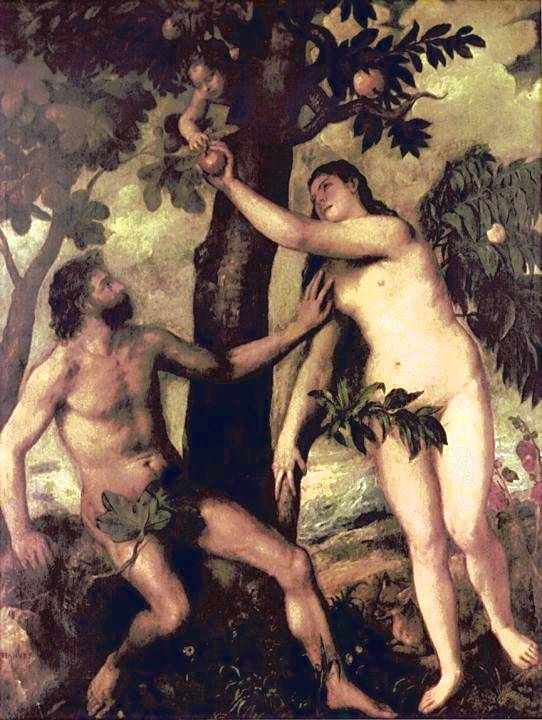
Contrary to popular belief, Adam and Eve did not eat an Apple in the book of Genesis. The fruit is not actually named at all - it is referred to only as the fruit of “the tree of Knowledge of Good and Evil”. The reason this misconception has come about is most likely due to the fact that in Middle English, the word “apple” was used to refer to all fruit and nuts (except berries). Over the centuries, this word has stuck in reference to the Genesis fruit. [Genesis 2:17]
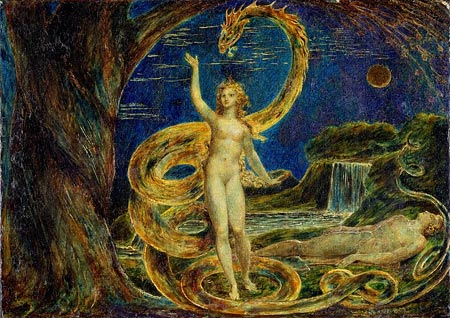
The serpent that convinced Eve to take the fruit from the tree of Knowledge and Evil is not referred to as Satan in Genesis. He is known only as the serpent who was “more subtle than any of the beasts of the earth”. Additionally, the term “Lucifer” used in reference to Satan comes from the Vulgate translation of Isaiah 14:12 - at no point in the Bible is Satan directly referred to by the name Lucifer. [Genesis 3]
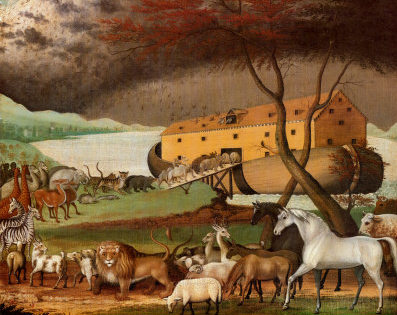
We all know that the “animals went in two by two”… right? Wrong! In fact, all clean animals went in in groups of seven, and unclean animals in groups of two. According to Jewish dietary law, there are far more clean animals than unclean, so the majority of creatures entering the ark went in as a group of 7. [Genesis 7:2-3]
Considering the importance of the ten commandments to so many people, you would think they would have a clear idea of how they are defined, but most people do not. The Bible does not list a consistent set of 10 commandments at all. In Exodus, the list includes 14 or 15 “statements”. Though the Bible does refer to a set of “10″ rules, it does not mention them in the same sections as the list commonly known as the ten commandments. Different Christian sects have divided the list of commandments up differently. The Catholic Church combines the first 3 statements in to one commandment, and the Protestants combine the final two in to one statement. You can see a complete list of the differences here. To add to the confusion, there is also another set of 10 commandments called the Ritual Decalogue which includes laws such as “Do not cook a kid in its mother’s milk”. [Exodus 20]
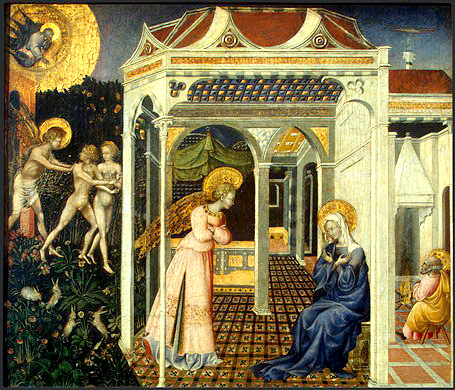
The immaculate conception is not a reference to Jesus being born without sin, but to his mother Mary. Most Christians believe that all people are conceived with original sin (the sin inherited from Adam and Eve) but that Jesus was not. Additionally, the Catholic Church teaches that Mary was also conceived without sin and this is where the term “Immaculate Conception” has come from. [Luke 1:28]
The Immaculate Conception is the conception of Mary, the mother of Jesus without any stain of original sin, in her mother’s womb: the dogma thus says that, from the first moment of her existence, she was preserved by God from the lack of sanctifying grace that afflicts mankind, and that she was instead filled with divine grace.
You can read more about this on Wikipedia.
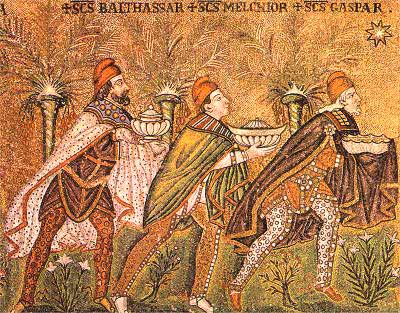
No doubt most of us have heard the Christmas Carol “We three kings of Orient are;” but in fact, the three “kings” are never referred to as Kings in the Bible. Additionally, they are not referred to as a group of three. The only reference to the number ‘3′ is the number of gifts they carried. [Matthew 2:7-11]
Nowhere in the Bible does it say that Mary Magdalene was a prostitute. In fact, she is barely mentioned at all. Aside from her presence at the ressurection, the only other thing that the Bible does say is that she was possessed by seven demons. [Luke 8:2]

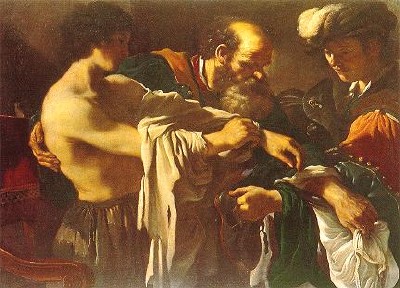
Contrary to popular belief, “Prodigal” means “characterized by a profuse or wasteful expenditure” - it is not a reference to leaving or returning. [Luke 15:11-32]
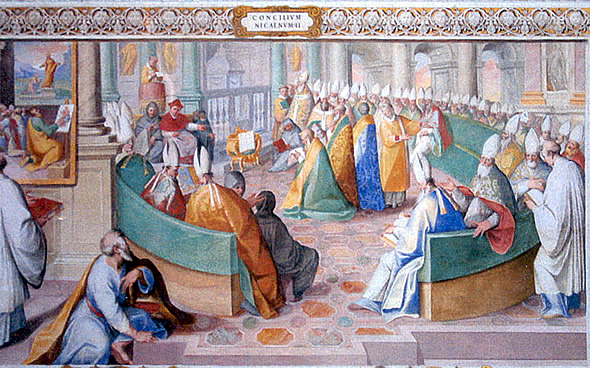
The Emperor Constantine did not define the canon of the New Testament at the first Council of Nicaea in 325AD - in fact, the Council did not even make mention of the Biblical canon. It was already defined by common use by the early 2nd century in the form in which it is still found in Catholic Bibles. Another little known fact is the Emperor Constantine had no voting power at the council - he was there merely as an observer. [Canons of the Council of Nicaea]
Some people believe that over the centuries, the Bible text has been altered to suit the ideologies of the editors. In fact, there are only a very small number of textual alterations that modern philologists and critics consider intentional changes; most are simply errors in spelling or copying. Bart D. Ehrman (a New Testament textual critic) says:
“It would be a mistake. . .to assume that the only changes being made were by copyists with a personal stake in the wording of the text. In fact, most of the changes found in our early Christian manuscripts have nothing to do with theology or ideology. Far and and away the [sic] most changes are the result of mistakes, pure and simple—slips of the pen, accidental omissions, inadvertent additions, misspelled words, blunders of one sort or another.”
Aside from the removal of a number of books in the 16th Century, the text of the books that now comprise the full canon of the Bible, is essentially the same now as it was in the 2nd century.
[EDIT:] Due to some comments, I thought it would be useful to add these notes:
The Old Testament was decided by the apostles and Jesus as they both used the Septuagint (LXX):
“Though the Early Church used the Old Testament according to the canon of the Septuagint (LXX), the apostles did not otherwise leave a defined set of new scriptures; instead the New Testament developed over time.” [Wikipedia]
The New Testament as it is found today in the Catholic Bible (not the Protestant bible - such as the King James Version - as they removed books in the 16th century):
“Thus, while there was a good measure of debate in the Early Church over the New Testament canon, the major writings were accepted by almost all Christians by the middle of the second century.” Ibid.
For those who doubt the fact that changes have not been substantially made, I would suggest a comparison of the Vulgate (5th Century) with the Douay Rheims - Challoner edition (18th Century) which is the official English version of the Catholic Bible. You can find the Vulgate here, and the Douay Rheims here.
Related ListsAnother 10 Common MisconceptionsTop 6 Incestuous Relationships In The Bible 10 Curious Biblical Lessons on Morality Top 15 Strange Religious Candies |
SubscriptionsLike this article? Subscribe to the RSS feed to keep 'em coming, or subscribe via email: |
If you find this site helpful, please leave a donation so you can enjoy the spirit of giving too.
Email This Post


1. carpe_noctem - April 20th, 2008 at 4:07 am
Good list, these religious lists are really interesting. I love the one about the random bible stories, god knows what the hell they were thinking when they wrote some of those… Being fairly atheist, it’s always interesting to look at religion from an external perspective, i think a lot of Christians will view this list very differently to other people…
2. jfrater - April 20th, 2008 at 4:28 am
carpe_noctem: I predict a war
3. carpe_noctem - April 20th, 2008 at 4:36 am
haha, it’s always interesting watching people from completely different countries fight… religious lists always spark the most controversy!
4. warrrreagl - April 20th, 2008 at 4:55 am
I can’t believe there are peope who didn’t realize immaculate conception referred to Mary. And I can’t wait to ding somebody on the “prodigal” one.
5. jfrater - April 20th, 2008 at 5:17 am
warrrreagl: I didn’t know it until about 5 years ago! I was very surprised when I found out
6. NN - April 20th, 2008 at 5:29 am
Hm, it’s amazing that most of this isn’t new to me. Although, #1 gave me a bit of an epiphany.
Great list, otherwise!
7. Randall - April 20th, 2008 at 5:51 am
Jamie, showing off his seminary school learning again.
Nice list. The bible is always a rich vein to mine.
8. DiscHuker - April 20th, 2008 at 6:17 am
thanks for posting lists like this jayfray. i predict war as well, but i’m willing to bet the first shot comes in the form of “i can’t believe any rational person would believe anything written in the bible” or something similar.
btw, in revelation 12 is where satan is identified as “the ancient serpent”.
9. JT - April 20th, 2008 at 6:26 am
Another two common misconceptions are that Jesus was born on December 25th and that Christ was his surname. The amount of Christians I’ve met who believe both those is worrying.
10. Ghidoran - April 20th, 2008 at 6:35 am
The Noah’s Ark thing should be way higher on the list.
11. jfrater - April 20th, 2008 at 6:38 am
JT: hahaha - I haven’t heard that one (Christ being his surname) - that is hilarious!
12. carpe_noctem - April 20th, 2008 at 6:45 am
JT: I knew that some people continue to think he was born on December 25th, but the other one is priceless!
Ghidoran: It’s probably one of the most well known assumptions on the list, but the fact that we miscounted animals shouldn’t really edge out the fact that it’s entirely likely we were meant to have more rules to life rather than the 10 we recognise today, plus Jesus’s friend/wife/thing wasn’t actually a prostitute, in edition to the fact that the bible today is exactly as it was back in the time before people came up with the notion of ‘you’re clothes are cleaner than mine, you’re a witch…’ Witch-belief was actually a step-up from these people. So personally, I don’t feel that Noah chucking on a few more animals than he may have let on deserves a higher spot than it does (but Jfrater, it’s still interesting!)
13. Ginger Lee - April 20th, 2008 at 6:56 am
Another Biblical misconception- the books in the New Testament are in order of which there are written. I know many people who say that Mark, John, Luke and Matthew all wrote their books when they were alive when the Four Gospels were actually written *after* books like Acts and Thessalonians.
And correct me if I’m wrong I think Revelations was written earlier than the Four Gospels.
I was planning on emphasizing in the Gnostic and forgotten gospels in college. The Book of Judas is one of my favorite pieces of Christian literature.
14. Kreachure - April 20th, 2008 at 6:58 am
Nice informative list.
But I’m really sorry to tell you this: #1 is simply false.
From the Catholic Encyclopedia:
[i]”THE FORMATION OF THE NEW TESTAMENT CANON (A.D. 100-220)
The idea of a complete and clear-cut canon of the New Testament existing from the beginning, that is from Apostolic times, has no foundation in history. The Canon of the New Testament, like that of the Old, is the result of a development, of a process at once stimulated by disputes withdoubters, both within and without the Church, and retarded by certain obscurities and natural hesitations, and which did not reach its final term until the dogmatic definition of the Tridentine Council.”[/i]
Both the Old Testament and New Testament went under extensive processes of selection of canon books (see these pages for the whole story: http://en.wikipedia.org/wiki/D.....ment_canon and http://en.wikipedia.org/wiki/D.....ment_canon ).
Due to the amount of contradictions found throughout passages of the Old Testament, the “Documentary Hypothesis” was put forward, which says that the first five books of the Old Testament were a product of the influence of four independent sources, which were combined and edited into the final versions. (Don’t take my word for it: read these pages and their sources: http://ccat.sas.upenn.edu/rs/2/Judaism/jepd.html or http://en.wikipedia.org/wiki/D.....hypothesis )
So, the statement ‘the Bible is essentially the same now as it was in the 2nd century’ is not true and in fact is misleading, because both the Old testament (before and during the 2nd century) and the New Testament (after the 2nd century) had several alterations such as book add-ons and removals as canon, and insertions of passages that contradict other passages.
Not to mention the many critical changes done with official versions and translations throughout history (so if you compare the King James Version which is the most common in the world today with older versions, you’ll find many changes in names and words which disfigure the original meanings).
Again, I’m sorry to be such a pain in the neck with this, but if people have misconceptions as evident as the ones on this list, then it’s easy to feed them even more misconceptions, and I’m simply not up for that.
PS. It’s fair to say that I’m no expert in Biblical studies, yet I was able to discern all this within a few hours of investigation on the Internet. It’s also fair to say that I’m not Christian/Catholic/etc. It’s also fair to say that I love Jamie and this site in a very platonic manner.
15. kiwiboi - April 20th, 2008 at 7:01 am
“…Christ was his surname”
I’m still trying to figure out what the ‘H’ stands for in his middle name
16. Cthulhu - April 20th, 2008 at 7:06 am
Number 9 should probably be a little higher. Many people tend to overestimate the presence of Satan in the Bible, especially in the Old Testament. He’s barely mentioned there, and his biggest role happens to be in the Book of Job, where it’s not even clear that he’s supposed to be evil. It wasn’t until the New Testament that he was identified as the ultimate evil, and even then he was mostly confined to the Revelation.
17. DiscHuker - April 20th, 2008 at 7:06 am
kiwi: the “h” is just to look important like harry “s” truman. doesn’t stand for anything, just makes him look more respectable. after all, when being the son of God isn’t good enough, just get a more distinguished name.
18. islanderbst - April 20th, 2008 at 7:07 am
While I was sort of vaguely aware of most of these, (not religious, sorry), the Noah’s Ark misconception threw me for a loop. Another day at LV, another thing learned. Thanks!
oh and some people think that “H.” is Jesus’ middle name
19. DiscHuker - April 20th, 2008 at 7:11 am
cthulhu: i agree with your point that satan isn’t a main character in the OT. the israelites screw enough up themselves without his help. however i did have one question…what do you mean, when refering to satan that it is “not even clear that he’s supposed to be evil”? what’s not clear?
he contradicts God’s word, goes after a blameless man, kills and destroys all that is dear to him and then afflicts him with boils to the point where sitting in ashes and scraping the skin with broken pottery is a relief.
sounds pretty clear to me.
20. kiwiboi - April 20th, 2008 at 7:12 am
DiscHuker - you’re probably right. I figured it might stand for “Horatio” or “Hubert” or something…
21. DiscHuker - April 20th, 2008 at 7:19 am
kiwi: well, being that he was middle eastern it was probably something like “habib” or “hassan” or “hakim”.
22. carpe_noctem - April 20th, 2008 at 7:23 am
Actually speaking of which, that’s something that most people tend to overlook, Jesus was Middle Eastern… I have yet to find a single picture of Jesus in a church that doesn’t have him as a brown haired, pasty white boy…
23. Bass - April 20th, 2008 at 7:32 am
This very well might be the start of List War II
24. Mom424 - April 20th, 2008 at 7:34 am
Now guys, how did you not know the H is for Harold? You know
“Our Father who art in heaven, Harold be his name”
I could never understand the prodigal son story. How the hell can a shit-head who reforms be more worthy of grace than the fellow who does the right thing consistently?
I didn’t know Mary was Immaculately conceived, I thought that was just Jesus. Interesting List!
25. Mythbusterette - April 20th, 2008 at 7:41 am
Great List!!
What I find even more fascinating, inspiring really, is that this is a religious debate where no one has bitten anyone’s head off. Yet. One can only hope that the comments that follow these are as civil and open-minded.
26. CRE - April 20th, 2008 at 7:54 am
What is your source for the Immaculate Conception? It is always referred to as the Immaculate Conception of Christ, so how is it not in reference to Jesus? Mary was found by God to be graceful, which was how she was chosen to be the Virgin Mother, which also extended to the belief that she remained a virgin her entire life (Chris Rock does an excellent routine about this bit, incidentally). The biggest misconception regarding the IC is that it refers to Jesus being conceived without sex. I would also question #2, the Bible was more or less established by the Council of Nicea, but the council made cononical the Bible at that time, rejecting some books that were not universally taught (such as the Shepherd of Hermes). As for the Noah’s ark bit, that’s only a misconception because, like so many “Christian” teachings, it is not something many people actually pick up a Bible and read. It;s not even ambiguous, although it is worth noting that there are actually 2 stories of the ark, so it really depends on which you believe. As for Saan not being evil, the earlier post was in reference to Job, in which Satan is refered to as the Deceiver. He doesn’t really lead Job astray, God does. Most everything else looks good, though, however I question your omission of the Rapture. Considering how much money has been made off of that concept, it would be worth noting that it is nowhere in the Bible. Also, the Bible doesn’t say that the earth is 6000 years old, another of my favourite misconceptions.
27. CRE - April 20th, 2008 at 7:56 am
Sory, that should have been pvisit harm upon Job, not lead him astray. Him not being led astray was the point of the story. Also, pay no mind to the typos. Also, I don’t mean to imply that Noah’s ark is not a Christian story, just that many Christians never bother to read the Bible to find the truths of things for themselves.
28. Einar - April 20th, 2008 at 7:58 am
I don’t have the exact chapter and verse, but from what I’ve been hearing, the movie series “Left Behind” is a complete misinterpretation of the end times. Just throwing this out there.
29. Gravy - April 20th, 2008 at 8:00 am
Another thing about the febidden fruit: in Latin, the word for apple is “malum” which is one letter away from the word bad, malus. These words follow two different inflection patterns which essentially make them the same word, only different in their gramatical structure. this is why it was thought that the apple was the forbidden fruit.
30. jfrater - April 20th, 2008 at 8:01 am
Kreachure: You are right in a sense - but the fault is my wording (which I have fixed) - the part about it being the same as the 2nd century is meant to be a reference to the TEXT of the books we consider to be the Canon - not to the list of books included. Having said that, the KJV is not the most widely used Bible - there are more than twice as many Catholics in the world than protestants and Catholics never use the KJV - they use Catholic Bibles which retain the books removed by the protestants in the 16th century. So - basing the argument on the Catholic bible, you can compare the Vulgate (5th century) to a modern Catholic Bible (such as the Douay Rheims) and you will find that there are no additions or removals (in the Canon and in the text of the Books).
31. CRE - April 20th, 2008 at 8:01 am
Woo hoo, self-correcting. I have consulted the other most holy and revered text in my life and learned that, indeed, the IC refers to Mary, not Jesus. Here is the link to said infallible text from on high. http://www.snopes.com/holidays.....culate.asp
32. jfrater - April 20th, 2008 at 8:05 am
CRE: when is it referred to as the immaculate conception of Christ? Even a simple google suggests you are wrong:
“immaculate conception of Christ” - 7,130
“Immaculate conception of Mary” - 28,000
And Wikipedia:
http://en.wikipedia.org/wiki/Immaculate_conception
Also, CRE, read the Canons of the Council of Nicaea (I posted the link in the article) - it does not mention the Canon of the Bible
33. jfrater - April 20th, 2008 at 8:06 am
CRE: ah - we crossed posts
I see you already found the IC thing 
34. jfrater - April 20th, 2008 at 8:17 am
Ginger Lee: the Apocalypse (Revelations) was written after the Gospel of John (if you believe John wrote the gospel) because it was also written by John and it was written when he was on the Island of Patmos at the end of his life - I believe he was about 90.
35. carpe_noctem - April 20th, 2008 at 8:20 am
Aww, that was so close to starting an argument…
36. Cthulhu - April 20th, 2008 at 8:34 am
DiscHuker: while Satan ends up doing some cruel things to Job, keep in mind that all of it is done with God’s express permission. Satan doesn’t ruin Job out of spite, but to see if he would remain faithful in foul weather as well as fair. Also of note is God’s speech towards the end.
37. Csimmons - April 20th, 2008 at 8:51 am
Damnit jamie! Here goes another bible tales list….I wonder if BibleDude shall come back?
38. Shem - April 20th, 2008 at 9:04 am
jfrater-that doesn’t mean that the canon of the Bible was made before the Council, just that it wasn’t decided there. The canon and the Council of Nicaea were both a part of the attempt to suppress Arianism in the early church. The canon wasn’t set in popular use until the later half of the 5th century. Read this: http://en.wikipedia.org/wiki/B.....ian_canons
This article also takes Bart Ehrman out of context. He does agree that most of the errors were a result of misspellings, but he would definitely take issue with the idea that there weren’t that many, or that the ones that were there are inconsequential. He even wrote an entire book, “Misquoting Jesus,” about the numerous purposeful alterations of the Bible and the effect that they have had on the history of the Christian church.
39. Kreachure - April 20th, 2008 at 9:11 am
I’ve heard there’s something in the Bible about forgiveness :), so I forgive you, and thanks for the correction.
But thank goodness you got well before posting this list, Jamie… I don’t think commenters will stop poking on this list as much as an ‘Origin of the Species’ book would in a creationists convention!
40. jfrater - April 20th, 2008 at 9:18 am
Kreachure: I am still hella sick - but better than the last two days that’s for sure!
41. Insaniac - April 20th, 2008 at 9:22 am
Ok.. I see a typo! “Adam and Even…” in #10.
42. Wolter - April 20th, 2008 at 9:25 am
#8 is wrong as well, but I can’t blame you completely because the Genesis account itself is inconsistent:
2 Of all clean beasts take seven and seven, the male and the female. 3 But of the beasts that are unclean two and two, the male and the female. Of the fowls also of the air seven and seven, the male and the female: that seed may be saved upon the face of the whole earth.
VS
8 And of beasts clean and unclean, and of fowls, and of every thing that moveth upon the earth, 9 Two and two went in to Noe into the ark, male and female, as the Lord had commanded Noe.
43. Tonny SS - April 20th, 2008 at 9:35 am
I already knew all of them except the #5.
I knew they are not Kings, and the translation only goes for wise men. What I totally missed is the number. What a surprise, all these years I thought they were 3 ‘wisemen’.
44. Chris - April 20th, 2008 at 9:39 am
“I am a false prophet and God is a superstition!” –There Will Be Blood
45. jfrater - April 20th, 2008 at 9:43 am
Wolter: could the later verse be describing the manner in which they entered? Ie, two abreast? If so, that is not a contradiction - it is describing two different things: 1. the number of beasts, 2. the order of beasts entering the ark.
46. Ginger Lee - April 20th, 2008 at 9:58 am
jfrater: I wasn’t sure…can’t remember who told me that…probably when I was dozing off in seminary.
47. ms_design_geek - April 20th, 2008 at 10:02 am
Another misconception about the Noah’s ark story is that Noah went around and herded all the animals into the ark, when actually the passage says that the “Pairs of clean and unclean animals, of birds and of all creatures that move along the ground, male and female, came to Noah and entered the ark”.
48. jfrater - April 20th, 2008 at 10:04 am
Shem:
1) The Old Testament was decided by the apostles and Jesus as they both used the LXX:
“Though the Early Church used the Old Testament according to the canon of the Septuagint (LXX), the apostles did not otherwise leave a defined set of new scriptures; instead the New Testament developed over time.”
http://en.wikipedia.org/wiki/B.....ian_canons
The New Testament as it is found today in the Catholic Bible (I use Catholic because the protestants removed books in the 16th century and the Catholic Bible is still using the larger canon):
“Thus, while there was a good measure of debate in the Early Church over the New Testament canon, the major writings were accepted by almost all Christians by the middle of the second century.” Ibid.
2) I would suggest a comparison of the Vulgate (5th Century) with the Douay Rheims - Challoner edition (18th Century) which is the official English version of the Catholic Bible - no additions, no extractions.
49. jfrater - April 20th, 2008 at 10:07 am
Oh - and just for fun: Tomorrow at 14:00 GMT I will pick ONE random comment (registered users only) to win a Douay Rheims Bible valued at $44.95 http://www.angeluspress.org/os.....uay-rheims
50. Kreachure - April 20th, 2008 at 10:16 am
Either you’re totally serious, or your ‘getting drunk’ cure against the flu is showing ’some’ side effects…
51. Csimmons - April 20th, 2008 at 10:19 am
jfrater: Oh fuck you! I will lose by one and you know it!
52. Kraeg - April 20th, 2008 at 10:20 am
dischuker: of course- all you describe about satans actions can also be said about god.
Mom424: as a child, my mother thought JC’s middle name was Harold, specifically because of the line you quoted from the lord’s prayer.
53. jfrater - April 20th, 2008 at 10:23 am
Kreachure: totally serious about the prize? Of course I am! Getting drunk against the flu has nothing to do with it
The competition is real and I will definitely deliver the prize.
Csimmons: cross your fingers and hope for the best
54. Csimmons - April 20th, 2008 at 10:25 am
jfrater: Thats what that damn gypsy said on the bible tales list, and we all know how that turned out…
55. bigpeeler - April 20th, 2008 at 10:34 am
Noah’s Ark was in fact, an ark. Not a boat as is depicted so many places. The rectangular, 3 times long as it is wide formula is actually stated in the Scriptures. The rectangular shape was far more space efficient than a normal boat-shape.
56. me - April 20th, 2008 at 10:43 am
its that the animals walked IN 2×2 not that there were 2 of each. people just dont pay attention.
and “according to Roman Catholic dogma…” about the whole immaculate conception thing. yeah umm… Im pretty sure that means you have to be Roman Catholic for this to be “truth” right?
57. Mom424 - April 20th, 2008 at 11:01 am
Kraeg; When I was a little kid, like pre-school age, I thought elemen was one letter. aitch eye jay kay elemen oh pee.
I agree, god is a much crueler bastard than the devil. His/her tests of faith are just a little over the top.
58. jfrater - April 20th, 2008 at 11:25 am
me: I think that truth is truth regardless of what we believe - if a tree falls in the forrest, you can choose not to believe it, but the reality is - it fell. Objective truth is what this is called. I am not saying that is the case with the IC, but regardless of who believes it - if it is true - it is true
Some aspects (or all, or none) of Catholic Dogma may be true - but whatever aspects are true - ARE true - whether we believe or not.
Here is the Wikipedia take on objective truth: http://en.wikipedia.org/wiki/Objective_truth
59. kiwiboi - April 20th, 2008 at 11:41 am
“if a tree falls in the forest, you can choose not to believe it, but the reality is - it fell”
jfrater - actually the objective truth is something to do with Britney flashing her bare ass every time a tree falls in the forest
60. Koshari - April 20th, 2008 at 11:43 am
In deciding several aspects of the New Testament, such as “is “Christ” a surname, and the birth myth (3-kings, Dec 25th, and ‘bright star’”, you must research this from a much older perspective and source. Horus, the falcon-headed god of ancient Egypt, parallels Jesus’ life to a degree far beyond coincidence. They both were born to virgin mothers (Isis/Mary), in a manger, surrounded by farm animals on Dec. 25, the birth being announced by a ‘bright’ star (Sirius), visited and gifted by 3 kings. The ‘3-kings’ is the name of the 3 stars in the belt of Orion which points at Sirius for the first time on 12/24, and which point to the location of the morning sunrise on the 25th.
HOrus was called the ‘annointed one” or Krst (Egyptian Hieroglyphics do not use vowels). And the parallels continue.
Research, People
61. Sidereus - April 20th, 2008 at 11:52 am
Good list. These are indeed some of the more common misconceptions about the Bible. No.10 especially is so ridiculous because people eat apples all the the time. Clearly the “forbidden fruit” no longer exists in this world.
Prepare to take a lot of heat from Catholics regarding No.6.
62. Sidereus - April 20th, 2008 at 11:56 am
Oh, about IC. I just remembered from history class that in the middle ages, people generally believed that sin was transferred only through the father, so Jesus having no earthly father would therefore be free of sin. That could be part of the reason for this idea.
63. jfrater - April 20th, 2008 at 12:02 pm
koshari: Isis (according to mythology) had sex with a golden phallus - resulting in the birth of Horus - this is only a virgin birth in the sense that there was not a living male involved - however, Isis is hardly a virgin when a miraculous phallus seeded her. The Egyptians considered Horus to be the TRUE son of Osiris - a virgin birth has no father.
As for KRST: KRST is the word for “burial” (”coffin” is written “KRSW”), but there is no evidence whatsoever to link this with the Greek title “Christos” or Hebrew “Mashiah.”
The name “Iusa” simply does not exist in Egyptian. The name “Jesus” is Greek from a universally recognized west Semitic name (“Jeshu’a”), borne not merely by the central figure in the New Testament but also by many other people in the first century.
This is according to W. Ward Gasque who holds a Ph.D. from Manchester University (UK). A graduate of Harvard University’s Institute for Educational Leadership (1993), he is President of the Pacific Association for Theological Studies.
You can read more of that here: http://www.bringyou.to/apologetics/HORUS.htm
I would recommend that you take your history from research, not movies
64. jfrater - April 20th, 2008 at 12:04 pm
Siderius: why would there be heat from Catholics over number 6? It is actually an explanation of the Catholic view.
65. cambrexia101 - April 20th, 2008 at 12:08 pm
As a person who by birth is Jewish, but by choice is Agnostic,
I have to say, a few of these weren’t even misconceptions for me,
because I hadn’t even ever heard of the Misconception in the first place!
Though in my opinion, the one about Noah’s Ark is the most interesting!
66. Shem - April 20th, 2008 at 12:14 pm
jfrater-the fact that the four gospels were accepted by most early Christians doesn’t mean that much in light of the historical situation. Most of the books and epistles produced in the early church were likewise accepted as true. It wasn’t until later, when the arguments over canon began to heat up, that their accuracy began to be disputed. The fact that some of the current books have been accepted for most of the Church’s history speaks not at all to the tremendously heated controversy over the subject of the canon in the 5th century. A good book about the subject is “When Jesus Became God,” by Richard Rubenstein. He describes the religious war that took place concerning which books would be viewed as authoritative and, by extension, whether the Arian or Trinitarian view of Christianity would become dominant.
2) Leaving aside the wisdom of using the Vulgate as your translation guide when the Vulgate itself is not even an accurate translation of the Greek and Hebrew texts (the Vulgate of the “horned Moses?”http://sumsekel.blogspot.com/2008/03/mistranslation-in-vulgate-gives-moses.html) your argument that one is unchanged from the other still fails immediately. Even if it didn’t though, it would fail because the 5th century Vulgate is in Latin, while Douay Rheims - Challoner is in English. Not only are the two not the same (ask anyone who can read two languages; nuance is lost in translation no matter what) even if a first edition copy of the 5th century Vulgate was used in translation it still doesn’t mean that much in terms of other errors. Say I make 11 copies of the Constitution, 10 with alterations and one that is exact. I then give away each copy to a different person for their own use in interpreting the law. The fact that the last one is exact doesn’t make the other, incorrect ones any more accurate. Nor does the existence of a clean copy prevent them from making errors when they use their adulterated ones.
67. kiwiboi - April 20th, 2008 at 1:00 pm
“Our Father who art in heaven, Harold be his name”
Mom - that, of course, is the Japanese version
As for the Prodigal Son thing (”How the hell can a shit-head who reforms be more worthy of grace than the fellow who does the right thing consistently?”) I think that Jesus was making the point to those who were told by the religious big cheeses of the day that they were beyond the grace of God, that they were not; moreover, he was saying that such people, upon repentance, would receive a special welcome back into the fold.
Caveat…that’s from memory; a remnant of a Catholic upbringing and education (and I didn’t pay too much attention at school)
If I’m wrong, I’m sure somebody will point it out…
68. Crimanon - April 20th, 2008 at 1:00 pm
Solid list, Sure to bring even more visitors.
Have you thought about page counters on the site?
69. goof_ball - April 20th, 2008 at 1:12 pm
good list. i agree with crimanon
70. jfrater - April 20th, 2008 at 1:17 pm
Shem: my point on the vulgate/DR is that substantially, comparing phrase by phrase, the modern Catholic Bible is an accurate reflection of the 5th century vulgate. Ask anyone that knows two languages - you can compare them for accuracy of translation
As for the Horns of Moses -this is why we can’t just learn a language and make our own declarations on the meaning of the Bible. Any person that has a deeper knowledge of Jewish culture, and (more importantly) the culture of the time of Jerome, would know that “horns” have other meanings - if you are a fundamentalist you may be disturbed by Jerome referring to Moses as being horn’ed because you are obliged by your views to consider it a literal statement, but in fact, horns have frequently been used as a metaphor for other things.
In Ancient Egyptian mythology, horns were often used to symbolize a person in touch with divinity - and there can be no doubt that the Bible tells us that Moses was in direct contact with the divine. This was a type of imagery which was well known in the times of Jerome.
This actually proves the opposite of your presumption - Jerome did not make an error in translation, he gave a translation that has a far richer and deeper understanding of Moses; Moses “touched” God, and in one word Jerome was able to give a clearer understanding of that to the people of his time. The people of the 5th century understood the symbolism of the horns - modern day fundamentalist Christians can’t cope with it due to a lack of understanding of the times.
This is one of the best examples of why fundamental Christianity is flawed - you simply can’t take every word at its literal meaning - you must understand the times and you almost need to know what the people of the times knew. Fortunately there are some great biblical scholars who have spent their lives finding this information out; and unfortunately it matters not to fundamentalists (who tend to have the loudest voices) - their ignorance of history and the nuances of the classical period and its languages is a serious road block to a true understanding of the Bible.
Oh - and the DR also refers to Moses’ horns - which at least verifies my point that phrase by phrase, the Vulgate (5th century) and the DR (18th century) are substantially the same.
71. jfrater - April 20th, 2008 at 1:20 pm
Kiwiboi: I think your comment on the prodigal son is excellent. Well said!
72. kiwiboi - April 20th, 2008 at 1:22 pm
jfrater - praise indeed
73. jfrater - April 20th, 2008 at 1:26 pm
kiwiboi: consider yourself lucky
74. Shem - April 20th, 2008 at 2:05 pm
Substantially the same with each other, but not with every Hebrew source in existence. The proper translation is “shown,” that is, Moses’ face was glowing when he came down the mountain. You can present Jerome’s translation as coming from a more nuanced place, but the fact is that the nuanced view, the one that conforms with just about every educated scholar of Hebrew from 2500 BCE when the text was written down up to the present day, says that Jerome was wrong and *everyone else* was right. Glowing, not horned.
And my points still remain; first that the Vulgate was an incorrect translation of the source material and second that even if the Vulgate and the DR are the same, it still doesn’t mean that much, because you still haven’t proven that the copies of the Vulgate made in the interim period matched the modern translation and the one done in by Jerome, rather than just being an example of Challoner altering Douay and Rheims’s text to conform with Jerome.
I also find it funny that you assume that anyone who challenges you is automatically coming at you from a Fundamentalist viewpoint. How someone can (apparently) read Bart Ehrman and still have that point of view is interesting.
75. jfrater - April 20th, 2008 at 2:24 pm
Shem: I didn’t mean to sound like I presumed everyone was a fundamentalist - so my apologies if that is the case
As for the horns (again!) - Jerome did not incorrectly translate anything - he used the term “horns” to describe having touched God (or having been touched by God) - yes - many translations say “glowing” - but it meant the same thing - though Jerome connected it to a deeper image - it is about imagery - he did not say that Moses was not glowing - he said that he was horned, which meant glowing from having touched (or been touched) by God - it is a more beautiful and deep translation - you can’t say it is wrong because it isn’t - it means the same thing in the context of the time in which he wrote it.
As for the DR - of course it was made to conform with Jerome - the Vulgate was “canonized” by the Catholic Church - in that the Church declared that it contained absolutely no errors at all - any Catholic bible translation made MUST conform to the vulgate because it is the ONLY copy of the Bible that the Catholic Church considered to be completely free of any errors.
I am confused about part of your statement: ” it still doesn’t mean that much, because you still haven’t proven that the copies of the Vulgate made in the interim period matched the modern translation and the one done in by Jerome” - there is an extant copy of the vulgate penned by Jerome - there is only ONE vulgate - the one written by him - what are these other copies you refer to?
Additionally, Jerome had access to texts which we no longer have -texts which pre-date any other Jewish text - we simply cannot compare his translation to modern texts because we have only more recent translations of what he had. This tends to make it difficult to debate - except on the level of linguistic nuances which you seem to not wish to do
I think, frankly, that this discussion has gone beyond the realms of website comments - we neither of us can provide online the necessary documentary evidence to support our views - so it is probably better for us to agree that this is a deep topic requiring a great deal of knowledge (that I certainly don’t have - though you may have - I don’t know) and we should just be glad that at least people know there were 7 animals and not 2 that went in to Noah’s ark
76. Moses - April 20th, 2008 at 2:26 pm
haha, wow… too exciting!
77. Jimbo78934 - April 20th, 2008 at 2:29 pm
There’s really no getting around the fact that the Bible is constantly misinterpreted, often resulting in sectarian clashes and unfortunately, violence. I made the decision to get away from all that nonsense and find a steady, peaceful religious path for my life. PRAISE ALLAH
78. Mom424 - April 20th, 2008 at 2:29 pm
Kiwiboi; ha ha, I had to say it a few times out loud, but I get it. It must be the fever, my mental acumen is low.
jfrater; I am jealous, your flu is leaving you much quicker than mine. There is ample evidence that your booze cure may work. There was a woman here in Canada with Necrotizing Faciaitis (flesh eating disease) who refused amputation. They got her tanked, like just this side of death, and kept her that way for a week. Killed the bacteria, and she got to keep her arm.
What happens when scholars find evidence that books they excluded for whatever reasons are found to be ancient or older than ones that were incorporated? I’m thinking of the book of Enoch. I somehow can’t imagine the church saying - Whoa, lets back up a bit here, We made a mistake.
79. kiwiboi - April 20th, 2008 at 2:50 pm
“I made the decision to get away from all that nonsense and find a steady, peaceful religious path for my life. PRAISE ALLAH”
Jimbo - droll. Very droll
80. jfrater - April 20th, 2008 at 2:50 pm
Mom424: regarding books like Enoch I, II, III, IIII; because Jesus and the apostles used the Septuagint (LXX), that is the “official” version of the Old Testament in the Church. The LXX excludes the books of Enoch therefore they are not part of the Canon. Also, it is important to note that age was not the deciding factor in the canon - the OT was already defined when Christianity began (LXX), and the NT was defined in the few hundred years following.
As for the New Testament, even the Epistle of Clement (fourth Pope - 1st century AD) which was often read in Churches in the early Church was not allowed in to the Canon even though it is known to be an authentic writing by an early Pope who was even mentioned in one of the letters of Saint Paul: Philippians 4:3. Essentially, if you go older than the current canon of the New Testament, you are going back before the time of Christ and that excludes the writing from the NT.
Anyway - on to much more important subjects - my flu and alcohol - I am seriously thinking that the demon drink has cured me! I have never had a flu move so fast through me and I have never drunk so much with the flu before! There must be a correlation! I am also taking lots of paracetemol, and aspirin, etc. that might be helping a little
81. Kreachure - April 20th, 2008 at 3:00 pm
lol, Jamie.
So, “What the Devil giveth, the Devil taketh away”!
82. Kreachure - April 20th, 2008 at 3:05 pm
Or, in other words, I kinda like your version of ’spirit-ual healing’! XD
OMG I’ll shut up now.
83. Shem - April 20th, 2008 at 3:06 pm
jfrater-I suppose that is all that can be done. Well argued.
84. Kreachure - April 20th, 2008 at 3:08 pm
Yeah, all that stuff I said would’ve been funnier if you realized I was talking about your ‘miraculous’ cure, not Islamic Extremism…
85. carpe_noctem - April 20th, 2008 at 3:09 pm
Mom424: Are you serious about the necrotizing fasciitis? That’s amazing, it sounds like something an Irish person would come up with: ‘We don’t know what to do, fuck it, let’s get him smashed…’ And incidentally, I think the alcohol thing may well work, the whole feed a cold and starve a fever or whatever the hell it is, only results in well-fed or hungry sick people…
I feel very uneducated on all these religious matters, i’m meant to be catholic, but we go to church once a year on christmas eve so that my mum doesn’t feel guilty, and I usually go to the pub with my family afterwards and get trashed with them until midnight. Christmas is fun in Australia… But in regards to listverse spreading the light and educating, praise Frater for providing further insight into our world!
Jfrater: God doesn’t want you to use synthesised drugs, stick to the alcohol!
86. Ido (Israel) - April 20th, 2008 at 3:19 pm
1.This list rocks
2.about satan - according to the bible, it was the snake who seduced Eve and made trick Adam into eating the only forbidden tree in the garden - shit.
3.I find that most people are usually oblivious to these little pieces of information and are commonly very argumentative about this kind of stuff.
4.In my opinion such arguments are a waste of time as ALL RELIGIONS ARE A PACK A FUCKING LIES designed to give the messes some guidance in their scary, unsecured lives. governments and other organizations take advantage of that too.
87. Mom424 - April 20th, 2008 at 3:20 pm
carpe-noctem; Yes I am serious. She already, I can’t remember why, had either no or limited use of the other arm. She refused surgery, the antibiotics were ineffective (damn over-use of antibiotics, I’ll cover that on the health list I’m thinkin’ about writing), it was the court of last resort. Of course it would work, make it inhospitable to the bacteria (fevers that everyone is in a big hurry to treat have a similar effect). She really was kept near death from the alcohol. It isn’t something that you can self-administer.
88. carpe_noctem - April 20th, 2008 at 3:30 pm
Ido: For starters, if some people need guidance in their lives, what gives you the right to attempt to take away their belief in a system that seems right to them? I’m completely unreligious, the only religion that seems anywhere close to what I might believe in is Buddhism of Taoism, both of which submit the belief system that it’s entirely probable they’re incorrect, but if you’re willing to believe in our religion, well done you, you might get into heaven, which may or may not exist. There’s the famous saying: ‘God creates dinosaurs. God destroys dinosaurs. God creates Man. Man destroys God.’ Or you could just look at it from the perspective of man creating religion, and hence God never really existed except in the minds of men. I purport that we’re all atheists at heart, I just believe in one fewer god than some people. When you don’t understand why people don’t believe in your god, ask yourself why you have rejected every other god, and maybe you will see.
Mom: Yeah, i can’t imagine heading off the the pub 4 nights a week would cure flesh-eating bacteria, so it makes sense it was a doctor-administered dosage. The two most common sustained and preventable illnesses within hospitals are infections caused from over-exposure to germs, and drug fever, where the cocktail of different antibiotics they pump into the patient as they’re bounced from ward to ward serves to prolong, or even cause symptoms of disease. I think too many doctors today try to solve problems by inundating the patient with drugs (incidentally, i want to be a neurosurgeon, maybe one day i’ll make a difference!)
89. Puxley - April 20th, 2008 at 3:59 pm
Wow this is quite a good list… possibly one of the best, definitely the best religion one so far.
jfrater, very good explanation on the misconception regarding the IC, also very interesting to see someone using the Duoay Rheims… tis a real pity that so few Catholics still use it nowadays (myself included). I’d like to one day be proficient enough to read the Vulgate, but alas, I am merely a first year Latin student hahaha.
90. DiscHuker - April 20th, 2008 at 4:10 pm
mom, kiwi, et. al: the point of the story of the prodigal son wasn’t that one son was an ass and the other was perfect. it comes in the context of 3 parables that Jesus is telling to two groups “tax collectors” (the unrighteous) and pharisees (the supposed righteous)
the lazy son is a picture of someone who abuses the grace of God only to find that His arms are still open. the “good” son is a picture of someone who tries to earn God’s love by hard work only to find that God places no price on His free grace.
both are terribly in need and God is mighty to save.
91. edwf - April 20th, 2008 at 4:13 pm
A lot of the misconceptions about Adam and Eve come from Milton’s paradise lost which is mostly from his own imagination. In his story the devil is the serpent, and most historical and/or famous events that were written about in famous literature have their fact and fiction intertwined.
92. Einstein217 - April 20th, 2008 at 4:20 pm
Jesus H. Christ 12 letters
Elvis Presley 12 letters
Coincidence, I think not.
93. carpe_noctem - April 20th, 2008 at 4:24 pm
Eistein: Clearly your nickname is true! That’s brilliant!
94. Miss Destiny - April 20th, 2008 at 5:09 pm
Very fascinating list! I was unaware of a lot of these misconceptions. I think the comments will continue to get more interesting!
95. kking - April 20th, 2008 at 5:28 pm
Something wrong with the formatting…#4-1 is missing and is replaced with comments.
96. Sidereus - April 20th, 2008 at 6:21 pm
Odd.. I keep getting logged out when I try to view this list.
The important thing to remember with these is that the love in your heart matters more to God than a perfect interpretation of the Bible.
97. Sidereus - April 20th, 2008 at 6:23 pm
jfrater: My bad. I guess I need to read more carefully!
98. DiscHuker - April 20th, 2008 at 6:27 pm
jayfray: i don’t know if we have discussed this before, but, what is the scriptural reference to mary being sinless? i see the luke 1:28 you have posted above but in reading that, i’m not quite sure that is the most logical reading of the passage (saying that mary was sinless).
99. cedestra - April 20th, 2008 at 7:13 pm
I always thought that the “H” in Jesus H Christ stood for “Holy”.
I hope this sheds some light for some people. Wasn’t Jesus’ born name “Joshua” anyway?
Thanks for the info- I can now safely say that the Christians have their religion and I have mine and the proof each of us has for our’s being the correct is about equal. We both have crazy stuff going on.
100. allredeemed - April 20th, 2008 at 7:41 pm
hi jamie!
ive been subscribing to your rss feed for a while. it is very informative. you present a variety of topics in a very open-minded
way. the reason i first subscribed was because you posted a list about christianity or the bible, and i found it very insightful.
it appears we are both students of the scriptures, and we might both have knowledge we can share to our greater benefit.
regarding the current list: #10 is right on! i never knew that in middle english the word “apple” applied to pretty much any fruit.
very kewl.
and #9 is equally kewl. i have always associated the serpent in the garden with the satan, but now i see there’s no direct
connection at all. but is it possible he might be a henchman of satan, since its unlikely he was on the side of god?
regarding #8: the 7/2 ratio is lost on a lot of people because most people dont care about those kinds of details. but the
scriptures are clear: the ratio of clean to unclean animals entering the ark was definitely 7 to 2. the only suggestion i will make
about this is that ive read somewhere that the numbers 7 and 2 actually referred to *pairs* of 7 and 2. so the animals would still
enter the ark in pairs- the clean entered in pairs of 7 and the unclean entered in pairs of two. but ive not fully checked this out
yet.
#7 is interesting. 10 is a nice round number. if we could just have ten simple commandments that we could live by then that would
make things a whole lot easier. of course, speaking for myself, i find any version of the “ten commandments” impossible to live by.
we read dozens of commandments in the book of leviticus. so i try to hold to the two commandments that jesus gave: to love god with
all my heart and to love my neighbor as myself. these are still difficult, but its a lot simpler.
#6: again you enlighten me. i always thought the immaculate conception was about the birth of jesus. (im not catholic)
#5: the three kings. ive known about this for a while, and its nice to hear the truth repeated.
#4: ive always assumed, due to “common knowledge” that mary magdelene was a prostitute. the fact that this is never mentioned in
the scriptures is interesting. if we go by what has been written, theres no reason to convict this woman of such a sin. however, if
she was possessed by seven demons, what are the chances she was selling her body? her prostitution may be “folk lore”, but
sometimes the folk might get it right.
#3: the prodigal. you have taught me once again. i beleived that “prodigal” meant “leaving”. curiously, considering the true
meaning of the word “prodigal”, the prodigal son didnt even need to leave town. he could have stayed there and spent his
inheritance locally. i feel a new parable coming on! (:
#2: i was not aware that the emporer constantine held so little power. i thought he basically forced christianity on the entire
roman empire at that time, converting pagan rites into “christian holidays”. it appears that catholic canon predated him
substantially, and he had very little power.
#1: i wanted to find fault with catholic doctrine here, but in this case i cannot. the claim is that “It would be a mistake. . .to
assume that the only changes being made were by copyists with a personal stake in the wording of the text. In fact, most of the
changes found in our early Christian manuscripts have nothing to do with theology or ideology.” this may be true for the catholic
translation. however, i myself have found certain ideological “differences” in the kjv. i went to judges 18:30 for the acid test to
see if the catholic bible held up. in the kjv it says that jonathan (an idolatrous priest of dan) was the grandson of manasseh.
this is not true. it is based on the fact that the kvj translators didnt have the resources we have today, and combined with their
lack of knowledge of the greek language they actually got several things wrong. jonathan was actually the grandson of moses, as the
catholic bible states. (kudos) i will consider the catholic translation in all of my further studies, as well as the youngs literal
translation and others. however, a few things are keeping me from converting to the catholic church at this time are:
worship of mary (a mortal woman)
worship of the “host” which is supposed to be jesus incarnate in a piece of bread, waiting to die *again*
worship of saints (mortals)
worship of the pope (mortal)
the belief that the members of the roman catholic church are the only true church of christ
the belief that there are different levels of sin- some which can be atoned for, others not
the belief that you can attain salvation through works (although many protestant denominations are guilty of this)
the belief in eternal punishment
so i subscribe to none of the above. im a believer who is not catholic or protestant or any of the popular sects that are out
there. i have studied the scriptures in depth and have come to the conclusion that everyone will be saved in their time. and it
wont be by a particular church. it will be jesus, and him alone. he is the only true power and savior.
101. materkb - April 20th, 2008 at 8:26 pm
allredeemed -
Roman Catholics do not worship Mary, the saints or the Pope. They venerate them, but they do not worship them.
The official line held by Roman Catholics is not that they are the only true Church of Christ. John XXIII’s Ecumenical Council, and the efforts of all his successors to date, stress the prayed-for unity of all Christian sects.The other Christian churches are recognized and acknowledged.
Technically, even a mortal sin can be forgiven by God. God is all forgiving, and no sin prevents a penitent sinner from seeking absolution.
Eternal damnation - Roman Catholics are not the only Christians who believe this; in fact, some of the others think eternal damnation can be a consequence of being Roman Catholic.
But what is wrong with salvation through works? Christ recommends it several times.
102. whoopie - April 20th, 2008 at 8:48 pm
“#1″ is completely wrong. i do so hate when semi-informed opinioneering is prefaced with “in fact”
103. Kreachure - April 20th, 2008 at 8:50 pm
As always, Wikipedia enlightens:
http://en.wikipedia.org/wiki/Jesus_H._Christ
104. atarijedi - April 20th, 2008 at 9:10 pm
Another misconception is Hell, except for the last book (Revelations), the whole lake of fire concept of hell didnt exist, Dantes Inferno was the first instance of the hell we know today.
Hell was either Sheol which means “Under the ground, void of Gods love” or Gehenna, which is an actual physical place outside jeruselam where they dump garbage, also happens to contain fire and a flammable sulphurous rock (brimstone).
105. poptart - April 20th, 2008 at 9:30 pm
This list is great! I wish I had time to read through all of the comments and read the other misconceptions.
Also, I always thought ‘immaculate conception’ meant that Jesus was conceived w/o having sex — God was just like “poof, Mary’s knocked up.”
A lot of good my Catholic schooling did :).
106. JwJwBean - April 20th, 2008 at 10:31 pm
I have not read the comments yet, but I wanted to say that this is a very interesting list. I remember learning certain stories in church as a little girl and they are very adamant in the way they teach them. How do you go back to your sunday school teacher and say remember how you said…Well you were wrong.
107. jesse - April 20th, 2008 at 11:56 pm
jfrater, this list is badass, but out of the corner of my eye i thought it said the word “microscopic” and that gave me the idea that you should make a list of scary microscopic images, or close ups of insects, or something like that, i dont think you have a list that explores the tiny’s in our world.
108. sue - April 21st, 2008 at 12:05 am
Very interesting.Lists about religion seem to be my favourite thus far
109. jfrater - April 21st, 2008 at 12:33 am
jesse: that is a great idea! Thanks. I have made a note of it
sue: glad you liked it! I find them interesting lists to write as well.
110. jasontimmer - April 21st, 2008 at 1:45 am
Don’t know if anyone’s mentioned this yet, but I’ve seen several people bring up the fact that the birth of Christ is celebrated on the 25th of December. The most frequent explanation I’ve heard for that is the fact that December 25th was popular among pagan traditions around the time of the proliferation of Christianity, and making the birth of Christ fall on that day made it easier to convert the “heathens.”
111. measy peasy - April 21st, 2008 at 1:46 am
It’s funny how many people take the bible literally. How many people know that when the bible was written, Mary was referred to as an “almah,” which at that time meant simply a young woman. Through the translation to Greek, the definition was construed to mean “a virgin.” That’s right, the original texts never even referred to Mary as a virgin. It’s possible that this change came about in an attempt to more closely align the bible with Pagan belief of the time, in order to ease the conversion of the dirty Pagans. Just one example of how completely incorrect number one on this list is.
112. measy peasy - April 21st, 2008 at 1:48 am
Wow, amazing timing, jason.
113. jasontimmer - April 21st, 2008 at 1:54 am
yeah that’s kinda bizarre. Comments really slow down at these times.
114. jfrater - April 21st, 2008 at 1:59 am
measy peasy: obviously you are referring to the Old Testament (because the New Testament does not use Hebrew). If what you say is true, why is it that even Jewish scholars translating the OT in to Greek translate almah as parthenos which is Greek for “virgin”? The term almah and the other related term bethulah were synonymous (though this may no longer be true in modern use of Hebrew). So in fact, “virgin” is an appropriate translation. Additionally, this only matters if you consider Isaiah 7:14 to be a reference to Mary - obviously Jews do not.
Despite all of that, the “virgin birth” is not really reliant on Isaiah 7:14 - because whether it means a virgin or not, it still speaks of the “messiah” being born of a young woman - and Mary was that (so both translations would work). Additionally, if Jesus were God (as was believed by the authors of the New Testament and the early Christians) - how exactly could Jesus be born in any manner other than through virgin birth? Surely that would mean that God (the Father) would have to have manifested himself in the flesh. A rather ludicrous image and certainly not one supported by any Old Testament writing
115. jfrater - April 21st, 2008 at 2:10 am
jasontimmer: I think that most modern scholars do not consider the pagan festival Natalis Invicti as the source of the date of Christmas. Natalis Invicti was begun in 247AD, and the first written record of Christmas being celebrated on the 25th of December is from 243AD. The most likely choice of December 25 is that it is 9 months after March 25th which was already considered by the Christians to be the date of the conception of Jesus (Christmas was a late festival - others were already well established by that time). Also - keep in mind that Christianity was suffering persecution - they were not likely to have too many public festivals in order to help with conversions - at least not in the Roman Empire
116. astraya - April 21st, 2008 at 3:30 am
#8 There are *two* flood stories, with different instructions. Gen 6: 19-20 says “two”. Gen 7:2 says “seven clean and two unclean”.
All of the above discussion has missed the obvious point, and that is: How did Noah know which animals were clean and unclean? The cleanliness rules were given by any reckoning a long time later.
#5 The Greek word is “magus” pl “magi”. The word is most closely related to “magic”, but translating it as “magician” would be misleading. The only other time the word is used is in Acts 8:9, where it is translated “sorcery”.
#4 Mary is often confused with two other women, who are not given names. The first mention of her (Luke 8:2) comes immediately after Jesus has been anointed by a “woman who was a sinner”, but it does not specify that it was Mary, and does not specify what her sin was. (Compare Matt 26:3 and Mark 14:1-9, where, if this is the same incident “a sinner” is not specified. (A similar is told in John 12:3, where the woman is identified as Mary of Bethany, a different woman.)) The other woman appears in John 8:1-11. “Being caught in adultery” is not the same as “being a prostitute” . (BTW where was the man she was having adultery with?)
jfrater (117) The reason that “March 25th … was already considered by the Christians to be the date of the conception of Jesus” is that that date is close to the (northern) spring equinox. Either way, Christmas is dated from a pagan festival.
Various people have mentioned Is 7:14. The whole passage, read in context, makes it quite clear that, whether it means “young woman” or “virgin”, and whoever it is talking about, it is *not* talking about Mary and Jesus.
Here’s another one: Jesus was not born in the stable of a commercial inn. Luke uses the word pandocheion (”inn”) in the story of the good Samaritan (10:34-35). In 2:7, he uses kataluma, the same word he uses in 22:12, which is always translated as “upper room” ie the guest room of a private house. Jesus was born in the “garage” of a private house.
I am meant to be organising my wedding reception, so I can’t get involved (much) here.
117. notacceptable - April 21st, 2008 at 3:37 am
Yo Jfray. I know you meant it in jest because of the smiley face you put at the end of it, but your generalized comment to Jimbo is just not acceptable bro. Didn’t take you for such narrow-mindedness. You have to be aware of others sensitivities bro.
Disappointed
118. jfrater - April 21st, 2008 at 3:50 am
notacceptable: You are right - thank you for reminding me about that comment - I have deleted it in the interests of good manners.
119. jfrater - April 21st, 2008 at 3:51 am
astraya: great additions! Thanks
120. kiwiboi - April 21st, 2008 at 3:58 am
jfrater - shame. That clown godisimaginery posts all manner of inflammatory anti-Christian dross which remains on the site, and yet we appease cowardly Jihadists by deleting an innocuous attempt at humour?
121. DiscHuker - April 21st, 2008 at 5:18 am
materkb: post #101, the problem of salvation by works is that it completely negates the concept of grace.
ephesians 2:8-9 - “For by grace you have been saved through faith; and that not of yourselves, it is the gift of God;
not as a result of works, so that no one may boast.”
if you can earn salvation then the cross was unnecessary. so i would say that it is pretty important.
122. Levi - April 21st, 2008 at 5:47 am
At first glace, I expected this list to be biased against Christians. But I was totally wrong. This list is neutral, Objective, and informative. It is published and worded in such a way that I see no reason why any christian would get offended over it. Wonderful Job!
123. DiscHuker - April 21st, 2008 at 5:49 am
atarijedi: post #104 - to say that the teaching of hell only shows up in the book of revelation is just outright not true. Christ talks about hell on numerous occasions. and while the entire concept isn’t wrapped neatly some place in the OT, all the pieces are there. it isn’t until the NT that an entire, cohesive doctrine is formed. what is called “progressive revelation”
also you aren’t entirely clear about the use of geÑenna. while it was a place where trash was burned it was used as a reference for hell because all the people knew this was where all the filth and dead animals of the city were thrown.
124. longball - April 21st, 2008 at 6:44 am
I agree with Levi - there is nothing to fight about…:( lol
125. Bob - April 21st, 2008 at 7:33 am
Great list, especially the last part.
Ugh, why do people also think the Bible we have in English (whatever version) is a translation of a translation of a translation? Answer: people don’t understand the difference betweent textual transmission and translation.
126. Ed - April 21st, 2008 at 9:01 am
How about probably the most prevalent misconception of the Bible: No one in the Bible was ever baptized using the words “in the Name of the Father, and of the Son, and of the Holy Spirit”.
127. kiwiboi - April 21st, 2008 at 9:26 am
“the most prevalent misconception of the Bible”
Ed - first I’ve heard of this one. “Most prevalent” ? I don’t think so.
I note, though, that you are referring to an actual baptism; because, as you will know, the injunction to baptise in the name of the Father, Son & Holy Spirit is clear in Matthew 28:19.
128. PeteFloyd - April 21st, 2008 at 9:34 am
Biggest misconception about the bible: that it’s true.
129. JT - April 21st, 2008 at 9:56 am
jfrater: The December 25th date was chosen because it coincided with the Pagan celebration of the winter solstice, which during the time it was adopted was on the 25th of December. This was firstly to try and fit in with pagans in an inconspicuous manner as to avoid persecution, and later used to try and convert pagans by presenting their festival as similar to the pagans (Justin the Martyr writes a lot about this)
130. seeker - April 21st, 2008 at 11:53 am
Great list, but I have some clarifications and comments to add
10. Adam and eve’s fruit
The main reason the fruit is thought of as an apple is because Milton’s Paradise Lost called it that, I think.
9. The serpent…is not referred to as Satan in Genesis
However, theologically speaking, this serpent was probably Satan speaking through a possessed serpent.
The association of Satan and serpentine metaphor can be seen elsewhere througout scripture, including:
8. Noah’s Ark
Nice job on that one. Check out How Large Was Noah’s Ark?
7. The Ten Commandments
Correct. In fact, you left out that, not only are there different lists for Catholics and Protestants, the Jews have their own list. Check out the explanation at Display the ten - you can also buy any or all of the ten commandments on t-shirts there.
6. The immaculate conception
Part of the reason this (heretical) doctrine of Mary’s sinlessness arose (since it is not in scripture) in Catholic doctrine is that the Catholic Church was heavily influenced by (erroneous) Aristotalian dualism, thinking of the body as bad and the spirit good. This, coupled with the doctrine of original sin, forced Catholic theologians to come up with some way to have Jesus born without inheriting original sin and a sinful ‘body of flesh.’ But in this case, I think that they made stuff up to solve a mystery that was not intended to be solved.
5. The three kings
Yes, the three kings were ‘Magi’ - court advisors, sort of like Daniel in the bible. “Wise men” is an accurate description, though. I discussed the fact that they were pagan astrologer wise men in The Truths and Myths of the Christmas Story.
4. Mary Magdelene not a prostitute
Part of the confusion arises because, in 591, Pope Gregory conflated the following passages describing Magdelene, Mary of Bethany, and the ’sinful woman’ who wiped Jesus feet (which Mary of Bethany also did) as the same woman, even though scripturally, they can be viewed as separate. (In 1969, the Catholic Church restored them to three separate individuals.)
- Magdeline - Mark 15:4-41, Matthew 27:55-56, Luke 8:2
- Mary of Bethany (Lazarus’ sister) - John 11:1-3
- Sinful woman - luke 7:37, mark 14:3, Matthew 26:7
3. The meaning of ‘prodigal’
You mean people actually think that ‘prodigal’ means returning? That is common? Sheesh, i didn’t know that our command of the language had gotten so poor. What’s even a better misconception about this story is that it is about only one son, when in reality, as John MacArthur’s new book details, it should be called A Tale of Two Sons.
2. Constantine and the Canon
Very good point, but what you did not mention is why Constantine is thought to have influenced the Canon at all - Constantine called the Council of Nicea, primarily because he feared that disputes within the church would cause disorder within the empire.
1. Alterations in the text
Again, thank you for making this point, and for quoting Bart Erhman, who is both a scholar AND critic of the New Testament, who has gained notariety because he has become an agnostic, though he remains a New Testament scholar at Princeton.
Your note on the removal of books by Protestants, however, is misleading. The Catholics included many non-canonical books in their bible (the Apocrypha), which were considered historically important, but not inerrant or authoritative. The Protestants did not remove any of the canonical books, only the apocrypha.
131. JayArr - April 21st, 2008 at 11:55 am
I was always told that the ‘H’ in “Jesus H. Christ” stood for Hosanna (or Hoshana for our orthodox folks).
132. seeker - April 21st, 2008 at 11:58 am
PETEFLOYD WROTE: Biggest misconception a