
 Our World
Our World
Our World  Animals
 10 Elusive Animals That Finally Showed Up for the Cameras
 Our World
 10 Incredible Places Authorities Put Off-Limits
 History
 10 Boring Ancient Documents That Exposed Astonishing Secrets
 Animals
 10 Extinct Creatures That Aren’t What We Thought
 Weird Stuff
 10 Wild Facts You Might Not Know About Quicksand
 History
 10 Royal Dynasties That Endured for Centuries
 Travel
 10 Famous Movie Sets & Filming Locations You Can Still Visit Today
 History
 10 Super Unsettling Historical Facts We Wish Were False
 Weird Stuff
 10 Bizarre Ways People Used Blood in the Past
Our World 10 Surprising Secrets of America’s Interstate Highway System
Animals 10 Elusive Animals That Finally Showed Up for the Cameras
Our World 10 Incredible Places Authorities Put Off-Limits
Who's Behind Listverse?

Jamie Frater
Head Editor
Jamie founded Listverse due to an insatiable desire to share fascinating, obscure, and bizarre facts. He has been a guest speaker on numerous national radio and television stations and is a five time published author.
More About Us
History 10 Boring Ancient Documents That Exposed Astonishing Secrets
Animals 10 Extinct Creatures That Aren’t What We Thought
Weird Stuff 10 Wild Facts You Might Not Know About Quicksand
History 10 Royal Dynasties That Endured for Centuries
Travel 10 Famous Movie Sets & Filming Locations You Can Still Visit Today
History 10 Super Unsettling Historical Facts We Wish Were False
Weird Stuff 10 Bizarre Ways People Used Blood in the Past
Top 10 Historical Disasters Caused by Someone Calling in Sick
We all know the feeling: your alarm doesn’t go off, your boss is breathing down your neck, and you suddenly wonder if calling in sick might just save your sanity. Most of the time, it’s harmless—maybe you binge-watch a few episodes, sleep a little longer, and everyone survives. But history? History is not so forgiving.
It turns out that calling in sick can be more than just a personal indulgence. In some cases, it has literally changed the course of events, toppled empires, sparked international incidents, or left entire cities scrambling in chaos. One absent person, a single extra day in bed, and suddenly the gears of the world grind in an entirely different direction.
This list isn’t about heroic leaders or brilliant generals. It’s about the quiet, unassuming people who skipped work, and the disasters that followed as a direct result. From military mishaps to political chaos to industrial screw-ups, the domino effect of one person’s decision to stay home is both shocking and, admittedly, horrifically tragic.
So buckle up, take a deep breath, and maybe check your own sick leave policy—because sometimes, skipping work doesn’t just affect your day; it changes history.
Related: 10 Disturbing Facts about the Bath School Disaster
10 The Bhopal Disaster: When Night Shift Gaps Helped Turn Leak Into Catastrophe
The Bhopal gas tragedy: Toxic legacy

On the night of December 2–3, 1984, the Bhopal pesticide plant in India became the site of one of the worst industrial disasters in history when toxic methyl isocyanate gas escaped into the surrounding city, immediately killing thousands and injuring tens of thousands more.
Investigations later revealed that a combination of systemic failures turned a bad situation into a catastrophe: safety systems were shut down, alarms were poorly maintained, and crucial maintenance work had been deferred. The tragedy was compounded because the plant’s experienced daytime team had rotated off duty, leaving a night shift that was less familiar with the plant’s complex chemical processes and the warning signs that preceded the leak.
In other words, it wasn’t just a leak—it was an absence-of-expertise problem. Key personnel were not on shift, and their replacements lacked the training, experience, and institutional knowledge to react effectively when things began to go wrong. The disaster became a stark lesson in how under-resourced and understaffed night shifts—often dismissed as less critical—can determine the difference between a contained industrial accident and a catastrophe.[1]
9 Flixborough: When No One with the Right Skills Was There
Temporary Bypass Pipe Failed – The Result Was Catastrophic (Flixborough Chemical Explosion 1974)
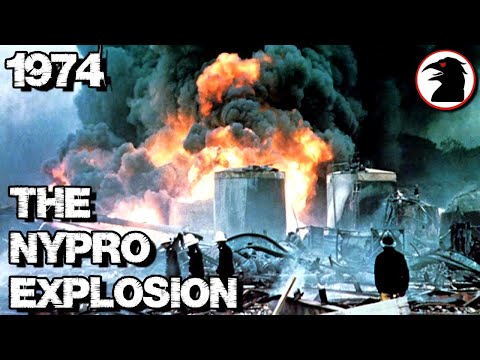
This disaster was born not from sabotage or natural misfortune, but from the absence of the right kind of expertise. On June 1, 1974, a chemical plant in Flixborough, England, exploded in one of the worst peacetime industrial accidents in British history, killing 28 people and injuring dozens more. The immediate cause was a hasty modification to bypass a cracked reactor, which allowed a massive amount of flammable cyclohexane vapor to escape and ignite.
What makes the incident especially relevant is that no qualified mechanical engineer was in post or on site when the modification was designed and approved. The plant’s usual works engineer had departed months earlier and had not been replaced, leaving managers with chemical engineering backgrounds to approve a major mechanical workaround they did not fully understand.
That vacuum of expertise turned what might have been a manageable problem into a deadly vapor cloud explosion. The Flixborough disaster remains a tragic lesson in why having the right person in the room—or on the tools—can mean the difference between a near miss and mass casualty.[2]
8 Hyatt Regency Walkway Collapse: When the Engineer Wasn’t in the Room
Inside the Hyatt Regency Skywalk Collapse

On July 17, 1981, the Hyatt Regency hotel in Kansas City was packed with guests enjoying an evening social event when the unthinkable happened: two suspended walkways inside the lobby collapsed, killing 114 people and injuring more than 200. The cause wasn’t a bomb, a storm, or a natural catastrophe—it stemmed from a design change that was not fully reviewed by the engineer of record because he was off-site when the decision was made.
When the fabricator proposed an easier way to hang the second-floor walkway, a junior engineer approved the modification without consulting the senior engineer responsible for the project. That absence meant no one with the appropriate authority or depth of experience reviewed a change that more than doubled the load on the suspension rods.
Minutes after a crowded dance began below, the overloaded connections failed. A disaster that could have been prevented became one of the deadliest structural failures in U.S. history—all because the right person wasn’t present at the right time.[3]
7 The Challenger Disaster: When a Key Engineer Was Away
The Challenger disaster | 60 Minutes Archive

On January 28, 1986, the Space Shuttle Challenger exploded 73 seconds after liftoff, killing all seven astronauts aboard. The root causes were complex, involving design flaws in the solid rocket booster O-rings, but investigations later revealed a crucial human factor: the engineers most familiar with the O-rings’ cold-weather limitations were not effectively represented in the final decision-making process.
Engineer Roger Boisjoly had repeatedly warned about the dangers of launching in low temperatures, but during the final approval discussions, engineering concerns were overridden by management. Several engineers with the deepest technical knowledge were either not present for the final call or were sidelined in favor of schedule pressure.
While not a sick day in the conventional sense, the principle remains the same. When the person with the knowledge isn’t meaningfully in the room, catastrophic decisions can follow. In this case, the consequences were immediate, devastating, and permanently etched into history.[4]
6 Chernobyl: When the Night Shift Missed Critical Oversight
What /Actually/ Happened at Chernobyl

On April 26, 1986, Reactor No. 4 at the Chernobyl Nuclear Power Plant in Ukraine exploded, releasing massive amounts of radioactive material into the environment. While the disaster had multiple causes—design flaws, procedural errors, and operator mistakes—investigations also highlighted the absence of some of the most experienced personnel during a high-risk night-shift safety test.
Many engineers who best understood the RBMK reactor’s unique behavior were off duty, leaving a less experienced team in charge of a complex and dangerous experiment. Power levels were mismanaged, safety systems were disabled, and warning signs were missed—not out of malice, but because the team lacked the depth of expertise needed to recognize the danger in time.
It was a perfect storm of human absence and technical complexity. The experienced regulars weren’t present to intervene, and the result was one of the worst nuclear disasters in history—a grim reminder that in high-risk systems, who’s on shift can matter just as much as how the machinery is designed.[5]
5 Fukushima: When a Critical Engineer Was Off Duty
The Fukushima Nuclear Power Plant Disaster (Disaster Documentary)

On March 11, 2011, the Fukushima Daiichi Nuclear Power Plant in Japan faced a catastrophic crisis after a magnitude 9.0 earthquake triggered a tsunami that flooded the facility and knocked out power. While natural forces caused the initial emergency, the scale of the disaster was amplified by the absence of key personnel during the early hours of the crisis.
Many of the engineers and managers most familiar with the plant’s emergency protocols were not immediately present or reachable, leaving a skeleton crew to respond under unprecedented conditions. With critical systems failing and backup power offline, the night-shift team struggled to stabilize reactors, which they had limited experience operating under such extreme circumstances. Decisions that might have mitigated the release of radioactive material were delayed or improvised because the most experienced staff were not on site.
It’s a striking example of how disasters are often shaped not just by external forces, but by human absence at crucial moments. A missing decision-maker here, a key engineer off duty there—combined with extreme conditions—and suddenly the world is watching a preventable crisis unfold.[6]
4 Deepwater Horizon: When the Right Expert Was Off-Site
Deepwater Horizon Oil Spill | A Short Documentary | Disaster Diaries

On April 20, 2010, the Deepwater Horizon oil rig in the Gulf of Mexico experienced a blowout that killed 11 workers and caused one of the worst environmental disasters in U.S. history. While multiple technical failures contributed, investigations revealed a critical human factor: the absence of key engineers and experienced decision-makers at crucial moments.
During the final hours leading up to the blowout, several senior engineers who best understood the riser and blowout preventer systems were off-site, leaving less experienced personnel in charge. When warning signs appeared—pressure anomalies, unexpected fluid readings—the team on the rig either misinterpreted them or lacked the authority to take decisive corrective action. Opportunities to intervene were missed, and the situation escalated rapidly.
The disaster underscores a recurring theme: catastrophic failures are rarely caused by machines alone. Timing, personnel, and human presence matter. One absent expert, one missing voice of authority, and a routine operation can spiral into a global environmental crisis.[7]
3 The Exxon Valdez Spill: When the Captain Was Not on Deck
Exxon Valdez Oil Spill: In the Wake of Disaster | Retro Report | The New York Times

On March 24, 1989, the oil tanker Exxon Valdez ran aground on Bligh Reef in Prince William Sound, Alaska, spilling approximately 11 million gallons of crude oil and devastating the local ecosystem. Investigations identified a key human factor: the ship’s captain, Joseph Hazelwood, was not on the bridge at the critical moment.
Navigation was left to a first officer with less experience piloting vessels through the sound’s challenging waters. Fatigue, the absence of the captain’s oversight, and reliance on junior crew members combined to turn a routine course correction into a historic environmental disaster.
The captain’s absence did not directly cause the tanker to strike the reef, but it created a critical gap in judgment and decision-making. Small errors compounded, oversight vanished, and the consequences spilled far beyond the ship itself—demonstrating how who isn’t present can matter just as much as who is.[8]
2 The Battle of Karánsebes: When the Officer Was Missing
A Brief History of: The battle of Karansebes

In 1788, during the Austro-Turkish War, the Austrian army experienced one of the strangest military incidents in history at Karánsebes, in what is now Romania. According to later historical accounts, troops panicked and fired on one another in a confused episode of friendly fire after officers were absent from the scene.
Already stressed and scattered across unfamiliar terrain, soldiers became disoriented as rumors of an Ottoman attack spread. Without experienced officers present to coordinate movements or restore order, confusion escalated into chaos. Shots were fired, units fled, and casualties were reported before any engagement with enemy forces occurred.
Historians continue to debate the scale and details of the incident, and some elements may have been exaggerated by later retellings. Even so, the episode remains a cautionary example of how the absence of leadership—real or perceived—can transform confusion into catastrophe.[9]
1 Three Mile Island: When the Senior Engineer Was Off Duty
Three Mile Island Documentary: Nuclear Power’s Promise and Peril | Retro Report | The New York Times

On March 28, 1979, the Three Mile Island nuclear plant in Pennsylvania suffered a partial meltdown in Reactor 2, marking the most serious accident in U.S. commercial nuclear power history. While the incident involved mechanical failures and design flaws, investigations also revealed a critical human factor: many senior engineers with deep system knowledge were not immediately present in the control room when the crisis began.
Night-shift operators faced alarms and warning signals they did not fully understand. Misinterpretation of those readings led to decisions that worsened the situation, allowing reactor temperatures to rise. With experienced engineers absent or delayed, it took longer to correctly diagnose the problem and stabilize the reactor.
The Three Mile Island incident stands as a sobering reminder that in high-risk systems, absence can be as dangerous as error. Sometimes the difference between a contained incident and a near catastrophe isn’t machinery—it’s who is there to interpret the alarms when everything starts going wrong.[10]
More Great Lists
 10 Disasters Caused by a Single Point of Failure
 10 Famous People You Didn't Know Killed Someone
 10 Times Being Late Saved Someone's Life
 10 Warning Labels That Exist Because Someone…
 10 Sick Royals and Nobles Who Were Actually Being Poisoned
 10 (Even) More Modern Conveniences That Met with…
 10 Times Stamps Caused Unexpected Controversies
 10 Movie Releases That Caused Chaos in Theaters
 10 Horrifying Railroad Bridge Disasters
fact checked by Darci Heikkinen
More Great Lists