
 Animals
Animals
Animals  Music
Music 10 Famous Musicians Who Grew to Resent Their Biggest Hits
 Animals
 10 Mass Animal Die-Offs That Looked Like the Apocalypse
 Weird Stuff
 10 Unexpected Objects People Have Treated as Sacred
 Movies and TV
 10 Tough-Guy Actors Who Unexpectedly Broke into Song
 Misconceptions
 10 Dinosaur Myths That Refuse to Go Extinct
 Weird Stuff
 10 Ridiculous Flat-Earth Arguments That Fail Simple Tests
 Technology
 10 Bizarre Places Electricity Is Hiding in Plain Sight
 History
 10 Nail-Biting Espionage Operations of the Cold War
 History
 10 Groundbreaking Innovations That Prove the “Dark Ages” Weren’t Dark
Animals 10 Astonishing Animal Abilities Scientists Never Saw Coming
Music 10 Famous Musicians Who Grew to Resent Their Biggest Hits
Animals 10 Mass Animal Die-Offs That Looked Like the Apocalypse
Who's Behind Listverse?

Jamie Frater
Head Editor
Jamie founded Listverse due to an insatiable desire to share fascinating, obscure, and bizarre facts. He has been a guest speaker on numerous national radio and television stations and is a five time published author.
More About Us
Weird Stuff 10 Unexpected Objects People Have Treated as Sacred
Movies and TV 10 Tough-Guy Actors Who Unexpectedly Broke into Song
Misconceptions 10 Dinosaur Myths That Refuse to Go Extinct
Weird Stuff 10 Ridiculous Flat-Earth Arguments That Fail Simple Tests
Technology 10 Bizarre Places Electricity Is Hiding in Plain Sight
History 10 Nail-Biting Espionage Operations of the Cold War
History 10 Groundbreaking Innovations That Prove the “Dark Ages” Weren’t Dark
10 Astonishing Animal Abilities Scientists Never Saw Coming
Animal behavior often seems predictable. Swallows follow the summer, ants build colonies, and most creatures run when they encounter a predator or wildfire. But nature keeps throwing researchers curveballs, sometimes from species humans have studied for centuries.
Some of these discoveries reveal unexpected intelligence, while others expose physical abilities that sound nearly impossible. Orcas flee from smaller whales, hibernating bees survive underwater, and elephants may call one another by name. Even familiar animals can possess talents that scientists never thought to look for.
Here are ten astonishing animal abilities that challenged what researchers thought they knew.
Related: 10 Animals with Dominant Females
10 Pilot Whales Can Send Orcas Fleeing
Why Do Pilot Whales TERRIFY Orca??

Orcas rank among the ocean’s most formidable predators. They hunt seals, whales, and even great white sharks, sometimes tearing out the sharks’ nutrient-rich livers and leaving the rest behind. Their intelligence, speed, and coordinated family groups make them animals that few other creatures would willingly confront.
Long-finned pilot whales apparently missed that warning. Researchers studying interactions between the two species have repeatedly watched the smaller whales approach and sometimes pursue orcas. An Icelandic study examining 24 encounters recorded between 2007 and 2020 found that the orcas avoided the approaching pilot whales in 68 percent of cases. Another 28 percent escalated into high-speed chases in which both species repeatedly leaped from the water while traveling up to 16 miles per hour (25 kilometers per hour).
A 2026 experiment showed that the pilot whales did not even need to appear. When researchers played recordings of their calls to tagged orcas, the orcas tightened their formations, altered their own vocal behavior, turned away, and accelerated. The reaction resembled the way predators respond when smaller animals band together to harass them, a strategy known as mobbing. No pilot whale has been observed physically attacking an orca, however, so researchers still do not know why the ocean’s apex predator is so determined to avoid them.[1]
9 Apennine Brown Bears Evolved to Avoid Human Conflict
Italian Bears Evolving to Be Less Aggressive Due to Human Contact
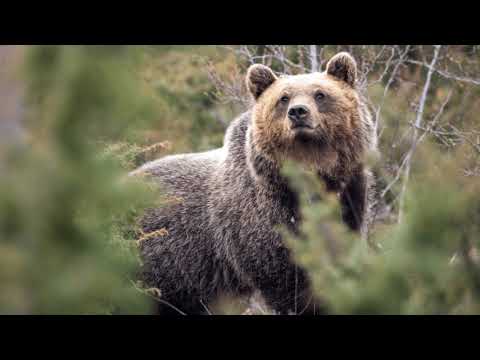
Brown bears are powerful wild animals, and even populations accustomed to people require caution. Yet the Apennine brown bear, Ursus arctos marsicanus, possesses an unusually peaceful reputation. This critically endangered population survives in the mountains of central Italy, where fewer than 100 bears share a crowded landscape with farms, roads, villages, and tourists.
The bears became isolated from other European brown-bear populations as farming communities expanded and forests were cleared during the Neolithic period. Over thousands of years, people killed animals that threatened them or their livestock. Bears less likely to react aggressively may therefore have enjoyed a better chance of surviving long enough to reproduce.
A genomic study found signs of positive selection in genes associated with reduced aggression, supporting the theory that human persecution gradually influenced the population’s behavior. This does not make the bears friendly or safe to approach. It suggests that avoiding unnecessary confrontations became an evolutionary advantage. In a landscape increasingly dominated by humans, the bears survived partly by becoming the neighbors least likely to start a fight.[2]
8 Bee Larvae Spin Protective Silk
Blue Orchard Mason Bee
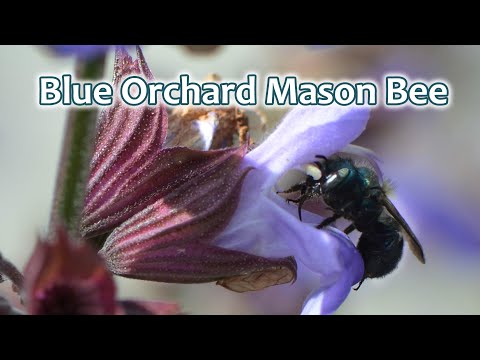
Ask where silk comes from, and most people will name silkworms or spiders. Few would nominate bees. Yet silk production has evolved independently at least 23 times among insects, including ants, wasps, and several kinds of bees. In these species, larvae rather than flying adults generally produce the material.
A blue orchard bee larva, Osmia lignaria, builds its cocoon through a surprisingly architectural process. Instead of producing one continuous thread like a silkworm, it anchors silk to the wall of its nesting chamber, stretches the fiber across the space with head movements, and fastens it at another point. Repeating the process creates a protective structure that balances airflow, moisture retention, and physical strength.
That strength matters because parasitoid wasps attempt to pierce bee cocoons with needle-like organs and lay their eggs inside. Researchers recently developed a method for extracting intact silk directly from blue orchard bee larvae without preventing them from completing their cocoons. They successfully isolated and mechanically tested 20 fibers from seven larvae, opening the way for more detailed research into bee silk. Scientists eventually hope that its protective properties could inspire biodegradable fibers, medical sutures, and other specialized materials.[3]
7 Birds Turn Fire into a Hunting Ground
How do some birds use wildfires to their advantage? | A closer look at firehawks

Most animals react to smoke and flames by escaping as quickly as possible. Certain Australian birds fly in the opposite direction. During controlled burns in the tropical savannas of Arnhem Land, researchers watched black kites, brown falcons, and other birds gather near the advancing flames to hunt animals driven from their hiding places.
Black kites were approximately 23 times more abundant when fire was present, while white-breasted woodswallows appeared at roughly 20 times their normal numbers. The woodswallows are not raptors, but they joined the same feeding frenzy. Birds of prey caught animals at about ten times their usual rate, snatching grasshoppers, lizards, toads, snakes, and other creatures exposed by the fire.
The observations came from prescribed burns conducted in partnership with Mimal Indigenous rangers. Aboriginal Australians have long known that “firehawk” raptors exploit flames and may even carry burning sticks into unburned grass. The researchers did not witness the birds spreading fire during this study, but their results help explain why such a dangerous strategy could be worthwhile. Fire temporarily transforms concealed prey into an open buffet. The findings remain preliminary, however, because the 2026 study had not yet undergone peer review.[4]
6 Elephants Give One Another Name-Like Calls
Elephants call each other by unique names, like humans

Humans are not the only animals that recognize individuals by sound. Dolphins develop signature whistles, while parrots can imitate the calls of specific companions. African savanna elephants may do something even closer to human naming: create arbitrary vocal labels for one another rather than copying sounds made by the animal being addressed.
Researchers used machine learning to analyze 469 low-frequency rumbles recorded from wild elephants in Kenya’s Samburu ecosystem and Amboseli National Park. The computer model predicted the intended recipient far more accurately than random chance would allow, suggesting the calls contained information that identified particular elephants. The scientists could not isolate the precise sound that functioned as the “name,” but playback experiments provided stronger evidence.
When 17 elephants heard recordings of calls originally directed toward them, they responded more enthusiastically than they did to calls meant for somebody else. They approached the speaker more quickly and were more likely to answer. Name-like labels could help members of widely dispersed elephant families locate and maintain contact with specific relatives. Researchers are still far from translating complete elephant conversations, but the discovery suggests those deep rumbles may carry far more personal information than humans realized.[5]
5 Hibernating Bumblebee Queens Can Survive a Week Underwater
Fact or Fiction: Some bumblebees can survive under water for a week?

Winter is already a risky time to be a bumblebee queen. She must survive underground for months before emerging to establish an entirely new colony. Apparently, however, even flooding may not be enough to finish her off.
Researchers discovered this ability almost by accident when condensation flooded containers holding hibernating common eastern bumblebee queens (Bombus impatiens). Around 90% of the submerged queens survived, including some that spent seven days underwater. A follow-up study found that the insects endured by combining several remarkable strategies. Their metabolism slowed dramatically, they absorbed some oxygen from the water, and they switched partly to oxygen-free energy production.
The queens’ furry bodies may also trap a thin layer of air that acts like a temporary physical gill. Whatever the complete explanation, their resistance probably evolved because wild queens frequently hibernate in soil vulnerable to rain and melting snow. Even so, surviving a week underwater is an astonishing feat for an insect that does not ordinarily live there.[6]
4 Humpback Whales Blow Bubble Rings at Humans
Are Humpback Whales Communicating with us Through Underwater Rings?

Humpback whales (Megaptera novaeangliae) are already famous for their elaborate songs and cooperative bubble-net hunting. Researchers have now documented another, stranger bubble-producing behavior: Some humpbacks appear to blow enormous underwater rings while interacting with people.
Scientists examined 12 encounters involving 11 whales that produced 39 bubble rings. In most cases, the whales voluntarily approached swimmers or boats and appeared calm and curious. The rings came from their blowholes, expanded like giant underwater smoke rings, and were not associated with feeding, aggression, or obvious distress.
Nobody can yet say exactly what the whales mean. They may be playing, investigating nearby people, or attempting some form of communication. Humpbacks sometimes produce similar rings around other whales, but directing them toward humans suggests they may be deliberately inviting a reaction. If so, these ocean giants could be doing the cetacean equivalent of blowing bubbles at strangers just to see what happens.[7]
3 Mites Have Survived for Millions of Years without Sex
Tiny “Tank” Mites Up Close: Oribatid Microscopy ASMR

Sexual reproduction is extremely useful from an evolutionary perspective because it mixes genes and creates variation. Without that variation, harmful mutations should accumulate until an asexual species eventually becomes extinct. One tiny soil-dwelling mite seems determined to make biologists reconsider that assumption.
The oribatid mite Platynothrus peltifer belongs to an ancient lineage that appears to have reproduced without sex for more than 20 million years. Females produce viable eggs through parthenogenesis, and the extremely rare males seem to contribute little or nothing to reproduction. Yet the mites have somehow avoided the expected genetic dead end.
A genomic study found that the mites’ paired chromosome copies have accumulated differences independently rather than being regularly shuffled through sex. Mutations, mobile genetic elements, and genes acquired from other organisms may provide additional variation. In other words, these microscopic creatures have developed alternative ways to renovate their genomes. They have survived mass extinctions, climate shifts, and millions of years of evolutionary pressure—all while apparently deciding that males are optional.[8]
2 Rotifers Repair Shattered DNA over Generations
Rotifers Revived From 24,000-Year-Old Permafrost — and Reproduced

Bdelloid rotifers are microscopic animals found in damp moss, soil, and freshwater. They can survive dehydration, extreme cold, and radiation doses that would be catastrophic for most creatures. Their newest known trick may be the strangest of all: They can pass badly shattered chromosomes to their descendants and gradually rebuild them.
Researchers exposed Adineta vaga rotifers to intense proton radiation. At the highest dose, their chromosomes were broken into an estimated 30–50 pieces. Despite this devastation, some animals still laid eggs. The resulting descendants inherited the broken fragments, which were progressively reassembled over several generations.
This is possible partly because rotifers have holocentric chromosomes, whose spindle attachments are distributed along their length. Even chromosome fragments can therefore be passed into daughter cells instead of being lost during cell division. The animals can then use intact matching chromosomes as templates while extending and reconnecting the broken DNA.
Scientists suspect this talent originally evolved to repair damage caused by repeated dehydration rather than radiation. Either way, a rotifer can survive with a genome resembling a dropped jigsaw puzzle—and allow its descendants to finish putting the pieces back together.[9]
1 A Seal Imitated Speech with a Maine Accent
Hoover The Talking Seal
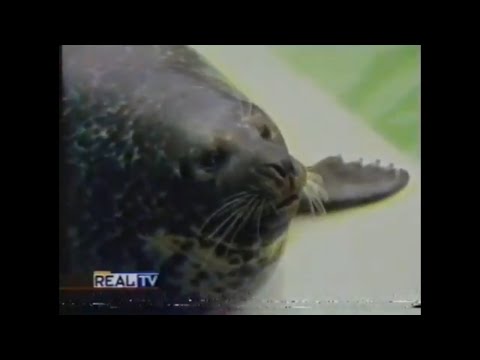
In 1971, a fisherman named George Swallow found an orphaned harbor seal pup near Cundy’s Harbor, Maine. Swallow and his family raised the seal, named Hoover, inside their home before transferring him to the New England Aquarium. During those early months, Hoover constantly heard Swallow speaking to him in his distinctive Maine accent.
Several years later, aquarium workers realized that Hoover was imitating human speech. Visitors reported hearing phrases such as “hello there,” “come over here,” and “hurry, hurry.” His voice was deep and rough, but its pronunciation sounded uncannily like the New England fisherman who had raised him.
Modern acoustic analysis of archived recordings confirmed that Hoover was not merely making seal noises that people interpreted as words. He manipulated his vocal tract’s resonances in a genuinely speech-like manner. Interestingly, he began using the phrases prominently around sexual maturity, suggesting that he may have adapted his learned human sounds into a display for female seals.
Hoover probably never understood the sentences he repeated. Nevertheless, his performance showed that harbor seals (Phoca vitulina) possess impressive vocal-learning abilities—and that an animal raised in Maine may even pick up the local accent.[10]
More Great Lists
 10 Movies With Alternate Endings You Never Saw Coming
 10 TV Show Plot Twists Nobody Saw Coming
 Ten Times Scientists Created Astonishing New States…
 10 Animal Actions You've Never Seen (Caught on Camera)
 Ten Times Historic People (Maybe) Saw Aliens
 Real-Life Marvels: 10 People with Incredible Abilities
 10 Secret Abilities of Well-Known Animals
 Ten Astonishing Predictions for 2024 from Fiction
 Ten Astonishing New Discoveries about the Brain
fact checked by Darci Heikkinen
More Great Lists