
 Weird Stuff
 History
10 Overlooked World War II Stories That Deserve More Attention
 Weird Stuff
Top 10 Strange Side Quests of the U.S. Census
 History
10 Daring Deceptions That Helped Save Lives in World War II
 Crime
10 Times Eyewitness Descriptions Changed the Course of Criminal Investigations
 Animals
10 Animal Attacks on the People Who Cared for Them
 History
10 Cities Devastated by World War II
 Movies and TV
10 Must-Watch Patrick Stewart Performances Beyond Picard and X
 Weird Stuff
10 Halloween Facts with a Dark Side
 History
10 True Tales from the Tower of London’s 1,000-Year History
Weird Stuff 10 Real Species That Look Absolutely Fake
History 10 Overlooked World War II Stories That Deserve More Attention
Weird Stuff Top 10 Strange Side Quests of the U.S. Census
Who's Behind Listverse?

Jamie Frater
Head Editor
Jamie founded Listverse due to an insatiable desire to share fascinating, obscure, and bizarre facts. He has been a guest speaker on numerous national radio and television stations and is a five time published author.
More About Us
History 10 Daring Deceptions That Helped Save Lives in World War II
Crime 10 Times Eyewitness Descriptions Changed the Course of Criminal Investigations
Animals 10 Animal Attacks on the People Who Cared for Them
History 10 Cities Devastated by World War II
Movies and TV 10 Must-Watch Patrick Stewart Performances Beyond Picard and X
Weird Stuff 10 Halloween Facts with a Dark Side
History 10 True Tales from the Tower of London’s 1,000-Year History
10 Real Species That Look Absolutely Fake
Fake online images are as old as the internet. In recent years, generative technology has made bogus media look more realistic, but even so, some creations are too ridiculous to be real.
Many netizens are primed to doubt far-fetched images of nature. However, the natural world is a wacky place. If a species has a better chance of survival, Mother Nature will use wildly abnormal features to help it feed, attract mates, and reproduce.
This rule created a slew of unbelievable animals, like sparkling sharks, bats with tongues against their hearts, and mini orange crocodiles. Some have a good reason to be weird, but scientists are still struggling to decode the strangeness behind other species. Either way, here are 10 animals that can give AI slop a run for its money.
Related: 10 Extinct Species That Are Still Alive Genetically
10 A Giant Fungus With an Ancient Lineage
How Fungi Took Over the World After the Dinosaur Extinction

In 2026, researchers formally described an enormous fungus found in China’s Yunnan Province. Named Dianjunus rex, it stands out for its size and for the ancient history of its family lineage.
When it reproduces, D. rex grows enormous structures called stromata. These thick, white growths can reach 20 inches (50 centimeters) high and weigh as much as 4.9 pounds (2.2 kilograms). Scientists don’t yet know why the fungus invests so much energy in growing such large structures, but there may be a payoff they don’t yet understand.
A genetic study estimated that the fungus’s family lineage arose around 65 million years ago, near the time of the Chicxulub impact and the mass extinction that followed. That timing is intriguing, but it doesn’t prove the asteroid caused the lineage to emerge. The researchers suggest that the aftermath may have opened new ecological niches as forests recovered. The discovery is one more reminder that fungi have an ancient and still largely unexplored history.[1]
9 The Nectar Bat With a Tongue Near Its Heart
The Bat That Stores Its Tongue in Its Rib Cage

First discovered in Ecuador in 2003 and formally described two years later, the tube-lipped nectar bat (Anoura fistulata) has brown fur and is about the size of a mouse. Its most remarkable feature is its tongue, which can extend about 3.3 inches (8.5 centimeters)—roughly 150 percent of the bat’s body length. That makes it the longest mammalian tongue relative to body size.
The tongue lets the bat reach nectar deep inside flowers that other nectar-feeding bats can’t access. When it isn’t feeding, the tongue retracts into a tube in the bat’s chest, between the sternum and the heart.
One study of the bat’s relationship with the flower Centropogon nigricans found that the bat’s unusually long tongue lets it reach nectar other bats can’t. The researchers suggested the flower and bat may have influenced each other’s evolution—a possible example of coevolution.[2]
8 A Spider That Mimics a Zombie Fungus
Zombie Spider Fungus Mimics – Taczanowskia waska

Some fungi infect spiders and grow reproductive structures from their bodies. In 2025, researchers in the Ecuadorian Amazon encountered a spider that seemed to be one of these victims. Its body looked fuzzy, with stalk-like protrusions emerging from its abdomen. Then it moved.
The spider was a new species, formally described in 2026 as Taczanowskia waska. Its fungus-like features are part of its own anatomy, and researchers identified the resemblance as a rare case of a spider mimicking a fungus that infects spiders.
Why the spider looks this way is still unknown. The mimicry might discourage predators, or it might help the spider approach prey. With only female specimens documented, researchers have much to learn about the species and its behavior.[3]
7 Snake Embryos Coil Around Their Own Guts
🐍 Snake Development Inside the Egg – Full Before Birth Timelapse

A snake embryo has a long body and limited room inside its egg. Researchers recently found that, during development, a snake’s body axis coils around a pillar-shaped structure formed by its gut. The study, published in 2026, examined embryos from snakes and other limbless reptiles to investigate how this unusual shape develops.
The researchers found that the body axis develops faster than the gut extends. This mismatch causes the body to coil around the gut, which they called the “visceral pillar.” The arrangement allows the snake to develop its long body within the confines of an egg.
The twist doesn’t last. As development continues, the body and gut grow into their familiar adult arrangement. It’s a strange-looking stage in the making of a perfectly ordinary snake.[4]
6 Casper the Ghost Lobster
‘Definitely Weird’: This One-Of-A-Kind Ghostly, Translucent Lobster Was Found Near Maine | TIME
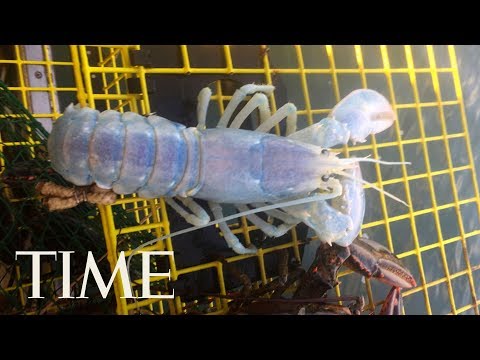
Most American lobsters have mottled brown shells, but some are born with striking colors, including blue, yellow, orange, purple, and calico patterns. The University of New England is studying rare-colored lobsters to learn more about the genetic causes of their unusual shells.
In September 2026, the university welcomed Casper, a rare white lobster donated by the Maine State Aquarium. UNE estimates that the odds of finding a white lobster are about one in 100 million. Casper joined the university’s collection of colorful lobsters and will be part of its ongoing research into lobster coloration.
Researchers have not yet determined the genetic cause of Casper’s white shell. For now, the ghostly-looking lobster is helping scientists investigate how such unusual colors develop.[5]
5 Patrick from SpongeBob
The World Watched a Starfish. Scientists Found 57 New Species. | Deep-Sea Documentary

In 2025, a Schmidt Ocean Institute expedition explored the seafloor off Argentina’s coast and livestreamed footage of a bright orange sea star. Its shape reminded viewers of Patrick Star, the character from SpongeBob SquarePants, and the image quickly caught the internet’s attention.
The expedition later yielded a different kind of surprise. At a 2026 workshop, an international team of biologists identified 57 new marine species from specimens collected during the expedition. The orange sea star itself was not identified as a new species, but it became the expedition’s most recognizable celebrity.[6]
4 A Six-Foot Shark That Glows
Glowing shark found off New Zealand – the Kitefin – strange glowing deep sea creature – further info

Kitefin sharks (Dalatias licha) can grow nearly 6 feet (1.8 meters) long, making them the largest known luminous vertebrates. Their bioluminescence comes from light-producing organs in the skin.
A shark’s underside can glow in a pattern known as counterillumination, which may help disguise its silhouette when seen from below. But a 2026 study suggests the kitefin’s light may do more than camouflage it. The researchers found that the shark also glows on its back, and argued that the light pattern and its deep-sea habitat point to a possible role in finding prey.
The shark’s glow is greenish, too. Researchers suggest this color may match the optical conditions near the seafloor. The exact function of the shark’s different light patterns remains under study, but the idea of a glowing shark using its light to hunt is quite a bit stranger than camouflage alone.[7]
3 Brown Panda Bears
Qinling Panda: The Rare Brown Panda Of The Qinling Mountains

Most giant pandas are black and white, but a rare brown-and-white variation has been found in China’s Qinling Mountains. These brown pandas are not a separate species, and their unusual coloring is only one feature of a distinctive panda population.
In 2024, researchers identified a 25-base-pair deletion in the Bace2 gene as the likely cause of the brown coat. The deletion appears in both copies of the gene in brown pandas. It may affect melanosomes, the structures involved in producing and storing pigment, making the fur lighter.
The researchers found the deletion in two brown pandas and confirmed that none of the 192 black pandas in an additional sample had two copies of it. They also found that some black Qinling pandas carried one copy. The result gives scientists a likely genetic explanation for a color variation that has puzzled them for decades.[8]
2 A Friendly Orange Crocodile
These Dwarf Crocodiles Hunt Grub With Night Vision

The African dwarf crocodile (Osteolaemus tetraspis) is one of the smallest crocodile species. In Gabon, some dwarf crocodiles use caves, where they hunt bats and cave crickets. Several of the adult crocodiles have an unusual orange hue.
Researchers suspect that years of exposure to bat guano may discolor the crocodiles’ skin. The explanation is plausible, but the cause has not been confirmed. The cave population is also unusual because its members forage in the caves, while nearby forest-dwelling crocodiles eat different prey.
These crocodiles use caves by choice; they are not known to be cave-dependent animals. Their orange coloring and unusual habitat make them stand out even among crocodiles, which are already pretty hard to overlook.[9]
1 A Fish with Red Lipstick
Red-lipped Batfish Have Big Lips And A Beard And I Can’t Handle It

The Galápagos Islands are famous for unusual wildlife, but one of their strangest residents lives underwater. The red-lipped batfish (Ogcocephalus darwini) lives on the seafloor around the islands, usually at depths of about 10 to 250 feet (3 to 76 meters), though it can be found deeper near reefs.
The fish uses its modified fins to walk along the seafloor rather than swim around like most fish. Its bright red lips make it look as though it has just applied lipstick. Scientists don’t know why the lips are red; suggestions that they help the fish recognize or attract mates remain theories.
Like other anglerfish, the batfish has a small lure on its head that may help attract prey. It’s a useful tool for a slow-moving fish with a face that looks ready for a close-up.[10]
More Great Lists
 10 Times Scientists Were Absolutely Sure... and…
 10 Period-Drama Details That Look Fake but Are…
 10 Famous Songs That Absolutely Wouldn't Be Released Today
 10 Wars That Sound Made Up (but Absolutely Happened)
 10 Sinister Cults That Make You Afraid to Look Over…
 10 Prehistoric Creatures That Might Not Look How We Think
 10 Science Facts That Will Change How You Look at the World
 10 Weird Space Images That Look Like Unlikely Things
 10 Prehistoric Killers That Make Today's Carnivores…
fact checked by Darci Heikkinen
More Great Lists