First off, you may be surprised to find that Albert Einstein is not included on this list. The reason is that I have used a table of IQ estimates for historical geniuses to determine the members and order of this list, and Einstein’s IQ (around 160) did not make the grade. Despite that, he is still the first person to pop in to most people’s minds when thinking of a genius. Having said that, here is a list of the ten greatest geniuses in history.
10. Madame De Stael IQ: 180Wikipedia
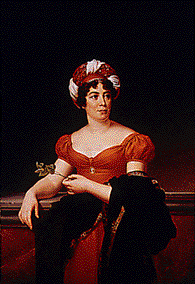
In full – Anne-Louise-Germaine Necker, Baronne (baroness) de Staël-Holstein, byname Madame de Staël. Madame de Stael was a French-Swiss woman of letters, political propagandist, and conversationalist, who epitomized the European culture of her time, bridging the history of ideas from Neoclassicism to Romanticism. She also gained fame by maintaining a salon for leading intellectuals. Her writings include novels, plays, moral and political essays, literary criticism, history, autobiographical memoirs, and even a number of poems. Her most important literary contribution was as a theorist of Romanticism. Madame de Stael is on an equal level with René Descartes but I chose to include her rather than him in order to put at least one woman on this list.
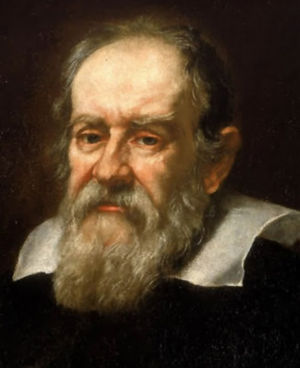
9. Galileo Galilei IQ: 185Wikipedia
Galileo was Italian natural philosopher, astronomer, and mathematician who made fundamental contributions to the sciences of motion, astronomy, and strength of materials and to the development of the scientific method. His formulation of (circular) inertia, the law of falling bodies, and parabolic trajectories marked the beginning of a fundamental change in the study of motion. His insistence that the book of nature was written in the language of mathematics changed natural philosophy from a verbal, qualitative account to a mathematical one in which experimentation became a recognized method for discovering the facts of nature. Finally, his discoveries with the telescope revolutionized astronomy and paved the way for the acceptance of the Copernican heliocentric system, but his advocacy of that system in support of his view that the Bible contained errors, eventually resulted in an Inquisition process against him.
8. Bobby Fischer IQ: 187Wikipedia
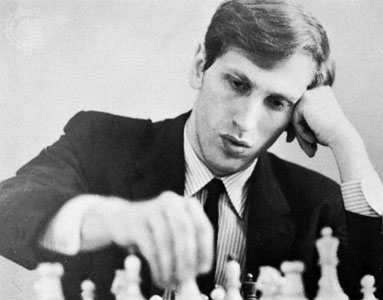
Bobby is the byname of Robert James Fischer, an American chess master who became the youngest grandmaster in history when he received the title in 1958. His youthful intemperance and brilliant playing drew the attention of the American public to the game of chess, particularly when he won the world championship in 1972. Fischer learned the moves of chess at age 6 and at 16 dropped out of high school to devote himself fully to the game. In 1958 he won the first of many American championships. In world championship candidate matches during 1970–71, Fischer won 20 consecutive games before losing once and drawing three times to former world champion Tigran Petrosyan of the Soviet Union in a final match won by Fischer. In 1972 Fischer became the first native-born American to hold the title of world champion when he defeated Boris Spassky of the Soviet Union in a highly publicized match held in Reykjavík, Iceland. In doing so, Fischer won the $156,000 victor’s share of the $250,000 purse.
7. Ludwig Wittgenstein IQ: 190Wikipedia
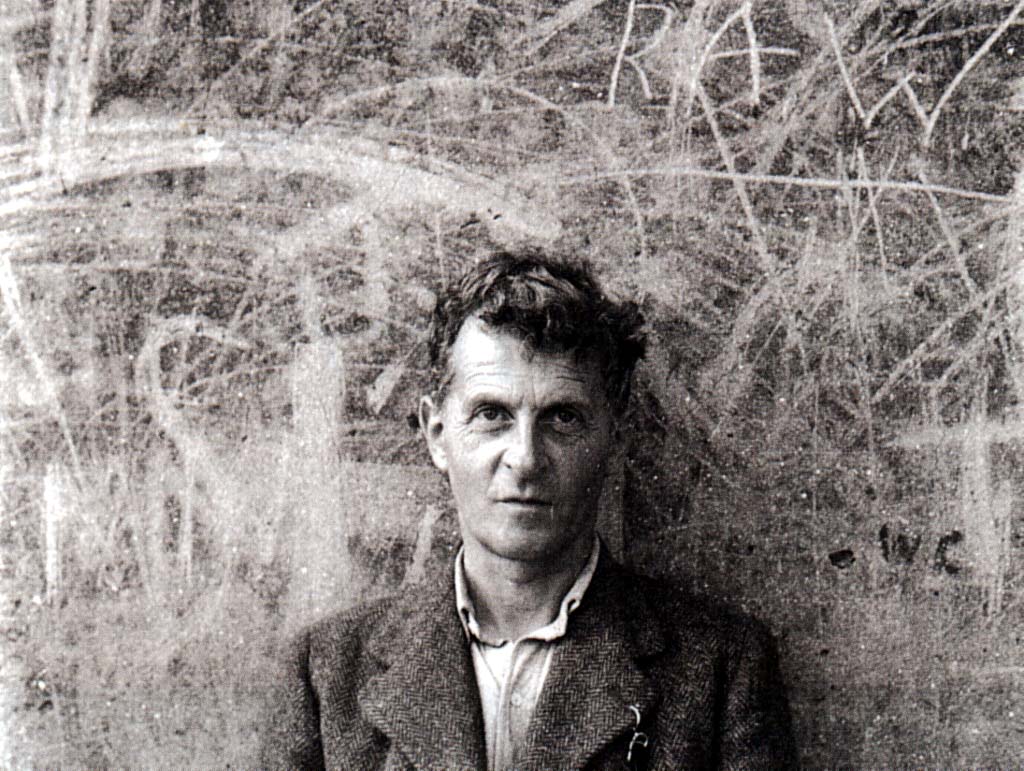
in full – Ludwig Josef Johann Wittgenstein was an Austrian-born English philosopher, regarded by many as the greatest philosopher of the 20th century. Wittgenstein’s two major works, Logisch-philosophische Abhandlung (1921; Tractatus Logico-Philosophicus, 1922) and Philosophische Untersuchungen (published posthumously in 1953; Philosophical Investigations), have inspired a vast secondary literature and have done much to shape subsequent developments in philosophy, especially within the analytic tradition. His charismatic personality has, in addition, exerted a powerful fascination upon artists, playwrights, poets, novelists, musicians, and even filmmakers, so that his fame has spread far beyond the confines of academic life.
6. Blaise Pascal IQ: 195Wikipedia
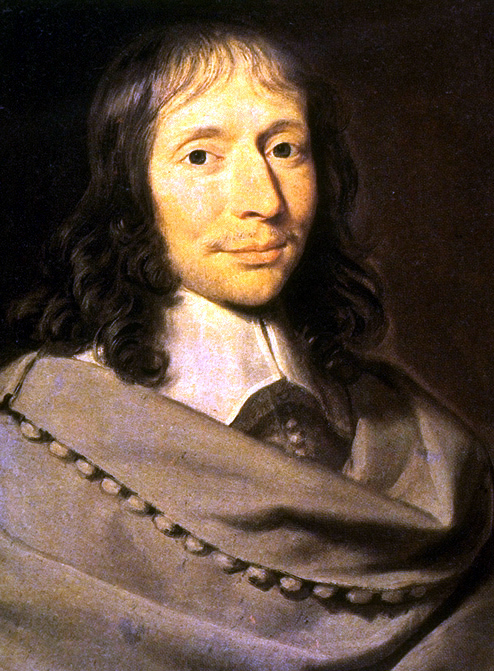
Blaise Pascal was a French mathematician, physicist, religious philosopher, and master of prose. He laid the foundation for the modern theory of probabilities, formulated what came to be known as Pascal’s law of pressure, and propagated a religious doctrine that taught the experience of God through the heart rather than through reason. The establishment of his principle of intuitionism had an impact on such later philosophers as Jean-Jacques Rousseau and Henri Bergson and also on the Existentialists.
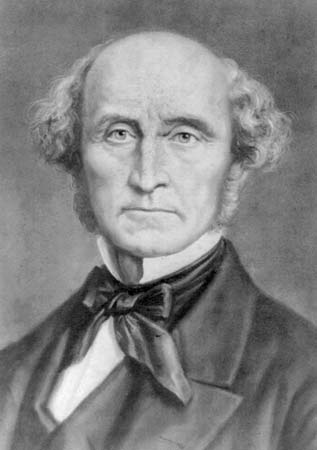
5. John Stuart Mill IQ: 200Wikipedia
John Stuart Mill was an English philosopher, economist, and exponent of Utilitarianism. He was prominent as a publicist in the reforming age of the 19th century, and remains of lasting interest as a logician and an ethical theorist. Mill was a man of extreme simplicity in his mode of life. The influence that his works exercised upon contemporary English thought can scarcely be overestimated, nor can there be any doubt about the value of the liberal and inquiring spirit with which he handled the great questions of his time. Beyond that, however, there has been considerable difference of opinion about the enduring merits of his philosophy.
4. Gottfried Wilhelm von Leibniz IQ: 205Wikipedia
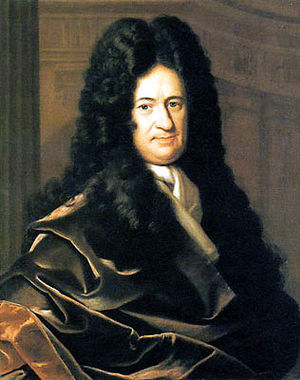
Gottfried Wilhelm Leibniz (also Leibnitz or von Leibniz (July 1 (June 21 Old Style) 1646 – November 14, 1716) was a German philosopher of Sorbian origin who wrote primarily in Latin and French. Educated in law and philosophy, and serving as factotum to two major German noble houses (one becoming the British royal family while he served it), Leibniz played a major role in the European politics and diplomacy of his day. He occupies an equally large place in both the history of philosophy and the history of mathematics. He discovered calculus independently of Newton, and his notation is the one in general use since. He also discovered the binary system, foundation of virtually all modern computer architectures. In philosophy, he is most remembered for optimism, i.e., his conclusion that our universe is, in a restricted sense, the best possible one God could have made.
3. Emanuel Swedenborg IQ: 205Wikipedia
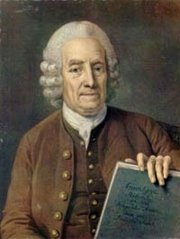
Emanuel Swedenborg was a Swedish scientist, Christian mystic, philosopher, and theologian who wrote voluminously in interpreting the Scriptures as the immediate word of God. Soon after his death, devoted followers created Swedenborgian societies dedicated to the study of his thought. These societies formed the nucleus of the Church of the New Jerusalem, or New Church, also called the Swedenborgians.
2. Leonardo Da Vinci IQ: 205Wikipedia
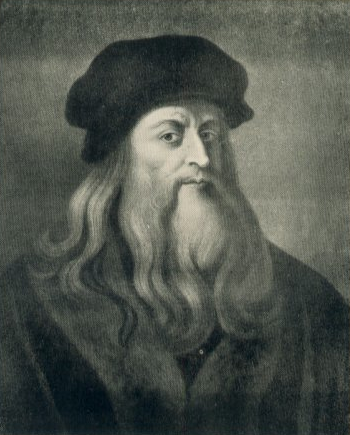
Leonardo Da Vinci, Italian painter, draftsman, sculptor, architect, and engineer whose genius, perhaps more than that of any other figure, epitomized the Renaissance humanist ideal. His Last Supper (1495–98) and Mona Lisa (c. 1503–06) are among the most widely popular and influential paintings of the Renaissance. His notebooks reveal a spirit of scientific inquiry and a mechanical inventiveness that were centuries ahead of their time. The unique fame that Leonardo enjoyed in his lifetime and that, filtered by historical criticism, has remained undimmed to the present day rests largely on his unlimited desire for knowledge, which guided all his thinking and behaviour.
1. Johann Wolfgang von Goethe IQ: 210Wikipedia
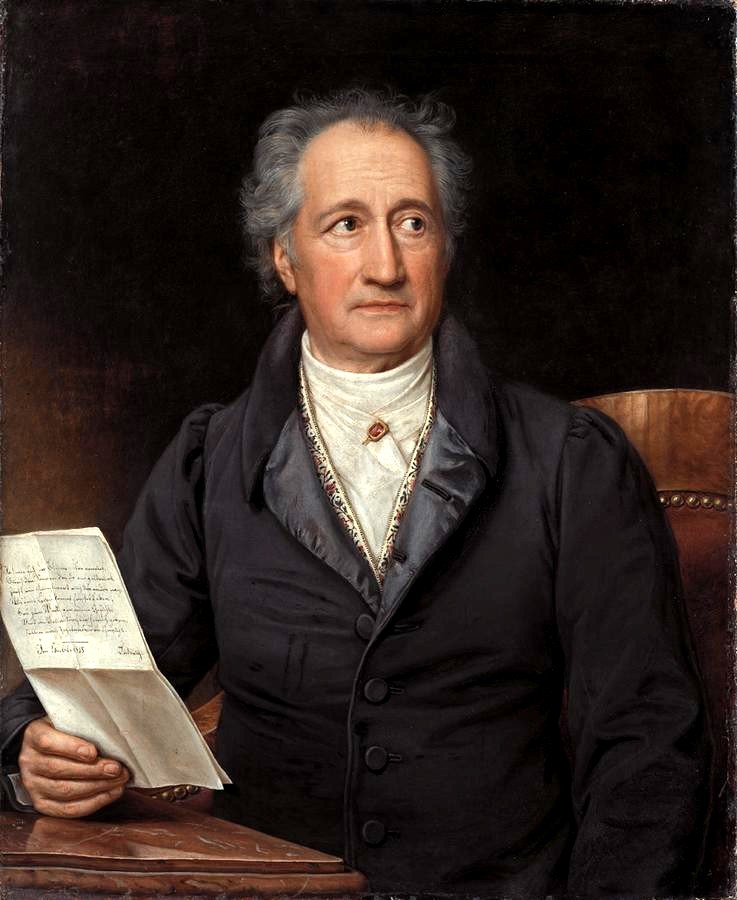
Goethe, German poet, playwright, novelist, scientist, statesman, theatre director, critic, and amateur artist, is considered the greatest German literary figure of the modern era. Goethe is the only German literary figure whose range and international standing equal those of Germany’s supreme philosophers (who have often drawn on his works and ideas) and composers (who have often set his works to music). In the literary culture of the German-speaking countries, he has had so dominant a position that, since the end of the 18th century, his writings have been described as “classical.” In a European perspective he appears as the central and unsurpassed representative of the Romantic movement, broadly understood.
Sources: Genius IQ Estimates, Encyclopaedia Britannica, Wikipedia


I can't believe that Sir Issac Newton was not included…
Nor were any of the great composers, Garry Kasparov, or modern mathematicians.
and the list is very Eurocentric
Sir Isaac Newton should definitely be top 3.
good list
Great list, although what about Marilyn Vos Savant? She is regarded as the person with highest current IQ (over 185) and is a woman of all things!
Also, interesting fact about Wittgenstein, he was in the same elementary school class as Adolf Hitler! Here is a school photo of them:
http://upload.wikimedia.org/wikipedia/en/1/13/WittRealschuleCrop.jpg
It’s weird how a small, elementary school in the back end of Austria could spawn two such influential people. I wonder if they advertise the latter one…
though Wittgenstein and Hitler were born just six days apart, Hitler had been held back a year, while Wittgenstein was moved forward by one, so they ended up two classes apart at the Realschule in Linz
inanytime: thanks – it was very interesting learning about some of these people.
Interesting fact: Wittgenstein and Adolf Hitler were in the same class at elementary school, they’re even together in a school photo!
http://upload.wikimedia.org/wikipedia/en/1/13/WittRealschuleCrop.jpg
It’s weird that two such influential people went to the same small school in a small town in Austria. I wonder if they advertise the latter student…
btw…checking out the source helps to put this into context. LOL..but then it usually does. (i’m so glad you always note sources too)
great list!
come ON… please!! where’s Isaac Newton??!!
http://en.wikipedia.org/wiki/Isaac_Newton
JT: That is amazing! I had no idea they went to school together – very eerie.
Sam: I didn’t determine the names on the list – I just put the information and pics together. Check out the source article.
Look in their eyes… “Knowledge is pain” is an expression I’ve heard many times. I find it interesting how sad they all look.
Hmmm, I dont know why I posted twice. My message didnt appear when I posted the first time.
all European? No oriental geniuses, no african, semitic geniuses.
well at least you got a woman on the list
Kyle: interesting observation – I hadn’t noticed until you pointed that out.
JT: Sometimes if you get an error, the comment still posts.
TimeTraveller: I just went on the original source
In jfrater’s defense, it’s also a challenge to define ‘genius’ and have the sources to back it up. Composers are often a genius when it comes to music, but often nothing else. (Mozart’s own life was a shambles in so many ways.) And documentation for non-Europeans is very limited. Can TimeTraveller offer up some Asian, African, or semetic geniuses for us to examine?
And while Marilyn Vos Savant may have a high IQ, she’s not known for much else. No great intellectual salons, no major challenges to the world of thought.
another woman might have been Marie Curie.
Swedenborg??? Come on! He was influential in his time, but today? What did he do? What did he invent? He shouldn’t be in this list.
this isn’t to do with influential people, this is to do with genius. your point is…pointless…
IQ tests are culturally biased, so of course the list will be eurocentric.
how so? (this sounds mean, but i truly want to know!)
To be perfectly honest, Europe has always been the ground for progressive thinking and cultural advancement. No other continent comes close to what Europe achieved between the Renaissance and now.
And Fischer is Jewish-American if that helps.
how did you get iq scores for these people? the iq test hadn’t even been developed at that time i thought.
like someone said, marilyn vos savant has the highest measured iq of any living person, why isn’t she here?
perhaps iq tests are gibberish and this list is unmeaningful.
hideki, if you read the opening paragraph you would see this:
“I have used a table of IQ estimates for historical geniuses”
so an estimate was made of an intelligence estimate. might as well give them random random iqs.
AHEM…
tell ya what…this is one place it pays to read the fine print. /snarky remark
I think you should change this list name to “top 10 people with the highest IQ”. You can have a really high IQ and be really stupid.
Henry: that is true – you can – but none of these people were. They had the highest IQs and were also great contributors to humanity.
where’s stephen hawkins?!!!!!!!!
stephen hawking? why him? I gess i understand, but probly not one of the top 10 yo.
the black angel–
well you left Ibn Sina and his semitic precursors: when europe was killing itself in a spiral of feudal tribalism…
The reason that this list consists mainly of European men is that most of these are historical figures. The psychologists who estimated the IQ’s would have had no way and probably not much inclination to try to estimate the intelligence of relatively unknown people. Basically this list is a ranking of most intelligent well-known people. There may well have been an African woman or Asian man with a higher IQ than anyone on this list, but if they did not leave a body of work to be examined and no one outside of their village or town ever heard of them, they would not make this list.
I’m sure you already knew this, but I just want to point out that there is a lot of controversy today over using IQ tests to measure intelligence. Yes, people with IQs are usually very intelligent, but there are many, many, types of intelligence that cannot be evaluated by a standard IQ test. And as was said earlier, it can also be culturally biased.
Wheres Nikola Tesla? you should do top inventors of all time if you haven’t already
Great addition, Tesla would definitely be on my list.
i totally havta giv it up to sean here I mean, serisly, nikola tesla nd srinivasa r. Plus, this is from WIKEPEDIA. I dunt trust that website, no ofense to wikio. But i havta agree w/ some, like wittgenstein and that other one…
thanx
the black angel
What about Leonhard Euler?
“Euler is considered to be the preeminent mathematician of the 18th century and one of the greatest of all time. He is also one of the most prolific; his collected works fill 60–80 quarto volumes.A statement attributed to Pierre-Simon Laplace expresses Euler’s influence on mathematics: “Read Euler, read Euler, he is the teacher (master) of us all”.
how can u give test from died persons?
As I know IQ tests are not very old
amir: see the source article – it is based upon estimates.
jf,
Are you WraithX?
#delphi – odd question, but yes – I am
Although I have great respect for these 10 for their achievements, but the method for selecting them has not been explained. I don’t think there are any reliable objective one, and your clearly suffers from the fact that you are confusing the WORLD with mostly western European and USA!
Although I have great respect for these 10 for their achievements, but the method for selecting them has not been explained. I don’t think there are any reliable objective ones, and yours clearly suffer from the fact that you are confusing the WORLD with mostly western Europeans and the USA!
Mano: I appreciate what you are saying, but I am not from Europe or the USA – so believe me, there is not a bias on my part in that direction. And I did say at the top that the list was based upon estimates – I will rewrite the heading tomorrow to make that clearer though. Thanks for commenting even if we don’t agree
The reason is that I have used a table of IQ estimates for historical geniuses to determine the members and order of this list,
Sources: Genius IQ Estimates, Encyclopaedia Britannica, Wikipedia
1st from the leading paragraph and 2nd from the source cited at the end
so if there is bias..check w/ the source. also the eurocentric slant is something that has already be made mention of in various earlier comments.
I have been tested 5 times by 3 different psychologists. My IQ was listed as technically immeasurable because I have ADHD and could not focus long enough to get an accurate measurement. Even then, they each estimated my IQ as off the scale because it would be over 170 and said that I would have to take a test designed specially for really high IQs…but I haven’t ever seen one of those tests.
Genius IQs seems to be a trait of my family.
Just because my IQ is almost double what the average person’s IQ is, doesn’t mean I am that much better at life or really anything for that matter. Because my IQ is so high, I suffer in other areas related to the brain. I suspect ADHD is a symptom of having a high IQ. Other problems I have are forgetting very simple things like where I put my keys and what strawberries are called.
All my high IQ does for me is allows me to learn and solve things faster than those around me…really that is the only advantage I have observed. People put too much emphasis on an IQ.
Also, the IQs of those people are relative to their contemporaries.
Actually I havta agree w/ da adhd part and them being smartr. But theyr xually smartr w/ there mouths. Ha! Admit it man…
To Dadudemon, “By learning and solving things faster” What exactly are these things? Do you visualize or compile a full problem with mutiple parts simultaneously? Do you have something like photographic memory? What does the ADHD affect? Is there a connection to autism here? I’m just wondering.
I realize the irony of me commenting on this, but isn’t “genius” relatively hard to quantify? I mean, you could be a genius at sports like M. Jordan, or at film ala Bergman, and yet not have a very high IQ.
I don’t have anything really to add, other than to suggest it would be more apt to list geniuses in specific fields.
At first glance an interesting list, but on second thought subjective, biased and Eurocentric as others have commented. My two points of concern relate to the absence of literary giants and the exlusion of oriental figures. For the former there is the example of Shakespeare whose prolific influence and thought patterns have bewildered and propelled many modern thinkers of other disciplines. For the latter, I am concerned with Chinese, Indian and Persian ancient and medieval thinkers, philosophers, and discoverers among others. Where are Avicenna, Razi, and Rumi as obvious examples from Persia? These people fascinated the likes of Goethe and Pascal, in your list, and functioned next to the Greeks and Romans as the fathers of European Renaissance. By the way, where are Greek giants Aristotle and Plato? I am interested to know their IQs if there is a way to estimate theirs through their hugely influential extant work. Even if an objective list would be densely competitive, I would suggest a more cross-cultural list of geniuses.
As for Fisher, I am an amateur chess player, and as much as he is my favourite player, I do not put him next to the Cuban Capablanca when it comes to genius. The latter was more of a true genius from the go. By the way, how do you assess IQ based on chess moves? Calculation? Innovation in moves or variations? Wins? Ratings? Opponent strength? Or nationality? (I am asking this one because Russia has had the greatest number of chess champions and the only American world champion makes it into your list?) As an example of one of a kind, Alekhine was the only player in history to announce a mate-in-10 against a player of grandmaster strength at the board, and Kasparov is considered by many to be the strongest player of all times (only to bear in mind that he has had such extensive advantages of pre-match preparation and technology at his disposal which the earlier generation players obviously did not enjoy).
For Fischer, I remember watching a documentary on him, which stated that he took an IQ test when he was in his prime and it came out as 187.
2
most profound leap in history – e=mc
also, google “edward witten”
I took your advise and looked up Witten. I would have to leave him off just for having been mentioned in an episode of Angel.
JT said…
“and is a woman of all things!”
I am EXTREMELY offended by this remark. Please choose your words more carefully.
As for the list itself, I think everything else that I was going to say about it has already beensaid…Many other cultures or women are not on the list because their achievements and brilliance may not have been noticed or rewarded, especially in the lower classes.
What a terrible list. I cannot possibly understand how you can even rank geniuses. How does one compare scientific genius, musical genius, artistic genius, philosophical genius, etc. Are some greater than the other?
Bender: read the cited source article – it has more information on the whole IQ thing.
sean – witten has a field’s medal, einstein’s job and is at the forefront of string theory research.
For Diogenes,
By “learning and solving things faster”, I mean that when presented with material to study and be tested on, I would learn the material much faster than my peers. By solving things, I mean I could see the answer and learn new concepts much faster than my peers. (This generally applies to math and physics.)
I do not visualize and complete problems with multiple parts simultaneously; I solve problems with multiple variables simultaneously. (I can only focus on one thing at a time…even if that one thing at a time changes at a blistering pace…trust me, ADHD isn’t fun when you are supposed to pay attention in an important meeting.) I amazed my highschool Algebra teacher by solving “Systems of Equations” in my head. My limit was 4 variables. (I can’t solve a system of equations with more than 4 variables in my head…I think most people would use matrices for anything over 3 variables.)
In chemistry, I never had to use conversion factors no matter how complex the question. I could immediately see the desired end result and perform the math to get there. My chemistry professors told me that it was impossible to do chemistry without conversation factors and they were shocked and amazed when I showed them that I could do it without.
I do not have a photographic memory, per se, I have what I have come to call a ‘virtually photographic memory” because it isn’t the same as other photographic memories I have read about. Some details about that: I cannot pick and chose what my brain decides to take pictures of and it is very random. My dreams are so realistic that I sometimes confuse what has happened in reality with things that happened in my dreams. (That is horrible when you have a vivid memory of something someone did that that didn’t actually do.) Sometimes, when I am recalling an event that actually happened, I can play back the event in my head like a movie and I can even go back over details by “zooming”(by zooming, I mean just that; it is like I can make something in the “playback” come closer to my “eyes”) in on things that I didn’t notice before. (Like remembering the name of a name tag that I saw only from peripheral vision or remembering the nutrition facts off of a food package that I saw with my peripheral vision.) With the afore mentioned ability, I can actually learn something new that I didn’t know before by simply playing back things in my head and focusing on different things.
ADHD affects my ability to appropriately interact with people. It affects my short term memory. It also allows me to be very good at sports and videogames that are fast paced. I often forget very simple words that everyone takes for granted everyday. (I forgot the word “put” before. I recently had an episode where I became very frustrated because I forgot the word “inexorable”.)
I do not know if autism is connected to ADHD but I do know autism and “genius” are sometimes two parts of the same pie.
Marilyn Vos Savant— no relevant contributions. As wikipedia explains, she really messed up on femat’s last theorem. She was critical of the supposed solution, but “in making her case, Marilyn was accused of misunderstanding mathematical induction, proof by contradiction, and imaginary numbers”, which is really standard stuff, as far as I know and have seen in class.
The three (supposed) greatest minds ever were Archimedes, Newton and Gauss. I Heard this on my school, the science department of my university. (study physics). Gauss thought that Eisenstein should be included too.
I would personally include those three, and maybe other physicists.
dadudemon, can you concentrate long enough to write a very large post? seems like it.
How can you rank these? and how are these tested? Many of these people around long before IQ was considered quantitative or was even a term used for intelligence. So what makes you say that some had higher IQs than others.
i would say all were more leaning to savant as most exceled in only one thing
What about that Rainman guy? I have had a complete mental blank and can’t remember his name, but he had such an amazing photographic memory that it took him something like 8 seconds looking at a two pages in a book at a time and he knew them for the rest of his life. I think that is incredible.
Other than that, I love this list. This website is where I learn all of my little facts,
.
I do have to say that I disagree with IQ tests though. If you’re good at an IQ test it doesn’t mean you are smart (it doesn’t mean you aren’t either) it just means you are good at IQ tests.
What they actually did is far more fascinating than their IQ scores.
When I clicked on the list I was expecting to see Albert Einstein as No. 1.
scrap the i.q. they were never measured during the renaissance period.
How did you rank these geniuses exactly? I am glad you included lesser known people, but am perplexed that you didn’t list the obvious ones (Newton, Einstein). If you had more time, maybe you can create some lists ranked according to mathematical, musical, artistic genius (and so on), and maybe a list for the people who were a jack at all trades (Da Vinci).
Let’s not forget Srinivasa Ramanujan.
only one female? how could nine out of ten top geniuses be male? a male made this list.
Marilyn Vos Savant, has anyone done a Real search on her and if so why haven’t you realized that no matter how smart you are sometimes you have to do something stupid… Like Become a SCIENTOLOGIST. I used to read her articles all the time till I found out that she was Blind to Idiocy.