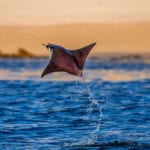
Many creatures with which we are familiar are venomous or poisonous. Perhaps because they have not produced a large number of human fatalities we are not warned of their dangers. Nevertheless, it is wise to know what these creatures are capable of doing. This is a list of the 10 animals you didn’t know were venomous or poisonous. They are in no particular order.
10. Cuttlefish
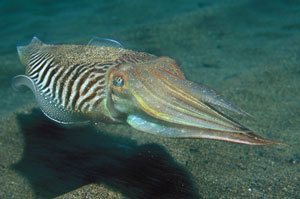
The cuttlefish is closely related to the squid and octopus. It has 10 arms covered with tiny suckers, and at the base is their beak. This beak injects a fast acting venom which is not harmful to humans. The venom works by attacking the victim’s nervous system.
9. Hooded Pitohui
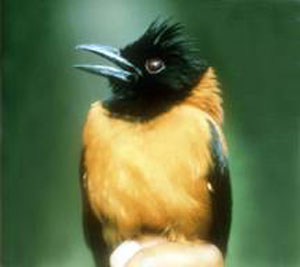
A songbird from New Guinea, its skin, as well as feathers, contain a very powerful poison called homobatrachotoxin. This is the same poison found in South American dart frogs, although it is severely less toxic than the frogs, and a whole bird would have to be eaten for any real harm to occur. The poison is transferred easily to humans by merely touching or handling the bird.
8. Duck-Billed Platypus
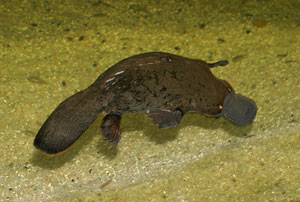
The male platypus has a spur, located on the heel behind each leg. Their venom is not known to be deadly to humans. The venom is produced only by mature males and is most potent during mating season, leading some researches to believe that it is used primarily against competing males.
7. Gila Monster
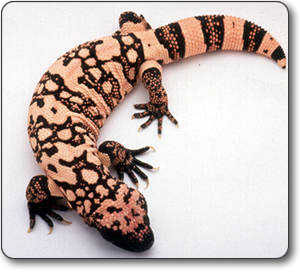
The Gila Monster is one of only two known venomous lizards and can be found in southwest USA and Mexico. The Gila Monster’s venomous bite is different than most animals, in that most of its teeth have grooves that conduct the flow of the poison. Also, rather than an injecting bite, the venom flows from these grooves and is injected through chewing. They are rarely fatal to humans.
6. Centipede
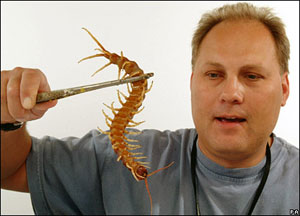
The centipede is very common in the US. Its body is made up of up to 150 segments with a pair of legs for each segment. The head has long antennae and a pair of large claw like structures. These claws carry the venom glands. While centipedes are, for the most part, not fatal to humans, some of the large or giant species can be very dangerous to children.
5. Millipede
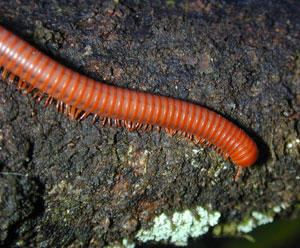
Closely related to the centipede, some millipedes emit poisonous liquid secretions or hydrogen cyanide gas through microscopic pores on their body. Some of these substances are caustic and can burn the exoskeleton of ants and other insect predators, and the skin and eyes of larger predators.
4. Cone Snail
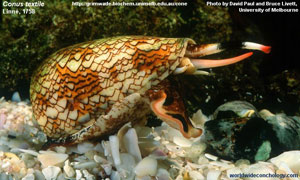
The cone snail’s harpoon is a modification of the radula, an organ in molluscs which acts as both tongue and teeth. The harpoon is hollow and barbed, and is attached to the tip of the radula inside the snail’s throat. When the snail detects a prey animal nearby, it turns its mouth – a long flexible tube called a proboscis – towards the prey. The harpoon is loaded with venom and, still attached to the radula, is fired from the proboscis into the prey by a powerful muscular contraction. The venom paralyzes small fish almost instantly. The snail then retracts the radula, drawing the subdued prey into the mouth. The cone snail’s bite is similar to a bee sting, but the larger species are responsible for 30 known cases of human death.
3. Slow Loris
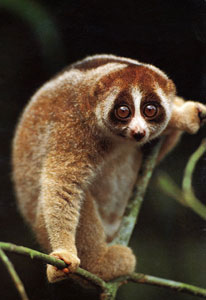
The Slow Loris is one of the few mammals which is venomous. In addition, it is the only mammal which is both venomous and poisonous at the same time. Slow lorises produce a toxin on the inside of its elbows, which it smears on its young to prevent them from being eaten. In addition, it will lick these patches to put the poison in its mouth, giving it a venomous bite used for self defense.
2. Komodo Dragon
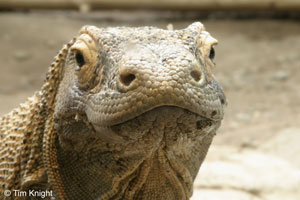
While they do not technically produce venom, their diet consists of pretty much anything dead, and that creates a special mixture of deadly bacteria build up in their mouths. Their saliva contains more than 50 types of bacteria, of which 7 are highly septic and 4 have no known specific antidote. However, if treated with powerful antibiotics, it proves non-fatal to humans.
1. Coral
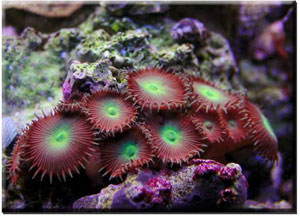
There are many types of coral, and a few of these have toxic chemicals that are not fully researched yet. The most deadly coral is the Palythoa. It can kill a rabbit with only a 25 nanogram injection. To kill a human would only take 4 micrograms. Palytoxin is considered one of the most toxic organic poisons. Symptoms of palythoa poisoning include chest-pains, difficulty breathing, racing pulse and low-blood pressure. Death occurs within minutes, and there is no treatment.
Contributor: Dan231


when I see the word platypus….I think of Daffy Duck…..
“The most deadly coral is the Palythoa. It can kill a rabbit with only a 25 nanogram injection.”
I would think the only situation these 2 would ever cross paths, would be intentional by an evil individual in a labcoat.
Yeah, if it wasn’t venomous then it would completely change how I feel about close contact with a giant man eating reptile, hey are crocodile’s bites infectious, does that count and what if they had spent all day getting their teeth cleaned by those gross little birds?
Phil; thanks for the research, but, Wikipedia isn’t always the best for accurate info.
Jamie: The Croatian post I believe has some anti-american sentiment, “you caused my war”" thing. Here’s the closest translations I could find.
JEBO YOU WHOLE OVE ŽIVOTINJE….TOGA YOU WITH US INTO A HERZEGOVINA Does not have US YOU HAD MERELY VIRULENT CRNOSTRIK!!!!!!!
Don’t believe everything you read on wikipedia. Rapid swelling, localized blood disruption, and pain can also be due to the body’s immune response to foreign invaders.
Thanks Crimanon
A few years ago the Australian government used a scare tactic campaign in our neighbouring countries to stop so-called boat people from wanting to migrate to australia illegally. It included a list of poisonous animals like the blue ringed octopus and the box jellyfish, and played up the large amount of venomous snakes, etc. It was laughable. That government has been voted out now, in favour of a guy most famous on youtube for eating his earwax.
Using Wikis as a main source of info, is bad. I’ve seen you use other sources, so you have nothing to worry about. Anyone who wants to make an “Educated” comeback using a flawed pile of “info” needs to know what real research is. For entertainment, it’s alright by me. If I question it, I’ll do a search. Don’t use it to try and Write your thesis. I use The Wiki all the time, It make s a great jump of point to other links.
POLAR BEER! A Bad Killer. Dry. Muskie.
jfrater: I can vouch for the thing about stinging caterpillars, and I live a bit further north than they do. When I was about eight years old I stumbled and fell to the ground, smashing my face into one. You want to talk about painful! I think it took about two full months for the marks to fully disappear. So now, not only do I know to watch out for Fire Ants (another bad news bunch \, though not necessarily lethal), I also watch out for anything I don’t recognize that has spines of any kind.
Does anyone know in what year the platypus was discovered to be poisonous????
jfrater: The slow loris, millipede, and hooded pitohui are all poisonous, and the komodo dragon uses chemical defense. it’s common knowledge that gila monster/centipede/cone snail are venomous, and that komodo dragon are chemical defense. 7 is stink badger, 6 is shrew, 4 is shark, and 2 is skunk.
No, Jfrater, most venomous is a daddy long-legs, then a box jelly, then a funnel-web, then a feirce snake, then a stone fish.
lol daddy long legs
avi: There is no proof that a daddy long-legs is “most” venemous. It’s a myth. Here’s the link from snopes:
http://www.snopes.com/critters/wild/longlegs.asp
It may be venemous to other little insects but we don’t know really how harmful the “poison” is.
jackie: it doesn’t bite ’cause it can’t bite
avi: Actually it can, they did it on mythbusters, here’s another link:
http://en.wikipedia.org/wiki/Pholcidae#Most_venomous.3F
Everything about the quote “it’s venemous it just can’t bite” is a total myth.
A brown recluse has short fangs as well but can bite a human.
Avi: if it can’t bite… How would it eat??? It’s part of being a spider.
Avi: as far as the rest of your list, check with the Real researchers, because Amateurs are Very Incompetent.
8rustyaples: venom is generally used for defense in small animals. crimanon: i meant it can’t bite HUMANS, OK?
by the way, i didn’t say it couldn’t bite because of fang size, i said it couldn’t bite, but what if there’s some other reason it can’t bite people?
Also, are you sure adam just didn’t get a lethal dose? A claim about the amount of venom in an animal can’t be busted
If Adam got a lethal dose, wouldn’t the show have told us??? This episode did air a few years ago.. If It Can’t Bite Tell Us Why Not.
http://spiders.ucr.edu/daddylonglegs.html
http://en.wikipedia.org/wiki/Pholcidae
http://www.snopes.com/critters/wild/longlegs.asp
Do your research next time. and don’t start anything you cant cite!
Crimanon: Adam did not get a lethal dose. The show said that they were biting him but none of the bites penetrated deep enough for the venom to have an effect. Adam ended up with a bunch of tiny red sploched bumps on his arm.
look at the links, They Are NOT Deadly To Humans. And I do believe Ravyn that this is the first time we’ve ever disagreed.
could it be, that daddy long legs have weak fangs that can’t penetrate human skin?
I’ve seen the episode of mythbusters that everyone is talking about. Adam IS bitten by the spider, he does say “Ow”, and there is redness, if only for a second. Conclusion, They cant kill humans. the same amount of poison for a box jelly could kill(off the top of my head) 20 people??? don’t qoute me just use it as an example. If they are that dangerous AND that poisonous, HE’D BE DEAD!!! Watch the episode!!!
do you exactly know how much was injected?
Once again, I go on another hunt to find the truth about (insert subject here). I’m really tired of (insert Slacker rant here). LooseCannon if you are reading this you were right. Avi, DO SOME *****ING RESEARCH. I’ve given you links to all sort of sites, all you do is ask questions. TRY Looking at the links. Try doing your own research. I’m done doing homework, I was finished with that Too many years ago. You want to know, you find out for yourself. My end of the topic is OVER, unless you bring something worth while to the table, I’ll see you at the next post.
AND CREATE A DAMN PROFILE!!!!
‘and create a damn profile’…ah…my theme song. think i should have that tattoed on my ass.
*snicker*
OK…
i could also have a different definition of most venomous, you know
crimanon: i’ve looked at the links, and they all said it might not be the most venomous
I’m done
well i still know a possibility you didn’t realize: humans could be immune to daddy long legs venom
you are right a daddy long legs can not kill humans and a box jellyfish can not kill turtles, and not for the reasons you might think. a daddy long legs could could be (by my definition) the most venomous, and there could be animals that are immune. and did you even look at the snopes thing? it said there was a difference between venom and poison
Komodo dragons are venomous. It was formerly believed that their jaws harbored putrefaction (which they do) but that they didn’t produce venom. This has been proven not the case. Here are two lay sources:
http://animaldiversity.ummz.umich.edu/site/accounts/
information/Varanus_komodoensis.html
http://komodo-indonesia.com/komodo-dragon-fact.htm
Additionally you can read referreed papers published by Dr. Bryan Fry on this fascinating topic.
A note on the corals…
I have kept a coral reef tank for 7 years now and have a lot of familiarity with corals. Many corals are venomous, several species have stinging nematocysts (similar to a jellyfish) that are used to catch prey and defend themselves. The coral in question here is a zoanthid. A few species of zoanthid do contain an extremely dangerous Palytoxin. The toxin is located in the tissue and isn’t delivered by any kind of stinging mechanisim. Really the only way to get envenomated is to eat one of the polyps. There is a possibility of coming into contact with the venom via a cut on the skin, but the venom would have to be in the water due to a damaged polyp. However, due to the extreme nature of the toxin, and coupled with the fact that many zoanthids ave very similar in appearance taxonomically speaking (ie it’s hard to tell the deadly ones from the harmless ones), those of us who keep them in our tanks don’t take chances with them. We wear protective gloves to prevent skin to water contact, and go to lenghts to keep pets and kids away from the tank water.
An interesting note on Palytoxic zoanthids…Polynesian warriors used to harvest them from tidal pools, crush them up and coat darts and arrows with the toxin to use in combat.
i dont measure how venomous an animal is by the potence of the venom
o’ahu: no the bacteria in the komodo monitor’s mouth are venomous but the actual monitor isn’t. a better title would be ”Top 10 Animals You didn’t Know were Toxic
Avi: No, that was the common thought for the past many years. The bacteria certainly are harmful, but Komodo dragons also produce venom. They are venomous. Many varanids are, which is interesting as it does away with the idea that the Mexican beaded lizard and the gila monster were the only venom producing lizards. The bacteria take time to neutralize a prey item (buffalo, etc.), but their venom causes reactions almost right away in some prey.
producing venom doesnt contradict me. the venomous bacteria are produced. so basically, that doesn’t contradict me.
One does not simply “produce” venomous bacteria. Some bacteria harbor their own toxins and multiply in the mouths of varanids because the recurvature of the teeth allows for food particles to be caught. These bacteria aren’t produced by the lizard. Varanids, komodos included, produce their own venom through their OWN biological processes. A snake does not produce venom because of bacteria, and neither does a komodo dragon. Varanids, it appears, have venom glands located in their lower jaws. This is a relatively new discovery, so much of the information available online and on TV hasn’t been amended to include this fact.
how do you KNOW a creature doesnt produce venomous bacteria. i didnt say monitors simply produce them just produce them. and a venom gland doesnt make a creature venomous until you actually see the venom gland in activity you cant be sure if its vestigial or not.
the only ones i didnt know were toxic are the pitohui and millipede
and the solenodon is a venomous mammal 2
Avi, clearly you are not a herpetologist so I’m going to request you stop making statements without the knowledge behind them. Bacteria reproduce on their own, no animal produces them. Secondly I never said toxic bacteria don’t occur in the mouths of animals. They do. The komodo, as you’re fond of pointing out, does have toxic bacteria in its mouth. It also has functioning venom glands in its lower jaw. “…until you actually see the venom gland in activity…” How do you know it hasn’t been observed? The glands actually have been observed producing venom, and that venom has been observed affecting prey items. The toxic bacteria affect prey, but so does the venom produced by the venom glands which have been documented to be functional organs and not merely vestigial. I’m not sure why you are resistant to this new fact. It is after all a furthering of our understanding of varanids and should be welcomed with enthusiasm. You have to remember that lab *****ysis takes place during these types of studies and conclusions are not merely suppositions. Varanids have functional venom glands that produce venom. This venom, among other effects, serves as an anticoagulant. If you were to hypothetically clean a komodo’s mouth of all bacteria and toxic residual from those bacteria the animal would still be able to drop smaller prey through the use of its own venom. Did you also know that iguanas have been recently found to produce their own venom?
”clean a komodo’s mouth of all bacteria”… no venom would be needed to kill the smaller prey …. they would have pretty strong jaws and thats enough to kill small prey ….. and no thats not just an assumption.
and there is another poisonous bird… i cant remember its name though
So you concede the point that they are venomous? Thought so; Sheer ignorance can only stand up to so much factual bombardment. On to point two: Their bite force is what? Weaker than any dog’s or human’s? (Hint: Yes). Before you make a ludicrous remark about bite strength, yes it has been measured with gauges. Sure they could easily kill a mouse with a chomp, but that’s not what I was talking about. I was talking about small deer and some pigs. Clearly you are either a child, and therefore have no business spreading misinformation or you are a troll. Either way, you clearly aren’t the animal expert you’re posing as. (BTW, I found your statement about daddy long-legs to be amusing. Here’s a link from UCR: http://spiders.ucr.edu/daddylonglegs.html)
BTW, notice the “hypothetical” preceding the quoted line? Hypothetically speaking, traveling at the speed of light would mean that you don’t experience the passage of time. You should be able to infer the purpose of the second sentence. If not… well, I don’t no what to say.
The other bird you’re looking for is the Ifrita.
O’ahu: I’ve already given her that link and l believe she has already assimilated it into her universe of “So I Say”.
Knew the Gila Monster was poisonous.
Studies have recently shown the Komodo Dragon to Actually produce a mild venom in adition to the harmful bacteria found in its mouth.
didn’t know that Loris, Millipede, hooded pitohui and cone snail were venemous. That was fun to know. you should make more.
#3 sound like a taunt or insulting nickname,(what’s up, Slow Loris?), but seriously, I wish I could secrete a poison from my elbows to rub on my daughter to ensure she will not be eaten
not getting involved in fights here anymore