
 Movies and TV
Movies and TV
Movies and TV  Technology
 10 Historical Inventions That Changed War Forever
 Humans
 10 Everyday Concepts That Are Shockingly Modern
 Animals
 10 Animals Everyone Gets Wrong
 Weird Stuff
 10 Bizarre Superstitions That Drive the Stock Market
 Movies and TV
 10 Films That Were Praised but Got History Wrong
 Our World
 10 Major Cities Being Swallowed by the Earth
 History
 10 Times Saying the Wrong Thing Became a Death Sentence
 Music
Music 10 Stars Who Secretly Wrote Hit Songs for Other Singers
 Weird Stuff
 10 Daredevils Who Treated Death Like a Suggestion
Movies and TV 10 Characters Who Never Forgot a Grudge
Technology 10 Historical Inventions That Changed War Forever
Humans 10 Everyday Concepts That Are Shockingly Modern
Who's Behind Listverse?

Jamie Frater
Head Editor
Jamie founded Listverse due to an insatiable desire to share fascinating, obscure, and bizarre facts. He has been a guest speaker on numerous national radio and television stations and is a five time published author.
More About Us
Animals 10 Animals Everyone Gets Wrong
Weird Stuff 10 Bizarre Superstitions That Drive the Stock Market
Movies and TV 10 Films That Were Praised but Got History Wrong
Our World 10 Major Cities Being Swallowed by the Earth
History 10 Times Saying the Wrong Thing Became a Death Sentence
Music 10 Stars Who Secretly Wrote Hit Songs for Other Singers
Weird Stuff 10 Daredevils Who Treated Death Like a Suggestion
Top 10 Unethical Psychological Experiments
Psychology is a relatively new science which gained popularity in the early 20th century with Wilhelm Wundt. In the zeal to learn about the human thought process and behavior, many early psychiatrists went too far with their experimentations, leading to stringent ethics codes and standards. Though these are highly unethical experiments, it should be mentioned that they did pave the way to induct our current ethical standards of experiments, and that should be seen as a positive. There is some crossover on this list with the Top 10 Evil Human Experiments. Three items from that list are reproduced here (items 8, 9, and 10) for the sake of completeness.
10
The Monster Study
1939

The Monster Study was a stuttering experiment on 22 orphan children in Davenport, Iowa, in 1939 conducted by Wendell Johnson at the University of Iowa. Johnson chose one of his graduate students, Mary Tudor, to conduct the experiment and he supervised her research. After placing the children in control and experimental groups, Tudor gave positive speech therapy to half of the children, praising the fluency of their speech, and negative speech therapy to the other half, belittling the children for every speech imperfection and telling them they were stutterers. Many of the normal speaking orphan children who received negative therapy in the experiment suffered negative psychological effects and some retained speech problems during the course of their life. Dubbed “The Monster Study” by some of Johnson’s peers who were horrified that he would experiment on orphan children to prove a theory, the experiment was kept hidden for fear Johnson’s reputation would be tarnished in the wake of human experiments conducted by the Nazis during World War II. The University of Iowa publicly apologized for the Monster Study in 2001.
9
The Aversion Project
1970s and 1980s
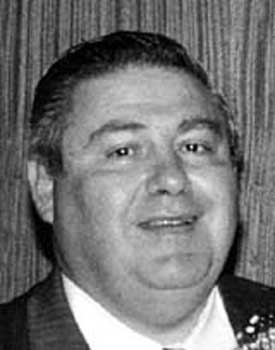
South Africa’s apartheid army forced white lesbian and gay soldiers to undergo ‘sex-change’ operations in the 1970’s and the 1980’s, and submitted many to chemical castration, electric shock, and other unethical medical experiments. Although the exact number is not known, former apartheid army surgeons estimate that as many as 900 forced ‘sexual reassignment’ operations may have been performed between 1971 and 1989 at military hospitals, as part of a top-secret program to root out homosexuality from the service.
Army psychiatrists aided by chaplains aggressively ferreted out suspected homosexuals from the armed forces, sending them discretely to military psychiatric units, chiefly ward 22 of 1 Military Hospital at Voortrekkerhoogte, near Pretoria. Those who could not be ‘cured’ with drugs, aversion shock therapy, hormone treatment, and other radical ‘psychiatric’ means were chemically castrated or given sex-change operations.
Although several cases of lesbian soldiers abused have been documented so far—including one botched sex-change operation—most of the victims appear to have been young, 16 to 24-year-old white males drafted into the apartheid army.
Dr. Aubrey Levin (the head of the study) is now Clinical Professor in the Department of Psychiatry (Forensic Division) at the University of Calgary’s Medical School. He is also in private practice, as a member in good standing of the College of Physicians and Surgeons of Alberta.
8
Stanford Prison Experiment
1971
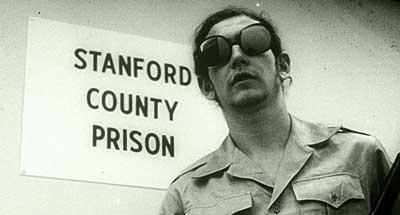
This study was not necessarily unethical, but the results were disastrous, and its sheer infamy puts it on this list. Famed psychologist Philip Zimbardo led this experiment to examine that behavior of individuals when placed into roles of either prisoner or guard and the norms these individuals were expected to display.
Prisoners were put into a situation purposely meant to cause disorientation, degradation, and depersonalization. Guards were not given any specific directions or training on how to carry out their roles. Though at first, the students were unsure of how to carry out their roles, eventually they had no problem. The second day of the experiment invited a rebellion by the prisoners, which brought a severe response from the guards. Things only went downhill from there.
Guards implemented a privilege system meant to break solidarity between prisoners and create distrust between them. The guards became paranoid about the prisoners, believing they were out to get them. This caused the privilege system to be controlled in every aspect, even in the prisoners’ bodily functions. Prisoners began to experience emotional disturbances, depression, and learned helplessness. During this time, prisoners were visited by a prison chaplain. They identified themselves as numbers rather than their names, and when asked how they planned to leave the prison, prisoners were confused. They had completely assimilated into their roles.
Dr. Zimbardo ended the experiment after five days, when he realized just how real the prison had become to the subjects. Though the experiment lasted only a short time, the results are very telling. How quickly someone can abuse their control when put into the right circumstances. The scandal at Abu Ghraib that shocked the U.S. in 2004 is prime example of Zimbardo’s experiment findings.
7
Monkey Drug Trials
1969

While animal experimentation can be incredibly helpful in understanding man, and developing life saving drugs, there have been experiments which go well beyond the realms of ethics. The monkey drug trials of 1969 were one such case. In this experiment, a large group of monkeys and rats were trained to inject themselves with an assortment of drugs, including morphine, alcohol, codeine, cocaine, and amphetamines. Once the animals were capable of self-injecting, they were left to their own devices with a large supply of each drug.
The animals were so disturbed (as one would expect) that some tried so hard to escape that they broke their arms in the process. The monkeys taking cocaine suffered convulsions and in some cases tore off their own fingers (possible as a consequence of hallucinations), one monkey taking amphetamines tore all of the fur from his arm and abdomen, and in the case of cocaine and morphine combined, death would occur within 2 weeks.
The point of the experiment was simply to understand the effects of addiction and drug use; a point which, I think, most rational and ethical people would know did not require such horrendous treatment of animals.
6
Landis’ Facial Expressions Experiment
1924

In 1924, Carney Landis, a psychology graduate at the University of Minnesota developed an experiment to determine whether different emotions create facial expressions specific to that emotion. The aim of this experiment was to see if all people have a common expression when feeling disgust, shock, joy, and so on.
Most of the participants in the experiment were students. They were taken to a lab and their faces were painted with black lines, in order to study the movements of their facial muscles. They were then exposed to a variety of stimuli designed to create a strong reaction. As each person reacted, they were photographed by Landis. The subjects were made to smell ammonia, to look at pornography, and to put their hands into a bucket of frogs. But the controversy around this study was the final part of the test.
Participants were shown a live rat and given instructions to behead it. While all the participants were repelled by the idea, fully one third did it. The situation was made worse by the fact that most of the students had no idea how to perform this operation in a humane manner and the animals were forced to experience great suffering. For the one third who refused to perform the decapitation, Landis would pick up the knife and cut the animals head off for them.
The consequences of the study were actually more important for their evidence that people are willing to do almost anything when asked in a situation like this. The study did not prove that humans have a common set of unique facial expressions.
5
Little Albert
1920
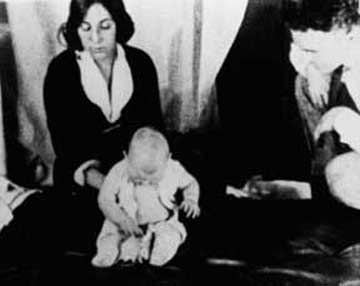
John Watson, father of behaviorism, was a psychologist who was apt to using orphans in his experiments. Watson wanted to test the idea of whether fear was innate or a conditioned response. Little Albert, the nickname given to the nine month old infant that Watson chose from a hospital, was exposed to a white rabbit, a white rat, a monkey, masks with and without hair, cotton wool, burning newspaper, and a miscellanea of other things for two months without any sort of conditioning. Then experiment began by placing Albert on a mattress in the middle of a room. A white laboratory rat was placed near Albert and he was allowed to play with it. At this point, the child showed no fear of the rat.
Then Watson would make a loud sound behind Albert’s back by striking a suspended steel bar with a hammer when the baby touched the rat. In these occasions, Little Albert cried and showed fear as he heard the noise. After this was done several times, Albert became very distressed when the rat was displayed. Albert had associated the white rat with the loud noise and was producing the fearful or emotional response of crying.
Little Albert started to generalize his fear response to anything fluffy or white (or both). The most unfortunate part of this experiment is that Little Albert was not desensitized to his fear. He left the hospital before Watson could do so.
4
Learned Helplessness
1965
In 1965, psychologists Mark Seligman and Steve Maier conducted an experiment in which three groups of dogs were placed in harnesses. Dogs from group one were released after a certain amount of time, with no harm done. Dogs from group two were paired up and leashed together, and one from each pair was given electrical shocks that could be ended by pressing a lever. Dogs from group three were also paired up and leashed together, one receiving shocks, but the shocks didn’t end when the lever was pressed. Shocks came randomly and seemed inevitable, which caused “learned helplessness,” the dogs assuming that nothing could be done about the shocks. The dogs in group three ended up displaying symptoms of clinical depression.
Later, group three dogs were placed in a box with by themselves. They were again shocked, but they could easily end the shocks by jumping out of the box. These dogs simply “gave up,” again displaying learned helplessness. The image above is a healthy pet dog in a science lab, not an animal used in experimentation.
3
Milgram Study
1974
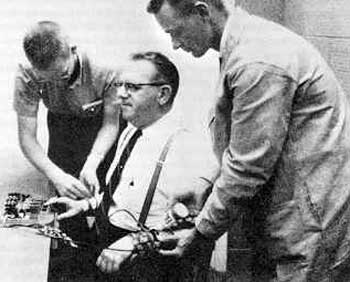
The notorious Milgrim Study is one of the most well known of psychology experiments. Stanley Milgram, a social psychologist at Yale University, wanted to test obedience to authority. He set up an experiment with “teachers” who were the actual participants, and a “learner,” who was an actor. Both the teacher and the learner were told that the study was about memory and learning.
Both the learner and the teacher received slips that they were told were given to them randomly, when in fact, both had been given slips that read “teacher.” The actor claimed to receive a “learner” slip, so the teacher was deceived. Both were separated into separate rooms and could only hear each other. The teacher read a pair of words, following by four possible answers to the question. If the learner was incorrect with his answer, the teacher was to administer a shock with voltage that increased with every wrong answer. If correct, there would be no shock, and the teacher would advance to the next question.
In reality, no one was being shocked. A tape recorder with pre-recorded screams was hooked up to play each time the teacher administered a shock. When the shocks got to a higher voltage, the actor/learner would bang on the wall and ask the teacher to stop. Eventually all screams and banging would stop and silence would ensue. This was the point when many of the teachers exhibited extreme distress and would ask to stop the experiment. Some questioned the experiment, but many were encouraged to go on and told they would not be responsible for any results.
If at any time the subject indicated his desire to halt the experiment, he was told by the experimenter, Please continue. The experiment requires that you continue. It is absolutely essential that you continue. You have no other choice, you must go on. If after all four orders the teacher still wished to stop the experiment, it was ended. Only 14 out of 40 teachers halted the experiment before administering a 450 volt shock, though every participant questioned the experiment, and no teacher firmly refused to stop the shocks before 300 volts.
In 1981, Tom Peters and Robert H. Waterman Jr. wrote that the Milgram Experiment and the later Stanford prison experiment were frightening in their implications about the danger lurking in human nature’s dark side.
2
The Well of Despair
1960
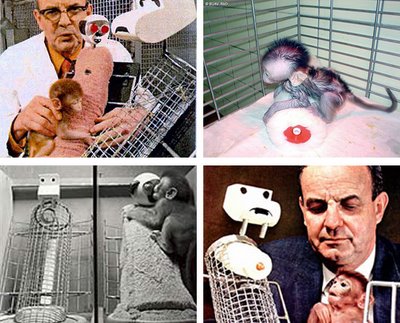
Dr. Harry Harlow was an unsympathetic person, using terms like the “rape rack” and “iron maiden” in his experiments. He is most well-known for the experiments he conducted on rhesus monkeys concerning social isolation. Dr. Harlow took infant rhesus monkeys who had already bonded with their mothers and placed them in a stainless steel vertical chamber device alone with no contact in order to sever those bonds. They were kept in the chambers for up to one year. Many of these monkeys came out of the chamber psychotic, and many did not recover. Dr. Harlow concluded that even a happy, normal childhood was no defense against depression, while science writer Deborah Blum called these, “common sense results.”
Gene Sackett of the University of Washington in Seattle, one of Harlow’s doctoral students, stated he believes the animal liberation movement in the U.S. was born as a result of Harlow’s experiments. William Mason, one of Harlow’s students, said that Harlow “kept this going to the point where it was clear to many people that the work was really violating ordinary sensibilities, that anybody with respect for life or people would find this offensive. It’s as if he sat down and said, ‘I’m only going to be around another ten years. What I’d like to do, then, is leave a great big mess behind.’ If that was his aim, he did a perfect job.”
1
David Reimer
1965 – 2004

In 1965, a baby boy was born in Canada named David Reimer. At eight months old, he was brought in for a standard procedure: circumcision. Unfortunately, during the process his penis was burned off. This was due to the physicians using an electrocautery needle instead of a standard scalpel. When the parents visited psychologist John Money, he suggested a simple solution to a very complicated problem: a sex change. His parents were distraught about the situation, but they eventually agreed to the procedure. They didn’t know that the doctor’s true intentions were to prove that nurture, not nature, determined gender identity. For his own selfish gain, he decided to use David as his own private case study.
David, now Brenda, had a constructed vagina and was given hormonal supplements. Dr. Money called the experiment a success, neglecting to report the negative effects of Brenda’s surgery. She acted very much like a stereotypical boy and had conflicting and confusing feelings about an array of topics. Worst of all, her parents did not inform her of the horrific accident as an infant. This caused a devastating tremor through the family. Brenda’s mother was suicidal, her father was alcoholic, and her brother was severely depressed.
Finally, Brenda’s parents gave her the news of her true gender when she was fourteen years old. Brenda decided to become David again, stopped taking estrogen, and had a penis reconstructed. Dr. Money reported no further results beyond insisting that the experiment had been a success, leaving out many details of David’s obvious struggle with gender identity. At the age of 38, David committed suicide.
This article is licensed under the GFDL because it contains quotations from Wikipedia.
More Great Lists
 10 Psychological Experiments That Will Blow Your Mind
 Top 10 Strange And Scary Psychological Effects
 10 Strange Psychological Disorders That Will Blow Your Mind
 10 Brilliant And Brutal Methods Of Ancient…
 Top 10 Weird Experiments And Facts About Dairy
 Top 10 Outlandish Science Experiments Performed On Animals
 Top 10 Scariest Government Experiments
 10 Experiments That Have Created Real Human-Animal Hybrids
 10 Nonconsensual Experiments That Led To Medical…
fact checked by
dickensgirl
More Great Lists