No one can deny the amazing beauty and abilities of the big cats of the world. Because so many are sought after for their fur, their numbers are in decline. This is a list (which is by no means exhaustive) of 10 amazing big cats. The ten cats were selected because they either have a creative way of hunting, an amazing coat pattern, or are simply awe inspiring.

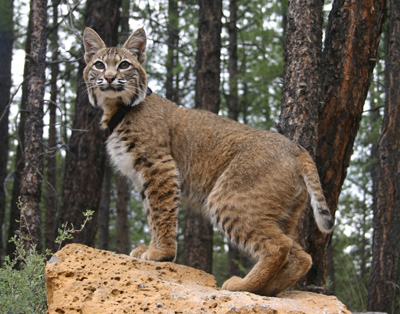
The bobcat is a North American member of the big cat family. As a predator, it inhabits wooded areas, desert edges, semi desert edges, and swampland environments. The bobcat’s diet consists of: rabbits, hares, deer, small rodents, and even insects. Similar to many other big cats, the bobcat is a solitary hunter. Each bobcat will use a single method to mark its territory. Although bobcats are hunted by humans, for both sport and fur, their population is under no immediate threat at the time. However, continuous hunting of bobcats could jeopardize their population. Bobcats will travel for the last three hours of sunlight and three hours after sunrise. They are also very skilled at adapting to a new environment. This is a very important skill for the animal because humans have a tendency to invade a their habitat. The grayish brown coat, black-tipped ears, and whiskered face resemble many species of lynx. The bobcat may be considered a “big cat” but in relation to other big cats, it is very small in size. In fact, it is only about twice as large as a domesticated cat.
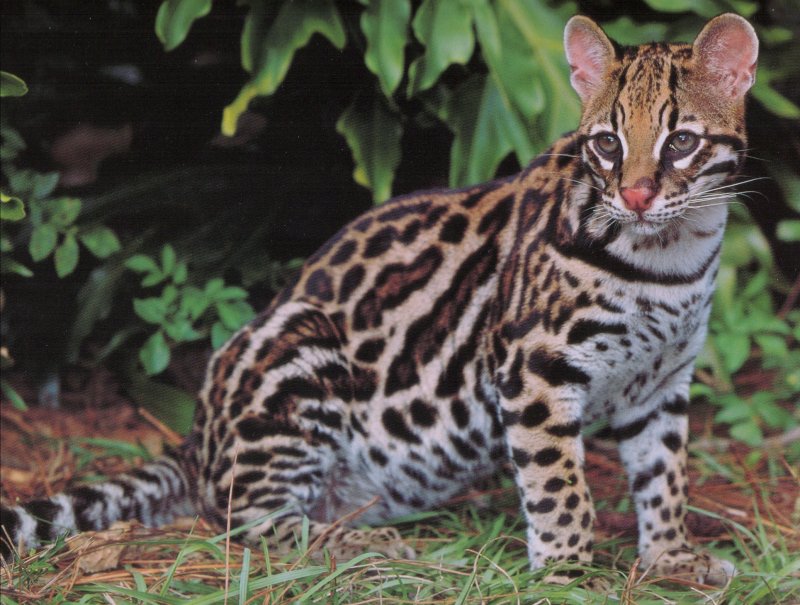
The ocelot is famous for looking extremely similar to a domestic cat. Its fur may resemble that of a clouded leopard or jaguar. Regrettably this amazing coat has made them a valuable hunting target. Ocelots often hunt for lizards, amphibians, deer, rodents, and frogs. Ocelots are mostly found in South America, Central America and Mexico. Ocelots were considered endangered during the 1980s but have since been removed from the endangered species list. They are rarely seen together and enjoy resting in dense foliage. They are exceedingly territorial and will sometimes fight to the death at the invasion of land. Since ocelots are nocturnal, they have the best night vision of the big cats.
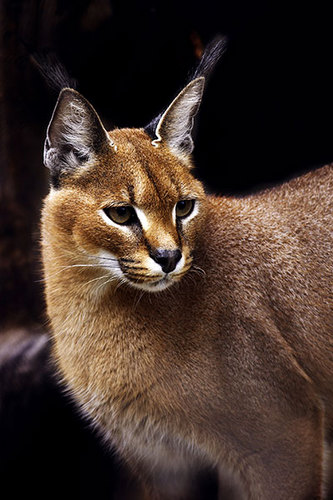
The caracal cat is also known as the Persian or African Lynx. It is closely related to the African Golden Cat. They are best known for their extraordinary climbing and jumping skills. The Caracal is distributed over Africa and Western Asia and will usually hunt alone at night. They are best known for their amazing ability to snatch birds out of the sky but their diet also consists of antelope, gazelle, rodents, and the occasional ostrich. When a caracal catches its prey, it will shear the meat off the skin so they won’t have to eat the fur of the animal. If food is scarce, it will eat bird feathers and even rotten meat. A sighting of a caracal cat is extremely rare because they are also very skilled at hiding from humans.
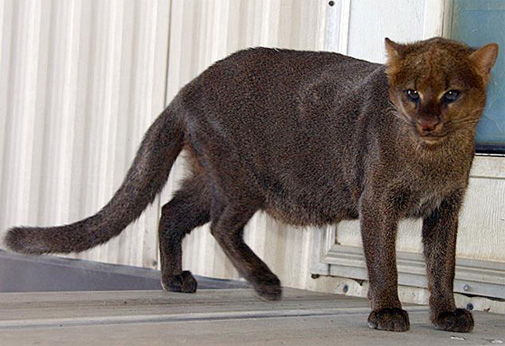
The Jaguarundi is found in Mexico and Central and South America. It is said to resemble an otter because the coat is a solid color (except for the spots they have at birth) and it has rounded ears. There has been no desire for this animal’s fur but the Jaguarundi is suffering due to the loss of habitat. Many Spanish speaking countries call the Jaguarundi “leoncillo” which means “little lion”. Unlike many big cats, this cat hunts during the day. They usually eat rabbits, hares, birds and sometimes fruit. Most Jaguarundis live in low brush places near running water.
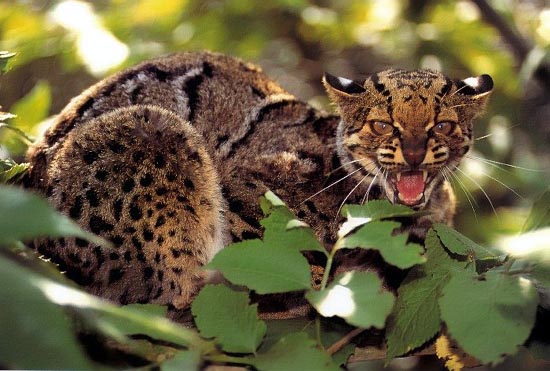
Almost matching the size of a domesticated cat, the marbled cat is one of the smallest of the big cats. The cat’s 45cm tail will sometimes be used as a balance when hunting. The marbled cat’s range stretches from parts of India to southeast Asia. Their diet consists of squirrels, reptiles and birds. Unfortunately, this cat is rarely studied because they are extremely difficult to spot. Their population is said to be under 10,000 because of their shrinking forest habitat. Scientists have discovered that the marbled cat is closely related to Asiatic Golden Cats. Looking at the picture, it is obvious where the cat got its name from.
The jaguar is the third largest big cat in the world. It is the national animal of Brazil. Jaguars closely resemble leopards but are much larger. It is also one of the few big cats that enjoys swimming. They are solitary predators and are known to regulate the populations of prey species. The powerful bite of the jaguar allows them to break through shell and hard reptile skin. Sadly, their numbers are dropping quickly and are nearly threatened because they are often killed by humans. Jaguars’ short, stocky limbs make then skilled in climbing, crawling and swimming.
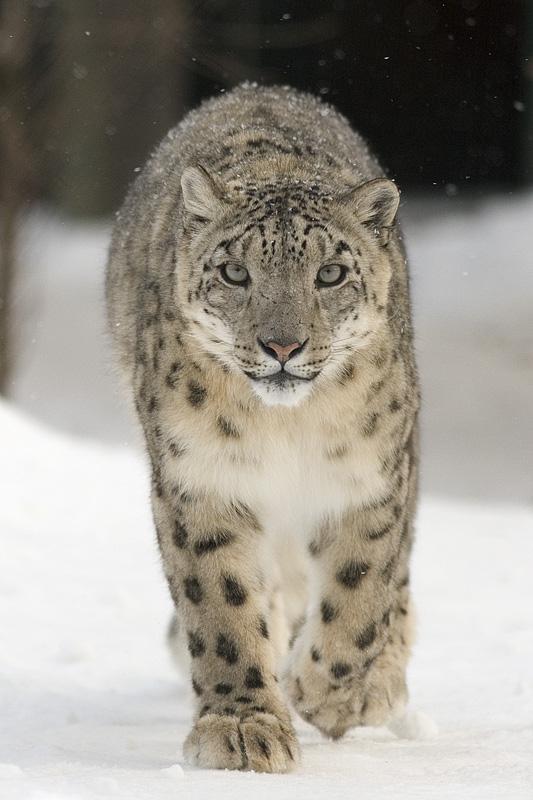
The snow leopard lives in the mountain ranges of Central Asia, Afghanistan and many other parts of the world. Its life span is usually about 15-18 years. It is about the size of a regular leopard but has a long tail that is used for balance in rugged terrain. They may live in caves in mountainous regions. There are estimated to be about 5,000 snow leopards left, making them an endangered species. The snow leopard will occasionally kill prey three times its size. Their diet consists of ibexes, boars, and deer. A snow leopard will not fight hard for its territory.
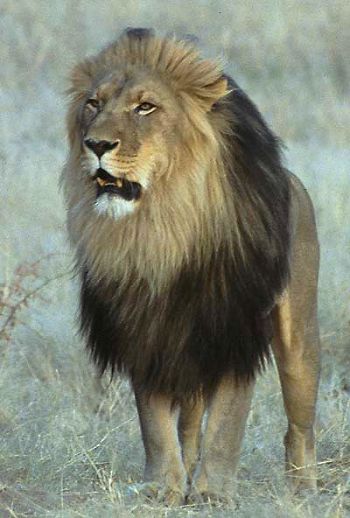
Lions usually inhabit savannah and grasslands and will sometimes be found in forests. A group of lions is called a pride which consists of females, lion cubs, and a few male lions. The female lions usually do the hunting in groups (males will rarely ever hunt). The lion is known as a vulnerable species with a population decline of 30-50 percent. A male is recognized by its mane. The lion is the second largest feline in the entire world. The color of their coat is usually a light yellow. Lion cubs are born with spots on their body but they disappear as they mature. The diet of a lion includes wildebeest, impalas, zebras, and buffalo.
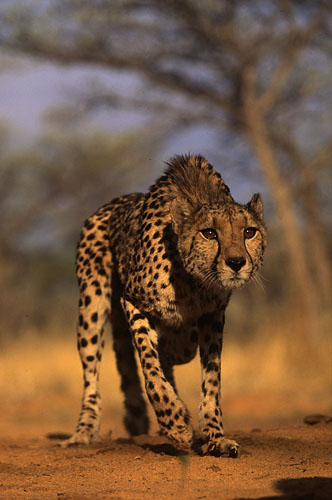
Many people classify the cheetah as the world’s fastest land animal with the ability to reach speeds of 70 miles per hour. The round, black spots on the cheetah help them to camouflage when hunting. The head of the cheetah is said to be small compared to other big cats. They will eat mostly mammals including gazelles, wildebeests, and zebras. When a cheetah sprints for its prey, its body temperature becomes so high that it would become fatal if kept at that level for a long period of time. Cheetahs are on the World Conservation Union list of vulnerable species. There are said to be about 12,400 cheetahs left in the wild.
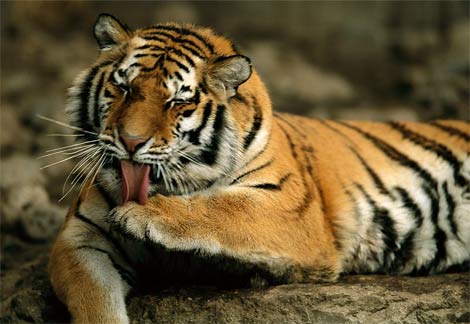
Tigers are usually found in southern and eastern Asia. Like many big cats, they are territorial and solitary. The dark, vertical stripes that overlay the reddish orange color is one of the most noticeable characteristics of the tiger. They are featured in many forms of ancient mythology. Tigers living in the wild will usually prey on animals such as buffalo, boar, deer, and sometimes leopards and pythons. In the wild, tigers can leap up to 16 feet. They always live close to water because they enjoy bathing. Unfortunately, the tiger is one of the Big Five Game animals of Asia.
Contributor: Hope


wow! they are all soo awesome looking . . snow leopard especially
poooooooey
"Lion is the king of the jungle but is tiger more dangerous or aggressive than lion?"
There was this show on Discovery channel where they showed a fight between these two, Lion won. Still, maybe the Tiger is more aggresive and dangerous against other animals.
that show is animal face-off
cool, i thought cute cats included!
i expected lion to be #2 or #1.
snow leopard looks the cutest
.
Lion is the king of the jungle but is tiger more dangerous or aggressive than lion?
Cheetah is the coolest as it is the fastest!
I love cats! They taste just like chicken!
Did it say what was the biggest Feline?
I have to say – in going through each of the items on this list editing today, I really REALLY want to own one of each of the cats here. Sadly it is illegal to import those animals for pets in this country
My favourites are the ocelot and the cheetah.
I love big cats. They’re so graceful.
They’re all really..majestic
“Did it say what was the biggest Feline?”
Google Liger. Huge cat.
Cool list.
My favorite is the snow leopard.
It is a beautiful animal.
No Liger?
Just one slight error, when talking about the Caracal cat, you said “they are best known” twice. Just combine the two sentences so you only say that once. Interesting list tough, thanks!
Aren’t the cats in 6~10 in the small cat family of Felinae?
I completely approve of the tiger as #1.
I was secretly expecting to see the Iberian lynx somewhere on this list (endangered, hunted, VERY few left… has all the requirements
). Oh, and the Siberian tiger.
Still, it’s a great list.
So if the smallest of the “big” cats is about the same size as a domestic cat, what sort of cat would be classed as a “small” cat – or is there no such thing?
How do you titillate an ocelot?
You oscillate its tit a lot!
(*****ual exploitation of animals. Tut, tut!)
amazing list,
this creatures are awesome.
Just miss Garfield
Loved the list just disappointed in not seeing the clouded leopard but glad you included the ocelot.The tiger of course deserved #1 well written.
The liger would be a good bonus item on the list. as they are the largest cat.
Go Tigers =D
Cats are so nice. I’ve never understood why people need their fur outside of subsistence living. If you need something on your wall, buy a painting. Floor? Carpet. Fashion? Faux-fur. Everybody wins.
54 kilometers to the north of where I stay is a game reserve that covers 196000 ha, and contains an immense diversity of fauna and flora.
It attracts thousands of visitors world wide every year. Their are safari drives at night or in the day.
I have been on 2 off them that we stopped next to a pride of lions, and just observed for 10 to 20 min. Now this is an open land rover with those high up benches – seats call them what you like, when a fully grown male lion with this big mane of hair walked past the landy from the back.
That cats back height was level with the top of the mudguards
you could smell him, he just walked passed into the shade of a tree flopped down and went to sleep.
Those images and that smell of a adult male lion will always be with me
No Liger!? Just kidding, no hybrids allowed eh? Still, I would have included white tigers as separate but oh well.
Ligers are bred for their skills in magic.
If the Marbled Cat, Jaguarundi, Caracal Cat and Ocelot are big cats – then what the F is a small cat??
Nice list, Hope.
One piece of information I’d take issue with is your statement that Bobcats are only about twice the size of house cats.
I live in a wooded area (right next to the ocean, but it is deep woodland), and we have Bobcats. When you come closely upon a Bobcat, and can easily judge it’s size, it is (or, at least our local variety is) about the size of a medium/large dog, that is 50-70 pounds.
They aren’t aggressive to humans, so when one strolls through the yard, or walks ahead of me on the path to the beach, I feel no more fear than I do when the deer are in the yard feeding.
It’s really sad to see that most of them are endangered, primarily due to loss of habitat.
Except for Bobcats. They’re all over the place in Upstate, NY- and they pretty much eat house cats.
I
A little bit of trivia to add here. The tiger is the national animal of India. ALso, this is the only country where you find both lions and tigers. And snow leopards of course.
now i’m going to have songs from the lion king stuck in my head all day..
Tigers were my favorite big cat because of their orange fur, but I forgot about the cheetah. The ocelot looks awesome though.
Wooh! Cheetahs are awesome!!
no pumas ligers tigons leopard panthers lynxes moutain lion
Nice list. Part of the continuing threat to Cheetahs is a lack of genetic diversity. We hunted them to such a small number that they are all closely related. With that comes the inherent problems of in-breeding; lack of varied disease resistance and a very low breeding success rate. Even if all other threats were removed their continued existence is not guaranteed.
Loved the list. And — here’s one of the things I value Listverse for — I FINALLY saw a Jaguarundi. I’ve heard and read about them any number of times since I was a kid, but nowhere could I find a picture of one. Thank you, Hope, and thank you, Jamie!
the lion and snow leopard, in there prime, are one of the most beautiful creatures that roam the face of this earth
Wild cats are so cool!
I wonder which of these 10 cats would win if they were pitted against each other. I would bet on the cheetah, it could outrun the others and tire them out.
Dude, that cheetah looks CRAZY!
This is a great list. I don’t know all the minutia about cats like many of the other commenters. i just love cats and it was a joy to read and learn about the many species there. I applaud Hope for the detailed work and love, love the photos.
The bobcat is actually about the size of a medium dog. I hit one with my car around 5 one morning about a year ago. I should have picked him up, I found out later I could have gotten 70 or 80 bucks for him.
You missed the Serval. Google them. They’re just beautiful
what about the cheshire cat?
I mean he can disappear – how cool is that?
I was under the impression that the only “big cats” were the 4 under the genus Panthera (lion, tiger, leopard, and jaguar), because these were the only cats that could roar. The ability to roar is due to an elongated set of vocal chords, not due to a bad 90′s TV show starring Heath Ledger.
41. cicero …The bobcat is actually about the size of a medium dog.
****
cicero, it’s obvious you didn’t read any of the posts before posting yourself.
**27. segue … When you come closely upon a Bobcat, and can easily judge it’s size, it is (or, at least our local variety is) about the size of a medium/large dog, that is 50-70 pounds…
****
35. Mom424
Part of the continuing threat to Cheetahs is a lack of genetic diversity…
****
Mom424, I was just going to post that, having to had to abandon my post before I was finished this a.m.
I should have known you’d get the info there before I’d get back!
These cats are super beautiful!!! But its sooo scary to think that all put together their numbers still wouldnt get more then 500,000.
Thanks very much indeed for the list.
There are several films based around big cats. A fine lesser known one is ‘Duma’. This relates the exciting adventures in Africa of a boy and a cheetah, their interaction, and his eventual success in adapting it back to the wild. It is based on a true story.
When we were staying with friends, nice folks, on an estancia in Patagonia we entered one of the outbuildings to bring something to the house and came upon dozens and dozens of strung-up skins of one of the smaller Andean cats. So depressing.
The Andean (subspecies?) of puma (cougar, mountain lion) is becoming rarer, partly due to increase in human activity and land use, also as a result of deliberate elimination. Although there are several large nature reserves, animals can’t be told to stay inside them. Those same friends told us the females teach the kits to hunt by using sheep much as domestic cats use mice. So they are killed by farmers. A main problem is the considerable displacment outside the reserves of their natural prey, guanacoes, by sheep, and sheep are anyway much *softer* prey.
I remember a natural history programme about Nepal which confronted the problem that tigers regularly kill a few humans there each year. Local Nepalese were interviewed and asked how they felt about this. Wouldn’t they prefer the governmment to eliminate the tigers? Not at all. They considered the tiger was one of the world’s wonders, that they and everybody would be so much the poorer without wild tigers. It was a risk they wanted to take and price they were willing to pay. If that sounds strange, wierdly fatalistic or remarkable, consider this: you probably unconsciously run the same risk, or a greater one, every time you take to the road in a vehicle.
For the absolute antithesis of the Nepalese, apparently there are Chinese natural medicine tycoons who are looking for the extinction of the tiger. This for the astronomic mark-up their hoards of stored tiger *medicaments* would show. It has been said they even support action to that end.
Off-topic: segue appeared to me a dream (again) on Saturday night. This time, she was a different (dream) segue than the last (dream) segue (that I told you about in some other discussion. This one was closer in age and health to the real segue, who, of course, I have no idea what looks like. I can’t remember what the rest of my dream was about.
On-topic: since 1953 the demilitarised zone dividing north and south Korea has become the largest single piece of land remaining in original condition in Korea, and maybe in Asia. There are hopes that Siberian tigers still exist there in viable numbers. There is a lot of discussion about what is going to happen to the DMZ after unification. Developers would love to get their hands on it. Conservationists would love to see it preserved.
Tigers are more dangerous to humans than lions are because tigers generally live in closer proximity to humans.
good list. ocelots are so cute
Loved the list. Only had a few problems with it. First of which was the fact that there were no panthers on there. Although they are technically a type of jaguar or leopard (can’t remember which exactly, they have been classified their own species and I personally believe they deserve their own spot on this list. They are hawt lol. also the lack of white tiger is a bit disappointing too, they’re absolutely beautiful.
Oh, and as an afterthought. Being politically correct they would be called Wild cats lol
I love them all. They are sooo cute. Great information too.
Wonderful list! When looking at the jaguarundi, I was amazed at how similar it looked to the photos people have submitted about the mysterious “cryptid” cat of the English countryside- the black moor beast? or something like that. Of course, they’re not indiginous to England, but they have some sort of animal prowling about- possibly a cat kept as a pet before the laws went into effect.
No panther!
Or leopard for that matter. But I’m thrilled to see the ocelot!
AS suggested: The Marbled Cat is officially a “Small Cat” – You missed out on the Iberian Lynx, The Leopard, The Siberian Tiger, The Clouded Leopard, the Indian Lion and the Puma (Cougar) – - – ALL of which are larger than the Bobcat, Ocelot, Jaguarundi, Marbled Cat and Caracal. Also; wouldn’t the African Lion slot in at N0.#2 – given it is the ONLY cat smaller than the Begal and Siberian Tigers and much, larger than the Cheetah? That being said – at least you included (mistakenly) one of my favourites – if not my favourite cat – - – The Ocelot; probaly the most beautiful of the Wild Cats. My other favourites would be the Siberian Tiger, The Clouded and Snow Leopards and the Cheetah – not necessarly in that order.
Ah the hell with it – let’s GET technical:
Nice list – but horribly inaccurate.
The BIG Cats are officially – The Tiger, The Lion, The Leopard and The Jaguar. Included as “Great Cats” (Big Cats” are also called “Roaring Cats” – others cannot roar and are thus not “Big Cats”. Included in the ig Cats Category as ‘Great Cats’ are – The Clouded Leopard, The Snow Leopard, the Cheetah and The Cougar.
Thus there are only EIGHT “Big Cats”.
TIGER: There are SIX Tiger sub-species;
Siberian Tiger (the biggest)
Bengal (Royal) Tiger
Sth China Tiger
Indo-China Tiger
Sumatran Tiger
Malaysian Tiger
There are also 3 extinct species: The Javan, Balinese and Caspian Tigers – the latter being famous as the ones used most frequently in the arenas of Ancient Rome.
LION
African Lion- 12 sub-species, the largest of which is
the Barbary Lion
Asiatic Lion
LEOPARD
Indo-Chinese Leopard
Nth Chinese Leopard
Sri Lankan Leopard
Javan Leopard
Amur Leopard
Arabian Leopard
Indian Leopard – 2 separate Sub-species
Persian Leopard – 5 separate Sub-species
African Leopard – 11 separate Sub-species
JAGUAR
There are several Jaguarine sub-species, but these are all
geographical – not morphological
PANTHER
Is NOT a separate Big Cat: a panther is a generic name for any “Melanistic” Big Cat which can pass on the melanistic quality as an hereditary function or gene: Only Melanistic Leopards and Melanistic Jaguars can do so and thus ALL “Panthers” are either Black Leopards or Black Jaguars – they’re NOT separate species from the spotted varieties.
Other Big Cats (The Great Cats – Non-roaring Cats which are included as ig Cats)
CHEETAH
SNOW LEOPARD
CLODED LEOPARD
COUGAR: aka Puma
Thus a ‘Great Cat’ NOT included among the Big Cats – the Lynx – is erroneous in MY list as well (though I’d like to see it included as one)
So according to the list above – there are 25 separate Big Cats!!!!!
My sister and her husband have two purebred bengals. They look a lot like ocelots, and are bigger than “normal” housecats. They’re really streamlined, and they fetch like dogs and climb all over everything. They rock
No liger?? lol jk, though they did make an actual liger using a lions DNA and impregnating a tiger with it. Just google it. But seriously that thing was huge.
I love the bobcat.
We hunt them with hounds and they are a very challenging game species. Way harder to get than a Black Bear or a Coyote.
Steve:
What sort of sound do they (bobcats) make? I’ve been looking around for a site that has recordings, but haven’t found one yet… because this topic jogged my memory about something.
Several years ago, when I was living in the country with my then-wife, I was out very late one night to watch the Perseid meteor shower in August. It was about 1 or 2 in the morning. (This is upstate New York). We had a very big yard, and I had gone way out in it to get away from the trees that would block my view. I ended up pretty close to the cornfield that abutted our property. After spotting a few meteors, I all of a sudden heard a rustling in the corn–very clear and obvious that something fairly large was in there. I thought probably just deer. The rustling continued and seemed to get more agitated. Finally, there was this roar… very loud, very distinct… I could only think that it sounded just like some kind of big cat. (Though of course I could have been mistaken, but it didn’t seem it at the time). I high-tailed it outta there.
There are definitely bobcats (and/or lynx) around here—I’ve seen them. But never heard one—unless it was that night.