For years books, movies and television shows have entertained us with interesting fictional accounts of castaways and deserted islands. This is a collection of real life stories sometimes stranger and more fascinating than any imaginary tale. In keeping this to a list format, it is obvious that a couple of paragraphs hardly does these survival stories justice, however, you can find some great books detailing most of these accounts.
Survived: 6 days on Plum Pudding and Olasana Islands
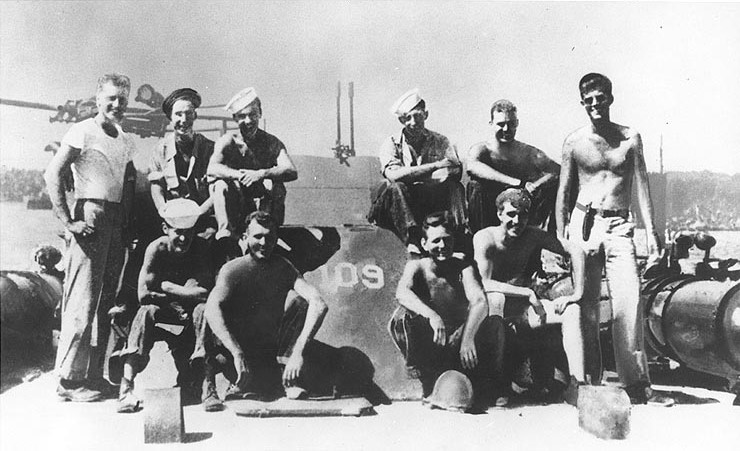
In 1943, John F. Kennedy was the 26-year old skipper of PT-109. As the PT-109 was prowling the waters late at night a Japanese destroyer suddenly emerged and in an instant, cut Kennedy’s craft in half. Two of his 12 member crew were killed instantly and two others badly injured. The survivors clung to the drifting bow for hours. At daybreak, they embarked on a 3.5 miles (6 kilometers) swim to the tiny deserted Plum Pudding Island. They placed their lantern, and non-swimmers on one of the timbers used as a gun mount and began kicking together to propel it. Braving the danger of sharks and crocodiles they reached their destination in five hours. After two days on the small island without food and water, Kennedy realized they needed to swim to a larger island, Olasana, if they were to survive. Kennedy and his men were found and rescued by scouts after surviving six days on coconuts.
Interesting Fact: The island where Kennedy’s crew washed ashore has become a minor attraction, and has been renamed Kennedy Island.

Survived: around 6 months on the Ascension Islands
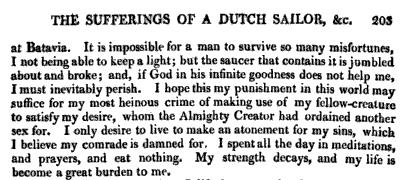
Leendert Hasenbosch was a Dutch soldier who went aboard a VOC-ship as the bookkeeper. After the ship made a stop at Cape Town in 1725 he was sentenced for sodomy and set ashore on Ascension Island. He was given a tent and the amount of water for about a month, some seeds, a bible, clothing and writing materials. Hasenbosch survived by eating sea turtles and seabirds as well as drinking his own urine. It is believed he probably died in a terrible condition after about six months.
Interesting Fact: Leendert Hasenbosch wrote a diary that was found by British mariners in 1726 who brought the diary back to Britain. The diary was rewritten and published a number of times. One of the sad entries is pictured above. (Translated from Dutch to English)
Survived: 2 years on Isle of Demons
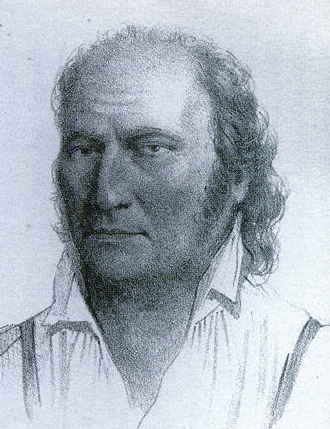
In 1542 French explorer Jacques Cartier led a voyage to Newfoundland, accompanied by 19 year old Marguerite, de La Rocque. During the journey, Marguerite became the lover of a young man. Displeased with her actions Marguerite’s uncle, Lieutenant General and pirate Jean-François Roberval (pictured above) marooned her on the “Isle of Demons” (now called Harrington Island) near the Saint-Paul River. Also marooned were Marguerite’s lover, and her maid-servant. Marguerite gave birth to a child while on the island but the baby died, (probably due to insufficient milk), as did the young man and the maid servant. Marguerite survived by hunting wild animals and lived in a cave for two years until she was rescued by Basque fishermen.
Interesting Fact: Returning to France after her rescue, Marguerite achieved some celebrity when her story was recorded by the Queen of Navarre in 1558.
Survived: 18 months on Eagle Island (Part of the Falkland Islands).
In 1812, the British ship Isabella, was shipwrecked off Eagle Island. Most of the crew was rescued by the American sealer Nanina, commanded by Captain Charles Barnard. However, realizing that they would require more provisions for the extra passengers, Barnard and four others went out to retrieve more food. During their absence the Nanina was taken over by the British crew. Barnard and his men were left on Eagle Island by the very men they had saved. Barnard and his party were finally rescued in November 1814. The photo (pictured above) is a stone shelter built by Captain Barnard as a lookout for passing ships.
Interesting Fact: The evening of the rescue Barnard dined with the Isabella survivors and finding that the British party was unaware of the War of 1812 informed the survivors that technically they were at war with each other. (Maybe he shouldn’t have mentioned that). Barnard later wrote a narrative ‘Marooned’ detailing his experience.
Survived: 2 years on Wrangel Island
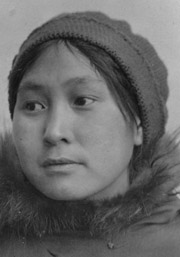
In the fall of 1921 a team of five people were left on Wrangel Island north of Siberia. Arctic explorer Vilhjalmur Stefansson planned the expedition with the intention of claiming the island for Canada or Britain. A 23 year old Eskimo woman Ada Blackjack was hired as a cook and seamstress and was paid 50 dollars a month. Ada needed the money for her son who was suffering with tuberculosis. The plan was to stay one year on the Island and bring six months’ worth of supplies. This would be enough to sustain them for a year while they lived off the land itself. The men were unable find enough food and began to starve so in January 1923 three of the men made a desperate attempt to seek help. Ada was left to care for the fourth man who was sick with scurvy. The three men were never heard from again and the man she was caring for eventually died. Ada somehow learned how to survive until she was rescued in August 1923 by a former colleague of Stefansson’s. Ada used the money she earned to take her son to Seattle to cure his tuberculosis.
Interesting Fact: Except for the salary that Ada made on the trip and a few hundred dollars for furs that she trapped while on Wrangel Island, Ada did not benefit from the subsequent publication of several very popular books and articles concerning her survival story.
Survived: 4 years and 4 months on Más a Tierra Island
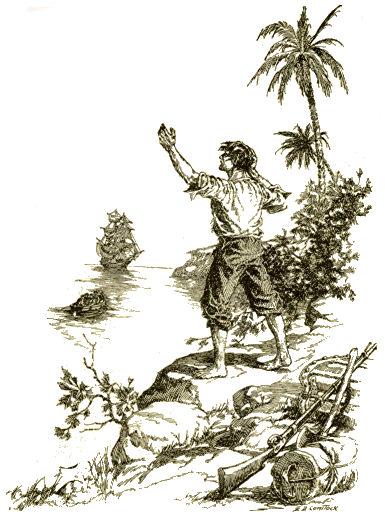
Alexander Selkirk was a Scottish sailor and a skillful navigator which led to his appointment as a Sailing Master on the ‘Cinque Ports. The captain of the ship was a tyrant and after a few sea battles with the Spanish, Selkirk feared the ship would sink. So in an attempt to save his own life he demanded to be put ashore on the next island they encountered. In September 1704, Selkirk was dropped off on the uninhabited island of Más a Tierra over 400 miles off the West Coast of Chile. He took with him some clothing, a musket, some tools, a Bible and tobacco. At first Selkirk simply read his Bible awaiting rescue, but it soon became apparent that the rescue wasn’t imminent. He resigned himself to a long stay and began to make island life habitable with only rats, goats and cats for company. Finally on February 1709, two British privateers dropped anchor offshore and Alexander Selkirk was rescued. In 1713 Selkirk published an account of his adventures which many believe were fictionalized six years later by Daniel Defoe in his now famous novel: Robinson Crusoe.
Interesting Fact: In 1966 Más a Tierra Island was officially renamed Robinson Crusoe Island. At the same time, the most western island of the Juan Fernández Islands was renamed Alejandro Selkirk Island.
Survived: 105 days on Elephant Island
Ernest Shackleton was an Anglo-Irish explorer and launched the Imperial Trans-Antarctic Expedition in 1914. During the expedition the ship “Endurance” became trapped in ice and for 10 months drifted until the pressure of the ice crushed and sank the ship. Shackleton and his men were stranded on ice floes where they camped for five months. The men sailed three small lifeboats to Elephant Island which was uninhabited and provided no hope for rescue. Shackleton and five others set out to take the crew’s rescue into their own hands. In a 22-foot lifeboat they survived a 17-day, 800-mile journey through the world’s worst seas to South Georgia Island, where a whaling station was located. The six men landed on an uninhabited part of the island so their last hope was to cross 26 miles of mountains and glaciers (considered impassable) to reach the whaling station on the other side. Shackleton and two others made the trek and arrived safely in August 1916. (21 months after the initial departure of the Endurance). With the help of the Chilean government and its navy, Shackleton returned to rescue the men on Elephant Island. Not one member of the 28-man crew was lost.
Interesting Fact: It would be more than 40 years before the first crossing of Antarctica was achieved, by the Commonwealth Trans-Antarctic Expedition, 1955–58.
Survived: on the Pitcairn Islands
After the famous mutiny in 1789 and several months of landing and sailing around the eastern islands of Fiji the Bounty mutineers decided to settle on the uninhabited Pitcairn Islands to elude the Royal Navy. To prevent the ship’s detection, and anyone’s possible escape, the ship was burned to the water. Nine crewmen along with six Tahitian men, and 11 women, one with a baby had found a home. The Tahitians were treated poorly which led them to revolt and kill some of the mutineers. By 1794 crewmen Young, Adams, Quintal and McCoy were left for a household of ten women and their children. McCoy who had once worked in a distillery discovered how to brew a potent spirit from the roots of the ti plant. By 1799, Quintal had been killed by Young and Adams in self defense and McCoy had drowned himself. Adams and Young turned to the Scriptures using the ship’s Bible as their guide for a new and peaceful society. As a result, Adams and Young converted to Christianity and taught the children to read and write using the Bible. Then in 1800, Young died of asthma, leaving John Adams as the sole male survivor of the party that landed just ten years earlier.
Interesting Fact: Later in 1808 the ship “Topaz” arrived at Pitcairn Island and found Adams ruling over a peaceful community of ten Tahitian women (including his wife) and several children. The Royal Navy granted him clemency in 1825, and he died four years later.
Also: The main settlement and capital of Pitcairn, Adamstown, is named for John Adams.
Survived: (Unknown) on the Australia mainland
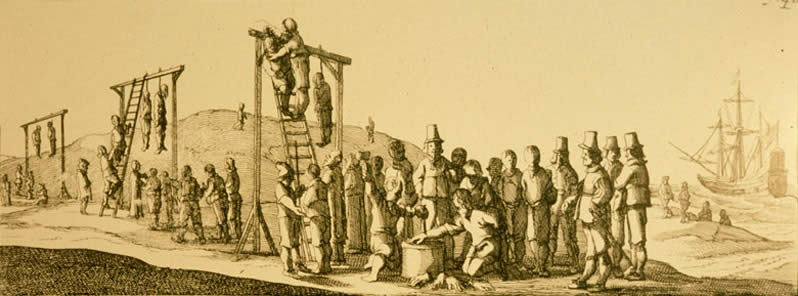
In 1629 a Dutch East India ship Batavia, with 316 people on board, was wrecked off the coast of Western Australia. Most of the people on board made it safely to the near by Abrolhos islands. A fanatic named Jeronimus Cornelius led a mutiny and with 36 men under his command began systematically murdering, raping and torturing men women and children. Before help arrived, 125 people had been murdered and their bodies dumped in mass graves. Cornelius and other mutineers had their hands cut off after they signed a confession and then hanged. Two of the youngest of the mutineers, Wouter Loos, and Jan Pelgrom avoided execution when they were sentenced to be marooned on the Australian mainland. They were given some provisions and put ashore near the mouth of the Murchison River and were told to explore the land and to try and make contact with Aborigines. They were instructed to keep watch for a vessel to take them off after two years. They were never seen again, and might be considered as Australia’s first known European residents.
Interesting Fact: Later European exploration recorded Aborigines with blue eyes, suggesting at least one of the men survived. Also: The mass graves were later excavated and became a morbid tourist attraction. The story is frequently taught in schools and has even been made into an opera.
Survived: 18 years on San Nicolas Island
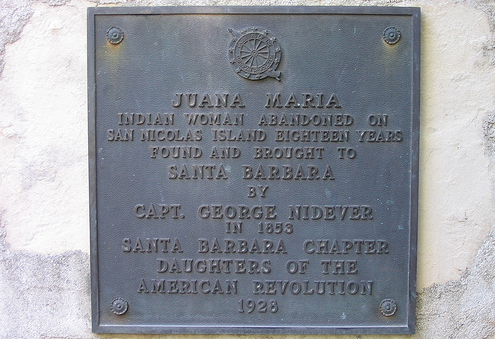
In 1835 Russian sea otter hunters clashed with Indian people living on remote San Nicolas Island. The bloody conflict drastically reduced the native population. Missionaries requested that these Indians be moved to the mainland for their own safety. When a ship was sent to pick them up high winds forced it to depart early leaving Juana Maria behind. In 1853, a party headed by sea otter hunter George Nidever found the Indian woman alive and well. Clad in a dress of cormorant skins sewn together, she lived in a shelter made from whale bones. She willingly went with her rescuers bringing along only a few possessions. Nidever brought her home to live with him and his wife in Santa Barbara, California. No one, including the local Chumash Indians could understand her language. The new living conditions altered her diet and affected the woman’s health. She contracted dysentery and died after she had been on the mainland for only seven weeks. The Lone Woman was baptized conditionally with the Christian name Juana Maria (her Indian name is unknown) She is buried at Mission Santa Barbara where a plaque (pictured above) remains in her memory.
Interesting Fact: Juana Maria’s life story was turned into a book “Island of the Blue Dolphin”
Contributor: Blogball


October 7th, 2008 at 1:27 am
Great list
October 7th, 2008 at 1:29 am
fascinating list…
October 7th, 2008 at 1:34 am
Just So I can Say It
First First First And cool list I thought the Pitcairn Islands Story would be in there
October 7th, 2008 at 1:49 am
I had no idea there were so many instances of actual castaways! Well done
October 7th, 2008 at 1:49 am
I have been reading your lists for the last month and enjoy them. A little bit of learning with some entertainment thrown in. There is some very inteligent posting after the list which is nice to see. I work in a place that is rather crude and listverse is my enlightnment for the day. Thanks.
October 7th, 2008 at 1:53 am
Mighty cool list a salute to some of the survivors and Blogball to undertake the ardous task of writing this list. No. 3 is just too good to be true. Hasenbosch’s name was mentioned in one of the Alistair Maclean books that I’d read a few years ago.
October 7th, 2008 at 2:30 am
wow these stories are pretty amazingg
October 7th, 2008 at 2:49 am
Drinking his own urine? Yuck.
October 7th, 2008 at 2:52 am
I love interesting lists like this, keep it up!
October 7th, 2008 at 2:55 am
nubyw00tz: apparently it has many health benefits. Frankly though, I would prefer to find my health benefits elsewhere
October 7th, 2008 at 3:01 am
Oh – incidentally, I should note that there was a recent scandal amongst the people of the pitcairns in which the descendants of the people mentioned in item 3 abused and raped some of the other descendants. I wonder if this reflects on the “stock” from which they came! Wikipedia says:
Also, according to Wikipedia: “The once-strict moral codes, which prohibited dancing, public displays of affection, and consumption of alcohol, have been relaxed in recent years.” – Proof (in light of what I said above) that prohibition and strict living causes more problems than good maybe.
October 7th, 2008 at 3:20 am
Great list Blogball, interesting and informative. Great Job
October 7th, 2008 at 3:33 am
There’s a book recently published by Kathy Marks called Pitcairn: Paradise Lost if anyone’s interested. Marks is a journalist who traveled over to the island for the trials. It’s an interesting and horrifying look at the small community.
October 7th, 2008 at 3:59 am
jfrater: A foreign minister of India was known to drink his own urine as a health measure. He stayed with the prime minister of Australia (Whitlam at the time) who later quipped “I always suspected he was on the piss”!
Didn’t you publish “top [however many] things that are surprisingly good for you”?
I’ll read the list soon.
October 7th, 2008 at 4:28 am
I loved Island of the Blue Dolphin! Great list, Blogball, as usual.
October 7th, 2008 at 4:59 am
Great list. Glad to see the inclusion of Shackleton. Read a few books on that…can’t help but be inspired. And learned a few new tales today too. Cheers Blogball.
October 7th, 2008 at 5:18 am
Great idea. Fascinating stuff.
October 7th, 2008 at 6:03 am
Coincidentally, my sister moved to a crappy apartment above an old store, here in Ontario, and in a cubby hole was an envelope of old letters and photos, etc. It belonged to family members of V.G. Hayward, a member of the Endurance crew, one of the men who did die after going off to look for help. It had correspondence with family in Britain, detailing when V.G. left, when he was missing and their relationship with Lady Shackleton and how she was also comforting them. It’s fascinating. It gives another dimension to the story and shows other sides, it makes it more human.
October 7th, 2008 at 6:10 am
Great list, blogball. I breaks all my dreams of getting lost on an island in a romantic way
Regarding #2, is it true that Aborigines with blue eyes were seen in European exploration? Were they descendants of Jan Pelgrom/Wouter Loos?
October 7th, 2008 at 6:38 am
Blogball: Great list, good idea, and wonderfully written and researched. Awesome job!
JFrater: I read about the residents of Pitcairn Island recently. It appears that incest is a symptom of isolation. We have some very isolated communities on the east coast (I’m sure there are more) where half the damn town ended up arrested for it.
October 7th, 2008 at 6:51 am
This was neat!
Regarding #8, I don’t know if the best punishment for sleeping with someone is dropping both of them off on an island with a servant
Not that it worked out well, but it must have been fun for a little while.
October 7th, 2008 at 7:04 am
Great List, Blogball. As I was reading, I kept thinking how sad it was that none of these people had a “Wilson.”
October 7th, 2008 at 7:14 am
according to bear grylls, as long as you drink the urine quickly it is harmless. it is a bacteria frapp if you let it sit. you just have to get past the terrible taste and smell.
October 7th, 2008 at 7:31 am
Great list, I have been reading them for a while and decided I should start commenting!
October 7th, 2008 at 7:31 am
Awesome list. Lists like these are exactly why I love this site.
October 7th, 2008 at 7:52 am
Island of the Blue Dolphin was a great read! It’s quite a sad story.
October 7th, 2008 at 7:53 am
very interesting list.. i learn so much by reading this stuff.
October 7th, 2008 at 8:01 am
Great list, well done!
There’s supposed to be some connection between Shackleton and the village I currently live in… but I’m not at all sure how true it is. All I know is there’s a family of Shackletons here, and they own a store in the village.
October 7th, 2008 at 8:03 am
bear grylls can have his fake show. Survivor Man ftw
October 7th, 2008 at 8:22 am
Blogball~ great list! I never knew that “The Island of the Blue Dolphins” was based on a true story… I read that book so much as a child that the pages fell out! I was determined to name my first dog “Rontu”. (but it turned out to be Y Z instead!)
thanks for the smile today!
October 7th, 2008 at 9:00 am
I have always been fascinated by true tales of survival against the most appalling odds. It would seem that mankind, as a whole, has an overweening desire to live.
I knew all of the “big” stories above, but the smaller stories:
Leendert Hasenbosch @ 9
Ada Blackjack @ 6
Jan Pelgrom and Wouter Loos @ 2
Juana Maria @ 1
were new either in whole or in part. I count any day which brings me new knowledge a wonderful day!
So thank you, Blogball! You’ve taught me something, and given me somethings to delve further into.
A successful day indeed…and I haven’t even finished my first cuppa!
October 7th, 2008 at 9:05 am
Scott O’Dell also wrote a sequel to “Island of the Blue Dolphins” called “Zia”. It’s really depressing and not as good as the first book. Island made quite an impression on me and was one of my favorite books. I always cried at the part when Karana’s brother was killed by the wild dogs.
October 7th, 2008 at 9:11 am
This is a great list! Lots of reading to explore . . .
October 7th, 2008 at 9:23 am
Why always islands?
October 7th, 2008 at 10:21 am
Can’t really get castaway in a city, can you?
I have to say that while I was reading this list, I didn’t want it to end. Quite sad when it did.
Awesome list, Blogball. Keep up the good work.
October 7th, 2008 at 10:36 am
well done Blogball this has to be one of the most interesting lists in a long time
October 7th, 2008 at 11:02 am
Hiroo Onoda’s story is more interesting to me lol.
October 7th, 2008 at 11:43 am
@Hebruhmr
Fagot.
October 7th, 2008 at 11:50 am
By and large, very interesting list, and informative in many respects. I do, however, believe #1 should not be on the list at all, because the woman was actually found on her home island, where she was presumably born – she was therefore not a castaway. A better phrase for describing her is sole remaining indigenous person.
The ‘interesting facts’ for #2 include conjecture, not fact, and the comment inferring blue-eyed aborigines “possibly” being descendants of one of the men, should be stricken. I’ve not seen anything as yet to indicate clearly that either of the two men in question had blue eyes… even if one of them did, blue eyes are indicative of a recessive gene, and the odds of passing on that eye color to children of brown-eyed mothers are rather slim.
October 7th, 2008 at 11:52 am
Poor Hebruhmr… had you stopped typing long enough to post a ’short comment’, you may very well have been first.
October 7th, 2008 at 11:57 am
Very interesting! I don’t know how I’d survive if that ever happened to me.
Similarly, while watching Castaway I wondered how I’d ever survive till the end of the movie…
(Seriously, I liked Castaway, Tom Hanks was excellent!)
October 7th, 2008 at 12:07 pm
With zest I typed in only two words this morning and I was the first on the list +- 10 am. my time.
Fantastic list Blogball – ja to my way of thinking if there are a few of you, that are marooned its probable that you can survive longer. On your own for a couple of months – with only your own company you might go crackers.
October 7th, 2008 at 12:29 pm
blogball,
Nice stimulating list.
Additional lateral info. on No. 5:
There is an endemic plant of the Masafuera archipelago called Selkirkia. It’s a member of the forget-me-not family. Nice touch of irony that, eh? Another endemic genus is Robinsonia, comprising half-a-dozen species of tree daisies which are only found on the islands.
The islands also have their own gorgeous endemic russet-coloured hummingbird. But it is somewhat threatened by the more dominant mainland species, and even more so by thriving introduced coati mundis, which are pretty devastating predators. Unlike Rapa Nui however, these islands have much more relatively unspoilt original habitat still.
The German WW1 surviving warship of the Battle of the Falklands tried in vain to hide out and do a *Robinson Crusoe* in the lee of an island.
Anita wanted to go there with her brother when they were both students, but her mean old dad wouldn’t advance the dosh. Well, one day, maybe …
October 7th, 2008 at 12:30 pm
I thought there was a rule against posting comments such as “First Comment” and such. No harm done, just wondeing if that rule was still in effect in the comments.
October 7th, 2008 at 12:33 pm
Great list by the way, there are several great films about Shackleton.
October 7th, 2008 at 12:39 pm
See also my posting 149 in the topic “Top 10 Secret Agent Seris of the 60s” for another genuine contender, Duncan Carse, plus perhaps the sexiest castaway ever, Diana Rigg.
October 7th, 2008 at 1:32 pm
What about Odysseus spending all that time on the island with that Kalypso chick?
October 7th, 2008 at 1:33 pm
Thanks for the comments Listversers! I have always had a fantasy about being on a deserted island so I thought it would make a cool list to look into and explore some real accounts along with the few that I already knew about. Unfortunately like #19. pankhudi‘s comment I never found anything close to what I fantasized about.
39. JayArr: I guess you might have a point but I guess it’s how you perceive the word “castaway” Plus “10 Incredible Real Life Castaways and Sole Remaining Indigenous People Tales” didn’t have as much ring to it.
October 7th, 2008 at 1:39 pm
Interesting list
October 7th, 2008 at 6:34 pm
interesting
October 7th, 2008 at 6:58 pm
Firstly: Great list. What kind of fanatic was Jeronimus Cornelius that he would murder, rape and torture?
Secondly: @ Hebruhmr: How embarrassed are YOU?…
October 7th, 2008 at 7:26 pm
Great List! Survival stories are always fascinating.
You gave me four stories I’d never heard of.
I have another one for you. In 1743 four Pomor (Russian) walrus hunters from a shipwreck landed on East Spitsbergen Island. They survived over six years, enduring boredom, starvation and Polar Bears. Sadly, one died shortly before rescue.
Four Against the Arctic
By David Roberts
October 7th, 2008 at 8:07 pm
You mean Gilligan’s Island is not real.
October 7th, 2008 at 10:11 pm
I knew Shackleton would be here. One of my fave stories. As far as Island of the Blue Dolphins is concerned, I am sad to hear she died after only a few weeks. Tragic.
segue (31) I am surprised that you never read it. It was/is a great story. You would like it but not as much as “Eric” that I mentioned before. Get to reading woman! Get to reading! Teasin’ BTW What level did you get to on freerice.com?
October 7th, 2008 at 10:34 pm
Awesome list! Very interesting, indeed. Just a thought, isn’t castaway means a survivor of a ship wreck?
October 8th, 2008 at 2:08 am
Juana Maria ?
Maria Juana!!! lol
Nice name ^_^
October 8th, 2008 at 3:22 am
hahaha only a stoner could make that connection…
October 8th, 2008 at 5:17 am
Wow, number one os so sad… to think, after eighteen years, you’re finally rescued, and have contact with living people again – only to die several weeks later because of that very rescue.
October 8th, 2008 at 5:18 am
Wow, number one is so sad… to think, after eighteen years, you’re finally rescued, and have contact with living people again – only to die several weeks later because of that very rescue.
(If someone could delete that first one I made. It had a typographical error, and I’m such an OCD perfectionist about what I write.)
October 8th, 2008 at 10:11 am
I was watching a Ray Mears programme a couple of months ago and was fascinated by this story. A ship ran on to a reef near Prince of Wales Island, north of Australia in 1844. A sixteen year old Scots girl, Barbara Thompson, recently married to the captain, was rescued by aborigines. White people who were shipwrecked in this area were usually killed, however the tribal chief’s daughter had recently died and he believed she was his daughter back from the dead. She was assimilated by the tribe and lived with them until 16 October 1849, when she made contact with a water party from HMS Rattlesnake and taken aboard. She recovered fully from her deprivations, later married, and died in 1912, aged eighty-four
October 8th, 2008 at 11:05 am
Blogball(48) LOL.
October 8th, 2008 at 4:48 pm
54. Vera Lynn: I checked Amazon, and what I found was a children’s book. I’m sure you’re referring to another book, or you read it as a child and remember it being wonderful.
I’m sure there’s a history somewhere, and believe me, I’ll find it!
I haven’t been to F.R. for a while. My BiPAP is sort of on the fritz, and I haven’t had a good night’s sleep in two weeks.
I did have a new overnight sleep-lab study last Wednesday, and I’ll be on a whole new system by Monday or Tuesday! The only drawback, and it’s just a getting used to it thing, is that the new machine has to be used with a “full-face” mask…covers nose and mouth, rather than just the nose…so it’s a bit more claustrophobic. Still, I was on this machine at the sleep-lab, and I got the best night’s sleep I’ve had in years! Seriously! The first two solid hours were REM sleep, the tech told me that’s called REM rebound, and is common in people who, because of sleep disorders, rarely dream. When they finally get a chance to dream, the brain sort of goes haywire, dreaming non-stop.
As soon as I get some real rest, and get a brain back, I’ll get back to F.R. and let you know.
October 9th, 2008 at 10:41 am
Another great and fascinating list!
October 9th, 2008 at 5:04 pm
One for Posy, yes, wonderful story on the Mears Program but much of it was erroneous. Barbara Crawford Thompson was only 13 years old when cast away from not a ship but a cutter. She was not married to William Thompson but lived defacto with him for twenty months in Brisbane. Her true story can be found in the book “Wildflower” The Barbara Crawford Thompson Story by Google the FULL TITLE of the book. Barbara Crawford Thompson lived with the headhunters for five long years before being rescued, she died in Sydney in 1916 at age 85 and was buried at Rookwood Cenetery. Her true story is more amazing that the mears program could show.
Rayw1
October 10th, 2008 at 5:16 pm
i didnt know there was a basis for island of the blue dolphins.
interesting list.
October 10th, 2008 at 9:09 pm
You forgot Karana of Island of the Blue Dolphins.
“It is based on the true story of Juana Maria, the “Lone Woman of San Nicolas”, a Nicoleño Indian marooned for 18 years on San Nicolas Island off the California coast before being rescued in 1853.” (cited from http://en.wikipedia.org/wiki/Island_of_the_Blue_Dolphins)
October 10th, 2008 at 9:14 pm
Karana of Island of the Blue Dolphins is a classic. I’ve already read the book.
October 10th, 2008 at 11:03 pm
#7 – what a dick move, haha
October 11th, 2008 at 8:10 am
I’ve decided that not only does nobody read the posts above their own, nobody reads the entirety of the List. If all of you who posted: “What? No Island of the Blue Dolphins”, had read the *Interesting Fact* at the bottom of item *ONE* on the List, you’d find your Island of the Blue Dolphins.
Really folks, attentive reading just isn’t that difficult.
October 11th, 2008 at 9:08 am
Oh wow, I read “Island of The Blue Dolphin” when I was younger and had no idea it was based on a true story. Its amazing that she survived that long all alone but after less than 2 months back in civilization she was dead.
Off topic but I just wanted to say how awesome this site is. I don’t even remember how I found it but I’m glad I did. I’ve had it on the browser on my phone for literally a week straight other than quick trips to wikipedia to read about some of the stuff you talk about. Keep up the good work.
November 1st, 2008 at 1:39 am
i read jfk&co. survived “6 days on plum pudding…” i think it should be “6 days on plum pudding island…” or “6 days on olasana and plum pudding island.”
November 2nd, 2008 at 1:48 am
One for jfrater,
The original Pitcairn Islanders [Bounty men] would be horrified to see what is happening to their descendants. My opinion is that these people are being persecuted by the British because of the crimes of their forefathers.
You see, the mutineers got completely away with their crime and the British had nobody to punish for history’s sake so what did they do?
To begin, they talked most of the Pitcairn Island inhabitants into leaving so that they would have a better supply of goods. Where did they take them, to Norfolk Island of course, a penal colony in previous years and now a standard for the Pitcairners to bear. This is the most stupid example of poor sportsmanship one could ever see in official circles. The mutineers took the British for a century and a half ride and beat the crap out of officialdom. Get over it England and leave these people alone.
Now concerning the Rape charges that were brought by BRITISH LAW against the Pitcairn Island people [what is kleft of them], I have heard it said that these charges are based on the American Statutory rape thing where sex with children under 16 years is considered to be rape. These people are mix race islanders that have had their own laws in place for a century and a half, I believe that this is just another punishment dished out by sore losers in the UK.
Do not listen to press beat ups, you know how badly they lie through their teeth about anything that might smell of a story. Get over it England, no matter what you do to the children of their children, you had your asses kicked and did not have the ability to bring the leaders of the mutiny to your justice so now you are being petty against the descendants.
RayW1
November 6th, 2008 at 6:07 pm
THE TERROR OF BEING CAST AWAY ALONE, TO LIVE
WITH HEADHUNTING CANNIBALS
One must remember that in history, not all is correct with reports and etc. Many things have been altered and made to appear different from the truth simply to keep governments in good stead or to create less fall out over events that affect mankind. In “Wildflower” The Barbara Crawford Thompson Story, much of the truth surrounding her terrible ordeal living with headhunters on a “far from civilization” island was changed when she was rescued.
This was done to originally protect her from a public that disliked anything black. It also protected the Governor from compensation claims against the man who stole her away from her family at just 11 years and ten months of age. This story is so fascinating and now that the truth has been found, so historically dramatic.
Rayw1
November 30th, 2008 at 5:48 pm
I don’t know if this qualifies, since being castaway tends to be a marine-based thing…
In 1972, an airplane crashed in the Andes, carrying the entire Uruguayan rugby team. Of the 45 people on the plane, 16 of the survived for 72 days in the Andes. I think that’s a pretty impressive feat. A book was written about it; it’s called “Alive” by Piers Paul Read. A caution to anyone who wants to read it: the survivors did resort to cannibalism of the deceased in order to survive, so the book is not for the faint-hearted.
June 20th, 2009 at 6:59 pm
The story of Álvar Núñez Cabeza de Vaca is one of the most amazing castaway stories i have heard
July 30th, 2009 at 3:56 pm
It’s crazy that I’ve lived in Santa Barbara, CA for over 25 years and never knew about Juan Maria. I feel enlightened. I’m going to go visit her.
July 30th, 2009 at 5:09 pm
A very, very good list. I highly recommend the book written about the Endurance expedition, which bears the same title as the ship itself. I read it in high school, and it is an interesting and detailed account of the many miseries and triumphs of their survival, which included having to eat their sled dogs. Anyway, it’s a good book, so go get it.
September 4th, 2009 at 7:19 am
I was marooned quite a while ago here in Phuket, when my mates went back home and left me to fend for myself! I stayed too long and now have three more kids and need to get back home soon or my wife will kill me.
September 9th, 2009 at 3:06 pm
So was Alexander Selkirk right to jump ship?
What happened to the sinking ship and the tyrant captain?
Feel free to make snide comments if I missed something.
October 15th, 2009 at 9:47 am
@Blogball (48):
I hate the fact that I´m going to sound like the biggest brown-noser in the world but I really love your lists. They are always entertaining, informative and more often than not, they give me tid bits of new info that I can later spend hours researching further. So, thanks! (Although I dont think my employers would agree…
)
@MacDimples (79): I was curious about that too so no snide comments from me…
November 21st, 2009 at 9:04 am
@mandy (18):
Hi Mandy,
I live in England and Victor Hayward was my Great Uncle. I now have a lot of information about him and his part in the Shackelton’s Ross Sea Party.
I am very interested about the letters you say your sister found. Has she still got them as I would love to see them. They could also be offered to the National Maritime Museum here in London, where I have seen a lot of family papers together with Victor’s Antarctic journal.
I know my Grandfather, Victor’s eldest brother had a sister who died in Canada. Details about the are on the family tree my Grandfather created and gave me.
For some time I have been on Genes Reunited and Victors’ family tree going back to the early 1700 is on there.
I hope this reaches you and we can talk about Victor and his family letters again.
Kind regards,
Peter Hayward