
 Movies and TV
Movies and TV
Movies and TV  Technology
 10 Historical Inventions That Changed War Forever
 Humans
 10 Everyday Concepts That Are Shockingly Modern
 Animals
 10 Animals Everyone Gets Wrong
 Weird Stuff
 10 Bizarre Superstitions That Drive the Stock Market
 Movies and TV
 10 Films That Were Praised but Got History Wrong
 Our World
 10 Major Cities Being Swallowed by the Earth
 History
 10 Times Saying the Wrong Thing Became a Death Sentence
 Music
Music 10 Stars Who Secretly Wrote Hit Songs for Other Singers
 Weird Stuff
 10 Daredevils Who Treated Death Like a Suggestion
Movies and TV 10 Characters Who Never Forgot a Grudge
Technology 10 Historical Inventions That Changed War Forever
Humans 10 Everyday Concepts That Are Shockingly Modern
Who's Behind Listverse?

Jamie Frater
Head Editor
Jamie founded Listverse due to an insatiable desire to share fascinating, obscure, and bizarre facts. He has been a guest speaker on numerous national radio and television stations and is a five time published author.
More About Us
Animals 10 Animals Everyone Gets Wrong
Weird Stuff 10 Bizarre Superstitions That Drive the Stock Market
Movies and TV 10 Films That Were Praised but Got History Wrong
Our World 10 Major Cities Being Swallowed by the Earth
History 10 Times Saying the Wrong Thing Became a Death Sentence
Music 10 Stars Who Secretly Wrote Hit Songs for Other Singers
Weird Stuff 10 Daredevils Who Treated Death Like a Suggestion
10 Fascinating Only Existing Photographs
I have always loved historical photographs especially photos that are rare. You could say there are two kinds of only existing photographs. One is a one time event or incident where only one image is captured by one camera. The other has to do with the time period involved when cameras were a rarity or maybe because all other existing photos have been lost or destroyed. This list relates to the latter and combines 10 fascinating people along with the fact there is only one photograph that exists of the individual.
The information concerning the photos on this list was checked with different sources concluding that these photos are the only ones known to exist. However I hope if anyone does know of other photos of the individuals in this list you will share the information in the comments.
10
Bahadur Shah II
1775 – 1862

Bahadur Shah II was the last of the Mughal emperors that ruled over India for over 300 years. After the death of his father in 1837 Bahadur Shah II was placed on the throne when he was a little over 60 years of age. Like his father he was a weak ruler due to the British domination over India at the time. During the War of Independence in 1857 the freedom fighters nominated Bahadur Shah as their Commander-in-Chief but eventually the strong and organized British forces defeated them and Bahadur Shah was overthrown. He was arrested from Humayun’s tomb, in Delhi, where he was hiding and numerous male members of his family were killed and imprisoned by the British. In 1858 Bahadur Shah Zafar was tried for treachery and was exiled to Rangoon. He lived his last five years there and died in 1862 at the age of 87. The only known photograph was taken in 1858 just after his trial in Delhi and before his departure for exile in Rangoon.
Interesting Fact:: Bahadur Shah is known to have had four wives and numerous concubines. He had 22 sons and at least 32 daughters. In 1959, the All India Bahadur Shah Zafar Academy was founded expressly to spread awareness about his contribution to the first national freedom movement of India.
Explore a world of breathtaking photographs with National Geographic’s Simply Beautiful Photograph Collection at Amazon.com!
9
David Owen Dodd
1846 – 1864
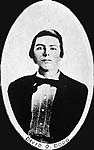
David Owen Dodd is one of the best known Civil War figures in Arkansas history. During the war, 17-year-old Dodd was in southern territory and went into federally occupied Little Rock on a business errand for his father. On his way back to South Arkansas troops at a Federal checkpoint found a notebook in his shoe which contained Morse code in Dodd’s own handwriting a detailed and perfectly accurate list of all the Union forces in Little Rock. Dodd was arrested and convicted by a court-martial of being a spy and sentenced to execution by hanging. A Union General repeatedly offered to release Dodd in exchange for the name of his informant. Dodd is said to have replied, “I can give my life for my country but I cannot betray a friend.” On January 8, 1864 Dodd was hanged just east of the Little Rock Arsenal. Because of Dodd’s slight build he was not heavy enough to generate a neck-snapping jolt. Onlookers who had crossed the river to witness his execution saw the boy dangled, strangling to death for over five minutes. Onlookers as well as Union soldiers became ill at the tragic scene.
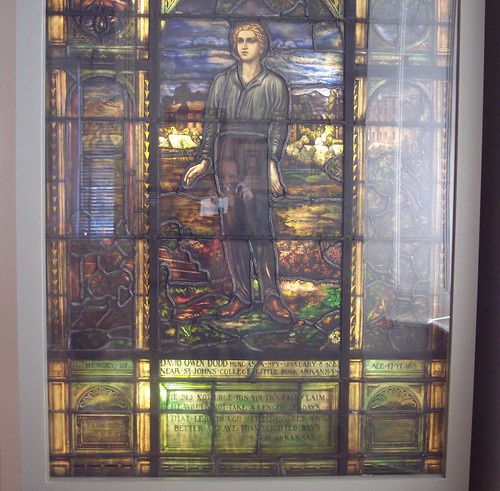
Interesting Fact:: In 1911, a stained glass window was built and sent to the old Confederate White House in Richmond, VA. The window depicts Dodd as a Southern saint and martyr with curly- blonde hair even though the only known photograph shows him with straight black hair. You can see the stained glass here along with a reflection of the guy taking the picture.
8
Mary Jane Seacole
1805-1881
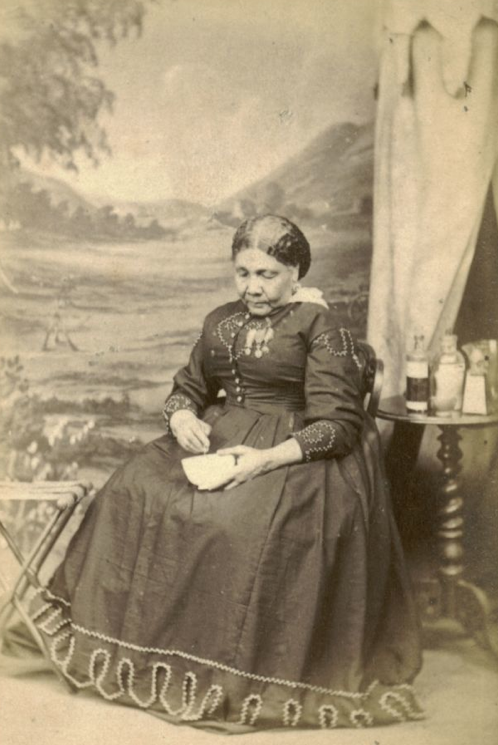
Mary Jane Seacole was well educated and skilled Jamaican nurse and a heroine of the Crimean War. When the Crimean War broke out she traveled to London and applied to go to Crimea to tend to the wounded soldiers. However because of her race she was not granted an interview by the British War Office. She then applied to Elizabeth Herbert, the wife of the secretary of state for war who was recruiting nurses for the war effort but was again denied an interview because of her race. Seacole then went on her own initiative and in 1856 established the British Hotel near Balaclava at her own expense. She provided comfortable quarters for the sick and convalescent and often went to the battlefield to attend to the wounded. After the war Mary Seacole was bankrupt but her story was carried by the British press and money was raised to pay off her debts. The only known photograph above was taken around 1873 for a format called carte de visite (small albumen prints mounted on cards 2&1/2 by 4 inches).
Interesting Fact:: In 1857, Mary Seacole published The Wonderful Adventures of Mrs. Seacole in Many Lands. The book was a great success and became a very popular figure. She was awarded the Crimean Medal, the French Legion of Honor and a Turkish medal.
7
Joseph Isaac (Ike) Clanton
1847 – 1887

Ike Clanton was involved in one of the most famous gunfights of the American Old West. Ike Clanton’s notoriety is based largely on his conflict with the Earp brothers, especially Wyatt Earp and Wyatt’s friend Doc Holliday. Helping to fuel this conflict was Ike’s heavy drinking and quick temper. In October 1881 the Earp’s and Doc Holliday advanced on Ike’s gang near the now famous O.K. Corral. Ike was unarmed and fled at the first sound of gunfire but his brother William “Billy” Clanton was killed in the shootout along with Frank and Tom McLaury. Ike schemed revenge on the Earp’s and in 1882 Ike and four henchmen shot and killed Morgan Earp. Wyatt Earp then gathered a posse including his brother Warren and Doc Holliday and went after the Clanton Gang killing three of them. Ike fled to Mexico and hid under an assumed name. When Earp finally gave up the search Ike returned to the Tombstone area and took up his old rustling ways and was shot and killed in 1887 by lawmen.
Interesting Fact:: The only photo of Ike Clanton was taken in 1881 by Camillus “Buck” Sydney Fly (also a lawman) and is most noted for many photographs he took during Tombstone’s Wild West days. He also took the only picture of Ike Clanton’s brother Billy but not until after the famous gunfight. You can see the photo here. From left to right: Tom McLaury, Frank McLaury and 19 year old Billy Clanton.

Leave your own mark on history with a Canon EOS Rebel T3 12.2 MP CMOS Digital SLR at Amazon.com!
6
Moondyne Joe
1826 – 1900
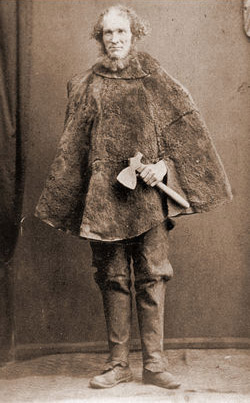
Joseph Bolitho Johns better known as Moondyne Joe is Western Australia’s best known bushranger. Johns was born in Cornwall England and in 1849 was sentenced to ten years imprisonment for larceny. He was transported to Western Australia and arrived at Fremantle in 1853. He was granted a conditional pardon in 1855 and was arrested again in 1861 on a charge of horse stealing. While awaiting trial he escaped but was recaptured to serve three years imprisonment and released. He was again sentenced in 1865 to ten years for killing an ox with the intent of stealing the carcass. From November 1865 to March 1867 he made four attempts to escape, three of them successful. He was recaptured and placed in irons in solitary confinement in a specially reinforced cell with triple-barred windows. He escaped again in 1867 and for two years roamed the hill country east of Perth Fremantle. He was recaptured while raiding a wine cellar and sentenced to a further term in Fremantle prison. He was released in 1871 and gained another conditional pardon in 1873. After his release Moondyne Joe became respectable and worked as a carpenter and shipbuilder.
Interesting Fact:: The only photo of Moodyne Joe shows him holding a tomahawk and wearing a kangaroo skin cape. The photograph was taken by Alfred Chopin who was a convict transported to Western Australia and became one of the colony’s first portrait photographers. It was first published in The Sunday Times on May 27, 1924 as an illustration accompanying an article on Moondyne Joe.
5
Billy the Kid
1859 – 1881
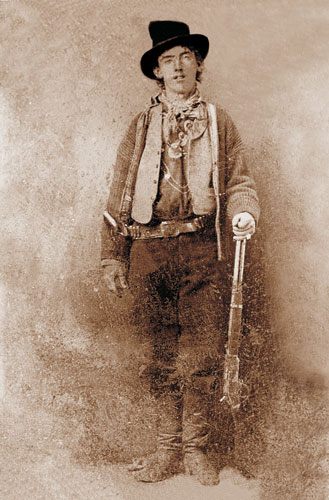
This is the only indisputable photo of Billy the Kid and is said to be taken in January 1880 in front of Beaver Smith’s saloon gambling hall in Fort Sumner, New Mexico Territory. Billy the Kid also known by the aliases Henry Antrim and William H. Bonney was a 19th-century American frontier outlaw and gunman. He was relatively unknown during his own lifetime but became a legend a year after his death when his killer, Sheriff Patrick Garrett published a biography titled The Authentic Life of Billy the Kid. According to legend Billy the Kid killed 21 men, one for each year of his life but he most likely killed fewer than half that number.
Interesting Fact:: While Billy the Kid was right-handed it was widely assumed that he was left-handed. This belief stemmed from the fact that the only known photograph at that time showed him with a Winchester rifle in his right hand and a gun belt with a holster on his left side where a left-handed person would typically wear a pistol. The belief became so entrenched that in 1958 a biographical film was made about Billy the Kid called The Left Handed Gun starring Paul Newman. In 1986 the original photo came to light and showed that the first one that was found was the same photo but actually a reverse tintype image. This led to the myth that Kid was left handed. You can see the reversed image here from a reproduced wanted poster.

4
Constanze Mozart
1762 – 1842
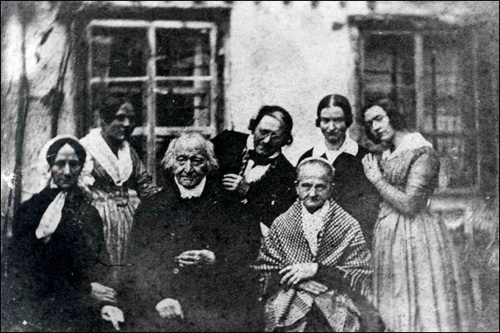
This photograph was taken in 1840 which makes it the oldest photograph on this list. A few historians are skeptical that this is actually Constanze Mozart (Wife of Wolfgang Amadeus Mozart) but local authorities say a detailed examination has proved the authenticity of the image. The photograph was taken in the Bavarian town of Altoetting at the home of the Swiss composer Max Keller whom Constanze used to visit regularly. The photo shows Constanze at age 78 front left, next to Max Keller. His wife Josefa is on the right. Behind them are (from the right): their daughters Josefa and Luise, Max Keller’s brother-in-law Philipp Lattner and the family’s cook. The Altoetting state archive believes this was the only time in her life that she had been photographed. Constanze died two years later.
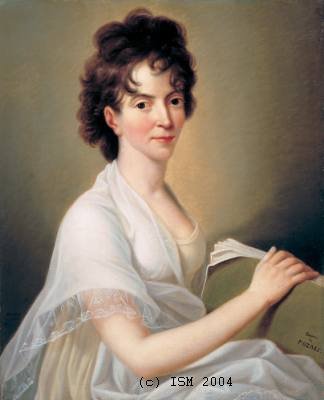
Interesting Fact:: Constanze was a trained musician and actually played a role in her husband’s career. When Wolfgang Mozart died in 1791 it placed Constanze in debt but because of her business skills she was able to obtain a pension from the Emperor and also organized profitable memorial concerts. She also embarked on a campaign to publish her husband’s works. This made Constanze financially secure and even well-off. Also a portrait painted in 1802 of a much younger Constanze shows a strong resemblance to the photo above.
3
Regina Jonas
1902 – 1944
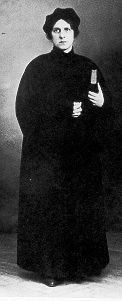
Regina Jonas is known as the first woman to be ordained as a Rabbi. After taking seminary courses and graduating as an Academic Teacher of Religion, Jonas decided that she wanted to become a rabbi. She wrote a thesis called “Can a Woman Be a Rabbi According to Halachic Sources?” After examining Jewish sources, Jonas concluded that women can become rabbis. Some Rabbis responsible for ordinations refused to ordain her but finally on December 27, 1935 Regina Jonas was ordained by the liberal Rabbi Max Dienemann in Offenbach who was the head of the Liberal Rabbis’ Association. In the late 1930s, Jonas worked sporadically as a pulpit rabbi, filling in for rabbis who had been arrested or deported by the Nazis. In 1942 she was arrested and deported to Theresienstadt. Even there she continued her work and helped build a crisis intervention service. She would also meet the trains at the station and help people cope with their shock and disorientation. Jonas worked tirelessly in Theresienstadt for two years. Then in 1944 she was deported to Auschwitz and murdered two months later at age 42.
Interesting Fact:: For almost 50 years, Regina Jonas was forgotten. Then in 1991 an envelope was found in a small and remote archive in East Berlin. The envelope contained her teaching certificate written in German and Hebrew. There was also a document signed by Rabbi Dr. Max Dienemann that ordained Jonas to serve as a rabbi in Jewish communities in Germany. The envelope also contained the only photo of Jonas shown above wearing rabbinical robes. Jonas was finally given the recognition she deserved as Judaism’s first woman rabbi.
2
Chief Seattle
circa 1786 – 1866
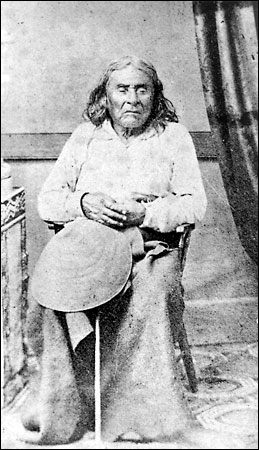
Chief Seattle (more correctly known as Seathl) was the leader of the Suquamish and Duwamish Native American tribes and was known for his daring courage and leadership. He gained control of six of the local tribes while maintaining a good relationship with the Europeans. In 1852 out of respect, the early settlers at Duwamps renamed the town Seattle. In 1855 more and more settlers began to move into the area. The Governor of Washington Territory called together the tribes to propose a new treaty that would send the tribes to a reservation and their lands would be controlled by the government. This conflict lasted many years but through it all Seattle continued to council for peace. This only photo of Chief Seattle was taken around 1865 when he was close to 80 years old.
Interesting Fact:: Chief Seattle was also known as a great orator and when he addressed an audience, his voice is said to have carried a distance of 3/4ths of a mile. However the famous speech in 1854 attributed to Seattle concerning the concession of native lands to the settlers has been greatly embellished and exaggerated over the years.
1
Frederic Chopin
b.1810 d.1849
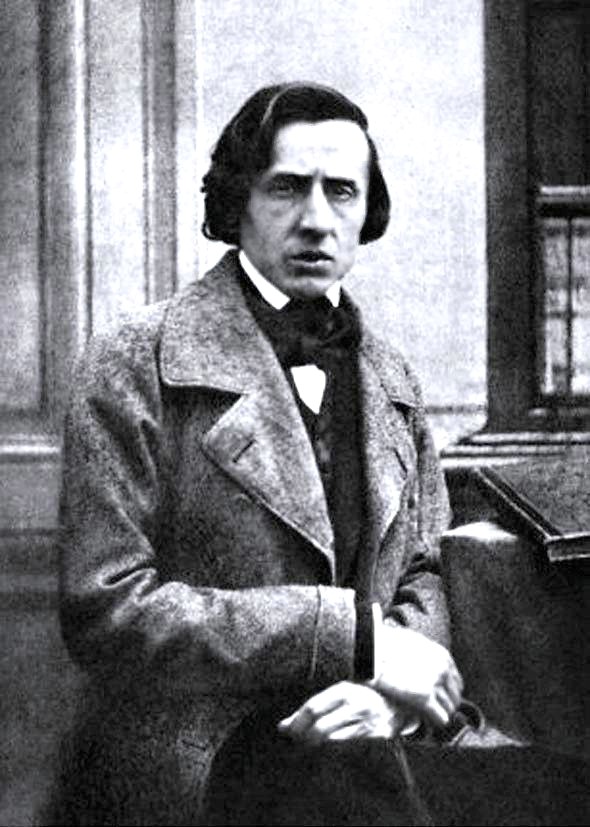
Frederic Chopin was born in Poland but lived most of his life in Paris and is one of the best-known and best loved composers of the Romantic period. Chopin’s entire musical output was devoted to his favorite instrument the piano with over 200 solo compositions. Several of Chopin’s pieces have become very well known such as Revolutionary Étude and the Minute Waltz. Present-day evaluation places him among the immortals of music because of his awareness of the magical new sonorities to be drawn from the piano. The only existing photograph of Chopin was taken during the degenerative stages of his tuberculosis in early 1849. Chopin died later that year.
Interesting Fact:: After his death there was a death mask made of Chopin and also a cast of his hands. Chopin had a fear of being buried alive so his heart was removed and preserved in alcohol. His sister later took it in an urn to Warsaw where it was sealed within a pillar of the Holy Cross Church on Krakowskie Przedmie?cie. Beneath is an inscription from Matthew VI:21: “For where your treasure is, there will your heart be also.” You can see the cast of Chopin’s left hand here.

+
Joseph Smith
b. 1805 d.1844
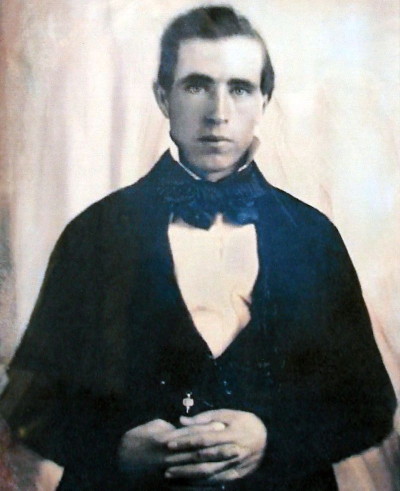
During the research for this list I ran across several different photos claiming only existing photographs of the Mormon founder Joseph Smith. The latest one is this photo above that actually surfaced in 1965, and then again in 1994. The original daguerreotype (an early type of photograph) is in the hands of the Community of Christ, formerly the Reorganized Church of Jesus Christ of Latter Day Saints. The LDS official church stance is that they can neither confirm nor deny the authenticity of the photo. I was going to include the photograph high up on this list but the more I researched this photo the more I have my doubts that this is Joseph Smith but it does make for interesting conversation. Here is a clip comparing this photo to Joseph Smith’s death mask.
Contributor: Blogball
More Great Lists
 Top 10 Fascinating Historical Photographs
 10 Calm Photographs With Awful Backstories
 10 Stories Behind Incredible Pulitzer Prize--Winning…
 10 Fake Photographs And Paintings Of Adolf Hitler
 10 Of The Most Powerful Photographs From The Last Decade
 10 Photographs With Haunting Backstories
 Top 10 Stunning Photographs Of Hidden Gem Destinations
 10 Stories Of People Who Cheated Death Only To Die…
 10 Strange Syndromes That Only Affect Animals
fact checked by
dickensgirl
More Great Lists