This is the third installment of our “books that changed the world” series. Be sure to read the previous two so that you don’t think we have missed important books off the list. If you can think of books that are not on any of the three lists that deserve a mention in future, be sure to tell us about it in the comments. Here are the original two lists: Top 10 Books That Changed The World, and 10 More Books That Changed The World. These are in no particular order.
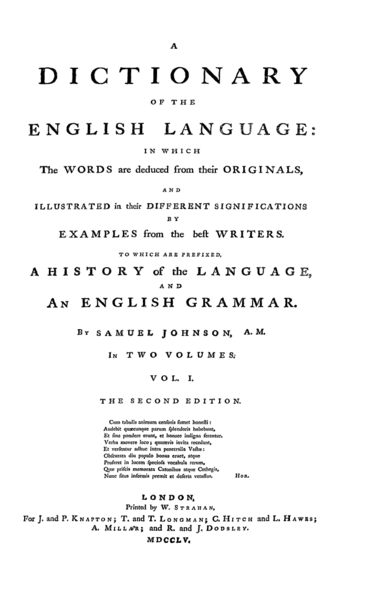
Why it changed the world: This book (though not the first dictionary) was the first to use literary quotations to illustrate the meanings of words. It set the stage for the scholarly study of language.
Published on 15 April 1755 and written by Samuel Johnson, A Dictionary of the English Language, sometimes published as Johnson’s Dictionary, is among the most influential dictionaries in the history of the English language. There was dissatisfaction with the dictionaries of the period, so in June 1746 a group of London booksellers contracted Johnson to write a dictionary for the sum of 1,500 guineas, equivalent to about £220,000 as of 2009.
Johnson took nearly nine years to complete the work, although he had claimed he could finish it in three. Remarkably, he did so single-handedly, with only clerical assistance to copy out the illustrative quotations that he had marked in books. Johnson wrote several revised editions during his life. Until the completion of the Oxford English Dictionary, 150 years later, Johnson’s was viewed as the pre-eminent English dictionary.
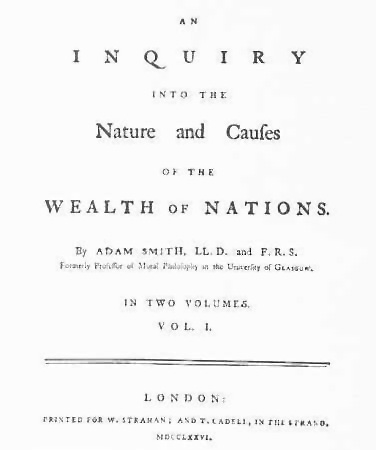
Why it changed the world: It virtually created modern economics – the free market and competition. In it, Smith proposes the invisible hand of the market: the pursuit of self-interest can be beneficial to society at large: for example, the Butcher, the Baker, and the Brewer provide goods and services to each other out of self-interest; the unplanned result of this division of labor is a better standard of living for all three.
An Inquiry into the Nature and Causes of the Wealth of Nations is the magnum opus of the Scottish economist Adam Smith. It is a clearly written account of economics at the dawn of the Industrial Revolution, as well as a rhetorical piece written for the generally educated individual of the 18th century – advocating a free market economy as more productive and more beneficial to society.
The work is credited as a watershed in history and economics due to its comprehensive, largely accurate characterization of economic mechanisms that survive in modern economics; and also for its effective use of rhetorical technique, including structuring the work to contrast real world examples of free and fettered markets.
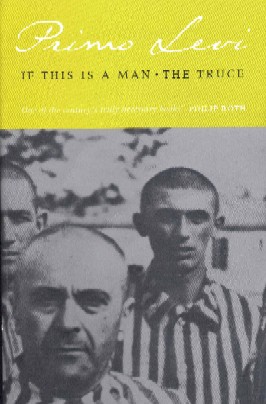
Why it changed the world: This book on Levi’s time in Auschwitz changed man’s understanding for suffering and gave us an awareness of our unlimited ability to work for good or evil.
If This Is a Man (United States title: Survival in Auschwitz) is a work of witness by the Italian author Primo Levi. It was influenced by his experiences in the concentration camp at Auschwitz during the Second World War. It can be described as a memoir or a personal narrative, but it goes beyond mere recollection by seeking to consider the human condition in all its extremes through the narrative form.
The first manuscript for If This Is a Man was completed by Levi in December 1946. However, in January 1947, the manuscript was refused by Einaudi. Despite this, Levi managed to find another, smaller publisher who printed 2,500 copies of the book. 1,500 of these were sold, mostly in his home town, Turin. It was not until 1956 that Einaudi published the work in a revised form. On this occasion, the book had major worldwide success, being translated into English by Stuart Woolf in 1958, and into German by Heinz Reidt in 1959.
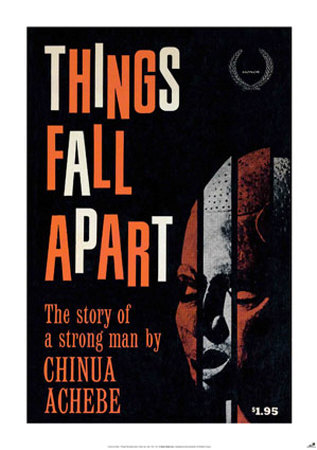
Why it changed the world: Achebe was the first African to writer to show the world that Africa had suffered brutally under colonialism. He finally gave a voice to the millions of oppressed and misunderstood Africans and for the first time, the world listened.
Things Fall Apart is a milestone in African literature. It has achieved the status of the archetypal modern African novel in English, and is read in Nigeria and throughout Africa. It is studied widely in Europe and North America, where it has spawned numerous tertiary analytical works. It has achieved similar repute in India and Australia. Considered Achebe’s magnum opus, it has sold more than 8 million copies worldwide. Time Magazine included the novel in its TIME 100 Best English-language Novels from 1923 to 2005.
Achebe’s writing about African society is intended to extinguish the misconception that African culture had been savage and primitive by telling the story of the colonization of the Igbo from an African point of view. In Things Fall Apart, western culture is portrayed as being “arrogant and ethnocentric,” insisting that the African culture needed a leader. As it had no kings or chiefs, Umofian culture was vulnerable to invasion by western civilization. It is felt that the repression of the Igbo language at the end of the novel contributes greatly to the destruction of the culture.
Why it changed the world: The historical hatred of the Jews in Europe was re-ignited by this anonymous book (believed to have been produced by the Russian Secret Police) and in time it formed the core of Hitler’s plan for their extermination.
The Protocols of the Elders of Zion is a tract alleging a Jewish and Masonic plot to achieve world domination. Purportedly written by a secret group of Jews known as the Elders of Zion, the document underlies 24 protocols that are supposedly followed by the Jewish people. The Protocols has been proven to be a literary forgery and hoax as well as a clear case of plagiarism.
The Protocols became a part of the Nazi propaganda effort to justify persecution of the Jews. It was made required reading for German students. In The Holocaust: The Destruction of European Jewry 1933–1945, Nora Levin states that “Hitler used the Protocols as a manual in his war to exterminate the Jews”:
Despite conclusive proof that the Protocols were a gross forgery, they had sensational popularity and large sales in the 1920s and 1930s. They were translated into every language of Europe and sold widely in Arab lands, the United States, and England. But it was in Germany after World War I that they had their greatest success. There they were used to explain all of the disasters that had befallen the country: the defeat in the war, the hunger, the destructive inflation.
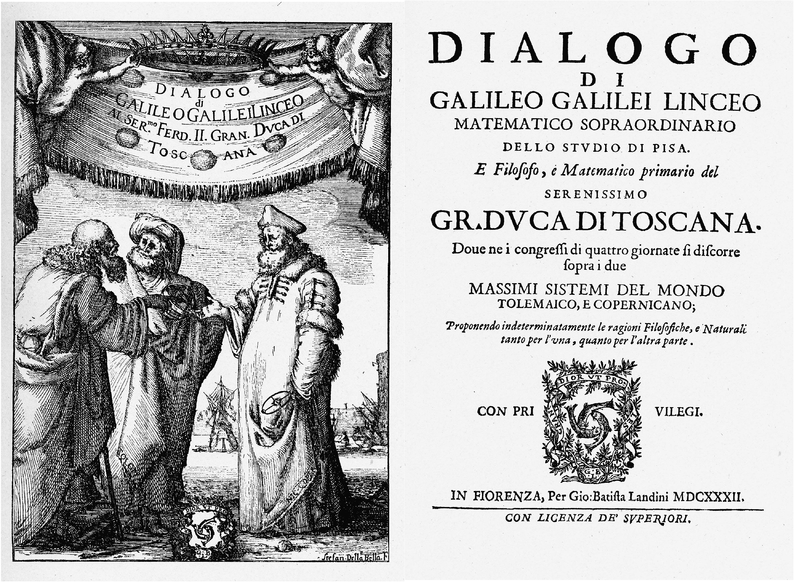
Why it changed the world: Galileo’s Dialogue Concerning The Two Chief World Systems was the book that sparked off the centuries-long debate of science versus religion. It was the cause of Galileo’s imprisonment and the end of his writing career (with the exception of his Discourses). It was not the science of this book which was problematic – it was Galileo’s mocking of the Pope which caused him to come before the Inquisition.
The Dialogue Concerning the Two Chief World Systems was a 1632 book by Galileo, comparing the Copernican system with the traditional Ptolemaic system. In the Copernican system the Earth and other planets orbit the Sun, while in the Ptolemaic system everything in the Universe circles around the Earth. The Dialogue was published in Florence under a formal license from the Inquisition.
In 1633, Galileo was convicted of “grave suspicion of heresy” based on the book, which was then placed on the Index of Forbidden Books, from which it was not removed until 1835 (after the theories it discussed had been permitted in print in 1822.) In an action that was not announced at the time, the publication of anything else he had written or ever might write was also banned.
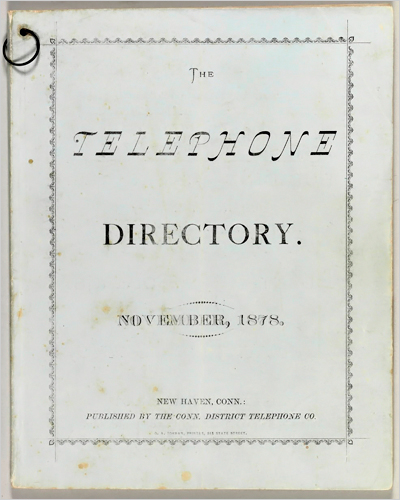
Why it changed the world: There is no doubt that the invention of the telephone is one of the most significant and world changing inventions in the history of man. But without the telephone directory, it would never have succeeded. The popularity of the phone relied on the ability of subscribers to know who else was subscribed so they could telephone them.
The first telephone directory, consisting of a single page, was issued on February 21, 1878. It covered 50 subscribers in New Haven, Connecticut. The Reuben H. Donnelly company asserts that it published the first classified directory, or yellow pages, for Chicago, Illinois, in 1886. The first British telephone directory was published in 1880.
In the US, under current rules and practices, mobile phone and Voice over IP listings are not included in telephone directories. Efforts to create cellular directories have met stiff opposition from several fronts, including a significant percentage of subscribers who seek to avoid telemarketers.
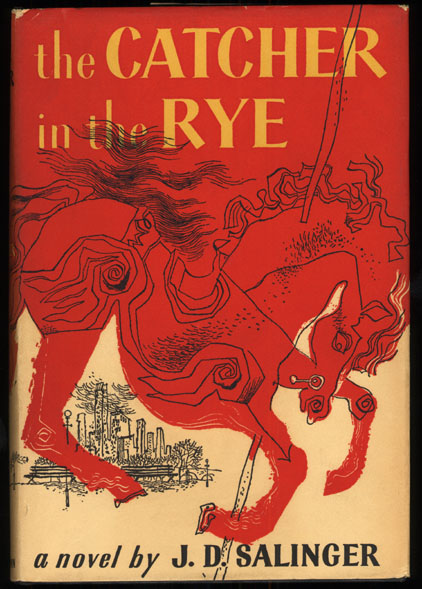
Why it changed the world: The frequent calls for this book to be banned due to teenaged sexuality and vulgar language have kept the concept of censorship clearly in the public eye. This novel is the archetype of the teenage novel – now a very popular genre in literature.
The Catcher in the Rye is a 1951 novel by J. D. Salinger. Originally published for adults, the novel has become a common part of high school and college curricula throughout the English-speaking world; it has also been translated into almost all of the world’s major languages. Around 250,000 copies are sold each year, with total sales of more than sixty-five million. The novel’s antihero, Holden Caulfield, has become an icon for teenage rebellion and defiance.
The novel was chosen by Time among the 100 best English-language novels from 1923 to 2005, and by Modern Library and its readers as one of the 100 best English-language novels of the 20th century. It has been frequently challenged in the United States for its liberal use of profanity and portrayal of sexuality and teenage angst.
Why it changed the world: This landmark epic novel proved to the world that America had a unique voice in the world of literature – a voice worth hearing. There is no doubt that America now dominates the world of modern literature.
Moby-Dick is an 1851 novel by Herman Melville. The story tells the adventures of the wandering sailor Ishmael and his voyage on the whaleship Pequod, commanded by Captain Ahab. Ishmael soon learns that Ahab seeks one specific whale, Moby Dick, a white whale of tremendous size and ferocity. Comparatively few whaleships know of Moby Dick, and fewer yet have encountered him. In a previous encounter, the whale destroyed Ahab’s boat and bit off his leg. Ahab intends to take revenge.
In Moby-Dick, Melville employs stylized language, symbolism, and metaphor to explore numerous complex themes. Through the main character’s journey, the concepts of class and social status, good and evil, and the existence of gods are all examined as Ishmael speculates upon his personal beliefs and his place in the universe.
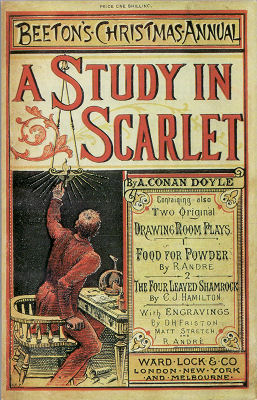
Why it changed the world: The first “Sherlock Holmes novel” created the detective genre which has enthralled readers and filmgoers for well over a century. It can be said that Holmes changed the face of entertainment.
A Study in Scarlet is a detective mystery novel written by British author Sir Arthur Conan Doyle, which was first published in 1887. It is the first story to feature the character of Sherlock Holmes, who would later become one of the most famous and iconic literary detective characters, with long-lasting interest and appeal. The book’s title derives from a speech given by Holmes to his companion Doctor Watson on the nature of his work, in which he describes the story’s murder investigation as his “study in scarlet”: “There’s the scarlet thread of murder running through the colourless skein of life, and our duty is to unravel it, and isolate it, and expose every inch of it.”
The story, and its main character, attracted little public interest when it first appeared. Although Doyle wrote fifty-six short stories featuring Holmes, A Study in Scarlet is one of only four full-length novels in the original canon. The novel was followed by The Sign of Four, published in 1890.
This article is licensed under the GFDL because it contains quotations from Wikipedia.


June 3rd, 2009 at 1:40 am
Nice list – only read one of those
June 3rd, 2009 at 1:41 am
Strike that – I read the Holmes novel as part of a compendium of all the books as well as CITR. First piqued my interest in spy/detective genre
June 3rd, 2009 at 1:43 am
Great list, hitler’s ovens would go great along with number 8.
June 3rd, 2009 at 1:46 am
very nice list, I’ve heard of 3 of these, but only read The Catcher in the Rye, which I didn’t really care for. I’m going to have to find the rest of these though.
June 3rd, 2009 at 1:54 am
illbegood – I found catcher in the rye a little boring. I only perservered because of its reputation
June 3rd, 2009 at 1:57 am
I think TCITR is a little overrated tbh. It was recommended me by some friends in an english class, but the dialogue is weak, storyline convoluted…even the foreword in my copy is rather critical of the novel!
I was told to perserve, but that is a day of my life I am not getting back.
June 3rd, 2009 at 1:58 am
jfrater, same here, I had heard of it as one of the greatest novels ever written and found (in my opinion) it to be grossly overrated.
June 3rd, 2009 at 1:59 am
nice list
June 3rd, 2009 at 2:03 am
1 cymraegbachgen87 : Subtle… Methinks you should read the list before you post… After all, you don’t want any landmark posts do you?
June 3rd, 2009 at 2:05 am
Very thoughtful list
June 3rd, 2009 at 2:10 am
Mark, I ALWAYS read the list first. Don’t tarnish my first ‘first’ in nearly a year of visiting this site. I know lists are published around 9.30GMT so am always interested to see what new additions are gracing this site before I start my day proper! It was going to happen sooner or later!
Technically I HAD only read one of the books, as the holmes novel was in a collection, ingeniously titled “The complete Sherlock Holmes”
Just because you have to trace the words with your finger doesnt mean the rest of us do
(jk)
June 3rd, 2009 at 2:15 am
Heh, looks like somebody used my idea from the last list:
“26 w00tz
March 2nd, 2009 at 6:55 am
I think you’re forgetting Dialogue Concerning the Two Chief World Systems, by Galileo, it was a book supporting the heliocentrism concept completely, and it was extremely controversial.”
June 3rd, 2009 at 2:25 am
Ooo… A Study in Scarlet, excellent story. A very interesting crossover of ‘A Study in Scarlet’ and the Cthulu Mythos called ‘A Study in Emerald’ written by Neil Gaiman can be found at his website – http://www.neilgaiman.com/p/Cool_Stuff/Short_Stories
You won’t be disappointed, the allusions are brilliant.
Great list by the way. I was thinking of reading Catcher, but as couple of commenters have mentioned, I wouldn’t want to waste a day, considering all the other Listverse-recommended books I need to read already.
June 3rd, 2009 at 2:30 am
11 cymraegbachgen87 : Actually *cough* Welshy *cough* what? Anyway, as I was saying, I read the list in about 2 minutes, so
Stupid LV, should be doing Chem assignment due tomorrow, or studying for exams… Stupid LV
June 3rd, 2009 at 3:09 am
Good list.
I just dont understand in which aspects ” America now dominates the world of modern literature”…
Number of books published? Number of books sold? quality of the books? prizes won?
June 3rd, 2009 at 3:16 am
These books are over rated! One book that changed my life was “Members Edition of Penthouse Forum Collection”, now thats good reading!
And in another note… “The Bible” and “Coran” should be there, if there ever was a book (or two) that changed the world that would be it!
June 3rd, 2009 at 3:19 am
16 Travis : Read the intro, both the Bible and the Quran are in the other list/s.
June 3rd, 2009 at 3:25 am
@ Mark :
Thanx for the heads up!
But I still believe “Members Edition of Penhouse Forum” should be up there… it did change the world in various factors. Sex is what sells the most in Modern Days and is the fuel for all human actions. Having a book that speaks clearly about *true* events happening in the office place and so on, promotes a state of mind that will and has changed the human presence in this virgin world.
June 3rd, 2009 at 3:25 am
mark (17) thank you
June 3rd, 2009 at 4:30 am
I might get dissed for this, but I still say that The Vampyre by John Polidori should be on the list. Alright, you may say the story was not life-changing, but it did influence Bram Stoker’s Dracula and changed the way the world would see vampires forever; sexy, romantic, mysterious and alluring, rather than demonic and not at all attractive as in folklore.
June 3rd, 2009 at 4:36 am
mrs polidori: I must be honest and say that I have never found vampires to be sexy and alluring – in fact, I find them to be something of a pain in the neck.
June 3rd, 2009 at 4:41 am
21 jfrater : *facepalm* Why Jamie? Why?
June 3rd, 2009 at 4:42 am
lol
June 3rd, 2009 at 4:45 am
Where’s the Holy Bible form the list? :-/ just thinking…
June 3rd, 2009 at 4:51 am
14 Mark–Sorry dude, but take responsibility for your own actions and quit blaming an inanimate website for your decisions on how to spend your study time.
And BTW, I probably would not have called you out, if you had not taken so much activity to point out other’s posts in a negative manner.
And yes I DID notice Jamie’s kudos to your post 17.
June 3rd, 2009 at 4:52 am
@ Travis:
I still believe that you should have read the intro first you twat!
June 3rd, 2009 at 4:52 am
@15: definitely agree.
Even more: I don’t even find from which good perspective could “America now dominates the world of modern literature”! So what is that and from where is that coming??
If that is based on the sell numbers for The Da Vinci Code, I think I might die laughing…
June 3rd, 2009 at 4:54 am
Actually, if memory serves me correctly, A Study in Scarlet took for its inspiration E.A. Poe’s “The Murders in the Rue Morgue” and the detective Pierrot (sp?). While Conan-Doyle may have refined the genre, he by no means created it.
June 3rd, 2009 at 4:57 am
To the subject at hand–The telephone directory-
What a fabulous and necessary publication. If you doubt it, think about how it has spanned the gap and become such a diverse tool on the internet.
June 3rd, 2009 at 4:58 am
Awww, Jamie, did you have to go there?
I can say, with some relief, that I never had to read Catcher in the Rye. It was on the recommended lists in school, but since it was never mandatory, I never read it.
June 3rd, 2009 at 5:08 am
I have read all of these except the dictionary completely (I am in the T’s) and the telephone book. (Its after the dictionary)
June 3rd, 2009 at 5:13 am
25 deeeziner : Way to over-react…
June 3rd, 2009 at 5:30 am
Okay Mark– You say over-react, I say that I was reading a pleasant list of comments until I came across post #9, the first negative post on a personal basis. Boy that didn’t take long did it–under 10 responses.
So I look to see who had to take a jab and what do I read? Mark. Am I surprised? Not really.
June 3rd, 2009 at 5:32 am
No 2: “There is no doubt that America now dominates the world of modern literature.” O.o
June 3rd, 2009 at 5:33 am
I’m glad I’m not the only one who didn’t like The Catcher in the Rye. I really just wanted that kid to be real so I could smack him in the face. There’s only so much teenage whining I can take from a book. I’m glad it was a short one.
June 3rd, 2009 at 5:35 am
I wish jews today were worthy of the repution they got at the “protocols”…
June 3rd, 2009 at 5:46 am
33 deeeziner : What the crap are you on mate? There’s no animosity between cym and I. As a matter of fact, short of oouchan, he’s probably the regular I get along the best with. Chillax brotha, deep breaths…
June 3rd, 2009 at 5:47 am
@ twit :
Yes, the word twat. Love it! Reminds me of the person that gave birth to you. What a horrible mistake!
June 3rd, 2009 at 5:58 am
Oh, the phone book. It’s just so amazing, isn’t it? Millions of people look at this book everyday. This is the kind of spontaneous publicity – your name in print – that makes people. I’m in print! Things are going to start happening to me now…
June 3rd, 2009 at 6:10 am
I assume Newton’s Principia was on a previous list.
June 3rd, 2009 at 6:11 am
37 Mark–Pardon me for not keeping up on the intricacies of comment friendships here. I spend most of my site time at forums. I Apologize.
Now go do your homework!!:)
June 3rd, 2009 at 6:11 am
I think Moby Dick is way more overrated thancatcher inthe Rye, although I didn’t really care for that one either. For teen angst, my money was on A Seperate Peace or, more recently The Perks of Being a Wallflower. But Moby Dick…bleh. Actually my entire Early American Lit class…bleh.
June 3rd, 2009 at 6:20 am
jayfray: i thought this was another great list. and the moment i came across your sentence “There is no doubt that America now dominates the world of modern literature.” i knew this would cause controversy.
but hey, what is a LV list without a little argument.
June 3rd, 2009 at 6:22 am
gina:(39) brilliant!!! what a fantastic movie reference!
avi:(36) i can’t even begin to imagine what you mean by that statement.
June 3rd, 2009 at 6:23 am
11 cym: Mark’s got post envy! At least you got a landmark post…….once…hehe
BTW…great list, jfrater. I like all of your choices.
June 3rd, 2009 at 6:25 am
hated things fall apart. I think it makes africa precolonization society look worse. they beat women, behead a child that okonkwo is caring for and listen to a prophet living in a cave, what a life
June 3rd, 2009 at 6:25 am
DiscHuker(44): You to be really good in something to get to be the protagonist of such a book (say, being good in making money). Nowadays, we’re not even remotely as good.
June 3rd, 2009 at 6:36 am
Didn’t read the intro – GUILTY!!!
sorry
June 3rd, 2009 at 6:39 am
In all fairness, Poe created the detective story with “Murders in the Rue Morgue.” Doyle just copied him.
June 3rd, 2009 at 6:50 am
Things fall apart and catcher in the rye are two of the worst books i have ever read. haha
June 3rd, 2009 at 6:54 am
36. avi June 3rd, 2009 at 5:35 am
wtf do you mean by that??
June 3rd, 2009 at 6:57 am
avi (36)
wtf do you mean by that??
June 3rd, 2009 at 6:58 am
omg omg omg why isnt twilight on the list? that book is like the best bk evaaaaaa!!! rob pattinson is the hottest edward in the world, that bk like changed my life omg cant believe you guys are so rude…im neva gna cme bk to this site, twilight foreva!!!!!!!!!!!!!!! woooo!!! we LOVE you robert, ur sooooo phit!!!!
(seriously if i ever behaved like this, twonk me over the head with a large saucepan, blooming twilighters ruining every site i visit!!)
June 3rd, 2009 at 6:59 am
sorry for the double post
June 3rd, 2009 at 7:00 am
I thought Things Fall Apart was a great work and I don’t think it made precolonial Africa look any worse than any European society at that time. Europeans burned witches, killed religious minorities, and the took the supposed word of God to extreme and deadly extents. Plus what the Portuguese, Spanish, French, Dutch and British did to destroy precolonial African societies was horrific. The legacy of European as well as Arab involvement in Africa is still seen today. Things Fall Apart shows the beginning of the destruction of civilizations in Africa in a microcosm and shows how Europeans attempted to dehumanized Africans to justify their treatment.
June 3rd, 2009 at 7:06 am
53 Tropical: *snort*
That was perfect. I have to show my kid that.
June 3rd, 2009 at 7:21 am
I agree with setalaus. In what way, if any, does American literature even have an impact on let alone dominate modern literature? It’s primary effect seems to be in the recycling of ideas, the reinforcement of stereotypes and imposing of certainty where doubt is more appropriate. Kingsly Amis once said that ‘literature was the war on cliches’. If that be true then American literature has been of no use at all. However, I think your choices are interesting and well-justified. I might of selected James Fenimore Cooper over Melville. Though an inferior writer I think he has a better claim to being the father of American literature. If his work seems out of place now it is because America had changed some much in the year since it was written.
June 3rd, 2009 at 7:33 am
As a bonus, at #11, we could have added The Ultimate Book of Top 10 Lists….
June 3rd, 2009 at 7:38 am
Good list, but I have one reservation. Well… two actually. But the one is purely a matter of taste.
So to begin with THAT, I have to say that I never thought “Things Fall Apart” was really all that great a book. I didn’t find it to be terribly well written. But to each his own—and at any rate, that nevertheless does NOT call into question your reasons for including it on this list—there’s no denying that it DID have an impact.
Where I have a larger reservation is with the choice of “Catcher in the Rye.” Now, it isn’t that I think “Catcher” is a bad book—it isn’t. Though I’ll agree to some extent with others here that it doesn’t seem to ring as true and great to us, today, as it did when it first came out, and into the Sixties.
But… correct me if I’m wrong—it seemed you chose “Catcher” for inclusing for two reasons—one, it was one of the first “teenage angst” novels (probably true, though the genre of youth fiction had existed for a long while before that–but of course it was of an entirely different nature)… and two, because of the effects it had in sparking debates about censorship.
But this is where it seems to me that there were a couple better choices to be made—books that have a much greater importance artistically and historically (if nowhere near as popular) and books that preceded “Catcher” by several years, even decades.
First of all, “Ulysses” by James Joyce. Now, I can’t recall, but this was probably on the earlier “10 Books” list… I should go and check. But if it wasn’t, then it (or my other suggestion) should have been on THIS one.
The other book is “Tropic of Cancer” by Henry Miller.
BOTH of these are far better, deeper, and artistically important books than “Catcher in the Rye,” which good as it is, is almost fluff by comparison. In fact, it’s of course recognized that “Ulysses” is pretty much the greatest novel ever written, and “Tropic” scored a very high place as well on all the “lists of great books” that I’ve seen. It certainly scores high on mine.
Both books were the subject of intense censorship in this country and Britain (and other countries as well) and both books were the subject of groundbreaking, important court cases that ended in judicial rulings which broke the back of heavy censorship in the US—the court case surrounding “Ulysses” being the more important of the two, it could be argued—but nevertheless, the ruling on “Tropic” was just as vital, building on the precedent of the earlier case but also making it clear that Joyce’s work was not just some random exception.
Remember, Joyce and Miller’s books were BANNED in this country for YEARS after they were published overseas. If I recall, the case for Ulysses was decided in the 1930s, though the book had been out since 1914 in Europe. I don’t know when the ban was lifted on it in Britain. “Tropic of Cancer” was banned in the US until the 1950s, though the book had been published in the 30s in France. Some others of Miller’s books remained banned until the SIXTIES. I believe Miller’s books (including “Tropic”) remained banned in Britain until at least that time.
To my knowledge, there was no such court case (I can’t recall anyway) surrounding “Catcher,” perhaps because it is not as explicit in its language as either “Ulysses” or “Tropic,” and I certainly don’t recall any stories about “Catcher” being confiscated by the US Postal Service, which Joyce and Miller both were. But also “Catcher” was always thought of as simply a “youth novel,” which perhaps isn’t fair—it’s a greater piece of work than that—but it doesn’t rank with the other two books.
If the point here was to indicate the impact that a book had on ending official censorship in America and Britain—I’d honestly say that Joyce or Miller would have been the better choice here.
June 3rd, 2009 at 7:38 am
great list!
June 3rd, 2009 at 8:00 am
Woohoo! Glad to see Sherlock Holmes’ name in the list
June 3rd, 2009 at 8:02 am
Gismo:
Come on now… a little healthy skepticism about claims one hears is a good thing. But you go overboard.
“In what way, if any, does American literature even have an impact on let alone dominate modern literature?”
This is just silly. The “dominance” part of this is arguable, but to say that American literature doesn’t even have an IMPACT on modern literature is ridiculous.
American literature’s impact has been astoundingly large, for a country whose literary tradition is only as old as itself–some two or three hundred years or so. One need only mention a handful of the giants of literature who have been American: Poe, Hawthorne, Melville, Twain, Thoreau, Emerson, Faulkner, Hammett, Chandler, Frost, Eliot, Dickinson, Moore, Pound, Henry Miller AND Arthur Miller, Tennessee Williams, Kerouac, Burroughs… and these are just the obvious ones. There are countless others that could be mentioned. And of course, it wasn’t just that these men and women wrote great books and poems—they wrote IMPORTANT books and poetry that had a huge impact on style, theme, and the philosophy of literature overall. This impact rippled the world over, also–not just in English speaking countries.
“It’s primary effect seems to be in the recycling of ideas, the reinforcement of stereotypes”
This is entirely without basis. Where is your support for a statement like that? Recylcing of ideas? Reinforcement of stereotypes?
“and imposing of certainty where doubt is more appropriate.”
And again—on what are you basing this? Are you not talking about a wholly different, underclass of literature? There are ALWAYS low and mid-cultish works that don’t do anything but add words to the air… but the high works of American literature have always employed irony and uncertainty and an eye on the reality of life.
“Kingsly Amis once said that ‘literature was the war on cliches’. If that be true then American literature has been of no use at all.”
Again, how so? What “cliches” were reinforced by TS Eliot, by Hawthorne, by Poe? By Henry Miller? By any of the other names I’ve mentioned?
I mean, this is absurd. You go on to express a preference for Cooper over Melville–based, apparently, on historical precedence (as if that actually matters when one gets down to it–if you were right in this then by that same logic the Venerable Bede is more important to English literature than Shakespeare or Chaucer, because he preceded them both) but even you acknowledge that Cooper is an inferior writer–which he was. Whereas Melville is, and is generally recognized to be, one of the most important voices in Anglo-American AND World literature… and yet in another breath, you’ve dismissed him and the others I’ve mentioned as being beneath your notice—to have merely “reinforced stereotypes” and “employed certainty where doubt would have been more appropriate.”
This is utterly absurd. You sound like someone trying to sound knowledgeable about a subject, but in opening your mouth too far, fell flat on your face.
June 3rd, 2009 at 8:19 am
Good job jfrater! My day isn’t complete without sneaking a peek in your site! It’s like dessert for me.. =)
June 3rd, 2009 at 8:22 am
I was a directory assistance (411) operator for 8 miserable years. I finally decided that I didn’t want to wast the rest of my 20s having to inform people that they are dumb. I WISH people still used a phone book.
“What city, please?”
“Wal Mart”
“Wal Mart is not a city. What city?”
“Texas”
I give up!
June 3rd, 2009 at 8:28 am
Primo Levi’s novel is amazing…but so, so sad and terrifying. I don’t know if I would say it changed the world but I can see how someone would go there. It left such a hell of an impression on me, that’s for such.
June 3rd, 2009 at 8:30 am
wow…that whole typing thing is really difficult for me today
June 3rd, 2009 at 8:32 am
Not sure about the “created the detective genre” part in regards to Sherlock. Many say Poe was the man to do that.
June 3rd, 2009 at 8:36 am
Great list! I always enjoy the literary ones.
About this quote:
“There is no doubt that America now dominates the world of modern literature.”
I have to disagree with that as well. I think America dominates the world of American literature, but across the pond we read far more home-grown talent. I believe this is the same for most European countries.
Randall, listing great American writers seems somewhat pointless as anyone wishing to disagree with you could compose a similar list of writers from any other countries in the world. And they could do it for the same period of time that America has existed.
To address the original claim: as it happens,there are many great writers from America and their legacy is not to be sniffed at, but claiming that they dominate the world of literature is both inaccurate and arrogant.
June 3rd, 2009 at 8:42 am
I read the phone book just last week…not much of a plot but what a cast!
June 3rd, 2009 at 8:58 am
What about “Dianetics” By. L. Ron Hubbard?
June 3rd, 2009 at 9:03 am
I have to disagree with Baxter and Gismo. Randall mentioned some of America’s most influential authors,who are beloved both here and abroad. The authers not from america(Dickens, Shakespeare, Chaucer, Austin, Stevenson, Kyd, Marlowe, Joyce, etc) absolutely have their place in literature, schools, and the home.
However, I do think MODERN lit is dominated by americans. Of course, it depends on your definition of “literature” because that, like “good tv” has changed. Steven King, John Grisham, Dean Koontz, Sidney Sheldon, Michael Crichton, and James Patterson are all WORLDWIDE bestselling authors. If you expand the umbrella of “literature” we’ll include Danielle Steel (whom I believe outsells Steven King) Nora Roberts, Jackie Collins, and Dr. Suess. Again, these aren’t exactly classics like the writers in the fisrt part of this comment, but the sentence causing the debate is “There is no doubt that America now dominates the world of modern literature.” Some of them might be writing crap, but American authors do dominate if you go by the numbers.
June 3rd, 2009 at 9:15 am
Baxter:
There’s two different things here. One, I was addressing Gismo’s claim that American literature hadn’t even IMPACTED the world, which was absurd… and so I raised the various names as proof that Americans HAD, in fact, impacted world literature.
But Two—that was only peripherally addressing the issue of “dominance.” And it depends on what we mean by “dominance.”
If we’re talking a kind of rooted cultural dominance that goes back to some of names I brought up, then I think you’re clearly wrong… important writers who were *actually* English fell far into the minority of overall “British-American” literature in the very late 19th and early 20th century. In fact it was pointed out by a critic at the time—I can’t recall if it was Eliot or Wilson, or someone else—but I know it was later brought up by either Orwell and/or Fussell—that the best literature being written in English was not being written at that time by any authors who WERE English, (with the exception of DH Lawrence and a few others) but by Irish and American authors. And today much more important literature written IN English is being produced by people from the so-called “third world,” as we know.
It isn’t “arrogance” to point out that America came to dominate the cultural/artistic aspect of this joint British-American identity; it’s simply a matter of fact. Today I’d say it’s receded quite a bit, but the dominance has hardly reverted to England—it’s gone more to the aforementioned writers from other countries and continents—Asia, Africa, the Middle East, Latin America.
June 3rd, 2009 at 9:23 am
# 8 written by P. Leviz made good reading for me, scary and goose pimple stuff.
Its the type of story that lingers with you for a long time after you have read it.
Nice one Jamie
June 3rd, 2009 at 9:27 am
I just think you forgot … the Bible and the Koran and all other book written to fool poeple with some kind of belief.
June 3rd, 2009 at 9:41 am
I’m almost ashamed to admit that the only reason I read TCITR is after hearing that John Lennon’s assassin had it with him at the time of the shooting. A few years earlier in high school, like a typical slacker I’d avoided the assignment to read it, but now I had to see wtf this book was all about. It was ok, not one of my favorites, it did seem to ramble on a bit. But to this day, I do like to sprinkle a few of the main character’s colloquialisms into my conversations and all. I mean, who doesn’t appreciate a good Holden Caulfield quote? Nobody.
June 3rd, 2009 at 9:50 am
“There’s two different things here. One, I was addressing Gismo’s claim that American literature hadn’t even IMPACTED the world, which was absurd… and so I raised the various names as proof that Americans HAD, in fact, impacted world literature.”
That I certainly agree with.
“If we’re talking a kind of rooted cultural dominance that goes back to some of names I brought up, then I think you’re clearly wrong… important writers who were *actually* English fell far into the minority of overall “British-American” literature in the very late 19th and early 20th century. In fact it was pointed out by a critic at the time—I can’t recall if it was Eliot or Wilson, or someone else—but I know it was later brought up by either Orwell and/or Fussell—that the best literature being written in English was not being written at that time by any authors who WERE English, (with the exception of DH Lawrence and a few others) but by Irish and American authors. And today much more important literature written IN English is being produced by people from the so-called “third world,” as we know.”
I never said anything about English writers other than to say that in Britain, British writers are those most commonly read.
“It isn’t “arrogance” to point out that America came to dominate the cultural/artistic aspect of this joint British-American identity; it’s simply a matter of fact.”
It is true to say that America dominates Western culture, but it certainly doesn’t dominate Western literature. I read a lot, I go into bookshops once or twice a week, and the books on display are overwhelmingly by British authors. I would say that American authors are certainly the next most common to find, but I’d argue that in terms of what is on offer, their number is incomparable to that of British authors. I do think it is arrogance for you to presume to tell me what nationality dominates my nation’s literary diet, as what is true of America is most certainly not true here. And by here, I mean Europe as I know it. I would accept that modern American literature is more likely to be found over here in Britain than modern British literature is in America, but I feel that is to do more with market attitudes than any kind of dominance or pre-eminence.
“Today I’d say it’s receded quite a bit, but the dominance has hardly reverted to England—it’s gone more to the aforementioned writers from other countries and continents—Asia, Africa, the Middle East, Latin America.”
I agree with this, I wasn’t disputing this and again I’m surprised by the mention of England.
June 3rd, 2009 at 10:10 am
“There is no doubt that America now dominates the world of modern literature.”
…
i can’t think of anything americans write nowadays that can be considered true ‘literature’. i doubt anything written nowadays will ever end up on the list with the other classics. would we say it ‘dominates’ because of the endless supply of danielle steel and nora roberts it pumps out? and with the cult following after that ‘twilight’ garbage it really shows what kind of country we live in.
June 3rd, 2009 at 10:15 am
Wonderful list, however, it is an error to state that “A Study in Scarlet” was the first of detective and mystery genre. My given cyber-namesake is taken from the very first literary detective found in Edgar Allan Poe’s “The Purloined Letter,” “The Murders in the Rue Morgue,” and “The Mystery of Marie Roget.” The Chevalier C. Auguste Dupin was actually the first literary detective.
Although Sir Arthur Conan Doyle drew much inspiration from Poe’s writings which prompted him to expand the literary genre, there is actually a moment in “Study in Scarlet” where Dr. Watson compares Holmes to Dupin.
June 3rd, 2009 at 10:16 am
America as some really good writers nowadays, like Roth and Pynchon but that is not the discussion here, but the statement that America dominates the world of modern literature . America isnt the country in the world that reads more per capita, or that publishes more books per capita, or with more international awards, so i dont understand. Really dont.
June 3rd, 2009 at 10:25 am
The English can still match the Americans when it comes to literature; the shelves of English bookstores have way more space for McEwan, Rushdie, Amis et al. than for Pynchon, McCarthy, Roth etc.
June 3rd, 2009 at 10:35 am
I am surprised to see that the bible is not any of the list. If it is, I am sorry for this comment.
The bible drastically changed our world for worse.
June 3rd, 2009 at 10:42 am
Good to know that our American authors (Paz, García Márquez, Rulfo, Borges, Gallegos, Neruda, Ruben Darío, Vargas Llosa, Carpentier, Sábato, Bioy Casares, etc, etc…) dominate the world and are such a big influence to you Jfrater, thanks for considering them!
June 3rd, 2009 at 10:45 am
John Steinbeck
June 3rd, 2009 at 10:49 am
I also found “Catcher in the Rye” kind of disappointing, “Ham on Rye” by Bukowski accomplished what the first didn´t.
June 3rd, 2009 at 10:51 am
Baxter:
“I never said anything about English writers other than to say that in Britain, British writers are those most commonly read.”
Oh for crying out loud. Let’s stop playing word games, shall we? You voiced indignance about this issue of Americans dominating world literature. I merely addressed the fact that for a time in the 20th century, most of the great literature IN English was being produced by Americans and Irish. American literature DID dominate for a time.
Why are you coming after me about this anyway? I didn’t make the original statement, Jaimie did.
But the simple logic is, as you say yourself—that America dominates Western Culture, and it hardly seems much of a stretch to think it also, therefore, dominates Western and perhaps world literature.
IN point of fact, I hadn’t wholly agreed with that statement—I DO think America HAD a good deal of dominance for a time, but I’m not so sure I’d say it continues today. I don’t know that I’d say any one nation or culture “dominates” world literature at this time, or even just literature written in English.
“It is true to say that America dominates Western culture, but it certainly doesn’t dominate Western literature.”
Perhaps not at present, no. But a case could be made for its dominance in the 20th century, certainly.
But again, what did Jaime mean by “dominance?” I’d have to look into who is doing the most publishing, etc… but even there I doubt very much that you could draw clear delineations to determine what it means.
“I read a lot, I go into bookshops once or twice a week, and the books on display are overwhelmingly by British authors.”
Well if you live in Britain, that only seems to be expected. I wouldn’t say that necessarily negates the premise.
If I went into a bookshop in Germany I’d expect to see mostly German authors. But literature IN English still dominates throughout most of the world, or at least the western world.
“I would say that American authors are certainly the next most common to find, but I’d argue that in terms of what is on offer, their number is incomparable to that of British authors.”
Again, on the basis of walking into a British bookstore. That’s hardly a representative sample to look at.
“I do think it is arrogance for you to presume to tell me what nationality dominates my nation’s literary diet,”
I’m growing very weary of Americans being called arrogant. It particularly rankles me to hear it from Brits, the champs for worldly arrogance if there ever was such a thing.
I spoke primarily of the period of the early to mid 20th century when, yes, Baxter, America did very much dominate at least western literature. I’m not telling you that it necessarily does now, or that you’re having hallucinations when you go into your corner bookshop.
For chrissakes, can we tone down the nationalistic sensitivies a bit? It’s becoming grating.
“but I feel that is to do more with market attitudes than any kind of dominance or pre-eminence.”
How do you know that isn’t precisely what Jaime was referring to? Market dominance? I don’t know. Ask him.
June 3rd, 2009 at 11:03 am
The people who didn’t like The Catcher in the Rye are probably the people the book is talking about.
June 3rd, 2009 at 11:18 am
Really Bobby? And what type of people is that?
June 3rd, 2009 at 11:18 am
Protocols of the Elders of Zion was only one the models Hitler applied to his Final Solution. Martin Luther and his thoughts could have been another. Don’t forget the Crusades.
How many Mayans and Aztecs are alive to tell that story?
It’s recorded that the “final solution” of the North American Indian was the model for Jewish holocaust and South African apartheid
It’s well documented that the killing of Indigenous people in the Western Hemisphere since the beginning of colonization has been estimated at 120 million.
The story of mans inhumanity to man is the saddest story of all. Bit that’s too many books to read in a lifetime!!
June 3rd, 2009 at 11:20 am
“Oh for crying out loud. Let’s stop playing word games, shall we?”
I was trying to be polite. I didn’t want to just come out and say “England has nothing to do with what we are talking about”.
“Why are you coming after me about this anyway? I didn’t make the original statement, Jaimie did.”
I’m not ‘coming after you’. What happened was I wrote two sentences disagreeing with the validity of a point of yours. In response to this you wrote several paragraphs back, and so we carried on. In light of that, I don’t see how I was “coming after you”.
“But the simple logic is, as you say yourself—that America dominates Western Culture, and it hardly seems much of a stretch to think it also, therefore, dominates Western and perhaps world literature.”
It wouldn’t be a stretch to think that, no. But that is merely a hypothesis, certainly not a fact.
“IN point of fact, I hadn’t wholly agreed with that statement—I DO think America HAD a good deal of dominance for a time, but I’m not so sure I’d say it continues today. I don’t know that I’d say any one nation or culture “dominates” world literature at this time, or even just literature written in English.”
That I completely agree with. If this is what we both believe then I think we’ve perhaps been discussing slightly seperate issues…
“Perhaps not at present, no. But a case could be made for its dominance in the 20th century, certainly.”
Again, I agree with that.
“Well if you live in Britain, that only seems to be expected. I wouldn’t say that necessarily negates the premise.”
I think it does negate the premise. The premise is that ‘There is no doubt that America now dominates the world of modern literature.’
If America is the only country in the world where American literature dominates then this is untrue. Hell, even if there is some doubt about it – which there clearly is – then the statement is untrue.
“Again, on the basis of walking into a British bookstore. That’s hardly a representative sample to look at.”
But what I’m saying is that in a British bookstore most of the books are likely to be by British authors, in an American bookstores most of the books are likely to be by American authors and in a French bookstore most of the books are likely to be by French authors. How then can one nation be declared to have dominance over the others?
“I’m growing very weary of Americans being called arrogant.”
I’m not calling Americans arrogant per se. I said it was arrogant of you.
“It particularly rankles me to hear it from Brits, the champs for worldly arrogance if there ever was such a thing.”
Oh really? I’d love to see that put to a vote. I’d also love to see on what grounds you are basing that claim?
“I spoke primarily of the period of the early to mid 20th century when, yes, Baxter, America did very much dominate at least western literature.”
That I don’t dispute. But it has little to do with the assertion that first started this discussion.
“For chrissakes, can we tone down the nationalistic sensitivies a bit? It’s becoming grating.”
I’m sorry, but it just sets my teeth on edge when I see a groundless claim like the one above being made, especially on a site like this. If this is due to the site’s previous tension over nationalism, or American nationalism specifically, then I apologise. I’m only in it for the truth, I’m not trying to score points for Britain here.
“How do you know that isn’t precisely what Jaime was referring to? Market dominance? I don’t know. Ask him.”
I wasn’t talking about market dominance, I was talking about market attitudes. I’m not saying that fewer European books will ever achieve popular success in America because American books sell better worldwide. I’m saying that European books won’t do as well because people in America are less likely to buy them in. I simply meant it as an economic issue.
June 3rd, 2009 at 11:23 am
SPOILER ALERT: if you have not read Cather in the Rye, the followimg comments expose plot elements and may ruin the book for you.
_______________________
I think you do Catcher in the Rye as great disservice by referring to it as “the archetype of the teenage novel” and claiming that the protagonist “has become an icon for teenage rebellion and defiance.”
The book is about a teenager collapsing under the weight of the grief over the loss of his older brother. He is acting out the depression he has no other outlet to express. Most teenage rebellions don’t have a nervous breakdown near the end of the novel!
To “ghetto-ize” the book by calling it “the archetype of the teenage novel” is like describing Romeo & Juliet as “chick lit” or referring to Macbeth as a murder “mystery.”
June 3rd, 2009 at 11:25 am
Found this on Wiki not sure how accurate it is or what the latest 2009 stats are
http://en.wikipedia.org/wiki/Books_published_per_country_per_year
June 3rd, 2009 at 11:30 am
Lord of the Rings made the fantasy genre “cool”. It paved the way for Dungeons and Dragons, and virtually every rpg in existence. While Harry Potter and JK Rowling are largely responsible for fantasy’s huge comeback, Prof. Tolkien was the first to bring about its widespread popularity. “Frodo Lives”.
June 3rd, 2009 at 11:33 am
Thats quite interesting actually blogball, as it seems to be from Reuters, and published in 2006…so reasonably reliable
But still, number of published books does not equate to number of QUALITY books published. For all we know, 50% of those are diet books
June 3rd, 2009 at 11:35 am
LOTR is actually a very difficult book to read, and that was not what made the fantasy genre cool. I would put it to you that the Hobbit would be more directly responisble for that. It has a less convoluted storyline, and is less concerned with creating a history and geography of a world and more concerned with telling a story (in this case in correspondence to his son during WWII)
Regardless, the books were written long before D&D was a twinkle in the eye.
June 3rd, 2009 at 11:48 am
That doesn’t mean it wasn’t inspored by it. Gary Gygax included halflings, orcs, and other races and monsters used exclusively in Lord of the Rings. Orcs were called Goblins in the earlier Hobbit. As for The Hobbit being responsible for the explosion in the fantasy genre in the late 60’s early 70’s I have to disagree. Dozens of artists at the time made fair amounts of money painting LotR scenes. “Frodo Lives”, and “Gandalf for President” became popular t-shirts and commonly seen graffiti during that era, Frodo not even being mentioned in The Hobbit.
Led Zeppelin, Styx, and Rush all had Lord of the Rings inspired songs.
BTW, Tolkien served in WWI not WWII.
June 3rd, 2009 at 11:51 am
Maureen: it seems you are implying that the crusades killed the mayans and Aztecs – they didn’t. The crusades were mostly battles against Muslims in the old world. Columbus personally is to blame for much of the bad that happened in the new world
June 3rd, 2009 at 11:53 am
Awesome list!!
Moby Dick is probably the best novel of all time, followed closely by Anna Karenina and Crime and Punishment.
June 3rd, 2009 at 11:56 am
93. agreed. I read all of LOTR… damn Tolkein just had to make it so realistic, that even the menial things were added such as suddenly bursting into song!
However, I liked this about LOTR because it did add a realistic
this-is-another-world-but-it-is-still-a-world-with-normal-things-happening-in-it-unlike-other-stories-which-just-happen-to-be-all-about-an-interesting-set-of-occurrences-which-is-quite-unrealistic
feel to it.
June 3rd, 2009 at 11:59 am
Read TFA in 10th grade. Didn’t like it at the time (of course), but now that I think about, I’ve learned to appreciate it.
There’s a lot more books that could go on this list, but I’ll just have to look forward to more in the future.
June 3rd, 2009 at 12:19 pm
Hi, this is my first post I’m kinda nervous, but I thought that The Jungle by Upton Sinclair should have been included although I agree with most of the previous books listed.
June 3rd, 2009 at 12:22 pm
nice post plow22, welcome to posting.
June 3rd, 2009 at 12:30 pm
Whats with all the Catcher in the Rye hate? It’s an incredible book but to appreciate it, you can’t take it at face value. Holden is such a complex character undergoing a resistance to grow up amidst deep depression. And some of the symbolism is amazing. Sure, the dialogue can be ranting at times but that’s to reflect his state of mind.
June 3rd, 2009 at 12:35 pm
Great list. I’ll throw my two cents into this “American dominates modern literature” thing. I think it does dominate modern ENGLISH (including translations from English) literature. Other people have cited the fact that there are more British authors in bookstores in Britain, or American authors in America, but these are not good representative examples. I’ve been living in Rome for a while now, and I’m a regular in several bookstores, both big chain and independent mom-and-pop establishments.
There are obviously a lot of books originally written in Italian in Italian bookstores. However, the selection of American works translated into Italian is noticeably large. American works seem to come very close to outnumbering Italian literature in some smaller bookstores. Translations of modern British literature are also present, but the American works outnumber them by far.
This may wound British pride, but American literature dominates in terms of modern English-language works when it comes to Italy, and, I suspect, other non-English speaking countries.
Also, Catcher in the Rye… not my favorite book in the word. I can only take so much whining. And as for All Things Far Apart, I thought it was poorly written… probably better than what I could have done with the subject, but when compared with other literary works, it doesn’t really measure up. I won’t deny its influence though.
Also, as a self-professed Sherlockian (yeah, I’m a little bookish sometimes), I was IMMENSELY pleased to a part of the Sherlock Holmes canon make the list.
June 3rd, 2009 at 12:35 pm
Plow22, I agree. The Jungle was the archetypal muckraking novel that directly exposed the dangers and corruption of the meat packing industry and the struggle of the working class. It’s also the reason Theodore Roosevelt passed the Pure Food and Drug Act and established the Food and Drug Administration.
June 3rd, 2009 at 12:35 pm
And by “All Things Fall Apart”, I meant just “Things Fall Apart”.
June 3rd, 2009 at 12:39 pm
Ooo. The Jungle. Good call. How has that not appeared on any of the three lists yet? Its absence is really apparent, considering how influential it has been.
June 3rd, 2009 at 12:43 pm
i think Lord of the Flies by William Golding should be added, I just had to read it at school and although it wasn’t my cup of tea I thought the themes explored were very interesting and thought provoking (evil, natural state of man etc). The symbolism was also very effective, also maybe Harry Potter? I know that sounds weird but it caused a huge storm of people suddenly wanting to read and parents fighting about who could read it to their children. I also really enjoy it lol so…yeah.
June 3rd, 2009 at 12:45 pm
Baxter:
“I’m not ‘coming after you’. What happened was I wrote two sentences disagreeing with the validity of a point of yours.”
The WRONG point—you obviously misunderstood what I was saying and apparently accepted that afterwards but failed to acknowledge the point. The point I made had to do with whether American literature had any IMPACT. I was NOT directly addressing the question of DOMINANCE.
You went after me for entirely the wrong reason and now we have this ridiculous and pointless bickering about ANOTHER point which was not even MINE in the first place, but Jaime’s.
And you call ME arrogant on the basis of… what? On a claim that *I DID NOT EVEN MAKE IN THE FIRST PLACE*? I merely offered some supporting opinions to bolster the point, but agreed that it was at best shakey.
Enough. If you have issues with this statement about America being dominant in world literature, take it up with the author of the list, Jaime Frater… the owner of the site. Who is a New Zealander.
Fer chrissakes.
June 3rd, 2009 at 12:50 pm
*sigh*
We were supposed to read Catcher in the Rye in my English class, but my teacher wanted to be absolutely sure the fact that racism is bad was shoved down our throats, so we read Kindred, a novel no one else has ever heard of ever. Although not bad, it would have been better to read a book all our teachers next year assumed we read and will constant references to.
June 3rd, 2009 at 1:13 pm
Baxter your dumb as hell. I would not argue with Randall, that dude is smart as shit. And JF you must be smart as shit too with all this reading you have done haha
June 3rd, 2009 at 1:14 pm
“is like describing Romeo & Juliet as “chick lit” or referring to Macbeth as a murder “mystery.””
Calling shakespeare’s PLAYS literature is wrong in itself. They were not written to be read but to be heard. Every 16year old English student knows that
June 3rd, 2009 at 1:16 pm
95 – thanks for correcting my typo – I new he served in WWI! Cant imagine how I made such a basic mistake.
In any case, the hobbit is a better NOVEL than LOTR, although the latter is a better fictional enterprise.
June 3rd, 2009 at 1:23 pm
who cares which country dominates the world of modern literature, just as long as they keep publishing good books.
i don’t think i’ve seen this on any of the other lists (and apologies if it has been), and this might be a bit of an odd suggestion: the football association’s rules of game, which codified the rules for playing football (soccer) for the first time. considering football is played all over the world and plays an important role in the cultures of most countries in europe, africa and south america, i’d say it definitely changed the world. for the better at that
June 3rd, 2009 at 1:23 pm
There’s no need to resort to such rampant capitalisations, Randall. You’ll notice that my very first comment in the main was addressing Mr Frater, or at least as a general comment on the list. I apologise if I misunderstood the first comment of yours which I replied to, and I’m sure if you’d simply corrected me of that fact, rather than write a discourse in defence of the first claim, then this conversation would have gone no further. It certainly wouldn’t have descended into virtual shrieking. This whole thing has been a bloody mess and I’m sure neither of us has had any impact on the convictions of the other. In that respect, I apologise. This is a friendly site on the whole, and I fear we have lowered the tone somewhat…
June 3rd, 2009 at 1:25 pm
Hopefully, the Iliad and/or the Odyssey will be appearing on the next “Books that changed the world” list – especially considering whats on the first three so far.
Like the Bible, both were written/translated by a group of authors many centuries after the events too place.
The Iliad is considered the greatest War novel, complete with political intrigue, heroism, tragedy, brotherhood and treachery and some great battle scenes. The shifting points-of-view, equal-time-for-both-sides and hand-to-hand combat descriptions are still being referenced in todays books/movies.
The Odyssey is considered the greatest Adventure novel, using many elements todays moviegoers think are new, such as flashbacks, one-against-all events, multiple storylines and so on.
June 3rd, 2009 at 1:26 pm
General Tits Von Chodehoffen you are dumb as hell. Just because someone is more intelligent than you doesn’t mean you shouldn’t argue with them. That is the attitude of a defeatest and an idiot.
You can only improve by arguing and debating your betters. Only debating your inferiors is a sure fire way to inflate your ego and deflate your skills.
Just because someone has read a lot of books doesnt make them smart either. My sister has read more books than me, but I consider myself as more intelligent – as does she. Books are a small part of intelligence. Experience, practical skills, problem solving, spacial analysis, numerical skills are all integral parts of your IQ. Jfrater might suck at all of them! (Although running a website I do doubt it)
Now. Who cares if americans have more books published world wide than brits? Literature is not the next great nationalistic battle ground. People read what they like. One of my personal favourites is the Three Musketeers – but I honestly couldn’t care less about the state of french literature from any period. Gentlemen. IT DOESNT MATTER.
Honestly, looking around this site over the past few lists…it seems to have descended into pointless and futile ad hom. If you care soooo much what someone half way round the world on an internet site thinks then you have deeper problems. Just accept your adversary is not going to see things your way NO MATTER HOW MUCH YOU SHOUT, BITCH AND STAMP YOUR FEET. Surely by now people should know you can rarely change someone’s opinion on even the most trivial of things once they have made their minds up; how can you on polarised topics? (although I wouldnt normally class world literature as a particularly polarised topic but hey what do I know?)
Play nice children.
(PS My 112 is meant to read IMHO the hobbit is a better…just before I am accused once again of arrogance.)
June 3rd, 2009 at 1:31 pm
115 “The Iliad is considered the greatest War novel”
“The Odyssey is considered the greatest Adventure novel”
Bold statements. Who considers them such? If you are going to make such sweeping statements then at least provide us with how you have made your conclusion…and in this case…who agrees with you?
Quick facetious question…have you read these ’seminal’ works? I only ask because people often hail the greatness of War and Peace who have never set eyes on a copy.
June 3rd, 2009 at 1:35 pm
“, using many elements todays moviegoers think are new, such as flashbacks, one-against-all events, multiple storylines and so on.”
Since when have they been considered NEW?
They have been a staple of literature for centuries…quite some claim to say the odyssey is the reason films employ these devices…can you back that up with solid facts? Or is it merely conjecture on your part
Your posts make your points sound as if they are written in stone, but closer inspection reveals not just a little supposition.
June 3rd, 2009 at 1:42 pm
It’s interesting to note that Adam Smith did not discover the invisible hand. 11 years before Adam Smith, in 1765, a Swedish/Finnish priest discovered it. The reason I write “Swedish/Finnish” is that he was born in Northern Finland, but was of Swedish descent and part of the Swedish parliament. Finland was of course then a part of Sweden. He himself would have considered himself a Swede and a Finn.
His name was Anders Chydenius and wrote this in “Den Nationnale Winsten”. It is translated by me, but I am sure you can find another translation somewhere.
“… each seeks by his own will the place and venture where he best increases the National Profit, if the legislation won’t stop him.
Each and everyone seeks the best for himself. The work which is payed the best, which have the highest value, and it is most wanted, which is best payed.”
“… hwar enskildt söker sjelfmant up det stället och den näring där han bäst ökar den Nationnale winsten, om författningarna intet stänga honom därifrån.
Hwar och en söker sitt bästa. … Det arbete betalas altid bäst, som hafwer högsta wärdet, och det sökes hälst, som bäst betalas.”
Of course he is not as important as Adam Smith, but he deserves some credit.
June 3rd, 2009 at 1:47 pm
Why is the Holy Bible not included? I believe it changed the world.
June 3rd, 2009 at 2:06 pm
cym:
“The Iliad is considered the greatest War novel”
“The Odyssey is considered the greatest Adventure novel”
It says so on the back of the copies I keep at my desk at work. I read parts of both every day, and have read thru both repeatedly.
As to who considered those elements new? Most movie reviewers I’ve seen online seem to think that flashbacks and such are clever and original ideas. Also my current round of poker friends and my teenaged daughter’s movie-buff friends seem to think they are inventive stuff.
So I know some from which I speak, and have a frame of reference for such.
June 3rd, 2009 at 2:08 pm
Isabelle:
Please read the introduction and then check out the first two lists of “10 books” – of which the Bible is listed first.
June 3rd, 2009 at 2:13 pm
Tropical (53):
I was mid-smack-in-the-face until I realized you were kidding. What a relief!
*****
psychosurfer (82):
I havent been that excited in a long time over a post! I´m not saying LA authors necessarily change the world but their books certainly are worth reading! García Marquez is one of my favorite authors… and well, Vargas Llosa was my grandfather´s assistant when he was younger!
(What was my point again?)
June 3rd, 2009 at 2:23 pm
cym (117):
“…because people often hail the greatness of War and Peace who have never set eyes on a copy.”
So true! Though in the interest of honesty, I admit I managed to trudge through that book just the one time and then completely delete the event from my memory. I´ve been thinking of going back to reread it but I have other books to get through first. Oh, and I´ll also admit I loved Anna Karenina which I´m sure some people will say is nothing but a love story.
June 3rd, 2009 at 2:23 pm
Hi. Quite a strange mixture of books on this list – who’da thought the telephone book and the dictionary would be up against Sherlock Holmes?
#116 cymraegbachgen87: If I may throw a quote in?? “Read not to contradict or confute, nor to believe and take for granted, nor to find talk and discourse, but to weigh and consider.” — Lord Bacon. In plainer words perhaps, contemplation often delivers wisdom sooner than words.
June 3rd, 2009 at 2:29 pm
I love that you included “The Catcher in the Rye.” This is my all-time favorite book.
June 3rd, 2009 at 2:41 pm
Thanks again for the book lists. There’s always something new that I want to read.
126 jillianfay – I too love “The Catcher in the Rye”!
June 3rd, 2009 at 2:58 pm
I just thought I would add that I really like this website and I am also a new poster. This list is the first one where I really got involved, though I did post something the other day about an awful eggs benedict mcmuffin.
June 3rd, 2009 at 3:12 pm
for crying out loud people, read the introduction to the list before you complain about something not being on here. there were two other “books that changed the world” lists. for those too lazy to go and check them out here are the books…
The 1st list…
1. The Bible – Various Authors (circa 30AD – 90AD)
2. The Qur’an – Various Authors (650AD to 656AD)
3. The Summa Theologica – St. Thomas Aquinas (1265 – 1274)
4. The Rights of Man – Thomas Paine (1791)
5. Either/Or – Søren Kierkegaard (1843)
6. Communist Manifesto – Karl Marx and Friedrich Engels (1848)
7. Experimental Research in Electricity – Michael Faraday (1855)
8. On the Origin of Species – Charles Darwin (1859)
9. The Second Sex – Simone de Beauvoir (1949)
10. Atlas Shrugged – Ayn Rand (1957)
The 2nd list…
10 Principia Mathematica – Isaac Newton
9 The Analects – Confucius
8 The Interpretation Of Dreams – Sigmund Freud
7 Canon Of Medicine – Avicenna
6 The Histories – Herodotus
5 On Liberty – John Stewart Mill
4 The Republic – Plato
3 Lady Chatterley’s Lover – D H Lawrence
2 The Canterbury Tales – Geoffrey Chaucer
1 Geographia – Ptolemy
June 3rd, 2009 at 3:48 pm
“It says so on the back of the copies I keep at my desk at work.”
LOL
Of course the cover of the book is going to endorse it!
O dear…my sides hurt.
June 3rd, 2009 at 3:55 pm
125 Lifeschool.
“It is better to debate a question without settling it than to settle a question without debating it.” Joseph Joubert
I dont think I have to even explain that.
Why stifle the debate on a site that encourages debate?
June 3rd, 2009 at 3:56 pm
I knew the Crusades were primarily against Muslims and non believers of the Christian faith…and that the Mayans and Aztecs was another annihilation.
I was just remarking that Hitler had a lot of history to serve and create his ideas.
I enjoy getting the list every day…1st thing I read!
If it arrives late I lose my momentum!!
June 3rd, 2009 at 4:08 pm
131 cym: damn, cym, wish I’d seen this a minute ago. That quote would’ve come in handy in a post I just left over on the “Jesus-like Figures” list. You should copy/paste your post over there.
June 3rd, 2009 at 4:12 pm
Feel free to steal the quote! I stole it originally!
June 3rd, 2009 at 5:29 pm
You forgot to mention the interesting fact that several murderers have considered CITR their favorite book!
June 3rd, 2009 at 5:50 pm
another list filled with whingy comments…
June 3rd, 2009 at 6:11 pm
While I love Sherlock Holmes and Sir Arthur Conan Doyle, the author who is traditionally credited with the creation of the detective fiction genre is Wilkie Collins. He wrote The Woman in White and The Moonstone, both of which are detective novels. The Moonstone was considered his masterpiece, and it was published in 1868. The first Sherlock Holmes piece was published in 1887, 19 years later.
I love everything I have read by Primo Levi, and I think he is a very important voice for Holocaust survivers. He is a testament to all people who feel beaten down by the ways of the world yet somehow go on despite their trials. He suffered so much sorrow, even after the Holocaust, and still remained hopeful that there was, indeed, some good in the human race. I admire him deeply.
Another book that could have been used in that same genre is Night by Elie Weisel. It was the first book I read by a survivor, and it touched me to my soul. He has a stunningly beautiful writing style, but his sorrow still leeches into everything he writes. He was just a teenager when he was in the concentration camps, and his story is so open and so human… it made those atrocities real to me, and made me wonder if I could have survived them. Weisel does not hesitate to show his readers the darker thoughts that went through his mind and the very human feelings that developed under such harsh treatment. He does not try to show himself as a hero, merely as a witness and a survivor. I can honestly say that this book changed my life.
And, finally, I must put a plug in for To Kill A Mockingbird by Harper Lee. I won’t go into a dissertation about it, because my comment is already so long, but I urge everyone to read it. It is my favorite book.
June 3rd, 2009 at 6:14 pm
I’ve wanted to read TCITR for a while, ever since i heard of its association with mark david chapman, so i am thinking about reading it
and i havent read that holmes book yet, suprisingly enough, haha
thats all on the list i think I’d like
June 3rd, 2009 at 6:40 pm
131: cym – Thank you again – I liked your quote very much. You know, I was thinking about how you described folks who argue with each other on blogs like these when I posted my quote – I was actually agreeing with your last paragraph in post 116 – although I feel you may have misinterpreted it as a personal dig at yourself.
Never mind – yes, by arguing on sites such as this it can make folks more rigid in their beliefs rather than help them to understand anothers point of view. What’s the point of saying rude and obnoxious things to people if it only gets their backs up? A debate can be argumentative, or quite thoughtful and considerate; which is much more fun to be a part of. I’m all for that.
June 3rd, 2009 at 6:40 pm
I love The Catcher in the Rye. You can’t take Holden at face value. I mean I feel so bad for the kid. He lost his brother. On the inside he seems to be a real nice guy. I mean the guy loves his sister and you gotta love when he erases the graffiti and when he talks to the hooker. The book is about growing up and the changes.
June 3rd, 2009 at 6:52 pm
137: BooRadley – I thought you might by a Mockingbird fan,
given your name on here. I’ve never read it, but I really enjoyed the Greg Peck movie; which was overseen by the author according to the DVD.
Books that changed my life? There has only been one – a book about healing called ‘Mind To Mind’. It isn’t a must-read, and it isn’t a world beater by any stretch, but the book really helped me.
Does anybody else have a book that changed THEIR lives? I love stories like that…
June 3rd, 2009 at 6:58 pm
141 Lifeschool : “…Does anybody else have a book that changed THEIR lives? I love stories like that…”
http://www.librarything.com/work/58807
June 3rd, 2009 at 7:30 pm
“There is no doubt that America now dominates the world of modern literature.”………..
I’ll let the “…” speak for itself.
June 3rd, 2009 at 7:59 pm
Hi..a very nice collection. Out of them, I have read only 3 books. The book that changed my life was ‘Jane Eyre’ by Charlotte Bronte. There is something in it that pulls me every time.
June 3rd, 2009 at 8:53 pm
If “Things Fall Apart” is part of this list, I cannot think that it should be unaccompanied by Conrad’s “Heart of Darkness.” Perhaps not as ground breaking; but to my mind, stylistically superior and equal in terms of being an honest introspective account of morality.
June 3rd, 2009 at 8:54 pm
I’ve read the Catcher in the Rye. And its really not that sexy ( using that as in “sexual” ). But its not as acurate a depiction of adolescence as people say it is. Its a great charachter study, though.
June 3rd, 2009 at 9:01 pm
Ok, just to set the record straight–Doyle did not “create” the detective story, but neither did Poe-in the beginning of the “Study in Scarlet”, in fact, Holmes and Watson have a conversation in which they consider the merits of Poe’s Dupin, and also a detective named Lecoq, written by Gaboriau who predates both of them! Holmes, of course, is dismissive of their talents—
June 3rd, 2009 at 11:17 pm
I think you guys are awesome! keep on doing what your doing.
June 4th, 2009 at 12:44 am
Lifeschool – No I realised the tone of your post
All in good humour and I completely agree with you
June 4th, 2009 at 2:28 am
I should probably apologise for making such inflammatry statements but it has provoked some interesting comments. I clearly stand corrected on the quality of American literature. T.S. Eliot, Edger Allan Poe, the Millers and so on are outstanding authors who have enriched all human societies.
I also appreciate the suggestion that America dominates though shear buying power. As with anything, if you sell it in America you’ll become very rich indeed. However western civilisation refers to those societies of Western Europe of which Britain and America are only two. I find it amusing that they Americans call the British arrogant and visa versa while ignoring the other countries that have given so much to literature, especially Italy, Greece, France and Germany.
A visit to a bookshop in these countries would be a slap in the face to either British or American egos. I once heard it said that there are only 4 truely famous British people and T.S. Eliot (to my mind the greatest American author) is little known outside the English speaking world.
If there is any dominance in the world, it seems to come from who can shout the loudest.
June 4th, 2009 at 5:16 am
“There is no doubt that America now dominates the world of modern literature.”
LOL
June 4th, 2009 at 5:31 am
“There is no doubt that America now dominates the world of modern literature!”
Or better still
“THERE IS NO DOUBT THAT AMERICA NOE DOMINATES THE WORLD OF MODERN LITERATURE!”
if that doesn’t work. Try a bigger font!
June 4th, 2009 at 8:33 am
123, GTT, That´s impressive, not everybody has a Cervantes Prize winner as an assistant, in fact I guess he could become another Latin American literature Nobel, but who knows. I loved “La ciudad y los perros” and he is certainly one of the most respected voices in LA today.
***la verdad también intentaba joder un poco en mi anterior comentario ya que siempre los latinos son obviados o ignorados
===========
A book that changed my life: “Hopscotch” by Julio Cortázar
June 4th, 2009 at 11:02 am
lawl ive only read one of the books hahahahha,
and why isnt tom sawyer or the bible on there!?
June 4th, 2009 at 12:35 pm
With all due respect to Edgar Allan Poe, Emile Gaboriau and Sir Arthur Conan Doyle, there are two publications made prior to theirs that have been overlooked. “Das Fraulien von Scuderi” by E.T.A. Hoffman (1819) and “Zadig” by Voltaire (1748. Both employ a “systematic detective,” similar to Lecoq, Dupin and Sherlock Holmes.
June 4th, 2009 at 1:51 pm
Where is Uncle Tom’s Cabin? The Souls of Black Folk by Du Bois? Invisible Man by Ellison? These great works shouldn’t be ignored because they aren’t embraced by the Canons of literature (read: old white men). These books have had significant meaning to how Blacks are viewed in America and abroad
June 4th, 2009 at 1:51 pm
Where is Uncle Tom’s Cabin? The Souls of Black Folk by Du Bois? Invisible Man by Ellison? These great works shouldn’t be ignored because they aren’t embraced by the Canons of literature (read: old white men). These books have had significant meaning to how Blacks are viewed in America and abroad
June 4th, 2009 at 1:52 pm
Where is Uncle Tom’s Cabin? The Souls of Black Folk by DuBois? Invisible Man by Ellison? These great works shouldn’t be ignored because they aren’t embraced by the Canons of literature (read: old white men). These books have had significant meaning to how Blacks are viewed in America and abroad
June 4th, 2009 at 2:21 pm
psychosurfer (153):
Haha… Te veo! No sabes la emoción que me dio pensar que alguien estaba mencionando autores latinos!
In any case, yes, MVL helped my grandfather type up his work a VERY long time ago (he was a Peruvian poet and literary historian). My mom always tells me that it´s funny to remember him as the kid who used to type stuff at her house! He´s got some great books…
Though as I think I´ve mentioned, Garcia Marques is actually my fave… I think I´ve read AMOR EN LOS TIEMPOS DE COLERA and CIEN AÑOS DE SOLEDAD at least 5 times each…
June 4th, 2009 at 2:37 pm
ok i only saw like 4 or so people on here not hating on catcher in the rye. i didnt read it until i saw it on the list. so i started reading it yesterday n finished it today. i thought it was awesome, it made me laugh, and there are quite a few bits of wisdom in there. i didnt find it boring at all, mostly because of the style it was written. but then again, i’ve loved every book i ever read. just a nerd like that i guess.
June 4th, 2009 at 4:03 pm
Great list, great books with a couple of token outsiders. Cervantes, Moliere, Pirandello, Garcia Marquez, Borges, Gardiner, etc. There is a world of literature that has changed many of the worlds we live in. When it come to the top ten we are doing the opposite of what these books have achieved. We give our opinions, pretend that our world is the world and become narrow….
June 4th, 2009 at 6:56 pm
On Diane Rehm’s radio show on NPR (National Public Radio)they had a discussion about Sir Arthur Conan Doyle’s Sherlock Holmes. (May 20, 2009) They talked about how the USA TV show “House” has many allusions to Sherlock Holmes. They both solve mystery’s (murder vs medical), have drug addictions, and are arrogant. Dr House’s address is 221 as is Holmes. Their names: House vs Holmes. Their friend: Dr Watson vs Dr. Wilson. Although one big difference, Holmes was a bachelor and not a womanizer, House certainly pursues the ladies.
June 4th, 2009 at 7:04 pm
I loved Upton Sinclair’s The Jungle. I read it because I kept hearing references to it, but did not expect that it would be so compelling. I could not put it down.
I also loved To Kill A Mockingbird. It is a very thought provoking book.
I have to say that I am puzzled by the author of the Quran being listed as “various”. I am not religious at all but I believe that Muslims consider the book to be the direct word of God as given to Muhammed, so the author could be listed as Muhammed or God or both. The Bible is not considered to have been written by God directly, merely infulenced by him. Not to split hairs, but I think if you are going to have an “imaginary friend” you might as well attribute a book to him (RIP George Carlin).
June 4th, 2009 at 9:45 pm
Randall: i just have to say man. i’ve been reading these lists and forums for a long long time but i honestly love reading you’re ridiculously long and incessant posts. even if you are a dick sometimes. you have to be congratulated on your writing talent. i imagine you are an english student or graduate of some-kind. anyways. thank you for writing, keep it up.
June 5th, 2009 at 6:40 am
I recon the old testament has got to be counted in this list. It is an important book in 3 major global religions.
I would suggest “A Day in the life of Ivan Denisovic” by Solzhenitsyn is a far more important book about concentration camps as the first dissenting book published in U.S.S.R. under comunism.
One I would include (but can see why others wouldn’t) is “The Comunist Manifesto” by Carl Marx. This book practicaly invented the concepts of free education and health service (though I am sure there are partsd of the book that are very easy to view as not so admirable).
June 5th, 2009 at 7:38 am
Doug (165):
Please see the introduction… There have been 2 previous book lists where the Bible and The Communist Manifesto have been included.
Thanks.
June 5th, 2009 at 8:47 am
America does not dominate world literature. It co dominates English language literature with Britain, but that’s it.
June 6th, 2009 at 7:39 pm
Nice list.
I love A Study in Scarlet. It is the first novel that exposed me to the detective genre though my friends are reading Nancy Drew.
June 7th, 2009 at 12:00 pm
lol at Wealth of Nations being on that list…
June 7th, 2009 at 2:48 pm
i read the previous two lists of books that changed the world, I believe On the Road by Jack Kerouac should be on the list, it brought the beat scene out into the open.
June 10th, 2009 at 5:49 am
Yeah sorry only really read the introduction after I had posted.
June 11th, 2009 at 5:33 am
I wonder why you did not include Zen and the Art of Motorcycle Maintenance in your list.
June 12th, 2009 at 1:02 pm
I think that this was a great list, except that it was actually the American writer Edgar Allen Poe who wrote what is widely believed to be the first detective story, The Murders in the Rue Morgue. Poe’s main character is a French amateur detective named C. Auguste Dupin. The story is narrated from the point of view of his friend, and when I first read the story I believed that Dupin and Sherlock Holmes were such similar characters that Poe had plagiarized Doyle. However, Poe’s story came first and it is because of Doyle’s blatant lack of creativity (the characters are almost exactly the same, and both use small observations to solve mysteries) that Doyle does not deserve to be first on this list.
June 14th, 2009 at 5:45 am
I adore Things Fall Apart. For those that don’t know, Things Fall Apart (1958), is the most widely read book in modern African literature,and has been translated into over 50 (fifty) languages (making it the most translated African work of literature ever. It has been read by millions across the globe.
Most scholars in America are unaware of the impact of this novel across the planet- read from New Dehli to Syndney, from Nairobi to London, From Stockholm to Rio in colleges, universities, and high schools. Last year, the fiftieth anniversary of the novel was celebrated at 40 seperate conferences, commemorative events, celebrations,in 18 countries on five continents!
June 14th, 2009 at 5:18 pm
I loved The Catcher In the Rye, but Moby Dick was quite boring to me.
June 16th, 2009 at 9:58 pm
1) Darwin’s Origin of Species (NEEDS to be on this list)
2) Lord of the Rings (created modern fantasy…c’mon)
June 16th, 2009 at 10:01 pm
…read the introduction too late, ha! Still, LOTR!!
June 18th, 2009 at 4:50 pm
Interesting list, unfortunately gives no real reasons why these works have been selected from among the many brilliant works of literature available.
Seems like someones pet list. Take it all with a grain of salt.
June 27th, 2009 at 5:10 pm
Books that changed the world – The Bible?
July 31st, 2009 at 5:13 pm
i would disagree with most of these. the market one and the dictionary and phone book are the type i’d agree with but stuff on the holocaust or colonialsm are just interesting reads for some people and certainly didnt change the world.
religious books and more science based ones would be boring on a list but are far more important than these choices
August 8th, 2009 at 9:22 pm
mody dick is the only one i’ve actually heard of
August 14th, 2009 at 12:13 pm
dear sir, where is Mein Kampf?
August 14th, 2009 at 12:14 pm
dear sir, where is Mein Kampf or anything by Charles Darwin? or as earlier had been commented, The Bible?
August 14th, 2009 at 12:15 pm
yeah and sorry for double post, a third post is always a good choice in this case! (nope.)
August 21st, 2009 at 4:16 am
umm im pretty sure the bible is #1
October 22nd, 2009 at 12:08 pm
“Why it changed the world: This landmark epic novel proved to the world that America had a unique voice in the world of literature – a voice worth hearing. There is no doubt that America now dominates the world of modern literature.”
what the author of this list is saying is that Moby-Dick should be second on a list of ten books that changed the world, because the book proves that America can contribute to the world of literature. i don’t disagree that America contributes to what some refer to as the great dialogue, but so do a lot of nations. i fail to see how the ability to contribute to literature constitutes world-changing. does not sound like a good reason for placing the novel on the list at all.