Having recently published our misconceptions list about Islam, I promised a commenter that I would also publish a list of misconceptions about the Catholic Church – of which there are millions. With this list I am honoring that promise. I have taken ten of the most believed or written about misconceptions about Catholics or the Church and debunked them (with evidence wherever possible). I certainly hope that you all find it interesting and readable.
Misconception: The Church discourages Bible reading
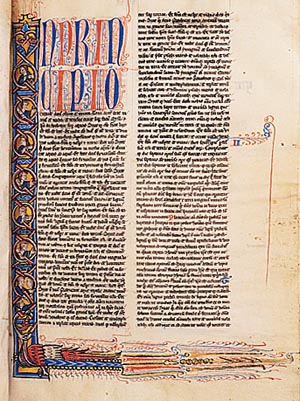
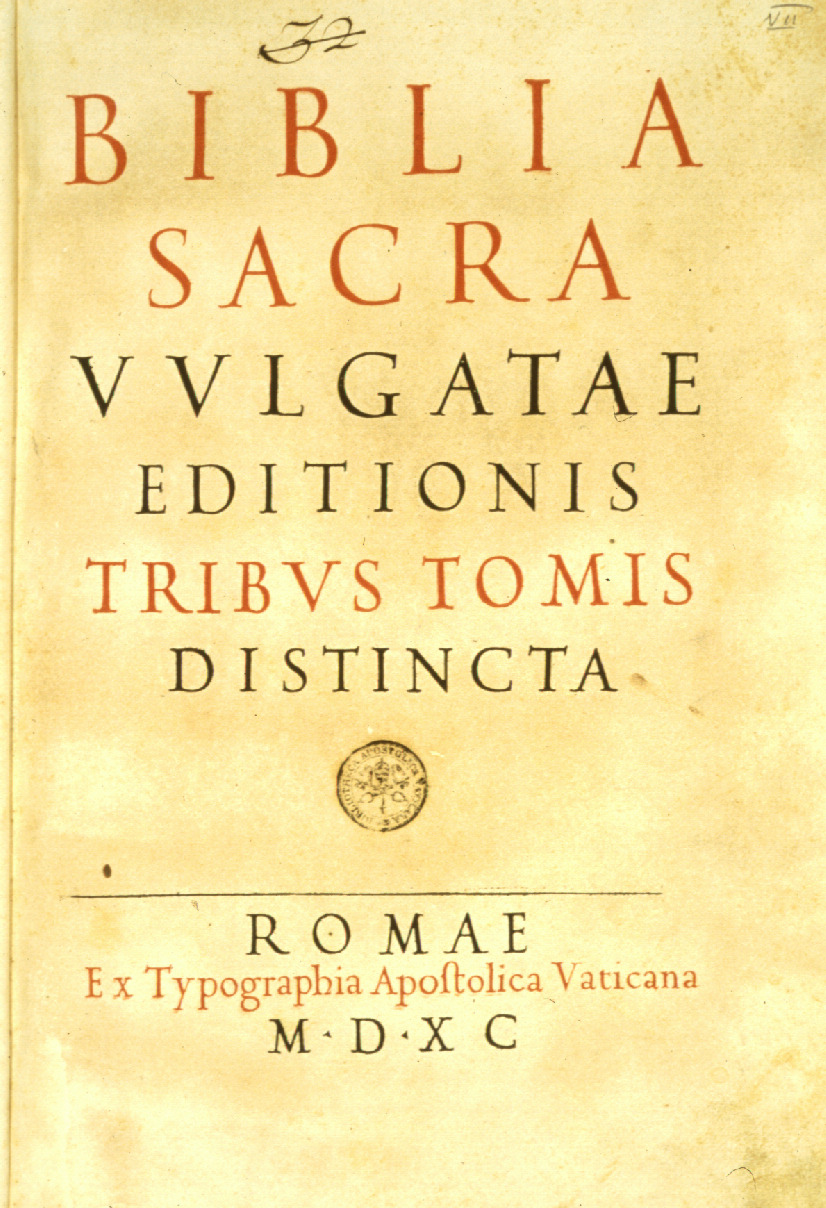
The very first Christian Bible was produced by the Catholic Church – compiled by Catholic scholars of the 2nd and 3rd century and approved for general Christian use by the Catholic Councils of Hippo (393) and Carthage (397). The very first printed Bible was produced under the auspices of the Catholic Church – printed by the Catholic inventor of the printing press, Johannes Gutenberg. And the very first Bible with chapters and numbered verses was produced by the Catholic Church–the work of Stephen Langton, Cardinal Archbishop of Canterbury.
At every Mass in the world everyday, the Bible is read aloud by the priest. In the traditional Mass there is one reading from the general body of the Bible (excluding the gospels), and two from the Gospels. In the modern Catholic Mass, there are two readings from the general body of the Bible and one from the Gospels. All Catholic homes have a Bible and the Bible is taught in Catholic schools (as is its perennial tradition).
This myth has come about because Bibles were often locked away in Churches in the past, but that was not to prevent people having access – it was to prevent them being stolen. These were hand written Bibles which were incredibly valuable due to scarcity. Furthermore, people think the Church forbade people from reading the Bible by putting it on the Index of Forbidden Books, but the Bibles placed on the Index were Protestant versions (lacking 7 books) or badly translated versions – the most famous of which is the King James Version which Catholics are not supposed to use.
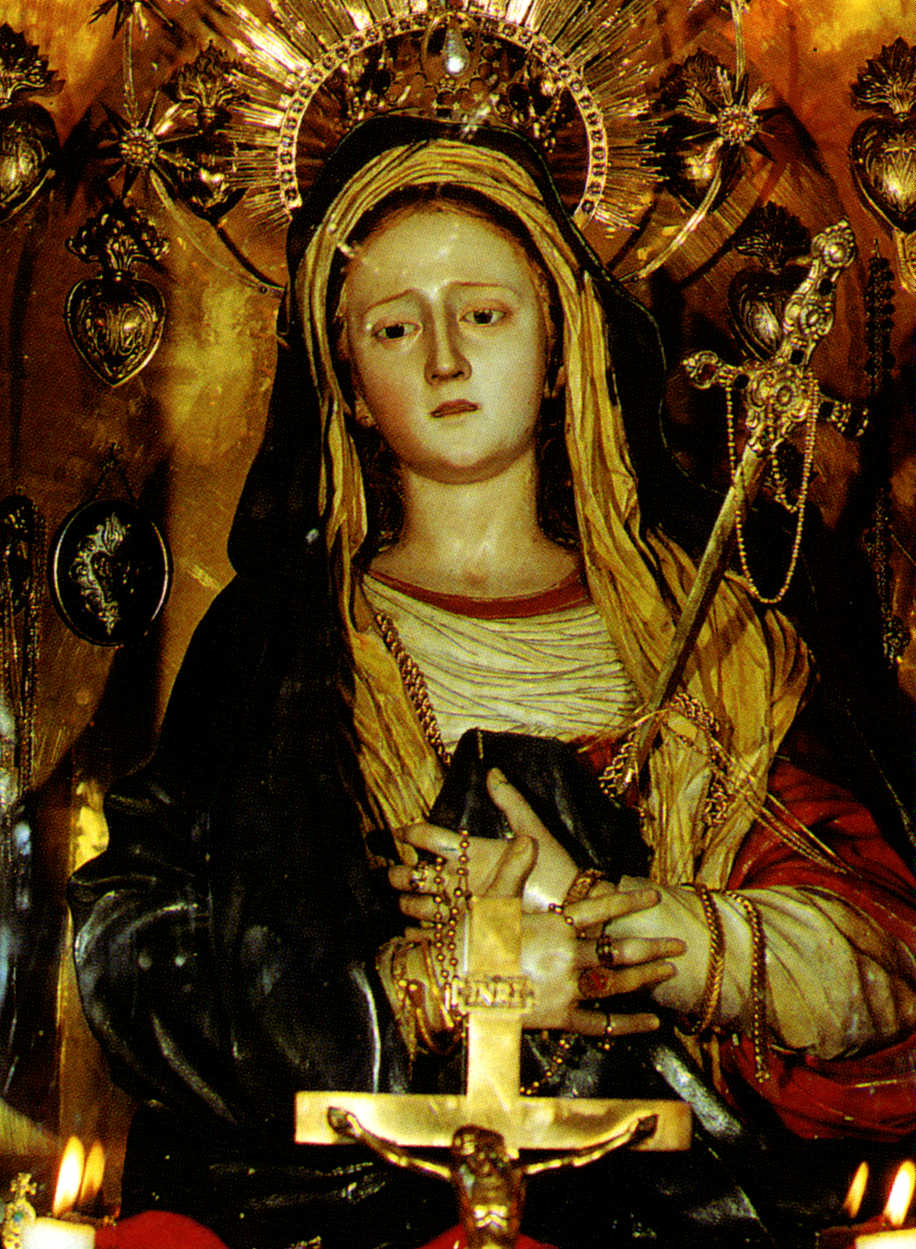
Misconception: Catholics worship Mary and are, therefore, committing idolatry
In Catholic theology there are three types of worship – one of which is condemned in the Bible if offered to anyone but God:
1) Latria – this is adoration which is given to God alone – giving this type of worship to anyone else is considered to be a mortal sin and it is the idolatry condemned in the Bible.
2) Hyperdulia – this is a special type of worship given to Mary the Mother of Jesus – it is only given to her and it is not considered to be idolatory as it is not adoration, merely reverence.
3) Dulia – this is the special type of worship given only to the saints and angels – it is also not idolatrous as it, too, is a form of reverence.
The distinction was made by the 2nd Council of Nicaea in 787 AD. The council was called to condemn the people who claimed that it was idolatrous to have statues and images of saints. The canons of the Council can be read here.
Just to clarify: “Latria is a Latin term (from the Greek λατρεια) used in Orthodox and Catholic theology to mean adoration, which is the highest form of worship or reverence and is directed only to the Holy Trinity.” – there are lower forms of worship (as is implied here). A Catholic who may kneel in front of a statue while praying isn’t worshipping the statue or even praying to it, any more than the Protestant who kneels with a Bible in his hands when praying is worshipping the Bible or praying to it. The images of saints (whether it be in statue form or painting) serves as a reminder of the holiness of the person depicted.
Misconception: Catholics aren’t Christians
In fact, Catholics are the first Christians. When reading over the early Christian writings, you can see clearly that their doctrines and teachings are the same as the Catholic Church today. You hear of Bishops, virgins living in community (nuns), priests, confession, baptism of infants, the Bishop of Rome as head of the Christian religion, and reverence for the saints. Here are some comments by the early Church fathers who were, in many cases, the apostles of the Biblical apostles:
Bishops: For it will be no light sin for us, if we thrust out those who have offered the gifts of the bishop’s office unblamably and holily. — Pope St Clement, Letter to the Corinthians 1, A.D. 96.
The Papacy: “[From] Ignatius . . . to the church also which holds the presidency, in the location of the country of the Romans, worthy of God, worthy of honor, worthy of blessing, worthy of praise, worthy of success, worthy of sanctification, and, because you hold the presidency in love, named after Christ and named after the Father” (St Ignatius, Letter to the Romans 1:1 [A.D. 110]).
Holy Communion: “This food we call the Eucharist, of which no one is allowed to partake except one who believes that the things we teach are true, and has received the washing for forgiveness of sins and for rebirth, and who lives as Christ handed down to us. For we do not receive these things as common bread or common drink; but as Jesus Christ our Savior being incarnate by God’s Word took flesh and blood for our salvation, so also we have been taught that the food consecrated by the Word of prayer which comes from him, from which our flesh and blood are nourished by transformation, is the flesh and blood of that incarnate Jesus.” — St. Justin Martyr, “First Apology”, A.D. 148-155.
Infant Baptism: “Baptize first the children, and if they can speak for themselves let them do so. Otherwise, let their parents or other relatives speak for them” (St Hippolytus, The Apostolic Tradition 21:16 [A.D. 215]).
Confession: “[A filial method of forgiveness], albeit hard and laborious [is] the remission of sins through penance, when the sinner . . . does not shrink from declaring his sin to a priest of the Lord and from seeking medicine, after the manner of him who say, “I said, to the Lord, I will accuse myself of my iniquity.” ” (Origen, Homilies in Leviticus 2:4 — A.D. 248)
From these quotes it is obvious that the practices of the modern Catholic Church are the closest to the practices of the apostles and early Christians. It should also be said that the majority of historians accept that the Catholic Church was the first Christian Church as it is verifiable from ancient texts.
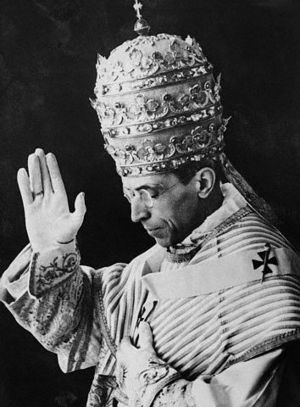
Misconception: The Pope is infallible in all things
Roman Catholics believe that only under certain circumstances is the pope infallible (that is, he can not make a mistake). The Catholic Church defines three conditions under which the Pope is infallible:
I. The Pope must be making a decree on matters of faith or morals
II. The declaration must be binding on the whole Church
III. The Pope must be speaking with the full authority of the Papacy, and not in a personal capacity.
This means that when the Pope is speaking on matters of science, he can make errors (as we have seen in the past with issues such as Heliocentricity). However, when he is teaching a matter of religion and the other two conditions above are met, Catholics consider that the decree is equal to the Word of God. It can not contradict any previous declarations and it must be believed by all Catholics. Catholics believe that if a person denies any of these solemn decrees, they are committing a mortal sin – the type of sin that sends a person to hell. Here is an example of an infallible decree from the Council of Trent (under Pope Saint Pius V – 16th Century):
If anyone denies that in the sacrament of the most Holy Eucharist are contained truly, really and substantially the body and blood together with the soul and divinity of our Lord Jesus Christ, and consequently the whole Christ, but says that He is in it only as in a sign, or figure or force, let him be anathema.
The last section of the final sentence “let him be anathema” is a standard phrase that normally appears at the end of an infallible statement. It means “let him be cursed”. The most recent pronouncement that can be seen as falling under Papal Infallibility was when Pope John Paul II declared that women could not become priests.
Misconception: The Catholic Church is opposed to science and rejects evolution
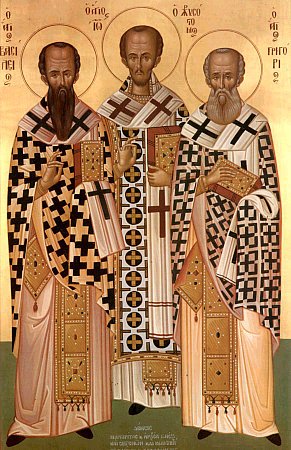
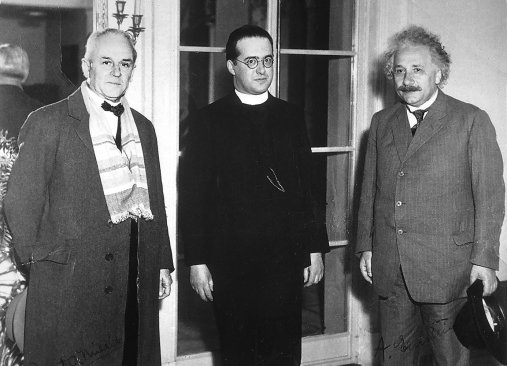
In fact, may great scientific advances have come about through Catholic scholarship and education. The most recent and interesting case is that of Monsignor Georges Lemaître (pictured above, center) a Belgian priest who proposed the Big Bang theory. When he proposed his theory, Einstein rejected it, causing Monsignor Lemaître to write to him: “Your math is correct, but your physics is abominable.” Eventually Einstein came to accept the theory.
Also, unlike many of the American Protestant or evangelical religions, the Catholic Church does not reject the theory of evolution. Right from the early days of the theory, the Church remained mostly silent on the issue. The first public statements specifically regarding evolution came from Pope Pius XII who said: “The Church does not forbid that…research and discussions, on the part of men experienced in both fields, take place with regard to the doctrine of evolution, in as far as it inquires into the origin of the human body as coming from pre-existent and living matter.”
In 2004, a Theological Commission overseen by Cardinal Ratzinger (now Pope Benedict XVI) issued this statement: “According to the widely accepted scientific account, the universe erupted 15 billion years ago in an explosion called the ‘Big Bang’ and has been expanding and cooling ever since. [...] Converging evidence from many studies in the physical and biological sciences furnishes mounting support for some theory of evolution to account for the development and diversification of life on earth, while controversy continues over the pace and mechanisms of evolution.”
Catholic Schools all around the world (including the US) teach scientific evolution as part of their science curriculum.
Misconception: Indulgences let you pay to have your sins forgiven
First of all we need to understand what an indulgence is. The Catholic Church teaches that when a person sins, they get two punishments: eternal (hell) and temporal (punishment on earth while alive, or in purgatory after death). To remove the eternal punishment of hell, a person must confess their sins and be forgiven. But the temporal punishment remains. To remove the temporal punishment a person can receive an indulgence. This is a special “blessing” in which the temporal punishment is removed if a person performs a special act such as doing good deeds or reading certain prayers.
In the Middle ages, forgers who were working for disobedient Bishops would write fake indulgences offering the forgiveness of sins (removal of eternal punishment) in exchange for money which was often used for church building. Popes had been long trying to end the abuse but it took at least three centuries for the sale of indulgences to finally end. True indulgences existed from the beginning of Christianity and the Church continues to grant special indulgences today. Wikipedia has an excellent and honest article on the abuse of indulgences from the Middle Ages. You can read it here. Here is a BBC article on a new indulgence granted by Pope Benedict XVI in 2007.
Misconception: Emperor Constantine invented the Catholic Church in 325 AD
In 313 AD, Emperor Constantine announced toleration of Christianity in the Edict of Milan, which removed penalties for professing Christianity. At the age of 40 he converted to Christianity and in 325 he convened the first ecumenical Council of Nicaea. Because of the importance of this council, many people believe that Constantine created the Church, but in fact there had been many councils (though not as large) prior to Nicaea and the structure of the Church already existed. Constantine was at the council merely as an observer and the Bishops and representative of the Pope made all of the decisions. Before the council of Nicaea, priestly celibacy was already the norm, baptism of infants was practiced (as were all 7 sacraments), and the structure of priests and Bishops was already 300 years old.
Misconception: Catholic Priests can’t get married
This has appeared on a previous list, but it is well worth including it here as well. In order to clear this one up, we need to first understand the nature of the Catholic Church. Within the universal Church there are sections (also called churches but not in the sense that they are separate) – the most common one is, of course, the Roman (or Latin) Catholic Church. Then there is the Eastern Catholic Church (not to be confused with the Orthodox which is a different religion). Both of these churches fall under the jurisdiction of the Pope and all believe the same doctrines. There are a lot of differences between the two groups but these are all in matters of style of worship and certain rules. In the Eastern Church, priests are allowed to be married – but a married priest can’t become a Bishop.
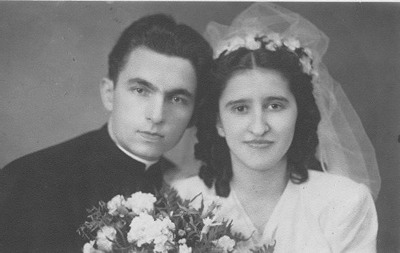
It also happens that occasionally in the Latin Church, pastors who convert from other religions such as the Church of England are allowed to become priests even though they are married, so married priests can be found in all parts of the Roman Catholic Church. Pictured above is a Greek Catholic priest and his wife. Don’t believe me? Here is proof. And here is more proof.
Misconception: The Church added books to the Bible
The Catholic version of the Old Testament differs from the Protestant version in that the Catholic edition contains seven more books than Protestant Bibles. These “extra” books are the reason that many people consider the Church to have added to the Bible, but in fact these books were considered the official canon (list of books) by all Christians until the Protestant reformation during which Martin Luther (leader of the revolution) removed them. Interestingly some of these books contain affirmations of Catholic doctrines which Luther rejected. The reason that the Catholic Church uses the Greek edition is because the apostles used it exclusively in their preaching.
Luther decided to use the Jewish Masoretic canon (circa 700 – 1000 AD) instead of the Apostolic canon. The seven books he removed were: Tobit, Judith, 1 Maccabees, 2 Maccabees, Wisdom, Ecclesiasticus, and Baruch. While initially wanting to remove at least one book (The Epistle of James, because it contradicts Luther’s teaching that faith alone is needed for salvation [James Chapter 2]) from the New Testament, Luther ultimately decided to keep the Catholic New Testament in full.
Interestingly, Hanukah is mentioned only in 1 and 2 Maccabees, which is not included in either the Jewish or Protestant versions of the Old Testament.
Misconception: The Papacy is a medieval invention
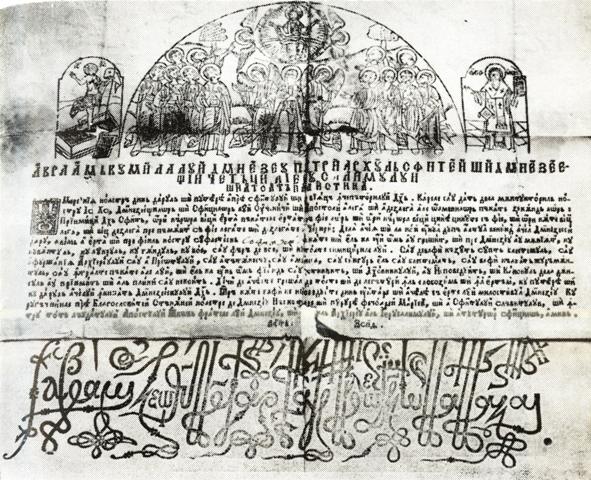
The Pope is the Bishop of Rome, and from the beginning of Christianity he was considered the head of the Church. This fact is alluded to in many of the early Church documents and even in the Bible itself: “And I say to thee: That thou art Peter [Greek for "rock"]; and upon this rock I will build my church” (Matthew 16:18). Peter was the first Bishop of Rome and he led the Church until his death in 64 AD, at which point St Linus became the second Pope. St Irenaeus mentions him here:
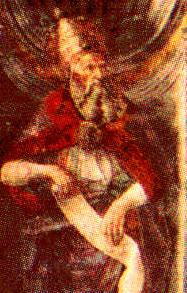
The blessed apostles, then, having founded and built up the Church, committed into the hands of Linus the office of the episcopate . Of this Linus, Paul makes mention in the Epistles to Timothy [2 Timothy 4:21]. To him succeeded Anacletus [third Pope, pictured above]; and after him, in the third place from the apostles, Clement [4th Pope] was allotted the bishopric. — Against the Heresies, 180 AD
St Irenaeus goes on to mention another six Popes and the various tasks they undertook during their reigns – such as the imposition by Pope Linus of the rule that women cover their heads in Church (a rule which, though often ignored, still exists today).


@118 Random Asian
Indeed! We atheists are licking our chops, bristling our horns, and giggling madly at how you are tearing each other’s throats over some fairy-tales! Do not read, do not compare beliefs, do not notice how contradictory they are – in sum, do not think, do not reason! And pass the popcorn, please.
Pac
You should have one of these lists about the Church of Jesus Christ of Latter-day Saints (Mormons) too. It seems a little unbalanced to have a “bizarre mormon beliefs” list and a “misconceptions about the Catholic Church” list.
@shamzahm (114): jesus is god. or rather, an incarnation of god.
thats what christians beleive
Actually, Random Asian, we atheists are just hoping you figure out your cap lock problem right now. We really could care less about your religion.
@pac (119):
Pac, I don’t know anything about you. I’m not “licking my chops”. I’m just hanging out listening to music my friend. All I know is I haven’t met you but I love you anyway. It’s that simple.
As I commented regarding the list of ‘Islamic Misconceptions’;
Contrasting the ‘perfect’ [religion of choice] ideals with the real-world exercise of this mythology is no more valid than contrasting the ‘perfect’ [other religion] with it’s real-world counterpart. There are no religious communities that live up to their own standards.
Why? Because they are based on ignorance and silly superstition. Islam, Christianity, Hinduism, Judaism, etc., etc., etc., they’re all childish and worthless.
Grow up. There is no Invisible Friend to whom you need to pray. Be responsible for yourselves and make the most of the one life you’re going to get.
Religion is slavery of the mind.
@123 damien
I was being sarcastic. Actually, I believe that there is no point in discussing with believers; they will not realize all the contradictions posed by religion no matter what. But I have the free time, and my debating skills require some training.
Besides, it’s funny to see how some debate their faiths with no deep knowledge of the facts, or based on what their “teachers” have told them without ever checking what is actually there.
Pac
Reading the comments to this list reinforce my belief that a person’s relationship with their God should be kept to themselves and their God.
I would like to add to Item 10 from the list–Didn’t part of the no Bible reading myth stem from the fact that traditionally, through the ages, the majority of the populace were illiterate, and couldn’t “read” the scriptures themselves? Hence illuminated Bibles and the abundance of visual representation in the churches.
And a kudos to Baxter….
@Baxter (44): “I think there is something to be said for the effect of the seminary system on a young man’s development. It is essentially stunting their *****ual growth, and disallowing them the natural development of their personality, and to come to grips with their urges as most young people do. They are also required to distance themselves from women, and therefore when they seek human relationships they find themselves stuck with a choice between their male elders and peers, women to whom they can offer nothing, and children under their care. For many of these men, being emotionally crippled and essentially cut off from both the realisation of childhood and the acceptance of adulthood, the attraction towards children (though perhaps innocent at first) soon becomes something unnatural and wholly abominable to normal people.”
You have made a very valid and eloquent statement concerning the perversion of *****ual desire in the priesthood that reflects my same beliefs of the stem cause. Thank-you for sharing a more clinically accurate summation of the situation, and saving me the effort of putting the theory into words.
By the same token, that doesn’t excuse the act.
And thank-you Jamie for publishing a list that strives to balance the list of Islam, and I would welcome lists that cover any and all of the other major religions of the world.
Most of this list was true at one point in history though. The church tried to keep people from reading the bible some hundreds of years ago. Indulgences were paid so people could be forgiven for their sins. (Johann Tetzel I believe)
There are others but you get the point.
Also: Interesting that you mention the fact that women should be covering their heads in church but they don’t.
Religion is the fast food of the mind, hehehe.
I’d rather have Steak ala Science!
Pac
To add on to my point about indulgences: the Pope was not trying to stop them as indulgences funded St. Peter’s Basilica.
@pac (125):
Pac, I’m not trying to “dissuade” you from what you believe. Believe in what you want. I applaud you for this. But I still love you brother (or sister) and thats it.
It goes to show how much all of us need a saviour! God is concerned about relationships, not religion! We need to realize that we are all sinners, seperated from God. No one religion has it right, only God is truth! Weigh what each religion teaches against God’s truth and you will see that God is the only one that is right. “As for me and my house, we will worship the Lord!”
Okay, to the people who think we pray to Angels, Saints and the Virgin Mary..I’d like to say, we do not pray TO them as we pray TO God.
For example “Hail Mary, full of grace, the Lord is with thee, blessed art thou amongst women, and blessed is the fruit of thy womb Jesus. Holy Mary, Mother of God, pray for us sinners now, and at the hour of our death”
In this prayer, catholics ask Mary to pray for us, because as the mother with Jesus, it is as though she has greater “pull” with God–just as we (and other Christians of different denominations) ask our friends to pray for us, we also occassionally ask Mary, Angels or Saints to pray for us.
As for homo*****uality; yes, Catholics believe that romantic relationships, and *****, should be between a man and a woman. If you don’t like it, fine, don’t be Catholic.
My parents took me to church pretty much on Easter and Christmas, and we had a bible in our house. When I was able to drive, I attended multiple churches for a while, and decided upon becoming Catholic. As you go through the RCIA process, you learn quite a bit more than one does from attending mass.
And to the people who have commented that “my catholic friends don’t read the bible” either 1) they do, but don’t feel the urge to tell you about it seeing as you disrespect their religion, or they just don’t. Which is fine, not all protestants read the bible on their own. Catholics are certainly allowed to read the bible, and sometimes even encouraged to read the weeks readings either before (to prepare for mass) or after, to ensure meaning has sunk in.
I’d like to say however, that the pedophile priests are the exception, not the rule, and the church does not defend them. Whenever a scandal such as that is unearthed, my priest says how it is such a shame that all through seminary people couldn’t see through the mans antics etc.
Though for me, religion isn’t something worth arguing about. Personally, I hate it when people attempt to convert one another. I will defend my religion if it is being attacked, or people are making wrong assumptions about it, but I will not attempt to convert or say someone is wrong.
Personally, yes, I believe in God, but I believe in a loving God who accepts and loves Christians, Muslims, Jews, Athiests, Buddhists..everyone.
Hmmm…a lot of discussion on prayer. I find all of the commentaries on “praying” or “reverence” to saints interesting. What about the sects of Christianity who believe that God and Jesus are separate? Doesn’t that count as worshipping two gods?
My respects, you have taken great pains in collecting this list, but there are some points where you are a bit lopsided. For one, you have omitted the syllabus of Pius XII, condemning science, democracy and freedom of conscience which has influenced the church until Vat II. For another, the Bible clearly says that Christ alone is the foundation of the church, “and no other foundation may be laid.” Even Catholics do not believe that Peter was more than a mere man, hence they do not believe that the church is founded on a mere man. Third, in all the Acts of the apostels you find no mention of an infallible Pope Peter in Rome, and Paulus does not pay him much respect when he debates with him in Jerusalem, where the council of Apostles decides by numbers. Fourth, what you term “the Catholic church” has, while the same in name, been often so different in character as to be almost another church, like f.i. compare the church of the Medici popes to that of the 18.th century or Vaticanum II.
Ratten, maybe I’m missing the big picture or yop are. I love you.
“you”
Great list! Thanks for making lists worth reading, JFrater.
It’s entirely true that catholics do read the bible, as kitten said, we just don’t feel the urge to tell everyone that whatever they believe is wrong.
Um hi, I commented at about 60 comments on but it’s still awaiting moderation… could you please take a look at it? (It’s long and link-full…) Thanks….
133spada27
You are right, and this question has caused much debate. The problem with theology is that it is trying to speak in words about matters which cannot be spoken of in words. As one very wise man said: “God is not a subject of our pondering.” We hardly know who we are ourselves, how can we say: “God is so and so?” From time to time the church was compelled to say: “Well, this we certainly don´t believe” – i.e. the idea that Jesus was but a human preacher, or that he was God masquerading as man, or that he was an angel etc.pp. But the modes of existence of God are quite a bit beyond our power of comprehension, so don´t be surprised if things get muddled up.
Rattenjungfer: hers the problem as I see it. It’s NOT religion it’s cynicism. Yes, I believe in evolution. Yes, I believe in the BIG BANG. But what you can’t belive is taht a person you’ve NVER met before loves you. THAT’s what faith is all about.
I’m Catholic and I’ve never worshipped a statue….wtf??
@137 Eva
I was a Catholic (and still are, because there is no way to leave this faith other to be excommunicated by performing a hideous sin); my mother and sister still are. Now I’m an atheist. During my 39+ years as a Catholic I was never requested to read the Bible. It was read during masses, only; and only after selecting specific verses. I doubt my mom, my sisters or any of my Catholic friends have read it. I have read it. Interestingly, in masses they only read a very small portion of the NT. No discussions about OT or anything that raises questions.
Whenever I have been approached by non-Catholic Christians, they have been astounded when I told them about the incongruencies I’ve found in the text. “What about the different Jesus’ geanologies in there?” I’ve asked. They didn’t know about these because they hadn’t stop to think what it’s written there.
Perhaps you’ve read the bible/qu’ran/torah/whatever, but have you read it(them), or have you read AND REASON what is written them? I have. And that’s why I’m an atheist now.
Pac
@#48
“wonder why so many self proclaimed atheists feel the need to convert people to atheism? is there an atheist bible or some sort of manifesto that requires you to win people over to Atheism? Or are you so narrow minded and critical of the idea of spirituality because you’re afraid you could be wrong and you feel threatened?”
Change the words “atheist” and “atheism” to a member of the religion of your choice, and said religion, respectively.
Add the words “a lack of” prior to “spirituality”.
POOF! makes atheism look like any other form of spiritual (non)belief.
Now, if only we atheists could get the same kind of respect for our belief system as actual organized religions do. No matter how strange, or even harmful, the belief may be — if it’s claimed to be under the guise of someone’s religion, we are expected to respect it.
So exactly why can’t religious people respect the lack of a belief as well? It’s no stranger than many religious beliefs I’ve heard of over the years.
“The Pope is the Bishop of Rome, and from the beginning of Christianity he was considered the head of the Church.”
I dont have the time to read all the comments but this is simply not true. until 800 the Bishop of Rome was nothing special.
I am always interested in why and how people dismiss any thought process, concept, philosophy or religion. In a sense we intellectually are all looking up from the bottom of a 30 meter deep well and see only a portion of the sky. Therefore each of us is limited by understanding and capacity. We tend to characterize (simplify and exaggerate) a thought process, then pick and choose the easiest supports for our points of view. We can dismiss a religion, or god or that matter atheism as problematic and choose to avoid understanding the varied fruits of the thought process. We kill it in our minds and avoid it in our hearts. I have often constructed tremendous walls in my mind that delivered a sense of certainty but in reality stopped my further learning.
We can arbitrarily dismiss The Catholic Church for real or apparent problems but can we also dismiss, the contributions of so many that fully attribute it as the fount of inspiration such as St. Augustine, the Church Fathers, Mother Teresa… ?
We should rather engage in understanding an institution that has played and continues to play a significant role in the molding western thought and be aware of the filters that may taint a clear understanding.
This is an interesting list.
My comment is on the comments. After reading the comments from the misconceptions of Islam and the misconceptions of christianity prove is
1. Most people who post comments on the internet are very liberal minded
2. Most people who post comments on the internet formed their opinions in classrooms taught by liberals, and not by any real world experience.
3. Most liberal posters are hostile to opinions that don’t match theirs.
4. Most liberal posters are happy with comments that appear to support their opinions but really are sarcastic slaps at the ignorance and bigotry of liberal commentators.
5. Most comments are posted by people who hate George Bush.
6. When people give an opinion about why they hate George Bush they stick to talking points, Iraq, war on terror, when in reality their dislike was formed by a liberal American press who hated Bush because he belongs to a political party that is believed not to give handouts and taxpayer dollars to everyone.
7. Most people don’t know George Bush sent billions of taxpayer money to help Africa and South America.
8. Most liberal American’s (for those of you from other countries who are ignorant of this) did not like Bush or republicans because he did not give billions of dollars to the right people, inner city activits and unions.
9. Barack Obama is thought of as a great man here becuase he gives billions of dollars to inner city activits and unions.
10. The truth is you would be saying something completely different if Bush gave billions to inner city activits and unions.
11. Oh and most of you are not old enough to know
Kennedy set up puppet governments in central and south america, Kennedy used the CIA to run covert operations, Johnson faked an event to escalate vietnam, Kennedy did not support civil rights, Obama does not support gay marriage.
12. Finally most of you (particularly if you are young and from another country) don’t realize the real reason modern liberals hate Regan is due to a belief he hates gay people because he wanted to close bath houses in SanFrancisco (Run by Diane Feinsteins husband) where AIDS was being rapidly spread.
One of the reasons priests cannot marry now is that in history, they could. However, land rights stayed with the owner of the land (the monk or priest) and his family. The church lost significant land and assets upon a priest’s death because they went to his children and survivors. Hence, marriage and child bearing were no longer permitted.
@Greg (93):
your missing my point i’m agreeing he can believe what he wants – thats his choice. Just don’t be so arrogant to tell me point blank that the God I beleive in doesn’t exist because you can’t prove it. I don’t give a sh!t what anyone believes so long as they respect my right to beleive in my God.
I love the list, and yes I am a hard-core cradle Catholic. I also go to a very good Catholic university where the biology department does teach that evolution occurs and the Earth is over 6,000 years old (even the nuns agree with that).
For starters, let’s talk about the Bible. There are lots of different literary forms throughout the Bible: poetry, history, letters, stories, etc. But all convey a truth about God, Jesus, humanity, and the world. Therefore, Genesis is not a history or science textbook, it never claims to be one. All books in the Bible are inspired, which means they have a human author and a divine author, but were written in a certain point in history as a part of history. The Catholic Church used the Septuagint (Greek translation of the Old Testament) from its earliest days. It was the version Jesus himself used. The Jewish leaders rejected it in 100 AD because Christians were using it. So when the Protestants began to use the Hebrew version, they weren’t going back to the earliest foundations of Christianity.
Locking up Bibles wasn’t to keep people from reading them, most people in the middle ages couldn’t read anyways. They literally cost a fortune. People heard the Bible weekly at Mass, parish festivals often had plays that acted out various Biblical stories.
Catholics and Christians: There was no need for distinction between different churches because until 1054 there were no theological differences between them. Even in 1054, the differences between Catholicism and Orthodoxy remained (and still remains) small.
Papal Infallibility: Refer to the Bible: Jn 16:12-13
“I have much more to tell you, but you cannot bear it now. But when he comes, the Spirit of truth, he will guide you to all truth.”
We trust in the Holy Spirit to lead the Church in the ways of truth. We believe that God the Father would not want his children to be lead astray especially in matters pertaining his own Son.
Homo*****uality: The Church condemns homo*****ual acts, just as it condemns any extramarital *****ual acts. Yes, some Catholics may be personally homophobic, but the Church is not. We believe the main purpose of marital relations is to produce children, yes it is also enjoyable. However, biologically, the purpose or ***** is children.
Here is a quick crash course on morality: that which is irrational cannot be moral. Since the goal of a *****ual act is children, then to deny the goal of that act would be immoral. But to have other goals beyond that of children does not contradict the original goal. If you really want to go into that, just ask. Therefore, all are called to live celibate unless called to holy matrimony.
Any more questions?
This is absolutely rediculous:
“Then there is the Eastern Catholic Church (not to be confused with the Orthodox which is a different religion)”
The Eastern Orthodox Church is THE “One, Holy, Catholic, and Apostolic Church” mentioned in the Nicene-Constantinoplitan Creed, the Catholic Church broke off from the Church in 1054 AD.
Good list, jfrater. You obviously did a lot of fine work on it, and it is much appreciated. It explained a lot to me, plus I learned a few new words.
I do not think that I will get involved in the debates, as I am a non-religious person. However, I do enjoy reading about it. And there have been some well thought out comments today, and some really dumb ones from very immature people. All in all, a good read with a few chuckles.
Also:
**Then there is the Eastern Catholic Church (not to be confused with the Orthodox which is a different religion)**
100% factually inaccurate.
Eastern Orthodoxy and the Roman Catholic Church both sprang from the “catholic” church that started up in the first days of Christianity. The Eastern Catholic Church was established to try to take any primacy that the Eastern Orthodox Church would claim away from them.
Eastern Orthodoxy split off from the catholic church around the time it became the Roman Catholic Church.
**The reason that the Catholic Church uses the Greek edition is because the apostles used it exclusively in their preaching.**
Also wrong. The Protestant Old Testament the same thing as the Hebrew Bible, pretty much. The Roman Catholic OT is based on the Torah + additional books added by Western church leaders to try to bolster the claims they were making concerning their primacy and practices.
@fredlester, American here, not liberal, former Republican. I hate George Bush because he was an idiot and an embarrassment. He started an unfounded war in Iraq to avenge his father and diverted attention from the search for Osama Bin Laden. He made his decisions based on religious convictions that were out of touch with what actual Americans believed or wanted. It has nothing to do with his funding of inner city programs and more with the fact that he banned stem cell research because he thought God didn’t like it. His disinformation on global warming and corporate responsibility is shameful. The Republican party has become a joke run by the religious right – zealots on par with some Islamic whack jobs – and is completely out of touch with the tenets of Republican philosophy. We have fewer freedoms under Bush’s policies than under any previous liberal administration. One of the main reasons liberals hated Reagan was because of his “trickle down economics” policy that rewarded the rich and burdened the middle class with enormous debt. When you are finished talking out your ass trying to represent what “real” Americans think, consider that our national debt was balanced under Clinton and immediately went sky high under Bush. I hated Clinton too, btw. By the time the politicians get to the top of the pyramid, they are all so out of touch that voting is really just choosing the lesser of evils, not selecting the best person for the job.
Mary was not born without sin.
what?!?!? that's simply not true.
AND, Mary most certainly sinned in her life, it’s right there in the Bible, when she tells Jesus to make water out of wine, she is breaking the “do not tempt the Lord thy God” command.
@FAT*****Y (153): I think it was Jesus who granted the ability to forgive sins to men:
And for the record, the Church does not teach that Mary was a virgin birth – it teaches that she was a virgin who GAVE birth to Jesus. The immaculate conception means born without sin, not born to a virgin mother.
@FAT*****Y (159): Are you serious? Do you think that Jesus would have TURNED the water to wine if it was to help his mother sin?
Your comment 156 shows that you have simply ignored the evidence given. The Hebrew version of the Bible did not exist for 700 years AFTER the Catholic Church formed the official canon from the Septuagint (which WAS used by the apostles as can be seen by their scriptural quotations). The text used by the protestants did not EXIST for 700 years – how can you accuse the Church of adding to something which wasn’t there?
Essentially, the Hebrew version was decided by removing anything from the Jewish canon which was not written in Hebrew – so they removed parts of the Old Testament. I even pointed out that Maccabees contains the ONLY biblical references to Hanukah. If you are honest and look at the history, you will find that the protestants removed books – the Catholics didn’t add any.
Yes, the emphasis being “sins”, i.e. people who said, “I am a sinner against the Lord.”
Not “come into the box and tell the priest your dirty little secrets”.
You can’t cherry pick verses and make them what you want them to, you have to look at the entire story of Jesus to know what He was all about.
Did Jesus ask people who called on Him to admit what their sins were, or did He call on them to admit that they had sinned and that they wanted to be freed from their sins by His power? It’s pretty clear.
FAT*****Y: you are doing the very same thing you accuse me of – you are taking the bits you like and ignoring the rest. Jesus said “whose sins you forgive they are forgiven” – he didn’t specify how in that text but we know from the early Church fathers that people confessed their sins specifically to the apostles and Bishops appointed by them. The Bible alone does not give us all the information that was given to the apostles – but their recorded actions tell us a lot.
“Confess your sins in church, and do not go up to your prayer with an evil conscience.” Didache (70 AD – note: at least a couple of the apostles were still alive at the time of writing). This doesn’t say “confess that you have sinned”, after all, the Bible says that all men are sinners; what the Didache says is “confess your sins”. The early Christian writings show us that people mentioned specific sins because there were specific penances for different sins.
@mastermind…
As i understand it, the word ‘catholic’ derives from greek, it means ‘universal’. As opposed to ‘orthodox’ – a competing faction in its early days – which means ‘correct’.
FAT*****Y:
There is an Eastern Rite Catholic Church which is different than Eastern Orthodox Churches. They have the same beliefs as the Catholic church but use the Eastern style mass.
The Bible: The Septuagint was translated by Jews in Alexandria between the third and first century BC, well before Jesus and the Apostles came along. The Hebrew canon was not closed until 100 AD. Greek was the common language of the day, (like Latin, French, and now English is), so a Greek translation would be more readily available and understood than a Hebrew one would be.
Mary: At the wedding of Cana: Jn 2: 3-5 * 3 * When the wine was gone, Jesus’ mother said to him, “They have no more wine.” * 4 * “Dear woman, why do you involve me?” Jesus replied. “My time has not yet come.” * 5 * His mother said to the servants, “Do whatever he tells you.”
I don’t see how you construe this as a sin. Mary tells Jesus “Hey, we’re out of wine” not “Transform this water into wine”. She is not testing or tempting him. She then tells the waiters to do whatever Jesus tells them to, so if Jesus did not want to do it he could have sent them away.
jfrater: you are now one of my favorite people. Thanks for knowing you Catholic Doctrine and Canon!
Great List! I’m not going to read the comments on this one, mostly cause I’m afraid I’ll get angry.
But, as a Catholic, this really clears up a lot of things for people. It’s much appreciated.
@drshady (21): Yes, you are exactly right. I don’t get why this is listed as a misconception. Priests take a vow of celibacy. In the parish where I grew up one of the nuns at my school became pregnant. It turns out a priest was the father to her baby. They both had to give up their vocations in order to marry.
I respect the beliefs of those who have faith in God/Gods or those who do not, and yes, Catholics too; but as a former Catholic it troubles me that priests aren’t typically allowed to marry. If the Catholics base this on Biblical verses then why does the Cathloc Church ignore the following passage? – “Now the Spirit speaketh expressly, that in the latter times some shall depart from the faith, giving heed to seducing spirits, and doctrines of devils; Speaking lies in hypocrisy; having their conscience seared with a hot iron; Forbidding to marry, and commanding to abstain from meats…” (1st Timothy 4:1-3).
Before I get myself into a war of bible passages … yes, yes I realize that the bible has numerous contradictory passages about many subjects.
@ac (103): and @kitten (132): Where kitten says, “… catholics ask Mary to pray for us, because as the mother with Jesus, it is as though she has greater “pull” with God–just as we … ask our friends to pray for us, we also occassionally ask Mary, Angels or Saints to pray for us,” To me it’s still the same as praying to dead people(Saints) and asking them to pray to God on one’s behalf. But please understand that I respect your choice to believe this. As for me it strikes me as odd.
@Moonbeam (168): I see you name alot on these lists.Are you some sort of internet buff?
@Gimmemore (170): No – but I think I’m addicted to Listverse! Yikes – maybe I better give it a rest!
debating about yours and other peoples beliefs is perfectly fine, so long as its done in a polite, decent way. the arrogant, overly-smug way some people here are talking down the beliefs of others is not only unpleasant but, frankly, stupid. people see the world differently. too me socialism is obviously right, women are obviously more attractive than men and the hitchhikers guide is obviously the pinnacle of human achievement. others will believe differently, and, although i might never understand why, i can appreciate that. religion is just the same. for some it seems obvious that only some superior being could have created us and everything around us. for others this is just too irrational. fine. its good to debate this. but don’t act like a dick whilst you’re doing it!
good list btw
are we going to get a series, or is it just a buy one get one free kind of thing?
Great site, I now have you bookmarked to come back again.
@Moonbeam (168): As you can see in the item itself, the tradition of celibate priests is very ancient – dating right back to the apostles. As for the quote from 1 Timothy, that is a reference to the Gnostics, the Marcionites, the Eneratites, and the Manicheans – all ancient heretical sects which taught that ALL marriage and meat eating was bad because of their mistaken belief that all things of the flesh were evil. Obviously there are parts of the Bible (even written by St Paul who wrote 1 Timothy) that recommend abstinence and celibacy. When read together the meaning is more obvious.
As for praying to the dead, here is a quote from Origen:
“But not the high priest [Christ] alone prays for those who pray sincerely, but also the angels . . . as also the souls of the saints who have already fallen asleep” (Prayer 11 [A.D. 233]).”
Praying to angels and the dead (saints) was very common in the early Church – and still is obviously
Here is another quote:
“[The Shepherd said:] ‘But those who are weak and slothful in prayer, hesitate to ask anything from the Lord; but the Lord is full of compassion, and gives without fail to all who ask him. But you, [Hermas,] having been strengthened by the holy angel [you saw], and having obtained from him such intercession, and not being slothful, why do not you ask of the Lord understanding, and receive it from him?’” (The Shepherd 3:5:4 [A.D. 80]).
That quote from the Shepherd of Hermas demonstrates prayer to angels.
@WiseMenSay (172): I like the “buy one get one free” *****ogy
I will probably do more in time – I am particularly keen to do an atheists one. But for now, we have had a rather religion-heavy week so I will concentrate on lighter subjects for a few days
@DJG (96): Obviously I was rounding for convenience. The actual day on which the hierarchy of the Church was formed is traditionally considered to be pentecost as that is when Jesus gave the apostles their powers.
@Gimmemore (169): When I saw your comment, I saw “Jewelry” instead of “Jewry”.
@Moonbeam (171): Never give it a rest! I freely admit my addiction and hope they never come up with a cure.
@norkio (148): That is a myth. Priest’s property always belonged to the Church – their children did not inherit (nor do they now when a priest is married in the Eastern or Western Church).
As has been previously mentioned, clerical celibacy existed from the very beginning of the Church:
“For there are eunuchs, who were born so from their mother’s womb: and there are eunuchs, who were made so by men: and there are eunuchs, who have made themselves eunuchs for the kingdom of heaven. He that can take, let him take it.” — Matthew 19:12
That quote shows Jesus commending those who have chosen to remain celibate for “the kingdom of heaven”.
@Moonbeam (171): I agree with oouchan: listverse is a healthy addiction – so don’t worry
Christian Jews use the same OT that Protestants use and consider the Roman Catholic OT to be non-canonical.
@jfrater (175): ta
tbh, i’m surprised there hasn’t been a cricket list up yet this summer. thought it might seem appropriate, any chance of one?
sorry, bit off topic
@Gimmemore (181): Wow…Way to take a joke out of context there. Uptight a little? It was a joke which you failed to see. Nice language.
@174 jfrater
Hmmm… as I have said, Peter was married, according to the gospels. What happened to her wife. We don’t know. Did he keep away from her, did he “divorced”, did they live together happily afterwards? We don’t know, because nothing is said about Peter’s later in that regard.
What about the apostles? We don’t know. Oh, sure, we have heard about their deaths often times, but there are no historical records supporting most, if any of these; much less about the life they had after the supposed facts in the NT. If you have sources relating these details, I’ll love to see them posted here. But the issue is that there is no way we can say that “the tradition of celibate priests is very ancient – dating right back to the apostles”.
As for Origen, well, wasn’t he expelled from the church and branded an heretic? He also castrated himself, according to Eusebius, following Matthew 19:12 as per a personal interpretation, or to be able to better reject the attention of women, for he was very good looking.
Quite a character, wasn’t he? Should we follow his example praying to dead people and/or to castrate ourselves not to fall to lust?
Pac
Pac
And Paul’s comments on celibacy are very radical; he said that everyone, that is, everyone should maintain celibacy his whole life.
Pac
@174 jfrater
I have just checked, and The Shepherd of Hermas is an apocryphal book. Therefore, whatever it says is not part of Catholic canon.
Pac