We have recently presented two lists of fascinating factlets (a word I am still not entirely convinced is real) but, in light of the popularity of both bizarre lists and fact lists, we have put together this special list of factlets which are from the dark and weird recesses of history and society in general. Be sure to mention your own favorites in the comments.
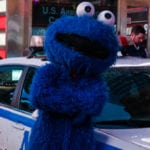
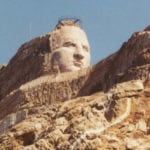
1. Pareidolia (pictured above) is the psychological phenomenon in which people see shapes or hear sounds which they consider to be significant when they are not (and in some cases, don’t exist at all). The most common example of this is the alleged hearing of phrases when playing records backwards. This is also frequently the cause of so-called miracles in which religious figures appear in toast, or clouds, or stains on every day objects.
2. Gleeking is the odd term used to describe the ejection of saliva from beneath the tongue either accidentally (when yawning, for example) or intentionally (the intentional forcing of saliva from the glands requires much practice). According to Wikipedia, gleeking can be induced by pressing the underside of the tongue against the palate, then pushing the tongue forward while simultaneously closing the lower jaw and moving it slightly forward. Despite practice I seem to fail at this – if anyone manages it let us know.
3. The Hawaiian language requires only twelve letters (and the apostrophe symbol which refers to the glottal stop in words like Hawai’i – this is called the ‘okina.)
4. Believe it or not, it is possible to accidentally plagiarize something. Cryptomnesia is a memory bias in which a person believes they have conceived of a new idea when in fact they are simply remembering someone else’s idea. Sometimes this even finds its way into literature: “Friedrich Nietzsche’s book Thus Spoke Zarathustra includes an almost word for word account of an incident also included in a book published about 1835, half a century before Nietzsche wrote. This is neither considered to be purposeful plagiarism nor pure coincidence. Nietzsche’s sister confirmed that he had indeed read the original account when he was 11 years old.”
5. Clinical lycanthropy is the very rare psychological disorder in which a person believes they have been transformed into an animal. This can result in the person experiencing hallucinations and mimicking the actions of the animal they think they have become.
6. Did you know that santa has a special friend that travels with him? His name is krampus and he beats people with sticks – especially females. He is pictured above. The story of the krampus has been used for centuries to frighten children into behaving before Christmas.
7. A surprisingly large number of people believe in the Ancient Astronaut theory in which aliens are said to have come to earth in pre-history and given man knowledge (or, in some cases, to have bred with man to give us intelligence). Some proponents of the theory believe that all major religions on earth were started by these visiting space-creatures.
8. Mary Toft was an English woman from Godalming, Surrey, who in 1726 became the subject of considerable controversy when she tricked doctors into believing that she had given birth to rabbits. According to contemporary reports, “[Male midwife John Howard] delivered “three legs of a Cat of a Tabby Colour, and one leg of a Rabbet: the guts were as a Cat’s and in them were three pieces of the Back-Bone of an Eel … The cat’s feet supposed were formed in her imagination from a cat she was fond of that slept on the bed at night.” Later Toft seemingly became ill again, and during the next few days delivered more pieces of rabbit.” Her deception was eventually uncovered and both she and the medical profession were ridiculed.
9. Hyperthymesia is a condition (known to exist in only four humans so far) in which a person retains an almost perfect memory of everything they have experienced. A hyperthymestic person can be asked a date, and describe the events that occurred that day, what the weather was like, and many seemingly trivial details that most people would not be able to recall.
10. Intrusive R and Linking R are pronunciations of the letter ‘r’ in English dialects that don’t generally pronounce a final ‘R’ (such as New Zealand English). For example, in these dialects, when saying “don’t go far” – the word “far” has a silent ‘r’ – but the ‘r’ is pronounced in the sentence “he is far away”. This linking ‘r’ smooths out the phrase. Intrusive ‘r’ is when an ‘r’ is added where one doesn’t exist at all – as in the case of “Africa or England” – this would be pronounced “Africar-or-England”.
11. Zebroids are hybrid animals involving a zebra and either a donkey or a horse. Zebroids physically resemble their non-zebra parent, but are striped like a zebra. The stripes generally do not cover the whole body, and might be confined to the legs or spread onto parts of the body or neck. Depending on the hybrid, they take different names such as zorse, zonkey, zebrass, zedonk (pictured above), etc.
12. Crikey steveirwini (an air-breathing land snail) is the only species in the genus Crikey. The specific name steveirwini is in memory of wildlife expert Steve Irwin. The genus name is a favorite exclamation of Steve Irwin’s, “crikey!” being an Australian minced oath.
13. Shingō village (Japan) claims to be the last resting-place of Jesus, buried in the “Tomb of Jesus.” According to the local lore, Jesus traveled to Japan at the age of 21, where he studied theology for 12 years, after which he returned to Judea at the age of 34. He did not die on the cross at Golgotha. Instead his brother, Isukiri, took his place on the cross, while Jesus fled across Siberia, Alaska, and finally to Mutsu Province, in northern Japan, where he became a rice farmer, married, and raised a family near what is now Shing ō.
14. The Swedish Empire (which included Finland at the time) planned to change from the Julian calendar to the Gregorian calendar beginning in 1700 by omitting leap days for the next 40 years. Although the leap day was omitted in February 1700, the Great Northern War began later that year, diverting the attention of the Swedes from their calendar so they did not omit leap days on the next two occasions, causing 1704 and 1708 to remain leap years. To avoid confusion and further mistakes, the Julian calendar was restored when, in 1712, one extra leap day was added, thus giving that year a 30th of February.
15. For our final entry we have a sentence – but it is a special sentence. Most people are familiar with the famous “buffalo buffalo buffalo….” sentence – but here is another one: “James while John had had had had had had had had had had had a better effect on the teacher” – this is a completely legitimate English sentence. My challenge to you is to put in the correct punctuation to make it understandable. I also challenge you to not look it up!


@Firefly (114): hmm i was writting about aspects that are so different in all the cultures around the globe( language written and spoken, popular beliefs and maybe religion) but i arrived to the conclusion that once a connection between two cultures is made this will change irreversibly their own evolution(Kinda like a gene that was recently discovered that had the property of making impossible to return to a previous state once a mutation has occured). Even after you separate those cultures the changes will still remain in that society. So a few hundred years wouldnt mean a lot. I became interrested though in unusual myths that exist around the globe e.g. The great flood. You have it in the bible but i remember a documentary about it and it speaks about aboriginal australians and the fact that they have a myth like that one in their culture.
All this talking about anthropology makes me look into claude-levi strauss to see if he mentions about this. Luckly the holidays are getting closer. Unluckly i have my exam period but just doing math all day long is boring and i feel like a moron in this discution( hate it when it happens)
ps i
The logosphere theory is kinda weird, but it may be worth looking into.
James, while John had had “had”, had had “had had”; “had had” had had a better effect on the teacher.
haha. gleeking. i can do that. sometimes it happens on accident but most times it isnt. i can shoot the saliva way far. it helps to drink water before trying
@Randall (107):
It was more than just Egypt where these drawings appeared. Australia, Peru and other places as well. All of these civilizations drew pictures of themselves with aliens or at least what we today think aliens would look like.
Watch “Secret Space 2″, it’s interesting and talks all about this stuff.
@Arsnl (121): genetically, there is little diversity amongst humans so we’re all pretty much the same. Therefore it doesn’t really surprise me that we sometimes get ‘coincidences’ and other weird things. Mythology is another one of my interests and it’s surprising how often the same themes and even similar characters.
The more I study these things the more fascinated I become and the more complex I realise we really are.
I doubt we’ll ever fully understand how we work, most likely because we’ll end up driving ourselves to extinction before we get the chance.
@Woot, while you are surely have a very qualified opinion because of your studies, I would like to point out that what you are saying about these supposed cases of hyperthymesia being extreme OCD cases is not entirely true. I have recently read Jill Price’s autobiography “The Woman Who Can’t Forget” and she gives a lot of medical background to her condition, including quotes by her doctors (some of which are leading specialists in the field of memory research, neuropsychology etc). Before her condition surfaced (which was in her early adolescence) she already had a remarkable memory and she certainly did not have OCD, in any way, shape or form. After the condition started growing, she wasn’t OC either. Over the years, her condition has caused her to be very attached to certain objects, places or people but that isn’t OCD in the strictest sense of the word. And if you do wanna use that term, it’s only a very mild form of OCD. I think the operative words in your comment were “brief discussion” – the problems of people with hyperthymesia are much more complex. And if anything, the condition may lead to OCD, not the other way around. I recommend Price’s book, it’s a fascinating read, without dumbing the medical aspects down.
In regards to #10
I never realized that us Bostonians so much in common with New Zealanders! I never understood why we ignore the “r” in “car” and add one at the end of “idea(r)” and area(r)”!
@67 Astraya:
The version of Saint Nicholas you described is the story/event around Sinterklaas, which is the 5th of December in mostly the Netherlands. It’s actually said that the idea of Father Christmas (“Kerstman” in Dutch, ‘Christmas man) came from Sinterklaas (who is an old man on a horse xD). Sinterklaas has helpers which are called Zwarte Piet (Black Peter). Zwarte Piet basically checks (the old version is that he goes up a roof and looks down a chimney) if children have been naughty, and if they have been, Zwarte Piet will take them back to Spain (where Sinterklaas + Zwarte Piet is said to come from). If children have been good, on the 5th of December children will get presents from Sinterklaas & Zwarte Piet.
It’s my favourite holiday =)
Anyway, I always love these little fact lists. I love trivia!
Thats too funny. I have been a “gleeker” for the past 20 years. I can get 2 very long continuous streams for a few seconds. sour condies work really well to get you going or just biting the very tip of your tongue, not too much now it hurts.
@Firefly (125): Can you tell me a of an irish myth that is trully unique. That would be quite an interresting to find out. I think i found out one in my culture( im not french): there are 3 shepherds and two are planning to kill the other so they can take all of his sheep. But the funny part is that the one to be killed is being warned by one of his sheep( a super sheep aparently) and now he is telling this sheep what to do after he is gone. Folklore is pretty interresting too it talks about your culture and sometimes its counter intuitive( why the hell didnt that guy run away)
ps: it has been quite an interesting chat this one:)
JFrater, your “lists,” make me want to explore deeper into the subjects your list present.
FYI: Here is a website of Man (BRAD WILLIAMS) this is/has Hyperthymesia:
http://www.unforgettabledoc.com/
@Joanne (110): i just know that france is separated in france metropolitaine et DOM-TOM and that slice of antarctica is part of the dom-tom. Im no familiar with what exactly that part of antarctica is but i know i really think its part of france :-p
@Taylor (124):
Calliope specifically mentioned the glyphs of Egypt and the Maya, which is why I only addressed those two.
Anyway…
This is all just a rehash of “Chariots of the Gods” and “In Search of Ancient Civilizations” and suchlike, all of which were done over 30 years ago. The premise is that because we see odd things in ancient carvings, drawings, and glyphs, that they must fall to OUR modern interpretation. This is NOT scientific nor is it valid.
Man is a symbolic creature; he lives by metaphor and representation. All these modern-day “ancient astronaut” theorists are doing is taking symbols out of their context and interpreting them from a MODERN, and thus highly inappropriate and anachronistic, point of view, which is itself relying on symbolic representation. We might see flying saucers in these drawings, or beings in space helmets. The ancients probably saw something completely different and meant something completely different.
Interpretation is a tricky thing. We see this even in our own modern world, where symbols mean all kinds of different things to different people. Even simple gestures of the hand or movements of the head can have different meanings in different places, to different people.
The context in which these drawings/carvings, etc., are found (assuming there IS a context) MUST be taken into account. To ignore it is simply bad science, or no science at all.
In Peru, for instance, there is Tihuanaco, which is I assume what you are talking about when you refer to drawings in Peru. There are carvings at this site that have been interpreted by “ancient astronaut” theorists to depict all manner of advanced beings, etc. But they simply don’t hold water. Now, the inhabitants of the city apparently had no system of writing, so we can’t know for sure what they meant to depict. But which is more valid? A symbolic, metaphoric, spiritual interpretation for various god images and mythological totems? Or the idea that they saw advanced beings from space and tried to depict them? Which makes more sense? Which is more likely? It’s Occam’s Razor. The more likely is that they are stylized mythological depictions in varying degrees of metaphoric representation–not pictures of alien beings.
@nyota0uhura (126):
While I cant really say anything about the book as I have not read it, I can say some things about OCD. It can happen at any age and does not need to manifest itself in physical form so actually it could very well be that she had OCD as a child and it manifested itself as an obsession over her daily activities. So I dont know how you can say with certainty she did not have it as a child. There are children with OCD. Her obsession is with the past, her compulsion is to go over it nonstop.
If you read the article I presented (as its not just me saying this but qualified specialists and neuroscientists) she had obsessive behaviours as a child and the brain activity indicates OCD. The listerverse article is incomplete because it does not include this information, even if it might be a tad controversial.
@nyota0uhura (126): I also recommend you the November 2007 issue of National Geographic where they explore another case of “Perfect memory”, here it´s “AJ” who also shows signs of OCD. It´s hard to determine if one condition leads to the other, but the truth is they have a high correlation.
Regarding the Pareidolia issue, I think there´s a confusion among the commenters between it and some of the Gestalt principles.
Finally I´d like to openly challenge all LV gleakers to a precision AND distance competition.
@psychosurfer (135): i really have a difficult
time trying to find out where is the confusion. I think its a tendecy of the brain to organise things
@psychosurfer (135): @Arsnl (136):
My understanding is that Gestalt merely describes this phenomenon… it doesn’t EXPLAIN it. Pareidolia, then, as a concept, is reflective of Gestalt… but it is also an ANSWER, in a sense, as to why we have this tendency.
Or well… if not an “answer” per se—it suggest an answer—which is that we are all hard-wired to recognize imagery via by patterning.
I can gleek
I didn’t know it had a name, though… ‘Gleeking’. Hehehe!
@Randall (137):
Yeah, okay Randall… sorry, that last sentence should read, “…which is that we are all hard-wired to recognize imagery via patterning.” NOT “via by.”
@Randall (133):
You have lot’s of arguments but I’m not sure where you stand on the subject. Do you think there’s a possibility aliens once came to earth way back when based on the evidence, or is there no chance and every argument from all those movies can be proved false?
We might see eye to eye on this one and there’s no point getting into an argument if you agree with someone.
@Randall (139): this is purelly a grammatical question. No funny business: shouldnt it be “it suggests”
@Taylor (140): so a mighty civilization came down from heaven and all we got was a drawing of a light bulb. Damn not even a really tricked out space age iphone??
@Arsnl (141):
Haha funny you should ask that, in that documentary I watched it explained how aliens can communicate telepathically and wouldn’t even need some tricked out space age iphone haha.
That would have been nice of them though to leave something sweet like that with us, if they came at all I guess.
@ number 15: There’s a similar tonguetwister I’ve found in french (though not quite so epic as the examples in the list)
“Si ton tonton tond ton tonton ton tonton sera tondu”
translating as: if your uncle shaves your (other) uncle, your uncle will be shaved. Note that ‘tond’ and ‘ton’ are pronounced the same.
Very nice list
I always enjoy random factlets!
@Arsnl (136): @Randall (137):
I think the difference is based on the Complexity of the representation, while Gestalt principles are simple, universal and innate, Pareidolia is a process that is influenced by peoples´ experiences and beliefs so it represents a more complex algorithm.
This is *****og to the distinction between sensation and perception.
Whey, I go to 6th form in Godalming! Nice to know a bit of history about the town!!
Great list BTW
@Taylor (142): well thank you for explaining me this. You have shown me truth life light beauty. Geesh telepathy?? How do they explain that? So if they dont have iphones where do they store their music; do they still have appstore and touchscreens?? I never understood how do aliens avoid crowdind their channels if many aliens use telepathy. And how does telepathy work?? What would be a organ that could produce ” telepayhic waves”. I still prefer iphones cuz u have bluetooth, wi-fi, 3g now about to become 4g. See you’ve got fast evolution not that slow darwinistic one.
@Kiwiet (143): i dont think its like the buffalo thing cuz there you just use one word. Its really impressive. In the “ton tonton tond ton…” you can clearly see the verbs and all the parts
@Taylor (142): “in that documentary I watched it explained how aliens can communicate telepathically” – I’m assuming this documentary wasn’t on PBS. Maybe on Fox? Youtube? Would love to see their empirical evidence.
Lol I thought I was the only one that could gleek! guess there are others too
humorist david sedaris tells a very funny story about his encounters with the european traditions surrounding the Christmas holidays in a story entitled “6 to 8 black men”.
from an american perspective, the overseas traditions are just downright peculiar. and i am sure the the opposite is true as well.
follow the link and get ready to laugh.
(this just links to part 1, make sure to listen to parts 2 and 3 as well. it is about 15 minutes total.)
I’ve been gleeking since high school. I’m 33 now. I really should go about growing up one of these days now. I only do it when my dogs drool on me. See previous sentence.
@Arsnl (146): @mom424 (147):
Hahah there are obviously some aspects of this documentary I find hard to believe as well, like this telepathy talk, there’s an explanation of why they think the aliens use telepathy in the show but I can’t remember it. It was still worth watching, and could be true, and although I am sure both of you think the documentary is full of ***** based on my last comment I still think you should watch it.
@psychosurfer (144): what a beautiful, lovely beat around the bush. You remind me of Dirac’s quote on poetry:”In science one tries to tell people, in such a way as to be understood by everyone, something that no one ever knew before. But in poetry, it’s the exact opposite.”
@Arsnl (141):
Yeah, my typing skills are off today.
@Taylor (140):
I acknowledge that it is possible that alien beings came to this planet in the past. Because nearly anything is possible, and I can’t prove that they didn’t.
But no, the evidence presented that you’re talking about does not prove that aliens did come here, and in fact my stance is that it does not constitute “evidence” at all, because most of it, perhaps all of it, can be shown to have other contextual meanings–and more likely ones. In short, Occam’s Razor.
So no, I do not agree with the ancient astronaut theorists. They are basing their ideas on “evidence” which is invalid. Almost every single piece of evidence they present–perhaps *every* piece–has another, valid, and more likely archeological/artistic/mythological/psycho-social explanation.
@psychosurfer (144):
Perhaps I’m wrong in this, but I had never thought that pareidolia was predicated on, or had as a necessary cause, a particular belief system.
Jamie uses the example of people seeing the Virgin Mary and whatnot, in toast and other silly objects… but that’s a narrower definition of pareidolia, I think.
Take the “face on Mars.” Are you familiar with that? That was an example of pareidolia. The low-resolution picture made the mesa look like a human face. Later higher resolution photos showed this to be merely a trick of the light and some of the ordinary topography.
I don’t believe it required a particular belief system, in the way that seeing Jesus in a paint stain would. (In other words, you’d have to know who Jesus was and have some visual image of him in your mind, in order to see him a pattern somewhere).
I had always thought, then, that pareidolia was simply the process of finding patterns in imagery which is in fact totally random. It CAN be based on a pre-existing belief system, which can help it. But it doesn’t HAVE to be.
Back to Mars—Percival Lowell’s claims for seeing c*****s on Mars, in huge numbers–would again, presumably, be a kind of pareidolia. He saw vague shapes and contrasts between the dark and light patterns on the planet, and his eye and his mind contrived to connect these patterns with lines. It’s a common phenomenon.
@Randall (154):
Is there anything you don’t know?
i can gleek any time i want. ive been doing it since like middle school. i can shoot the saliva out like 6 or 7 feet especially if ive just eaten something very sour
@Disc Huker (149): That was really funny dude. Thanks. I have the same tradition but im not dutch( well except for the 6-8 black “friends” and the living in spain part)
arsnl: i was hoping someone would take the time. that guy cracks me up.
@Taylor (156):
“@Randall (154):
Is there anything you don’t know?”
No.
@Disc Huker (159): im not a hard sale. I love stand up. Mitch hedberg, jimmy carr. The lot. Cheers;)
@Randall (160):
I have an idea that will not only revolutionize listverse it will also increase it’s efficiency 10 fold. Whenever someone thinks of a topic that will make a great list, instead of doing research and writing the list themselves, they can just tell you the topic and you should be able to rattle the list off in a few minutes off the top of your head.
Are you game for that?
@Arsnl (152):
Sorry, I didn´t catch the irony of your tone from the first comment, I thought I was making myself clear and that you were honestly asking, so I gave you a straightforward and very condensed answer, thinking that we were understanding each other in the same terms.
Dirac´s statement is correct, however the scientist also needs to “translate” to the non-scientist in order for him to understand, such a process I can´t afford to do right now because I don´t know who you are or where are you standing.
In order to avoid all this misunderstanding in the near future and to spare all LVersers of this unsuccessful exchange, you can just say “I didn´t understand a word of what you just said” (don´t worry I get that a lot), or simply ignore me (idem).
Have a nice day
@jfrater (8): Great news….I havent bought the book yet, but was considering as a Christmas present for a few people. I tell enough people about the website anyways, so I might as well buy a book for them to get just as hooked as I am
James, while John had had “had”, had had “had had”;
“had had” had had a better effect on the teacher
@Randall (155):
I never stated a “belief system”, I just pointed out that while Gestalt principles tend to integrate abstract and basic shapes into organized patterns, Pareidolia relies more on experience and gives a Meaning to those shapes (i.e. a face, Virgin Mary, SpongeBob, etc.)
@Taylor (162):
Good plan. I don’t work for free though.
@psychosurfer (163): i wasnt being ironic. When you said confusion i thought. Damn im so stupid. I should it and see exactly for myself. I dont want to make an ass of myself. But instead it was the type of confusion that is really not important to me. You were going to the depths of the matter in a phylosofical nature. For me that was beating it around the bush. I wouldnt have bugged you if you would have explained that confusion from the get go. Well sorry for an embarrassing posting for you.
Ps maybe i got it wrong but you were not the scientist in dirac’s statement:p
holy ***** !! I learned how to gleek !! xD watched a couple youtube vids and checked it on wikihow, its really easy ! you just have to have a watery mouth ! sometimes it works by just playing with the “glands” (or the pair of loose skin under your tongue) with the tip of your tongue, and then shooting !(this tip if for the folks that have a mouth that dries quick such as myself). It’s epic xD. Tomorrow shall be known as “Spray Day” for my classmates.
@psychosurfer (166):
You didn’t say “belief system,” but you did mention “beliefs.”
Again, though, in reading this latest comment, it kind of sounds like you didn’t read all of MY last comment. I said that MY take on pareidolia is that it is NOT dependent on beliefs or experience… and I gave the examples of the Face on Mars and Lowell’s Martian c*****s.
In short, I’m not sure there’s all that much distinction between pareidolia and what we’d call the Gestalt.
Too bad the Krampus was not in the Metalocalypse Christmas special.
@Randall (170): I read you thoroughly, but we can have another debate on what does “experience” mean, in order to recognize that something is a face, you have to previously know what a face is (right?), that´s the kind of experience I was talking about, a subject well studied by modern behaviorists such as Bandura.
Maybe some other time, cheers.
Umm… Any non-blind human being knows what a face is!
I can gleek marvously. Always wondered what it was called though, and does anyone know what purpose it could possibly serve apart from embarrassing yourself when you do it accidently in public?
@Rob (111):
thanks, this is the first time I ‘get it’
@General Tits Von Chodehoffen (171):
No, he was in the Venture Brothers Christmas Special. Even better.
I’m a master gleeker. I majored in it in middle school.
@Tracey-Lynn (173): my theory is that it is our version of the venom spray, like a snake sssssssssss
@psychosurfer (172):
Well… if you’re going to totally discount experience… then what is the Gestalt? Even Gestalt is still *based* on *something,* you could argue…
Number 9 was showed in a TV show, here in Brazil, some month ago. They made a special report about two people, both americans, that have this condition.
the krampus accompanies Saint Nicholas,not santa.santa claus and saint nickolas are NOT the same person….even here in austria people confuse them,i don´t know why….when i was a little girl,i never heard of a santa,i was always thought that the christkind brings the gifts on christmas…
My sister used to gleek on me all the time. It was disgusting, but I guess that is just the curse of being the youngest.