Psychology has, historically, been considered the ugly stepchild of science. There are some legitimate reasons for this. First of all, the average person associates psychology with the kooky antics on on-screen therapists in various movies and T.V. shows. Second, everyone considers him or herself an “amateur” psychologist. While most of us don’t have direct experiences with black holes DNA or atoms, we all have experienced and generated behavior, emotions and thoughts. Finally, few understand that, historically, there were attempts to shape psychology as a science of human nature, along the lines of physics or chemistry. Unfortunately, modern psychology is an incredibly fractured discipline with many components, some of more value than others. The ten individuals I’ve selected, in my semi-educated opinion, are those who had the greatest impact on the shaping of psychology into the field it is today (both for good and ill).

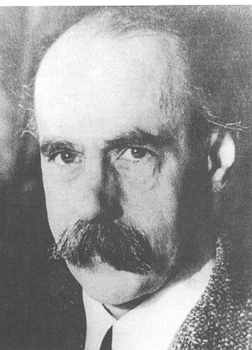
Karl Lashley is a debatable choice for the tenth spot. I selected him because he was one of the first psychologists to try to understand the physiological underpinnings of behavior. Lashley was an American psychologist who initially worked with John Watson. However, Watson was never very interested in the brain-behavior relationship and Lashley eventually went his own direction. He conducted a series of studies with rats where he attempted to locate the “engram” or the physiological seat of memory. Lashley trained his rats to run a maze, systematically removed portions of their brains, and observed any effect it had on their ability to run the maze afterwards. Lashley found, to his astonishment, that it didn’t matter. What did matter is how much of the brain was removed. Lashley would go on to train, and mentor, a number of psychologists and physiologists who built upon his early work linking brain and behavior. Currently, much of the work in modern experimental psychology is focusing on this topic.

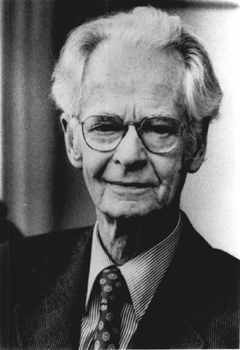
B.F. Skinner is one of the few psychologists with name recognition outside the field. Much of this had to do with his charismatic personality, excellent writing ability (he originally wanted to be a novelist), and confrontational style. Skinner was convinced that his approach to psychology was the only reasonable one, and had little patience with opposing views. Arrogance aside, few men in history can claim to have created the vocabulary for an entire discipline. In psychology, when we speak of “operant conditioning”, “positive reinforcement”, and “shaping” these are terms introduced and popularized by Skinner. But his ideas go beyond terminology. Skinner was instrumental in making his notion of psychology (called “behaviorism”) a dominant force in the discipline. In fact, in America, between the years 1930 and 1950, behaviorism WAS psychology. Much of this had to do with the compelling nature of Skinner’s ideas; a few simple principles based on the interaction of the organism and environment, that can explain a multitude of behaviors without invoking ideas like “thought”, or “emotion” or “unconsciousness”.

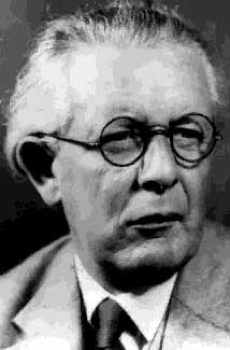
My first cheat: Piaget was not a psychologist. His training was as a natural scientist. As a young man growing up in Switzerland, he was interested in fossils, shells and birds. However, after finishing his degree, he became interested in developing an “embryology” of intelligence. Piaget initially planned to spend only a few years on this. He ended up spending 60 years observing children and their abilities, and formulating his highly influential theory of cognitive development. His ideas had a huge impact on developmental psychology, educational psychology and cognitive psychology. Ironically, Piaget, perhaps due to his own unusual childhood, while intellectually interested in the children he studied, never really engaged with them emotionally.

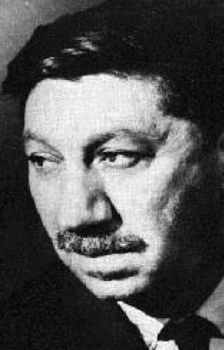
Maslow, an American psychologist, was familiar with the two dominant forces in psychology during the mid-twentieth century: namely, psychoanalysis and behaviorism. Maslow felt that neither of these approaches adequately explained human experience. Behaviorism was founded on animal research which Maslow felt couldn’t have any real relevance to humans. Psychoanalysis seemed to focus on psychotic individuals and not healthy personalities. Maslow, by nature shy and reserved, felt strongly enough about this to lead the development of a new approach to psychology he called “third-force” psychology. His psychology discarded research as not relevant to human beings, focused on what it takes to become mentally healthy, and paved the way for a number of approaches to therapy, developed in the sixties and seventies, of dubious utility. Depending on your perspective, Maslow either increased the scope of psychology or reduced its overall validity.

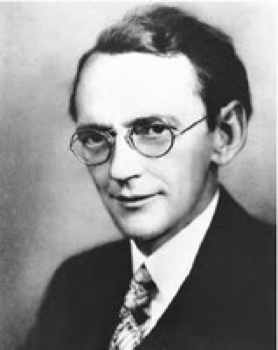
Wertheimer was a German psychologist, fascinated by fact that what we often see is not what is present. For example, when we watch movies, we are actually watching several still pictures presented quickly in sequence. What we see is movement up on the screen. Wertheimer believed that our minds do something to the perceived image to create this apparent movement. His curiosity in this phenomenon led to the development of Gestalt psychology, and its focus on perception, cognitive insight and learning and dynamic social systems. Wertheimer had to leave Germany because of the rise of Nazism, and when he came to America, presented the only real competitor to the ideas of behaviorism that were so dominant at the time. The principles of Gestalt psychology were instrumental in the founding of social psychology and cognitive psychology. While it no longer exists as a separate discipline, many Gestalt principles have been integrated into other subfields of psychology.

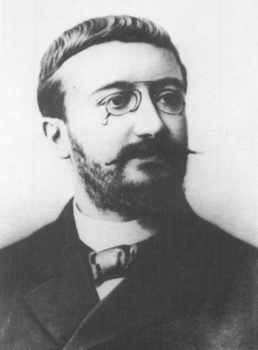
During the late 1800s, “intelligence” was conceptualized as a psychological quality passed on from one generation to another. What was needed was a way to successfully measure this particular quality. Binet was a French psychologist, approached by the French government to assist in developing a number of tests to discriminate between children of normal ability and children who needed extra educational assistance. In 1905, Binet and a colleague, Theodore Simon, developed their first attempt, called the Binet-Simon Test of Intelligence. It was based on a brilliant but simple idea. If you want to know if a child is “less intelligent” than another, first see what a “normal” child does and then observe how many of those tasks the child you’re evaluating can accomplish. This is the basic principle that all modern intelligence tests follow. Binet’s simple test was brought over to America and eventually revised to become the Stanford-Binet Test of Intelligence that is still being published and used today. But more importantly, Binet introduced the concept of successfully measuring psychological qualities that led to an absolute testing mania in the United States and other parts of the world. Few people have not been touched, for good or ill, by testing. Ironically, Binet would probably be appalled by the direction that testing has gone.

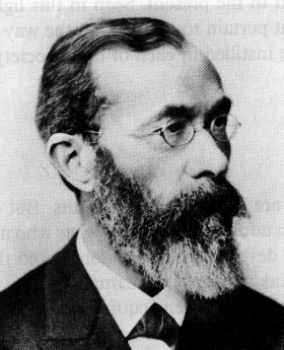
Wundt is probably the most influential psychologist that no one has ever heard of. His influence did not lay in his ideas of psychology (his goal was to discover the “elements of thought”), or his methods of studying psychology (his one original contribution to methodology was probably “introspection”, which involved having subjects, somewhat subjectively, report their mental responses to different kinds of stimuli). No, Wundt is considered the founder of psychology. He was the first individual to call himself a psychologist, and to recognize that the work he was doing was part of a new discipline that hadn’t been labeled. Wundt was serving as the chair of the department of philosophy at the University of Leipzig, in Germany, when he began conducting his first psychological experiments, probably around 1879. His program of study was so successful that Germany became the center of psychology for a time (until a couple of world wars occurred). During the late 1800s, if you wanted to study psychology, there was no question that you must go to Germany, and many of the early psychologists traced their intellectual genealogy back to Wundt.

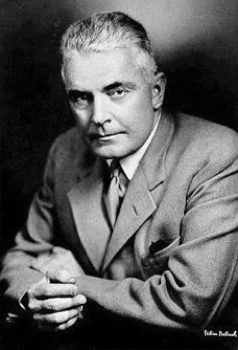
Few famous men have started out so ignominiously. John Watson was the son of a drunkard who abandoned his family, and an extremely pious woman who made Watson promise to become a minister. Unfortunately, as a young man growing up in South Carolina, Watson was well on his way to juvenile delinquency. For some odd reason, (perhaps in the interest of pleasing his mother) Watson suddenly decided to go to college. Eventually, he graduated from the University of Chicago with its first Ph.D in psychology. Watson was dissatisfied with the current trends in psychology and believed only that which was directly observable could, and should, be studied. In 1912, Watson presented his ideas to the psychology community and in one broad stroke, swept away the old methodologies and presented his own. B.F. Skinner, as influential as he was, built his success on the foundation of Watson’s ideas. Watson is also well-known for his notorious “little Albert” study and, even more notoriously, for carrying on an affair with his assistant in that work, Rosalie Raynor. The affair cost Watson his academic position in 1920 (times being what they were) and, like any good behavior modifier, he worked in advertising for the rest of his life.

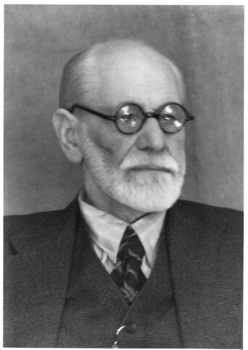
Here he is: the most well-known psychologist in history, and another cheat. Freud was not a psychologist; he was a psychiatrist (and, yes, there is a difference between the two). It is difficult to overestimate the influence that Freud’s ideas had over psychology and culture. His terms ‘ego’, ‘id’, ‘libido’ and others have entered every day language, and his very name is synonymous with probing techniques that reveal the damage that your parents did to you when you were young, and dreams that are superficial covers for surging, uncontrollable desires. What may be perplexing to the layperson is that in modern psychology, Freud’s ideas are not taken very seriously. Most acknowledge that his ideas have little basis in reality, and were more the product of Freud’s highly creative and innovative imagination. So why is he so well-known? Whole books have been written on this subject but I would say his place on the list is due to a very basic, but at his time, completely new idea. This was the notion that mental disorders could be treated psychologically. Before Freud, doctors considered mental disorders to be the product of some physical aberration (and many of them are). Freud provided compelling anecdotal evidence for the psychological origin and treatment of many of these problems.

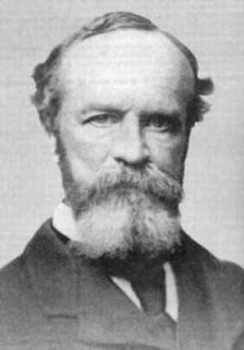
James was an American psychologist who disliked the label. Morton Hunt, the science writer, described him as the psychologist malgre lui or the reluctant psychologist. James fancied himself more as a philosopher than a psychologist, and did very little experimentation in psychology. He was not impressed with the work of Wilhelm Wundt, and towards the end of his life focused on matters of religion and spiritualism. However, I place him in the number one position for one reason: in 1890, he wrote a book called “Principles of Psychology” which is still in print today. It contains some apparently very modern ideas of psychology. In fact, a naïve reader would probably assume the book had been written in the last couple of decades not over 100 years ago. James essentially outlined modern psychology in this book. Wundt had proposed a psychology that focused, primarily, on the senses and perception. He rejected the notion that psychology could concern itself with some of the higher-order processes, like learning or problem-solving. James disagreed and outlined in his “Principles” the idea that psychology could concern itself with issues like: emotions, habits, consciousness, self, adaptation and learning. Behaviorism has many of its roots in James’ ideas, as does concepts like “self-esteem, self-concept, clinical psychology, biopsychology” and others. There are few topics in psychology that James didn’t anticipate, in one form or another. Interestingly, James was unsatisfied with the book. He wrote to the publishing company and described it as “a loathsome, distended, tumefied, bloated, dropsical mass, testifying to nothing but two facts: 1st, that there is no such thing as a science of psychology, and 2nd, that W. J. is an incapable”.


OK… that was interesting… but where's Carl Gustav Jung? Or Bruno Bettelheim, for that matter?
jung for sure.
bettelheim was influential in the field of child psych., but he was very controversial, and many of his ideas/theories were widely refuted. after his suicide, more of his theories were questioned, — such as the "refrigerator mother" theory concerning autistic children.
bettelheim? — in my opinion, there were just too many other influental scholars whose theories were not shrouded in debates of validity and questionable jumps in logic.
carl jung, on the other hand — he founded *****ytical psychology. —
his absence on this list is confusing, and unwarranted.
good call on that one………
jung was freuds protege , his views are based on freudian concepts , therefore freud is far more influential seeing as in a sense freud created jung , jung is a direct outcome of freuds influence on psychology and psychiatry, therefor it would be innacurate to say jung was influential
you are right that jung learned from freud.
and thats about it.
by saying that it is inaccurate to call him influential is kind of like saying plato isnt influential because he was socrates' protege..
freud and jung had many parallel ideas, but equally as many differing ones (most famously, religion) — but, the one that set them apart (and eventually was a catalyst in the destruction of their relationship) was their vastly differing views on the nature of libido.
most importantly, look up freud's dream theory, and then jung's dream theory. they arent really even close. jungs is widely considered to be the epitome of the study of unconscious as its main object. jung strongly opposed the idea that dreams intentionally disguised their meanings, which was one of freud's main points. jungs staunch opposition to these ideals also factored in to the bitter breakup of their professional relationship, and also their friendship.
suggesting that jung didnt influence the totality of the field of mental health is dumb.
I think he’s trying to say that Jung was influential, but the fact that he learned from Freud makes Freud more influential.
c man thats reTARDED. being someones protege in no way means anything you do doesn't count. and i'm pretty sure that everyone on that list learnt from someone
not to mention Asch and Milgram, the pioneers of Social Psychology. I would say Milgram is absolutely fundamental to understanding psychology in the 20th century, especially following WW2 atrocities.
And as for FREUD! sure, he was a psycho*****yst who for his time came up with some breakthrough ideas, but that is like saying that Phrenology is accurate at predicting human nature…an outdated archaic mode of thinking that was merely a stepping stone to understanding. Stepping stone, not cornerstone.
And what about Beck and cognitive behavioral therapy. I'm a worrywart and I've found that cbt is a lot more helpful that therapy that digs into childhood. I write about my worries on http://www.confessionsofaworrywart.com and i've been thinking about writing a post on what I've learned in therapy. Thanks for this interesting Top Ten!
nice….interesting….
I would add ewen cameron – not a great psychaetrist but his works "influenced" a lot of people.
Though i like this list, Am going to lie on th couch and talk to my psychologist about it and then only write any comment… (I have CDO, its OCD but alphabetically.)
someone please explain to me why ivan pavlov isn't on this list.
–he paved the way for a more objective science of behaviour.
–he made leaps in comparitive psychology.
–studied the manipulation of automatic behaviour
etc
im aware that he also did a lot of work in the fields on physiology, but c'mon.
–if nothing else, he was the first to delve into classic conditioning, which is absolutely gianormus in today's child psychology
the answer i'm anticipating is that he wasnt a psychiatrist, but most of the guys on the list were not psyciatrists, but rather psychologists. thats a whole different can of worms that i'll open in its own message.
pavlov was a behaviourist, and i feel that with his grand contributions, if he's left off this list because of the wording in the title of the list, then i move for the title to be changed.
for the inclusions, otoh, it was written very well — thank for a good one, egee!
I agree, his studies of the different types of conditioning formed the basis for many different psychological fields.
PS: Freud was crazy.
agreed. Pavlov is a major omission.
Totally agree! Every time I make a Pavlova, my husband immediately begins to salivate.
Ive only heard of Freud… what a suprise
Then you have no education. Anyone with half a brain knows Carl Jung, Bruno Bettelheim and Milton Erickson.
No, it means they have no education in fields that involve medicine. It does not mean they have no education.
Freud's most lasting contribution to humanity was not any particular idea of his but the fact that we are now neurotically self-obsessed.
I'm confused as the list is about influential psychiatrists and yet Freud is apparently a cheat because he's a psychiatrist not a psychologist. As for the famous psychologist's I have heard of, only one appears on this list. Fame doesn't necessarilly mean influence so I'd be interested in knowing what Jung, Milgram and Chomski contributed and why they aren't very influential. Oh, and what is the difference between psychiatrists and psychologists? My personal favourite psychiatris is Dr. Sam Loomis, but thats because I'm a bit thick.
@eteddsy: ""Oh, and what is the difference between psychiatrists and psychologists?""
read this:
http://psychology.about.com/od/psychotherapy/f/ps…
Oh! I get it! Sam Loomis, Halloween! haha. I was like, "who the hell is Sam Loomis?..oh wait.."
actually, jamie or eege, you know i never ever pick on the titles of the lists — cause i never know if it was submitted that way, or if frater changed it, like he does sometimes.
in this case, allow me to point out:
the title is misleading. actually, its not only misleading, but it's wrong.
—a psychiatrist is a medical doctor/physican, specializing in the treatment of mental disorders.
a psychiatrist holds a m.d., and can perscribe medicine.
—a psychologist is not a medical doctor, and carries a phd (or psy.d) — not a m.d., cannot perscribe drugs, and studies mental disorders, rather than treats them. psychologists run groups, and do an ass-ton of research.
because of this, you have published a list titled ….."…….influential psychiatrists" which contains only 1 psychiatrist. (s. freud)
–karl lashley — psychologist/behaviourist.
–b. f. skinner — psychologist
–jean piaget — a natural scientist
maslow, binet, watson, wundt, all psychologists.
truth is, there isnt a psychiatrist in the lot (save freud — whose blurb on this list contains the revelation that psychologists and psychiatrists are, indeed, different).
anyway, jamie, to avoid confusion, you really oughta nix the word "psychiatrists", in favour of mental health workers…(but make it sound less dorky)
—or, hell, at least make the title correct:
it should read like this::
((8 influential psychologists, 1 influential scientist, and 1 influential psychiatrist — and their contributions to the field of mental healthcare.))
Agreed! I'm (practically) married to a psycho*****yst and he'd ***** a brick if he read this list. I probably wouldn't be allowed near listverse again.
yeah — my wife is married to a guy with a masters in psychology
seriously ? well doc its like this , it all started as a child when i saw my Great Dane forcibly making love to my incapacitated male Maltese Poodle , since that day i could never eat hot dogs , is this normal ?
@bluesman87:
"seriously?" —- yeah dude — im working on my doctorate.
=your dog?=
—–if the g.dane is a female: then *you go! little poodle dogthing!*
—–if the g.dane is a male: proceed directly to big gay al's big gay animal sanctuary — put him on the big gay boat ride, and reevaluate.
—–and the poodle?, at first i read this as "decapatated male maltese poodle" — aafter that, i got nothin
==hot dogs?==
theyre made of boar lips, pig *****s, giraffe sperm, all jammed inside of a red rocket. i'm more inclined to question why you'd eat them in the first place.
==normalicy==
its relative. and in this case, unprecidented. sounds normal to me. i'd be traumatized too — the next s.park after the gay dog episode was the "elephant *****s a pig" episode — your great dane plays the elefant in this horrible mental image i have.
so, yeah — deviation may be considered normal.
you have adjusted well, son
you are aware that
(a) i bartend at a casino while i'm getting my doctorate
(b) my specialty is experimental psychology and stats.
so — drink 3 jagerbombs, submerge your left arm and left leg in a freezing cold ice bath for 15min (or as long as you can handle it) — let me record your reaction times to positive and negative stimuli, and tell me how it makes you feel
you owe me $135.
thank you for visiting the happy day clinic
Hahaha not so sure if that helped , as soon as you said red rocket it all came flooding back worse than before . So i burned my clothes and got in a cold shower crying . Hey but at least i can eat hot dogs now i love pork butts!
bigamy is legal your state?
well, i do live in mississippi — ive seen weirder *****………
hahaha —
yall are hilarious…..
thanks i needed that — seggie & arsnl —
after a crap-ass day, i feel much better now.
and just to think, i almost went with "my parents' only son has a mast………….."
in hindsight, i'm sure glad i went with the wife/girlfriend
(even though im not actually married to her, but obfuscating a decent bigamy/polyandry pun/joke/thingy seemed counterproductive and trite)
ha ha ha
I'm glad you went with it, too! It made the easy bad joke just too easy to pass up…and in my family, no joke goes untold.
He or she would probably ***** a brick hearing you call them a "psycho*****yst" unless they are, in fact, a hard core Freudian therapist. Psycho*****ysis = Freud. Psychologist/therapist = general terms for those that do therapy
Presumably that was aimed at me? Sometimes I wonder if he loves Freud more than me. Well, not really but yes he is a hardcore Freudian therapist, or will be when he gets a job! Damn recession *grumble*
Isnt polyandry illegal in the us?
Well dont worry, she’ll get over that psychologist. People hate being psycho*****ysed and she’ll run back to you.
oliveralbq,
as a matter of fact, Freud medical practice was forged in the field of neurology, not psychiatry (even though he did study with Charcot for a few months in Paris). Of course, his main body of work built the foundations and pushed psycho*****ysis forward, so I'd always call him first and foremost a psycho*****yst.
in a way, you are correct.
-calling him a psychotherapist isn't that far off. however, *most* psychotherapists are psychologists and not psychiatrists.
-psycho*****ysists search through subconscious memories to pinpoint problems. they follow idead brought forth by freud, and believe negative childhood memories cause mental illness.
-psychologists search through conscious memories to find the root of difficulites.
-psychiatrists do either one, but have a 'md' and concentrate on emotional and/or clinical problems and issues.
without writing a whole paragraph on each, this explains it best.
freud started psychotherapy and set all the boundries for this type of *****ysis. but he was a psychiatrist (with a medical doctorate-md) not a psychologist (with a philosophical doctorate-phd)
oliveralbq,
I think that you were replying mainly to "Psychology" – who borught up the psychotherapy issue – and not to me, right? Anyway, it's correct that Freud had a medical doctorate, but I insist: he was not a psychiatrist, he was a neurologist.
That would be "brought", of course.
my thought originated with @sychology's post. however the last line of your post is this:
@kanza: " ……… so I'd always call him first and foremost a psycho*****yst. "
and of course, all psychotherapy is done by — psycho*****ysts.
the psychiatrist label is a touch muddled.
were all entitled to our opnion — and i respect what youve said, however,
i was going by a couple things.
——–my hiistory of psychology textbook, and
——–an excerpt from the institute for the study of the neurological typical (allow me to share this with you):::::
"Para-Freud psychiatry is named after an early case history of a psychiatrist named Sigmund Freud." — and
——–this passage from the montgomery school of md:::::
""By 1881, he had studied under Claus and Bruecke, and he now fully qualified as a doctor of medicine. He later studied under Jean-Martin Charcot, who was a neurologist that was well-known all over Europe for his studies of hysteria and his uses of hypnosis.""
see, my orthopedic dr is aalso a surgeon.
freud is a neurologist and is also a psychiatrist
if you dont agree, absolutely respect for that —
im not — at all — arguing
i just wanted to let you know where i was coming from.
were both kinda right, but its at the mercy of the definitions involved
the distinction comes ( to me, anyway) when you look at his pedigree, and see the m.d.
oliveralbq,
thanks for your answer. I noticed that you said that "all psychotherapy is done by — psycho*****ysts. ". Maybe we are misunderstanding each other a little because of some difference in definitions: I don't know how it is in the US, but in other parts of the world psychotherapy is not exclusively practiced by psycho*****ysts, but also by psychologists. And there are some psycho*****ysts who take issue with calling psycho*****ysis a psychotherapy – without refusing, of course, its "talking cure" status. But I think this is beyond the point here.
Regarding Freud's title: I said he wasn't a psychiatrist because none of his masters were either, the vast majority of his scientific papers on medicine dealt with neuroanatomy or, to some extent, neurophysiology, and his clinical practice was almost exclusively psycho*****ytical. I could offer you some bibliographical references on this, but I don't know if it would interest you, so I won't tire you unnecessarily. If it does interest you, be welcome to ask. But anyway, it would be correct to say that Freud took interest in problems and issues that stemmed from the psychiatrical field.
I too have a problem with the title.
No Carl Jung?
No Ivan Pavlov?
Either one of them alone has contributed much more to the field, in my opinion, than some of the psychologists mentioned. The conditioning from Pavlov alone is far superior to many of the accomplishments by the men here, aiding in animal – And, to some extent, human – training and behaviourism.
I like the list but I don't understand something. You do state that there is a difference between psychiatrists and psychologists. Yet you name the list "Top 10 psychiatrists" when it's clearly a list devoted to psychology, as repeatedly stated. This would be like naming a list of chiropractors "Top 10 Rheumatologists."
I liked the list, though. I just think it should be named "Top 10 psychologists." Skinner and Piaget (whom I deeply admire) were not psychiatrists, for example.
Indeed.
Psychiatrists are those who treat. They have degrees in both medicine and psychology. However, Psychologists are those that have degrees in psychology, researching.
As some entries state, people on here are not even psychologists, let alone psychiatrists as the title suggests. Perhaps a more suiting name would be "10 people who had influence on psychology"?
WRONG. Psychiatrists have an MD and choose to specialize in psychiatric medication, just like some MDs choose to specialize in pediatrics or oncology. They do NOT "have degrees in medicine and psychology."
Psychologists have a PhD and depending on what they get it in (social, cognitive, clinical, developmental, etc), can be either researchers, clinicians (therapists) or both. Psychiatrists prescribe medications. Psychologists do therapy, often in the form of CBT, Behaviorismm, or ACT.
The numero 1 dude was American!!!! In the face!
Yes but he disliked the label. He wanted to be Jamaican!
I love it in the face!!
do you mean – I love it! "In the face"!- or do you literally mean that you love "it" in your face ? Bit of Freudian blowjob there , slip!! i mean slip!!
B F Skinner was a bit of an inventor too. http://en.wikipedia.org/wiki/B._F._Skinner#Invent…
Yes, I write like a broken typewriter but I too think the list title is wrong. Very interesting subject though!
Hey but what about Dr.Phil he helped people a lot
i agree not because he helped a lot of people but because of the power that the Sith Lord Oprah has bestowed on him he probably had a bigger impact on average peoples lives and mindsets than anyone else in the 21st century . People love lapping up the ***** he spews it makes them feel better about their lives . I mean look how many books hes sold ?
yanno……i could care less about phillip mcgraw.
i think he's a weenie
i m h o
if you dont think he's a weenie, great —
–respect– junglist massive—
i just like random, interesting bizarre trivia that wont do me any good in the rest of my life.
like the fact that dr.phil was the starting middle linebacker (for university of tulsa) in one of the most lopsided football games in history (not footy football, but ugly oval pigskin football). i believe its 3rd.
university of houston cougars —- 100
univ. of tulsa golden hurricane —— 6
1968
23november
way to block phil
top ten psychatrists and half the guy you credit on this list are psychologist who you explicitly state are two different things , your ***** is weak dude rename your list
Just because he's the most well known does not mean he should be no 1.
I have a degree in psychology and I don't think Freud was mentioned past teh first lecture and during that lecture they basically said if you want to learn about Freud you're in the wrong place.
His work consisted of single case studies, none of which were very reliable and I don't believe he even tried hard to find other examples to support his theories.
Very little of his work is still used in modern psychology, and is pretty much only still known about because of it's sensationalism.
He's probably the least influential on the list and there are other people far more worthy of a place in this list such as Pavlov and Jung, hell maybe even Milgram or Bowlby.
but he is probably the the most influential psychologist in current western public culture! every time you even think about concepts like "ego" "the subconscious" "Oedipal complex" etc. you are reflecting the influence of freud. same thing with his theories on phallic symbols, feminine "hysteria" (or when you use a word related to "hysterical") and the role of very early childhood experiences shaping adult personality in *****ualized terms -freud either thought of or popularized all of that.
so, just because many/perhaps most current psychologists (and myself too) think freud got many things wrong, doesn't mean his ideas haven't permeated our historic fictional literature, common speech, and even public general psychological ideas. he shaped current and historical common thought and speech, so: he was HUGELY influential!
if you make references to issues of "ego" or "the subconscious" (yeah the list greatly neglected Jung too!), or the things noted above you are reflecting the public and social influence of Freudian theory in westernized world thinking. and getting inside a culture's very way of thinking and phrasing is certainly "influential".
"not now being seen as correct" is NOT the same as "not influencing the very thought and phrasing of the current dialogue"….. perhaps your psychology degree neglected a history of psychology section? who knows, but understanding the freudian influences and framing, and the neo-freudian movement is important to understanding the history of psychology in the "westernized" world culture.
when it comes to the sphere of culture influence, which means how many people in the general public know of or speak of concepts created by some psychologist, freud and jung probably win for the US, UK, and cultures emulating them in a very large degree. "currently agreed with in the field" is not the same as "widely influential in the world at large" you know.
I think this list was referring to influencing psychology itself and not just Western culture. So compared to the others on this list how much did he influence psychology itself? Very little influence he had has actually lasted.
And the subconscious? Freud hated that term because it was too vague, and it is quite widely known that anyone using that term in reference to Freud has never actually really studied their work. Look up the terms preconscious and unconscious and Freud.
Psychologist is th one who you see voluntarily when ur wife hates u and runs away.
Psychiatrist is th one who law/court orders to check if u can undergo th trial when ur wife who hated u has disappeared by ur magic.
Sigmund Freud number 2? iId have placed him much lower, for one reason mainly:
Most of his studies are invalid, when experimenting with the young children to establish the oedipus complex, Freud only looked for evidence to support his theory's. When a real psychologist looks for ways to disprove his or her theory! Not being able to disprove a theory is the only way to prove it.
This is why alot of Freuds theory's are being questioned in modern times regarding homo*****uals and some mental dissorders.
In my eyes, Freud was a terrible psychologist, just my opinion.
Prove?
Phyco whaaaaaaa?????
Bonus: Dr. Katz. (=
My team of 32 doctors, 28 nurses and 17 psychologists in my own specially-made private hospital reckon I'm suffering from delusions of grandeur.
cool list.
Ha ha ha, nice one.
The original title of the list was Top Ten Psychologists (not Psychiatrists). The title got lost in translation, I guess.
Orgasms wouldn't even exist today without Reich.
oh yeah? Leary was a psychologist yet prescribed mucho drugs! haha.
I've always wondered how many hours,days, or months Ebert has spent in total darkness watching between the frames.
after reading the entry on Lashley I searched around for info on Tolman's cognative mapping…just sayin that's what I did.
The George Carlin Freud joke: "Sometimes a cigar is just a cigar. Yeah, well, sometimes it's a big brown dick!"
timothy learys dead — no no no no he's outside looking in……
along the coast you'll hear them boast—-about a light they say that shines so clear….
so raise your glass, we'll drink a toast—-to the little man who sells you thrills along the pier……
he'll take you up, he'll bring you down—-he'll plant your feet back firmly on the ground……
he flies so high — he swoops so low/……
timothy leary.
he got his bachelors at univ of alabama like i did.
You should do Top 10 Fictional Psychiatrists -list next. I think Frasier would top that list.
you are almost right.
frasier crane practically deserves the top spot
on this list (of fictional psychologists)
pratically
of course that goes to lucy van pelt.
able to help everyone from charlie to snoopy, and for 5 cents?!?!?
give that girl a gold star.
I always found Lucy's advice succinct and to the point…well worth the 5¢ freightage.
Unfortunately, the Psychologists I have seen asked considerably more than than 5¢, and rarely gave me the kind of insight Lucy was famous for.
But I prefer Niles Crane…
Freud should not have been on this list at all.
He is well known, but it’s like putting Dennis Ferguson on a list of ‘Top 10 People Who’ve Come Into Contact With Children’. Most (sane) (intelligent) people recognise that Freud was full of garbage.
You clearly don't know what you are talking about.
That doesn't mean he wasn't influential to the field of psychology.
Interesting list. You missed Jung and Pavlov which would have been better choices than Lashley or Watson. Freud should have been number 10 just because he was famous.
Otherwise, it's an ok list.
I really enjoy these medical/pseudo-medical lists being a medical student.
Keep 'em coming!
And snotty comments like that is why scientists (real doctors) hate you.
Actually, I have a degree in biomedical science…not trying to be snotty.
Uhmmm… Most of the entries talk about psychologists and yet the list's title says psychiatrists… There's something wrong in here, isn't it?
I’m relieved that Fox Mulder isn’t here. Just kidding!!! I’d be happier with the list if Pavlov and Chomsky are here though, but yeah, nice list!!!
Wheres Dr Frasier Crane!!!!!!
in seattle
lol
Hermann Rorschach. Definently the most famous.
ummm you forgot a few big names. As well some of these people were psycologist's not psychiatrists….. there is a difference. You should probably re-do this list and make the corrections.
Yeah – I spotted the title goof right off the bat. Number 10 is hacking out bits of rat brain – I'm thinking "this is what research psychologists do not psychiatrists.
Carl Jung should be #1 on the list. Freud should be #2. Jung's influence is felt MUCH deeper. His absence shows what a joke lists like this are.
Because your opinion is different from mine, it's an absolute joke. :>
It's already been pointed out that the title of the list is WRONG. A psychiatrist is a medical doctor. A psychologist is not. Fix it.
Also, a list of this nature that doesn't include Jung is in my opinion faulty.
Wow, the title boggles me… Very good list, Egee. I expected Freud to be number 1, but it's not a popularity contest. Freud was a quack, to me.
What makes you think that Freud was a quack? That is an absolutely ridiculous comment made by a clearly uneducated person. What a moron.
The fact that none of his theories have any scientific merit, or indeed, any way to be even to even be tested scientifically is, in my opinion, a pretty good reason to call him a quack.
cmon get over it we all know that Freud loved the cock!!!
Am I the only one who found this list kinda boring..??
Yes
Cheers
Lee
Excellent list. Well written and a topic of which I know little. I'd be interested to find out why the author omitted Jung, Pavlov etc. Maybe in favour of folks we've not heard of? on purpose?
I do believe the title error is just that. damn spell check. I've tried to correct it but my html skills are sorely lacking. either that or my powers are waning? wtf?
To be honest even at 23 i find the power of mom never lacking , moms kick ass their power is mysterious and dangerous…..
You should change the title of the list to 10 most influential Psychologists. Psychologists and Psychiatrists are not the same thing.
Can't believe Piaget was anything less than the top 3.
Still a good list.
Pshychiatrist; psychologist, whatever. It's junk science. These guys never had or have to prove that any of it works to help people.
How may people wasted their time on Freudian psychology. Freud made up all these theories partly because he couldn't accept that many of his patients had been *****ually and physically abused. He blamed them and said it was all a fanstasies
.
Modern phsychiatirsts are pill pushers.Psychologists are a bunch of new age idiots who want to sell books or have a t.v. show like Dr. Phil.
Mental illness is mainly caused by physical breakdown of the brain due to chemical imbalances or DNA not because your mommy didn't breast feed you enough.
It's an insult to people who are very ill to subject them to this quakery.
OK, you are partially right. You shouldn't take everything at face value. But to group ALL psychology with a TV show like Dr.Phil is just ignorant. Also, you can read Freud and appreciate some of his thinking without accepting all of it. You can do the same with the Bible or the Qu'Ran. The comment about breast feeding is just stupid.
Person are enslave to their reality, whatever happens in your life will affect you. How many people feel empty just because her mother never showed affection, or because his parent was never at home? How come brother raised in the same environment can act so differently? How come our couple is very similar to our dad/mom? Why do we feel happy when we are praised and sad when looked down upon us? Why do people change while aging, going to different groups or type of people? Why there are memories that we remember more clearly than others while others we forget entirely?
All those questions are trying (and many others) to be answered by psychology, so is not junk science; human mind is very complex and you can have many different answers if you look from different perspectives. Also, in my country and many others, we all know that psycho*****ysis has its flaws and innecessary long as well, that's why most psychologist use alternative theories like systemic theory ( excellent because it focuses in the present and treat family as a whole, not just an individual) along with cognitive-behavioral therapy that shortens therapy up to six months. six months of therapy and you're happy and ready to go.
Yeah all those scientific articles showing that CBT therapy can actually alter a depressed person's brain chemistry more effectively than medication and with longer lasting effects is just bull*****. Science is bull*****. Let's just ignore it.
Then why do doctors who can't find the organic source for physical problems label them 'conversion' disorders and shove them off on psychologists? Pseudoseizures, psychosomatic symptoms, etc…
I think that was sarcasm.
Really? I thought that was a red herring…
Not to bad a read – but I agree with some of the comments that Jung and Pavlov needs a mention.
These guys aren't psychiatrists. They're psychologists
What's the difference between a psychologist and a psychopath? -I dunno, but I hope the latter doesn't have the knife
At least the latter is on a path to somewhere
its on a path to somewhere, allright.
from the bates motel right up to that angry house
Good list, good selections – I would have added Jung and Milgram.
I don't think John Watson should be on this list, must of his theory came from Pavlov's experiments on stimuli association. Plus, his most famous work, the origin of phobia, that he proved it traumatizing a child for life.
Why no Jung or Milgram?
Good list besides that.
you forgot Viktor Frankl!!!!!
What about milgrim? Or was he a psychologist?
Main differences in therapy and kind of patience in psychiatry and psychology
Psychiatry focuses on mental disorders with neurological or physiological cause (psychosis: schizophrenia, among others)
Psychology (clinical psychology, to be accurate) focuses on mental disorders with social cause (traumas, addictions, behavioral issues, among others).
Nevertheless psychology and psychiatry complement one another, and work together on disorders that can only be cured if treated from all perspectives. Depression has an physiological, psychological and social cause. The psychiatrist keeps the body on optimal function while the psychologist treats the psychological and social issue. The same happens in OCD, personality disorders, neurosis, eating disorders, etc.
Psychiatrist have the physiological knowledge, their therapy consist primely on psychotherapy, that is long and not always successful in psychological therapy.
Psychologist have the human knowledge, they know how to approach, confront and treat psychological issues from a wide array of perspective (cognitive-behavioral, systemic, humanist, existentialist, etc), but lack the physiological knowledge that psychiatrists have.
Hi, WOW a trip down memory lane there. Seems like I studied these guys so long ago it feels like it was in another life! I wonder what that means..? Perhaps only that my memory ain’t too good!
As the usual suspects are keen to point out, there is plenty of scope here for a sequel. To name-drop a few names, one might consider these as further research: Anna Freud, Carl Rogers, Charles Edward Spearman, Edward Thorndike, Hans J. Eysenck, Konrad Lorenz, Ivan Petrovich Pavlov, Plato, Stanley Milgram, and that Stanford Prison Experiment guy… Philip Zimbardo.
In general I thought the list was good, and seemed to get better the more I read down the list. It may have been helpful to offer some kind of acclaim vs skeptisism in there to give us an idea of their influences on modern thinking…?
I have to say the first thing I did after reading was to hunt out Randalls response; just to gauge the tempo of the comments. Oh dear.
Anyway, cheers for the list!
Lifeschool, I had the same feeling! So many names of import left out…Lonnie Athens immediately came to mind, as well as many of the names on your list.
I know I am forgetting some really obvious names…it's driving me nuts…although I don't think "nuts" is a word you're supposed to use as an personal adjective around Psychologists/Psychiatrists.
I like it. Woyzeck holds a degree in Psychology and he loves the subject. However, not all of the people on this list were psychiatrists. I'm going to sharpen a stick at both ends, and if you don't change the title of this list, I'm going to use it. THAT'S RIGHT BILLY, I'M BACK AND I WANT YOU.
U forgot Dr.Phil! (I’m lost ain’t I?)
i think a lot of us we're expecting to see Jung in here…some of his theories have survived more than Freud's
hey do you know that Ian McKellen the guy that plays Gandalf from lord of the rings is a homo*****ual? Hey im just saying
William James, wow haven't heard of him since college, he truly was an amazing intellectual.
hey do you know that Ian McKellen the guy that plays Gandalf from lord of the rings is a homo*****ual? Hey im just saying
Hey do you often just say random things that are pointless and irrelevant? Hey I’m just wondering.
hey do you know that duelling is legal in Paraguay as long as both parties are registered blood donors? Hey im just saying
.
Cool list. I always liked Lashley's work when I first learned about him in highschool
Is there any psychology that studies why psychiatrists all have goofy beards/mustaches/glasses?
Might as well give them a pocket watch and try to hypnotize us.
You have something there! While we're at it, lets give them pocket protectors and slide rules, make them look really dorky!
NO JUNG!?
That is a grave omission, my good man.
And Carl Rogers!
Milgram's experiments were interesting but influential? Maybe in ethical restructuring for apa.
A "grave" omission, for s dead man?
ha ha ha, pretty funny observation!
Oh my GOD. Please tell me you understand the difference between PSYCHIATRIST and PSYCHOLOGIST. Psychiatrists get an MD and choose to specialize in psychiatric medicine. Psychologists get PhDs and spend their whole career studying the theory and practice of human behavior.
Most of the people on this list were PSYCHOLOGISTS, not PSYCHIATRISTS.
It helps to read the posts above yours, so you don't look like an idiot by repeating something that has been pointed out a dozen times already. Of course, that means that 11 other people have done the same thing, but why continue the trend?