We’ve had several fascinating lists about bizarre mental disorders on this site, but no lists have been posted of mental illness myths. Mental illnesses, disorders and differences tend to be very misunderstood by the general public. This is a list of mental illnesses and a widely believed myth or two about each one. I’m sure there are other mental disorders with myths so widespread that I believe in them, too. Of course, you can tell me about those in the comments.

The Myth: Somebody who avoids social interaction is “antisocial”.
This is mostly a semantic error, which is why I put it in tenth place. Many people refer to someone who is reluctant to participate in social situations as “antisocial”. In fact, these people are often pro-social, even unusually so.
Antisocial Personality Disorder is diagnosed in adults who consistently ignore the rights of others by behaving violently, lying, stealing, or generally acting recklessly with no concern for the safety of themselves or others. They are often extroverted and very much the opposite of the type of people who are so often called “antisocial”, who usually care very much about other people’s feelings. These people are usually just shy or have some form of autism, depression, social anxiety disorder, or avoidant personality disorder (AvPD). AvPD, which is diagnosed in people who avoid social interaction because of an intense fear of being rejected, is probably part of the reason for this confusion. The two personality disorders, after all, have pretty similar names, even if they are entirely different things.

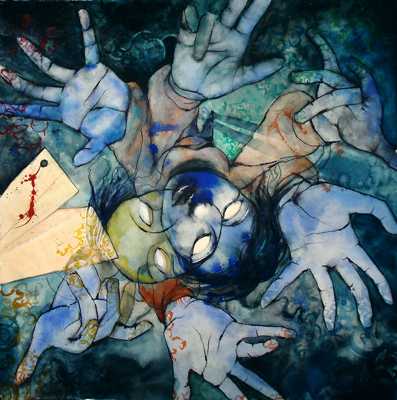
The Myth: People with Dissociative Identity Disorder radically change their behavior and lose their memory of what has just been happening when they switch personalities.
Some people would say that DID itself is the myth, since it’s, suspiciously, much more commonly diagnosed in North America than anywhere else, but let’s assume for today that it does exist.
People with DID have anywhere from two to over a hundred different personalities that alternately take over their bodies. These alternate personalities (“alters”) usually, but not always, form due to childhood trauma. The alters don’t always cause huge, noticeable changes in appearance or behavior, so observers might not even notice their existence. Many people with DID (“multiples”) realize that various alters are present and know who those people are, even before therapy, which wouldn’t work very well if they had no memory of switching. It’s possible that one personality has no knowledge of what happened while one of their alters was in charge, causing a sense of amnesia, but they might be entirely aware of what is happening and just not actively involved. The group of alters can usually communicate to some degree, and might even work together to hide the fact that they are multiple. Some multiples prefer not to have therapy to choose one personality and stop switching, because they are perfectly fine living as a team. [Image Source]

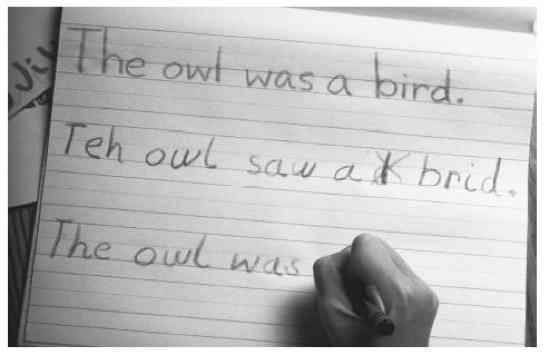
The Myth: All people with dyslexia are unable to read because they see letters in the wrong order.
This is actually two myths in one, but still only two of many myths about dyslexia. The first is that dyslexic people can’t read. Actually, most do learn to read, but if they don’t get appropriate help, they often learn slowly and stay well below their grade level in speed and comprehension. But even that’s not always true: many dyslexic children figure out how to cover up their difficulty reading until third or fourth grade or even longer. And if they are taught by someone who understands dyslexia, they can learn to read perfectly well.
The other half of this myth is that the problem dyslexics have with reading is because they see words backwards or out of order. This can seem to be the case because, in their confusion while they try to figure out a word, they mix up letters or sounds, and some dyslexic people confuse left and right or have a lot of trouble spelling. However, this is not the cause of their problem. Dyslexia is much more to do with a unique way of thinking than a problem with processing visual information.

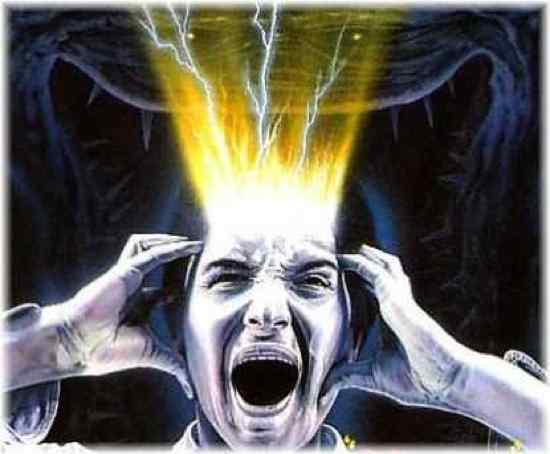
The Myth: Schizophrenic people hear voices in their heads.
We all know about schizophrenia, and we’ve all read jokes about “the voices in my head”. But, contrary to what a lot of people believe, not all people with schizophrenia hear voices in their heads. Auditory hallucinations are very common in schizophrenic people, but they are more likely to hear voices coming from some object outside of their body than inside their mind. Plus, not everyone with schizophrenia experiences the same symptoms. They may have hallucinations (actually seeing or hearing things that don’t exist), delusions (believing unrealistic ideas), disordered thoughts, lack of affect (no appearance of emotions), or, in catatonic schizophrenia, even a lack of desire to move at all. Schizophrenia is a complicated disorder with a wide range of possible symptoms. (Note that alternate personalities is not one of the symptoms. We already covered that disorder.)

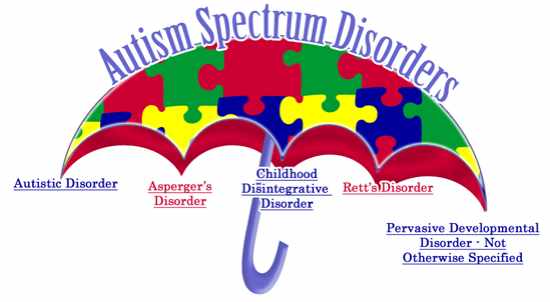
The Myth: Autism is a devastating disorder that will stop someone from ever being able to function in society.
There are many myths and even more potential/disputed myths about autism, but this seems to be one of the most common. Many people hear “autism” and imagine children who are permanently in their own world where they can’t talk or interact with anyone else, who throw tantrums for no apparent reason, and who will never be part of normal society. However, autism is called a spectrum disorder for a reason: autistics range from people who are unable to communicate in any way with others, all the way to people who live ordinary, productive lives and just seem a bit eccentric to the rest of us.
Severe autism is not a life sentence, either. Even very low-functioning autistics can lead a perfectly happy life. There are also stories of low-functioning autistic children improving with therapy and almost entirely recovering from any autism-related problems they had, and many people and organizations are searching for a cure for autism. Unfortunately, those organizations pushing for a cure are usually the ones who spread this particular myth by only focusing on issues related to low-functioning autism, and almost entirely ignoring the existence of high-functioning autism and autistic people who would never want to be “cured”.

The Myth: People with ADHD are unable to pay attention to anything.
ADHD is a disorder that has been becoming pretty famous in recent years, so I’m sure you all know what it is. For those of you who aren’t sure, people with ADHD have trouble concentrating on tasks and can be hyperactive or impulsive. But it isn’t true, as it sometimes seems, that people with ADHD just can’t pay attention. Many of them can pay attention to something that they find genuinely interesting, the same way all of us are much more willing to be distracted from a dull task than an enjoyable one. And, in fact, some people have trouble focusing because they actually pay too much attention. They think about all the sights, sounds, and smells around them, not just the task at hand. They have to learn to deal with all the other interesting stimuli and keep most of their attention on what is important.

The Myth: Somebody with selective mutism is either refusing to speak, or has been abused or traumatized in the past.
This is the only disorder on the list that you may have never heard of by name before, though I’m willing to bet you’ve heard of it and its myths. I don’t know of another disorder with myths more commonly believed, not just by society as a whole but actually by professionals.
Selective Mutism (formerly Elective Mutism) is a disorder that almost always first appears in early childhood. Someone with selective mutism can, and often does, speak perfectly well, but doesn’t speak, and sometimes doesn’t even communicate in other ways, in specific situations. A very large number of parents, teachers and psychologists who work with selectively mute people believe that these people are choosing not to speak, maybe in an attempt to control other people. However, it turns out that most selectively mute people do want to talk, but don’t because they’re actually afraid to. An overwhelming majority of selectively mute people also suffer from social anxiety disorder, and silence seems to be one way that they cope with stressful situations. Punishing a child for not speaking, as many people who believe in this myth do, paradoxically makes the child even more anxious and therefore even less likely to speak.
But if you don’t know someone with selective mutism, chances are you still believe in a myth very common in the media: some children and teenagers stop talking entirely, or to everyone but one or two people, because they were traumatized or repeatedly abused. While some people do become mute after trauma, this usually lasts a few weeks, not months or years. Most people do not develop selective mutism in later childhood or because of any kind of trauma or abuse.

The Myth: People who intentionally cut, burn, or otherwise injure themselves are either trying to kill themselves or looking for attention.
Many people, particularly teenagers, who suffer from a variety of mental disorders cope with their inner pain by physically harming themselves, most commonly by cutting. Self-injury seems to be becoming more common and well-known these days, but myths about the self-injurer’s intentions have not gone away.
No matter what it looks like, self-injury is not a failed suicide attempt. Some self-injurers harm themselves over and over for years without having a single injury that would threaten their life, which would be an amazing record of failure if they were actually trying to die. Many people who self-injure are actually trying to avoid suicide by letting out their feelings in a (somewhat) safer way.
Many people also believe that self-injurers are just seeking attention. This is true of a few people, especially since self-injury is becoming more well-known and almost popular, but most self-injurers actively try to hide their injuries by wearing long sleeves or pants, or by cutting in a place that is usually covered by clothing, like their upper thighs or stomach. Some self-injurers desperately want someone to find out about their behavior so they can get the help they need, but even many of them are too frightened of another person’s reactions, and ashamed of themselves, to actually point out their injuries. Besides, even if someone decided to injure themselves to get attention, shouldn’t you be very concerned about be what problem could be causing them to need attention so badly that they harm themselves to get it? [Image Source]

The Myth: People with OCD are always obsessed with the danger of germs, and usually are very particular about neatness.
I can’t count how many times I’ve heard people say that they’re OCD because they’re very neat or careful about cleanliness. Most people seem to think that people with OCD are neat freaks and/or germophobes, not realizing that it’s a lot more complicated than that.
OCD is an anxiety disorder with two characteristics. First, people with OCD have recurring unwanted thoughts (obsessions), usually of something they find disturbing or not at all in their character. It’s common to have an obsession about germs or contamination, or of not having properly locked their doors so burglars can’t get in, but it’s also common to have thoughts about something terrible happening to their families, about hurting or even killing someone, doing something forbidden in a religion they strongly believe in, or any other undesirable idea. Second, these people think that doing some certain ritual will get rid of the danger. It could be washing hands, keeping their house in perfect order, checking that the door is locked, thinking certain words, avoiding odd numbers, or just about anything imaginable. Doing this compulsion doesn’t make the thoughts go away for very long, so the ritual is repeated.
Not everyone who has OCD cares about germs, or does the rituals that we usually hear about. Not everyone even has compulsions an observer would actually notice, since a lot of them are mental. And perfectionism or neatness? While some people with OCD are perfectionists, this is more associated with another disorder. If you liked the first entry, you’ll love this: the disorder is called Obsessive-Compulsive Personality Disorder, and it’s actually a different thing. One major distinction is that people with OCPD consider their habits to be part of themselves and desirable, while people with OCD are often very disturbed by their disorder.

The Myth: Mental disorders and illnesses are all in your head, and you can just get over them if you really want to.
This earned the number one spot, not only because it’s general, but because it’s probably the most damaging myth on this list, since it can stop people from getting the support they need. Some people still believe that mental illnesses are all imagined by their sufferers, or that people who suffer from mental illness can’t really be having that much trouble and/or just don’t care enough about getting over it. People are especially likely to be dismissive if the illness isn’t well-known, and so many of them, even common ones, are not.
The fact that the same symptoms have been experienced by so many different people should prove that are real — they can’t all be independently inventing the same symptoms. Any mental disorder, by definition, seriously affects the lives of the people who suffer from it, usually for the worse, or it would not be considered a disorder. And they are certainly not easy to get over. Most mental disorders are caused at least in part by a difference in the brain or an imbalance of chemicals. Even when it comes to the non-physical reasons, it’s very difficult to un-learn a thought pattern or habit — just choose any habit and try it. Plus, the disorder itself may stop someone from trying to get help: people with depression might think no therapist will be able to help them, and be too tired to try to find one, anyway. If we could overcome mental illnesses just by wanting to, the world would be full of much happier and more productive people.


what do you call these mental illness wherein you think or feel that all people are looking at you? it really bothers me. how could I get rid of these illness?
Sounds like social anxiety disorder? Cognitive-behavioral therapy with a therapist is best, though you can also do it by yourself, and you can take medication to help.
It could be paranoid personality disorder or a mild form of schizophrenia – I can’t tell with such little information.
Also, schizophrenia if one is attaching motion to their eyes or heads where there is none. At times, a friend thought people were watching and talking about them, even though they were turned away and too far away to hear.
I had so many of these disease had so many myths about them.
I believe other website proprietors should take this web site as an model, very clean and wonderful user pleasant style .
Oh my God I could not agree with OCD more. I have OCD and I swear I could kill someone when they say they have OCD because they do ***** Vacuum everyday or have a special place for their coffee cup of some stupid thing like that. Dude, OCD SUCKS. I hate having it. It makes me keep thinking abou things (and people) I’d really just like to let go.
Great List!
This is one of the best, most informative lists I’ve read in a while. Good job.
I’ve often felt I have OCD because of constantly wanting to wash my hands but now I realize it’s just because my hands were dirty and no other psychological reason.
I have all of these but #6.
wait so you have all mental disorders but at the same time you don’t have autism?
Sorry, that was one of my other personalities that typed that.
nice setup
r u making fun of it
I have CDO. It’s the same as OCD but in alphabetical order
…just like it’s supposed to be!!!
Seriously? I thought that was funny in sixth grade when I didn’t have OCD and didn’t know what it was.
Have you tried taking an SSRI? A few years ago I began taking an SSRI and most of my OCDish behavior disappeared.
I really liked this list! It was kind of a family history for me, lol. Seriously though, I would have liked it if you added a bonus entry for depression. Too many people believe that being depressed (sad) and having Depression (a chemical imbalance) are one-in-the-same.
Too true, having survied the first I really hate it when people mix the two. Having a bad day wont kill you, depression might.
I completely agree. It really frustrates me when people have a down day and believe that they now have a mental illness. I’m thrown every time I hear someone self diagnose themselves with Bi Polar or Depression.
I don’t understand wanting to gain attention through creating a mental illness for yourself. I have Bi Polar II and have low moments that are almost physically painful. Why would you wish something like that on yourself?
I’ve been diagnosed with clinical depression myself, and i get a bit offended by the emo scene trying to turn my illness into a fad.
for others who suffer from depression: try excercise, and lots of it. has helped me quite a bit.
I have seasonal affective disorder which causes depression in the winter months- October to April. It’s really hard to get through it and you just feel like there’s no point. And then all my friends would go ‘I’m soooo depressed today’ and I would just think ‘you think you’ve got it hard…’
You’re right about the exercise tho- and any other little things that make you get up and feel like there’s a point.
How do you get yourself out of bed to exercise? After being awake for two hours willing myself out of bed, I still couldn’t get up. I had to be late for work, before I finally rolled out of bed and still barely moved.
The thing that helped me was having kids. Though I know that won’t work for everyone. It might actually be worse if you have postpartum depression.
I’m still tired all the time, but I have to get up because the baby has to eat. My daughter has to get dressed and go to school. Now that I am living for them it is better. I don’t feel sad anymore. Just tired, but I was used to that.
So things like that never made sense to me. How do I exercise if I can’t get up? (I’m not over weight by the way. I have no physical problem.)
Only stereotypical emos do that. Not all emos are like that and most of them are ice. They dont try anything.
I´ve gotten diagnosed with depression after trying to kill myself a lot of times but I dont feel annoyed of emos at all since I know some. Most emos isn´t stereotypical.
I´m also really tired of people saying they´re depressed just because they have a bad day. So I told my class and now they actually dont use that word anymore.
Gothic greetings, Doll
I have no issue with self diagnosis tbh it can be valid. I’m self diagnosed with asperger’s and 90% of the people I know concur with that self-diagnosis (including my doctor) as soon as I can afford to get tested hopefully I should be able to add the official diagnosis to the list though (which will push my list of diagnosis disabilities/long term medical conditions into double figures lol)
I have Bi polar disorder, and alot of people like to come up to me and test me to see if I get angry, or annoyed easily. It’s just as annoying as when you say that you cant see and someone holds up two fingers.
Another problem is that doctors LOVE to diagnose people with depresssion (in the UK).
When I was in university, I suddenly had trouble sleeping, getting only 2-3 hours of broken sleep a night. I tried to sort it out myself, getting a routine, eating better, excersing, taking a break from lectures (with permission) etc. Then I went to see a councellor, thinking it was all in my head and it kind of was, I’d get upset I wasn’t sleeping properly, which would affect my sleep, so I’d worry…
When I started hallucinating, I went to my doctor. I explained it started with not being able to sleep, and what I’d done to help myself. I asked for ONE sleeping pill (just one, so no risk of overdosing), I thought I’d be able to deal with any problems much better if I wasn’t so tired, I just needed to break the cycle. She gave me a tick box questionairre with questions like ‘do you cry more’ (yes, I’m tired), ‘are you irritable’ (yes, I’m tired) ‘do you have trouble sleeping’ (yes, that’s why I’m here) and based on the results said I was ‘depressed’ and prescribed anti-depressants. I understand it was a standard questionairre, but I made it clear that my… mood was due to lack of sleep, not the other way round, I even questioned the diagnosis.
So I had insomnia, which could have been helped with one pill, my doctor immediately said I was depressed, which requires constant medication (I could have had both, but why not try to treat the insomnia first – it was the first symptom, may have caused everything else, and I wasn’t suicidal).
And people wonder why it is not seen as a ‘big deal’ by the masses – ‘everyone has it’ because doctors overuse it as a diagnosis.
I’m not saying it doesn’t exist. Just that lots of symptoms could have other causes, but some doctors use depression – and anti-depressants – as a ‘catch-all’.
(Before anyone asks, I never took the pills, I eventually reached exhaustion point and passed out for 22 hours, woke up feeling much better/rational, but I continued seeing the counsellor for a while)
Just note that depression being the result of a chemical imbalance hasn’t been empirically validated as a reason many people don’t subscribe to the belief in it in such a manifestation.
Regardless, being diagnosed with even situational depression should be seperated from having a crap day, causing you to feel depressed. There’s definately a difference.
If I’m parsing your comment correctly (not easy), you’re saying you don’t think depression (or possibly other brain diseases) are the result of out-of-whack chemicals.
If depression isn’t (at least sometimes) result of a chemical imbalance, why do drugs which affect the amount of available chemicals in the brain help allieviate the problem?
Having antidepressants which affect different drugs, & work for different people, seems to me to show that there are different causes in different people.
Whoops… that should say “affect different brain chemicals”, not “affect different drugs”.
Maybe there’s more crazy people, or maybe there’s more pirchsatyists making diagnoses. Or maybe you don’t have any sources to back your claim that these cases are becoming more prevalent in the first place. Anyways, there are always people who are, undeniably, bananas. But beyond this, who is or is not crazy can become a matter of opinion. Psychology is about the weakest of the sciences. I kind of doubt it really is a science. Not much is known about how the brain works on a cognitive level. We do have to have men in white coats, to keep the undeniably bananas properly tranquilized, but beyond that? Beyond that I think “the professionals” tend to create a lot of hot air and imaginary diseases, largely I think to bolster their incomes.Here’s a good example: A few years ago there was lots of money to be made, helping people remember how they were abused as children. That is, a lot of people with no memory of being abused were being treated to remember “repressed memories.” This was accomplished by various well paid “therapists,” using hypnotic techniques. These same sorts of techniques were used in the seventies, to help people remember their past lives. In other galaxies. People went to jail on the basis of “evidence” recovered in this way. Frankly I have no use for most of the quacks involved. -2Was this answer helpful?
The terms “crazy people” and “bananas” are frankly insulting. Do you call cancer patients “tumorous people” as well? The whole point of this article is to point out the misconceptions surrounding particular conditions and mental illness in general. “Keep the undeniably bananas tranquilized”…really? There is so much wrong with that, I wouldn’t even know where to begin.
Yes, psychology is one of the newest fields of science. But the leaps that have been made in the past several decades are astounding. 50 years ago, doctors were performing ice pick lobotomies. 30 years ago, electroshock was relatively common. We’ve come along way. The “repressed memories” craze was terrible, and it was mirrored in the paranoia about daycare child abuse and “satanic cult” abuse – but now, no professional who wants to keep their license would consider repressed memory therapy.
Most importantly, you cannot discount how important therapy and meds can be for the mentally ill. My schizophrenic cousin would be a permanent inpatient if it weren’t for his antipsychotics. My best friend stopped cutting with extensive therapy. I have a bipolar friend who experiences psychosis – she went off her meds recently, went manic for a week and then came to completely naked on a distant street. My high-functioning autistic brother would have never recovered from his fear of touching or being touched were it not for his occupational therapy. This isn’t the result of pseudoscience – they are well-established conditions, and therapy and medication can do a huge amount of good. We still don’t understand a lot about the brain and behavior, and it’ll be a long time before we do. But the knowledge we do have of neurotransmitters, maladaptive behaviors, etc, cannot be discounted.
I recently got out of a stint at a mental hospital for self-injury, impulsivity, depression, anxiety, and general mood instability. I had faded into a dissociated state for 4 days, exacerbated by binge-drinking. I hadn’t eaten anything for a few days, and didn’t even know what day it was. I was in danger of hurting myself, and had to be committed. Anyone can get neurotic, depressed, or moody for certain periods of time. It’s not considered a mental illness until it begins to interfere with your ability to function. I’ve started treatment, and hope that I can commit to it enough to recover.
TL;DR – Don’t make sweeping judgments on a subject you obviously know nothing about, and more importantly, don’t dismiss how very real and painful mental illness can be. The stigma surrounding it certainly doesn’t help #personalexperience
Thank you for this list. As a long-time self injurer, *and* someone who has attempted suicide multiple times, it makes me simply livid when people say that I must be suicidal because I cut. Cutting *does*, in some small but serious way, help me to not become suicidal.
My mom, for all the good she’s done for me, still shows a little of #1. Especially when I get depressed to the point where I miss work or won’t leave the house, she seems to think that if I just “try hard enough” I’ll be able to “snap out of it”. People who think that way, that these illnesses are just in our minds… Why would I choose to live this way? If I could get rid of my depression just by “trying hard enough” to be happy, I would’ve done so years ago, and spared myself all this suffering.
I have had episodes of depression that I was able to eventually “snap out of”
I gave also attempted suicide and cut myself many times..
Sometimes I even wonder if I might be Bipolar. Which would have also been a great addition to the list because many people are confused about being bipolar.
You can`t “snap out of,” depression. I have depression and I feel so worthless sometimes that it defies belief.
Not “snap out”
More like after very long months being very depressed, I slowly begin to feel better…
I should have made that more clear.
My thoughts are with you Heather. Not sympathy, more empathy. Thank you for being so honest.
Actually, you know, from all of my experience with depression, self injuring people, and suicidal tendencies, I have come to realize that yes, you actually can get over it. Do you know what it means when you are depressed and hurting yourself? It means you aren’t happy with where your life is and where it is going, IE you don’t care enough about yourself to change things in a way that will make you happy. No amount of medication or therapy is going to fix that, its something that YOU have to do. Yeah, you can medicate yourself into a doped up stupor for the rest of your life until one day you snap completely, or you can get your *****ing life together and start changing things to move in a direction that will eventually give you the fulfillment you require.
If you don’t want to fix yourself, then you just want attention, or you are comfortable with the situation you have created and get no sympathy or acknowledgment from me.
You can call me an ***** all you like, that doesn’t change the fact that I have helped several people up from the brink of giving up on life altogether to become happy productive people who actually have a degree of self worth.
In order to get to a point where you are capable of doing that, you need medication and therapy. If you aren’t sleeping, eating, and are suffering from racing, intrusive thoughts, paranoia or agoraphobia, and if you are self-injuring and attempting suicide… yeah, no amount of “willpower” is going to get you out of that rut.
It’s taken me a year, three hospitalizations, a month of partial hospital, and eight months of Dialectical Behavior Therapy, but I’m finally at the point of realizing that I have control of my life and I can strive to make those positive changes.
But the #1 thing I’ve learned is that nobody can do it alone. I tried to, I thought I could handle everything all by myself, and that’s why I crashed and burned.
The strongest person is the one who asks for help. The hardest thing I’ve ever done is ask to be taken to the hospital instead of overdosing on pills like I’d planned.
Not everybody needs medication to recover from a mental illness. In fact, cognitive behavioral therapy has been shown to be as effective as SSRIs, and is often considered better since the effects last, whereas SSRIs have absolutely no long term effect (they stop working when you stop taking them). CBT actually corrects the imbalance of serotonin in the brain.
I agree it’s unlikely for anyone to be able to fix it on your own, but please don’t try to make medication seem like a necessity. It’s not, and it often does more harm than good.
yeah i was diagnosed with a drug induced pychosis which left me pretty much ruined for atleast 3 years afterwards,causing mental breakdowns essentialy and no confidence or esteam in regard to people and certainly society. i refused to take medication ( partly to do with paranoia ), and am relatively sane now just abit depressed and anxious but im getting through it and i still have fun with freinds etc and i guess seem normal.
But the drugs they give you are dangerous ,because the nhs recommend you stay on them for life i know 2 people who take anti psychotics and they chainsmoke infront of their bedroom windows EVERYDAY… that is depressing….but they dont even care.
Ah, the joys of selective sampling and selectively self-reported successes.
So how many did you…
-Not deal with because they were serious enough cases to not want to deal with you?
-”Cure” who later “relapsed” because they were simply trying to get rid of your idiocy?
-Decide were “unwilling to help themselves”?
-Make worse?
-Push into suicide?
There are enormous profits to be made by anyone who can actually successfully treat depressive illnesses in any simple fashion. The fact that you’re not rich, and no such method has become famous, is sufficient in itself to prove that your position is nonsense – unless you’re just too mentally ill yourself to properly exploit your knowledge.
Of course, that, in itself, would suffice to demonstrate that you don’t know what you’re talking about.
That kind of thinking isn’t just close-minded, it’s outright dangerous. Sure, some people who suffer from very mild depression/illnesses can indeed “get over it” through willpower alone. But for the thousands upon thousands of us who CAN’T, it’s outright dangerous to tell them that they don’t need medication or therapy. People who have a *chemical imbalance*, which is what much of this boils down to, will never be able to change that imbalance through plain old willpower. Chemical imbalances, just like heart problems or any other physical problem, will need medical help to fix. It’s stupid and dangerous to tell people otherwise.
I hate to pick you, to reply directly to. But there’s a few facts that you have got wrong, and a result, have become confused by.
The main one, is that you seem to blame a “chemical imbalance” in your brain for depression, as if it were out of your control. First of all, this chemical imbalance is a symptom of an underlying problem – not the problem itself. This is a major point, as it completely changes the way treatment should be delivered. Say your child has a rash, and a strong (I mean strong) headache. So those are the things you can find that are wrong. So you treat the headache with an *****gesic and an anti-imflammatory, and you treat the rash with antifungal cream. You wait a few more hours for the medicines to take effect, but nothing happens. You then realize that you have treated the symptoms of meningitis, but not the cause (oops – dead baby).
Using the logical fallacy that “most people have suffered from it, so it must be real” is ignorant too. That exact same fallacy has been used to legitimize obesity, which unless you have a pituitary disorder – is actually the result of misinformation about (or apathy towards) eating a healthy diet, and what constitutes enough exercise. Or did the genetics of the entire Western world radically change to predispose people to obesity within a single generation (hah!)?
Furthermore, there are many things you can do to naturally increase endogenous neurotransmitters before resorting to the chemical hijack. Exercise (not a half-assed 15 minute walk) releases dopamine. Reading and meditation release serotonin. So does sleeping. The hilarious (but sadly prevalent) belief that mind and body health are separate, and not interconnected – also results in vast swathes of the population ignoring an integral aspect of their health. Total health is the synthesis of mind and body health.
Lastly, I think it’s a bit more stupid and dangerous to advise vulnerable people to take medicines which are addictive, increase suicidal tendencies in young people and come with a whole bevy of physical side effects too (*****ual disfunction, nausea, drowsiness and headaches among others) as a first recourse, rather than attempt to fix the cause of the problems.
Funny, John, that you say that. Because I used to believe the same way. Fixed my eating habits, did a lot of exercising, a lot of reading, as much as I could force myself to do. Tried herbal supplements. Tried to fix the problems that in my life I thought were causing the depression that I suffered through. It didn’t work.
At what was suppose to be the best time of my life, where I had EVERYTHING going for me, had a job I loved, I was in school, I was financially secure, had lots of friends, had a wonderful boyfriend, my family was healthy and everything from the outside seemed perfect. Rationally, I knew that my life was good, and that things were going well for me. However, I couldn’t overcome the feeling of depression, which I had been battling alone without medication for nearly 10 years. I was physically ill with depression, migraines, nausea, lack of appetite, and suicidal thoughts nearly every day, and I thought I could fix myself despite that with just a little bit more work on my own, make things just a little bit better and I’d get better. Believe me, I tried everything.
It all culminated in a friend of mine dragging me kicking and screaming to get professional help, because she recognized the signs and symptoms, despite how hard I tried to cover them up. I ended up on medication, which I probably should have started taking years earlier, and you know what? It helped. It took a few months of my friend watching over me, making sure I didn’t do anything stupid, but damnit, it helped.
I’m still on medication, I still have to take it, but I can cope with things now. Even when everything in my life went to hell and I had to watch my dad slowly die of cancer, I was able to cope, even when the best time of my life I couldn’t.
Is the health of the body and the health of the mind connected? Yes. Totally. Which is why when I was really depressed, I had physical symptoms too. Is a chemical imbalance the root cause of the problem, or a symptom of the problem? You know, honestly, I don’t know. I’ve had a dozen different scans of my head, and blood tests out the wazoo looking for other things, and I’ve looked at my life in under a microscope. However, I do know as a nurse, if you don’t treat the high fever while you’re trying to treat the cause of it, you can die. So, even if you think that we should be treating the problem instead of the symptom, you’re wrong. You can’t treat the underlying problem if someone commits suicide first.
Hi Amanda. I hope you do get better. But you do know that most anti-depressants actually increase suicidal tendency (especially in younger people), so why would you ignore that? Most estimates put this as increasing the rate by 100% (i.e. double). So, your last point is incorrect. I’m unsure of exactly what you’re taking, but seeing as you’ve only been on them recently, I’d guess it would be an SSRI (which, will be hard to stop from becoming lifelong).
I also don’t think you understand the breadth of ‘mind health’ . I can tell this because your view of the world is still very reductionist. You also say you tried to cover up your depression! Which alone, is enough to keep it around – hide a problem and it’ll rear sooner or later. You also don’t detail the extent of your diet changes and exercise – it’s quite possible you weren’t doing the best things. Herbal supplements – for what? They’re not all the same, and many of them work through less direct means than Western pharmaceuticals. You also say you “tried to fix the problems” – that implies you tried without success. Were you able to begin (not necessarily finish) ameliorating each and every one? There’s always external problems too which will affect you internally as well, many of which will not be apparent for more than a few seconds each day, before they are quickly dismissed.
Mind health involves thoughts. Everything about thoughts. I can’t say for sure if you have delved deep into your primal thoughts, impressions and feelings and wrought them smooth. Your higher thoughts, which depend on those cannot be fixed otherwise. But by your own admission of hiding your depression from friends and family for almost 10 years, it indicates that you probably have not. That strongly indicates you dislike to confront your deepest issues.
I can only glean what information I can from what you wrote. I don’t know if you ever tried taking an indefinite break. Did you ever try finding yourself? Did you look in the crowds of people, the animals and the insects, the canyons, the waves, the forest, the mountains, in mathematics, in art and music, in space, and find something unsettling you struggled to see, and struggled more to realize? Would you be peaceful if you knew your death was tomorrow? Ever sifted through the sand that you thought was a castle of reality, for the grains of the next castle? Did you ever contemplate that everything you know is a lie? And lastly, just because I haven’t written a sob story doesn’t mean I haven’t worked through depression. It just means that I think it’s better to talk about how much better it can be, than how bad it was.
Dear Jono,
I’ve been on SSRIs for almost three years now. I actually was off them for nearly a year before my father got ill, which left me needing more help in coping. More than that, I am a Registered Nurse, not only can I recite by memory EVERY side effect related to the SSRI I am taking, I can tell you the pathophysiology behind most of the side-effects.
Suicidal tendencies in young adults being my FAVORITE misconception regarding SSRIs. Suicides and suicidal attempts in young adults(or actually really anyone) when starting, and it is only within the first four weeks of starting the medications, are not due to the drugs in and of themselves. It’s due to the fact that it effects you physically first before mentally, giving you the energy to actually go through with the suicidal thoughts you had before you started the medicine and before you actually “feel” better. It would be the same for anything.
As for the length at far of what I did physically as far as eating right and exercising, it’d be quite difficult to explain every different thing that I did, because like I said, I tried everything for ten years.
As far as trying to fix the problems myself, well, like I said, there was actually very little external problems that needed fixing. Life was going perfectly, it was everything I could hope for and more. Internally? Think happy thoughts, look for oneself, try reconnecting with the inner-most issues. Just because one hides a problem from others does not mean it’s truly hidden, because I wasn’t denying it to myself, the only thing I was denying to myself was my inability to fix it on my own.
Have I ever contemplated life? Sought to reconnect with myself? Truly contemplated if everything I have ever known as reality is a lie? Yes, I have. In every manner shape and form, and I still come back to the same thing. Would I be at peace if I died tomorrow? Yes. Hell, before I started taking medication, I would have actually been MORE at peace knowing that I would die tomorrow than live on another day.
Just because you can fix yourself, which I think is pretty spiffy, does not mean that everyone can. It doesn’t mean that everyone should even try without getting professional help, or at the very least a support group of friends who will help them. And that’s just with depression, don’t EVEN get me started on other mental illnesses.
Recommending people try fixing themselves without help from anyone else or anything else is like handing them a loaded gun and telling them to play Russian Roulette. You spun the handle and you missed, but the next person to spin it might end up with a bullet in their head.
ahh, spoken as one who has never actually had to deal with clinical depression.
So to the parents of the children who statistically wouldn’t have died – it’s was just bad luck?
It doesn’t take ten years to find a proper diet nor figure out what constitutes exercise, no matter what your parents may’ve fed you and let you do. I’d say it actually takes about 1-2 years to have made headway, and another 3-4 to have it honed. I think you’ve confused healthy eating with finding miracle foods?
You’ve left me unconvinced that you really explored your spirituality (NOT a synonym for ‘found religion’). Did you take an indefinite break (I didn’t see an answer)? Essentially you’ve said nothing to suggest that money and ‘success’ weren’t your main drives.
“the only thing I was denying to myself was my inability to fix it on my own.” There. Trying all the things you tried with such an attitude (that of expecting failure before you even begin) is an exercise in futility. That’s the difference between you and me.
‘Yesterday I was ice. Today I am water. Tomorrow I will be ice. What shape am I?’
Jono said ~ First of all, this chemical imbalance is a symptom of an underlying problem – not the problem itself.
I was diagnosed with clinical depression many years ago, given pills and advice which when taken alleviated my symptoms massively. To the point where I no longer wanted to drive very fast into a very solid brick wall.
Taking these pills, and this advice, gave me the courage to face up to the nasties in my life which I had avoided for many years.
I no longer feel I need these pills, or the advice which at times made me feel weak and out of control of my own life. It has been 18 months since I took a pill. I believe I am “better”.
The thing about mental disorders is, altho a lot of the symptoms are the same for each person diagnosed with a particular illness.. the person is always different and copes with life in different ways.
This isn’t to say that my depression was any less real or deep than the next persons, but I guess I resorted to my default state of “this won’t happen to be because I’m going to Not Let It”. Worked for me, won’t work for a lot. I’m extremely lucky that my partner, kids, friends and medical workers gave me the support and understanding I needed.
To those suffering depression reading this right now, I give you my best wishes for a recovery/management of this illness – in the way that best suits you.
Along with that, not all behavioral (or other) therapies are within every person’s grasp. A while ago, I needed to be in Dialectic Behavioral Therapy. Unfortunately, the closest doctor/center that offered it was more than 100 miles from where I was living. The medicine helped me (and still does to a lesser extent) until I was able to get the more “therapy-based” (if you will) help.
At one point, I was very against taking any kind of anti-depressant (or other type of mood-altering medication), but a doctor of mine told me, “The medicine isn’t to meant to be forever. It’s to get you to the point that you can function so that I can give you the help you need.” I always remember that.
these people who preach those things have an agenda.many of them are members of a site like antipsych.com anad imo are dangerous individuals.people who believe that strongly would liek to see psychiatry banned ,as well as medications
stop basing your argument on a non proven theory(chemical imbalances) put out in the 60′s. Really its rather depressing seeing how unenligthned people are about the “science” behind psychiatry, and psychofarmica.
Thank you for proving that some people really don’t understand how these things work. I know that the fact that I’m here to write this because of a combination of medication, four months in a hospital and years of therapy proably wont make you change your mind, but I can hope.
Magical thinking in action. Not to mention ignorance.
See, now this is a myth that should have been addressed as well.
Your statements could be true for your experiences, but it’s not the same for everyone. Not everyone can ‘get over it’ and some need medication to replace what’s missing in their body/mind. Maybe for you it was possible to ‘heal’ without medication, but no two people are the same; someone else’s case could be very different.
It is a proven fact that the etiology of mental illness is a chemical imbalance. People with theses issues can control their situation as much as a cancer patient can control the metastisis of malignant cells within their body! Now with that having been said, a positive attitude will enable both subjects to lead a bit better life. You obviously do not have issues with your mental health. I’m glad there are people around who really do understand this disease process or we would all be labeled “lazy” and that is farthest from the truth. I have been diagnosed with Bipolar with depression and anxiety and I am a Developmental Therapist who works 40-50 hours per week. I have 4 children and sleep no more than 6 hours a night. Lazy? I’m sure of it!
I 100% disagree with you. You seem to have a little too much faith with “our” scientist’s comprehension of the subject regarding the brain, which is still considered relatively mysterious with various fields of contemporaies,much like alot of the things in life.
The labotamy was banned in 1970 in the us.
Having been through drug induced psychotic episodes ,depression, anxiety etc…Im sure your aware. And refused to take any medication having managed ( with help from many clueless barring 2 : cpns )to climb out of a what was to say the least – an unembracing 4-5 yr period. Now i play 5 a side football go the pub with freinds play the drumms write poetry etc- im a relatively normal guy. I certainly wasnt.
I ask you where do you draw the line between saying that somone is mentally diseased with a chemical imbalance from somone whos “normal” ?
for instance someone who is very exciteable and self obbsessed with their appearance may completley outscale ( chemical balance wise ) someone whos just shy. does the person whos aggressive and like fighting or are vindictive do they have a brain disease? or the person who lies all the time- do they have a brain disease…people have different personality traits.
by simply removing parts of the brain or disconnecting the transmitters and signals… IS APPALLINGLY PRIMITIVE AND TRAGIC …i know people whos youth has died because of the NHS they take anti psychotics and sit there like a vegetabe all day everyday. B*** S**T that there isnt any other way. i made it because i spoke with someone who had actually been through the same thing i had not some fool with a clipboard. My life would have been ruined by the nhs if i hadnt escaped before being lied to and thus then sectioned, i would have been on medication for years and lost my whole youth if not my life… because thats what happens to so many people,i tried the meds for a month and felt literally like a zombie. I am lucky. The nhs is very dangerous.
this comment makes me extremely angry. i’ve struggled with dysthymia, a form of depression, for 10 years. i never got treatment because i thought i could just get better on my own. i though it would just go away if i could make enough changes to have the life i want. the problem is untreated mental illness makes it practically impossible to do the things you need to do to have a fulfilling life. waking up in the morning is a struggle. getting out of bed, taking a shower, and driving somewhere are all a constant struggle. i didn’t get treatment until a few months ago, because my symptoms started getting worse and i ended up developing avoidant personality disorder. AvPD is such a debilitating disease. i experience a lot of anxiety and paranoia when i just do simple things like go to the grocery store. i cant even hang out with people i’ve been friends with since i was a kid, and i feel uncomfortable even around my parents and siblings. if you were able to cure your “mental illness” without any medicine or therapy, you most likely didn’t actually have a mental illness to begin with. please refrain from expecting everyone’s experience to be the same as yours. it’s incredibly disrespectful to those of us who would desperately like to be “normal” but have no idea how to do that.
I used to have a combination of ADHD and Schizophrenia. One day I just told myself that I didn’t have those problems anymore, and so it was that I was cured. Ever since then I’ve been winning. Winning over here, winning over there, just winning. Winning.
ahahahaha
That is comedy gold .
Very funny
Awesome.
Great way of adding humor to such a serious list!!
Overall, an excellent list with lots of good information. I’d just like to point out one minor mistake: in the DSM IV, one can actually meet the criteria for OCD if they have Obsessions OR Compulsions. While the two symptoms come together for the vast majority of people, it’s not a strict requirement that they do.
I find that interesting because 4 different doctors (psycologists, psychiatrists, etc) have not diagnosed me with OCD, yet they’ve all said that i do have the obsessive elements. I wonder why that is? (seriously, do you have any idea why, since i fully believe you on the DSM IV?)
#8 is what i have i read all the time , but i have a hard time spelling .I’m good in math ,not so good at spelling . Thanks god for Google some of you will know what i mean
I was born in the early 80′s and you almost never heard about Autism i think it was one in every 25 00 or 25 000 . Now in 2011 , 1 in every 120 kid has autism something doesn’t seem right to me . In 2025 , 1 in every 10 kid ?
Discuss why are the number’s increasing ?why now , why so fast ? and is it only happening in North America? or world wide ? Please discuss this issue .
Mark I dont think the numbers have increased. You say it yourself autism was virtually unknown 20 years ago. How many children do you think have been misdiagnosed and suffered there entire lives without proper treatment? I belie
ve with the awareness we have today more
children are getting help.
Here a article that explained that the number of new autism diagnoses is dramatically increasing.
http://www.sciencebasedmedicine.org/?p=95
Firstly, I want to validate my opinion by telling you that my son has autism. I work in a medical library and I am constantly reading papers and books that talk about all aspects of the disorder and both sides of the finally resolved vaccine debate. I truly believe that there is not as huge an increase in true autism as statistics would lead us to believe. Children who fall into the higher-functioning end of the spectrum are being diagnosed at an earlier age due to more awareness. By these, I mean the weird little kids that don’t play or interact socially the same way as other children, but are otherwise developing normally. I know a great many social misfit adults, myself included, who never had it suggested that they may be autistic until the last few years. Which brings me to my other point. The more advertising we are subjected to, the more heavily we are influenced by it, regardless of how strong minded we may think ourselves to be. With the constant barrage of articles, tv interviews and advertisements for treatments, many doctors and parents are looking for the disorder when they examine the child, rather then looking at symptoms and then figuring out what is wrong. Look at the correlation between the increase in anti-depressant prescriptions and crazy amount of advertising for those drugs in the mainstream media. Just because your child makes little eye contact and likes to put his toys in a line doesn’t mean he has autism. Also, autism is big business, especially in the US. Treating a disease is very, very profitable for the doctors, therapists, and pharmaceutical companies, making it in their best interests in have patients with chronic, supposedly uncurable conditions.
Nice list. I see that the quality of lists has improved in the past month.
This list has been one of my favourites so far! Great list!
Fantastic list. I’ve had to explain a number of these myths to friends in the past, so it’s good to have a quick resource to show them. The most frustrating myths are the ones about autism-spectrum disorders (I have friends and cousins who are mostly all high-functioning), and OCD (which I have, but not in the typically imagined fashion). So, thanks for writing this! Hopefully you can do another one.
Being a person who used to self harm to cope with my problems, I’m glad this list explains to people that I wasn’t trying to grab attention. Now I talk to my othe half about my problems and she helps anyway she can.
Good list though. Taught me a few things as well.
Great list! I’m a long-time reader of this site and this list was one of my favorites.
To echo Brian: OCD doesn’t have to include obsessions AND compulsions. I have been diagnosed with pure-O OCD, which means that although I don’t exhibit many compulsions (but I do have a few), it’s the “intrusive thoughts” aspect that causes the real problems. Needless to say, those people who go around saying they have OCD just because they like things clean are really annoying.
Another disorder that could have made the list is Tourette Symdrome (I have been diagnosed with this as well. In fact, by some estimates, up to 50% of TS sufferers also have OCD). While the common visualization of TS is that of causing sufferers to uncontrollably shout swear words, the fact is that most people with TS don’t exhibit coprolalia. The way TS works is similar to the feeling of an itch, only instead of feeling like you have to scratch, it makes you feel like you have to clear your throat, blink over and over (the 2 most common symptoms), twitch a certain muscle, or even repeat words you hear. It’s not an involuntary action, but it is the only way for sufferers to “scratch” the “itch” in their mind. However, the itch soon comes back, and with it the urge to repeat the action.
There were lots of things on this list that I didn’t know though. Great resource!
What an excellent description/ a n a l o g y. Thanks.
Hi, author here. I originally made a mention of pure-O OCD, but I decided to take that out to keep it simple/shorter. I definitely should have included Tourettes Syndrome! Maybe there will be a sequel in the future.
People with dyslexia are just thick but doctors don’t want to just say that your child is just stupid so they made it up. Also you shouldn’t label a child with ADHD because it gives them free reigns to do what they want and blame it on an illness. Fact.
opinion. learn the definition of fact.
something that’s an opinion can still be a fact. an opinion in this case is a judgment of a truth. if that judgment is correct, then it is a fact, too. if you think he is wrong, then say so. don’t act like he necessarily doesn’t know what the word ‘fact’ means.
I have ADD (self-diagnosed) and my parents still make me focus. What a cruel world this is!
You should label SOME children ADHD. i personally truely am. I hate it. I’ll sit down and try so hard to focus on what i need to do and time will fly by without me even realizing it with nothing accomplished. The worst part is realizing it’s happening. It’s also pretty bad when I’m trying to have a conversation and i completely forget what I’m talking about midsentance because i see or hear something else that catches my attention.
i am so sick and tired of having that said to me, there are certain things i do without even realising it, especially if i have forgotten that ive eaten or drunk something i shouldnt. i get louder and more frantic and move my hands around and cant sit still and talk and talk and talk and then finally burst into tears because im so tired and everyone is angry with me. people tell me to “just stop it” like its a switch you can just turn off, or soemthing that ur just doing because you can “get away with it” who would want to be like that? who would want everyone to look down on them. i have a high intelligence and some profound ideas (yes i have had this written in my schoolwork as a child) yet no one will listen to me or take what i say seriously because of my behaviour, they believe i am an attention grabber. i am now 25 years old and i still suffer very much from all of this, sometimes i wish it would all just go away and i try and try but the more i try the worse it gets. when i feel safe and comfortable in myself it actually gets alot better but when i am around people who look down on me i get very very bad in my symptoms, it is very ignorant to say that labeling a child as adhd is wrong because when i first found out i had it i cried so much because i finally realised why i was different from everyone else. dont state your opinion as fact when u have no experience in the issue whatsoever
also i do understand that many children who dont have adhd are labeled as such and that is wrong, more attention should be paid to the actual behaviour of the child, zoning out in conversation is normal for most children, so is being silly, and acting up, its when they start to show the ticks, the having to touch something a certain amount of times the constant surprise they have in themselves when they realise what they are doing, that u start to realise somehting is not quite normal
*hug* you seem like you could use one
troll says… mmmm feed me.
hahahahaha
People with “dyslexia” are just thick, doctors don’t want to tell parents that their child is just stupid so they made up dyslexia. Also you shouldn’t diagnose children with having ADHD because it gives them an excuse for their behaviour.
So people like, Albert Einstein, Pablo Picasso, Andy Warhol, F. Scott Fitzgerald, Richard Branson, Henry Ford and Leonardo Da Vinci are “thick”?
Einstein wasnt dyslexic and Warhol, ive read a few years ago, had a really low iq. Ford was thick as you can get. You couldnt find thicker, maybe the grand wizard of the KKK. So not very good examples there julius
)
you’re an idiot!!
Bansey,
I’m diagnosed dyslexic and ADHD. I have spent most of the entirety of my life learning to cope with these things. My parents instead of punishing me for being ADHD and dyslexic instead taught me how to cope with it. I have an IQ of 142, I have a good career and several talents. I spent most of my free-time, ironically, writing as an amateur author and have written one published novel. Please don’t call me thick, or tell me that ADHD just gives someone an excuse for their behavior.
I live with it, I suffer from it, I work through it. I would like to see you do better.
Really, so my high school physics teacher was thick? And the guy I know who’s basically a genius and an insanely good programmer? They’re both just dimwits? Because I’d bet they both have IQs upwards of 140 (I would pretty much guarantee it for the second guy).
I’ve never met someone who was dyslexic who was of below-average intelligence, actually. I know a couple other people who are insanely good at math (though the one’s mother was a math teacher).
Beautifully informative list.
Agreed. I would like to say thanks to Tessa Yelton.
Very good list! It’s a good thing to dispel these myths, since they can cause real problems for the patients, who already have to fight the other stigmata connected to mental illness.
The only thing I would like to add is that often-times people, especially children, are misdiagnosed with AD(H)D, autism and dyslexia.
Society places on these children a burden by asking 6 to 14-years old to sit still for a large part of the day. If the children aren’t able to do this, for instance since they are still just children, they are more and more often diagnosed with AD(H)D, whereas before such children were just considered ‘lively’.
The same goes for autism: more and more teens are diagnosed with forms of autism because they have trouble with social interactions. The problem is that being ‘weird’ is a part of being a teen, and of growing up.
Also, because of the pressure to perform that more and more parents put on their children, more and more children are unjustly diagnosed with dyslexia/dyscalculia, when in reality they just aren’t that good in school.
The main problem with such things is that
1. The ‘victims’ often have to take medicine they really don’t need. And for a child, whose brains are still developing, taking those pills can effect far worse illnesses later in life.
2. The people who really have these illnesses, but are trying their best to cope with them and live a normal life, are getting a bad reputation too because of all the ‘fakers’. A good example of this would be Asperger’s, which has a bad name because every weird teen these days has it, while people who really have it but try to not let it influence their lives, are also being affected by the bad reputation.
I agree. There are too many people willing to take that “label” just to use it as a means of putting their kids into place. Does everyone forget how they acted when they were younger?
I didn’t. So I know my kid is normal. She doesn’t have ADD or ADHD. She’s just a normal kid.
(She does have OCD but it’s best ignored. Doesn’t bother her nor me.)
I think everybody have some OCD in them, a pet peeve. people do irrational things all the time and repeat them!
OCD is *FAR* more than a “pet peeve”!
Interesting list. Just a little fact to add to the point about anti-social personality disorder – almost 80% of the UK prison population have already been diagnosed with ASPD or show the symptoms to be diagnosed. I had a lecture on this the other day, I can’t remember who conducted the study though. I wouldn’t have thought that the figure would be so high!
Wow I think I have OCD.
I do believe I have (but haven’e been diagnosed) with multiple personality. I just refuse to call it a disorder, have any of you ever had a loud conversation with yourselves? I.E : “oh, maybe I should go to work earler today, no, lets just stay in bed a couple of mins more, but I would beat traffic, who cares? We’ll get there when we get there, ah you are so loathsome, hahaha yep that I am, ok lets stay a bit longer” It’s fun, and its the only way I can process as though, I think is called alter ego, problem is I have several, with different accents and even languages that interact among themselves and with other individuals.
Good list by the way. No terrible list, now you will be thinking of your bloody disorder all day long. Ahhh is a good informative list mate don’t be so cranky. have your way then, good list by concensus.
I like that OCD has been included on this list. I find it so frustrating when people say ‘i’m so OCD’ just because they have some sort of quirk. I’ve been diagnosed with Pure-O OCD and i’m glad awareness is being spread.
It aggravates me when people are all I’m OCD blah blah blah. Just because you have a quirk doesn’t mean you have it. I was diagnosed as well and they don’t know the half of what people deal with.
Agreed, ‘OCD’ is not an adjective, nor is it something someone truly suffering from would use to day-to-day life so trivially. Makes me crazy, no pun intended.
I can testify to #7. The auditory hallucinations (voices) usually seem to come from behind a wall or a closed door, from another room, or from some place that’s not in your field of vision. That’s why they can be mistaken for real voices especially in early stages of schizophrenia. Also, a schizophrenic really does hear these voices (if that’s one of his symptoms), he doesn’t “imagine” hearing them and he can’t “snap out of it”, even if he realizes that they are hallucinations.
When a person starts to hear voices, the usual reaction is extreme anxiety, even panic. A superstitious person may think they’ve been cursed and the voices are demoniacal, whereas an atheist may be equally scared (of having lost their sanity). Denial is also very common, i.e. the person tries to ignore the whole problem and doesn’t seek help for fear of being locked away as a madman. A schizophrenic can lead a reasonably normal life with proper medication, though.
Myth: a murderer says: “the voices in my head made me do it”. This is BS and labels all schizophrenics as potentially dangerous. If a voice in my head tells me to do something stupid, why in the blue hell should I obey? FU Voice, I won’t do what you told me!
I’ve always been scared of being Schizophrenic. I don’t know why. I’ve never had any symptoms.
F*ck you , I won’t do what they told me, like this: http://www.youtube.com/watch?v=EgWP3Qbg2NU&feature=related ?
Haha, right.
That’s a good attitude song that I had totally forgotten, thanx for reminding me.
I really wonder, if you have only the auditory hallucinations, would that make you an schizophrenic? Or do you have to have a few symptoms to be diagnosed that’s truly schizophrenia? ‘Cause I’ve hearing voices for quite a long time now, and I knew that hallucinations but I keep hearing voices arguing by my ear. And I’m in the age-range of who may have schizophrenia. So I really want to know if I actually have it or not.
Thank you first if you can help.
Well, it doesn’t sound good if you hear voices arguing by your ear. That sounds exactly like a symptom of schizophrenia. BUT: if you can separate the hallucinatory voices from real voices, you’re still pretty much ok. You might want to see a doctor, nevertheless.
Very interesting list today. My kid has OCD so I knew of number 2 already. You should see her room! Anyway, for her it’s at the grocery store…if I stop to read a label or inspect an item she will start to organize the shelf. She doesn’t even know most of the time that she does this. I’ve learned to ignore it. As soon as I call her name she stops and we move on.
Also another myth would be that Autism is caused by vaccinations. So glad that the study was proved as false. Can’t believe people actually fell for that load of garbage.
Great list.
Great list. A couple of points I want to add…
#6: The classic movie about autism, “Rain Man”, is a great film, but from what I understand Dustin Hoffman’s character actually showed signs of some other disorders. While it may have helped to generate awareness, it also generated a lot of myths about autism all by itself (specifically his ability to rapidly count items such as cards in a blackjack deck).
#3: I have a friend who cuts herself. My fiancee, who is a closer friend to her and majored in psychology herself, helped me to further understand her condition. We are concerned about suicide, but more of an accidental nature than intentional (will she cut too deep in error and hit an artery?).
#1: As a teenager, I was diagnosed with Seasonal Affective Disorder. My mother kept bringing me to therapy and allowed doctors to prescribe medication, but it was all done in secrecy from my father. When he did find out, he could not understand why I needed therapy; I should just be able to get over it. 15 years later, I still maintain myself with low doses of Wellbutrin and Lexapro, and I have to say if I forget to take these for a couple of days I really start to know the difference.
One other disorder to discuss would be Alzheimer’s/dementia. Myth: Alzheimer’s sufferers easily forget peoples’ names, or will stop walking because they forgot where they were walking to. Just constantly remind them what’s going on, and they’ll be fine. While these may be true, these are not the reasons why this disease is so evil. Eventually, they will start to forget that before you swallow your food, you need to chew it. Or, before you take a second bite, you need to swallow your first. Or, before you go to the bathroom, you have to physically go into a bathroom. Basic things that are taught well before we are expected to remember names or even how to walk are forgotten.
About “Rain Man”, the character had savant syndrome. About half the patients with savantism has autism as well, but these two are not always connected, most people with autism are not savants.
Right you are. I have seen documentaries about the man upon whom Hoffman’s character was based. Although he is autistic he has learned some personal interaction skills and even appears in public displays of his skills at Universities and medical conventions. He does have a problem when it comes to understanding personal space, standing within inches of someone to whom he is talking, and does a lot of touching. His father is with him constantly, but he is now able to interact without his father being in eye-shot.
The ability to rapidly count items is not associated with a different disorder. That is something with Autism. It isn’t that their brains aren’t developing, they are just developing in a different way. They often will know everything about something they are interested in.
At the age of two my daughter could count to twenty, and would point to letters and say either what they were or the sound they made. Yet she is three and still can’t say ‘yes’, ‘no’ or ‘mommy’.
She has the knowledge. She just can’t communicate. I’ve met autistic kids that can do math problems in their head that I’d have to write out. They like math, so they learn everything about it. She likes letters and will stare at them and find them and put them in different orders. She learned how to spell ‘cat’, ‘joe’, and ‘toys’ from Blues Clues. We moved just after she turned two and all her videos were in storage. We were playing with magnet letters and she just spelled them all out. I think she was trying to ask me to play the video.
Has your daughter been diagnosed as Autistic?
I ask because if her not speaking very much at age three isn’t really much of an indicator all by itself.
Yes, she has. She is now in a special education preschool and it seems to be helping a lot. I’ve had her on no processed food diet for over six months now. I saw results in just a week from taking all dairy out of her diet. She gets spacey for a few days when we give her anything processed with wheat, rye, or soy in it. (Those were accidents, because I forgot to read the label. I’d think, ‘This doesn’t have any wheat in it, and then it would.’)
Saying she gets ‘spacey’ seems weird, because she is always in her own little world, but now she is coming out of it and sometimes she will look at me when I call her name. If I mess up on her diet, she looses even that for a few days. She cries more, becomes frustrated easier, and doesn’t sleep as well.
I wish you both the best.
I have OCD and I really don’t care about germs and neatness. I also have maniac depression, anxeity, and gender identity disorder. Although the latter isn’t a real mental illness. Interesting list, I learn some important info, thank you.
Whilst I would debate autism specifically being labelled a mental health disorder, the subject is one that is very close to me as my younger brother is severly autistic.
The notion of even ‘very-low functioning autistics’ recovering with therapy isn’t really as simple as it sounds. The age of diagnosis tends to be older for first borns, as parents won’t ever really know what to expect in terms of their child’s development. The average age of first borns diagnosed with autism is around 4/5, but drops to 3/4 for following children. Early intervention is essentially the key to the ‘therapy’ but once they hit six, many therapists tell parents it is too late, and nothing can be done. And those who do try therapy end up spending hundreds of thousands of dollars for a dubious science.
There is no cure for autism, and I doubt that even in fifty years there will be one.
Well, it’s in the DSM, so it technically meets the criteria for being considered a mental health disorder.
Bearing in mind, of course, that homo*****uality used to be part of the DSM, and S&M is currently in the process of being removed (probably) for the DSM-V, so what is and isn’t considered a disorder is very debatable.
I don’t really see why autism shouldn’t be, though. It affects the way you think…that seems like a mental health matter to me. If you’re saying it should be more of a physical disorder, well, there’s no reason any of them can’t have a physical cause. Your brain is also a physical part of your body.
Great list.
I have recently been diagnosed with epilepsy. I’m having loads of absence seizures they said that they found some abnormalities on the left temporal lobe and people do assume that because of it I am unable to lead a normal life and because I get great grades at the university I’ve been asked how I do so well since I have epilepsy. It can be quite hurtful when people assume you are just attention seeker or that you are making things bigger then they are.
this list is amazing
Love this! Very interesting!
Thank you for number 10. As you said, it is a situation of semantics, but it seriously annoys me when someone calls a person “antisocial” for avoiding social situations!
Homo*****uality was acctually classed as a mental disorder till 1986 in the DSM, to think what a couple of decades of social change can achieve
And in the DSM V you can be diagnosed as having a Gender Identity Disorder if you are transgender or cross dressing.
The DSM V has not been published yet, so citing it isn’t a credible source, even if you have “heard” of some of the things that will be in it.
It’s a perfectly acceptable source, so long as you acknowledge that it’s a proposed revision, rather than a fact.
However, Gender Identity Disorder is currently in the DSM-IV, anyway. The proposed revisions include changing the name to Gender Incongruence, tidying up the *****/gender semantics issue, and broadening the requirements for diagnosis (so more people get diagnosed, with fewer symptoms, and less are diagnosed with a disorder “not otherwise specified,” which is the general trend for most revisions).
I am studying to be an abnormal psychologists and absolutely adored this list. There are many people today who are unaware of these disorders and believe in their myths.
I think another great addition, as I previously said is that many people are unaware of what being bipolar is, and throw the term around without knowing the real meaning of being bipolar.
Also, many people still believe that being schizophrenic means you are doomed to live in an asylum isolated from society, and just plain out “crazy”. Mane people are actually very successful in their careers.
Another thing is that people with religious backgrounds might suffer from visual and auditory hallucinations but believe it is a gift.
Overall, I really loved this list. The best so far..
Great job!
number 1 = wtf?
Very good list today.
We have a family propensity for a couple of these – pretty sure number 1 combined with the suck it up/you’ll get over it attitude that goes with it caused at least one death by suicide, one or two by misadventure, and a few estrangements. Maybe someone will read this and treat their weird cousin a little better next time eh?
ps: I call those OCD recurring thoughts brain whirlies. They get in the way….
psychopathy should’ve earned a spot here i think. it’s severly misunderstood as someone who goes on a rampage 24/7 and has a lump of bodies in their basement. -_-
I really that’s horrible that people think that asperger people or autistic people can’t function in a normal standart society. I don’t know about autistic because i don’t know nobody like that, but asperger people can fuction but they need help. I know i did, I had some problems with my classmates for about 4 years and didn’t connect with. So hid in my school’s library and in my books. But with a little help from my phsycologist I over came my problem and started to connect with people again.
The OCD I have is minor… making sure the stove is off. Not just looking at the dials- I have to physically touch the knobs and make sure they are all the way off. Funny how the little line is past “off” now. .
funny. reminds me of how I have to actually touch the sunroof of my car before my brain will actually accept what the eyes are showing…that it it indeed closed.
Great list.
#2 was particularly interesting since it helped me understand my boyfriend a little better. I somehow always mixed up OCDs with a sort of neatness obsession, but now I understand that it’s not how it works.
Thanks a lot!
Great list, very informative, but there is a large difference between mental illness and learning disability.
Good list. I was reading elsewhere about how they are finding retroviruses may also be involved in a variety of syndromes, including mental illnesses.
http://discovermagazine.com/2010/jun/03-the-insanity-virus
Funny how number 1 conflicts with another certain list here…one that reinforced my refusal to get help for my depression. I still struggle with pretending I’m perfectly fine and beating myself up for not being able to “get over it” by myself.
I’m glad this list dispels these myths.
Thank you for the #1 entry. As a long-time sufferer from depression, I am very very very tired of being told that my depression is all in my head and I should just think happier thoughts.
I’m glad to see someone else pointing out that that way of thinking is wrong.
eh, kinda hard to think happier thoughts when your brain has gone on a loop of all the other stuff, self-criticism, replaying over and over and over again certain events and dissecting everything. #1 Entry should be taken to heart by a lot of other people. You can’t just snap out of mental afflictions and for depression, its not about feeling a little blue or sad and no, you can’t just change your perspective and think happy thoughts and it’ll be all better with just a little willpower.
Republicans are antisocial
This list should be an eye opener for some people! I learned most of these, believe it or not, in a highschool English class. My teacher spent 3 weeks teaching us about mental disorders before we read “One Flew Over the Cuckoo’s Nest.” We had to diagnose all of the characters. For further interest, psychopath is a noun for a person with antisocial personality disorder. I wish that the writer had cleared up more myths about depression and not just cutting. Oh well. Good list though.
Wow, your teacher really should have stuck to the curriculum.
Interesting comment Tiger – I think it always helps to have discussions on these kinds of subjects, especially in an academic environent where opinions can be batted around more thoughtfully. I think it would be helpful to introduce topics like this in schools.
Thanks! Our teachers actually got to have a little liberty with the curriculum that semester. Only one other class in my graduating class learned the same things we did that semester. I’m not sure what the other classes learned, but I’m sure it was less interesting/useful. Not to mention we got to read two interesting books: the afore mentioned one and “The Curious Incident of the Dog in the Night-Time”. We watched the movie form of “Cuckoo’s Nest” and we watched the movie “Rainman” because one of the main characters is an autistic savant.
This was the same semester I learned meteorology. Private school is definitely worth the money and not as socially crippling as people let on. I’m not very social, but I’m very much an introvert. That’s not to say I don’t have lots of friends and don’t like conversation; it’s just to say I don’t like meeting new people and can feel uncomfortable in an unfamiliar social setting. Learned that that semester too… All this reminiscing’s getting me all wishy washy. Sorry for the ramblings. I think more schools should have more innovative curriculums though and offer students more choices in classes (not too much! High school kids can’t handle a lot of choice!).
The term psychopath is not the noun used to describe someone with Antisocial Personality Disorder. Psychopaths are people who experience breaks from reality, hallucinations, voices, etc. The term you are looking for is sociopath, though the medical community has been moving away from its use in the last few years. My brother was diagnosed as a sociopath (as well as having OCD, Seasonal Affective Disorder, Bipolar Disorder [with associated psychotic breaks] and many other personality disorders) when he was a teenager. He behaves recklessly and without thought for others and feels that rules, laws, and social mores don’t apply to him, even though he understands the difference between right and wrong. Psychopaths, on the other hand, cannot distinguish between reality and what is going on in their minds. There is a huge difference between a psychopath and a sociopath.
I was diagnosed as a footpath. My ex-girlfriend walked all over me.
Thank you. My bad. Yeah, the term has sort of a negative connotation; the same way asylum does. Neither term is widely used anymore as a result. One step forward…
I work in Higher Education for a living and I really love this website. So many of my Bulletin Board ideas I’ve pulled from the writings found here.
Thank you for providing a real understanding of mental illnesses. As someone with ADHD I find it difficult to explain my challenges to my students when they respond with “yeah, I have that too.” Often times I follow up with, “have you been diagnosed” and the overwhelming response I get is “no.”
The myth that we (ADHD diagnosed individuals) cannot pay attention is incredibly prevalent and completely unfounded. I find that it’s almost impossible to stay focused on tasks that I find uninteresting, regardless of what I want to do. {So then next time someone with ADHD ‘spaces-out’ on you, it’s probably cause your boring
lol}
For those that are diagnosed, there is some hope. With new technology and techniques, doctors are coming up with different ways to help us with our struggle. Those that are interested should look up Dr.Vincent Monastra. He’s has some great successes with children, including my brother.
Best of luck to all who read this list and I hope my comments provided some new thoughts
Very good and informative list. Reading that made me want to send it to several people I know. One thing I would add to the ADHD one though, is that it is actually a real problem and some people really do have it. So many people these days think that just because some docs are quick to diagnose that and that some parents “just medicate instead of taking the time to parent”, that must mean that it’s not real and no one really has it.
My brother really has ADHD. He took a lot of tests and saw a lot of specialists before they came to that conclusion and the doc is the one who said it, not my parents. My mom didn’t want to medicate him, but it was to the point where school was torture for him. He couldn’t even sit still, even though he really wanted to.
Good list and I have dyslexia and I’m actually well above my reading level (freshman) my penmanship and spelling skills are atrocious, however. also I have way worse depth perception and can not drive very well and inside outside left right stuff like that is confusing to me but my reading level is above average
quick edit i also have adhd and self injury
Gratitudes for this list. It is my favourite list of all, especially as one who falls under the Autism Spectrum and has OCD! So many times have people told me to “cure it” (the autism) which downright *****es me off. And yeah, OCD is not perfectionism or neatness. I couldn’t care less about germs, but do have the compulsion to check that the tap is no longer running. Sometimes, no matter how much I know that the tap water is no longer running, I would still spend 15 minutes repeatedly checking it – the compulsion. As an academic in a doco put it: OCD is the knowledge of knowing you have done something, but lacking the feeling of having done it – which compels one to do it again with the self-annoyance/relief of having to do it again.
Every living thing on this planet has the ability to heal itself. I think the same is with mental disorders, it’s proven that some people have just “gotten over” their mental issues with a simple realization or a re-evaluation of their lives. I believe everyone has the ability to do that, I know a lot of people with mental disorders do it for attention so it’s really a question of mind over matter. Unless you have an infection of your brain causing misfirings, it is actually… all in your head. I’ve been a special needs aide for 9 years and have seen it countless times. I’m not trying to be cynical at all. These issues devaste people, BUT they DO have the ability to heal themselves.
Sometimes, it’s mind vs. society. I have Asperger’s. No one notices it unless I mention it. I know how to, and can act ‘socially-normal’ because I studied it as I grew up (to not be socially-isolated so to speak). One could say I’ve ‘healed’ myself but that’s not really the case. I may know how to be ‘socially normal’ but it doesn’t make fitting in any easier on the inside. I still cringe in my thoughts whenever I have to stare someone in the eye, and still sense the distance and difference of how I perceive the world in comparison to ‘normal people’ – I just choose not to exaggerate it so I can be easily understood/interpreted, socially. I’m not disabled, I just have a different way of sensing and understanding the world. In fact, I wouldn’t have to deal with social problems if society were different.
Just my two cents. =)
People can no more “cure” themselves of mental disorders than they can heal themselves of physical ones. Since a lot of them have physiological causes, it would be hard for people to get better just by “reevaluating their lives”. For example, my brother has Asperger’s (he’s been diagnosed). He denies that he does, but as family members, we can all see that he has problems interacting with us. If it truly were only in his head, he would have “cured” himself of it long ago. Most of the time, people just hide their symptoms instead of addressing the problem.
Really? Every living thing can “heal itself”? So someone who has cancer should just “heal themselves” and not get treatment, because it’s all in their mind? That’s crap. Mental disorders are just as real, and just as medical, as physical ones. I dare you to say what you said to someone with cancer and see how they react. It’s no different.
Its different in that you took the extreme of cancer. Perhaps it should be seen on the same scale: I may not be able to cure myself of cancer, but I can fight off a cold, or a flu. I don’t go to a hospital for these, nor do I seek medical attention. Perhaps some mental disorders can be healed with the force of will, in certain cases, whereas more serious ones require medical and professional help. William’s comment was actual not all that unreasonable, if you put particular emphasis on the word “some”. He didn’t say everyone, in every situation. Just some people.
Nice list, we need more of these, but references to “chemical imbalances” being the cause of mental illness has been widely dis-proven by many well reputed medical professionals. Now if only i could get my own husband to not be one of those people who fully buys in the myth #1.
Thank you for this list it was much needed. I’d also like to add about schizophrenia the people who are effected by it are not possessed as some people even today still insist and attempting a exorcism makes them worse.
i’ve worked in schools with all except #9 – Multiple Personality Disorder – and you mention the best myth for each; unfortunately, there are others that accompany each that effect/affect so many.
For me, #3 – Self Injurers (usually known as ‘cutters’s) – were the most difficult to personally handle; my heart would literally bleed when i had to deal with kids who had this problem.
the most famous #4 – Selective Mutism – was Albert Einstein! i believe he didn’t speak until he was 6 years-old, but when he started, man did he change the world!!!
Awesome list!
Great list. I have bipolar disorder type two and there are a few myths about bipolar disorder. One, that it is just a ‘fashionable’, made up disease adopted by celebrities.
Secondly, that you are more likely to have manic depression if you are creative. There are lots of famous manic depressives – Vincent Van Gogh, Sylvia Plath – but most people with bipolar are ordinary folk who do not find themselves fired up with creative ideas when they are in the manic or depressive phase of the illness.
Of course, there are lots of creative people with healthy minds and moods.
Another myth is that the two extremes of mood – depression and elation – are equal to one another. It is possible to have very marked low moods and very mild highs.
Another myth is that the manic phase is incredibly enjoyable. Of course, some people love the exhilaration of mania but, for others, it can be a frightening and irritating experience – you can’t keep up with your thoughts, you feel aggressive and angry, that kind of thing.
The other myth is that taking medicine for bipolar reduces one’s ability to be creative or to feel completely human. This is nonsense. Whilst I don’t like the side effects (weight gain, mostly) of the pills, they keep me healthy and able to function.
There’s also a gender disparity for the manic and depressive states. Men tend to be more manic, women more depressive, and women are more likely to have the milder form, but also more likely to have rapid-cycling, which is hardest to treat.
I suppose it makes sense that women would be more likely to have rapid-cycling bipolar disorder, since their hormones fluctuate more and I know that has an affect on most mood disorders (not positive about bipolar disorder, but I’d imagine so).
I believe the idea of having the marked lows and mild highs is bipolar II. I could be wrong. I remember reading that somewhere, but I can’t quite remember where.
Going along with that, I HATE when people us “bipolar” as an insult or to describe someone who has had a few mood swings. Most of the “mood swings” (forgive me, it’s the best phrase I could think of to describe it) last for a prolonged period of time – not just a few minutes or hours. There is a disorder known as borderline personality disorder that have the quick mood swings (i.e. lasting less than a few hours at most). However, there are MANY other symptoms that go along with that.
MOST of these are just used as excuses by people to do whatever hey want to & behave however they want to. I mean, over here in Dubai, the society is more traditional & so, not a lot of attention is paid to people who purposely claim ot have disorder. In western societies, these are very widespread because, for a lot of people, this is the only way to get some attention. Everyone there claims to have ATLEAST one disorder & how their life is *****ed up & all. For Gods sake, they have the highest amount of comforts available & the people dying of hunger & thirst in Asia & Africa don’t have time to bother with being all sensitive & stuff. Really, a minority does have these disorders but the majority, IMHO, is just bull*****ting.
As for number 1, it is somewhat wrong. I mean, will power & the right thinking as well as knowing whats good for your health is helpful (if you do have disorders, that is).
Have you ever, for one second, thought that maybe people in those societies are simply more repressed? Here in the US, people with mental illnesses *can* get treated. There are other places where mentally ill people would just be locked up with no thought to their well-being, if they said anything about their illness. It’s simply not true that people from other countries don’t get mentally ill, they just hide it. Which is sad. How would YOU feel if you had cancer, and everyone around you said they “don’t have time to bother” with it? That’s rude and insensitive. It has been proven over and over and over that mental illnesses are just as real as physical illnesses. People like you are the reason many people with depression, bipolar, etc, don’t get the help they need.
What is it with you and cancer? Lack of better *****ogies?
As a view opposite of liberal mumbo jumbo, have you stopped to consider that in those societies, maybe they’re not being fed a bunch of media slander on TV about how they have this newest disease/mental disorder and they need help, ASAP, or they’re going to whither away into this shivering pulp lacking self worth? Maybe, just maybe, in all that made America great, have we lost the very fortitude that we based upon and now we have become a society of self loathing and pity due to the alarming amount of mental disorders we have?The comments made of kids being misdiagnosed with various illnesses, hate to break it to ya, but if a full grown adult firmly believes that they have…let’s say OCD, a commonly thrown around term, often they will develop symptoms that mirror OCD. Essentially giving themselves a mental disorder. ADD/ADHD? My sister in law has ADHD, it’s horrible and not the reflection of bad parenting, as can be properly labled to some kids. Depression? Another common one, understandably there are many levels of it but more often then not it’s a direct reflection of a lifestyle one doesn’t want to live, yet doesn’t willingly change. Not happy with the boyfriend? Kick him out. Car sucks? Sell it. Being fat? Go for a jog.
I was diagnosed as being an “ultra ultra rapid phase bipolar” by my doc over ten years ago. Essentially my moods change every two to five hours. Do I let that, the fact that I hear voices, the fact that I’ve survived more then most walking people can claim, effect my personal and family life? Not at all. I lead a very successful life and my wife and stepdaughter are incredibly happy.
I honestly think being liberal is a mental disorder. How about that?
That was eloquent.
As for Heather, I’m not sayin that these disorders don’t exist, but just that their existence is used by people to excuse retarded behaviour & to seek attention. I have nearly 1000 people in my high school & not a single person
CLAIMS to have a disorder because teens here know how to get on with life & they know that every single problem isn’t goddamn mental illness.
Someone else here very acurately said that in older days, an active kid was just called ‘lively’ but today he might be diagnosed with some bull***** like ADHD and then the rest is common knowledge. Its no coincidence that America has probably the highest rate of mental illness diagnosis among heavily populated countries. its just that America needs to show that the qualities that made it great, i.e, resilience, will power, positive attitude & many more.
Sorry if you don’t like my cancer comparison, it’s the best I could think of at the time.
The truth is, I don’t know everything and I’m sure some people *are* the way you describe, but I take personal offense when people say that mental illness is just an excuse.
I have depressive bipolar, and I have lived with it for over ten years. I have also lived over ten years with my mom taking that view, that I can “snap out of it” if I really wanted to, that I’m only like this because I don’t try hard enough, etc. It’s insulting. And very, very, very upsetting. If I *could* snap out of it, I would! If I could somehow make myself happy, make myself no longer depressed, make myself stop having these attacks, don’t you think I would??
I’ve worked with my therapist for years to get where I am today, and it didn’t come easily. Depression is not something one can cure simply by changing their lifestyle. I changed my living situation, my job, my friends, I have tried more things then I can count. I’m not depressed because I don’t want to change my lifestyle, I’m depressed *even though* I’ve changed my lifestyle, changed my routine, gathered coping skills to try to change my depressive thoughts, etc.
It’s very frustrating to me when people say these things about mental illness, because it makes me feel like my struggle doesn’t matter. It makes me feel like everything I go through, everything I do to help myself, doesn’t matter because people will still think I’m just doing this for attention. IT SUCKS.
Hey sorry to hear that … I mean, I didn’t know.
Wow, I honestly feel bad for you.
Liberalism a mental disorder? Just because someone has a different point of view on politics makes them sick in your eyes? Pathetic.
I struggle with clinical depression, it took me 3 years to be diagnosed, my mother always thought I was faking/ being overdramatic/ upset about school, she refused to let me get any help. It took me pulling out a knife and telling her I didn’t want to live like this anymore to convince her to get me help. And even then she thought I was putting on a show and was furious at me.
I was very very sick, and while I’m doing better I still have a lot of problems.
The fact that you put liberalism side by side with what I, and others with schizophrenia, bipolar disorder (like yourself though I doubt this ‘ultra bipolar disorder’ your doctor diagnosed you with) and the like have to deal with is one huge slap in the face to people with mental illness.
You should seriously be ashamed.
Ah, Dubai, where a friend of mine nearly ended up killing herself from very severe depression following the death of a loved one, but was terrified to get help because of how horribly Dubai looked on mental illness.
Sorry, while the US does have an over diagnoses problem, things do have to be treated and people do need help with some things. At least here people aren’t as terrified of being considered insane or what will happen to them if they are. Yes, “as terrified”, because even though we have an over diagnoses of mental illnesses, a lot of people who need help are afraid to get it because of the stigma of mental illness. I was one of them.
Oh, when I was a child I never spoke; and some people thought I was just a mute. I was so nervous when I was little, so this explains everything. Thanks!