
 Movies and TV
Movies and TV
Movies and TV  Misconceptions
 10 Dinosaur Myths That Refuse to Go Extinct
 Weird Stuff
 10 Ridiculous Flat-Earth Arguments That Fail Simple Tests
 Technology
 10 Bizarre Places Electricity Is Hiding in Plain Sight
 History
 10 Nail-Biting Espionage Operations of the Cold War
 History
 10 Groundbreaking Innovations That Prove the “Dark Ages” Weren’t Dark
 Weird Stuff
 10 Bizarre Queen Ant Dramas That Belong in a Soap Opera
 Food
Food 10 Caribbean Foods with Dark and Unexpected Histories
 Movies and TV
 10 Controversial Documentaries That Shaped Public Perception
 Miscellaneous
 10 Times Big Business Turned People into Test Subjects
Movies and TV 10 Tough-Guy Actors Who Unexpectedly Broke into Song
Misconceptions 10 Dinosaur Myths That Refuse to Go Extinct
Weird Stuff 10 Ridiculous Flat-Earth Arguments That Fail Simple Tests
Who's Behind Listverse?

Jamie Frater
Head Editor
Jamie founded Listverse due to an insatiable desire to share fascinating, obscure, and bizarre facts. He has been a guest speaker on numerous national radio and television stations and is a five time published author.
More About Us
Technology 10 Bizarre Places Electricity Is Hiding in Plain Sight
History 10 Nail-Biting Espionage Operations of the Cold War
History 10 Groundbreaking Innovations That Prove the “Dark Ages” Weren’t Dark
Weird Stuff 10 Bizarre Queen Ant Dramas That Belong in a Soap Opera
Food 10 Caribbean Foods with Dark and Unexpected Histories
Movies and TV 10 Controversial Documentaries That Shaped Public Perception
Miscellaneous 10 Times Big Business Turned People into Test Subjects
Top 10 Human Reflexes and Natural Instincts
It doesn’t matter what the color of your skin is or where you were born. It doesn’t matter if you’re rich, poor, young, elderly, sick, healthy, or unique. Everyone in the world holds an inherent set of instinctive behaviors. Some of the behaviors include a collection of reflexes. Scientists continue to examine the purpose of these instincts and develop hypotheses on their function. Many of the instincts remain an evolutionary mystery. For this article I have focused on reflexes in adults and left out the common primitive reflexes.
A primitive reflex is displayed by normal human infants and not neurologically intact adults. Some examples include the Palmar grasp reflex, which is the tendency for babies to close their hand around anything that strokes the palm. The swimming reflex occurs if you place a small infant in water. In response they will begin to paddle and kick. Up until the age of four months, an infant will turn its head towards anything that strokes its cheek or mouth. This is known as the rooting reflex and is used to assist in breastfeeding.
10
Post-Micturition Convulsion Syndrome

Post-micturition convulsion syndrome (pee shivers) is a human phenomenon in which a person feels a shiver running down their spine following urination. The event can produce a brief twitch. It is a form of myoclonus, which is the involuntary twitching of a muscle. Twitching is normal in humans and most widely seen in people as they fall asleep. Pee shivers are quite mysterious and not understood by the medical community. There is currently no agreed explanation for the phenomenon, but it is reported by men all over the world. Not every man experiences pee shivers and only a small percentage of women have described the event.
Scientists have speculated that the phenomenon could be related to the fact that people experience a drop in blood pressure following urination. Others have suggested that it may be a reaction to the loss of several ounces of warm fluid. Most intellectuals point to the parasympathetic nervous system. The parasympathetic system is responsible for stimulation of activities that occur when the body is at rest, including sexual arousal, salivation, lacrimation (tears), urination, digestion, and defecation. However, the explanation doesn’t consider the fact that the phenomenon is only experienced by a percentage of the world population. Comedian George Carlin examined the topic: “pee shivers date back to pre-civilization days when men hadn’t learned to do their own shaking.”
Interesting Fact: Pee shivers shouldn’t be confused with micturition syncope, which is a feeling of faintness following urination. During the phenomenon people become pale, nauseated, and sweaty before losing consciousness. Micturition syncope is responsible for 2.4 to 8.4 percent of all fainting by adults. In many cases it occurs after the individual has been sleeping for a long period of time. Some people have reported dizziness and a loss of balance while urinating at night, but not a complete loss of consciousness.
9
Prisoner’s Cinema

The Prisoner’s Cinema is a phenomenon reported by people kept in total darkness, especially prisoners confined to dark cells for a long period of time. The sensation has been reported by truck drivers, pilots, and practitioners of intense meditation. Astronauts have also experienced a similar occurrence in space. The light show usually includes various colors and appears out of total darkness. The lights are said to have a succinct form, which is difficult to describe. The lights often transform into human form. Scientists believe the cinema is a result of phosphenes combined with the psychological effects of prolonged exposure to darkness.
A phosphene is a phenomenon characterized by the experience of seeing light without light actually entering the eye. In 1970, a scientist named Oster hypothesized in Scientific American that the prisoner’s cinema may be the cause of some “ghost” sightings. Others have noted a connection between the lights and Neolithic cave paintings. Legend says that the ancient Greek philosopher Pythagoras retreated to pitch black caves in order to receive wisdom through visions.
Interesting Fact: The Ganzfeld effect is a similar phenomenon that has been reported for hundreds of years. It occurs when someone experiences a sudden loss of vision or hallucinations after staring at a uniform field of color, not just black. Arctic explorers who saw nothing but white snow for a long period of time also reported hallucinations and an altered state of mind. The Ganzfeld effect is the result of the brain amplifying neural noise in order to look for the missing visual signals. Many feel it is similar to dream production because of the brain’s state of sensory deprivation during sleep.
8
Knismesis and Gargalesis

Tickling is the act of touching a part of the body to induce involuntary twitching and laughter. Knismesis and gargalesis are the scientific terms used to describe the two types of tickling. In 1897, the terms were coined by psychologists G. Stanley Hall and Arthur Allin. In a general sense, knismesis is the light, feather-like type of tickling that doesn’t induce laughter in humans. This type of tickling is often accompanied by an itching sensation. Knismesis requires a low level of stimulation and can be triggered by a touch or electrical current. Knismesis can also be triggered by crawling insects, which will prompt the individual to scratch the area.
Gargalesis is a different type of tickling. It refers to the harder, laughter-induced response. Gargalesis involves the repeated application of high pressure to sensitive areas of the body. This type of tickling is often associated with play and laughter, but can be considered highly unpleasant and even torture if used relentlessly. The gargalesis type of tickling works on both humans and primates. It has been hypothesized that the difference between the two sensations are produced by separate itch and touch sensors in the body. The strange thing about the two types of tickling is that people can trigger knismesis in their own body, but not gargalesis. The inability for humans to self-tickle is hard to understand.
Interesting Fact: Tonic immobility is a natural state of paralysis in animals. Some sharks can be put in a tonic state of paralysis for an average of fifteen minutes. This is achieved by placing your hands on the sides of the animal’s snout and lightly rubbing (applying knismesis). In 1997, around the Farallon Islands off the coast of California, a female orca was seen purposely inducing tonic immobility in a great white shark. The orca held the shark upside down and kept it immobilized for fifteen minutes until it suffocated to death. The case was the first recorded eye witness account of predation on a great white shark by a species other than humans.
7
Blushing

Blushing is the involuntary reddening of a person’s face due to embarrassment or emotional stress. In many cultures it has become associated with being lovestruck or certain romantic situations. Blushing is related to flushing. However, flushing involves a more intense reddening of the skin and extends all over the body. Just about any situation can bring on intense blushing. It usually takes about one or two minutes for the reddening to disappear. Severe blushing can make people self-conscious and has been known to make it difficult to feel comfortable in certain situations. A collection of studies have determined that blushing is the result of an overactive sympathetic nervous system.
During the process of blushing, the person’s sympathetic nervous system will cause the blood vessels to open wide, flooding the skin with blood, and resulting in a reddening of the face. In some people, the ears, neck, and upper chest may also blush. The reaction will also cause the person’s face to feel hot. Several different psychological mechanisms for blushing have been hypothesized. In 2010, Crozier published a paper that suggested blushing was a visible rebound to the basic fight/flight mechanism found in humans. Charles Darwin was intrigued by blushing and described it as “the most peculiar and human of all expressions.”
Interesting Fact: Alcohol flush reaction is a condition in which an individual’s face and body experience a reddening as the result of alcohol consumption. The flushing is created by the accumulation of acetaldehyde in the body. Acetaldehyde is made by the oxidation of ethanol and is believed to be the cause of hangovers.
6
Refractory Period
In human sexuality, the refractory period is the recovery phase after an orgasm during which it is impossible to achieve additional orgasms. Most men are unable to maintain or achieve an erection during this time. The penis may also be hypersensitive and stimulation may feel painful or uncomfortable. The effect has been linked to the hormone oxytocin and the protein prolactin. The length of the refractory period varies across species, ranging from a couple minutes to days. In contrast to men, most women do not experience a refractory period immediately after orgasm. However, some women have reported the phenomenon. According to studies, a 20 year-old has a refractory period of about 15 minutes, while people in their 70s take about 20 hours.
Interesting Fact: Sexual intercourse can sometimes lead to a feeling of melancholy in humans called post-coital tristesse (PCT). The feeling is more common in men than women and was described by philosopher Baruch Spinoza in 1677. English comedian Russell Brand described the phenomenon: “it’s like, Oh my God, what have I done? A sense of profound existential angst, a sense of loss, and a sense that somehow I’ve let my mum down.” Another sexually related phenomenon is the inability for males to control their urination after intercourse. This fact was featured in the Jim Carrey movie Me, Myself & Irene.
5
Cold Chills and Spine-Tingling

A cold chill is a tingling in the body accompanied by a cold sensation, and sometimes a shudder or shivering. Unlike body shivering or chills, cold chills are not caused by temperature, menopause, anxiety, or sickness, but are triggered by emotion. Cold chills occur when someone is deeply affected by music, video, speech, or recollection. They create goose bumps on the body. A similar sensation to cold chills is spine-tingling. Spine-tingling occurs when someone is scared by an event or experiences a strong emotional reaction. The sensation can be spontaneous, but can also be felt seconds before it happens, similar to a yawn or sneeze. The feeling may also cause goose bumps and cold chills. Some people have reported being able to recreate the spine-tingling sensation without being frightened.
Interesting Fact: Goose bumps appear on a person’s skin when it is cold out or they experience a strong emotional reaction such as fear, nostalgia, pleasure, awe, admiration, or sexual arousal. Goose bumps are created when tiny muscles at the base of each hair contract and pull the hair erect. In animals covered with fur or hair, the erect hairs trap air and create a layer of insulation. Goose bumps can also appear as a response to anger or fear. The erect hairs make the animal appear larger, in order to intimidate enemies.
4
Emotional Contagion

Emotional contagion is the tendency for humans to feel the emotions of people around them. It appears to be involved with mob psychology and related to the bandwagon effect. The bandwagon effect is a well documented form of groupthink. It says that human conduct spreads among people in a similar way as fads and trends. As more people come to believe in something, others “hop on the bandwagon.” The idea of emotional contagion is clearly evident in human children. For example, if a parent is sad, the child will often notice and react with crying.
Emotional contagion covers a wide range of human emotions, including power, strategy, invincibility, and dominance. The ability to transfer moods between humans is innate. This is a powerful fact and behind some the world’s religions, dictators, and the history of war. As you would expect, the transfer of emotions between humans has been studied in a number of different situations and settings. Unlike cognitive contagion, emotional contagion is less conscious and more automatic. It relies mainly on non-verbal communication, although it has been demonstrated to occur via telecommunication.
Interesting Fact: Folie à deux is a psychiatric syndrome in which delusional beliefs are transmitted from one individual to the next. The disorder was first conceptualized in France during the 19th century. It is related to Stockholm syndrome, which is a phenomenon that occurs when a hostage expresses empathy for their attackers. One of the most horrific examples of folie à deux is Adolf Hitler and the Nazi Party.
3
Yawning

A yawn is a natural human reflex. It involves the inhalation of air, stretching of the eardrums, and is followed by a large exhalation of breath. Yawning is associated with tiredness, stress, lack of stimulation, and boredom. It is one of the most bizarre human functions. Yawning can be infectious and is triggered by seeing others yawn, hearing a yawn, or talking on the phone with someone who is yawning. A number of theories have been proposed that attempt to explain why animals yawn, but nothing has been substantiated. One theory states that yawning occurs when a person’s blood contains an increased amount of carbon dioxide and needs oxygen. However, other studies show that yawning decreases oxygen intake.
Another theory states that yawning is a person’s way of controlling brain temperature. It has been suggested that a yawn can reduce or increase blood pressure in the brain. This theory has been supported by the fact that people get a desire to yawn while making a drastic change in elevation. Another speculated reason for yawning is the desire to stretch one’s muscles. Contagious yawning may be a way of keeping a group of animals alert. It may be an instinctual reaction from one member of the herd to the next, reminding everyone to stay alert. Anecdotal evidence suggests that yawning helps increase the state of alertness.
Interesting Fact: It is possible that yawning is a territorial reflex, a process that is meant to make the body appear bigger by stretching out the arms and opening the mouth. When animals are witnessed yawning, the human reaction is to become aware of the creature’s teeth and fighting potential.
2
Vestibulo-Ocular Reflex

Did you ever wonder how humans are able to move their heads from left to right and still focus on visual images? The vestibulo-ocular reflex (VOR) is a human reflex movement that stabilizes images on the retina. It accomplishes this by producing a rapid eye movement in the direction opposite to the head movement. For example, when the human head moves to the right, the eyes move to the left, and vice versa. The VOR is vital because people are constantly making small head movements. Individuals who have an impaired VOR usually can’t read because small head movements blur the image.
The VOR works in total darkness and when the eyes are closed. The reflex is one of the fastest in the human body. It has been estimated that the eye movements lag the head movements by less than 10 milliseconds. Today, the VOR can be tested by doctors with the caloric reflex test, which involves injecting cold water, warm water, or air into the ear. When you inject water into the ear, the VOR is automatically triggered. A healthy cerebellum is also essential to the VOR in order to ensure accurate eye movements. People who experience brain damage to the cerebellum often have complicated problems with visual comprehension.
Interesting Fact: Did you ever wonder why you shouldn’t drink and drive? Ethanol (alcohol) consumption can disrupt the VOR, greatly reducing your ability to see. The more intoxicated you become the more blurry your vision is.
1
Mammalian Diving Reflex
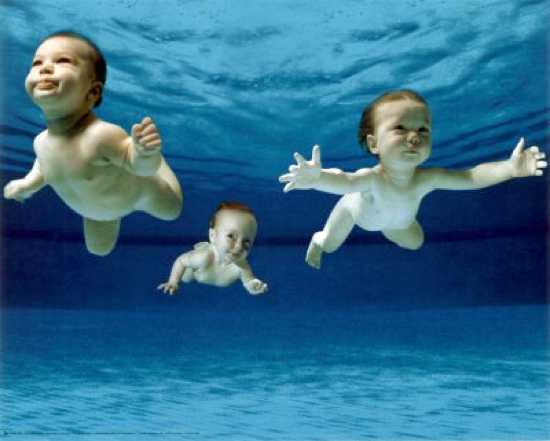
The mammalian diving reflex allows people to stay underwater for extended periods of time. It is exhibited strongly in aquatic mammals, but also in humans. The diving reflex is triggered specifically when cold water contacts the face. Water that is warmer than 21°C (70°F) does not cause the reflex, and neither does submersion of body parts other than the face. As soon as the face hits cold water, the diving reflex is triggered in an attempt to maximize oxygen output. The human heart rate slows down by 10-25% and blood flow is constricted to the extremities. At extreme depths, the body intentionally allows fluid to fill the lungs and chest cavity to prevent organs from being crushed by pressure.
The mammalian diving reflex greatly increases the odds of survival during accidental submersion. It helps prevent drowning in humans and even works if the individual is unconscious before entering the water. Because of the reflex, a person can survive longer periods of time without oxygen in cold water than on dry land or in hot water. Another interesting fact is that the diving reflex lessens with adulthood. Children are more likely to survive extended periods of time in cold water. The reflex is particularly strong in seals, otters, and dolphins, which are mammals that spend a lot of time in the water. It remains unclear if the diving reflex occurs in extreme cold weather outside water.
Interesting Fact: The mammalian diving reflex has caused some to examine the aquatic ape hypothesis, which says that the common ancestors of modern humans spent time adapting to life underwater. The hypothesis is based on the differences between humans and other great apes, and similarities between humans and some aquatic mammals. The theory uses many human functions to support the claims including hair loss, hair location, the subcutaneous fat on babies, the descended larynx, the hooded nose, voluntary breath control, the waxy coating on newborns, and the mammalian diving reflex.
More Great Lists
 Top 10 Bizarre Natural Phenomena In Everyday Foods
 Top 10 Must-Visit Natural Wonders
 10 'Natural' Things You Won't Believe Are Actually Man-Made
 10 Ways Modern Technology Is Destroying Natural Selection
 10 Heartwarming Stories Of Pets Who Survived Natural…
 10 Myths Humans Have Used To Explain Natural Disasters
 10 Times Natural Events Hit The Record Books
 10 Grisly Human Remains With Mysterious And Revealing Pasts
 10 Parasites And Pathogens That Control The Minds Of…
More Great Lists