
 Movies and TV
Movies and TV
Movies and TV  Misconceptions
 10 Dinosaur Myths That Refuse to Go Extinct
 Weird Stuff
 10 Ridiculous Flat-Earth Arguments That Fail Simple Tests
 Technology
 10 Bizarre Places Electricity Is Hiding in Plain Sight
 History
 10 Nail-Biting Espionage Operations of the Cold War
 History
 10 Groundbreaking Innovations That Prove the “Dark Ages” Weren’t Dark
 Weird Stuff
 10 Bizarre Queen Ant Dramas That Belong in a Soap Opera
 Food
Food 10 Caribbean Foods with Dark and Unexpected Histories
 Movies and TV
 10 Controversial Documentaries That Shaped Public Perception
 Miscellaneous
 10 Times Big Business Turned People into Test Subjects
Movies and TV 10 Tough-Guy Actors Who Unexpectedly Broke into Song
Misconceptions 10 Dinosaur Myths That Refuse to Go Extinct
Weird Stuff 10 Ridiculous Flat-Earth Arguments That Fail Simple Tests
Who's Behind Listverse?

Jamie Frater
Head Editor
Jamie founded Listverse due to an insatiable desire to share fascinating, obscure, and bizarre facts. He has been a guest speaker on numerous national radio and television stations and is a five time published author.
More About Us
Technology 10 Bizarre Places Electricity Is Hiding in Plain Sight
History 10 Nail-Biting Espionage Operations of the Cold War
History 10 Groundbreaking Innovations That Prove the “Dark Ages” Weren’t Dark
Weird Stuff 10 Bizarre Queen Ant Dramas That Belong in a Soap Opera
Food 10 Caribbean Foods with Dark and Unexpected Histories
Movies and TV 10 Controversial Documentaries That Shaped Public Perception
Miscellaneous 10 Times Big Business Turned People into Test Subjects
Top 10 Most Powerful Women in History
The pages of history are littered with the names of powerful men. But from time to time, there have been women who have shone out as being equally powerful as the men in their time – some of whom have even gone on to shape the future of the world as we know it. This is a list of ten of those incredibly powerful women.
10
Eleanor of Aquitaine
born: 1122?; died: 1204
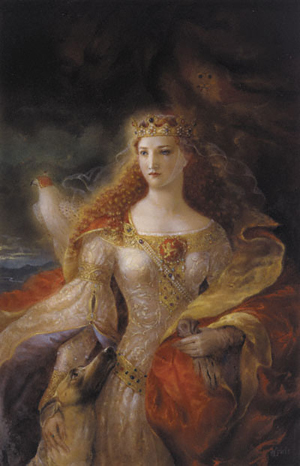
Eleanor was one of the wealthiest and most powerful women in Europe and the world during the High Middle Ages. Eleanor inherited the Duchy of Aquitaine and Poitiers after her father’s death when she was only 15. As a result, Eleanor became an independent ruler in her own right receiving the titles of Duchess of Aquitaine and Countess of Poitiers. Aquitaine was the largest and wealthiest province of France during the 12th century. Unlike many other monarchs and women of the Middle Ages, Eleanor and her family were very well educated. Eleanor is credited for having transformed Aquitaine into one of the largest intellectual and cultural centers in Medieval Western Europe.
Eleanor became Queen Consort to Louis VII of France in 1137. During her marriage to Louis, she participated in the Second Crusade in 1147 and even traveled with her husband to the Byzantine Empire. Eleanor became a key figure in developing trade agreements between Western Europe, Constantinople, and the Holy Land. She eventually had the marriage to Louis annulled in 1152 and in 1154, Eleanor became Queen Consort to Henry II of England.
In 1170, Thomas Becket, the Archbishop of Canterbury, was assassinated for going against King Henry II. Eleanor, among many others, strongly opposed the assassination. This eventually led to the Revolt of 1173-1174 in which Eleanor, three of her sons, and rebel supporters sided against Henry. The revolt failed, however, and Eleanor was imprisoned for sixteen years.
9
Hatshepsut
born: 1508 BC?; died: 1458 BC
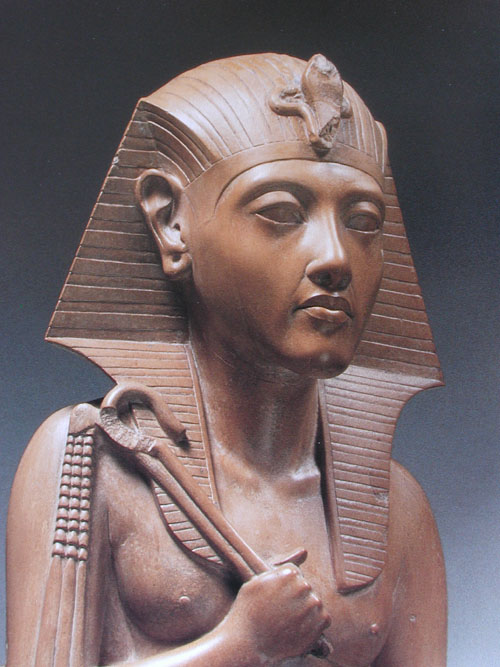
Hatshepsut was one of the most powerful women in the ancient world. She was the fifth pharaoh of the Eighteenth Dynasty of Ancient Egypt and she ruled longer than any other woman in Egyptian history. Hatshepsut was married to her sickly half brother, Thutmose II, and the two of them began to co-rule after the death of their father, Thutmose I, in 1492 BC In 1479 BC, Thutmose II died and Hatshepsut continued to rule by herself until her own death in 1458 BC
It is believed by many Egyptologists and historians that Hatshepsut was one of Ancient Egypt’s most successful monarchs. She commissioned many building projects and reestablished trade networks that had been disrupted by the Hyksos invaders of the Second Intermediate Period. Hatshepsut also led a large-scale expedition to the Land of Punt, a wealthy and sophisticated country to the south of Egypt. Hatshepsut is also believed to have led successful military campaigns in Nubia, the Levant, and Syria during her reign.
8
Maria Theresa of Austria
born: 1717; died: 1780
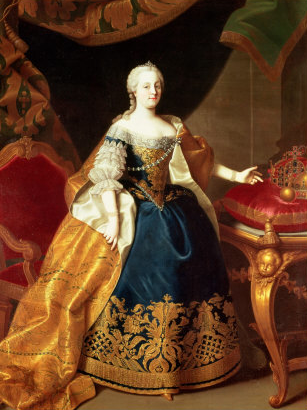
Maria Theresa succeeded her father, Holy Roman Emperor Charles VI, as empress of the Hapsburg controlled lands of Central Europe in 1740. She made her son, Joseph II, coregent in 1765 after the death of her husband.
In the same year Maria Theresa came to power, Fredrick II of Brandenburg-Prussia initiated the War of Austrian Succession by invading the Hapsburg province of Silesia. Fredrick refused to recognize Maria Theresa as the rightful heir to the throne. He rallied other nations such as Bavaria, Saxony, France, and Spain to side with him and contribute to the conflict. Maria Theresa retaliated by rallying Hungarian arms to her defense. As a result, she was able to repel the invading armies and preserve the Hapsburg state as a major European power. The war officially ended in 1748 with the signing of the Treaty of Aix-la-Chapelle.
Maria Theresa brought about many economic and political changes to her empire. She increased the size of the army by 200 percent and increased taxes in order to guarantee a steady income for the government, and in particular for the military. She centralized the government by combining the Austrian and Bohemian chancellaries, formerly separate, into one administrative office. She also started what became known as the Diplomatic Revolution in 1756 when she created an alliance with France, a former enemy, to serve as a coalition against the newly allied Prussia and Great Britain. Her reforms and political decisions were successful in strengthening the economy and the state in general.
Maria Theresa was also a participant in the Enlightenment. She strongly promoted education and liberal politics. She founded Imperial and Royal Academy of Science and Literature in Brussels and she supported medical research by demanding that the University of Vienna be given money to make the medical faculty more efficient. Some of Maria Theresa’s civil reforms included the abolition of witch-burning and torture, getting rid of capital punishment, and making education mandatory.
7
Empress Theodora
born: 500 AD?; died: 548 AD

Empress Theodora was one of the most influential and powerful women in the Early Middle Ages. She was the wife of Emperor Justinian I and joint ruler of the Byzantine Empire.
Prior to her marriage to Justinian, Theodora had been an actress and she entertained at banquets for nobles. She also became a courtesan to many of the nobles she entertained. She later converted to Monophysite Christianity and gave up her former lifestyle. She married Justinian in either 523 AD or 525 AD and following the death of Emperor Justin I in 527 AD, both Justinian I and Theodora took control of the empire. Many decisions concerning the government were made by Theodora. For example, 532 AD, resentment over high taxes, religious controversy, and political corruption led to the Nika riot in Constantinople. Fearing for his life, Justinian, tried to flee the city. Theodora intervened and was able to convince her husband to stay. With Theodora’s support, Justinian was able to successfully crush the revolt.
Theodora participated in making Constantinople one of the world’s most sophisticated cities and promoting women’s rights. She had bridges, aqueducts, and churches built. One such building, the Hagia Sophia, built between 532 AD and 537 AD, is considered one of the greatest examples of Byzantine architecture. She had laws passed that prohibited forced prostitution and closed brothels. Theodora also gave women more rights in divorce and property ownership. She gave mothers guardianship of their children, instilled a death penalty for rape, and forbade the killing of a wife who committed adultery.
Theodora died from cancer on June 28, 548 AD She and Justinian are both considered saints by the East Orthodox Church.
6
Empress Wu Zetian
born: 625 AD; died: 705 AD
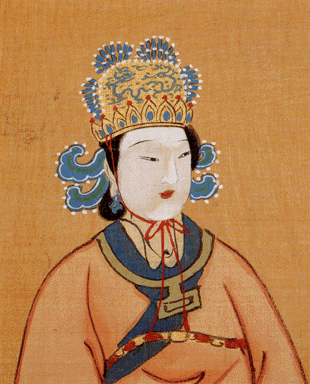
Empress Wu Zetian is considered to be one of the most powerful women in Chinese history. She lived during the Tang Dynasty and was born to a wealthy and noble family. She was also very well educated. When Wu Zetian was 13, she was sent to Emperor Taizong’s court to be one of his concubines. After Emperor Taizong’s death in 649 AD, Emperor Gaozong came to power and Wu Zetian was sent off to become a Buddhist nun. Empress Wang, Gaozong’s wife, had come into a power struggle with one of his favorite concubines, Consort Xiao. In order to distract Gaozong’s attention from Consort Xiao, Empress Wang brought Wu Zetian back to the palace to become another concubine to her husband. This plan, however, backfired on Empress Wang. Wu Zetian eventually became one of Gaozong’s favorites and the power struggle between the three women: Wu Zetian, Empress Wang, and Consort Xiao intensified.
Empress Wang and Consort Xiao, former rivals, eventually decided to join forces in order to stop Wu Zetian’s influence over Gaozong. This plan backfired too because in 654 AD, Wu Zetian gave birth to a daughter and her daughter died shortly after. Gaozong and court officials accused Empress Wang of killing the infant. As a result, Gaozong replaced Wu Zetian as his empress. In 655 AD, both Consort Xiao and former Empress Wang were accused of witchcraft and they were both executed on Empress Wu Zetian’s orders.
As empress, Wu Zetian became extremely powerful. Toward the end of Gaozong’s life, she was making virtually all of the major decisions that affected the government. Emperor Gaozong eventually died in 683 AD and Wu Zetian became empress dowager. In 690 AD, Wu Zetian crowned herself Emperor of China and she interrupted the Tang Dynasty by creating her own; the Zhou Dynasty. Wu Zetian is the only woman in Chinese history to rule as emperor.
Despite her ruthlessness to gain power and having many noblemen and noblewomen killed or exiled in the process, Wu Zetian accomplished many things when she was in power. She influenced the spread of Buddhism in China and eventually made it the official religion; replacing Taoism. She was also successful in lowering high taxes and increasing agricultural production. The Empress died in 705 AD at the age of 80.
5
Isabella I of Castile
born: 1451; died: 1504
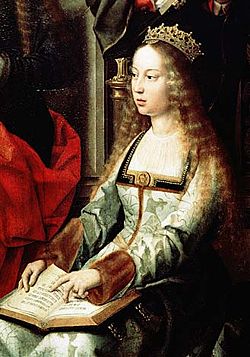
Isabella I is considered to be one of the most powerful, yet controversial, queens in Spanish history. She is best remembered for sponsoring Christopher Columbus’s voyage to the Western Hemisphere, initiating the Spanish Inquisition, and unifying the remaining independent Spanish kingdoms into one nation. Isabella I co-ruled with her husband, Ferdinand of Aragón, from 1474 up until her death in 1504.
Isabella I, like her husband, was a devout Catholic. Despite the fact that Spain had been a religiously diverse society with Catholics, Jews, and Muslims living together for many centuries, Isabella and Ferdinand believed it was their obligation to make Roman Catholicism the dominant religion of Spain. As a result, in 1478, Isabella and Ferdinand initiated the Spanish Inquisition. Thousands of Jews who had in recent times converted to Roman Catholicism were looked upon suspiciously. It is estimated that as many as 2,000 Jews were tortured, killed, or forced to leave the country during the Inquisition. There were possibly as many as 40,000 Jews who chose to be baptized to avoid expulsion or persecution. The remaining Muslim population in Spain was later targeted. Isabella is known in the Catholic Church as “Servant of God Isabella” as she has achieved the first step towards becoming a Saint.
By the time Isabella and Ferdinand had come to power, the Reconquista was coming to an end. Most of Spain, with the exception of the small Muslim kingdoms under the Nasrid Dynasty in Andalusia, had been unified and brought under Catholic control. However, from 1485 to 1492, Isabella and Ferdinand sought to complete the Reconquista process by conquering the remaining Muslim kingdoms and forcing the Muslim population into exile.
Also in 1492, Isabella sponsored Christopher Columbus’s voyages to the Western Hemisphere. Columbus’s exploration, with Isabella’s support, contributed to the foundation of an overseas Spanish Colonial Empire that would bring great wealth and power to Spain overtime. In other words, Isabella I contributed to making Spain a World Power.
4
Elizabeth I of England
born: 1533; died: 1603

Even though past queens such as Empress Matilda, Lady Jane Grey, and Mary I had all ruled England in their own right, Elizabeth was truly the first crowned queen to successfully rule with absolute power. She never married and has often been referred to as the “Virgin Queen.” Elizabeth is best remembered for bringing the Renaissance to England. She is also remembered for defeating the Spanish Armada and establishing Protestantism in England, replacing Roman Catholicism. Elizabeth was the daughter of King Henry VIII and his second wife, Anne Boleyn and she ruled from 1558 until her death in 1603. She was last monarch of the Tudor Dynasty and her reign is known as the “Elizabethan Era.”
Elizabeth was a true intellectual and she was educated by renowned scholar, Roger Ascham. As a student, she studied Greek, Latin, rhetoric, and philosophy; she mastered all of these subjects. Not surprisingly, when Elizabeth came to power, she transformed the English court into a center for poets, writers, musicians, and scholars. She had connections to literary figures such as William Shakespeare, Edmund Spenser, and Christopher Marlowe.
Elizabeth also transformed England from a Catholic nation to a Protestant one. Despite her Protestant sympathies, Elizabeth was known to be tolerant of all religions in England. Her reign and religious transformation were highly contested by other Catholic European nations. For years, Elizabeth’s cousin, Mary, Queen of Scots, had felt she was the rightful heir to the English throne. Mary had plotted for Elizabeth to be assassinated for years. As a result, Mary lived much of her life in England under house arrest. Finally, however, enough was enough and Mary was executed in 1587.
Mary’s execution and England’s longtime support for the Protestants in the Spanish Netherlands, was the last straw. In 1588, Elizabeth’s former brother-in-law, Phillip II of Spain, sent out his navel fleet, the Spanish Armada, to invade England, dethrone Elizabeth, and reestablish Roman Catholicism as the official religion. Elizabeth, however, proved to be no shrinking violet; she retaliated and won. The defeat of the Armada left Spain bankrupt and Phillip II humiliated. Elizabethan England, however, moved toward prosperity and gradually replaced Spain as a World Power.
3
Empress Dowager Cixi
born: 1835; died: 1908
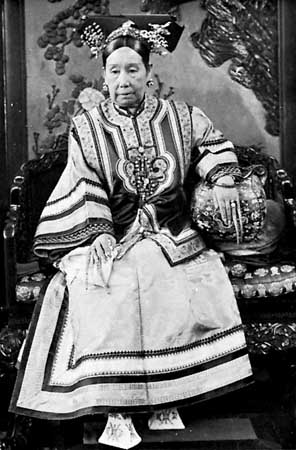
Cixi was probably most powerful woman in China since Empress Wu Zetian of the seventh century Zhou Dynasty. In fact, Cixi may have been even more powerful than Wu Zetian. She was an ambitious and conservative leader. She opposed foreign influence and supported the Boxer Rebellion of 1900. Anyway, I place Cixi at third rank on this list. Cixi was a consort of Emperor Xianfeng. After her husband’s death, she acted as regent for her son, Emperor Tongzhi, and later for her nephew, Guangxu. Her rule began in 1861 and lasted until her death in 1908. Cixi was the last empress dowager of the ethnic-Manchu Qing Dynasty and the last empress dowager of China.
Cixi was sent to the Forbidden City in 1851 to be a concubine to Emperor Xianfeng. In 1856, Cixi gave birth to her son and the future emperor, Tongzhi. After the birth of her son, Cixi’s status was elevated in the royal court and she became a consort. Emperor Xianfeng soon died in 1861 and Tongzhi became emperor with Cixi acting as regent. Cixi, in reality, held the real power because she had total control over state affairs. She surrounded herself with good advisors which also contributed to her success in maintaining power.
Internal chaos and foreign challenges plagued China during Cixi’s time. The country was suffering from the aftermath of the Second Opium War as well as the Taiping Rebellion. Cixi appointed General Zeng Guofan to handle the Taiping situation, and as a result, the revolt was successfully crushed. In 1881, she dealt with the concern of too much foreign influence by ending China’s so-called “learn from foreigners” program with the West. As a result, she put a halt to sending Chinese children abroad to study and promoted hostility toward the West.
In 1898, Emperor Guangxu, Cixi’s nephew, felt China needed cultural, political, and political reform so he initiated what became known as the Hundred Days’ Reform. He began turning to the West. Cixi put an end to this by launching a coup and placing Guangxu on house arrest. The resentment toward Western influence continued with the Boxer Rebellion of 1900 in which Western Christian missionaries became targets for attack. The rebellion failed, however, when Western powers intervened and stopped the revolt. Ironically, between 1902 and 1908, Cixi softened her views of the West and began encouraging the modernization of China. I wonder what changed her mind.
2
Catherine II of Russia
born: 1729; died: 1796
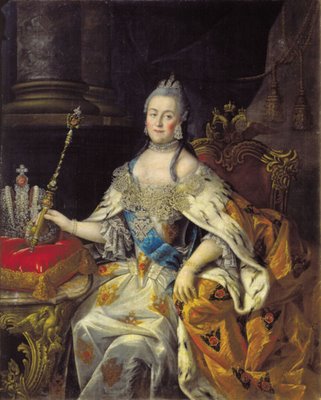
Catherine II, also known as Catherine the Great, I feel, deserves second rank on my list. She ruled over Russia which was and still is the world’s largest country geographically. Catherine is remembered for bringing Enlightenment ideas to Russia as well expanding the empire. Her rule lasted or 34 years, beginning in 1762 and ending with her death in 1796.
Catherine was born in modern day Poland to a minor German prince of the Lutheran faith. In 1744, Catherine, already having mastered the Russian language, moved to Russia to marry Peter III who was heir to the Russian throne. She also converted to Russian Orthodoxy in 1744. The marriage took place a year later and overtime it proved not to be a happy one for Catherine. She saw her husband as arrogant and immature and, finally, in 1762, Catherine conspired with the imperial guard to overthrow her husband in a palace coup. As a result, Catherine was declared Empress of Imperial Russia.
As empress, Catherine continued the process of Westernizing Russia like Peter the Great and Tsarina Elizabeth had done before her. She incorporated Enlightenment ideas into her politics, commissioned art, and created a successful foreign policy. She also expanded the Russian Empire to the Black Sea by defeating the Ottoman Empire in two major wars. Catherine’s empire spanned over three continents: Europe, Asia, and part of North America. It stretched from the Arctic Ocean to the North, the Black Sea to the South, Alaska and the Pacific to the East, and the Baltic Sea to the West.
Catherine reformed the system by creating a legislative commission in 1767, introducing a system of local self-government in 1775, and issuing the Charter to the Nobility in 1785. However, in 1773, a Cossack named Yemelyan Ivanovich Pugachev, led a rebellion near the Ural Mountains. This rebellion became known as the Pugachev Rebellion and its followers consisted of Cossacks and discontented ethnic minorities such as Bashkirs, Tatars, Kazakhs, and Kalmyks. Pugachev claimed that he was the long-lost Peter III who some people believed escaped from being murdered eleven years before and sought to reclaim the throne. The revolt infuriated Catherine and it contributed to her changes in policies. Catherine crushed the Pugachev revolt as well as other revolts around the country, placed more restrictions on society, and made serfdom even more prevalent than before. In other words, Catherine wasn’t about to have her power threatened by anyone or anything.
1
Queen Victoria
born: 1819; died: 1901
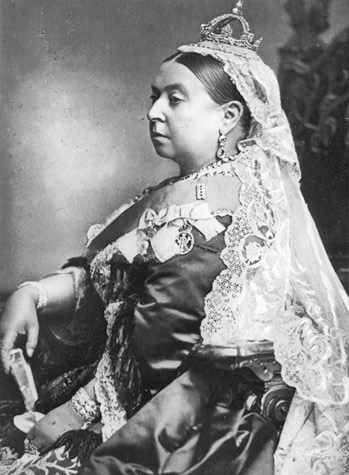
Ok, ranking number one on my list is Queen Victoria of the United Kingdom. I would strongly consider Victoria being “the” most powerful woman in history because not only was she the queen of the United Kingdom in her own right, she was head of the vast colonial British Empire.
Victoria’s empire covered 14.2 million square miles, spanning six continents, and controlling countries such as Australia, Canada, India, New Zealand, Nigeria, South Africa, and Sudan as well as many others. Geographically, the British Empire was the largest colonial empire in the nineteenth century and the largest in history. Victoria ruled over 400 to 458 million people during her reign. Victoria inspired a worldwide trend known as the “Victorian Era.” The Victorian Era influenced conservative religious and social attitudes, fashion, and politics in her country as well as in the United States and other nations abroad. Victoria’s reign began in 1837 and ended with her death in 1901. She ruled for 63 years; the longest of any British monarch.
Despite having to share her power with the British Parliament, Victoria still exerted a certain amount of power over political decisions. For example, Victoria played a role in appointing some cabinet ministers as well as a prime minister at one time. She was even responsible for appointing particular ambassadors and bishops of the Church of England. She also consulted regularly with her prime ministers by letter and in person.
Victoria contributed to massive political and social reforms in the United Kingdom as well as in the British Empire. She supported an act of Parliament in 1838 which abolished slavery throughout all colonies in the British Empire. In 1847, she supported the Factory Act which reduced the working day in textile mills to ten hours. Last but not least, Victoria supported the Third Reform Act of 1884, which granted the right to vote to all male householders and effectively extended the vote to most British men.
This article is licensed under the GFDL because it contains quotations from Wikipedia.
More Great Lists
 10 Of The Most Powerful Photographs From The Last Decade
 10 Strange Beauty Secrets Of History's Most Beautiful Women
 10 Of History's Most Scandalous Women
 Top 10 Songs That Evoke Powerful Emotions
 These 10 Women Were Convicted For Witchcraft For The…
 10 Mind-bogglingly Powerful Scenes Of Cosmic Destruction
 10 Incredible Women Forgotten By History
 10 Brilliant Black Women You Didn't Learn About In…
 Top 10 Most Catastrophic Computer Failures In History
More Great Lists