The Top 10 British Prime Ministers
Published on October 25, 2007 - 73 Comments
The Prime Minister of the United Kingdom of Great Britain and Northern Ireland is the political leader of the United Kingdom and the leader of the executive branch of government. The Prime Minister is a Member of Parliament, and in his executive capacity, is accountable to Parliament. The post is generally acknowledged to have begun with Sir Robert Walpole on 4th April 1721 when he obtained the post of First Lord of the Treasury. The incumbent Prime Minister is Gordon Brown, who took over from Tony Blair on 27th June 2007.
10. Edward Heath Wikipedia
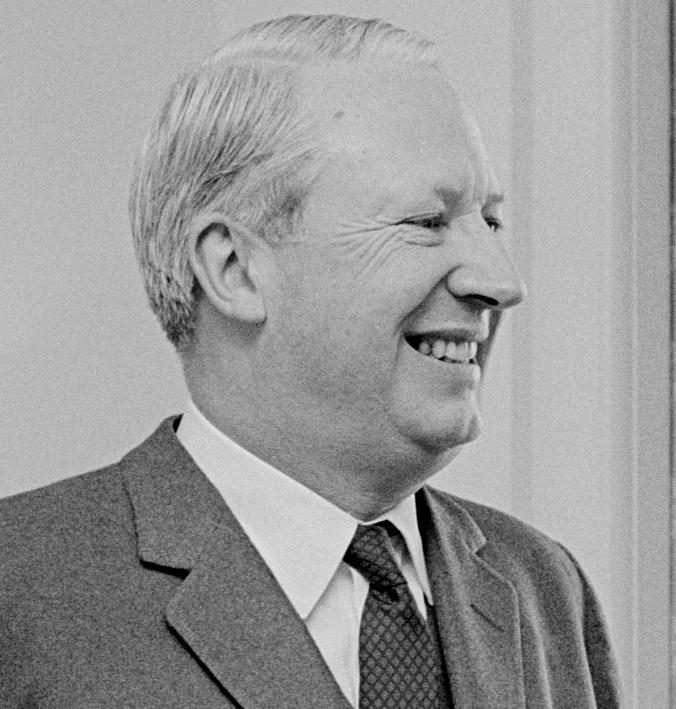
Edward Heath was Prime Minister from 19th June 1970-4th March 1974. His time was difficult, particularly with domestic problems in Northern Ireland and tremendous industrial unrest. One of his great triumphs was the 1973 Sunningdale Agreement, which while short-lived, was the first real attempt by a Prime Minister to put a stop to ‘The Troubles’ in Northern Ireland. However, what Heath is most remembered for is bringing the UK into the European Economic Community. He called an early election and after inconclusive results he resigned.
9. James Callaghan Wikipedia
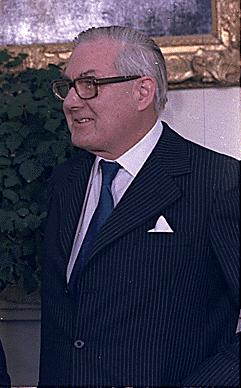
Possibly the most controversial on this list, James Callaghan was Prime Minister from 5th April 1976-4th May 1979. He had a minority government and relied on coalitions to survive. His premiership was largely unsuccessful, with the 1970’s economic crisis dominating his time in office. In March 1979 a Motion of No Confidence was raised against him in the House of Commons, which was passed by one vote. He was therefore forced to call elections, and was defeated by Margaret Thatcher.
8. Sir Henry Campbell-Bannerman Wikipedia
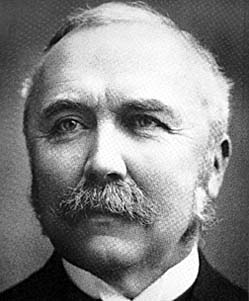
Sir Henry became Prime Minister on 5th December 1905 and left office on 7th April 1908. His short term as Prime Minister brought one great success. He negotiated the Anglo-Russian Entente, which among several other things gave Afghanistan official recognition as a British Protectorate by Russia. The Anglo-Russian Entente was the final part of the Triple Entente between the UK, France and Russia. Although not a military alliance, the 3 powers fought as allies for the greater part of World War I, which undoubtedly weakened the Central Powers to an extent they could be beaten. He also introduced ‘sick pay’ and pensions for the elderly. He resigned due to poor health and died just two weeks after leaving office.
7. Herbert Asquith Wikipedia
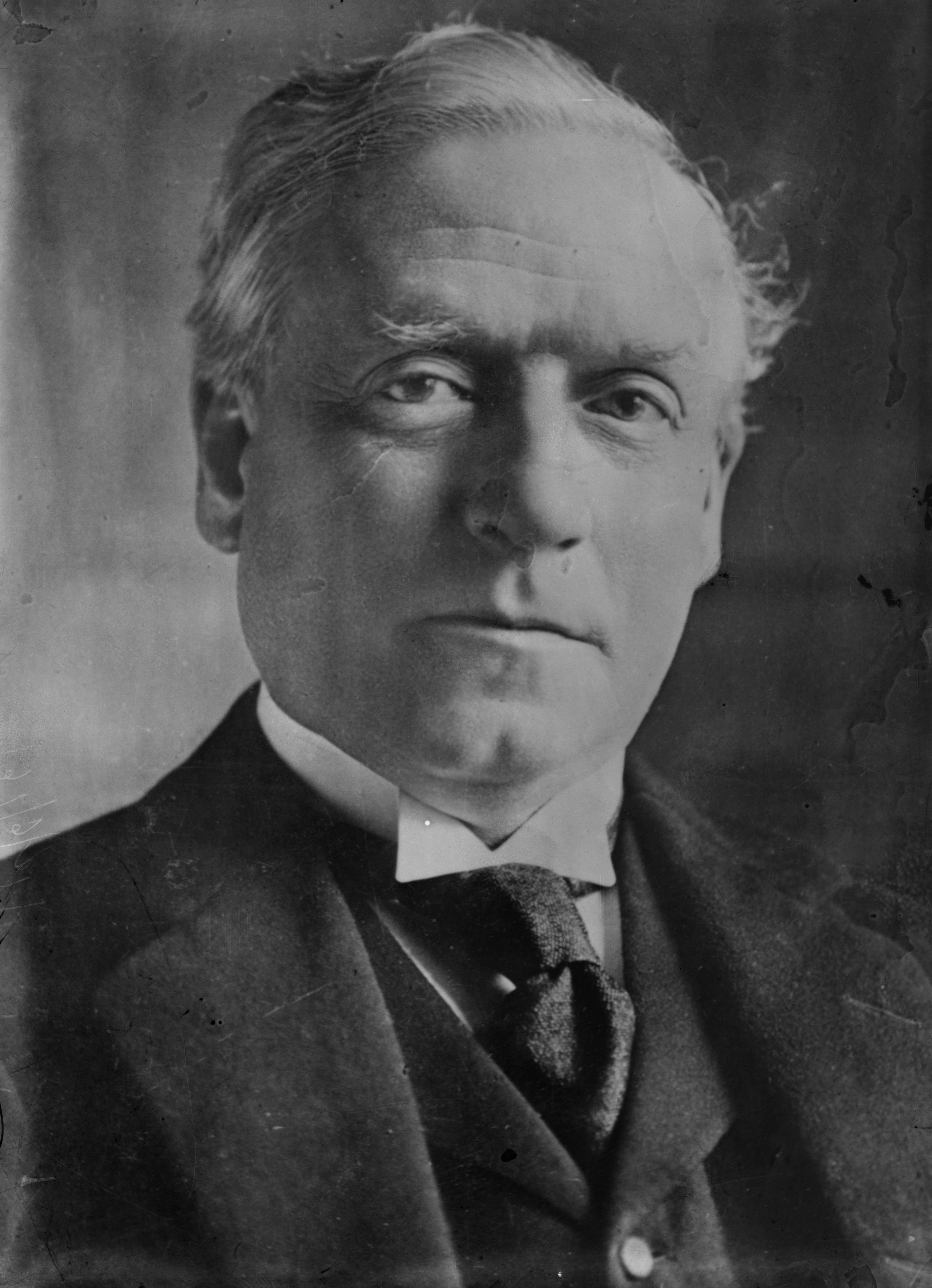
Herbert Asquith was Prime Minister through much of World War I. He took office on 7th April 1908, and served for over 8 years, resigning on 5th December 1916. The most notable success of his time as Prime Minister was his conduct in World War I, however, he also brought in National Insurance, which is often forgotten in history. Importantly, he also attempted to allow devolved government in Ireland through the Home Rule Act of 1914, however, due to the outbreak of World War I, this was postponed and led to even more unrest in Ireland. He was the first Prime Minister to take the radical step of allowing devolved government in a member of the United Kingdom. Asquith is also commended for bringing in the Parliament Act of 1911, which reduced the power of the House of Lords so they could only delay, and not outright reject a bill passed from the House of Commons. He resigned on 5th December 1916 and left office on 7th December.
6. Charles Grey Wikipedia
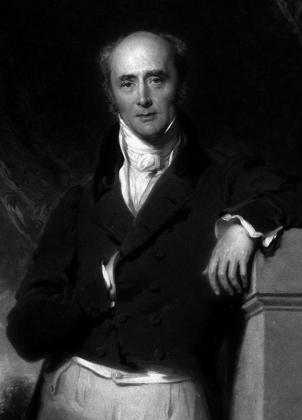
Better known as the Earl Grey, he took office on 22nd November 1830 and left on 16th July 1834. His most notable achievement was the abolition of slavery throughout the British Empire. He also introduced new measures to protect children, in restricting the ways in which they could be employed and the manner of work they could undertake. The Earl Grey reformed the electoral system through the Reform Act of 1834, which created new parliamentary seats for expanded towns and cities. This act also increased the numbers in the electorate who could vote. However, he specifically stated that women may not vote, and so sparked the beginning of the Suffragette Movement. In 1834 he quietly retired.
5. Tony Blair Wikipedia
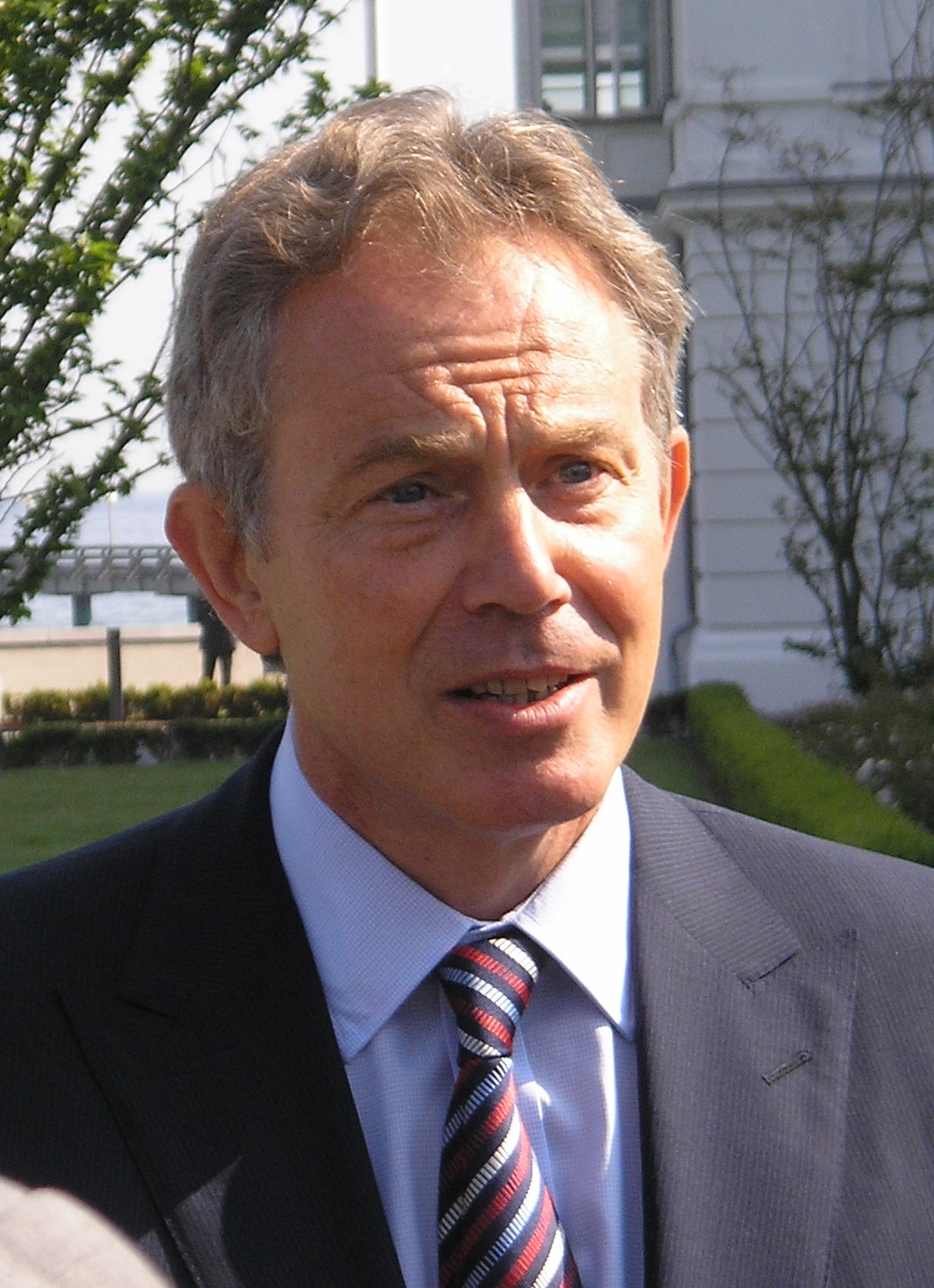
Tony Blair was Prime Minister from 2nd May 1997-27th June 2007. Despite the highly unpopular war in Iraq, and the Cash for Peerages scandal, Tony Blair will go down in history as one of the great British Prime Ministers. His tenure included huge successes including the devolution of government to Scotland, Wales and eventually Northern Ireland; the popular House of Lords reform; the introduction of the Minimum Wage; the Civil Partnership Act of 2004 which allowed same-sex couples the same rights as heterosexual married couples. His most notable achievement from this was that of the St. Andrews Agreement of 2006, which set out a timetable for a new devolved government in Northern Ireland. The situation in Ireland had plagued Prime Ministers since the turn of the 20th century, and the Belfast Agreement of 1998, followed by the St. Andrews Agreement marked a turning point in the politics of Northern Ireland. Tony Blair resigned on the 27th June 2007, angering many over his failure to serve a full term, despite promising to do so.
4. William Pitt Wikipedia
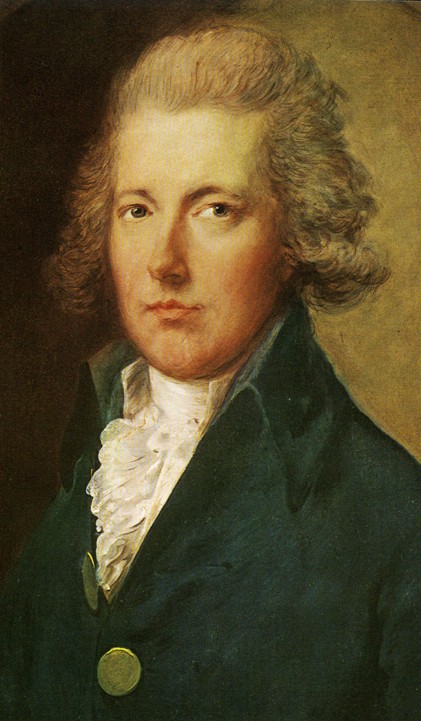
William Pitt (the Younger) served as Prime Minister on a number of occasions during the late 18th and early 19th centuries. He was first Prime Minister in 1783, and finally on 23rd January 1806 when he died. He is the youngest Prime Minister ever entering office at the age of 24. He was the first Prime Minister publicly opposed to the Slave Trade, and acknowledged the problems associated with the colonies. William Pitt was disgusted that Louis XVI of France had been executed, and went to war with the post-revolutionary France in 1793. Possibly the most memorable event during William Pitt’s tenure is the Act of Union 1800. This merged the Kingdom of Ireland and the Kingdom of Great Britain to form the United Kingdom of Great Britain and Ireland.
3. Winston Churchill Wikipedia
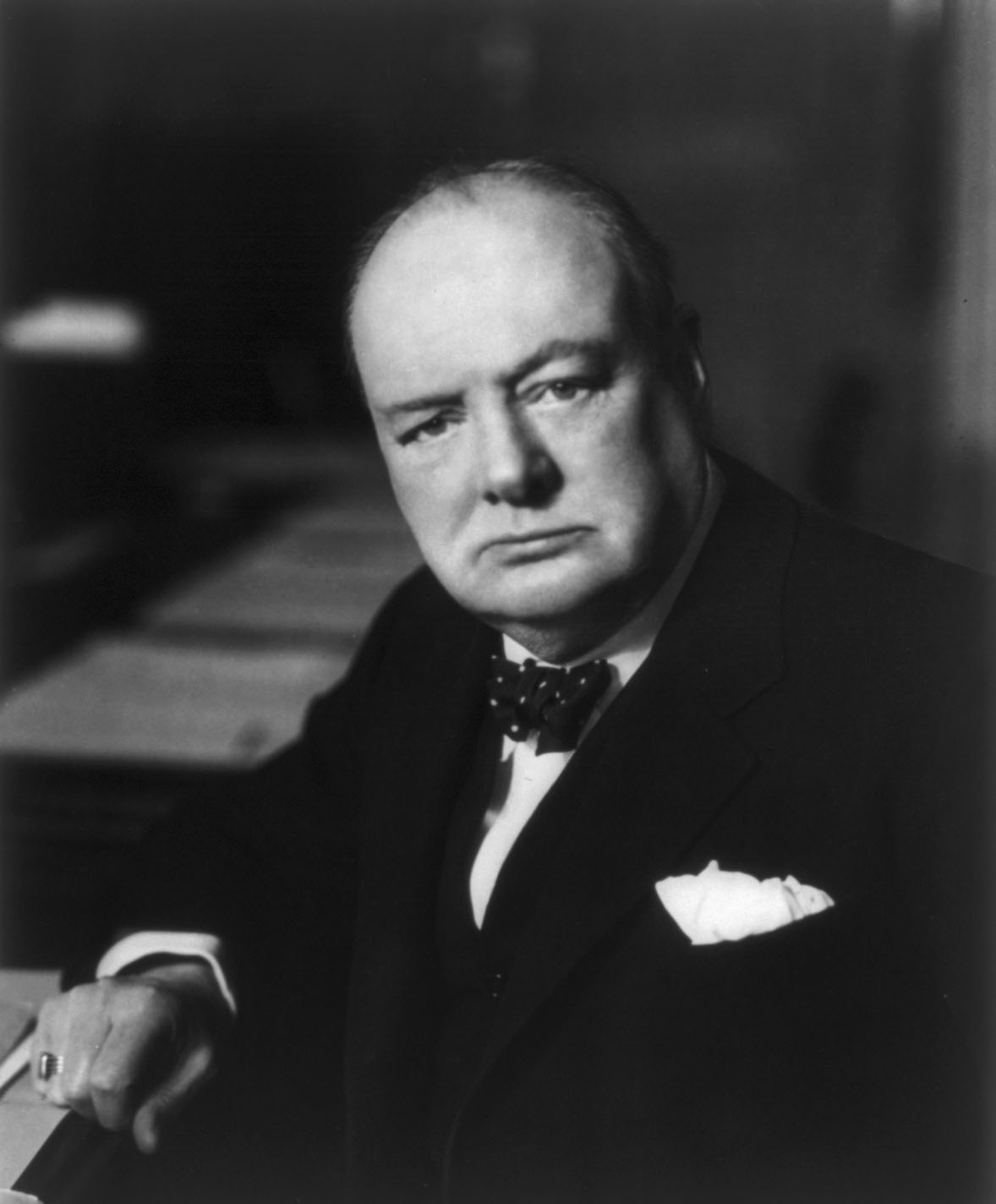
Winston Churchill served as Prime Minister 3 different times throughout the 1940’s and 1950’s; however, his most important term was his first, which lasted from 10th May 1940-23rd May 1945. He is held in history as one of the greatest wartime leaders of all time, with his time in office lasting throughout the Second World War. Possibly his greatest attribute was his ability to make rousing and emotionally charged speeches to retain a high morale in the British people through the darkest days of World War II. He was quickly voted out after the end of the War, which was probably for the best, as he was largely seen as an incompetent peace time leader. This is possibly most obvious through his own words, as Churchill entered office by declaring, “I have nothing to offer but blood, toil, tears and sweat.”
2. Margaret Thatcher Wikipedia
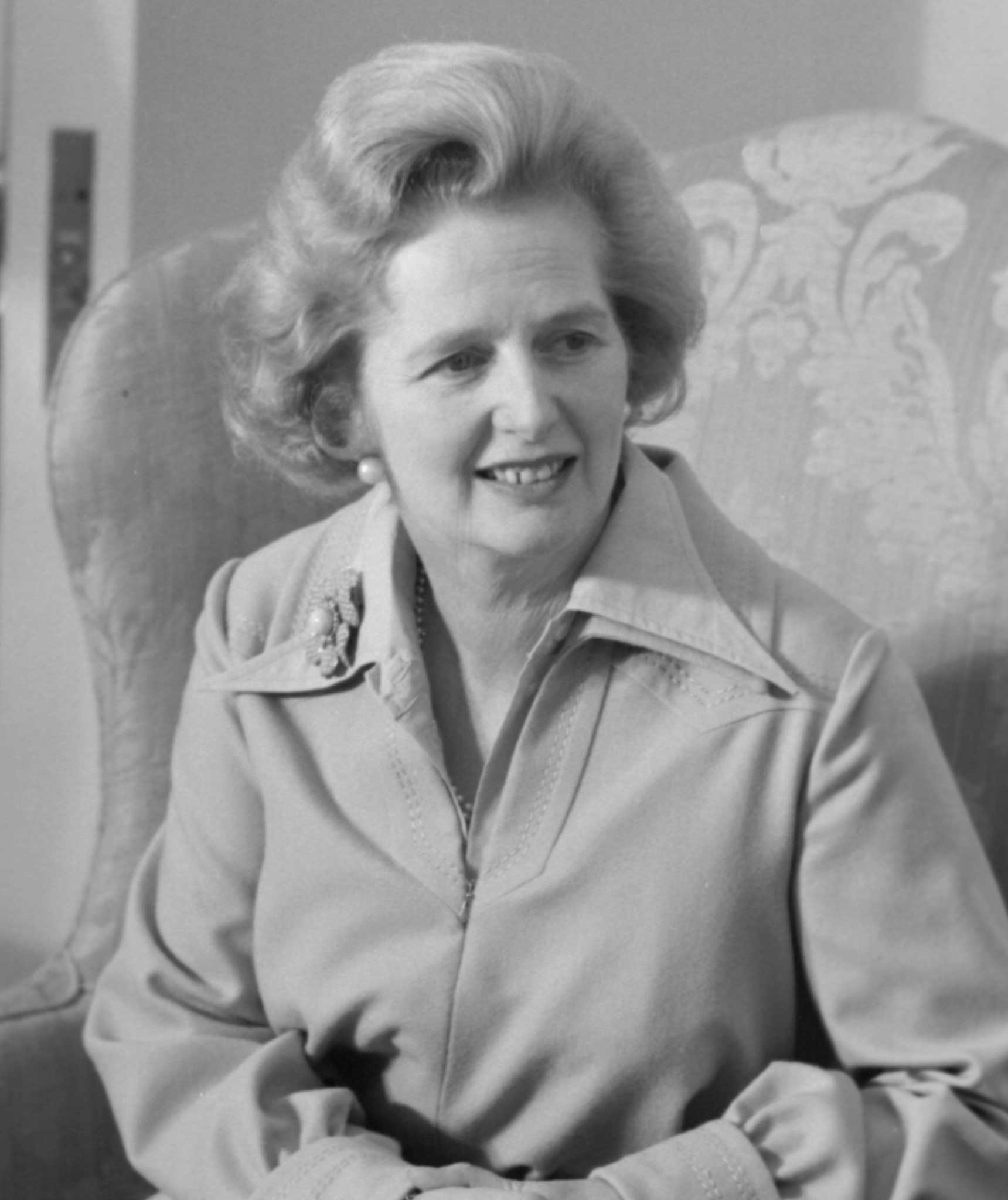
Margaret Thatcher entered office on the 4th May 1979, and left on 28th November 1990. She was the first, and as of 2007 the only female Prime Minister in the UK. The first test during her premiership was that of the Hunger Strike during 1981. During it, a number of members of the IRA went on hunger strike in an attempt to regain their status as Political Prisoners. She became known for her hard line attitude, stating publicly that she didn’t care if the hunger strikers were to die. This attitude was reinforced later that year during the Iranian Embassy Siege. The Falklands war of 1982 and her conduct of it cemented her position as a national hero. Thatcher’s efforts and successes in decreasing the power of the Trade Unions, and her handling of the Miner’s Strike of 1984-1985 also helped secure her already positive legacy. She is also remembered for her privatization of many government-owned industries. Her demise is often described as the greatest political downfall in British history. Despite still being incredibly popular among the British people, Thatcher was voted out by her own party and effectively ruined by her Cabinet. She retired as an MP in 1992, however, she is still an active member of the House of Lords today.
1. Clement Atlee Wikipedia
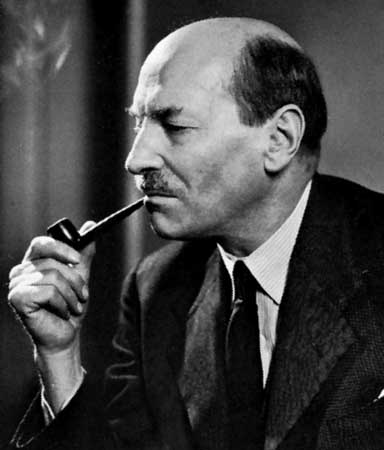
Clement Atlee was Prime Minister from 27th July 1945-26th October 1951. He won a landslide victory over Winston Churchill and was the first Labour Prime Minister to have a majority in the House of Commons. During his term he allowed India to have independence, in a move largely seen as the end of the British Empire. Thus, he moved the UK into the modern era on the world stage, while also reducing British power and influence. This structural change to the Empire allowed for the beginning of the Commonwealth. Undoubtedly his greatest achievement was the introduction of the National Health Service which gave healthcare universally to the whole population. Notably, he was also very successful in the difficult task of moving from a wartime economy to a peacetime one. As the first rumblings of the Cold War began, Atlee secured the position of the UK as a loyal ally to the United States of America in an alliance that has lasted to this day. In 2004, Atlee was voted as the greatest British Prime Minister of the 20th century by MORI; an opinion which is also largely held by the British public. He lost power in the 1951 General Election and died in 1967.
Contributor: Ryan
Related Lists10 Reasons To Change The NZ Government TomorrowTop 8 Remarkable Duels Another 10 Incredible Recordings Top 25 Quotes of Margaret Thatcher |
SubscriptionsLike this article? Subscribe to the RSS feed to keep 'em coming, or subscribe via email: |
If you find this site helpful, please leave a donation so you can enjoy the spirit of giving too.
Email This Post


1. dangorironhide - October 25th, 2007 at 4:32 am
Excellent list. The only prime minister I’ve ever known is Blair, since I was only 7 when he came to power. I wondered what Churchill was doing at number 3, as I think WWII was one of the greatest things this country has ever done, but after reading your info on Thatcher and Atlee, I would have to agree with it.
2. Christopher Joseph Borne - October 25th, 2007 at 4:50 am
“Maggie, what have you done?”
3. Hobolad - October 25th, 2007 at 6:17 am
If I was to do a list of these… well, I wouldn’t. The only PM’s I know any detail about I can’t stand
Thatcher and Blair in a best of? Aw well, it’s your list. Just shows how terrible we’ve been at choosing leaders
4. jfrater - October 25th, 2007 at 6:32 am
Hobolad: I said in my email to the contributor of this list that Maggie and the order would be controversial
5. evan - October 25th, 2007 at 6:40 am
so im guessing this Earl Grey is who the teas named after?
6. Hobolad - October 25th, 2007 at 6:40 am
It was a surprise! I’d expected that she’d be a bonus down at the bottom as a joke top ten though
7. PT - October 25th, 2007 at 6:58 am
Sorry J I appear to have missed something here The Top 10??? what have you based this on? Clearly you haven’t had the misfortune to live under any of the recent PM’s who have without a doubt been a total bunch of (I struggle to find a suitable word that will not offend your readership) and as for Blair & Brown they are surely the slimiest selfserving partnership since Burke & Hare
8. jfrater - October 25th, 2007 at 7:07 am
PT: I have lived under Blair for the last two years - and most recently Brown. I don’t know much about Brown but I know I didn’t like Blair at all. I guess the thing is that to make a list like this you need to try to be as impartial as possible and the good things he did in his time probably do make him worthy of inclusion (I speak of the devolution of the various parts of the United Kingdom). I actually didn’t write this list so you will need to ask Ryan if you think my answer inadequately covers your question
9. PT - October 25th, 2007 at 7:31 am
sorry J I assumed (For better or Worse) that you were living on the other side of the pond. I hope our inability to choose a decent and honourable leader has made you feel at home, If I can mis-quote Douglas Adams “Any person who want’s to rule over people is clearly not a suitable person to do so” or something along those lines. PS Ryan Why these guys??
10. jfrater - October 25th, 2007 at 7:56 am
PT: To be honest I would much rather see the Mayor of London get the shaft - I despise him.
11. dangorironhide - October 25th, 2007 at 8:17 am
I live at the other end of the country but oh well
Boris for mayor! haha
12. jfrater - October 25th, 2007 at 8:18 am
dangorironhide: frankly - ANYONE else for mayor - just not Ken.
13. seymour - October 25th, 2007 at 8:34 am
No, no, no, no! How could you leave off Pitt the Elder and Lord Palmerston? I’ve seen bar fights break out debating who was the greatest. I am very disappointed.
14. Blogball - October 25th, 2007 at 9:20 am
Another Interesting list.
From a U.S. perspective it is surprising Winston Churchill ranks 3rd. I always considered him one of the greatest leaders of the 20th century. I bet if you ask a typical American they wouldn’t even know who Clement Atlee is. Also interesting comments from people living in the UK concerning Blair.
This is just my opinion but I think we need a little more time to rank or judge Tony Blair.
It kind of irritates me when some talking heads are already announcing George W. Bush as one of our worst Presidents. I mean for crying out loud the guy isn’t even out of office yet.
How about a little historic perspective here. If in 10 or 20 years Iraq becomes a model for democracy influencing other countries in the Middle East & there is finally peace in that region. Blair & Bush will look pretty darn good.
15. Ryan - October 25th, 2007 at 9:53 am
Hello all,
I wrote this list through informed personal opinion. I’m a politics and British history student, so I do know a fair bit about the history of the executive in the UK. Unfortunately we have been very bad at choosing our leaders, and this definitely do show. I think the order of the list is probably the most controversial thing; it’s difficult to argue that someone like Atlee or Churchill shouldn’t be on this list.
As for those complaining about Blair - despite having a few large problems, he was undoubtedly very much successful. You must remember that he came to power in 1997 under a HUGE amount of support from the whole country. For those who remember, you can think back to the sense of renewal that the UK felt the day New Labour came to power. Unfortunately that dwindled, but I couldn’t omit Tony from the list.
As for Churchill; he was a war leader. This is enough said. He was a brilliant speech-maker, but as a peacetime politician the man was not all there. Unfortunately because he did very little for Britain domestically, I couldn’t give him the top spot.
Margaret definitely deserves number 2. She is a fantastic lady who I’ve had the opportunity to meet on a couple of occasions, and despite her persona, she is a charming person. Is it not testament to her popularity that she stayed in office for the longest any PM has for over 100 years?
PT: I challenge you to put forward a better list. I fear that you haven’t studied the history of this post in detail. Before 1900, most PM’s were incompetent, old and frail. They usually had someone else calling the shots for them. While there were a few exceptions to this, it’s true for most.
Before anyone does comment on James Callaghan, I’ll just mention why I chose him. I think he had legislatively and executively the hardest time of any modern Prime Minister. He managed to last a good while, despite having a minority government and cabinet.
Seymour: I have to say that Pitt the Elder was one that I did consider putting on the list. Let’s say he was a contender. The only problem I have with him is he was an open supporter of the slave trade and was against the rights of women. I truly hope you are joking about Palmerston!
evan: Yep, the tea is named after the Earl Grey =)
Thanks for the comments guys,
Ryan
16. PT - October 25th, 2007 at 9:56 am
Blogball - I so hope you are right (But I doubt it) &
seymour - Palmerston? PALMERSTON??? Are you delibratly trying to start trouble because just bring it on & did you just spill my pint?
17. jfrater - October 25th, 2007 at 9:56 am
Seymour: I know neither of them - you had better hope that Ryan (who wrote this list) will explain their absence
18. Kelsi - October 25th, 2007 at 10:15 am
You know, after taking AP Euro in my senior year of high school, I seem to find myself rather lacking in any knowledge of recent leadership history of Europe. As such, I am not in a position to comment on the order or particular selection while leaving others off the list, but I just wanted to say that I found the list of achievements of each of the leaders on the list rather inspiring. Very educational, thoughtful, and well written list. =]
19. PT - October 25th, 2007 at 10:21 am
Ryan - Not a chance I could produce a better list than you but that’s why the lists are there to stimulate discussion and debate and yes I’m sure seymour was having a wee jest.
20. Ryan - October 25th, 2007 at 10:26 am
Kelsi: Thank you for your comment. I too find their achievements to be inspiring. Even the worst of us have something positive to contribute to the world. =)
PT: I wasn’t really being serious. I hope it didn’t come across that way… It’s important to remember though, that the position of Prime Minister is not really an ancient post, and so there are is really a limit in who we can choose from unfortunately.
21. PT - October 25th, 2007 at 10:31 am
Ryan - No problem delighted to disagree with you on most of the list but 10/10 for having the nuts to call Jim Callaghan, although I think he was a numptie
22. Kelsi - October 25th, 2007 at 10:40 am
Ryan: I had meant to ask about Callaghan, thanks for clairfying. (I took a long time to write my previous comment…Distractions. You know how it is.) Just because you didn’t list any of his accomplishments like you had with the ohters, that’s all. I guess if I really wanted to know that badly I could also move my lazy e-butt over to Wikipedia.
23. Ryan - October 25th, 2007 at 10:45 am
PT & Kelsi: James Callaghan made a mistake. He made the mistake of not calling an early general election. Had he not have made this mistake, he probably would have been re-elected a second term. He was brought down because he was in a minority government and cabinet, held together by the Liberals. When they withdrew support, his government fell. He did actually manage to reduce the power of the Trade Unions, and decrease public expenditure. Had he stayed in power, he would have probably cut taxes too. His job was carried on by Margaret, so look to her for what might have happened had Callaghan had a few more years in office. =)
24. pete - October 25th, 2007 at 10:54 am
Margaret Thatcher is awful
25. Lizby - October 25th, 2007 at 1:14 pm
How can Thatcher be number two and Churchill number three?
Also, where’s Stanley Baldwin? I love him.
26. jfrater - October 25th, 2007 at 1:49 pm
Lizby: I can’t answer as I didn’t write the list - I am sure Ryan will give you an answer though
27. Ryan - October 25th, 2007 at 2:15 pm
Lizby: As you mention it, I think it’s only right to say that Thatcher won a war much more convincingly than Churchill did. Added to that, Thatcher was a much better statesperson in my opinion, and her conduct of domestic and foreign affairs was excellent. Churchill’s career is plagued by mediocrity, as can be seen in his abysmal third term in the 1950’s.
Stanley Baldwin was Prime Minister in the late 1930’s. He failed to stop Hitler. He failed to rearm. Therefore, in terms of “greatness”, I’m not convinced.
28. Fe - October 25th, 2007 at 5:48 pm
As an American, I admit I only recognized four of the names *the obvious ones like Thatcher, Churchhill and Blair, as well as William Pitt the Younger, who knows why* but before reading their bios, I could not have told you very much about any of them.
29. J Coustark - October 26th, 2007 at 5:39 pm
Where is Harold Wilson? otherwise a good list.
30. jfrater - October 27th, 2007 at 12:04 am
J Coustark: I am curious as to why you would include him - I just read about him on Wikipedia and it seems that things did not go well in this country while he governed. Though it is possible the article is biased, it suggests that the troubles in Ireland began under his rule, a large number of strikes occured, the pound was devalued, and more. The only really positive thing I read was that he made it possible for adults to go to university through distance learning and part-time study.
31. JT - October 27th, 2007 at 6:40 am
What on earth is James Callaghan doing on this list? If your only justification is that he survived a long time, then really I dont know what to say. He accomplished nothing and just further debased society with his stubborn socialist attitudes. Thank God for Thatcher.
jfrater: Harold Wilson was a very good PM for the 60s. He was a proto-Blair and did things like invite the Beatles to Downing Street and many other vacuous exercises. However, his domestic policies were revolutionary. He abolished the death penalty, decriminalised homosexuality and legalised abortion within about a year, something that warrants him as a true liberaliser. One can’t help thinking that if we didn’t have a liberal leader during the 60s, the decade could have been a lot different.
But there really are two omissions here: Gladstone and Disraeli! The two giants of 19th century politics. The 1867 Reform Act was the birth of democracy in the UK. And the various suffrage reforms that Gladstone introduced in the 1880s and further were magnificent. Not including either of them, let alone both, is criminal.
And LLoyd George? The only PM to be a brilliant war time AND peace time leader. Wining the war AND granting women suffrage in the same year. These mean nothing to you?
I agree with your top 3, although I would reverse the order. Blair I would put at number 1 at least (I hate the guy, but he did some good before Bush corrupted him). The rest though…the list needs Gladstone, Disraeli and Lloyd George.
32. Ryan - October 30th, 2007 at 7:11 am
JT: As you describe Harold Wilson as a proto-Blair, I describe Callaghan as a proto-Thatcher. I personally think that Callaghan was a genuinely good politician. You must remember that his tenure was during the late 1970’s; possibly the most unstable time in British history. He couldn’t have lasted long, but he set up the country for Thatcher. What a way to go. =)
Lloyd George did not grant women suffrage. He granted some women suffrage. He was also one of the few who was out to punish Germany to the fullest extent after the war and so paved the way to the Second World War by leaving Germany in a pathetic subordinate position from which the Germans would obviously combat against.
Gladstone I actually did think of putting in the list, but I have too many problems with him. He served 3 terms, with only one of them being even remotely successful.
33. JT - October 30th, 2007 at 8:18 pm
How is ’setting up the country for Thatcher’ in anyway a good thing? All that means is that he let things get worse so that Thatcher had to come in and clean things up.
34. Abosufyan Elbagir Omer - November 28th, 2007 at 6:00 am
REALLY IT IS WELL ARTICULATED LIST.WITH ONE EXCEPTION,”MAGGIE SHOULD BE SECOND TO NONE”
35. Jay - January 10th, 2008 at 12:21 pm
Toni blair popular house of lords reforms HA, true reforming the lords was popular but was a farce. By implementing a 2 stage plan rather than democraticaly choosing a new system a fully appionted house of lords was gotten by defualt. Devolution is questionable, its created problems in the whole system and heightend the west lothian question. Do not know how this list was created. Blair also just worked on previouse PM’s work on Ireland, giveing him sole credit is ridiculous.
36. Jay - January 10th, 2008 at 12:24 pm
1 more thing about Blair was an idiot let the EU take the piss by getting rid of a the £1billion rebate for a “review” of the system. You dont give something up like that unless your going to get what you want. He got rid of Thatchers good work for nothing.
37. kiwiboi - January 10th, 2008 at 12:54 pm
By no stretch of the imagination should Tony Blair be on this list. He has presided over the breakdown of civil liberties that Brits have enjoyed for hundreds of years (an agenda that continues under Gordon Brown), he stood behind corrupt and/or dishonest MP’s/senior Labour officials, agreed the sale of 400 tons of gold bullion despite strenuous advice from Britain’s largest banks that this would be disastrous (as, indeed, it was - gold has since nearly quadrupled in value !!)…the list goes on.
And I haven’t mentioned that GW Bush has only recently been able to sit comfortably again, now that Blair’s lips have finally been detached from his (Bush’s) arse.
Blair is one of the worst PM’s.
38. The,deil - April 17th, 2008 at 7:25 am
Thatcher is not revered by everyone in the UK, I know quite a few people will be having a huge party when she pops her clogs.
Blair, Words cannot describe the contempt I hold for that liar.
39. brodie - April 25th, 2008 at 9:52 am
Margeret Thatcher, the second greatest prime minister!? Are you mad? 8 million on the dole, pole tax and the complete de-construction of the British coal-mining industry?
Margeret Thatcher is possibly the most unpopular Prime Minister of all time. How anyone could possibly consider her a good leader - let alone the second best we’ve ever had - is beyond me.
40. Rob - May 10th, 2008 at 7:01 pm
Hi Ryan, just stumbled on the post by mistake. I’m always interested in lists like this as it seems most ranking analysis focusses on either US Presidents or exclusively 20th Century PMs. On the list I think overall it is good though there are things I would question, especially Margaret Thatcher at no. 2, especially given that she dismantled many of Attlee’s achievements and, in my opinion, is solely responsible for the culture of selfishness and consumerism that has led to many of our current social problems.
I agree with Attlee as No 1 and would also concur with Churchill in 3rd position (though his talents in foreign policy exceed his domestic abilities, hence his delegation of domestic duties to Attlee and Bevin during the war).
I applaud you for including Jim Callaghan on the list, a vastly underrated PM who kept Britain affloat during a difficult period (interesting to note, Denis Healey is the only Chancellor prior to Gordon Brown under whom both unemployment and inflation declined at the same time), though I would question the choice of him over Harold Wilson.
Bannerman is an interesting choice, though a good one, although I would question choosing Asquith over Lloyd George, particularly given most of Asquith’s key reforms were down to Lloyd George.
Pitt the Younger is a good choice, though I do not feel he is the only pre 1900 statesman that is important and would be more likely to choose Robert Peel or William Gladstone, the two most important statesmen of the Victorian era. Grey is important for the Reform Act, and for ending the repression of the Liverpool govt, though the Poor Law Amendment Act for me is a huge stain on his record. Kudos for not putting in Disraeli though, a man very much all style and no substance. I would have included Pitt the Elder as well, the slavery thing, it should be remembered, was the opinion of all at the time and we should, concordantly, judge in the context of the time.
Ted Heath I have a major problem with, as Barber’s economic policies led to the crisis that endured throughout the 70s and led to the winter of discontent, though having said that his decision to take us into Europe was brave and vital.
Overall though, good list with some very ballsy picks.
41. Reginmund - June 13th, 2008 at 5:36 pm
For some strange reason with most British politicians, there is always something really great about them and something really bad about them. Yet, with American politicians, most are either great leaders or deplorable scum bags.
42. liam; manchester - June 14th, 2008 at 11:05 pm
sorry jfrator, but maggie thatcher was a c**t and if you had a list of top 10 worst british priministers she should deffinatly be at the higher ranks of that one, and nowhere near the top of this one,
on another note, your site is brilliant tbh, and it is up there with wikipedia on finding out interesting facts,
nice one.
43. LilNic - June 15th, 2008 at 1:47 am
Now i dont know much about politics but i was surprised to see Churchill come in at third, i thought he would be first.
44. rushfan - June 16th, 2008 at 7:38 am
I know crap about politics in countries other than America, but I do love watching C-SPAN when they show the British House of Commons. It’s cool the way they’re all talking and making sounds and stuff.
45. rushfan - June 16th, 2008 at 7:40 am
That came out wrong. It’s not just cool because people are talking (people talk, that’s not unusual) but it’s how they talk over each other and cheer and jeer. You know what I’m talking about.
46. Alice H - June 19th, 2008 at 5:09 pm
maggie thatcher - milk snatcher
47. Dan - June 27th, 2008 at 2:45 pm
I think this list is a good idea and some names that are not the obvious ones have been added. But the ones I have the biggest problems with are Clement Atlee and Margaret Thatcher. I may be slightly bias but Clement Atlee should not even be on the list and Margret Thatcher should certainly not be second to him.
Firstly I do not think that Clement Atlee reducing Britain’s global power in the world is a good thing and certainly not something that qualifies him to be Britain’s greatest ever prime minister.
Secondly his introduction of the NHS does not give him the right to be Britain’s greatest prime minister. I am not suggesting that a health service is not needed in Britain but that the idea was not properly planed and funding put in place. Especially after we were in debt after a world war. We can often watch the news and hear about a lack of organisation in the NHS.
Thirdly Atlee did not secure a relationship between Britain and a America. Britain and America were good friends through ww2 so Winston Churchill should be given any credit for the friendship of Britain and America. The only thing Atlee did for Britain and America’s relationship was to put us heavily in debt with America, which has only been recently fully paid, and has forced every future British Prime minister to do whatever America wants. The only relationship that Atlee tried to strengthen during his time in office was with Russia. When he allowed the Russians access to several of our jet engines which they reverse engineered and used their own versions in planes used in the Korean War, against Britain and America.
Before writing this I read what other people have written. I found many people had a negative view of Margret Thatcher. So I assume that that they may be focusing on some of the negative aspects of her time as Prime minister, which are bound to happen over such a long time. If we focus on the good aspects we can get a very different picture. To start with she opened up British politics to the lower classes and women, more than those before her, by becoming Prime minister. Also she helped poorer people to get homes by selling them their council homes. When talking about her we cannot forget her negotiation of the UK rebate towards the European Community budget.
When I read the comments people have put about Margret Thatcher I noticed that they failed to see the benefits of some so called mistakes. Firstly privatization was a fantastic move. It gave the previously government owned industries the chance to get more investment and gave people the opportunity to buy shares and then sell them for a quick profit after the privatization. Secondly people have mentioned the unemployment at the time. Which was caused by the indirect taxation which businesses found hard to cope with. This also had hidden benefits because Britain’s economic growth overall was stronger than before as well as mortgages and inflation rates being at their lowest since 1970.
Finally to prove that I am not alone in my support of Margret Thatcher she was described as Britain’s greatest post war Prime minister by a yougov poll in the daily telegraph.
48. Stan - June 28th, 2008 at 12:35 pm
Several points:
1. The concept of such a list is inherrently ridiculous, for comparisons between individuals across a two hundred and eighty-seven year timeline is fundamentally impossible, as the nature of the periods in which they existed are irreconcilably different. A group of ‘great Prime Ministers’ would be more valuable than a lexical ordering.
2. The list is extraordinarily biased towards the twentieth century - only two Prime Ministers from other centuries are included.
3. Campbell-Bannerman? In office for barely two years, and not, in practice, head of government for much of that time because he was terminally ill.
4. Surely, by definition, Sir Robert Walpole should be included in any such list purely on political grounds - afterall, he was the first to gather enough political acmen to install himself in such a post. Furthermore, his greatest achievement was the maintenance of peace throughout most of his premiership - a geat achievement for that bloody era.
5. How can Earl Grey - who made a greater contribution to bringing about mass democracy than practically any other be considered inferior to Tony Blair, a man who history has already begun to acknowledge as a political fraud, whose electoral success was based upon spin, and whose government created the origins of the economic precipice upon the edge of which we now stand?
6. How can Premiers such as Callaghan and Heath be included over David Lloyd George - not only instrumental in bringing victory in the Great War, but also a principal author of the 1918 Representation of the People Act, which brought univeral suffrage (besides his achievements as a social reformer).
7. The justification for Attlee neglects some vital points. Britain suffered three major financial crises during his time in office, two of which (Fuel Crisis - 1947, Financial Crisis 1950-51) were directly caused by his government, and especially the decision to fight in Korea. The retreat from India was not carried out because of moral opposition to colonialism - it was bitterly regretted by his government (principally Earnest Bevin, the Foreign Secretary) - and was performed due to post-war economic weakness. Moreover, the early NHS was dogged by inadequacies - over-spend in the first two years was forty per cent, and charges for prescriptions, dentures, and spectacles undermined the system’s universality. Although his place on any such list is beyond doubt, being first is questionable.
8. Thatcher’s position is largely justifiable, although it is hard to view a divisive character who brought prossperity to some and hardship to others as superior to Winston Churchill, who brought liberty not only to the British people, but many abroad (in spite of his imperialism)
9. Callaghan and Heath, achieved fairly minor things (with the exception of membership of the EEC(EU), and its merits are not unanimously accepted). Stanley Baldwin, by contrast, dominated politics for fourteen years, overseeing industrial peace (the General Strike failed quickly, and with negligible bloodsed), and defending Britain from Fascism and Communism at home (eg. Public Order Act(1936) destroyed the Blackshirts; Arcos Raid destroyed a Soviet spy ring). Together with MacDonald, he was largely responsible for Britain’s experience of the Depression being shorter and shallower than in comparacle countries.
10. Blair cannot be included, because the nature of his legacy and government cannot yet be known to us, as too many important records are outside the public domain.
11. Pitt the Elder accepted the slave trade - true, so did Augustus, and he woiuld top any list of Roman Emperors. He merely accepted the prevailing attitudes of the times - eighteenth century Britain was far less enlightened than it became in the subsequent century; it was a society that - as Gibbon showed - idealised Rome - a slave state. He must surely be included in such a list because his role in the Seven Years War (French and Indian War to Americans) led to Britain’s emergance as a world power.
12. What of Robert Peel? His manifest achievements include the creation of the police force.
13. How can the great titans of Victorian politics - Disraeli, Gladstone, and Salisbury - be ignored. They dominated the political landscape for practically a third of the nineteenth century, and were each responsible in no small part for the power and prosperity Britain enjoyed in the years after thei respective ascendencies.
14. Good to see Asquith - his achievements as a social reformer are too often overlooked.
15. To suggest a stronger, and slightly longer list (in chronological order, not by merit): (Robert Walpole - but largely for political skill than for great achievement), Pitt the Elder, Pitt the Younger, Earl Grey, Robert Peel, Benjamin Disreali, William Ewart Gladstone, Lord Salisbury, Herbert Asquith, David Lloyd George, Stanley Baldwin, Winston Churchill, Clement Attlee, Margaret Thatcher.
49. craig - July 13th, 2008 at 11:48 am
winston should have been first attlee should not have been there to quote churchill “attlee is a very modest man indeed he has very much to be modest about” also blair should be third i have no idea why he is so unpopular indeed when u ask most people why they dont like tony blair they do not have a reason i also look foward to a revised list in about 5 years with david cameron coming a very close second to winston churchill
50. Dan - July 27th, 2008 at 1:02 pm
Craig, I have a suggestion to why Toney Blair is so unpopular. To start with Blair moved the labour party towards the centre of the political spectrum which abandoned many of the Labour party’s traditional voters and many of their mp’s. Another of his moves that may have upset labour supporters was his development of free market policies. Which are usually the domain of right wing politics. Apart from policies that changed the labour party there was his introduction of stealth taxes. Furthermore Blair has had a tendency to use information in a misleading way or spin the truth. To expand on peoples rightful mistrust of him there is the fact that he is the first PM if the UK to be formally questioned by the police whilst in office. A record I am shore he is rowed to hold. Now to come to a point that his time as PM is famous for his relationship with the US. Many have perceived Blair as being a puppet for the US including Nelson Mandela who called him “the US FOREIGN MINISTER” for. Finally to show how many people disagree with your support of Blair in a 2006 Daily Telegraph report he was voted the most unpopular post war PM
51. craig - July 29th, 2008 at 6:20 am
dan, i agree tony blair did have faults but he did many great things which are stated above my point was that the general public do not know why they do not like him and my support of him does not come lightly with me being a member of the conservative party. i also find it funny that you use a terrorist to support your dislike of tony blair
52. Dan - July 30th, 2008 at 4:10 am
Craig when I first read some of youre comments I strongly disagreed with youre point of view. But after reading your latest points I am begining to like you. I am also a strong supporter and member of the conservative party and I totaly agree with you about Nelson Mandela being a terorist. Many times I have argued with people about the fact that Nelson Mandela was a terorist. But he is still a public figure who is admired by many. Although I agree with you about these points and that many of the public dont understand politics I disagree with you about tony blair being a good PM.
53. justin - August 19th, 2008 at 10:27 am
Margaret Thatcher was a terrible prime minister, and definitely should not be even considered for this list. She was responsible for this countries downfall and mass unemployment, amongst many other things. I can’t believe you put her on the list!
54. Ryan - August 25th, 2008 at 8:10 am
Hello all,
I’m the contributor of this list and hadn’t been on Listverse for a while. I’ve been abroad since June and haven’t had much of a chance to come online. I just want to thank everyone for the comments they’ve given, in agreement or otherwise. They’ve made for a very interesting read.
There is, however something I cannot agree with. Craig stated that in 5 years time David Cameron will be second to Churchill. I find this quite amusing, because I can almost guarantee you that the public would have said the same about Blair in 1996/1997 and most likely would have still said the same in 2001. All those who are so quick to denounce Blair now, will almost certainly in reflection see just how good a job he did, until about 2005.
Anyway, I’ll check back on this thread soon.
55. Anon - September 4th, 2008 at 8:24 am
Ryan,
(I don’t know whether you still check back and read this?)
and any others,
(I’m scrolling through lists fast and haven’t time to read the later comments yet. But if I’m repeating, take it as augmenting.)
During the Falklands War I understand Margaret Thatcher had pictures of Churchill and Wellington hung on the wall as her inspirational models to aspire to in terms of miltary leadership and putting the Great back into Britain. She won that conflict. Just. The Belgrano was sunk, a morally muddy event, but hardly to be compared with, say, the questions that surrounded the bombing of Dresden. She won largely because of the utter incompetence of the Argentinian armed forces. Remember, they had but one focus. They were not distracted by any sudden decision to invade Brazil, say, and had not conquered Chile and Bolivia by a mighty military machine. Britain was in fact far stronger than Argentina. Considering the astonishing distance, the victory was a fine stroke of strategic planning with more than a tinge of luck. To compare it with the all-out war that Churchill conducted, yes conducted (should we ignore his diplomatic success in sustaining Britain via the U.S. before Pearl Harbour?) is like comparing a good Mickey Mouse cartoon with ‘Snow White’ or ‘Pinocchio’; or Korea with Japan 1941-45. It is arguable that his inspiration, personality and courage were powerful forces of themselves. I can remember them. I can also remember the terrible threat of the times. At one point Churchill truly despaired inwardly that all was lost. Shall we consider the effects on Britain had she lost to Germany in the 1940s, as compared to Argentina in the 1980s? Let’s begin by wiping out Prime Ministers 1, 2, 5, 9, 10 for starters. There would have been no free Britain for them to have evolved in unless the U.S. had eventually won a far more terrible and destructive war, probably involving nuclear weapons in the European theatre. Churchill himself might only at best have been a PM in exile, again unless or until Britain had eventually been freed at terrible cost.
If you are saying Churchill led by his personality, and that’s all, will you say how much war strategy Thatcher initiated and took control of? I regard myself as free today, and probably alive even, because of what was achieved under Churchill. That shaped the world we live in more than any other event.
Whilst for me that puts Churchill at Nº 1 without contest, and there is much I disliked of the Thatcher public persona, I feel she has been greatly misserved by her detractors for two reasons. She has been one of the first world polñitical leaders, if not the first, to recognise climate change, and recognise it as caused by human activity. And. It was her behind-the-scenes diplomacy and liason with Reagan that got Glasnost underway. She deserves massive credit for these two achievements.
From distant memories of school history coupled with those of child- and young adulthood, I find it so comical that Disraeli and Gladstone are totally absent from the list, while Atlee and Callahan are present. As an historian you will of course know that the Welfare State was already outlined for implimentation by a pre-war Conservative government. MacMillan with his ‘Wind of Change’ was quite influential during my time too. I didn’t like Wilson as a man, but committed Socialists would question the inclusion of at least Callahan over him.
For the records, I’ve lived under all those listed except 4. 6, 7 & 8, which makes me both biased and well-informed!
I started out *political* life as a mild Conservative supporter (until they became quite cynical), switched to Liberal when they looked for a while as though they might be effective, admire Tony Blair. If still living in the U.K. I would vote *green* because I consider, not least from my own biological speciality, that the global threat of climate change could be close, dire and terrifying.
56. Anon - September 5th, 2008 at 7:27 am
As a late afterthought to my previous:
I believe I’m also correct in remembering Winston Churchill as the first to conceive and promulgate the idea of a supra-national, co-operative European Union (rather than the Napoleonic model).
His idea was to eliminate that way the terrible national rivlaries that had led to two devastating wars. (Again putting paid to the stinking old leftie lie of Churchill as *warmonger*.) Admittedly, he saw that as consisting of continental Europe, with the British Empire as a separate entity. Nothing unique in that either. The balance between independence and integration has raged on ever since, and passionatelely, both in political and public circles. I can easily divide many of our friends up into basically pro or basically anti. Despie voting in favour (Heath time) and realising many benefits, I am appalled by the irreparable damage EEC argicultural policies have wreaked on my beloved countryside, and by the absurdities of some of their food bureaucracies. The limited doubting has also spread wider than GB meanwhile.
57. Anon - September 5th, 2008 at 9:39 pm
Ryan,
I’ve read back up the postings now. There is much of interest. Expected violent political bias features, along with some highly informed, intelligent commentary. The latter includes alternatives or different orderings that I would either agree with, or would say were worthy of serious consideration. It also helped to bring back memories of early contenders. I was a sickly child and so missed out on critical parts of the continuity of British history at school, which was also a terrifyingly long time ago.
I will though violently disagree with your favourable comparison of the tiny Thatcher *little britain* War with Churchill’s magnificent early Standing Alone WW2 record, let alone his whole war aggregated. (He can hardly be held responsible that the U.S. inevitably took over the helm when in a position to do so). I’m sorry, but that comparison is utterly grotesque. I’m quite sure the first to agree would be Maggie herself. Read what I have put above. Admittedly it’s tinged with personal experience (to go alongside that of the Falklands War), but far from being biased, that gives it a true perspective you appear oblivious to. For God’s Sake. Comparing even the Battle of Britain (a magnificent, last-ditch, liberty-saving victory) with the remote and non-threatening Falklands War. What on Earth were you thinking of? How many fronts was Thatcher fighting on? For how long? And against whom? What was at stake? What were the relative logistic odds? How many were pitted against each other on both sides? How many died on both sides? Now do the comparison. Churchill mediocre! What kind of fairy tale revisionism IS this?
As a footnote, I would also add a judgement strongly backed by your favourably assessed Jim Callahan, a PM of naval service background. He was one of the leaders of the criticism that Thatcher’s (did her governments ever have independent opinions apart from hers?) Antarctic and Southern ocean policy sent a subliminal message to the Argentinian junta. I.e. that Britain was not greatly interested in retaining the Falklands. This viewpoint indicates they were thus emboldened to invade. Hence the war. I.e. You should at least not dismiss the real possibility that she won a war she herself had allowed to happen. Admittedly Margaret had to win to show her intentions to the likes of Guatemala and Spain, as she herself said. But not to have made those intentions clear to Argentina in the first place totally undermines her overall war policy conduct.
Atlee vs. Churchill. Churchill’s domestic policies were poor? O.K., Atlee’s foreign policies were no less so. The dismantling of the British Empire had by then become an irresisitible momentum. India was something of a thorn in Britain’s side during WW2 anyway. It’s restlessness for independence made it a suspect ally or worse vìs-a-vìs Japan. If Atlee takes any credit, it is at least for not trying to resist unduly. Or does he, since Britain was essentially too exhausted to resist at that stage in any case. As I noted, MacMillan did a pretty good job later too.
All Churchill has to offer is his war record. All???? All of real substance Heath has to offer is the Common Market. Was Grey much more than a similarly limited-achievement man? Etcetera.
58. Anon - September 5th, 2008 at 9:46 pm
P.S.
The term “Special Relationship” was coined by Churchill. He worked tirelessly for and founded that tight partnership with America. Atlee merely continued it with a different partner, as the likes of Margaret Thatcher and Tony Blair have done since.
59. Anon - September 6th, 2008 at 9:49 am
Ryan,
To see what kind of insulting farce results from comparing the Falklands War with the conflict Churchill was presiding over at the moment of Pearl Harbour, go to LV topic Top 10 Conspiracy Theories, comment Nº 228, final paragraph. Some ignoramus had claimed that Britain was losing the war at that point. You will find my rebuttal as an outline list of some relevant salient events.
60. LOL - September 12th, 2008 at 9:49 am
I think this list lost all credibility when I read the statement about Thatcher: ‘despite still being incredibly popular amongst the British public.’ Have you even been to the uk? If so, you’d know that the derision of thatcher is as british as tea or the royal family. Most people are eagerly awaiting the day that old bag pops her clogs. So I think these sweeping clearly untrue opinions do not help your list at all!
61. Ryan - September 18th, 2008 at 12:49 pm
Thank you for your comments Anon, I read them with interest. =)
As for user “LOL”, if it took you until Thatcher for my article to lose all credibility, I hope you know it took me until the third letter of your name for you to lose all credibility. I’ll have you know that I do live in the UK. I’ve also got to comment on your phrase “untrue opinions”. Surely that is somewhat of an oxymoron? Opinions are inherently going to be untrue for some? Thanks for your comments anyway, even if they are rude and ill-informed.
62. Anon - September 20th, 2008 at 10:55 pm
Ryan,
Many thanks for your acknowledgement. I shall be interested in your actual reaction when you have time in due course.
Meanwhile I’ve been reminded of another significant event at another LV topic, which in turn reminded me of yet another. I can’t imagine how both had slipped my mind.
The first was a comment to me in another context. It noted the deep shame of our nation in the eyes of the world caused by Margaret Thatcher’s open friendship with the brutal Pinochet during his detention in the U.K. Well, to begin with, it is partly my intention to defend her situation to a limited degree, if I can ever remember what that other topic was!
It so happens we live in Chile and have no sympathy either for Pinochet or the left-wing opponents he deposed. Also, by chance, a good friend happens to have been an important military and subdiplomatic figure in the Falklands during that period, who also has contacts among Chilean and Argentinian counterparts. (Uniforms are thicker than water!) An unqualified Thatcher admirer, he has put flesh on the bones of our existing knowledge of the covert but considerable co-operation that existed between Pinochet and Thatcher. In his opinion the war would probably have gone against Britain without it. Chile, of course, was lethally threatened by Argentina over territorial claims at the time, and the two nations at one point came within hours of open warfare. Despite false statements, including on LV, that the US was backing Pinochet to the hilt, in fact the west had been imposing an arms embargo. Chile was largely equipped with obsolete and obsolescent heavy armaments. There is no doubt that success in the Falklands would have emboldened the Argentinian junta to attack Chile, backed by a euphoria of nationalistic fervour from its citizens. My guess is that Chile and Britain would then have been driven into an open military alliance which would have at least held Argentina, and probably even retaken the Falklands. But for what length of hostilities? And at what cost militarily and diplomatically?
To that extent the Thatcher-Pinochet alliance was as thoroughly justifed as the one where Churchill was involved with an infinitely more brutal dictator, Stalin. However, Winston never made the cardinal error of allowing the distance between himself and Uncle Joe to shorten to personal friendship. Quite the reverse. He detested and distrusted the tyrant. For that, yet again, Thatcher falls behind Churchill.
My other point. You can dismiss LOL with obvious intellectual facility, but to dismiss the essense of what he said is not so easy. Two words. Poll Tax. Among much other civil disorder and disobedience, it caused the greatest London riot of the last century. Inter alia, with that one piece of legislation so dear to her heart, she divided Britain socially in a way that would have brought tears of pride to both Pinochet and Allende. Curiously enough, the poll tax was of enormous and just benefit to me personally at the time, and its replacement, the council tax, the complete reverse, causing me notable financial hardship. Escaping from it has been one of the great benefits of living in Chile! Nevertheless, I recognised the social injustice behind those violent reactions. The poll tax is posited as having brought Maggie down, and certainly did not leave the populace at large regarding her with affection and admiration in its wake, as you have suggested. A significant percentage viewed her, and still do, with comtempt and hatred.
Winnie was never despised or hated. Nor did he fail to care for the working man (read up his life carefully). He had his considerable human faults, but his love of all people and his personal concern shone through during those darkest days. He was, in fact, more of a victim of a blackguardly left-wing propaganda campaign to paint him as a warmonger and insensitive aristocrat. Shame, if any tinge of that has filtered down to the likes of you.
My daughters lived all their childhood to adulthood under Thatcher governments. I recognise the great economic security that at last resulted (thanks in no small measure to North Sea oil though). But for our family, those were cold, impersonal days politically, that we left behind with relief. Never could that have been said about Churchill. Even the tepid Atlee lacked a public personality altogether rather than possessing an antipathetic, confrontational one.
63. tropical - October 17th, 2008 at 9:42 am
Anon: just wanted to say that your comments are very interesting.
Ryan: i gotta say that although a good list, i agree with 60. that Maggie is hardly popular in England and the thought that she is 2 on the lift, rather baffles the mind
64. Anon - October 21st, 2008 at 8:52 pm
tropical, (63),
Thanks.
65. SoCalJeff - November 21st, 2008 at 12:48 pm
Personally, Benjamin Disraeli ranks high on my list. His second government in particular seems to stand out more than the first when comparing against other Prime Ministers on the list.
66. antisocialsocialist - November 22nd, 2008 at 4:59 pm
Hi Guys,
I have been giving this subject a lot of thought recently and after much painstaking work I’ve come up with a list ranking all the PMs (except Brown as his term isn’t over yet) It’s subjective obviously and probably controversial, but if you want to ask about any specific PMs I’ll tell you my stance on them.
1. Clem Attlee- Labour 1945-1951
2. Sir Robert Peel- Conservative 1834-35, 1841-46
3. William Gladstone- Liberal 1868-74, 1880-85, 1886, 1892-94
4. Winston Churchill- Conservative 1940-45 (as coalition with Labour), 1951-55
5. David Lloyd George- Liberal (as coalition leader) 1916-22
6. William Pitt the Elder- Whig 1756-61, 1766-68,
7. Harold Wilson- Labour 1964-70, 1974-76
8. William Pitt the Younger- Tory 1783-1801, 1804-06
9. Lord Palmerstone (Henry Temple)- Liberal 1855-58, 1859-65
10. Lord Liverpool (Robert Jenkinson)- Tory 1812-1827
11. Herbert Asquith- Liberal 1908-16
12. Harold MacMillan- Conservative 1957-63
13. Tony Blair- Labour 1997-2007
14. Lord John Russell- Liberal 1846-52, 1865-66
15. Benjamin Disraeli- Conservative 1868, 1874-80
16. Henry Campbell-Bannerman- Liberal 1905-08
17. Earl Charles Grey- Whig 1830-34
18. George Canning- Tory 1827
19. Robert Walpole- Whig 1721-42
20. Stanley Baldwin- Conservative- 1923-24, 1924-29, 1935-37
21. Lord Salisbury- Conservative- 1885-86, 1886-92, 1895-1902
22. Ramsay MacDonald- Labour- 1924, 1929-35
23. Jim Callaghan- Labour- 1976-79
24. Ted Heath- Conservative- 1970-74
25. Viscount Melbourne- Whig- 1834, 1835-41
26. Arthur Balfour- Conservative- 1902-05
27. Lord Roseberry- Liberal- 1894-95
28. Duke of Wellington- Tory- 1828-30
29. Henry Pelham- Whig- 1843-54
30. Earl of Derby- Conservative 1852, 1858-59, 1866-6
31. Spencer Perceval- Tory- 1809-12
32. Lord Grenville- Whig 1806-07
33. Duke of Newcastle- Tory 1754-56, 1761-62
34. Duke of Grafton- Whig 1767-70
35. Earl of Wilmington- Whig 1742-43
36. Marquess of rockingham- Whig 1765-66, 1782
37. Andrew Bonar Law- Conservative 1922-23
38. Duke of Devonshire- Whig 1756-57
39. Viscount Goderich- Tory- 1827-28
40. Alec Douglas-Home- Tory 1963-64
41. Duke of Portland- Whig 1783, 1807-09
42. Lord Shelbourne- Whig 1782-83
43. Earl of Bute- Tory 1762-63
44. Lord Aberdeen- Tory 1852-55
45. George Grenville- Whig- 1763-65
46. John Major- Conservative 1990-97
47. Anthony Eden- Conservative 1955-57
48. Henry Addington Tory 1801-04
49. Lord North- Tory 1770-82
50. Margaret Thatcher- Conservative- 1979-90
51. Neville Chamberlain- Conservative- 1937-40
67. Anon - November 22nd, 2008 at 9:48 pm
antisocialsocialist,
Interesting list. Glad to see Margaret Thatcher demoted. Much as I personally dislike her though, I’m not sure that one who gets voted back so enthusiastically in mid-term and with such a prolonged overall tenancy can be dismissed so readily. Her role as a vital intermediary in glasnost alone surely ranks her higher than penultimate? It has to place her above John Major, despite the destructive sopcial debacles she precipitated.
For me, Atlee at Number One continues to stick terminally in the craw, I’m afraid. I lived through the era. It was largely grey and dull, apart from occasional highlights such as the 1948 Olympics and the Festival of Britain with its splendid concert hall. The great wave of hope that voted him and his in couldn’t wait to see the back of him when the time came. Not the mark of the top British Prime Minister of all time, in my opinion. I also consider a great leader needs an inspiring public personality, not simply far-reaching ideas, caring policy and great social concern, which he undeniably had. But what you saw and heard was Churchill’s utterly insipid “sheep in sheep’s clothing”.
The immediate post-war socialist government was also shot through with often farcical and short-sighted public failures: the groundnut scheme, snoek, whale meat, “you can’t tell margarine from butter”, the Bristol Brabazon and Saro Princess, inter alia, which notably lowered the public profile of the government.
I repeat the question without checking in wiki: Wasn’t the Health Service, arguably Atlee’s greatest achievement, conceived and formulated by a pre-war Conservative government?
Nationalisation, another cornerstone of Atlee’s government, was at least in part a considerable failure, either in the short term (sugar) or long term (railways). At all events it was certainly no towering achievement. Even some our disillusioned socialist friends began to see it in effect as an inflexible and dubious dogma. It hogtied the administration and in its way was as social divisive as the policies of Thatcher, placing unopposed state ownership ahead of competetive private enterprise (with anti-monopoly protection). That alone would kick Attlee off top spot for me.
Despite being *the party of the workers*, Labour came up with nothing to halt or modify the annual series of crippling strikes that stunted and divided the nation.
India was unstoppable. MacMillan surely has to be rated as high or higher as Empire dismemberer.
The Special Relationship was also merely a continuation of what Churchill (half American) and Rooseveldt had firmly established.
I grant grinding post-war debt repayment leading to consequent austerity and endlessly lingering rationing was a mighty millstone, not least with former enemies getting the reverse treatment. But it continued to be so for governments of both parties for some while to come, not just Attlee’s.
Summary: Too many intentions, including ill-founded ones, too few of them hitting the mark. Too many poor or mediocre ministers.
Excuse this, cobbled together rather randomly from the top of my head between doing something else, but I think it makes out my case well enough.
68. Anon - November 22nd, 2008 at 9:51 pm
Sorry about the Atlees for Attlee. Spanish is so ingrained now that halving repeat consonants is becoming a bad habit!
69. Anon - December 4th, 2008 at 7:55 am
Clem’s waiting.
70. antisocial socialist - December 4th, 2008 at 1:50 pm
Hi Anon (post 67), firstly thanks for what was an intelligent and articulate response, you clearly are writing as someone who knows about the Attlee years rather than the kind of Thatcherite partisan critic I’m used to, so thanks for that (though I admit that my dislike for Thatcher is equally ideological, so perhaps they aren’t wrong!). I will try to address your criticisms of Clem and justify why I have placed him so high on the list.
I will actually begin with your last point, that there were too many poor or mediocre ministers. I was surprised by this point, as aside from Harold Wilson’s 64-70 administration, I find it hard to conceive a 20th century government that had more talent! (apart from of course Churchill’s wartime coalition which contained the best and brightest of both parties). Dalton, Cripps, Bevin, Morrison, Gaitskell and the wonderous Nye Bevan were all effective ministers with powerful personalities. In a way that was Attlee’s skill, he wasn’t flashy or charismatic, but he could set policy and then delegate it to the cabinet, acting as a chairman rather than a presidential figure. His style of government was genuinely democratic, he didn’t just bully the cabinet into submission like Thatcher or Blair.
In terms of the NHS and Attlee’s contributions to the welfare state, the issue is more complicated as welfare reform had been slowly established by the Lloyd George and MacDonald governments. However, the reason Attlee deserves credit is that he implemented the recommendations of the Beveridge Report. While this had indeed been carried out under Churchill’s coalition, it was in fact commissioned by Labour MPs and was dismissed by the Conservatives as financially impractical.
Despite Churchill’s famous “cradle to grave” speech, he did little and it was Attlee that carried out most of the reforms. In truth, Churchill was a reactionary who was suspicious of such a wide a social shake up as the report suggested. We can see from his final administration after Attlee that he was totally out of step for the demands for reform, far less comfortable as a domestic leader than a war one.
The NHS however was only possible due to the efforts of Nye Bevan. Opposed at every turn by the Conservatives, the BMA and seen by many as a folly that Nye would be unable to succeed in, he almost single handedly fought and argued for its existence and almost burnt himself out in the process. It was almost entirely his achievement and the 45-51 government deserves full credit for it.
As for criticising the nationalisations, I would similarly question the benefit of privatisations. In the case of railways, BT, the energy market etc. it seems that privatisation has been massively detrimental to the quality of public services, rather than offering the benefits that neo-liberals argued they would.
It is also worth noting that Attlee’s economic policy led to almost full employment and that thanks to the consensus he negotiated, this emphasis of social responsibility in government lasted 30 years. The economy also grew faster under Keynesian policy than previously in history, far quicker in fact comparatively than under the more recent monetarist approach.
This incidently, is part of the reason I rate MacMillan outside the top 10. He was a great prime minister, I don’t deny, but his One Nation conservatism was largely a continuation of what Labour had been doing, only with a more mixed economy.
It is also important to note that thanks to Attlee’s decision to task Keynes with negotiating a loan from the United States, the potential bankruptcy that loomed after the enormous cost of the war was dispelled.
In foreign affairs I also think you don’t give Attlee enough credit. Clem and Ernest Bevin’s work at the Potsdam Conference was instrumental in the establishment of both NATO and the United Nations. As for India, the Conservatives openly said they would not allow the breakup of the Empire, whereas Attlee presided not over a disintegration but a process which dissolved empire but retained the diplomatic ties in the form of the Commonwealth, in my view another massive achievement.
Of course his government wasn’t perfect and didn’t achieve everything, but he left the world and the country a more stable and just place than it was than when he entered office, his far reaching reforms still felt today. For that, he deserves our praise and respect every bit as much as Churchill.
My reason for Thatcher being placed so low is that most of her policies were extremely damaging to British industry and particularly the communities reliant on it. Her handling of the economy led to two catastrophic recessions and huge unemployment, the reduced inflation didn’t last and privatisation was mostly botched and nowhere produced the desired actions. Her war against the Unions was carried out with unnecessary brutality and has left many workers emasculated and voiceless and of course she tried to introduce Poll Tax which was a stupid idea when Richard II was king! Thats not even going into the jingoistic and pointless Fawklands war. But the most unforgivable thing about this is that she KNEW what she was doing, it was all intentional and planned, she just didn’t care about the negative consequences. To me, a leader that deliberately and knowingly causes harm to a great number of their own citizens deserves to be hated far more than a mere well meaning incompetent.
The only reason Chamberlain is lower is because he actually put Britain in a position where it could easily have been invaded.
71. antisocial socialist - December 4th, 2008 at 8:15 pm
Oh and I should also add in regard to Ernest Bevin and foreign affairs that he is widely regarded as the best foreign secretary in history, to my mind only matched by Viscount Castlereagh and George Canning in the early 19th Century.
72. Anon - December 5th, 2008 at 10:02 pm
Hi antisocial socialist,
I’m back briefly, firstly to thank you for the courtesy of your reply and its careful explanation. I’m sure I am speaking for Clem as well! Also, I’m away from home for a short while from tomorrow, and am flailing around trying to meet a deadline further into the bargain. So although I hope to continue with a few more brief remarks, the question is … when?!
At all events, you have provided valuable food for thought, and caused me to allow a degree of reassessment to an era I haven’t given that much new thought to politically since I was knee-high to a grasshopper (and undoubtedly subject to the prejudices of my surroundings, although those were far from all one way). I don’t think either of us has any bother in putting WSC and CA above MT though! My own opinion would now (after your post) rate Attlee as a very fine PM, if not the finest, but Churchill still as the greater of the two, if not the greatest of all. *Top*, I believe, might cover both those qualifications, which are rather different in their ways, though perhaps equal in merit.
Apropos. I wonder of all those who voted Churchill as the greatest Briton in that controversial poll, how many had even heard of Attlee? Well, with Princess Diana polled second (I understand), one wonders how many had even heard of Shakespeare, Newton, Queen Victoria, Malborough, Keats, Wren, Cook, Darwin, Florence Nightingale, Elgar, QE1, … well, as I said, I’m off out any time now and would still be here when I’m due back if finishing off that list! Nothing against the wretchedly unfortunate woman, but …
73. Anon - December 20th, 2008 at 8:35 am
Still haven’t had time to put together what’s in my mind. But I’m out here and will be back. Watch this space.