
 Crime
Crime
Crime
Crime  Movies and TV
 10 Movie Franchises That Started Dark but Turned Surprisingly Soft
 History
 10 Wars That Sound Made Up (but Absolutely Happened)
 Movies and TV
 10 Movie Adaptations That Ruined Everything for Some Fans
 History
 10 Dirty Government Secrets Revealed by Declassified Files
 Weird Stuff
 10 Wacky Conspiracy Theories You Will Need to Sit Down For
 Movies and TV
 10 Weird Ways That TV Shows Were Censored
 Our World
 10 Places with Geological Features That Shouldn’t Exist
 Crime
Crime 10 Dark Details of the “Bodies in the Barrels” Murders
 Animals
 The Animal Kingdom’s 10 Greatest Dance Moves
Crime 10 Criminal Masterminds Brought Down by Ridiculous Mistakes
Movies and TV 10 Movie Franchises That Started Dark but Turned Surprisingly Soft
History 10 Wars That Sound Made Up (but Absolutely Happened)
Who's Behind Listverse?

Jamie Frater
Head Editor
Jamie founded Listverse due to an insatiable desire to share fascinating, obscure, and bizarre facts. He has been a guest speaker on numerous national radio and television stations and is a five time published author.
More About Us
Movies and TV 10 Movie Adaptations That Ruined Everything for Some Fans
History 10 Dirty Government Secrets Revealed by Declassified Files
Weird Stuff 10 Wacky Conspiracy Theories You Will Need to Sit Down For
Movies and TV 10 Weird Ways That TV Shows Were Censored
Our World 10 Places with Geological Features That Shouldn’t Exist
Crime 10 Dark Details of the “Bodies in the Barrels” Murders
Animals The Animal Kingdom’s 10 Greatest Dance Moves
10 Beautiful Types of Rainbows
When it comes to rainbows, most people think they’ve seen all there is to see. Certainly, we’ve all seen the simple rainbow – and even the most ordinary can be a stunning sight. But rainbows come in more than just one color: there are plenty of less common types of rainbows which can be even more beautiful than the usual kind. Check them out:
10
Primary Rainbows
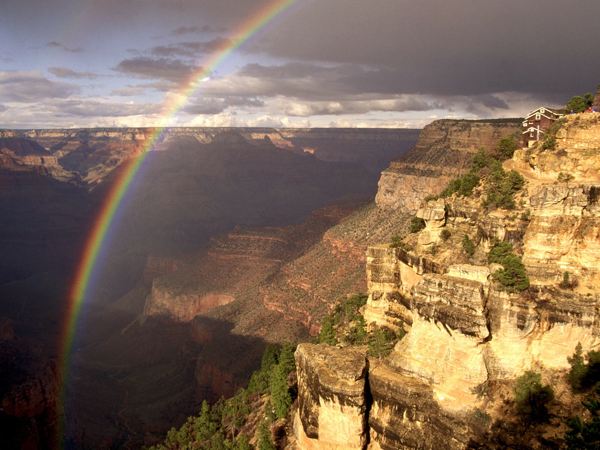
This is the rainbow we are all most familiar with. The primary rainbow is the single multi-colored arc that usually appears after a rainstorm. Primary rainbows are formed when refracted light is reflected through a water droplet. The intensity of the rainbow’s colors depends on how large the water droplets are.
9
Secondary Rainbows
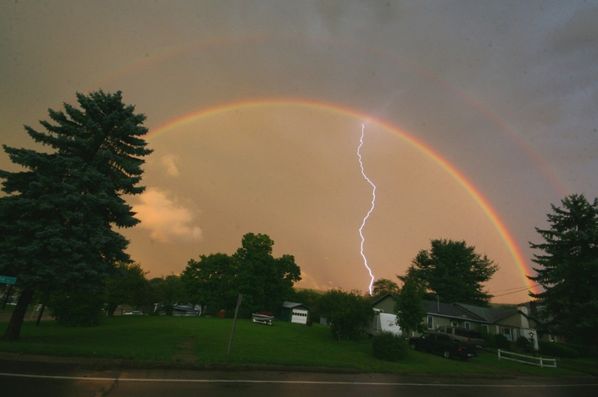
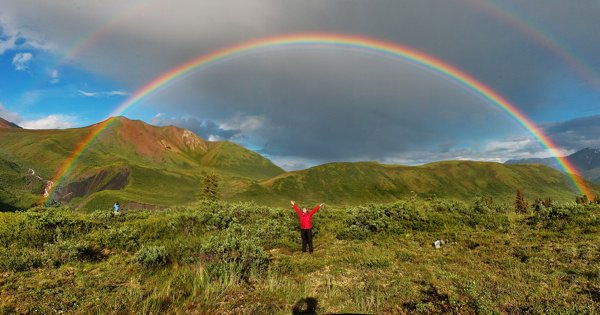
Yosemitebear Mountain Double Rainbow 1-8-10
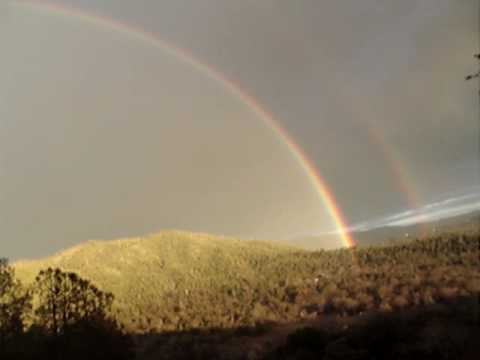
If you have seen a primary rainbow, then chances are you have also seen a secondary rainbow. They are also known as double rainbows. A secondary rainbow forms behind the primary rainbow when the light in the water droplet is reflected twice instead of once. The secondary is about twice as wide as the primary rainbow, but is only one-tenth as intense. Its colors are also reversed.
8
Alexander’s Dark Band
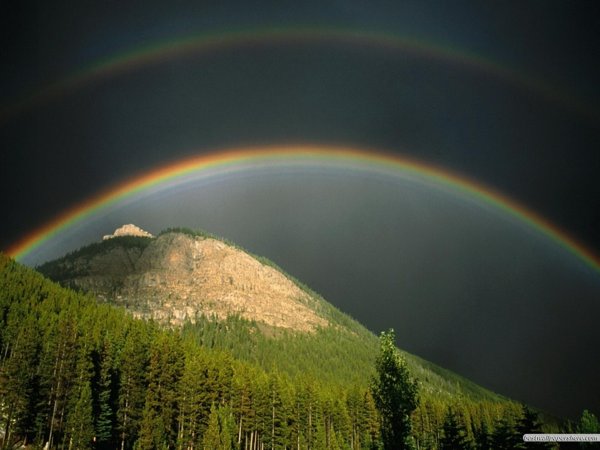
Alexander’s Band is technically not a rainbow, but it is associated with the primary and secondary rainbows. An Alexander’s band is the area of sky between the primary and secondary rainbow and it is noticeably darker than the rest of the sky. The single reflected light of the primary brightens the sky inside and the double reflected light of the secondary brightens the sky outside of it. To our eyes, it appears that the sky is darker between the primary and secondary rainbows.
7
Supernumerary Rainbows
Supernumerary rainbows are also known as stacker rainbows, and occur rather infrequently. They consist of several faint rainbows on the inner side of the primary – and more rarely, they appear outside of the secondary. They are formed by small but similarly sized raindrops, and by the interference of light which reflects once, but travels along a different path inside the raindrop.
6
Red Rainbows
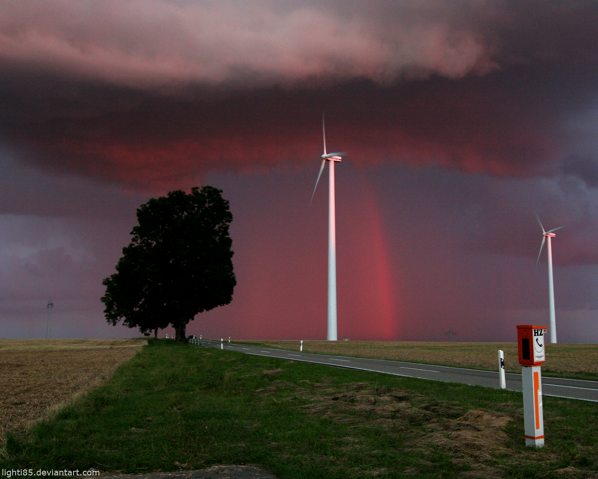
Red rainbows – also called monochrome rainbows – are formed after rainfall during sunrise or sunset. The shorter wavelengths of the spectrum, such as blue and green, are scattered by dust and air molecules. This leaves the remaining light to display the colors with the longest wavelengths, red and yellow, to finally form the red rainbow.
5
Cloud Rainbows
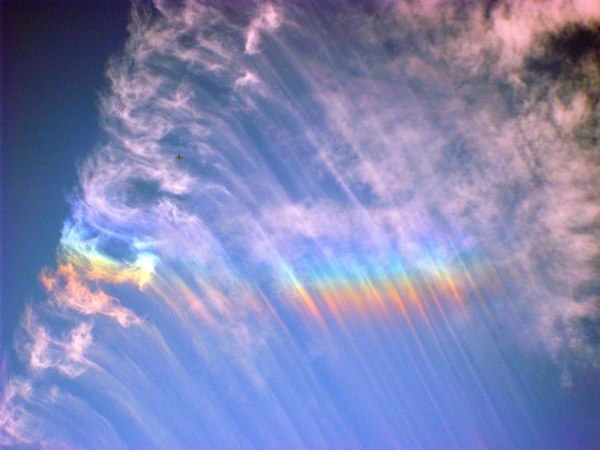
Cloud rainbows form from small water droplets in clouds and damp air, rather than from raindrops. They appear white because the water drops are very small in size (bigger water drops are more able to reflect the spectrum colours). Cloud rainbows are much broader than normal rainbows, and are most likely to form over water. They can also form over land, so long as the fog is thin enough for the sun’s rays to shrine through.
4
Twinned Rainbows
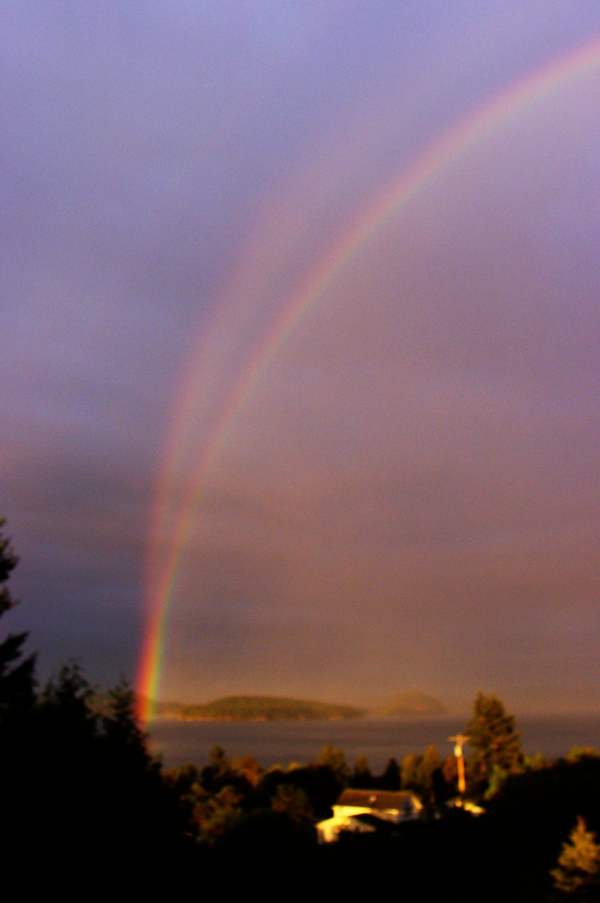
Twinned rainbows are not the same as the double rainbow – they’re actually very rare. They’re made up of two rainbow arcs that stem from a single base point, and they’re caused when a combination of small and large water droplets fall from the sky. The large drops are forced to flatten by air resistance, while the smaller drops are kept in shape by its surface tension. The water droplets then form their own rainbow, which may come together to form twinned rainbows.
3
Reflected and Reflection Rainbows
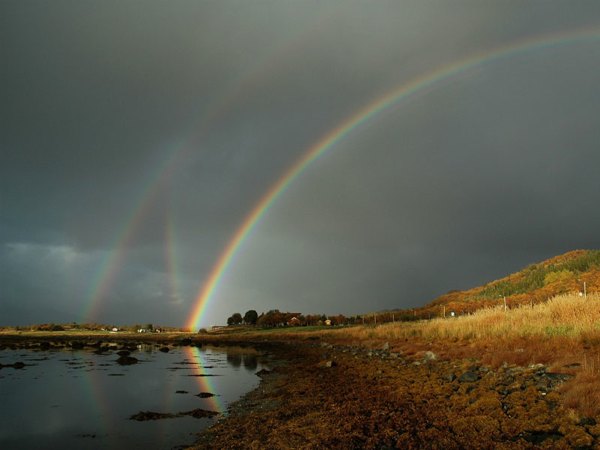
Reflected and reflection rainbows – which are not the same thing, despite their similar names – only form over water. A reflected rainbow is the most commonly seen: it appears when light is deflected off the water droplets and then reflected off the water before we have time to process the light with our eyes.
A reflection rainbow is what appears when light reflects off the water before it is deflected off the water droplets. Reflection rainbows are not nearly as visible as a reflected rainbow, because of the specific conditions they require.
2
Rainbow Wheels
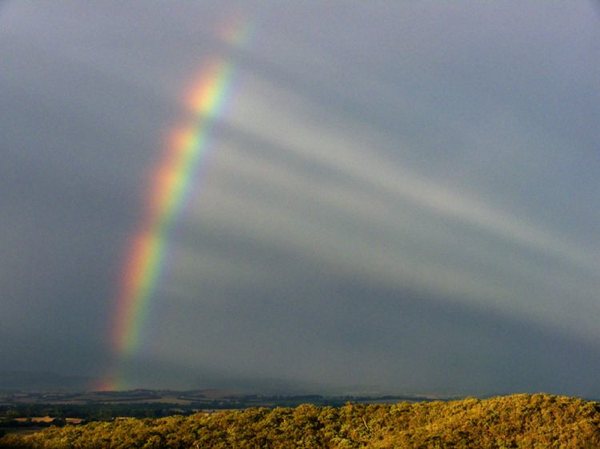 Rainbow wheels are formed when dark clouds or dense rain showers prevent the light from reaching your eye. The shadowed raindrops do not allow you to see the colours of the rainbow. The result is a rainbow that can resemble a wagon wheel, with large spokes centered towards a specific point. If the clouds are moving quickly across the sky, then the rainbow wheel can appear to rotate.
1
Lunar Rainbows
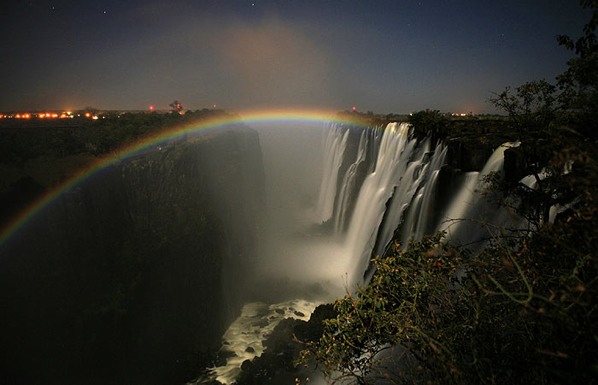
Lunar rainbows are rainbows that are formed at night by moonlight. However, moonlight is very weak and lunar rainbows are very rarely seen. The best time to see them, logically, is on the night of a full moon while it’s raining. The sky must also be very dark, which means that lunar rainbows appear very dull or white because the colour of the night is not bright enough to activate the cone cells (colour receptors) in our eyes.
More Great Lists
 10 Unconventional Types Of Tourism
 10 Different Types Of Hallucinations That Humans Experience
 10 Different Types Of Earthly Biomes
 Top 10 Unbelievable Types Of Illusions And Hallucinations
 10 Types Of Bacteria With Real Superpowers
 10 Weird Types Of Diplomacy You Won't Believe Exist
 10 Weird Types Of Jihad You've Never Heard Of
 10 Types Of Evidence That Are Less Airtight Than Thought
 10 Strange Beauty Secrets Of History's Most Beautiful Women
fact checked by
Matt Hayes
More Great Lists