Top 10 Scientists who Committed Suicide
- Published October 7, 2007 - 58 Comments
So often, in the field of the arts and sciences, the greatest minds live tortured lives. In many cases this has lead to self-murder. This is a list of the ten greatest scientist suicides.
10. Viktor Meyer
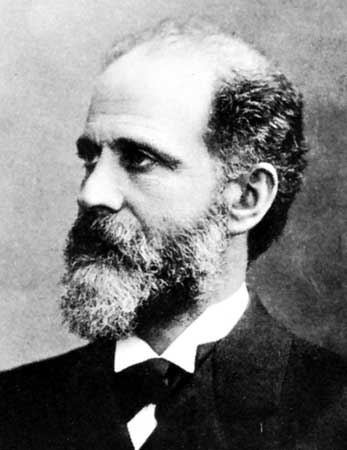
Viktor Meyer was a German chemist and significant contributor to both organic and inorganic chemistry. Born in Berlin in 1848, he is best known for inventing an apparatus to measure vapour densities, the Viktor Meyer apparatus, and for discovering thiophene.
A hugely gifted chemist, Meyer was a workaholic whose taxing lifestyle took tolls on his nervous system. After a series of mental breakdowns, he killed himself by taking cyanide in 1897, at the age of 49.
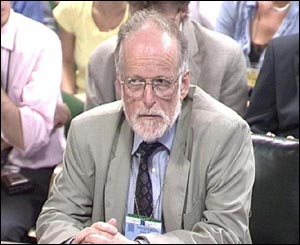
9. David Kelly
David Christopher Kelly was an employee of the United Kingdom Ministry of Defence (MoD), an expert in biological warfare and a former United Nations weapons inspector in Iraq.
His doubts about the veracity of the WMD dossier compiled by the Blair Government caused a political scandal, and he was forced to attend a Parliamentary committee hearing about the remarks. A modest man, David Kelly was savagely grilled by the Committee, and spoke in a voice so soft that the air conditioning had to be turned off so that his words could be heard.
On July 17th 2003, Kelly went on his daily walk through the Oxfordshire country, and, according to the official report, swallowed up to 29 painkillers and slashed his wrist.
However, many figures, including MPs and paramedics, continue to raise doubts over the exact cause of Kelly’s death, with some going to so far as to say it was murder.
8. Ludwig Boltzmann
Ludwig Eduard Boltzmann was an Austrian physicist famous for his founding contributions in the fields of statistical mechanics and statistical thermodynamics. He was one of the most important advocates for atomic theory when that scientific model was still highly controversial.
Born in Vienna, February 20th 1844, Boltzmann attended the University of Vienna, gaining a PhD degree at age 22, and becoming Professor of Mathematical Physics at the University of Graz at age 25. In 1893, he achieved his goal of becoming Professor of Theoretical Physics at the University of Vienna, succeeding his old mentor, Joseph Stefan.
Most likely suffering from bipolar disorder, Boltzmann took his own life while on holiday with his family. He is buried in Vienna in a tombstone that reads S=k*logW.
7. Valeri Legasov
Valeri Alekseevich Legasov was a prominent Soviet scientist in the field of inorganic chemistry, a member of the Academy of Sciences of the USSR. He is most famous for his work as the chief of the investigation committee of the Chernobyl disaster on April 26th 1986.
After the Chernobyl disaster, Legasov became a key member of the government commission formed to investigate the causes of the catastrophe and to plan the liquidation of its consequences. In August, 1986 he presented the report of the Soviet delegation at the special meeting of International Atomic Energy Agency in Vienna. His report struck the Western colleagues with the depth of analysis and full honesty in discussing the extent and consequences of the tragedy.
Legasov’s open and firm stance, however, caused a lot of trouble for him at home: the Soviet government was very uncomfortable with the frankness and rigor of his position. As a result, when in 1986-1987 his name was twice entered into the list for those to be awarded the title of Hero of Socialist Labor in recognition for his work, both times it was rejected: the second time his name was crossed out by Gorbachev himself.
Having exposed himself to the radiation on the ground of Chernobyl, Legasov’s health began to rapidly deteriorate, which coupled with his depression over his lack of recognition, led him to take his own life on April 27th 1988.
On September 20, 1996 Russian President Boris Yeltsin conferred to Legasov the honorary title of Hero of the Russian Federation (posthumously) for his “courage and heroism” shown in the course of the liquidation of the after-effects of Chernobyl disaster.
6. Hans Berger
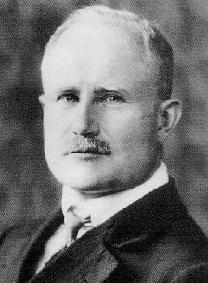
Hans Berger, born in Neuses, Germany in 1873, is best known as the first person to record electroencephalograms (EEGs) from human subjects and is the discoverer of the rhythmic Alpha brain waves.
Berger studied medicine, neurology, psychiatry and psychology at the University of Jena. He concentrated on neurology, and following the pioneering work done by British scientist Richard Caton on animals, successfully recorded the first EEG from a human in 1924. This allowed him to discover the alpha wave and described, for the first time, the effect epilepsy had on the brain.
Disturbed by the rise of Nazism and the effects of the Second World War, Berger hanged himself on June 1st 1941.
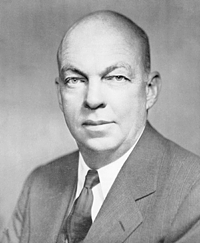
5. Edwin Armstrong
Edwin Armstrong, born on December 18th 1890, was an American electrical engineer, who invented FM radio. He first began work on the idea of FM radio at university, and patented his idea in 1914.
However numerous patent disputes, and a blocking attempt by the Radio Corporation of America, who thought it would destroy AM radio, halted its advancement.
Determined that FM radio would never succeed, Armstrong jumped from the 13th floor of his apartment in 1954. He was 63 at the time.
4. Nicolas Leblanc
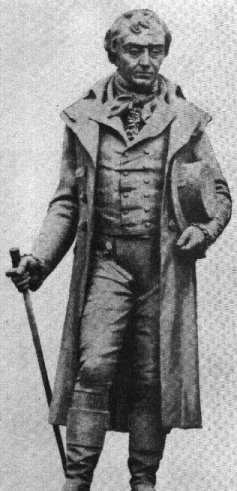
Nicolas Leblanc was a French chemist and surgeon, famed for being the first person to manufacture soda from common salt.
Born in 1742, Leblanc developed an interest in medicine at a young age and enrolled in the Paris College of Surgeons in 1759. In 1780, he became private physician to the household of Louis Philip II, Duke of Orleans.
In 1775, the French Academy of Sciences offered a prize for a process whereby soda ash could be produced from salt. The French Academy wanted to promote the production of much-needed sodium carbonate from inexpensive sodium chloride. By 1791, Nicolas Leblanc had succeeded in producing sodium carbonate from salt by a 2-step process. The prize was awarded to Nicolas Leblanc for a process which used sea salt and sulphuric acid as the raw materials. Later, a plant of his own was in operation producing 320 tons of soda ash per year.
Two years later the plant was confiscated by the French revolutionary government, which refused to pay him the prize money he had earned ten years earlier.
In 1802, Napoleon returned the plant (but not the prize money) to him, but by then Leblanc was so broke he could not afford to run it. He killed himself in 1806.
3. George Eastman
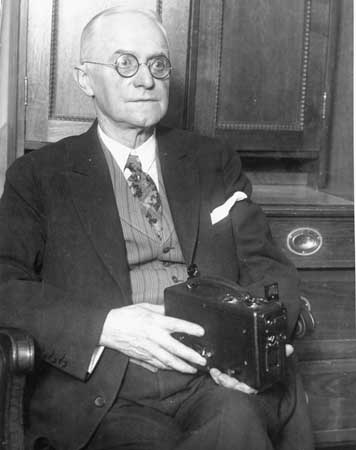
George Eastman, born in Waterville, New York in 1854, founded the Eastman Kodak Company and invented roll film, helping to bring photography to the mainstream, and setting the seeds for the invention of motion picture film in 1888.
In 1874, Eastman became intrigued with photography, but was frustrated by the awkward method that required coating a glass plate with a liquid emulsion that had to be used before it dried. In 1884, he patented a photographic medium that replaced fragile glass plates with a photo-emulsion coated on paper rolls. The invention of roll film greatly speeded up the process of recording multiple images. On September 4th 1888 Eastman registered the trademark Kodak.
In 1932, Eastman committed suicide, leaving a note that read, “My work is done. Why wait?” He is buried in Rochester, New York.
2. Wallace Carothers
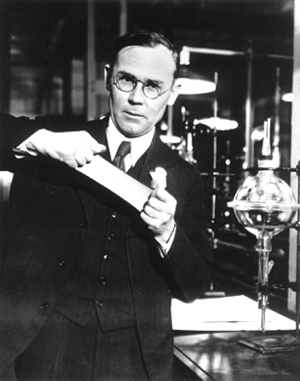
Wallace Hume Carothers was an American chemist, credited with the invention of Nylon.
Carothers was a group leader in DuPont’s Experimental Station laboratory, near Wilmington, Delaware, where most polymer research was done. In addition to first developing nylon, also helped lay the groundwork for Neoprene. After receiving his Ph.D, he taught at several universities before he was hired by the DuPont Company to work on fundamental research.
After his monumental discovery, Carothers suffered depression stemming from ‘inventor’s block’, which coupled with the sudden death of his sister, caused him to take his own life by poisoning in 1937. He was 41 at the time.
1. Alan Turing
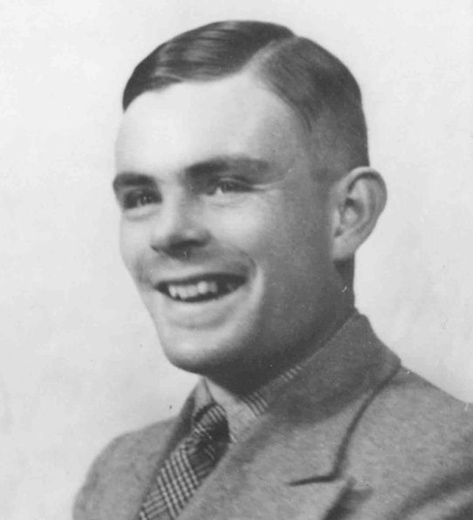
Alan Turing was an English scientist, mathematician, logician, and cryptographer, and arguably the greatest British scientist of the 20th century.
Often considered to be the father of modern computer science, Turing provided an influential formalisation of the concept of the algorithm and computation with the Turing machine. With the Turing test, he made a significant and characteristically provocative contribution to the debate regarding artificial intelligence: whether it will ever be possible to say that a machine is conscious and can think. He later worked at the National Physical Laboratory, creating one of the first designs for a stored-program computer, although it was never actually built. In 1948 he moved to the University of Manchester to work on the Manchester Mark I, then emerging as one of the world’s earliest true computers.
During the Second World War Turing worked at Bletchley Park, Britain’s code-breaking centre, and was for a time head of Hut 8, the section responsible for German naval cryptanalysis. He was largely responsible for the breaking of the German Enigma code.
In 1952, he was convicted of ‘Acts of Gross Indecency’, after admitting a sexual relationship with another man. He was given a choice between 18 months prison time (which considering his crime, was not exactly wise), or chemical castration, which included side effects such as breast enlargement. He chose the latter.
On the 8th June 1954, unable to endure the humiliation and pain of his punishment, Turing took his own life by eating an apple laced with cyanide. Despite this, it would take another 13 years for homosexuality to be decriminalised in the Britain.
Contributor: JT


October 7th, 2007 at 9:35 am
brilliance and depression can go hand in hand. see this in the arts too. incredibly talented people overcome by mental illness committing suicide.
very sad.
October 7th, 2007 at 9:45 am
Cyn: totally true of the arts. It always made me suspicious of ADD medication because so many great artists displayed behavior that would have had them on the medication had it been invented.
October 7th, 2007 at 9:56 am
nice list
October 7th, 2007 at 9:58 am
i’m in the process of changing my mind about mental illness, medication and even suicide. from a lotta different perspectives ranging from the influence of media and politics on the pharm. co’s to my own spiritual evolution. its almost as if the pharm. co’s create the need for their product. or certain things become the latest fad. like ADD. as for suicide…i dunno. for an adult that is an extremely personal choice. not one i’d recommend but i’m becoming much more sympathetic about it. it is a deeply troubling issue that can not be defined in simplistic terms…to be sure. and i wish we could put some reins on the pharm. co’s and medical insurers…in this country. i don’t know…it maybe too late. whole generations of children are pretty much labeled for life and have the notion there is something wrong w/ them that only a pill can cure. its scary. and very sad.
October 7th, 2007 at 10:25 am
Cyn: Yes children are labeled for life once they are diagnosed adhd, but not all of them require a pill to function and most don’t need the pills after they get older. They become more able to control themselves.
My brother was diagnosed adhd when he was 6. At that time they were still experimenting on the different drugs and what they do. He was switched so often on drugs and doses. I believe he took 9 different pills before they found what they were looking for. He is 17 years old now. He does not require to take a pill and is not dependent on it to want to take it. He got his license and has his own car now. They were so quick to diagnose him with adhd without a full understanding of the illness or the help provided.
My son is now being tested for the wide range of adhd. They have broken it down to 4 different areas with 3 different subsequences. On top of that they also test for asbergers, occ, occupational difiancey and a few others. When they find out what it is he has (and I hate putting it that way) they will deside if he even needs to be put on a pill or if he just needs a certain regime of therapy. If he does need a pill they will know which kind specifically and what dose would be best. He is already seeing a psychologist regularly.
They have made some remarkable advances in understanding adhd and what drugs will do. Though they will never fully understand the cause or reasoning behind it. It is alot better now than it was when they were first diagnosing EVERY child that behaved a little eratic.
October 7th, 2007 at 10:42 am
my daughter, 9 yrs old…has been diagnosed w/ PDD. (when she was 4) pervasive developmental disorder or more commonly known as autism or autistic spectrum. i’ve stayed away from meds for her intentionally. have chosen to homeschool. and just basically controlling her environment while still encouraging her to be herself. she is quite intelligent. yet there are communication issues. and some socialization issues that frankly i think were imposed on her by public school. if teachers had taken more time w/ her, actually listened to her complaints about classmate interactions (there was a class bully)…well, she’d not been labeled as difficult or disruptive. but that is a long story. i’m a suicide survivor and life long depressive. i’ve tried meds and other traditional therapies…did nothing for me. what has worked is self empowerment. control as much of ‘my day’ as i can. recognizing situations and people who add to it… social triggers, personal triggers. and basically self acceptance. somethings are just broken. i’m extremely suspicious of the pharm. co’s and the medical profession in general. remember out medical system is based on sickness not health. our docs are trained to treat illness not improve health. or make life more personally manageable as opposed to what is considered socially appropriate. yeah…i got some issues w/ all this. LOL so i’ll stop now.
October 7th, 2007 at 11:03 am
You should change #6 to *Hanged* himself. it is not proper grammar,sorry if I am sounding asanign (sp?), It is not intentional.
October 7th, 2007 at 11:04 am
Henry: thank you for the correction. You are, of course, correct. I have fixed it.
October 7th, 2007 at 11:08 am
Cyn: wow – good on you for homeschooling – I really have a lot of respect for parents that homeschool their children. And well done for being a suicide survivor – thank God you made it through otherwise we would have missed out on some great comments on the site!!! (I hope that doesn’t sound condescending).
October 7th, 2007 at 11:49 am
nah. happy to impart some of my aged wisdom. *grins* course i could be being sarcastic…not about you but me. *grins*
if the American educational system were better than it is dealing w/ specific populations..she’d still be in school. i applaud anyone homeschooling for whatever reason too but i do it out of necessity not preference. course once i win lotto she’ll have a private tutor. *grins* as for clinical depression, mental illness in general and suicide…there is still so much that is not known. even more than is not socially accepted. there are far more depressives and suicide survivors than people might think. some of us manage. some of us are barely hanging on. just so you know…i’d insist on anyone coming to me about mental illness seek professional help immediately. i’ve come to terms w/ my depression over years and years of actively seeking ways and means of coping. traditional. non traditional. you name it. each person has to find what works for them. as for commenting…i love this site. so far the ‘community’ of commentors have been not only civil (majority) but very enlightening as well.
i like it here.
October 7th, 2007 at 1:47 pm
Where’s Kurt Gödel?
October 7th, 2007 at 3:36 pm
I applaud you Cyn, for rejecting medication for both your child and yourself. Having worked in the mental health profession, I have seen first hand a psychiatrist repeatedly try to coerce a child into taking anti-depressants for no other reason than confessing to the doctor that “sometimes I’m in a bad mood”. No joke (this was coming from a 13 year old girl- and we all know that if anyone can be in a bad mood, it’s 13 year old girls!) I think it’s sort of scary how quickly our society has embraced using psychotropic medication for any emotional state other than content and calm. Realistically, we have no idea what these drugs are doing to our bodies (or the developing brains and bodies of children!) and doctors can’t be sure until they pick our dead brains apart! Please note that this is all personal opinion, and I’m not attacking any one who uses medication.
October 7th, 2007 at 5:07 pm
My son is not on pills as of yet (hopefully never). I have told the dr.s over and over that I really really don’t want him on anything (it is actually marked in his charts that I am trying to avoid medicating him.) I have explained to the drs why I don’t. Being that I did not like what they did to my brother. We have been talking about the meds for a while now. I will deside when I find out what they want to put him on and what alternatives there are. I really don’t want him on those pills.
His school is doing everything they can to help. He goes to different teachers for different things. The principal actually will pull him aside to talk to him and help him calm down and properly place his anger and any actions that he feels he is needing to take. He is doing alright in school (not as well asI wish he was but by all means not poorly either.)
October 7th, 2007 at 5:10 pm
Eastman as scientist? I suppose you could get away with calling him that but there’s no need to make that stretch just to fill out a top ten.
Kurt Godel was a scientist and a suicide. For a list of top ten scientists, I’d put him in Eastman’s place post haste.
October 7th, 2007 at 5:22 pm
thanks Hannah. and Ravyn..its a personal choice. and oh yeah is there pressure from medical professionals and schools…apparently medicated students are easy subjects *rolls eyes*. i have a very dear friend w/ depression who is on medication. there is an extended period of adjustment that he is having difficulty w/…sleepiness for one. but…he is no longer suicidal. so for now..the fact that he is simply alive although drowsy suites me just fine! and he’s accepted that compromise for now too. he and i are both aware it can take up to several months and much experimenting w/ dosage to get it just right. so far he’s remained patient. i’ve got my fingers crossed he’ll remain so over the coming months. and he’s tried ‘talk therapy’ w/ no effective result so meds were his last chance effort to save his own life. depression kills. unfortunately it also kills the very young. he’s half my age and oh do i worry if he’ll make 30. anyway…we each have our own stories to tell and ways of coping with life. meds. or no meds. it just behooves each of us to make informed, cool and rational choices. sometimes ..as in our case..it does take more work and more time.
October 7th, 2007 at 5:31 pm
Cyn: It is a very huge desicion that should not be taken lightly or at a throw of a stone. I am happy that you have found a way to coop without needing the meds. In my sons case, I am hoping to go that route as well. But it doesn’t seem very likely at this time. Time will tell.
October 7th, 2007 at 5:41 pm
Ravyn..i’m sure you will find the right solution for your son. your heart is certainly in the right place on this and sounds like you will not be swayed but will do what you know to be right for him. meds or not. some folks simply must have meds. and others like me and my daughter seem to manage w/out. it is about what works best for you.
and good luck.
October 7th, 2007 at 5:57 pm
Turing did not break Enigma… Decryption was made possible in 1932 by Polish cryptographers Marian Rejewski, Jerzy Różycki and Henryk Zygalski from Cipher Bureau. In mid-1939 reconstruction and decryption methods were delivered from Poland to Britain and France. The intelligence gained through this source, codenamed ULTRA, was a significant aid to the Allied war effort. The exact influence of ULTRA is debated, but a typical assessment is that the end of the European war was hastened by two years because of the decryption of German ciphers.
October 7th, 2007 at 8:09 pm
There is no such illness as nervous breakdown from overwork–it is not in the DSM IV.
What probably happened is that some of these people were bipolar, some had clinical depression—and that is why they couldn’t cope with criticism, life stresses–and why they may have had creative blocks.
On the other hand, cocaine was legal and commonly used in the 19th century, and Amphetamines are rampant in the sciences ( ask any science undergrad). No one ever seems to comment on this, but paranoia and depression and even total psychosis are so common in those who do the most and the best work in science and math that my hypothesis is that their “mental illness” is greatly due to the use of nasty stimulants.
October 7th, 2007 at 8:14 pm
Dear MCOV,
Thank you for this information.
Penny
October 7th, 2007 at 8:16 pm
Here is a good free online documentary about mathematicians that all committed suicide, all four would make good new additions to your list.
http://bestdocumentaries.blogspot.com/2007/09/dangerous-knowledge-full-documentary.html
Even if you don’t have time to watch the whole movie, you can at least read the synopsis from the website.
October 7th, 2007 at 8:20 pm
This is an interesting list and reminds me of a documentary I saw about four mathematicians that committed suicide, two of whom are already on this list.
http://bestdocumentaries.blogspot.com/2007/09/dangerous-knowledge-full-documentary.html
The whole movie is on google video. Even if you don’t have the time to watch the movie, I recommend reading the synopsis on the website. Gives an interesting insight into genius and being accepted in general.
October 8th, 2007 at 3:43 pm
Cyn-”brilliance and depression can go hand in hand.”
They say the line between Genius and Madness is very thin. Sadly in these cases that line disappeared
October 8th, 2007 at 4:09 pm
Dave – it certainly did. i do wonder though how much social pressure came into play too. once someone shows ‘brilliance’ in any field..science or art or whatever..there are tremendous performance pressures. so as much as there is going on inside the brain of someone who is mentally ill and also gifted in some way there are incredible external issues as well. so how much of a role does our interpretation and expectation of genius contribute to that madness? i dunno. but i do think it behooves us all to be much more charitable in our dealings w/ the genius and the mad alike. IMHO
October 8th, 2007 at 5:14 pm
I don’t believe that most if not all these scientists committed suicide. Just like with the micro-biologists that died bizaare deaths just prior to or after the anthrax scare (remember that?), these men were a threat to the powers-that-be. They somehow stood in the way of them accomplishing their greedy, diabolic goals.
October 8th, 2007 at 5:59 pm
Why weren’t there any females???????
October 8th, 2007 at 10:20 pm
Marley: Because there weren’t any as prolific as these men? The lists are not based on gender equality
October 9th, 2007 at 6:28 pm
Cyn- it would behoove us to be more charitable to all of mankind…the genius, the mad and the mundane
October 9th, 2007 at 6:35 pm
Dave – yeah, but the mundane are soooo boring. *grins* one thing you can say for the mad genius…sure are entertaining. /sarcasm
October 14th, 2007 at 2:35 pm
very sad
December 26th, 2007 at 6:34 pm
Cyn – I’m biased the other way, because my decision to go into psychiatry as a profession was influenced by the suicide of a good friend of mine who, at the time of his death, was undertreated for schizophrenia, in part because his parents opposed the idea of their child being on psychotropic medication, and in part because the HMO plan he was on dropped him because of incorrectly completed paperwork. Had he been treated properly for schizophrenia, and not just for depression, I feel fairly confident that he would have chosen life over suicide, especially considering the circumstances preceding his death and knowing what he was like before the symptoms of schizophrenia manifested themselves.
I agree that pharmaceutical companies are greedy and a lot of people are on meds they don’t really need to be on. I plan to practice conservative medicine when I finally get my license, and to be sure to rule out organic/dietary/psychological factors before I decide to write a script. Speaking from where I stand, I would place more blame for the problems with medical culture on HMOs and PPOs dictating what doctors can and cannot do, and forcing them to spend up to 90% of their working hours fighting for reimbursement rather than practicing medicine. Remember – most med students enter med school full of optimism and a desire to help others. I’m not sure that those factors necessarily motivate actuaries or pharmaceutical CEOs.
December 26th, 2007 at 7:01 pm
in the last century..i worked in the ER of major trauma center in S. Cali as an admin. processing ..among other things..insurance claims. the dept. was virtually eliminated once the HMO’s took over. (i lost my job!) so i’m highly biased against HMO’s. major medical insurance co’s, HMO’s and anything that looks at medical procedures thru the eyes of an accountant and not a healer..sux! i think it behooves us as a society to rethink ..maybe rework..socialized medicine or ‘universal insurance’ to not only serve those not insured (poor, aged, pre existing conditions, etc) but as a deterrent against ‘for profit medical practice’. in the beginning medicine was seen as a service to mankind not a means to make money. and health should never be a privilege only for those that have. that is inhumane and barbaric. as for psych. disorders..there is a huge difference between psychoses and clinical depression. and tons of literature and studies to support the effectiveness of psychotropic meds. so hell yeah..use meds w/ those diseases. i would never advise someone w/ clinical depression to not consider meds. it does work for some people. bear in mind it does not work for everyone. each patient is different, regardless of diagnosis. and anyone seeking treatment either needs to do some research on meds and docs themselves or have someone do it for them. find the right services. the right docs. the right meds. whatever will work for you. and be patient. strengthen or create some kinda support system as you go thru the process. there is no actual cure for most mental illness…its all about management and attaining the greatest degree of ‘livability’ possible. hell…you’re gonna have good days and bad days. in the end…its how many good days you had. more than anything else…i hope people stop to really think about what mental illness is. the cost to the individual. and to society. try to be more compassionate about it all. and reconsider how this society deals w/ mental illness. for that matter health issues period.
sorry. again. very much one of ‘my issues’. so pardon me if i do go on…and on..and on.
December 26th, 2007 at 7:18 pm
I totally agree about socialized/universal health care. I used to live in London and ‘enjoy’ having NHS…and now, Stateside, I have no health coverage.
And I didn’t mean to suggest I thought your perspective was disagreeable. I uses to work as a rehab counselor and am well aware that not all methods of treatment are for everyone. I frequently told my clients that maybe inpatient or outpatient treatment wasn’t what they needed. I just really wanted to put my two bits in and offer a flipside perspective. Maybe residual issues *I’m* having from the Tom Cruise-Matt Lauer fallout, lol.
December 26th, 2007 at 7:27 pm
well..i do get all ‘het up’ over mental health issues and these days, medical issues too.
wish all these people opposed to universal healthcare knew from personal experience what its like being told they’re not covered for something or ineligible for insurance coverage at all.
sit in an charity hospital ER waiting to be seen for hours on end…etc etc etc
and yeah..universal health care has its issues too. talk to a Canadian. but something has to be done in this country. sooner rather than later.
and i really can not even imagine what its like for someone ‘called’ to medicine to attempt a viable and reputable practice in this environment. *shudder*
December 26th, 2007 at 7:36 pm
is it that difficult to put aside monies for health, from the rest thats spent on war?
Corny but true.
wait a second..where is the balance in this?
the universe is outa order in my book, so is – what we know is- and what we do a separate matter?
December 26th, 2007 at 7:42 pm
If I am willing to become full to the rim, has it nowhere else than to overflow?
I know that sounds dumb, but I am baffled for now.
December 26th, 2007 at 7:43 pm
..and it leaves me the second I decide to press the button.
last tango anyone?
December 26th, 2007 at 8:46 pm
‘and i really can not even imagine what its like for someone ‘called’ to medicine to attempt a viable and reputable practice in this environment. *shudder*’
I hope it can be done, or I’m about to throw a lot of money down the toilet! And there’s always Doctors Without Borders.
December 26th, 2007 at 11:40 pm
Anya – well, i wish you all the luck. regardless if you go a traditional route or a more charitable one. we need docs w/ a heart as well as w/ skills.
May 27th, 2008 at 10:48 pm
Arrr stop all that crap ya big cry babies. Suicide is not said. It is a logical response to an uncaring God and cold Universe.The only reason you are alive is you are too lazy to take the leap. I’m about to go out the window as we speak. Goodbye cruel world……
June 10th, 2008 at 9:38 am
Eastman not a scientist?! He did far more than invent roll film. Chemistry and optics are not sciences? The one difference for George Eastman (that was not mentioned) is that he was terminally ill, and suffering greatly when he ended his life. It was not a matter of depression, more that he had no family, he was retired, and had given away all his wealth. His work really was done.
July 3rd, 2008 at 1:34 am
Yes sad.However the anwser lies In not attempting to answer all the questions this In Itself will drive scientists Insane.We are and It Is!
July 3rd, 2008 at 6:14 pm
Let me repeat. Suicide is an intelligent response to an uncaring God and a cold universe. The reason these scientists did it is because they are intelligent. It is not depression or a mental illness. It’s not even sad. Sad is living a life of misery only to be praised for falling off a motor bike at age 86.
July 5th, 2008 at 1:48 pm
I thought you were jumping out of a window you prick? Go and fuck off.
July 5th, 2008 at 1:54 pm
Strong choice of words
July 6th, 2008 at 4:05 pm
Actually I am a prick. I prick those morons who think that life is worthwile. I prick them like a thorn on a beautiful rose bush. They think they are reaching for beauty only to be pricked. Actually I will go fuck off because communicating with these self absorbed sentimentalists is tedious. You put the mental in sentimental.
August 27th, 2008 at 6:44 am
Hmm.. I’ve noticed that Scientists usually commit suicide because of the fear of unsuccess. or they become depressed.
D
August 27th, 2008 at 7:00 pm
>Alan Turing was an English scientist, mathematician, logician, and cryptographer, and arguably the **greatest British scientist of the 20th century.** Bollocks !
August 27th, 2008 at 11:37 pm
SUICIDE has nothing to do with Depression. It’s joyful. Most of them leave notes. The only reason we are listing Scientists who committed suicide is because it seems a waste of a brilliant mind. But it’s not a waste. It took Mankind 60,000 years to invent deodorant, trust me to lose the so called best and brightest won’t make any difference.
December 5th, 2008 at 4:48 pm
The most intelligent people are the most unhappy. RIP to all those scientists whom changed our way of life and, sadly, they couldn’t stand the world as is, and ended their lives.
February 1st, 2009 at 2:41 am
I’m very lazy, and I’d rather die than face all the years of suffering that lie ahead, I haven’t even graduated yet (don’t know if I’ll make it) and I’m studying for theoretical physicist (smart choice huh?). But I won’t commit suicide, because I feel pity for my family.
When I don’t study as much as I want to, I feel depressed and angry with myself. I remind myself that I don’t care if I don’t make it, because after all, when death comes, it will come as a relief, and hopefully I won’t end up in hell. The future is full of uncertainty, and that’s why I always expect the worst, so I don’t get disappointed. I wonder, what is your motivation to work? I suppose mine should be love of physics, though that is sometimes hard to feel.
June 22nd, 2009 at 1:48 am
im not one for conspiracy theories, but i really do believe David Kelly’s death was a murder.
November 1st, 2009 at 5:39 am
Awesome list. I think David Kelly was murdered. Unless proven otherwise.