
 Movies and TV
Movies and TV
Movies and TV  Weird Stuff
 10 Wild Facts You Might Not Know About Bears
 Mysteries
 10 Terrifying Medical Mysteries That Turned Out to Be Poisoning
 History
 10 Real Intelligence Operations That Sound Like Hollywood Fiction
 Creepy
 10 Drowned Towns That Reappear When the Water Recedes
 Animals
 10 Astonishing Animal Abilities Scientists Never Saw Coming
 Music
Music 10 Famous Musicians Who Grew to Resent Their Biggest Hits
 Animals
 10 Mass Animal Die-Offs That Looked Like the Apocalypse
 Weird Stuff
 10 Unexpected Objects People Have Treated as Sacred
 Movies and TV
 10 Tough-Guy Actors Who Unexpectedly Broke into Song
Movies and TV 10 Period-Drama Details That Look Fake but Are Historically Accurate
Weird Stuff 10 Wild Facts You Might Not Know About Bears
Mysteries 10 Terrifying Medical Mysteries That Turned Out to Be Poisoning
Who's Behind Listverse?

Jamie Frater
Head Editor
Jamie founded Listverse due to an insatiable desire to share fascinating, obscure, and bizarre facts. He has been a guest speaker on numerous national radio and television stations and is a five time published author.
More About Us
History 10 Real Intelligence Operations That Sound Like Hollywood Fiction
Creepy 10 Drowned Towns That Reappear When the Water Recedes
Animals 10 Astonishing Animal Abilities Scientists Never Saw Coming
Music 10 Famous Musicians Who Grew to Resent Their Biggest Hits
Animals 10 Mass Animal Die-Offs That Looked Like the Apocalypse
Weird Stuff 10 Unexpected Objects People Have Treated as Sacred
Movies and TV 10 Tough-Guy Actors Who Unexpectedly Broke into Song
Top 10 Amazing Prison Escapes
As long as we have had prisons, we have had prison escapes. This is a list of the 10 most daring and amazing escapes from prison in history. This adds to our collection of crime related lists, such as tips for escaping the cops, tips for committing the perfect crime, and prison survival tips.
10
Maze Prison Escape
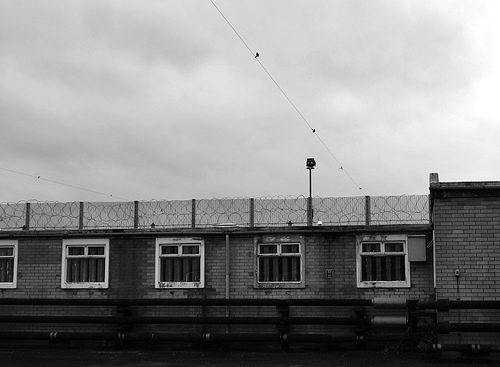
In the biggest prison escape in British history, on 25 September 1983 in County Antrim, Northern Ireland, 38 Irish Republican Army (IRA) prisoners, who had been convicted of offenses including murder and causing explosions, escaped from H-Block 7 (H7) of the prison. One prison officer died of a heart attack as a result of the escape and twenty others were injured, including two who were shot with guns that had been smuggled into the prison. HM Prison Maze was considered one of the most escape-proof prisons in Europe. In addition to 15-foot fences, each H-Block was encompassed by an 18-foot concrete wall topped with barbed wire, and all gates on the complex were made of solid steel and electronically operated.
Shortly after 2:30, the prisoners took control of the H-block holding the prison guards hostage at gunpoint. Some of the prisoners took the guards clothing and car keys in order to help with their escape. At 3:25, a truck bringing food supplies arrived and the prisoners told the driver that he was going to help them escape. They tied his foot to the clutch and told him where to drive. At 3:50 the truck left the H-block, and soon after the prison, carrying all 38 men.
Over the next few days, 19 escapees were caught. The remaining escapees were assisted by the IRA in finding hiding places. Some of the group ended up in the USA but were later found and extradited. Due to politics in Northern Ireland, none of the remaining escapees are being actively sought and some have been given amnesties. Note the wires strung across the yard in the picture above – this is to prevent helicopters from landing due to another escape attempt at Maze Prison. [Image Source | Wikipedia]
9
Alfred Hinds

“Alfie” Hinds was a British criminal and escape artist who, while serving a 12 year prison sentence for robbery, successfully broke out of three high security prisons. Despite the dismissal of thirteen of his appeals to higher courts, he was eventually able to gain a pardon using his knowledge of the British legal system. After being sentenced to 12 years in prison for a jewelry robbery, Hinds escaped from Nottingham prison by sneaking through the locked doors and over a 20-foot prison wall for which he became known in the press as “Houdini” Hinds.
After 6 months he was found and arrested. After his arrest, Hinds brought a lawsuit against authorities charging the prison commissioners with illegal arrest and successfully used the incident as a means to plan his next escape by having a padlock smuggled in to him while at the Law Courts. Two guards escorted him to the toilet, but when they removed his handcuffs Alfie bundled the men into the cubicle and snapped the padlock onto screw eyes that his accomplices had earlier fixed to the door. He escaped into the crowd on Fleet Street but was captured at an airport five hours later. Hinds would make his third escape from Chelmsford Prison less than a year later.
While eluding Scotland Yard, Hinds continued to plead his innocence sending memorandums to British MPs and granting interviews and taped recordings to the press. He would continue to appeal his arrest and, following a technicality in which prison escapes are not listed as misdemeanors within British law, his final appeal before the House of Lords in 1960 was denied after a three hour argument by Hinds before his return to serve 6 years in Parkhurst Prison. Pictured above is Nottingham Prison – the first prison that Hinds escaped from. [Wikipedia]
8
The Texas Seven
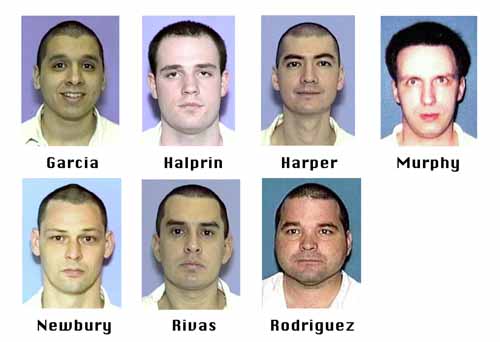
The Texas 7 was a group of prisoners who escaped from the John Connally Unit near Kenedy, Texas on December 13, 2000. They were apprehended January 21-23, 2001 as a direct result of the television show America’s Most Wanted. On December 13, 2000, the seven carried out an elaborate scheme and escaped from the John B. Connally Unit, a maximum-security state prison near the South Texas town of Kenedy. Using several well-planned ploys, the seven convicts overpowered and restrained nine civilian maintenance supervisors, four correctional officers and three uninvolved inmates at approximately 11:20 a.m.
The escape occurred during the slowest period of the day when there would be less surveillance of certain locations like the maintenance area — during lunch and at count time. Most of these plans involved one of the offenders calling someone over, while another hit the unsuspecting person on the head from behind. Once the victim was subdued, the offenders would remove some of his clothing, tie him up, gag him and place him in an electrical room behind a locked door. Eleven prison workers and three uninvolved inmates were bound and gagged. The attackers stole clothing, credit cards, and identification from their victims.
The group also impersonated prison officers on the phone and created false stories to ward off suspicion from authorities. They eventually made their way to the prison maintenance pickup-truck which they used to escape from the prison grounds. The remaining 5 living members of the group are all on death row awaiting death by lethal injection. Of the other two, one committed suicide and one has already been executed. [Wikipedia]
7
Alfréd Wetzler

Wetzler was a Slovak Jew, and one of a very small number of Jews known to have escaped from the Auschwitz death camp during the Holocaust. Wetzler is known for the report that he and his fellow escapee, Rudolf Vrba, compiled about the inner workings of the Auschwitz camp – a ground plan of the camp, construction details of the gas chambers, crematoriums and, most convincingly, a label from a canister of Zyklon gas. The 32-page Vrba-Wetzler report, as it became known, was the first detailed report about Auschwitz to reach the West that the Allies regarded as credible.
The evidence eventually led to the bombing of several government buildings in Hungary, killing Nazi officials who were instrumental in the railway deportations of Jews to Auschwitz. The deportations halted, saving up to 120,000 Hungarian Jews. Wetzler escaped with a fellow Jew named Rudolf Vrba. With the help of the camp underground, at 2 p.m. on Friday, April 7, 1944 — the eve of Passover — the two men climbed inside a hollowed-out hiding place in a wood pile that was being stored to build the “Mexico” section for the new arrivals. It was outside Birkenau’s barbed-wire inner perimeter, but inside an external perimeter the guards kept erected during the day. The other prisoners placed boards around the hollowed-out area to hide the men, then sprinkled the area with pungent Russian tobacco soaked in gasoline to fool the guards’ dogs. The two remained in hiding for 4 nights – to avoid recapture.
On April 10, wearing Dutch suits, overcoats, and boots they had taken from the camp, they made their way south, walking parallel to the So?a river, heading for the Polish border with Slovakia 80 miles (133 km.) away, guiding themselves using a page from a child’s atlas that Vrba had found in the warehouse. You can read their report on Auschwitz here. [Wikipedia]
6
S?awomir Rawicz
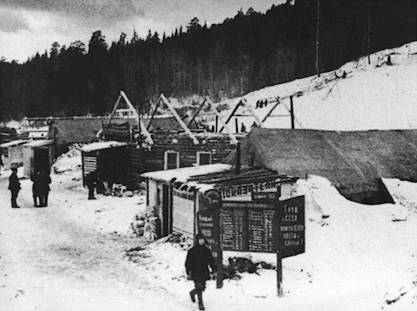
Rawicz was a Polish soldier who was arrested by Soviet occupation troops after the German-Soviet invasion of Poland. When the Soviet Union and Germany took over Poland, Rawicz returned to Pi?sk where NKVD arrested him on November 19, 1939. He was taken to Moscow. He was first sent to Kharkov for interrogation, and then after trial he was sent to the Lubyanka prison in Moscow. He claims to have successfully resisted all attempts to torture a confession out of him in prison. He was sentenced, ostensibly for spying, to 25 years of hard labor in a Siberian prison camp. He was transported, alongside thousands of others, to Irkutsk and made to walk to Camp 303, 650 km south of the Arctic Circle, to build the camp from the ground up.
On 9 April 1941, Rawicz claimed that he and his six allies escaped in a middle of a blizzard. They rushed to the south, avoiding towns in fear they would be betrayed, but apparently they were not actively pursued. They also met an additional fugitive, Polish woman Krystyna. Nine days later they crossed the Lena River. They walked around Lake Baikal and crossed to Mongolia. Fortunately, people they encountered were friendly and hospitable. During the crossing of the Gobi desert, two of the group (Krystyna and Makowski) died. Others had to eat snakes to survive. Around October 1941 they claim to have reached Tibet. Locals were friendly, especially when men said they were trying to reach Lhasa. They crossed the Himalayas somehow in the middle of winter. Another of the group died in his sleep in the cold and one fell into a crevasse and disappeared. Rawicz claims the survivors reached India around March 1942. [Wikipedia]
5
Escape From Alcatraz
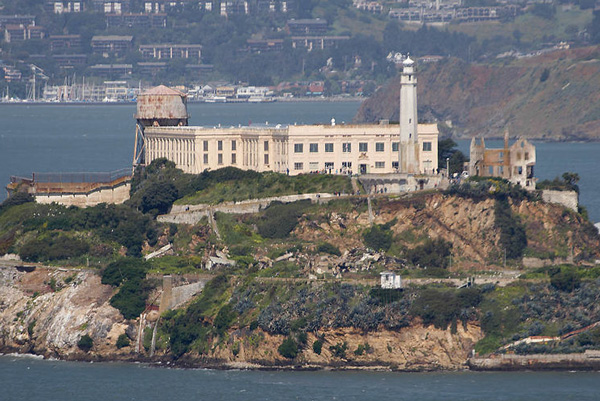
In its 29 years of operation, there were 14 attempts to escape from Alcatraz prison involving 34 inmates. Officially, every escape attempt failed, and most participants were either killed or quickly re-captured. However, the participants in the 1937 and 1962 attempts, though presumed dead, disappeared without a trace, giving rise to popular theories that they were successful. The most famous and intricate attempt to escape from Alcatraz (June 11, 1962) saw Frank Morris, and the Anglin brothers burrow out of their cells, climb to the top of the cell block, cut through bars to make it to the roof via an air vent. From there they climbed down a drain pipe, over a chain link fence and then to the shore where they assembled a pontoon-type raft and then vanished.
The trio are believed to have drowned in the San Francisco Bay and are officially listed as missing and presumed drowned. However, they may have made it and gone to a place where people did not know them. [Wikipedia]
4
Libby Prison Escape
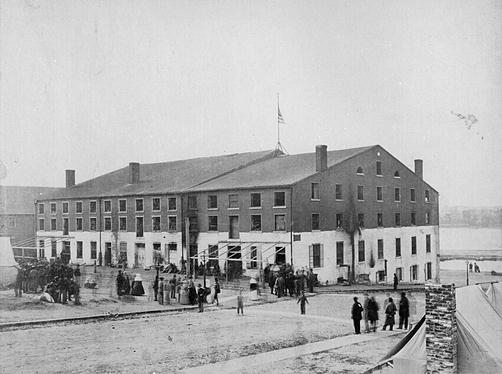
The Libby Prison Escape was one of the most famous (and successful) prison breaks during the American Civil War. Overnight between February 9 and 10, 1864, more than 100 imprisoned Union soldiers broke out of their prisoner of war building at Libby Prison in Richmond, Virginia. Of the 109 escapees, 59 succeeded in reaching Union lines, 48 were recaptured, and 2 drowned in the nearby James River. Libby Prison encompassed an entire city block in Richmond. To the north lay Carey Street, connecting the prison area to the rest of the city. On the south side ran the James River.
The prison itself stood three stories above ground with a basement exposed on the river side. Living conditions were extremely bad; the food, sometimes lacking altogether, was poor and sanitation practically nonexistent. Thousands died there. The prisoners managed to break in to the basement area known as “rat hell” which was no longer used due to rat infestations, and dig a tunnel. After 17 days of digging, they succeeded in breaking through to a 50-foot vacant lot on the eastern side of the prison, resurfacing beneath a tobacco shed inside the grounds of the nearby Kerr’s Warehouse. When Col. Rose finally broke through to the other side, he told his men that the “Underground Railroad to God’s Country was open!”
The officers escaped the prison in groups of two and three on the night of February 9, 1864. Once within the tobacco shed, the men collected inside the walled warehouse yard and simply strolled out the front gate. The tunnel provided enough distance from the prison to stealthily subvert those jurisdictional lines and allow prisoners to slip into the dark streets unchallenged. [Wikipedia]
3
Pascal Payet
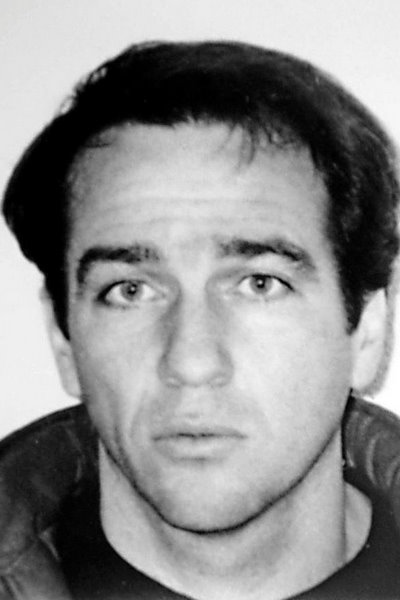
There can be no doubt that this man deserves a place on this list – he has escaped not once, but twice from high security prisons in France – each time via hijacked helicopter! He also helped organize the escape of three other prisoners – again with a helicopter.
Payet was initially sentenced to a 30 year jail term for a murder committed during the robbery of a security van. After his first escape (in 2001) he was captured and given seven more years for his role in the 2003 escape. He then escaped from Grasse prison using a helicopter that was hijacked by four masked men from Cannes-Mandelieu airport. The helicopter landed some time later at Brignoles, 38 kilometres north-east of Toulon, France on the Mediterranean coast. Payet and his accomplices then fled the scene and the pilot was released unharmed. Payet was re-captured on September 21, 2007, in Mataró, Spain, about 18 miles northeast of Barcelona. He had undergone cosmetic surgery, but was still identified by Spanish police. [Wikipedia]
2
The Great Escape

Stalag Luft III was a German Air Force prisoner-of-war camp during World War II that housed captured air force personnel. In January 1943, Roger Bushell led a plot for a major escape from the camp. The plan was to dig three deep tunnels, codenamed “Tom,” “Dick,” and “Harry.” Each of the tunnel entrances was carefully selected to ensure they were undetectable by the camp guards. In order to keep the tunnels from being detected by the perimeter microphones, they were very deep — about 9 metres (30 ft) below the surface. The tunnels were very small, only two feet square (about 0.37 m²), though larger chambers were dug to house the air pump, a workshop, and staging posts along each tunnel. The sandy walls of the tunnels were shored up with pieces of wood scavenged from all over the camp.
As the tunnels grew longer, a number of technical innovations made the job easier and safer. One important issue was ensuring that the person digging had enough oxygen to breathe and keep his lamps lit. A pump was built to push fresh air along the ducting into the tunnels. Later, electric lighting was installed and hooked into the camp’s electrical grid. The tunnellers also installed small rail car systems for moving sand more quickly, much like the systems used in old mining operations. The rails were key to moving 130 tons of material in a five-month period; they also reduced the time taken for tunnellers to reach the digging faces.
“Harry” was finally ready in March 1944, but by that time the American prisoners, some of whom had worked extremely hard in all the effort to dig the tunnels, were moved to another compound. The prisoners had to wait about a week for a moonless night so that they could leave under the cover of complete darkness. Finally, on Friday, March 24, the escape attempt began. Unfortunately for the prisoners, the tunnel had come up short. It had been planned that the tunnel would reach into a nearby forest, but the first man out emerged just short of the tree line. Despite this, 76 men crawled through the tunnel to initial freedom, even through an air raid during which the camp’s (and the tunnel’s) electric lights were shut off. Finally, at 5 AM on March 25, the 77th man was seen emerging from the tunnel by one of the guards. Out of the 76 men only 3 evaded capture. Fifty men were killed and the rest were captured and sent back. [Wikipedia]
1
Colditz Escape

Colditz was one of the most famous German Army prisoner-of-war camps for officers in World War II. The camp was located in Colditz Castle, situated on a cliff overlooking the town of Colditz in Saxony. There were numerous successful attempts at escaping Colditz, but one in particular is the most interesting. In one of the most ambitious escape attempts from Colditz, the idea of building a glider was dreamt up by two British pilots, Jack Best and Bill Goldfinch, who had been sent to Colditz after escaping from another POW camp. The plan was to construct a two-man glider part by part.
The glider was assembled by Bill Goldfinch and Jack Best in the lower attic above the chapel, and was to be launched from the roof in order to fly across the river Mulde, which was about 200 feet (60 m) below. The officers who took part in the project built a false wall, to hide the secret space in the attic where they slowly built the glider out of stolen pieces of wood. Since the Germans were accustomed to looking down for tunnels, not up for secret workshops, they felt rather safe from detection. Hundreds of ribs had to be constructed, predominantly formed from bed slats, but also from every other piece of wood the POW’s could surreptitiously obtain. The wing spars were constructed from floor boards. Control wires were made from electrical wiring in unused portions of the castle.
A glider expert, Lorne Welch, was asked to review the stress diagrams and calculations made by Goldfinch. Although the Colditz Cock never flew in real life, a replica of the Colditz glider was built for the 2000 Channel 4 “Escape from Colditz” documentary, and was flown successfully by John Lee on its first attempt at RAF Odiham with Best and Goldfinch in tearful attendance. While Best and Goldfinch did not escape Colditz (the camp was relieved by the allies just as the glider was nearing completion), they certainly had the most interesting and innovative method for executing it. [Wikipedia]
More Great Lists
 Top 10 Worst Prisoners At The Colorado Supermax Prison
 Top 10 Notorious Killers Who Were Murdered In Prison
 Top 10 Amazing Feats And Facts About Glass
 Top 10 Amazing Discoveries About Ancient Authors And Books
 Top 10 Amazing Recent Revelations About Neanderthals
 Top 10 Amazing New Finds From Ancient Greece
 Top 10 Amazing Facts And Stories About Sinkholes
 Top 10 Amazing Audience Reactions
 Top 10 Amazing Scientific Phenomena Caught On Video
More Great Lists