Everyday we interact with others – often with symbols or phrases whose origins are now long forgotten. This list explores some of the most common of these phrases, traditions, and gestures. If you know of others, be sure to share them in the comments for all to learn about.
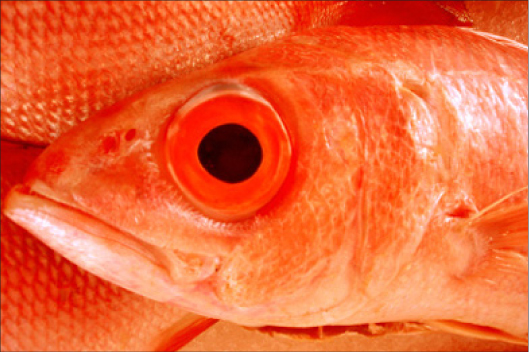
Lovers of mysteries know that a “red herring” is a false clue given to divert attention from the track of the real criminal. This one, however, began with an actual fish. Bloodhounds, the sharpest trackers in the world, are difficult to lose when on a scent. But a red herring, especially if it is a day or two out of the water, can produce a scent strong enough to confuse any hound if the fish is drug on the ground behind the escaping criminal.
Shaking hands in greeting or to seal a contract has been done since at least the second century BC. The gesture demonstrates that the hand holds no weapon, and is a symbol of good sportsmanship, equality, and trust. Shaking the right hands sealed a bargain, but it was important not to use the left hand, as the left hand handshake dissolved a bargain.
For many years, American president Theodore Roosevelt held the world record for handshakes. On January 1, 1907, President Roosevelt shook 8, 513 hands at a White House reception. The record was broken in July, 19 77 by a New Jersey mayor, Joseph Lazaron, who shook 11,000 hands in a single day.
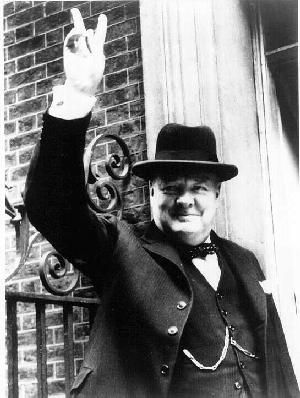
The two-finger V sign has had prominent displays. Many people remember American president Richard Nixon flashing a V, and Winston Churchill, who used it to stand for victory. Churchill turned the V around with the palm facing outward to avoid the obscene connotation the symbol has acquired in Great Britain if performed with the palm facing inward.
In the 1960s, the V became a symbol for peace. Today it is commonly used as a peace sign, the signature greeting of celebrities, including Lindsay Lohan. The V sign was first used, as far as we know, by British bowmen after winning the Battle of Agincourt in 1415. The French bowmen had threatened to cut off the first two fingers – those that hold the arrow in place – of the British bowmen. After the battle, the British archers flashed their first two fingers to show that they were still intact. [Verification - Massey University]
The custom of blessing a person who sneezes has various origins. It was once thought that sneezing might release one’s soul, which was then prey to lurking evil spirits, so a person needed to be blessed. It was therefore considered bad luck to open the mouth again to thank the person for the blessing, as the evil spirits would have another chance to enter.
Another theory is that sneezing was an indication of robust good health, and that blessing the person sneezing was a form of congratulation. Most responses to sneezes, such as the German “Geshundheit!” wish the sneezer good health and/or a long life.
The thumbs up sign is most commonly (but wrongly) thought to descend from gladiatorial contests in which the audience determined whether the combatant was eligible to live or die by a thumbs up/ thumbs down vote. But there are other theories. There is a old English saying ‘Here’s my thumb on it!’ which was used to seal a bargain. The two people involved each wetted a thumb and then extended it, held upwards, until the two raised thumbs came into contact with one another. It is easy to see how this custom could lead to, or support the idea of holding out a raised thumb as a sign of friendly agreement or approval. The signal has also been used by some ape species, who may just be celebrating the fact that they, like we, have opposable thumbs in the first place.
The military salute is traditionally performed by touching the eyebrow with four fingers together. Roman soldiers are thought to have initiated the procedure as a sign of shielding their eyes from the great light of their superior officers. Knights may have used it to raise their helmets as an indication that they did not intend to fight. This theory is supported by the fact that the helmet on a suit of armor is called a “sallet,” very close to the word “salute.”
The so-called Roman salute, used in the 20th century as a symbol of Fascism, has no Roman record in discourse or art. In Germany, that salute is now prohibited, punishable by up to three years in prison.
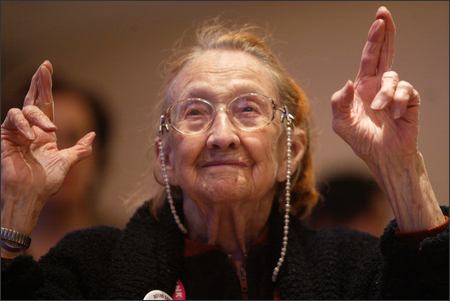
Crossing your fingers to hope for good luck used to require two people – the forefinger of one to make the wish, and of the other to support it. The cross formed was a symbol of unity and strength, and was used to ward off witches. Crossing your fingers, of course, can also be used to nullify a promise. In that case, the middle finger crossing over the index finger leaves a loophole the false promiser plans to exploit.
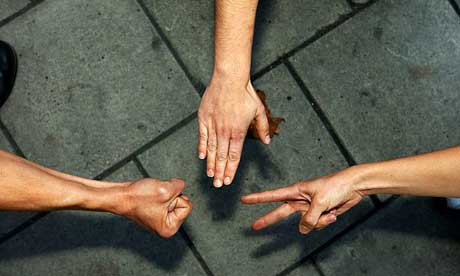
Rochambeau, or rock, paper, scissors, is played all over the world as a means of resolving difficult disagreements. In one unusual case, a Florida judge tired of endless debating over the appropriate venue for depositions to be taken and ordered the participants to settle the case by an RPS game.
In Indonesia, it is earwig, human, and elephant. The earwig drives the elephant insane. The human crushes the earwig, and the elephant crushes the human. One amazingly complex version has 101 different gestures and 5050 possible non-tied results. If you’re ready to take it to another level, consult the World RPS Society. If you find out why it is called Rochambeau, please let them know. It’s still a mystery.
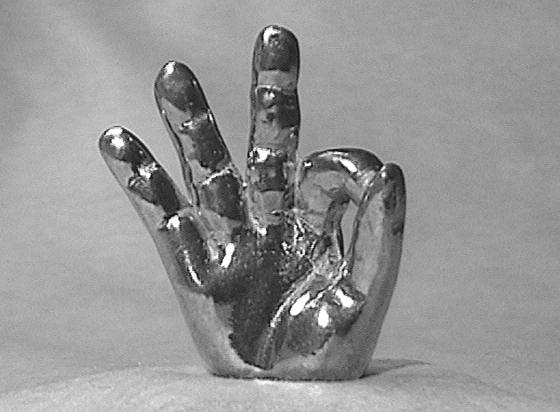
The source of the ubiquitous “OK” or “Okay” is lost to history, but there are many theories. One is that in the 1830s there was a rash of comic misspellings and shortened communications. NG was commonly read to mean, “No go.” SP meant small potatoes, and OK stood for “Oll Korrect.”
Another theory is that the symbol represented American president Martin Van Buren, often referred to as “Old Kinderhook.” Others say that French soldiers during the American revolution would invite girls to meet them “aux cayes,” down at the docks.
Still another possibility is that bad handwriting caused the OK to flourish. It should have been OR – standing for “order received.” Others think that Obadiah Kelley, an early railroad agent, certified bills with his initials. It is often said that American president Andrew Jackson learned a similar word from Choctaw Native Americans and popularized it. What do you think?
Most historians agree that Christ was most likely born in the spring, when Mary and Joseph went to pay their taxes. If that is the case, why do we celebrate Christmas in the wintertime? Pope Gregory can be thanked. He ordered the absorption of other religious festivals into Christianity. Pagan celebrations lightened the burden of cold, dark winters, and evergreen trees were a symbol of hope, that spring and new life would return. It was a natural fit with Christ’s promise of resurrection.
Christmas trees as we know them probably began in the 16th century. It is said that Martin Luther, walking home at night, saw stars through the branches of evergreens and found it a beautiful sight. When he duplicated the effect by putting candles on an evergreen, the modern Christmas tree was born.
Early Christians in the English-speaking world avoided Christmas trees, seeing them as a pagan custom. They became popular in America in the 1820s among Pennsylvania Germans, and the idea spread from there.
St. Nikolaas himself actually lived in Turkey in the 4th century. Known for his kindness and generosity, he was a delegate to Constantine’s Council of Nicea in A.D. 325. His name was eventually shortened from St. Nikolaas to Sinterklaas, and to Santa Claus.
Candy canes? Formed into shepherds’ staffs in the 1700s to transform a simple candy into a Christian symbol. Holly? Christ’s crown of thorns. Gift-giving? What the Wise Men started. Carols? What the angels sang. A star atop the tree? The new star said to have been first seen on the night of Christ’s birth.
Many well-meaning Christians are upset by Xmas, rather than Christmas, on Christmas cards and greetings. They see the X as a way to “take Christ out of Christmas.” Actually, the opposite is true. X is the Greek letter Chi, the first letter of the word Christ. It was used originally to prevent the disrespectful overuse of the Savior’s title in greetings and correspondence.


Anyone who was an avid viewer of Home Improvement knew the origins of the handshake. Thanks Wilson!
The two fingered gesture means F*** you/ off in the UK.
One of the better lists to come out in a while.
The picture of the hand in #2 has a WHOLE other connotation in Brazil, so I would advise against using that particular gesture there. Just use the thumbs up gesture for OK!
It is interesting that you mention the military salute with the mis-named “roman salute” but their relationship is not mentioned. The “roman salute” came from the military salute, via the Pledge of Allegiance, which began with a military salute that was then stretched out toward the flag. The Roman salute myth (and the phrase) developed decades after the pledge (which was written in 1892). See the work of the historian Dr. Rex Curry (author of “Pledge of Allegiance Secrets”).
What about the Peace Sign? It was originally used as a symbol for nuclear disarmament, but lost it’s original meaning within a year to become a symbol for hippies.
The information about Christmas seems to contradict the Bonus item published in a list last year:
http://listverse.com/2008/12/21/another-10-great-christmas-stories/
I don’t know what new meaning you gave to these symbols but for me it remains with the original meaning. Well, of course not all of them..
According to Wikipedia (who’s always right, eh?
) the three year punishment for using the Hitlergroß is not applied if the usage is obviously ironic. So I can understand the law now. Not saying that it’s correct, but I understand it.
Fantastic list, as always! I love culutural stuff like this
Sorry for the accidental change in title of the list – I have restored it to its original now.
interesting list Sharone, no2, the okay sign, is also sometimes used as a representation of 666 by those inclined that way
I am disappointed that toasting (clinking glasses against each other) is not present. Originally it was used when enemies met and ate together (usually for treaties). Each would ensure a small amount of their drink went into the other person’s glass to make sure their drink was not poisoned.
Not being British myself, and gaining most of my knowledge of their customs from Jane Austin and Monty Python, I don’t have much authority to comment on the two-fingered insult. But I will, anyway…
We always called it “splitters” and had the back of the hand facing the receiver, with a bit of the thumb showing at the base of the “V.” We assumed the fingers signified a woman’s split legs and the thumb… well, I’ll leave that to your imagination. All my Monty Python-loving friends use this insult on each other, although I’m sure it was never seen on their shows or in their movies. I wonder where we picked it up? Hmmm… maybe from The Young Ones?
Can anyone from GB verify or correct that?
What about the wink?
Im a very devout christian and I WONT write Christs name in xmas anymore. Its not his bday nor about Him. Christmas is still an evil pagan holiday just as Easter and Halloween are and it still to this day shocks me to my core how many well meaning christians are sucked into the lie. I was for years too but you really need to be questioning sharing a “religious” holiday with atheists, agnostics and every other kind of idol worshiper.
WAKE UP CHRISTIANS!! YOU ARE BEING DECEIVED.
Last time I checked, atheists and agnostics don't worship anything, idols included.
I can’t remember where I’d heard this, so it’s probably an urban legend, but I’ve always thought the X in Xmas was symbolic of the cross.
@Stacy Braswell (75): Christmas as a Christian festival started off very early – it coincided with the pagan day celebrating the birth of the sun. It was not considered by the Christians to be pagan – in fact this is what Saint Cyprian said:
“O, how wonderfully acted Providence that on that day on which that Sun was born…Christ should be born”
Christ wasnt even born around xmas. Also, he never once told us to celebrate His birth and especially NOT with trees and santa and gifts. Xmas is a 100% man made holiday. Just like most religions are man made religions. Wouldnt you rather be doing what Yeshua said to do? Honoring the feasts he TOLD us to honor? Wouldnt you rather be a part of G-ds religion instead of one created by a man?
@deepthinker (41) – the two finger backwards V is the same as doing the middle finger. We use both in Australia. It just means ‘up yours’ or ‘f*** off’. The V in front of the mouth with the tongue is meant to be a womans part but just using your fingers like the middle finger has nothing to do with womens parts.
Here is a macabre tidbit: Supposedly, Christmas Carols were named such because of a young girl who went missing in London during Jack the Ripper’s reign of terror.
In 1888, Carol Poles disappeared a week before Christmas, and many people joined the search party. However, because of the recent activity of Jack the Ripper, many people were reluctant to answer their doors. To announce their non-violent intentions, the search parties sang Christmas songs when they approached. Although little Carol was never found, they referred to the tradition of singing songs as Christmas Carols, and the tradition continues to this day. Here is a video which details it all (the bit about Carols begins at about 8:30):
And the link just in case the embed doesn’t work.
I haven’t heard of this origin story other than the video, but it’s worth looking into (I will probably do so after posting this).
@jfrater (77): What about this for a list? Pleasant and Common Traditions with Bizarre or Macabre Origins. Eh?
And I could’t help but notice the timeliness of this list with the very recent release of Dan Brown’s new book The Lost Symbol. Coincidence?
I thought the list was great! Good job!
Please note: if you drag a herring behind you while being tracked by hounds, they are probably going to find you even faster!
Two thumbs up on this one!
great list, it is crazy how the origins of many things we say or do today are unknown … also , alot better than that cheese lists . lol
How has no one posted this yet? http://baseballbatyouth.com/Rock_Paper_Scissors.html
if the fish is drug(?) on the ground
@Huh? (87): drug, past tense of drag. used in place of dragged
great list!
about the “bless you” origins.. one theory says that when you sneeze, your heart stops beating for a second.. we say “bless you” because the person is “blessed” by still being alive after that split-second-heart-stopping event.. =)
There is a different saying for 7 in Turkey. When someone sneezes you say “live long” and the person replies “you see it” meaning witness that i live long, like saying you live long too. Just putting it out there.
All the search results at dictionary.com give the past tense form as “dragged”. wikitionary gives “dragged” but adds “in some dialects, drug”. One website calls it “an Americanism”, but it may have originated (and still be used) in rural England.
@Pout (56):
Its not only a Belgium celebration, it’s originaly from the Netherlands. We dutchies concider ‘Sinterklaas’ as our #1 top favorit “typical dutch” list.
No Sinterklaas, No Holland
http://en.wikipedia.org/wiki/Sinterklaas
@JFrater (32)
“BC is the standard method of describing the era we live in”
huh?
not the era we live in…
How about AD or CE? Try Cenozoic next time.
fun list though
@astraya (90): bit like them poms what say et instead of ate, innit?
@#90 drug isn’t used in rural England as far as I know, we say dragged. Just so you know
The x mark is called a criss, while the + is a cross. Hense x-mas or Crissmas (Christmas).
Umm, in countries like Britain & Australia, the V sign is an insult when you use the sign backwords unlike the peace sign which is use with the palm facing the person. Churchill used the V sign either as a symbol for victory, or to insult the Axis Powers. Either way.
@Ralph (24):
Yeah, I agree! It’s BC not BCE. And I don’t care if BC is politically incorrect. The BC/AD system is the most common used year labeling system in the world. Even some Muslims use it, even though BC means “Before Christ”. Plus, if you noticed, the BCE/CE system has some flaws. Like for example, you wrote “CE’ when you actually ment “BCE”. And also, there is no such thing as a “Common Era”. Different cultures have different year systems.
AMAZING!!!!!
strongly agreeee …
LadyboyDolls.com
Contact: ben_keenan69@hotmail.com
@capt (9):
High Fives originated in Africa. It was how the natives greeted each other. It has a very similar meaning to a European Handshake.
@Garash (12):
The Roman Salute is holding your right hand out straight at a 45 degree angle. It’s the same salute Hitler co-opted for the Nazi Regime. The salute has become synonymous with racism and intolerance and Germany has been trying to stamp it out for decades.
@gr81disp (72):
Really? That’s very interesting. I didn’t know that.
@Stacy Braswell (75):
The whole story of Christ is taken from other religions and mythologies – some as early as 3500 BC. It’s based on a ‘Hero’ archetype that many cultures had co-opted from each other over the 5,000 years prior to the Council of Nicea.
Christmas is just the latest addition to that long winded tale. Lookup the references between Horus, Dionysus, Krishna, Attus and Christ (among many others) and you will see many, MANY more “pagan” inspired similarities.
You were right about one thing: Christians are being deceived – but far more than you probably realise. The entire religion is a co-opted mythology – just like all the others before it.
@Matunos (82):
The idea is to drag the herring behind you for some distrance in the WRONG direction, drop it, and then run away in the OPPOSITE direction.
this list is a little simplistic. for a deeper understanding of symbols that we use everyday, google LADY GAGA ILLUMINATI SYMBOLISM and you’ll get an education.
The hand gesture for “okay” looks very similar to a Japanese gesture meaning “money”
I remember reading somewhere the ‘history’ behind the ‘Be on my right.’
If I’m not mistaken (some time from I read… =P) was because being seated at the right of someone, (if you were an assassin) will left you with more problems trying to hold a knife and kill your prey, if you were a right-handed.
Something similar with bumping cups (??). Both cups should drip (splash?) into the other(s). So, if one cup has poison, all will have it due to the mixing of wine due to the splash of the bump.
(Ignore the bad grammar… my head is not thinking accurately.)
@Aramid (95): The x mark is called a criss, while the + is a cross. Hense x-mas or Crissmas (Christmas).
Hmm, makes sense if true, but what about the other common usage of x as abbreviation – “xfer” for the word “transfer”? (I’m kinda surprised no one has brought this one up yet)
(From Urban Dictionary)Rochambeau:
1. A name used originally by people playing Ultimate (Ultimate Frisbee) for the game Rock Paper Scissors. Used to determine who would throw first. Also written Roshambo and Row-Sham-Bow.
2. A different game under the same name created by the TV show South Park where two people would kick each other in the crotch until one of them would fall over or gives-up, used to determine the winner of an argument.
The later is the better known use for the word.
#1 looks like a red herring to me…
The last one was really interesting : )
Especially about the candy canes and stuff
Thanks for another great list!
Another explanation for OK is that it stands for the Greek phrase Ola Kala, everything’s good/beautiful. My old Greek teacher insisted that one of the former president’s secretaries (I don’t remember which) was Greek, and abbreviated “OK” across the top of memos, etc. to indicate they’d been proof-read. Of course, she also insisted that the Founding Fathers considered making Greek our official language instead of English, so I’d take that with a grain of salt
one of the things i heard about the whole bless you when you sneeze thing was during the black plague when someone sneezed it meant they were sick and prob. going to die so people would say god bless you….
I remember when Bill Clinton (I think) visited Australia when he was the Prez. He gave the V for Victory sign to the adoring, flag waving crowd, but over here it means “get *****ed.” They weren’t waving the flags quite so vigorously after that! Thanks for the laugh Bill.
Another one for #2
Many Greeks believe that OK originates from the Greek words “Ola Kala” (Meaning All Good)!
What about the wink??
that lindsay lohan reference in #8 seems completely unnecessary…anime girls do it all the time. informative list though.
You forgot to mention the Greek explanation.
OK stands for Ola Kala (All well, everything is good),which is the true meaning of OK.
Did you know if you upside-down the OK sign on pictured on #2, it means “you are gay”. I think the wide circle you made with your hand symbols your widen a s s h o l e.
At least around this part of the Earth.
And Muslims have no problem with BC because we believe in Christ, duh…
Wow, now I know what OK stands for. I’ve always wondered!
Not sure if this is correct or not but: the American military would only salute with their palm out if they were to lose a war.
Excellent list! Not sure if this has been said yet, but its very unlikely that the V sign as an insult originated from medieval times. Hostages were taken regularly in battles, and if the hostage takers won theyd use the archers again. So no point in maiming a perfectly good soldier.
I don’t see why BCE should be considered ‘politically correct’ – based on the comments here, it would seem that it is in fact politically INcorrect to use it, precisely because it offends some people’s delicate sensibilities. Therefore making it cool, and therefore correct.
;^)
@Bob Loblaw (119): thats what I thought…