We have recently presented two lists of fascinating factlets (a word I am still not entirely convinced is real) but, in light of the popularity of both bizarre lists and fact lists, we have put together this special list of factlets which are from the dark and weird recesses of history and society in general. Be sure to mention your own favorites in the comments.
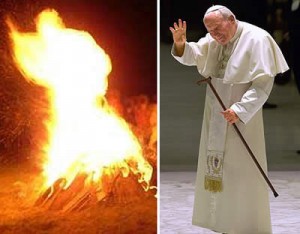
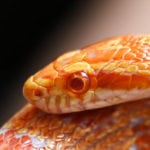
1. Pareidolia (pictured above) is the psychological phenomenon in which people see shapes or hear sounds which they consider to be significant when they are not (and in some cases, don’t exist at all). The most common example of this is the alleged hearing of phrases when playing records backwards. This is also frequently the cause of so-called miracles in which religious figures appear in toast, or clouds, or stains on every day objects.
2. Gleeking is the odd term used to describe the ejection of saliva from beneath the tongue either accidentally (when yawning, for example) or intentionally (the intentional forcing of saliva from the glands requires much practice). According to Wikipedia, gleeking can be induced by pressing the underside of the tongue against the palate, then pushing the tongue forward while simultaneously closing the lower jaw and moving it slightly forward. Despite practice I seem to fail at this – if anyone manages it let us know.
3. The Hawaiian language requires only twelve letters (and the apostrophe symbol which refers to the glottal stop in words like Hawai’i – this is called the ‘okina.)
4. Believe it or not, it is possible to accidentally plagiarize something. Cryptomnesia is a memory bias in which a person believes they have conceived of a new idea when in fact they are simply remembering someone else’s idea. Sometimes this even finds its way into literature: “Friedrich Nietzsche’s book Thus Spoke Zarathustra includes an almost word for word account of an incident also included in a book published about 1835, half a century before Nietzsche wrote. This is neither considered to be purposeful plagiarism nor pure coincidence. Nietzsche’s sister confirmed that he had indeed read the original account when he was 11 years old.”
5. Clinical lycanthropy is the very rare psychological disorder in which a person believes they have been transformed into an animal. This can result in the person experiencing hallucinations and mimicking the actions of the animal they think they have become.
6. Did you know that santa has a special friend that travels with him? His name is krampus and he beats people with sticks – especially females. He is pictured above. The story of the krampus has been used for centuries to frighten children into behaving before Christmas.
7. A surprisingly large number of people believe in the Ancient Astronaut theory in which aliens are said to have come to earth in pre-history and given man knowledge (or, in some cases, to have bred with man to give us intelligence). Some proponents of the theory believe that all major religions on earth were started by these visiting space-creatures.
8. Mary Toft was an English woman from Godalming, Surrey, who in 1726 became the subject of considerable controversy when she tricked doctors into believing that she had given birth to rabbits. According to contemporary reports, “[Male midwife John Howard] delivered “three legs of a Cat of a Tabby Colour, and one leg of a Rabbet: the guts were as a Cat’s and in them were three pieces of the Back-Bone of an Eel … The cat’s feet supposed were formed in her imagination from a cat she was fond of that slept on the bed at night.” Later Toft seemingly became ill again, and during the next few days delivered more pieces of rabbit.” Her deception was eventually uncovered and both she and the medical profession were ridiculed.
9. Hyperthymesia is a condition (known to exist in only four humans so far) in which a person retains an almost perfect memory of everything they have experienced. A hyperthymestic person can be asked a date, and describe the events that occurred that day, what the weather was like, and many seemingly trivial details that most people would not be able to recall.
10. Intrusive R and Linking R are pronunciations of the letter ‘r’ in English dialects that don’t generally pronounce a final ‘R’ (such as New Zealand English). For example, in these dialects, when saying “don’t go far” – the word “far” has a silent ‘r’ – but the ‘r’ is pronounced in the sentence “he is far away”. This linking ‘r’ smooths out the phrase. Intrusive ‘r’ is when an ‘r’ is added where one doesn’t exist at all – as in the case of “Africa or England” – this would be pronounced “Africar-or-England”.
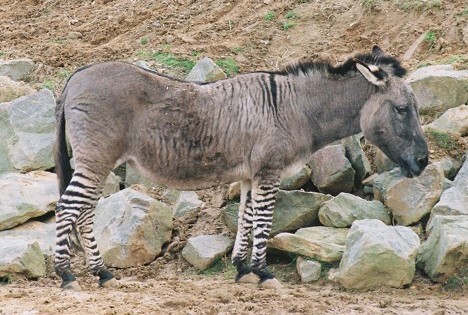
11. Zebroids are hybrid animals involving a zebra and either a donkey or a horse. Zebroids physically resemble their non-zebra parent, but are striped like a zebra. The stripes generally do not cover the whole body, and might be confined to the legs or spread onto parts of the body or neck. Depending on the hybrid, they take different names such as zorse, zonkey, zebrass, zedonk (pictured above), etc.
12. Crikey steveirwini (an air-breathing land snail) is the only species in the genus Crikey. The specific name steveirwini is in memory of wildlife expert Steve Irwin. The genus name is a favorite exclamation of Steve Irwin’s, “crikey!” being an Australian minced oath.
13. Shingō village (Japan) claims to be the last resting-place of Jesus, buried in the “Tomb of Jesus.” According to the local lore, Jesus traveled to Japan at the age of 21, where he studied theology for 12 years, after which he returned to Judea at the age of 34. He did not die on the cross at Golgotha. Instead his brother, Isukiri, took his place on the cross, while Jesus fled across Siberia, Alaska, and finally to Mutsu Province, in northern Japan, where he became a rice farmer, married, and raised a family near what is now Shing ō.
14. The Swedish Empire (which included Finland at the time) planned to change from the Julian calendar to the Gregorian calendar beginning in 1700 by omitting leap days for the next 40 years. Although the leap day was omitted in February 1700, the Great Northern War began later that year, diverting the attention of the Swedes from their calendar so they did not omit leap days on the next two occasions, causing 1704 and 1708 to remain leap years. To avoid confusion and further mistakes, the Julian calendar was restored when, in 1712, one extra leap day was added, thus giving that year a 30th of February.
15. For our final entry we have a sentence – but it is a special sentence. Most people are familiar with the famous “buffalo buffalo buffalo….” sentence – but here is another one: “James while John had had had had had had had had had had had a better effect on the teacher” – this is a completely legitimate English sentence. My challenge to you is to put in the correct punctuation to make it understandable. I also challenge you to not look it up!


@dbrownl (4): It is in the link – but for your convenience I will show you:
"Buffalo buffalo Buffalo buffalo buffalo buffalo Buffalo buffalo."
This is a grammatically correct sentence. Conveniently broken down thus:
[Those] (Buffalo buffalo) [whom] (Buffalo buffalo) buffalo, buffalo (Buffalo buffalo).
[Those] buffalo(es) from Buffalo [that are intimidated by] buffalo(es) from Buffalo intimidate buffalo(es) from Buffalo.
Bison from Buffalo, New York, who are intimidated by other bison in their community also happen to intimidate other bison in their community.
THE buffalo FROM Buffalo WHO ARE buffaloed BY buffalo FROM Buffalo ALSO buffalo THE buffalo FROM Buffalo.
I just lol’d all over myself!
lmao. I actually am known in my circle of friends for being able to gleak consistently enough to wet a quarter of a whole newspaper
I accidnetly plagiarized once. caught by my prof and he told me where he saw this idea. and asked if I watched the movie. and I thought about it, and I did watch the movie. it was “finding forrester” with sean connery. wrote a poem about “losing family” and he thought it sounded familiar…
interesting list
more reason to fear a fat man breaking into your residence and eating your cookies, thanks, it is way to late to even begin thinking abut the had sentance, what was the buffalo sentance???
#7 (or, in some cases, to have bred with man to give us intelligence)
The Red-Head Alien Conspiracy Theory!
#8:
Oddly enough, I was just reading about this earlier today,
@donald (1): That is quite an achievement – even if it is somewhat a bizarre thing to admit to
Here’s another “factlet” about zebras; they have on average about 150 stripes at adulthood, less when they are young, and contrary to popular belief, a zebra is black/brown with WHITE stripes, not the other way round!
Incidentally all – I just thought I would share the exciting news with you: our publisher wants to do a second book because the first one is selling so well! Exciting! It is probable that the next one will focus more on bizarre topics or mythbusting.
Sweet list
@jfrater (8): Great list man! and congrats on yer book sales.
My challenge to you is to put in the correct punctuation to make it understandable.
*^@(%*& James while &^(@#& John had…… a better @#)$*@) effect on the &#$&(@)!# teacher.
Am I close?!
I looked #15 up, it still doesn’t make sense to me…
Oh – I forgot to say that it works because Buffalo is a place name, the name of an animal, and a verb (to buffalo means to intimidate) – hence buffalos that live in Buffalo, are sometimes buffaloed by other buffaloes that live in Buffalo.
@Phender_Bender (13): I will give you a hint: pluperfect is involved.
Haha I have Gleeked a couple of times.
But just as an accident.
Usually while talking to a friend and then yawning.
Usually get the, “hey you spit on me”
OMG so that's what it is! A few times I've 'gleeked' while yawning as well and my friends always accused me of spitting on them – I didn't see or know how I could be! Even the explanation above didn't help until you mentioned yawning. ^^
A horror movie should be made concerning #6 Has any been made yet that I’m missing out on?
Whoa…I often see faces on walls. I hope I am not suffering from Pariedolia. Btw, its not a disease ,is it?
@jfrater (10): thanks that is cool and confusing all at once, but i think i get it, congrats on the book deal
“James, while John had had “had”, had had “had had”, “had had” had had a better effect on the teacher”.
Right?
I’v read many interesting stories related to lycanthropy,particularly concerning ‘werewolves’.
Here is the answer to #15:
James, while John had had “had”, had had “had had”; “had had” had had a better effect on the teacher
Basically, it means that it was upon them that while John had used “had”, James had “had had.” The teacher preffered the use of “had had.”
Also, that picture of Krampus is creepy!
@Jack (7): That is fascinating – thanks for mentioning it!
Woops,
when I posted, somebody beat me to it!
I wish I had had had had had had had posted earlier (LOL)!
Hi all, longtime lurker/reader. LOVE it here.
I think “ancient astronauts” (number 7) is interesting in that many books and websites refer to ancient hieroglyphics in Mayan and Egyptian pyramids depicting UFO’s, aliens, etc. Some of the pictures presented are indeed strange.
Does anyone know if these hieroglyphics have been discredited in some way, or if scientists/archaeologists/anthropologists have come up with a more logical explanation?
Oh, and Krampus was interesting, too, LOL. I will definitely have to read up more on him.
@BravehisTickle (11): Thanks
I am really pleased with the sales so far – we have been consistently in the publisher’s top 5 books since we were published.
Maan,I wish I was a ‘hyperthymesiac’- my knowledge quo grows day after day-thanks LVJF
@El the erf (18): I think it is only a disease when you consider the images to be divine or real – we all see images in the clouds – that is normal
This list was not disappointing, but as so you don’t forget JFrater might I remind you of the “Faces of Death” list you were contemplating quite some time ago? I like the scary ones.
@jfrater (26): Oh yes, one important question-i haven’t seen the LV book in any Indian market so far,I live in India (Delhi) n I don’t wanna purchase it over the net.Can you update me on the matter?
@El the erf (18): No, it’s not a disease. Our brain has the capacity to see whatever it wants wherever it wants whenever it wants, its just how much you are willing to look into it. I often can make out faces in trees and see words in the clouds, but i don’t think anything of it. If you try hard enough you can see whatever you want anywhere
About Pareidolia (#1), it turns out that the human brain actually morphs images (so to say) so that they make sense to the brain. This explains the faces on mars, which if you look up close with sattelites it just looks like rocks! So, it’s all a visual trick!
James, while John had had “had,” had had “had had,” “had had” had had a better effect on the teacher,
@jfrater: the pluperfect hint gave it away for me
i love punctuation. (too nerdy?)
@Si Si (29): That was supposed to be published during Halloween..I hope Jf didn mean Halloween 2010
@The boy from troy (30): As far as I know the distributors are planning to do worldwide distribution – I have no idea of the timeframe. It has not appeared in any New Zealand bookstores yet either (much to my annoyance!)
@egernunge (20): You are first and you are right
And congrats to others who got it as well. Now – someone tell me what you call the phrase “had have” – I can’t find a proper name for it anywhere! Here is an example: “If I had have found my wallet, I wouldn’t have needed to cancel my credit card”.
@Calliope (25): I know the images you are talking about. I just put them down to imagination – the ancients were able to draw fiction as well as man wrote it (after transitioning from pictographs to written language).
@Si Si (29): That is a list that will take some time to put together – I need time off between items when dealing with horrific subjects
@jfrater (35): Then I guess I’ll have to wait..n I hope not so long that the 2nd book is by then ready for publishing!
Is number 6 a FACT? Cool list tho JFrater! Oh and I bought the BOOK about a week!!!
Is number 6 a FACT? Cool list tho JFrater! Oh and I bought the BOOK about a week ago!!!
I’ve been able to gleek for quite a while now… It’s rather simple… Requires a bit of practice though… Started off as a kid, because I saw somebody else do it and I thought that was a really cool thing to do then…
And now I’m convinced there’s a word for everything in English!!….
Sh*t… the lat one is hurting my head… I cnt think what it is
Gleeking is something I’ve known about since I was a kid… don’t know why. I can do it. Quick little spray. Nice little trick if you’re really bored or something, I guess.
@jfrater (23): No probs dude, quick question, is it just yourself who can do the factoids list? I have loads myself that I’d love to share… I’ve reading this site for over a year, and always wanted to make a list :$
@Jack (45): Aha, I see someone else has done one, right then, I’m going to start researching tonight!!
@Calliope (25): hmm its curios that maybe the images in the hieroglyphics may be a case of pareidolia:p. Atleast thats what i think. We see what we want to see
<- here's one. Its easier to adapt if we see familiar shapes. Maybe someone with better notions of biology coumd explain it better.
@K-Dog (32):I think its more than a visual trick. I think evolution favoured this so we have a better communication with other members of our species. I see faces in a lot of places
@El the erf (18):You are sick erf. Sick, sick,sick. You disgust me. You are eeevil
ps jfrater congratz on your book
I read somewhere that pareidolia is one of those leftover evolutionary things – like when you twitch yourself awake. Apparently it helped our ancestors to recognise faces quicker. That way they could recognise if an animal was one of their own species or a predator.
I find it very difficult to believe the ancient astronaut theory. Why is there no evidence in the archaeological record apart from the pictographs/hieroglyphics? Also, could that not be a case of pareidolia on the part of those interpreting? Why would aliens come to earth thousands of years ago, impart all this wonderful knowledge and technologies upon us and then never come back again?
Makes no sense to me!!
@Jfrater (36): I think the word “have” is superfluous in your example. “If I had found my wallet, I wouldn’t have needed to cancel my credit card” makes sense without having to use the awkward “had have”. Same thing as using the words “off of” (eg, I took the book off of the bookshelf”.
@Firefly (48): we essentially said the same thing:))). This is uncanny. Im in a class of measure theory. I like chocolate icecream and i enjoy long walks on the beach. I also favour formula 1 football(soccer if ur american) snooker and curling. What about you??
I can gleek, or, at least, I could. Dunno if I can still do it.
Lemme go check
….
yup! still can!
Did not know there was a “Crikey steveirwini ” But hell, I am not surprised. Hahaha..nice.
I’ve wondered what the word was to describe the occurence listed at #2 – now I know, “gleeking”! From feeding her in infancy with a spoon I noticed my daughter sometimes spurted out two sprays of saliva when eating and it still happens when she is about to eat. I thought it was similar to when your mouth waters when you’re hungry. I’ve just mentioned the word to her father who said he “gleeks” occasionallys and she must have inherited it from him … which is an interesting theory seeing she was adopted into our family!
#6 is a perfect example of why our family does not “do” Santa Claus. If we told them Santa was real then we’d have to tell them about krampus too and who’d want to do that!
@Arsnl (50): so we did, but your comment hadn’t come up when I was typing mine. YOu had me at ice cream and walks on the beach……but I don’t like sport! And I’ve tried, I really have!
2) I discovered that I could “gleek” when I was in 4th grade, and I’ve been doing it ever since! My classmates were really freaked out whenever I did it, they didn’t even know how it’s called haha
7) I think that’s so unfair for our ancestors – they were as intellectually and emotionally capable as we are today, being “modern humans”
10) Ahhh so that’s why I always hear “Obama” pronounced like “Obomber” on the BBC, as if “Obama bin Laden” weren’t bad enough
12) LOL Steve Irwin would be proud
15) WTF?
@Jojo (49): No, it’s easier to say if you contract “I had”, e.g. “If I’d have found my wallet…”
I think it’s perfect passive.
@Firefly (54): We can work the sports thing out. Its no biggie. But if you dont like math you’re dead to me:)))
Let me add #’s 16 and 17(sorry too lazy to compile a list
):
16) Kinshasa and Brazzaville are the only 2 national capitals within sight of each other (they’re on opposite banks of the congo river)
17) France shares its longest land border not with Germany, Spain, nor Italy, but with Brazil because of French Guiana has been a French “overseas department” since the late 18th century
@Jack (56): No, it’s not passive… maybe it’s perfect conditional. Bloody grammar.
Regarding #7,how large? Thousands? Millions?