This list is a follow up to Top 10 Common Faults in Human Thought. Thanks for everyone’s comments and feedback; you have inspired this second list! It is amazing that with all these biases, people are able to actually have a rational thought every now and then. There is no end to the mistakes we make when we process information, so here are 10 more common errors to be aware of.
The confirmation bias is the tendency to look for or interpret information in a way that confirms beliefs. Individuals reinforce their ideas and attitudes by selectively collecting evidence or retrieving biased memories. For example, I think that there are more emergency room admissions on nights where there is a full moon. I notice on the next full moon that there are 78 ER admissions, this confirms my belief and I fail to look at admission rates for the rest of the month. The obvious problem with this bias is that that it allows inaccurate information to be held as true. Going back to the above example, suppose that on average, daily ER admissions are 90. My interpretation that 78 are more than normal is wrong, yet I fail to notice, or even consider it. This error is very common, and it can have risky consequences when decisions are based on false information.
The Availability heuristic is gauging what is more likely based on vivid memories. The problem is individuals tend to remember unusual events more than everyday, commonplace events. For example, airplane crashes receive lots of national media coverage. Fatal car crashes do not. However, more people are afraid of flying than driving a car, even though statistically airplane travel is safer. Media coverage feeds into this bias; because rare or unusual events such as medical errors, animal attacks and natural disasters are highly publicized, people perceive these events as having a higher probability of happening.
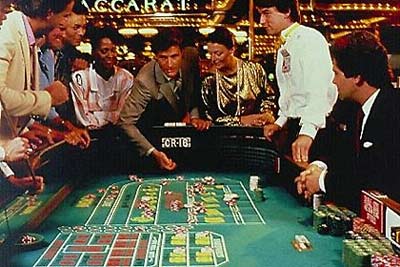
Illusion of Control is the tendency for individuals to believe they can control or at least influence outcomes that they clearly have no influence on. This bias can influence gambling behavior and belief in the paranormal. In studies conducted on psychokinesis, participants are asked to predict the results of a coin flip. With a two-sided fair coin, participants will be correct 50% of the time. However, people fail to realize that probability or pure luck is responsible, and instead see their correct answers as confirmation of their control over external events.
Interesting Fact: when playing craps in a casino, people will throw the dice hard when they need a high number and soft when they need a low number. In reality, the strength of the throw will not guarantee a certain outcome, but the gambler believes they can control the number they roll.
The Planning fallacy is the tendency to underestimate the time needed to complete tasks. The planning fallacy actually stems from another error, The Optimism Bias, which is the tendency for individuals to be overly positive about the outcome of planned actions. People are more susceptible to the planning fallacy when the task is something they have never done before. The reason for this is because we estimate based on past experiences. For example, if I asked you how long it takes you to grocery shop, you will consider how long it has taken you in the past, and you will have a reasonable answer. If I ask you how long it will take you to do something you have never done before, like completing a thesis or climbing Mount Everest, you have no experience to reference, and because of your inherent optimism, you will guesstimate less time than you really need. To help you with this fallacy, remember Hofstadter’s Law: It always takes longer than you expect, even when you take into account Hofstadter’s Law.
Interesting Fact: “Realistic pessimism” is a phenomenon where depressed or overly pessimistic people more accurately predict task completion estimations.
The Restraint Bias is the tendency to overestimate one’s ability to show restraint in the face of temptation, or the “perceived ability to have control over an impulse,” generally relating to hunger, drug and sexual impulses. The truth is people do not have control over visceral impulses; you can ignore hunger, but you cannot wish it away. You might find the saying: “the only way to get rid of temptation is to give into it” amusing, however, it is true. If you want to get rid of you hunger, you have to eat. Restraining from impulses is incredibly hard; it takes great self-control. However, most people think they have more control than they actually do. For example, most addicts’ say that they can “quit anytime they want to,” but this is rarely the case in real life.
Interesting Fact: unfortunately, this bias has serious consequences. When an individual has an inflated (perceived) sense of control over their impulses, they tend to overexpose themselves to temptation, which in turn promotes the impulsive behavior.
The Just-World Phenomenon is when witnesses of an injustice, in order to rationalize it, will search for things that the victim did to deserve it. This eases their anxiety and allows them to feel safe; if they avoid that behavior, injustice will not happen to them. This peace of mind comes at the expense of blaming the innocent victim. To illustrate this, a research study was done by L. Carli of Wellesley College. Participants were told two versions of a story about interactions between a man and a woman. In both versions, the couple’s interactions were exactly the same, at the very end, the stories differed; in one ending, the man raped the woman and in the other, he proposed marriage. In both groups, participants described the woman’s actions as inevitably leading up to the (different) results.
Interesting Fact: On the other end of the spectrum, The Mean World Theory is a phenomenon where, due to violent television and media, viewers perceive the world as more dangerous than it really is, prompting excessive fear and protective measures.
The Endowment Effect is the idea that people will require more to give up an object than they would pay to acquire it. It is based on the hypothesis that people place a high value on their property. Certainly, this is not always an error; for example, many objects have sentimental value or are “priceless” to people, however, if I buy a coffee mug today for one dollar, and tomorrow demand two dollars for it, I have no rationality for asking for the higher price. This happens frequently when people sell their cars and ask more than the book value of the vehicle, and nobody wants to pay the price.
Interesting Fact: this bias is linked to two theories; “loss aversion” says that people prefer to avoid losses rather than obtain gains, and “status quo” bias says that people hate change and will avoid it unless the incentive to change is significant.
A Self-Serving Bias occurs when an individual attributes positive outcomes to internal factors and negative outcomes to external factors. A good example of this is grades, when I get a good grade on a test; I attribute it to my intelligence, or good study habits. When I get a bad grade, I attribute it to a bad professor, or poorly written exam. This is very common as people regularly take credit for successes but refuse to accept responsibility for failures.
Interesting Fact: when considering the outcomes of others, we attribute causes exactly the opposite as we do to ourselves. When we learn that the person who sits next to us failed the exam, we attribute it to an internal cause: that person is stupid or lazy. Likewise, if they aced the exam, they got lucky, or the professor likes them more. This is known as the Fundamental Attribution Error.
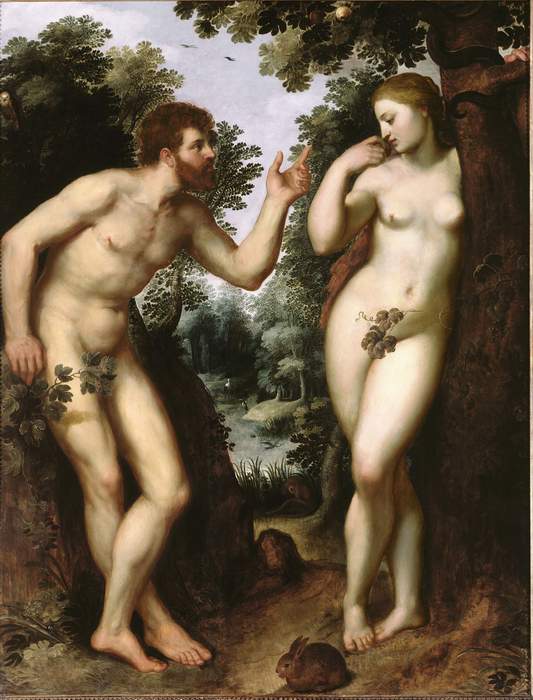
Cryptomnesia is a form of misattribution where a memory is mistaken for imagination. Also known as inadvertent plagiarism, this is actually a memory bias where a person (inaccurately) recalls producing an idea or thought. There are many proposed causes of Cryptomnesia, including cognitive impairment, and lack of memory reinforcement. However, it should be noted that there is no scientific proof to validate Cryptomnesia. The problem is that the testimony of the afflicted is not scientifically reliable; it is possible that the plagiarism was deliberate and the victim is a dirty thief.
Interesting Fact: False Memory Syndrome is a controversial condition where an individual’s identity and relationships are affected by false memories that are strongly believed to be true by the afflicted. Recovered Memory Therapies including hypnosis, probing questions and sedatives are often blamed for these false memories.
The Bias blind spot is the tendency not to acknowledge one’s own thought biases. In a research study conducted by Emily Pronin of Princeton University, participants were described different cognitive biases such as the Halo Effect and Self-Serving Bias. When asked how biased the participants themselves were, they rated themselves as less biased than the average person.
Interesting Fact: Amazingly, there is actually a bias to explain this bias (imagine that!). The Better-Than-Average Bias is the tendency for people to inaccurately rate themselves as better than the average person on socially desirable skills or positive traits. Coincidentally, they also rate themselves as lower than average on undesirable traits.
This is a bonus because it attempts to explain cognitive biases. Attribute substitution is a process individuals go through when they have to make a computationally complex judgment. Instead of making the difficult judgment, we unconsciously substitute an easily calculated heuristic (Heuristics are strategies using easily accessible, though loosely related, information to aid problem solving). These heuristics are simple rules that everyone uses everyday when processing information, they generally work well for us; however, they occasionally cause systematic errors, aka, cognitive biases.


1 blaze1223
April 12th, 2010 at 1:42 am
great list! thought processes have always interrested me
2 blaze1223
April 12th, 2010 at 1:46 am
i always read the new lists before i goto work at mcdonalds. you see alot of these faults come into play with customers and employes
3 Brian
April 12th, 2010 at 1:47 am
Interesting stuff. Good list.
4 Evilk8
April 12th, 2010 at 1:48 am
Awesome list.
5 bluesman87
April 12th, 2010 at 1:48 am
Whoa nice start to the listverse week – this list is facinating- but also a bummer i found 10 new things wrong with me haha -i found no.5 the most disturbing and sad . Dont get me wrong i love the other lists with useless facts and trivia but this list gave me some useful insight that maybe ill benefit from .
6 moulix
April 12th, 2010 at 1:50 am
About no.10,
Twist theories to suit facts, and not facts to suit theories. – Sherlock Holmes
7 lameo
April 12th, 2010 at 1:50 am
What’s the deal with the non-Listverse links at the bottom of an article? Are they spam? Are they safe?
8 Karen
April 12th, 2010 at 1:55 am
Loved this list!!
9 PRKon
April 12th, 2010 at 2:14 am
Super interesting – a great read as I loved the last list on this subject.
10 Geronimo1618
April 12th, 2010 at 2:19 am
What can I say, this is simply superb stuff..in fact I was wondering earlier if another similar list would be made.. thanks Nikki.
11 MinaLumina
April 12th, 2010 at 2:34 am
Hoo boy howdy but I have these faults. I’m sure everyone does, but it is interesting to see where they show up in your everyday life. I’m always afraid (as I do a lot of writing) that I have cryptomnesia from time to time. No lawsuits yet! Interesting fact about the interesting fact in cryptomnesia, though- I do have false memories, and I’m fairly sure most people do, but I didn’t even realize it until a funeral a few years back. When someone commented about the funeral home being the same one that was used in a funeral I attended as a young child (and had a pretty serious trauma at), I realized that my vivid memory of the event was entirely false (and comically melodramatic in retrospect). In fact, I had no real memory of the funeral that has caused me all this grief since, just an overblown set where the unassuming brown chapel was replaced by something not unlike a cathedral, but brighter and scarier. Still can’t remember what really happened. Ah well.
Sorry, I get wordy early in the morning.
12 Rhys ‘Sun God’ Williams
April 12th, 2010 at 2:37 am
This one is good but I liked the other one better but thats probably just because I did more things on the other one
But I still love these list, make more
13 xDr
April 12th, 2010 at 2:52 am
about no.1
).
The result of this is that everybody has an IQ of 140. Above average, but not super genius. If you didn’t know the average is 100 what you probably have (Did you see how I said you and not me?
14 heilhitler
April 12th, 2010 at 3:47 am
[deleted]
15 fuckstain
April 12th, 2010 at 3:55 am
I find this interesting. I use a lot of NLP and hypnosis, so these things are always in my consciousness. I always try to consciously pinpoint when I myself am engaging in these biases. It is interesting how we represent the world to ourselves.
“The map is not the territory, but the territory is the map”. – Richard Bandler.
16 fuckstain
April 12th, 2010 at 4:10 am
@heilhitler are you kidding? How could it have been a myth? So all those people that died are still alive somewhere? Or did they bring it on themselves? I think you might have some serious cognitive faults.
17 stockyzeus
April 12th, 2010 at 4:42 am
@fuckstain [18]: ignore him. obvious troll is obvious.
18 Pan Pipe Dreams
April 12th, 2010 at 4:43 am
What is the name of the thought process that makes people bag on other people’s dreams?
Their Pan Pipe Dreams. :’(
19 fuckstain
April 12th, 2010 at 4:52 am
Ha ha ha ha, I’m pissing myself laughing. I need a lame joke every so often.
20 fuckstain
April 12th, 2010 at 4:54 am
Yeah I know he’s a troll. Still a tool though. I’m above being petty. I’m not necessarily a Hitler hater either. I think he was a smart leader, pity about the evil side.
21 oliveralbq
April 12th, 2010 at 4:56 am
oh great nikki…..
it’s not even 7 am yet, and already, everything else i learn today will seem anti-climatic and mundane in comparison….
nice submission….
22 stevenh
April 12th, 2010 at 5:00 am
Nikki: excellent list. Thank you.
Jamie: re @16, it seems you have to re-institute the registration thing
23 astraya
April 12th, 2010 at 5:04 am
After brief but deep self-reflection, I am pleased to announce that I suffer from none of the above faults, and that I am impeccably fair and objective in all my thoughts.
24 astraya
April 12th, 2010 at 5:05 am
Sometimes.
25 oouchan
April 12th, 2010 at 5:29 am
Cool list, nikki! I work with several people who have a Planning Fallacy problem which in turn becomes my problem. *sigh*
However the true fun comes in when you try to have a garage sale with someone who has Endowment Effect going on. ooohh boy!
26 Cyn
April 12th, 2010 at 5:30 am
debated deleting the idiotic heilhitler comment but given the responses left it be. also at the request of another commentor some comments were deleted. all the more reason to not reference your responding comments by # but by name.
27 Morticia
April 12th, 2010 at 5:31 am
AWESOME list!
28 oouchan
April 12th, 2010 at 5:33 am
@lameo [7]: They are ‘friend links’ that have been added. Check out more info about them here: http://listverse.com/2010/04/10/site-update-april-2010/
29 maximuz04
April 12th, 2010 at 5:36 am
Best list ever…. I dont think I have many of this, but easily recognize them in others, I think I have the #1 bias then LOL!
30 MChris
April 12th, 2010 at 5:39 am
re #6: Perhaps not such a good thing to tell some folks it’s okay to give in to temptation. Yes, I understand the point here was to indicate this as being the only way to get rid of the ‘hunger’, however, it should be noted that when dealing with certain temptaions, actions do have consequences. Chocoholics who give in gain weight, adulterors eventually get caought or live in fear of getting caught, murderers… no matter how tempting it is to deal with that jacktwit who cut you off in traffic… go to jail (or lose their life depending on the country), excessive trolling will eventually bring back the LV registration, etc.
I just thought this should be pointed out. Restraint is a very good thing on so many different levels and one of the things that makes most of us human.
31 MChris
April 12th, 2010 at 5:41 am
Really did like the list NIkki, very informative.
32 7raul7
April 12th, 2010 at 5:47 am
Hitler Rox!
33 Mathilda
April 12th, 2010 at 5:50 am
Nikki, this is a very interesting list. I’ve noticed a lot of these logic faults (in others, of course, never in myself!) I’ve noticed the Just-World Phenomenon on display; that always drives me crazy. Your life is better because your parents paid your way through college and your grandparents left you a large inheritance to buy a house with, NOT because you are more hard-working and industrious than the kid working at the garage down the street!
I have the Planning Fallacy. I’m horrible at estimating how long things take, no matter how many times I’ve done them. I know this so then I tend to over-estimate to make up for my optimistic under-estimation. So I’m still wrong.
34 bluesman87
April 12th, 2010 at 6:12 am
@Mathilda [33]:
“Your life is better because your parents paid your way through college and your grandparents left you a large inheritance to buy a house with, NOT because you are more hard-working and industrious than the kid working at the garage down the street!”
That is fucking Gospel!!!God bless you and AMEN SISTA!!!
Some people are to busy trying to survive than to think and brag how hard they work! that wouldve meant hardly anything to me yesterday but today , today you made my day lady thanks!!!:-)
35 lrigD
April 12th, 2010 at 6:23 am
This is so interesting and so true. Some of these I recognize and see in my own environment, like the self-serving bias. It seems a human tendency to blame their own mistakes on other people, and I do it myself too.
A lot of these things I do, and I think everyone does. Sometimes it’s logical and there’s a good explanation for it, even though it may be wrong, other times it’s irrational. But it’s always interesting to see =)
36 Cubone
April 12th, 2010 at 6:29 am
Excellent list!
37 vanowensbody
April 12th, 2010 at 6:36 am
I recognize #7!
This is also known as the:
“Perceived Amount of Time a Wife Believes it Will Take Her Husband to Complete Any Household Task She Has Assigned to Him Fallacy.”
In this fallacy, the wife believes any household task that a husband needs to complete, can be done in approximately 1 hour.
Thus, a husband being assigned the task: “paint the front porch”, or “fix the leaky faucet” is told by the wife that she believes these time-intensive projects can all be accomplished in an hour. In fact, the husband knows each task will take a minimum of a full day.
38 Lifeschool
April 12th, 2010 at 6:42 am
Hi, this list looks amazing – I’ll look forward to checking it fully later. Thanks Nikki.
39 mrcoolstuff
April 12th, 2010 at 7:09 am
long time reader, first time commenting. Good list, another good addition to an already great sire. keep up the great work!
40 waren123
April 12th, 2010 at 7:21 am
the sad thing about the biases and fallacies is that, even if you really can get rid of them (which is really hard), others will still make those mistakes and won’t believe you if you tell them about all the fallacies.
41 ames801
April 12th, 2010 at 7:22 am
Cool list, Nikki. Phew! Good to know other people experience these things and not just me
42 Scratch
April 12th, 2010 at 7:29 am
That picture for number 5 is just creepy. Is that dude planning to ask her to marry him or is he planning to rape her? :S
43 filty145
April 12th, 2010 at 7:30 am
Quite a few of these are simply/simple errors in judgment and your observation that these are ‘common’ might even be a “confirmation bias”, as you put it.
I disagree with posting these as is because it will give some people all the rationale they need to consider certain behaviors and reasonings of theirs as acceptable because it is ‘human’ to do these things.
Not all of the items listed, but most.
44 Peejee
April 12th, 2010 at 7:30 am
This site is getting better and better !
LOL@vanowensbody
45 General Tits Von Chodehoffen
April 12th, 2010 at 7:37 am
Hell of a list!
46 GTT
April 12th, 2010 at 7:40 am
@MChris [30]: I agree. I think it would be much healthier and wiser to say “Avoid the poison ivy” rather than “The only way to get rid of the itch is to scratch”…
@vanowensbody [37]:
I recognized it also! I was going to call it the:
“Dont worry honey, you think activity X will take an hour but I´m pretty sure I can get it down pat in about 5 min.”
My husband suffers form that. Travel plans, getting to places on time, etc… He also seems to believe that I can accomplish tedious tasks (like going to supermarket) much faster by myself than if he were to come with me… I think it should be renamed the “Lazy husband bias!”
47 undaunted warrior 1
April 12th, 2010 at 7:50 am
Enjoyed the list thanks.
48 Cosmo312
April 12th, 2010 at 7:59 am
This reminded me of a survey i saw (can’t remember where) where 60% of parents of two year-olds believe their child is exceptionally intelligent or talented.
I don’t even know what “exceptionally intelligent or talented” would look like in a two year old.
49 Cosmo312
April 12th, 2010 at 8:09 am
Also, i don’t want to start anything, but i keep up to date with scientific journals and it’s amazing that some people can quite happily ignore a scientific paper for no reason if they dont agree with it, based on some other obscure piece of evidence
“a recent study done on 50,000 people shows drug abc is harmful? Nah, because this newspaper clipping from 1962 says it isnt”
50 not a downer
April 12th, 2010 at 8:23 am
Is it bad that the first thing i noticed is that the car in the mirror in teh picture for #1 is a Lotus/Caterham.
51 flamehorse
April 12th, 2010 at 8:35 am
I hate the word “heuristic.” It’s just, it’s a goofy word, okay? And so is “apodeictic!” I’ve looked that word up a million times, and it still won’t take. You know why it won’t take? Cause it’s a goofy word, okay?
Good list, Nikki. I have none of these faults.
52 ipla10s
April 12th, 2010 at 8:49 am
What about the gambler’s fallacy? You know, the one where a gambler believes he should keep gambling despite a losing streak because he thinks his luck will “turn around,” when in reality his chances of winning now are the same as when he started?
Or does that fall under one of the current categories?
53 Anoonimoose
April 12th, 2010 at 9:16 am
Very nice! I learned some of these from Psych class, but not all of them!
54 xristaravas
April 12th, 2010 at 9:38 am
the word bias appeared 27 times in this text, i know it is a cool word and make you sound smart, but there isn’t any other synonyme for this?
55 waren123
April 12th, 2010 at 9:44 am
@ipla10s: I think that one was mentioned in the first list.
56 Maggot
April 12th, 2010 at 9:46 am
@ipla10s [52]: What about the gambler’s fallacy?…Or does that fall under one of the current categories?
It falls under the category of: “try reading the intro where Nikki refers to her first list on the subject, and then go see if it is on that one before you ask why it isn’t on this one, dumbass”.
57 JJ
April 12th, 2010 at 10:05 am
Great list by the way. For some reason when i was reading this, the words to describe each bias is put together perfectly!
Thanks again.
58 Ryan
April 12th, 2010 at 10:09 am
I really don’t agree with a lot of this list. I know people who regularly do the complete opposite of what you described, like in number 3. The only ones that i regularly make or have made are numbers 9, 7, 6, and 2. I actually make 2 a good bit because I’m a musician and sometimes ill play a riff or beat from another song thinking its mine. Its a bit annoying haha
59 Lusty Roars
April 12th, 2010 at 10:32 am
@xristaravas [54]:
“Synonym” doesn’te havee ane ‘e’e ate thee ende ofe ite, youe twate.
60 General Tits Von Chodehoffen
April 12th, 2010 at 10:34 am
@flamehorse [51]: What’s wrong with goofy words
61 Blogball
April 12th, 2010 at 10:39 am
I really like your Faults in Human Thought lists nikk. I hope there will be a 3rd one.
I think the people that have a serious case of confirmation bias are more likely to be conspiracy theorists. I was going to say that I am aware of most of these so I’m more likely not to fall into these human thought faults but then I guess I would be guilty of bias blind spot.
62 schizonazi
April 12th, 2010 at 10:44 am
Interestingly enough, I found myself thinking that I knew more about this topic than anyone else here because of my bachelors degree in psychology and the fact that I took a class that was dedicated to studying cognitive distortions, thought fallacies, and the importance of critical thinking and logic. However, I realized in the process of reading the comments that there are many people who are aware of these fallacies of thought. I suppose that the most important thing that I can take from this is that we all have these tendencies and should be aware of them as much as possible—both with our own thoughts and others’.
63 deeeziner
April 12th, 2010 at 10:45 am
@vanowensbody [37]:, @GTT [46]:
I’ve known situations where the full day is more like a year or more.
@Cosmo312 [49]:
Your comment reminds me about the ongoing comment battle on the LV list about biker gangs….but I suspect that one commenter to that list has more problems than just confirmation bias.
@Maggot [56]:
Tsk tsk. Did someone skip their morning mug of BAJ?
64 Casualreader
April 12th, 2010 at 10:45 am
10, Confirmation Bias, particularly applies to ANY human belief system. However, it also probably also applies to some degree to any human thought process and activity that is not conducted with the utmost objective, scientific rigour. Even then, all conclusions in science are supposed only to be regarded as valid unless or until invalidated by better evidence. Not that scientists and the law don’t fall for the ‘love me, love my theory/verdict’ syndrome. How difficult it is to get a legal system to admit a mistake, say the execution of an innocent person, even when screamingly obvious and supported by bucketfuls of undeniable evidence. How difficult it can be as well to get the scientific establishment to accept a new theory that upsets their cosy apple cart, say plate tectonics or evolution.
Fear of the negative consequences of apparently fixed physical laws of the universe helps to straighten us out a bit. But not entirely even then. Individuals have convinced themselves they can fly and leapt off cliffs or high buildings with inevitable consequences. The intrepid still regularly jump off bridges with non-airworthy contraptions and splash into rivers. Still, that’s at least good fun for the rest of us!
65 shaymm09
April 12th, 2010 at 10:52 am
Good read. This has been the more interesting list in the past few weeks or so.
66 Casualreader
April 12th, 2010 at 10:53 am
I recall a great example of 3, Self-serving Bias, as a letter to a newspaper. It considered the public reaction to a national sports team. The correspondent noted that when the team succeeded, the reaction of everybody was a euphoric, +Hooray, WE’ve won!+. But if they did badly, the gloomy response was always, +Huh, THEY’ve lost again.+
67 deeeziner
April 12th, 2010 at 10:57 am
Great list Nikki! I too enjoyed it as much as the first list.
When I read about planning fallacy my first thoughts ran off towards the subject of women getting ready for date night. Like the way they say “I’ll be ready in 5 minutes.”, but then take an hour or so.
But perhaps that makes me guilty of some other bias.
68 segues
April 12th, 2010 at 11:04 am
Good list, however Jamie and moderators…re: the comments; this is exactly what happens when you once again open comments to all and sundry. The morons come squirting out of the woodwork like the boiling juices from hind-end of the bombardier beetle.
Hello, Casualreader. Howz things?
69 Casualreader
April 12th, 2010 at 11:11 am
I have a problem with 7, Planning Fallacy, which is mostly to do with hoping I can achieve far more interesting tasks in view than is reasonably possible. Therefore I try to convince myself I will get more done in a given time than (I know deep down) is possible.
I also regularly fail to take the +spoke-in-the-wheel+ syndrome sufficiently into account. I.e. I send off what is intended as the finished article with a sigh of relief, and it all too often comes back with double the problems to sort out or correct.
As for new tasks never done before, that comes under +Theothercasualreader’s First Law of Planning+ which states that any repeated job will take half as much time the second time around, and should go on reducing to a degree, subject to the law of diminishing returns (or maximum efficiency limit). That law might be put the other way round – i.e. Any job will take twice as long the first time. But I reckon my combination of positive thought combined with realism is better.
70 Casualreader
April 12th, 2010 at 11:20 am
Hi segues,
Thanks for the greeting. How’s yourself?
In answer to yours, read my 70 just posted. Right now we’re trapped between the Scylla of the first paragraph and the Charybdis of the second! But the turbulent straights look to last only until the end of the month, with calmer, wider seas ahead for May.
Thinks. Hmmmm. Better read the topic again, review past experience very objectively and see if I might be kidding myself yet again with that forecast. Probably!
71 Casualreader
April 12th, 2010 at 11:27 am
In case anyone’s in the least puzzled or interested, I’ve just noticed I’m back on air as my earlier aka, or:
Casualreader = theoriginalcasualreader. And vice versa.
72 Maggot
April 12th, 2010 at 11:27 am
@deeeziner [64]: Tsk tsk.
I was testing the new admin mod.
Did someone skip their morning mug of BAJ?
You know how it is. First I just tried a little. You know, just for kicks. Mmm that’s good stuff. Then, I tried a little more the next time. Because, I just loved that tingly feeling. Soon, I found myself up to three cups a day. Double shots. Now, even that just doesn’t seem to do the trick any more. I’m finding myself spiraling ever downward into a state of BAJ induced stupor. In short, because of my self-serving bias (please refer to list item #3), it is not my fault. I would be completely innocent if it weren’t for all these “external factors” screwing everything up. Fucking BAJ.
73 nicoleredz3
April 12th, 2010 at 11:29 am
I think I’m no. 8…
That’s crazy…
Good list, Nikki…
74 deeeziner
April 12th, 2010 at 11:34 am
@Maggot [73]:
I would’ve summed it up to #8, or #6. But that’s just my view of the situation….
75 Maggot
April 12th, 2010 at 11:49 am
@Casualreader [72]: Casualreader = theoriginalcasualreader. And vice versa.
So let me get this straight. “theoriginalcasualreader” was not really the original, but was the original with “theoriginal” added? And now, you have removed “theoriginal” so as to get back to being the original? And in so doing, “theoriginalcasualreader” will cease to exists, because originally, “casualreader” was the one and only? Rendering “theoriginalcasualreader” to the dustbin, due to lack of originality? Except that, since there were no other “theoriginalcasualreaders”, that was in fact, also the original. There are two originals? Not originally, but later? Or should I say there were two originals? But now there’s only one, which quite frankly isn’t very original because it was already there originally. Wtf? Have I missed something?
76 Sluiq
April 12th, 2010 at 12:07 pm
Something is off with this list, I just can’t put a finger on it.
Some of these are common and some of these seems rare and some of these have nothing to do with human thought, I guess…
Confirmation bias for example is less of a human thought and more of an environmental affirmation. The human thought version is more apt to be called selective thinking but wikipedia does direct it to confirmation bias.
It just seems off to me because it’s not general enough. For ex. how can you differentiate bystander syndrome with confirmation bias?
Both are based on events that just happened or are currently happening but if you judge those as faults by your thoughts rather than due to the lack of thought because of the spontaneousness and vast amount of affirmatory coincidences that’s happening, then is it a fault of your thoughts or laziness to verify something?
Even critical thinkers value empirical evidence first hand before they move to isolate all other properties. How then can confirmation bias be a fault and not a common advantage instead?
Availability heuristic… again, how can it be a fault of your thoughts when most of the wrong conclusion is due to the media you consume? After all, you can only rely on what information you can conclude and it is even more faulty to dismiss the information that is being given rather than to simply receive and acknowledge it for further research.
At the very least, herd mentality from the original list seems more fitting and any other faulty thought patterns not included under that criteria is more about paranoia, jumping to conclusions and vulnerability to pathos.
The heuristics seems fine.
The example for illusion of control on the other hand seems correct but rare. Often times it’s more ideomotor effect than illusion of control.
The other question it doesn’t answer is if it’s faulty to think you have control then is it valid to think you have no control of anything?
After all, apathy in my opinion is a far more common human thought in our modern world than activity or vision. That seems incorrect too. It’s not totally valid to believe in illusions but superstition does have the effect of causing one to mentally over-achieve or raise someone’s adrenaline to superhuman limits. How is it a common fault then? If anything it’s a rare fault and a common help towards adaptation.
Planning fallacy is another thought churner. Sure there’s realistic pessimism but what about the human ability to underrate how much little things add up to the long term value of a huge and difficult task?
2nd of all, how often does it happen? Most of the time plans fail because plans are not well thought or don’t consider all the factors.
The planning fallacy seems to imply that more than 50% of failed plans are due to such fallacy but that’s hindsight bias IMO which is a more valid common faulty thought.
If it’s truly that common then even successful plans that did happen would all have commonly surpassed the deadline but that isn’t the case. There are many plans that take longer simply because they are bound to fail or they have other factors that weren’t thought out outside of the time spent factor.
Restraint bias seems highly skeptical of spiritual acts. Normally it’s not possible to beat these instincts but it’s like making a statement that it’s impossible for people to beat their survival instinct and not commit suicide.
I know you mentioned greater self-control but again just referring to Buddhist philosophy that seems to contradict it. The less self-control you exert, the less illusion of control you possess. The less illusion of control, the easier it is to give in to a desire without fulfilling it.
How else does this explain the ability for many humans to resist their biological urge of procreating or eating a certain substance over another because they are impure, dirty or inhumane.
For example, I don’t think I’ve heard of any vegetarian who stares at meat all day and resists it. I’ve heard of people switch to a vegan lifestyle despite loving meat because they don’t restrain it at all. However they don’t succumb to eating meat either.
Just World/Mean World, again are these really faults of human thoughts and not because people are more apt to be apathetic and stop thinking?
Let’s just look at the animal world for example. If a mother species doesn’t have a “mean world” look would they be able to raise their offspring to better survive in the wild?
From a Just World perspective, if anyone doesn’t possess these thoughts would laws have improved?
This doesn’t seem like a faulty human thought and more a confirmation that we are being made out of touch of our own surroundings to the point that we are forced back to rely on our confirmation bias.
Even if we do try to do some research, our research knowledge can’t fill the exact “justness” or “meanness” in our surroundings so if anything, in this case, it’s the correct response. Otherwise we’d become even more apathetic and further ignorant of the real probable threats.
Endowment Effect seems flawed but in a different manner. You pointed out when it’s not always a flaw but when is it a faulty thought?
It seems apathy is again afoot. Why should people not put more value in their property when it is the one readily available to them? Similarly with sentimental objects, if there is no sentiment to an object than how would people reduce expenses and defend themselves from marketing that promotes faulty thinking?
Status quo is the more valid but it seems different from being endowed.
Endowment using a sports team analogy seems to hold value for players that are currently playing well for a team you feel a part of even if that guy isn’t the right fit compared to a better player that is supposed to be traded. Status quo would imply that one should get and maintain the current best choice.
Status quo then would directly fight against endowment effect for your thoughts and not be talking about the same things.
I don’t think Self-serving bias is just based on external and internal factors.
One can fundamentally attribute negative outcomes made by others to internal factors and they may be mistaken just the same.
If anything it’s again selective or confirmation bias. Which outcome is the most likely to comfort the self gets promoted first to our thoughts.
If you are for example looking at a way to serve your self, you could say another person gets good grades because they are intelligent so you are better off not trying to attain a good grade at all and just cheat.
I don’t think crpytomnesia can be considered faulty either. Maybe faulty as more embarassing but each day we are made to believe in illusions of IQ, grades, fitness, beauty, logic, rationale, religion, politics, etc. etc.
Sure with cryptomnesia we empirically developed the wrong memory but we are raised in cryptomnesia.
Our body language is more telling of what we mean but we are raised to forget that in favor of sounds fitting the dominant language our country was raised in.
Our attitudes, sexual preference, drug use, bias and expected way of normality, all are made for the cryptomnesiacs who would support or rebel against taboos rather than to be flexible towards biological memory.
Of course it’s going to be faulty enough that it can affect our conscious actions but it’s been faulty enough subconsciously for so long and we haven’t developed into faulty human thinking people at least by the standards of our society. (except for the criminals, minorities, racists… etc. etc.)
Bias Blind Spot… finally that seems more of a product of our society.
If we as a society were all biased towards accepting that humanity is all heavily biased, then we’d all be saying we are heavily biased beings.
That seems more like a product of groupthink and peer pressure. It also doesn’t address the Downing effect.
77 Scratch
April 12th, 2010 at 12:11 pm
@Sluiq [77]: “Something is off with this list, I just can’t put a finger on it.”
No, it doesn’t seem that you can.
78 Maggot
April 12th, 2010 at 12:33 pm
I always thought the Endowment Effect was why some people drive Humvees.
79 deeeziner
April 12th, 2010 at 12:40 pm
@Maggot [78]:
Phallic substitution dude, phallic substitution.
They apparently aren’t “endowed”! hehehe
80 deeeziner
April 12th, 2010 at 12:42 pm
@Scratch [77]:
Ten fingers and a couple of toes?
81 Scratch
April 12th, 2010 at 12:47 pm
@deeeziner [80]:
Yeah, I think that might cover it
82 James
April 12th, 2010 at 12:54 pm
@astraya [24]: You’re an inspiration to us all.
These psych lists are so neat. I know it isn’t a ranked list, but #1 is well placed.
83 Cool
April 12th, 2010 at 12:55 pm
None of this applies to me because I am perfection incarnate.
84 nicoleredz3
April 12th, 2010 at 12:57 pm
And the award for the longest comment on Listverse goes to… @Sluiq [76]:
Interesting, though.
85 Maggot
April 12th, 2010 at 12:59 pm
@deeeziner [79]: Phallic substitution dude, phallic substitution.
Hmm, I didn’t know, since I am not afflicted.
(self-delusional bias)
86 Julius
April 12th, 2010 at 1:04 pm
@nicoleredz3 [84]: I think he might just edge Randall to the title
87 Sluiq
April 12th, 2010 at 1:10 pm
@Scratch [77]: Well like I said, I was guessing. I don’t really have any knowledge of the things I talked about except for the opinions formed by my own faulty thoughts.
@nicoleredz3 [84]: No, I think that belongs to the user, Randall. I just recently discovered this site and he seems to have lots of knowledge about lots of different things and doesn’t mind sharing them.
Otherwise, I wouldn’t even dare post a reply. I often write long posts and with my lack of knowledge and opinion-based way of posting, I’d probably get banned for breaking the “how long should a comment be” rule.
88 Casualreader
April 12th, 2010 at 1:14 pm
@ Maggot, 75,
“Have I missed something?”
Yes, squire, you most certainly have. It probably has to do with one of the malfunctioning thought processes of the topic, but I can’t be bothered to work out which.
In assuming that I’m personally responsible for this knotty cock-up, you’ve omitted to take into a/c the +on-site log-in process+ syndrome. When log-in came into force, I was told Casualreader couldn’t be registered because it had already been registered by another user. Hence theoriginalcasualreader. Having written +Thecasualreader+ as part of post 69, I chanced to notice when submitting post 70 that the ruling mafia had changed my aka back to Casualreader again. All clear as mud now?
So please address all relevant complaints to de organisation aka LV aka J. Frater, Esq.
89 Casualreader
April 12th, 2010 at 1:26 pm
Re 6, Restraint Bias.
I’ve always considered it prudent not to attempt to discover whether I might be able to resist the temptation of women … in case the worst came to the worst and I discovered I actually could!
Apropos. It’s generally considered that displacement activity helps a great deal to distract one’s mind from impulses. For example. Take my situation above. If a pretty girl passes by and I continue to stare until she’s out of eyeshot, well, enough said … But suppose instead I turn to reading the paper, especially if the team I support has just won a great match. Or I glance at the fat, bearded lady serving up soggy, fatty fast-food over the counter of the restaurant through whose window I’m gazing. Well that should definitely cause a downturn in my impulse, both figuratively and literally!
90 Lifeschool
April 12th, 2010 at 1:35 pm
AAAy – I like psychology lists a lot – I like to challenge myself, and to tackle things I’m not comfortable with. Don’t worry, I’m not going to write a book blog like 76
First of all, psychology is a trend science – it certainly doesn’t account for everything or everybody.
#10 – Confirmation Bias – I’ve seen this a lot and used to suffer greatly from it myself. It’s easy to go along with things if they fit into one’s own belief system. I went the opposite way and tried to incorporate EVERY other system into my views; which ultimately worked better but still doesn’t escape this bias. Bottom Line: we never truely KNOW, we can only reiterate.
#9 – The past doesn’t lead to the future, and if you think it does it’s because you’re making it do that.
#8 – Nothing is ever certain because everything is meaningless (except for the observer after the fact).
#7 – Planning – This is where I admite to being under this influence. I’m manic depressive – sometimes I’ll be hyper and be unstoppable: the very definition of extraordinary integrity. The next moment I’ll get lazy and do nothing. I’ve washed the dishes today for the first time in over two weeks. The bottom Line: Things take as long as things take.
#6 – The illusion of control – yes the world is chaos; you never ever know what’s gonna happen next. As for impulsions: I can take things or leave then. Last night I went to bed and then felt very hungry all of a sudden. I ignored it and finally went to sleep. Today I’ve had a few glasses of water but no food – I’m not hungry yet. Sometimes I enjoy going without a cigarette so the next one tastes better – some days I’ll smoke 12, yesterday I smoked 6 – I didn’t feel like having any more – so I didn’t. The Bottom Line: impulses are temporary.
#5 – Who said the world is a ‘just’ place – that really is an illusion – shit happens (every day).
#4 – I’ve need selling off a few of the things I’ve ended up with this week on ebay. We ‘posess’ nothing – it is always either given away, gets destroyed or we die leaving it. All my ‘possessions’ have come from somebody, and they’ll go to somebody else at some point unless they go to the dump. I always make sure I’m offering the product at the cheapest price on EBay to be almost assured of selling it. Why would anyone pay more for the exact same things?
#3 – Sometimes I love to put others needs before mine, sometimes I’m stubborn and prefer my own space. As for exams, I’ve passed some at high grades and some at very very low grades. Some things I’m very good at by practice and experience (or applied application) and some things I’m not very good at irrelavent of effort (like coping with extreme implied deadlines). It doesn’t make me better or worse than anybody – its just me being me.
#2 – There have been very few cases of me lying or copying others to win respect. If I don’t know – I don’t know. I can actually only think of one occasion when I’ve copied without giving due credit – and that happened just last week right here on the LV. I came up with a list of Earth Day T-shirt slogans: one of which I found on the internet, and one I remembered from a 1990′s UK TV show called Drop The Dead Donkey. I’m sorry folks. I just wanted to adite that. The rest were genuine.
#1 – I also admite that I am flawed in many ways – but I know when I’m being who I’m being. I know when I’m being a dick, when I’m being a hero, when I’m being thoughtful, and when I’m being a coward. There is nothing wrong with any state of being unless you yourself ‘make it’ wrong. But then one of my strengths is in self reflection. I’m a philosopher – that’s what I do.
–
Note: If anyone wants to break down and break free from their personal boundaries, I can heartely recommend an internationally renounded course called The Landmark Forum.
~ ~ ~
edited per request
Cyn
91 Casualreader
April 12th, 2010 at 1:57 pm
Following my 88 answering Maggot’s 75, I wonder if we’ve uncovered another faulty human thought, or at least perception process, and if so whether Nikki might have a jargonic name and technical description for it?
Many accidents, misunderstandings and malfunctions happen because of our assumption that things we consider stable from long experience will remain stable. So we take them for granted without checking. We have to do this for many things, or life would become impossible. Fundamentally we base our lives on the stability of the basic laws of the universe, for example. You’d be considered neurotic or insane if you believed the law of gravity would cease tonight! We don’t check every footstep to see whether the ground has suddenly ceased to exist beneath our next step. What we do (sensibly) is to check cautiously when walking over rough ground, but not over smooth, familiar terrain.
Yet things we expect to be the same and take blindly for granted as such aren’t always so, and then problems of all kinds can develop, leading to anything from mortal accidents to extreme embarrassment.
Maybe it’s simply nothing more than a combination of Confirmation Bias, Illusion of Control and Attribute Substitution to which we give the technical term Tough Shit.
92 Sluiq
April 12th, 2010 at 2:45 pm
@Casualreader [93]:
Sorry, it’s none of the three in my opinion.
To play around with Wikipedia words for a bit, that phenomenon could be called The Dead Statistic Framing Fallacy.
The below isn’t my words. I just copied it for personal use.
It helps to think of things statistically.
Every time you roll the dice, every side has a 16.6% chance.
Each roll is a new event, each event resets the %-chance,
…because statistics doesn’t remember the last die roll.
The fact stands.
How many people don’t ask questions or don’t better themselves because they think its stupid or too late?
Quite a hell of a lot.
Its never too late to do anything, at least you’ve done it, and others didn’t make the effort.
If you don’t get a job, brush it off; it means you were one of 30 other people who got the boot.
Numbers, guys, numbers.
That’s all life is.
Failure is nothing.
Your past is nothing.
You know who you are today,
You know who you want to be,
That’s all that matters.
You can make amends with yourself.
We live in an ocean of people, an ocean of statistics & probabilities.
Ever seen someone who got their GED when they were 40?
At least they did it, dammit!
Why would anyone make fun of them?
Because they’re assholes, that’s why.
Compare yourself to yourself,
Keep track of your own progress rather than looking for that elusive magic moment that’s always brought fail and misery.
It could just as be called the Magic Mop fallacy but the way your scenario is presented, it’s dealing with both statistical improbabilities and critical laziness.
It’s not a desire to make sense of the world (thus it’s not an illusion of control) nor a desire to confirm or substitute something else.
At least not if we’re talking huge masses of people and not just single individuals changing things not involving everything.
It basically has to deal with the fact that we often fail to let go of a statistical issue that would help us review outside of the box.
Sometimes it’s due to fatigue, other times arrogance, still other times probability of a probability.
Ex. someone who complains and rants about a post but doesn’t really do anything to change it in real life.
That’s because they cling to the probability that the easier task is not only less dangerous, will still influence people but ultimately self-serves their consciousness especially if they have a stable life to return to after every discomfort.
It’s a framing fallacy because you can’t think about everything about the world unless you think less. At least consciously.
The mind is managing all that spectrum of data though so you can indeed manage all that data.
However conscious thought pattern can make you ignore that data especially if something steals your focus from that bird-eye view of the world.
If you add the element that you’re also fixated with an issue you can’t statistically influence currently or are in the illusion that something you can change, can’t be changed because you don’t consider the statistics, then it further messes up your framing of the world and messes up your response to it.
It still could be categorized under selective thinking and just the basic wiki definition of framing effect if you weren’t talking about worldview but when you’re talking about that big or life lasting view of an event, it goes beyond taking something for granted or wanting a stable world (because after all that is among the safest world to be in)
…again these are just my guesses and if it isn’t obvious enough, there is no such word as Dead Statistic Framing Fallacy.
93 Mathilda
April 12th, 2010 at 3:11 pm
@bluesman87 [34]: Glad I could make your day!
@Sluiq [76]: I can agree that apathy can often be a part of flawed reasoning (is this called the Lazy Thinker Syndrome?) But I really believe that often the lack of thought is deliberate, especially with the Just-World Phenomenon.
An example: During a discussion as to why more military recruits in the US are from rural (and urban) areas than suburbs, I was presented with the argument that new enlistees could “just move to the city to find jobs”. I can agree that apathetic thought might explain the lack of consideration of the fact that it tends to require money to move anywhere to “find a job”, and that if one lives in a depressed economy it can be quite difficult to find a job to get the money to move to … find a job. But, after I pointed that fact out, there is no logical explanation whatsoever that I can think of to explain the retort that “People who enlist in the military usually do it because they are too lazy to want to move from where they grew up.” I imagine those new recruits would be in for quite the rude awakening if they were planning to spend their entire military careers in Bohunk, North Dakota! (The Just-World part of this discussion came about since my claim was that the US “all volunteer” army was not really what I would view as true volunteers but consisted in great part of people whose financial circumstances made enlisting the best option that they had, as opposed to the children of the reasonably well-privileged.)
94 Crazy-Jazz
April 12th, 2010 at 3:19 pm
Great list, very well put together and very informative.
95 Bucketheadrocks
April 12th, 2010 at 3:20 pm
Dali!!!!!
96 Bucketheadrocks
April 12th, 2010 at 3:21 pm
Listverse is the best website ever!!
97 Arsnl
April 12th, 2010 at 3:25 pm
Ive got a new game for y’all. Try to start at the bottom of the page of comments and move up and when you see a really long comment put a bet if its randalls or not. I just lost 2 times today to sluiq
98 Julius
April 12th, 2010 at 3:38 pm
@Arsnl [99]: Randall uses fewer paragraphs
99 JAS
April 12th, 2010 at 4:13 pm
This is my first comment here, even i was reading this page for a long time. I have to say it: this is one of the most accurate and touching (not the romantic way of course) list ever publish.
Congrats..
As ever you did an awesome job… keep doing it!
100 Cyn
April 12th, 2010 at 4:29 pm
given that Jamie has changed things & some folks are reverting to former usernames or changing names or whatever..chill out.
regulars will be able to sort things out. as for length of comments ..personally unless its absolute nonsense or a novella…heh whateverthefuck. just keep in mind most folks attention span is…oh, look something shiny.
101 actually
April 12th, 2010 at 4:38 pm
@filty145 [43]: actually, according to the studies of social psychologists (asch, bandura, zimbardo, etc). yes they are common faults of human thought, but they are psychologically true. yeah i agree with the fact that people reading this going, “wow! now i can justify my laziness”, really aren’t reading past face value. but it’s the internet, what can ya do
102 James
April 12th, 2010 at 5:23 pm
Though the list was great, the comments may have surpassed it in terms of entertainment.
103 talkingtv
April 12th, 2010 at 5:25 pm
This was so interesting! And very true. I really DO do all of these things – you just really don’t notice until someone points it out.
104 Sluiq
April 12th, 2010 at 6:16 pm
@Mathilda [93]:
I sort of agree with your conclusion.
(Well I disagree in that we should rely on only one case example to define a general statement (it would make us vulnerable to confirmation bias if we do so) but I don’t have any particular disagreement with your reply)
However, I think your post refer to something more related to philosophy than psychology.
Not that I can decipher the difference but when you brought up the word “deliberate”, it begs the question can apathy be both deliberate and intentional or is it always unintentional or is it both? …or can it be both at the same time?
For me, it’s simply that apathy is a general word and it can fit alot of things and it can be interpreted in many different ways.
Your example for example, you define apathy as inconsideration for a factor.
But Just World isn’t necessarily inconsideration for one specific scenario only nor is it a set of specific events and reactions where if you try to conclude that all scenarios based on a Just World mindset is based on inconsideration only, if it doesn’t fit that criteria than it can’t be hugely about apathy.
If that sounds confusing, I apologize. You have put me in quite a dilemma in your reply.
What I really like to try and say is that apathy and Just World are both general statements that can go beyond one definition but then I won’t be addressing “the lack of thought is deliberate” part.
If I try to go at it and say your definition of apathy is too limited and it’s not just of being inconsiderate of something and in fact that’s more the area of fundamental attribution error or ignorance then not only am I being rude but it’s borderline attacking your character rather than your points.
The thing is… I think Just World is indeed more of a philosophical observation than a faulty human thought that’s why I questioned it being included in the list.
It wasn’t so much to make a case for apathy as much as it was wondering whether in terms of talking about faulty human thoughts, there was another aspect that was at fault.
Still, the thing that further makes it hard for me to share my opinion back at your reply is that you seem to separate apathy from deliberate lack of thinking when I would normally lump those two together with apathy being the general criteria for actions such as that.
This sounds like an excuse to insult you but in the end I would like to make the claim that the reason you separated apathy from deliberate lack of thinking was because you were being a lazy thinker.
Not so much that you were 100% apathetic up till your post but in the sense that you were caring and you were not being lazy as far as thinking but because you wanted to fill your self-serving bias first, you stereotyped and assumed a Just World thinking. (assuming your example does fit the Just World criteria because I’m still not sure)
Later on due to both being less apathetic on your part and just receiving additional challenges or stimulation to add to your schema, you became less apathetic in one aspect of your thought and realize, hmm… maybe there’s something more. Maybe “some” of these people were being deliberate and again here I’m lost as to where exactly deliberate lack of thinking differs from your usage of apathy but if you will allow me to guess, basically you improved your stereotypical model to handle more complex what-ifs.
However like in the Just World as defined by the list, it’s not so much making the unconcious faulty thought or lacking in thinking as it is being drawn to a certain direction. Being made to fit your world in your box while still not totally rejecting information by someone you feel credible to (the media) while still trying to answer your doubts so that in a way you don’t have to do anything because you deliberately (though not entirely) made yourself apathetic or in your words, deliberately stopped yourself from thinking or doing.
Again, sorry if I’m self-contradicting or talking in circles. Like I said, I don’t quite follow what you wrote but I also don’t know how to ask you to clarify yourself without offending you so I just tried to put my thoughts out here instead of just asking you to expand on what you meant just so you can get a better idea where you might have lost me because honestly, I’m not sure what area I don’t get about your reply.
105 Iakhovas
April 12th, 2010 at 6:22 pm
@deeeziner [67]: So did I. I actually think confirmation bias is incredibly common when it comes to the media and politics. Most media organisations, from newspapers to TV networks have an obvious bias toward the left or right. And the viewers/readers often only ever pay attention to 1 side of the argument, feeding their confirmation bias through their preferred outlet. People should always examine both sides of an issue so that they can make an informed decision on any given issue. Unfortunately, they rarely do this which is the reason bi-partisanship is so rare.
106 Sluiq
April 12th, 2010 at 7:09 pm
@Iakhovas [105]:
I’m sorry if intruding on a reply to others is considered rude here. If I offend you for doing so I won’t do it after this.
I just want to say that bi-partisanship is in itself open to confirmation bias. You could say everything is but as far as the context of bi-partisanship helping to reduce confirmation bias, unfortunately it by itself not only doesn’t reduce it but like partisanship it promotes it.
Yes, primarily it’s the partisanship that is upfront in making enemies out of people that should work together but bi-partisanship makes enemies out of people who have reasons for making a stand that seem partisan that’s why it can still confirm your bias.
As long as the sides and not the details of the issue are being talked about, it doesn’t prevent confirmation bias.
Example in America’s case. Universal health care (or whatever it is called now) while it has turned into a left-wing cause isn’t particularly partisan.
A bi-partisan person who leans more towards the conservative side might be for it despite the flaws. Good enough. It has it’s form in many developed countries outside of America.
But he may be opposed to it because America is down in debts and is waging a war and that puts them in a worse position.
If a bi-partisan becomes settled in just reading both sides rather than the particulars of why the issue is being opposed, he might end up accusing the opposer of being partisan regardless of their claims.
Now this seems like a fairly simple solution to fix. People who would even consider listening to both sides are often receptive to the details of an issue too… except if that were the case, the 2 party issue would be easy to fix too.
It becomes complicated because not only can the media frame the questions and the answers differently but they can be further boggled by people with partisan leanings.
Some who will repeat the same points of a bi-partisan opposer but have a different agenda thus making both opposers seem like they’re saying the same thing.
Combine that where people form a party (like a Tea Party) and it may have elevated itself to a bi-partisan group but if those people within don’t focus on the specific details of an issue or the group they ae interacting with don’t educate them enough, they may be bi-partisan but they are forming their own biased framing of what a bi-partisan person should accept or deny. Not all of them are able to distinguish between having both sides of an issue from being informed by an issue.
107 oliveralbq
April 12th, 2010 at 7:43 pm
@Scratch [42]:
>>”That picture for number 5 is just creepy. Is that dude planning to ask her to marry him or is he planning to rape her? :S <<"
–looks to me like he is looking directly at her neck. your "wedding proposal v rape" debate is quite easily resolved.
he is clearly going to bite her in the neck and turn her.
108 Casualreader
April 12th, 2010 at 8:06 pm
@ Sluiq, 92
Reader warnin: long post, nice stories.
I’m essentially sticking to my first posting guns, but throwing in the factor of evolution. Evolution determines our mental and physical possibilities. Luck determines their outcome. An intelligent person may have the good fortune to be well educated to make correct decisions. But he may have the misfortune to born male and become adult in wartime, only to die young as a soldier. An uneducated born-nitwit may make all the wrong decisions but lead a charmed life. He might even win a fortune on a lottery and just manage to hang on to enough bucks to survive to a comfortable old age.
The universe, pooh-stripes, the Pope, a spider and absent-minded profs:
We all take on faith that the universe we live in will be here from moment to moment. We have no proof of that whatsoever. We don’t know what the evolution of the universe is, where it came from before the Big Bang, where it’s leading to, or whether it might end instantly via some cosmic factor we are totally unaware of (the Big Vacuum?). We are gambling. But based on our experience and knowledge, its continuing stability is a very safe bet indeed.
What if the universe did end abruptly tomorrow though? Nothing we could do about it, and we probably wouldn’t even be aware. Why worry? So sometimes when making mental calculations, it’s better to consider the reverse side. What would be the result if I didn’t do something? Or did the reverse of what I intend instead? Especially if you’d rather not risk egg on your face in public. The best way to get somebody to change underwear is to remind them they might have a road accident or sudden medical condition and their pooh-striped garment would cause them shame in hospital. Never mind the massive odds against any of us ending in hospital most of the time. Never mind that dirty underwear would be totally irrelevant under the circs. Potential shame rises to the top like cream. Underwear duly gets changed.
Room for uncertainty about the universe occasionally leads humans to doubt the continuation of physical existence and others to be socially influenced by them. We broadly regard as mentally deranged those who wear placards advising the end of the world by a certain date, and their few followers as gullible nitwits. They inevitably appear extremely foolish the day after Apocalypse Not Now. But imagine the Pope announcing publicly one day that God had told him directly the world would end tomorrow. OK, millions, including many Catholics, would suppose the pontiff had lost his marbles. But millions more blindly devout Catholics would believe him. The effects would be unimaginable, not least with countless suicides and massive social disruption in several countries. (Only think of Orson Wells and the Martians.) Of course, all would end up with egg on the face as well (we hope!), and the Pope would probably be locked discreetly away in a white restraining suit, or be seen down at the local unemployment queue. Our fellow humans have entered the scene here. We are social animals and care to some degree how others react. We all differ in this respect, to a degree genetically, which also affects our decisions. The question, Will I look a fool? affects some more than others. This is beautifully illustrated in the fable of the Miller, his Son and their Donkey. If you have a credible, established leader (the Pope) though and lots of others following suit, it’s much easier to accept something you’d be locked away for doing alone.
As I said in the first posting, we should grind to a halt individually if we didn’t reasonably take a great deal in our personal lives for granted. I once lived for a short period in a country with seriously nasty nocturnal spiders (I’m not an arachnophobe). We were told to bang our shoes out every morning, as the bite could be fatal to the allergic. OK. Sure as hell we did. Religiously. But should I bang my shoes out every morning in the venomous spider-free land I live in now? Of course not. Apart from unnecessarily wasting my time, anyone who saw me would probably consider I’d joined some weirdo religious sect. But one morning I put my shoes on, get bitten by a venomous spider, and because I’m allergic, die. WTF, you’re thinking. He’s making up fairy stories. That’s unjustifiable. No it isn’t. I happen to like bananas and buy large bunches. The spider slipped through all the inspections, escaped from the kitchen and lodged in my shoe. A chance in trillion. But totally impossible? It’s the Unbelievably Tough Shit Luck Situation. The flip-side of winning a huge sum of money by gambling.
Evolution plays a big part in all this by ensuring a regular generational range between risk-takers and play-safers in many organisms. Under some random conditions the decisions and actions of the risk-takers pay off. Under others, the chary decisions and lack of action of the cautious triumph. In humans we also have the single-minded and obsessive, who more closely resemble risk takers, because they often neglect simple precautionary decisions. In general risk-takers and the single-minded help to advance progress, play-safers to stabilise it. An absent-minded medical professor is about to unleash on the world a miracle cure for cancer he has worked on alone and in secret. He is so wrapped up mentally in his research, he forgets to look when crossing the road and is run over and killed. His brother works in a bank and spends his life painting the house, manicuring his spotless garden, watching sport and thinking and planning carefully everything does. He never takes a deliberate risk. He has contributed nothing to human progress He has two sons. One is a dead ringer for him. The other is a brainy, nerdish, lazy slob who will follow in the medical footsteps of his dead uncle, but will have the good fortune to live to complete and publish his revolutionary research.
Evolution and luck.
109 smaj7
April 12th, 2010 at 8:11 pm
I am a Sociology major at UofT, and … let me tell you; don’t think about your biases too much.
Acknowledge them and be self-reflexive … if you start trying to look for ‘laws’ that govern society you’ll start tripping out and you’ll probably become robotic, while in the process developing a bias because you think you’re better than people who are unaware of ‘social laws’.
Take it with a grain of salt and remember equality is key.
110 Sluiq
April 12th, 2010 at 8:45 pm
@Casualreader [108]:
I’m sorry I must have mis-interpreted your initial post.
I thought you were speaking more of dynamic big problems that someone could work on but didn’t because the probability seems so far away.
Sudden Apocalypse and sudden deaths are obviously out of your hands but it’s also prone to hindsight bias.
How do we know we can’t prepare for Apocalypse? Apocalypse could be pollution and it’d seem sudden to us if we allow ourselves to a recession, a mistaken support for the wrong projects disguised to help reduce pollution, lack of worry and those other stuff.
That’s why I mentioned the idea of dead statistics. That is actions that we do that don’t help increase our chances of preparing for a bad roll of the dice. (or even a good roll of the dice)
For example the professor could have found the cure for cancer but because he chose to work in isolation, lost that one crucial person who will stimulate him to a critical step he missed.
That banker could have found a revolutionary new effective play for the sport he was watching based on his spotless garden.
Yes, evolution has risk takers and play safers but remember our modern culture is not pro-evolution. In fact we have pretty much progressed our way out of needing to evolve until a major disease hits us again.
This isn’t to counter your words because I do agree with them. I’m just trying to showcase how I misinterpreted your earlier post wondering about a technical jargoninc word to call that phenomenon as well as showing you how there are much closer technical terms to what you are talking about than the three you listed.
111 jay
April 12th, 2010 at 8:47 pm
great list, @nikki are you a psychology major?
112 Sluiq
April 12th, 2010 at 8:51 pm
I forgot to add this about the professor and the banker.
The reason they may achieve or fail in their endeavor may be both due to luck and evolution.
But you can increase the statistic for luck.
You can increase the probability of becoming more adaptive to your surroundings and thus allow for a wider room for evolution to strike you properly.
…or you can decrease them.
…or you can decrease them while thinking you are increasing the probabilities.
That’s why the next sentence deals with how our society may not be the best breeding ground for evolution anymore and even though we don’t quite know how micro micro-improvements are, it’s less about how evolution works anymore as far as our society works until that big major disaster that thins us back to much even ground with other species where all our prior instincts and improvements comes more to play than whether we risked going out to be hit by a car or stayed safe by watching TV.
113 oliveralbq
April 12th, 2010 at 9:22 pm
@Sluiq [106]:
–if you offend anyone youre gonna know about it pretty quick……
@schizonazi [62]:
“Interestingly enough, I found myself thinking that I knew more about this topic than anyone else here because of my bachelors degree in psychology ” — (schizonazi)
–im on the doctorate level in experimental psych, and took 5 classes (independant readings, i. research, etc) in cognitive dissonance and deviant behaviour, and i was only familiar with 7 of the entries.
while still in school, i work at a casino down here in biloxi, and i’m here to tell you: the ‘illusion of control’ entry is no bullshit……
nikki…loved the list, ….like, a lot….but you grossly underexplained the level of senseless delirum displayed by many gamblers, as well as the frequency of occurance. its mostly little old ladys and retirees etc., ive seen people do the absolute weirdest shit because they think it gives them the edge (for example, a regular guest of ours sits down at a machine, puts money in, plays a few spins, *then* puts her players card, spins once more, moves to a different bank of machines, puts players card in, spins a few times, taking her players card out after 5 spins, finds a machine similar to the first one she played, but _never_ever_ the one next to the first one…….on and on and on)
somehow someway she is convinced that gives her better odds
iif she’s right, she looks like a genius, and if shes wrong, then something else has happened (she ate creamy peanut butter in her last pb&j, but shes only lucky if she leaves out the jelly, or uses chunky p.b.)
thats pretty random, with a hint of self-serving bias-ness
w t f
i know, right….
that example came from a few years back, and i still dont even *sorta* understand any of her logic…..
shes a sweet lady….batshit crazy, but nice anyway.
cryptomnesia is the one that really gets me, beacause its such a conundrum—as nikki said, they often attribute this to recovered memory therapy, but theyre really grasping at straws … there is no emperical data that supports any instances of the one leading to the other–
instances of misattribution on this scale are a mystery and i seriously doubt thats gonna change anytime soon….
there was an article in a social psychology journal *sometime* ago, authored by dutton and aaron, i believe..it was a fairly in depth study of misattribution of arousal, which is the only article that ive ever read on the subject that makes any kind of sense at all… unfortunately, the conclusions were trite and seemed kinda thrown together.
114 Casualreader
April 12th, 2010 at 10:58 pm
@ Sluig,
Concerning evolution, I wasn’t considering the natural kind as an ongoing factor. Darwinian evolution is too slow for that to be effective for human society, which has replaced it by cultural and technological evolution. We don’t need to wait a few million years to probably not evolve into flying organisms. In 100 we have technologically evolved to almost outfly just about every Darwinian-evolved winged organism, even if we still don’t understand how bumble bees and butterflies actually manage it! Admittedly nature still has it over us in one important respect. Except in our cultural fantasy fairy stories we can’t just fly away instantly. We have to have a machine and we have to reach and activate it or climb aboard it. But once we have …
No, my intention of introducing Darwinian evolution was to indicate its legacy to ourselves. I.e. what it has left us with right now in terms of the diversity of genetical potential for each new person, even the range of differing diversity available to siblings of the same coupling. However, once that potential becomes actual it sets upper and lower limits to what we are able to achieve. You might say that rather than being genetically a train on rails (as per predetermination), we are like a vehicle on a road with retaining walls. We have space in which to manoevre, but strictly finitely. It would seem that even leadership capacity appears to have a genetical basis. No matter what, I couldn’t be Einstein, Mozart, Leonardo, Churchill or Usain Bolt, or rather achieve what they achieved. But my genetical inheritance enables me to be pretty good at what I do by a combination of physical and mental factors, something that perhaps millions of others couldn’t match, even if they tried, for lack of those factors – at least in my particular combination. That genetical structure of mine combined with environmental factors has also led me to make personal decisions and take risks that have resulted in achievements others label +lucky+. But the fact is their particular blend of personality inhibits them from such a flexible approach along such insecure pathways. Nor does it allow them to make self-denying sacrifices to reach goals, as my innate obsessiveness has. But I’ve been truly lucky in terms of encouraging and informed parents, an inspiring teacher, and by closely escaping death on around 15 occasions by my reckoning. The first was in early childhood, long before I had come remotely close to envisaging, achieving or contributing anything to society. Evolution and luck.
Without his outstanding mental inheritance, Hawking would be an unknown living vegetable. We have a case there of extremely bad luck incredibly compensated by exceptional Darwinian evolution.
As for my prof. Yes indeed, he might well have succeeded in passing on his priceless research had he involved others. But there are many good precedents not to risk that with scientific discoveries. He was a loner by nature anyway (genes) and had learned not to trust anyone he was involved with who might have become his collaborators (environmental experience!). This is a not-uncommon blend. Some would call it paranoia or egoism, but they are perhaps unaware of the trail of betrayed scientists and inventors history has left behind!!!! Back to evolution. Without inferring for a moment that he was +robbed+, suppose by some chance Wallace had not confided his ideas on evolution to Darwin for confirmation, but had gone it alone ahead and published those himself immediately. Whose would be the name in everyone’s mind and on their lips now? Wallace’s Theory of Evolution, or Wallacian evolution. Darwin? Who he?
By the by. The prof’s banker brother simply lacks creative genes and the mental flexibility needed for lateral thought – just as some people lack a sense of humour (it can’t be taught!), others are tone-deaf, and still more have poor physical co-ordination. He would be innately incapable of coming up with a novel sporting idea based on his garden. Perhaps a visiting colleague might by observation … but that would be the chance factor at work!
115 Meg
April 12th, 2010 at 11:45 pm
Glad to see these terms again after my Abnormal Psychology class.
116 jreddy666
April 12th, 2010 at 11:45 pm
My favorite kind of list, thanks
117 Sodamancer
April 13th, 2010 at 12:00 am
Number 10 is Christian Apologetics in a nutshell.
118 Sodamancer
April 13th, 2010 at 12:05 am
number 8-it is possible to set dice on a craps table.
however, the force of the throw only has to be consistent and different outcomes come from different numbers being set face up.
it can’t be 100% accurate, but it far outstrips probability and drastically cuts the house edge(which is minimal to begin with), allowing a player to be at a slight advantage more often than not.
119 Stefan
April 13th, 2010 at 12:29 am
@lameo [7]: don’t know if someone has answered your question mate, but they’re safe and are supported by LV.
Great list by the way
120 deeeziner
April 13th, 2010 at 1:17 am
@Casualreader [108]:
“Never mind that dirty underwear would be totally irrelevant under the circs.”
Never mind that I’m gonna crap my clean little britches in the event of an accident, nullifying the whole fresh undies process anyway.
121 7raul7
April 13th, 2010 at 7:00 am
Wow, pretty complicated discussion.
122 Scratch
April 13th, 2010 at 7:04 am
@Sluiq [87]:
Hey, no problem here.
@oliveralbq [107]:
Phew, I’m glad it’s not something grotesque, like marriage.
123 Mathilda
April 13th, 2010 at 8:50 am
@Sluiq [104]: Sorry, my example was probably a poor one. If I understand what you are asking correctly, it is why I assumed that the conversation in question was an example of Just-World. Without going into too many details (which I probably should have, hence it was a poor example), the other party to the conversation was someone well known to me. I know that this person was aware of information (facts, not in argument by either of us) that would tend to contradict their own argument. Lack of thought could explain forgetting some facts that are known to you, or not thinking to apply them to that particular situation, but not if one continues to proceed to defy common logic. (The example was also an extremely condensed version of the conversation, again a poor example on my part.)
If your question is “Is willful ignoring facts known to you truly apathy?” then I don’t know.
124 Sluiq
April 13th, 2010 at 9:43 am
@Casualreader [114]:
This confused me:
No matter what, I couldn’t be Einstein, Mozart, Leonardo, Churchill or Usain Bolt, or rather achieve what they achieved. But my genetical inheritance enables me to be pretty good at what I do by a combination of physical and mental factors, something that perhaps millions of others couldn’t match, even if they tried, for lack of those factors – at least in my particular combination. That genetical structure of mine combined with environmental factors has also led me to make personal decisions and take risks that have resulted in achievements others label +lucky+. But the fact is their particular blend of personality inhibits them from such a flexible approach along such insecure pathways. Nor does it allow them to make self-denying sacrifices to reach goals, as my innate obsessiveness has. But I’ve been truly lucky in terms of encouraging and informed parents, an inspiring teacher, and by closely escaping death on around 15 occasions by my reckoning. The first was in early childhood, long before I had come remotely close to envisaging, achieving or contributing anything to society. Evolution and luck.
The above frankly confuses me.
On one hand you said:
Without his outstanding mental inheritance, Hawking would be an unknown living vegetable. We have a case there of extremely bad luck incredibly compensated by exceptional Darwinian evolution.
But Darwinian evolution isn’t good luck. Many species evolve due to necessity not beneficial luck.
Lots of people have outstanding mental inheritance but Hawking’s so-called bad luck not only allowed him to showcase his mental inheritance more but it probably made him more famous and thus he was able to share his knowledge and results faster as far as spreading it to even casual curious people who have heard of him.
This doesn’t mean one should wish misfortune upon someone but it seems contradictory to evolution to say evolution is good luck. If it was then evolution would have done a better job of defending other species from humanities’ cruelty already.
Not only that, you could frame it so that evolution slowed down for humanity precisely because we have had a string of good luck thus not requiring evolution at all…yet.
I don’t really like talking about good and bad luck in such absolute manner but in the context of what you’re saying, evolution and good luck does not go hand in hand.
One is most notable for allowing a species under siege to survive hence it’s more bad luck with life prolonging qualities. The other is notable for bringing luxury, happiness or an elevated feeling to a species and even there it’s debateable what luck really is. Hence good luck is more comparable to technological discoveries and environmental developments that make life easier thus eliminating the need to survive from bad luck
Evolution’s legacy could not possibly lead you to think you can’t be an Einstein or other famous people no matter what. Nor can it lead you to another path in life.
Even when evolution was present, we can’t possibly say it lead our ancestors to become more intelligent thus that passing down of genes and nurturing of paths helped Einstein become Einstein and you become you.
Evolution can only improve what we already possess. It can’t hand us down the blueprint for a spear much less the blueprint for Mozart’s music or the details in Leonardo’s works or what Hawkings contributed to science.
Framing does that. If Hawkings framed himself in such a way that he might not have walked the same set of stairs that he would fell down to because he decided to focus his intelligence elsewhere then it would have been good luck for him but equally bad luck in the sense that it might have taken longer to have someone duplicate his contributions.
Similarly if Leonardo had the good luck of being born in this era where his designs would seem outdated, he might feel appreciative of being able to improve his works but certainly he won’t be considered that huge of a genius and his talents won’t necessarily exude one to frame the thought that no matter what, they can’t be like Leonardo because Leonardo’s stature would be replaced by someone else.
As you said:
Without inferring for a moment that he was +robbed+, suppose by some chance Wallace had not confided his ideas on evolution to Darwin for confirmation, but had gone it alone ahead and published those himself immediately. Whose would be the name in everyone’s mind and on their lips now? Wallace’s Theory of Evolution, or Wallacian evolution. Darwin? Who he?
How then can you say evolution’s legacy made us set actual upper and lower limits definitively?
In your statement above you just showed how Wallace could have reached Darwin’s limits and vice and versa?
It doesn’t match up with the statement of “no matter what” because certainly in that statement above, Wallace could have changed his course and things would be different.
Similarly, as unlikely it is of happening on paper, there is some matter you can frame your mind to match up with Einstein, Leonardo, Mozart, etc.
True genes do have a set of limits but here’s where your framing it wrong in my opinion.
You’re thinking the professor has some definitive creative gene and mental flexibility for lateral thinking but you’re assuming those genes can translate to anything he does.
Yet if you somehow throw the professor to that banking lifestyle, there’s a strong chance he would just as be “innately incapable of coming up with a novel sporting idea based on his garden.”
It wouldn’t just be pure chance at work. It would also require asking what chance would be at work.
Even in discovering the cure for cancer, had the professor not lived in a time when houses were built he wouldn’t have a lab to work on.
Yet, here’s something pure chance can’t do. It can’t make the professor want to stay in a building where there’s a lower chance of getting hit by a car. Chance has to leave it to the professor to choose which step he takes based on how he frames his world and how the world framed his thoughts.
That isn’t just a little room. That’s a huge room of reactions waiting to be activated by actions in such a way that it turns chance from a single magic bullet event to a series of statistical outcomes.
125 Sluiq
April 13th, 2010 at 9:58 am
@Mathilda [123]:
No, I don’t think that’s it.
I sort of got that idea from your initial post but when you said:
I can agree that apathy can often be a part of flawed reasoning (is this called the Lazy Thinker Syndrome?) But I really believe that often the lack of thought is deliberate, especially with the Just-World Phenomenon.
It seems you didn’t consider deliberate lack of thinking to be related to apathy.
In your reply:
I know that this person was aware of information (facts, not in argument by either of us) that would tend to contradict their own argument. Lack of thought could explain forgetting some facts that are known to you, or not thinking to apply them to that particular situation, but not if one continues to proceed to defy common logic.
You seem to have concluded that lack of thought might explain it which might be a valid conclusion but then you seem to have made the mistake of assuming people are logical.
That’s another example of how Just World thinking might fail you because it probably isn’t a faulty human thought or a human thought at all but more of a mass assumption gotten from observation.
…but again, it’s like battling two different points squeezing against each other.
On one hand, there’s the dilemma of how apathy is different from deliberate lack of thinking.
On the other, there’s the dilemma that your framing of this issue as an example of Just World thinking is indeed valid or invalid.
126 Fox
April 13th, 2010 at 1:39 pm
I recall a good example of #2 on the list is Helen Keller who was accused of plagiarizing The Frost Fairies with her story The frost King.
127 GTT
April 13th, 2010 at 3:03 pm
@Maggot [56]:
@Maggot [72]: I´m thinking at this point you should probably just strap your mouth to that beaver ass for a constant, day-long fix…
@Julius [98]: Plus he´s much more amusing…
128 Casualreader
April 13th, 2010 at 5:48 pm
@ Sluiq 125,
How can I make the first point clearer? OK Let me try.
Geniuses or world record holders are primarily the result of their unique genetical make-up IMO.
Secondary factors which allowed them to express that potential are environmental and far, far too numerous to name. But they include when and where and to whom born, cultural influences, random factors beyond control, and so on. Some of these will obviously have been arrived at as the result of other earlier deliberate human decisions and actions, but are still beyond the control of the individual. To that extent they represent what I choose to call good and bad luck: or chance, if you prefer. The most spectacular of all for any human is one’s self being the result of one of millions of sperm happening to combine with a particular egg at a particular instant in time. Countless previous changes in events, even miniscule changes, would negate that. Winning a lottery is like flipping a two-sided coin by comparison!
I do what I do and the way I do it largely as a result of being the person my genes determine as subsequently influenced by those secondary factors. I’m no genius, so countless others could do what I do, but nobody else would do it in exactly the same way. Even were I to be cloned, our differing secondary factors would also ensure that my gene mirror-image would lead a different life, although we should certainly still have a great deal in common. Evolutionary genetical inheritance would be our recognisable common ground, including of physique and mental and physical potentials. Luck or chance would be the factor which caused us to diverge along life’s pathways to a greater or lesser extent. My supposition is that if a decision between two choices depended on our innate mental capacity, all other things being equal we would inevitably make the same choice. People would probably at times consider us +psychic+ when together.
You replied:
“+Without his outstanding mental inheritance, Hawking would be an unknown living vegetable. We have a case there of extremely bad luck incredibly compensated by exceptional Darwinian evolution.+
But Darwinian evolution isn’t good luck. Many species evolve due to necessity not beneficial luck.
Lots of people have outstanding mental inheritance but Hawking’s so-called bad luck not only allowed him to showcase his mental inheritance more but it probably made him more famous and thus he was able to share his knowledge and results faster as far as spreading it to even casual curious people who have heard of him.”
Now it’s my turn not to understand you. You mistakenly contradict my comment, then go on to repeat its very point!
Read my comment carefully again, and tell me exactly where and how it stated that Darwinian evolution is luck in this context, either explicitly or implicitly? My entire point is that one’s genetical make-up, once inherited, is the stable thread in one’s life. It can be destroyed in part or entirely (commonly known as death), but not altered (as yet!). Nevertheless luck has played a vast and partly understated (by science) part in the history of life on earth. E.g.: Major extinction events are no respecters of Darwinian evolutionary capacity, no matter how effective. A potentially extremely vulnerable isolated species free of cutting-edge Darwinian survival competition on an island safe from the metorite blast will survive. But all super-evolved organisms at the point of impact, one perhaps far from evolving to become a world dominator like ourselves, will perish. But ‘inferior’ survivors will continue life, and the evolution process will enable their progency to become cutting-edge again in due course. You might claim that a species which was so ‘Darwinian’ it had migrated to every part of the earth, could live on and below ground, in water, in the air and even in deep ocean boiling currents would have evolved well enough to survive even an extinction event. True, and we have almost achieved that ourselves by technological evolution. But ironically, Darwinian evolution inevitably turns such virtuostic diversity into different species!
Your final point about Hawking is mine precisely, no less, albeit in different words.
Apropos, if I understand you correctly, you seem to be inferring that Darwinian evolution has slowed or stopped in Homo sapiens? Am I right? If so that’s the first I’ve ever heard of it. I’ve seen no scientific evidence to that effect and would be fascinated to know your source. So far as I know nothing stops the process of evolution. It’s fundamental to all life. Its speed may vary, and sometimes it becomes virtually dormant, or so ineffective that it cannot prevent extinction. But ceased? Historic human society has been around for far too short a time anyway for measurable evolutionary changes to have taken place. All organisms with a comparable life-span to humans have remained unchanged over that recorded period. The undeniable point is that our technological and cultural evolution have augmented and unimaginably outpaced Darwinian evolution, which is not to say replaced it, full stop.
Wrong. I can state without fear of contradiction that my particular gene-set doesn’t allow me to become a Usain Bolt, a Pelé, a Mike Tyson, a Margot Fonteyn or a Chaliapin because they were born with physical (and in one case sexual as well) genetical characteristics I do not possess. Mozart just sat down at the piano aged four and played complex pieces of music, including his own compositions then, or shortly after. He could listen to a full piece just once and sit down and play it off, including all its harmonic parts. For Heaven’s sake, don’t try to tell me we could all do that some how or other. Even the born tone-deaf??? No one can deny physical differences. However, It’s absurdly perverse to admit we are all different physically, with a whole range of consequant possibilities or limitations, but deny the same for our minds. With excellent training, even inspired training, most of us can be brought up to a surprising common standard in many spheres. That has been proved. But so far as I know, no silk purse genius has been made out a sow’s ear as yet. Potential has often been spotted and brought to floration yes. That’s it.
You replied:
“+Without inferring for a moment that he was +robbed+, suppose by some chance Wallace had not confided his ideas on evolution to Darwin for confirmation, but had gone it alone ahead and published those himself immediately. Whose would be the name in everyone’s mind and on their lips now? Wallace’s Theory of Evolution, or Wallacian evolution. Darwin? Who he?+
How then can you say evolution’s legacy made us set actual upper and lower limits definitively?
In your statement above you just showed how Wallace could have reached Darwin’s limits and vice and versa?”
Ah, but you see, yet again you are making my point by seeming to contradict it. I meant under different chance factors, Wallace would have replaced Darwin on history’s podium of fame, nothing more. What they had genetically in common was a mind fitted for both of them to perceive evolutionary theory almost simultaneously. What they had environmentally in common was to be born at just the era when that could (if with difficulty) be made public. Everything else was different, which is why the outcome is the way it is. Let’s take the salient points:
Darwin was 14 years older than Wallace. He was born to wealth and privilege and from the start moved in high scientific circles. The epic voyage of the Beagle had ended by the time he was 27 (when Wallace was 13). His intimations of evolution and developent of the theory began shortly afterwards. But for all his tremendous social and professional advantages, Darwin was by nature (genes) rather timid, cautious and retiring WRT public life. He was continually pressed by his friends to publish, but feared negative reaction and wasn’t willing to expose himself to examination until every last +t+ had been crossed and +i+ dotted to his satisfaction. Only the bombshell of discovering by chance in 1858 that 35-year-old Wallace had reached similar conclusions forced him to yield to the pressure of his influential friends (who actually put up the public front for him) and publish in 1859 (age 50).
Wallace came from a fairly penurious lower-middle class background with few social advantages. His academic abilities (genetic) evevated him at first and he was fortunate to meet people influential in natural history, which inspired him and put him on course. He was a bold, adventurous risk-taker, a natural loner, unlike Darwin (genes). He explored, but unlike Darwin had to pay his way by collecting and selling specimens, which took up much time and energy he might otherwise have devoted to research. His younger brother joined him in the Amazon but died almost immediately of a tropical disease. Wallace lived to a ripe old age. Luck/chance. Nevertheless, by 1858 Wallace’s 36 year-old fertile mind had also worked out evolution, also from field observation. Although a loner, he realised the need for high-level academic confirmation before publishing. He had communicated with the famous Darwin previously and correctly trusting Darwin’s integrity, sent him his conclusions for +peer review+, little dreaming Darwin had privately been on the same track for about 20 years already! The rest is history.
Basically, despite not having all the key cards, Darwin had been dealt a much better hand by fate than Wallace. As players on even terms they were clearly very similar.
You write:
“You’re thinking the professor has some definitive creative gene and mental flexibility for lateral thinking but you’re assuming those genes can translate to anything he does.”
Sorry, I haven’t the faintest idea where you read that inference into my post. It’s the absolute, complete, total reverse of everything I believe. Beethoven was a lousy mathematician. Usain Bolt probably couldn’t get round a golf course, let alone match up to Tiger Woods. It wouldn’t surprise me if Shakespeare couldn’t sing a note in tune. There are a few, very few, people who excel in more than one field or can change with complete success from one to another, but polymaths have never been thick on the ground, and they are probably getting rarer all the time. Leonardo comes to mind as an historic example, Nabokov as a recent one. Off hand I can’t think of anyone who is world-famous for both physical and intellectual achievement. Apart from anything else, it isn’t possible to reach a summit without devoting your all, even if you’re a genius. Or you can decide to give up being a minor genius and become a gourmet instead, as did Rossini. Human progress is due as much as anything to the genetical diversity spread amongst us. It can pop up anywhere. An educated African tribal chief visiting Europe
sight-read a new Beethoven violin sonata to perfection as its premiere when the announced virtuoso fell ill. You want some cruel irony? When Arptheid ruled in South Africa, a talented black was not allowed to enter a musical acadaemy because +western classical music is not part of black African culture+ Ignorance is bliss.
This post is far too long as it is, and I’m not sure it’s really worth continuing our exchange anyway as you seem to misunderstand or misrepresent almost every point I make. If I’m doing the same to you unconsciously, apologies!
129 Iakhovas
April 13th, 2010 at 6:14 pm
@Sluiq [106]: Mate, no offence taken whatsoever. That’s the beauty of listverse. Everyone can have their 2 cents and it’s good to see that you have manners. A somewhat rare commodity here occasionally. I guess I am looking at it from an Australian perspective and have blurred the lines a bit between politics and society. Over here, we have a very adverserial parliament. Opposition parties very often oppose just for the sake of it, even if it’s a decent policy, which is very annoying. Now, we have an extremely apathetic society when it comes to politics. In fact, we have compulsory voting which I find very un-democratic. But if we didn’t, voter turn out would certainly be below 50%. Basically, people are really uninformed in this country. In the day and age of the 10 second sound bite on the news, they believe whatever they are told by the media. As many people just follow one media source, (and they are rarely balanced) they feed their confirmation bias daily. For instance, I spend some time on political blogs on both sides of the fence. And they are exactly the same. If you read the comments, the same people agree with the same opion writers again and again, almost 100% of the time. I am a conservative, yet I don’t automatically agree by default with all conservative positions, nor do I dismiss those of the left purely for idealogical reasons. One need look no further than the climate change debate. This is a perfect example of confirmation bias, when in reality it is a scientific issue, not a political one. Yet people will not be dissuaded one way or the other, ragardless of how much evidence points in any given direction.
130 Casualreader
April 13th, 2010 at 6:27 pm
Sluiq,
P.S.
One conclusion I kept meaning to include and didn’t. I hope it’s implicit anyway, and it agrees entirely with your conclusion. I.e. statistical outcomes.
But that applies to communality, not individuality. Potential geniuses are killed off by wars and epidemics, or by being born at the wrong time for their talent to be realised or in the wrong environment for it to take root. How many potential genius-making sperms never join a matching egg? Despite that +waste+ there is still always enough genetic +genius+ potential in human diversity to provide equal but different geniuses. Only extinction of the +genius+ gene-set would put paid to that. Statistical truth.
But the dead, the untimely born, the unrealised and the unborn were, or would have been, all unique as individuals. No Mozart and we would have no Mozartian music, no K421, etc (and in fact the whole history of music would inevitably have altered to some extent or other). There have been plenty of World Heavyweight boxing champions, and such a position will always be filled. But by another dead-ringer for Mohammed Ali? Impossible!
Individuality is one of our most precious jewels, if not the most precious. In fact our magic bullet apart from and above statistics, if you will. Except that statistically we are all individuals!
131 oliveralbq
April 13th, 2010 at 8:52 pm
@Casualreader [128]:
“–Lots of people have outstanding mental inheritance but Hawking’s so-called bad luck not only allowed him to showcase his mental inheritance more but it probably made him more famous”
–the main reason i reposted this line is because
(a) there is no question whatsoever that this is true,
(b) it related specifically to a couple posts made earlier in the thread and
(c) i was afraid that some people only made it about 817 lines into your post, and then said ‘fuck this guy’, and never made it down far enough to read this.
132 Sluiq
April 13th, 2010 at 9:13 pm
@Iakhovas [129]:
Unfortunate to say but I’m an idiot in many things including my country’s own politics. (Which isn’t America but the Philippines, I merely used that because it’s a more mainstream.)
This includes Australia unfortunately. Most of my knowledge of your country’s politics came from old episodes of The Chasers War on Everything.
However the Philippines is actually very similar as far as the casual understanding of politics is. (minus the compulsory voting bit but that’s because voting corruption is more rampant and needs to be less subtle)
Just so you can get a grasp of the magnitude for our country. Imagine a country who only started a live TV debate this election year because it was “popular” to copy America.
Imagine even with this, a society who feels debates are a waste of time and issues are not how you judge a politician but how much they promise to help the poor, improve education and help agriculture in those exact words because we don’t need to even hear fake issues unless you want to be bogged down by technicalities.
Worse, imagine a society who not only has what you described but with few internet comments over the net. Zero websites about parties and it’s all about the specific candidates and here’s the worst part, this is this way because not only are the parties similar but representatives jump from one party to another WHILE still arguing against each other.
…and if you haven’t heard, here’s a copy paste from wiki:
Estrada is the first impeached president who has the guts to run for reelection.However, Rufus Rodriquez, one of Estrada’s lawyers, claims that the former president is within his rights to do so because the prohibition banning re-election only applies to the incumbent president.
On October 22, 2009 former President Joseph Estrada announced that he would run again for president with Makati City Mayor Jejomar Binay as his running mate.
This is why even though I agree with you and I don’t know your countries’ politics, I hope you understand that maybe because of what I know… I think it goes beyond confirmation bias and that climate change is a political one.
Remember this whole issue blew up because of Al Gore.
The scientific aspect of it was still there but once Al Gore popularized An Inconvenient Truth, you now have things like the Kyoto Protocol.
…and these happened not because bias just building upon bias. The thing confirmation bias does is that it reinforces your belief. Politics transcend that. Politics confuses bias.
This is easier seen in American politics where Republicans don’t represent Republicans anymore and Democrats were criticized for so long because they didn’t represent Democrats, they represented panderers.
…and beneath all this confusion, people don’t so much confirm their bias anymore as much as they have a whole multitude of faulty thinking to re-calibrate.
For example, polls and interviews aren’t confirmation bias-inducing tools.
They are part of Framing Effect:
wiki:
Framing, a term used in media studies, refers to the social construction of a social phenomenon by mass media sources or specific political or social movements or organizations. It is an inevitable process of selective influence over the individual’s perception of the meanings attributed to words or phrases. A frame defines the packaging of an element of rhetoric in such a way as to encourage certain interpretations and to discourage others.
Framing is so effective because it is a heuristic, or mental shortcut. According to Susan T. Fiske and Shelley E. Taylor, human beings are by nature “cognitive misers”, meaning they prefer to do as little thinking as possible. Frames provide people a quick and easy way to process information. Hence, people will use the previously mentioned mental filters (a series of is called a schema) to make sense of incoming messages. This gives the sender and framer of the information enormous power to use these schemas to influence how the receivers will interpret the message.
…and it is important to realize this distinction not only because being proud about being able to peel one layer of an onion skin could lead to supporting something slightly better but ultimately still harmful like bi-partisanship but also because all of the things listed in this list are prone to the Barnum Effect.
You can literally associate this with anything because they are general enough to make one fit it to their self-serving bias and I’m not saying you are self-conceited just that in the same way you clarified your statement with backgrounds on how you came to your conclusions, I feel it is only right that I do the same so that we can be clear on how we concluded our thoughts.
@Casualreader [128]:
Geniuses or world record holders are primarily the result of their unique genetical make-up IMO.
This is true but it’s not the whole story.
Gladwell is no expert but his statement is often repeated and rarely disputed. On one hand this may be a future conventional wisdom, on the other it’s not quite debunked yet totally:
wiki for the book Outliers:
Throughout the publication, Gladwell repeatedly mentions the “10,000-Hour Rule”, claiming that the key to success in any field is, to a large extent, a matter of practicing a specific task for a total of around 10,000 hours.
The best way to view this is indeed to follow the history of most sports.
In the book, Gladwell laments that if he wants his children to be great at Olympic sports, he must sacrifice their childhood just because not only do most Olympic stars excel because they started in childhood, but they continue to excel because they have a lengthier time to improve physically.
Even without the time factor, sports rely on evolving either. For example, the training of many pro-athletes is still flawed and relies on what you said. Genes or talent.
Yet at the same time, the better the system becomes and the more athletes train in them, the less this gap happens until the gap closes to the point that you’re back to the genes.
But certainly the peak of a sport and the beginning of a sport is the one most reliant on talent but the middle especially early middle age of a sport is often a combination of who maximizes their training not just in quality but in innovation vs. someone who filled that gap less and mixed it more with talent.
What you call secondary factors are in fact primary factors. Both in evolution and current progress until genetic mutation is perfected and I say mutation because a person can be god-like in every area but they’ll miss out on certain properties.
There was actually a famous short sci-fi story about this but unfortunately I forgot the title.
It was dealing with a man who was the opposite of his brother. The brother was perfect in every sense of the word and a hero of war and he was only allowed into the military because of his brother.
Eventually they have to fight and he defeated his brother in a non-genetic way even though his brother was flat-out superior in every area. (plus rose up against secondary factors he couldn’t come close to match up to except in a simulation where the rule was to at least mimic what his brother did during the past. – he kept losing and never won at all in the simulation though)
The most spectacular of all for any human is one’s self being the result of one of millions of sperm happening to combine with a particular egg at a particular instant in time. Countless previous changes in events, even miniscule changes, would negate that. Winning a lottery is like flipping a two-sided coin by comparison!
Not quite. Don’t forget that the mass adoption of abortion is going to lower this already low chance and that the technological prowess of men has increased and allowed us to be over-populated to the point of inceasing our chances.
More notable though is how it debunks this:
I do what I do and the way I do it largely as a result of being the person my genes determine as subsequently influenced by those secondary factors. I’m no genius, so countless others could do what I do, but nobody else would do it in exactly the same way.
Not only do social chameleons exist but a person does not need to duplicate you 100% if the secondary factors were nearly the same.
That’s the rub though. In order for you to say that a clone would be different (which is true), you had to make the clone be your clone but the secondary factor different.
However if the secondary factors were similar enough (sperm example), it would still produce a baby. Not an exact clone of you but if you kept duplicating the secondary factor than the statistics of him duplicating something notable you did is much higher. The minor differences are only important if you apply hindsight bias. Without it and going pass the hypothetical, it’s not so much him doing exactly the same as you that matters but him achieving similar roles to you to the point that it benefitted society that matters.
Even here, if the guy went a different path and framed himself to the task of a genius and discovered something, then your idea of exact duplication is proven but it destroys your idea that you can’t be a genius.
Read my comment carefully again, and tell me exactly where and how it stated that Darwinian evolution is luck in this context, either explicitly or implicitly? My entire point is that one’s genetical make-up, once inherited, is the stable thread in one’s life. It can be destroyed in part or entirely (commonly known as death), but not altered (as yet!).
No I correlated luck with evolution on my own to show you how those two go hand and hand against each other.
Because you know luck is dynamic but you lean more towards the idea that genes are stable but put too less into major factors you would consider secondary factors.
Which isn’t wrong scientifically but it’s where I differ from science a bit.
The bottomline though is that if you mixed luck into it, suddenly you’re forced into a more dynamic thought that while on paper can still be de-emphasized, on just the everyday dynamics of life and statistics, can’t be stabilized well at all.
It’s like saying there’s certain outcomes that are set in training an athlete and you did that but at the night of the fight, the athlete got a freak accident.
…only the above is limited in scope. Throw in the vast scope that evolution and luck needs to micro and macro-manage and then genetic outcomes aren’t so probable or stable. (unless again hindsight bias is applied)
With regards to this:
I’ve seen no scientific evidence to that effect and would be fascinated to know your source. So far as I know nothing stops the process of evolution. It’s fundamental to all life. Its speed may vary, and sometimes it becomes virtually dormant, or so ineffective that it cannot prevent extinction. But ceased? Historic human society has been around for far too short a time anyway for measurable evolutionary changes to have taken place. All organisms with a comparable life-span to humans have remained unchanged over that recorded period. The undeniable point is that our technological and cultural evolution have augmented and unimaginably outpaced Darwinian evolution, which is not to say replaced it, full stop.
The bolded parts are what I implied.
Bottomline though is that as far as I know, there’s no specific measurement yet so all assumptions that we have a short lifespan of evolving hasn’t been proven or disproven yet.
IMO the Big Bang is much closer to reality of being realized because of the Large Hadron Collider.
Wrong. I can state without fear of contradiction that my particular gene-set doesn’t allow me to become a Usain Bolt, a Pelé, a Mike Tyson, a Margot Fonteyn or a Chaliapin because they were born with physical (and in one case sexual as well) genetical characteristics I do not possess. Mozart just sat down at the piano aged four and played complex pieces of music, including his own compositions then, or shortly after. He could listen to a full piece just once and sit down and play it off, including all its harmonic parts. For Heaven’s sake, don’t try to tell me we could all do that some how or other. Even the born tone-deaf??? No one can deny physical differences. However, It’s absurdly perverse to admit we are all different physically, with a whole range of consequant possibilities or limitations, but deny the same for our minds. With excellent training, even inspired training, most of us can be brought up to a surprising common standard in many spheres. That has been proved. But so far as I know, no silk purse genius has been made out a sow’s ear as yet. Potential has often been spotted and brought to floration yes. That’s it.
Again, here the point is do not discount pedagogy and history.
The 10,000 hour rule seems close to reality because it wasn’t just the time or a static event of repetition.
It would have been better to use Leonardo because he’s more outdated now in a sense but even with Mozart, it seems impossible because of the framing.
Yet if you don’t just take case examples or idolized people, the evidence is much more easier to contextify.
This is why even if subjective things like music seems far away, definitive things like world records are being beaten eventually.
At some point the framing of impossibility is what makes things impossible.
That isn’t to say we should all be positive optimists and believe we can do everything but what we tell ourselves also limit us vastly.
Often times, these greats achieve great things because they didn’t frame themselves as being unable to surpass the previous status quo. Some often surpass these greats not because they become better but because they were able to thread their own uniqueness. Again, only because they have no absolute framing.
For example in MMA, there was this guy… Vitor Belfort. Had all the tools, the physical traits, the intelligence, everything to the point that people only discount him now is because he doesn’t succeed as much.
This is a guy on par with Mike Tyson. But why did he fail?
In the same way Muhammad Ali didn’t want to grapple with Antonio Inoki. They were fishes out of water.
It’s like a species being superior on land but not on water and vice versa.
…and that only seems clear because the distinction and secondary factor is huge.
Something like music… it’s less of a ladder and it’s more subjective to the listener.
Doesn’t eliminate that secondary factor of matching up to them.
Ah, but you see, yet again you are making my point by seeming to contradict it. I meant under different chance factors, Wallace would have replaced Darwin on history’s podium of fame, nothing more.
I actually wanted to bring this up but it seems rude at the time. Seems like I’m focusing on a particular word rather than the whole aspect of your statement.
Since you brought this up. You pretty much captured the essence why this is a flawed example.
Not only is it based on hindsight but the “reward”, the “outcome”, the “grand difference” is much more minor hence it’s not a good case to use except if you can’t find a more major case but you can.
Fame is such a minute differential in the overall statement for evolution’s legacy that it’s pretty much as you put it: nothing more because there’s nothing much there to dissect or compare.
Sorry, I haven’t the faintest idea where you read that inference into my post. It’s the absolute, complete, total reverse of everything I believe. Beethoven was a lousy mathematician. Usain Bolt probably couldn’t get round a golf course, let alone match up to Tiger Woods. It wouldn’t surprise me if Shakespeare couldn’t sing a note in tune. There are a few, very few, people who excel in more than one field or can change with complete success from one to another, but polymaths have never been thick on the ground, and they are probably getting rarer all the time. Leonardo comes to mind as an historic example, Nabokov as a recent one. Off hand I can’t think of anyone who is world-famous for both physical and intellectual achievement. Apart from anything else, it isn’t possible to reach a summit without devoting your all, even if you’re a genius. Or you can decide to give up being a minor genius and become a gourmet instead, as did Rossini. Human progress is due as much as anything to the genetical diversity spread amongst us. It can pop up anywhere. An educated African tribal chief visiting Europe
sight-read a new Beethoven violin sonata to perfection as its premiere when the announced virtuoso fell ill. You want some cruel irony? When Arptheid ruled in South Africa, a talented black was not allowed to enter a musical acadaemy because +western classical music is not part of black African culture+ Ignorance is bliss.
Ah but amid all those words is the simple statement that no human is perfect.
However it’s not an either/or statement either.
Just as no human can be perfect, no human is necessarily great at only one thing.
This post is far too long as it is, and I’m not sure it’s really worth continuing our exchange anyway as you seem to misunderstand or misrepresent almost every point I make. If I’m doing the same to you unconsciously, apologies!
I’m usually bad at communicating that’s why I use many words. Not only that, I’m not that intelligent or know much about the subject.
What I say is basically a reply. If someone replies and I have a disagreement or I find something off with it, I reply and if someone replies back and I have something to say to that reply, I do so.
That’s why I don’t really take offense as much as I’m concerned when someone accuses me of deliberately harming them or of deliberately being malicious to them.
Since you seem to be open to the possibility that I might just not understand or have mistook your words, then I have no problem with it. If you don’t reply anymore I’ll just think you’re done with me.
But that applies to communality, not individuality. Potential geniuses are killed off by wars and epidemics, or by being born at the wrong time for their talent to be realised or in the wrong environment for it to take root. How many potential genius-making sperms never join a matching egg? Despite that +waste+ there is still always enough genetic +genius+ potential in human diversity to provide equal but different geniuses. Only extinction of the +genius+ gene-set would put paid to that. Statistical truth.
The simple answer to this is to simply point out that communities are composed of individuals.
In my opinion, anything past that is based on which aspect you prefer to focus more on.
This below is actually just a minor point separate in that it’s more nitpicking and not disagreeing with you but:
statistically we are all individuals!
No. We have that potential but that’s why herd behaviour, groupthink and some of those above things listed interest us.
Downing effect: The less we expand our scope of the universe, the easier it is to praise our minor existence as attainable by everyone.
But as the statement goes: “If everyone is special then that means no one is.”
Not quite true but unless you devalue individuality then you’re merely reducing your scope of the universe (even if you posses much knowledge) in order to pad your species or yourself up.
This doesn’t mean thinking we’re all specks in the vastness of the universe is true either.
But by being an individual while considering simultaneously that we’re irrelevant and easily eliminated in the grand scheme of things, that’s in my opinion when individuality is realized. Although at the same time, you could say that’s contradictory or hypocritical but to me, that’s how great people who have done great things frame their individuality.
133 Tiecg1
April 13th, 2010 at 9:28 pm
Just-World Phenomenom is just plain wrong and scary. It’s always the girl’s fault in’t it: rape…. marriage….
But I have been guilty of assuming the worst, a la “Mean World Theory.” You have to in this world…. (did it again!)
134 Casualreader
April 13th, 2010 at 9:54 pm
@ deeeziner, 120,
““Never mind that dirty underwear would be totally irrelevant under the circs.”
Never mind that I’m gonna crap my clean little britches in the event of an accident, nullifying the whole fresh undies process anyway.”
Too bloody true, Blue! Actually, that one had occurred to me before, but slipped my mind.
However, I believe by virtue of something that might be labelled Human Co-Operative Lateral Thinking Process, between us we’ve hit on a new and infallible cure for constipation.
We fit the patient up in nappies (probably diapers to you, which sounds to me like those specs you put on for 3D movies), sit them in front of an accident simulator, switch on, and … Bingo!!! Houston, we have a clump!
(Curses! Should have patented the idea before making it public)
135 Sluiq
April 14th, 2010 at 12:10 am
@Casualreader [128]:
Another alternative idea supporting the lack of stability as far as genes to talent comes in the form of something I’m currently reading:
pg. 24 of Ultimate MMA Conditioning by Joel Jamieson:
Central Governing Control
The disclaimer on the page:
[...]the entire process of how the central governor works is by no means fully understood or even accepted by all areas of academics.
[...]This view is based on my own research and experience over the years working with athletes and there is plenty of evidence and research to support the general working theory.
[...]Explained briefly, the theory of a central governor states that rather than muscles themselves, it is your brain’s regulation of energy output that is the ultimate cause of fatigue and limiting factor in performance. Traditionally, working models of energy production have been built on the belief that when your muscles run low on energy or have a buildup of byproducts that interfere with contraction, you end up up fatigued and unable to continue on the same level of power output.
The research on the central governing model, however, suggests that the muscles themselves never really run completely low on energy, but rather the power output is “turned down” by the brain as a protective mechanism. More will be discussed on this is subsequent chapters.
This is actually the exact page I have currently reached that’s why I’m quoting it here. I haven’t really read the next page and there’s no easily spotted link from merely googling Central Governing Control just for reference.
Another thing worth considering is the fate of Homo neanderthalensis.
Again, I’m mostly basing from wiki but p4p under your idea of secondary factors, no primary factor should have caused them to be extinct faster than homo sapien or at least they should have lasted longer than other far primitive species.
The gap is on par with saying that somehow all Americans eliminated all Native Americans. Even the span of World War didn’t do that to humans what early humans managed to do to them.
…unless the secondary factors were more influential than your primary factors. Sure, some have theorized that they were frail or lost the technological race of that time but how disadvantaged were they really compared to more primitive species that lasted far enough into modern times until they were totally eliminated?
136 Give it some welly
April 14th, 2010 at 12:32 am
after reading all the posts I feel mentally tired and susceptible to all of the above syndromes…
137 lars
April 14th, 2010 at 5:30 am
GREAT list!
138 Lifeschool
April 14th, 2010 at 6:39 am
I have another one – the academia bias. This one is where folks learn how to communicate ideas using acedemia speak in the hope that they will become highly regarded; but fail to realise this alienates them from the general casual reading population.
The Bottom Line: If something can be summed up in Plain English, cut the bullshit.
139 Marian
April 14th, 2010 at 11:27 am
Gah! Back in Psych 101.
140 Casualreader
April 14th, 2010 at 5:47 pm
@ Sluiq, 135,
OK. I’ll give you an analogy to your Neaderthal extinction to ponder. I don’t have the answer, but it seems to me that unless somone does, there has not been a satisfactory answer to the extinction of dinosaurs and their relatives.
Approaching their extinction point, dinos ruled the earth, their relatives the skies and the seas. They were hugely successful, widely distributed, extremely diverse in every aspect: size, speed, habitat, food requirements, lifestyle, etc. The most convincing evidence I have read indicates that by their lifestyle and the way we are able to measure their musculature and movements, many of the later species must have been hot-blooded. It’s recently been discovered that several had warm, protective coverings of feather-like scales, if not actual feathers. Some similar in size to ourselves were developing large brain sizes and manipulative extremities. Many laid eggs, but a number were also live-bearers.
Yet they all went extinct. Why? We are told because they couldn’t resist the nuclear winter-type climate change following that catastrophic meteorite strike. This is said to be due to a combination of their body size and vulnerability to temperature effects.
So how come frogs and other amphibians didn’t, which are so sensitive they are already being affected by our present +slight+ climate changes? So how come crocodiles didn’t, which are large, cold-blooded, primitive beasts with exactly the characteristics we are told made dinos vulnerable? So why plesiosaurs and the like, but not sharks and turtles? And how come a great range of vulnerable plant-life survived to produce our modern diversity. If you examine the facts, dinos were about the only major group to go entirely extinct, yet in logical theory they had evolved so many successful, diversified branches across the world they ought to have left several survivors.
Maybe others are satisfied with the present explanation. But until someone can explain that anomaly to me convincingly, I’m not!
141 Casualreader
April 14th, 2010 at 6:36 pm
ADDS:
Perhaps my 140 post point has in fact been successfully researched out and publicised by experts, and I’m not sufficiently well-read enough to have seen it. Otherwise the +official explanation+ would seem suspiciously like an example of +Thought Fault 10+ above!
142 deeeziner
April 14th, 2010 at 6:48 pm
@Casualreader [134]:
Hahaha–glad to help get your creative juices flowing. (Pun?)
About the patent thingy–at least you have a time/date stamped comment should you need to back-up your concept at some future date.
143 Sluiq
April 14th, 2010 at 9:01 pm
@Casualreader [140]:
That’s not exactly an analogy for neanderthals though. Dinosaurs have a longer history of living than humans.
I’m the one who will have to say I’m confused now.
So how come frogs and other amphibians didn’t, which are so sensitive they are already being affected by our present +slight+ climate changes? So how come crocodiles didn’t, which are large, cold-blooded, primitive beasts with exactly the characteristics we are told made dinos vulnerable? So why plesiosaurs and the like, but not sharks and turtles? And how come a great range of vulnerable plant-life survived to produce our modern diversity. If you examine the facts, dinos were about the only major group to go entirely extinct, yet in logical theory they had evolved so many successful, diversified branches across the world they ought to have left several survivors.
Maybe others are satisfied with the present explanation. But until someone can explain that anomaly to me convincingly, I’m not!
Doesn’t this cement the idea that genes and talent are not absolute and that’s why it’s faulty thinking to say you can’t possibly be an Einstein or change your outcome by changing your framing of your potential?
In reptiles and fishes as survivors per se, they didn’t genetically became superior when they survived. They evolved to become smaller and less capable of figuring out technology or usurping man, the next dominant species after the dinoasurs became extinct.
You’re right that it’s not all figured out which is kind of the point. The way we’re headed now with genetics, it’s looking more and more like it’s much more stable…but when it comes to actual practice the scope of even 1 small country, it doesn’t seem to be as clear cut on who will be able to achieve this or who will be able to achive that.
Einstein for example, all you need to do to be the next Einstein is to pretty much evolve physics yet again and that’s a long unlikely path but in terms of discovery, you’re statistically better to mimic that path if you believe that your work is to get to that point rather than to believe that you’re genetically unable to reach his stature.
Same thing with Leonardo. When digital art pretty much switched the advantage from people who know the technology and are artistic to people who just can afford to be artistic and supported by royalty, the whole blueprint morphs and so did the lucky path to how the next Leonardo (or someone who equals his stature) would be perceived.
Sure there’s always the Mozart but it’s like a Hawking, it’s not duplicable but it’s not exactly an insult to be just one step less famous than them if you are also highly regarded nor does their specialty ask that you be them. Rather it asks that you contribute in the same way as they did but feeling something that wasn’t there with something that does.
@Lifeschool [138]:
I too hate academic words but it’s a double edged sword.
If you try to define that and say, they should make it simple enough for the general casual reading population then you must ask too… who is the general casual reading population?
Are they ones here on listverse…or are they the ones not on listverse…or are they the ones who only want to read magazine like pages or comic books?
In the end, all it really shows is that the one who suggested the bias has merely fallen into the bias of self-serving bias.
After all, he accuses academics of making simple words complicated but he himself would rather confuse things by saying there’s a group there who feels burdened by the way academics talk but in reality he’s just wants academics to talk in a way that’s easy for him to digest and the group is only brought up so that he doesn’t seem as self-conceited.
…btw sorry if this comes off insulting. I originally thought of writing this in a joking manner towards your post but… tsk… I’m not funny and my words went this way.
144 Sluiq
April 14th, 2010 at 9:06 pm
Sorry… that last reply was just of bungled words:
The major one:
Rather it asks that you contribute in the same way as they did but filling something that wasn’t there with something that does.
145 Mrs. Antichrist
April 15th, 2010 at 12:16 am
I’ve caught myself succumbing to these on quite a few occasions, and I’m certain there were even more times when I didn’t catch it. I try to remain unbiased, but no one is 100% rational (or anywhere close to that). I usually don’t worry about the harmless little nuances, but I think it’s important to try to avoid the ones that actually have an influence on our conclusions and world views, such as confirmation bias.
146 pithlitt
April 15th, 2010 at 12:32 am
@Lusty Roars [59]: everye worde hase ane ee one thee ende ofe ite, they’ree juste silente
147 Casualreader
April 15th, 2010 at 9:28 am
@ Sluiq, 143,
I haven’t time right now to digest and reply in detail to your entire post to me, but will take you up on your opening statement/assumption:
“That’s not exactly an analogy for neanderthals though. Dinosaurs have a longer history of living than humans.”
Analogies don’t function on random common factors or indeed total common factors. Factors are inevitably selective, and should be explicitly or implicitly evident. If an analogy had to match in every respect it would be a mirror-analogy, or effectively and pointlessly comparing absolute likes.
My dictionary defines in part: “process of reasoning from parallel cases” and “resemblance of form or function between organs essentially different”.
According to your definition I couldn’t make an analogy of hovering flight between dragonflies, kestrels, helicopters and hummingbirds on many grounds. But the only analogy I’m making between them is hovering flight. Their other multiple and vast differences are irrelevant in this instance. I might choose to draw those into an explanation of how and why each has developed the hovering practice, what common advantage it brings, or how the way one hovers differs from the others, and their relative benefits, disadvantages and uses. You could object strongly and justifiably if my list included flying fish, since although they have flight as a common analogy, they cannot hover. That would work instead for one of those +odd man out+ quiz selections (where the obvious choice would be the helicopter)!
For the case in point, you object to the difference in biological ages between neanderthals and dinosaurs. If we wished, I’m sure we could list pages and pages of other differences between neanderthals and dinosaurs. Irrelevant. The common development of a large brain-box at the apex of mammalian and dinosaurian evolution is far more relevant. (As splendidly exploited by Spielberg in that dramatic kitchen sequence of +Jurassic Park+.) My comparison was limited to the mysterious extinction of organisms apparently well-fitted to survive – re-inforced to help make the point by examples of apparently less-fitted contemporaries which did survive.
To try to draw any conclusion, whether genetical or environmental (i.e. including +luck+ and +chance+) or both from those is out of the question, since we don’t (yet) have unshakeable evidence to provide a convincing reason for their +kindly leaving the planetary stage+. Suppositions and hypotheses are all that exist. These are promoted by some experts and disputed by others, and do not fully hold water in the view of their opponents. We may never know.
In fact I only posted out of conversational interest. I wasn’t trying to make or prove any point. That’s not intended as a criticism that you did. I’m only stating my own ground!
To move just one point further into your argument though.
Please appreciate how I’m only taking what we label geniuses or world champions as the exemplary talented point of the human pyramid, not something floating unattached. Although maybe some do have exceptional brain cross-linkage, the opposite equivalent to rare genetic diseases: I’m not qualified to say. Of course their floration depends on it coinciding with an appropriate moment in time and circumstances. Much – Who knows how much? – falls on stony ground! I’ve been making that point explicitly over and over in my posts as part of the external +luck+ factor which works on the fixed, internal genetic build. Where would Mohammed Ali have been if there were no such thing as competitive boxing? The answer is we simply don’t know. Would my African tribal chief be famous for having played a new Beethoven violin sonata by sight had Europeans not colonised Africa plus a million and one other circumstantial factors leading up to the event, including the illness of the virtuoso? Certainly not. But he would always have had the potential, which I regard as genetically endowed. The only life we know is the one there is, not the myriad of might-have-beens. If you are trying to tell me any of us might be potential geniuses given the right time, environmental and +fortune+ frames to realise some latent potential, I’ll agree with qualification.
Genetical diversity, as does its progeny, biodiversity, continually develops latent possibilities for exploiting a vast number of opportunities or potentially surviving all disasters bar extinction. But it’s a bit pointless to speculate what kind of specific opportunities or disasters fate might hold in store, since neither we nor blind watchmakers know what genetical factors might be required as a base for hypothetical success or survival. The only answer is to flood the market. That way a host of tried and tested gene-combinations will carry their owners through life’s standard challenges, and even allow many to rise to considerable above-average heights. But critically, occasional exceptional appropriate combinations will arise to advance the evolution of the group or carry it through a deadly threat. We might cite a great leader such as Churchill (ah, a modern polymath I forgot) in time of war, for instance.
I accept the scientific explanation of evolution as indeed blind and not directed. So for me it’s logical to conclude that vast numbers of combinations must offer no special above-average latent advantage at all to their inheritors. Other than simply +being here+ to benefit from favourable random external circumstances, that is.
Anyone born tone-deaf as a genetical condition could never be a musical talent, and a nerdish dwarf with one leg shorter than the other would be unlikely to become an outstanding athlete. Unless … Unless, that is, some external catastrophe struck the human race and the one-eyed man became king in a nation of the blind!
The point is though that known genius or outstanding performance is always associated with some exceptional physical or mental peak compared with others living in the same day, age and environment. If you tell me that slightly less successful athletes are inhibited by a chemical substance that rests up their muscles to retain power in hand as a safety factor, then I will tell you that has been bred into their genes by evolution. One day the world champion will have that burst of power to outrun the fastest enemy or predator, but nothing left if a second menace appears. The lesser athlete may only have enough to out-distance average threats, but also has something in reserve to be re-activated by his adrenalin if threatened again. I.e. typical alternative evolutionary strategies for the group/species (not individual) benefit have been selectively incorporated into the gene bank. As you say, if enough individual magic bullets combine to make a statistical pattern, that will gradually be shaped and stabilized into a genetical trait by competition and elimination honing processes.
148 Brandon M. Sergent
April 15th, 2010 at 6:54 pm
That’s “Your hunger” not “you hunger.” Typo FYI.
149 Sluiq
April 15th, 2010 at 8:31 pm
@Casualreader [147]:
Where would Mohammed Ali have been if there were no such thing as competitive boxing? The answer is we simply don’t know. Would my African tribal chief be famous for having played a new Beethoven violin sonata by sight had Europeans not colonised Africa plus a million and one other circumstantial factors leading up to the event, including the illness of the virtuoso? Certainly not. But he would always have had the potential, which I regard as genetically endowed. The only life we know is the one there is, not the myriad of might-have-beens. If you are trying to tell me any of us might be potential geniuses given the right time, environmental and +fortune+ frames to realise some latent potential, I’ll agree with qualification.
No, I’m taking it further.
I’m saying there’s no “right” time, environment and fortune at all. Not if you want to insert evolution and luck into your explanation.
…and this may sound backtracking but when I inserted that it was to reply to your statement of “no matter what you can’t because of genes and so on and so forth” and even further back, this was a reply to your statement of:
Maybe it’s simply nothing more than a combination of Confirmation Bias, Illusion of Control and Attribute Substitution to which we give the technical term Tough Shit.
Remember the key words in your post when I first replied to you:
Many accidents, misunderstandings and malfunctions happen because of our assumption that things we consider stable from long experience will remain stable. So we take them for granted without checking. We have to do this for many things, or life would become impossible. Fundamentally we base our lives on the stability of the basic laws of the universe, for example. You’d be considered neurotic or insane if you believed the law of gravity would cease tonight! We don’t check every footstep to see whether the ground has suddenly ceased to exist beneath our next step. What we do (sensibly) is to check cautiously when walking over rough ground, but not over smooth, familiar terrain.
Yet things we expect to be the same and take blindly for granted as such aren’t always so, and then problems of all kinds can develop, leading to anything from mortal accidents to extreme embarrassment.
Those keywords contradicts this:
Genetical diversity, as does its progeny, biodiversity, continually develops latent possibilities for exploiting a vast number of opportunities or potentially surviving all disasters bar extinction. But it’s a bit pointless to speculate what kind of specific opportunities or disasters fate might hold in store, since neither we nor blind watchmakers know what genetical factors might be required as a base for hypothetical success or survival. The only answer is to flood the market. That way a host of tried and tested gene-combinations will carry their owners through life’s standard challenges, and even allow many to rise to considerable above-average heights. But critically, occasional exceptional appropriate combinations will arise to advance the evolution of the group or carry it through a deadly threat. We might cite a great leader such as Churchill (ah, a modern polymath I forgot) in time of war, for instance.
Because in your own words:
Suppositions and hypotheses are all that exist. These are promoted by some experts and disputed by others, and do not fully hold water in the view of their opponents. We may never know.
…albeit you were referring to a different subject but here I am the one imitating your approach and using an analogy that you might consider inapplicable to this statement.
Although again, I get something contradictory from your statement above.
Flooding the market as you say not only brings more harm than knowledge because the current eco-system and evolutional balance is destroyed but it further reduces diversity and promotes a dominant species over others.
It’s like in one way you want to control the direction of your statement by saying there are things that no matter what you do can’t be achieved and that there are lots of unknown factors or the factors are too many currently to predict and yet in another, it’s like you’re saying stop we shouldn’t pursue an intelligent or progressive approach anymore. We should just spread and pro-create and then hope that we’re going to eventually be enlightened if we just keep shooting for that genius rather than build upon things like our modern understanding/hypothesis of diversity and development.
Here maybe replying to your more specific hypothetical scenario may make it much clearer to me where you’re losing me:
Anyone born tone-deaf as a genetical condition could never be a musical talent, and a nerdish dwarf with one leg shorter than the other would be unlikely to become an outstanding athlete. Unless … Unless, that is, some external catastrophe struck the human race and the one-eyed man became king in a nation of the blind!
Being born tone-deaf severely lowers the probability but why would it be absolute?
Same thing with a nerdish dwarf… how is his shorter leg differing from a guy like Zach Gowen:
wiki:
Gowen was diagnosed with cancer as a child. Because of that, he lost his leg at the age of 8. It was a necessary move, as according to his doctors and parents, he would have died if the amputation had not been done. Gowen walks with a prosthesis and claims he can wrestle with or without it. However, he wrestles most of his matches without it due to the inherent marketability of seeing a one-legged wrestler compete. He is known for his high-flying ability as well as his “one-legged” moonsault and is known for his one legged leg drop.
I mean this ignores cures, cues, body language even just being an inspiration to people.
For example, look at what some of the youtube commentors have to say in that episode of Glee with the deaf school choir:
http://www.youtube.com/watch?v=BUkc0tagdY8
i practically cried because it was so beautiful. (‘:
I love glee and this song ! And at the end of the day deaf people have as much of a right to sing as we do ! So wot if they cant…neither can alot of people that can hear !
i cried. it was so beautiful, especially when he was talking. and then when glee comes in. its so beautiful
Its cool that the glee producer team had the guts to do it with a real def school choir.
not something you see everyday in television.
thumbs up
…and remember this is youtube. Land of the shallow and dumb people of the internet.
Once again, it seems you’re being self-contradictory in that you mention accidents, blind beliefs and that those are a bias but at the same time, you seem to reject the idea that music transcends fundamentals or talent and it can be measured by inspiration, passion, feelings and if it can impart those feelings to other people, then it’s not just reliant on an extreme catastrophe.
All it needs is the framing.
As you say, if enough individual magic bullets combine to make a statistical pattern, that will gradually be shaped and stabilized into a genetical trait by competition and elimination honing processes.
No I’m saying you’re using magic bullets.
I’m saying that seems to be what’s causing you to contradict yourself and swim between we may never know from I absolutely know what we can’t or we can do.
It’s not just pure competition or honing. Just look at how paradigm shifts are made.
These are magic bullets that just needs to be accepted but because of factors, doesn’t quite become magic bullets.
They become statistics. There’s no pure honing or elimination or competition.
There are moves that take a step back and there are moves to add up so that a paradigm shift is made.
Yet these moves while unpredictable and not absolute are also predictable in what needs to be done.
To say they are statistical patterns destroy the idea that they are magic bullets combined.
Most of these patterns are not magic bullets. To refer to one movie/historical event that represents that…in Milk, there’s no magic bullet that says only Harvey Milk can pass flyers on the street when the genetic requirements point to someone who should be alot more or alot less.
The only reason it seems like a series of magic bullet combined was because of hindsight.
Without that hindsight, you could be one of those guys that say to him early on that he was better off doing something else. He didn’t have the look for politics. He was too inflexible to gain support. Most of the things he did was only effective because every other gays started rioting.
…but everything that seems magic bullet in that event was built by futility. After all, the gay community he was with then understood what absolutely was going to happen and most of them framed in their mind that Milk was delusional.
…yet hindsight bias later, it seems you can attribute anything from luck, mental willpower, charisma, series of events…just because you know…
…but when Milk didn’t know back then… didn’t stop him. He didn’t quite believe there was absolutely no reason that he was not going to change the San Francisco scene then and it’s not like he just flooded the market. No the market was flooded against him.
It’s not like he did all too. No, the magic bullet came from unlikely and not God-like helpers who helped him in his political career.
When I say statistics. I don’t mean patterns or outcomes. I mean little things you do that add up not because they perfectly stack up to become a spine but because that little action added something random and random until it produced something that in hindsight seems great but in terms of a guy who has no destiny, seems like craziness.
150 Sluiq
April 15th, 2010 at 8:32 pm
…seems like craziness. Even to himself at the time he did it.
151 Casualreader
April 16th, 2010 at 12:17 pm
Sluiq
POINT ONE
“Many accidents, misunderstandings and malfunctions happen because of our assumption that things we consider stable from long experience will remain stable. So we ta ke them for granted without checking. We have to do this for many things, or life would become impossible. Fundamentally we base our lives on the stability of the basic laws of the universe, for example. You’d be considered neurotic or insane if you believed the law of gravity would cease tonight! We don’t check every footstep to see whether the ground has suddenly ceased to exist beneath our next step. What we do (sensibly) is to check cautiously when walking over rough ground, but not over smooth, familiar terrain.
Yet things we expect to be the same and take blindly for granted as such aren’t always so, and then problems of all kinds can develop, leading to anything from mortal accidents to extreme embarrassment.
Those keywords contradicts this:
Genetical diversity, as does its progeny, biodiversity, continually develops latent possibilities for exploiting a vast number of opportunities or potentially surviving all disasters bar extinction. But it’s a bit pointless to speculate what kind of specific opportunities or disasters fate might hold in store, since neither we nor blind watchmakers know what genetical factors might be required as a base for hypothetical success or survival. The only answer is to flood the market. That way a host of tried and tested gene-combinations will carry their owners through life’s standard challenges, and even allow many to rise to considerable above-average heights. But critically, occasional exceptional appropriate combinations will arise to advance the evolution of the group or carry it through a deadly threat. We might cite a great leader such as Churchill (ah, a modern polymath I forgot) in time of war, for instance.”
No they don’t, because my first statement was clearly and obviously intended and worded to refer to ‘us’ as human individuals in the short, mortal term, and the second equally implicitly referred to collective groupings such as species or even life as a whole over immunerable generations and long periods of geological time.
Of course we personally aren’t blind and mindless in directing our personal lives, but in terms of what the future might hold, both we and nature are. Nature meets this by being shaped by a combination of past experience and being able to provide random new combinations or mutations to meet potential new future situations. On a parallel, it is also to a degree true that the more flexible and able we are individuals, the more likely we are to be able to meet the unforseeable in our own individual lives, of course. However, the big difference is that we have a predominant ability to forsee and plan ahead, which is zilch in nature. Ditto our conscious ability to make judgements about what aspects of life are reasonably likely to be the same tomorrow as today. By comparison, except for the few higher animals that approach our intelligence, nature has nothing to go on there but unconscious past experience.
POINT TWO
“Flooding the market as you say not only brings more harm than knowledge because the current eco-system and evolutional balance is destroyed but it further reduces diversity and promotes a dominant species over others.
Wrong. If you “flood your own market” by being capable of doing more than one job competently, you increase your chances of employment immeasurably, whether by initial choice or if your main job folds up. If you think flooding the marklet with a broad gene-base results in narrowing diversity and dominance of few, you seem to have no idea how evolution works.
POINT THREE
“Anyone born tone-deaf as a genetical condition could never be a musical talent, and a nerdish dwarf with one leg shorter than the other would be unlikely to become an outstanding athlete. Unless … Unless, that is, some external catastrophe struck the human race and the one-eyed man became king in a nation of the blind!
Being born tone-deaf severely lowers the probability but why would it be absolute?
Same thing with a nerdish dwarf… how is his shorter leg differing from a guy like Zach Gowen:
wiki:
Gowen was diagnosed with cancer as a child. Because of that, he lost his leg at the age of 8. It was a necessary move, as according to his doctors and parents, he would have died if the amputation had not been done. Gowen walks with a prosthesis and claims he can wrestle with or without it. However, he wrestles most of his matches without it due to the inherent marketability of seeing a one-legged wrestler compete. He is known for his high-flying ability as well as his “one-legged” moonsault and is known for his one legged leg drop.
I mean this ignores cures, cues, body language even just being an inspiration to people.”
Yet again you are misrepresenting me and are twisting the meaning of what I intended. It looks to be almost wilful, although I’m sure it isn’t intended as such.
Obviously I was comparing like with like all the while. Of course I’m aware people with disabilites sometimes exceed what might have been their +normal+ limits, either in their original chosen sphere or a new one. I have a friend who was a violist in one of the well-known European string quartets. He quite suddenly went stone-deaf in his early 20s. He can still tell you what disk music is playing by picking up the rhythmic vibrations. Amazing, yes. But he isn’t capable of continuing as a professional musician. He now excels, and I mean excels, in another entirely different field where deafness is no critical handicap.
Of course the tone-deaf sing in their bath. Now please cite me any famous tone-deaf professional musician and composer or two. Please don’t offer me Beethoven. He went gradually deaf, was always probably capable of hearing something, had music indelibly embedded in his mind in good time. Composing was no problem. But he only continued as an active musician (conductor) as a result of respectful indulgence. His actual competence had fallen below acceptable public standards.
Please credit me that I could hardly be unaware of the various international competitions for the disabled. But note: disabled vs. disabled, as women athletes compete against women, almost without exception. Even mixed teams are an exact balance between the sexes. I’m considering serious competition, of course. There may be a few instances where an athlete with a disability equals or outperforms anyone. I would claim that (as with Beethoven) that disability isn’t sufficient or sufficiently relevant to hold that person back from top performance. I’m sure you wouldn’t predict that Usain Bolt would continue to break 100 m sprint world records if he had a leg amputated. Or would have begun with one leg shorter than the other. There are other instances. A concert pianist who lost an arm during WW1 had pieces specially written by composers for his other hand.
All this falls within the context of my hypothesis.
POINT FOUR
This will be my last comment here. Although I must confess to finding your not infrequent misrepresentations and the need to point them out and correct them a bit tiresome, that isn’t the reason. For a good while I’ve promised myself to limit LV comments to a brief sentence or two, or superficial one-line-type jokey remarks. Otherwise I lose far too much time in my everyday working and social life or sleep period, which is happeneing here. I’ve just had a heavy and difficult workload dumped on me and need all my serious time and thought for that.
This is not to deny you a reply and last word. You are more than welcome and have my promise I’ll read it. The choice is yours. But I’m advising you – I shan’t be able to continue.
152 Casualreader
April 16th, 2010 at 3:28 pm
Perhaps I ought to add finally before signing off, since much is based on it, that my original remark -
“Maybe it’s simply nothing more than a combination of Confirmation Bias, Illusion of Control and Attribute Substitution to which we give the technical term Tough Shit.” -
was intended as a very flippant passing nod to the subject titles, and certainly not to be taken in deadly earnest. Those titles were in part deliberately +bent+ to fit that end. You may retort there’s no smoke without fire, but we all change the weight and thought behind our statements according to how seriously we intend and expect them to be taken.
153 Casualreader
April 16th, 2010 at 3:57 pm
Skimming through my last comments, I need to make a critical correction:
“Of course we personally aren’t blind and mindless in directing our personal lives, but in terms of what the future might hold, both we and nature are.”
I left out an intended word. It should have read:
“… both we and nature are unknowing.”
Especially when they totally change sense such thoughtless lapses are one problem of trying to argue a heavyweight corner with too little time and concentration to spare, and too much else on the mind. Better not to.
154 Sluiq
April 16th, 2010 at 4:26 pm
Well, again, I’m still confused but oh well… it seems we’re just going in circles.
Wrong. If you “flood your own market” by being capable of doing more than one job competently, you increase your chances of employment immeasurably, whether by initial choice or if your main job folds up. If you think flooding the marklet with a broad gene-base results in narrowing diversity and dominance of few, you seem to have no idea how evolution works.
Things like the above for example. It just seems like it’s jumping from issue to issue at a random rate.
In one sense economics is different from evolution but in another sense, it’s not also true either for employment.
The chance of increasing employment is based on having lots of contacts, good reputation and getting the job done most of the time. In troubled times, not only are companies trying to reduce cost by relieving themselves of extra baggage but a competent generalist isn’t as favored as a specialist or someone competent who’s already hired unless the replacement is going to be vastly under-paid. If you meant starting a business this would be true but increasing the chance of employment, I just don’t see it that way.
Maybe I’m wrong but the bigger issue is when you threw an additional topic just to rationalize me as someone who might not get evolution.
I mean… from neanderthals to dinosaurs to business… and the rest of your replies seems to follow this pattern so if you don’t mind, I’d like to bow out of this discussion before things get too far away from the topic of faulty thinking or things become personal.
I would still appreciate it if you could educate me on what I got wrong about evolution but can we not go further than that with the analogies?
Just so it doesn’t seem like I’m dissing some of your later replies:
Of course the tone-deaf sing in their bath. Now please cite me any famous tone-deaf professional musician and composer or two.
Suddenly it jumps from talent to being hired as a professional.
As you said,
All this falls within the context of my hypothesis.
…so again, I’m caught between your repeating of something obvious (that the context is a hypothesis) and then in another area, saying something is obvious when it could be interpreted differently because you now replied with “this” (professional, employed, dinosuar) and not “that” (evolution, chance).
Case in point:
No they don’t, because my first statement was clearly and obviously intended and worded to refer to ‘us’ as human individuals in the short, mortal term, and the second equally implicitly referred to collective groupings such as species or even life as a whole over immunerable generations and long periods of geological time.
It was never clear and obvious to me what you really meant and yet you say it like it was and when it’s clear that we’re obviously talking about something closer to a hypothesis based on the direction of both our comments, it seems to you that it’s so un-obvious that each reply needs this to justify what you’re saying.
This will be my last comment here. Although I must confess to finding your not infrequent misrepresentations and the need to point them out and correct them a bit tiresome, that isn’t the reason. For a good while I’ve promised myself to limit LV comments to a brief sentence or two, or superficial one-line-type jokey remarks. Otherwise I lose far too much time in my everyday working and social life or sleep period, which is happeneing here. I’ve just had a heavy and difficult workload dumped on me and need all my serious time and thought for that.
This is not to deny you a reply and last word. You are more than welcome and have my promise I’ll read it. The choice is yours. But I’m advising you – I shan’t be able to continue.
That’s too bad but I guess it may as well be. I was actually replying to your points line by line so I didn’t read this before I already said, I would drop out of the conversation.
Oh well…
155 Casualreader
April 16th, 2010 at 6:11 pm
Since my day hasn’t quite finished, and I dropped in on the topic during a brief tea-break to see whether anything had developed, I’ll be inconsequential, take up one of your briefer points and at least prove I kept my word by reading you!
“In troubled times … a competent generalist isn’t as favored as a specialist …”
That’s made as a very deliberate, unqualified statement, so presumably you have statistical data to back it.
Here’s a qualified statement of mine, which is intended as a parallel, not a direct comparison, link or illustration from a different field, as seems to irritate you:
From everything I understand and have learned about life processes and evolution, specialised organisms are far more vulnerable and invariably go extinct collectively before generalists under stress situations due to ecological niche inflexibility. Niche speciality and inflexibility also produce the further severe vulnerability of small, usually highly localised populations. Generalists, often known as pioneers, are those which repopulate after natural catastrophes and recommence the diversity process anew via latent gene combinations and mutations, leading in turn to the increment of a succeeding set of ever more specialised developments. None of this is to deny that specialisation brings its benefits. If it didn’t, it wouldn’t come about. But now take into account that stability of environment is directly proportionate to the number and ratio of specialist organisms it supports. Interestingly, much natural history can be predicted by maths.
You’re welcome to challenge that observation if you have convincing, conclusive evidence to the contrary.
You’re also at perfect liberty to reject that the natural world and human society work to identical rules, of course. Not that I would claim for a minute they do exactly either, although I suspect that in some respects they are an uncomfortable lot closer than many would care to admit.
But from the obviously very limited personal cases I know of or have heard about, more specialists have lost their jobs in hard times than generalists. This is because many of the specialist firms they work for went bust. Generalist businesses tended to be more fundamental to the needs of the community and got through the hard times bottleneck. In addition some specialists found re-employment a problem outside their own sphere due to the frequent well-known reluctance of employers with vacancies to take on over-qualified personnel. Finally, whereas generalist firms nearly always continued or re-established after a shake-out, this was by no means true of specialists.
Of course, your own experience or satistical knowledge may contradict that subjective observation, I respect that.
Evolution is another can of worms! A very big can. But if you genuinely are interested in it straight from the horse’s mouth I recommend without reservation the following: +The Diversity of Life+ (1992) by Edward O. Wilson. If you haven’t read it already, that is. It’s seminal. Of course Dawkins’s works also explain a lot about the function of genes in evolution, but given one choice, mine would be Wilson’s. (Two clichés in that short para – Good going!)
OK, So I’ve broken my solemn vow of silence (and more than once here – I never was genetically inclined to be a Trappist), but in a way I’m happy because it has allowed me to bow out on a more positive note.
156 christian
April 16th, 2010 at 10:13 pm
hahaha i love this site. the whole time i was reading this list i was thinking – yah, that seems true – yah, thats one too but i dont do these things often… lol then i got to #1
made me have to re-evaluate myself. great list – thanks
157 Sluiq
April 17th, 2010 at 2:59 am
From everything I understand and have learned about life processes and evolution, specialised organisms are far more vulnerable and invariably go extinct collectively before generalists under stress situations due to ecological niche inflexibility. Niche speciality and inflexibility also produce the further severe vulnerability of small, usually highly localised populations. Generalists, often known as pioneers, are those which repopulate after natural catastrophes and recommence the diversity process anew via latent gene combinations and mutations, leading in turn to the increment of a succeeding set of ever more specialised developments. None of this is to deny that specialisation brings its benefits. If it didn’t, it wouldn’t come about. But now take into account that stability of environment is directly proportionate to the number and ratio of specialist organisms it supports. Interestingly, much natural history can be predicted by maths.
This actually holds truer to evolution than employment for my basic grasp of both situations.
Although my general addition to this is more in the lines, it has less to do with generalists and specialists as much as survival.
The key word here is less generalists and more flexibilists…or just flexibility but I thought it was an apt word to play with there.
A good example is your next statement:
But from the obviously very limited personal cases I know of or have heard about, more specialists have lost their jobs in hard times than generalists. This is because many of the specialist firms they work for went bust. Generalist businesses tended to be more fundamental to the needs of the community and got through the hard times bottleneck. In addition some specialists found re-employment a problem outside their own sphere due to the frequent well-known reluctance of employers with vacancies to take on over-qualified personnel. Finally, whereas generalist firms nearly always continued or re-established after a shake-out, this was by no means true of specialists.
Now here, from my knowledge, it’s not so much the generalists that gets guaranteed employment. It’s that the specialists lose their niche.
Much closer to evolution.
…but where both differs mostly is that one deals with survival, the other deals more with acceptance.
On the surface, it’s all about options. More practically however survival is a combination of being flexible in situations to increase your chance or luck of surviving and then ultimately there’s the the way the dice rolls with evolution. While it’s true a generalist will be more flexible, a generalist doesn’t exactly equal to flexibility. Even an animal with multiple traits can make the dumb or riskier choice. Even without those, not all animals who are the pioneers can necessarily transform or pro-create with the right animals or even if biodiversity is possible nor will it all be based on how many general traits you possess. A specialist animal for example could probably increase their survival because humans would want to milk them or use them to carry their wagons or even find them cute. It really comes down to the flexibility of the species first and foremost and not how general they are in evolution.
With employment, flexibility is a valuable trait but it doesn’t replace getting the job done and reputation, value and recommendation. A generalists can have a much easier time finding a job replacement but if the specialists are really good at their jobs, they have the better jobs.
In tougher times with places shutting down, the specialists who aren’t as good are in trouble because they’re not only working for bad companies but they’re specialists not in their jobs but on specific tasks. Contrast this with animal specialists who are more specialists plus generalists (but not pioneers) and those animals are actually good at the job of surviving in their current environment rather than just a current task.
Even in humanity, it’s like the difference between being unemployed and being unemployed while living in a country who’s at war and is heavily being bombed daily. It’s just a whole different dynamic that doesn’t work as well in an analogy because the generalist in a war situation for example is different from what an unemployed peace time generalist would be categorized as.
…and that’s not yet dealing with flooding the market because the two situations are simply too vast to even connect where each dots are different but even if you just limit it to the case of losing one’s niche and not even discuss the dynamics of unemployment and re-employment.
When you flood the market by doing more than one job, it doesn’t necessarily translate to diversity because you’re not necessarily causing more people to be employed.
…but even there it gets more dynamic because sometimes people do get employed but it’s in the form of illegal immigrants and out-sourcing.
Then there’s market manipulation tactics like trickle down economics and I forgot that term where certain jobs become more popular so universities support or work on upgrading the curriculum for those courses but at the price of neglecting lesser known courses and then you have a bunch of promising people filling just one niche.
It’s all dynamic in a less “in need of birthing babies” manner because it’s not about survival but acceptance.
The result is that while on the surface, you’re increasing your employment chances, as soon as someone else gets employed and someone else gets employed, you lose your chance of being employed unless you are truly great at getting a job done which doesn’t necessarily mean you are a specialist just better than the alternative.
If you’re not though, no amount of being a generalist is increasing your chances because other people are hiring generalists too because the times call for it. The exemption is things like out-sourcing but often times out-sourced jobs are based around turning generalists into specialist of mediocre repetitive tasks like customer service.
Basically the closer result is that the niche is being reformed and not necessarily being eradicated so even if generalists get more employed, it also becomes generalists vs. generalists in a competition to reframe a different if not more specialist required niche. (except it’s building up to different specialists just with different niches from the original niche)
In evolution, it’s not so intertwined. It’s more about flexibility combined with luck and how the eco-system turns out is based less on any manipulation but more of events constantly happening and in this case, especially since it’s more about survival, it’s more about generalizing creatures who are also specialists who venture out and play with what turns out.
Their departure don’t have as much an impact as how the environment turns out and how they manage to survive. The biggest difference is that they aren’t limited to their inter-species conflict. They have just as much problems and need from species who help establish their food pyramid.
The more important factor though is that there is neither a demand or a common occasion of one species flooding the market nor of all species flooding the market suddenly thus destroying the ruthless balance of nature or requiring a ruthless battle that only results in one dominant species.
Sure, on one hand flooding the market can just as mean ensuring your species’ survival but a flood is generally when something overflows.
Humanity again is a great example. We overflowed. Survived for long. Managed to somehow flood the Earth with our species but look at our possible future.
Remember it’s about survival bottomline and not surviving longer
Humanity survives, becomes the dominant species, increases his estimated lifespan but bottomline we’re also self-eliminating ourselves while eliminating other species and destroying the balance.
The only good news is to think we’ll somehow fix our problems like pollution and other stuff.
The bad news is that we’re becoming less diverse and more globalized and with that comes increased chance of global corruption and global harm and global apathy.
The end result may seem alright because we did indeed survived more comfortably but due to our flooding of the market per se, we’re just as much setting ourselves to die and not survive anymore as we are putting other species to the same predicament. It’s not even that as a detriment to the diversity of those species.
Even the positive things humanities does for those species, in an effort to help them maintain their current lifestyle, we take away and reduce their chance of ever mingling with humanity unless they become cute or domesticated. It’s like a giant manipulation where we basically create this bubble where even animals who don’t interrupt our survival, because of our flooding, cannot ever have a chance of being on a working eco-system as most of us.
An animal who may start to develop intelligence for example, they’re already screwed unless they suddenly learn how to talk English and not just equal the intelligence of a human baby. It’s that far off. Basically not only are we reducing our chance for survival and increasing our chance of sudden Apocalypse but despite our intelligence, we’ve turned into a bunch of animals whose idea of diversity involves it’s fellow species only unless they anthromophocized other animals. That’s the difference between on paper flooding the market that seems like it increases a species chance of survival and diversity and when the flooding of the market actually involves life and continuous development and not just a single magic bullet of events especially in terms of scope where it’s easy to praise diversity that’s happened and not diversity that doesn’t happen just because we’re so much more in comfort and control and hindsight that we’re so comfortable looking at it like a picture in front of us rather than a picture along with us and other species.
Btw thanks for the book recommendation. I actually really have a dictionary understanding of evolution so even as far as what Darwin wrote, I didn’t specifically look at the literature.
158 Sluiq
April 17th, 2010 at 3:08 am
*cannot ever have a chance of being on a comparable working eco-system as most of us.
159 Casualreader
April 17th, 2010 at 9:47 am
Sorry, I probably didn’t make myself clear enough, which has led to a long and at least interesting diversion, for which my thanks.
I can see exactly where the misunderstanding set in, and why we’ve been at cross-purposes over it for so long. Actually it’s rather amusing and DEFIFITELY belongs in this topic! I originally used the term ‘flooding the market’ in a shorthand, figurative sense, not literally. I believe you took it as literal.
I didn’t mean that nature floods the market with a vast number of organisms that slog it out until a few dominate and come out on top. That does happen to a degree as an ebb and flow, since in nature, as in human competition, whether war or commerce, measures are inevitably met by counter-measures. Occasionally there is a kind of rough, very rough, equivalent to coming up first with the A-bomb
when an aggressive invader enters a stable scene and disrupts the carefully constructed long-term diversity (i.e. cats introduced on an island of rich diversity which has not evolved its own equivalent predators and therefore the need for defensive measures to survive them). But because of the potential diversity of the cats, they too may well start to diversivy like Darwin’s finches if the possibility (i.e. sufficient space and available opportunity niches) exists.
What allows the cat and the finches to diversify is exactly my meaning of +flooding the market+ They have within themselves a vast flood of potential gene combinations: far more than are needed for one individual, or even to ever realise every combination. But there are enough to make every new individual different in some way, and occasional combinations will lead to wider and perhaps dramatically successful differences by chance: i.e. that it enables them to take advantage of some niche not yet exploited by others. Once a specialist has developed in a niche, as with humans, it’s difficult to oust them, because you have to start from scratch and knock them off a castle where they’ve become king. And of course, while the regular gene pattern which has arisen from and been honed by long previous success gives basic stability to the group (albeit population, species or whatever) some of the combinations will inivitably lead to disaster via internal (disease, deformation etc) or external (chance) factors. But the gene-combinations concerned will obviously fail too, so will not be reproduced. They may become recessive, which means they could pop up again for good (or usually bad) from time to time.
Apropos, inter alia, human cultural evolution does allow us to transcend one aspect of gene combinations that Darwinian evolution eliminates. We nuture our members with bad internal combinations (caesarians for women whose bone structure is too narrow to allow birth, care for autistics and others with mental difficulties, orthopaedic shoes for those with different length of legs, etc., prolonging age against lethal diseases, sheltering and aiding the wounded in sport and war). These people clearly make valuabel sometimes invaluable contributions to society, as well as gratifying our sense of +being humane+. You may argue this is apart and above Darwinian evolution. I would say beyond, in much the same way that our vast development of gourmandising has its origin in the basic need to eat to survive, or the electronic pronography industry owes its origins to the group and individual imperative of sexual reproduction. Early humans were small in total and lived in dispersed, often warring, small groups. Numbers counted so much for each group that the price of +lowering efficiency+ by keeping the maximum alive was worth paying. Assessing the price of an attack, opponents don’t know that one swelling the numbers and waving a spear couldn’t crush an ant! If this origian sounds made up, I can assure you that African wild dogs do exactly the same and for exactly the same reason.
By the way, except for social and organisational chaos or bankrupt defeat, unemployment is unlikely during wartime. Every hand is needed, jobs abound that didn’t exist in peace, and so does snide opportunist exploitation (black market), for those willing to take the chance. Apart from natural disasters, seldom is every able bodies person needed by a nation.
Well, it seems neither of us is cut-out to become Trappists, and I’ve just put my work schedule under even greater pressure. Sorry if there are any boo-boobs here, I haven’t even got time to check-read through!
160 Casualreader
April 17th, 2010 at 9:55 am
I just noticed above (among many others!) that the penultimate para should say +seldom otherwise is every able-bodied person+.
I’d agree with you of course that whether in human or natural societies, the most successful combination to meet any contingency has to be generality combined with flexibility. The third and fourth critical factors are numbers and spread. None of these on their own is a guarantee, but the more of each, the more likely is success.
161 Casualreader
April 17th, 2010 at 3:28 pm
A thought on your comment about organisms surviving or even flourishing because we put value on them.
This is true, and our particular form of symbiosis, usually predatory symbiosis which takes place without the willing co-operation of the symbiote! A good equivalent in nature is the protection of aphids by ants, who benfit from the sugary excretions of the former.
Sometimes indeed an animal or plant may exceed its wild populations in captivity or cultivations. At others it is enabled to escape and colonise new territory. Rarely, we may deliberately preserve some organism that has actually gone extinct in the wild. Quite often too, by selection and hybridisation we change the biotype so drastically that it cannot or could not exist in the wild. Pets, garden plants and food-organisms provide inummerable examples They has become specialised by humans for humans. (Although some – if not sterile – might be able to cross-breed back into being self-sustaining, as mongrels from purebreds, for example.
The point about most of these, with the exception of the few that can readily adap`t back to the wild, is that they are utterly dependent on us. They have become totally specialised willy-nilly via us, not because they were in nature. Human society is now their one and only niche. A lop-eared rabbit, a fantailed, pop-eyed goldfish or a chihuahua have little physical and finctional resemblance to wild rabbits, carp and wolves, their respèctive ancestors. But those wildlings are still around, they are fairly generalised, wide-spread and flexible.
In fact, if you do a careful study of every organism we’ve brought uner control, you will find a direct relationship of difficulty of maintenance and specialisation. Almost without exception, the more specialised a wild (or even genetically altered form) is, the more attention it requires and the more difficult it is to maintain. I could cite you enough examples from zoos, gardens and experimental labs and stations to fill a book. Labs are a good example. The rat, one of the most adaptible generalised and widespread of animals is the mainstay of animal experimentation. Science only uses more sophisticated and demanding animals that are more expensive to maintain, such as monkeys, because they are closer genetically to humans. As a rule specialised plants and animals only survive in the hands of experts and in small numbers
So you see, it would be difficult if not imnpossible to sustain the argument that organisms we’ve +appropriated+ from the wild are by and large specialised there.
162 Casualreader
April 17th, 2010 at 3:45 pm
I typed and submitted the above in great haste without a check-through. I know it’s full of typos. I only hope the broad sense isn’t destroyed or altered.
163 Sluiq
April 18th, 2010 at 7:12 pm
I’m glad you clarified that. Yes, I was taking “flooding the market” literally because there seems to be no reason to be flippant in a longer post.
One thing I don’t quite understand is this:
So you see, it would be difficult if not imnpossible to sustain the argument that organisms we’ve +appropriated+ from the wild are by and large specialised there.
I didn’t want to use this because this is a rare case and it was man-modified but judging from the Africanized bees alone, it seems man knows how to appropriate specialist animals that far exceed what the wild would normally be able to produce and thus I find it hard to imagine why it would be impossible.
Unpredictable? Yes. Difficult if not impossible… seems like a weird conclusion considering as genetics get more popular, the chance of man speeding up the adaptability and evolution of other species through hybrids increases dramatically and with enough experiments, the “wild” specialized animals would more likely evolved by being captured by man and hope that they get lucky and their offspring be modified the “better able to survive” way by man.
No different from man doing the same against indigenous tribes where they use better facilities and smarter analytics to out-adapt a wild tribe in their native element. Not saying this is perfect or highly effective today but certainly it is more reality than fantasy.
164 Casualreader
April 19th, 2010 at 10:58 am
No. Either I’ve got you wrong or vice versa. I thought you were implying that the actual wild organisms man had successfully tamed, cultivated, held captive, lived alongside (e.g. dogs and cats), etc., were themselves among the more specialised of nature’s products. If that was your intention, then I have argued strongly in contra and provided evidence to back up.
Or perhaps our definitions of what are generalists and specialists differ? You see, if you are going to cite African bees, or any type of social bees we exploit, whether for honey or to effect pollination, they are singularly generalist insects. They adapt to an almost limitless variety of flowers worldwide to feed and provision from. Like most social wasps, they are quite undemanding in their nest site requirements, and so on. Wherever we take them in the world they adapt to most climates and find the local flora as effective for their needs as the introduced or cultivated equivalents. They frequently escape and naturalise, a strong indication of an adaptable generalist. If you want what is known as a specialist bee you have to consider a species that cannot adapt beyond very specialised needs, say one particular species or small genus of food-plants, or a particular kind of softwood tree to bore nest holes into. Obviously there’s a grey area between what can be defined as generalist and specialist, and degrees of generalisation and specialisation vary considerably. But broadly speaking the criteria set out by biological science allow us to define them very readily. That is singularly important nowadays with conservation so high on the agenda, as organisms with specialised niches or reqirements are self-evidently more vulnerable and prone to local or general extinction. Also, while flexibility is not rigidly tied to generalisation, it’s very closely associated with it. And yes, it’s perfectly true that if we produce a hybrid by crossing two closely related generalists, or even a specialist with a generalist where the result retains the genralist characteristics, we have indeed produced something novel that may adapt to the wild, but it isn’t specialised though!
By the way, I’m perfectly happy to mix up humour, irony, flippancy, vulgarity or any other aspect of communication that isn’t downright insulting into any conversational communication (which I would consider this is), as opposed to serious formal writing.
The problem with printing (which has been mentioned many times before in LV) is that you cannot hear the inflexion of voices or see expressions. That’s why some people use those little faces to signpost basic sentiments. I’ve never taken the trouble to learn how to code them – too lazy. At best I might put +(hahaha)+ if some exaggeration might otherwise be taken as an outrageous insult, or too seriously. But as a rule I hope that the context and (after a while) LVers familiarity with my ‘biodiverse’ (hahaha) style will do the trick.
165 Sluiq
April 19th, 2010 at 9:31 pm
Oh, it’s my misunderstanding.
I thought that particular comment of yours was talking about something entirely different.
It was the phrase “we’ve appropriated” that threw me off.
166 bluesman87
April 22nd, 2010 at 1:29 am
After seeing all these deep and phycologically complicated discussions here i just have to add that my favorite color is butter scotch !! BUTTER SCOTCH!!!!!
167 Jake Blake
May 4th, 2010 at 12:23 pm
I enjoyed this a lot. I remember these from logic class but it has been awhile.
Another interesting effect that I think ties in nicely to the “Bias Blind Spot” is called the Dunning-Kruger effect
http://en.wikipedia.org/wiki/Dunning%E2%80%93Kruger_effect
Should check it out.
168 Davy
May 7th, 2010 at 10:12 am
@MinaLumina [11]:
The author gives the example of pessimistic realism as illustrative of the fact that not all people have these traits. The author staties that depressed people lack some of your self-acknowledged faults. Others he fails to mention that are equally linked to false optimism in non-depressives are the Just World Phenomenon and Bias Blindspot.
169 @Hermitbiker
May 25th, 2010 at 11:34 pm
…. very amazing and definitely very interesting conclusions !!
170 shakeer
May 26th, 2010 at 4:48 pm
childrance graet
171 liim
May 28th, 2010 at 2:02 pm
cryptomnesia had the horrible effect.
you know george harrison was under it when he wrote my sweet lord? sad one o fthe best songs evr
its happened to me a few times (the riff to closing time by semisonic comes up in my jamming a lot)
172 johntheone
June 10th, 2010 at 12:46 am
Really enjoyed this.
173 brian Herman
June 13th, 2010 at 2:23 pm
This is really dumb some of these are true but are not faults.
Fault 11 Humans try and find things to rationalize their inner turmoil.
this is literally for depressed people to explain why the world sucks and call optimism a fault
174 Dali
August 13th, 2010 at 11:34 pm
great list!! i love it!!
BTW… Some of these comments are really …like ….SSSSUPER LONGGGGGG!!!!