You wake up one morning and realize that youâre terribly late for work. What do you do? You spring out of bed, hop on your feet, slap together a crude sandwich and dash out the door. After arriving to your workplace â in one piece hopefully â you surreptitiously sneak into your seat only to be approached by your boss. You quickly fabricate a seemingly legitimate reason for your tardiness, âthere was a marching band full of seniors crossing the road next to my driveway. Sheesh! Can you believe it?â Your boss looks at you with a gaunt expression on his/her face and finally smiles and says âdonât you remember? I gave you the day off today!â
As hinted within the story above, people have an innate tendency to take some of their abilities for granted. Oftentimes, we overlook the remarkable features that are ingrained within our daily lives. This list will cover 10 such attributes, which are deemed the most conspicuous traits that distinguish us from most brute animals.
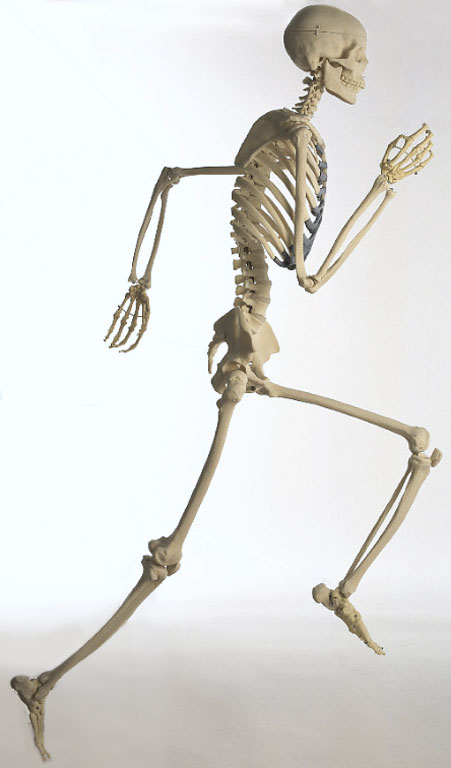
On average, humans begin walking at approximately one year of age. Our ability to learn how to walk exclusively on two legs, regardless of age, is an astonishing feat in and of itself. The very act of walking has allowed us to free up the use of our arms, and in turn, permits us to wield a wide array of tools. Bipedalism not only liberates our arms, but the remainder of our bodies as well. Instead of having our heads positioned parallel to the ground like our quadrupedal relatives, humans have eyes perpendicular to the world below, and thus, possess a broadened view of the world around us.
Walking on two legs also consumes far less energy than walking on all fours (or even knuckle dragging for that matter). As a result, our minds are less occupied with the need of a constant meal, and are instead left to wander and think about things other than food.
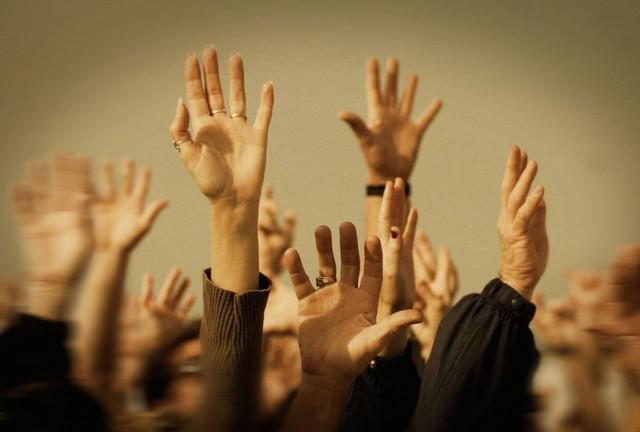
More than a handful of people here have suffered from a broken wrist or finger, and most will agree that these types of injuries are extremely debilitating (especially if youâve incapacitated your dominant hand). A broken hand would make everything from typing on the keyboard to making a sandwich much more difficult to do. We must therefore remember to pay homage â or at least be thankful for â the anatomical makeup of our arms. To start, we should become aware of the importance of our opposable thumbs. Humans share this feature with other primates meaning that we are all capable of using our thumbs to touch any other digit on our hands, from index to pinky.
âSo what? Why is that so important?â You may ask. The answer to that question lies in the fact that our hands have the ability to perform fine/precise tasks such as gripping a pencil, or typing on a keyboard. Imagine a world devoid of pencils and keyboards, or worse, a world abundant with pencils and keyboards but humans being unable to use them. It would be a scary world indeed.
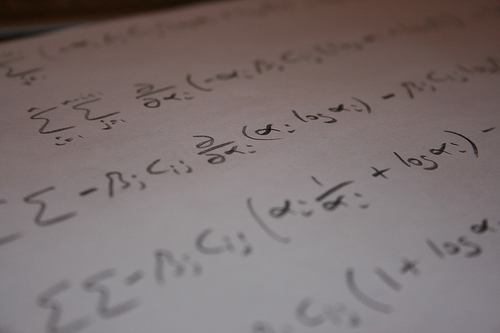
Have you ever stopped to gape at the jaw dropping majesty of some of humanityâs products of ingenuity? From the Great Pyramids and the Eiffel tower, to the nuts and bolts holding your chair in place, people have utilized their understanding of mathematics since the dawn of civilization itself. Math has even been used as a tool for seemingly profound feats such as calculating the escape velocity of our planet in hopes of one day overcoming it (and we eventually did).
Other than its vital application to engineering and rocket science, we also make use of it in a more mundane, everyday fashion. Whenever we are counting the change weâve received from the store, or anticipating our delayed arrival back from work, we are using mathematics.
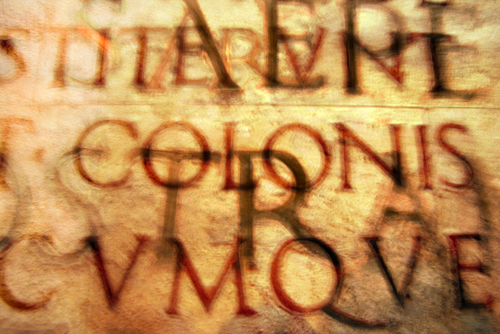
The origin of spoken language is shrouded in mystery and is still a much-debated topic by scholars across the globe. The origin of written language is also a topic of heated debate; however, most people agree that its earliest roots stem from ancient cave drawings, as they are manâs first attempt toward making a visual record of ideas. Much like many other things in this world, language has taken countless steps to evolve from the rudimentary grunts and cave drawings of antiquity into its present form. Humans have devised thousands of spoken and written languages, which are still currently in use today. Language has become ubiquitous within every corner of society in that we employ our verbiage for one main reason, to communicate our ideas with others.
Long gone are the days of our agrarian ancestors who built their lives around the understanding of the intricacies of nature. Civilization has taken a turn from its grassroots heritage and has spawned into the amalgamation of metropolises we live in today. Most people have displaced themselves from the natural world in favor of a more urbanized one. Although the city life does contain many positive aspects, like allowing people to connect within a cohesive network, it is not devoid of caveats. For example, people in general have become increasingly desensitized toward the world beyond their microcosms. As pollution begins to perpetuate through our forests and oceans, entire ecosystems could become ravaged and disfigured. The best thing to do is to appreciate what is âout thereâ and realize that we are âa partâ of nature, and not âapartâ from it.
What do chicken, pork, and nettles have in common? Yes, you guessed it; they all need to be cooked before they can be safely eaten. Cooking fires have been around for a large chunk of humanity as they extend as far back as 250,000 years into our past. In our contemporary era, cooking comprises not only of placing a slab of food over an open fire, but also boiling, steaming, frying, baking and virtually any other process that prepares food with the application of heat. Cooking allows us to take a once bacteria laden piece of meat, and rid it of all of its toxins. (To eat a piece of chicken or pork raw is no doubt a recipe for disaster). Over the years, we have become accustomed to the taste and texture of cooked foods and could not imagine eating said foods in their raw states. The knowledge accompanied by cooking has allowed us to expand our menus and to truly get a taste of the world around us.
If you have ever had a cast, a splint, or even a vaccination, you have been introduced to the ways in which humanity uses its knowledge of medicine. Everything from blood pressure pills to eyeglasses can be considered forms of medicine. Frequently people forget the implications it has on us and other organisms. Veterinary medicine for instance, seeks to apply the medical knowledge procured throughout history in order to treat animals.
The art of medicine has advanced by leaps and bounds since the time of Hippocrates. From the archaic belief of the four humours, to the discovery of the smallpox vaccine (and even other future endeavors such as nano-technology), medicine has always been utilized for the outward benefit of humanity.
Did you wake up to the sound of an alarm clock this morning? If you have, then chances are youâve made use of electricity (unless youâre the type to still use a wind-up alarm clock). The presence of electricity has been around for far longer than humans have roamed the earth; in fact, the properties of electricity predate the earth itself, going back to the inception of the universe. However, it is the ability to harness electricity for our own benefit that is truly remarkable. We have electricity to thank for the operation of our computers, our central heating systems and even our alarm clocks (for most of us that is).
The modern world is riddled with electrical grids and power lines seeking to distribute functional electrical current to every nook and cranny of our households. The now commonplace notion that our planet is literally connected by a series of grids would appear ludicrous (or even supernatural) to our great-great-great grandparents. Ironically, we have them to thank for laying down the foundation for what is now a truly electrifying era.
The Internet? Whatâs that? What day is it today? What did I have for breakfast this morning? Most of you will not struggle to remember the answers to the aforementioned questions. That is because you are able to successfully draw upon past occurrences from your memory banks. Memory is still seen as somewhat of an enigma and is thus, not yet fully understood. The capabilities of human memory are as diverse as they are complex. Some people claim to have exceedingly powerful memories while others are hindered by neurological disability. Regardless of your position on the continuum of memory, there are still ways to keep yourself sharp and primed to the best of your abilities. For example, take a little time out of each day to exercise your memory and jog the old neurons for a bit. It could be something as simple as trying to remember the title of number 8 on this list, or something as ambitious as trying to remember the order of a randomized deck of cards.
Lastly, you must always remember that even âthe dullest pencil is better than the sharpest memory.â â Mark Twain
If the thought is in danger of escaping you, make sure to write it down somewhere.
Have you ever wondered what it would be like to be the wealthiest person in the world? What about the smartest, fastest, or strongest? In fact, if youâve ever wondered about anything, then you have been subjected to the maelstrom of your imagination. Without it, humanity would be reduced to nothing but a bunch of dull, languid belly-scratchers (okay, perhaps that statement was overly hyperbolic). Then again, without imagination, we would not have language, mathematics, medicine, or other such things on this list. We would not possess the desire to test the limits of our cunning minds nor contain the willpower to push the envelope of our physicality. Imagination is the ability to take a vague, amorphous concept and transform it into a tangible reality. It is something we have in all of us, waiting eagerly to be used to its fullest.


and quite telling that humans typically utilize 9 of these every day…..or *all* of them if theyre in less than perfect health.
i assume these are in no particular order….yes?
because — even though imagination is very important — the memory is necessary for vivid imaginations
true, but quite a cynical point of view
I see you using that word, but I don’t think that word means what you think it means. If that’s not clear enough, look at your word cynical, now a dictionary. Now back to your word, now back to the dictionary. Sadly, your word isn’t right like the dictionary, but if you stopped using words you don’t know how to use and used a dictionary, you could be right like the dictionary. Look down, back up. Where are you? You’re on the internet, with a comment phrased as well as yours could be. What’s on your screen? Back to the dictionary. It’s that word, with the definition you were looking for. Look again, the word is now a perfect fit. Anything is possible when you read a book once in a while.
More things.
1) Taking a *****
Good list… Some of these things are yet to be seen whether they are good or bad for the human race or the world. Power could be what will be our ultimate undoing with the amount of pollution it can cause. Medicine has seen the human population jump from 1.5 billion people to 6.5 billion people in the space of 100 years and while I would not begrudge anyone either of these things, I think its worthwhile to ponder whether these are things we should take for granted.
Oh, and lol at 9….
I mean forget gripping axes, forging tools, clenching fists, picking berries, throwing spears, shooting bows.
Seriously, a world without pencils or keyboards! How could we post on the internets with no motor skills?!?!
I believe we called that 99% of human history.
On a final note – Love? Do we not take this for granted above all else?
@@#$! [1]:
–attempt at humour appriciated and sucessful, but *****ting is more reflexive (you dont learn to ***** — you do learn to ***** in a toilet instead of in your drawers)…most of these things are learned….math… walking, how to write, cooking, using power, etc etc
some easier than others….
–if breathing appeared on this list, it would justify the inclusion of *****ting, but i doubt thats what @lnfusion had in mind
@Quibs [3]:
–love — thats a good point, but love is not really definable, and i would argue that many people dont really take it for granted….. of course some do, but we do actions every day in the name of love — which allows us to solidify our own idea of love, while at the same time treating the ones we love as we would want to be treated…love is easily manipulated and in a constent state of flux…
i personally, dont take it for granted (but thats mainly because i grew up watching both of my parents take for granted their love for each other)
–i mean — a lot of people do and a lot of people dont, but it might be a touch out of place on this list
MANKIND FOR THE WIN!!!!!!!!
Great list. I loved the way it was written. When reading the title i expected to see things like time,beliefs, breathing, the sun, love, sight, human interaction(not only language) or even emotions but here i was totally bluffed! Didn’t expect many of these.
This is a great list. I really enjoyed reading it. It isn’t very often I’m up this late (or early) to read this list, now I will be saddened that I won’t have another list to read when I wake up. Oh well, I’ll have to wait until Saturday. Goodnight all!
What? No place for ‘breathing’…?
Im not sure that i got the point of this list but i do have 2 points that really bother me.
You simply think that math is a tool. So i mean to ask you: whats the point of putting so much effort in solving PoincarĂŠ’s conjecture? Is our electric grid more efficient. Does it make our cars faster? Does it make our rockets better? Well no. It has no practical application. Its math. Math is about beauty and i hardly think that my math profs think they are useless of their math cant be useful to an engineer. So you could have said we take for granted applied mathematics ( still PoincarĂŠ did say there is no such thing as applied mathematics, only apllications of mathematics but thats another story). So that part was wrong.
And the secong point: power? And you start talking about electricity? Did you lean we take electricity for granted. Power has a broader meaning than just electrical power. Mechanical power for example. I think you just meant electricity. Well electricity is just a means to an end. We have other ways to store energy, to transport it and to use it too. So that was ambiguous.
Agree..Enjoyed reading it, too.
11. Redheads
Imagine a world with red haired chicks
The cooking item raises an interesting question. When and how did we evolve from a species that scavenged and hunted for any kind of raw meat to survive, to one that needs to cook some meat to avoid illness and death? Is raw meat always inherently dangerous if you’re not an exclusively carnivorous species?
How about LIST UNIVERSE, it should never be taken for granted.
@jediknight [12]: Thank you for appreciating the finer things in life
An interesting thing about #10
“Walking on two legs also consumes far less energy than walking on all fours (or even knuckle dragging for that matter)”
is that it is more efficient for walking, but less efficient for running. Humans are one of the only animals designed to be efficient walkers and inefficient runners, most other mammals, like dogs, cats, horses, gorillas, e.t.c. are all designed to be efficient runners, at the expense of being inefficient walkers.
@ames801 [17]: do you agree with me or are you joking
@jediknight [19]: I’m a redhead…so I agree
are u seriousssss /: i thought u were being sarcastic, it was cooler that way
@ Iain: the theory is that Homo erectus was the first hominid species to use fire about 400,000-500,000 years ago. Probably one of them found an animal that had been killed and cooked accidently (like a forest fire or something) and found it was quite pleasant to eat. Of course it’s just a theory, some argue the use of fire goes back even further. Watch Quest for Fire, ’tis fairly accurate (they were using pottery and it supposed to be set 80,000 years ago, madness!)
Raw meat isn’t always dangerous, steak tartare anyone?
Very well written list but kind of boring like Top 10 things of our everyday life. Other than that another thing we take for granted : freedom of speech.
@Firefly [21]:
–they may have found something that had been cooked accidentialy. that point is valid and very possible, but i wonder if ‘eating pleasentness’ was the main reason they continued to do it. im inclined to believe that it made them feel better (and was pleasent to eat, as a side note).
cooked animals (and plants for that matter) release more vitimins and more calories, as well as being easier on the stomach and 23 feet of intestines, and making the digestion process more comfortable
this could have easily enriched their quality of life, which in turn made them better hunters, gave them more energy, and made illness less prevalent
after cooking food had caught on, and everyone had been doing it for quite some time, changes began in humans bodies, like smaller teeth and smaller stomach
Without denying any of the above, I would suggest:
the molecular structure of matter – everything, even the most solid of materials, consists largely of empty space
oxygen – too little or too much can be fatal (and usually is)
and
water
a) that it exists at all – take two gases and turn them into a liquid, and
b) that ice floats one water – if not, most bodies of water would freeze solid every winter and never melt.
Veru imaginative list. Great Job! But you forgot keyboard cat.
@@#$! [1]: dont get me wrong i do enjoy a good *****, but instead id say toilet paper and ceramic plumbed indoor toilets should be on the list , imagine having to ***** in a hole or bucket and wipe using leaves or that itchy sack cloth or even your cat (knew someone who did that i swear to god) or whatever they used back in the day ? Toilet paper and indoor toilets turned *****ting from a daily meanial chore into a quiet and solem moment of reflection and releif –like church
@@#$! [1]: Number 2 thing we take for granted, the morning *****. Its such a great feeling to hop off a *****before going to work.
I sure as heck don’t take math for granted. All it did for me was cause immense stress. Why force people who don’t get it to learn beyond the necessary basics? To this day I’ve never used any of that %$&@! algebra that I just could not get no matter how hard I tried.
I don’t want to hear it again that there’s no reason I should have trouble learning math if I apply myself. People accept that some people have trouble reading. People accept that some people aren’t good at drawing. Why won’t people accept that some people can’t comprehend math?
@Maria [24]: hahahhahahah yes.
BTW I don’t understand the meaning of the sentence in the introduction “I gave you the day off today!”! I’ve never heard that. What does it mean?
Nice thought provoking list today. I would add that we take air for granted, too. Just the act of taking a breath with the hopes of clean air to rush in is something we take for granted everyday. Pollution is not just taking the nature around us away, but is seeping into our daily lives as well.
Good list, Lnfusion.
Sorry to nit pick, but, “Instead of having our heads positioned parallel to the ground like our quadrupedal relatives…” isn’t quite correct. I can’t think of any animals that move about with their heads parallel to the ground looking just at the earth underneath them. (Although TyB might know of such a creature.) Even an crawling infant lifts his head to see where he’s going.
Clever idea for a list, you could add an almost endless number of other things to this: warmth, cool breezes, music, art, fresh air, logic,…
@Moonbeam [29]: Pigs cant look up to see the sky.
@astraya [27]: I thought maybe you were joking, but every reagon has it’s unique sayings so maybe you’re serious? Here in the USA we say “a day off” for a vacation day or holiday as they say elsewhere.
My son dated a girl from Germany who woould say “I’m on holiday.” He was so confused. He’d ask what holiday is it? It’s not Christmas or Easter,… I had to explain that European’s seem to say “on holiday” where we’d say “on vacation” or I have “a week off.”
I supose someone could make a list of these things. We say “trunk of the car”, others say “boot”; we say A to Z (Zee) Others say A to Z(Zed). Biscuit vs cookie, line up vs queue…
WOW
another thing most guys take for granted – NOT having to jump off a *****in the morning before work…. yikes!
@Moonbeam [31]: Opps “reagon” should read “region.”
Is this thanksgiving?? I kinda miss a good debate right now.
In the middle of reading I start thinking: âwhat is wrong with Jimâ; this post sounds differently. It is not Jim! Some things we take for granted âŚ!
Just a nit-pick, and maybe a warning:
Cooking does destroy the bacteria that produce toxins, and most parasites and their eggs. Good stuff. But it doesn’t destroy the toxins these bacteria may have already produced. If a piece of food has an established ecology, you can cook it and kill off the residents, but their “dump” can still make you sick.
This was a pretty interesting list. When I saw the title, I was expecting it to be a list of “sunrises and long walks on the beach” or something lame like that. Another commentor stated that this list is thought provoking, and I agree.
A little out of the norm for a typical list, and I like that!
@keith [37]: I was just about to eat some leftover Buffalo Wings for breakfast; thank you for ruining that for me…
@bluesman87 [32]: It’s another reason to not take our freedom for granted. Once a guys in prison though, then it becomes more difficult to avoid what you’re saying here.
***** list.
Maybe you should have called it ‘Top 10 Things Humans Take For Granted’ as the current title is too open and doesn’t seem to represent the author’s intentions anyway.
Seriously though, re #9, I’ll never take the use of these hands for granted. Lost the use of the dominant one for several months and had to re-learn to eat, write, and mouse with my off-hand (just to name a few things). What seems to surprise everyone though is that I never went back to using my mouse with the right. I found it was more efficient to use the left for moving the mouse while leaving my right free for other things, especially the use of the number keys whenever working on data entry, comparing documents to what’s on the computer, etc.
@Sooty [42]: lol, so you are implying that some of us aren’t humans?
@Sooty [42]: exactly just incase a musk ox or west indian manatee reads this and gets confused , yes i agree…
Interesting list. well done
@keith [37]: Actually the toxins would most likely become denatured in the cooking process.
Nice list. I need to work on my memory, I had to scroll back up to see what number 8 was again.
Well, I have to say this list was not what I expected. I was thinking we´d see somthing like TIME, or LOVE but these are better.
Re Medicine: I´ve always thought about what it would have been like to live 100 years ago where knowledge of medicine was less advanced. I, for starters, would definately not be alive (I had a inflammed and ruptured appendix at the age of 7), nor my youngest brother (he had meningitis), nor my father (who has cronic heart problems including by-pass surgery)… Strange how little thankful we can be of something that literally allows us to live.
I guess I’m the only one who thinks this, but this list blows ass! The intro makes no sense, the picks are dumb (nature?!) and the only funny comment is @Maria [24]:
One I’d like to add is water. Almost everything contracts when it freezes, but water does the opposite. If this were not so, the oceans would’ve frozen up long ago and life likely never would’ve developed.
I think it would have been good to replace Math with The Sciences. They have all had a major impact on the quality of life as we know it.
@Sooty [42]:
I thought this was a list of ten things Chewbacca takes for granted. Thanks for the suggestion.
Free Will
@bucslim [53]: i think we should also change the name of some other lists. Top ten human heavyweight boxers… Top ten birds of prey (list made by a human being not an actual bird of prey)
@GTT [49]: do you pay your incomes and taxes? Well thats the thanks i think we all show to the medical system. I dont think docs need a praise everytime they walk down the street.
@weidermeijer [54]:
Probably a Mormon.
Wonderful list, I really enjoyed the humour and the quality of writing.
I totally guessed wrong for number 5, but that’s only because nettles, as far as I know, are prickly weeds. Are they edible? I know they hurt when I step on them, so I can imagine they’d do a number on my mouth.
I thought this list was about human accomplishments not an intro to star wars.
Although a list about Wookie accomplishments would be sweet.
@bluesman87 [45]:
don’t forget our alien and AI friends. they might argue about the title.
It appears that I am not the only one who takes none of the listed items for granted.
I could bore you to death with a recitation of all the ways in which I actively do not take any of the listed items for granted, but the long-time readers all know, and a retelling here, all in a bunch, would be unfair to everyone.
Thanks for the list, it was a brilliant attempt.
@Scratch [57]: You can make a lot of things out nettles. Tea for example and they also make quite a tasty salad.