This is a list of phrases we are all familiar with and most likely use from time to time. The origins of these phrases are often unexpected and strange. As you will see on this list, some of them originate in places you simply wouldn’t believe. If you know of any others be sure to share them in the comments. The source for this list was The Book of Beginnings (out of print).

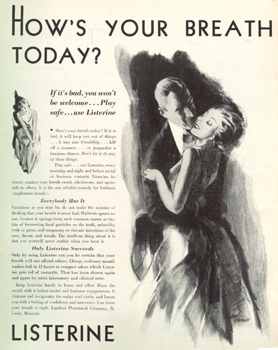
This phrase, surprisingly, was used to sell Listerine mouthwash! To promote their product, the manufacturers of Listerine employed the personal experience of girls at the time, who desperately wanted to settle down but seemed always to be left on the shelf. First used in the 1920’s, it portrays a situation and a possible explanation for the lack of success these girls had. Here is the transcript of the ad:
Poor Edna was getting on for thirty and most of her girlfriends were either already married, or about to tie the knot. How she wished that, instead of being their bridesmaid, she could be the bride! However, any romance of hers invariably ended quickly. There was a reason. Unbeknownst to her, she suffered from bad breath and no one would tell her, not ever her closest friends. The advertisement sold millions of bottles of mouthwash and also gave the English language a new saying!

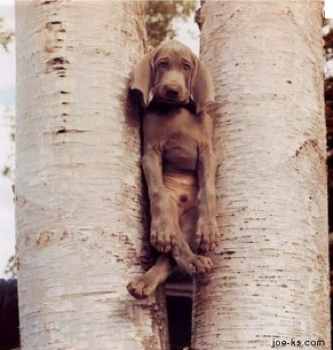
Originating back when hunting was still a major sport, this phrase came from when animals were used to track, catch or retrieve prey. This applies, not least, to dogs. Dogs were used in the chasing of raccoons, which was chiefly undertaken at night and were trained to indicate the tree in which the animal had taken refuge by barking at it. Of course, even dogs can err and, at times, barked up the wrong tree.

A pleasant relationship with other people, not least those in a superior position, is portrayed as being ‘on a good footing’ with them. There are two thoughts as to where this saying came from. Some say the phrase goes back to a practice of early apprenticeships. It was the custom, on the first day at work, for apprentices to invite all their workmates for drinks. The new apprentice ‘footed the bill’. If proved a generous host, he made friends for keeps. The hospitality would never be forgotten. Recalling how much it had cost, it was said the novice gained ‘a good footing’. A second derivation links the phrase with an early and bizarre interpretation of human anatomy, the importance given to the length of one of a person’s digits. At one time, the dimension of the middle toes determined a person’s ‘standing’ in the community. Thus, the measurement of their foot decided their status in the eyes of others. Those whom nature and genes had endowed with large feet were lucky to be ‘on a good footing’. Draw your own conclusions on this one!

Someone who doesn’t get to the point is said to ‘beat around the bush’. The origin of this phrase is, undoubtedly, from hunting, and more specifically from the hunting of boars. A ferocious animal, it often hid in the undergrowth and beaters were employed and ordered to go straight in to chase it out. But very much aware, and afraid, of the animals’ sharp tusks, they much preferred to merely ‘beat around the bush’ a practice strongly disapproved of by their masters.

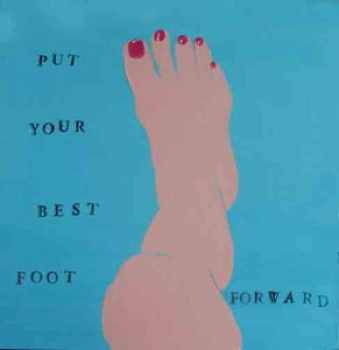
When you are trying to make a good impression it is said that you should put your ‘best foot forward’. There are many options as to where this phrase came from, one being that it was believed that ‘the left’ was the realm of the devil, of evil and misfortune. After all the Latin word sinister means left, and in English sinister has kept its ominous meaning. Hence, it was advisable to keep the left foot behind and step forward with the best, the right, foot first.
But this phrase seems to have come from the fashion world, rather than the occult. The saying can be traced to male vanity, particularly apparent in the late eighteenth century, the period of the dandy. His desire to attract people’s attention and admiration took strange and elaborate forms. At the time, people imagined that their two legs differed in shape and that ‘normally’ one was more becoming than the other. To draw attention to it they kept the worse one in the background, literally putting ‘their best foot forward’, and with it, of course, their leg.

A person who ‘bites the bullet’, without any sign of fear, acts with great courage in the face of adversity. The phrase recollects a dangerous army practice in the 1850s. Soldiers were then equipped with the British Enfield rifle. Prior to using it, they had to bite off the head of the cartridge to expose the explosive to the spark which would ignite it. The procedure was fraught with danger, particularly so in the heat of battle. It needed firmness and courage, as even the slightest deviation or hesitation would endanger the soldier.

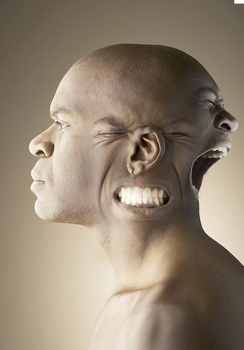
People who waver in their opinions and quickly change from being enthusiastic to showing disinterest are said to ‘blow hot and cold’. The saying can be traced to one of Aesop’s Fables. It was a cold winter’s day, and the freezing traveler was blowing on his stiff fingers. Mystified, a satyr wanted to know what he was doing. The man explained to him that, with his breath, he was warming his chilled fingers. Taking pity on him, the satyr invited the man to his home for a hot meal. This time, he watched him blowing on the food, which intrigued him all the more. Inquiring why he did so, his guest explained that he was blowing on the stew to cool it down. There and then the satyr told the traveler to leave at once. He was not prepared to entertain, or even mix with, someone who could ‘blow hot and cold from the same mouth’.

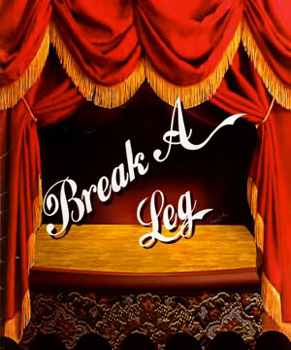
To wish an actor prior to his going on stage to ‘break a leg’ is a well-known practice. A pretty strange wish, actually it is meant magically to bring him luck and make sure that his performance will be a success. From the superstitious age it was thought that jealous forces, always present, are only too anxious to spoil any venture. A good luck wish would alert and provoke them to do their evil work, whilst a curse will make them turn their attention elsewhere. The underlying principle is the belief that if you wish evil, then good will come. I’m sure it’s called reverse psychology these days.

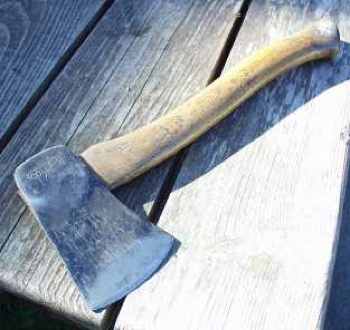
To bury the hatchet means to create peace. With hostilities at an end, the hatchet was no longer needed, and therefore could be disposed of. Now a merely figurative expression, the phrase is based on an actual practice of North American Indians. When negotiating peace, they buried all their weapons; their tomahawks, scalping knives and clubs. Apart from showing their good faith, simultaneously it made it impossible for them to go on fighting.

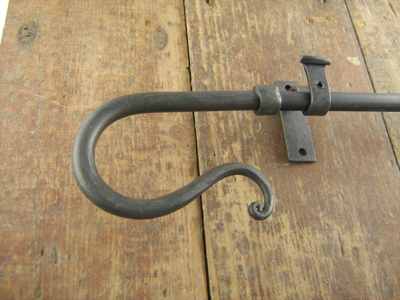
The achievement of a goal with determination, by fair means or foul, is described as getting things done ‘by hook or by crook’. The origin of this phrase is linked with an early British practice, at a time when forests were still the exclusive property of royalty. For any unauthorized commoner, then, to gather firewood in them was a crime, poor people being the only exception. Though they were not permitted to cut or saw off branches, they were free to remove withered timber from the ground or even a tree, doing so by means of either a hook or a crook.


Great list. I have always wondered what "break a leg" means
I’ve heard “a good footing” also referred to as “a firm footing” – - I would have thought it meant that something had firm foundations and wasn’t going to sink, whether it was a person who had found a firm spot amidst marshy ground, or a building on a firm spot amongst clay soil.
Another interesting one is the apparently meaningless and illogical British expression “Cheap at half the price”, which apparently is actually a contraction of “On sale here cheap at half the price you’d pay in the big shops”.
I thought bite the bullet came from the 1700s in the revolutionary war where when you got shot or wounded,the doctors would give you a bullet to bite on. I’m not kidding, I saw this on the history channel
@lifeschool: "" Perhaps some of these phrases would make for a worthy sequel?""
other people mentioned this too
i am going to assume that all of you noticed the fact that:
(a) the list writer said the reference was a book, and…
(b) these are listed in alphabetical order, from "always……" to "by…….."
if he submits everything from "c" to "z", there could be at least 15 worthy sequels.
Nice post, some interesting origins there! I'd like to clarify the meaning of number 3 though as it's not as superstitious as one might think –
'Break a leg' actually refers to when an actor is on stage to make certain the audience sees their actions and facial expressions clearly that they should have one foot or 'leg' at a 90 degree angle while the other foot or 'leg' should be at a 180 degree angle. This allows the audience, with good posture, to be seen the most clearly while acting on stage via the act of 'breaking the legs apart'.
you are dumb.
I have a series of books, probably now out of print, by Charles Panati: The Browsers Book of Beginnings, Extraordinary Origins of Everyday Things, Extraordinary Beginnings of Everything Under (and including) The Sun, and Extraordinary Endings of Practically Everything and Everybody.
This group of books answers almost every question (except the woodwork one!), and then some. They are fascinating books for anyone who just likes to gather random facts, and all the information that goes with them.
This list made me think about them, and go to them for the first time in a couple of years.
Thanks, jumblegirl!
Biting the bullet is DEFINITELY referring to biting the bullet when you were being operated on after suffering from a wound on the battlefield.
The soldiers who used Enfield rifles (which is also the rifle the confederates used during the Civil War) weren't actually biting the bullet when they bit into a cartridge. They bit the top off of the cartridge (which contained powder and a bullet) so they could pour the powder down the barrel of the rifle, then they'd push the bullet into the top of the barrel and then ram into down with a ramrod.
Your explanation is WAY, WAY off. If there is a way to edit an article, you really need to do it. The rest of the list is great though!
According to phrases.org.uk (and Wikipedia but that's not as reliable) it is highly unlikey that any solider 'bit a bullet' during surgical procedures on the battlefield, however it doesn't mean that it didn't happen occasionally I guess. A leather strap or a piece of wood was the preferred thing to be put in their mouth. I must admit that I always thought that was the origin until I read about biting off the cap of a bullet (or cartridge) from three different authors!
Thanks all for the nice comments to a new submitter. Except for the 'first' comments, what's that all about?? I will try to do some more, especially the ones mentioned and as oliveralbq pointed out, these are all from a book, albeit paraphrased, so it shouldn't be too hard. Homework!
–very nice —- and as i read it, it started occuring to me that they all started with "b" except the first one. i immediately thought to myself — this chick is brilliantgood set up, and many oppourtunities for sequels.
and the 'first' comments. its this peculiar trend (or fad — whatever). for some odd reason, people think its cool and edgy to like — check a post when it gets published, scroll down to the comment section, type "first", and then go about their business, reading the list or post or whatever. and, as for why people are buying into this , remember fad. parachute pants — blue eye make up — telephone booth sttuffing — flagpole sitting — those damn rubik's cube — see the pattern? all the fads are retarded, but they typically go away at some point.
now — what you were witnessing was one person declaring that they were the first commentor for the day. then a few people replying to that :"first" post, telling the first comment that he/she is retarded. later in the day, the site admins erase the first coment but not the replies. therefore you get an asston of replies to a comment you can no longer see.
–even more strange are the f"first" comments way down the list — which could be attributed to a sense of humour (even though it is a lame joke) — or it could be attributed to an erronious time stamp —- or maybe something all tohgther.
and as for the book — i'd rather hear the paraphrased version of these items than read the whole thing. — so give us more lists — this one was fun, girl……
Aha! The phenomenom explained. I must say I find it very amusing to read all the comments afterwards, it really does unleash a barrage of insults, some new ones to me!
Must get to work on a new list, the letter C looks good!
Welcome to LV!
What a great way to start…wonderful list! But I think I already said that, a couple of times…I'm a factoid junky, among other foibles, and this was really a lovely little treat.
I am eagerly awaiting the next list, and the next…Oh happy day!
Thanks segues! I'm a bit partial to facts myself, Book of Lists being my favourite book growing up so you can imagine my glee at finding this website. Lots of facts in nice bite sized pieces!
Must get on with my next list, oh the pressure!!
amazing list here. well done. i didnt know the origin of any of these sayings… i didnt know some of the sayings too.
Break a leg is to do with Bowing.
http://en.wikipedia.org/wiki/Break_a_leg
Huh, that's odd. Whenever I say "break a leg", what I mean is, "Do so terrible that you break a leg".
I didn't know that there was another way to use that phrase.
Now everything I say could be thrown into question…
My favorite quote is from Spongebob:
"Happy opposite day Squidward, we hate you!"
Dear Lord, what's with all these ridiculous explanations for "break a leg"?
I read it referred to actors taking bows and curtsies, as in bending their legs to do so.
I always thought "barking up the wrong tree" was pretty self-explanatory. I mean, what else could it mean??
sth to do with a tree's bark…
what happened to "the cake is a lie" ?
The bite the bullet reasoning is incorrect as is posted by others. It is NOT about loading a rifle. There was no danger involved with biting the end off of the paper cartridge at all. There is no spark, there is no primer and black powder isn't even poisonous
Just last night I wanted to use " by hook or by crook", but held my tongue. Almost used it obscenely… Lol! Original list! Great job.
The break a leg explanation also can be attributed to another reason. When preformers ended the show and came out for a curtain call, the curtain would raise, preformers would bow, and the curtain would go down. They raised and lowered the curtain, taking bows until the audience stopped applauding. If they were very good, then the device used to raise and lower the curtain called a "leg" might break from all the strain. The idea behind the phrase is that you do so well that the audience won't stop applauding till the curtain literally breaks.
some other's i thought would've been good for the list:
"off the beaten path"
"it ain't over till the fat lady sings"
That's not what the nuns told us beat around the bush meant.
Awesome list. you should do another with the same idea, just different phrases (obviously).
I’m not sure if these sayings have been mention yet,anyway,
The saying bite the bullet(#5)reminded me of 2 others,jump the gun and under the gun.
I'd always heard (and by always i mean i think i saw it on jeopardy) that hook and crook were 2 very popular ports hubs in the old world and so when something needed to be gotten it had to get there by the hook port or by crook port
i have been an avid reader of listverse for years and have never felt the need to comment until now. I am a theater junkie and was infuriated by the explanation for "break a leg" it actually comes from when the jesters would perform for the kings and queens, if they made it through their act they could "break a leg" or bow for the king and queen. if they didn't make it through they were killed. therefor the other performers would wish them luck by hoping they would make it to the end of their act and bow for the royal court
The "Barking up the Wrong Tree" explanation was exactly correct. However, the writer's non US or perhaps urban background is evident in the comment about hunting not being a major sport. In the US and Canada, hunting remains a HUGE part of our culture. Most American Sporting Goods stores are largely devoted to the traditional hunting and fishing sports.
Enjoyed the list!
Nice try on "Bite the Bullet" but not close. First, the process you described was for muzzle-loading black powder weapons which the British discarded for brass-cased ammunition by about 1870. As to the process you suggest, simplified it required the shooter to put powder down the barrel, followed by the projectile, either a round lead ball or a conical lead bullet.
To save time, the cartridges were packaged with the powder and bullet together in a paper container roughly the size of 2 "C" batteries stacked one on top of the other. To load, the shooter simply tore the paper package with his teeth, poured the powder down the barrel, followed it with some paper, then the lead bullet, then some more paper to keep it all packed in, then took the remaining bit of powder and primed his weapon.
There was really no danger in the process which was taught the soldiers, because the primer which fired the charge was not loaded until the soldier was done loading everything in the barrel. That way his fingers, hands and face weren't near the barrel, and any discharge wouldn't endanger the shooter.
Now, back to the REAL origin of "bite the bullet". Think about what it connotes: gathering one's courage and being tough. Which was exactly what one had to do when having wounds tended to by 18th,19th and early-20th-century sawbones, who often amputated damaged limbs. The process was usually done without anesthetic, and was terrifically painful. So to try to maintain a "soldierly" demeanor and not cry out, the wounded often had to bite down on something which wouldn't break their teeth, like leather…or the soft lead bullets they carried.
Even when cartridges evolved to the point the bullet was fixed into a brass case which held the powder, bullet and a primer, the soldiers could still bite down on the bullet, or simply pull the bullet from the case and bite on that alone. But the brass never entered the mouth because it was hard enough to break a tooth, contrary to the picture you attached.
i too thought the origin would be something similar to what sardondi posted..
"Always a bridesmaid, never a bride" comes from a much earlier source than this. It's a very slight adaptation of an old superstition: three times a bridesmaid, never a bride.
Love it! Honestly that's the old listverse I knew and loved!
two sayings that I hate with a passion are,”across the pond” and “pardon my french”.
You missed my favorite saying, "the whole nine yards." People often mistakenly think it refers to football and don't understand why it's nine instead of ten. It actually comes from WWII P38 fighter pilots. The ammunition belts for their .50 caliber machine guns were nine yards long. After landing, their mechanic might ask "how much ammo did you use" and if he had a good day of shooting, he might respond "the whole nine yards."
possibly the worst researched list i have ever seen
I was told by my paternal Grandfather that "bite the bullet" was the only anesthetic on many battlefields. they would bite the lead balls/bullets to keep from screaming so much.
I’ve heard that too.
Or breaking the sight line by bowing down to get tips!
Some of these were pretty obvious but still a good list.
Some of your lists are just flat our wrong. Go check your sources about “always a bridesmaid, never a bride” while your story of Listerine is cute, this actually refers a point in history when Europeans believed evil spirits could hex a bride on her wedding day. To confuse the spirits and protect the bride she would not only wear a veil, not to lifted until she’s declared married but she would have bridesmaids also dressed up. To many times being a bridesmaid but a woman at high risk for being cursed which was believed to lead to that woman never herself being married.
Name
What is the origin of “To be left on th shelf”?
Beating around the bush comes from the Bible, Moses and talking with God around the burning bush.
Many odd sayings, like ‘by the skin of your teeth’ come from the Bible, and are literal translations of phrases in the Greek, Hebrew or Aramaic. Instead of finding a comparable metaphor, the phrase was kept as is. It is also likely that the person translating knew the language, but not the idiom, so the translation was limited to to the word-for-word variety. Which also explains a lot about the Bible…
What is origin of “Suzy Q?”
Hey there, You have performed an incredible job. I will certainly digg it and individually recommend to my friends. I’m confident they will be benefited from this web site.