Top 10 Reasons The Dark Ages Were Not Dark
Published on June 9, 2008 - 117 Comments
I believe that we can safely say that the period of man’s history from 476 AD to 1000 AD is the most maligned of all. This period, known to historians as the Early Middle Ages, is still referred to by most laymen as the Dark Ages. In fact the term “dark ages” is almost as ancient as the period itself - it was coined in the 1330s by Petrarch, the Italian scholar, to refer to the decline of Latin literature. It was later taken by the protestant reformers (16th century) and then the members of the Englightenment (18th century) as a derogatory term with much broader implications, because they saw their own “enlightenment” as absent from the earlier period. Hardly a fair judgement on the past. Fortunately for modern students of history, the term is now officially known as the Early Middle Ages - a name which has no connotations at all. So, having given you the background on the terms, here are ten reasons that the dark ages were, in fact, a period of great progress and light.
The Classical Education (still used today in some schools) was the system used by the Universities which were created in the Early Middle Ages (the first in history). The universities taught the arts, law, medicine, and theology (the study of religion). The University of Bologna (founded in 1088) was the first ever to grant degrees. In addition to the classical structure (based on Ancient Greek education), these medieval universities were heavily influenced by Islamic education which was thriving at the time. While women were not admitted to Universities in the early days, the education of women did exist. The convents of the day educated the young women who would often enter at a very young age. One such women (Hildegard Von Bingen) is one of the most celebrated women of the Medieval era who had great influence over the men in power at the time.
While progress in Science was slow during this period in the West, the progress was steady and of a very high quality. The foundation was laid here for the wonderful blossoming of science that was to occur in the High Middle Ages to come. It can be safely said, that without the study of Science in the Early Middle Ages, we would be considerably behind in our scientific knowledge today. Ronald Numbers (professor at Cambridge University) has said: ‘Notions such as: “the rise of Christianity killed off ancient science”, “the medieval Christian Church suppressed the growth of the natural sciences”, “the medieval Christians thought that the world was flat”, and “the Church prohibited autopsies and dissections during the Middle Ages” [are] examples of widely popular myths that still pass as historical truth, even though they are not supported by historical research.’ [Source: Video or audio Lecture]
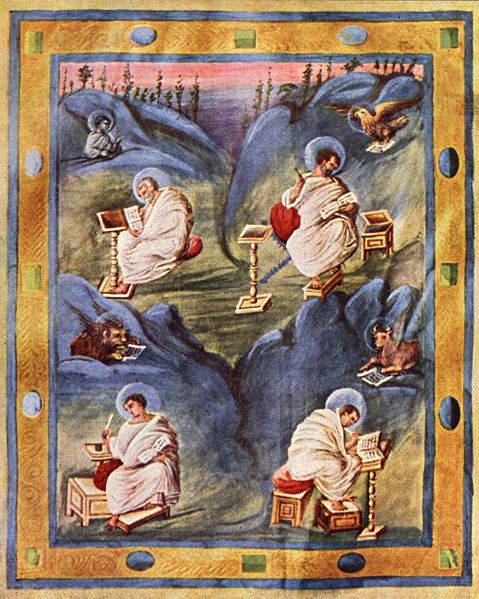
The Carolingian Renaissance was a period of advancements in literature, writing, the arts, architecture, jurisprudence, liturgical and scriptural studies which occurred in the late eighth and ninth centuries. The Carolingians were Franks and the most well known is Charlemagne. The Carolingian empire was considered a rebirth of the culture of the Roman Empire. At the time, Vulgar Latin was beginning to be replaced by various dialects as the main spoken languages in Europe, so the creation of schools was vital to spread knowledge further amongst the common people. It was also this period which gave us the foundation of Western Classical Music.
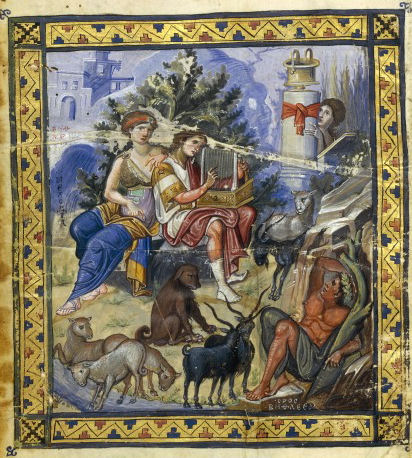
Under Justinian this period gave us the Corpus Juris Civilis (Body of Civil law) - an enormous compendium of Roman Law. Literacy was high,elementary education was widespread (even in the countryside), middle education was available to many people, and higher education (as discussed above) was also widely accessible. In the Byzantine empire during this period we saw a massive outpouring of books - encyclopedias, lexicons, and anthologies. While they did not create a lot of new thinking, they solidified and protected for the future much of what was already known.
This is a sticky topic, but the fact is, during the Early Middle Ages, Europe had a united Church, an agreed upon canon of the Bible, and a well developed philosophical tradition. This led (as one would expect) to a great period of peace within the Western nations. While Islam was not in agreement with the doctrines of the West, much mutual sharing of information happened and the Islamic contribution to the West is still felt today. This union of beliefs allowed for intellectual progress unseen since the Roman Empire at its heyday. In a sense you might consider this period as the calm before the storm, as it was merely a hundred years later that the first Crusade would be called to take Jerusalem back from the Muslims - an event which ended the flow of knowledge between groups.
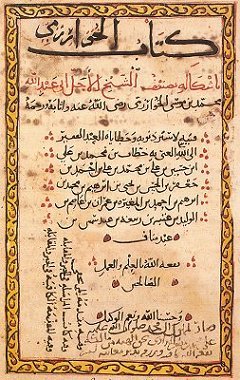
Thanks to the learning of the Islamic people in the East, the world received its first book on algebra. The Compendious Book on Calculation by Completion and Balancing was written by Al-Khwārizmī (790-840) and the Arabic title of the book gave us the word “algebra”. The word algorithm comes from al-Khwārizmī’s name. This book gave us the first systematic solution of linear and quadratic equations. Later translations of his books also gave us the decimal positional number system we use today. Al-Khwārizmī, along with Diophantas, is considered the Father of algebra.
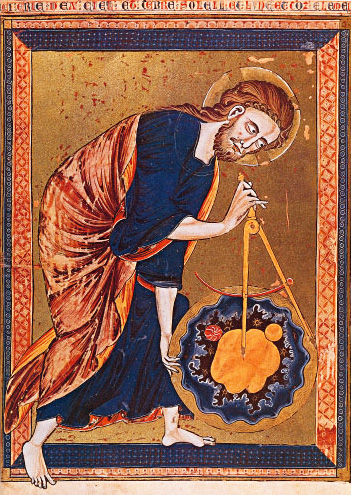
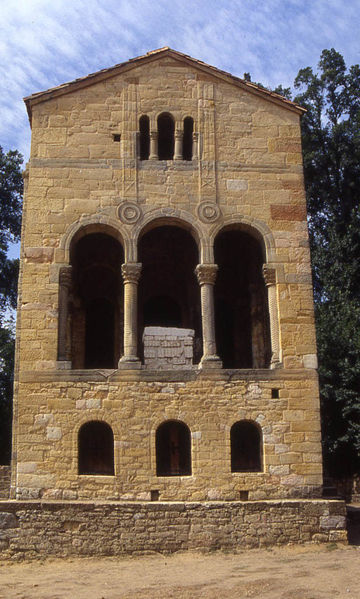
During the Early Middle Ages, architecture was diverse and innovative. It introduced the idea of realistic images in art and it laid the groundwork for the Romanesque period which was to come in the High Middle Ages. The period also included the introduction and absorption of classical forms and concepts in architecture. It can safely be said that this period was the first period of high art - with previous styles (Migration period) being much more functional and less “artistic”. In the Early Middle Ages we witness the birth of an astonishing and beautiful history of art and building.
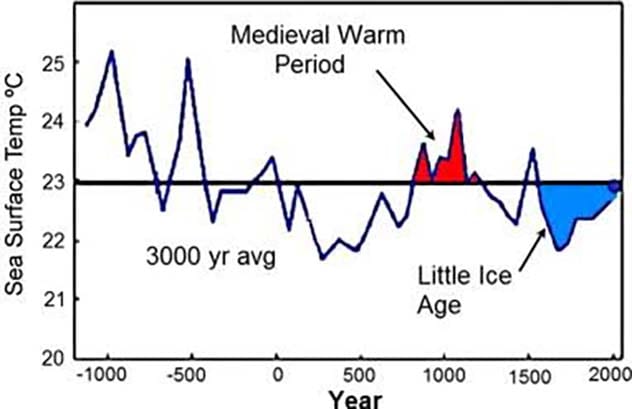
Trivial as it may seem, the weather played a much greater part in the lives of the average people during the Middle Ages and beyond. When we think of the “Dark Ages” we tend to see images of snow storms, rain, thunder, and darkness - such as we see in films like “The Name of the Rose”. The fact is, in the Early Middle Ages, the North Atlantic region was warming up - so much so that at the opening of the High Middle Ages (1100 AD), the region was 100 years into an event now known as the Medieval Warm Period. This warm period thawed much ice and enabled the Vikings to begin their colonization of Greenland and other northern nations. Ironically, the Protestant reformation (16th century) up until the 19th century suffered the Little Ice Age - the period of “enlightenment” was literally darker and colder than the “dark” ages. During this period, reforms and better knowledge of agriculture provided a boost to food supplies.
The Early Middle Ages had a complex system of laws which were often not connected, but they were effective and fair for the most part. For merchants traveling around the world, there was the Lex Mercatoria (Law Merchant) which had evolved over time, rather than being created. This law included arbitration and promoted good practice amongst traders. At the same time, Anglo Saxon Law was formed with a focus on keeping peace in the land. While this eventually lead to some very tough laws, living under the legal system in the Early Middle Ages was probably the best time to live - as it was still flexible and fair for the majority. The third important legal system was the the Early Germanic Law which allowed each person to be tried by his own people - so as to not be disadvantaged by ignorance or major cultural differences.
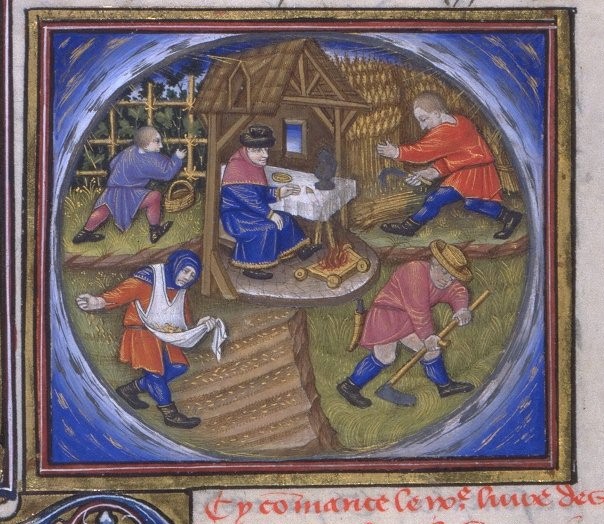
If you were wanting to die a martyr by starvation, the Early Middle Ages were not the time to do it! As a consequence of the excellent weather and greater agricultural knowledge, the West did extremely well. Iron tools were in wide use in the Byzantine empire, feudalism in other parts of the world introduced efficient management of land, and massive surpluses were created so that animals were fed on grains and not grass. Public safety was also guaranteed under the feudal system and so peace and prosperity was the lot for most people.
Related ListsTop 10 Great Travel Novels5 Reasons That We Love Cheesy Horror Movies 10 Bizarre Theories And The Facts Surrounding Them Top 10 Significant Moments in Comic History |
SubscriptionsLike this article? Subscribe to the RSS feed to keep 'em coming, or subscribe via email: |
If you find this site helpful, please leave a donation so you can enjoy the spirit of giving too.
Email This Post


1. manashiori - June 9th, 2008 at 6:26 am
how ironic really. such a boom in man’s life and they call it that way…
great list! something to add during convos.
2. someone - June 9th, 2008 at 6:29 am
damn…so close
3. dangorironhide - June 9th, 2008 at 6:30 am
Great list J! Though I thought you said this was going to be Tuesdays one?
It’s a really interesting read, it’s good to get a clear view of a time, rather than clouded by myths and assumptions.
4. SlickWilly - June 9th, 2008 at 6:39 am
someone: For future info…any “first” posts automatically go into moderation and will be deleted by an admin. You’re better off not even trying to play that game.
As for the list, very interesting. This actually dispells some misconceptions I had about the Middle Ages. I always had the impression that it was a fearful, strenuous, oppresive period in history, not one of fairness and growth. Didn’t the Spanish Inquisition take place in the Middle Ages? The auto-de-fe? Didn’t the Middle Ages spawn an rebirth in torture technology?
5. Sharki - June 9th, 2008 at 6:39 am
Great list! It’s always good when someone strives to correct the historical record.
6. Bob - June 9th, 2008 at 6:48 am
Wonderful list. I’m curious, though, why it would be a bad thing to prevent people from cutting up human bodies. What must it take for one person to treat another as non-human? Our own age has the answer.
7. EricB - June 9th, 2008 at 6:57 am
very nice.
8. dangorironhide - June 9th, 2008 at 7:06 am
SlickWilly: The Spanish Inquisition was set up in 1478, which is quite a while after the time period this list is referring to, from 476 AD to 1000 AD.
9. 116880 - June 9th, 2008 at 7:23 am
Great list. The Middle Ages were a beautiful time.
10. Kreachure - June 9th, 2008 at 7:46 am
Interesting, to say the least. while this list describes the period of the EARLY middle ages, which is indeed known as the “Dark Ages” (476-1000 AD), the sad truth is that by the following century it became far worse, with the emergence of the Black Death (which seems to have killed over half of Europe’s population), and the terrible Inquisition which set Europe aflame with terror, torture, and many other inhumane practices overtaken by the Roman Catholic Church.
Plus, compared to today, even during the Early Middle Ages people lived in very inhumane conditions due to the poverty, and all these ‘reasons’ applied mostly to the higher classes who were the vast minority (except perhaps the weather
).
So ‘beautiful times’ they were not. For that, go to a Medieval Faire or something.
11. odenia sphere - June 9th, 2008 at 7:59 am
pretty cool
12. Randall - June 9th, 2008 at 8:05 am
Jamie:
Great list, but I think what’s kind of missed here is that the term “Dark Ages” has never been all that precise (in regards to what time frame, exactly, is encompassed within the term) and many–perhaps most–scholars have whittled it down to basically mean the period from roughly the late 5th century AD to only about the late 7th century or so. In essence, from the fall of Rome until the rise of Charlemagne. That two to three hundred year period is the actual “Dark Ages,” and then most of the items you cite occur after that.
Indeed, yes, Romanesque architecture, then Gothic, rise after this period, as does slowly-spreading learning (and literacy).
But the Dark Ages–the REAL Dark Ages, until Charlemagne—*were* truly dark. Barbarism, illiteracy, few if any examples of central authority, no permanent buildings being constructed, etc. So let’s not say there was never a Dark Age. It just wasn’t as LONG as people think.
13. green - June 9th, 2008 at 8:09 am
Great list! Too bad the Inquisition ruined things for the next few hundred years!
14. rushfan - June 9th, 2008 at 8:15 am
“The Middle Ages is an unfortunate term. It was not invented until the age was long past. The dwellers in the Middle Ages would not have recognized it. They did not know that they were living in the middle; they thought, quite rightly, that they were time’s latest achievement.”—Morris Bishop
15. Ro - June 9th, 2008 at 8:21 am
Dark ages = Heinous torture
16. Femo - June 9th, 2008 at 9:15 am
So it’s them we have to thank for algebra…..
Nope…I think that belongs in the “dark” category. Algebra is not a happy thing at all.
17. warrrreagl - June 9th, 2008 at 9:16 am
Jamie, every bit of this material will be added to my lecture notes on Medieval Music, since I spend a great deal of time on Medieval history to set the stage for Medieval Music. Thanks, again!
18. Blogball - June 9th, 2008 at 9:23 am
I remember this joke from grade school and thought I would share it. Probably much to the chagrin of 99.9% of the Listversers:
Why were the early middle ages of history called the dark ages?
Because there were so many knights!
Seriously though, this is a really great list. I found #6 particularly fascinating given what’s going on today.
19. JwJwBean - June 9th, 2008 at 9:47 am
Wow, you learn something new everyday.
20. dgsinclair - June 9th, 2008 at 10:02 am
Thanks j for surfacing something many of us bible-oriented protestants know, but get tired of repeating - that Enlightenment historians, and modern historians who perpetuate the myth that xianity hindered science and led to the ‘dark’ ages is really just spin, and not real history.
For more on this, or perhaps a little of the opposite spin, I recommend Rodney Stark’s books, such as
For the Glory of God: How Monotheism Led to Reformations, Science, Witch-Hunts, and the End of Slavery
The Victory of Reason: How Ch
One True God: Historical Consequences of Monotheism
21. dgsinclair - June 9th, 2008 at 10:05 am
BTW, that second book above is: The Victory of Reason: How Christianity Led to Freedom, Capitalism, and Western Success
22. Vera Lynn - June 9th, 2008 at 10:36 am
Blogball You beat me to the punchline. I was going to tell that joke. It come to mind as soon as I saw the list.
I LOVE algebra. Could do it all day. Math.Game On!
23. SocialButterfly - June 9th, 2008 at 11:10 am
Great list Jamie… very informative and easy to read!
Must say though I don’t agree with Algebra. Not to toot my own horn but I am pretty smart. I passed Grade 11 Algebra with a 54% and I literally kissed Mrs. Markham for that grade!
24. copperdragon - June 9th, 2008 at 11:14 am
looks like the late 20th and early 21st centuries are shaping up to be the “Second” Dark Ages.
Poor leadership (around much of the world, see US, China, Middle East), war, poverty, rise of uncurable disease, bad economy.
25. Laura - June 9th, 2008 at 11:33 am
algebra= dark ages were not dark???
i beg to differ!!! evil, evil sin and cos and tan and slope and ax+by=c… die algebra………… die.
26. JB - June 9th, 2008 at 11:35 am
yes, some things were good.
But com’on! they’re still the dark ages. Compare the pros and cons with other times.
People didn’t die of starving, they died of fatigue, illness and pillage. All the power was in warriors -knights is just an euphemism- and religion. The rest were just servants to them.
The bourgeois class had a better treatment but they were really few and had to deffend themeselves against the injustice that sorrounded them. Their laws were mostly “forced” to mantain their business up.
So I don’t think the law became fair to everyone. It was similar to Roman or Greek one, and so far to the Egyptian.
And most of this items come from the islamic culture, and the dark ages must not be refered to them.
Is like to say: “Vietman war wasn’t so bad. We got to the moon on that period”. Of course, but weren’t the vietnamese who did it.
While Europe was rotted, Islam, Aztecs, Chinese, etc. were in a golden age. And Islam was close to us, so we got profit on it. And in that terms Byzantine was closer to the roman period than the dark ages.
27. diogenese - June 9th, 2008 at 12:22 pm
All those Englightenment bastards taking the shine off
whats up with that?
Of coarse, we now know that the the external facades of the Cathedrals were originally painted in gawdy colors, very much akin to what we today might refer to as “neon” or “day-glo”
As the internal light of God shone through the stained glass, The outsides were meant to glare that light into the devils, so that they wouldn’t dare set hoof across the threshold.
I would like to give a “shout out” to my man, Beauvais!
Beauvais, you rock! Ho!
Some say your Gothic, I know, its allrite.
I still think your awesome.
28. Em - June 9th, 2008 at 12:29 pm
I think number 5 is a PERFECT example of why the Dark Ages were dark. Algebra is evil.
29. MPW - June 9th, 2008 at 12:35 pm
it was called the dark ages because electricity had not been harnessed yet…right?
yet an another intersesting. you are on a roll my friend
Vera Lynn: I hate Algebra. in fact i just took my algebra final…nailed it
30. WarningDontReadThis - June 9th, 2008 at 12:45 pm
A very good and informativ list. : D
31. Scar - June 9th, 2008 at 12:46 pm
How is algebra a good thing?! D:
32. kiwiboi - June 9th, 2008 at 12:53 pm
How is algebra a good thing?! D:
Scar - well, for one thing, it allows us to prove that 0.999(recurring) equals 1
Here we go :
Let x = 0.999(recurring)
Thus :
=> 10x = 9.999(recurring)
So :
=> 10x - x = 9x
=> 9.999(recurring) - 0.999(recurring) = 9
So :
If 9x = 9
Then
x = 1
33. Crimanon - June 9th, 2008 at 1:06 pm
Or rather, Crimanons GF:
First very spiffy list! This is what I got my BA in.
Minor point: In #6 “an agreed upon canon of the Bible” considering that in the 700’s Abbess Hild hosted a synod (a church wide meeting to determine religious doctrine) at Whitby Abby, England. They were trying to agree on the date of Easter, they failed which split the Irish monks from the main church.
Comment 25 JB: In the early Middle Ages women could get a divorce if their husband beat them, and keep their children. They could own property. Nuns held the same offices and had the same power as monks. Abbess Hild ran a convent with both men and women and the only people she had to look to were the King and the bishops.
Yes, the ruling classes had all the power and wealth, but they also had to protect everyone else. The peasants could leave their land if they were unhappy. Later in the Middle Ages they were serfs tied to the land, if they left they were hunted down and possibly killed.
Most knowledge is not gained in brilliant flashes of light and long leaps of intuition. Understanding is built on the backs and brains of those before you. Without the beginning of the early middle ages the rest (i.e. the computer age) could not have happened. You have to invent the wheel before you can invent the waterwheel to mill your grain and pound iron. Cultures grow by taking the knowledge of their neighbors and applying it in new and interesting ways. So of course the Europeans swiped ideas from Islam and the Chinese. In some cases they then took off and ran with it in ways that effect the entire world (easy examples gunpowder and printing).
And last in a culture that has enough excess food to support cities and the creation of entire classes of people that sat around thinking all day, could the masses really have been that fatigued? If they produced so much and ate pretty well why would they have a problem sleeping?
____ Her words Not mine. I’ll keep her informed.
34. MPW - June 9th, 2008 at 1:07 pm
algebra is better than having a Scar
35. MPW - June 9th, 2008 at 1:24 pm
i always thought religious unity was an oxymoron.
if pro is the opposite of con and pro means good and con means bad then what about progress and congress
36. WarningDontReadThis - June 9th, 2008 at 1:39 pm
kiwiboi: Listverse is one of my favorite sites on the web. Please don’t destroy that be bringing math into the picture D :
37. MPW - June 9th, 2008 at 1:40 pm
as much as i hate algebra i can say in no way thta it is useless…Duh!!
38. MPW - June 9th, 2008 at 1:41 pm
that not thta.. my apologies
39. kiwiboi - June 9th, 2008 at 1:41 pm
MPW - nope. They are not opposites here.
The pro- prefix here means “forward” (Latin).
The con- prefix here means “with/together” (Latin again)
40. kiwiboi - June 9th, 2008 at 1:43 pm
WarningDontReadThis - actually, I don’t disagree with you
41. MPW - June 9th, 2008 at 1:49 pm
what about when people discuss the good and bad aspects of something
for example my family is taking a trip to the mountains
pro- we will have fun and spend quality time together
con- it might be freezing
good and bad are opposites so why cant pro and con be opposite if they mean the same thing?
some words have multiple meanings
how would the latin version of pro have anything to do with the pro in professional or protagonist?
42. Lewis_RATM - June 9th, 2008 at 1:56 pm
Al-Khwārizmī just failed me my Junior cert!
But seriously, where did algebra come from, as in, why create maths with X’s and Y’s?
43. kiwiboi - June 9th, 2008 at 1:57 pm
MPW - reasonable question. Remember that there can be more than one definition/usage for a prefix or suffix.
But the examples you gave earlier (congress/progress) are not opposites despite their prefixes.
I cannot answer each case you could raise. Aside from time/effort, I am no expert on this.
If you are really interested (and it is a very interesting topic, IMHO), try this site (I have started you on the derivation of “professional”) :
http://www.etymonline.com/inde.....profession
44. MPW - June 9th, 2008 at 2:01 pm
it was supposed to be a joke but since you’re not from the states its understandable
45. kiwiboi - June 9th, 2008 at 2:02 pm
Lewis - wiki has a good article on algebra. But, basically, we need to be able to express general rules and concepts; and to apply them. The use of a standardised symbolic framework allows this.
46. kiwiboi - June 9th, 2008 at 2:04 pm
MPW - what part of it was a joke? The progress/congress thing?
If so, it’s because you are from the states I thought you were not joking
47. GB2626 - June 9th, 2008 at 2:04 pm
Great list. It’s funny that you refer to it as “Fantastic Weather” for #3. I thought a slight warming meant the end of the world that justified destroying economies to stop it. Obviously they were driving around in gas guzzling carts and not offsetting their environmental impact by buying carbon credits. Truly the dark ages.
48. MPW - June 9th, 2008 at 2:14 pm
you see kiwiboi in the USA Congress is the most powerful branch of government and they never seem to get anything done
and since progress means to be productive and to solve problems and such
do you see where im headed with this?:)
congress and progress- total opposites.
end.
“do you ever notice how men always leave the toilet seat up(silence) that’s the joke”
“you suck Mcbain”
49. kiwiboi - June 9th, 2008 at 2:22 pm
you see kiwiboi in the USA Congress is the most powerful branch of government and they never seem to get anything done
MPW - gee thanks. I’d never heard of this “congress” thingy, not being from the states ‘n all.
50. MPW - June 9th, 2008 at 2:28 pm
okily dokily
51. copperdragon - June 9th, 2008 at 2:35 pm
“con” is also the slang for “contra-” meaning “against” or “opposite”
IE. contraband, contradict, contrast
“pros and cons” is short for “proponents and contradictions”
“con-” as a prefix on its own means “together”
52. dgsinclair - June 9th, 2008 at 2:38 pm
DIOG WROTE: Of coarse, we now know that the the external facades of the Cathedrals were originally painted in gawdy colors, very much akin to what we today might refer to as “neon” or “day-glo” as the internal light of God shone through the stained glass, The outsides were meant to glare that light into the devils, so that they wouldn’t dare set hoof across the threshold.
Are you kidding? Perhaps you could document such a silly thing.
53. kiwiboi - June 9th, 2008 at 2:42 pm
“pros and cons” is short for “proponents and contradictions”
copperdragon - actually, it’s a shortened, colloquial form of the Latin pro et contra (for and against).
54. jfrater - June 9th, 2008 at 2:45 pm
dgsinclair: perhaps he is confusing it with this: http://listverse.com/miscellan.....oductions/
55. SlickWilly - June 9th, 2008 at 2:46 pm
I nominate Kiwiboi, comment number 49, for most wryly sarcastic comment of the week. MPW gets honorable mention in the category of buffoonery for comment number 48.
56. kiwiboi - June 9th, 2008 at 2:48 pm
57. Barabas - June 9th, 2008 at 3:00 pm
6 is strange considering that parts of Europe were held by the muslim Empire (Spain, Sicily).
58. jfrater - June 9th, 2008 at 3:00 pm
SlickWilly (#55) haha
Crimanon (#33): Thanks for that comment - it clears up some of the further myths that people have. It is so hard to get people to realize that the dark ages (and a lot of the middle ages) were not a time of millions of peasants dying and a few wealthy guys at the top. So - thanks for dispelling part of that myth!
59. Barabas - June 9th, 2008 at 3:13 pm
“In a sense you might consider this period as the calm before the storm, as it was merely a hundred years later that the first Crusade would be called to take Jerusalem back from the Muslims - an event which ended the flow of knowledge between groups.”
Sorry buts thats just wrong. How did it end the flow?
200 years of Christian presence in Israel causes an intensive flow of knowledge and goods (e.g. spices) it even changed the languages of both sides a bit (http://en.wikipedia.org/wiki/Admiral).
To say that Europe has a united church during the middle ages is brave since there have been several wars and several occasions where the Pope(s) had to struggle withe the German Kaiser (http://en.wikipedia.org/wiki/Investiture_Controversy)
60. Lewis_RATM - June 9th, 2008 at 3:26 pm
Kiwiboi:Thanks, I really should look these things up rather than make other people do it…:p
Oh and here’s another ‘proof’ with false logic like Kiwiboi’s:
“Proof” that 1 + 1 = 1
a = 1
b = 1
a = b
a2 = b2
a2 - b2 = 0
(a-b)(a+b) = 0
(a-b)(a+b)/(a-b) = 0/(a-b)
1(a+b) = 0
(a+b) = 0
1 + 1 = 0
2 = 0
1 = 0
1 + 1 = 1
61. copperdragon - June 9th, 2008 at 3:31 pm
kiwiboi - thanks for the correction. I almost said it was short for “prostitutes and convicts”.
jfrater (#58) - this is what happens when most people’s education on the middle ages is Ren Faires and movies (ie Monty Python)
62. jfrater - June 9th, 2008 at 3:38 pm
copperdragon: ah - you are probably right about that. Sad.
63. Crimanon - June 9th, 2008 at 3:59 pm
Jamie: Wasn’t me, it was my Classically educated girlfriend. I think she ran off to read some Chaucer after that little rant. I send her your thanks. Smart and sexy!!!
64. jfrater - June 9th, 2008 at 4:10 pm
Crimanon: ah - well thanks to her and congrats to you for having such a clearly intelligent girlfriend
65. Troy - June 9th, 2008 at 4:58 pm
Just for the info, a great book by William Manchester titled “A World Lit Only by Fire” really touches on the Dark Ages (among other things). A wonderful read for those interested in the topic.
66. Vera Lynn - June 9th, 2008 at 5:43 pm
Laura: I like the slope-intercept form better y = mx + b
MPW: Sweet! Congrats!!!! Well done. I’m impressed. I like oxymorons, too. My fave “pretty ugly”
Kiwiboi: I knew that too!
Lewis_RATM: I can prove why when 2 negative numbers are multiplied they must equal a positive number. Also I like imaginary numbers which most people don’t know about or understand.
67. JB - June 9th, 2008 at 6:17 pm
To 33 Crimanon:
Maybe we’re talking from different points of view. I mean, of course something happened in those ages. And in fact the decay was in the lasting Rome Empire. But it really was still a dark age.
I don’t know what you mean with “enough excess food to support cities and the creation of entire classes of people that sat around thinking all day”.
Cities were almost abandoned after Rome collapsed.
Those classes of thinking people were monks, and most of them e had a sufficient selfproduction in monasteries. Of course there was an intelectual progress there. But comparing to the ancient civilizations was nothing.
Food doesn’t fall from sky. Or at least in those days didn’t. By fatige I ment long working hours, everyday, even in the worst conditions and strong diseases, from your childwood to your death in 30 years(if you were lucky). Those who survived could eat. Those who didn’t work so hard, couldn’t. So there wasn’t starving at all.
What I ment about Islam is that some items in this list doesn’t belong to the European Dark Ages but Muslim Golden Ages. (university and algebra)
Maybe you think those were a good time for women rights. You’re wrong. Egyptian women had better ones, and also most of the ancient civilizations. Unfortunately Roman nor greek didn’t, and those were the ones that cames to us.
I have to add that feudal lords protected them… If the case was worse to go castle and spend there the day waiting for your turn and hoping your lord justice to be fair. Feudal laws were compleatly arbitrary.
And they went to war if necesary… Yes, they did as good knights. But they went after the hordes of peasants to be massacrated while tiring the enemy.
I totally agree that life wasn’t as bad as in low middle ages (let me doubt about cultural development). And maybe it was better -or equal- than in lasting Roman Empire. But comparing to the Old ages there was a cultural fallout, without doubting. There come the Dark Ages term. (used also in many others times in history)
The dark ages were the fundation of our society. But grew from the bottom. A tabula rasa forgetting about the past better times.
¿will anybody say that we’re better than Egyptians, for instance?
…
…
algebra rocks!!!!
68. JB - June 9th, 2008 at 6:21 pm
please Crimanon, ask your girlfrind to tell us more…
69. MPW - June 9th, 2008 at 6:36 pm
if im an honorable mention for the catergory og buffoonery than who is the winner?
slickwilly gets the nod for nickname infringement
70. MPW - June 9th, 2008 at 6:38 pm
slick, if im the honorable mention who is the winner?
i nominate you for the catergory of nickname infringement:)
71. MPW - June 9th, 2008 at 6:39 pm
thats weird at first it wouldn’t send so i did it again and it double posted….weird
72. rushfan - June 9th, 2008 at 6:40 pm
i know you are but what am i?
73. MPW - June 9th, 2008 at 6:43 pm
a fan of rush…hahaha
74. MPW - June 9th, 2008 at 6:49 pm
limbaugh???
75. rushfan - June 9th, 2008 at 6:49 pm
that is correct, sir.
76. MPW - June 9th, 2008 at 7:14 pm
i kid because i love…
77. MPW - June 9th, 2008 at 7:16 pm
wowzers! really?
my pops used to watch his show when i was little
i used to call him crusty limbaugh
78. WarningDontReadThis - June 9th, 2008 at 7:19 pm
Jfrater: there you are! I was wondering what happend to you..
79. jfrater - June 9th, 2008 at 7:27 pm
WarningDontReadThis: I am always here - just not always talking
I am starting to get settled in now so my posts should increase as my time does 
80. Csimmons - June 9th, 2008 at 7:36 pm
Awesome List! I love the dark ages!
81. WarningDontReadThis - June 9th, 2008 at 7:57 pm
Jfrater: I thought it might be because of the whole moving thing. Moving is though, and you most of had a rough time moving from the UK to New Zealand.
82. Crimanon - June 9th, 2008 at 8:00 pm
JB: Congratulations, My GF just called you an Idiot.
Here is why; Keep in mind these are notes that she just wrote down after reading your reply. We’re kind of in a hurry, having a life and all.
Roman Empire is not the topic of this list and it had Indeed fallen before this time.
Feudalism, as a form of gov’t, didn’t develop until the end of the Early middle ages.
Universities flowered in Europe, See number ten on the list.
All points about Geniuses standing on the shoulders of Giants; Europeans of the middle ages had flourishing trade with the Middle east and Islam so ideas traveled as well.
PS. You should really proof read your comments.
____
Respond soon, I love it when she turns that shade of red.
83. MPW - June 9th, 2008 at 8:21 pm
believe what i say or i’ll harpoon your ass, via the internet!
84. Vera Lynn - June 9th, 2008 at 8:40 pm
MPW: Look for me at #66. Good to have you here tonight. So you hate algebra but you nailed your final? Good enough for me.
85. MPW - June 9th, 2008 at 8:53 pm
Vera Lynn: thanks, glad your here too
86. Vera Lynn - June 9th, 2008 at 9:02 pm
MPW Good night,Darlin. Finally a night that’s not dangerous. Be safe. Be well. You’re important.
87. MPW - June 9th, 2008 at 9:05 pm
Good night Vera Lynn, talk to you tomorrow
88. goof_ball - June 9th, 2008 at 9:46 pm
schweet!
89. Penny - June 9th, 2008 at 10:38 pm
Ancient Greece invented calculus ( Archimedes), atomic
theory ( Democritus, Empedocles book) etc. Ancient Egypt had electric batteries ( in the British Museum now), the reaction steam turbine ( Heron), mathematical proof, geometry ( as in Apollonius Theory of Conic Sections), number theory.
The Dark Ages were NOT a period of great intellectual advance by comparison.
Basically, We could subtract the time between between
the murder ( by a churchman’s mob) of the mathematician Hypatia, and Galileo ( or even Newton)
as a period of no really significant scientific progress.
This is true, even with the few exceptions of the high
middle ages–not all that significant.
In short: Calculus built the modern world–and it was lost for 1.5 millennium because of the anti-intellectual church.
I don’t care if that church invented the basic system of classical music–it pales by comparison.
90. Barabas - June 10th, 2008 at 1:47 am
“The Dark Ages were NOT a period of great intellectual advance by comparison.”
The Dark Ages were NOT a period of great intellectual advance by comparison.
http://en.wikipedia.org/wiki/Machiavelli
http://en.wikipedia.org/wiki/Thomas_Aquinas
http://en.wikipedia.org/wiki/Meister_Eckhart
To name some …
+ Plus all the great mind that worked on the universities at Paris and Oxford
“In short: Calculus built the modern world–and it was lost for 1.5 millennium because of the anti-intellectual church.”
That is just so simplified and plane.
http://en.wikipedia.org/wiki/Scholasticism
Why do u think the “dark ages” ended? A surprising collapse of the church?
91. wormcan - June 10th, 2008 at 2:48 am
man, if only those Vikings had found an alternative fuel to row their boats with, maybe they wouldn’t have been so vicious and cranky from all that heat.
…oh wait:)
92. jfrater - June 10th, 2008 at 4:28 am
Barabas: well said!
wormcan: if they had discovered petrol earlier, they might have discovered New Zealand a good 1,200 years before anyone else!
93. Iain - June 10th, 2008 at 4:34 am
I suppose a lot of this is about context. Effectively we do have some darkness - the loss of confidence and security in one part of Europe following the collapse of the Western Roman Empire - but arguably this is counterbalanced by a degree of recovery and the rise of a new civilisation (Islam) not too much later. To stretch the context, we don’t have an Eastern dark age equivalent in China etc.
I would surmise that a dark age takes on a lot more significance and seems much darker if you were a classically educated western European.
94. Randall - June 10th, 2008 at 6:12 am
ARRRRGGGGGHHHHHH!!!!!!
As I pointed out earlier, “Dark Ages” is NOT to be considered synonymous with “Middle Ages.”
So no–Barabas’ point isn’t really on the mark (though he/she is correct in pointing out that the Middle Ages were hardly bereft of intellectual progress). Almost ALL the people and events and artistic achievements we think of as valuable and edifying that COME from the Middle Ages came from AFTER the 8th or 9th century.
There was a TRUE Dark Age, therefore–which was the period of two or three centuries AFTER the arbitrarily agreed upon Fall of the Roman Empire and the arrival of Charlemagne on the scene–who in essence was one of the chief figures in saving our Western Civilization.
So yes, it’s wrong for anyone to assume that the Middle Ages were an intellectual and artistic cipher—of course they were far from it. But we’ve gone too far here in dismissing the aspect of a “Dark Age,” which was very real and had left our civilization in great peril for a substantial period of time. And really the only thing that kept it alive for a time was the Church, until such a time as men like Charlemagne brought it back into the light.
Jfrater: Let’s set the record straight on this, okay? This looseness with historical nomenclature makes my old historian’s hands shake with frustration.
95. kiwiboi - June 10th, 2008 at 6:22 am
Oh and here’s another ‘proof’ with false logic like Kiwiboi’s
Lewis - I did not use “false logic” in my equation (though there are bound to be more elegant depictions than mine).
Anyhows…ask a pure mathematician if 0.999(recurring) = 1.
The answer is “yes”.
96. SlickWilly - June 10th, 2008 at 6:51 am
MPW: Don’t worry, man. You’ll probably never win in the category of buffoonery, at least not as long as I’m around. I am and will always be the reigning champ of buffoons.
97. robneiderman - June 10th, 2008 at 8:01 am
As for the Medieval Warming Period. Your text and graph show it starting at about 1000, when the period being discussed ends. Can this be one of the top 10 reasons, then?
Also, commenters seem to be blending the entire medieval period into one homogenous block, kind of like the movie A Knight’s Tale. You have to remember that from the deposition of Romulus Augustulus to the Battle of Bosworth (common bookends to the Middle Ages, though debated) was longer than from then to now. The Inquisition, the Black Death, the Investiture Controversy, even the monarchial papacy, don’t come until after 1000.
The comment about religious unity holds true, at least in an official context. There were East/West schisms, but they remained short term until the 1054 one (and even then it wasn’t assumed to last as long as it has).
The problem with using old terms like Middle Ages, Early Middle Ages, or Dark Ages, is that they imply homogeneity, which isn’t accurate. The 6th century was different from the 11th in a great many respects.
Oh, and algebra sucks.
98. Lewis_RATM - June 10th, 2008 at 8:56 am
Kiwiboi: I was studying it there and the only reason it works is because you’re denying the normal fact of multiplication that when you multiply by 10, you add a zero. I think that’s why it works anyway.
Vera Lynn: Square root of -x, and the like, right?
99. Lewis_RATM - June 10th, 2008 at 9:08 am
Kiwiboi: So yeah, it isn’t false logic, but it is pretty sneaky, :p
Anyway, cool list.
100. Diog - June 10th, 2008 at 9:45 am
Although Ted Turner has spoken about his attempts in purchasing Notre-Dame de Chartres (as far back as the early 90’s) and to have it “updated”, a final price is still being negotiated. He said that if all went according to plan, the “coatings” would be similiar to that of auto paint, protecting the shape of the architecture for centuries to come and “popularizing the past” with a vibrant intensity. Along with other additions, such as a swimming pool and squash court, Turner has stated that his “New Chartres” may include glitter.
reply to #52. dgsinclair:
I was being silly.
101. JB - June 10th, 2008 at 12:45 pm
to Crimanon girlfriend
sorry for my last post length and my bad wrigting (I was sleppy)
feudalism appeared in the IX century. I presumed you reffered to that when you talked about those medieval laws…
Here’re the anglosaxon laws. No mention to women. Just say that they’re allowed to recive a part his husband testament:
http://www.yale.edu/lawweb/ava.....saxlaw.htm
Most of the points are refered to the King rights, not people ones.
I don’t know about germanic ones, but I presume will be more of the same.
The late Western Roman Empire (from c. II to V) was a dark age. I was just saying that I agree: maybe High Middle Ages were better times.
Point 10: “In addition to the classical structure (based on Ancient Greek education), these medieval universities were heavily influenced by Islamic education which was thriving at the time.”
And something more. The first universities were founded in XII century, so not in high middle ages.
The trade routes were the remains of the ancient Mediterranian cultures. I don’t understand your thesis in that point. They weren’t as travelled as in Old Ages.
Very few European scholars had acces to algebra. And in most places was considered an heretic knowledgment. It was in low middle ages, in XII century, when that knowlegdment came to us.
Have you ever been in Europe? If you have the opportunity, do it and go see as much museums as you can. You will really enjoy it if you like Medieval.
Is just that seems like your education comes from a kind of Opus Dei or evangelist studies. And I think it doesn’t. Isn’t it?
PD: that final words were just for your own fun, Crimanon
102. spinks - June 10th, 2008 at 4:16 pm
On top of all that, the Dark Ages probably weren’t as putrid and filthy as modern portrayals make out. The again, if I went for a visit I still think I’d take some disinfectant and a spray bottle of Febreeze, just to be on the safe side.
103. MPW - June 10th, 2008 at 4:23 pm
Slickwilly, all kidding aside you seem really smart.
104. Katie - June 10th, 2008 at 5:10 pm
Finally correcting the views of the masses!!!
105. Crimanon - June 10th, 2008 at 8:27 pm
to JB from the GF
I never said that the ‘little guys’ didn’t get the short end of the law stick. But women steadily lost their rights throughout the 1000 years of the middle ages; until the modern era (now we can actually vote). I know the most about English Medieval history, my continental knowledge is not as broad. I have not been talking about the High Middle Ages.
Its important to remember that trade and the movement of people has always happened. No country is that isolated, no mater what century you are talking about. Of course the European universities were influenced by the Islamic world; go algebra. Few scholars could get a hold of any book much less one written by a godless heathen.
I have been to Europe several times (4 countries). I would love to go again. The museums are wonderful.
Don’t bad mouth my education. I have had many really great teaches, and do not appreciate them being dispareged.
Yes please some precise nomenclature, would be great.
106. Randall - June 11th, 2008 at 9:52 am
Crimanon (or I presume, the GF):
By your own admission you’re more familiar with medieval ENGLISH history as opposed to that of the continent… a caution, then: it would be a mistake to take what we know of English civil law of the time and then apply it as a synecdoche to the rest of Europe. The plight of women and of the poor and downtrodden in general was *far* more miserable in the various continental states of the time… of course this varied from place to place, and was largely dependent upon the will of the local big-shot, be he duke, prince, or even the occasional bishop.
Also, as I’ve repeatedly pointed out in this thread (I assume you’d agree) we should really be more precise about this rather vast stretch of time we’re talking about here. As I’ve said, the first two or three centuries following on the fall of Rome WERE the real “Dark Age” in every respect–and here I’d argue with your assertion that “trade and the movement of people has always happened,” as you seem to mean this in a positive sense. During that period, there was certainly a movement of people–who have been referred to as barbarians, of course–great migrations of uncivilized (in the strict sense of the word, in that they did not live in settled, organized cities) people who, yes, may very well have carried on some sort of trade to an extent, but this movement and this trade (if we can call it that) were hardly what is meant when we think of constructive exchanges of ideas and goods between peoples and states. Rather, it produced a total neglect of building and scholarship (certainly intellectual ideas–for close to three hundred years–were not being disseminated) and a breakdown (and total loss) of the once-organized merchant system of the Empire, which didn’t return until after roughly the 9th century, and then only partially.
Obviously the mistake here, which the list was meant to address (but needs to do a better job of addressing) is in people thinking that ALL of the Middle Ages were misery-laden and uncivilized. Not true, of course, and particularly not true of the period between AD 1000 and the beginnings of the Renaissance in the 15th century. But it’s also a mistake to not nail home the fact that there very much WAS a *real* Dark Age, and it very nearly did bring our civilization to a total halt. The influx of Islamic learning, the rediscovery of Classical Graeco-Roman civilization and scholarship, and the interest in rebuilding or recreating something more lasting than mere existence-of-the-moment did *not* occur until about the 9th century.
Prior to that there *was* isolation, illiteracy (in the extreme), privation, and little hope.
107. appa - June 12th, 2008 at 4:55 am
I find this article to euro-centric.
108. bulgarian solicitor - June 12th, 2008 at 5:34 am
10 reasons the dark ages weren t dark…
109. Denzell - June 13th, 2008 at 2:03 am
I didn’t know that the dark ages are a BOOM! forward to the technological and knowledge advances of people despite coming up with things as revolting (such as the gruesome methods of execution) as how nice knowledge is.
110. lost 654 - June 13th, 2008 at 4:40 pm
i thought the dark ages pertained to europe golden age of islam occured around that time.
111. Jennie - June 13th, 2008 at 7:28 pm
Number 9’s “God the Geometer” picture is hillarious. When did god and fact ever come together lol!
112. drogo - June 14th, 2008 at 4:12 am
Appa’s right (#107) This article is Euro-centric. (haha)
113. chowmeowsomehow - June 16th, 2008 at 3:18 am
Fabulous list J! Informative and entertaining. No#6 is fucking fascinating. Its certainly a far cry from where humanity is at the moment. All these algebra jokes are hilarious too. Cheers all! Spread the love. Bring on the dark ages two. Fuck this modern accelerated matrix we live in today. I want unity, love, knowledge, prosperity, shagging in open fields, religious harmony, fair law, no law against shagging in open fields, algebra, food, art, and fields of men and women shagging each other rotten!
114. Duffman - June 29th, 2008 at 1:31 pm
While most of Europe was experiencing a dark age Ireland was actually going through a golden age and was known as ‘The Land of Saints and Scholars’. That came to an end with the English invasions of the 12th century.
115. Hurricane - July 10th, 2008 at 12:48 pm
While I for one agree that the term “Dark Ages” is too severe of a description for that era of time; I do think that the pace of developement in Europe took a decided step back during that era; especially when compared to the Roman Civilization.
This had mostly to do with the power vacuum that was created with the decline of Roman power in Europe; much of the devolopement seen in Europe was propped up by Roman Empirialism and once financial and technical support from Rome eroded; no suitable replacement came to pick up the slack. Without roman Technical knowledge the northern Germanic tribes had to learn everything from scratch until Roman science and engineering was re-introduced by Islamic traders and the spoils of Crusades.
Another major factor was that most of Europe was controlled and occupied by the “barbarian” cultures who were barely influenced by Rome before it fell. This was the major failing of later Roman policy towards it’s territorial holdings. By the end of the Roman Empire most Emporers and aristrocrates had developed quite a xenophobic attitude towards foriegners in generals which evolved into outright hostility. Case in point was the tragic dealings with the Visogoths which led to the sacking of Rome. Had Rome implemented a more open policy of fair trading and open communication with the Northern Germanic tribes history would have went in a completely different direction. Germanic tribes would have been fully indoctrinated into Roman culture and even had Rome fell it’s culture and ideas would have carried on in Europe; a perfect example of theis effect was Hellinism in the Middle East. Even after Greek power waned in the Mediterranean it’s influence carried on for hundreds of years and was the primary progenitor of Roman culture.
While there were bright points during the Early Middle Ages; by and large the high end engineering and science that was the cornerstone of Rome was lost in Europe; and it took quite a long time for Europe to “rediscover” classical knowledge and improve upon them. Had Europe not lose this knowledge for 1000 years then once again the history of Europe would be completely different from today.
116. EPT - September 1st, 2008 at 7:53 pm
THAT’S HORRIBLE!! Too bad over 50 MILLION innocent people were slain and burned at the stake during this time. But I’m glad to see that you can look on the positive side of such a horrible event!
117. Tsu-hi - October 1st, 2008 at 6:31 pm
i would think algevra was a bad thing lol