
 Movies and TV
Movies and TV
Movies and TV  Misconceptions
 10 Dinosaur Myths That Refuse to Go Extinct
 Weird Stuff
 10 Ridiculous Flat-Earth Arguments That Fail Simple Tests
 Technology
 10 Bizarre Places Electricity Is Hiding in Plain Sight
 History
 10 Nail-Biting Espionage Operations of the Cold War
 History
 10 Groundbreaking Innovations That Prove the “Dark Ages” Weren’t Dark
 Weird Stuff
 10 Bizarre Queen Ant Dramas That Belong in a Soap Opera
 Food
Food 10 Caribbean Foods with Dark and Unexpected Histories
 Movies and TV
 10 Controversial Documentaries That Shaped Public Perception
 Miscellaneous
 10 Times Big Business Turned People into Test Subjects
Movies and TV 10 Tough-Guy Actors Who Unexpectedly Broke into Song
Misconceptions 10 Dinosaur Myths That Refuse to Go Extinct
Weird Stuff 10 Ridiculous Flat-Earth Arguments That Fail Simple Tests
Who's Behind Listverse?

Jamie Frater
Head Editor
Jamie founded Listverse due to an insatiable desire to share fascinating, obscure, and bizarre facts. He has been a guest speaker on numerous national radio and television stations and is a five time published author.
More About Us
Technology 10 Bizarre Places Electricity Is Hiding in Plain Sight
History 10 Nail-Biting Espionage Operations of the Cold War
History 10 Groundbreaking Innovations That Prove the “Dark Ages” Weren’t Dark
Weird Stuff 10 Bizarre Queen Ant Dramas That Belong in a Soap Opera
Food 10 Caribbean Foods with Dark and Unexpected Histories
Movies and TV 10 Controversial Documentaries That Shaped Public Perception
Miscellaneous 10 Times Big Business Turned People into Test Subjects
10 Literary Geniuses Who Went To Jail
Some of the greatest literary minds in history have also frequently found themselves in trouble with the law. While the majority manage to get away with a slap on the wrist, some have found themselves spending a rather long period of time in jail. For some, this has ruined their career, for others it has made it. This is a list of 10 of the greatest geniuses in literature who found themselves in the clink!
10
Ken Kesey
1935 – 2001
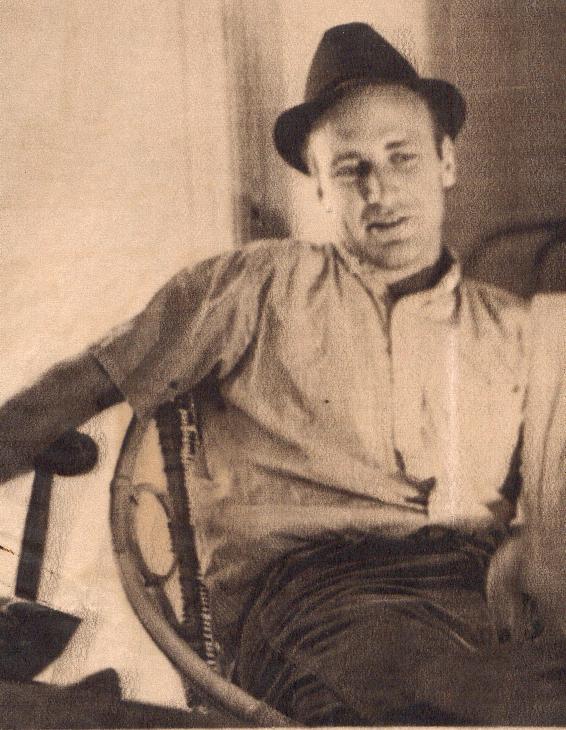
Kesey was an American author, best known for his debut novel, One Flew Over the Cuckoo’s Nest, and as a counter-cultural figure who, some consider, was a link between the Beat Generation of the 1950’s and the hippies of the 1960’s. Kesey was arrested for possession of marijuana in 1965. In an attempt to mislead police, he faked his own suicide by having friends leave his truck on a cliffside road near Eureka, along with a suicide note that said, “Ocean, Ocean I’ll beat you in the end.” Kesey fled to Mexico in the back of a friend’s car. When he returned to the United States eight months later, Kesey was arrested and sent to the San Mateo County jail in Redwood City, California, for five months. On his release, he moved back to the family farm in Pleasant Hill, Oregon, in the Willamette Valley, where he spent the rest of his life. He wrote many articles, books (mostly collections of his articles) and short stories during that time. [Wikipedia]
9
William Burroughs
1914 – 1997
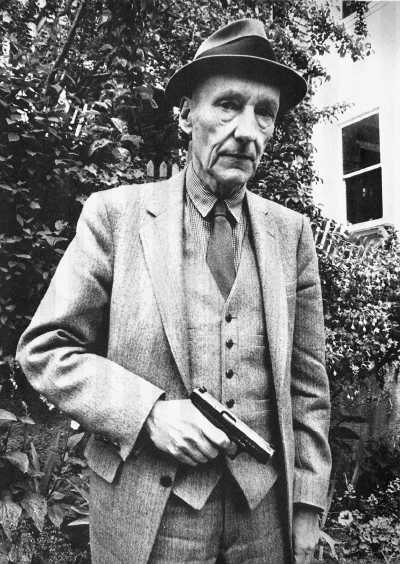
Burroughs was an American novelist, essayist, social critic, painter and spoken word performer. Much of Burroughs’s work is semi-autobiographical, drawn from his experiences as an opiate addict, a condition that marked the last fifty years of his life. A primary member of the Beat Generation, he was an avant-garde author who affected popular culture as well as literature. His most well known work is probably Naked Lunch. In 1951, Burroughs shot and killed his wife, Joan Vollmer, in a drunken game of “William Tell” at a party above the American-owned Bounty Bar in Mexico City. He spent 13 days in jail before his brother came to Mexico City and bribed Mexican lawyers and officials. This allowed Burroughs to be released on bail while he awaited trial for the killing, which was ruled culpable homicide. Burroughs reported every Monday morning to the jail in Mexico City, while his prominent Mexican attorney worked to resolve the case. When his attorney fled Mexico, after his own legal problems involving a car accident and altercation with the son of a government official, Burroughs decided to “skip” and return to the United States. He was convicted, in absentia, of homicide and sentenced to two years, which was suspended. [Wikipedia]
8
St Thomas More
1478 – 1535
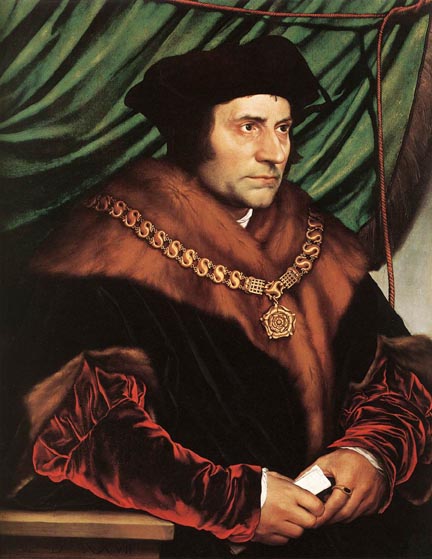
Saint Thomas More was an English lawyer, author and statesman, who, in his lifetime, gained a reputation as a leading humanist scholar, and occupied many public offices, including Lord Chancellor (1529–1532). More coined the word “utopia”, a name he gave to an ideal, imaginary island nation whose political system he described in the eponymous book published in 1516. He was beheaded in 1535 when he refused to sign the Act of Succession that would make Henry VIII Supreme Head of the Church in England. On 13 April of that year, More was asked to appear before a commission and swear his allegiance to the parliamentary Act of Succession. More accepted Parliament’s right to declare Anne the legitimate queen of England, but he refused to take the oath because of an anti-papal preface to the Act, asserting Parliament’s authority to legislate in matters of religion by denying the authority of the Pope, which More would not accept. Four days later he was imprisoned in the Tower of London, where he wrote his devotional Dialogue of Comfort against Tribulation. On 1 July 1535, More was tried before a panel of judges. He was charged with high treason for denying the validity of the Act of Succession. He was sentenced to be hanged, drawn and quartered (the usual punishment for traitors), but the king commuted this to execution by beheading. The execution took place on 6 July. In 1935, four hundred years after his death, Pope Pius XI canonized More in the Roman Catholic Church; More was declared Patron Saint of politicians and statesmen by Pope John Paul II in 1980. [Wikipedia]
7
O. Henry
1862 – 1910
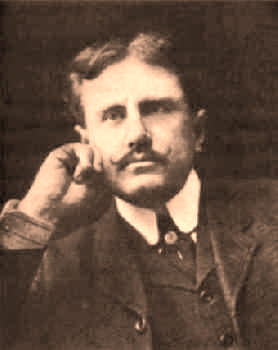
O. Henry is the pen name of American writer William Sydney Porter. O. Henry short stories are known for wit, wordplay, warm characterization and clever twist endings. Porter and his family moved to Houston in 1895, where he started writing for the Post. His salary was only $25 a month, but it rose steadily as his popularity increased. Porter gathered ideas for his column by hanging out in hotel lobbies, observing and talking to people there. This was a technique he used throughout his writing career. While he was in Houston, the First National Bank of Austin was audited, and the federal auditors found several discrepancies. They managed to get a federal indictment against Porter. Porter was subsequently arrested on charges of embezzlement, charges which he denied, in connection with his employment at the bank. Porter’s father-in-law posted bail to keep Porter out of jail, but the day before Porter was due to stand trial, on July 7, 1896, he fled, first to New Orleans and later to Honduras. While he was in Honduras, Porter coined the term “banana republic”, subsequently used to describe almost any small tropical dictatorship in Latin America. When he learned that his wife was dying, Porter returned to Austin in February 1897 and surrendered to the court. Having little to say in his own defense, he was found guilty of embezzlement in February 1898, sentenced to five years jail. He was imprisoned on March 25, 1898, as federal prisoner 30664 at the Ohio Penitentiary in Columbus, Ohio. While in prison, Porter, as a licensed pharmacist, worked in the prison hospital as the night druggist. [Wikipedia]
6
Jean Genet
1910 – 1986
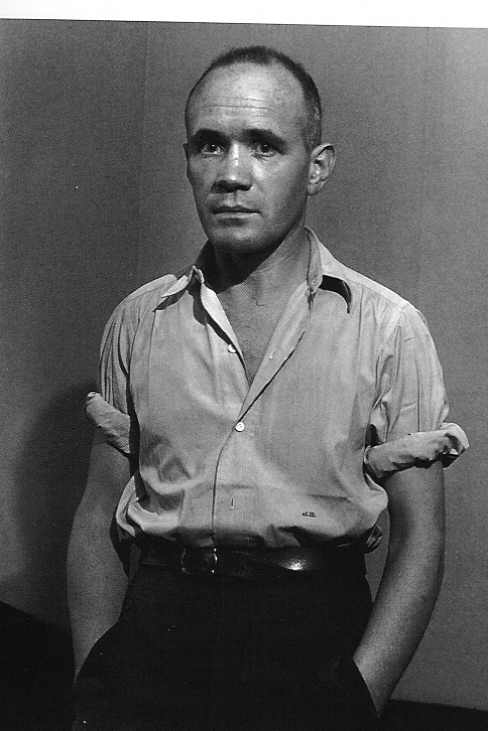
Genet was a prominent, controversial French writer and, later, political activist. Early in his life he was a vagabond and petty criminal, but later took to writing novels, plays, poems and essays, including Querelle de Brest, The Thief’s Journal, Our Lady of the Flowers, The Balcony and The Blacks and The Maids. Genet’s mother was a young prostitute who raised him for the first year of his life, before putting him up for adoption. For various misdemeanors, including repeated acts of vagrancy, he was sent, at the age of 15, to Mettray Penal Colony, where he was detained between 2 September 1926 and 1 March 1929. In The Miracle of the Rose (1946), he gives an account of this period of detention, which ended at the age of 18 when he joined the Foreign Legion. He was eventually given a dishonorable discharge on grounds of indecency. After returning to Paris, France in 1937, Genet was in and out of prison through a series of arrests for theft, use of false papers, vagabondage, lewd acts and other offenses. In prison, Genet wrote his first poem, “Le condamné à mort,” which he had printed at his own cost, and the novel Our Lady of the Flowers (1944). In Paris, Genet sought out and introduced himself to Jean Cocteau, who was impressed by his writing. Cocteau used his contacts to get Genet’s novel published, and in 1949, when Genet was threatened with a life sentence after ten convictions, Cocteau and other prominent figures including Jean-Paul Sartre and Pablo Picasso successfully petitioned the French President to have the sentence set aside. Genet would never return to prison. [Wikipedia]
5
Oscar Wilde
1854 – 1900
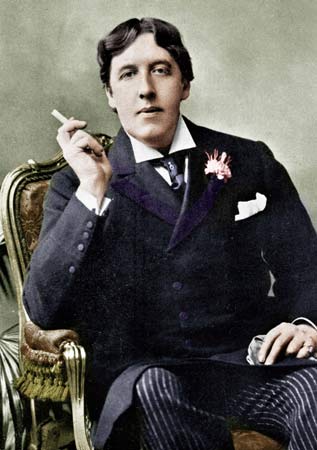
Wilde was an Irish playwright, novelist, poet and author of short stories. Known for his biting wit, he became one of the most successful playwrights of late Victorian London, and one of the greatest celebrities of his day. Several of his plays continue to be widely performed, especially The Importance of Being Earnest. As the result of a widely covered series of trials, Wilde suffered a dramatic downfall, and was imprisoned for two years hard labour after being convicted of the offence of “gross indecency” with other men. After Wilde was released from prison he set sail for Dieppe by the night ferry. He never returned to Britain. Wilde was imprisoned first in Pentonville, and then in Wandsworth prison in London, and finally transferred in November to Reading Prison, some 30 miles west of London. Wilde knew the town of Reading from happier times when boating on the Thames, and also from visits to the Palmer family, including a tour of the famous Huntley & Palmers biscuit factory, which is quite close to the prison. Now known as prisoner C. 3.3, (which described the fact that he was in block C, floor three, cell three) he was not, at first, even allowed paper and pen, but a later governor was more amenable. Wilde was championed by the reformer, Lord Haldane, who had helped transfer him and afforded him the literary catharsis he needed. After his release, he also wrote the famous poem The Ballad of Reading Gaol. [Wikipedia]
4
Paul Verlaine
1844 – 1896
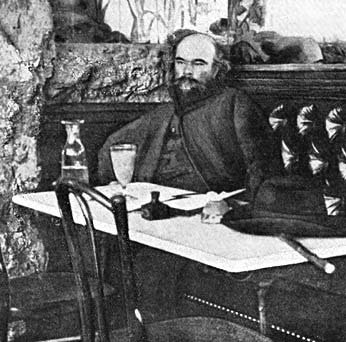
Verlaine was a French poet associated with the Symbolist movement. He is considered one of the greatest representatives of the fin de siècle in international and French poetry. In September, 1871, he received his first letter from the poet Arthur Rimbaud. By 1872, he had lost interest in Mathilde, his wife, and effectively abandoned her and their son, preferring the company of Rimbaud – his new lover. Rimbaud and Verlaine’s stormy love affair took them to London in 1872. In July 1873, in a drunken, jealous rage, he fired two shots with a pistol at Rimbaud, wounding his left wrist, though not seriously injuring the poet. As an indirect result of this incident, Verlaine was arrested and imprisoned at Mons. There, he underwent a conversion to Roman Catholicism, which again influenced his work and provoked Rimbaud’s sharp criticism. Romances sans paroles was the poetic outcome of this period. Following his release from prison, Verlaine again traveled to England, where he worked for some years as a teacher and produced another successful collection, Sagesse. He returned to France in 1877 and, while teaching English at a school in Rethel, became infatuated with one of his pupils, Lucien Létinois, who inspired Verlaine to write further poems. Verlaine was devastated when the boy died of typhus in 1883. Verlaine’s last years witnessed a descent into drug addiction, alcoholism and poverty. He lived in slums and public hospitals, and spent his days drinking absinthe in Paris cafes. [wikipedia]
3
Aleksandr Solzhenitsyn
1918 – 2008
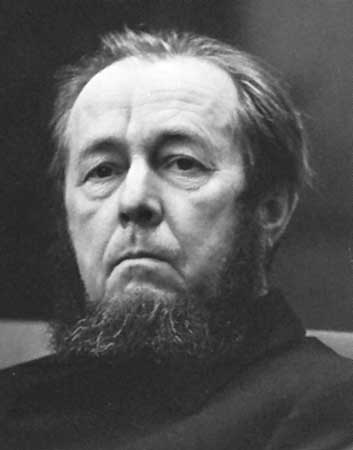
Solzhenitsyn was a Russian novelist, dramatist and historian. Through his writings, he made the world aware of the Gulag, the Soviet Union’s labour camp system, and for these efforts, Solzhenitsyn was exiled from the Soviet Union in 1974. He was awarded the Nobel Prize in Literature in 1970. During World War II, he served as the commander of an acoustic recognizance unit in the Red Army, was involved in major action at the front, and twice decorated. In February 1945, while serving in East Prussia, he was arrested for writing a derogatory comment in a letter to a friend, N. D. Utkevich, about the conduct of the war by Josef Stalin, whom he called “the whiskered one,” “Khozyain” (“the master”) and “Balabos”, (Odessa Yiddish for “the master”). He was accused of anti-Soviet propaganda, under Article 58 paragraph 10 of the Soviet criminal code, and of “founding a hostile organization” under paragraph 11. Solzhenitsyn was taken to the Lubyanka prison in Moscow, where he was beaten and interrogated. On 7 July 1945, he was sentenced in his absence by a three-man tribunal of the Soviet security police (NKGB) to an eight-year term in a labour camp, to be followed by permanent internal exile. This was the normal sentence for most crimes under Article 58, at the time. The first part of Solzhenitsyn’s sentence was served in several different work camps. During his years of exile, and following his reprieve and return to European Russia, Solzhenitsyn was, while teaching at a secondary school during the day, spending his nights secretly engaged in writing. In his Nobel Prize acceptance speech he wrote, “during all the years until 1961, not only was I convinced I should never see a single line of mine in print in my lifetime, but, also, I scarcely dared allow any of my close acquaintances to read anything I had written because I feared this would become known.” [Wikipedia]
2
Voltaire
1694 – 1778
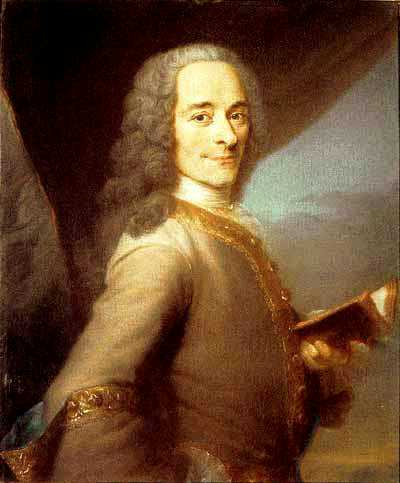
Francois-Marie Arouet, better known by the pen name Voltaire, was a French Enlightenment writer, essayist, deist and philosopher known for his wit, philosophical sport and defense of civil liberties, including freedom of religion and free trade. Voltaire was a prolific writer, and produced works in almost every literary form, authoring plays, poetry, novels, essays, historical and scientific works, over 20,000 letters and over two thousand books and pamphlets. He was an outspoken supporter of social reform, despite strict censorship laws and harsh penalties for those who broke them. A satirical polemicist, he frequently made use of his works to criticize Catholic Church dogma and the French institutions of his day. Most of Voltaire’s early life revolved around Paris. From early on, Voltaire had trouble with the authorities for his energetic attacks on the government and the Catholic Church. These activities were to result in numerous imprisonments and exiles. In 1717, in his early twenties, he became involved in the Cellamare conspiracy of Giulio Alberoni against Philippe II, Duke of Orléans, the regent for Louis XV of France. He allegedly wrote satirical verses about the aristocracy, and one of his writings about the Régent led to him being imprisoned in the Bastille for eleven months. While there, he wrote his debut play, Œdipe. Its success established his reputation. [Wikipedia]
1
Cervantes
1547 – 1616

A Spanish novelist, poet and playwright. His magnum opus, Don Quixote, considered the first modern novel by some, is considered a founding classic of Western literature, and regularly figures among the best novels ever written. His work is considered among the most important in all of literature. He has been dubbed el Príncipe de los Ingenios – the Prince of Wits. By 1570 he had been enlisted as a soldier in a Spanish infantry regiment and continued his military life until 1575, when he was captured by pirates. He was ransomed by his captors and the Trinitarians and returned to his family in Madrid. In 1585, Cervantes published a pastoral novel, La Galatea. Because of financial problems, Cervantes worked as a purveyor for the Spanish Armada, and later as a tax collector. In 1597 discrepancies in his accounts of three years previous landed him in the Crown Jail of Seville. In 1605, he was in Valladolid, just when the immediate success of the first part of his Don Quixote, published in Madrid, signaled his return to the literary world. In 1607, he settled in Madrid, where he lived and worked until his death. [Wikipedia]
This article is licensed under the GFDL because it contains quotations from Wikipedia.
More Great Lists
 Top 10 Grim Literary Classics With Hidden Whimsical Moments
 10 Unbelievable Times Royalty Went Undercover
 10 Times Directors Went Too Far On Set
 10 Murder Mysteries That Went Unsolved For Years
 10 Assassinations That Went Horribly Wrong
 10 Comedy Acts That Went Horribly Wrong
 Top 10 Crimes That Went Viral After A Podcast
 10 Deathbed Confessions And Conversions That Went…
 10 Insanely Popular Companies That Nearly Went Bankrupt
More Great Lists