Top 10 Most Influential Science Fiction Writers
Published on March 3, 2008 - 180 Comments
There can be a major difference between the best authors of a genre, my favorite authors of a genre, and the most influential authors of a genre. While any top ten list like this will be somewhat controversial, here is a list of authors who have had a great and lasting influence on the science fiction genre.

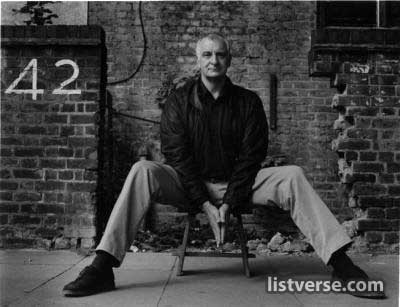
Douglas Adams may be one of the most popular authors on this list, and when his works first came out, they were very unique. Adams is best known for his “Hitchhiker’s Guide to the Galaxy” series, which was ground breaking. These works introduced a comedic and strange (maybe almost surreal) element to science fiction writing that is still adored by fans even today.

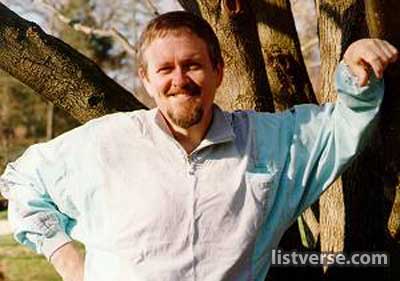
Orson Scott Card is the author of one of the most popular science fiction series in history. The Ender’s Game sagas rate right up there with Dune as one of the most popular series of books of all time, and certainly the most popular of modern times. If William Gibson is the father of Cyber-punk science fiction, then Orson Scott Card is the modern voice that set the direction of modern science fiction.

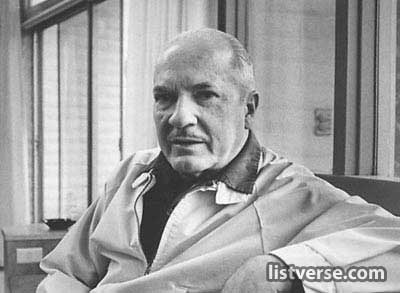
Robert Heinlein was an extremely influential science fiction writer who may have been overshadowed in the long run by Isaac Asimov, but Heinlein is well known and loved among science fiction fans. He was both popular and controversial and he concentrated on “hard” science fiction — science fiction that took its science very seriously. He won four Hugo Awards for his novels, and along with Asimov and Clarke was known as one of “The Big Three of Science Fiction.” Talk about influence!

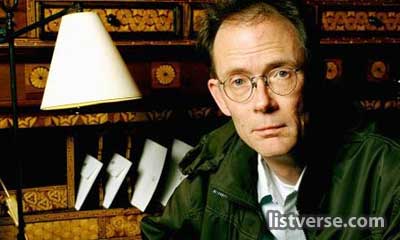
William Gibson is an extremely popular and controversial science fiction writer who is known as the father of the modern “Cyber Punk” novel. While people and fans still argue over what kind of an influence Gibson has had on the science fiction genre, there’s no doubt his mark has been made. As one anonymous critic put it: “Whether he’s saved the genre or destroyed it, only time will tell.” A little bit overboard, but it gives an idea of the influence this author of “Johnny Mnemonic” and “Neuromancers” has had.

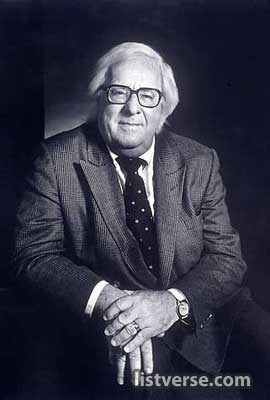
While most famous for writing his smash hit novel “Fahrenheit 451,” one of (if not the) greatest dystopian science fiction novel of all time, Bradbury wrote a lot of science fiction and fantasy and was a major influence to literally thousands of future science fiction writers. Not only was “Fahrenheit 451″ one of the best science fiction novels of all time, but “Something Wicked This Way Comes,” “Dandelion Wine,” and “The Martian Chronicles” are all works that each were amazing enough to make an author’s career, and Bradbury was the author of all of them. It’s amazing he’s only #6, but this is a genre that has amazing number of giants.

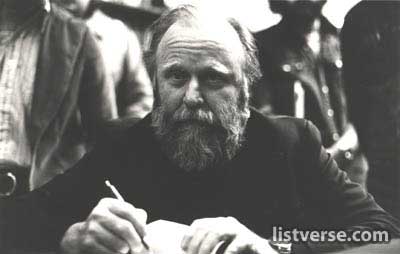
Even before the “Dune” series was made into a mini-series for the Sci-Fi channel, this series of books had a huge and devout following that rivaled that of “The Lord of the Rings.” This great series took place over 1,000s of years, and originally consisted of the novel “Dune” and five sequels, although other related novels have been published by his son since then. This series is amazingly wide ranging, often dealing with themes like human survival, evolution, ecology, and the intersection of religion, politics, and power. “Dune” is thought to be the single best-selling sci-fi novel of all time.

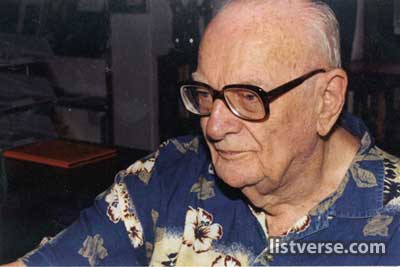
Considered one of “The Big Three of Science Fiction,” Arthur C. Clarke is known for his Space Odyssey series, particularly the novel “2001: A Space Odyssey,” which has become one of the most influential science fiction novels ever written, and was also a wildly popular movie, helping to bring the genre into the mainstream. There were several other books in the series, and Clarke is also known for his short stories and his work in encouraging emerging science fiction writers. He is also a long time member of the H.G. Wells society.

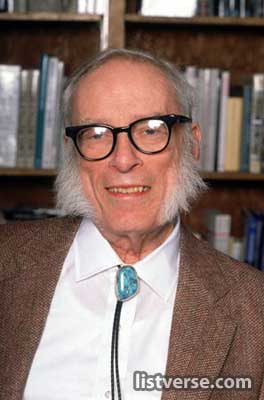
Asimov is perhaps the most famous of “The Big Three of Science Fiction” and is one of the most prolific writers in sci-fi history. He published or edited over 500 books, and an estimated 90,000+ letters and postcards. He has published non-fiction as well as fiction, with books under every section of the Dewey decimal system except for philosophy. He is best known as a science and science fiction writer, whose Robot series and Foundation series laid the groundwork for most modern science fiction and are still widely read today.

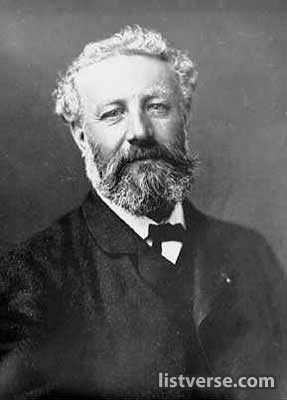
Verne’s writings made him the pioneer of science fiction, and one of its finest writers. He, in fact, published his first science fiction novels around the time H.G. Wells was born. “Journey to the Center of the Earth,” “20,000 Leagues Under the Sea,” and “Around the World in 80 Days,” are classics that changed fictional literature and gave birth to what would become the science fiction genre. Verne wrote incredibly detailed stories about space travel and submarines before any such travel on a large scale was practical, and he laid the foundation for arguably the greatest science fiction writer ever.

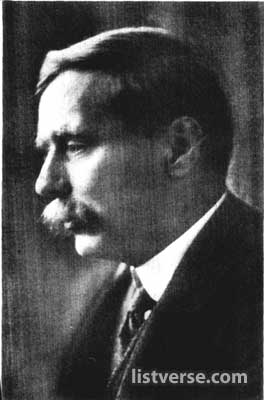
He might be both the best and the most influential science fiction writer ever. H.G. Wells’ classic books are still read and loved today. “The Time Machine,” is considered by many to be the best science fiction novel ever written, and “The War of the Worlds,” and “The Invisible Man” are hardly slouches, either. Over a century after they are written, these books are still fresh and strong enough to be made into Hollywood films. Wells set the bar for everyone else, and laid the foundation to ensure that science fiction would be very alive and well into the 20th century and beyond.
Contributor: Shane Dayton
Related Lists10 Free Science Fiction Books Online15 Astoundingly Beautiful Sci-Fi Images Top 12 Dystopian Novels Top 10 Errors in Science Fiction Movies |
SubscriptionsLike this article? Subscribe to the RSS feed to keep 'em coming, or subscribe via email: |
If you find this site helpful, please leave a donation so you can enjoy the spirit of giving too.
Email This Post


1. sid - March 3rd, 2008 at 8:28 am
Good list! H.G Wells and Jules Verne were the most influential writers in sci-fiction.Wells thoroughly deserves the first place.
2. Kelsi - March 3rd, 2008 at 8:35 am
Awesome list, “Shane Dayton.” (That sounds way too formal for this site, but whatever. Can I call you Shad?) I love A.C. Clarke and Orson Scott Card, but I was sad to find that you left Madeline L’Engle off this list! She’s the one that got me interested in quantum physics.
3. theruggedman - March 3rd, 2008 at 8:35 am
Come on you cant leave out Philip K Dick…literay sci fi mind, definitely one of the greatest of the 20th century. Blasphemy!!!!!
4. goof_ball - March 3rd, 2008 at 8:36 am
Good List!
5. sid - March 3rd, 2008 at 8:36 am
On a lighter note, Asimov really looks like a sci-fiction writer in the picture overhere, i was wondering if i could grow a similar beard when i am older.
6. jfrater - March 3rd, 2008 at 8:42 am
sid: I wouldn’t recommend it
7. g c - March 3rd, 2008 at 8:42 am
Kurt Vonnegut and Philip K Dick are conspiciously missing…
8. Jim C - March 3rd, 2008 at 8:42 am
It pains me to say this, but if you’re talking ‘Most influential’ - you’ve got to put L Ron Hubbard at #1. He’s ‘influenced’ far more people, for better or worse, than all of the others put together.
9. jfrater - March 3rd, 2008 at 8:43 am
g c: what positions do you think they should have on the list - and who should they knock off the list?
10. Randall - March 3rd, 2008 at 8:45 am
I gotta agree with “theruggedman” (though not in the slightest with his nom de plume, yick) leaving Philip K. Dick off this list is a bad oversight. I’d replace Frank Herbert (a mediocrity) with Dick (a minor genius). Otherwise the list is pretty good.
At first I was thinking, well where’s A.E. Van Vogt and Poul Anderson? Where’s L. Sprague DeCamp and Piers Anthony? And so on and so on? But then I got into the spirit of this… it’s the Most INFLUENTIAL Sci-fi authors. And while there are many greats left off the list… you can’t argue with most of the list as presented that these guys were the big influences. And so the only thing I’d REALLY change is losing Herbert or maybe Douglas Adams, and replace one of them with Philip K. Dick.
oh.. and I’m waiting for the Harlan Ellison fans to come on and raise a stink about his absence from the list. I am ever and always ready to knock that overrated egotist down a few pegs.
11. Randall - March 3rd, 2008 at 8:47 am
About L. Ron Hubbard:
A) The less attention paid that slimy fake and his fake religion, the better… and
B) Hubbard’s influence was *outside* the realm of sci-fi literature. As a sci-fi author he was and is viewed as an untalented hack. So I say no… he doesn’t belong on this list.
Philip K. Dick, however, *does* belong here.
12. dangorironhide - March 3rd, 2008 at 8:50 am
Nice list. I havent read nearly enough of the books by people on this list… LOVE Douglas Adams, Scott-Card is great, all I know of Ray Bradbury are some short stories I had to read in English at school a couple of years ago that I hated. Maybe because the teacher kept going on about how scary they were when they REALLY were not. I really need to get round to reading ‘Dune’ sometime. I know one of my friends has & he really liked it. I’ve read ‘War of the worlds’ and ‘The time machine’, though I wouldn’t say the latter is the greatest sci-fi book of all time. I loved the film made a few years ago of ‘The Time Machine’ as well.
13. Scott - March 3rd, 2008 at 8:50 am
A lot of these 19th Century and early 20th Century writers such as HG Wells and Isaac Assimov are way beyond their time and are given credit as so
14. zubair kaka - March 3rd, 2008 at 9:03 am
happy to see Uncle L Ron Hubbard not here
15. Jeremy Foster - March 3rd, 2008 at 9:12 am
I’m missing Philip K Dick, too …
Any reason why he’s not included?
16. romerozombie - March 3rd, 2008 at 9:12 am
What about Lovecraft? He wrote mostly ‘horror puplp’ stories, but he dipped into sci fi, too. He’s undoubtedly influential.
17. Randall - March 3rd, 2008 at 9:16 am
romerozombie:
Lovecraft’s influence over sci-fi is nil. His influence over modern horror, on the other hand, is fairly extensive. This, being a list on sci-fi, doesn’t include him. A Horror List perhaps should.
18. Joss - March 3rd, 2008 at 9:18 am
I’m slightly partial, but I think OSC should’ve been higher.
And you missed some great ones.
However, I love this list, simply because science fiction is teh bizzle bomb.
19. romerozombie - March 3rd, 2008 at 9:18 am
The Cthulhu Mythos is sci fi though, I’d say. Cosmic gods trying to gain control of the universe is pretty sci fi.
20. Randall - March 3rd, 2008 at 9:31 am
romerozombie:
The Cthulhu Mythos, *overall,* has a sci-fi angle to it, yes. But each story concerned with that story thread is considered more “horror” than sci-fi. Lovecraft’s followers (and Lovecraft himself) considered him a writer in the supernatural/horror vein.
I mean, if you want to make this argument, then “Frankenstein” becomes sci-fi, as just one example.
But we know there has to be a dividing line somewhere. Lovecraft is horror, not sci-fi.
21. romerozombie - March 3rd, 2008 at 9:54 am
I waan’t making it into argument at all. :S
But yeah, each individual story is more horror.
22. stevenh - March 3rd, 2008 at 10:15 am
Great list. I can think of many that I would have included, but as there is no one that I’d remove, I think I’ll hold off.
Thanks Jamie.
23. lewis - March 3rd, 2008 at 10:22 am
Great list, Douglas Adams is my favourite, I love him!Genius!
24. Purdnasty - March 3rd, 2008 at 10:24 am
h.g. wells is definitely the best, war of the worlds is the greatest book i’ve ever read
25. schiesl - March 3rd, 2008 at 10:44 am
I hate scientology, but having invented a “religion” on a science fiction book is pretty amazing sad to say. L. Ron Hubbard should be on this list. other then that, Fantastic list
26. schiesl - March 3rd, 2008 at 10:44 am
I dont like scientology, but having invented a “religion” on a science fiction book is pretty amazing sad to say. L. Ron Hubbard should be on this list. other then that, Fantastic list
27. schiesl - March 3rd, 2008 at 10:46 am
I would also like to point out, i would take Frank Herberts beard anyday. keep me warm during these cold winter months
28. Spocker - March 3rd, 2008 at 10:58 am
Add another vote for Phillip K. Dick. Lose Douglas Adams. Put Dick in the middle somewhere (no innuendo intended).
29. GingerLee - March 3rd, 2008 at 11:08 am
Sad Dick isn’t here too. Aldous Huxley should be on here too. And George Orwell.
30. Harsha - March 3rd, 2008 at 11:34 am
No way Cthulu does not constitute sci-fi. Anyway the author didn’t ‘influence’ anythng in terms of sci-fi, thats wat this list is about anyway!
31. Cedestra - March 3rd, 2008 at 11:38 am
I’m glad I didn’t write this list- it would be way too subjective for me!
are the only ones to speak of and they haven’t had as much of an influence as Lovecraft (one of the founding fathers of science-fiction) or success as PKD (influenced 5? movies).
As much as I love Ray Bradbury, I think he should be bumped down or removed. At least put notable omissions for PKD and Lovecraft if not replace Bradbury and Adams with them. I love Adams, too, and his influence was different than the others, but the major five in his trilogy
Good job, though, I know writing lists like this are hard.
32. Randall - March 3rd, 2008 at 11:59 am
Cedestra:
Calling HP Lovecraft one of the “founding fathers” of sci-fi is completely inaccurate. Come now.
And the idea of removing BRADBURY and replacing him with Lovecraft—sheesh.
I think you’re just plain confused with what sci-fi is. Lovecraft HIMSELF did not view his writings as science fiction. Neither did his followers (August Derleth, L. Sprague DeCamp,etc.) His writings were supernatural/horror with occasional elements of sci-fi. He considered himself a follower and even a successor to Poe, not Wells or Verne. Moreover—the latter two were already writing science fiction before Lovecraft was even born.
Lovecraft can be called one of the precursors of modern science fiction *perhaps,* but hardly a major influence on the genre. His influence was elsewhere.
And let’s also not make a vaunted saint out of Lovecraft. His stories, while often spooky and moody and atmospheric, are more than occasionally hampered by meandering, inconclusive plots. And his writing was consistently over-the-top prosaic—to the point of being almost purple-prosey. There’s also a lot of evidence that Lovecraft was a racist—and while others on this list probably have their own foibles—we ought to recognize that Lovecraft isn’t the best guy in the world to feel “influenced” by anyway. But really more to the point—if we were talking horror here, I think you’d have a case to make for Lovecraft’s inclusion—but sci-fi? No… John Campbell should be here more than Lovecraft, in terms of influence. Or A.E. Van Vogt. Or a dozen others I could name.
33. Nelia - March 3rd, 2008 at 12:12 pm
Huh, I would never have thought of myself as someone who reads a lot of Sci Fi, but I’ve read 5 of these authors and seen movies based on the work of 4 (though I’ve heard I, Robot can’t really be considered to be more than distantly based on the book).
I love Douglas Adams, his Hitchhiker series is hilarious, and his other books are excellent, if a bit weirder. His books probably aren’t the best out of the ones I’ve read from the authors on this list, but I do reread them the most.
As for L.Ron Hubbard - His followers don’t think the “fiction” part of “science fiction” applies. So there ya go.
34. Fili - March 3rd, 2008 at 12:20 pm
No Philip K. Dick?!?
This is the first list that gave me a BF (bitch fit).
35. madgett - March 3rd, 2008 at 12:36 pm
Stanislav Lem is definitely a candidate for a spot high on the list. ‘Solaris’ and ‘Star Diaries’ might be his most popular works.
36. Metalwrath - March 3rd, 2008 at 12:37 pm
I would have put Jules Verne in first (i mean come on.. he invented the genre!)
And the fact Philip K. Dick is actually missing is total blasphemy. If i’m not mistaken Dick did invent or at least boost the “parallele universe” sort of thing with his infamous Man in the High Castle (a world in which the Axis won the war). Not to mention one of the greatest movies ever is adapted from one of his stories… thats Blade Runner.
Also Dick did introduce or contribute (enormously) to the post punk apocalyptic atmosphere in Sci-Fi.
Other than that its a pretty good list
37. PolkaRobot - March 3rd, 2008 at 1:21 pm
Great list and thank god I read them all
38. Jim - March 3rd, 2008 at 1:23 pm
Great list! Bradbury is just about right — could be a little higher. His short stories covered a multitude of genres, but Sci-Fi seems to have been his comfort zone. I got lost in his works on many a rainy dayreading his collected stories.
As for Douglas Adams — comedic brilliance. It’s hard to write something nowadays in the humor vein that doesn’t mimic something he had already done.
Oh yeah, Hubbard does not belong anywhere near this list. He could create a good story every now and then, but his infamous reputation proceeds him. If you ever want to read really bad, cornball sci-fi, he’s your man. “The Mission Earth series, anyone? Bleh.
39. Csimmons - March 3rd, 2008 at 1:28 pm
Its good to see two of my favorite writers on the list, H.G. Wells and Ray Bradbury, they wrote some of the best sci-fi ever! I am extremely glad to not see L. Ron Hubbard!
40. Csimmons - March 3rd, 2008 at 1:29 pm
At least these writers didn’t start a cult like L. Ron did!
41. JMS Bones - March 3rd, 2008 at 1:30 pm
*looks*
No Philip K. Dick
No Ursula K. LeGuin
No Kurt Vonnegut
Submitter has an anti-K thing going on.
42. Csimmons - March 3rd, 2008 at 1:34 pm
I think Ray Bradbury wrote the best short stories, while not all of them were sci-fi, those that were sci-fi were the best.
43. W Tom - March 3rd, 2008 at 1:38 pm
What about L Ron, Maybe not for his sci fi writings. Although Xenu tends to be a hit with those folks. Ha ha.
44. Randall - March 3rd, 2008 at 1:42 pm
Can people PLEASE stop suggesting L. Ron Hubbard? It’s like he’s the only sci-fi author some people know.
If you’d read any of his work, you wouldn’t suggest him for this list, regardless of Scientology. And if you don’t know anything about sci-fi, then don’t make suggestions.
And also note all the previous posters (including myself) who have spoken AGAINST including Hubbard, before you go suggesting he be included.
Cripes.
45. islanderbst - March 3rd, 2008 at 1:46 pm
Ive never read any Philip K Dick, and I knew he shoulda been there, just for the movies (blade runner, screamers) he caused
i loved adams hitchhikers series greatly, but influential, nope.
i dont remember a huge wave of cheeky, smart-alecky, brilliant, britishy novels about bad poetry and a towel carrying alien
46. Csimmons - March 3rd, 2008 at 1:47 pm
Randall:thank goodness someone said that, no one likes L Ron except Tom “Xenu’s Bitch” Cruise!
47. erem - March 3rd, 2008 at 1:53 pm
Leaving out Stanislaw Lem in such list is simply a crime….
48. PT - March 3rd, 2008 at 1:56 pm
an excellent list and delighted to see that Wells is placed at number 1. all of his works (Including the non “Scientific Romances”) are still as relevant today as he wrote about people as much as circumstances and whilst circumstances change people never do. can i suggest someone out there tries The Wheels Of Chance which is one of the most beautiful and amusing books he ever wrote
49. Randall - March 3rd, 2008 at 2:01 pm
erem:
Why Stanislaw Lem so much, as opposed to Piers Anthony or Roger Zelazny or Larry Niven or Norman Spinrad or Judith Merrill?
I mean, this is a list about the most *influential* sci-fi writers… not simply the best, or someone’s favorite.
I don’t see how Lem was all that influential.
And somebody up above basically said Adams *wasn’t* influential… I think that’s arguable… the thing about Adams is, he introduced or re-introduced the comedic/absurdist edge into sci-fi. Now how many people he influenced in doing that, I can’t say. But it *sounds* like a fairly major contribution anyway.
50. Jim C - March 3rd, 2008 at 2:09 pm
OK, As the first one to suggest L Ron Hubcap, I gotta speak up.
1) I know he’s a hack. He qualifies as a SF writer the same way Billy Preston does when he writes about a spacewar for his 10th grade creative writing class.
2) He only influenced other SF writers in the manner of “Jesus H Christ, that’s a steaming pile of crap. I’m not going to write like that.”
3) But the descriptor of the list is “most influential,” not “best” or “most creative” or “most inspiring.” For this alone, he qualifies. No other writer on the list has had the far-reaching influence this guy has. Who else has made so many people flush their lives down the toilet?
I think we can all agree on those points, no?
PS - I earlier I said he influenced the most people, for better or for worse. I was being polite. I see I’m among friends, so I retract that, and just say “for worse.”
51. stevil - March 3rd, 2008 at 2:09 pm
As a life long lover of all things scifi its a crime not to see roger zelanzy on this this.
52. longball - March 3rd, 2008 at 2:09 pm
I like Terry Brooks and Pierce Anthony and Laurell K. Hamilton. ALl very good writers and excellent story tellers. Good Vocabulary and well written books.
53. Kraeg - March 3rd, 2008 at 2:10 pm
How about John Wyndham - Midwich Cuckoos (made into two separate movies), the Chrysalids, Day of the Triffids (made into a tv series) to name just a few.
54. Randall - March 3rd, 2008 at 2:17 pm
Jim C:
When a list is named “Top 10 Most Influential Science Fiction Writers,” then it IMPLIES that the persons cited on that list will be included for *their influence over science fiction”—NOT for their influence in other arenas.
I mean, suppose we had a guy who wrote the screenplay to a bad western once, and this same guy later went out and made a killing in the market selling, oh… I don’t know…. some new kind of deodorant. And he revived the whole freakin’ economy for us, and bought up half of New Jersey or whatever, and turned into a gigantic Euro-spa?
Would we naturally include that guy on a list of the Top 10 Most Influential Writers of Westerns?
No, of course not. That would be a marginal part of his career life, and stretching the definition of “influential” in this *context* would be inaccurate and even disingenuous.
No. L. Ron Hubbard influenced a lot of people. But not for his science fiction writing–but rather for the slimy scam he created to make a name for himself and a buck or two off the gullible.
He shouldn’t be dignified with being included on this list.
55. Canuck - March 3rd, 2008 at 2:18 pm
L Ron Hubbard does not belong on this list. I’m pretty sure that, while not stated explicitly, the idea behind this list is the authors that were the most influential on the genre of science fiction. His works of literature (and I use that term loosely) did not influence the genre in any way. Arguing that because he invented a religion for the demented he is in some way influential to the genre makes no sense. And if the list is to be about the most influential science fiction writers in every capacity, then why make it science fiction writers at all? Why not the most influential maids? No, I’m pretty sure that this list regards their influence on science fiction.
56. Randall - March 3rd, 2008 at 2:20 pm
Canuck:
*There* you are. I left a note for you over in the Alien Life thread a few days ago.
As you can see, we DO agree here.
57. frozenmidwest - March 3rd, 2008 at 2:28 pm
I’m surprised that Michael Moorcock and Gene Wolfe aren’t on the list.
58. doubter - March 3rd, 2008 at 2:33 pm
What about Kim Stanley Robinson?
The Mars trilogy was amazing and so was the California series.
He may be younger than some of the others but I think he will be, if he is not already, one of the top ten sooner than later.
Otherwise good list, though I think HG Welles is overrated
59. Canuck - March 3rd, 2008 at 2:36 pm
Randall: Yeah, I decided against raising my blood temperature over an argument I have no possibility of winning about five minutes after writing the post when I realized I was still thinking about it, although thanks for your concern. And we certainly do agree here.
60. Canuck - March 3rd, 2008 at 2:37 pm
Although I did read the post, and it was well written.
61. Bob - March 3rd, 2008 at 2:46 pm
The genre would be dead without C.S. Lewis.
62. longball - March 3rd, 2008 at 2:56 pm
yes, c.s. lewis is another sf great!
63. Raz - March 3rd, 2008 at 3:42 pm
BEST HG WELLS NOVEL:
“THE ISLAND OF DOCTOR MOREAU”
I STRONGLY RECOMMEND ALL TO READ IT…
1
64. danielle - March 3rd, 2008 at 3:51 pm
good lord, no ALDOUS HUXLEY?
He was quite an amazing writer. Author of Brave New World…
65. Dana - March 3rd, 2008 at 3:59 pm
I quite agree…the only two I might have also considered would be Aldous Huxley and Ursula K. Guin.
66. Wally - March 3rd, 2008 at 4:02 pm
A few of the greats have been missed, but no George Lucas? I know he was not a novelist, but he was a SF writer and there is no SF more influential than Star Wars.
67. cparker - March 3rd, 2008 at 4:04 pm
What about L Ron Hubbard. He got millions to believe anything????? In a way should be number 1.
68. Alan Carter - March 3rd, 2008 at 4:04 pm
Philip K. Dick must be counted as influential because of all the films, which have penetrated popular consciousness as few other SF authors have. Vernor Vinge’s toying with the Singularity has inspired many extreme technophiles, which may yet prove to be a profound influence on human direction. And as I often observe, William Gibson is a great writer but cyberpunk was invented by John Brunner in “The Shockwave Rider” - along with worm programs of course
69. Zoidberg - March 3rd, 2008 at 4:09 pm
Philip K Dick belongs on this list. I’m in a “reading great sci-fi works I either never read or haven’t read in a while” and just finished DO ANDROIDS DREAM OF ELECTRIC SHEEP. Stunningly enjoyable novel.
70. 5′10″ - March 3rd, 2008 at 4:56 pm
Ayn Rand maybe? Or how about Margaret Atwood? The list has some great writers but how about including une femme qui ecrit. Few science fiction writers can equal the exquisite depths of horror and revulsion I sunk to with each new chapter of the Handmaid’s Tale.
71. jfrater - March 3rd, 2008 at 4:59 pm
5′10″: Ayn Rand? Are you serious? Her writing is definitely not sci-fi
I love her stuff btw - this is not a criticism of her. As for including females - the author of this list obviously didn’t consider any female sci-fi writers to be in the top 10 of all history - we can’t just include women because they are women - that is sexist
The lists here are based on merit - not political correctness 
72. SarahJ - March 3rd, 2008 at 5:01 pm
I have read some of these authors and think its a great list.
73. billyshears - March 3rd, 2008 at 5:02 pm
i love 1 and 2
74. HollyTamale - March 3rd, 2008 at 5:11 pm
I was not a fan of Bradbury’s Fahrenheit 451. As strange as it was that many technologies mentioned in the book did eventually come into existence, (flat-screen televisions and such) I found the novel excruciatingly boring. But then again, I was but a freshman in high school being forced to read it for a class. Perhaps I’m a bit biased. Oh well.
75. Crystalofthedead - March 3rd, 2008 at 5:24 pm
where’s L. Ron?
76. jfrater - March 3rd, 2008 at 5:30 pm
Crystalofthedead: galavanting around the galaxies with Xenu I daresay.
77. jfrater - March 3rd, 2008 at 5:30 pm
SarahJ: I agree
78. Dana - March 3rd, 2008 at 5:34 pm
Jfrater: Dang it, you stole my answer
79. Mom424 - March 3rd, 2008 at 6:26 pm
Great List! First time I’ve read a book from each of the authors on any of Jamie’s literature lists. I had always considered myself fairly well-read ’till I started hanging out around these parts.
Randall; Give me the Herbert critique if you will. The first Dune book is my favorite sci-fi. I liked the adventure, politics, mythology/religious angle of the book. I was not so fond of the rest of the series. Over-wrought maybe?, seemed like he was being esoteric at the expense of the story.
Dune sold like a gazillion copies; that and the interest in the genre it spawned makes him worthy of the list. Thanks
80. asra - March 3rd, 2008 at 6:26 pm
awesome list! i’m taking a class in science fiction right now, and was just introduced to a lot of these great authors, though i’d read the works of a few. they explore some really amazing concepts, and most of them have awesome short stories.
81. Mom424 - March 3rd, 2008 at 6:30 pm
Kraeg; I liked all the Wyndham books too! Midwich cukoos is my favorite. I don’t know how influential he was, but he certainly is a darn good read.
82. oose85 - March 3rd, 2008 at 6:38 pm
Terry Brooks
Raymond E. Feist
Anne Mcaffrey
JRR Tolkien
George Lucas
Philip K, Dick
timothy Zahn
83. Martin L - March 3rd, 2008 at 7:16 pm
I’m definitely signing on with those who are decrying the lack of Philip K. Dick and Kurt Vonnegut Jr. from this list. C’mon, people, this isn’t a matter of a few people’s personal tastes, this is true science fiction literary history we’re talking about here! And Robert Heinlein at #8, behind William Gibson? No. Absolutely not. As an influential author, Heinlein should be at #3, Asimov at #4. Adams is too far back as well. Frank Herbert doesn’t need to be on here — one can hardly say he spawned a whole generation of new writing. And no female authors? No Norton, no Le Guin, no L’Engle, no McCaffrey? Shane, does your familiarity with SF lit go ANY farther than scanning the Borders racks for the last ten years, starting at age 10? This is the first time I’ve really been disappointed by a list here. Poorly done.
84. el duderino - March 3rd, 2008 at 7:46 pm
Hey Dick-less what’s up with the omission? Egregious omission by any standard.
85. bdizzle - March 3rd, 2008 at 7:50 pm
H.G. wells is the shiz
86. badlist - March 3rd, 2008 at 7:50 pm
author of the bible
87. souxieq - March 3rd, 2008 at 7:54 pm
Excellent list. Does everyone remember Ray Bradbury Theatre?
HollyTamale: I understand. So many great books get ruined by being forced upon students.
I lucked into having really great english teachers, so it was great for me, and we read neat stuff too, but I knew a lot of kids in other classes who were just tortured by their teachers. The kind that thought there was only one way to view the question “What was the author thinking?” I hate teachers like that.
88. leonbrown - March 3rd, 2008 at 8:30 pm
wheres LRH
89. Jaffa - March 3rd, 2008 at 8:36 pm
Very very good list
So many more that deserve nods, but I agree with every one of these authors deserving top spots.
90. FE54 - March 3rd, 2008 at 9:04 pm
L. Ron has to be here, given the topic of the list.
He has managed to turn works of fiction - however poor they are - into a “religion”
His influence, though baffling, is unquestionable. He has had more of an influence than anyone else in the genre.
Do I agree with anything the man has said? No. Do I agree with anything at all Scientologists believe? No. But I find it impossible to question Hubbard’s status as an influential Science Fiction writer.
91. Yogi Barrister - March 3rd, 2008 at 9:17 pm
Good for Listverse! It only took eight comments to note the glaring omissions. Philip K Dick, Kurt Vonnegut, and yes, dare I say it, the son of Xenu.
92. Late O’Day - March 3rd, 2008 at 10:18 pm
(Pssst! Douglas Adams wasn’t really a Science Fiction writer. He was writing Fantasy. I suspect you just needed someone to pad out your list and — as a kid, I suspect — simply lacked the knowledge to include real SciFi writers, like Huxley, Stapledon, Lem, Capek, Dick, etc.)
93. MiSaNtHrOpE - March 3rd, 2008 at 10:32 pm
Some “sci-fi” authors are not sci-fi authors because they are simply using elements of science fiction to tell a story. Cases in point:
Margaret Atwood - Oryx & Crake and The Handmaid’s Tale;
George Orwell’s 1984
Bradbury’s F451 (but he did write sci-fi extensively - F451 is perhaps the novel with the least sci-fi in it).
Anthony Burgess - A Clockwork Orange & The Wanting Seed
Yevgeny Zamyatin - WE
I am unsure about Aldous Huxley. I’ve read two novels of his, and I’m not sure his other works involve science fiction. Island may seem far-fetched, but it is composed of real elements.
BNW, however, is thoroughly science fiction, though [NOT IN JEST] much of what he says is true, especially about adult-children and Soma.
94. Mikerodz - March 3rd, 2008 at 10:51 pm
Nice to see the names of Wells and Asimov.They can detail pictional setting and plot as if they were part of the story.
95. Idreno - March 3rd, 2008 at 10:54 pm
Is it me, or does Asimov look like he just walked off the set of “Planet of the Apes?”
96. Stone2065 - March 3rd, 2008 at 11:30 pm
Ninety five posts… and ONE person mentioned R. A. Heinlein… what a poor state of affairs.
Anyone here ever read ANY of this man’s contributions? Anyone here know that he was the best of friends with a missing writer on this list? The man who wrote the Lensman series? Anyone ever even HEARD of “Stranger in a strange land”? “Friday”? “The number of the beast”? Or how much he infuenced several of the people that DID make this list? Not by his own writing so much, but by being friends with them. A.C. Clarke was a great friend of his…
Eh, sorry for the rant. He’s just about the best on this list, and that’s no small statement.
PS: I also like Andre Norton, P.T. Farmer, etc.
97. scaramouche - March 3rd, 2008 at 11:39 pm
I love orson scott card!
98. Alucard - March 4th, 2008 at 4:44 am
How about Edagr Allan Poe? I know that he’s best known for his gothic stories but he can be also credited with some good science fiction as well.
- The Balloon Hoax
- The Power of Words
- A Descent into the Maelstrom
Plus he also dabbled in the science directly like
- Eureka: an Essay on the Material and Spiritual Universe - this is his own interpretation of astronomy
99. Randall - March 4th, 2008 at 6:11 am
For the UMPTEENTH time… L. Ron Hubbard does NOT belong on this list. The people saying he *does* clearly don’t know *jack* about science fiction. For chrissakes! I and others have made comprehensive arguments as to why that asshole doesn’t belong here.
C.S. Lewis doesn’t belong here either. He’d be the FIRST to say he was NOT a science fiction writer. He was a FANTASY writer.
Same goes for JRR Tolkien. What is it with people these days? Do you all have a serious difficulty with precision and cataloging? Is this some new, modern affliction like dyslexia?
I am a huge fan of George Orwell—but neither does HE belong on this list. He wrote ONE book of *borderline* science fiction (really it’s a dystopian novel) and people want him on here. What the hell? Again—it’s like we’re hearing from people who know NOTHING about sci-fi, who are just tossing out the *few* names they’ve heard of–which is why Hubbard et al keep getting mentioned.
And Edgar Allan Poe? Come ON. Just because he wrote some science-fictiony stories *doesn’t mean he belongs here.*
This is a list of the MOST INFLUENTIAL science fiction writers. Not simply your personal favorites or the two or three sci-fi writers you’ve *heard of.* It’s like some people just keep glossing over the purpose of the list. Robert A. Heinlein BELONGS on this list. Poe does NOT. Hubbard does NOT. Orwell does NOT.
And again–when someone writes a list of The Most INFLUENTIAL sci-fi writers… they mean people whose influence has mattered IN THE GENRE. This does not apply to a dick like L. Ron Hubbard who started a phony religion.
Good god. I’m tearing my hair out here.
100. Randall - March 4th, 2008 at 6:15 am
Mom:
What I primarily meant about Frank Herbert is, I don’t know as he really fits in on a list of *the most influential* sci-fi writers. His books *were* huge sellers, yes… but other than that, I’m not aware that that many writers who came after him cited him as an influence.
I do see his work as overwrought, overwritten, and, frankly, dull. I didn’t care for Dune much and certainly never liked any of the sequels. In fact I finally stopped trying to read them, they were just too tedious. It was a kind of strangulated, overwritten prose style he was using that mostly drove me away–but also just the overall slowness and tediousness of the plots.
Certainly if Philip K. Dick should be on this list–and I do feel he does–then someone has to go, and I’d vote for either Herbert or Doug Adams.
101. fishing4monkeys - March 4th, 2008 at 6:34 am
Great list! Jules Verne is my favorate writer and 20,000 Leagues Under the Sea is my favorate book
102. Liz - March 4th, 2008 at 6:49 am
What about Philip K. Dick? Blade Runner anyone?? Minority Report, etc.
103. Chickensoup - March 4th, 2008 at 6:53 am
Randall, there’s no need to get so upset. Y’know, there are other points of view besides yours.
104. Tonny SS - March 4th, 2008 at 7:04 am
Fantasy fiction writers next please.
105. Randall - March 4th, 2008 at 7:04 am
chickensoup:
“Y’know, there are other points of view besides yours.”
No, chickensoup…. there really aren’t. Honestly.
Ha.
No, you’re right. I did get rather upset. I thought of that afterwards, but…oh well. Better some sense is knocked into people’s heads and I look the fool. I don’t mind.
106. Rich - March 4th, 2008 at 7:45 am
Larry Niven And Jerry Pournelle?
Two of the best in recent decades.
107. Canuck - March 4th, 2008 at 10:40 am
Randall, about the whole not liking Dune thing, I do see how you could not like it, and I certainly didn’t like any of the sequels myself (I couldn’t even finish Children of Dune). However, you might want to try the third trilogy that was written by his son, it’s a prequel to Dune itself and very good (at least in my opinion).
108. PT - March 4th, 2008 at 11:15 am
Randall i’m not looking for a kick in the nuts here just throwing another name into the debate but is there any chance that Rod Serling may qualify here? I believe his Twighlight Zone stories influced a whole generation. Oh and if your bumping someone off the list please don’t make it Douglas Adams the man was brilliant and hilarious
109. Cedestra - March 4th, 2008 at 11:59 am
Yeah, the Randall comment was a tad harsh- we’re debating science fiction, not jihads here. But, I commend his zealousness on a wonderful subject.
I’d really love to get into what makes something science fiction and what makes something fantasy. A lot of grey area. For example, I have a story that involves a character who is of a different species that the main character and has pointed ears and magical powers. You’d think that would be fantasy, but I’m speaking of Star Trek. You can find science in fantasy and fantasy in science fiction. Where are the lines drawn?
110. anonyspirt - March 4th, 2008 at 12:16 pm
I agree with JMS bones, in particular about Ursela Le Guin. As an ardent science fan fiction fan from the late 60’s on, I have read most of these guys, other than Orson Scott Card and William Gibson. I actually liked Hubbard for a while, because he foresaw the extent of computers. But intellectually and social he is a dud.
On the other hand, there have been at least two women science fiction writers that I think are a serious omission from a list of people who have been influential. Ursela Le Guin is the first, and Doris Lessing is the second. Ursela Le Quin has won mutilple Nebulas’s and Hugo’s, and made significant contributions to science fiction. Not only broadening the fan base, but also contributing that science is not a bunch of nerds who do techno and violence, but that scientists, who are both male and female and equally competent, can contribute to this unvierse and perhaps, with lots of thinking, make not only science but politics and the way we deal with socialocial issues just. As in the poor aren’t dumped on, and we all have rights.
111. Randall - March 4th, 2008 at 1:16 pm
PT:
Well to begin with, it’s not my decision who gets bumped off this list—I didn’t write it. My primary interest is in speaking out against someone like L. Ron Hubbard being included.
And I promise… no kicks in the nuts. I only fight dirty when my back is up against the wall.
I am a HUGE fan of Rod Serling… in fact, without going too much into it, I have a personal connection to Serling… in a couple different ways. Let’s just say there’s a family connection there, and that Rod Serling means a lot to me… and leave it at that.
I think the purpose of the list, though, is to name people who were known *as* science-fiction writers in the literary medium. Whereas Rod was someone who created a sci-fi-related TV series which included many episodes written BY him, of a sci-fi nature. Some of those episodes, were, yes, later published in book form (I have the books) but I think one could argue it stretches the purpose of the list a bit to try to include Serling.
I mean, if you’re going to do that, then why not include Gene Roddenberry?
In a broader list… say, “The Most Influential Figures in Science Fiction”—then I’d say Serling AND Roddenberry should both be there. But in this list, as written… I think it’d be stretching things a bit.
112. Randall - March 4th, 2008 at 1:23 pm
Cedestra:
Ursula K. LeGuin gave a definition of the difference between sci-fi and fantasy which works as well as any other:
Science Fiction, she said, plays by the rules of science. Even if stretched a bit and extrapolated into advancements which we don’t yet know can work or remain to be proven or supported–science fiction basically plays by the rules. The laws of physics in science fiction are not broken lightly, and everything has to have more-or-less an explanation and a justification to it.
Fantasy, on the other hand, owes little or nothing to such rules. It doesn’t feel the need to follow science or respect its limitations. Fantasy is also the far older form, going way back into mythology. So magic can exist in fantasy–but in science fiction magic is not allowed–things that are “magical” in fantasy require a justification and/or SOME kind of explanation and scientific support, in sci-fi.
Star Trek is clearly science fiction therefore. It stretches what we know quite a bit, and makes some assumptions which don’t yet have a basis in reality–and may never–but it still plays by the rules for the most part.
Whereas Lord of the Rings is fantasy–it plays entirely with the supernatural, and magic.
Star Wars mixes a bit of both, but is clearly more science fiction than fantasy.
113. PT - March 4th, 2008 at 1:42 pm
Randall thanks for letting me walk away in one piece
114. PT - March 4th, 2008 at 1:46 pm
oh and by the way you must be so proud to be conected to the great man he was a true genius
115. Randall - March 4th, 2008 at 1:54 pm
PT:
I agree entirely–Rod Serling was a genius, and a great, great man. It’s a tragedy that he died so young.
For a time, too, it felt tragic that he lost out on a certain kind of artistic recognition, being remembered instead as “the Twilight Zone” guy… when in fact his talent went far deeper than that–he wrote some of the greatest teleplays ever produced for live television, and worked on some film scripts that remain fixed in the public mind (the original “Planet of the Apes,” for instance, and “Seven Days in May”). But Rod will never be remembered for being a great playwright, per se—even though he truly was one.
But the tragic angle of this wears away a bit when we realize that he’s become, instead, an iconic figure almost without equal.
116. Ghidoran - March 4th, 2008 at 2:19 pm
What about Richard Matheson? He greatly influenced the zombie and vampire genres with his book I am Legend.
117. PT - March 4th, 2008 at 2:26 pm
Black suit black tie and a cigarette (Replace with space gun) I wonder where Men In Black could have got their ideas from?
118. Randall - March 4th, 2008 at 2:26 pm
Ghidoran:
Not just with I am Legend—Richard Matheson was responsible for some great screenplays (The Legend of Hell House) and some of the best episodes of the Twilight Zone.
But I *would* peg him more as a horror writer than a sci-fi writer.
119. PT - March 4th, 2008 at 2:30 pm
Matheson - don’t forget the incredible shrinking man
120. Mom424 - March 4th, 2008 at 2:30 pm
Randall; Rod Serling; big fan since I was a kid. Took me years to get over the earwig one. That and of course the “Voice” for Jacques Cousteau…you’re a lucky man Randall!
121. Randall - March 4th, 2008 at 2:34 pm
Mom:
I don’t want anyone getting carried away about it–I didn’t know Rod personally, myself… I was 10 years old when he died.
122. lando - March 4th, 2008 at 2:42 pm
…….NO Kurt Vonnegut….thats sad
123. Caittie - March 4th, 2008 at 4:14 pm
Thanks for including Douglas Adams! I love his Hitchhiker’s and his Dirks Gently series!
124. Joss - March 4th, 2008 at 4:21 pm
Ugh@all the people who believe Elron should’ve been included. -_-
125. Cedestra - March 4th, 2008 at 4:53 pm
Thanks for that, Randall. I like the way it was worded. Although I always thought of science fiction and fantasy being like the old geometry postulate about squares and rectangles: fantasy is always science fiction, but science fiction doesn’t have to be fantasy. Mankind seems to be trying vigilantly to “prove” miracles through facts and science, so if you know enough and get into it, anything in fantasy can be proven with science. I suppose
Serling was a genious, although I don’t feel that being known as “the Twilight Zone guy” is really a bad thing. Some of his episodes BLEW MY MIND.
126. Riddle - March 4th, 2008 at 5:08 pm
Where is L. Ron Hubbard? He is an infamous *science-fiction* writer. He has influenced millions of people to pay a lot of money to get into a church. Pretty impressive in my opinion.
127. Crimanon - March 4th, 2008 at 5:14 pm
I understand Why, but it still sucks to see THE D.A. at #10
128. ringtailroxy - March 4th, 2008 at 7:59 pm
wow, jfrater, what’s with the “comment posting requirements”? whatever happen to free speech? are you censoring your comments now? tsk… tsk…
anyways, i simply cannot believe nobody has mentioned Piers Anthony! C’mon! i spent a good part of 1994 resding many of his books… some of them multiple times! “The Isle of Woman” was my fave book up to my 20’s, and I even named my dog “Ember” after the main heroine of the story…
Ray Bradbury not only wrote sci-fi, he was also a horro writer, much like Lovecraft.
just my 2 cents.
please don’t censor the stupid comments… it can often be entertaining to see how… uhm… ignorant people can be… at least they might learn a thing or two from these fine lists!
129. Crimanon - March 4th, 2008 at 9:16 pm
Ringtailroxy: Cute name. Anyway before you think Jamie’s getting all thought police on us think about some of the posts. Most recently “Mike Giggly” a.b.c.d.e.f… Each different posts. Trolling slows down the posts and is just totally unneccisary(I can never spell that right on the first try). AND IF THAT ISN”T BAD ENOUGH, you get guys who apparently don’t know what the shift key is for or have some sort of attention problem. n l33t sux! the rest i’n sure you can figure out.
-Post responsibly!
130. Greg - March 4th, 2008 at 10:01 pm
Any list of The Greats of SF without Phil Dick is not complete………….
131. jfrater - March 4th, 2008 at 11:59 pm
ringtailroxy: They are not to stop “stupid” responses - they are to help with problems like one person the other day who wrote 51 comments which were one letter each. As well as posting 60 stanzas of a poem. That is vandalism, not free speech, and the hour it took me to clean it up so you don’t have to scroll through pages of junk is an hour I wasn’t able to spend on a list.
132. anonyspirt - March 5th, 2008 at 1:42 am
I am glad to see a few more people are mentioning Ursela Le Quin and quoting her ;-). Intellectually, she provided a new dimension to science fiction that expanded possibilities not only technologically, but also included gender, politics and social structure.
However, some very simple number crunching puts her in the forefront. I noticed in post 71 jfrater mentioned merit, and some skewed ridiculous notion that it would be sexist to include women in the list. So the numbers: Nebula Awards: 1)Ursela Le Quin,three Nebulas: Left Hand of Darkness, 1970, The Dispossed, 1975, Tehanu:The Last Book of Earthsea, 1991.2) Joe Haldeman, three Nebulas:The Forever War, 1976,Forever Peace, 1999, Camouflage, 2006 Runnerups: 3)Frederick Pohl, two Nebulas: Man Plus, 1977, and Gateway, 1978.4)S.R. Delaney, Babel, 1966, The Einstein Intersection, 1968; 5) Arthur C. Clark, two Nebulas: Rendevous with Rama, 1974, The Fountains of Paradise, 1980, 6) Lois McMaster Bujold, two Nebulas: Falling Free, 1989, Paladin of Souls, 2005;7) Vonda N. McIntyre, two Nebulas: Dreamsnake, 1979, The Moon and the Sun, 1998 8)Orson Scott Card, two Nebulas: Enders Game, 1986, Speak for the Dead,1987. (noted by year awarded: http://www.locusmag.com/SFAwards/Db/Nebula.html).
Since these are the professionals voting on themselves, it seems fairly clear who the writers respect. And doesn’t that denote influence? But I have to check out Joe Haldeman. Somehow, he passed right under my bookstore forays in the 70’s and since. Originally I was going to crunch the Hugo numbers too, for this post. But I am curious about this Haldeman guy. Suffice it to say that Heinlein comes in at 4 Hugos, with Le Quin, Zelany, Arthur Clark, Orson Scott Card, C.J. Cheryth, Lois McMaster Bujold, Asimov, Fritz Luber , and Zelany all coming in with two.
133. anonyspirt - March 5th, 2008 at 1:55 am
I like the rectangle and square analogy, Cedestra. Coming from a back ground of a BA in psych, BS and masters in Chemistry, and BA and Masters in nursing, plus ten years in pharmacology, and numerous women studies courses, including deconstruction and anaysis of science, I firmly believe the conclusions from a lot of “soft” science, and some “hard” science is predetermined by the parameters as they are defined. Science fiction became my preferred reading in the 60’s, 70’s and 80’s because it dared to redefine parameters. Unfortunately, once I got my masters in chemistry and started working on a ph.d, scientific papers were all I had time for. SO happening on this post has rekindled my interest.
134. ringtailroxy - March 5th, 2008 at 5:55 am
jfrater: i did not see the posts of the alphabet or anything like that! the worst i had seen where the “first!” or maybe a horrifically spelled post…
i truly do not consider being so bored as to post the alphabet one letter at a time a worthwhile endeavor… most likely was done by a juvenile…
and i still think not enough people have mentioned Piers Anthony!!!
135. jfrater - March 5th, 2008 at 5:58 am
ringtailroxy: It was almost certainly a juvenile - I agree. Luckily he is now gone from our midst
136. Randall - March 5th, 2008 at 6:50 am
ringtailroxy:
Read the posts more thoroughly. I mentioned Piers Anthony at least once.
anonyspirt:
good point, but then “respect of one’s peers” is not the same as “being influential.” The former denotes only recognition for achievement. The latter denotes actually inspiring others to follow one’s lead, where they either imitate you or populate with you a new sub-genre (or an old one that’s revived).
137. Raymond Harris - March 5th, 2008 at 10:57 am
What about that Ron Hubbard or something (guy who founded scientology)
138. SlickWilly - March 5th, 2008 at 11:07 am
RaymondHarris: Please see post #99. And try to keep up with the conversation.
139. anonyspirt - March 5th, 2008 at 11:09 am
Randall:
I don’t think we necessarily totally disagree, as you are obviously familiar enough with Ursela Le Quin to quote her. I suspect you just enjoy a good verbal debate.
So. From the Merriam-Webster Dictionary: Influence= 1 a: an ethereal fluid held to flow from the stars and to affect the actions of humans. 4)the power or capacity of causing an effect in indirect or intangible ways. There are several other definitions, as well, but I found the first one amusing.
In Doris Lessing’s Canopus series (one of my other favorite science fiction writers) she writes about the substance of WE, that provided a sense of community among the inhabitants of some of her worlds. I think among women science fiction fans in the 70’s, Le Quin provided exactly that. When I was one of one or two women in my undergraduate chemistry classes of thirty (i.e courses that were chemistry courses, not pre-reqs for some other major)the simple idea of a woman as scientist was somewhat of an anomaly. But Le Quin was a writer who assumed women could do anything and were multidimensional. She also explored the idea that gender roles are a cultural phenomena in a unique manner that as far as I know had not been done before. In many ways, as part of the second wave of feminism she set the tone for the many women science fiction writers that have followed in her foot steps. While reading some background material on the web I ran across this quote by Jean Gomoll “From 1953 through 1967 there had not been one single woman to win a Hugo award for fiction. Between 1968 and 1984 there were eleven, and the increase of popular SF writers who were women was an exciting event of the 1970s. Anthologies of SF by women were published not only for the novelty of their authorship, but for the significantly different way that women were writing SF. Their emphasis on character development and human interaction completely changed our expectations of the genre”.
Keeping that in mind, Le Quin and other writers such as Vonda McIntyre indeed did inspire an entire subgenre now known as feminist science fiction. Enough said.
140. Randall - March 5th, 2008 at 11:18 am
anonyspirt:
Okay, you have me pegged, I DO enjoy a good verbal debate.
But you’ve made, here, an excellent case as to why there should be a woman on this list, because there’s a whole trail of female sci-fi writers who’ve followed suit on the heels of LeGuin and Judith Merrill and so on.
So you have my vote backing you up… I guess then the question would be, which woman sci-fi writer was the MOST influential and/or who belongs on this list?
141. anonyspirt - March 5th, 2008 at 12:39 pm
Randall:
My vote, obviously, is for Ursela Le Quin. She was the first in so many ways, the first woman Nebula winner, the first to find a wide audience of both women and men, one of the first to totally change the the context of science fiction, bringing in gender, technology, and politics, etc. However, Mary Shelley’s Frankenstein is often cited as one a the first science fiction novels by a woman. I consider it more horror than science fiction. Charlotte Perkins Gillman’s HerLand is also cited as a first, but I consider that more fantasy. As you mentioned, Judith Merill was one of the first to write post WWII science fiction. But I think it was Le Quin who actually changed the concept and context of science fiction. Other notable women include Joanna Russ, Marion Zimmer Bradley, James Triptree (aka Alice Sheldon), Marge Piercy, Anne McCaffrey, Vonda McIntyre,C.J. Cheryth and Margaret Atwood. But as checked out various feminist science fiction web pages Ursela Le Quin’s name is always on the short list of top writers.
142. anonyspirt - March 5th, 2008 at 1:09 pm
I almost forgot, but certainly Doris Lessing should be on any short list of significant female science fiction writers. Her Canopus series literally blew me away when I first read it. Her complex multilayered worlds mirroring our society with all its foiables was ground breaking. And she has won a Nobel Prize. The only problem is, science fiction is only part of her repertoire. While she is brilliant, she probably has not been all that influential.
143. Marie Artonette Martonette - March 5th, 2008 at 4:09 pm
only ten is hard enough, but i would suggest another couple of lists, “the greatest hardcore science fiction writters” here’s where you put the thinkers and also those who take science very serious, such as Wells and Asimov. and a list named “the best not-so-science fiction writters” here’s where you put those that put more fiction into science and are more of a sort of Entertainers, such as scalzi.
comments annyone?
144. jfrater - March 5th, 2008 at 4:14 pm
anonyspirt: I have not read anything by Doris Lessing but I have certainly meant to - what would you recommend as a first book?
145. jfrater - March 5th, 2008 at 4:15 pm
Marie Artonette Martonette: I think that is an excellent idea - and Wells and Asimov both deserve a place on the serious list - I would probably put Heinlein there too. What do you think of Doc Smith? Which category would you put him in? He is a personal favorite from way back.
146. Martin L - March 5th, 2008 at 4:32 pm
All of a sudden, I realize NO one here has mentioned one of the absolute grand masters of science fiction. In fact, writers 3, 4, 6 ,7, 8, 9, and even 10 would heartily agree with me: Theodore Sturgeon. (And anyone who just said “Who?” now has a month-long homework assignment: dust off the old card, take sufficient food and water, go to your nearest public library, and DO NOT leave until you’ve read all the Sturgeon on its shelves. You know, I think I’ll go do that myself!)
147. andy - March 5th, 2008 at 5:10 pm
randall
“Can people PLEASE stop suggesting L. Ron Hubbard? It’s like he’s the only sci-fi author some people know.
If you’d read any of his work, you wouldn’t suggest him for this list, regardless of Scientology. And if you don’t know anything about sci-fi, then don’t make suggestions.
And also note all the previous posters (including myself) who have spoken AGAINST including Hubbard, before you go suggesting he be included.
Cripes.”
i agree. but opinions are opinions. nobody asks you not to write anything
148. Stone2065 - March 5th, 2008 at 7:08 pm
Another name that is missing… and happens to be female… is that of Andre’ Norton. Anyone ever heard of her? She is admittedly more fantasy, but enough sci-fi to qualify I think, and is an extraordinary writer.
149. Randall - March 6th, 2008 at 6:28 am
anonyspirt:
Good list. Clearly, given that this is a list of *influential* writers…. it should be Ursula K. LeGuin then.
You know, the thing is, I stopped reading sci-fi about… oh…. 25 years ago. But I remember all these names… and I read James Tiptree’s “Up the Walls of the World” (what a fantastic title, I always thought) and many of LeGuin’s books (Lathe of Heaven, Left Hand of Darkness, The Word for World is Forest) and knew Judith Merrill via the “England Swings SF” collection…
Marion Zimmer Bradley…. I see her as being more influential over the Fantasy genre. Same for Anne McCaffrey… I actually never much cared for either of these… and I never liked Margaret Atwood… thought she was pretentious and arch.
CJ Cherryh is another good one… but yes, I agree with you… the more I think about it…. it’s gotta be Ursula K. LeGuin. Also, she’s the most charming.
150. Dan - March 6th, 2008 at 9:54 am
Interesting list, of course trying to pare it down to only 10 authors is bound to leave out a LOT of good and influential authors.
Kudos on giving ‘older’ sci-fi authors the top spots: wells and Verne are perhaps some of the MOST influential even outside literature, especially Verne, who arguably sparked real-life technological developments.
Also kudos on including Gibson: A lot of people might see it as controversial, but as Bruce Sterling put it, his description of cyberspace as “a consensual hallucination,” became “an instant, freeze-dried cliche” (from Sterling’s Cheap Truth critique ’samizdata’), not to mention the fact he invented the word “cyberspace,” that alone is massive, given how influential the idea of the web as a nonphysical location has become.
Herbert was really well-selling, but I’m not sure that he had as big an impact on the literary canon of Sci/fi, not compared to contemporaries like Asimov.
All in all a solid list, an an ambitious attempt at a list that no matter what will have to leave off some great and powerful writers. Good job!
151. anonyspirt - March 6th, 2008 at 11:11 am
Marie Artonette Martonette:
Interesting name ;-0 I agree its hard to narrow it down to 10 influential sf writers and that more lists would be useful, including perhaps best science fiction novel, etc, although I guess the Nebulas and Hugos have mostly done that task. But I don’t think “Hard core science fiction” and thinkers are necessarily synonymous. I think Le Quin and Lessing are both some of the most intelligent writers out there, but neither are really hard core science fiction writers. Maybe there should be another list of the most intelligent science fiction per, as in thinking in different ways and using new concepts in science fiction. I like the idea of Entertaining science fiction, and Doouglas Adams would surely be on that list. I am not familiar with Scalzi, but his web site looked interesting.
jfrater: In science fiction Doris Lessing’s Canopus series is her best, including 1)Shikasta 2)The Marriages Between Zone 3,4, and 5 3) The Sirian Experiment, 4) The Making of the Representative for Planet 8, and 5) The Sentimental Agents. My favorites of the series are 2) The Marriages.. and 4) the Making…, but its probably best to start with Shikasta. For something entirely different, and probably the novel that started her on the path to the Nobel Prize is “The Golden Notebook”. Its the story of a woman in radical politics, trying to become a “free” woman, about male-female relationships, with a partial descent into madness, told using five different literary techniques. Interestingly, the Nobel Prize committee in part selected her because she challenged a lot of norms, and was willing to make social commentary.
152. anonyspirt - March 6th, 2008 at 11:26 am
Stone65:
Indeed, Andre Norton is a contender. Although I also consider her more fantasy. Norton, Ursela Le Guin, and Anne Mccaffery are also the only 3 Nebula Grand Masters, in a field of 22 thus far. I also consider McCaffery more fantasy, but found an odd point of interest this morning while looking up things. Apparently the Pern dragons were originally bioengineered to resist some viral invasion. Either I missed that originally, or have forgotten it. I feel like I did when I first found out all Jose Phillip Farmers reincarnated River people were stored technologically between re-incarnations. Makes me wish all my books weren’t still in boxes in my garage after buying a house a year ago.
153. anonyspirt - March 6th, 2008 at 11:29 am
Soory about all my typos. I meant to type Stone 2065. The computer I am using still uses Windows 98, since my XP model crashed, and there seems to be a lot of glitches.
154. anonyspirt - March 6th, 2008 at 11:53 am
Randall:
I agree, Marilyn Zimmer Bradley was definately more fantasy as well. Although I did like McCafferty and Atwood. I also haven’t read a lot of science fiction in the past 20-25 years while being a professional student and supporting a son, but I do pull out Left Hand of Darkness every decade or so for sheer fun. I also loved Gordon R. Dickson’s “Soldier Ask Not” and “Dorsai” and others of the Childe series. I would also vote for him as one of the top ten writers, although I don’t know how influential he was. Just noticed on Wikepedia he graduated from one of my alma matters and lived in Minneapolis, almost a neighbor.
Perhaps the most difficult part of the list when it is limited to 10 is not finding contenders, but in limiting them to 10. If only Letterman had a top 20 list this might be easier
155. tajge - March 6th, 2008 at 1:02 pm
You should have added Karel Capek the father of the robots.
156. Winston Bigsby - March 6th, 2008 at 9:03 pm
No E. E. “Doc” Smith?
Many consider him to be the father of the space opera, and with out his writings (more specifically, his Lensmen series) there certainly wouldn’t be any Star Wars or Star Trek.
157. Chris - March 6th, 2008 at 11:07 pm
The entire Sci-Fi genre wouldn’t exist without Gulliver’s Travels, but Swift isn’t typically thought of as a Sci-fi writer.
158. Dude - March 9th, 2008 at 12:54 am
What about Orwell?
159. rp - March 9th, 2008 at 11:11 pm
Love that list. I’m a huge Douglas Adams fan, and not just from the Hitchhiker books. His other novels are top-class as well, if not better. I’ve encountered no other modern writer that gives me more laughs per page. He didn’t waste anything.
160. deep717 - March 10th, 2008 at 1:38 pm
What about Robin Cook. I love him.
161. Jeff - March 15th, 2008 at 11:59 pm
Heinlein is THE #1 SciFi author. His ability to weave a compelling tale while educating the individual without boring you to tears is wonderful. He provided insights & provokes thought about social issues that no other writer I’ve found has addressed without boring you to tears. A close 2nd for me is G. Orwell who predicted the Bush administration with astounding accuracy in Animal Farm (and the sheep bought the farm not once but twice.)
162. masdom - March 18th, 2008 at 2:58 pm
RIP Arthur C. Clarke
163. sam - March 20th, 2008 at 1:08 pm
masdom: ditto.
164. badfrog - March 25th, 2008 at 2:38 pm
Okay, I’ve been reading sf for nearly 50 years. I love all the authors on the list, have read them all extensively, and don’t begrudge them their place on the list. However, you and everybody else have missed the absolute number one influence on sf in the 20th century, and that is Edgar Rice Burroughs.
I’m not going to adress his Edwardian writing style. Other than to say it doesn’t play well today. But in terms of influence, may I present the Barsoom series, Pellucidar, Carson of Venus series, the Moon maid, numerous other sf novels, and the Tarzan novels, wherein Tarzan is presented as an immortal being who fights dinosaurs and foot high warriors riding ants as well as other, more prosaic foes such as ape men in lost cities, Romans in lost cities, Knights in lost cities, Hebrew warriors in lost cities, and more normal types like mau mau, Germans, etc.
How many Tarzan movies have there been? More than all the movies by all the authors on the list.
Burroughs was incredibly popular in his time, wrote more books than anyone on the list except Dr Asimov, and arguably invented and certainly popularised sword and sorcery.
Burroughs work was extensively reprinted in the early sixties and provided a bridge for my friends and me from Marvel Comics to sf. Of course, in 1967 Harlan Ellison published A Boy and His Dog, and that was it for Burroughs. Well, and we had been reading the Heinlein juveniles, and Poul Anderson and other beginners sf.
I’m not going to suggest anyone go out and buy and read any of his books, but I think I have made the case that he was the most influential sf author of all.
165. Bigmista - March 25th, 2008 at 4:25 pm
Any reason why Octavia Butler isn’t mentioned even in the comments?
166. sapient - March 25th, 2008 at 5:23 pm
Indeed, Butler’s Xenogenesis Series should certainly be listed!
167. J.C. - March 25th, 2008 at 10:11 pm
Douglas Adams is not now nor was he ever a sci fi wwriter - sci fantasy maybe but the is NO science in his books might as well include Tolkien if Adams is in the list
168. floryj - March 29th, 2008 at 12:02 pm
After reading and/or scanning the posts, I am sad to see only one mentioning Andre Norton or Mary Norton (her real name). If she wouldn’t make the top ten she should be close. She is my favorite author. Anyone remember the “Time Traders” series? Those were the best! Also the “Zero Stone” Novels (2 books) I believe. And of course her memorable Witch World series howbeit leaned more toward the fantasy side. Anyway no list should be without her at least an honorable mention.
169. anonyspirt - March 30th, 2008 at 12:51 pm
Thanks Masdom. I also felt sad by the loss of energy in the universe with Arthur C. Clarke’s death. A supernova has transmuted to another plane.
170. aaron - April 3rd, 2008 at 3:29 pm
Where the heck is PKD?
171. Zalpha - April 4th, 2008 at 6:16 am
Douglas Adams does not belong on this list, IMHO. He was stuck on one story FAR too long. Sure, he was a great writer, but, like Lucas, could let his baby go without constant tweaking. Philip K. Dick could easily supplant him on this list.
172. MikeB - April 5th, 2008 at 6:45 am
IMHO, one of the greatest SF books written was “The Stars My Destination”, by Alfred Bester. He was a Golden Age author and screenwriter and, a bit of trivia, the author of the Green Lantern’s oath! (”By brightest day, by darkest night…”). He was extremely prolific, and was certainly influential, if less well remembered.
173. Saint Dave - April 9th, 2008 at 4:30 pm
This list has one (too) glaring omission:
the INVENTOR of science-fiction as a literary form,
Mary Shelley.
Plus Herbert and Card do not belong here. P.K. Dick and Le Guin should be here.
Also Neal Stephenson, and Bruce Sterling and Larry Niven…
so many giants and only 10 places…..
174. Dr. Eye - May 1st, 2008 at 9:55 am
Good list, but Heinlein belongs in the top three of the 20th-century SF writers. He was at least as good as Asimov and Clark–and, in my opinion, better.
175. randaloo - May 8th, 2008 at 7:39 pm
uh gene wolfe.
176. Spark - May 14th, 2008 at 11:22 am
Very good list and good chose on #1 H.G Wells is inspiring on a minor note I would have put Octavia Butler on the list her books change the way i read Science Fiction. Even then Job Well Done!!!