Top 10 Catastrophic Shipwrecks
Published on July 26, 2008 - 115 Comments
Most people are familiar with the tragic loss of the Titanic and most of its passengers, but it is, surprisingly, not the worst maritime disaster in history - in fact it only ranks as number 5 (based on death toll). This is a list of the most disastrous catastrophes involving ships. This list is ranked from least to most deaths.
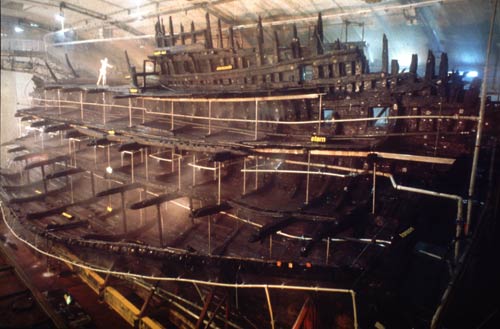
Death Toll: 400
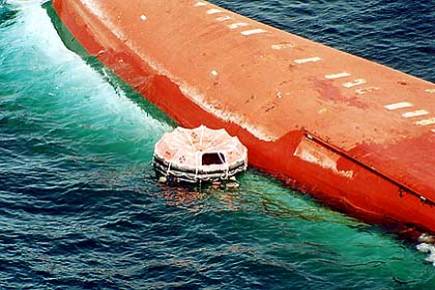
The Mary Rose was an English Tudor carrack warship and one of the first to be able to fire a full broadside of cannons. She was one of the earliest purpose-built warships to serve in the Royal Navy; it is thought that she never served as a merchant ship. In 1545 King Francis I of France launched an invasion of England with 30,000 soldiers in more than 200 ships. Against this invasion fleet—larger than the Spanish Armada forty-three years later—the English had about 80 ships and 12,000 soldiers, with the Mary Rose the flagship of Vice Admiral Sir George Carew. On July 19th, 1545, the two sides fought a fairly inconsequential battle (the Battle of Solent) with little damage being done to either side. Next day, toward evening, a breeze sprang up and as Mary Rose advanced to battle she capsized and sank with the loss of all but 35 of her crew. There were sources that said that the ship had fired from the port side and made a sharp turn so she could fire from the starboard side. The turn was so sharp that the ship heeled sufficiently to submerge the open gun ports, allowing enough water to enter to sink the ship. At the time, many sailors did not know how to swim as they considered this “tempting fate”. Pictured above is the hull of the Mary Rose - recovered in the 21st century. [Source]
Death Toll: 460
HMS Birkenhead, also referred to as HM Troopship Birkenhead or steam frigate Birkenhead, was one of the first iron-hulled ships built for the Royal Navy. She was initially designed as a frigate, but was converted to a troopship before being commissioned. On 26 February 1852, while transporting troops primarily of the 73rd Regiment of Foot to Algoa Bay, she was wrecked at Gansbaai near Cape Town, South Africa. There were not enough serviceable lifeboats on board for all the passengers - however the soldiers famously stood firm, thereby allowing the women and children to board the boats safely. Only 193 of the 643 people onboard survived, the soldiers’ chivalry gave rise to the “women and children first” protocol during the procedure of abandoning ship, while the “Birkenhead Drill” of Rudyard Kipling’s poem came to describe courage in face of hopeless circumstances. [Source]
Death Toll: 845
The S.S. Eastland was a passenger ship based in Chicago and used for tours. On July 24, 1915, the Eastland and two other Great Lakes passenger steamers, the Theodore Roosevelt and the Petoskey, were chartered to take employees from Chicago’s Western Electric Company to a picnic in Michigan City, Indiana. This was a major event in the lives of the workers, many of whom could not take holidays. Due to a recent act passed by Woodrow Wilson, the ship was carrying so many lifeboats that it became top-heavy and unstable. On the fateful morning, passengers began boarding the Eastland on the south bank of the Chicago River between Clark and LaSalle Streets around 6.30 a.m., and by 7:10, the ship had reached its capacity of 2752 passengers. The ship was packed, with many passengers standing on the open upper decks, and began to list slightly to the port side (away from the wharf). Sometime in the next 15 minutes a number of passengers rushed to the port side, and at 7:28, the Eastland lurched sharply to port and then rolled completely onto its side, coming to rest on the river bottom, which was only 20 feet below the surface. Many other passengers had already moved below decks on this relatively cool and damp morning to warm up before the departure. Consequently, hundreds were trapped inside by the water and the sudden rollover; others were crushed by heavy furniture, including pianos, bookcases, and tables. Although the ship was only 20 feet from the wharf, and in spite of the quick response by the crew of a nearby vessel, the Kenosha, which came alongside the hull to allow those stranded on the capsized vessel to leap to safety, a total of 841 passengers and four crew members died in the disaster. Many were young women and children. [Source]

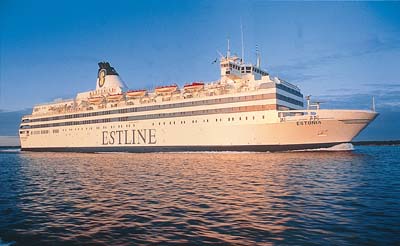
Death Toll: 852
MS Estonia, previously MS Viking Sally (–1990), MS Silja Star (–1991), and MS Wasa King (–1993), was a cruise ferry built in 1979 at the German shipyard Meyer Werft in Papenburg. The Estonia disaster occurred on September 28, 1994 between about 00:55 to 01:50 (UTC+2) as the ship was crossing the Baltic Sea, en route from Tallinn, Estonia, to Stockholm, Sweden. She was carrying 989 passengers and crew. The first sign of trouble was a strange sound of metal against metal heard around 01:00, when the ship was on the outskirts of the Turku archipelago; but an investigation of the bow visor showed no obvious damage. At about 01:15, the visor separated and the ship took on a heavy starboard list. At about 01:20 a weak female voice called “Häire, häire, laeval on häire”, the Estonian words for “Alarm, alarm, there is alarm on the ship”, over the public address system. Just a moment later an internal alarm for the crew was transmitted over the public address system. Soon after this the general lifeboat alarm was given and then the vessel lurched some 30 to 40 degrees to starboard, making it practically impossible to move about safely inside the ship. Doors and hallways became deadly pits. Those who were going to survive were already on-deck by then. A Mayday was communicated by the ship’s crew at 01:22, but did not follow international formats. Due to loss of power, she could not give her position, which delayed rescue operations somewhat. Out of a total of 989 passengers and crew on board 137 were saved. [Source]

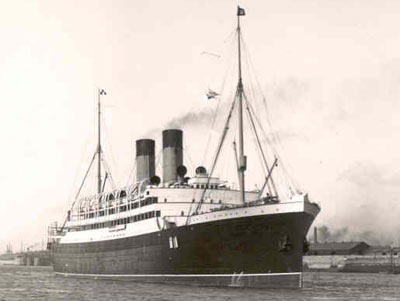
Death Toll: 1,012
RMS Empress of Ireland was an ocean liner built in 1905-1906 by Fairfield Shipbuilding and Engineering at Govan on the Clyde in Scotland for Canadian Pacific Steamships (CP). The Empress of Ireland departed Quebec City for Liverpool at 16:30 local time on May 28, 1914 with 1,477 passengers and crew. Henry George Kendall had just been promoted to captain of the Empress at the beginning of the month; and it was his first trip down the Saint Lawrence River in command of the vessel. Early the next morning on May 29, 1914, the ship was proceeding down the channel near Pointe-au-Père, Quebec (eastern district of the town of Rimouski) in heavy fog. At 02:00 local time, the Norwegian collier Storstad crashed into the side of the Empress of Ireland. The Storstad did not sink, but Empress of Ireland, with severe damage to her starboard side, rapidly shipping water, rolled over and sank within 14 minutes, claiming 1012 passengers and crewmen.
There were only 465 survivors, out of which only four were children (the other 134 children were lost) and 42 were women (the other 279 women were lost). Amongst the dead were the English dramatist and novelist Laurence Irving. Amongst the survivors, “Lucky” Tower is improbably said to have been one of the few crewmen who survived this shipwreck and the sinking of the Titanic and the sinking of the Lusitania. [Source]
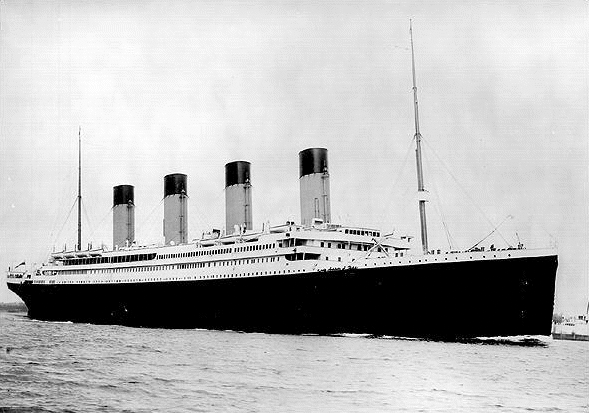
Death Toll: 1,517
RMS Titanic was an Olympic-class passenger liner owned by the White Star Line and built at the Harland and Wolff shipyard in Belfast, Ireland. On the night of 14 April 1912, during her maiden voyage, Titanic struck an iceberg, and sank two hours and forty minutes later, early on 15 April 1912. At the time of her launching in 1912, she was the largest passenger steamship in the world. The sinking resulted in the deaths of 1,517 people, ranking it as one of the worst peacetime maritime disasters in history and by far the most infamous. The Titanic used some of the most advanced technology available at the time and was popularly believed to be “unsinkable” - indeed, in a 1910 White Star Line brochure advertising the Titanic; it was claimed that she was “designed to be unsinkable”. It was a great shock to many that despite the advanced technology and experienced crew; the Titanic still sank with a great loss of life. The media frenzy about Titanic’s famous victims, the legends about what happened on board the ship, the resulting changes to maritime law, and the discovery of the wreck in 1985 by a team led by Robert Ballard have made Titanic persistently famous in the years since. [Source]
Death Toll: 1800
The steamboat Sultana was a Mississippi River paddlewheeler destroyed in an explosion on 27 April 1865. This resulted in the greatest maritime disaster in United States history. An estimated 1,800 of the 2,400 passengers were killed when one of the ship’s four boilers exploded and the Sultana sank not far from Memphis, Tennessee. This disaster received somewhat diminished attention as it took place soon after the assassination of President Abraham Lincoln and during the closing weeks of the Civil War. Most of the new passengers were Union soldiers, chiefly from Ohio and just released from Confederate prison camps such as Cahawba and Andersonville. The US government had contracted with the Sultana to transport these former prisoners of war back to their homes. The cause of the explosion was a leaky and poorly repaired steam boiler. The boiler (or “boilers”) gave way when the steamer was about 7 to 9 miles north of Memphis at 2:00 A.M. in a terrific explosion that sent some of the passengers on deck into the water and destroyed a good portion of the ship. Hot coals scattered by the explosion soon turned the remaining superstructure into an inferno, the glare of which could be seen in Memphis. [Source]
Death Toll: 1,863
MV Le Joola was a Senegalese government-owned ferry that capsized off the coast of Gambia on September 26, 2002. The disaster resulted in the deaths of at least 1,863 people. On September 26, 2002, the ferry Joola set sail from Ziguinchor in the Casamance region on one of its frequent trips between southern Senegal and the country’s capital Dakar. It was about 1:30 p.m. At the time of voyage the ship was designed to carry approximately 580 passengers. In all, almost 2,000 passengers are believed to have been on board. The last call from the ferry staff broadcast to a maritime security center in Dakar was at 10 p.m. and reported good travel conditions. In Titanic-culture style, people were dancing and drinking inside the ship to the sound of a live band playing. At around 11 p.m., the ship sailed into a storm off the coast of Gambia. As a result of the rough seas and wind, the ferry quickly capsized, throwing passengers and cargo into the sea. Detailed reports indicate that this happened in less than five minutes. Only one lifeboat was deployed and was able to transport 25 people. Government rescue teams did not arrive at the scene until the morning following the accident, although local fishermen rescued some survivors from the sea several hours before. [Source]
Death Toll: 1,950
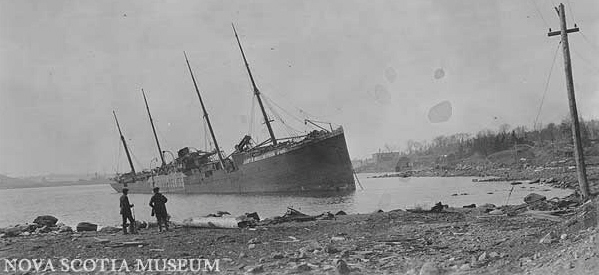
The Halifax Explosion occurred on Thursday, December 6, 1917, when the city of Halifax, Nova Scotia, Canada, was devastated by the huge detonation of a French cargo ship, fully loaded with wartime explosives, that had accidentally collided with a Norwegian ship in “The Narrows” section of the Halifax Harbour. Approximately 2,000 people (mostly Canadians) were killed by debris, fires, or collapsed buildings and it is estimated that over 9,000 people were injured. This is still one of the world’s largest man-made, conventional explosions to date. At 8:40 in the morning, Mont-Blanc, a French cargo ship that was chartered by the French government to carry munitions, collided with the unloaded Norwegian ship Imo (pronounced E-mo); chartered by the Commission for Relief in Belgium to carry relief supplies. Mont-Blanc caught fire ten minutes after the collision and exploded about twenty-five minutes later (at 9:04:35 AM). All buildings and structures covering nearly two square kilometres along the adjacent shore of the exploded ship were obliterated, including those in the neighbouring communities of Richmond and Dartmouth. The explosion caused a tsunami in the harbour, and a pressure wave of air that snapped trees, bent iron rails, demolished buildings, grounded vessels, and carried fragments of the Mont-Blanc for kilometres. Pictured above is the Imo after the explosion. [Source]
Death Toll: 4,375
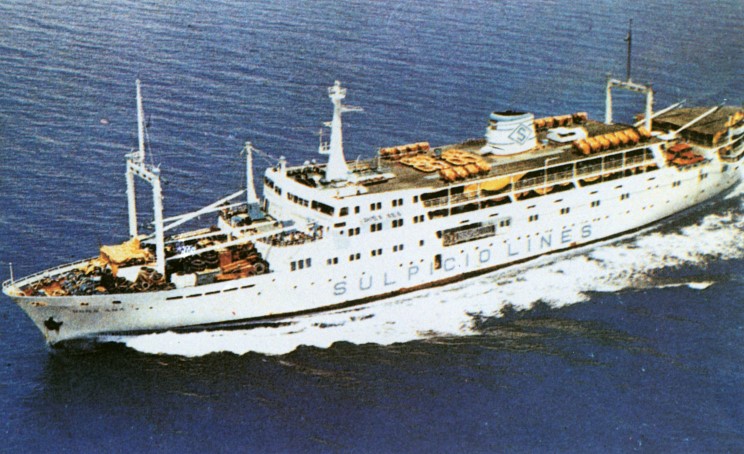
The Doña Paz was a passenger ferry that sank after colliding with the oil tanker Vector on December 20, 1987. The Doña Paz was en route from Catbalogan, on Samar Island, Philippines, to Manila when, while it was in the Tablas Strait, between the islands of Mindoro and Tablas, it collided with a small oil tanker, the Vector, which was carrying 8,800 barrels of petroleum products. The Vector’s cargo ignited and caused a fire that rapidly spread onto the Doña Paz, which sank within minutes. Two of the 13 crewmembers aboard the Vector survived but all 58 crew of the Doña Paz died. The official death toll on the ferry is 1,565 although some reports claim that the ferry was overcrowded and that the true death toll was at least 4,341. The ships would put the death toll at 4,375 although admitting that only 1,568 were on the manifest (still more than the licensed maximum of 1,518). The 21 (or 24) survivors from the ferry had to swim, as there was no time to launch lifeboats. An inquiry later revealed that the crew of the Vector was under-qualified and that the boat’s license had expired. It is the worst ferry disaster and the worst peacetime maritime disaster in history. [Source]
This article is licensed under the GFDL because it contains quotations from the Wikipedia articles cited above.
Related ListsTop 10 Most Disturbing NovelsTop 8 Levels of Scientology Top 10 Rogue Traders Top 10 Deadliest Natural Disasters |
SubscriptionsLike this article? Subscribe to the RSS feed to keep 'em coming, or subscribe via email: |
If you find this site helpful, please leave a donation so you can enjoy the spirit of giving too.
Email This Post


1. DiscHuker - July 26th, 2008 at 7:18 pm
i had no idea there were this many famous shipwrecks
2. DiscHuker - July 26th, 2008 at 7:21 pm
btw, how do two huge boats collide? don’t they see each other coming at relatively slow speeds from miles away?
3. warrrreagl - July 27th, 2008 at 3:18 am
Aha! The infamous “shipwreck list.” And a great one, too.
4. Tempyra - July 27th, 2008 at 3:30 am
Cool list, I like!
Regarding number 8, I wonder what it was that caused so many passengers to rush to one side of the ship?
Also (maybe a case of me being either picky or just plain wrong!), isn’t a shipwreck different from a catastrophe involving a ship in that a shipwreck is where a ship wrecks itself upon something?
5. Louise - July 27th, 2008 at 3:31 am
Me neither. I only heard about Titanic and Estonia. I don’t know why, at least the more recent shipwrecks, hasn’t been more metioned in the media? Or perhaps I just havn’t payed enough attonition towards it!
It’s terrible.
I belive that when the ships collide, they probably are so big, that when they spot each other, it takes too long for them to turn away? Like Titanic was too slow to turn away from the iceberg? Just an idea:-)
6. Tempyra - July 27th, 2008 at 3:35 am
Actually, I think I was just being weird and taking the ‘wreck’ (verb) part of the word ’shipwreck’ too literally
7. NN - July 27th, 2008 at 3:50 am
There’s a more recent boat disaster here in the Philippines (MV Princess of the Stars).
I knew about number one but I never really realized that it was the worst ship disaster in history.
8. crs - July 27th, 2008 at 3:58 am
Yeah, water is a tricky thing. It can’t be easy to turn let alone halt thousands of tons of stuff.
Interesting list! I didn’t know most of them and really thought Titanic would take the cake.
Could there be a list of shipwrecks, where things like Exxon Waldez would take a place?
9. James - July 27th, 2008 at 4:00 am
What fascinates me about the Titanic is despite the state-of-the-art technology on board and “no expense spared” furnishings, they still cut corners in its design. Perhaps the biggest flaw was building the hull out of a metal that becomes brittle in cold temperatures - perfect for a ship sailing through icebergs!
Also, according to TV show QI, all the crew on board the Titanic had their wages stopped the minute the ship sank, as it was no longer property of the company and the crew were deemed to be absent from work. Or something.
10. Twinkle - July 27th, 2008 at 4:14 am
ahh.. why isn’t MV Princess of the Stars not on the list? It’s quite recent and the death toll is from 700-800…
11. martin - July 27th, 2008 at 4:19 am
In January 1945 the German Navy ship “Wilhelm Gustloff”, overloaden with refugees, was torpedoed and sunk in the Baltic Sea, according to Wikipedia forcing 9,343 casualties
12. Ruairi - July 27th, 2008 at 4:21 am
Which is the shipwreck they talk about in that Seinfeld episode where George tries to get an apartment but initially fails because another applicant was a survivor of a shipwreck…?
13. warrrreagl - July 27th, 2008 at 4:41 am
Andrea Doria. Death toll, a whopping 46, which was the crux of the whole episode.
14. KING - July 27th, 2008 at 4:53 am
Interesting list loved reading it.
15. crs - July 27th, 2008 at 5:23 am
martin: even more interesting!
Damn, the soviets did it! Josif Visarionovich has said - no people, no problems, yes? Though - what refugees? Better get hit by torpedo than end up in Auswitz…
16. Doghouse Riley - July 27th, 2008 at 5:50 am
I’ve done a lot of reading about the SS Eastland, probably because I had a great-granddad who was there that day (not on the ship, but helped in the rescue effort).
She sank for two reasons; First, a poorly designed ballast tank system combined with a high center of gravity. This caused the ship to have several instances of instability earlier in her career. Second, after the sinking of Titanic there was public pressure to have “boats for all” on every ship. When the extra weight of many more lifeboats was added to her uppermost deck, she became critically unstable and on the first day thereafter on which she was carrying a maximum passenger load, she capsized.
Not the first time in history when today’s solution became tomorrow’s problem! There has never been a sinking of a major passenger ship when all her boats were used to rescue all her passengers. Either the ship went down so fast that lifeboats were irrelevant (Lusitania, Empress of Ireland) or so slowly (Andrea Doria) that other ships with their own boats were on the scene in plenty of time.
17. Mr.Graves - July 27th, 2008 at 5:51 am
The wreck of the Titanic was also extremely important as a political event; it served to catalyze and give creedence to the emergence of class oppression in America. During the sinking of the Titanic, more First Class men got onto lifeboats first and were saved, than all of the lower class women and children combined. In general, they considered the lower classes, poorer and often immigrants, to be unworthy of sacrificing themselves to save, even if it were children, and took spots on the lifeboats for themselves.
When the public became aware of this, it became the catalyst for outrage that had been long suppressed and the social issue was finally addressed in the media and in public.
A very good book on the sinking of the Titanic is called ‘A Night To Remember’ by Walter Lord. Sadly, there were very few ‘gentleman’ or ‘heroes’ in the real life situation.
18. Robotnik - July 27th, 2008 at 5:52 am
No Wilhelm Gustloff on the list?
19. ohrmets - July 27th, 2008 at 5:54 am
martin:
I don’t think ships that are sunk in war qualify as “shipwrecks,” per se.
20. Doghouse Riley - July 27th, 2008 at 5:57 am
I suspect that Jamie intended this to be a list of non-wartime disasters, else the Gustloff would be here with all the other wartime losses that would take over the list (Lusitania, HMS Hood and many others)
BTW the Gustloff was carrying (mostly) German civilian refugees who were trying to get out of East Prussia, which had been cut off from the rest of Germany by the Russian army.
21. Chickensoup - July 27th, 2008 at 6:37 am
I think there were a good few notable cases, John Jacob Astor IV, John Thayer, Thomas Andrews, Benjamin Guggenheim (”We’ve dressed up in our best and are prepared to go down like gentlemen.”) et al… and far more than there would be in a similar situation in the present day, I fancy.
22. Chickensoup - July 27th, 2008 at 6:38 am
Damn… my last post was in response to Mr Graves. I didn’t make that clear.
23. McSquida - July 27th, 2008 at 6:44 am
Gotta admit, I still would have the Lusitania on here, as it wasn’t a warship, and there is so much controversy over why it sunk so fast. But good list, this stuff is amazingly interestingly to me.
24. Stefan - July 27th, 2008 at 6:49 am
This is not really a “shipwreck”, but the greatest loss of life in maritime history was when Russians torpedoed the German troop ship Wilhelm Gustloff in WWII, killing 9,343.
25. Kiribub - July 27th, 2008 at 6:59 am
11 - Martin
I came here to discuss the same thing… a lot of folks don’t know about the Wilhelm Gustloff, and others attempt to overlook the sinking as the ship was full of members of the Nazi party; what they don’t know is that those people were mostly women and children.
Read about it at http://www.wilhelmgustloff.com/
26. Kiribub - July 27th, 2008 at 7:01 am
19 - ohrmets
If that’s true then #s 9 & 10 are disqualified.
27. Kiribub - July 27th, 2008 at 7:02 am
Furthermore, the Gustloff was full of war refugees; it wasn’t a warship.
28. Kiribub - July 27th, 2008 at 7:10 am
Clarification: the Gustloff wasn’t a fighting ship.
29. Ozhan - July 27th, 2008 at 7:16 am
In 1890, a Turkish freighter called Ertuğrul set sail from Japan but unfortunately never reached the homeland. This accident causes over 120 death and 70 wounded. Today there is a memorial in Japan about the ship and his crew.
In 1953, a Turkish submarine called Dumlupınar collided with a sweden freighter. This resulted with death of 60 crew members, the other 21 were survived but submarine was stucked in the depths of bosporus. All attempts to rescue failed and those men choked to death. Last words of the crew were “Say love to our families and (roughly translation) long live the homeland.”
—
I know these examples arent great in numbers but they hold a meaning in our hearts.
–
By the way, a great list because it’s about interesting facts!
30. fishing4monkeys - July 27th, 2008 at 7:19 am
The picture from #3 reminds me of the final scene in the newest poisiden remake. Great list! These are the lists that make me come back to this site
disasters, mysteries, things that make you go “wow”. No offence but all the movie/music/Tv lists just aren’t as interesting…still good reads but not as awesome as these types of lists. And why isn’t there a survivor toll for each item? Just wondering.
31. Mark - July 27th, 2008 at 7:35 am
I might suggest removing #2 from this list. The horrific death toll resulted from the explosion of the munitions aboard , not from the shipwreck itself. Absent the explosion, the death toll would only have included the crew of the ship.
Since this list does include warships, it should probably also include all ships lost during wartime. Therefore any any discussion of Wilhelm Gustloff must also include mention of Cap Arcona, Goya, and Junyo Maru, among many others.
http://en.wikipedia.org/wiki/SS_Cap_Arcona
http://en.wikipedia.org/wiki/Goya_(ship)
http://en.wikipedia.org/wiki/Juny%C5%8D_Maru
32. scrumpy - July 27th, 2008 at 7:50 am
The Mary Rose was was recovered in the 20th century not the 21st. (1982)? I remember watching it on the tv and thinking ‘big deal it’s just a load of old wood’!
Interesting list.
33. Anon - July 27th, 2008 at 7:51 am
Fine list.
This subject holds such fascination, it would probably be worth doing a related one on famous wartime catastrophes with Lusitania, Bismark, HMS Hood, and including others mentioned here, as candidates. Also perhaps ecological disasters (if enough): Torrey Canyon, Exxon Valdes, etc.
34. laxplayer106 - July 27th, 2008 at 8:15 am
I had Norwegian relatives aboard the Estonia only 1 of the members of the family survived
35. laxplayer106 - July 27th, 2008 at 8:18 am
My cousin was also the youngest survivor of the wreck.
36. segue - July 27th, 2008 at 8:25 am
This is another truly educational list. Although I had known something of a few of them, this prompts me to go deeper into the entire history of maritime disasters. Amazon will have several books on the history of maritime disasters, both peacetime and in time of war. As is this list, I’ll begin with the peacetime disasters.
In an odd way, I really should have a more personal interest in the subject anyway, for two reasons:
1 - My mothers first husband was an Australian Naval Officer, serving on the HMS Sydney, which was sunk, with all hands, during WWII. No wreakage was ever recovered.
2 - Having been on a ship caught up in a terrifying cyclone while making the crossing from America to Australia I know, firsthand, the utter terror of looking out the side of the ship and seeing nothing but water. I may have been only 4 at the time, but the memories are crystal clear.
37. Mom424 - July 27th, 2008 at 8:30 am
Excellent list Jamie; Exactly what I’ve come to expect from Listverse - well written with comprehensive, full descriptions. Great job.
Mr. Graves - Wonderful of you to point out the social significance of the Titanic Disaster.
Chickensoup - I would certainly hope that today there would be more not less adult men willing to give up there life-boat positions for children, whatever their socio-economic station in life.
38. KMac - July 27th, 2008 at 8:31 am
I agree with fishing4monkeys, real life happenings make much more interesting lists. I’ve always been fascinated with Titanic, I don’t think you could find a bigger Titanic freak than me.
One of the reasons why it sank faster was because there was coal bunker fire which weakened it. Makes you wonder if more people could have been saved.
39. JB - July 27th, 2008 at 8:33 am
Awesome and terrifing list.
In Cadiz in 1947 was an explotion similar to Halifax one but not as many people perished there.
Shipwrecks in wartime were terrible but were in the aim of destroying fleets or killing people. They wrecked because someone wanted to. Those in that list were accidental (MS Estonia maybe not. It’s said to be an aerial raid due terrorist stuff in the ship). That’s what is so terrible. Think about those people, having a peacful travel that ends in this kind of tragedy without nobody wanting it.
40. stevenh - July 27th, 2008 at 8:57 am
Thank you Jamie…wonderful.
And only yesterday I was talking with a friend about taking a freighter trip to Europe.
41. Tempyra - July 27th, 2008 at 8:57 am
Segue:
The HMAS Sydney (sunk November 1941) was found earlier this year:
http://presspass.findingsydney.....ey-ii.aspx
42. frank - July 27th, 2008 at 9:02 am
THE TITANIC HAD OVER TWO THOUSAND FLOCK MATERESS ON BOARD THAT COULD HAVE BEEN USED AS A COLLISION MAT.BELIEVE ME IF YOU WANT TO PLUG A HOLE, YOU CANNOT BEAT A FLOCK MATTERESS, THE PUMPS WERE ALLMOST KEEPING UP ANYHOW.
43. Csimmons - July 27th, 2008 at 9:08 am
great list, only knew of the Estonia and Titanic myself.
44. craig - July 27th, 2008 at 9:23 am
5. Louise
the titanic sank cuz they put it in reverse thus hindering its turning ability
45. kowzilla - July 27th, 2008 at 9:24 am
Very interesting and informative list.
But as I have a life long fear of drowning, I believe you have just convinced me never to get on a large ship.
Or, to be honest, any ship.
46. Unbiased - July 27th, 2008 at 9:33 am
The Essex was quite fascinating. It was the inspiration for Moby Dick.
47. Kreachure - July 27th, 2008 at 9:43 am
Very interesting list! I’ve learned a lot from it!
But I have a question: if the Titanic wasn’t the worst shipwreck in history, then why is it the most popular?
Is it because of the people that were on it? Or simply the popularity it gathered after its shipwreck was discovered by Robert Ballard (who called it “the holy grail of shipwrecks” or something along those lines), which probably led to the filming of Titanic (since Ballard and James Cameron began working closely together for the film)?
Also, how is it that we heard so little about far more recent tragedies like the MV Joola, MS Estonia, and MV Doña Paz? It’s unbelievable how little we know of these bigger and more recent tragedies than we know about the Titanic!
Would they get the remembrance they deserve if movies were made of them?
Wow, that would be pretty depressing. Is cashing in on a tragedy the only way to make such tragedy significant these days? *shudder*
48. Kreachure - July 27th, 2008 at 9:48 am
(again wishing for an edit button) In other words, I’m not sure the Titanic should be as popular even with the explanation given up there, considering all these other shipwrecks which sadly most of us never even heard of.
49. Gravynj - July 27th, 2008 at 9:49 am
wow. That’s really sad.
50. Cedestra - July 27th, 2008 at 9:55 am
I had done a large report in fifth grade on the Titanic, so I knew it was going to be on here, but I didn’t know anything about any of the other ships.
“Due to a recent act passed by Woodrow Wilson, the ship was carrying so many lifeboats that it became top-heavy and unstable.” I-ron-eee!
51. Jessy - July 27th, 2008 at 10:19 am
(WARNING! LOOOOOONG COMMENT AHEAD!)
KMac- I’ll challenge you for the “world’s biggest Titanic nut” title! I’m sure if the developers of this site felt like, they could come up with several Titanic themes lists (ie: 10 richest/most famous people on the Titanic; 10 wrong decisions that doomed the ship; Top 10 recovered artefacts; Top 5 urvivor’s accounts, etc.)
Kreachure- in response to your query of why the Titanic is still so famous today, whilst many other maritime tragedies are mainly footnotes in history, there are several reasons.
One of them is indeed what you alluded to, that there were many rich and famous people on board that fateful night.
Another reason has also been alluded to in the comments list, that it glaringly points out the social inequities of the era, in that Third Class passengers were literally locked in their quarters on the lower decks and not allowed to get to the lifeboats until much later. Interestingly, in court proceedings after the sinking, surviving Third Class passengers stated that they did not feel discriminated againt- one theory is that they simply didn’t expect to be treated much better than they were.
And finally, many people are fascinated with this tragedy simply because of all the what-ifs ….if the bulkheads were built one deck higher…if there were more lifeboats….if that boat on the horizon (The Californian) had not turned off their wireless for the night and heard the distress calls….if the Titanic’s crew had listened to the numerous warnings of icebergs and slowed down, rather than plowing full speed ahead into the night….if they’d spotted the iceberg a minute or two sooner….and if one in a million other decisions had been made differently, more people would have survived, and perhaps there would have been no wreck at all.
I apologize for the length of this post, but at least hopefully you see how so many books have been written on this topic!
52. Cyn - July 27th, 2008 at 10:44 am
somebody wanna tell Frank about the all caps thing. i’m tired.
*insert rollz eyes smilie*
53. Kreachure - July 27th, 2008 at 10:44 am
Jessy: If you ask me, I think we’re pretty much used to, and actually fond of, long posts like yours. So thanks!
The facts and what-ifs you mention are pretty compelling. So to me it seems that Titanic is popular not because of the tragedy itself, but because of the whole thread of consequences, stories and legends that emerged from the tragedy. Still, I think as a shipwreck alone it may be overrated nowadays (and that’s just something I realized after reading this list!)
A terrible tragedy, without a doubt, but not as overshadowing when compared to these other tragedies.
54. QDV - July 27th, 2008 at 11:39 am
What? No Gordon Lightfoot music to accompany the list?! “The legend lives on, from the Chippewa on down…”
55. Beledia - July 27th, 2008 at 11:58 am
Hello, I’m one of those long time readers, but I’ve never posted before people.
Great list! I’m kinda thrilled to see the Halifax Explosion on this list. Halifax is my hometown, and I’m as fascinated by the events from the disaster as some are by the Titanic. I didn’t know about a lot of these it was a great read.
56. Blogball - July 27th, 2008 at 12:02 pm
These are the kind of lists that got me addicted to lists when as a kid.
Great list! Thanks for posting it.
57. Marco - July 27th, 2008 at 12:03 pm
Mark #31: very good point. And even though sunk during wartime, Wilhelm Gustloff, Cap Arcona (and Thielbek), Goya and Junyo Maru carried mostly civilians or prisoners.
58. ObiterDicta - July 27th, 2008 at 12:25 pm
What is it with Norwegian ships colliding with ships in Canadian waters?
Add up number 6 and number 2, that’s 2962 people killed from wrecks caused by collisions with Norwegian vessels.
Maybe Canadian coast guards should start keeping an eye on thos Norwegian Sunday drivers :p
59. anthony p - July 27th, 2008 at 12:38 pm
When i started working at air nz they showed us a video of some of the worst airline crashes, i wonder if they do the same for cruise ship employees.
in response to 2. The same way a two planes can collide in mid air, i suppose it like that thing people do when they walk into each other no matter how much they try to get out of each others way.
60. Gallant - July 27th, 2008 at 1:08 pm
MV al-Salam Boccaccio 98
around 1000 passangers (and crew members) lost their lives
here’s a link for the wikipedia article
http://en.wikipedia.org/wiki/M.....ccaccio_98
61. goof_ball - July 27th, 2008 at 1:39 pm
dang, titanic was only 5
62. Carrie - July 27th, 2008 at 2:17 pm
Geeze, thanks for publishing this one the day *after* I got home from a 10 day cruise! I am glad you didn’t do this one before I left.
That said, really interesting list!
63. Vera Lynn - July 27th, 2008 at 2:28 pm
Yea! The Halifax explosion. I mentioned it a few months ago on a disater list. I’ve been waiting for this list.
I knew about most of these esp the SS Eastland, as I from Chicago.
Tempyra (4) I have a joke about how to define a catastrophy. No time now. Look for it in a few hours. “I’ll be back.”
64. Vera Lynn - July 27th, 2008 at 2:29 pm
Ugh. Excuse all ommitted and misspelled words, please.
65. segue - July 27th, 2008 at 4:23 pm
****
#41. Tempyra
Segue:The HMAS Sydney (sunk November 1941) was found earlier this year:http://presspass.findingsydney…..ey-ii.aspx
****
Tempyra , thank you! I will also send this along to my brother. This is like a bit of family history finally solved, finally able to be closed.
I still have the black bordered letter from the King, all of the medals (especially those presented posthumously), which my mother had kept in perfect condition all these years.
In some ways, I wish she had lived long enough to have benefited from this find, but then, she had constructed a fantasy in which he had somehow survived on a tiny, uncharted island and lived out his life, with some of his shipmates, unable to contact the world, and unfindable by the world.
That it was an absurd fantasy was beside the point. It brought her peace.
For me, whose father was only available to her because of the sinking of the Sydney, the entire story is fascinatingly personal at a remove.
66. k1w1taxi - July 27th, 2008 at 5:06 pm
Kreachure (47)
I Think the Titanic was a source of interest for many people long before Robert Ballard and especially James Cameron came along. I remember a film on the sinking when I was a young fella (b/w British production).
I think one of the other parts of the mystique that you did not mention is the Unsinkable factor.
Cheers
Lee
67. musicman5 - July 27th, 2008 at 5:47 pm
just clarifying, the halifax explosion was the largest non-nuclear explosion in the world
68. Sunny - July 27th, 2008 at 5:52 pm
Excellent list! Good research!
69. Mr.Graves - July 27th, 2008 at 6:02 pm
One of the other reasons the Titanic sinking was such a cultural impressionj and left an indellible mark on humanity’s social psyche is due to the fact that it was severely hyped up and sold as a literally ‘unsinkable’ ship. The amount of confidence and bravado gone into the mythology and sales pitch surrounding the ship made it not only a status symbol to be connected to, but a testament to mankind’s ability to conquer nature. When it sank, it had the effect of a deep hubris being exposed and left a sense of humility on all of humanity.
70. MPW - July 27th, 2008 at 7:03 pm
This list is interesting and saddening at the same time. Great job!
71. sarahenity - July 27th, 2008 at 7:25 pm
the company i worked for co-insured the titanic… lol good job on that one.
72. sarahenity - July 27th, 2008 at 7:32 pm
i really miss the editing features!!
disregard my previous comment. It should have read;
The company I work for co-insured the Titanic. Lol, good choice on that one.
73. grubthrower - July 27th, 2008 at 7:56 pm
Excellent list. If the Sultana hadn’t been included, I would be complaining rather than complimenting.
Titanic note: Astor *left* a seat in a lifeboat when another woman appeared on deck and, with admirable grace under pressure, simply told his wife (who was in the lifeboat) that he would see her later. He died.
Another note just so you know: this is not the John Jacob Astor who founded the fur-trading empire, but rather his heir to that vast fortune.
74. Lizzie - July 27th, 2008 at 8:26 pm
Excellent list, very informative. I was surprised I only knew about 3 of them. I’ll definitely be looking into some of these further. Thanks.
75. Tempyra - July 27th, 2008 at 8:54 pm
Vera Lynn…. c’mon it’s been a few hours, I want my catastrophic joke
Segue:
I’m glad to have been able to help you out with that piece of family history. Consider it a privilege on my part
76. Vera Lynn - July 27th, 2008 at 9:04 pm
QDV (54)I met Gordon Lightfoot once. He was great, so nice. The night he played, it stormed. When he played “Edmond Fitzgerald” the lightning was right on cue. Amazing. I love some of his music; am indifferent to the rest.
Or is it Edmund?
77. whatiswrong - July 27th, 2008 at 9:07 pm
just clarifying, the halifax explosion was the largest non-nuclear explosion in the world
Actually, according to Guinness and others, it’s the Texas City explosions(Which also started on a ship in harbor).
It’s not really, nitpicking, these are Maritime Disasters. Shipwreck is something different.
78. Fraser_Major - July 27th, 2008 at 9:08 pm
How about the General Slocum, which caught fire and burned in New York City’s East River in 1904, killing an estimated 1021 people? (http://en.wikipedia.org/wiki/General_Slocum). There’s a very interesting book about the tragedy entitled “Ship Ablaze: The Tragedy of the Steamboat General Slocum”.
79. Vera Lynn - July 27th, 2008 at 9:25 pm
Tempyra (54)
i cannot find it. I have been looking. It goes something like this: Bush was talking to a 3rd grade class. They were talking about the World Trade centers One little boy asked if it was a disaster.
No a disaster would be an airplane crash.
So it was an accident.
No an accident is without probable plan or cause.
So it was a catastrophe?
No That is a failure or fiasco.
Little boy: So, if you were assassinated, it would be none of the above?
That’s not it but it’s close. I had it written down but I cannot find it. I’m sorry. If any one can elaborate, please do. Would love to have that joke again.
On another note (same vein -I can’t resist)What’s George W Bush’s position on Roe vs Wade?
Mmm, he doesn’t really care how people get out of New Orleans
80. MeNameBOB - July 27th, 2008 at 9:30 pm
I thought the Sultana was sunk by a Confederate soldier who filled a hollow piece of iron with gunpowder, and mixed it with the coal to be used for the trip.
Did I mistake this event with another ship?
81. Tempyra - July 27th, 2008 at 9:41 pm
Vera Lynn: Hehe, I think I’ve heard a similar joke before
82. rhharley - July 27th, 2008 at 9:44 pm
Regarding the Halifax Explosion and how two ships collide:
The problem was that one of those two ships was travelling faster than normal, and on the wrong side of the harbour passage. The captain was not familiar with the area, and held his course. The captain of the other ship was proceeding and held HIS course, giving a warning blast (on the horn) to get the other to turn off. The first ship did not heed, and held true. When it became apparent that neither would alter course, and that a collision was about to occur, it was too late to do much about it.
This was made worse by the fact that only the ship’s crew knew what it was carrying: explosives.
In addition, the Halifax ‘Narrows’ is a narrower area of the larger harbour that empties into the Bedford Basin. It’s got a bend to it, and you really can’t see incredibly far in the distance. You can, however, still see far enough to see ships coming at you, just not for ‘miles’ as was suggested above.
The blast was so severe that people on the waterfront, watching the ships burn were incinerated instantly.
Also: Mark, #31… the ships were on fire, and no one would’ve likely died, since the fire crews were able to get to them rather rapidly. Minus the explosion, it wouldn’t have had a place in history, period.
—
I currently live in Halifax, and am Nova Scotia born. My grandmother had hearing damage from the explosion.
83. rhharley - July 27th, 2008 at 9:49 pm
Also:
[quote]7. whatiswrong - July 27th, 2008 at 9:07 pm
Actually, according to Guinness and others, it’s the Texas City explosions(Which also started on a ship in harbor).
—
The Halifax Explosion was the world’s largest explosion until the bombs that were dropped in Japan. The Halifax one happened in 1917, the Texas one happened in 1947. The other poster was correct, but then it was ‘blown’ outta the water, thirty years later.
84. Vera Lynn - July 27th, 2008 at 10:17 pm
rhharley (82) That is crazy amazing about your grandma. I wish I could tell her I’m so sorry she had to see/feel/hear /experience it. It must have been terrible.
85. rhharley - July 27th, 2008 at 10:29 pm
It was slight, thankfully. She was only a youngin’, when it happened.
I used to work in long term care here in Halifax, and had several residents who’d been injured or lost family.
86. hallowedbethyname - July 27th, 2008 at 11:18 pm
great list!
i remembered that misfortune of doña paz..
i’m from the Philippines and that disaster was one of the worst.. there is also another shipwreck recently but the casualties are minimal compared to doña paz..
87. CRSN - July 27th, 2008 at 11:18 pm
great list, made me think of some of the wrecks lying around the Australian Coast, one that springs to mind is the Batavia from the Dutch East India Company (VOC)that was wrecked off the Houtman Abrolhos (WA)
they all pretty much survived the shipwreck, only to end up on a small Island with no food or water, and then to have 120 plus people murdered out of the 300 or so survivors due to a mutany.
88. nippy143 - July 28th, 2008 at 1:15 am
reading this list only reminded me of the very reason why im afraid to ride in one…. i pity those kids who died, helplessly during the tragic MV Dona Paz tragedy.. just recently, MV Princess of the Stars..another ship from the same shipping liner, met its doom…
89. dirtyrockerbarbie - July 28th, 2008 at 4:41 am
all of these are so tragic, it makes you realize that you’re no safer on water than you are in the air.
“lucky” tower lives up to his name! (#6) surviving 3 major shipwrecks? he could write “the idiot’s guide on how to survive a shipwreck”. i bet after the third wreck he never stepped foot on a boat again.
90. erin - July 28th, 2008 at 6:08 am
In Halifax every year in elementary school we would do something on the Halifax Explosion. There’s a commercial about it too. One of our “Heritage Minutes”.
91. Davey - July 28th, 2008 at 6:50 am
Also to be noted was the explosion of the French freigthter SS Grandchamp in Teas City harbor. 2300 tons of ammmonium nitrate exploded due to a hold fire. The loss of life was 581 people. This also prompted the first class action suit aginst the US govenment in history.
92. Callie - July 28th, 2008 at 7:24 am
Question- not shipwreck related but ship related.
Does anyone know why ships are always “her?” Are there boy ships? I’m sure theres a tradition to it. Maybe I’ll make a stop on Wikipedia.
93. thehelpguru - July 28th, 2008 at 8:15 am
Pretty interesting how there are shipwrecks much much worse and the Titanic is the most known and capitalized…
94. Cedestra - July 28th, 2008 at 8:33 am
The two ship explosions were louder than the explosion of Krakatoa? Dayum…
78. Fraser_Major: I knew when I was reading this list I was waiting for something, then forgot about that.
95. Cedestra - July 28th, 2008 at 8:34 am
Callie: Probably has something to do with why the ocean is referred to as a female.
96. QDV - July 28th, 2008 at 11:15 am
Vera Lynn: It’s “Edmund.”
“And Lightfoot
Edwardian, suddenly striped
His hair blondish and poetic
He is less than vinyl perfect
His foot is a precise anchor for the
husk and vibrance of his voice.”
97. Kevin - July 28th, 2008 at 12:56 pm
It’s been 18 years since I saw it, but visiting the Mary Rose was one of the highlights of my UK trip. I don’t know if the museum has changed since then, but it was an amazing experience.
Basically, it was a large warehouse, with this 450-year-old ship (well, half of it, the left or right half), standing upright, being sprayed with some kind of water/preservative.
It was really cool to be just dozens of feet from such a well-preserved, and dramatically rescued in the 1980s, piece of history.
98. MPJ - July 28th, 2008 at 1:55 pm
Ever heard of the Lusitania? It may be the most catastrophic since its sinking by German U-boats was a major contributing factor in WWI
99. Anon - July 28th, 2008 at 2:06 pm
Ships as ‘her’.
Haven’t looked it up yet, but how about as a result of the figurehead which was always female so far as I recall?
There is a lewd reference to one in the dirty ditty ”Twas on the Good Ship Venus’!!!
Unlike most others in Europe, The English language has very few direct ‘convenience’ gender useages, although sun and moon in particular are other well-known examples. People also tend to refer to any old dog as ‘he’, and cat as ’she’.
A convention has arisen in Latin whereby all trees are regarded as feminine. This a trap for the unwary when the genus is masculine, because there is no expected agreement. Hence Pinus nigra, not Pinus nigrus.
Later: Yahoo suggests because in most other related languages ships are always feminine. Das Boot? El bote? El barco? Obviously not.
On another site several likely suggestions are offered and a final definitive one given: that (British?) ships were historically dedicated to a goddess whose carved figure appeared on the prow …
100. NW Limited…History in Vogue - July 28th, 2008 at 3:17 pm
This is fascinating reading…we designed, published and create a shipwreck memorial chart for things like this in our region. Amazing how some of these accidents took place.
101. Cubone - July 28th, 2008 at 6:10 pm
Excellent!
102. oldwolves - July 29th, 2008 at 6:33 am
I’m curious as to why the Wilhelm Gustloff , with the probable loss of over ten thousand souls was left out.
103. sugarmouse - July 29th, 2008 at 6:39 am
re: The Mary Rose. I am pretty sure that it was recovered in the late 20th century, possibly the late 1980s.
104. Kevin - July 29th, 2008 at 7:01 am
Re: The Mary Rose was indeed recovered in 1982.
Re: Wilhelm Gustloff. Thanks, oldwolves, for the tip. I don’t think I’d heard of this before. The site http://www.wilhelmgustloff.com/
is packed with info. This situation is a great example of how history can bury the “greatest” (numerically speaking) things in favor of more familiar, if not to say politically acceptable, things.
105. astraya - July 29th, 2008 at 7:27 am
An exhibition of artifacts from the Mary Rose toured Australia in the 1990s. I attended during the school holidays and was one of the few full-grown men there, so when they needed a volunteer to strap a replica 16th-century full coat of armour onto, guess who they chose? I still have a photo somewhere in a cardboard box in a shed in Australia.
106. Beasjt - July 29th, 2008 at 11:11 am
Ehm…
The sinking of the Wilhelm Gustloff in 1945 by a Russian sub is still the very worst with an conservative estimate of 9000. However it is believed there were over 12.000 souls on board.
http://www.wilhelmgustloff.com/
http://en.wikipedia.org/wiki/Wilhelm_Gustloff_(ship)
107. segue - July 29th, 2008 at 2:39 pm
****
99. Anon
Ships as ‘her’.
****
Anon, I’m glad to learn that trees are feminine. I love trees, and keep putting more trees in, as my lot’s allow. Their graceful beauty is absolutely female, especially the Jacarandas which just entered their first bloom this year, and the young Weeping Willows, which I am just now realizing are planted too close together! They are ever so feminine!
When learning my French and Latin, I at first was confused by the fact that seemingly *everything* had a gender. Later, it became clear, and actually made sense.
But what the discussion is here is ships. Ships are sleek and beautiful, they lure men away from their homes, their families, their safe havens. When ships were all wooden, all hand made, hand carved, the truth of this was stronger and, yes, the figureheads were female, beautiful goddesses to carry the men safely through the voyage.
Cars are referred to as female. Again, cars tend to sleekness, to a certain beauty, and, in the racing types (or wannabe’s like my old 60 Porsche Cabriolet), are fast and dangerous…of course they’re female.
It seems to me that it’s the utilitarian things which we think of as masculine.
This is not a bad thing. It was my German mechanic, a utilitarian thing if there ever was one, who kept my Porsche running.
On the other hand, a lizard in the house, is always a him. Out in the garden they are neuterless.
108. kris - July 29th, 2008 at 3:09 pm
oh So hurting!!!
109. bluenorway.org - July 31st, 2008 at 5:26 pm
http://bluenorway.org far worse.
110. Sunny - July 31st, 2008 at 5:56 pm
Is it creepy that I have books about more than half of these shipwrecks? This is a very good list… A few more interesting lists would be “Wartime Shipwrecks”, “Most Famous Wrecks” and maybe “Most Mysterious Maritime Occurances”
111. Royce - August 4th, 2008 at 2:50 am
Amazing to think just how many people died
112. Musicdee - August 7th, 2008 at 8:39 pm
With ref to the Mary Rose, we just happened to be talking about this in work the other day. Another problem was that the Captain and crew had problems in communicating due to a language barrier. The captain gave the orders to shut the cannon holes before making a turn, but due to the crew not understanding, this was not done and she took on water as she turned.
As for the reason why a boat is referred to as she is because the ships in days gone by were usually named after someone close to the captain mostly their mother so it became known as she. There are also theories about some languages and ship is regarded as a feminine word. There is another explaination and that was so the all male crew could differenciate between themselves and the boat.
I think too that the Titanic became so popular was because White Star line sold the whole concept as the ‘unsinkable ship’.
113. amsterdam - August 7th, 2008 at 11:24 pm
It’s really alarming that Sulpicio Lines is not yet closed considering the Dona Paz and the Princess of the Stars tragedy (just couple of months ago). Thats what you call pinoy…
114. Schwann - November 11th, 2008 at 10:01 am
Good candidates for peacetime sinkngs. The Halifax and Sultana are clearly war related. If you bring in war, then Cap Arcona, Goya, Thielbek, Armenia, Lancastria and Junyo Maru must be included, as they are all 4,000+,Where is Tek Sing? 1,863 killed and in peacetime!