20 Examples of Why You Should Enjoy Poetry
- Published March 26, 2008 - 174 Comments
Here is a sampler of various English-language poetry which, I hope, will give non-readers of poetry, in particular, the impetus to follow through and discover the joys of poetry for themselves.
The samples I have included are representative of the development of poetry over some 800 years, but without going into technical or critical detail; that is to say, I have tried to provide examples that may, notwithstanding any deeper meaning, be appreciated at face value.
Note that the list is fairly traditional, in that there are no examples of ethnic verse. This is purely for the reason that I have limited my selections to works with which I am familiar (ie. largely British and, to a lesser extent, American). It was extremely difficult restricting the list to the 20 excerpts detailed below and, whilst literary merit was my primary criteria, (arguably) my one indulgence was the William Carlos Williams poem.
If your own favourite is not here, tell us about it.
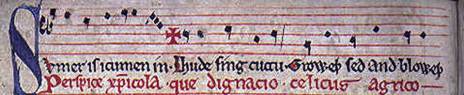
Lhude sing cuccu!
Groweth sed and bloweth med,
And springeth the wude nu –
Sing cuccu!
Awe bleteth after lomb,
Lhouth after calve cu;
Bulluc sterteth, bucke verteth,
Murie sing cuccu!
[Loose translation]
Summer has arrived,
Sing loudly, Cuckoo!
Seeds grow and meadows bloom
And the forest springs anew
The ewe bleats after the lamb,
The cow lows after the calf.
The bullock leaps, the buck farts,
Sing merrily, Cuckoo!
This wonderful lyric is one of the most famous examples of Middle English (1066-1450) and, although it was traditionally sung as a “round”, is also commonly taught as an introduction to Middle English literature. It is thought to be written in the Wessex Dialect. W. de Wycombe, a late 13th century English composer and copyist has been suggested as being the author, but there is little evidence to support this. It is typically attributed as Anonymous.
Note that a round is a musical piece in which two or more voices repeatedly sing the same melody, but with each voice starting at a different time. “Row, Row, Row Your Boat” is an example of a round that most people will be familiar with.
Interesting fact: whilst some commentators translate verteth as “twisting” (or whatever) the word is, in fact, the earliest written example of vert, the Middle English version of fart!
And here is a very nice choral version for your listening pleasure, in counterpoint.
Image: Shakespeare’s First Folio, 1623
Thou art more lovely and more temperate:
Rough winds do shake the darling buds of May,
And summer’s lease hath all too short a date:
Sometime too hot the eye of heaven shines,
And often is his gold complexion dimmed,
And every fair from fair sometime declines,
By chance, or nature’s changing course untrimmed:
But thy eternal summer shall not fade,
Nor lose possession of that fair thou ow’st,
Nor shall death brag thou wander’st in his shade,
When in eternal lines to time thou grow’st,
So long as men can breathe, or eyes can see,
So long lives this, and this gives life to thee.
Shakespeare who? A great sonnet from the nonpareil!
Interesting fact: Shakespeare ultimately had no descendents – apparently, his grandchildren all died!
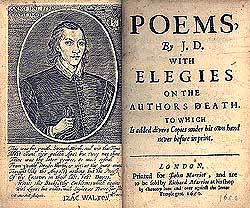
Before rude hands have touch’d it?
Have you mark’d but the fall of the snow
Before the soil hath smutch’d it?
Have you felt the wool of beaver,
Or swan’s down ever?
Or have smelt o’ the bud o’ the brier,
Or the nard in the fire?
Or have tasted the bag of the bee?
O so white, O so soft, O so sweet is she!
I was so tempted to quote Jonson’s famous Song : To Celia, which includes the famous line “Drink to me only with thine eyes”, but this lesser known example of his work is typical of his lyricism. It was published as one of ten linked pieces in 1623. A friend of William Shakespeare, Jonson was a complex character; he apparently liked an argument and could be arrogant, but was also noted for his sense of honour and integrity. Not quite a genius…but still one of the giants of English literature.
Interesting fact: Jonson is the only person buried standing up in Westminster Abbey (London). His grave bears the famous epitaph “O Rare Ben Johnson” – yes, the inscription erroneously includes an “h” in his name – the engraver made a mistake!
According to Westminster Abbey:
In 1849, the place was disturbed by a burial nearby and the clerk of works saw the two leg bones of Jonson fixed upright in the sand and the skull came rolling down from a position above the leg bones into the newly made grave. There was still some red hair attached to it.
Entire of itself.
Each is a piece of the continent,
A part of the main.
If a clod be washed away by the sea,
Europe is the less.
As well as if a promontory were.
As well as if a manor of thine own
Or of thine friend’s were.
Each man’s death diminishes me,
For I am involved in mankind.
Therefore, send not to know
For whom the bell tolls,
It tolls for thee.
These famous words by John Donne (pronounced “Dunn”) were not originally written as a poem – the passage is taken from the 1624 Meditation 17, from Devotions Upon Emergent Occasions and is prose. The final 3 lines are possibly amongst the most quoted excerpts of English verse.
Interesting fact: Donne was Dean of St Paul’s Cathedral (London)
Old Times is still a-flying:
And this same flower that smiles today,
Tomorrow will be dying.
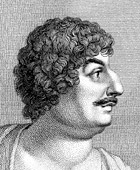
Born in London’s Cheapside, Herrick was the seventh child and fourth son of Nicholas Herrick, a prosperous goldsmith, who committed suicide when Robert was a year old. He ultimately took religious orders, and became vicar of the parish of Dean Prior, Devon in 1629, a post that carried a term of thirty-one years. It was in the secluded country life of Devon that he wrote some of his best work.
The over-riding message of Herrick’s work is that life is short, the world is beautiful, love is splendid, and we must use the short time we have to make the most of it (“carpe diem”). He is also renowned for frequent references to lovemaking and the female body.
Nor iron bars a cage;
Minds innocent and quiet take
That for an hermitage;
If I have freedom in my love,
And in my soul am free,
Angels alone that soar above
Enjoy such liberty.
Richard Lovelace was born a nobleman, being the firstborn son of a knight. On April 30, 1642, on behalf of Royalists in Kent, he presented to Parliament a petition asking them to restore the Anglican bishops to Parliament; as a result he was immediately imprisoned in Westminster Gatehouse where, whilst serving his time, wrote “To Althea, From Prison”, which contains – as per the excerpt given – one of the more famed lines of English verse “Stone walls do not a prison make, Nor iron bars a cage”. Basically, Lovelace is saying that physical imprisonment/oppression cannot stifle his imagination or spirit.
Interesting fact: While in prison, Lovelace worked on a volume of poems, titled Lucasta, which was considered to be his best collection. The “Lucasta” to whom he dedicated much of his verse was Lucy Sacheverell, whom he often called Lux Casta. Unfortunately, she mistakenly believed that he died at the Battle of Dunkirk in 1646 and so married somebody else. Oops!
Of that forbidden tree whose mortal taste
Brought death into the world, and all our woe,
With loss of Eden, till one greater Man
Restore us, and regain the blissful seat,
Sing, Heav’nly Muse, that, on the secret top
Of Oreb, or of Sinai, didst inspire
That shepherd who first taught the chosen seed
In the beginning how the Heav’ns and Earth
Rose out of Chaos;
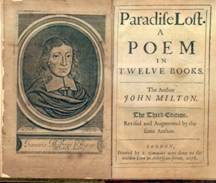
Milton ! Another literary giant. Possibly ranked, in terms of sheer literary genius, second to Shakespeare. Paradise Lost is an epic, dealing with the fall and subsequent salvation of Man. So great was the contemporary acclaim for Milton’s poetic epics, that other writers began to avoid writing long poetical works…which contributed to the birth of the novel as a literary genre.
Interesting fact: Milton became blind, and most of his prodigious works were dictated to a secretary.
Also: as a student at Cambridge University, Milton was so vain about his appearance that he was nicknamed “the Lady of Christ’s College”.
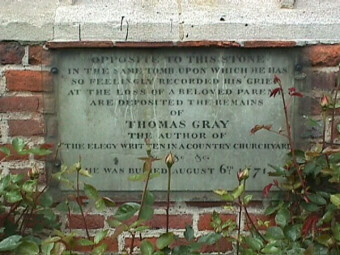
Image: Inscription on the Church at Stoke Poges refering to Gray’s Elegy
The lowing Herd winds slowly o’er the Lea,
The Plowman homeward plods his weary Way,
And leaves the World to Darkness, and to me.
Now fades the glimmering landscape on the sight,
And all the air a solemn stillness holds,
Save where the beetle wheels his droning flight,
And drowsy tinklings lull the distant folds.
Gray’s Elegy (an elegy commemorates death) was written after the passing of one of Gray’s close friends, and is a meditation on the mortality of man. Gray was Professor of History and Modern Languages at Cambridge and, despite not being a prolific writer, was one of the most prominent poets of his day He was buried in Stoke Poges (near Windsor, England) the village whose churchyard was where he composed the Elegy.
Interesting fact: although he became a literary giant of his age, Gray only published 1,000 lines of poetry during his lifetime – this was due, largely, to his acute fear of failure.
A stately pleasure dome decree:
Where Alph, the sacred river, ran
Through caverns measureless to man
Down to a sunless sea.
So twice five miles of fertile ground
With walls and towers were girdled round:
And there were gardens bright with sinuous rills,
Where blossomed many an incense-bearing tree;
And here were forests ancient as the hills,
Enfolding sunny spots of greenery.
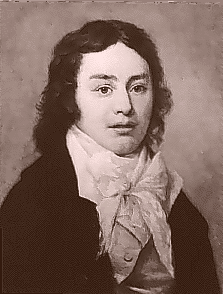
This is a good example of a poem having as many dimensions as you might like to afford it. On the one hand, there is no certainty as to exactly what Coleridge is talking about. However, it is also deemed by many critics to be profoundly symbolic (art v nature etc.). The poem does appear to most to have obvious sexual imagery, though Coleridge himself did not elaborate on any hidden depths or symbolic undertones. Kubla Khan was, upon its publication, widely denigrated by contemporary critics. Today, it is viewed as a work of genius.
Interesting fact: Coleridge (possessor of an egregious opium addiction) stated that he woke one morning having had a dream/vision of the entire text of Kubla Khan. The poem remained unfinished because, as he was in the midst of writing it down, he was interrupted by a knock at the door – it was a local village tradesman. After some small talk the villager departed, but Coleridge had now lost his train of thought and could not remember the rest of the poem! Bummer!
Dull would he be of soul who could pass by
A sight so touching in its majesty:
This City now doth, like a garment, wear
The beauty of the morning; silent, bare,
Ships, towers, domes, theatres, and temples lie
Open unto the fields, and to the sky;
All bright and glittering in the smokeless air.
Never did sun more beautifully steep
In his first splendour, valley, rock, or hill;
Ne’er saw I, never felt, a calm so deep!
The river glideth at his own sweet will:
Dear God! the very houses seem asleep;
And all that mighty heart is lying still!
Much of Wordsworth’s poetry was concerned with nature. He was a well-traveled individual, accompanied on his excursions by his sister, and lifelong companion, Dorothy. He was a prolific poet, and every school pupil will probably be familiar with his poem Daffodils.
Interesting fact: Wordsworth was born in a town with the improbable name of Cockermouth.
Of cloudless climes and starry skies;
And all that’s best of dark and bright
Meet in her aspect and her eyes:
Thus mellow’d to that tender light
Which heaven to gaudy day denies.
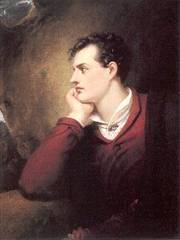
George Gordon Byron (the 6th Lord Byron) was an egotistical and temperamental person who during his own lifetime witnessed his reputation as an individual and as a poet reach lofty heights for a time only to plummet due, in no small part, to his scandalous private life (he married a wealthy heiress who left him after a year of marriage for reasons that were greatly speculated upon but never divulged). In fact, his poetry was thereafter belittled so much he left England, never to return. His literary reputation has, of course, been more than restored since his death.
She Walks in Beauty was inspired by his being smitten at the beauty of his first-cousin, whom he met at a funeral – she being dressed in black mourning attire.
Interesting fact: Byron had a club foot, and his sensitivity to this is reflected in some of his works.
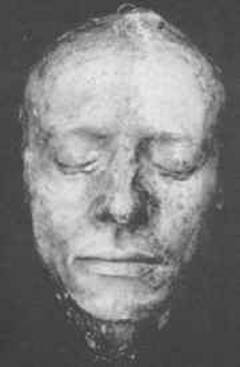
Image: Keats’ deathmask
My sense, as though of hemlock I had drunk,
Or emptied some dull opiate to the drains
One minute past, and Lethe-wards had sunk:
’Tis not through envy of thy happy lot,
But being too happy in thine happiness,-
That thou, light-winged Dryad of the trees,
In some melodious plot
Of beechen green, and shadows numberless,
Singest of summer in full-throated ease.
Having already lost both parents, Keats wrote these soulful lines upon learning that his brother was dying and that he himself was suffering from tuberculosis. He views the nightingale’s song as lasting and eternal, and as a counterpoint to his own deeply-felt mortality. Having said this, Keats could also turn his hand to some of the most beautiful lines in the English language eg. To Autumn).
Interesting fact: Keats was a doctor who was tormented by operations carried out – as was the norm in his day – without anaesthetic.
Also, it seems that our friend Lord Byron was a little jealous of Keats’ obvious poetic talents. In letters to contemporaries he described Keats’ works as “mental masturbation”, and wrote of “Johnny Keats’ piss-a-bed poetry” Charming! To be fair, he wrote generously of Shelley (well, of his personality, if not of his works).
Now that April’s there,
And whoever wakes in England
Sees, some morning, unaware,
That the lowest boughs and the brushwood sheaf
Round the elm-tree bole are in tiny leaf,
While the chaffinch sings on the orchard bough
In England – now!
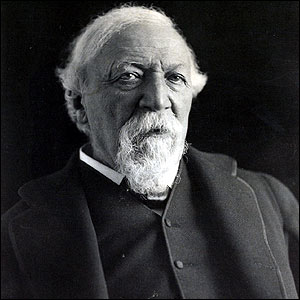
Wonderful words imaginatively expressing an ex-patriate’s nostalgia for his home country
Interesting fact: Stephen King’s Dark Tower series was inspired by Browning’s famous work “Childe Roland to the Dark Tower Came”.
Also… Browning was the first person ever whose voice was able to be heard after his death ! He attended a dinner party in 1889 (the year he died) and was persuaded to talk into a phonogram (a wax-cylinder recording device). He (somewhat falteringly) read his famous work How They Brought the Good News from Ghent to Aix, which you can listen to here .
I love thee to the depth and breadth and height
My soul can reach, when feeling out of sight
For the ends of Being and ideal Grace.
I love thee to the level of everyday’s
Most quiet need, by sun and candle-light.
I love thee freely, as men strive for Right;
I love thee purely, as they turn from Praise.
I love thee with a passion put to use
In my old griefs, and with my childhood’s faith.
I love thee with a love I seemed to lose
With my lost saints, — I love thee with the breath,
Smiles, tears, of all my life! — and, if God choose,
I shall but love thee better after death.
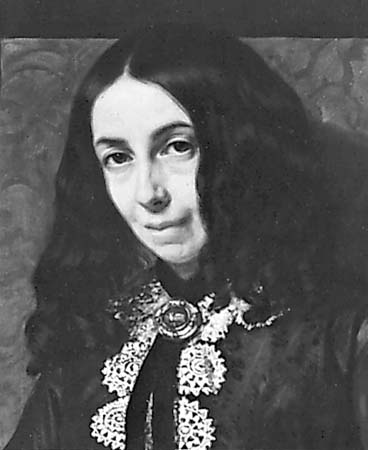
Elizabeth Barrett Browning was the wife of the poet Robert Browning and, though the theme of her works was often social injustice, she shows in these well-known lines that she could turn her hand to romantic poetry – a fact well understood by her husband, who had to insist that she publish them. I think the words speak for themselves, and that it is fairly pointless to try and attribute any profound meaning to them.
Interesting fact: Barrett-Browning, having never been unwell, was prescribed opium at age 15 and suffered from unknown illnesses (so called “nervous disorders”) for the rest of her life.
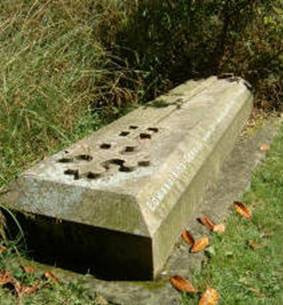
Image: Fitzgerald’s grave.
A Jug of Wine, a Loaf of Bread – and Thou
Beside me singing in the Wilderness -
Oh, Wilderness were Paradise enow!
Fitzgerald’s Rubáiyát is a (loose) translation of the work of 11th century Persian poet Omar Khayyam. It’s not a particularly consistent translation, but was a staple text for English students for many years (not so much today). It has been pointed out that the “thou” to which Fitzgerald refers in the second line of the famous tract, above, refers to a male (given that there does not appear to be any reference to women in this work).
Interesting fact: Fitzgerald was a vegetarian who, erm, apparently hated vegetables. He mostly lived off of bread and butter and fruit.
He kindly stopped for me—
The Carriage held but just Ourselves—
And Immortality.
We slowly drove—He knew no haste
And I had put away
My labor and my leisure too,
For His Civility—
Another who is commonly held to merit the title “genius.” This poem is reflecting, in a remarkably nonchalant manner, upon death. This particular poem has been described as “flawless to the last detail” by at least one eminent critic.
Interesting fact: reclusive in nature, only 2 of Dickinson’s 1,000+ poems were published during her lifetime – and these 2 without her permission!
But I have promises to keep,
And miles to go before I sleep,
And miles to go before I sleep.
from The Road Not Taken (1916)
Somewhere ages and ages hence:
Two roads diverged in a wood, and I
I took the one less traveled by,
And that has made all the difference.
Just a few lines from two of Robert Frost’s more famous works. Frost remains one of America’s pre-eminent poets, and there is often a genial simplicity in his words that continues to make his poetry accessible. Although a common theme in Frost is individuality or independence, I cannot help but think that he doesn’t follow through enough.
Listen to Frost read The Road Not Taken.
the plums
that were in
the icebox
and which
you were probably
saving
for breakfast.
Forgive me
they were delicious
so sweet
and so cold.
I’m not sure what is so compelling about this; maybe it is the simplicity of a writer who liked to create imagery about everyday people in their everyday lives. Whatever the case…I do know that most people, after a few readings, come to also love this short poem without really knowing why.
Interesting fact: Williams was a doctor.
Listen to him read one of his other works (Elise)
Old age should burn and rave at close of day;
Rage, rage against the dying of the light.
…
And you, my father, there on the sad height,
Curse, bless, me now with your fierce tears, I pray.
Do not go gentle into that good night.
Rage, rage against the dying of the light.
Dylan Thomas, one of the 20th century’s more influential poets, wrote this to commemorate the death of his father. The poem (which in its entirety has 19 lines) has only 2 rhymes throughout.
Interesting facts: it is widely held that Robert Zimmerman adopted the name Bob Dylan as a homage to Dylan Thomas, who was somewhat of a Bohemian cult figure in the USA.
Widely believed to be an alcoholic (a rumor that Thomas himself “promoted”), there is much evidence to suggest that this was not the case (including the state of his autopsied liver).
Listen to Dylan Thomas, himself, reading the above poem.
They may not mean to, but they do.
They fill you with the faults they had
And add some extra, just for you.
But they were fucked up in their turn
By fools in old-style hats and coats,
Who half the time were soppy-stern
And half at one another’s throats.
Man hands on misery to man.
It deepens like a coastal shelf.
Get out as early as you can,
And don’t have any kids yourself.
Who said modern poetry is dead! Undoubtedly Larkin’s best known poem, according to wikipedia “It appears in its entirety on more than a thousand web pages. It is frequently parodied. Television viewers in the United Kingdom voted it one of the Nation’s Top 100 Poems”. Cynical..yes, but also memorable.
Interesting fact: Larkin’s reputation was tarnished after his death. A biography based on his papers suggested that he was preoccupied with pornography and racism.
Contributor: kiwiboi


March 26th, 2008 at 6:46 am
Interesting list… some of my favorites.
Larkin’s poem comes off as whining to me, however. I feel sorry for him in a way, maybe he had a traumatic childhood…
I also will say with great certainty that being the father to my son is the joy of my life.
March 26th, 2008 at 6:59 am
Yes, i shall surely ‘bloweth some med’
March 26th, 2008 at 7:03 am
kiwiboi:
Excellent List!
And the ‘Interesting Facts’ are add so much.
Thank You.
March 26th, 2008 at 7:03 am
* are great and add so much*
March 26th, 2008 at 7:05 am
There is one I like called “There Will Come Soft Rains” by Sara Teasdale:
There will come soft rains and the smell of the ground,
And swallows circling with their shimmering sound;
And frogs in the pools singing at night,
And wild plum trees in tremulous white;
Robins will wear their feathery fire,
Whistling their whims on a low fence-wire;
And not one will know of the war, not one
Will care at last when it is done.
Not one would mind, neither bird nor tree,
If mankind perished utterly;
And Spring herself, when she woke at dawn
Would scarcely know that we were gone.
March 26th, 2008 at 7:09 am
I would like to add “Dulce et Decorum Est” by Wilfred Owen.
“Bent double, like old beggars under sacks,
Knock-kneed, coughing like hags, we cursed through sludge,
Till on the haunting flares we turned our backs
And towards our distant rest began to trudge.
Men marched asleep. Many had lost their boots
But limped on, blood shod. All went lame; all blind;
Drunk with fatigue; deaf even to the hoots
Of gas shells dropping softly behind…
March 26th, 2008 at 7:14 am
Kiwiboi; I am impressed. Very good job. I kind of have a thing for Don Marquis, since grade 6;
“i was talking to a moth
the other evening
he was trying to break into
an electric light bulb
to fry himself on the wires”
http://www.cs.rice.edu/~ssiyer/minstrels/poems/36.html
he does classical rhyme and was a pithy writer, of Archy and Mehitable fame.
March 26th, 2008 at 7:20 am
That was really interesting! I am ZERO knowledge on things like this, and I think its great to learn a little about everything! great list!
March 26th, 2008 at 7:22 am
You’ve listed all but one of my favorites here. The one you didn’t list follows below.
“The Second Coming”
Turning and turning in the widening gyre
The falcon cannot hear the falconer;
Things fall apart; the center cannot hold;
Mere anarchy is loosed upon the world,
The blood-dimmed tide is loosed, and everywhere
The ceremony of innocence is drowned;
The best lack all conviction, while the worst
Are full of passionate intensity.
Surely some revelation is at hand;
Surely the Second Coming is at hand.
The Second Coming! Hardly are those words out
When a vast image out of Spiritus Mundi
Troubles my sight: somewhere in sands of the desert
A shape with lion body and the head of a man,
A gaze blank and pitiless as the sun,
Is moving its slow thighs, while all about it
Reel shadows of the indignant desert birds.
The darkness drops again; but now I know
That twenty centuries of stony sleep
Were vexed to nightmare by a rocking cradle,
And what rough beast, its hour come round at last,
Slouches towards Bethlehem to be born?
– William Butler Yeats, January 1919
Everyone I know who has read this poem insists that Yeats was referencing the birth of the antichrist with this poem. I personally think he was referencing the birth of Christ, but that’s just me.
March 26th, 2008 at 7:26 am
I am extremely disappointed that Pablo Neruda and Walt Whitman aren’t on here.
Leaves of Grass is practically my poetic Bible for imagery and self analysis. And nobody can capture sensuality and intimacy like Pablo Neruda.
Also Allen Ginsberg for his uninhibited exuberance, god that man knew no bounds.
March 26th, 2008 at 7:38 am
Not a bad list, really. Can’t say the Wordsworth selection was the best from that venerable old poet. Didn’t realize there was such a horrible photo (or a photo of all) of Browning available.
Oh, and the Barrett Browning piece is tripe and generally recognized as such by those who read more than greeting cards, no?
Also, WCW was a hack, and a pretentious one at that, being the worst kind of hack.
March 26th, 2008 at 7:42 am
What about the Divine Comedy?
March 26th, 2008 at 7:55 am
stevenh – “And the Interesting Facts add so much.” Actually, the list started out as being about interesting facts about poets; but their works took over the process, so I kinda tried to accommodate both.
Shadow – heh, I agonized over who to leave out when the list had, like, 40 poems. Yeats was one of the last I dropped (Innisfree). Glad to find another Yeats admirer.
Ginger – Leaves of Grass is a great work but, again, I wanted to try and use either eminently accessible works, or masterpieces that…just, well, belonged. Sorry about that! As for Neruda, I don’t know anything about him (another limitation of my list) but I will make a point of looking some of his works up.
Bob – there are plenty who would disagree about Barrett-Browning. Remember, too, the list is just as much about introducing people to some poetry; it is not a “Top 20″. Regarding WCW..I disagree to an extent. However, I explained the reason I chose his poem. Wordsworth ? Again, there might be “better” works, but the one I chose certainly stands on its merits IMHO.
erickrn – Divine Comedy ? A great work indeed. However, I think that Dante preferred to write in Italian; the introduction mentions that the list is confined to English language works…sorry
To all the others contributing their own suggestions…Great! Keep ‘em coming! there’s some interesting stuff there
March 26th, 2008 at 8:01 am
What about Ogden Nash!
Always Marry An April Girl
Praise the spells and bless the charms,
I found April in my arms.
April golden, April cloudy,
Gracious, cruel, tender, rowdy;
April soft in flowered languor,
April cold with sudden anger,
Ever changing, ever true –
I love April, I love you.
March 26th, 2008 at 8:03 am
This might be a bit cliched, but I’ve always found Byron’s “Darkness” very beautiful, yet sad.
“She was the universe.” What an ending.
March 26th, 2008 at 8:04 am
“There once was a man from Nantucket…”
Just kidding, just kidding!
I only know two of these…Emily Dickinson’s and Dylan Thomas’s. I should definitely check into the others, good list!
March 26th, 2008 at 8:10 am
Eh. Poetry still sucks.
March 26th, 2008 at 8:12 am
Bullhockey! Good list, but the entire time I was reading it I was holding out for an entry from Dorothy Parker!! No Dorothy Parker??
I agree with Bob about WCW. Sounds like he’s leaving notes on the refrigerator to his wife on a very narrow paper or dry erase board.
Number one was awesome.
March 26th, 2008 at 8:13 am
oh man, i love poems and writing them as well…I have to say this is my fave list..
Here’s one from Pablo Neruda. Extremely heart wrenching…
Tonight I can write the saddest lines.
Write, for example, ‘The night is starry
and the stars are blue and shiver in the distance.’
The night wind revolves in the sky and sings.
Tonight I can write the saddest lines.
I loved her, and sometimes she loved me too.
Through nights like this one I held her in my arms.
I kissed her again and again under the endless sky.
She loved me, sometimes I loved her too.
How could one not have loved her great still eyes.
Tonight I can write the saddest lines.
To think that I do not have her. To feel that I have lost her.
To hear the immense night, still more immense without her.
And the verse falls to the soul like dew to the pasture.
What does it matter that my love could not keep her.
The night is starry and she is not with me.
This is all. In the distance someone is singing. In the distance.
My soul is not satisfied that it has lost her.
My sight tries to find her as though to bring her closer.
My heart looks for her, and she is not with me.
The same night whitening the same trees.
We, of that time, are no longer the same.
I no longer love her, that’s certain, but how I loved her.
My voice tries to find the wind to touch her hearing.
Another’s. She will be another’s. As she was before my kisses.
Her voice, her bright body. Her infinite eyes.
I no longer love her, that’s certain, but maybe I love her.
Love is so short, forgetting is so long.
Because through nights like this one I held her in my arms
my soul is not satisfied that it has lost her.
Though this be the last pain that she makes me suffer
and these the last verses that I write for her.
March 26th, 2008 at 8:24 am
No offence but there is nothing/no one in this world that can get me to like poetry…
March 26th, 2008 at 8:34 am
My dearest Cummings is absent.
March 26th, 2008 at 8:38 am
Nice effort, but I think I would have moved away from the classic “everyone’s heard of these” poems. (Though to be fair, if you’re giving people a sampling of poetry over the ages, it’s kind of hard to avoid all the “old favorites.”)
I also agree with Bob on the Brownings.
I would have used some Yeats in here, and some Marianne Moore… Andrew Marvell also…
But for a quick contribution, I like Stevie Smith’s:
Nobody heard him, the dead man,
But still he lay moaning:
I was much further out than you thought
And not waving but drowning.
Poor chap, he always loved larking
And now he’s dead
It must have been too cold for him his heart gave way,
They said.
Oh, no no no, it was too cold always
(Still the dead one lay moaning)
I was much too far out all my life
And not waving but drowning.
March 26th, 2008 at 8:40 am
Another one:
The Death of the Ball Turret Gunner
by Randall Jarrell
From my mother’s sleep I fell into the State,
And I hunched in its belly till my wet fur froze.
Six miles from earth, loosed from the dream of life,
I woke to black flak and the nightmare fighters.
When I died they washed me out of the turret with a hose.
March 26th, 2008 at 8:41 am
interesting fact:
#5 was incorporated into the Dream Theater song “A Change of Seasons.”
March 26th, 2008 at 8:43 am
Also, Eliot’s “Love Song of J. Alfred Prufrock”…. ALL of which is a treasure to read…. but just a small snippet:
I grow old . . .I grow old . . .
I shall wear the bottoms of my trousers rolled.
Shall I part my hair behind? Do I dare to eat a peach?
I shall wear white flannel trousers, and walk upon the beach.
I have heard the mermaids singing, each to each.
I do not think that they will sing to me.
I have seen them riding seaward on the waves
Combing the white hair of the waves blown back
When the wind blows the water white and black.
We have lingered in the chambers of the sea
By sea-girls wreathed with seaweed red and brown
Till human voices wake us, and we drown.
March 26th, 2008 at 8:59 am
What? No Plath, Heaney, Yeats or Kavanagh?!
March 26th, 2008 at 9:03 am
I like a bunch of what’s posted, but I like John Donne’s poem, “Death Be Not Proud” also. There’s another one, I don’t know who it’s by, but I have liked it since childhood. It goes like like this:
I never saw a purple cow
I never hope to see one
But I shall tell you anyhow
I’d rather see than be one!
March 26th, 2008 at 9:46 am
Humanity i love you (E. E. Cummings)
Humanity i love you
because you would rather black the boots of
success than enquire whose soul dangles from his
watch-chain which would be embarrassing for both
parties and because you
unflinchingly applaud all
songs containing the words country home and
mother when sung at the old howard
Humanity i love you because
when you’re hard up you pawn your
intelligence to buy a drink and when
you’re flush pride keeps
you from the pawn shops and
because you are continually committing
nuisances but more
especially in your own house
Humanity i love you because you
are perpetually putting the secret of
life in your pants and forgetting
it’s there and sitting down
on it
and because you are
forever making poems in the lap
of death Humanity
i hate you
March 26th, 2008 at 9:50 am
im gonna be honest, i couldn’t even finish the first one.
March 26th, 2008 at 9:53 am
What, no “The Love Song of J. Alfred Prufrock” by T.S. Eliot? Here’s a slightly strange but somehow enchanting mahsup of the recording of him reading it to Portishead.
http://www.hyperlexic.com/ts_eliot_portishead.php
March 26th, 2008 at 10:12 am
No way, The Beatles were way better than Led Zeppelin
March 26th, 2008 at 10:34 am
EricB-I saw that! You don’t happen to go to UTA do you?
March 26th, 2008 at 10:35 am
Hehe…the buck farts…
No offense to anyone here, but I hate poetry sooo much! I appreciate people who appreciate it though!
March 26th, 2008 at 10:43 am
I love poetry, and I happen to be one of those who feel poems should rhyme to be good. Not that other poems can’t be good if they don’t rhyme but rhyming gives such a nice ring to it.
This was my 9th grade English teacher’s favorite poem and after reading it, one of mine too. Enjoy =).
To an Athlete Dying Young
by A. E. Housman (1859-1936)
The time you won your town the race
We chaired you through the market-place;
Man and boy stood cheering by,
And home we brought you shoulder-high.
To-day, the road all runners come,
Shoulder-high we bring you home,
And set you at your threshold down,
Townsman of a stiller town.
Smart lad, to slip betimes away
From fields were glory does not stay
And early though the laurel grows
It withers quicker than the rose.
Eyes the shady night has shut
Cannot see the record cut,
And silence sounds no worse than cheers
After earth has stopped the ears:
Now you will not swell the rout
Of lads that wore their honours out,
Runners whom renown outran
And the name died before the man.
So set, before its echoes fade,
The fleet foot on the sill of shade,
And hold to the low lintel up
The still-defended challenge-cup.
And round that early-laurelled head
Will flock to gaze the strengthless dead,
And find unwithered on its curls
The garland briefer than a girl’s.
March 26th, 2008 at 10:48 am
This is a fabulous list! And manashiori, I love the Neruda peom as well – it is very sad. My favorite, which would not have met the criteria and so would not appear on the list, is Sappho’s Poem of Jealousy (this translation by Mary Barnard):
He is more than a hero
He is a god in my eyes —
the man who is allowed
to sit beside you — he
who listens intimately
to the sweet murmur of
your voice, the enticing
laughter that makes my own
heart beat fast. If I meet
you suddenly, I can’t
speak — my tongue is broken;
a thin flame runs under
my skin; seeing nothing,
hearing only my own ears
drumming, I drip with sweat;
trembling shakes my body
and I turn paler than
dry grass. At such times
death isn’t far from me.
March 26th, 2008 at 10:58 am
Sylvia Plath is one of my favorites.
March 26th, 2008 at 11:09 am
Had I the heavens’ embroidered cloths,
Enwrought with golden and silver light,
The blue and the dim and the dark cloths
Of night and light and the half light,
I would spread the cloths under your feet:
But I, being poor, have only my dreams;
I have spread my dreams under your feet;
Tread softly because you tread on my dreams.
W.B.Yates
March 26th, 2008 at 11:17 am
I just noticed there aren’t any of Edgar Allan Poe’s works listed. I thought he wrote some poetry?
March 26th, 2008 at 11:20 am
What about the good ole bathroom stall poets?
Here I sit in a cloud of vapor,
And I see no toilet paper.
How much longer shall I linger,
Before I have to use my finger?
March 26th, 2008 at 11:30 am
How can you bring up the “Cuckoo Song” without mentioning Ezra Pound’s parody, “Ancient Music”:
Winter is icummen in,
Lhude sing Goddamm,
Raineth drop and staineth slop,
and how the wind doth ramm,
Sing: Goddamm.
Skiddeth bus and sloppeth us,
An ague hath my ham.
Freezeth river, turneth liver,
Damn you, sing: Goddamm.
Goddamm, Goddamm, ’tis why I am, Goddamm,
So ‘gainst the winter’s balm.
Sing goddamm, damm, sing Goddamm,
Sing goddamm, sing goddamm, DAMM.
March 26th, 2008 at 11:33 am
Thank you, Mathilda, for reminding us of Sappho, and the Greeks in general… my favorites.
Sappho:
Some say horsemen, some say warriors,
Some say a fleet of ships is the loveliest
Vision in this dark world, but I say it’s
What you love.
It’s easy to make this clear to everyone,
Since Helen, she who outshone
All others in beauty, left
A fine husband,
And headed for Troy
Without a thought for
Her daughter, her dear parents…
Led astray….
And I recall Anaktoria, whose sweet step
Or that flicker of light on her face,
I’d rather see than Lydian chariots
Or the armed ranks of the hoplites.
And Sappho’s most touching, I think:
I have a daughter, golden,
Beautiful, like a flower -
Kleis, my love -
And I would not exchange her for
All the riches of Lydia……
and my personal favorite of hers: (my own translation)
The Moon is down,
The Pleiades have set at midnight.
The hours go on,
and I lie here, alone.
March 26th, 2008 at 11:38 am
Also, the old favorite from Archilochus:
Well, what if some barbaric Thracian glories
in the perfect shield I left under a bush?
I was sorry to leave it–but I saved my skin.
Does it matter? O hell, I’ll buy a better one.
No Roman would have written that…. I love the Greeks. Much more human, much more likely to delight in simply being alive.
March 26th, 2008 at 11:42 am
Ozymandias and the Raven are my two favorite poems. Also has anyone ever looked at Calvin and Hobbes’s poetry? It is some of my favorite literature.
March 26th, 2008 at 11:44 am
OZYMANDIAS
I met a traveller from an antique land
Who said: Two vast and trunkless legs of stone
Stand in the desert. Near them on the sand,
Half sunk, a shatter’d visage lies, whose frown
And wrinkled lip and sneer of cold command
Tell that its sculptor well those passions read
Which yet survive, stamp’d on these lifeless things,
The hand that mock’d them and the heart that fed.
And on the pedestal these words appear:
“My name is Ozymandias, king of kings:
Look on my works, ye Mighty, and despair!”
Nothing beside remains: round the decay
Of that colossal wreck, boundless and bare,
The lone and level sands stretch far away.
March 26th, 2008 at 11:44 am
I hate Shakespeare. He was responsible for too many English lessons that seemed to las forever.
Here’s a nice piece of war poetry that’s stuck with me:
As another soldier gets to Heaven,
To St. Peter he will tell;
“Another soldier reporting, Sir,
I’ve served my time in Hell.”
March 26th, 2008 at 11:45 am
Here’s Poe:
It was many and many a year ago,
In a kingdom by the sea,
That a maiden there lived whom you may know
By the name of ANNABEL LEE;
And this maiden she lived with no other thought
Than to love and be loved by me.
I was a child and she was a child,
In this kingdom by the sea;
But we loved with a love that was more than love-
I and my Annabel Lee;
With a love that the winged seraphs of heaven
Coveted her and me.
And this was the reason that, long ago,
In this kingdom by the sea,
A wind blew out of a cloud, chilling
My beautiful Annabel Lee;
So that her highborn kinsman came
And bore her away from me,
To shut her up in a sepulchre
In this kingdom by the sea.
The angels, not half so happy in heaven,
Went envying her and me-
Yes!- that was the reason (as all men know,
In this kingdom by the sea)
That the wind came out of the cloud by night,
Chilling and killing my Annabel Lee.
But our love it was stronger by far than the love
Of those who were older than we-
Of many far wiser than we-
And neither the angels in heaven above,
Nor the demons down under the sea,
Can ever dissever my soul from the soul
Of the beautiful Annabel Lee.
For the moon never beams without bringing me dreams
Of the beautiful Annabel Lee;
And the stars never rise but I feel the bright eyes
Of the beautiful Annabel Lee;
And so, all the night-tide, I lie down by the side
Of my darling- my darling- my life and my bride,
In the sepulchre there by the sea,
In her tomb by the sounding sea.
March 26th, 2008 at 11:53 am
I really enjoyed this break from work to read this list. My fiance and is knee deep in studying paradise lost. milton’s view on the Bible is extroadinarily close to mine. It is difficult to get apast the language of the poem since it is huge, but not to the trained eye, like hers and not mine. I have to have her explain much of it to me because I miss the subtle points. Damn math brain!
March 26th, 2008 at 12:02 pm
And death shall have no dominion.
Dead men naked they shall be one
With the man in the wind and the west moon;
When their bones are picked clean and the clean bones gone,
They shall have stars at elbow and foot;
Though they go mad they shall be sane,
Though they sink through the sea they shall rise again;
Though lovers be lost love shall not;
And death shall have no dominion.
Under the windings of the sea
They lying long shall not die windily;
Twisting on racks when sinews give way,
Strapped to a wheel, yet they shall not break;
Faith in their hands shall snap in two,
And the unicorn evils run them through;
Split all ends up they shan’t crack;
And death shall have no dominion.
No more may gulls cry at their ears
Or waves break loud on the seashores;
Where blew a flower may a flower no more
Lift its head to the blows of the rain;
Though they be mad and dead as nails,
Heads of the characters hammer through daisies;
Break in the sun till the sun breaks down,
And death shall have no dominion.
-Dylan Thomas
March 26th, 2008 at 12:06 pm
Also you should put a note that Bob Dylan is an amazing poet who uses song rather than just literature. He is one of my favorites.
March 26th, 2008 at 12:06 pm
It always seems to be that Poe’s work is usually considered horrible by critics. Like maybe something too immature to be given credit. According to Wikipedia, other writers didn’t like him either. T.S. Eliot said he had “the intellect of a highly gifted person before puberty”
Regardless, I always liked Eldorado.
Gaily bedight,
A gallant knight,
In sunshine and in shadow,
Had journeyed long,
Singing a song,
In search of Eldorado.
But he grew old,
This knight so bold,
And o’er his heart a shadow,
Fell as he found,
No spot of ground,
That looked like Eldorado.
And, as his strength,
Failed him at length,
He met a pilgrim shadow;
“Shadow,” said he,
“Where can it be,
This land of Eldorado?”
“Over the mountains of the moon,
Down the valley of the shadow,
Ride, boldly ride,”
The shade replied,
“If you seek for Eldorado!”
March 26th, 2008 at 12:07 pm
Great list, Kiwiboi!!
Loved the Interesting facts after each poem. Jfrater better watch out!!!
March 26th, 2008 at 12:39 pm
i what is probably just a nod to my ignorance i will ask the obvious question…
what defines poetry? meaning, why is something called a poem instead of a short story. as a child, and probably still today, i thought it had to rhyme to be considerd a poem. therefore, no rhyming = not a poem in my early estimation.
March 26th, 2008 at 12:41 pm
skeev:
Yeah, Poe is a little sophomoric. Though the French had a particular fondness for him (Baudelaire is largely responsible for promoting Poe in the world). But then the French are also known for sophomoric poetry… depending on your personal taste, Rimbaud and Verlaine and their ilk fall into that category.
March 26th, 2008 at 12:44 pm
DiscHuker:
A poem most definitely does NOT have to rhyme. The ancient Greeks didn’t bother with it (whenever you see a translation of an ancient Greek poem that rhymes, it’s WRONG).
A poem is verse, it’s written in a meter. Prose is written sans meter. Simple as that.
Of course, there are such things as “prose poems,” but let’s not confuse the issue too much.
(There’s also poetic prose, but further confusion is just nasty).
March 26th, 2008 at 12:49 pm
So Randall, a poem is like lyrics to a song but without music?
March 26th, 2008 at 12:53 pm
Great list but I would have put Allen Ginsberg’s “Howl” in it. “Howl” and “Do Not Go Gentle Into That Good Night” are my favorite poems.
“I saw the best minds of my generation destroyed by madness”
March 26th, 2008 at 12:55 pm
Jakooooob:
In essence, yes, though songs don’t always translate that well as poetry. The rhythm and melody of music aren’t always exactly the same.
But the Greeks originally wrote their poetry as songs. So the “poems” we know of today, of Homer, Sappho, etc.—they were originally *sung.*
March 26th, 2008 at 1:18 pm
Hey jfrater put some spanish poems that have been translated to English and put them here.
For example: Poem 20,Poem 15 and Sonnet XVII all of them of Pablo Neruda.
I think after reading them people will enjoy poetry.
March 26th, 2008 at 1:22 pm
Great list Kiwiboi…a lot of ‘one liners’ I recognise. “If I should die think only this of me…”
March 26th, 2008 at 1:29 pm
Nice list, I’m really into poetry so I like it!
March 26th, 2008 at 1:42 pm
i agree with chuck that ginsberg’s “howl” would have been a necessary inclusion.
March 26th, 2008 at 1:55 pm
about the only poetry i read growing up was shel silverstein. i still enjoy it. is that considered low-brow poetry? (my assumption of the stereotypical poetry prof’s belief)
is sing-songy poetry like that valued in the academic arena?
March 26th, 2008 at 2:00 pm
Wow, I remember being in high school and not caring much for poetry many of which I had to read were on this list. Now a few years older and hopefully wiser, the time spent reading this list has been the high point of my day.
Thank you kiwiboi.
March 26th, 2008 at 2:13 pm
Percy Bysshe Shelley’s “Ode to the Western Wind” and “Ozymandias” are amazing and the latter is quite well known. He really should be on this list. But what you have is pretty decent.
March 26th, 2008 at 2:23 pm
I think, sadly, there are people out there who don’t enjoy poetry because they don’t know how to analyze it. When staring down a behemoth like some of Alfred, Lord Tennyson’s works (who wasn’t listed, tsk tsk), it’s easy to get frustrated and say, “this is nonsense!” and chuck it. I’m glad I was forced to read poems from Brown and Wordsworth and Thomas; I learned how to see them for what they were and enjoy them more.
March 26th, 2008 at 2:28 pm
@ 26:
Sorry the whole world hasn’t gone through the Irish Leaving Certificate examinations…
BTW, I’m a massive hypocrite!
March 26th, 2008 at 2:38 pm
Wonderful list kiwiboi I love them all..Could anybody out there tell me where these words came from? I suspect they were written by an Australian but I have not had any success in finding the poem…my dad was always quoting these lines..”what’s the use of talkin’ when yer stoney broke an walkin’ an the swag is wearin’ blisters on yer back. I’m pretty sure it’s not Banjo Paterson.
March 26th, 2008 at 2:51 pm
”what’s the use of talkin’ when yer stoney broke an walkin’ an the swag is wearin’ blisters on yer back”
maman – if not Paterson, the next most likely would be Adam Lindsay Gordon (it sounds somewhat typical of both of them).
Then again..it could be an original from the renowned imbiber and raconteur James O’Reilly Patrick Houlihan
March 26th, 2008 at 2:54 pm
Catriona – “If I should die think only this of me”
Yes..the great Rupert Brooke. Like you, I have heard this line uttered countless times!!
ps. did I mention that you look just like my sister
March 26th, 2008 at 3:01 pm
“is sing-songy poetry like that valued in the academic arena?”
DiscHuker – an honest academic or critic will make an honest analysis. Crap is crap however it is dressed up; similarly, there is nothing to prevent a “sing-songy” poem having genuine merit. If you enjoy it then who cares what others think.
March 26th, 2008 at 3:17 pm
kiwiboi: ”what’s the use of talkin’ when yer stoney broke an walkin’ an the swag is wearin’ blisters on yer back” think it may be part of an australian toast, (from what I’ve found so far,) so fitting for James O’Reilly don’t you think?
ps, I look like your sister? Have been told that before funnily enough.
March 26th, 2008 at 3:17 pm
what about Jabberwocky by Lewis Carroll?
March 26th, 2008 at 3:26 pm
I can’t read Emily Dickinson without thinking of something my brother told me years ago:
“Every, and I mean every, poem by Emily Dickinson can be sung to “The Yellow Rose Of Texas”.”
He was right.
March 26th, 2008 at 3:29 pm
To answer DiscHuker’s question about Shel Silverstien’s poetry, I do agree that it is overlooked by academia not for its quality but rather its simplicity. Most of the people that I know or have met who don’t like poetry is because some arrogant ass shoved a poem by Tennyson in their face and asked them to read it and then probably called them stupid for not getting the poem. Shel is a great place to start a young kid with poetry and keep it at a level it can be enjoyed on. The same goes for Longfellow’s poem about the redcoats and paul revere. Just because a poem is simple shouldn’t count it out as good, everyone has to start somewhere.
March 26th, 2008 at 3:32 pm
What about “Murder Was The Case That They Gave Me” By Snoop Dogg?
March 26th, 2008 at 3:34 pm
“think it may be part of an australian toast, (from what I’ve found so far,) so fitting for James O’Reilly don’t you think?”
Catriona – interesting theory (the Oz toast); makes sense.
And, indeed, it is fitting of James O’Reilly (who needed no toast to partake of a drop!)
March 26th, 2008 at 3:36 pm
TDavis: OMG, I’ll never read poetry the same again. LOL
March 26th, 2008 at 3:37 pm
Solron – Jabberwocky. Yes…brilliant!
`Twas brillig, and the slithy toves
Did gyre and gimble in the wabe
TDavis – ““Every, and I mean every, poem by Emily Dickinson can be sung to “The Yellow Rose Of Texas”.”
Classic!! Thanks for this!
March 26th, 2008 at 4:04 pm
Although poetry has never been a passion of mine, I did enjoy reading all of the above. However, I have always remembered “In Flanders Fields”. It sends shivers down my spine whenever I read it…which is how I think good poetry should be.
In Flanders Fields
By: Lieutenant Colonel John McCrae, MD (1872-1918)
Canadian Army
IN FLANDERS FIELDS the poppies blow
Between the crosses row on row,
That mark our place; and in the sky
The larks, still bravely singing, fly
Scarce heard amid the guns below.
We are the Dead. Short days ago
We lived, felt dawn, saw sunset glow,
Loved and were loved, and now we lie
In Flanders fields.
Take up our quarrel with the foe:
To you from failing hands we throw
The torch; be yours to hold it high.
If ye break faith with us who die
We shall not sleep, though poppies grow
In Flanders fields.
It remains to this day one of the most memorable war poems ever written. It is a lasting legacy of the terrible battle in the Ypres salient in the spring of 1915.
As said by a 22 year old sergeant major who happened to be delivering mail that day and who watched McCrae as he wrote this “The poem was exactly an exact description of the scene in front of us both. He used the word blow in that line because the poppies actually were being blown that morning by a gentle east wind. It never occurred to me at that time that it would ever be published. It seemed to me just an exact description of the scene.”
March 26th, 2008 at 4:15 pm
Kiwiboi, no offense intended. Like I said, a good list.
March 26th, 2008 at 4:23 pm
shame!
no ee cummings or pablo neruda?!
this cannot count as a poetry list in my head.
& i definitely agree with the Jabberwocky claims.
March 26th, 2008 at 4:26 pm
Kiwiboi, this is stupid stuff:
March 26th, 2008 at 4:40 pm
I knew #18 and #5 looks like Mario. (Super Mario Bros.)
March 26th, 2008 at 4:40 pm
listverse is the greatest site ever. Lately these lists are getting better and better.
March 26th, 2008 at 4:48 pm
otay – that’s hilarious!
March 26th, 2008 at 4:49 pm
I believe Adrock sai dit best,
Now here’s a little story, I’ve got to tell
About three bad brothers, you know so well
It started way back in history
With Adrock, M.C.A., and me, Mike D.
Been had a little horsy named Paul Revere
Just me and my horsy and a quart of beer
Riding across the land, kicking up sand
Sheriff’s posse on my tail cause I’m in demand
One lonely Beastie I be
All by myself, with nobody
The sun is beating down on my baseball hat
The air is gettin’ hot, the beer is getting flat
Lookin’ for a girl, I ran into a guy
His name is M.C.A., I said, “Howdy”, he said, “Hi”
He told a little story, that sounded well rehearsed
Four days on the run and that he’s dying of thirst
The brew was in my hand, and he was on my tip
His voice was hoarse, his throat was dry, he asked me for a sip
He said, “Can I get some?”
I said, “You can’t get none!”
Had a chance to run
Pulled out his shotgun
Quick on the draw, I thought I’d be dead
He put the gun to my head and this is what he said,
“Now my name is M.C.A., I’ve got a license to kill
I think you know what time it is, it’s time to get ill
Now what do we have here, an outlaw and his beer
I run this land, you understand, I make myself clear.”
We stepped into the wind, he had a gun, I had a grin
You think this story’s over but it’s ready to begin
Now, “I got the gun, you got the brew
You got two choices of what you can do
It’s not a tough decision as you can see
I can blow you away or you can ride with me” I said,
I’ll ride with you if you can get me to the border
The sheriff’s after me for what I did to his daughter
I did it like this, I did it like that
I did it with a whiffleball bat
So I’m on the run, the cop’s got my gun
And right about now, it’s time to have some fun
The King Adrock, that is my name
And I know the fly spot where they got the champagne.”
We rode for six hours then we hit the spot
The beat was a bumping and the girlies was hot
This dude was staring like he knows who we are
We took the empty spot next to him at the bar
M.C.A. said, “Yo, you know this kid?”
I said, “I didn’t.”, but I know he did
The kid said, “Get ready cause this ain’t funny
My name’s Mike D. and I’m about to get money.”
Pulled out the jammy, aimed it at the sky
He yelled, “Stick ‘em up!”, and let two fly
Hands went up and people hit the floor
He wasted two kids that ran for the door
“I’m Mike D. and I get respect
Your cash and your jewelry is what I expect”
M.C.A. was with it and he’s my ace
So I grabbed the piano player and I punched him in the face
The piano player’s out, the music stopped
His boy had beef, and he got dropped
Mike D. grabbed the money, M.C.A. snatched the gold
I grabbed two girlies and a beer that’s cold.
March 26th, 2008 at 4:50 pm
dickshoes: may I recommend http://www.sesamestreet.com – it may be more to your liking?
Seriously though – every topic on the site that is not about funky photos or badass women gets at LEAST one comment like yours
Lighten up and enjoy the educational with the fun! There is something for everyone here.
March 26th, 2008 at 4:52 pm
I’m so glad you included Milton’s Paradise Lost… It is one of my favorite works, I love it!
However, I didn’t see any John Keats!!! My favorite poem of his: “The Eve of St. Agnes”, it is wonderful!!
(Pretty good list any way)
March 26th, 2008 at 5:05 pm
the first line of #4 is also quite famous.
March 26th, 2008 at 5:17 pm
also noting the absence of ee cummings, lewis carrol, poe.
should not the “epic poems” of the Iliad and Odyssey be included? most bookstores catalogue them as such, and the imagery is just a beautiful.
i also love the poetry in Calvin and Hobbes. Watterson was a genius.
Yukon Ho! from Calvin and Hobbes
My tiger friend has got the sled,
And I have packed a snack.
We’re all set for the trip ahead.
We’re never coming back!
We’re abandoing this life we’ve led!
So long, Mom and Pop!
We’re sick of doing what youve said,
And now it’s going to stop!
We’re going where it snows all year,
Where life can have real meaning.
A place where we wont have to hear,
“Your room could stand some cleaning.”
The Yukon is the place for us!
That’s where we want to live.
Up there we’ll ge to yell and cuss
And act real primitive.
We’ll never have to go to school,
Forced into submission,
By monst, crabby teachers who’ll
Make us learn addition.
We’ll never have to clean a plate,
Of veggie glops and goos.
Messily we’ll masticate,
Using any fork we choose!
The timber wolves will be our friends.
Well stay up late and howl,
At the moon, till nightmare ends,
Before going on the prowl.
Oh, what a life! we cannot wait,
To be in that arctic land,
Where we’ll be masters of our fate,
And lead a life that’s grand!
No more of parental rules!
We’re heading for some snow!
Good riddance to those grown-up-ghouls!
We’re leaving! Yukon Ho!
March 26th, 2008 at 5:22 pm
also, where is the Ogden Nash?
best humorous poetry ever!
Candy
Is dandy
But liquor
Is quicker.
among many other pun-filled snippets
March 26th, 2008 at 5:36 pm
The William Carlos Williams poem is probably my favorite poem ever. Thanks for including it!
March 26th, 2008 at 6:09 pm
Wish Rhyme of the Ancient Mariner made the list. Good list though!
March 26th, 2008 at 6:25 pm
I love Warning by Jenny Joseph:
When I am an old woman I shall wear purple
With a red hat which doesn’t go, and doesn’t suit me.
And I shall spend my pension on brandy and summer gloves
And satin sandals, and say we’ve no money for butter.
I shall sit down on the pavement when I’m tired
And gobble up samples in shops and press alarm bells
And run my stick along the public railings
And make up for the sobriety of my youth.
I shall go out in my slippers in the rain
And pick flowers in other people’s gardens
And learn to spit.
You can wear terrible shirts and grow more fat
And eat three pounds of sausages at a go
Or only bread and pickle for a week
And hoard pens and pencils and beermats and things in boxes.
But now we must have clothes that keep us dry
And pay our rent and not swear in the street
And set a good example for the children.
We must have friends to dinner and read the papers.
But maybe I ought to practice a little now?
So people who know me are not too shocked and surprised
When suddenly I am old, and start to wear purple
March 26th, 2008 at 6:27 pm
TicoTuanis: sonnet xvii is one of my favorites
I don’t love you as if you were the salt-rose, topaz
or arrow of carnations that propagate fire:
I love you as certain dark things are loved,
secretly, between the shadow and the soul.
I love you as the plant that doesn’t bloom and carries
hidden within itself the light of those flowers,
and thanks to your love, darkly in my body
lives the dense fragrance that rises from the earth.
I love you without knowing how, or when, or from where,
I love you simply, without problems or pride:
I love you in this way because I don’t know any other way of loving
but this, in which there is no I or you,
so intimate that your hand upon my chest is my hand,
so intimate that when I fall asleep it is your eyes that close.
March 26th, 2008 at 6:40 pm
Oh and if we’re talking Calvin and Hobbes:
My hands were all shaky,
My face had gone pale.
A letter from Santa
Just arrived in the mail!
It was hand-written
In old-fashioned in pen.
It was handsomely printed
And dated twelve ten.
“Dear Calvin,” it said.
“I’m writing because
This year I’ve repealed
My ‘Naughty/Nice’ laws.
So now, I urge you:
Be vulgar and crude!
I like it when children
Are boorish and rude!
Burp at the table!
Gargle your peas!
Never say ‘Thank you,’
‘You’re welcome,’ or ‘Please.’
Talk back to your mother.
Don’t do as you’re told.
Stick your tongue out
At your dad if he scolds!
Drive everyone crazy.
I really don’t care!
Act like a jerk.
Anytime, anywhere!
I’m changing the rules!
The bad girls and boys
Will be, from now on,
The ones who get toys.
Good little kids make
Me sick. It’s no joke.
Sincerely, signed Santa.”
…and then I awoke.
I hate being good
(or trying to fake it).
Six days until Christmas!
I don’t think I’ll make it.
March 26th, 2008 at 8:28 pm
Excellent list! I love poetry, and those people willing to just enjoy and stop trying to analyze the hell out of it. Bravo.
March 26th, 2008 at 8:30 pm
@ skeev – an Excellent poem choice. One of Poe’s best, second only to The Raven.
AN excellent list indeed, there should be more good lists like this one.
March 26th, 2008 at 8:34 pm
This one by Cavafy has been one of my favorites for years.
=========================================================
What are we waiting for, assembled in the forum?
The barbarians are to arrive today.
Why such inaction in the Senate?
Why do the Senators sit and pass no laws?
Because the barbarians are to arrive today.
What laws can the Senators pass any more?
When the barbarians come they will make the laws.
Why did our emperor wake up so early,
and sits at the greatest gate of the city,
on the throne, solemn, wearing the crown?
Because the barbarians are to arrive today.
And the emperor waits to receive
their chief. Indeed he has prepared
to give him a scroll. Therein he inscribed
many titles and names of honor.
Why have our two consuls and the praetors come out
today in their red, embroidered togas;
why do they wear amethyst-studded bracelets,
and rings with brilliant, glittering emeralds;
why are they carrying costly canes today,
wonderfully carved with silver and gold?
Because the barbarians are to arrive today,
and such things dazzle the barbarians.
Why don’t the worthy orators come as always
to make their speeches, to have their say?
Because the barbarians are to arrive today;
and they get bored with eloquence and orations.
Why all of a sudden this unrest
and confusion. (How solemn the faces have become).
Why are the streets and squares clearing quickly,
and all return to their homes, so deep in thought?
Because night is here but the barbarians have not come.
And some people arrived from the borders,
and said that there are no longer any barbarians.
And now what shall become of us without any barbarians?
Those people were some kind of solution.
March 26th, 2008 at 9:28 pm
filipinoknight:
yeah does are one of my favorites too
,but its better if you read it in the native language
March 26th, 2008 at 10:59 pm
number 16…best poem ever and best poet ever. i have the complete collection of her works
March 26th, 2008 at 11:28 pm
#39 otay: I think i’ll stick that up in my office toilet. Might lighten up some of the permanent scowls here..
March 27th, 2008 at 12:54 am
“no offense intended. Like I said, a good list”
Bob – and none taken, I assure you.
Firstly, there will be people who just don’t like a literary list; and secondly, there are those who will choose to disagree with the (subjective) selections that such a list contains – that’s life ! At least you gave your reasons.
It does not pay to be thin-skinned when writing a list like this
March 27th, 2008 at 1:01 am
“no ee cummings or pablo neruda?!”
Lucy – please read the list introduction – the list is English-language poetry. Neruda’s works – popular though they seem to be – do not qualify.
As for E.E. Cummings…the list is subjective. Cummings didn’t make the cut.
“this cannot count as a poetry list in my head.”
Surely you jest! The list contains a selection of some of the giants of poetry – irrespective of language!
March 27th, 2008 at 1:11 am
Kiwiboi, great list, thanks. I surprise myself by having works from at least half the people mentioned on this list. Unfortunately I haven’t read them. I’ve tried, I really have. I just can’t get into them. For some reason I can’t grasp the …..flow? Meter? I don’t know the correct term. But your list makes me want to try again.
Are there enough different types of poetry (as alluded to by Randall above) for you to do a follow-up list of those and how to read them, for those of us who are novices and want to learn more?
March 27th, 2008 at 1:13 am
“The William Carlos Williams poem is probably my favorite poem ever.”
Carlyn – Yes! Another believer
“I love poetry, and those people willing to just enjoy and stop trying to analyze the hell out of it.”
souxieq – exactly! Whilst most great works can be enjoyed on many dimensions, the vast majority may also be enjoyed purely at face value, IMHO. And there are some works that are superb even in the absence of an apparent deeper meaning (Kubla Khan for one, arguably…)
“number 16…best poem ever and best poet ever. i have the complete collection of her works”
manditaaknfv – good for you. However…you might like to avoid listening to “Yellow Rose of Texas” from now on (msg #73); we don’t want to spoil your future enjoyment of Dickinson
“However, I didn’t see any John Keats!!!”
Rosa – you might like to check out number 12 on the list.
March 27th, 2008 at 1:46 am
I love a few of the poems here kiwiboi – you introduced me to a few. Great list!
March 27th, 2008 at 1:56 am
“I surprise myself by having works from at least half the people mentioned on this list. Unfortunately I haven’t read them. I’ve tried, I really have. I just can’t get into them.”; “Are there enough different types of poetry (as alluded to by Randall above) for you to do a follow-up list of those and how to read them”
Lizzie – great question. And good for you for wanting to delve a little deeper. Whilst there are many ways of skinning a cat, I would suggest that you start at a place like this :
http://www.poetryarchive.org/poetryarchive/poetsHome.do
where you can listen to many works being read out loud, some by the author (there are a few similar sites). At least you will be able to appreciate the meter and nuances. Once you come across something that takes your fancy, it is easy to google or buy a book (eg. student’s study guide) to learn a little more about the poem/poet. I would suggest that you start with something relatively mainstream, or something that you do already like and take it from there. I’m sure you’ll find yourself meandering from one poem/poet to another after a time. In any case, the internet has many sites that you will find helpful and relevant. But do follow though on this Lizzie – you won’t regret it !!
As for a follow-up list with how to read poetry…it’s maybe workable but – having just submitted my first list – I can assure you that it takes quite a lot of precious time to compile one (for me, at least). Besides, though my undergraduate studies were literature my postgrad studies and working life were/are in the realm of finance and banking – which is also where my current interests lie.
So, given that jfrater (my brother) will now undoubtedly pester me for more lists, I am kinda thinking that my next one will be finance-related. But who knows ? In any case, perhaps somebody else (Randall ?) might take up your challenge!
Good luck !!
March 27th, 2008 at 1:59 am
SarahJ – “I love a few of the poems here kiwiboi”
A few…a FEW !! And what, may I ask is wrong with the others ??!!
“you introduced me to a few. Great list!”
Hey..what are brothers for ??
And…you were a very receptive pupil !
March 27th, 2008 at 3:17 am
Kiwiboi, thanks again. I’ll definitely check that out. I will persist!!
March 27th, 2008 at 4:47 am
Great List kiwiboi…… I would’ve included Tiger by William Blake just coz it reminds me of my school days.
TIGER, tiger, burning bright
In the forests of the night,
What immortal hand or eye
Could frame thy fearful symmetry?
In what distant deeps or skies 5
Burnt the fire of thine eyes?
On what wings dare he aspire?
What the hand dare seize the fire?
And what shoulder and what art
Could twist the sinews of thy heart? 10
And when thy heart began to beat,
What dread hand and what dread feet?
What the hammer? what the chain?
In what furnace was thy brain?
What the anvil? What dread grasp 15
Dare its deadly terrors clasp?
When the stars threw down their spears,
And water’d heaven with their tears,
Did He smile His work to see?
Did He who made the lamb make thee? 20
Tiger, tiger, burning bright
In the forests of the night,
What immortal hand or eye
Dare frame thy fearful symmetry?
March 27th, 2008 at 4:57 am
Oh Man, just goes to show where my head is. “20 Examples of Why You Should Enjoy Poetry’ Here was my #1.
#1 It helps you pick up chicks.
March 27th, 2008 at 5:01 am
Item 4 has a misprint. It should be “As well as if a *manor* of thine own”. I set this to music a couple of years ago. Is this poetry, if it started as prose?
I love two of Poe’s poems, The Bells and The Raven, both of which I have also set to music.
March 27th, 2008 at 5:02 am
PS Great list! I hated poetry when I was at school, but have got into it more as I’ve got older, mainly through music. I’m teaching English overseas, and brought an anthology of poetry with me. Very few of my students are up to it, though.
March 27th, 2008 at 5:12 am
ditto on Sapho -
Have to add William Blake’s Tiger
TIGER, tiger, burning bright
In the forests of the night,
What immortal hand or eye
Could frame thy fearful symmetry?
In what distant deeps or skies
Burnt the fire of thine eyes?
On what wings dare he aspire?
What the hand dare seize the fire?
And what shoulder and what art
Could twist the sinews of thy heart?
And when thy heart began to beat,
What dread hand and what dread feet?
What the hammer? what the chain?
In what furnace was thy brain?
What the anvil? What dread grasp
Dare its deadly terrors clasp?
When the stars threw down their spears,
And water’d heaven with their tears,
Did He smile His work to see?
Did He who made the lamb make thee?
Tiger, tiger, burning bright
In the forests of the night,
What immortal hand or eye
Dare frame thy fearful symmetry?
~~~
Anyone here a fan of Matsuo Basho, the great Haiku writer? I believe that the content may be few but the impact is huge.
Shakespeare is by, default, always included in the list of poets but I’d prefer a fresh list that some will be surprised they even exist. No offense William.
And how about Invictus by William Ernest Henley?
OUT of the night that covers me,
Black as the Pit from pole to pole,
I thank whatever gods may be
For my unconquerable soul.
In the fell clutch of circumstance
I have not winced nor cried aloud.
Under the bludgeonings of chance
My head is bloody, but unbowed.
Beyond this place of wrath and tears
Looms but the Horror of the shade,
And yet the menace of the years
Finds, and shall find, me unafraid.
It matters not how strait the gate,
How charged with punishments the scroll,
I am the master of my fate:
I am the captain of my soul.
March 27th, 2008 at 5:34 am
“#1 It helps you pick up chicks”
fivestring63 – LOL…was there a #2, #3 ….? My guess is that your list ended there !
March 27th, 2008 at 5:39 am
kiwiboi, Lizzie:
On this notion of a list… of different types of poetry, was it? Or how to read poetry….
Well you see, as it happens I once came within a hair’s breadth of being an English professor. I thank god every day that I came to my senses. But I *could* formulate a discussion on this topic, since all that stuff was BURNED into my brain (constant battle in there, by the way, in the ol’ brain box… the Classical Studies and English Literature and History keep trying to shove the sciences aside… fortunately the science shoves back–it takes no guff from literature and its sissy friends, I’ll tell ya)… however, the question would be how to formulate it INTO a list… hmmmm.
March 27th, 2008 at 5:43 am
I wrote a poem once. It was tacky, and corny(on purpose). My grandmother didn’t get that, and insisted on sending it to Readers Digest Magazine… I knew we would never hear back from them. haha
I hope they at least had a good laugh, at my expense.
March 27th, 2008 at 5:44 am
astraya:
I would suggest going to the basics… teach your students from English translations of the ancient Greeks, who wrote poetry with far greater clarity and simplicity than the English Romantics and their successors did. Sappho is a great place to start, but also Pindar, and then some of the other lyric poets (whose works, unfortunately, are only known in fragments).
The only loss, in these translations, is that we lose the melodic quality of Greek (English doesn’t compare) but the simplicity and ease should still be there.
English translations of Japanese Haiku is another good way to go.
There *are* English equivalents of these… but most poets writing in English (up until the 20th century) tended to go complex and even turgid in word and form. That’s part of the problem.
March 27th, 2008 at 5:57 am
“Item 4 has a misprint. It should be “As well as if a *manor* of thine own.”
astraya – you are correct. In order to save typing the Donne extract out by hand I copied and pasted from a website. Though I cannot remember from which site, whilst looking for it I have noticed that there are numerous sites that make the same mistake. Thanks for pointing this out.
“Is this poetry, if it started as prose?”
Good question. It is commonly classed as a meditation and has its origins in Donne’s sermons (as you will already know). I definitely wanted to include Donne in the list, so I was fairly liberal in my choice, especially as many people would be familiar with some of the well-known aphorisms this particular work contains.
March 27th, 2008 at 6:13 am
The misprint has been corrected
March 27th, 2008 at 7:08 am
I didn’t mention Poe before because I thought he would be obvious. Well, perhaps he is obvious to me since his poem “The Raven” is the black maggot that corrupted my heart and changed me instantly from a bright little mama’s boy into the wreck of a soul you have before you. Also, I cannot forget again to mention S. King’s “Paranoid: A Chant”. One of my all-time favorites!
Jamie, if you ever decide to do a lit comprised of works by unpublished or lesser known authors, please contact me! I would love to turn you on to some great stuff, and not just my own either.
March 27th, 2008 at 7:27 am
Kiwi, I forgot to thank you for the nod. I personally love all poetry that is dark, depressing, or both. I also love John Steinbeck because his stories for some reason are just so relaxing; especially “Cannery Row”, et. al.
March 27th, 2008 at 7:54 am
“The misprint has been corrected ”
jfrater – thanks.
“Kiwi, I forgot to thank you for the nod”
Shadow – not a problem
March 27th, 2008 at 2:47 pm
Thanks for a great list, a couple of new discoveries for me.
One of my favorite short poems: “Cargoes” by John Masefield…
Quinquireme of Nineveh from distant Ophir;
Rowing home to haven in sunny Palestine,
With a cargo of ivory,
And apes and peacocks,
Sandalwood, cedarwood, and sweet white wine.
Stately Spanish galleon coming from the Isthmus;
Dipping through the Tropics by the palm-green shores,
With a cargo of diamonds,
Emeralds, amethysts,
Topazes, and cinnamon, and gold moidores.
Dirty British coaster with salt-caked smoke-stack;
Butting through the Channel in the mad March days,
With a cargo of Tyne coal,
Road-rails, pig-lead,
Firewood, iron-ware, and cheap tin trays.
March 27th, 2008 at 2:50 pm
jfrater:
come on man science fiction book series, comic book series, poetry, making roast chicken, operas???
i have regular sex with the babes (that means im rad) and i need some sustenance!!
lets get this shit back to how it was (tourture devices, serial killers, bizzar traditions, worst fads, etc). I’ve been here since the begining and there have been some AWESOME lists.
March 27th, 2008 at 4:15 pm
OK..to lower the tone, so here’s a harmless little ditty (limerick) that will appeal to all of us who hang out on internet forums, IRC, MSN etc. etc. :
A preoccupied vegan named Hugh
picked up the wrong sandwich to chew.
He took a big bite
before spitting, in fright,
“OMG, WTF, BBQ!”
March 27th, 2008 at 4:21 pm
BTW…too many to mention individually, but thanks to *everybody* who contributed their own suggestions/favourites in this list. I, for one, will definitely be exploring some of the works that I am not familiar with.
And I just have to say that “Always Marry An April Girl” contributed by AC (#14) is now on my list of personal favourites. So fun and simple and elegant.
March 27th, 2008 at 8:07 pm
Great list. As what I’ve noticed, people tend to overlook Home by Edgar Guets’s “Home” andEdmund Vance Cooke’s “How did you die?” This two are really geat works… Here They Are:
How did you die?
Edmund Vance Cooke
Did you tackle that trouble that came your way
With a resolute heart and cheerful?
Or hide your face from the light of day
With a craven soul and fearful?
Oh, a trouble’s a ton, or a trouble’s an ounce,
Or a trouble is what you make it.
And it isn’t the fact that you’re hurt that counts,
But only how did you take it?
You are beaten to earth? Well, well, what’s that?
Come up with a smiling face.
It’s nothing against you to fall down flat,
But to lie there — that’s disgrace.
The harder you’re thrown, why the higher you bounce;
Be proud of your blackened eye!
It isn’t the fact that you’re licked that counts;
It’s how did you fight and why?
And though you be done to death, what then?
If you battled the best you could;
If you played your part in the world of men,
Why, the Critic will call it good.
Death comes with a crawl, or comes with a pounce,
And whether he’s slow or spry,
It isn’t the fact that you’re dead that counts,
But only, how did you die?
Home by Edgar Guest
It takes a heap o’ livin’ in a house t’ make it home,
A heap o’ sun an’ shadder, an’ ye sometimes have t’ roam
Afore ye really ‘preciate the things ye lef’ behind,
An’ hunger fer ‘em somehow, with ‘em allus on yer mind.
It don’t make any differunce how rich ye get t’ be,
How much yer chairs an’ tables cost, how great yer luxury;
It ain’t home t’ ye, though it be the palace of a king,
Until somehow yer soul is sort o’ wrapped round everything.
Home ain’t a place that gold can buy or get up in a minute;
Afore it’s home there’s got t’ be a heap o’ livin’ in it;
Within the walls there’s got t’ be some babies born, and then
Right there ye’ve got t’ bring ‘em up t’ women good, an’ men;
And gradjerly as time goes on, ye find ye wouldn’t part
With anything they ever used—they’ve grown into yer heart:
The old high chairs, the playthings, too, the little shoes they wore
Ye hoard; an’ if ye could ye’d keep the thumb-marks on the door.
Ye’ve got t’ weep t’ make it home, ye’ve got t’ sit an’ sigh
An’ watch beside a loved one’s bed, an’ know that Death is nigh;
An’ in the stillness o’ the night t’ see Death’s angel come,
An’ close the eyes o’ her that smiled, an’ leave her sweet voice dumb.
Fer these are scenes that grip the heart, an’when yer tears are dried,
Ye find the home is dearer than it was, an’ sanctified;
An’ tuggin’ at ye always are the pleasant memories
O’ her that was an’ is no more—ye can’t escape from these.
Ye’ve got t’ sing an’ dance fer years, ye’ve got t’ romp an’ play,
An’ learn t’ love the things ye have by usin’ ‘em each day;
Even the roses ’round the porch must blossom year by year
Afore they ‘come a part o’ ye, suggestin’ someone dear
Who used t’ love ‘em long ago, an’ trained ‘em jes t’ run
The way they do, so’s they would get the early mornin’ sun;
Ye’ve got t’ love each brick an’ stone from cellar up t’ dome:
It takes a heap o’ livin’ in a house t’ make it home.
March 27th, 2008 at 10:32 pm
Kiwiboi: This is really weird. There is a new girl at my job, she is I believe around 21 or so. Anyway, we were working the other day and she needed to go to the back to get something and as she was walking away she said BRB. I laughed my ass off, I told her well I know you spend a lot of time on the internet!!
Thats the first time I have ever heard anybody use internet speak in the real world like that.
Ok now on to the list
It is Wonderful and has intrigued me enough to want to try to learn more about poetry, as I was never really able to get interested in it when I was younger.
I like the suggestions for lists on how to read poetry.
Randall: with your awesomely knowledgeable brain I have no doubt you will come up with a way to layout a list that will help those of us that are poetry illiterate learn how to read and understand it better.
Kiwiboi: Thanks also for the links to hear the poets read their poems, seems to be a good way to start.
March 27th, 2008 at 11:09 pm
Lizzie: Are you into music at all? Do you enjoy a good beat in a song? Think of poetry like that. Some of them are waltzes, some strictly 4/4 time et cetera. Some poets lay the beat right out in the open, some you have to look for. Try this: read a poem a couple of times in your head to familiarize yourself with it and then read it out loud, repeatedly. I bet you’ll find the meter that way. I can’t repeat anything over and over again without giving it a beat of some sort, but maybe I’m just weird.
Randall and Kiwiboi: Good luck on devising a list on how to read poety. Maybe something along the lines of progressive poetry, starting with poetry for beginners, then advancing. Or a list with one example of each style of poetry, that way beginners can find a style that they like, or take to more readily.
March 28th, 2008 at 1:48 am
A poem copied from a 1958 college periodical:
“And So He Died, Quite Alone”
And so he died, quite alone,
and there was no one to pray for him.
Nor would he have cared, I think:
he knew friendship illusory, love
unreal, and sex an emptiness. But
I should have been there, when he
died; in the rain, that night, I
stood, looking in through the win-
dow, watching: I saw his head fall,
his hand, and then: the gun.
by James Quinlan
March 28th, 2008 at 2:08 am
Kiwi, thanks for the great list and the facts, too.
Glad there was some honorable mention for Keats, I thought he was a notable omission. I enjoyed the Henley contributed, also.
That April Girl poem was a gem, and I love the Thomas in comment #48.
March 28th, 2008 at 2:10 am
Oh…and the Housman, and the first Sappho
March 28th, 2008 at 2:51 am
Souxieq – thanks for the advice. I’ll give that a go.
Randall, I second Stormy’s comment at #130. And I for one would greatly appreciate a ‘how to’ guide.
I have an 1835 edition of Thomas Moore’s works that I intend to start with. Wish me luck.
March 28th, 2008 at 5:31 am
Stormy, Lizzie, etc.
A poetry list might be easier than the damn wine list I’ve been working on since…. forever. But that’s nearly done now, so what the hell, another daunting challenge… why not?
March 28th, 2008 at 1:11 pm
Randall: if anyone is up to that type of challenge it would be you!!!!
March 28th, 2008 at 5:03 pm
Love the list!
My favorite poem is by John Donne : “The Broken Heart”
March 28th, 2008 at 5:31 pm
Agalloch, album: The Mantle:
Like snowfall, you cry a silent storm
Your tears paint rivers on this oaken wall
Amber nectar, misery ichor
Cascading in streams of hallowed form
For each stain, a forsaken shadow
You are the lugubrious spirit
Etched in the oak of wonder
You are the sullen voice and silent storm
Each night I lay
Awakened by her shivering silent voice
From the shapes in the corridor walls.
It pierces the solitude like that of a distant scream
In the pitch-black forest of my delusion
With each passing day, a deeper grave
Why did you leave me to die?
Why did you abandon me?
Why did you walk away and leave me bitterly yearning?
Her haunting, contorted despair was etched into the wood’s grain
Though fire rages within me, no fire burns fiercer than her desire
The shape whispers my name. . .
I damn this oak
I damn her sorrow!
I damn these oaken corridors
That bear the ghosts of those I’ve thrown away!
Though tempted I am to caress her texture divine
And taste her pain sweet, sweet like brandy wine;
I must burn these halls, these corridors
And silence her shrill, tormenting voice
. . .forever. . .
Like snowfall, you cried a silent storm
No tears stain this dust in my hands
But from this ashen gray, her voice still
Whispers my name. . .
You were the lugubrious spirit
Who haunted the oak of wonder
You were the geist that warned this frozen silent storm
You were but a ghost in my arms..
March 28th, 2008 at 5:35 pm
The above poem/song is copyright The End Records:
All lyrics written by Agalloch
March 28th, 2008 at 11:06 pm
Williams’ poem is an apology to his mother for eating the plums she saved for breakfast. His family was poor, so he felt guilty for eating everyone’s breakfast. He simply could not resist the temptation of the decadent fruit.
March 29th, 2008 at 12:28 am
“His family was poor, so he felt guilty for eating everyone’s breakfast.”
Buster – heh…which makes the final few lines sound like he’s ungraciously rubbing it in a little :
they were delicious
so sweet
and so cold
March 29th, 2008 at 8:09 am
I love this list. I have an Honours English degree, so I have studied most of these poems at length. I do agree with you about Milton, being second to Shakespeare. Shakespeare is my ultimate favourite, and Milton is a very close second.
March 29th, 2008 at 11:11 am
seethrough – I, too, remember studying many of these at length. After Milton, the one we probably focused upon the most was Spenser’s Faerie Queene
March 29th, 2008 at 10:26 pm
Would have liked to see Keat’s Ode on a Grecian Urn:
John Keats. 1795–1821
Ode on a Grecian Urn
THOU still unravish’d bride of quietness,
Thou foster-child of Silence and slow Time,
Sylvan historian, who canst thus express
A flowery tale more sweetly than our rhyme:
What leaf-fringed legend haunts about thy shape 5
Of deities or mortals, or of both,
In Tempe or the dales of Arcady?
What men or gods are these? What maidens loth?
What mad pursuit? What struggle to escape?
What pipes and timbrels? What wild ecstasy? 10
Heard melodies are sweet, but those unheard
Are sweeter; therefore, ye soft pipes, play on;
Not to the sensual ear, but, more endear’d,
Pipe to the spirit ditties of no tone:
Fair youth, beneath the trees, thou canst not leave 15
Thy song, nor ever can those trees be bare;
Bold Lover, never, never canst thou kiss,
Though winning near the goal—yet, do not grieve;
She cannot fade, though thou hast not thy bliss,
For ever wilt thou love, and she be fair! 20
Ah, happy, happy boughs! that cannot shed
Your leaves, nor ever bid the Spring adieu;
And, happy melodist, unwearièd,
For ever piping songs for ever new;
More happy love! more happy, happy love! 25
For ever warm and still to be enjoy’d,
For ever panting, and for ever young;
All breathing human passion far above,
That leaves a heart high-sorrowful and cloy’d,
A burning forehead, and a parching tongue. 30
Who are these coming to the sacrifice?
To what green altar, O mysterious priest,
Lead’st thou that heifer lowing at the skies,
And all her silken flanks with garlands drest?
What little town by river or sea-shore, 35
Or mountain-built with peaceful citadel,
Is emptied of its folk, this pious morn?
And, little town, thy streets for evermore
Will silent be; and not a soul, to tell
Why thou art desolate, can e’er return. 40
O Attic shape! fair attitude! with brede
Of marble men and maidens overwrought,
With forest branches and the trodden weed;
Thou, silent form! dost tease us out of thought
As doth eternity: Cold Pastoral! 45
When old age shall this generation waste,
Thou shalt remain, in midst of other woe
Than ours, a friend to man, to whom thou say’st,
‘Beauty is truth, truth beauty,—that is all
Ye know on earth, and all ye need to know.’ 50
March 30th, 2008 at 4:28 am
If anyone has mentioned -
Love’s Philosophy
By Percy Bysshe Shelley
The fountains mingle with the river,
And the rivers with the ocean,
The winds of heaven mix forever
With a sweet emotion:
Nothing in the world is single;
All things by law divine
In one another’s being mingle;
Why not I with thine?
See the mountains kiss high heaven
And the waves clasp one another
No sister flower would be forgiven
If it disdained its brother:
And sunlight clasps the earth,
And the moonbeams kiss the sea;
What are all these kissings worth
If thou kiss not me?
- I missed it.
(I first encountered this through music, then it featured in Twin Peaks!)
to joconne6:
Try Desmond Skirrow’s “Ode on a Grecian Urn Summarised”
Gods chase
Round vase.
What say?
What play?
Don’t know.
Nice, though.
To randall:
My students can barely string together a complete, basic sentence. Thanks for the tips, though; I have slightly advanced after-school classes.
My favourite poet is the Australian John Shaw Neilson:
Quietly as rosebuds
talk to thin air,
Love came so lightly
I knew not he was there.
Quietly as lovers creep
at the middle moon,
Softly as players tremble
in the tears of a tune;
Quietly as lilies
their faint vows declare
Came the shy pilgrim:
I knew not he was there.
Quietly as tears fall
on a wild sin,
Softly as griefs call
in a violin;
Without hail or tempest,
Blue sword of flame,
Love came so lightly
I knew not that he came.
From the sublime to the ridiculous, to anyone who has mentioned “The Raven”, try
http://www.cloudnet.com/~renfest/end_of_raven.htm
March 30th, 2008 at 3:06 pm
What a task! to pare down the history of poetry into 20 entries. I’m pleasantly surprised that I think you hit a lot of the highlights, because I think it wouldn’t be all that difficult to write an entire book, of 100 seminal poems, or even 1000. Poetry seems to have an almost mythical power to cement language and create freeze-dried cliches; lines that will be part of culture forever. Just look at the sheer NUMBER of new words that Shakespeare invented, from “puke” to “frugal” to “blood-stained.”
I hesitate to critique, because it’s such a monumental undertaking to try to get a list of just 20, but there are a few I’d have liked to see.
In terms of importance Dante certainly makes the grade, and he defined the modern conception of Hell.
Ozymandias is an absolute classic.
Modern authors seem to be underrepresented. I’d have liked to see Bukowski.
Poe, or anyone representing the Victorian romantic/gothic tradition.
March 30th, 2008 at 8:19 pm
Great post!
For those of you averse to poetry, can I recommend some contemporary poets?
Stephen Dunn
Stephen Dobyns
Mark Strand
Alden Nowlan
Billy Collins
Charles Bukowski
Jane Hirshfield
May Oliver
Sharon Olds
and that’s just a beginning…
Two poems for you to enjoy:
Named
He’d spent his life trying to control the names
people gave him;
oh the unfair and the accurate equally hurt.
Just recently he’d been a son-of-a-bitch
and sweetheart in the same day,
and once again knew what antonyms
love and control are, and how comforting
it must be to have a business card -
Manager, Specialist – and believe what it says.
Who, in fact, didn’t want his most useful name
to enter with him,
when he entered a room, who didn’t want to be
that kind of lie? A man who was a sweetheart
and a son-of-a-bitch
was also more or less every name
he’d ever been called, and when you die, he thought,
that’s when it happens,
you’re collected forever into a few small words.
But never to have been outrageous or exquisite,
no grand mistake
so utterly yours it causes whispers
in the peripheries of your presence – that was
his fear.
“Reckless”; he wouldn’t object to such a name
if it came from the right voice with the right
amount of reverence.
Someone nearby, of course, certain to add “fool.”
– Stephen Dunn
Wild Geese
You do not have to be good.
You do not have to walk on your knees
for a hundred miles through the desert repenting.
You only have to let the soft animal of your body
love what it loves.
Tell me about despair, yours, and I will tell you mine.
Meanwhile the world goes on.
Meanwhile the sun and the clear pebbles of the rain
are moving across the landscapes,
over the prairies and the deep trees,
the mountains and the rivers.
Meanwhile the wild geese, high in the clean blue air,
are heading home again.
Whoever you are, no matter how lonely,
the world offers itself to your imagination,
calls to you like the wild geese, harsh and exciting -
over and over announcing your place
in the family of things.
– Mary Oliver
March 31st, 2008 at 9:11 pm
I’m sorry, but I still fucking hate poetry.
Some of it was good, but the vast (about 95%) sucked big time.
April 1st, 2008 at 12:57 am
“I think it wouldn’t be all that difficult to write an entire book, of 100 seminal poems, or even 1000″
Dan – it was an agonising process. I started with around 80 or so works, and whittled this down to a shortlist of 40; and, as you see, the resultant list needed to be a manageable 20. Not surprisingly, many of the suggestions made by list commentators were in the 40. I did try and balance my personal preferences with compiling an accessible list. It was fun though.
“Modern authors seem to be underrepresented”
Indeed. Perhaps a useful topic for another poetry list, if somebody is interested ?
BTW…Dante ? The list was, of course, restricted to English language works (and I felt the Fitzgerald extract met this requirement, as it is the merit of the “translation” – as opposed to the original work – that defines it).
April 1st, 2008 at 12:59 am
eraserhead (and others) – thanks for the recommendations.
Jordan G. – well, at least you tried
April 1st, 2008 at 1:05 am
Here is one list of modern stuff: Top 10 American Poems of the 20th Century.
April 1st, 2008 at 1:16 am
jfrater – heh, I could’ve looked at that list and guessed you had a hand in collating it. Actually, I had not looked at this list before, and – aside from those works that I might have predicted (or expected) – it was good to see Robert Lowell in there. A onetime favourite of mine when it comes to modern American works.
TS Eliot ? Personally, I find it hard to get enthused over his poetry – though many people are obviously big fans. But he certainly made his mark in the field of literary criticism.
April 1st, 2008 at 1:34 am
kiwiboi: am I so predictable?
I have to admit that the selection was definitely inspired by the poetry I love – not just the greatness of the poets
April 1st, 2008 at 1:52 am
“am I so predictable?”
jfrater – not necessarily; I just know you too well
At least your “predictability” produces quality…
April 1st, 2008 at 9:55 pm
Why were you born when the snow was falling?
You should have come to the cuckoo’s calling
Or when grapes are green in the cluster,
Or, at least, when lithe swallows muster
For their far off flying
From summer dying.
Why did you die when the lambs were cropping?
You should have died at the apples’ dropping,
When the grasshopper comes to trouble,
And the wheat-fields are sodden stubble,
And all winds go sighing
For sweet things dying.
April 2nd, 2008 at 10:23 am
Ah, I must’ve missed the ‘English only’ thing when I read the intro, my bad.
Though, you could probably pick any language, and get 20 poems in that language too… I was wondering where Goethe went too. Of course I never did like him all that much, Sturm und Strang was the original Emo, if you think about it.
April 2nd, 2008 at 1:13 pm
“you could probably pick any language, and get 20 poems in that language too”
Dan – I agree 100%
April 2nd, 2008 at 4:34 pm
pome?
poe-em?
or
poymah?
April 7th, 2008 at 10:16 am
miss destiny comment 27- i think thats shell silversten. i loved his poetry too when i was little
May 16th, 2008 at 12:34 pm
Ah, John Donne. I love the metaphysical poets!! I don’t know why, but metaphysical poetry just sings to me! I highly recommend ‘To His Coy Mistress’ by Andrew Marvell, and of course, ‘The Sunne Rising’ by John Dunne.
July 24th, 2008 at 6:37 am
In addition to the beauty of the words and meter, poetry can inspire in ways that straight prose cannot. To that end, here are the names of 3 of my personal favorites – feel free to look them up or include in a list of “Most Inspirational or Uplifting Poems”.
“The House by the Side of the Road”
Sam Walter Foss
“Who Are My People” (or sometimes “My People”)
Rosa Zagnoni Marinoni
“Abou Ben Adhem”
Leigh Hunt
August 8th, 2008 at 11:50 am
i was under the impression that one of Milton’s daughters was the one that he dictated Paradise Lost to…that is what I learned in all my english classes
August 15th, 2008 at 8:23 am
Wow, hadn’t seen this list yet. That’s some good poetry, right there. I enjoy Dickinson a lot, like The Courage That My Mother Had, and I always enjoyed memorizing Robert Frost for school.
September 7th, 2008 at 4:03 am
Not bad, but, I would think “the raven” and “the prolouge” of chaucer (and “the knight’s tale” “the franklin’s tale” and “the wife of bath’s tale”). Maybe beowulf, but I was not a huge fan. Sonnet 116 of shakespeare. Sonnet 50 or 30, can’t remember which one was fire and ice of spencer. They’re are just so many great poems!
October 26th, 2008 at 8:16 pm
Check out Charles Bukowski’s work, if you aren’t already familiar with him. My favorite poem:
Born like this
Into this
As the chalk faces smile
As Mrs. Death laughs
As the elevators break
As political landscapes dissolve
As the supermarket bag boy holds a college degree
As the oily fish spit out their oily prey
As the sun is masked
We are
Born like this
Into this
Into these carefully mad wars
Into the sight of broken factory windows of emptiness
Into bars where people no longer speak to each other
Into fist fights that end as shootings and knifings
Born into this
Into hospitals which are so expensive that it’s cheaper to die
Into lawyers who charge so much it’s cheaper to plead guilty
Into a country where the jails are full and the madhouses closed
Into a place where the masses elevate fools into rich heroes
Born into this
Walking and living through this
Dying because of this
Muted because of this
Castrated
Debauched
Disinherited
Because of this
Fooled by this
Used by this
Pissed on by this
Made crazy and sick by this
Made violent
Made inhuman
By this
The heart is blackened
The fingers reach for the throat
The gun
The knife
The bomb
The fingers reach toward an unresponsive god
The fingers reach for the bottle
The pill
The powder
We are born into this sorrowful deadliness
We are born into a government 60 years in debt
That soon will be unable to even pay the interest on that debt
And the banks will burn
Money will be useless
There will be open and unpunished murder in the streets
It will be guns and roving mobs
Land will be useless
Food will become a diminishing return
Nuclear power will be taken over by the many
Explosions will continually shake the earth
Radiated robot men will stalk each other
The rich and the chosen will watch from space platforms
Dante’s Inferno will be made to look like a children’s playground
The sun will not be seen and it will always be night
Trees will die
All vegetation will die
Radiated men will eat the flesh of radiated men
The sea will be poisoned
The lakes and rivers will vanish
Rain will be the new gold
The rotting bodies of men and animals will stink in the dark wind
The last few survivors will be overtaken by new and hideous diseases
And the space platforms will be destroyed by attrition
The petering out of supplies
The natural effect of general decay
And there will be the most beautiful silence never heard
Born out of that.
The sun still hidden there
Awaiting the next chapter.
November 16th, 2008 at 1:15 am
Marianne Moore:
wade
through black jade.
Of the crow-blue mussel-shells, one keeps
adjusting the ash-heaps;
opening and shutting itself like
an
injured fan.
The barnacles which encrust the side
of the wave, cannot hide
there for the submerged shafts of the
sun,
split like spun
glass, move themselves with spotlight swiftness
into the crevices—
in and out, illuminating
the
turquoise sea
of bodies. The water drives a wedge
of iron throught the iron edge
of the cliff; whereupon the stars,
pink
rice-grains, ink-
bespattered jelly fish, crabs like green
lilies, and submarine
toadstools, slide each on the other.
All
external
marks of abuse are present on this
defiant edifice—
all the physical features of
ac-
cident—lack
of cornice, dynamite grooves, burns, and
hatchet strokes, these things stand
out on it; the chasm-side is
dead.
Repeated
evidence ahs proved that it can live
on what can not revive
its youth. The sea grows old in it.
November 28th, 2008 at 2:54 pm
Heh…this list still gets the occasional comment. Cool!
January 11th, 2009 at 1:12 pm
The best reason why you should enjoy poetry is the Romantics.
Keats, Byron, Shelley, Whitman…etc
February 22nd, 2009 at 3:47 pm
May Swenson
NEITHER WANTING MORE [from The Love Poems of May Swenson (1991)
To lie with you
in a field of grass
to lie there forever
and let time pass
Touching lightly
shoulder and thigh
Neither wanting more
Neither asking why
To have your whole
cool body’s length
along my own
to know the strength
of a secret tide
of longing seep
into our veins
go deep … deep
Dissolving flesh
and melting bone
Oh to lie with you
alone
To feel your breast
rise with my sigh
To hold you mirrored
in my eye
Neither wanting more
Neither asking why
May 20th, 2009 at 3:26 pm
I can appreciate the literary value of “Paradise Lost” but I still don’t like it.
December 3rd, 2009 at 5:58 am
Heav’n from all creatures hides the book of fate,
All but the page prescrib’d, their present state:
From brutes what men, from men what spirits know:
Or who could suffer being here below?
The lamb thy riot dooms to bleed today,
Had he thy reason, would he skip and play?
Pleas’d to the last, he crops the flow’ry food,
And licks the hand just rais’d to shed his blood.
Oh blindness to the future! kindly giv’n,
That each may fill the circle mark’d by Heav’n:
Who sees with equal eye, as God of all,
A hero perish, or a sparrow fall,
Atoms or systems into ruin hurl’d,
And now a bubble burst, and now a world.
Hope humbly then; with trembling pinions soar;
Wait the great teacher Death; and God adore.
What future bliss, he gives not thee to know,
But gives that hope to be thy blessing now.
Hope springs eternal in the human breast:
Man never is, but always to be blest:
The soul, uneasy and confin’d from home,
Rests and expatiates in a life to come.
Lo! the poor Indian, whose untutor’d mind
Sees God in clouds, or hears him in the wind;
His soul, proud science never taught to stray
Far as the solar walk, or milky way;
Yet simple nature to his hope has giv’n,
Behind the cloud topp’d hill, an humbler heav’n;
Some safer world in depth of woods embrac’d,
Some happier island in the wat’ry waste,
Where slaves once more their native land behold,
No fiends torment, no Christians thirst for gold.
To be, contents his natural desire,
He asks no angel’s wing, no seraph’s fire;
But thinks, admitted to that equal sky.
- Alexander Pope
February 3rd, 2010 at 9:12 pm
The one about the plum makes me really angry. It reminds me of those paintings where the “artist” just throws paint on a canvas and calls it “art”. Or a Green Day song. Read ‘the lesson of the moth’ if you would like a poem with substance.