Endangered languages have been in the news recently with the launch in February of UNESCO’s electronic edition of its Atlas of the Worlds Languages in Danger. According to UNESCO, half of the 6500 languages spoken today are in danger of disappearing before the century ends. Hundreds of languages have already died, some of these long ago and with no fanfare, but sometimes the death of a language is recorded and we know exactly who last spoke it. It is these people I’d like to honor. This list is in no particular order and is not an exhaustive list, but I think it is representative and shows that language death is not restricted to one part of the world. The people below came from all walks of life and, some seemed indifferent or unaware of their status, while others became campaigners and tried to pass their knowledge onto others. It is interesting that many of those in the latter category lived long lives, almost defiantly trying to battle the inevitable.
Last known speaker of: traditional Cornish
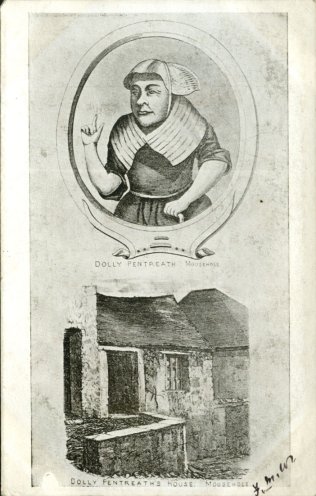
According to her gravestone, which can still be visited today, Dolly Pentreath was the last known speaker of Cornish. Dolly, who only learned English as an adult and whose last words reportedly were “Me ne vidn cewsel Sawznek!” (“I don’t want to speak English!”), had a fierce reputation and was known for smoking her pipe and using profane language. Some thought her to be a witch. There is some controversy as to Dolly’s status as the last known speaker of Cornish, with some arguing that John Davey who died in 1890 should have that honor, others stating that Cornish has never really died out.
Fun Language Fact – Efforts to revive Cornish have been moderately successful and Cornish gained official recognition under the European Charter for Regional or Minority Languages in 2002, and in 2008 a Standard Written Form was agreed upon.
Last known speaker of: traditional Manx
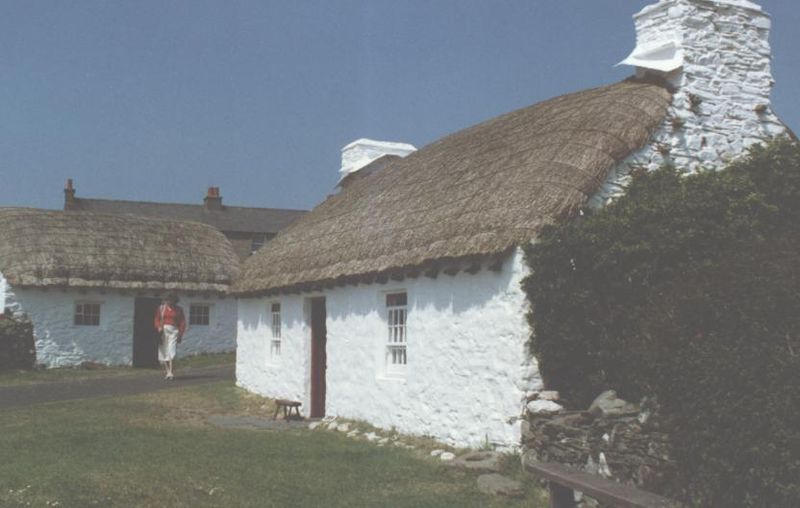
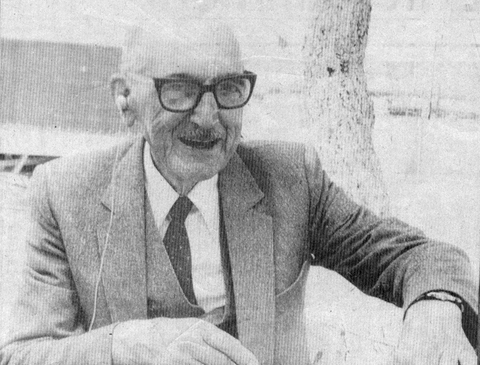
As with Dolly Pentreath, there is some controversy as to Ned Madrell’s status, however he deserves credit for the role he played in linguistic preservation. Ned, a fisherman from Cregneash, travelled far and wide but spent his last decades on The Isle of Man teaching younger revivalists and recording his conversations to preserve the language. He is remembered as being a cheerful man who was proud of his minor celebrity status.
Fun Language Fact – There have been efforts to revive Manx since Ned Madrell’s death and there is now a primary school, Bunscoill Ghaelgagh, where children are taught solely in Manx.
Last known speaker of: the Ubykh language
The Ubykh language is a North Caucasian language originally spoken along the shores of the Black Sea until its speakers were forced out by the Russians. They eventually settled in Turkey, and it was there that language died. Tevkik Esenc was an intelligent man who spoke several languages and he worked with linguistics to record the language as he was well aware of his status as the last speaker. Some of these recordings are available on Youtube.
Fun Language Fact – Ubykh was in the Guinness Book of Records for being the language with the most number of consonants.
Last known speaker of: Warrunga
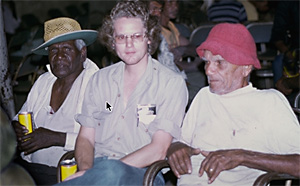
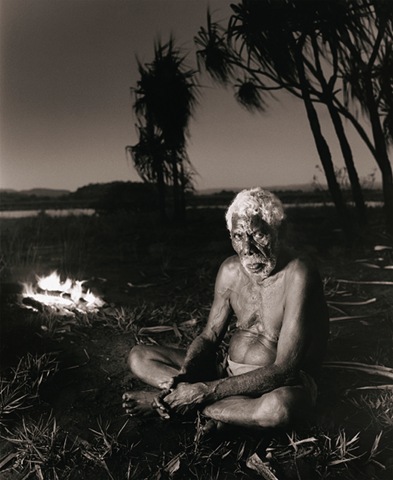
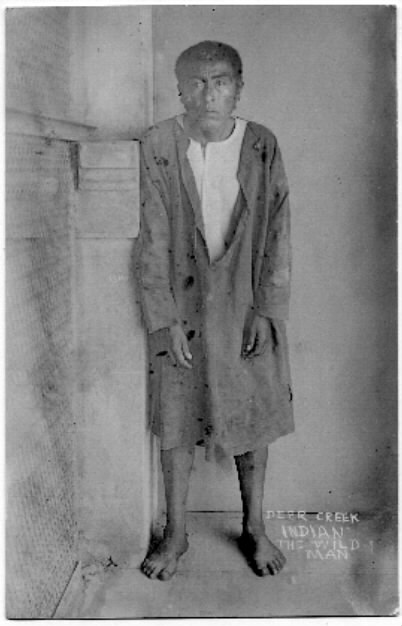
Little is known about Alf Palmer or Jinbilnggay as he was known in his native language. He was born and died in Townsville, Queensland, Australia and, like many on this list, was keen to play his role in trying to preserve the language. He worked with linguists from Japan and Australia and proved inspirational in alerting linguists to language loss. He is pictured on the left above.
Fun Fact – These very linguists returned to Townsville a few years ago and are working with Alf Palmer’s descendants in attempts to revive the language.
Last known speaker of: the Mohegan Pequot Language
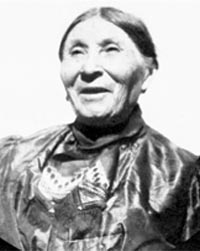
Fidelia Fielding or as she called herself Dji’ts Bud dnaca (Flying Bird) is remembered as being something of a loner who kept to herself. However she should not be dismissed and she is an important and respected figure in the history of the Mohegan people. She was one of the last people to live the traditional Mohegan lifestyle and she mentored Mohegan anthropologist Gladys Tantaquidgeon. After her death, four of her diaries were found. These are now housed in the Museum of the American Indian in New York City and have been studied in efforts to revive the language.
Fun Fact – On May 24, 1936, an estimated 1,000 people gathered at the Ancient Burial Grounds of the Mohegans, Fort Shantok State Park in Montville, to pay tribute to “Flying Bird”.
Last known speaker of: Dalmatian
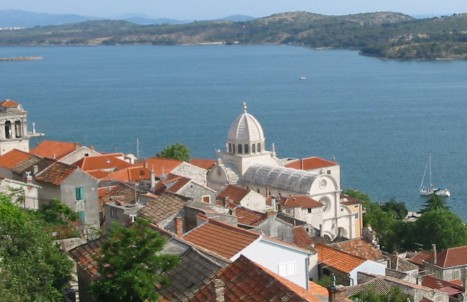
Tuane Udaina was not actually a native speaker of Dalmatian. He picked it up from secretly listening to his parents’ private conversations. Despite this, and the fact that he was deaf and had not spoken the language for 20 years, he was approached by linguist Matteo Bartoli in 1897 to try to record the language. Previous documentation of the language dated from the 13th – 16th century. Sadly, Bartoli’s original work (in Italian) was lost, existing only in a German translation, until 2001 when it was re-translated into Italian. Udaina himself also met an unfortunate end, being blown up by a landmine on 10th June 1898.
Fun Language Fact – Dalmatian, a Romance language with some similarities to Romanian, was spoken in the Dalmatia region of Croatia, with each town having its own different dialect of the language.
Last known speaker of: the Gagudju language
Big Bill Neidjie was always something of a local legend. He was born on the East Alligator River in Northern Territory, Australia. He had a traditional upbringing and was taught to hunt by his father and grandfather. He was known throughout for his physical strength and physique as well as for his commitment to conservation issues and the rights of indigenous Australians. His fame grew when he was featured in National Geographic Magazine in 1988 and he was awarded the Order of Australia in 1989.
Fun Language Fact – Like a number of indigenous Australian languages, in Gagudju it was taboo to discuss traditional secrets, passed from generation to generation, with outsiders. When Bill became aware of his fate, he faced the dilemma of breaking taboo or letting his culture die completely. He chose to break taboo and pass the secrets on to a select number of people.
Last known speaker of: the Beothuk language (and last member of the Beothuk)
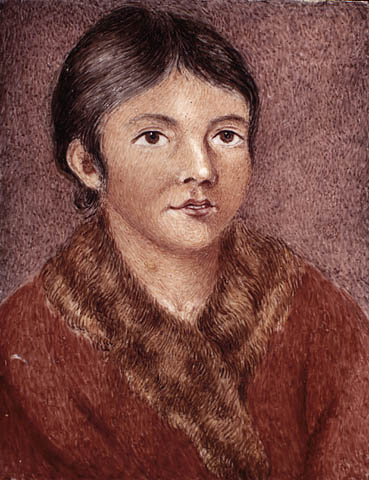
Considered one of the most notable people from Newfoundland, Shanawdithit had quite a sad short life. Having lost most of her family either to TB or attacks from the British, who regarded her people as thieves, she spent the last few years of life working as a servant before also dying of TB. Shanawdithit was taught some English by the philanthropist William Epps Cormack, in whose house she spent some time. She proved talented at drawing, and it is through these that we know about the lifestyle of the Beothuk. There is a sad postscript to her life, her skull was taken to the Royal College of Physicians in London, where it remained until it was given to the Royal College of Surgeons in 1938. Unfortunately, her skull was destroyed and lost during the Blitz. The rest of her remains are buried in St John’s, Newfoundland.
Fun Language Fact – There is debate as to whether Beothuk is a language isolate, unlike any other, or whether it is related to Algonquian languages spoken in Quebec and Labrador.
Last known speaker of: Shuadit (Judeo-Provençal)
Writer, librettist, philosopher and teacher, Lunel was born in Aix-en-Provence, France, where his family had lived for centuries, but later moved to Monaco. His writings were in French and he wrote about everyday Jewish life in Provence. 1968, a recording was made of Lunel singing in his language but he died before another recording could be made.
Fun Language Facts – The origins of Judeo Provencal are something of a mystery to linguists, documents in the language go back to the 11th century. Its use declined rapidly after the French Revolution.
Last known speaker of: the Yana language (and last member of the Yahi)
Of all the things we know about Ishi, his name isn’t one of them. Ishi is simply a pseudonym meaning “man” in Yana, the language of the Yahi. It was considered taboo in in Yahi society to say ones own name, so Ishi’s real name died with him. His story – that he went into hiding after his family was killed, before being found by a group of butchers- has continued to intrigue. Documentaries, films and stage plays have all been made about him and many aspects of his life are still contested. Sadly, Ishi did not have the long life that others on this list have enjoyed, dying of tuberculosis in 1916.
Fun Language Fact – Thanks to linguist Edward Sapir, who worked with Ishi, Yana is relatively well documented compared to other extinct American languages.
Last known speaker of: Eyak
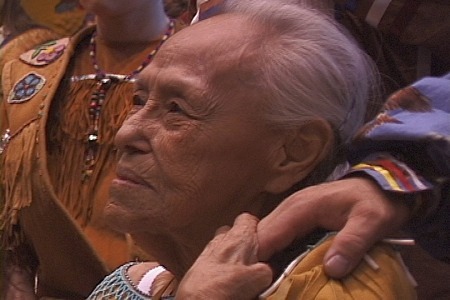
When Marie Smith Jones died early last year she received obituaries from respected sources all round the world, perhaps indicating that language death is not just an interest of a few linguists. Smith, the last full-blooded Eyak, only really became politically active after the death of her sister in the 1990s made her the last speaker. She had declined to teach her children the language because of social stigma attached to it. However in her later years, she helped work on an Eyak dictionary, became active in environmental concerns and twice spoke at United Nations on peace and indigenous languages.
Fun Language Fact – Eyak was originally spoken near the mouth of the copper river in Alaska. It has now become a symbol in the fight against language death. It is the first known native Alaskan language to become extinct.
Last known speaker of: Dura
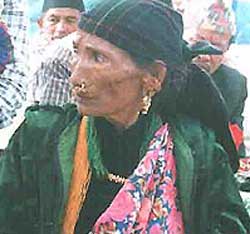
Coincidentally, mere days before Marie Smith Jones died, British news sources made us aware of the plight of 82-year old Soma Devi Dura, the last know speaker of the Dura language of Nepal. Soma Devi Dura is partially blind, deaf and in failing health but is described as being a rich source of songs and folklore in the Dura tongue. Kedar Nagila, who is studying for a PhD in Nepalese languages has been working with Dura and trying to get her medical help. As of April 2008, Dura was still alive, but news of her since then has dried up.
Fun Language Fact – Dura is one of over 120 languages spoken in Nepal, but due to a “one-nation, one-language” policy instituted by the Shah dynasty, up to 96% of these are threatened with extinction.
Contributor: Handrejka


One thing that I recommend to people who have to interact with anyone who speaks another language. YELLING ENGLISH AT THEM WILL NOT MAKE THEM UNDERSTAND. Not only do they not understand you but they also now think of you as a dumbass prick.
For english speakers (Specifically American), Learn a second language. Pretty soon the best jobs are going to be in street hustling and it’s hard to do that when you can’t understand the language of the country that just Bought you.
Not quite sure which word it was that put me into Mod., D-bass, or “P. Rick.”
astraya, welcome home!
where are you now?
Great work my friend. That is the history of the loss of ethnies with the principle that says: “listen man, you are one and we are 10, so you better shut you mouth and just repeat after me!!” Well this is a old world and nothing change really
35. Frank : There’s a whole industry for people who speak more than one language. Picking one language for the whole world to speak isn’t going to be easy. I personally don’t see it happening anytime soon, and I don’t even think it’s inevitable.
anyone who remembers me from other lists may know i hold multi-lingual people in the highest respect! always admired it, then i tried to learn spanish (latin american version) as an american with no non-english skills other than some half-hearted latin in high school a decade ago, sigh, (i’m still working on it). learning a 2nd language as an adult can be devilishly hard for many of us.
but it’s always worth it! my multi-lingual friends speak of how thoughts themselves form differently in different tongues. knowing this, the idea of isolating language from culture becomes laughable.
so, do we need 7000+ languages? no. does it enrich humanity to have them? hell yes
it might be easier if we all spoke one basic language, but sharing the poetry of our souls and the details of our different lives would be lost by doing so.
126. lo : I have this terrible habit of posting, and then soon afterwards someone expressing my points in a much more articulate manner. It’s rather annoying, but well put and good point
For all of you who wants just one language:
What about all the historical material that are written in the different languages, should all of that be translatede into English (I pressume that is the language you want)? I would be real sad to see that the Islandic Sagas was only avaliable in English and not in its original form.
Many languages also have words or terms which are impossible to translate, we have the word “hygge” which is one of the most important words to discribe our relations wíth other people, moods and situations, but it can’t be translated and no one outside of Scandinavia! I would be such a loss for our culture to lose our languages, but perhaps all of you who wants just one language also wants just one culture?
Val: You’re trying to refer to English and French in Canada I believe- you’re touching on a deeper problem than you know. I grew up in Ottawa, and was in French immersion programs from the age of 10 until well into university, and I’m still not “fluent.” This is because we’re taught classical French, with an overemphasis on grammar (ie: verb conjugation). We’re not taught “Quebecois” language, and not much time is spent on developing real conversation skills.
I think English people tend to have trouble learning second languages because most of us don’t get to flex those muscles very often- when English is everywhere, our brains get lazy for absorbing other languages.
I feel Astraya’s pain, as I live in a very “Korean” city in Korea- as in, a city that has not had many foreigners until recently, where most people are unable or unwilling to speak English. During my workday I only speak to my two co-teachers most of the time. My other colleagues rarely try. I’ve been trying to learn Korean- but y’know, it’s HARD. I only have the most basic bits and pieces, not enough to have real conversations.
I’ve learned in the last six months that anyone who speaks English has won a global lottery. No matter where you go in the world, you’ll never have to struggle to communicate. And English is a really freakin hard language to learn too- full of exceptions and weird rules and letters that sound the same.
@12: Frank.
Language, politic, religion? “Yes miss , I’ll take a bag please”
It is believed that once there was only one language witch split in many; and I’m no bible lover. You are talking globalization, is that a good thing? In this globalization thing I see that the strongest has to predominate no matter what.
Hope you strong enough to survive the next wave of strongers. Else your culture, your loves gonna become laughed at and, in a general word, your life will become only a step up toward the raise of the Superiors coming. In that case, my friend, don’t whine on yourself, just be proud to be the humus witch fertilized the next temporary top selection of the humankind.
Sorry to say, you are of importance in this world as unimportant you think minorities are. You gonna be the next meal, just give it a little time
)
Well now I like progress, I do. Progress is just fine. But progress should carry all their children all the way up not discard them as “has been” or irrelevant.
But it was a nice mail Frank
)
@14: Mark
Since when you do your best to destroy something and it does not happen? Believe me I did my best to destroy things around me. And you know what? I didn’t want to break them really. But then I had a look back, and you know what(again)? All those things were broken… *****, how could this be, surely the thing happened while I was looking away.
Hmm I’m still a little surprised today, can’t still fathom it. There lay a mystery
But the worse thing is: am I to use the little experience I got to make things better or am I going to plunge again in the turmoil’s of life and device other way to destroy you and me? Wish I could say I became wise but still I’m afraid what I’m going to look at ten years from now.
@17 Signe
That’s my boy or girl. Well said.
@19 Larry
Hmm Yeah, the question is: Do we have to annihilate sub cultures to reach that greatness? (sub cultures is erroned since it implies that some cultures are under other cultures witch are not)
@30 Copperdragon
) Live the ioukoolele!!!!, no idea tough how to spell that word.
)
) Hmm not sure but cats are trying to show me something. Not being funny with you Copperdragon.
Been in those islands, little more east though. Can’t say I understood a word when they were talking their idiom. But the warmth was there, somewhere, present. That is an enough way of communication. Anytime I’ll change those non-words for my mobile phone; Polynesia was a great thing. My love to the people of Punauiia (and around) – Tahiti
Wish I could speak whale too, last I heard they don’t have ego conflict
Hei guys that was a really good subject; for my taste anyway
)
Both 11 and 12 (traditional Manx and Cornish) Seem to be very similar to Gaeilge (the native Irish language).
With Cornish “Sawznek” means English.
In Gaeilge, Sassanach is the same (its often used in a derogatory sense) and is just spelt differently, which would be down to the Anglification of the Language, like was done with Gaeilge. (In fact, Gaeilge was outlawed for some time by the penal laws)
With Traditional Manx “Bunscoill Ghaelgagh”, would be very similar to Bunscoil Gealach, meaning the same. (I can’t use traditional punctuation marks, like fada’s and sebuailte, here and I assume Manx uses similar punctuation) In fact, I’d hazard that Manx is more of a Dialect of either Gaeilge or Scots Gealic, not a bonafide standalone language..
I am a language teacher. I’d like to point out a few things.
While language certainly is a way to communicate culture, it is not a separate thing from it. Language IS culture. A culture cannot be separated from its language and expected to remain the same. ONLY in one’s mother’s tongue can one represent their true heart and soul, and more imporatantly to that hackneyed phrase to represent the meanings inherent in their culture. No other language can conserve and express the emotions and concepts of a certain culture in the way their own can. Because language and culture go hand in hand.
I assume none of those wishing for a united world language are meaning that people should forcibly be taught english (since that’s what you mean), but that as a natural process people should “end up” talking one language. I appreciate the motives behind that wish as such, but I see them as misguided. It’s a selfish wish. One should not ask for others to understand him and erase the difference between them, one should try to understand the other DESPITE the differences.
I know this isn’t the “same” thing, but from saying that people should only speak one language to minimize the ease of trade and have less conflicts based on difference of understanding, it is not a great conceptual leap to say that:
“People only should have one culture/cultural habits as well, (preferably my own), since everyone behaving the same and having the similar cultural meanings would most certainly make trade more profitable and understanding between “different” people easy and painless.”
I’m sure most wouldn’t what THAT.
Very interesting list. I like these kinds, even though I will probably forget everything, this is good stuff.
A truly fascinating list, as a speaker of what was a banned language for a while, Scottish Gaelic, I can only relate to these people. However i think Cornish in some form is making a return. Sadly sure it is however not the original spoken version.
In my original Islands there were numerous dialects, with widly differing words for the same thing. After just about 40 years since leaving the I slands I have however became very encouraged with the new found interest in my own spoken language.
My grandchildern are learning it along with several others. I hope no one else should be added to this list, when a language dies so does the culture and ambitions and achievements of the people who spoke it.
Tir Gun Chanan
Tir Gun Anam.
Shar: From the theory I has to learn for my Leaving Cert it seems Manx, Cornish, Irish, Scottish and Welsh are all Gaelic languages, share many similarities, but ARE seperate; just with very many constructive similarities. I know on several occasions I’ve turned on the satellite tv (I got my education through Irish and can speak it fairly fluently), to a Welsh programme, and have spent several minutes concentrating very hard, convinced I was hearing an especially thick Donegal cainiúnt!!
Linguistic diversity shows so much more than sounds and speech patterns. Look at Hiberno-English, http://en.wikipedia.org/wiki/Hiberno-English even when the language changed to English here, the echos of Irish permeated throughout the language and renders it quite confusing sometimes for Americans and to a lesser extent Britons.”Did you see her you did? Oh I’m just after seeing her, and she just over the bridge”.
In Irish we have a word “suaimhneas”, it cannot be directly translated but it is probably the most beautiful Irish word. We also have “glic”, “trína chéile”, “cuideachta” all of which can be SORT OF explained, but not exactly, I wouldn’t swap that for the world. We have no one word for yes or no; a result of the Irish tendency to talk! Unifying language would force me to lose these words and their very specific meanings, and my own unique way of speaking the english language. To what benefit? Mere expedience?
No thank you.
M Mac, aontaím leat, tír gan teanga, gan anam.
Sin e, Hiamn agus M Mac. Ta an teanga cosuil le sreag go dti an re ata imithe. Ta orainn e a cionnigh.
Hiamn, ta mo gaeilge go donna, ach ba mhaith liom e a can aris.
OK, I just wrote this HUGE reply and something went wrong. But I want to reply here, so I guess I’ll just have to start all over again.
What a great list! I’m ashamed to say I didn’t know ANY of these. How bad is that?
This is one of the first lists where I actually read all the comments. So I’ve got something to say, too.
I don’t think we should have one universal language. There is such diversity in languages, and I can understand if you can’t learn another language you’d want only one, but I still don’t agree.
How many ideas have become last because there was no one to write them down, to translate or record them?
I am Dutch myself, and the Dutch usually pride themselves on knowing at least one other languages (which is, in 90% of the cases English, and then possibly some German on the borders). For a long time, we have had to take at least one foreign language at school. By now, English isn’t even considered a foreign language anymore, and you have to choose French, German or possibly Spanish or even Chinese. Spanish and Chinese weren’t offered at my school, so I had German and French first and then I continued with French. I’ve also done a special educational level where I’ve had half of my lessons in English for three years. Maybe it is hard for you to imagine, but that’s had a huge impact on my life and the way I view languages. I think I use English now more than Duth. And I do like Dutch. There are some words, like #134 Hiamn said as well, that just can’t be translated into another language. ‘Gezellig’ in Dutch comes to mind.
I also have Latin and Ancient Greek at school (and attempting to learn Hebrew, but it’s hard without a tutor). I can’t say too much about church Latin, but I know that I get a kick when I recognize something that comes from a Latin or Greek root. Knowing Latin has helped me with French, English and even Dutch. Because I know the Latin cases (nominative, genitive etc), I know what their Dutch translations (onderwerp, bijvoeglijke bepaling) mean. It’s definitely helped me, and I’ve guessed the meaning of many words (usually correct) by looking at their Latin etymology.
My fingers are hurting, so I will stop now…
Anyone know who was the last person to speak Esperanto?
81 GTT: Aye (yes), yon mon (the man over there) wer agait hooam (was going home), hopple (walking haphazardly) deawn th’ rooad (down the road), gabbin’ (saying) “Werk, an’ dorn’d booze! (work and damn alcohol!) , nor – wod is woss (No! – what is worse) – Put yo’r last stake on a ‘done’ hoss” (would be to put your last hope in an old nag [a worn-out woman].
Aye (yes), ‘as benna (I better) gi’ up (give up) fooin (fooling/messing) ‘reawnd nawe (around now) [nawe is today more commonly pronouced neah – similar to yeah).
And old Lancs is one that is still clinging on – being watered down generation by generation, until today it is more like a mild English variation; and seen as a ‘lazy way to speak English’ rather than the intricate sub-language it once was. Shame….
Anon: The last I’d heard was that there were still speakers and there was at least one country where it is the national language; http://www.esperanto.net/info/index_en.html
I you want to read more.
a blogball style list not by blogball.
interesting thoughts swirling in my head Handrejka. thanks.
Ishi has been a facination of mine from the first time i read about him years ago. there are some legitimate arguments out there against him actually being who he was thought to be. in any case, audio recordings of him singing , still exist .
talk about your sad songs.
human history itself is something of a dead language.
like a coral reef babel
16 scottybgood
I know a little bit of Dalmation, but my understanding of it is a bit spotty…
One of the first cars I spotted (hahaha!) on the motorway from Sydney airport this morning had the number plate “ARF”.
Seriously, I made a comment about the loss of community faced by these people. I was assuming that these people were the last people in their communities. That may not have been the case. Some of these people may have had children or grandchildren who spoke the majority language but not the ancestral language. These people would then have been alienated from their own families.
My wife has just had a longer conversation with one of my nieces (in English) than I have had total (in Korean) with all of her relatives in the almost one and half years that I’ve known any of them.
Jessy: Hi. Glad you’re still around. I want to resurrect my “(teaching English) in Korea” forum with stories from my time there. I’ll leave a not here when I’ve done that.
I am no linguist. I speak very little compare to the range of spoken langue to this day.
Some I noticed though. French uses “Je”, the German “Ich”, the English uppercase letter ‘I’, the Scandinavic “Jeg, Eg and other” referring to themselves. Spanish, in other hand, and I’m not Spanish, have pronoms too in their vocabulary but rarely use them or then only to stress a meaning.
This came to my mind reading about the guy called man, wish I believe is a very good name.
cornish lol. I am cornish and now that the british government has decided we need to revive our language we now have to learn it in secondary schools. All I can rememberer is, pelgozer-telephone, dreckly- directly and ritonmahcock- yes, that is a favourable proposition. If anyone is interested you can gat t-shirts hoodys and stuff with cornish sayings on from http://www.spin-a-yarn.co.uk/ they’re pretty damn good
Hi Sarah. I didn’t realise Cornish had become compulsory in schools. I live on the Isle of Man – and speak some Manx – and Manx is still only taught as an option here.
another language that is no longer spoken today is the lenguini fetucini (famous for its “amberge” word which means hamburger).last known speaker is jack clossaue- fictionalized in the pink panther…
Just a note on the Dalmatian language. Dalmatians today speak a very _very_ wide variety of languages and most of them don’t even know it, because Dalmatia is in a very tricky spot, bridging conflicting cultures even today.
I’m not an expert, but I can say that Italian, Turkish, Greek and German had a major influence. This is felt even today, as nearly every city/town/village had a “special” dialect and unique expressions. This is even more obvious when you realize that people from the Dalmatian mainland have trouble understanding people from the Dalmatian islands (I’ve spent nearly 20 years on one of those, so I have a lot of first hand experience).
It’s even more interesting when they try to talk to people from Zagreb.
Oh yes, and I speak Esperanto as if I live there.
I’m sorry to say this,but language ”Dalmatian” does not exist. I’m Croat and I’m telling you the truth – it doesn’t exist. In Dalmatia people speak different dialect, but not another language and they never did, at least it was never called ”Dalmatian”. I don’t know anything about Tuone Udaina so I can’t speak about him, but never through my education has there been any mention of Dalmatian language. So it’s a dialect influenced by all sorts of other languages through history and nowadays Dalmatian people speak really different from other Croatians. There are also other parts of Croatia which are special for their dialect and by the way one talks one can make out from which part of Croatia he or she comes from, but these other dialects aren’t called languages so there is no point in calling Dalmatian dialect a language. I don’t mean to offend anyone it’s just that by the comments I can see that a lot of people really think that you can learn Dalmatian or something. That’s wrong, the only language you can learn is Croatian.That’s all! Cheers!
Dalmatian dogs are beautiful. That`s all I know about Dalmatia.
Don`t they have hearing problems.
151. bigski: Don`t they have hearing problems.
What?
The breed is susceptible to deafness. Sorry after a few I get mixed up.
153. bigski: I know. I was being silly. It’s really a joke that only works in person.
When they have blue eyes they tend to blindness in middle life as well.
Excelent list!
By the way: the zoque language is used by some 70,000 people in central Mexico.
Every time when a language dies a whole culture is lost forever. My native language is spanish, and I love it. I speak “kind of” fluently english and I like to read english written authors -Joyce, Faulkner, Melville, Twain, etc… in english. I have read spanish translations of some of those authors and some beats are definitively lost in translation. You take for example Faulkner: he tries to write the Mississipi negro accent (i.e. ´sho´ for shure), (or shall we say ´dialect´?) because he tries to show the cultural differences on his mythical Yoknapatawpha County. Of course, he is pointing out that language matters…
155. Spurious: My most sincere congratulations for being a native born Spanish speaker who has taken the time to not just learn English, but to be able to read, and enjoy, some of the finest of writers the English language has produced!
I can’t tell you how many supposedly intelligent English speakers get lost reading Joyce, or Faulkner or some of ‘the beats’. I love the writers you mentioned, because they stretch the boundaries of language, just to make sure every nuance of dialect comes out sounding correct.
I also love Tolstoy, and if you haven’t tried him yet, please do. Ah! I have too many authors to recommend, that if I started I would never end!
I’m proud of you. That’s really all I wanted to say. I made you other points many posts ago.
Sadly, the lose of languages is at this point truly inevitable. At least as a means of primary communication. As the world grows more and more connected regional differences dwindle, languages merges, words shift meanings, and new words and connotations are made.
All languages came into being due to barriers between people, mainly by distance and isolation. Once those barriers fell languages started dieing. Only those held dear by a group of people will survive.
All in all, I’m not for a universal language nor for propping up dead or dying languages. While I think the heritage should be preserved, that is ultimately up to the inheritors of that heritage to do so.
Also @Burgerbuddy
You seem to have a fear of “elites” and of technical jargon out of proportion to the truth. While technical jargon to a layman seems only to keep you from understanding what you believe should be self evident is far from the truth. That jargon is used so those people familiar with the field can express and allude to more complex issues. Much of the learning involved in these fields is by defining these abstracts, naming them and understanding them.
By stating that all these people who have learned a specific field be it medicinal science of one out of hundred of specialties, law of one nation for one specific code and various court procedures, a field of science again of so many variations, or one of the many others like Music theory, business, history, literature and thousands more be able to express all these widely differing ideas, theories, abstracts, interpretations CONCISELY and INTELLIGIBLY with a vocabulary that doesn’t range over five thousand words for most people.
That is hubris, and I love you all the more for allowing me to use that word I so rarely get a chance to utter.
George Bush deserves an honorable mention.
158. Gary Busey Is God: George Bush deserves an honorable mention.
****
That is the funniest answer I’ve seen on any list in a long time!
The Samis of Scandinavia and Russia had a hard time retaining their culture intact as they where forbidden to speak Sami. And now we’re talking only 50 or so years ago. Many young Sami today won’t bother to learn their own language. I think it’s really sad.
As for a World Language, I believe it would be a terrible idea – every language has its own peculiarities which cannot be properly translated. To me, that’s a good thing. Imagine all cultures being based on only one language…No thanks. I don’t mind a auxiliary language, which English is today, much like French was 200 years ago. Esperanto ? Maybe accessibility isn’t the most important quality when it comes to languages. Neither English or French are “easy” languages to learn, but they are without a doubt 2 of the most popular languages out there.
your missing a very ancient language the Aramaic language…you still have a minority in Syria that talk until now this ancient language, the language of Jesus Christ
I would gladly watch a biopic about Mary Smith Jones. She sounds like she was a very fasinating woman. She sounded very cool! The actresses playing her at the different phases of her life would no doubt bicker over who deserves the Oscar for Best Actress the most!
ive never heard of these languages except cornish and manx.
John Steckly at the who teaches linguistics at University Of Waterloo in Kitchener-waterloo is the last speaker of the mohicans, the language used by the mohawk aboriginal tribe of north america.
I’ve only heard of Mohegan Pequot out of all those.
What about Klavdiya Plotnikova, last native speaker of the Kamassian language (died in 1989)?
http://en.wikipedia.org/wiki/Klavdiya_Plotnikova
My family is of cornish decent and I have cousins who still speak cornish fluently. To say that it is a dead language is a falacy. They may not speak it as a first language but it is definitely alive and well in parts of deepest darkest cornwall. In some of the smaller villages and hamlets near the south coast a lot of the people prefer to speak it amongst themselves in defiance to the Londoners who have done a lot to homogonise cornwall and force the cornish out by raising house prices and buying up land only for use as holiday homes.
This list saddens me… But very informative! Haven’t heard of most of these… Except Manx.
Thank you for these fascinating and compelling facts and images! As a speaker of a dying language, I wrote this piece laying out our own perspective on language death. http://wordswithoutborders.org/dispatches/article/musings-of-a-terminal-speaker/
Any comments would be very welcome
awesome. Man I'd like to be one of those.
Hmm are there anymore speakers of Latin left? Conversational latin, not just for formal occasions as in the Vatican.
I can speak Dalmatian too…
WOOF! WOOF! WOOF!
There are literally hundreds of lost Indigenous Australian languages. It is really sad. Great list though.
WOW! this list made feel so ignorant! so much to know and learn about others.
Actually, I don’t think #5 is a painting of Shanawdithit, but rather her aunt Demasduwit…
Great list!