The industrial revolutions and the years following them produced some of the greatest inventions known to man – and certainly the most complex. Because this has been a part of our history for so long now we tend to presume that much of our modern conveniences have come from then. What is surprising is how many of the things that we use every day have been in use by humans for thousands of years. This list of ten things all predate the birth of Christ and they are all things that we are familiar with if not regular users of.
Plywood has been made for thousands of years; the earliest known occurrence of plywood was in Ancient Egypt around 3500 BC when wooden articles were made from sawn veneers glued together crosswise. This was originally done due to a shortage of fine wood. Thin sheets of high quality wood were glued over a substrate of lower quality wood for cosmetic effect, with incidental structural benefits. This manner of inventing plywood has occurred repeatedly throughout history.
Standardized earthenware plumbing pipes with broad flanges making use of asphalt for preventing leakages appeared in the urban settlements of the Indus Valley Civilization by 2700 BC. Plumbing originated during the ancient civilizations such as the Greek, Roman, Persian, Indian, and Chinese civilizations as they developed public baths and needed to provide potable water, and drainage of wastes. Improvement in plumbing systems was very slow, with virtually no progress made from the time of the Roman system of aqueducts and lead pipes until the 19th century. Eventually the development of separate, underground water and sewage systems eliminated open sewage ditches and cesspools.
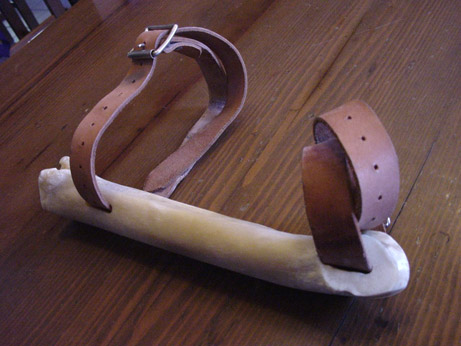
According to a study done by Federico Formenti, University of Oxford, and Alberto Minetti, University of Milan, Finns were the first to develop ice skates some 5,000 years ago from animal bones. This was important for the Finnish populations to save energy in harsh winter conditions when hunting in Finnish Lakeland. The first skate to use a metal blade was found in Scandinavia and was dated to 200 AD and was fitted with a thin strip of copper folded and attached to the underside of a leather shoe.
The world’s first recorded chemist is considered to be a woman named Tapputi, a perfume maker who was mentioned in a cuneiform tablet from the second millennium BC in Mesopotamia. She distilled flowers, oil, and calamus with other aromatics then filtered and put them back in the still several times. Recently, archaeologists have uncovered what are believed to be the world’s oldest perfumes in Pyrgos, Cyprus. The perfumes date back more than 4,000 years. The perfumes were discovered in an ancient perfumery. At least 60 stills, mixing bowls, funnels and perfume bottles were found in the 43,000-square-foot (4,000 m2) factory. Four of the perfumes have been re-created from residues found at the site.
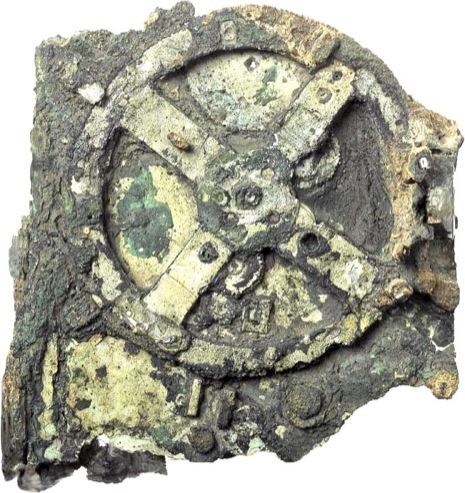
The inhabitants of the Indus Valley Civilization (c. 3000–1500 BC, Mature period 2600–1900 BC) developed a sophisticated system of standardization, using weights and measures, evident by the excavations made at the Indus valley sites. This technical standardization enabled gauging devices to be effectively used in angular measurement and measurement for construction. Calibration was also found in measuring devices along with multiple subdivisions in case of some devices. Metrology has existed in some form or another since antiquity. The earliest forms of metrology were simply arbitrary standards set up by regional or local authorities, often based on practical measures such as the length of an arm. The earliest examples of these standardized measures are length, time, and weight.
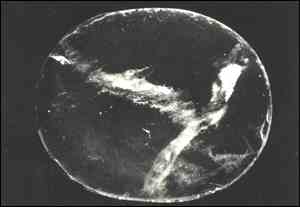
The Nimrud lens is a 3000 year old piece of rock crystal, which was unearthed by Austen Henry Layard at the Assyrian palace of Nimrud. It may have been used as a magnifying glass, or as a burning-glass to start fires by concentrating sunlight. Assyrian craftsmen made intricate engravings, and could have used such a lens in their work. Italian scientist Giovanni Pettinato of the University of Rome has proposed that the lens was used by the ancient Assyrians as part of a telescope; this would explain why the ancient Assyrians knew so much about astronomy.
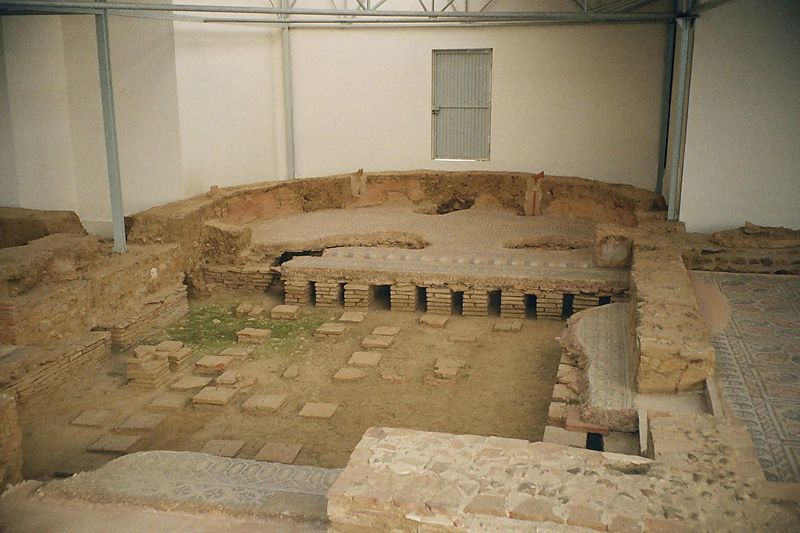
Cities in the northern Ancient Roman civilization used central heating systems from around 1,000 BC, conducting air heated by furnaces through empty spaces under the floors and out of pipes in the walls — a system known as a hypocaust. Hypocausts were used for heating public baths and private houses. The floor was raised above the ground by pillars, called pilae stacks, and spaces were left inside the walls so that hot air and smoke from the furnace (praefurnium) would pass through these enclosed areas and out of flues in the roof, thereby heating but not polluting the interior of the room. Ceramic box tiles were placed inside the walls to both remove the hot burned air, and also to heat the walls. A similar system of central heating was used in ancient Korea, where it is known as ondol. In the image above you can see the sections beneath the floor where the heated air would flow.
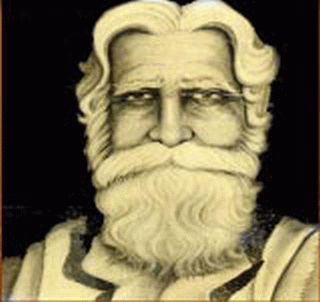
The earliest records of cataract surgery are from the Bible as well as early Hindu records. Cataract surgery was known to the Indian physician Sushruta (6th century BC – pictured above). In India, cataract surgery was performed with a special tool called the Jabamukhi Salaka, a curved needle used to loosen the lens and push the cataract out of the field of vision. The eye would later be soaked with warm butter and then bandaged. Though this method was successful, Susruta cautioned that cataract surgery should only be performed when absolutely necessary.
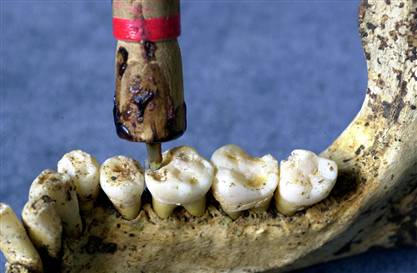
The Indus Valley Civilization has yielded evidence of dentistry being practiced as far back as 7000 BC. This earliest form of dentistry involved curing tooth related disorders with bow drills operated, perhaps, by skilled bead craftsmen. The reconstruction of this ancient form of dentistry showed that the methods used were reliable and effective. Cavities of 3.5 mm depth with concentric grooves indicate use of a drill tool. The age of the teeth has been estimated at 9000 years.
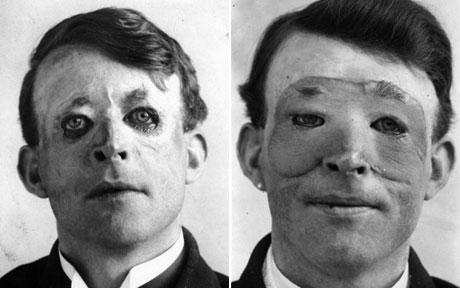
Plastic surgery is one of the oldest forms of surgery practiced. Nose-reconstruction operations were probably performed in ancient India as early as 2000 BC, when amputation of the nose was a form of punishment; the caste of potters eventually devised a method for rebuilding the nose by using a portion of the forehead, a technique still employed today. Some discussion of such surgery also appears in ancient Greek and Roman tracts. Pictured above is Walter Yeo, the first man to benefit from modern plastic surgery. The image on the right was taken after Yeo received a skin graft.
This article is licensed under the GFDL because it contains quotations from Wikipedia.
“Plastic Surgery,” Microsoft® Encarta® Online Encyclopedia 2008 © 1997-2008 Microsoft Corporation. All Rights Reserved.


Wow, you finished the list with mocking the less fortunate
how did they mock the less fortunate?
cyncity @ 29 and..everyone else: The descriptions of the pics in number one are misleading. The picture on the left is *after* the skin graft healed. What he looked like *before* the skin graft (pictured on the right) is not pictured at all. Here you can see better descriptions of the pictures:
http://www.mailonsunday.co.uk/sciencetech/article…
thank you for clearing that up! Also, reconstructed noses were commonly used for people who had lost theirs due to untreated syphilis.
wow awesome list, I knew most of these were old with the exception of plywood, and the calibrations. I was wondering if there are examples of what was calibrated. Did they have a standard distance? weight? etc
Cool list, and nice joke on N.1!
I dunno if this is against listverse typical workings but the calibration picture is reused in the “10 things you didnt know the ancients have” list. Does it matter? I dunno thought id point it out since Ive never seen a picture reused and ive seen more than 70% of all of them.
maximuz04: we do do it occasionally – the Voynich manuscript has featured a few times. The picture you are referring to was the best example of the type of item described so I figured it would be okay
Plus it is a different look at the object.
Stone aged guns on the list, g – weren’t prophylactics originally invented by the French, using lizard skins and severed pages of Bible hymns?
yo?
Oops – accidentally made a jajdude impersonation – my mistake
haha, crazy timing with this list. Earlier today, I read a news article about attempts to recreate Queen Hatshepsut’s perfume. frankincense was the preferred scent back in the day, apparently…at least with the Ancient Egyptians.
Is it weird that I think the picture #2 is creepier than #1?
Awww… too bad, this sounded like an awesome list but unfortunately nothing I didn’t already know.
Wow, cataract surgery and central heating have been around a hell of alot longer than I would have ever guessed. Gotta love the education via Listverse!
#4 There was no Roman Empire in 1000 BC…
Did you mean 100 BC?
Diamond_dragon – I know it is mean – but I couldn’t resist
ouch that drill doesnt look very friendly to bad they didnt have any procaine back then…
Bunbun: you are right – what I should have said (and I have now corrected it) was Ancient Roman civilization which WAS around in 1,000 BC.
And to think of the Christian missionaries who came to India to teach us civilization!
Number 1 is SICK.
Holy sh*t the image on #2 freaked me out..
Interesting list but most of it must be known to most of the people here..
to #15 Quirky thought-Righto pal!India was much ahead than the westerners centuries back..!!Just the fate of luck favoured them more…
about no.8 i think it is finnish lapland not lakeland.
mr.bajracharya: The Finnish Lakeland is a lake region
I got so excited I was going to learn new/old inventions…too bad most these I already knew (cataract surgery you shocked me!) but still not a bad list
OK… I know many of you will criticize me (again!) but I believe there is one missing on this list and it is: *****.
Yes, ***** is believed to date back to the primates. There have been several images found in ancient cities, tombs, caverns, etc… documenting the human naked form and the interaction of both female to female and female to male *****ual activities. Many believe ***** is a 20th century invention… you are wrong! People would exchange not only rocks with graphic imagery as well as humans (some times animals) for goods and services in order to satisfy the carnal desire.
That is all… thank you.
Travis: I was hoping the list would include ***** toys. XD
@lostagent : during my research for the veracity of the list made by jfrater… I came across an ancient object that we would call in our days as a Dildo. Yes, it is true. It was a rock shaped as a penis used to “de-virginize” girls so they would not be sacrificed for religious reasons.
LOL @ the ice skates
You would have a major fail on those things xD
I love this site. It is one of the few un-banned things on the college computers
So it kind of stops me from dying from pure and utter boredom…
Thanks
i used to live/work in korea, and the use of their traditional form of central/ underfloor heating dates from about the same time period as the roman example in number four. it’s called ondol and there’s more info at faithful old wikipedia (http://en.wikipedia.org/wiki/Ondol).
So the dentist’s drill is even wore than a medieval torture device. I KNEW it.
weird..
WOW. Number 1 is something else! I think I would just keep the first face…the second one is not that much better.
great list! i coulda geussed at a few, but i never woulda thought plastic surgery.
A few hundred years ago dildos were made from bread. By the Victorian age, it had moved up to glass.
The picture of mr surgery is awesome. I would’ve loved to see him walking about
On Travis’ note: http://en.wikipedia.org/wiki/Khajuraho. Ancient Indian erotic sculptures. A whole dance style (called Odissi or Orissi) has emerged from these *****y little sculptures, and it’s completely accepted in India, but it’s well sensual. They perform dances about breast milk and *****ual pleasure.
I don’t know what to call you, because “moron” would be an appraisal. Those sculptures are 800 to 1000 years old. Odissi is 2100 years old. Inbred!!!!
@paro : thanks for the add on!! helps prove my point.
Those ice skates totally look like something out of the Flintstones cartoon. I can just imagine Barney wiping out on those things..oh Barney and your shenanigans.
Interesting list, thanks for sharing.
I’m just reading #5… I’m so proud of being Assyrian
Speaking of Assyrians, tomorrow (1st April) is the Assyrian new year… year 6759.
Happy Assyrian new year for everyone out there
Interesting list. I wonder when anaesthesia was available?
Actually I saw a documentary where they performed brain surgery totally without pain killers and even without surgical tools. It was done with a rock! He had the surgery because he had headaches. They found a mass in the spot he had pain and removed it with a sharpened rock. The man survived and did’t suffer any effects after that. Very gruesome, but cool.
What about the battery and the steam engine?
I only knew a few of these. Wow to those that said they knew them all. Travis: I totally believe you about ***** being around forever. However, the ***** toy was what would have been a bit more interesting. I never thought to research the history of the dildo.
I think I missed the joke in #1 or JFrater removed it.
Didn’t they find a four thousand year old copper coil inside a thingumibob that was a battery used for electroplating.
And i thought i read that the ancient greeks or romans invernted the steam engine but couldn’t get it to work properly as they were unablr to control the high pressures involved.
And how about the roman cosmetic cream discovered in london a year or two ago. It was in a sealed metal container and the cream inside was still there and even had the finger-width grooves from some ancient roman lady scooping it out.
And patterned blown glass
I love the crazy history lists. Humans have always been intelligent and creative at problem solving. It shouldn’t be so surprising how ancient people came up with things, but it always seems to be.
Re: *****
***** in the modern sense (i.e. commercial product emphasizing the ‘perverse’ act *****) was a product of the Victorian Age especially due to the advent of the photograph, which can replicate images and sell them at large profit. But by no means is that the earliest. Rococo artists, like Fragonard of the late 1700s would be commissioned by clients to include a titillating display of ankle or wrist. His most famous work “The Swing” was commissioned by a man who is portrayed lying in the bushes gazing up the skirt of a woman on a swing (modeled by his mistress!). Although, the Kama Sutra is ***** staple now, I’m hesitant to include it in the ranks of ancient ***** as it was of religious nature for that particular culture rather than for the taboo nature of *****. But take a look at any of the more risque vases of Ancient Greece and one can see ***** has been a mainstay of human culture for centuries. It has not been determined yet, but discussed that the Venus of Willendorf (roughly 24,000-22,000 BCE) and other fertility statues of that theme are purposely phallic in design as a predecessor of the dildo.
Discussed where, you ask? Why, I learned this all in school! And people think art history is boring…haha…
jfrater-
31. Jackie is correct, the wikimedia picture of #1 is mislabeled, at left is the “after” face, at right is a “transitional” face.
the “original” battle injury face -hideously burned and disfigured during wartime, can be seen here, scroll down on the left:
http://www.dailymail.co.uk/sciencetech/article-1050139/Pictured-First-plastic-surgery-saved-officer-horrific-injuries-First-World-War.html
“Walter Yeo, who suffered terrible facial injuries during the naval Battle of Jutland.
Warrant Officer Yeo’s injuries, while manning the guns aboard HMS Warspite in 1916, included the loss of upper and lower eyelids.”
basically, all the “eye-mask” shaped skin area in picture #1 here, and more of his cheeks was charred off like a steak dropped into the coals.
it’s upsetting me that people think that’s funny, including you jamie.
gabi319:
We had similar schooling, I see…
Nice list! The plastic surgery pictures are interesting…
22. Travis, I don´t mean to criticize you, but there´s a major flaw in your statement. Do a little research on the word “*****ography” (etymology and origins) and try just for a minute to detach yourself from prejudices and dogmas bred in the Victorian era.
Maybe then you´ll see my point.
I guess 45. gabi319 IS my point.
@psychosurfer : define *****ography… (in your own words)
Eroticism is different from *****. The erotic sculptures in some Indian temples were perhaps there for any number of reasons. Depiction of ***** does not become *****. ***** is abusive, and is based on instant gratification needs. These were open. In societies like really ancient India, men and women wore little. Women could be bare chested too. then again, on temples, it could have been a message: leave behind your carnal desires, your earthly bonds. come across the portal and meet the divine…. Or it could have merely been educative. In India, religion was never separated from life… its foibles, its daily grind, its mundaneness. I hope it helps.
The ancient “jar battery” that was used for electoplating is known as the Baghdad Battery. (wiki link: http://en.wikipedia.org/wiki/Baghdad_battery) The jars may date to around 250 BC, but according to wiki, this estimate may be off, due to incorrect record keeping at the excavation. Also, it was noted that the copper cylinder was completely sealed off, with no apparent wiring to hook up any likely created voltage. There is a lot of speculation about these jars, all of which are technically plausible.
At first, I wondered about the exclusion of the Baghdad Batteries from this list, but when I read up on them, their use remains enough of a mystery that you can’t really call them batteries. No one knows what they were for. The could have been extremely low voltage batteries, or, as one theory states, they may have been scroll holders.
Either way, they are neat.
That is not a pile of plywood btw It is tongue and groove composite board. Very rarely would T&G be made from plywood.
@Travis. *****ography – mediatic concept which involves an immensely lucrative multinational industry established on the fact, that most of it´s potential western world clients, emanate from a post-victorian judeo-chritian based culture which nurtured guilt, remorse and specially repression on anything *****ually related, which eventually derived into all kinds of perversions, therefore assuring a consummate business.
I wasn’t surprised about any of the items, but of the surgical ones, wouldn’t want to undergo *any* of them at the time of invention. The pain alone could kill you.
As to the perfume; I totally believe that perfume was around 4,000 years ago. When I went to the King Tut tour, back in the 1970′s, I remember perfume jars being part of the items found. Also, my mum had a jar brought back from Egypt for her by one of her Uncles after WWI. It was an antique even then, and had held perfume so strong that the pores of the jar were infused with the scent. Every time you opened the jar the aroma would hit you instantly.
It was a beautiful scent, just all invasive.
@psychosurfer : I must admit, that definition gave me a semi…
MisterSir:
Don’t believe everything you read on Wikipedia. While the dating of the Baghdad Battery isn’t 100% certain, it nevertheless shouldn’t be off by terribly much. The more interesting question, I’ve always felt, was who first developed it. If it was the Parthians, they showed no other recognizable talent for such technologies. It seems more reasonable to me that it was inherited from the Greeks, who had previous ruled the region… but as with all manner of technology the Greeks had invented, they almost certainly faled to put it to practical use and so the knowledge of it was lost to time. We’ll probably never know.
As to the PURPOSE of the battery, however–there can be little doubt that its function was at it appears to be. The “scroll” theory is an old one that never held much water and has largely been discredited. The problem with the battery, of course, is that its function IS so bloody questionable. It’s been proven that it could have been capable of generating enough charge to electoplate small objects (i.e., a metal object–such as a small idol–is immersed in an acid bath containing dissolved gold… and an electric current is applied. The gold then adheres to the metal). But is that what it was actually used for? Nobody can say for sure.
But to me this little piece of novel technology with no apparent use SCREAMS of the Greeks. They apparently were responsible for many such lost and mysterious tools and novelties (such as the well-known Antikythera Mechanism and the steam-powered devices written of in later times) and it wouldn’t surprise me in the least to find that the invention of a primitive “battery” was theirs as well.
On the other hand, it’s not impossible that it originated elsewhere in the Near East. Again, without supporting evidence, we may never know.
cool list plastic surgery ouch not to mention seeing a dentist hell no i dont like it right now much lesser at those kinds of times. o and on comment # 37 tomorrow is actually the 31st so there is still 2 more days till april 1 st. sorry to burst ur bubble.
# 57 Travis – dont let it work up to an exploding head !
Good comment