
 Movies and TV
Movies and TV
Movies and TV  Technology
 10 Historical Inventions That Changed War Forever
 Humans
 10 Everyday Concepts That Are Shockingly Modern
 Animals
 10 Animals Everyone Gets Wrong
 Weird Stuff
 10 Bizarre Superstitions That Drive the Stock Market
 Movies and TV
 10 Films That Were Praised but Got History Wrong
 Our World
 10 Major Cities Being Swallowed by the Earth
 History
 10 Times Saying the Wrong Thing Became a Death Sentence
 Music
Music 10 Stars Who Secretly Wrote Hit Songs for Other Singers
 Weird Stuff
 10 Daredevils Who Treated Death Like a Suggestion
Movies and TV 10 Characters Who Never Forgot a Grudge
Technology 10 Historical Inventions That Changed War Forever
Humans 10 Everyday Concepts That Are Shockingly Modern
Who's Behind Listverse?

Jamie Frater
Head Editor
Jamie founded Listverse due to an insatiable desire to share fascinating, obscure, and bizarre facts. He has been a guest speaker on numerous national radio and television stations and is a five time published author.
More About Us
Animals 10 Animals Everyone Gets Wrong
Weird Stuff 10 Bizarre Superstitions That Drive the Stock Market
Movies and TV 10 Films That Were Praised but Got History Wrong
Our World 10 Major Cities Being Swallowed by the Earth
History 10 Times Saying the Wrong Thing Became a Death Sentence
Music 10 Stars Who Secretly Wrote Hit Songs for Other Singers
Weird Stuff 10 Daredevils Who Treated Death Like a Suggestion
Top 10 Common Faults In Human Thought
The human mind is a wonderful thing. Cognition, the act or process of thinking, enables us to process vast amounts of information quickly. For example, every time your eyes are open, you brain is constantly being bombarded with stimuli. You may be consciously thinking about one specific thing, but you brain is processing thousands of subconscious ideas. Unfortunately, our cognition is not perfect, and there are certain judgment errors that we are prone to making, known in the field of psychology as cognitive biases. They happen to everybody regardless of age, gender, education, intelligence, or other factors. Some of them are well known, others not, but all of them are interesting. I am sure everyone will find that one has happened to them, (I myself have been prone to several) and now will recognize when they are making an error in the future.
10 Gambler’s Fallacy
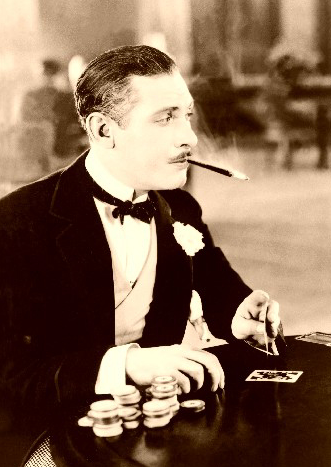
The Gambler’s fallacy is the tendency to think that future probabilities are altered by past events, when in reality, they are not. Certain probabilities, such as getting a heads when you flip a (fair) coin, are always the same. The probability of getting a heads is 50%, it does not matter if you’ve gotten tails the last 10 flips. Thinking that the probabilities have changed is a common bias, especially when gambling. For example, I am playing roulette. The last four spins have landed on black, it has to be red this time right? Wrong! The probability of landing on red is still 47.37% (18 red spots divided by 38 total spots). This may sound obvious, but this bias has caused many a gambler to lose money thinking the probabilities have changed.
9 Reactivity
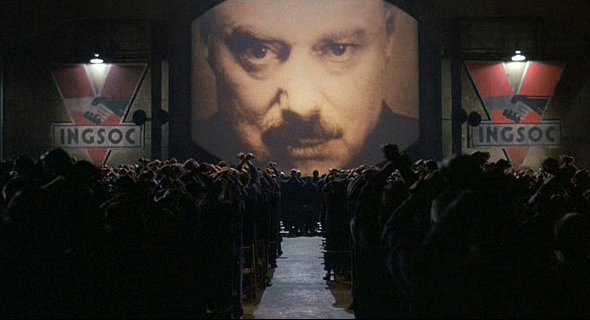
Reactivity is the tendency of people to act or appear differently when they know that they are being observed. In the 1920s, Hawthorne Works (a manufacturing facility) commissioned a study to see if different levels of light influenced worker productivity. What they found was incredible, changing the light caused productivity to soar! Unfortunately, when the study was finished, productivity levels decreased to their regular levels. This was because the change in productivity was not due to the light levels, but to the workers being watched. This demonstrated a form of reactivity; when individuals know they are being watched, they are motivated to change their behavior, generally to make themselves look better. Reactivity is a serious problem in research, and has to be controlled in blind experiments (“Blind” is when individuals involved in a research study are purposely withheld information so as not to influence the outcomes).
8 Pareidolia

Pareidolia is when random images or sounds are perceived as significant. Seeing clouds in the shapes of dinosaurs, Jesus on a hot pocket, or hearing messages when a record is played backward are common examples of pareidolia. The common element is that the stimulus is neutral, it does not have intentional meaning; the meaning is in the viewer’s perception.
Interesting Fact: the Rorschach Inkblot test was developed to use pareidolia to tap into people’s mental states. Testees are shown images of ambiguous pictures, and asked to describe what they see. Responses are analyzed to discover the testee’s hidden thoughts.
7Self-fulfilling Prophecy

Self-fulfilling prophecy is engaging in behaviors that obtain results that confirm existing attitudes. A self-fulfilling prophecy is a prediction that causes itself to become true. For example, I believe that I am going to do poorly in school, so I decrease the effort I put into my assignments and studying, and I end up doing poorly, just as I thought. Another common example is relationships; I think my relationship with my significant other is going to fail, so I start acting differently, pulling away emotionally. Because of my actions, I actually cause the relationship to fail. This is a powerful tool used by “psychics” – they implant an idea in your mind, and you eventually make it happen because you think it will.
Interesting Fact: Economic Recessions are self-fulfilling prophecies. Because a recession is 2 quarters of Gross Domestic Product (GDP) decline, you cannot know you are in a recession until you are at least 6 months into one. Unfortunately, at the first sign of decreasing GDP, the media reports a possible recession, people panic and start a chain of events that actually cause a recession.
6Halo effect

The Halo effect is the tendency for an individual’s positive or negative trait to “spill over” to other areas of their personality in others’ perceptions of them. This bias happens a lot in employee performance appraisals. For example: my employee, Biff, has been late to work the past three days; I notice this and conclude that Biff is lazy and does not care about his job. There are many possible reasons why Biff was late, perhaps his car broke down, his babysitter did not show up, or there has been bad weather. The problem is, because of one negative aspect that may be out of Biff’s control, I assume that he is a bad worker.
Interesting Fact: The Physical Attractiveness Stereotype is when people assume that attractive individuals possess other socially desirable qualities, such as happiness, success and intelligence. This becomes a self-fulfilling prophecy when attractive people are given privileged treatment such as better job opportunities and higher salaries.
5Herd Mentality

Herd mentality is the tendency to adopt the opinions and follow the behaviors of the majority to feel safer and to avoid conflict. Also known as “Mob Mentality,” this is, at its most common form, peer pressure. Herd mentality explains why fads get so popular. Clothes, cars, hobbies, styles, all it takes is a group of people who think something is cool, and it catches on.
Interesting Fact: things that are unattractive, or that would never seem cool or popular now have had huge followings due to herd mentality. Examples include parachute pants, pet rocks, mullets, cone bras, tie-dye, sea monkeys, and the 1980s (by the way, that is an ’80s guy in the picture above).
4 Reactance
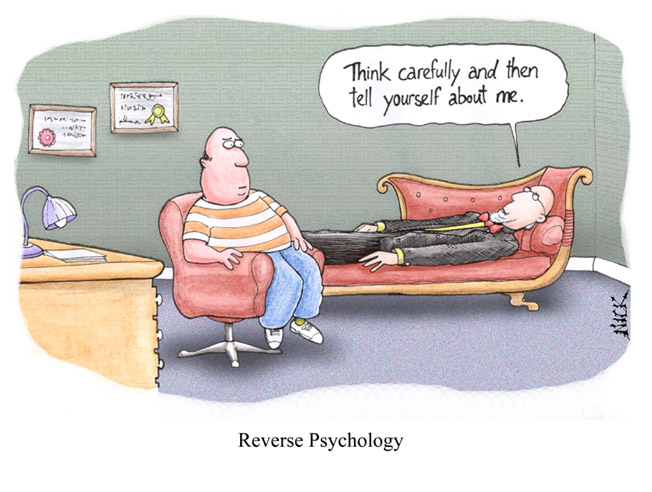
Reactance is the urge to do the opposite of what someone wants you to do out of a need to resist a perceived attempt to constrain your freedom of choice. This is common with rebellious teenagers, but any attempt to resist authority due to perceived threats to freedom and/or choice is reactance. The individual may not have a need to do the specific behavior, however the fact that they cannot do it makes them want to.
Interesting Fact: “reverse psychology” is an attempt to influence people using reactance. Tell someone (particularly children) to do the opposite of what you really want, and they will rebel and actually end up doing what you want.
3 Hyperbolic Discounting

Hyperbolic discounting is the tendency for people to prefer a smaller, immediate payoff over a larger, delayed payoff. Much research has been done on decision-making, and many factors contribute to the individual decision making process. Interestingly, delay time is a big factor in choosing an alternative. Put simply, most people would choose to get 20 dollars today instead of getting 100 dollars one year from today. Normally it makes sense to choose a greater amount of money immediately than less in the future, as the value of a dollar is worth more today than it is tomorrow. Assume that the interest rate is 9%, at this interest rate, a rational person would be indifferent to taking $91.74 now, or $100 a year from now. However, it is interesting how much less we are willing to take immediately rather than wait, would you rather have $100 a year from now, or $50 immediately? How about $40 immediately? Where do you draw the line?
2 Escalation of Commitment

Escalation of commitment is the tendency for people to continue to support previously unsuccessful endeavors. With all the decisions people have to make, it is unavoidable that some will be unsuccessful. Of course, the logical thing to do in these instances is to change that decision or try to reverse it. However, sometimes individuals feel compelled not only to stick with their decision, but also to further invest in that decision because they have sunk costs. For example, say you use half of your life savings to start a business. After 6 months, it is evident that the business is going to be unsuccessful. The logical thing to do would be to “cut your losses” and drop the business. However, due to the sunk costs of your life savings, you feel committed to the business and invest even more money into the project hoping that the additional cash will turn the business around.
1Placebo Effect

The Placebo effect is when an ineffectual substance that is believed to have healing properties produces the desired effect. Especially common with medications, the placebo effect has been observed when individuals given a sugar pill for a real ailment report improvement. Placebos are still a scientific mystery. It is theorized that placebos cause an “Expectancy Effect”, (In cases of uncertainty, expectation is what is most likely to happen) individuals expect the pills to cure their ailments, so they feel cured. However, this does not explain how the ineffectual pills actually cause a reduction in symptoms.
Interesting Fact: The term “Placebo” is used when the outcomes are considered favorable, when the outcomes are negative or harmful; the term is “Nocebo”
More Great Lists
 10 Tragedies Due To Construction-Related Faults
 Top 10 People Who Were Thought To Be Able To Levitate
 Top 10 Animals You Thought Were Extinct But Aren't
 10 Times We Thought We Had Found Proof Of Aliens
 10 Allergies You Never Thought Could Exist
 10 Food Additives That Aren't As Bad As We Thought
 10 Things You Thought You Knew About The Romans (But Don't)
 10 Types Of Evidence That Are Less Airtight Than Thought
 Top 10 Studies That Contradict Common Things We Believe
fact checked by
Alex Hanton
More Great Lists