You wake up one morning and realize that youâre terribly late for work. What do you do? You spring out of bed, hop on your feet, slap together a crude sandwich and dash out the door. After arriving to your workplace â in one piece hopefully â you surreptitiously sneak into your seat only to be approached by your boss. You quickly fabricate a seemingly legitimate reason for your tardiness, âthere was a marching band full of seniors crossing the road next to my driveway. Sheesh! Can you believe it?â Your boss looks at you with a gaunt expression on his/her face and finally smiles and says âdonât you remember? I gave you the day off today!â
As hinted within the story above, people have an innate tendency to take some of their abilities for granted. Oftentimes, we overlook the remarkable features that are ingrained within our daily lives. This list will cover 10 such attributes, which are deemed the most conspicuous traits that distinguish us from most brute animals.
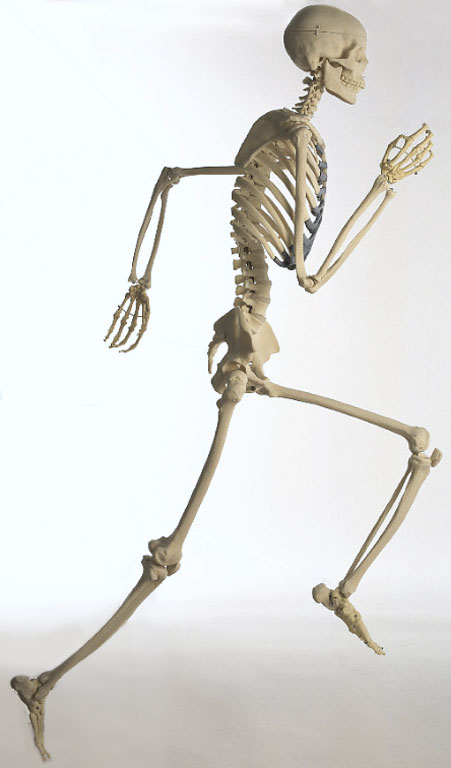
On average, humans begin walking at approximately one year of age. Our ability to learn how to walk exclusively on two legs, regardless of age, is an astonishing feat in and of itself. The very act of walking has allowed us to free up the use of our arms, and in turn, permits us to wield a wide array of tools. Bipedalism not only liberates our arms, but the remainder of our bodies as well. Instead of having our heads positioned parallel to the ground like our quadrupedal relatives, humans have eyes perpendicular to the world below, and thus, possess a broadened view of the world around us.
Walking on two legs also consumes far less energy than walking on all fours (or even knuckle dragging for that matter). As a result, our minds are less occupied with the need of a constant meal, and are instead left to wander and think about things other than food.
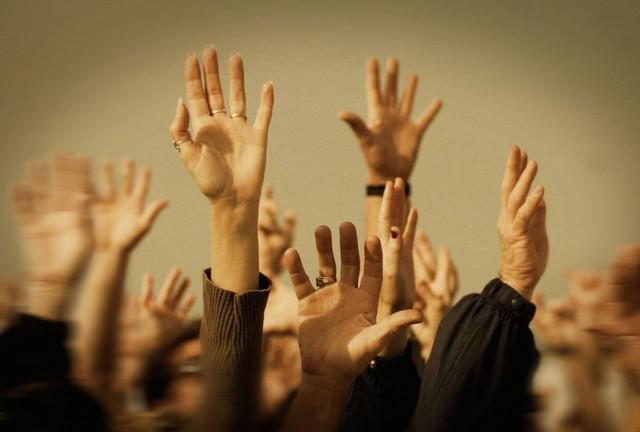
More than a handful of people here have suffered from a broken wrist or finger, and most will agree that these types of injuries are extremely debilitating (especially if youâve incapacitated your dominant hand). A broken hand would make everything from typing on the keyboard to making a sandwich much more difficult to do. We must therefore remember to pay homage â or at least be thankful for â the anatomical makeup of our arms. To start, we should become aware of the importance of our opposable thumbs. Humans share this feature with other primates meaning that we are all capable of using our thumbs to touch any other digit on our hands, from index to pinky.
âSo what? Why is that so important?â You may ask. The answer to that question lies in the fact that our hands have the ability to perform fine/precise tasks such as gripping a pencil, or typing on a keyboard. Imagine a world devoid of pencils and keyboards, or worse, a world abundant with pencils and keyboards but humans being unable to use them. It would be a scary world indeed.
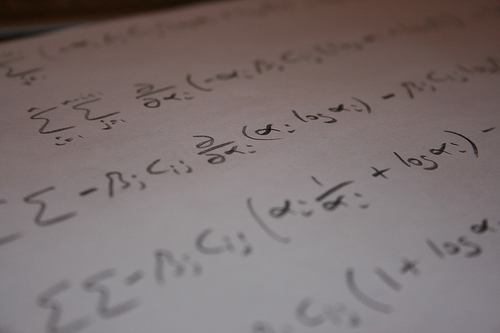
Have you ever stopped to gape at the jaw dropping majesty of some of humanityâs products of ingenuity? From the Great Pyramids and the Eiffel tower, to the nuts and bolts holding your chair in place, people have utilized their understanding of mathematics since the dawn of civilization itself. Math has even been used as a tool for seemingly profound feats such as calculating the escape velocity of our planet in hopes of one day overcoming it (and we eventually did).
Other than its vital application to engineering and rocket science, we also make use of it in a more mundane, everyday fashion. Whenever we are counting the change weâve received from the store, or anticipating our delayed arrival back from work, we are using mathematics.
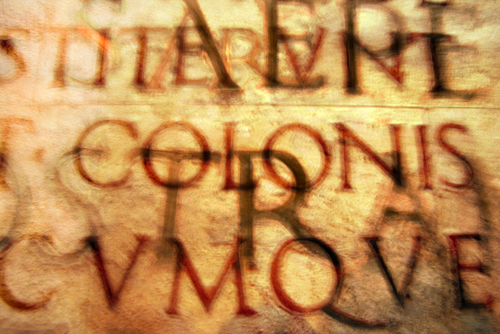
The origin of spoken language is shrouded in mystery and is still a much-debated topic by scholars across the globe. The origin of written language is also a topic of heated debate; however, most people agree that its earliest roots stem from ancient cave drawings, as they are manâs first attempt toward making a visual record of ideas. Much like many other things in this world, language has taken countless steps to evolve from the rudimentary grunts and cave drawings of antiquity into its present form. Humans have devised thousands of spoken and written languages, which are still currently in use today. Language has become ubiquitous within every corner of society in that we employ our verbiage for one main reason, to communicate our ideas with others.
Long gone are the days of our agrarian ancestors who built their lives around the understanding of the intricacies of nature. Civilization has taken a turn from its grassroots heritage and has spawned into the amalgamation of metropolises we live in today. Most people have displaced themselves from the natural world in favor of a more urbanized one. Although the city life does contain many positive aspects, like allowing people to connect within a cohesive network, it is not devoid of caveats. For example, people in general have become increasingly desensitized toward the world beyond their microcosms. As pollution begins to perpetuate through our forests and oceans, entire ecosystems could become ravaged and disfigured. The best thing to do is to appreciate what is âout thereâ and realize that we are âa partâ of nature, and not âapartâ from it.
What do chicken, pork, and nettles have in common? Yes, you guessed it; they all need to be cooked before they can be safely eaten. Cooking fires have been around for a large chunk of humanity as they extend as far back as 250,000 years into our past. In our contemporary era, cooking comprises not only of placing a slab of food over an open fire, but also boiling, steaming, frying, baking and virtually any other process that prepares food with the application of heat. Cooking allows us to take a once bacteria laden piece of meat, and rid it of all of its toxins. (To eat a piece of chicken or pork raw is no doubt a recipe for disaster). Over the years, we have become accustomed to the taste and texture of cooked foods and could not imagine eating said foods in their raw states. The knowledge accompanied by cooking has allowed us to expand our menus and to truly get a taste of the world around us.
If you have ever had a cast, a splint, or even a vaccination, you have been introduced to the ways in which humanity uses its knowledge of medicine. Everything from blood pressure pills to eyeglasses can be considered forms of medicine. Frequently people forget the implications it has on us and other organisms. Veterinary medicine for instance, seeks to apply the medical knowledge procured throughout history in order to treat animals.
The art of medicine has advanced by leaps and bounds since the time of Hippocrates. From the archaic belief of the four humours, to the discovery of the smallpox vaccine (and even other future endeavors such as nano-technology), medicine has always been utilized for the outward benefit of humanity.
Did you wake up to the sound of an alarm clock this morning? If you have, then chances are youâve made use of electricity (unless youâre the type to still use a wind-up alarm clock). The presence of electricity has been around for far longer than humans have roamed the earth; in fact, the properties of electricity predate the earth itself, going back to the inception of the universe. However, it is the ability to harness electricity for our own benefit that is truly remarkable. We have electricity to thank for the operation of our computers, our central heating systems and even our alarm clocks (for most of us that is).
The modern world is riddled with electrical grids and power lines seeking to distribute functional electrical current to every nook and cranny of our households. The now commonplace notion that our planet is literally connected by a series of grids would appear ludicrous (or even supernatural) to our great-great-great grandparents. Ironically, we have them to thank for laying down the foundation for what is now a truly electrifying era.
The Internet? Whatâs that? What day is it today? What did I have for breakfast this morning? Most of you will not struggle to remember the answers to the aforementioned questions. That is because you are able to successfully draw upon past occurrences from your memory banks. Memory is still seen as somewhat of an enigma and is thus, not yet fully understood. The capabilities of human memory are as diverse as they are complex. Some people claim to have exceedingly powerful memories while others are hindered by neurological disability. Regardless of your position on the continuum of memory, there are still ways to keep yourself sharp and primed to the best of your abilities. For example, take a little time out of each day to exercise your memory and jog the old neurons for a bit. It could be something as simple as trying to remember the title of number 8 on this list, or something as ambitious as trying to remember the order of a randomized deck of cards.
Lastly, you must always remember that even âthe dullest pencil is better than the sharpest memory.â â Mark Twain
If the thought is in danger of escaping you, make sure to write it down somewhere.
Have you ever wondered what it would be like to be the wealthiest person in the world? What about the smartest, fastest, or strongest? In fact, if youâve ever wondered about anything, then you have been subjected to the maelstrom of your imagination. Without it, humanity would be reduced to nothing but a bunch of dull, languid belly-scratchers (okay, perhaps that statement was overly hyperbolic). Then again, without imagination, we would not have language, mathematics, medicine, or other such things on this list. We would not possess the desire to test the limits of our cunning minds nor contain the willpower to push the envelope of our physicality. Imagination is the ability to take a vague, amorphous concept and transform it into a tangible reality. It is something we have in all of us, waiting eagerly to be used to its fullest.


@Maria [24]:
Morning *****? But your username is “Maria”? Are you a guy that’s using someone else’s name or what?
Anyway, good list.
I’d say Freedom, since people like to throw it out the window for some mythical security blanket that doesn’t protect, but merely traps them.
Dazed and Confused
A film of that caliber deserves a place on this list
so we take movies for granted?
oh…wait
we take weed for granted…..
whatever….i’ll just pretend that you actually did mean to stick this comment here —
i love it!
randomcommenting!
random(semi)precision
all of these recent lists suck, where the hell is all of the good content? or did jfrater sell it all out?
This is a really good post- I’m glad that you are raising this point because too many people are unappreciative of them.
Great list, agree that it was not what I expected and very well written!
Well said Arsenl (9): Those two popped into my head as well (though not necessarily regards Poinnares Conjecture) – maths is indeed an art form as well as a tool – if you wish for some truly eloquent descriptions of math as art I suggest you read the Foundation Series by Asimov and read some of the more esoteric descriptions of Psychohistorical Mathematics – or even McCaffrey whose Bronthin in the Palnet Pirate series describe Maths so poetically.
However, I have a third point to raise regards the list – FINE MOTOR SKILLS.birds, Chimps indeed ALL Primates) employ fine motor skills – you don’t believe me, watch a raven dig a grub out from under the bark using a twig!
I think you might have meant to say the OPPOSABLE THUMB – it is this particular anatomical factor which sets humans (and to an extent, the great apes and other primates) apart from all other members of ‘Animalia’.
oliveralbq (2 & 4) Firstly – one doesn’t necessarily require memory for imagination – one can have one without the other: most mammals have excellent memory (as do many birds) – that doesn’t mean they utilise an imagination. Also; there are a number of “disabled” artists in the world who for one reason or another have lost their memories but who can still produce briulliant works of art written and graphic.
Secondly- I agree with whoever it was said we take Love for granted: YOU may not; but most people do – If I had a dollar for every time I have heard the phrase “I didn’t know how mucvh I loved him/her until I lost him/her – I wouldn’t have to work for the next three lifetimes: The great St.Paul himself said: “at the end only three (gifts)will remain: Faith, Hope and Love; and of these, the greatest is Love”.
Great list and I think it’s great to stop and appreciate what we’ve got, but the inclusion of medicine on the list raises a few questions. Medicine used for the treatment of trauma and injury is great but if “modern medicine” is really about keeping us healthy shouldn’t we be seeing less cancer not more? Shouldn’t we be seeing less heart disease not more?
It’s clear that modern medicines focus is on sickness to line the pockets of everyone involved in this trillion dollar industry. What we should be focusing on is health
@Maria [24]: Ha Ha, its now going to be a saying. Everytime you see a smiling girl in the morning you say, “Wow! what did you hop off this morning “
Nice post… inspiring, even. Thanks
er.. just one point. if we didnt have opposable thumbs (#9) we would not venture down paths and invent things that require opposable thumbs!! indeed, the products that succeed in our day and age are themselves successful due to the fact they can be effectively used!
Lets try #1 and imagine the alternative product or technique that would have surfaced in a world without opposable thumbs
@muttley [131]:
–there are so many holes in your argument, that i have to dissect it in the name of ease of understanding…
—————-
—————-
>>”Firstly â one doesnât necessarily require memory for imagination â one can have one without the other: most mammals have excellent memory (as do many birds) â that doesnât mean they utilise an imagination.”
——–
wait…what? and how in the world do you know?
–it sounds to me like youre getting imagination confused with creativity……
–on top of that, there is no way to concisely and emperically test and measure levels of imagination in most mammals. people have tried, and animal psychologists will be the first to tell you that those studies are abstract, without merit, and extremely convoluted in premise, execution and interpretation.
–what im getting at is: while it doesnt mean they utalize imagination (like you said), it *certianly* doesnt mean that they do not.
this falls into the category of the unknowable…
-you might be right, you might be wrong, and we’re not going to be able to tell which it is
———————
———————
>>”Also; there are a number of âdisabledâ artists in the world who for one reason or another have lost their memories but who can still produce briulliant works of art written and graphic.”
————–
–if total and complete memory loss is what youre referring to, then i suppose you have a point, but total memory loss is very rare, and amnesia patients arent noted for artistic masterpieces. (plus amnesia to this degree is rare in itself). alzheimer’s is also a disease associated with memory loss, but again, total memory loss is rare. and partial memory loss still allows for the subject to draw inferences into/out of imagination…
—the primary application of david hume’s theory of impressions and ideas looked at the distinction between memory and imagination….also, they have *****yzed in duality about as many times as not……
—and please please please dont tell me that you really believe being ‘disabled’ and having no memory is even close to the same thing, which is how your comment reads..
thats just stupid.
*some* of them have *some* memory loss, some of them dont.
——————
——————
>>”Secondly- I agree with whoever it was said we take Love for granted: YOU may not; but most people do” â
—right….see, i wasnt implying everyone was like me, and didnt take love for granted…..
but *most* people do?
huh?
————-
>>”If I had a dollar for every time I have heard the phrase âI didnât know how mucvh I loved him/her until I lost him/her â I wouldnât have to work for the next three lifetimes: ”
–i do feel bad for you that you seem to be surrounded by lots of people who cannot fully appriciate the worth of love relationships…. i truly hope all those people who you have heard utter that sentiment realize that it isnt nearly as fulfilling to love him/her *after* they are lost to the person….if more people would pull their heads out of their asses, and realize what they have while they still have it, so many people would lead fuller lives surrounded by the love and happiness they deserve.
—————-
—————-
>>”The great St.Paul himself said: âat the end only three (gifts)will remain: Faith, Hope and Love; and of these, the greatest is Loveâ.”
—————-
—i suppose if st paul subscribed to this list, he and the list author could have an interesting conversation about this.
since that isnt the case, we’ll all just have to settle for people in the comment section saying ***** like:
not only does love not belong on this list,
faith and hope dont belong either.
I’d like to add that I don’t think love hope or faith belong on this list.
I agree with the list. When I first saw the title I tried to guess what the list might have before I clicked. At first I thought political, then I went from there through a series of things that we’ve built in the world. I never went down the path of our own bodies! I think that proves your point, and it was very nicely done I must say too!
Thanks for a great post.
Barbra
Lnfusion: Love your list, dude or dudette! This is an eye opener…
Sometimes I stop and give thanks for being able to just breathe…
OH finally a better list.. to my opinion that is, of course.
I like those lists.
@oliveralbq [134]: Farq me, she must have hopped off a *****to say all that.
@Maria [138]: will you give it a break already. Geesh we got your point. No need to repeat it again and again.
@Maggot [104]: Of course I don’t take the mods for granted, that’s why I said ‘pretty please’ instead of SORT IT OUT YOU BASTARDS. But I wouldn’t say that.
@VintageObsessive [114]: I used to have all kinds of jobs – as most people tend to do – and was self employed for a time – but right now I’m not in permanent employment. I’m principally looking to get into the wider field of Media; web media, tele-visual media, journalism – I’m not fussy as long as I can share my talents. A dream-come-true would be to work with the BBC as they complete their Media City developments in Manchester.
Basically I’m a philosopher, but I also love to make small films and DVDs for music festivals – so that makes me a part-time-one-man-camera-man. Some of the material I filmed last year can be found on youtube’s ‘TheSolfestChannel’. I’ll also be (fingers crossed) filming a punk festival at the end of May and ‘Solfest’ again in August.
@ames801 [116]:
I love your wit.
@Lnfusion – Thanks again for an interesting list – I like those insights and would love to read more. Why not drop by and leave us a comment?
@Randall [108]: “its a mans world ” hahahahahahahaha
we should also add relationships – whether good or bad – correct?
@Lifeschool [140]: “Iâll also be (fingers crossed) filming a punk festival at the end of May…”
Do you need a personal assistant? A business manager? A gofer? Just a pretty face? ANYTHING??!! I would love to assist you with this project
What about Pan Pipes, and Dreams?
Two fundamentals we take for granted:
1) That if our mum or dad had sneezed a moment before the critical consummation that made us, our particular sperm wouldn’t have united with her egg. Any of a few million others would have done do instead shortly after. A billion and one tiny events could have altered that miraculous (for you and I!) union. Pity Hitler’s and Stalin’s dads, or (fill in your own pet-hate’s dad) didn’t sneeze then though!
2) That everything will still be here when we wake up in the morning. (Oh, O.K., if it wasn’t we shouldn’t know. But until +Armageddon+ it still holds. Ah’m a-geddin’ it, are you?) It could be expanded by saying we assume basic laws of the universe to be stable and immutable for us, which is no more than an assumption, folks, i.e. taking it for granted.
Sometimes i take listverse for granted…
interesting nature is outranked by…cooking? Cooking’s definitely a great feature but you could live without cooking, considering all the fruits and veggies, legumes, beans, etc that are eaten raw (and frequently healhtier, esp. if referring to cooked meats).
@Moonbeam [31]: Of course I know what “a day off” means! It’s just that no-one has ever said it to me!!
(We’ve both been around here long enough for both of us to know that if there is the slightest possible chance that I’m joking, then I am. Serious is serious; anything else should be interpreted as lightly as possibly.)
@ames801 [143]: Thank You! I suspect you may live outside the UK – but if you do make it to StrummerCamp(.co.uk) I’ll see you there!
When I saw the title I thought I was going to get the starving children in Africa lecture , “how dare you take food for granted!” but I was pleasantly surprised.
It really made me think, as I have defiantly taken most of these things for granted at one time or another.
incredibly lame. it assumes these things are taken for granted.
Oxygen.
oliveralbq (134) You obviously know exactly DICK about being disabled OR memory impairment “âand please please please dont tell me that you really believe being âdisabledâ and having no memory is even close to the same thing, which is how your comment reads..
thats just stupid”
Unless you have suffered an ABI yourself and have to live with its corollary sequelae then you don’t have the first idea of what you are talking about: I have to live WITH an ABI which has severely impaired my memory functions – I literally have to write everything down! Thus having had perfect eidetic memory prior to incurring the ABI and now having to live with an severely impaired one IS a bloody disability you idiot! Have you always been this ignorant or are you just trotting out your unenlightened mental opacity for our benefit?
BTW – after your typically Neanderthalic comments about Faith Hope and Love – you are obviously telegraphing your own psycho-social/emotional disabilities as well:
Elie Weissel credited the survival of weak scrawny and ill death camp internees over the strong, healthy and fit ones to simple Faith – those who had the strongest faith tended to survive; those who lost their faith tended to wither and die – he should know he spent the best part of the war in Auschwitz.
Hope of eventual release and the possibility of escape kept Australian POW’s in Changi alive while those who lost hope died on the marches, the work details and by simple mental attrition – don’t believe me; read the War Diaries of Sir Edward ‘Weary’ Dunlop the Australian surgeon captured at Singapore who spent 4 years there.
Love – if St,Paul ain’t good enough – look around you at the bitter, twisted, gnarled people of this world who have never known love or who have had it seriously betrayed.
Finally – David Hume was a hack – you want philosophy; try a real one – Wittgenstein, Hegel, Kant, Mill or the best of all Renee Descarte: I will, out of deference to the great masters, place Socrates, Plato and Aristotle above even that august group.
Ih future – don’t let your mind out on its own like that; it’s too small and fragile and it might get seriously hurt – - – - – again!
Oops, I meant definitely.
So this list should really just be titled “I’m out of ideas so I just listed the things humans use that animals don’t”
@muttley [153]: Not to nitpick, but Elie Wiesel only spent about a year in concentration camps… I´m not saying that was easy by any stretch of the imagination but still not the “best part of the war.”
Sorry the author seemed to grow tired of the list by item #1 – which was obviously hastily written, and ironically, the most important point she wished to drive home.
____
My imagination has never been about being the best or the most grandiose, but rather a seeker of my own personal desire. I have a desire to become that which has not been before me. This is unique in the animal world.
“What a piece of work is a man! How noble in reason! how infinite in faculty!” -Hamlet
or in other words
^5 FOR THE WIN!
Yeah, I’m completely in awe of man’s mathematical powers. In fact, many of my math teachers wish I had been a little bit *less* of math and better at using it. Seriously though, I thought the list was very inspirational, although I prefer a few more statistics than emotional writing. A few years ago someone very close to me had a large tumour lodged in her spinal column right at the base of her neck, and thanks to modern medicine and surgery is still alive and kicking, so I like to see medicine on the list.
I second the call for Dreaming as an honourable mention: it’s a remarkable faculty that has had an important role in human development.
@Dreaming Pixel [158]: “so I like to see medicine on the list.”
—-medicine –??
its kinda hidden
between #3 and #5 there is this picture of pills.
its that one.
Very nice list indeed
A Sandwich.Not because it was mentioned twice in the article but because bread was around for hundreds if not a thousand or two before someone had enough sense to make a Sandwich.
The moral of the story might be that the answer to problems is sometimes very simple and might be staring us in the Face.
very good
#7 – Language is the only incorrect one. It is the only factoid that is not constant. Yes, we can communicate as humans, but our different languages and dialects somewhat hinder all of that. Everything else mentioned in this article is a constant. Math, dexterity, etc. Language is not. IMHO, people not but 20 years ago would not understand that. Will you?
nice for us…………………….
Hi there! Someone in my Myspace group shared this website with us so I came to take a look. I’m definitely loving the information. I’m bookmarking and will be tweeting this to my followers! Excellent blog and terrific style and design.
i think the 10 most common things in the USA we take for granted are: fresh air, water, food, electricity, education, garbage service, paper, our parents, clothing and our own body.
the most common things in the USA we take for granted are: …education
Check out the US ranking in international education rankings. We have a lot of room for improvement!
http://www.guardian.co.uk/news/datablog/2010/dec/…
We’re a bunch of volunteers and opening a brand new scheme in our community. Your website provided us with helpful info to work on. You’ve done an impressive activity and our entire neighborhood might be thankful to you.
I do believe all the ideas you’ve presented in your post. They are really convincing and can definitely work. Nonetheless, the posts are too quick for starters. May just you please extend them a bit from next time? Thank you for the post.