
 History
History
History  Weird Stuff
 10 Bizarre Ways People Used Blood in the Past
 Politics
 10 Laws Written for Exactly One Person
 Movies and TV
 10 Movie Sequels That Took Decades to Arrive
 Our World
 10 Remarkable Archaeological Sites Hidden in the Desert
 Crime
Crime 10 Cryptocurrency Heists Straight Out of a Hollywood Movie
 Technology
 10 Things Engineered to Fail on Purpose
 The Arts
 10 Historical Figures Behind Epic Broadway Flops
 Creepy
 10 Sinister & Shadowy Ghosts Haunting the Atlantic Coast
 Weird Stuff
 10 Bizarre Alternative Currencies That Actually Worked
History 10 Super Unsettling Historical Facts We Wish Were False
Weird Stuff 10 Bizarre Ways People Used Blood in the Past
Politics 10 Laws Written for Exactly One Person
Who's Behind Listverse?

Jamie Frater
Head Editor
Jamie founded Listverse due to an insatiable desire to share fascinating, obscure, and bizarre facts. He has been a guest speaker on numerous national radio and television stations and is a five time published author.
More About Us
Movies and TV 10 Movie Sequels That Took Decades to Arrive
Our World 10 Remarkable Archaeological Sites Hidden in the Desert
Crime 10 Cryptocurrency Heists Straight Out of a Hollywood Movie
Technology 10 Things Engineered to Fail on Purpose
The Arts 10 Historical Figures Behind Epic Broadway Flops
Creepy 10 Sinister & Shadowy Ghosts Haunting the Atlantic Coast
Weird Stuff 10 Bizarre Alternative Currencies That Actually Worked
Top 10 Dinosaurs That Aren’t What They Were
Dinosaurs are not what they used to be. I’m not talking about birds being dinosaurs and all that, but about those extinct giants of the Mesozoic we all grew up loving. As new studies and discoveries are made, dinosaurs are becoming so much different from the way we always imagined them that, today, many of us have trouble recognizing even our childhood favorites. I give you ten classic dinosaurs that have changed radically due to new paleontological discoveries. And they may still change a lot in the future! Note: each entry has two images – the first is the previous image of the dinosaur, and the second is the new. Dinosaur before and after shots!
10
Stegosaurus
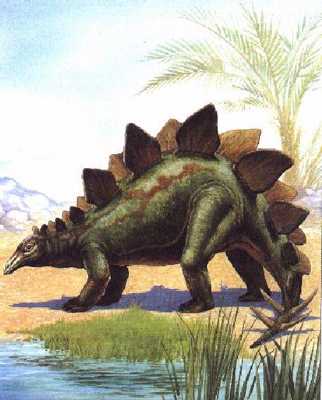
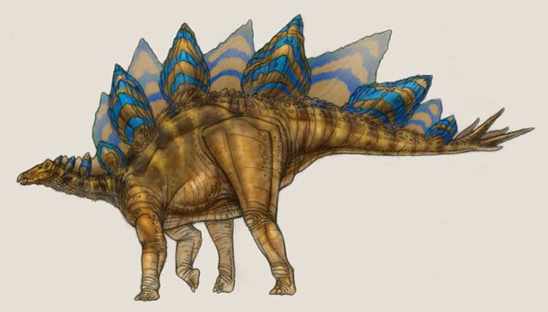
Stegosaurus is perhaps the most recognizable of all prehistoric animals; it is nearly impossible to mistake it for another creature. We all knew Stegosaurus as that heavy, small-headed dinosaur with an arched back and a dragging tail, sporting four spikes that pointed upwards. Popular books always brought up the fact that Stegosaurus had a brain the size of a walnut, and that it was probably a very dumb animal that went extinct because it couldn’t compete with the much better armored (and slightly smarter) ankylosaurs.
However, Stegosaurus, like many dinosaurs, has changed a lot since. Fossil footprints and detailed studies of its anatomy have proven that Stegosaurus didn’t drag its tail on the mud, but actually walked erect, like an elephant, with its tail held horizontally, parallel to the ground. Its back wasn’t as arched as they had us believe, and the neck was not carried horizontally as usually depicted, but upright, like a bird’s.
Also, the tail spike cluster (known among paleontologists as the “thagomizer”) didn’t actually point upwards, but sideways. This made the tail a much deadlier and more efficient weapon; to stab an attacking predator, Stegosaurus only had to swing its tail horizontally; punctures matching the Stegosaurus’ tail spikes have been found in the bones of predatory dinosaurs from the same age and place, proving once and for all that Stegosaurus wasn’t any less dangerous than the ankylosaurs that would evolve later.
Oh, and by the way, Stegosaurus’ brain was actually NOT the size of a walnut, but about twice as big. Yes, this may not seem to improve the animal’s situation a lot, but even so, the claims that the brain was too small to coordinate the Stegosaurus’ enormous body, and that the creature needed a second brain (located in the hips) to do so, are now considered to be unfounded.
9
Diplodocus
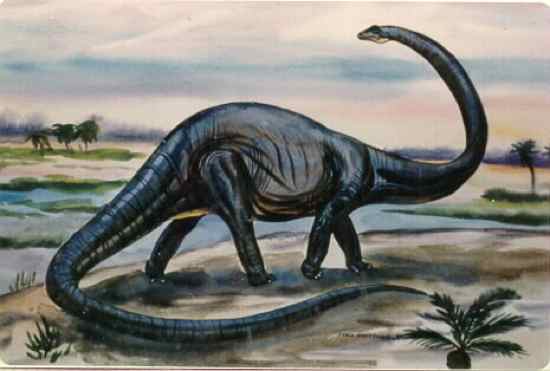
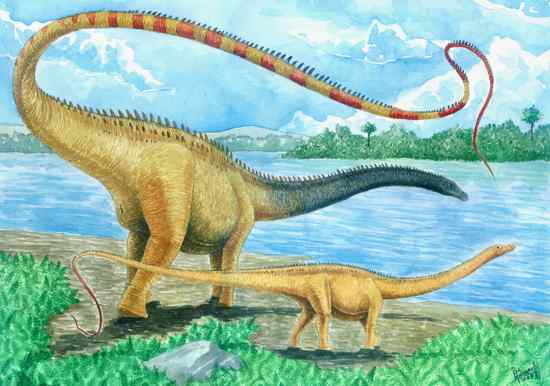
Diplodocus (and its close relative Apatosaurus, formerly known as Brontosaurus) are among the best known sauropods, or giant long-necked dinosaurs. Or at least, they used to be well known to the public; today, they look very different from the classic “brontosaurs”we knew.
Sauropods were once thought to be huge, clumsy denizens of the swamps, spending most of their time underwater feeding on aquatic plants; their huge weight (up to 50 tons or more) was said to be too much for the creatures to properly move on land.
It was also said that, when attacked, sauropods would hide in the water; their nostrils were located in the top of the skull so they could breathe while submerged and escape the fearsome carnivores of their time (which were thought to be unable to swim).
Today, however, we know that sauropods didn’t live in swamps. Actually, it seems that most species avoided swampy areas, and preferred dry land environments. They had legs shaped like columns, and some of them didn’t have toes at all; their legs looked like stumps or like tree trunks, and were exclusively adapted to support their massive weight (in recent times, sauropods much larger than Diplodocus have been found; they weighed up to 100 tons and could support their weight on land without any problem).
Also, they weren’t limited to feeding on soft aquatic plants, as was believed; we now know that the different species had different niches and diets, with some feeding on low vegetation and others on the fruits, twigs and leaves of tall trees.
And it’s not only behavior; turns out Diplodocus and Apatosaurus looked more like a weird, dragon-like creature than the smooth-skinned giants of Land Before Time or The Flinstones. Their backs were adorned with sharp keratin blades, similar to those of a modern day iguana, and their skin was covered with bumpy scales and knobs. Their tail wasn’t dragged but held horizontally, parallel to the ground, and was not just a lizard-like tail. A recent Diplodocus discovery shows that these dinosaurs didn’t need to hide from predators; they could severely injure them, or even kill them, with the terminal portion of their tail, which could not only be swung like a monstrously fast and powerful whip, but was also equipped with bony spines that supported keratinous blades, so that when the tail hit an enemy, it wouldn’t only break bones, but also slash through flesh.
Sauropods are usually pictured as peaceful grazers (Dr. Grant in Jurassic Park even compares them to “a big cow”), but fossil evidence shows that they were anything but harmless.
8
Velociraptor
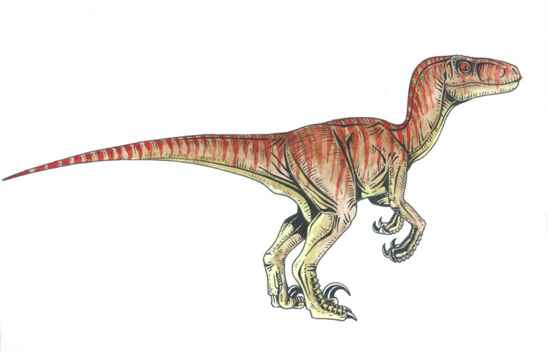
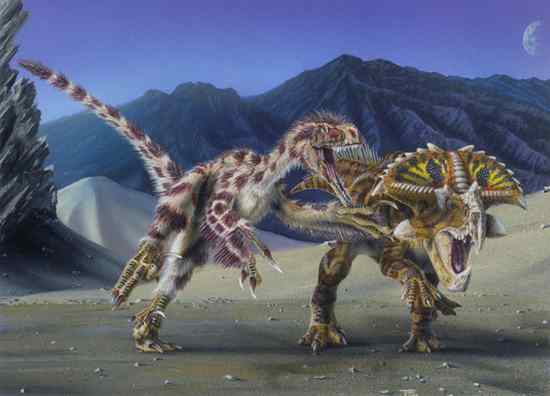
Velociraptor was practically unknown to the public before Jurassic Park, and has been causing confusion ever since. When most people thinks of Velociraptor, they remember the large, lizard-like, wickedly smart villains from Spielberg’s blockbuster.
However, those creatures were not based on the real life Velociraptor, but on a larger North American relative called Deinonychus. The real Velociraptor was a small animal, about the size of a large dog. It also had a more slender body and a longer snout than Deinonychus.
But both Deinonychus and Velociraptor have changed a lot since Jurassic Park, due to amazing discoveries of Asian fossils which proved that many small predatory dinosaurs, including Velociraptor, had feathers. Today, almost all paleoartists draw Velociraptor, Deinonychus and many of their relatives covered in feathers, more similar to large chickens than to overgrown lizards.
Although some people cringe at the idea of replacing the classic Jurassic Park raptor with a feathered bird-thing, at least the fossil record confirms that it was a deadly killer; a fossilized Velociraptor was found preserved in the act of stabbing the throat of a Protoceratops with its killing claw, while another specimen was found with Velociraptor bite marks on it, suggesting that these nasty little dinosaurs fought, killed and perhaps ate each other once in a while.
7
Spinosaurus
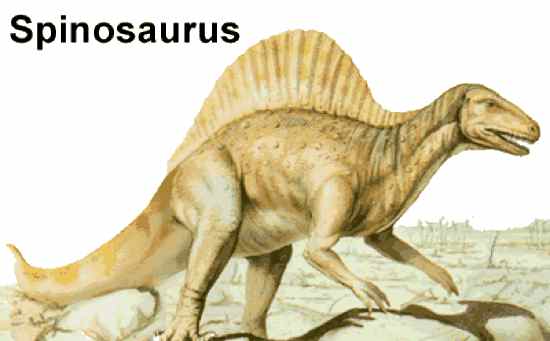
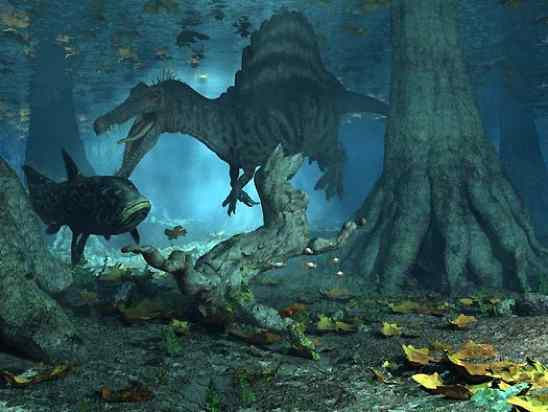
Spinosaurus became famous in 2001, when it was depicted in Jurassic Park III, where it fought and killed a Tyrannosaurus Rex. Many dinosaur fans were outraged at this; most of them accused the filmmakers of exaggerating the Spinosaurus’ size, and even some (the least informed) thought that Spinosaurus had been specifically created for the movie, and that it had never actually existed.
In reality, Spinosaurus has been known since 1912, when a German paleontologist, Ernst Stromer, found its enormous remains in Egypt. Even then, Stromer was convinced that Spinosaurus had been as large, or even larger, than Tyrannosaurus Rex (known since 1905).
Unfortunately, Spinosaurus didn’t become well known then, and during WWII, its fossil remains, which were kept in Munich, were destroyed during an Allied bombing. It seemed as if Spinosaurus had went extinct again.
For years, Spinosaurus was mentioned here and there in popular dinosaur books, often depicted as a short-snouted, short armed sail-backed animal and said to be about 12 meters long. Almost, but not quite as large as a T-Rex.
However, in recent years, and following the release of Jurassic Park III, paleontologists have announced, based on newly found specimens, that indeed, Spinosaurus is the largest carnivorous dinosaur known; it could grow up to 18 meters long (the largest T-Rex are around 13 meters long), and weigh up to 10 tons. It was, easily, the largest predatory land animal of all times, at least that we know of. This means, by the way, that the Spinosaurus in Jurassic Park III was not exaggerated, as fanboys claimed, but actually smaller than its real life counterpart! (Not fully grown?)
Spinosaurus also turned out to look very different from the pictures in the books; it didn’t have a short snout, but long, crocodile-like jaws armed with conical teeth. Also, its arms weren’t short, but rather long and powerful, armed with enormous hooked claws.
Recent analysis of its teeth and skeleton have suggested that Spinosaurus may have been a semi-aquatic animal, spending most of its time either wading or swimming to catch large fish (sharks included), as well as crocodiles and anything else it could capture. Its strong forearms would aid in swimming and the strong claws would hook, kill and help dismembering large prey. One thing, however, remains the same; to date, no one knows for sure what the weird sail on its back was used for.
6
Psittacosaurus
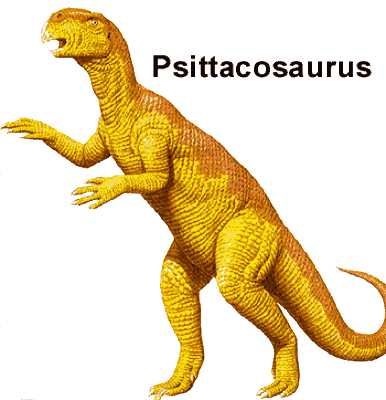
Psittacosaurus was never an extremely famous dinosaur, but it was one of the classics found in almost all popular books on the subject. It was named for its curved beak which resembled that of modern parrots (Psittacidae), but other than that it was always depicted as a rather plain-looking dinosaur.
It seems, however, that Psittacosaurus was one of the most successful and abundant dinosaurs of its time; hundreds of specimens have been found, and some of them, found recently in China, were so well preserved that they not only included fossilized bones, but also the outline of the body, and even skin impressions from the creatures.
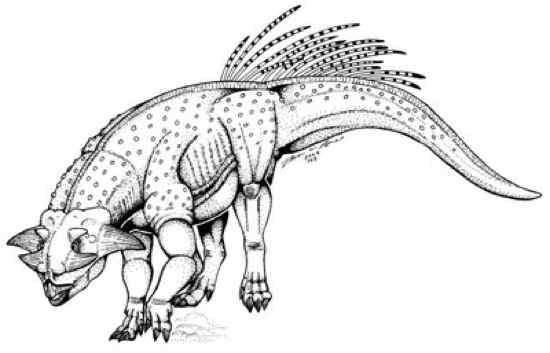
Due to these amazing fossils we know that Psittacosaurus was anything but plain-looking. Its beak may have resembled that of a parrot, but its head was more reminiscent of a warthog, with strange bony protrusions that gave it an intimidating appearance; one species, Psittacosaurus sibiricus, even had horns.
But perhaps the most unusual feature of Psittacosaurus was the long, quill-like filaments on its tail. These may have been some kind of proto-feathers, perhaps brightly colored to attract a mate or intimidate a rival, or perhaps they actually were akin to porcupine quills and were used in self defense. Some paleontologists have even suggested that the quills may have been venomous. Whatever the truth is, it seems obvious that Psittacosaurus was among the most bizarre of all dinosaurs.
5
Compsognathus
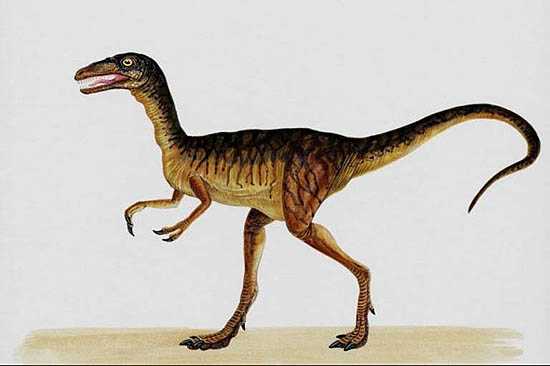
Most dinosaur books claimed that Compsognathus was the smallest dinosaur. Invariably described as chicken-sized, Compsognathus was depicted as a small, lizard-like creature with two fingers on each hand. Very similar to the man-eating “compys” of the first Jurassic Park sequel.
Today, due to new discoveries and studies we know that Compsognathus could actually grow larger than a chicken (although not much larger), and that it didn’t have two, but three clawed fingers on each hand.
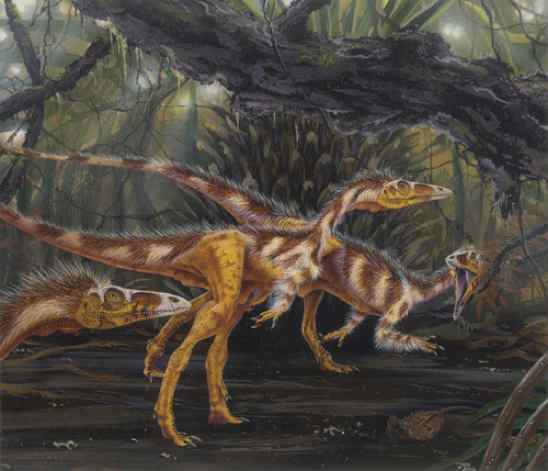
Perhaps the most surprising find is that some Compsognathus relatives were feathered, too. In China, the exceptionally well preserved remains of Sinosauropteryx, a Compsognathus-like animal, were found, proving that the creature had a coat of fur-like proto-feathers covering almost its entire body.
As amazing as it may seem, Sinosauropteryx has also become the first dinosaur of which the original coloration is known. Thanks to the study of microscopic pigment structures in the Sinosauropteryx’s feathers, we know the creature had a reddish-orange color, with orange and white stripes on its long tail, making it look very similar to a modern day coatimundi.
There was some debate for a while on whether Compsognathus also had feathers or not, since another close relative, Juravenator, had been found with skin impressions that showed scales, not feathers. However, a recent study found a fur-like covering on Juravenator too, which means that, indeed, Compsognathus is likely to have been feathered as well.
4
Archaeopteryx
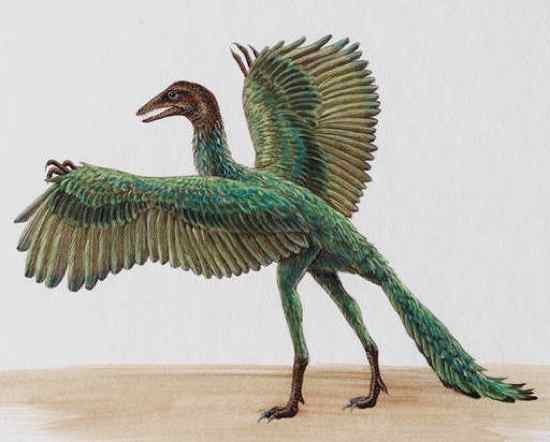
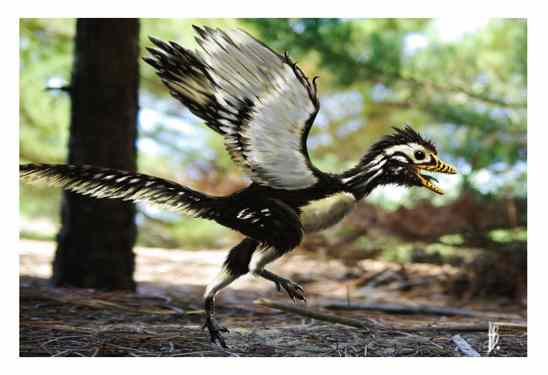
Often called “the first bird”, Archaeopteryx is one of those creatures you could find in any book on dinosaurs or evolution. Often considered to be a sort of “missing link” between reptiles and birds, Archaeopteryx has been used as a mascot by both scientists trying to prove evolution, and creationists trying to disprove it (by claiming that Archaeopteryx is simply a bird).
However, the fossil evidence shows that both scientists and creationists were wrong. As more and more feathered dinosaurs are found in China, some of them even more similar to birds than Archaeopteryx, it becomes obvious that this creature was not the missing link, and was not a bird either, but one hundred per cent dinosaur. Its anatomy, actually, is very similar to that of the early raptor dinosaurs, the same lineage that would eventually lead to Deinonychus and Velociraptor. It even has the same retractable, sickle-shaped claw on each foot!
It now seems likely that raptor dinosaurs were actually the flightless descendants of feathered, flying dinosaurs like Archaeopteryx.
There’s also evidence suggesting that Archaeopteryx could grow to larger sizes than usually claimed, and that it had feathers not only on its forelimbs, but also on its hind limbs (a feature seen too in many of the raptor-like dinosaurs found in China).
3
Parasaurolophus
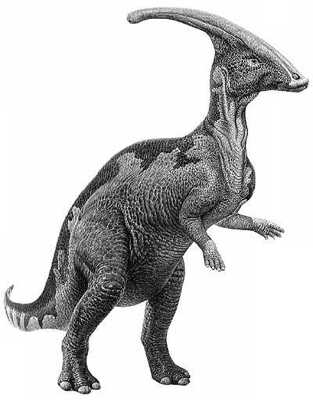
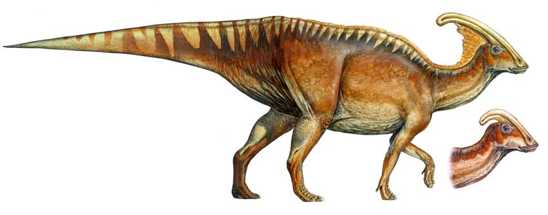
The most classic of all duck-billed dinosaurs, Parasaurolophus was once believed to have been a semi-aquatic creature. Its flat, duck-like bill, and what seemed to be webbing between its toes and fingers led many paleontologists to believe that it fed on soft aquatic vegetation and it ran to water when attacked by its enemies.
Even the long, tube-like crest on its head was thought to be a snorkel, or perhaps an oxygen reservoir. However, later studies proved all of this wrong.
There was no opening on the end of the Parasaurolophus’ crest; it was useless as a snorkel. And although there were air passages on the inside of the crest, these were strangely shaped, and not really ideal for storing air.
Also, the webbing between the fingers and toes turned out to be fleshy pads that kept the digits together. The fingers and toes were equipped with hooves, which proved that Parasaurolophus and other duck-billed dinosaurs were adapted to walking on dry ground, not swimming.
If attacked by a predator, they were able to run bipedally, and if cornered they could smack their attacker with their heavy tail. There was no need to run to the water. So, what was the Parasaurolophus’ crest for? The answer was more amazing than any of the previous theories; turns out, Parasaurolophus used the crest to produce and amplify its calls; by regulating the air that went through the air passages on the inside of the crest, the creature could modulate its vocalizations, and probably had an extensive “vocal range”, just like some birds today.
By using computer models, paleontologists were even able to reproduce the sounds Parasaurolophus probably made over 70 million years ago. To listen to those sounds, go here (but be aware that the picture shows an outdated depiction of Parasaurolophus, now known to have had an arched back and a tail that was held parallel to the ground).
2
Tyrannosaurus rex
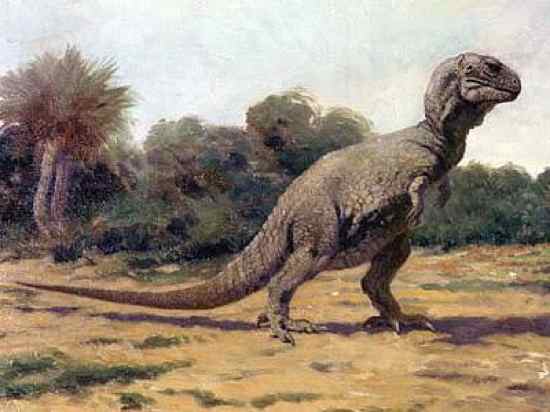
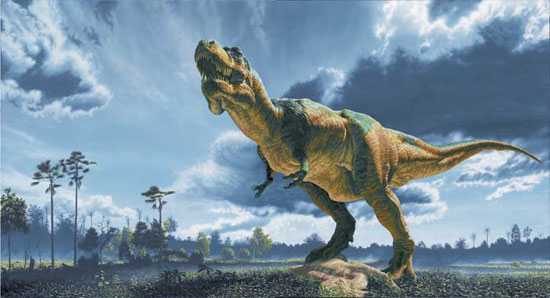
We reach now the most famous of all dinosaurs, the mighty Tyrannosaurus rex. Up to 13 meters long and weighing up to 7 tons, this bone-crushing predator has a long story of inaccurate depictions. Shown in old movies and book illustrations as a lizard-like monster with a square, plain-looking skull, a long tail being dragged on the ground and a tripod-like stance, T-Rex would later be found to be much more imposing.
In real life, Tyrannosaurus walked in an horizontal stance, with the tail held above the ground. Although this means it was actually shorter than the classic, tripod-Rex version, it also means that it was a much more agile animal, able to run at high speed and quickly capture prey with its massive jaws.
Its head was not square, and it was not as lizard-like as old movies had made us believe. It actually had a unique shape, different to any other dinosaur, with a narrow snout, eyes that looked forwards (giving it highly accurate depth perception), and a series of knobs over the snout which were probably covered on keratin when the animal was alive. This all gave T-Rex a much more frightening appearance than the giant lizards in say, King Kong.
Speaking of which, although King Kong and many other movies depicted T-Rex with three fingered hands, in real life T-Rex had only two fingers, with meathook-like claws. Although people often wonder why T-Rex’s arms were so small and weak, they were actually quite robust and had very strong muscles; it is believed that T-Rex could lift over 100 kgs—although they were obviously not used for lifting stuff, and were probably used to hold onto prey while delivering a fatal bite to the neck or spine.
Once again, new discoveries from China have confirmed that the earliest T-Rex relatives had feathers. Some paleontologists believe that this meant T-Rex would have feathers, too, at least during a part of its life. Although actual evidence of feathers on T-Rex has yet to be found, it is possible that very young Tyrannosaurus had a downy coat, and that as they grew larger, they lost them, partially or completely, since very large animals don’t need insulation as much as small ones.
Finally, there have also been changes regarding T-Rex’s suggested longevity. There was a time when large dinosaurs were thought to be long-lived animals, just like many reptiles today. However, studies on the growth-ring on their bones (yes, just like in trees) proved that T-Rex reached sexual maturity, and its adult size, at age 16-18. It would then stop growing, unlike modern reptiles which grow throughout their life, and could live up to 30 years, very short lived for such a large animal.
Which shouldn’t be surprising if we consider that there is plenty of fossil evidence suggesting that T-Rexes killed and ate each other, at least once in a while.
1
Triceratops
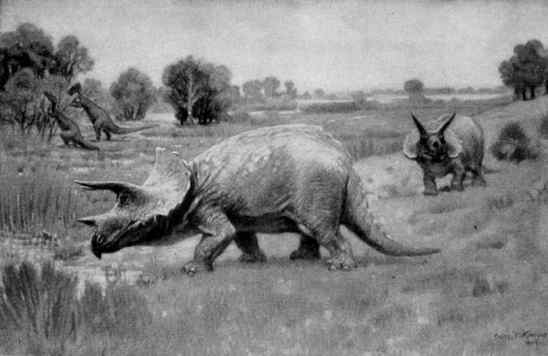
And finally we get to number one, Triceratops, the T-Rex’s stereotypical arch-nemesis, and one of the largest members of the Ceratopsidae, or horned dinosaur family. Just like Stegosaurus, Triceratops is hard to mistake for any other animal. It has become fixed in our mind as this giant rhinoceros-like, parrot-beaked three horned reptile, with skin like an elephant or a rhino and sprawled forelegs.
We are also pretty sure that Triceratops was a plant-eater.
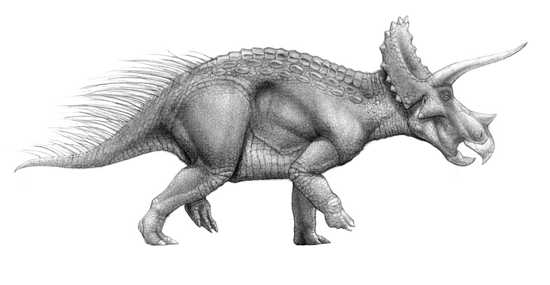
Being one of the most abundant and successful dinosaurs of its time, however, it was only a matter of time before new Triceratops material revealed its incredible secrets. Turns out, Triceratops was bigger than we thought, and it didn’t have skin like an elephant or a rhino. Instead, it had a series of alligator-like, flat scales, called scutes, on its belly, and the rest of its body was covered in large scales and knobs. Its back and tail also had a series of weird, fist-sized bumps, each one holding a nipple-like structure which has yet to be explained by scientists.
These structures may very well be anchoring points for porcupine-like quills, like those found on Triceratops’ older cousin, Psittacosaurus. Or perhaps, some scientists suggest, they were poison glands, oozing toxins to protect the Triceratops’ hindquarters from T-Rex attacks. It may also have been both, or none- we still have no way to know for certain.
That’s not all. Triceratops’ forelegs were not sprawled; a study of its limbs proved that it actually walked erect, like an elephant, and used only the three inner toes of its forelegs to hold weight, while the other two toes were vestigial and didn’t touch the ground. This also suggests Triceratops was much faster and more agile than usually thought.
And finally, the weirdest part. After examining the beak and jaws, paleontologists reached the conclusion that Triceratops may have been partially carnivorous, probably scavenging after T-Rex, or even scaring smaller predators away from their kills. Its strong jaws were able to crush bone and flesh as easily as they could grind plant material. The result would be an incredibly bizarre-looking, intimidating beast that behaved more like a giant wild boar or an entelodont (a carnivorous pig-like creature) than the placid vegetarian of classic imagery. We simply will never look at Triceratops the same way now.
+
Quetzalcoatlus
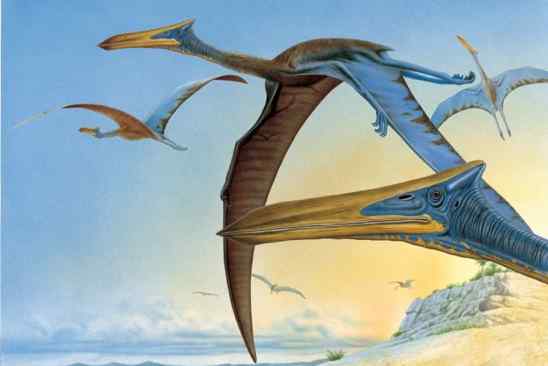
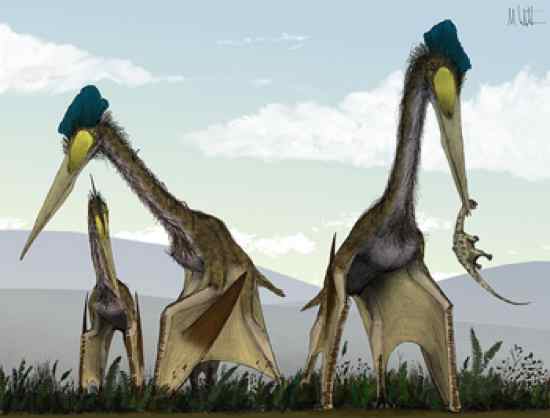
Quetzalcoatlus is a pterodactyloid pterosaur; that means it is related to dinosaurs, but is not a dinosaur itself, hence its place as a mere bonus. This is one of the most incredible prehistoric animals; when its bones were found in Big Bend, Texas, in 1971, it was obvious to paleontologists that they had found the largest flying creature known to science. At first, they estimated a wingspan of 12, 15 or even 21 meters! That is, the size of a small plane.
It was later found, however, that the proportions of Quetzalcoatlus were different from other pterosaurs (like the better known Pteranodon), and therefore the size estimate was reduced to 10-11 meters. Today, Quetzalcoatlus is no longer considered as the largest flying creature, for a larger relative from Romania, Hatzegopteryx, seems to have been slightly bigger.
However, the big change regarding Quetzalcoatlus wasn’t its size, but its body shape. Formerly depicted as a scaled-up, crestless version of Pteranodon, Quetzalcoatlus is now known to have been a very different animal. It had a huge head up to three meters long, a very long, stiff neck, and a diminutive body, as well as very long limbs and relatively short wings.
It now seems that Quetzalcoatlus didn’t soar like a vulture looking for dinosaur carcasses to feed on, as was once believed, but rather stalked on the ground like a stork, or a ground hornbill, using its huge beak to capture any animal that crossed its path. Based on the size of Quetzalcoatlus’ jaws and neck, it is possible that, were they alive today, they would be able to swallow a man whole without difficulty.
Also unusual is the fact that Quetzalcoatlus and its closest relatives were quite agile on the ground; while most pterosaurs were rather clumsy and slow on the ground, Quetzalcoatlus seems adapted to walk, and even to run very efficiently; it would keep its wings folded while doing so and probably take off only if approached by a carnivorous dinosaur. Although, considering that an adult Quetzalcoatlus standing on all fours was as tall as a Tyrannosaurus Rex, it is possible that they were left alone by most predators.
More Great Lists
 Top 10 Animals You Thought Were Extinct But Aren't
 10 Lesser-Known Dinosaurs That Were Scarier Than…
 10 Houses Of Horror So Disturbing They Were Demolished
 10 Popular Dog Breeds And Why They Were Bred
 10 Weird Laws And Why They Were Passed
 Top 10 Bizarre Facts That Will Change How You See Dinosaurs
 10 People Who Were Completely Right But Were Ignored
 Top 10 Military Bases Linked To UFOs (That Aren't Area 51)
 Top 10 Crazy Covid-19 Panic Purchases (That Aren't…
More Great Lists