As my first submission to listverse, I have decided to share somewhat of a passion of mine. It’s an eclectic taste of weird and wonderful fiction from, predominantly, the turn of the century pioneers of weird stories. As technology has progressed to the point where it is easy to carry around vast amounts of literature in ones pocket, a whole new world was made available to me. I started out using an eReader app on my old iPod touch, then my new android phone and finally, on a kindle. As much as there are those that love tree-books, the ease of access to e-books, particularly ones out of copyright, mean that there are thousands of worlds for people to explore for free. All you need is an eReader or smart phone. Of course, a printer with plenty of paper and a stapler could work too.
The main restriction I have for this list is that the books must no longer be under copyright and available for free. I have tried not to repeat authors, however in some cases I could not bring myself to omit another book, so I ask you to overlook these indulgences. These are my personal favorites and I cannot put them in a ‘top ten’ order and so will go through them chronologically.

The oldest book, by far, in the list, The Divine Comedy is a piece of prose detailing Dante’s decent through the Inferno, Purgatory and then to Paradise. The entire piece is a work which follows the path of people through their daily lives on to redemption. The Inferno depicts the way in which man stumbles and falls from God into sin. Purgatory depicts the way in which man struggles to find redemption and, finally, Paradise depicts the ways in which men draw closer to God. While this all might sound very preachy it does not read that way and is still a fantastic allegory. the original was written in Italian as an Epic Poem, so the translation can be challenging at times, but it is very rewarding.
Fun fact. A game for the PS3 and Xbox 350 was released two years ago, Dante’s Inferno, which re-interprets this epic poem as a violent video game.

From a divine poem to an existential story of struggling with poverty and moral ambiguity. Crime and Punishment is one of Dostoyevsky’s most well known works. Rodion is a poverty stricken former student who has proposed a hypothesis that some people are capable of evil deeds that are for the greater good. He convinces himself to murder a pawn broker, who feeds off the unfortunate detritus of society for his own gain, and to use their ill gotten money to perform good deeds. The book deals with remorse, guilt and a constant question of whether to do the right thing, regardless of circumstances. A fine piece of existential literature. If you can’t get through The Divine Comedy and it’s religious setting, then Crime and Punishment provides a humanistic alternative. You should still read both, though.

A classic tale of split personalities. I am sure most of you reading are aware of The Strange Case of Dr Jekyll and Mr. Hyde. What is probably also true, is that not all of you have read the original novella. Far from being a monstrous transformation, Mr Hyde is just Dr. Jekyll without his moral objections. A feeling that Dr Jekyll relishes at first. While Mr. Hyde is described differently from Dr. Jekyll in appearances, one can’t help but get the feeling that the only real difference is their personalities, and that is what people see. Mr. Hyde becomes more and more brazen and soon even Dr. Jekyll disappears for some time. Until another murder is reported…

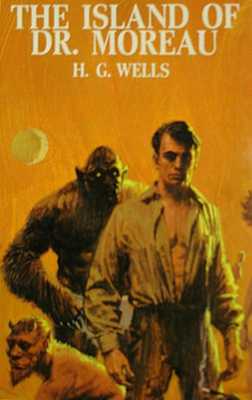
The first of the two H.G. Wells books I have chosen for the list. The Island of Dr. Moreau is the first entry from the turn of the century, where we first see weird fiction rise. Edward Prendick is a shipwreck survivor, picked up by a crew delivering exotic animals to an island inhabited by Dr. Moreau. If the name of the book doesn’t sound familiar, then the fact that Dr. Moreau was attempting to make sentient animals may be familiar. Dr. Moreau is a mad scientist, and his experiments at Anthropomorphising animals leads to questions of the nature of Man, and the inherent responsibility for what we create. Somewhat foreshadowing of our more recent concerns with sentient AI, and the implication of creating something that not only feels, but can tell you precisely how it feels.

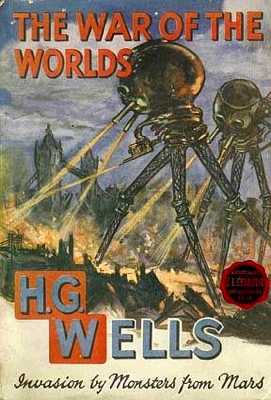
Before there was Independence Day, there was the War of the Worlds. This follows the invasion of Martians (ones actually from Mars for a change) into London and the surrounding shires. The unnamed narrator struggles through various events throughout the invasion trying to find his wife. Classic Science Fiction before there was Science Fiction, it was, at the time, called Science Romance. It’s style and presentation are that of a local man seeing his city destroyed by a seemingly unstoppable advanced life form. Themes of Imperialism and Darwinism abound. Of course, it is also nice to see an Alien invasion not focused on America. London was still the ‘Centre of the Universe’ at this point.

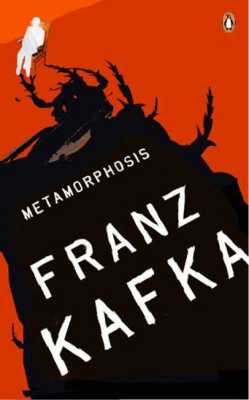
Another deeply philosophical delving into the inner workings of the human mind. The Metamorphosis deals with Gregor Samsa and his Metamorphosis into a giant, monstrous insect. One thing that the story expects of you is to take the Metamorphosis as given and it offers no explanation or reason as to why Gregor has suddenly transformed. Over time, his alienation and disconnection from the family he loves begin to cause problems for Gregor and his family, as they no longer are able to communicate, although Gregor can understand them. His actions are misinterpreted and the strain on their relationship grows. It is a very poignant tale and the ending is a very thoughtful one.

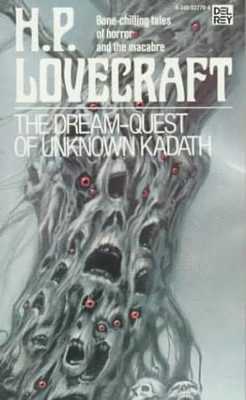
The first entry from the Author that started it all for me. While closely related to the Cthulhu Mythos it explores the subconscious of humanity and what realms we can access through our thoughts. It also poses questions like ‘if something is imagined, is it not real enough to the one imagining it?’. It is the longest of his Dream Cycle stories and features Randolf Carter, a recurring protagonist. In it Rudolf Carter dreams three times of a wondrous Sunset City. A city of such fantastic beauty that he becomes obsessed with going there. He prays to the God’s of the Dream to allow him entry, and finds that he now no longer dreams of the Sunset City. Dedicated to his cause he decides to descend into the Dream Realm and find Kadath, the home of the Dream Gods, to demand they show him the whereabouts of his dream city. Along the way extramundane creatures join him, even as others begin to try to stop him from uncovering the secrets of Kadeth. This shares heavy links with several other pieces of Lovecraft’s work such as ‘The Cats of Ulthaar’, ‘Pickman’s Model’ and ‘The Other Gods’. Reading the stories preceding the Dream Quest does add meaning to some of the recurring characters, however none of them employ such an eclectic and enjoyable journey.

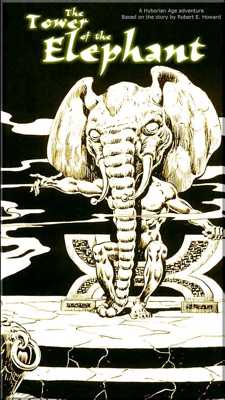
This is one of the first appearances of Conan the Barbarian. In this tale, Conan is still a young thief and has his eye on the Tower of the Elephant which is rumored to have a vastly precious gem at the top of the tower. A description of the story here does little justice, as Robert E Howards’ prowess with making a living breathing character, like Conan, is so perfectly executed that every page is a joy to read. While all of Conan’s major moments happen between the stories (He becomes king of Aquilonia for example) his adventures are full of a life and vigor that I have not seen surpassed. Howard was also a close contemporary with Lovecraft and you can see the mixing of ideas in this short story quite clearly. If you enjoy this, Robert E Howard wrote a fictional History of the Hyborean Age where this is set. It traces the origin of the races in Conan’s world. Through the power struggles and changes, up to when Conan is king and continues to the ultimate demise of all the civilizations and their metamorphosis to contemporary people. A perfect preface to the many Conan short stories.

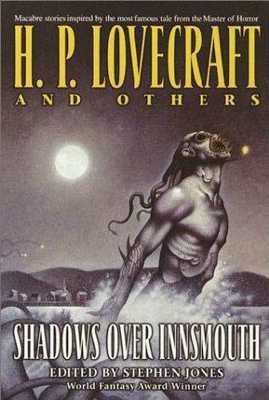
My justification for including a second Lovecraft book (Besides him being my favorite author) is that this particular book is a fine example of the Cthulhu Mythos, as opposed to the aforementioned Dream Cycle. H.P. Lovecraft was the master of cosmic horror on such a vast scale as to render the reader a feeling of hopelessness and pessimism. While Call of Cthulhu is his most well known story, The Shadow Over Innsmouth offers a more cohesive ending for people new to Lovecraft. The Shadow Over Innsmouth follows Robert Olmstead in his tour of New England, for antiquarian and architectural interests. Coming to Innsmouth he hears stories of Deep ones who bring the town fish for their industries and Gold for riches to those who send human sacrifices to their city deep beneath the Atlantic ocean. Far more is occurring in the dilapidated town though it’s citizens shamble about and all are afflicted with the odd ‘Innsmouth Look’. With the Bus out of town stricken with engine failure, Robert is forced to spend the night. There is a delightfully sinister ending to this novella. While I could recommend a few stories from Lovecraft if you enjoyed this, that could be a list in it’s own right.

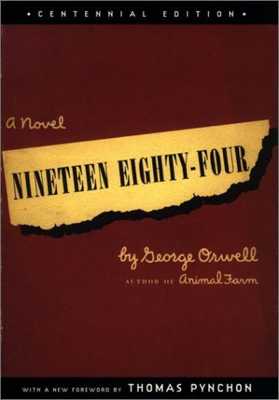
Last is possibly the most well known book out of this list, except for perhaps War of the Worlds. Set in a dystopian future where the government controls all aspects of the peoples lives, Winston Smith works as a civil servant and revises history to ensure The Party is always right, and to maintain the propaganda that helps to keep the minds of it’s citizens under control. Winston, however, struggles intellectually with ‘Big Brother’ and meets Julia who also is looking for ways to rebel. They begin an illicit relationship, illegal under ‘The Party’, and their control over all parts of society. Many concepts, now familiar vernacular, are coined in the story. The idea that a Big Brother figure is always watching you grew immensely in the 2000′s with the travesty of a reality show show being committed upon people all over the world. Room 101 also entered reality TV show circles, with celebrities relegating their most hated things to the dreaded Room 101, used in the book as a room that contains whatever the person fears most. Also themes on controlling how people thought through removing words used to express dissension and rebellion in the implementation of the new language, Newspeak. The defining Dystopian story in my opinion. Sadly this book is still under copyright in some countries, such as the UK and USA. Canadians and Australians should still be able to access it, though.


I loved Divine Comedy!
It’s great being able to read these online legally.
Pretty good choices, Sam. But thee ae a few hundred other books that would have worked also. But don’t worry. I’m sure you’ll hear about all of them.
Very good list except for the numerous spelling errors. I’ve read many of these and have to agree that the divine comedy is one of the best reads on the list.
Literary beans on the list g, many good reads indeeds yo.
Haven’t been able to find a free version of “Metamorphosis”. Can’t remember the author, but there is pretty damn good book called “Kockroach” with the premise of a roach waking to find he has transformed into a human in NYC.
Also, for those that like a difficult read, iBooks has Joyce’s “Ulysses” for free. I was resistant to the idea, but now it feels odd to read physical books. Absolutely love the Kindle and iBooks apps on my iPod; so great to get most books you want instantly, carry them with you all the time, and stop and read whenever you get the chance. In the past six months, I can’t remember a night where I didn’t go to sleep after laying in bed, listening to music, with the soft glow of the black background.
Also, have recently found a great website in goodreads.com for seeing what friends and other are reading and think of; also, a cool way to connect with smaller authors.
Went completely off-topic, but great list
http://www.gutenberg.org/ebooks/5200
Also has the German version if that’s what you were after.
I only know 2 books in thw whole list, but nice list i must say!
The Divine Comedy is Poetry NOT Prose, even in the [good] translations. It is just blank verse at that point. A proper translation will always retain it poetic form; proper in this case is verse translation. An Epic Poem, in my opinion, must NEVER be translated into a prosaic form, it must always be translated into at the very least blank verse.
To the scecond hand book store! At once…
Thanks, I enjoyed the list and reading the comments about books I have loved. I have read all of these with the exception of Dr. Jekyl and Mr. Hyde. I agree with other comments and would suggest that you need to solicit the help of a friend that can edit your work. I know too well that we cannot edit our own work and cannot depend on software spell checkers. One error that occurs in your introduction I will mention as it is germane to the premise of the list. The word copyright refers to the exclusive legal right to make copies, and is not copy “write”.
Nineteen Eighty-Four is one of my favorite books. I have only read Inferno from The Divine Comedy. Exceptional read.
out of copyright?
thats what i thought the author meant…
wonderful list!
however, you should retitle it 10 Great FICTION Books, rather than 10 Great FICTIONAL Books. Using the word FICTIONAL suggests these books don’t actually exist.
I would LOVE a list of fictional books. Like, say, “The Hitch-hiker’s Guide to the Galaxy”. Yes, I know that’s a real book by Douglas Adams, but it’s also a fictional encyclopedia in that book that is mentioned quite often. Or the book by the mad Arab Whatever-Hiz-Name-Was that H.P.Lovecraft keeps mentioning in his stories. Or the book that the protagonist never gets to finish in Italo Calvino’s “If on a Winter’s Night a Traveler” (“Se una notte d’inverno un viaggiatore”).
“Venus on the Half-Shell” by Kilgore Trout.
Actually, what Douglas Adams describes as “The Guide to the Galaxy for the Hitch-hiker” is clearly an iPad. Or a similar Android Tablet device. Or a Kindle. Goddamn, future is here right now. I’m sure Douglas Adams didn’t really think these things would be real as soon as 2011. So sad that he passed away just a few years too early.
I just thought you would like to know that there is an iPhone/Android app coming out in the next few months that will be the Hitchhiker’s guide to the galaxy. It will be very useful for my travels!
nice list. HP Lovecraft was great but I think Edgar Allan Poe is the master! Lovecraft himself was influenced by Poe, and by a lesser known writer by the name of Algernon Blackwood. Blackwood is maybe my favorite horror/fantasy writer right after Poe. He was a member of the hermetic order of the golden dawn, along with Aleister Crowley. His stories mostly dealt with metaphysics, nature, and the supernatural. I highly recommend Blackwood to anyone who is a fan of Lovecraft style horror!
SO. MANY. MISTAKES.
Yes I thought that too. You should probably stop using caps lock and a full point after each word. I hope that helps.
Ha!!!
Like this which I posted earlier:
The Divine Comedy is Poetry NOT Prose, even in the [good] translations. It is just blank verse at that point. A proper translation will always retain it poetic form; proper in this case is verse translation. An Epic Poem, in my opinion, must NEVER be translated into a prosaic form, it must always be translated into at the very least blank verse.
Well Vagabond Sam, if this is the list you lost your cherry with – it was worth it. An entertaining read of diverse books and as a big fan of Lovecraft I like your choice. Most of this list could also qualify as being influential in their own field.
Enjoyed the list – a nice read on a rainy windy day on the east coast of Africa
Well done for a first attempt.
Thanks Sam.
I hate to be a bore, but I don’t really see what the point is. Is this just a list of books that are old enough to be out of copyright ? I’m afraid that’s not restrictive enough to end up as an very interesting article.
1984 is my favorite book. Pity that Orwell died a year after its publication. We missed a great many other possible works from him had he lived long enough.
I read 1984 expecting a revolution by the protagonist in a dystopian future. And the built-up to the story hinted at that. But instead, the true horrific nature of a dystopian future was depicted by Orwell and then I realized why most people think that this is one of the best works of fiction of all time.
If there is a slim possibility that anyone has still not read 1984, I suggest you do so in the future. Yes, the novel is a bit slow, but at the end you would be shocked.
I thought about 1984 constantly after I read it for the first time and realized that this is my favorite novel. You see, you can after all control somebody’s thoughts and feelings according to George Orwell.
died after* a year of its publication. Sorry.
Nice list.My favourite from this list is probably the metamorphosis.
At first i was like oh know this one and that one are too low! But as I read on i found more and more great books. In the end you could juggle the places all day but 10 better public domain books you will not find. I love the list and all the books on it, my favorite list by far good job. And shadow over innsmouth was my first HP lovecraft book and still my favorite. More lists like this!
Hi all
In case anyone hasn’t heard of it a great source of free out of copyright ebooks is the Gutenberg Project (gutenberg.org). They have around 36,000 free ebooks all scanned by volunteers and you don’t have to sign up or anything and they will send you a DVD of ebooks for free if you ask. I discovered it about a year ago and have been slowly getting through them.
How ironic is this?
it is COPYRIGHT. One word. As a fan of these books, you should know better.
Living up to your username, I see. But you’re right. It’s a common mistake but not one you’d expect to see here. All that aside, I think it’s a pretty good list, although it cries out for sequel, don’t you think?
I would love to see your list of the best (or at least your favorite) Lovecraft stories, and why you consider them tops.
Cthulhu fhtagn!
what the heck does “out of copy write/right” mean?
it means they’re already “in the public domain”.
A person who doesn’t know what “copyright” means probably doesn’t understand the concept of “public domain” either. It basically means that these works can be freely copied, reproduced, distributed, or otherwise used or exploited by anyone without having to seek permission or compensate another person or entity for doing so. No one owns the material or intellectual property. If someone owns copyrights to an item, they exclusively control its use and distribution, and for someone else to use it without their permission is akin to stealing. As mentioned in list item 1, copyright laws vary by country.
And if you have ever needed to obtain permission to use anything which is still under copyright (in my case using several lines of song lyrics in a novel), you will immediately see the wisdom of finding something usable which is out of copyright. It is not only time consuming but expensive!
You wrote a novel? What’s it called, if I may ask?
Pretty good list. If I recall properly, Lovecraft’s “Pickman’s Model” was adapted into an episode of Rod Serling’s “Night Gallery”.
I believe it was. And it also made a pretty good comic book story, which I read when I was very young. I think that may have been in one of the old EC Comics which got busted when the Comics Code Authority was established. Anyone remember that?
As a matter of fact, i do remember the old EC line of comics. I also remember the 3 “Spider-Man” drug issues which didn’t carry the Comics Code Authority seal of approval back in 1971.
Yeah, was that about issues 96-98? Or somewhere in there? Not having the seal was a big deal back then. Stan Lee has talked about the trepidation a lot of people felt when they sent those issues out. And then nobody cared. If there hadn’t been some publicity about it, I doubt anyone would have noticed. And it was seriously time for comics to start tackling bigger issues.
Great list! I have read a few of these and now need to read the others. A few more suggestions: “Frankenstein” & “the time machine”.
and now…….OFF TO PROJECT GUTENBURG!!
I love my XBOX 350.
Good read though
10 short to be 360?
Very good, tsin tsin. Maybe it’s named after the South Park episode where the Loch Ness monster tries to borrow “three-fiddy.”
i love that episode …….
Am I the only person who thinks Dante had the right idea, when it came to Muhammad? “The Sower of Discord,” as Dante calls him..
spelling error in the title
wtf?
Another winning example of Jamie Frater no longer bothering to even give a cursory glance over the lists. If you can’t even get the title of the list right (or write as the author would no doubt say), then what horrors are likely to be within the text?
Too right! Just look at the title – these aren’t FICTIONAL books, they are FICTION books, and they’re out of copyright… two errors in the list title alone, that doesn’t bode well. Don’t want to slam anyone too hard – especially not a fellow Lovecraft fan! – but yeeesh, c’mon dude, would a quick minute of proof-reading really hurt that much?
Jamie
I dun rite a list on books. its about copy write; can u put it on yr interweb site?
Vagabond Sam
FFS Jamie please stop letting people write crap for you. It drags your reputation down.
copyright!!!!
I just re-read War of the Worlds recently and forgot how fantastic it was. I need to re-read 1984….since it feels we are headed in that direction.
Great list.
Shouldn’t it be ‘Out Of Copyright’?
And Books of Fiction, or Fiction books rather than FICTIONAL?
In Dr Jekyll and Mr Hyde Jekyll kills himself in the end.
In war of the worlds the bacteria killed those alien because they are not immune to bacteria in Earth.
In 1984 Winston betrayed Julia by letting officials to do things she is most afraid on her.
kthxbye
lol
Don’t forget “The Odyssey” by Homer (Not Simpson)
Big Brother is back on telly this week.. Save me. George Galloway and, “now, would you like me, to be the Cat?” still freaks me out.
I would watch the ***** out of a Lovecraft movie. I heard that Guillermo Del Toro was going to make an At the Mountains of Madness movie, but the idea was scrapped… O, what could have been…
John Carpenter made the movie “In the Mouth of Madness” in 1994, which was based on the Lovecraft story… I don’t know why they changed the title slightly, maybe copyright problems…
Wow, that’s got to be embarrassing. Your first post, an article about books, and you can’t even get “copyright” right.
“Copy write”? Copyright, my friend.
Why is “copyright” spelled like that in the title.
Learn English before you write a list.. Jeez, this Listverse is getting worser and worser:P
Not a bad list, some really good books, wasn’t expecting #1!
My addition: The Ingenious Gentleman Don Quixote of La Mancha (Miguel de Cervantes) – 1605.
Not a complaint but a question: In the book photo it says “Shadows Over Innsmouth” and contains the phrase “and others.” You refer to the book as “The Shadow Over Innsmouth” and say it’s a collection of Lovecraft stories. Which is the correct title and who are the “others?” If these are other stories by Lovecraft, the phrase is really badly placed. Are there stories by other authors in the book?
I’m usually the one who figures this stuff out and explains it to others, but this time I have no idea what’s going on.
“The Shadow Over Innsmouth” is the short story by H.P.Lovecraft. The book in the picture, “Shadows Over Innsmouth”, is a collection of short stories by Lovecraft and others, edited by Stephen Jones.
Yeah, fenda, that’s pretty much what I was thinking. So is the book that’s pictured the one the author is recommending? For one story? Or could we just not find a picture of a Lovecraft book that has “The Whatever Over Innsmouth?” Or… Ahhh, welll…
I think he’s recommending the short story, not necessarily that particular book. The story has been in other short story collections as well, some of which only have Lovecraft stories. Check out Amazon, they have a gazillion of Lovecraft books available.
Great list! Now I have books I have to go find at the second hand store-like George Orwells 1984 I picked up dirt cheap! If I can’t find them I’ll read them on my blackberry
An interesting list that sounds like the reading list for a college english class but the writing is kind of crap. A good try though.
I thought a lot of the comments here were petty. This is a superb site. I have literally read the whole thing back to the first day.
Thank you for your efforts!
Very nice list considering there are hundreds of books to chose from.
The grammatical errors in this article are shocking. Can’t Jammy proof-read the articles before throwing them out here?
Copyright.
Excellent list! I have been a Lovecraft fan since I was 17 and stole an interesting looking paperback from my high school library … it was “Dreamquest of Unknown Kaddath” (go Randolph!) From Cthulhu to the Old Ones, great stuff. Even though the Necronomicon is a difficult work to chew through…
As for other free books, I purchased a kindle back in January (after coveting one for over a year) and promptly found several thousand free e-books.
I am slowly reading the complete works of Ernest Thompson Seton right now. Some of the “Complete works of…’ are several dozen books in one collection! I also have the complete works of Jack London. His book “Alcoholic Memoirs” is a superb autobiography… one of the best i have read in my life.
I concur with the lister about the metamorphasis being a thought provoking read. I downloaded a free app onto the ipod touch called “classics” and it included the metamorphasis along with other great books which include flatland (Edwin A. Abbot), the time machine (H.G. Wells), homers’ odyssey and iliad, and many others. Now I will check out some of the listers other suggestions. Thanks!
Great list! Best list in a long time!
I’m shocked at all the grammatical errors. Was difficult to read.
The author needs to learn how to use the word ‘its’.
Interesting list, I’ve read most of the books on the list. Both Jekyll and Hyde and 1984 were set texts for my A-Level English Literature so having to study them kinda took some of the enjoyment out of them….
I wasn’t really bothered by the mistakes – you knew what he was trying to say… As my English teacher once told me -the whole point of language is to be understood – we understood – so what’s the big deal???
Was wondering though – How long after the author dies does the copyright run out??
It depends on the country. In the UK and the USA it’s life+70 years. In other countries it’s usually from 25 to a 100 years, except in Afghanistan where it’s zero years (no copyright at all). Sometimes the relatives of the author may be able to renew the copyright beyond those time limits.
In fact, that’s why Nineteen Eighty-Four is in the public domain in Canada and Australia, but not yet in the USA or the UK (as the list writer points out). The copyright in Canada and Australia is only life+50 years, in the UK and the USA it’s life+70.
Cheers for the info – as if Afghani authors didn’t have enough problems being censored by the Taliban Govt -they don’t even get to own their own work – Damn!
Great list. Lovecraft deserves to be there.
Not a bad outing for your first time, Vagabond.
Great list I was glad to see 1984, the Metamorphosis, and The Divine Comedy, on the list. Just because they are three of my favorite books ever.
i liked the list.too bad about all the grammer nazis……
Grammar. Grammar Nazis.
Does correcting the spelling of “grammar” make you a grammar Nazi?
I’m not sure. Does it?
Darned if I know. I wonder if correcting the spelling of “notty” would make me a naughty Nazi.
hahaha….get my point.
This list is awesome! I have read nearly all the books here, but I have never read Lovecraft or Dostoyevsky or Kafka. I think I will.
Glad to see Howard included on this list. I have yet to read the original Conan stories (I’ve read more of the comics), but the reworkings of the Tower of the Elephant are phenomenal. I’ve got to read the original.