Top 20 Facts About Sleep
Published on October 29, 2007 - 64 Comments
The science of sleep is a modern one - in fact most scientific information on sleep has been gained in the last 25 years. This is a list of 20 very interesting facts about sleep.

Facts 1 - 10
1. The record for the longest period without sleep is 18 days, 21 hours, 40 minutes during a rocking chair marathon. The record holder reported hallucinations, paranoia, blurred vision, slurred speech and memory and concentration lapses.
2. It’s impossible to tell if someone is really awake without close medical supervision. People can take cat naps with their eyes open without even being aware of it.
3. Anything less than five minutes to fall asleep at night means you’re sleep deprived. The ideal is between 10 and 15 minutes, meaning you’re still tired enough to sleep deeply, but not so exhausted you feel sleepy by day.
4. Dreams, once thought to occur only during REM (Rapid Eye Movement) sleep, also occur (but to a lesser extent) in non-REM sleep phases. It’s possible there may not be a single moment of our sleep when we are actually dreamless.
5. REM dreams are characterised by bizarre plots, but non-REM dreams are repetitive and thought-like, with little imagery - obsessively returning to a suspicion you left your mobile phone somewhere, for example.
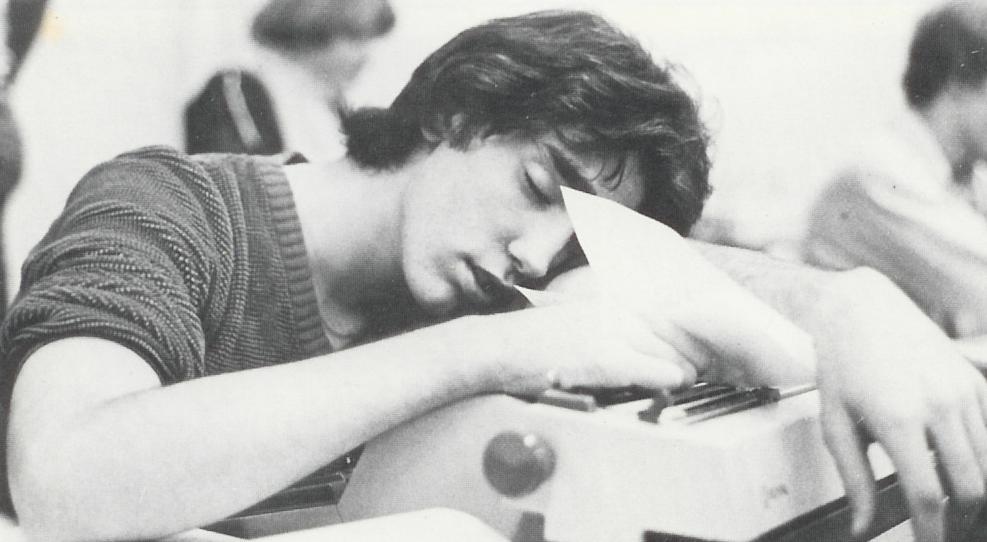
6. Certain types of eye movements during REM sleep correspond to specific movements in dreams, suggesting at least part of the dreaming process is analagous to watching a film
7. Elephants sleep standing up during non-REM sleep, but lie down for REM sleep.
8. Some scientists believe we dream to fix experiences in long-term memory, that is, we dream about things worth remembering. Others think we dream about things worth forgetting - to eliminate overlapping memories that would otherwise clog up our brains.
9. Dreams may not serve any purpose at all but be merely a meaningless byproduct of two evolutionary adaptations - sleep and consciousness.
10. Scientists have not been able to explain a 1998 study showing a bright light shone on the backs of human knees can reset the brain’s sleep-wake clock.
Facts 11 - 20
11. British Ministry of Defence researchers have been able to reset soldiers’ body clocks so they can go without sleep for up to 36 hrs. Tiny optical fibres embedded in special spectacles project a ring of bright white light (with a spectrum identical to a sunrise) around the edge of soldiers’ retinas, fooling them into thinking they have just woken up. The system was first used on US pilots during the bombing of Kosovo.
12. The 1989 Exxon Valdez oil spill off Alaska, the Challenger space shuttle disaster and the Chernobyl nuclear accident have all been attributed to human errors in which sleep-deprivation played a role.
13. The “natural alarm clock” which enables some people to wake up more or less when they want to is caused by a burst of the stress hormone adrenocorticotropin. Researchers say this reflects an unconscious anticipation of the stress of waking up.
14. Tiny luminous rays from a digital alarm clock can be enough to disrupt the sleep cycle even if you do not fully wake. The light turns off a “neural switch” in the brain, causing levels of a key sleep chemical to decline within minutes.
15. Humans sleep on average around three hours less than other primates like chimps, rhesus monkeys, squirrel monkeys and baboons, all of whom sleep for 10 hours.
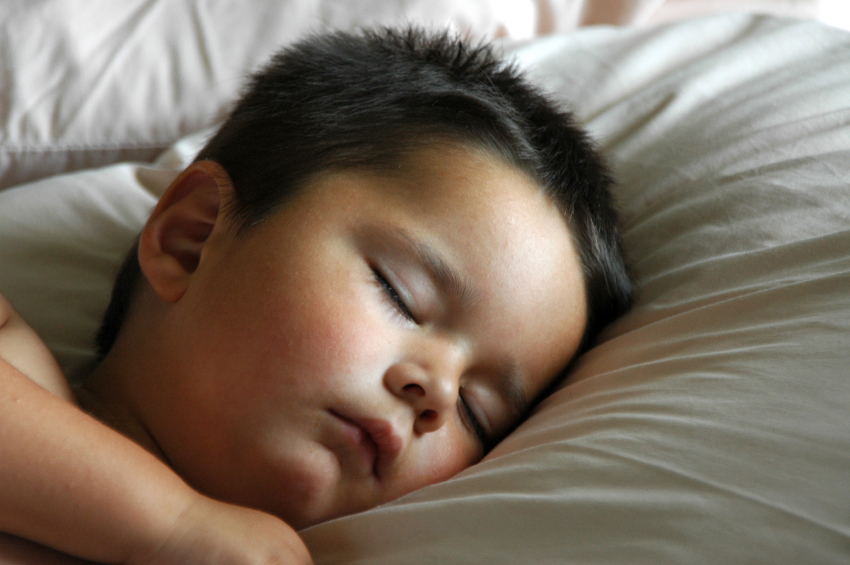
16. Ducks at risk of attack by predators are able to balance the need for sleep and survival, keeping one half of the brain awake while the other slips into sleep mode.
17. Diaries from the pre-electric-light-globe Victorian era show adults slept nine to 10 hours a night with periods of rest changing with the seasons in line with sunrise and sunsets.
18. Most of what we know about sleep we’ve learned in the past 25 years.
19. The extra-hour of sleep received when clocks are put back at the start of daylight in Canada has been found to coincide with a fall in the number of road accidents.
20. Experts say one of the most alluring sleep distractions is the 24-hour accessibility of the internet.
Source: ABC News Australia
Related ListsTop 15 Amazing Facts About The Human BodyTop 10 Amazing Facts About Dreams Top 20 Amazing Science Facts Top 10 Bizarre Sleep Disorders |
SubscriptionsLike this article? Subscribe to the RSS feed to keep 'em coming, or subscribe via email: |
If you find this site helpful, please leave a donation so you can enjoy the spirit of giving too.
Email This Post


1. Hobolad - October 29th, 2007 at 6:57 am
http://www.farmissues.com/mPortal/sheep_triva.asp
Anyway, we really don’t seem to know much about sleep- which is kinda cool I guess- you gotta have some mysteries.
2. Cyn - October 29th, 2007 at 7:02 am
20. Experts say one of the most alluring sleep distractions is the 24-hour accessibility of the internet.
no kidding!
3. StewWriter - October 29th, 2007 at 7:46 am
I just read an article (and I wish I could locate the source)that scientists are now believing that our bodies, during sleep, have the subconscious ability to let us know, in dream-like states, that something may be wrong with our bodies. Apparently a woman had several nights of very vivid dreams about burning from the inside out an, after a trip to her doctor, discovered she had a very bad ulcer. This is all just theories as of now, but that is definitely something to consider when sleeping: our bodies are warning us!
4. Dan - October 29th, 2007 at 7:46 am
I like how dreaming is mysterious and can’t be explained fully. #20 is the main reason why I don’t get enough sleep, and the reason I don’t get most things done!
5. TMo - October 29th, 2007 at 8:10 am
Yo yo yo… whats up with #10? Resetting your sleep clock by shining a light on the back of your knee?
6. evan - October 29th, 2007 at 8:15 am
yeah its a bit odd TMo, i dont get it either.
7. Sheyhey - October 29th, 2007 at 8:40 am
Ok, so if primates and victorians got more sleep than we do, and extra hours of sleep cause less accidents, then im totally petitioning to my boss that a work day shoould only be 6 hours. But thats 2 hours less of listverse
perhaps ill just petition for a nap time!
8. TerranRich - October 29th, 2007 at 8:52 am
TMo, I’ve been doing some reading about that and apparently it’s not 100% accurate. I wouldn’t see how it would work anyway.
But yeah, #20…LOL.
9. Ravyn - October 29th, 2007 at 9:25 am
StewWriter: I do believe that dreams tend to tell us about things that are wrong with our bodies that we may not realize. I keep a dream journal. I write down every dream that I have remembered on waking up. You can find some very interesting patterns and other thing compairing one dream to another.
10. mix2323 - October 29th, 2007 at 9:29 am
why do we feel in our dreams sometimes like when your falling
11. Juggz - October 29th, 2007 at 9:29 am
I can never remember my, dreams
12. jfrater - October 29th, 2007 at 9:31 am
dreams are weird - I do usually remember mine - in fact, as I am beginning to fall asleep I sometimes start dreaming - it gives me the feeling of watching a film - I know I am awake still but I know that the dreams are starting. It is quite weird.
13. Morgaine - October 29th, 2007 at 10:07 am
mix2323: The non-scientifical explanation for that is that our astral body flies away and makes journeys, and when it comes back to your physical body is when you feel like falling. (They say we never remember those journeys, but when you have a dejà vu, it means that you’ve just seen something you have already “visited”)

I just don’t know the “real” explanation, but this one is cooler
jfrater: I’ve had that experience lots of times, even getting to a point where I can control what will happen
I remember even dreams I had when I was just 4 or 5, and since then they have been terrorific, hiper-realistic, bizarre, or just stupid XD
I could write a book…
14. StewWriter - October 29th, 2007 at 10:35 am
I had a dream last night that I was reading a Top 20 list about dreams… man, now THAT’S spooky!
15. Blogball - October 29th, 2007 at 10:57 am
Most common dreams list was to be my list I was going to enter in the contest.
Oh Well I guess I have to think of another one now that the cat is out of the bag.
16. Fe - October 29th, 2007 at 3:36 pm
3. Anything less than five minutes to fall asleep at night means you’re sleep deprived. The ideal is between 10 and 15 minutes, meaning you’re still tired enough to sleep deeply, but not so exhausted you feel sleepy by day.
HA! It takes me from 30 mintues to an hour to fall asleep, sometimes more, and I generally only sleep for 5 hours at a time before waking up. I can generally doze for another hour or so, but that’s about it.
Also, I rarely remember my dreams. Somtimes I’ll wake up knowing I had a nightmare, but I never remember what it was about. It’s real common for me to wake up feeling like I only fell asleep moments before, with no awareness of any passage of time.
17. Shen - October 29th, 2007 at 5:48 pm
I don’t fully understand #14 - does that mean that a digital clock disrupts our sleep cycle all night, or that it emits these luminous rays when its alarm goes off?
18. Ravyn - October 29th, 2007 at 6:10 pm
Shen: The numbers on a digital clock are lit up. The light from the numbers disturb sleep patterns. Usually it is not enough to full awaken someone, but it is enough to throw off the amount of restful sleep the person gets in that night.
19. David Mackey - October 29th, 2007 at 10:43 pm
Great article - especially interesting is that our ancestors slept more.
20. jfrater - October 30th, 2007 at 1:08 am
Fe: Does that make you feel deprived of sleep?
David Mackey: Thanks - What is most interesting is that it was not until the late Victorian era that we stopped that habit - I wonder whether it has had a negative impact on society.
21. Judit - October 30th, 2007 at 4:21 am
LOL I am doing #20 right now!
22. firwnh - October 30th, 2007 at 11:48 am
“The system was first used on US pilots during the bombing of Kosovo.”
NATO didn’t bomb Kosovo, but bombed Serbia and Montenegro (it still existed then) to stop the ethnic cleansing Milosevic was conducting in Kosovo against the Albanians. I know this is way offtopic but it is an important fact that the author got wrong.
23. amanda - October 30th, 2007 at 2:37 pm
I am curious, where did you find #4? I am a psych student, and I haven’t come across this. I am thinking about doing my thesis on why humans put so much energy into remembering their dreams, and I have only come across research that says we dream in the REM cycle. I’d like to have all my bases covered!
24. jfrater - October 30th, 2007 at 3:03 pm
amanda: they were all from the National Sleep Research Project in Australia.
25. alex - October 30th, 2007 at 5:27 pm
when i was studying motivation and emotion in psych, we wrote an article on five accounts of sleep deprivation. upon reading the material in order to write the report i vaguely remember reading a journal article that spoke of, that with the introduction of light bulbs our sleeping patterns have become more distorted, and has consequently lead to later ‘bed times’, and therefore less sleep. i think its some sort of chemical in the light bulb, i believe the article also mentioned that with environmentally friendly light bulbs that the trend would get worse, maybe theres a stronger agent in the light bulb may keep us a wake even longer. i’d know more if i actually read it, instead of skimmed
number 11 is disturbing, if we sleep too little or too much, we can risk a shorter lifespan, i wonder what the implications will have on these soldiers. number 19 is a good reinforcer of why sleep is important.
26. BloggerDollar - October 31st, 2007 at 6:03 am
Good Facts. I was looking for ways to sleep less time and work for more time, you can check my post about the results
http://www.bloggerdollar.com/2.....more-time/
27. SnarlyCharly44 - October 31st, 2007 at 11:17 am
Once I had a dream that I got into my bed, went to sleep and had a dream. (I was dreaming that I was dreaming). The dream in the dream was that I went to a large field with train tracks running through the middle. Then, I dreamed that I woke up and went there, and said “Hey, this is where I went in my dream.” (although I’m still asleep and dreaming) Then, I woke up for real and was like “Whoa, that was wierd.”
28. Kelsi - October 31st, 2007 at 1:10 pm
As for number 10…why would they do that in the first place? Weird. I get anywhere from 5-11 hours of sleep in a usual night here at college, but my suitemates are so noisy, I feel tired all the time! I think college students underestimate the importance of sleep and the effects of stress on the mind and body. I definately don’t though. =(
29. Hannah - October 31st, 2007 at 1:47 pm
Morgaine :
Deja vu is no longer a mystery, it is when your eyes black out for such a short period of time that you see the same image twice giving you the feeling like you have seen that exact image before. I forget where I read that though.
30. aplspud - October 31st, 2007 at 7:56 pm
Bonus: The List Universe has contributed greatly to insomnia. haha
Having suffered from many sleep disorders, I find sleep one of the most fascinating functions of all living creatures, especially humans.
31. immaslacker420 - November 1st, 2007 at 2:47 am
Did you know that the average person eats about 8 spiders in their sleep every year? EW. I can’t even imagine.
32. jfrater - November 1st, 2007 at 2:50 am
immaslacker520: that is not something I like to think about
33. immaslacker420 - November 1st, 2007 at 2:59 am
Me neither and that is why I brush my teeth 7 times a day. haha.
34. jfrater - November 1st, 2007 at 3:22 am
immaslacker420: hahah - I definitely don’t go THAT far
35. Tazittel - November 15th, 2007 at 10:54 pm
Shouldn’t I be sleeping now then?
36. Laqweefa - December 1st, 2007 at 6:04 pm
I found an article where it says this guy has had “more than 11,700 consecutive sleepless nights”. I think that makes 18 days look like nothing lmao
http://www.oddee.com/item_91848.aspx
(#7)
37. jim - December 7th, 2007 at 1:54 pm
excelent article, but it’s making me sleepy. I’m gonna take a nap.
38. pegasus - December 10th, 2007 at 9:33 am
If you guys are interested in learning more about sleep check out this site:
www.realmeaningofdreams.com
They have some more interesting facts on sleep and loads of info on dreaming too if you are interested!
39. beekiller - December 21st, 2007 at 1:55 pm
that flash light on the back of the knee thing isnt true
40. beekiller - December 21st, 2007 at 1:56 pm
woops:
that flash light on the back of the knee thing isnt true
http://www.straightdope.com/columns/011005.html
this website explains it
41. jiveterky - December 24th, 2007 at 9:02 pm
Hey Morgaine - I definitely know what you’re talking about. I’ve been able to (semi) control my actions in my dreams. Ever notice that you can’t read in your dreams… reading and dreaming come from opposite sides of the brain, if you ever see written text in your dreams, it will look like scrambled letters.
42. ReanJohn - January 4th, 2008 at 8:57 am
whoops!! guilty at number 20!
43. Elli - February 4th, 2008 at 12:30 am
When my little brother got a Nintendo DS for Christmas, he couldn’t figure out how to play Pirates of The Caribbean 3 (he’s 5), so I had to play for him to keep him happy. That first night I dreamt that I was playing in bed in the dark for about half an hour. Then I realized that we left it in the living room and I kinda woke up thinking “Oh wuuuut?”
44. devilishgrin66 - February 14th, 2008 at 1:58 am
#10 is debatable. I can’t find it right now but there was an article debunking that myth. (the idea that shining a light on the back of the knee is because when you are asleep, you are most likely covered and the back of your knees would not be getting any light. This tells your body that you are ready for sleep and releases melatonin, thus shining a light would make your body think that it is day. However, a lot of the time the back of your knee is covered anyway)
Oh and the dream everyone has about falling from a height and you wake up like 10 feet above your bed and fall into it is the result of a ‘hypnic jerk’ http://en.wikipedia.org/wiki/Hypnic_jerk
Thats always fun, especially when you fall hard into bed.
45. Ramanan - February 15th, 2008 at 4:38 am
I heard that most of the thing which comes in dream are our wish what we want to be. In most of the dreams people will imagine themself warriors, or sacrificing their life for their loved ones. These are the inner feelings which cannot be expressed to others and the possibility of happening in real life is less.
46. Concerned Observer - February 17th, 2008 at 8:51 pm
#10= WTF?!
47. Sarah - February 24th, 2008 at 2:10 pm
I think that dreaming may also be a way to read your problems, and possibly solve them.
People who have primal therapy apparently dream very simple dreams. I think our subconscious is trying to tell us something.
48. This_Is_Jac - February 24th, 2008 at 6:25 pm
Ive only had one lucid dream.
random…
:]
but anyway… a scientific research proved that you will die if you go any longer than five days without sleep so….. yeah.
49. Ashley - February 29th, 2008 at 6:44 pm
10. Scientists have not been able to explain a 1998 study showing a bright light shone on the backs of human knees can reset the brain’s sleep-wake clock.
who researches these things? who gives them the OK to research these things? WHY do they research it?
50. Dreamless? - March 11th, 2008 at 9:21 am
Everyone is said to dream> Is that every night? If I dream at night, I never remember them. Maybe once or twice a year, I can remember dreaming.
What does this mean?
Intrigued to see the respnses.
51. Denzell - April 7th, 2008 at 10:16 pm
Dreamless?- read the amazing facts about dreams. You’ll see there that you only remember 10% of your dreams.
52. Trigster - May 3rd, 2008 at 4:43 pm
I don’t understand 17 at all…
53. Rylan - May 3rd, 2008 at 6:41 pm
“I don’t understand 17 at all…”
Before electric lighting adults slept nine to 10 hours each night. The time of the day during which they slept those nine to 10 hours changed with the seasons and was in line with sunrise and sunsets.
54. Alice H - June 19th, 2008 at 5:55 pm
i liked the last one…because its 2 in the morning…
55. Tempyra - June 24th, 2008 at 10:58 am
devilishgrin66: Awesome, I’ve frequently wondered what the term was for that annoying fright I get when I’m falling asleep. I wonder if that is the reason why we say “falling” asleep haha.
It would be extremely helpful if I could reset my body clock! Are you supposed to shine a light on the back of your knee when you’re asleep (to wake you up?) or when you’re awake? I’d still have the same problem of not being able to stick to a sleeping routine though. 2.5 years of swapping from day to afternoon to night shifts has wrecked my sleeping patterns completely
56. dom - June 25th, 2008 at 9:09 pm
i often find myself in this state of sleep where my eyes are cloths and all i see if black and i cant not move at all i am not dreaming im completely concous upon where i am..im not deaming i just cant move and all i see is balck eventualy i just dream i guess
57. Vera Lynn - June 25th, 2008 at 10:06 pm
#41 jiveterky I read in my sleep all the time. I’ve always wondered if what I’m reading, I’ve read before, Or if I am creating the text. It is bizarre but very real. I almost read it aloud; it is that real.
58. Drogo - June 26th, 2008 at 3:51 am
I frequently dream that I’m trying to read sentences that don’t make sense because they are just a string of unrelated words. I try to figure out what the sentences mean, but it’s just random groups of verbs, nouns, and such, that are composed in the form of sentences.
59. Drogo - June 26th, 2008 at 3:55 am
p.s. My posts probably seem like random strings of nonsense words.
60. Kirbo - June 26th, 2008 at 9:50 pm
Pretty Sure Chernobyl was caused by people deliberately doing tests on the facility and deliberately turning off all of the built in safety precautions. It was stupid, yes, but I don’t know that you can blame ignoring flashing red lights, warnings, and override switches during a failure scenario test on lack of sleep.
61. Vera Lynn - June 27th, 2008 at 10:25 pm
‘Kay’all. Got to catch some Zeees. Wasn’t tired before I read this list. Wish I was with MPW…