
 Mysteries
Mysteries
Mysteries  History
 10 Surprising Stories About the Texas Rangers
 Humans
 10 Philosophers Who Were Driven Mad by Their Own Theories
 Miscellaneous
 10 Video-Game-Worthy Weapons and Armors from History
 Weird Stuff
 10 Psychics Who Accurately Predicted Wartime Events
 The Arts
 10 Pieces of Art Inspired by a Broken Heart
 Health
 10 Science Fiction-Sounding New Medical Treatments
 History
 10 Surprising Facts About the Father of Submarine Warfare
 Space
Space Ten Astonishing New Insights into Alien Worlds
 Weird Stuff
 10 Bizarre Summer Solstice Rituals Still Practiced Today
Mysteries Top 10 Haunting Facts About the Ghost Ship MV Alta
History 10 Surprising Stories About the Texas Rangers
Humans 10 Philosophers Who Were Driven Mad by Their Own Theories
Who's Behind Listverse?

Jamie Frater
Head Editor
Jamie founded Listverse due to an insatiable desire to share fascinating, obscure, and bizarre facts. He has been a guest speaker on numerous national radio and television stations and is a five time published author.
More About Us
Miscellaneous 10 Video-Game-Worthy Weapons and Armors from History
Weird Stuff 10 Psychics Who Accurately Predicted Wartime Events
The Arts 10 Pieces of Art Inspired by a Broken Heart
Health 10 Science Fiction-Sounding New Medical Treatments
History 10 Surprising Facts About the Father of Submarine Warfare
Space Ten Astonishing New Insights into Alien Worlds
Weird Stuff 10 Bizarre Summer Solstice Rituals Still Practiced Today
Top 10 Out-Of-Place Artefacts
An out-of-place artefact is an object that exists in a place in which it is impossible for it to exist. OOPArts are often of interest to creationists and others who seek evidence that may refute the theory of evolution; they are also used to support religious descriptions of pre-history, ancient astronaut theories, or the notion of vanished civilizations that possessed knowledge or technology more advanced than our own. This is a list of the top 10 out-of-place artefacts.

The Baigong Pipes are a series of pipe-like features found on and near Mount Baigong about 40 km southeast of the city of Delingha, in the Haixi Mongol and Tibetan Autonomous Prefecture, Qinghai Province, China. The Baigong Pipes are reported to be associated with a “pyramid” about 50 to 60 meters (160 to 200 feet high) built on Mount Baigong. The front of the “pyramid” is reported to contain three caves. The mouths of the two smaller caves have collapsed. Only the largest cave, which is 6 meters (18 feet) high, can be entered. Two Baigong Pipes have been reported from the largest cave. One of these is described as being 40 cm (16 in) in diameter and preserved as a reddish-brown “half-pipe”. Within the same cave, another pipe-like feature of similar diameter was also found. “Dozens” of upright pipe-like features, about 10 to 40 cm (4 to 16 inches) in diameter, were also found protruding from Mount Baigong above the largest cave.
If you really want a genuine artifact, buy a 200-Year-Old Trumpet Cannon at Amazon.com!
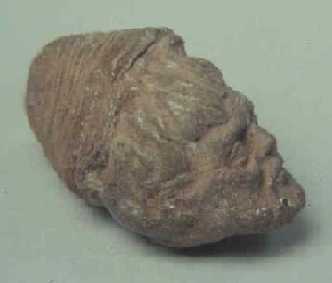
The Tecaxic-Calixtlahuaca head is a terracotta head, probably originally part of a larger figurine, discovered in 1933 among pre-Columbian grave goods in the Tecaxic-Calixtlahuaca zone in the Toluca Valley, approximately 65 kilometers west of Mexico City. Because of the head’s non-Amerind facial features, including a beard, and its unusual style, some believe that it is of Roman origin, and thus evidence of pre-Columbian trans-oceanic contact. The site where the head was found seems to be a genuine pre-colonial site undisturbed during the colonial period. A thermoluminescence test performed in 1995 by P.Schaaf and G.A.Wagner in the FS Archaeömetrie unit in Heidelberg, Germany, established its age limits between the 9th century B.C. and the middle of the 13th century A.D, confirming that it is a pre-colonial artifact. Bernard Andreae of the German Institute of Archaeology in Rome, Italy, confirmed the style as Roman and proposed the 2nd century A.D as datation, based on the hairstyle and the beard.
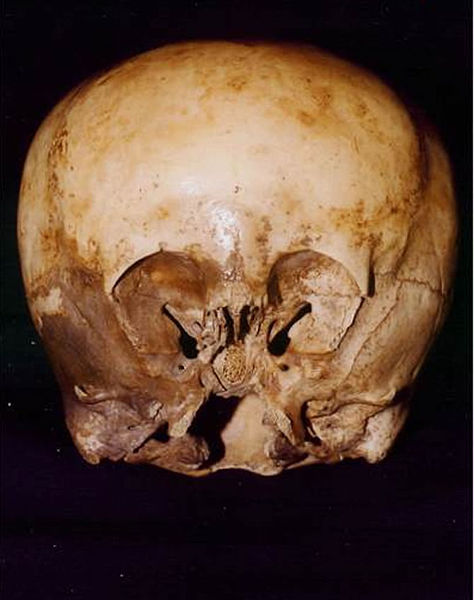
The Starchild skull is an abnormal human-like skull which was found in Mexico. Its origin and nature are contested by scientists and paranormal enthusiasts. The starchild skull came into the possession of Lloyd Pye, a writer and lecturer in the field of alternative knowledge, in February 1999. According to Pye, the skull was found around 1930 in a mine tunnel about 100 miles (200 km) southwest of the Mexican city of Chihuahua, Chihuahua, buried alongside a normal human skeleton which was exposed and lying supine on the surface of the tunnel. The skull is abnormal in several aspects. A dentist determined that it was a child’s skull, due to unerupted teeth being impacted in the associated upper right maxilla found with the skull. However, the volume of the interior of the starchild skull is 1600 cubic centimeters, which is 200 cm3 larger than the average adult’s brain, and 400 cm3 larger than an adult of the same approximate size. The orbits are oval and shallow, with the optic nerve canal situated at the bottom of the orbit instead of at the back. There are no frontal sinuses. The back of the skull is flattened, but not by artificial means. The skull consists of calcium hydroxyapatite, the normal material of mammalian bone, but there is an overload of collagen in it, much more than is usual for human bone. Carbon 14 dating was performed twice, the first on the normal human skull at the University of California at Riverside in 1999, and on the Starchild skull in 2004 at Beta Analytic in Miami, the largest radiocarbon dating laboratory in the world. Both independent tests gave a result of 900 years ± 40 years since death. DNA testing at Trace Genetics in 2003 recovered mitochondrial DNA and determined that the child had a human mother, though it was not the child of the skull found with it.
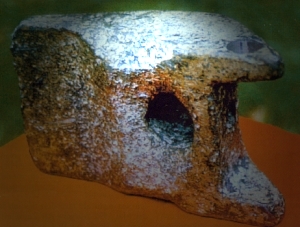
The Aluminum Wedge of Aiud, also known as the Object of Aiud, is a wedge-shaped object found 2 kilometers East of Aiud, Romania, on the banks of the Mures river in 1974. According to an article written by Boczor Iosif, a contributor to Hungarian paranormal magazines, it was found under 35 feet of sand and along side 2 mastodon bones. His article also claims it was found in 1973. For three reasons some claim the wedge is proof that aliens came to visit Earth in the past. An unnamed aeronautical engineer said it resembled the foot of landing gear not unlike the current space vehicles at the time, only smaller. This was corroborated by Florin Gheorghita, a known ufologist in Romania. The fact that it was found in the same layer as mastodon bones, and assuming it was found in original context, would make it at least 11,000 years old. The third reason people believed that this was from an alien ship was because aluminum was not even discovered until 1808 and could not be produced in mass until 1885. Therefore, because it looks like landing gear, it was found with mastodon bones and the oxide dated to at least 300 years old (before aluminum on earth), it was from an alien spaceship. Most scientists believe the wedge was made here on earth and its purpose is just not yet identified. Not much information is to be found on this subject. The lack of data can possibly be explained by the imposed restrictions on archaeology and history by the communist rule of the time. Aluminum requires 1,000 degrees of heat to be produced. The aluminum wedge of Aiud remains a mystery.
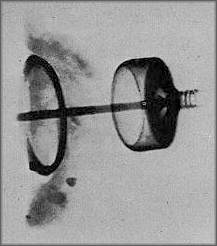
The Coso Artifact is a spark plug found encased in a lump of hard clay or rock on February 13, 1961 by Wallace Lane, Virginia Maxey, and Mike Mikesell while they were fossicking for geodes near the town of Olancha, California. Following its collection, Mikesell destroyed a diamond edged blade cutting through the rock containing the artifact and discovered the item. Virginia Maxey, one of the people who discovered it, speculated at different times that this artifact was either 100 or 500,000 years old as noted by Stromberg and Heinrich (2000, 2004). Mrs. Maxey failed to provide either any specific information or verifiable citation about either the dating technique or evidence used in calculating either date. The origin of the artifact has been the cause of much speculation. Pseudoscientific suggestions include: An ancient advanced civilization (such as Atlantis), Prehistoric extraterrestrial visitors to Earth, Human time-travellers from the future leaving or losing the artifact during a visit to the past.
Discover a universe full of ridiculously interesting facts with Listverse.com’s Epic Book of Mind-Boggling Top 10 Lists
at Amazon.com!
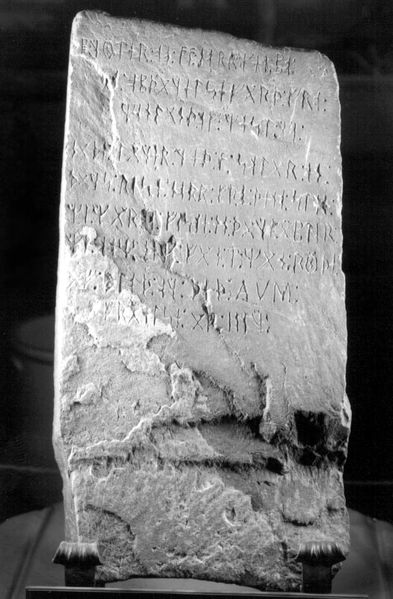
The Kensington runestone is a roughly rectangular slab of greywacke covered in runes on its face and side. Its origin and meaning have been disputed ever since it was found in 1898 near Kensington, Minnesota. It suggests that Scandinavian explorers reached the middle of North America in the 14th century. Its origin is uncertain, and opinions are divided as to its authenticity, with some (including reknowned Minnesota geologist Newton Horace Winchell) suggesting it is an important Medieval artifact, and others (including eminent runologists such as R.I Page and James Knirk) arguing the Runestone is a hoax. In The Kensington Runestone: Approaching a Research Question Holistically (2005) archeologist Alice Beck Kehoe alluded to reports of contact between native American populations and outsiders prior to the time of the runestone, which tend to validate the possibility of a fourteenth century, northern European Scandanavian expedition. The translation of both sides reads:
Face: 8 Geats (South Swedes) and 22 Norwegians on acquisition venture from Vinland far to the west We had traps by 2 shelters one day’s travel to the north from this stone We were fishing one day. After we came home found 10 men red with blood and dead AVM (Ave Maria) Deliver from evils.
Lateral: I have 10 men at the inland sea/lake to look after our ship 14 days travel from this wealth/property Year of our Lord 1362
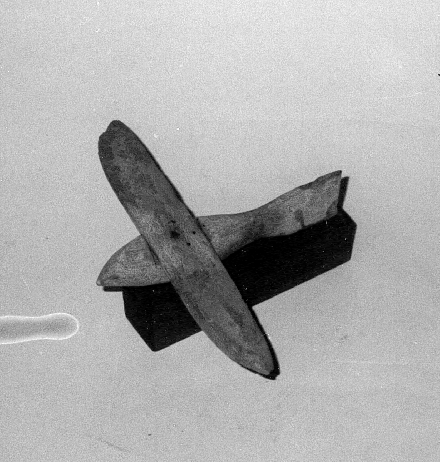
The Saqqara Bird is a bird-like artifact made of sycamore wood, discovered during the 1891 excavation of the Pa-di-Imen tomb in Saqqara, Egypt. It dates back to at least 200 BC and is now housed in the Egyptian Museum in Cairo. It has a wingspan of 7.2 inches and weighs 39.120 grams. The artifact has a beak, no holes for feathers, and one eye, and was painted to resemble a falcon without clear images and carving of feathers on the wings. Perhaps the most intriguing speculation is that the “Bird” may show that an understanding of the principles of aviation existed many centuries before such are generally believed to have first been discovered. The Ancient Egyptians had knowledge to some extent of sail construction. Since the 5.6-inch long object closely resembles a model airplane, it has led one Egyptologist, Khalil Messiha, and others to speculate that the Ancient Egyptians developed the first aircraft. Messiha, who was the first to argue that the model did not represent a bird, wrote in 1983 that it “represents a diminutive of an original monoplane still present in Saqqara.”
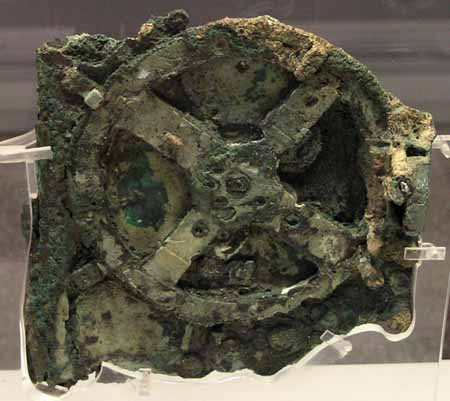
The Antikythera Mechanism is believed to be an ancient mechanical calculator (also described as a “mechanical computer”) designed to calculate astronomical positions. It was discovered in the Antikythera wreck off the Greek island of Antikythera, between Kythera and Crete, and has been dated to about 150-100 BC. It is especially notable for being a technological artifact with no known predecessor or successor; other machines using technology of such complexity would not appear until the 18th century. While a century of research is finally answering the question of what the mechanism did, we are actually no nearer to answering the question what it was for.
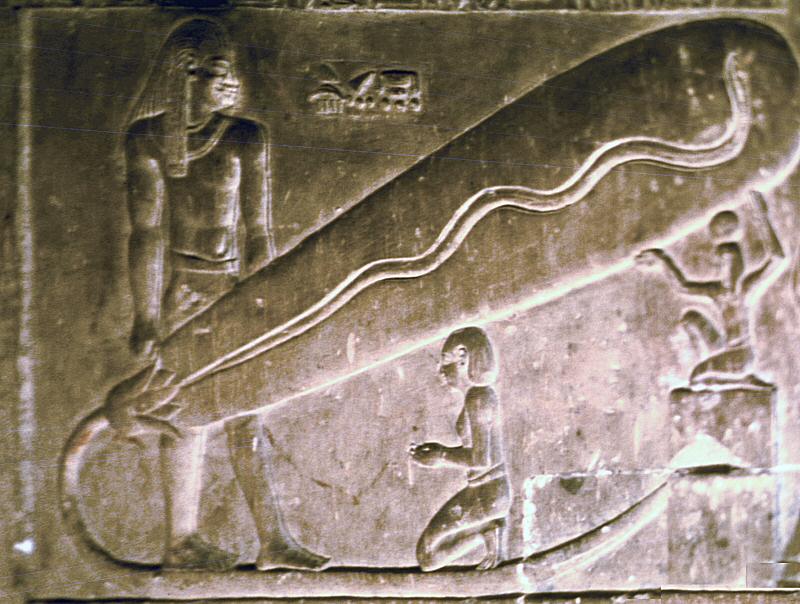
The Dendera light comprises three stone reliefs (one single and a double representation) in the Hathor temple at the Dendera Temple complex located in Egypt. The images are interpreted by traditional Egyptologists to depicting lotus flowers spawning a snake, representing aspects of Egyptian mythology. Controversy arose when the main object in the images was interpreted by some as electric lamps based on comparison to modern devices. These individuals believe the object may be electric lamps. Engineers have constructed a working model based on the reliefs and some authors (such as Peter Krassa and Reinhard Habeck) have produced a basic theory of the device’s operation.
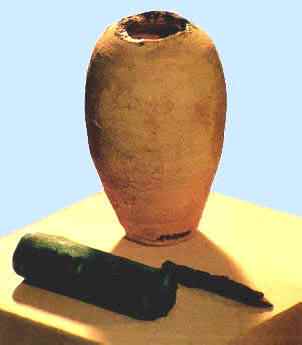
The Baghdad Battery was discovered in the village of Khuyut Rabbou’a (near Baghdad, Iraq) in 1936. These artifacts came to wider attention in 1938, when Wilhelm König, the German director of the National Museum of Iraq, found the objects in the museum’s collections, and in 1940 (having returned to Berlin due to illness) published a paper speculating that they may have been galvanic cells, perhaps used for electroplating gold onto silver objects. The artifacts consist of ~130mm (~5 inch) tall terracotta jars (with a one and a half inch mouth) containing a copper cylinder made of a rolled-up copper sheet, which houses a single iron rod. At the top, the iron rod is isolated from the copper by asphalt plugs or stoppers, and both rod and cylinder fit snugly inside the opening of the jar which bulges outward towards the middle (reverse hourglass shape). On MythBusters’ 29th episode (which aired on March 23, 2005), the Baghdad battery myth was put to the test. Ten hand-made terracotta jars were fitted to act as batteries. Lemon juice was chosen as the electrolyte to activate the electrochemical reaction between the copper and iron. (Oddly enough, it was discovered that a single lemon produced more voltage than one of the batteries). When all of the batteries were linked together in series, they produced upwards of 4 volts. Then, the major question was, “What were these ancient batteries used for?”
Notable omissions: Piri Reis Map, Ica Stones, Crystal Skulls (unverifiable authenticity)
Sources: Wikipedia
Technorati Tags: history, out of place
More Great Lists
 Top 10 Fresh Finds Proving Jupiter Is A Weird Place
 Top 10 Reasons Skinwalker Ranch Is The Strangest…
 Top 10 Popes Who Made The World A Better Place
 10 Rare Finds Proving The Ocean Is A Weird Place
 10 Unbelievable Things Doctors Could Prescribe In…
 10 Weird Place Names And The Stories Behind Them
 Top 10 Awareness Campaigns That Didn't Work Out Too Well
 Top 10 Real Fungi Straight Out Of A Sci-Fi Movie
 Top 10 Far-Out Theories About Fan-Favorite Films
fact checked by
brunobanana
More Great Lists