
 Movies and TV
Movies and TV
Movies and TV  Misconceptions
 10 Dinosaur Myths That Refuse to Go Extinct
 Weird Stuff
 10 Ridiculous Flat-Earth Arguments That Fail Simple Tests
 Technology
 10 Bizarre Places Electricity Is Hiding in Plain Sight
 History
 10 Nail-Biting Espionage Operations of the Cold War
 History
 10 Groundbreaking Innovations That Prove the “Dark Ages” Weren’t Dark
 Weird Stuff
 10 Bizarre Queen Ant Dramas That Belong in a Soap Opera
 Food
Food 10 Caribbean Foods with Dark and Unexpected Histories
 Movies and TV
 10 Controversial Documentaries That Shaped Public Perception
 Miscellaneous
 10 Times Big Business Turned People into Test Subjects
Movies and TV 10 Tough-Guy Actors Who Unexpectedly Broke into Song
Misconceptions 10 Dinosaur Myths That Refuse to Go Extinct
Weird Stuff 10 Ridiculous Flat-Earth Arguments That Fail Simple Tests
Who's Behind Listverse?

Jamie Frater
Head Editor
Jamie founded Listverse due to an insatiable desire to share fascinating, obscure, and bizarre facts. He has been a guest speaker on numerous national radio and television stations and is a five time published author.
More About Us
Technology 10 Bizarre Places Electricity Is Hiding in Plain Sight
History 10 Nail-Biting Espionage Operations of the Cold War
History 10 Groundbreaking Innovations That Prove the “Dark Ages” Weren’t Dark
Weird Stuff 10 Bizarre Queen Ant Dramas That Belong in a Soap Opera
Food 10 Caribbean Foods with Dark and Unexpected Histories
Movies and TV 10 Controversial Documentaries That Shaped Public Perception
Miscellaneous 10 Times Big Business Turned People into Test Subjects
10 Methods of Death
New Scientist magazine has pondered the subject in great depth in its latest issue, discussing the various ways of meeting one’s end, from being burned alive to drowning and decapitation. The experts have taken their evidence from advances in medical sciences and accounts from lucky survivors. Whatever the mode of death, it is usually a lack of oxygen to the brain that delivers the “coup de grace,” says the report. Warning: Contains Graphic Images
SEE ALSO: 10 Executions That Were The First Of Their Kind
10 Drowning
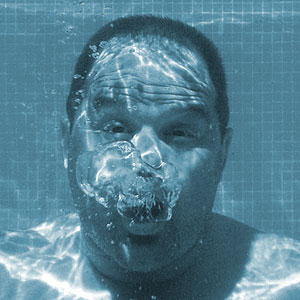
The “surface struggle” for breath
Death by drowning has a certain dark romance to it: countless literary heroines have met their end slipping beneath the waves with billowy layers of petticoats floating around their heads. In reality, suffocating to death in water is neither pretty nor painless, though it can be surprisingly swift.
Just how fast people drown depends on several factors, including swimming ability and water temperature. In the UK, where the water is generally cold, 55 percent of open-water drownings occur within 3 meters of safety. Two-thirds of victims are good swimmers, suggesting that people can get into difficulties within seconds, says Mike Tipton, a physiologist and expert in marine survival at the University of Portsmouth in the UK.
Typically, when victims realize that they cannot keep their head above water, they tend to panic, leading to the classic “surface struggle.” They gasp for air at the surface and hold their breath as they bob beneath, says Tipton. Struggling to breathe, they can’t call for help. Their bodies are upright, arms weakly grasping, as if trying to climb a non-existent ladder from the sea. Studies with New York lifeguards in the 1950s and 1960s found that this stage lasts just 20 to 60 seconds.
When victims eventually submerge, they hold their breath for as long as possible, typically 30 to 90 seconds. After that, they inhale some water, splutter, cough, and inhale more. Water in the lungs blocks gas exchange in delicate tissues, while inhaling water also triggers the airway to seal shut – a laryngospasm reflex. “There is a feeling of tearing and a burning sensation in the chest as water goes down into the airway. Then that sort of slips into a feeling of calmness and tranquility,” says Tipton, describing reports from survivors.
That calmness represents the beginnings of the loss of consciousness from oxygen deprivation, which eventually results in the heart stopping and brain death.
You’ll watch your every step after you see 1000 Ways to Die 3 DVD set at Amazon.com!
9 Heart Attack

One of the most common forms of exit
The “Hollywood Heart Attack,” featuring sudden pain, desperate chest-clutching, and immediate collapse, certainly happens in a few cases. But a typical “myocardial infarction,” as medical-speak has it, is a lot less dramatic and comes on slowly, beginning with mild discomfort.
Of course, the most common symptom is chest pain: a tightness, pressure, or squeezing, often described as an “elephant on my chest,” which may be lasting or come and go. This is the heart muscle struggling and dying from oxygen deprivation. Pain can radiate to the jaw, throat, back, belly and arms. Other signs and symptoms include shortness of breath, nausea, and cold sweats.
Most victims delay before seeking assistance, waiting an average of 2 to 6 hours. Women are the worst, probably because they are more likely to experience less well-known symptoms, such as breathlessness, back or jaw pain, or nausea, says JoAnn Manson, an epidemiologist at Harvard Medical School. Survivors say they just didn’t want to make a fuss; that it felt more like indigestion, tiredness, or muscle cramps than a heart attack. Then again, some victims are just in denial.
Delay costs lives. Most people who die from heart attacks do so before reaching the hospital. The actual cause of death is often heart arrhythmia—disruption of the normal heart rhythm, in other words.
Even small heart attacks can play havoc with the electrical impulses that control heart muscle contraction, effectively stopping it. In about 10 seconds, the person loses consciousness, and minutes later, they are dead.
Patients who make it to the hospital quickly fare much better; in the UK and U.S., more than 85 percent of heart attack patients admitted to hospital survive to 30 days. Hospitals can deploy defibrillators to shock the heart back into rhythm, clot-busting drugs, and artery-clearing surgery.
8 Bleeding to Death

Several stages of haemorrhagic shock
The speed of exsanguination, as bleeding to death is known, depends on the source of the bleed, says John Kortbeek at the University of Calgary in Alberta, Canada, and chair of Advanced Trauma Life Support for the American College of Surgeons. People can bleed to death in seconds if the aorta, the major blood vessel leading from the heart, is completely severed, for example, after a severe fall or car accident.
Death could creep up much more slowly if a smaller vein or artery is nicked—even taking hours. Such victims would experience several stages of hemorrhagic shock. The average adult has 5 liters of blood. Losses of around 750 milliliters generally cause few symptoms. Anyone losing 1.5 liters—either through an external wound or internal bleeding—feels weak, thirsty, and anxious and would be breathing fast. By 2 liters, people experience dizziness, confusion, and then eventual unconsciousness.
“Survivors of hemorrhagic shock describe many different experiences, ranging from fear to relative calm,” Kortbeek says. “In large part, this would depend on what and how extensive the associated injuries were. A single penetrating wound to the femoral artery in the leg might be less painful than multiple fractures sustained in a motor vehicle crash.”
7 Fire

It’s usually the toxic gases that prove lethal
Long the fate of witches and heretics, burning to death is torture. Hot smoke and flames singe eyebrows and hair and burn the throat and airways, making it hard to breathe. Burns inflict immediate and intense pain through stimulation of the nociceptors—the pain nerves in the skin. To make matters worse, burns also trigger a rapid inflammatory response, which boosts sensitivity to pain in the injured tissues and surrounding areas.
As burn intensities progress, some feeling is lost but not much, says David Herndon, a burns-care specialist at the University of Texas Medical Branch in Galveston. “Third-degree burns do not hurt as much as second-degree wounds, as superficial nerves are destroyed. But the difference is semantic; large burns are horrifically painful in any instance.”
Some victims of severe burns report not feeling their injuries while they are still in danger or intent on saving others. Once the adrenalin and shock wear off, however, the pain quickly sets in. Pain management remains one of the most challenging medical problems in the care of burns victims.
Most people who die in fires do not, in fact, die from burns. The most common cause of death is inhaling toxic gases—carbon monoxide, carbon dioxide, and even hydrogen cyanide—together with the suffocating lack of oxygen. One study of fire deaths in Norway from 1996 found that almost 75 percent of the 286 people autopsied had died from carbon monoxide poisoning.
Depending on the size of the fire and how close you are to it, concentrations of carbon monoxide could start to cause headaches and drowsiness in minutes, eventually leading to unconsciousness. According to the US National Fire Protection Association, 40 percent of the victims of fatal home fires are knocked out by fumes before they can even wake up.
6 Decapitation

Nearly instantaneous
Beheading, if somewhat gruesome, can be one of the quickest and least painful ways to die—so long as the executioner is skilled, his blade sharp, and the condemned sits still.
The height of decapitation technology is, of course, the guillotine. Officially adopted by the French government in 1792, it was seen as more humane than other methods of execution. When the guillotine was first used in public, onlookers were reportedly aghast at the speed of death.
Quick it may be, but consciousness is nevertheless believed to continue after the spinal cord is severed. A study in rats in 1991 found that it takes 2.7 seconds for the brain to consume the oxygen from the blood in the head; the equivalent figure for humans has been calculated at 7 seconds. Some macabre historical reports from post-revolutionary France cited movements of the eyes and mouth for 15 to 30 seconds after the blade struck, although these may have been post-mortem twitches and reflexes.
If you end up losing your head but aren’t lucky enough to fall under the guillotine or even a very sharp, well-wielded blade, the time of conscious awareness of pain may be much longer. It took the axeman three attempts to sever the head of Mary Queen of Scots in 1587. He had to finish the job with a knife.
Decades earlier in 1541, Margaret Pole, the Countess of Salisbury, was executed at the Tower of London. She was dragged to the block but refused to lay her head down. The inexperienced axe man made a gash in her shoulder rather than her neck. According to some reports, she leaped from the block and was chased by the executioner, who struck 11 times before she died.
Some say you can’t escape fate, even strange fate. Read Unlucky Stiffs: New Tales of the Weirdly Departed at Amazon.com!
5 Electrocution
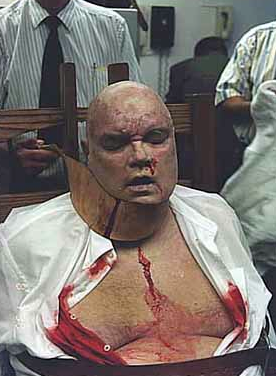
The heart and the brain are most vulnerable
In accidental electrocutions, usually involving low household current, the most common cause of death is arrhythmia, stopping the heart dead. After the standard 10 seconds, unconsciousness ensues, says Richard Trohman, a cardiologist at Rush University in Chicago. One study of electrocution deaths in Montreal, Canada, found that 92 percent had probably died from arrhythmia.
Higher currents can produce nearly immediate unconsciousness. The electric chair was designed to produce instant loss of consciousness and painless death—a step up from traditional hangings—by conducting the current through the brain and the heart.
Whether it achieves this end is debatable. Studies on dogs in 1950 found that electrodes had to be placed on either side of the head to ensure sufficient current passed through the brain to knock the creature out. There have been many botched executions—those that required several jolts to kill. Or another case where flames leaped from the prisoner’s head, in one case due to a damp synthetic sponge being attached to the electrodes on the prisoner’s head, which was such a poor conductor it was heated up by the current and caught fire.
An analysis in 2005 of post-mortem remains from 43 prisoners sentenced to death by electrocution found the most common visible injuries were the head and leg burns where the electrodes were attached. The study’s senior author, William Hamilton, a medical examiner in Florida, concluded that these burns occurred post-mortem and that death was indeed instantaneous.
However, John Wikswo, a biophysicist at Vanderbilt University in Nashville, Tennessee, maintains that the thick, insulating bones of the skull would prevent sufficient current from reaching the brain. Prisoners could instead be dying from the heating of the brain or perhaps from suffocation due to paralysis of the breathing muscles—either way, an unpleasant way to go.
4 Fall From a Height
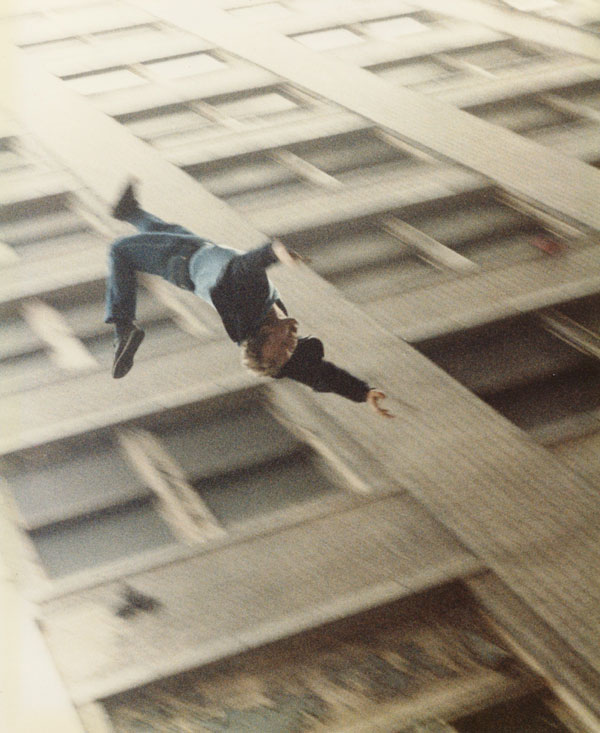
If possible aim to land feet first
A high fall is certainly among the speediest ways to die: terminal velocity (no pun intended) is about 200 kilometers per hour (about 125 mph), achieved from a height of about 145 meters (475 feet) or more. A study of deadly falls in Hamburg, Germany, found that 75 percent of victims died in the first few seconds or minutes after landing.
The exact cause of death varies, depending on the landing surface and the person’s posture. People are especially unlikely to arrive at the hospital alive if they land on their heads—more common for shorter (under 10 meters) and higher (over 25 meters) falls. A 1981 analysis of 100 suicidal jumps from the Golden Gate Bridge in San Francisco—height: 75 meters, velocity on impact with the water: 120 kilometers per hour—found numerous causes of instantaneous death, including massive lung bruising, collapsed lungs, exploded hearts or damage to major blood vessels and lungs through broken ribs.
Survivors of great falls often report the sensation of time slowing down. The natural reaction is to struggle to maintain a feet-first landing, resulting in fractures to the leg bones, lower spinal column, and life-threatening broken pelvises. The impact traveling up through the body can also burst the aorta and heart chambers. Yet, this is probably still the safest way to land, despite the force being concentrated in a small area: the feet and legs form a “crumple zone,” which provides some protection to the major internal organs.
Some experienced climbers or skydivers who have survived a fall report feeling focused, alert, and driven to ensure they landed in the best way possible: relaxed, legs bent, and, where possible, ready to roll. Certainly, every little bit helps, but the top tip for fallers must be to aim for a soft landing. A paper from 1942 reports a woman falling 28 meters from her apartment building into freshly tilled soil. She walked away with just a fractured rib and a broken wrist.
3 Strangulation

Speed of death depends on the strangler’s skill
Strangulation can take less than 10 seconds for a person to lose consciousness, and death can occur in just under five minutes. During strangulation, pressure applied to the neck impedes oxygen by preventing blood flow to and from the brain. The trachea can also be restricted, making breathing difficult or impossible. The combination can quickly cause asphyxia and unconsciousness.
There are two types of strangulation: manual and ligature. Manual strangulation is the process of using one’s hands or forearm to strangle the person. In contrast, ligature strangulation refers to using a rope, scarf, belt, or other similar objects to strangle the person. Regardless of the type, strangulation may or may not be accompanied by visible symptoms of the injury.
Suicides and old-fashioned “short drop” executions cause death by strangulation; the rope puts pressure on the windpipe and the arteries to the brain. This can cause unconsciousness in 10 seconds, but it takes longer if the noose is incorrectly placed around the neck. Witnesses of public hangings often reported victims “dancing” in pain at the end of the rope, struggling violently as they asphyxiated. Death only ensues after many minutes, as shown by the numerous people being resuscitated after being cut down—even after 15 minutes.
When public executions were outlawed in Britain in 1868, hangmen looked for a less performance-oriented approach. They eventually adopted the “long-drop” method, using a lengthier rope, so the victim reached a speed that broke their necks. However, it had to be tailored to the victim’s weight as too great a force could rip the head clean off, a professionally embarrassing outcome for the hangman.
Despite the public boasting of several prominent executioners in late 19th-century Britain, a 1992 analysis of the remains of 34 prisoners found that in only about half of cases was the cause of death wholly or partly due to spinal trauma. Just one-fifth showed the classic “hangman’s fracture” between the second and third cervical vertebrae. The others died in part from asphyxiation.
Michael Spence, an anthropologist at the University of Western Ontario in London, Canada, has found similar results in U.S. victims. He concluded, however, that even if asphyxiation played a role, the trauma of the drop would have rapidly rendered all of them unconscious. “What the hangmen were looking for was the quick cessation of activity,” he says. “And they knew enough about their craft to ensure that happened. The thing they feared most was decapitation.”
2 Lethal Injection

US-government approved, but is it really painless?
Lethal injection was designed in Oklahoma in 1977 as a humane alternative to the electric chair. The state medical examiner and chair of anaesthesiology settled on a series of three drug injections. First comes the anesthetic thiopental to speed away from any feelings of pain, followed by a paralytic agent called pancuronium to stop breathing. Finally, potassium chloride is injected, which stops the heart almost instantly.
Each drug is supposed to be administered in a lethal dose, a redundancy to ensure speedy and humane death. However, eyewitnesses have reported inmates convulsing, heaving, and attempting to sit up during the procedure, suggesting the cocktail is not always completely effective.
The reason, says Leonidas Koniaris at the University of Miami Miller School of Medicine, is insufficient thiopental. He and his colleagues analyzed 41 executions by lethal injection in North Carolina and California and compared anesthetic doses to known effects in animal models, such as pigs. As the same dose of thiopental is used regardless of body weight, the anesthesia produced in some heavier inmates might be inadequate, they concluded.
“I think that awareness is a real possibility in a large fraction of executions,” says Koniaris. That awareness might include feelings of suffocation from paralyzed lungs and the searing, burning pain of a potassium chloride injection. The effect of the paralytic, however, might mean that witnesses never see any outward signs of pain.
The U.S. Supreme Court ruled in 2008 that lethal injection was an acceptable method of execution where states have active capital punishment laws. The court also upheld this ruling in cases from 2015 and 2019.
1 Explosive Decompression

It takes your breath away
Due to exposure to a vacuum, death is a staple of science fiction plots, whether the unfortunate gets thrown from an airlock or ruptures their spacesuit.
In real life, there has been just one fatal space depressurization accident. This occurred on the Russian Soyuz-11 mission in 1971 when a seal leaked upon re-entry into the Earth’s atmosphere; upon landing, all three flight crew were dead from asphyxiation.
Most of our knowledge of depressurization comes from animal experiments and the experiences of pilots in accidents at very high altitudes. When the external air pressure suddenly drops, the air in the lungs expands, tearing the fragile gas exchange tissues. This is especially damaging if the victim neglects to exhale before decompression or tries to hold their breath. Oxygen begins to escape from the blood and lungs.
Experiments on dogs in the 1950s showed that 30 to 40 seconds after the pressure drops, their bodies began to swell as the water in tissues vaporized, though the tight seal of their skin prevented them from “bursting.” The heart rate rises initially, then plummets. Bubbles of water vapor form in the blood and travel through the circulatory system, obstructing blood flow. After about a minute, blood effectively stops circulating.
Human survivors of rapid decompression accidents include pilots whose planes lost pressure, or in one case, a NASA technician accidentally depressurized his flight suit inside a vacuum chamber. They often report an initial pain, like being hit in the chest, and may remember feeling air escape from their lungs and the inability to inhale. Time to the loss of consciousness was generally less than 15 seconds.
One mid-1960s experiment by the U.S. Army Aeromedical Research Laboratory in New Mexico found that a chimpanzee had a period of useful consciousness of just 11 seconds before lack of oxygen caused them to pass out.
Surprisingly, given these apparently traumatic effects, animals that have been repressurized within 90 seconds have generally survived with no lasting damage.
Contributor: Adam Winkles
Source: New Scientist Magazine via Sky News
Technorati Tags: death, science
More Great Lists
 10 Ancient Methods Of Capital Punishment
 10 Brilliant And Brutal Methods Of Ancient…
 10 Old-School And Obscure Birth Control Methods You…
 10 Most Oddball Communication Methods In Nature
 10 Strangest Methods Of Government In History
 Top 10 Brutal Methods Of Gang Initiation
 10 Animals That Use Bizarre Methods To Kill Their Prey
 10 Stories Of People Who Cheated Death Only To Die…
 10 Strange Facts About The Mysterious Death Of Rasputin
More Great Lists