
 Movies and TV
Movies and TV
Movies and TV  Misconceptions
 10 Dinosaur Myths That Refuse to Go Extinct
 Weird Stuff
 10 Ridiculous Flat-Earth Arguments That Fail Simple Tests
 Technology
 10 Bizarre Places Electricity Is Hiding in Plain Sight
 History
 10 Nail-Biting Espionage Operations of the Cold War
 History
 10 Groundbreaking Innovations That Prove the “Dark Ages” Weren’t Dark
 Weird Stuff
 10 Bizarre Queen Ant Dramas That Belong in a Soap Opera
 Food
Food 10 Caribbean Foods with Dark and Unexpected Histories
 Movies and TV
 10 Controversial Documentaries That Shaped Public Perception
 Miscellaneous
 10 Times Big Business Turned People into Test Subjects
Movies and TV 10 Tough-Guy Actors Who Unexpectedly Broke into Song
Misconceptions 10 Dinosaur Myths That Refuse to Go Extinct
Weird Stuff 10 Ridiculous Flat-Earth Arguments That Fail Simple Tests
Who's Behind Listverse?

Jamie Frater
Head Editor
Jamie founded Listverse due to an insatiable desire to share fascinating, obscure, and bizarre facts. He has been a guest speaker on numerous national radio and television stations and is a five time published author.
More About Us
Technology 10 Bizarre Places Electricity Is Hiding in Plain Sight
History 10 Nail-Biting Espionage Operations of the Cold War
History 10 Groundbreaking Innovations That Prove the “Dark Ages” Weren’t Dark
Weird Stuff 10 Bizarre Queen Ant Dramas That Belong in a Soap Opera
Food 10 Caribbean Foods with Dark and Unexpected Histories
Movies and TV 10 Controversial Documentaries That Shaped Public Perception
Miscellaneous 10 Times Big Business Turned People into Test Subjects
Top 10 Most Influential Scientists
This is part one of what will be a two-part series on the most influential scientists in history. While these are not technically the “greatest” scientists, there is bound to be some overlap as the contributions that many of these men and women made to science are among the most important. Be sure to tell us who you think should be on the future list—we already have our second ten, but it might lead to a third or fourth.
10
Marie Curie
1867 – 1934

“One never notices what has been done; one can only see what remains to be done.”
Polish physicist and chemist Marie Curie was a pioneer in the field of radioactivity, the only person honored with Nobel Prizes in two different sciences, and the first female professor at the University of Paris. She founded the Curie Institutes in Paris and Warsaw. Her husband Pierre Curie was also a Nobel laureate, as were her daughter Irene Joliot-Curie and son-in-law Frederic Joliot-Curie.
Her achievements include creating a theory of radioactivity (a term coined by her), techniques for isolating radioactive isotopes, and the discovery of two new elements: radium and polonium. It was also under her personal direction that the world’s first studies were conducted to treat neoplasms (“cancers”) using radioactive isotopes. While an actively loyal French citizen, she never lost her sense of Polish identity. She named the first new chemical element that she discovered (1898) “polonium” for her native country, and in 1932 she founded a Radium Institute in her hometown Warsaw, headed by her physician-sister Bronisława Dłuska.
9
Alan Turing
1912 – 1954

“Science is a differential equation. Religion is a boundary condition.”
English mathematician and logician Alan Turing is often considered to be the father of modern computer science. He provided an influential formalization of the concept of the algorithm and computation with the Turing machine. With the Turing test, meanwhile, he made a significant and characteristically provocative contribution to the debate regarding artificial intelligence: whether it will ever be possible to say that a machine is conscious and can think. He later worked at the National Physical Laboratory, creating one of the first designs for a stored-program computer, the ACE, although it was never actually built in its full form.
In 1948, he moved to the University of Manchester to work on the Manchester Mark I, then emerging as one of the world’s earliest true computers. During the Second World War, Turing worked at Bletchley Park, the UK’s code-breaking center, and was for a time head of Hut 8, the section responsible for German naval cryptanalysis. He devised a number of techniques for breaking German ciphers, including the method of the bombe, an electromechanical machine that could find settings for the Enigma machine.
8
Niels Bohr
1885 – 1962
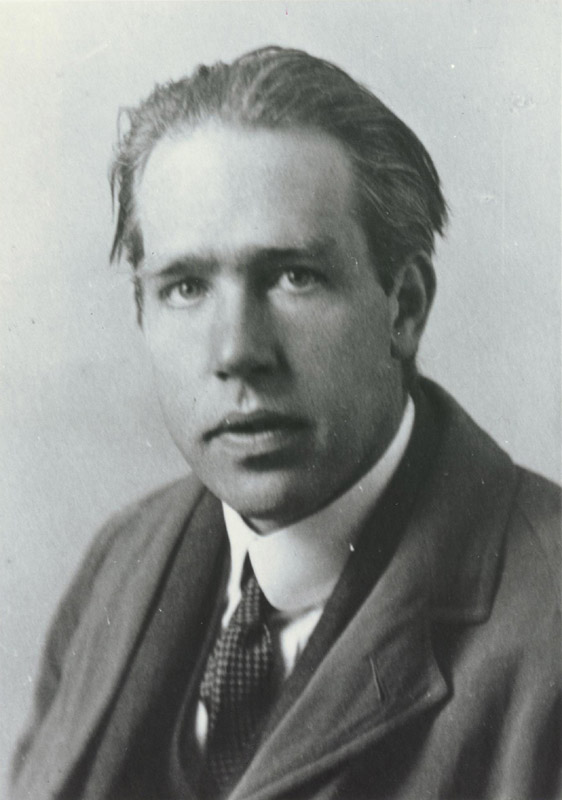
“An expert is a man who has made all the mistakes which can be made in a very narrow field.”
Niels Bohr was a Danish physicist who made fundamental contributions to understanding atomic structure and quantum mechanics, for which he received the Nobel Prize in Physics in 1922. Bohr’s work helped solve the problems classical physics could not explain about the nuclear model of the atom. He postulated that electrons moved in fixed orbits around the atom’s nucleus, and he explained how they emitted or absorbed energy.
Bohr mentored and collaborated with many of the top physicists of the century at his institute in Copenhagen. He was also part of the team of physicists working on the Manhattan Project. One of his sons, Aage Niels Bohr, grew up to be an important physicist who, like his father, received the Nobel Prize in 1975. Bohr has been described as one of the most influential physicists of the 20th century.
7
Carl Linnaeus
1858 – 1947
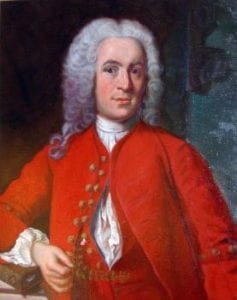
“The first step of science is to know one thing from another. This knowledge consists in their specific distinctions; but in order that it may be fixed and permanent distinct names must be given to different things, and those names must be recorded and remembered.”
Carl Linnaeus created the binomial nomenclature system in the 18th century, which has given us clarity and a common language in biology. Before Linnaeus’s system became widely adopted, formal scientific training was scant, and there was no system for referring to living things. Plants and animals had common names, which varied from one location and language to the next, and scientific “phrase names,” cumbersome Latin descriptions that could run several paragraphs. At this time, European explorers were fanning out across the globe, finding ever more plants and animals new to science, so consistency in identifying things became tricky.
Linnaeus, a botanist with a talent for noticing details, first used what he called “trivial names” in the margins of his 1753 book Species Plantarum. He intended the simple Latin two-word construction for each plant as a kind of shorthand, an easy way to remember what it was. The notations reflected the adjective-noun structure, which today we know as genus and species. The names moved quickly from the margins of a single book to the center of botany and then all of biology. Linnaeus started a revolution and is regarded today as the father of taxonomy, which is used to sort the entire living world into evolutionary hierarchies or family trees.
6
Charles Darwin
1809 – 1882
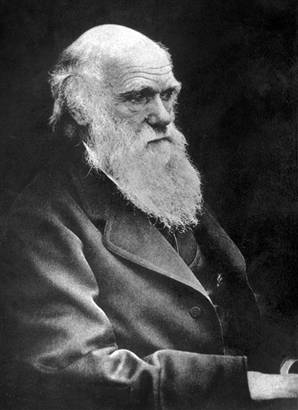
“I love fools’ experiments. I am always making them.”
English naturalist and biologist Charles Darwin demonstrated that all species of life have evolved over time from common ancestors through the process he called natural selection. The fact that evolution occurs became accepted by the scientific community and the general public in his lifetime. At the same time, his theory of natural selection came to be widely seen as the primary explanation of the process of evolution in the 1930s and now forms the basis of modern evolutionary theory.
In modified form, Darwin’s scientific discovery remains the foundation of biology, as it provides a unifying logical explanation for the diversity of life. His 1859 book On the Origin of Species established evolution by common descent as the dominant scientific explanation of diversification in nature. He also examined human evolution and sexual selection in The Descent of Man, and Selection in Relation to Sex, followed by The Expression of the Emotions in Man and Animals. In recognition of Darwin’s pre-eminence, he was one of only five 19th century UK non-royal personages honored by a state funeral.
5
Leonardo da Vinci
1452 – 1519
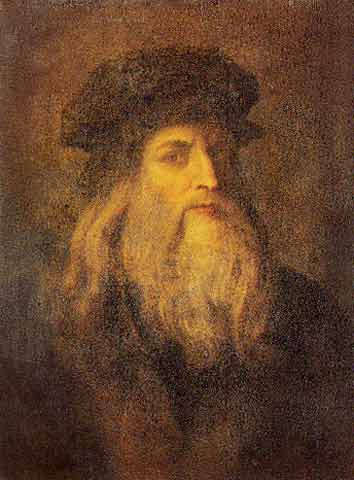
“Anyone who conducts an argument by appealing to authority is not using his intelligence; he is just using his memory.”
Leonardo da Vinci was an Italian polymath. He was an expert mathematician, engineer, inventor, anatomist, painter, sculptor, architect, botanist, musician, and writer. Leonardo has often been described as the archetype of the “Renaissance man,” a man whose seemingly infinite curiosity was equalled only by his powers of invention. Leonardo is revered for his technological ingenuity.
He conceptualized a helicopter, a tank, concentrated solar power, a calculator, the double hull, and outlined a rudimentary theory of plate tectonics. Relatively few of his designs were constructed or were even feasible during his lifetime. Still, some of his smaller inventions, such as an automated bobbin winder and a machine for testing the tensile strength of wire, entered the world of manufacturing unheralded. As a scientist, he greatly advanced the state of knowledge in anatomy, civil engineering, optics, and hydrodynamics.
4
Galileo Galilei
1564 – 1642

“All truths are easy to understand once they are discovered; the point is to discover them.”
Galileo was an Italian physicist and astronomer. His achievements include improvements to the telescope and consequent astronomical observations and support for Copernicanism. Galileo has been called the “father of modern observational astronomy,” the “father of modern physics,” the “father of science,” and “the Father of Modern Science.” The motion of uniformly accelerated objects, taught in nearly all high school and introductory college physics courses, was studied by Galileo as the subject of kinematics. His contributions to observational astronomy include the telescopic confirmation of the phases of Venus, the discovery of the four largest satellites of Jupiter, named the Galilean moons in his honor, and the observation and analysis of sunspots.
Galileo also worked in applied science and technology, improving compass design. Galileo’s championing of Copernicanism was controversial during his lifetime. The geocentric view had been dominant since the time of Aristotle. The controversy engendered by Galileo’s presentation of heliocentrism as proven fact resulted in the Catholic Church’s prohibiting its advocacy because it was not empirically proven. Galileo was eventually forced to recant his heliocentrism and spent the last years of his life under house arrest on orders of the Holy Inquisition.
3
Nikola Tesla
1856 – 1943
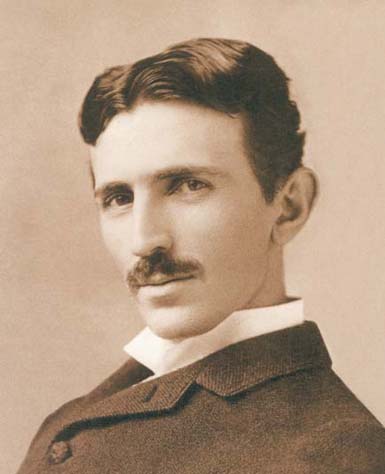
“The scientists of today think deeply instead of clearly. One must be sane to think clearly, but one can think deeply and be quite insane.”
Tesla was a Serbian engineer and inventor who is often described as the most important scientist and inventor of the modern age, a man who “shed light over the face of Earth.” He is best known for many revolutionary contributions in electricity and magnetism in the late 19th and early 20th centuries. Tesla’s patents and theoretical work formed the basis of modern alternating current electric power (AC) systems, including the polyphase power distribution systems and the AC motor, with which he helped usher in the Second Industrial Revolution. Contemporary biographers of Tesla have regarded him as “The Father of Physics,” “The man who invented the twentieth century,” and “the patron saint of modern electricity.”
Aside from his work on electromagnetism and electromechanical engineering, Tesla has contributed in varying degrees to the establishment of robotics, remote control, radar, and computer science, and the expansion of ballistics, nuclear physics, and theoretical physics. In 1943, the Supreme Court of the United States credited him as being the inventor of the radio. Many of his achievements have been used, with some controversy, to support various pseudosciences, UFO theories, and early New Age occultism.
2
Albert Einstein
1879 – 1955

“A man should look for what is, and not for what he thinks should be.”
Albert Einstein, a German physicist, is best known for his theory of relativity and specifically mass-energy equivalence, expressed by the equation E = mc2. Einstein received the 1921 Nobel Prize in Physics “for his services to Theoretical Physics and especially for his discovery of the law of the photoelectric effect. Einstein’s many contributions to physics include his special theory of relativity, which reconciled mechanics with electromagnetism. His general theory of relativity was intended to extend the principle of relativity to non-uniform motion and provide a new theory of gravitation.
His other contributions include advances in the fields of relativistic cosmology, capillary action, critical opalescence, classical problems of statistical mechanics and their application to quantum theory, an explanation of the Brownian movement of molecules, atomic transition probabilities, the quantum theory of a monatomic gas, thermal properties of light with low radiation density (which laid the foundation for the photon theory), a theory of radiation including stimulated emission, the conception of a unified field theory, and the geometrization of physics. Einstein published over 300 scientific works and over 150 non-scientific works. The physics community reveres Einstein, and in 1999, Time magazine named him the “Person of the Century.” In the wider culture, the name “Einstein” has become synonymous with genius.
1
Isaac Newton
1643 – 1727
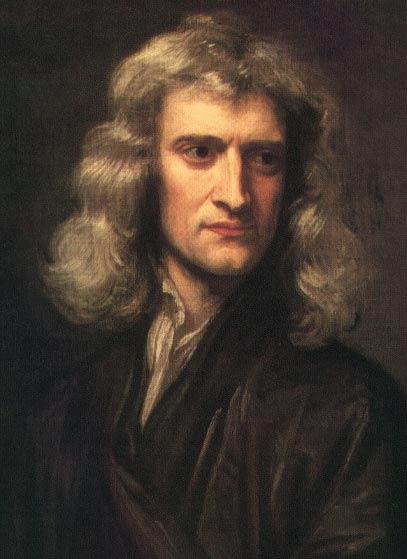
“To myself, I am only a child playing on the beach, while vast oceans of truth lie undiscovered before me.”
Newton was an English physicist, mathematician, astronomer, natural philosopher, alchemist, theologian, and one of the most influential men in human history. His Philosophiæ Naturalis Principia Mathematica, published in 1687, is considered the most influential book in the history of science. In this work, Newton described universal gravitation and the three laws of motion, laying the groundwork for classical mechanics, which dominated the scientific view of the physical universe for the next three centuries and is the basis for modern engineering. Newton showed that the same set of natural laws governs the motions of objects on Earth and celestial bodies by demonstrating the consistency between Kepler’s laws of planetary motion and his theory of gravitation, thus removing the last doubts about heliocentrism and advancing the scientific revolution.
In mechanics, Newton enunciated the principles of conservation of momentum and angular momentum. In optics, he built the first “practical” reflecting telescope and developed a theory of color based on the observation that a prism decomposes white light into a visible spectrum. He also formulated an empirical law of cooling and studied the speed of sound. In mathematics, Newton shares the credit with Gottfried Leibniz for the development of differential and integral calculus. He also demonstrated the generalized binomial theorem, developed the so-called “Newton’s method” for approximating the zeroes of a function, and contributed to the study of power series. Newton’s stature among scientists remains at the very top rank, as demonstrated by a 2005 survey of scientists in Britain’s Royal Society asking who had the greater effect on the history of science. Newton was deemed much more influential than Albert Einstein.
This article is licensed under the GFDL because it contains quotations from Wikipedia.
Contributor: Mongoose
More Great Lists
 Top 10 Most Influential Synthwave Artists
 Top 10 Genetic Feats And Finds Made By Chinese Scientists
 Top 10 Great Scientists Who Would Be #Cancelled Today
 Top 10 Absurd Robots That Scientists Have Actually Built
 10 Terrifying Dangers Of Our Sun That Have…
 10 Fascinating Things Rare Fossils Recently Taught…
 10 Ways Nerds And Scientists Have Inspired Each Other
 10 Discoveries That Completely Baffle Modern Scientists
 10 Shark Scenes Dissected By Scientists
More Great Lists