Man owes a great debt to the scientists on this list; all of them died or were injured in their pursuit of knowledge. The advances they have all made to science are extraordinary and many of them paved the way for some of man’s greatest discoveries and inventions.
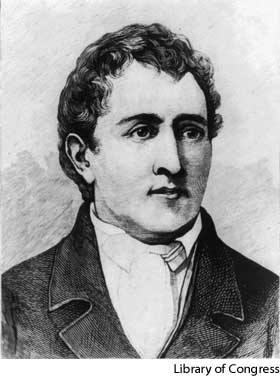
Scheele was a brilliant pharmaceutical chemist who discovered many chemical elements – the most notable of which were oxygen (though Joseph Priestley published his findings first), molybdenum, tungsten, manganese, and chlorine. He also discovered a process very similar to pasteurization. Scheele had the habit of taste testing his discoveries and, fortunately, managed to survive his taste-test of hydrogen cyanide. But alas, his luck was to run out: he died of symptoms strongly resembling mercury poisoning.
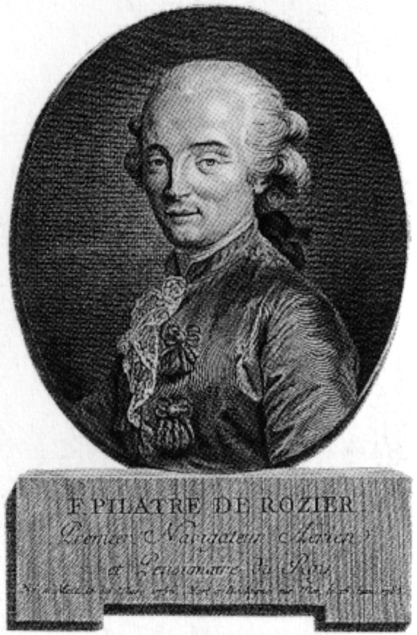
Jean-Francois was a teacher of physics and chemistry. In 1783 he witnessed the world’s first balloon flight which created in him a passion for flight. After assisting in the untethered flight of a sheep, a chicken, and a duck, he took the first manned free flight in a balloon. He travelled at an altitude of 3,000 feet using a hot air balloon. Not stopping there, De Rozier planned a crossing of the English Channel from France to England. Unfortunately it was his last flight; after reaching 1,500 feet in a combined hot air and gas balloon, the balloon deflated, causing him to fall to his death. His fiancee died 8 days later – possibly from suicide.
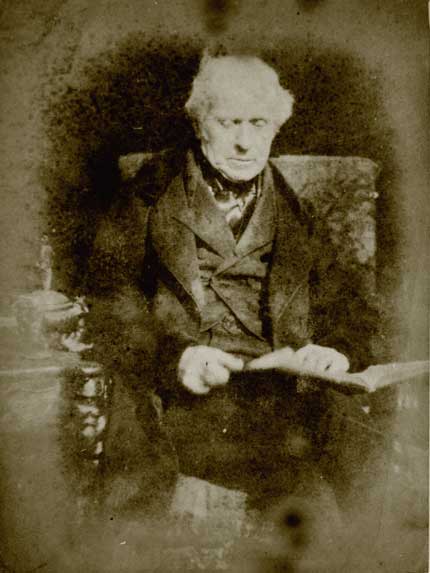
Sir David was a Scottish inventor, scientist, and writer. His field of interest was optics and light polarization – a field requiring excellent vision. Unfortunately for Sir David, he performed a chemical experiment in 1831 which nearly blinded him. While his vision did return, he was plagued with eye troubles until his death. Brewster is well known for having been the inventor of the kaleidoscope – a toy that has brought joy to millions of children over the years.
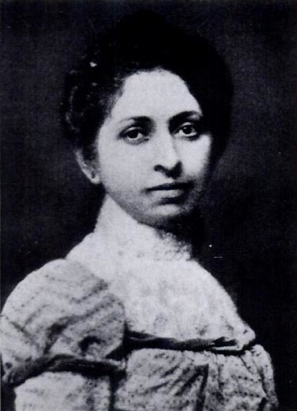
Elizabeth Fleischman Ascheim married her doctor, Dr Woolf, shortly after her mother died. Because of his medical position, Woolf was very interested in the new discovery of Wilhelm Conrad Röntgen – x-rays. His new wife became equally interested and she gave up her job as a bookkeeper to undertake studies in electrical science. Eventually she bought an x-ray machine which she moved in to her husbands office – this was the first x-ray lab in San Francisco. She and her husband spent some years experimenting with the machine – using themselves as subjects. Unfortunately they did not realize the consequences of their lack of protection and Elizabeth died of an extremely widespread and violent cancer. Information on Ascheim is scarce, so I recommend you read this PDF on her life.
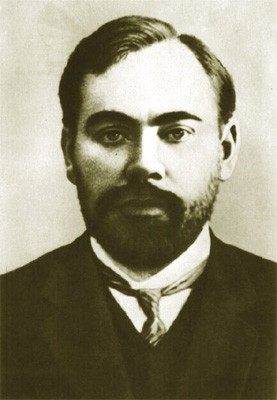
Bogdanov was a Russian physician, philosopher, economist, science fiction writer, and revolutionary. In 1924, he began experiments with blood transfusion – most likely in a search for eternal youth. After 11 transfusions (which he performed on himself), he declared that he had suspended his balding, and improved his eyesight. Unfortunately for Bogdanov, the science of transfusion was a young one and Bogdanov was not one to test the health of the blood he was using or the donor. In 1928, Bogdanov took a transfusion of blood infected with malaria and tuberculosis. Consequently he died shortly after.
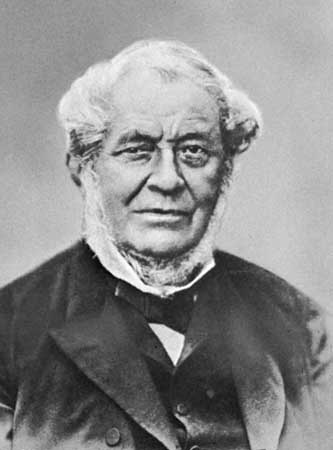
Robert Bunsen is probably best known for having given his name to the bunsen burner which he helped to popularize. He started out his scientific career in organic chemistry but nearly died twice of arsenic poisoning. Shortly after his near-death experiences, he lost the sight in his right eye after an explosion of cacodyl cyanide. These being excellent reasons to change fields, he moved in to inorganic chemistry and went on to develop the field of spectroscopy.
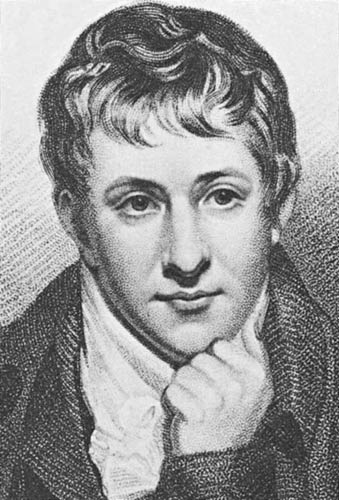
Sir Humphrey Davy, the brilliant British chemist and inventor, got a very bumpy start to his science career. As a young apprentice he was fired from his job at an apothecary because he caused too many explosions! When he eventually took up the field of chemistry, he had a habit of inhaling the various gasses he was dealing with. Fortunately this bad habit led to his discovery of the anesthetic properties of nitrous oxide. But, unfortunately, this same habit led to him nearly killing himself on many occasions. The frequent poisonings left him an invalid for the remaining two decades of his life. During this time he also permanently damaged his eyes in a nitrogen trichloride explosion.
Thanks to the injury to Sir Humphrey Davy’s eyes, Faraday became an apprentice to him. He went on to improve on Davy’s methods of electrolysis and to make important discoveries in the field of electro-magnetics. Unfortunately for him, some of Davy’s misfortune rubbed off and Faraday also suffered damage to his eyes in a nitrogen chloride explosion. He spent the remainder of his life suffering chronic chemical poisoning.
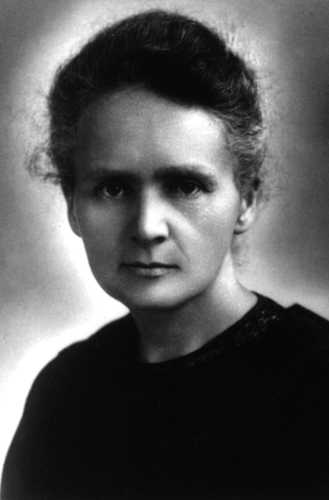
In 1898, Curie and her husband, Pierre, discovered radium. She spent the remainder of her life performing radiation research and studying radiation therapy. Her constant exposure to radiation led to her contracting leukemia and she died in 1934. Curie is the first and only person to receive two Nobel prizes in science in two different fields: chemistry and physics. She was also the first female professor at the University of Paris.
Galileo’s work on the refinement of the telescope opened up the dark recesses of the universe for future generations, but it also ruined his eyesight. He was fascinated with the sun and spent many hours staring at it – leading to extreme damage to his retinas. This was the most likely cause of his near blindness in the last four years of his life. Because of his life’s work, he is sometimes referred to as the “father of modern physics”.
I normally don’t update a list once it is posted (aside from correcting factual errors) but mudbug raised an interesting addition that I hadn’t heard of – so here it is. Canadian born Slotin worked on the Manhattan project (the US project to design the first nuclear bomb). In the process of his experimentation he accidentally dropped a sphere of beryllium on to a second sphere causing a prompt critical reaction (the spheres were wrapped around a plutonium core). Other scientists in the room witnessed a “blue glow” of air ionization and felt a “heat wave”. Slotin rushed outside and was sick. He was rushed to hospital and died nine days later. The amount of radiation he was exposed to was equivalent to standing 4800 feet away from an atomic bomb explosion. This accident prompted the end of all hands-on assembly work at Los Alamos. I strongly recommend you read the Wikipedia article on this critical event.
Notable mentions: Rosalind Franklin


Oy vey! Can’t have a list without at least one hebe eh? Slotin was a hack and typically a fumbling nebish. Not even worthy to be listed among the greats.
Wow, I thought the ballon one was cool. You would think he would not have left the ground without a parachute. Did they have chutes back then?
You forgot Jack Parsons—Genius NASA Rocket scientist by day, Satanic high-priest by night (His Rotten.com page is a great read). He developed rocket fuels that eventually sent man to the Moon, but died in a mysterious lab explosion during an experiment. Some say Alestier Crowley or L. Ron Hubbard, two of his rivals, cast a spell to make the accident happen. Either way, his distraught mother commited suicide upon hearing the news.
No list like this could be complete without mention of the only person on the planet who has ever been hit by the beam of a particle accelerator. He even managed to get hit in the face.
http://en.wikipedia.org/wiki/Anatoli_Bugorski
jfrater- I think the proper term for the “blue glow” that Slotin’s coworkers saw is “Cherenkov radiation” caused by radioactive particles exceeding the speed of light.
http://en.wikipedia.org/wiki/Cherenkov_radiation
Just my two cents. It’s an interesting phenomenon.
My comment wont go thru-
Just wanted to point out that the Slotin’s blue glow was probably Cherenkov radiation- from particles exceeding the speed of light. Wiki it.
If you’re going to include Slotin, you might as well include Harry Daghlian, Jr. — the first victim of a criticality accident with the “Demon Core” that killed Slotin exactly 9 months later.
Daghlian was creating a neutron reflector, when he dropped one of the tungsten bricks onto the core, knocking the two hemispheres together. Daghlian was working alone, late at night, in an attempt to start a miniature reactor pile. After knocking the two halves apart, he died 21 days later of acute radiation poisoning.
I expected Francis Bacon to be first. He laid the groundwork for modern science and then died because of his devotion to the enterprise. He got sick after spending too long outside stuffing a fowl with snow to see if it would preserve the bird and later died. Some of these entries didn’t even die.
Jasontimmer: You should work on how you phrase things. That is an Insane misquote!
Particles exceeding the speed at which light Passes Through an object. It is indeed moving faster than light, At that moment, but it is still not traveling Beyond the upper limit of the speed of light.
The wikipedia *****ogy sounds Very nice. For the more Brain endowed… “Čerenkov radiation results when a charged particle, most commonly an electron, travels through a dielectric (electrically insulating) medium with a speed greater than that at which light propagates in the same medium.” – The wiki.
Crimanon- haha, sorry. I intentionally worded it that way to spark a little conversation. I’m at work and bored! Cut me a little slack
There it goes. That is why I never chose practising science as my profession.Life is just too precious.
soooo, is the lesson to be learned mess with things and you will either go blind, get radiation poisioning or die? yikes. i wonder how many of these people were fully aware of the dangers or were these particular fields too young to know that much.
the center454: re #60. that was funny
Yay for choosing chemistry as a career…
Are you saying not one of these people developed super-powers as a result of their experiments? I find that very hard to believe.
ionmike:
haven’t you seen a Simpsons sketch about the Curies?
Great list. The dark side of science history.
I encouradge you to make a list about the ones that commited suicide for their studies. (there’re also some of them)
Will: to took the words right out of my mouth
I liked this list! I thought Pliny The Elder would be on here. He wanted to observe the Vesuvius volcano eruption in AD79 and got a little too close. Died of asphyxiation.
What an interesting topic! Great list. I haven’t heard of most of these, but I was certain that Galileo would be on here.
Yey you made fark.
****
Author: Joss
Comment:
Yey you made fark.
****
I know I’m going to HATE myself for asking, but what is a fark?
Segue: http://www.fark.com Popular multi-subject site where submitters offer up various articles (mostly news but anything entertaining really) to be sifted through by admins to make the final page. Often, but not always, the more clever the “headline” the submitter has the better his chances of getting his submitted link posted. Articles are usually very entertaining, reader comments always so. So….a link of this list to fark means many many nice hits. Yay!
Thomas Midgley (1889-1944). Developed both leaded gasoline and CFC’s, but strangled himself in a mechanical contraption he built to help him get around after contracting polio.
See: http://en.wikipedia.org/wiki/Thomas_Midgley
You know, a lot of industrial chemists wind up in computing for exactly this reason: it’s fricking dangerous. One guy I used to work with would tell the story about the improperly sealed jar of diethyl mercury.
He was a good developer – always documented his code.
And, BTW…a good many of Franklin’s professional associates were of the view that she was a total *****! (kiwiboi @ # 31)
Franklin’s male professional associates may have taken that position, but it seems to reflect more on them than on her. Even now, some men’s definition of a ***** is any woman with better things to do than stroke his ego–and it was even worse back then. Later versions of Watson’s The Double Helix begin with an apology for the way she was treated.
love the list…can you add dates/years to those that lack them so that we have a reference?
Later versions of Watson’s The Double Helix begin with an apology for the way she was treated.
Molly – interestingly, Franklin also apparently lived as a guest with the Crick family when she fell ill with her cancer.
Say thanks to the Wall Street Journal Online’s Best of the Web Today feature for linking to this page. Bet they’ve sent a lot of new traffic your way…
Having read widely and deeply in the various sciences, I am actually more surprised at the number of early scientists who DIDN’T die from their work, than from the (relatively) small number who did. They tended to use themselves as test subjects, so were exposed to all sorts of incredible things…and NO, RANDALL, I am not getting up from giving my back it’s midday hour off just to look up specifics right this second…
I used to be able to pull the names and dates out of my head at a blink, but not any longer.
freakin’ opiates
kikiwboi, please attach the actual text where Franklin’s 3 male co-workers literally called her a “total *****.”
Otherwise, you’re putting words in their mouths…
I’m an old fart who retired after a career in experimental engineering and then started teaching engineering. I like to tell my students that I had four occasions in my career to decide whether to stay and try to shut down a chemical reaction or run like hell, and I made the correct decision three times.
What SharkD said – go all the way and include Daghlian, also killed by the Demon core. And, wait a minute, Irene Joliot-Curie died of leukemia too – like her mother.
How about Barry Marshall, the man so convinced that his hypothesis that Helicobacter pylori caused gastritis was correct that he voluntarily ingested a large amount in order to give himself gastritis?
He would differ from those on the list in that he expected the injurious effect; in fact, injuring himself was the key to providing support for his hypothesis. It has certainly had a huge impact on our understanding of gastric ulcers and their treatment.
http://en.wikipedia.org/wiki/Barry_Marshall
re:Louis Slotin
wiki says that he “expressed growing disdain for his personal involvement in the project”…so i guess by his dying, he finally found a way out…
re:Louis Slotin
“He died on 30 May after an agonizing sequence of radiation-induced traumas including severe diarrhea and diminished output of urine, swollen hands, erythema (redness) on his body, massive blisters on hands and forearms, paralysis of intestinal activity, gangrene and a total disintegration of bodily functions.”
*****…
I have tertiary syphilis.
Brad: Would you like a number for a clinic? Real hush hush, no need to get the wife involved.
Their interest, sacrifice and desire to learn by self-experimentation regardless of personal risk ultimately has proven to be of great benefit to the human race. It wasn’t because they “weren’t careful” but in those early days of discovery and the deep desire to know more, they, in the novice stages, were unaware of the dangers of their experiments, but were willing to take any risks to unlock the secrets of science. Then, they didn’t presume to use human test subjects for fear of the unknown, unlike our pharmaceutical companies and their continuing trial studies today who appear to value profits above human life regardless of life-threatening side-effects.
Very interesting, didn’t know any of that info.
In the 1989 movie ‘Fat Man and Little Boy’, John Cusack played a fictional character who was partially based on Louis Slotin.
http://www.imdb.com/title/tt0097336/
When I read the description of the accident, the movie immediately came to mind, as there is a scene in it re-enacting the accident, and it must have been pretty similar, because I think I last saw that movie when it came out.
btw, jfrater, I love your site! Haven’t posted until now but I read every list.
Nice ones, I have always loved your articles so fresh and different from others.
Marie Curie may have been the first person to win two Nobel Prizes, but she was certainly not the only one – indeed, Linus Pauling won two unshared Prizes (the only person to do so), one in Chemistry, the other in Peace.
****
101.Author: Wocky – June 8th, 2008 at 9:01 am
Comment:
Marie Curie may have been the first person to win two Nobel Prizes, but she was certainly not the only one – indeed, Linus Pauling won two unshared Prizes (the only person to do so), one in Chemistry, the other in Peace.
****
But his experiments didn’t kill him. That’s the criteria.
kikiwboi, please attach the actual text where Franklin’s 3 male co-workers literally called her a “total *****”
LooLoo – you seem to think that the sum of human knowledge may be illustrated by way of an internet attachment. My knowledge of Franklin is from reading, not from google – something you might like to try. And please tell me where I mention “3 male co-workers”. Or where I say they “literally called her a *****”.
You can’t…on both counts, because I didn’t say this. Let me refer you back to my earlier comment (#43); the part where I recommend that you take lessons in reading comprehension.
Otherwise, you’re putting words in their mouths
I’m not. On the other hand this is exactly what you are doing.
But his experiments didn’t kill him. That’s the criteria.
segue – the comment on Pauling was nothing to do with the list criteria. The issue was related to ambiguity in the original list description for Curie which has since been corrected (read comments #50 to #53).
kiwiboi, mea culpa, mea culpa, mea maxima culpa.
segue – aliquando bonus dormitat Homerus
kiwiboi: lol…I love a man who can make a joke in Latin!
Pray tell, which Jesuit institution rapped your knuckles?
I still have enough of my Latin and Greek to get by, but I started getting my knuckles caned in Kindergarten.
segue – the remnants of a Catholic education (and an interest in the classics)
Ah-Ha kiwiboi!
Catholic school here K-12.
Kindergarten was in Australia, Sydney, Campsie to be exact. St. Mel’s.
And like you, an abiding interest in the classics…I can still find my way through Canterbury Tales in the original, but at this point will take an excellent translation any day.
Nice to find yet another bookworm, and an appreciator of the classics.
Ta.
segue – mine was a Marist Brothers education (NZ). And the Canterbury Tales is no fun when you study it in the original (at university); give me the Faerie Queene any day…
kiwiboi: segue – mine was a Marist Brothers education (NZ). And the Canterbury Tales is no fun when you study it in the original (at university); give me the Faerie Queene any day…
Strange, kiwi, I found Canterbury Tales in the original very entertaining.
Beowulf is my all time favorite, but I’m getting off the mark.
Getting away from middle-english, I still love Donne. I used to admire his early, more erotic works best, but now, I see his later, post-conversion works for the powerful poems/essays they are. Milton, Dante, Homer, Plutarch all still occupy my bookshelves, and all are reread each year or two.
You simply can’t get better than the classics. Otherwise, why would they BE the classics?
btw, my youngest, a daughter, a gifted musician and a lover of the classics herself, plays Rugby Union, front line, hooker.
segue – the Canterbury Tales are, indeed, entertaining…unless you have to write bloody great essays on them; Middle English is fun, though.
As for Donne and Milton, they are among my heroes, but if you want the “more erotic works” it’s John Wilmot, Earl of Rochester – even by today’s somewhat liberal standards that guy stands out.
Check out the poetry list I wrote when you get an idle moment; there’s bound to be one or two of your favourites there :
http://listverse.com/literature/20-examples-of-why-you-should-enjoy-poetry/
And, segue…about your daughter…for the uninitiated, you should explain that her being a “hooker” is referring to a key position in a rugby team, not a dubious career-choice
Segue: …Your daughter is a hooker? (Sorry, couldn’t resist.)
Aww, Kiwi! Always spoiling my fun! Nuts.
Slick – LOL. Sorry ’bout that
I heard of a scientist who killed himself by rising the pressure in a closed bucket, and when he took the lid of (without removing the over pressure) he lauchned himself against the ceilling and died. I can’t rememmber the name of this scientist but I find it a rather funny story and I really enjoyed this read. great work!
oxbee – yeah. Reminds me of the eminent specialist in the field of borborigmi.
I believe his name was Butt Plug
Thanks for the bonus! You might want to add couple more names to his though – There is the famous accident at the reprocessing plant in Japan where one worker was pouring the Uranium solution into a bucket that already had some solution in it and together it was enough to go sub-critical and cause a “fissile” much in the same way as Louis.
****
#112. kiwiboi – June 9th, 2008 at 10:47 am….
And, segue…about your daughter…for the uninitiated, you should explain that her being a “hooker” is referring to a key position in a rugby team, not a dubious career-choice
also, thanks for the link. Looks like some great reading ahead.
****
LOL LOL
I know, but it’s so much more fun this way!
She’s great at her position, btw, and is often mentioned in the newspaper as “Player of the Game”….all5’4″ 118lbs of her!
All her Aussie uncles played Rugby, Aussie Rules (ouch!)
Another name for the list:
I had thought Walter Reed (of U.S. Army Hospital fame) would be on the list for infecting himself with yellow fever. A quick Wikipedia check revealed a different person, Jesse William Lazear, who was Reed’s colleague researching yellow fever. He allowed himself to become infected and died as a result.
http://en.wikipedia.org/wiki/Jesse_William_Lazear