There has been much news of late about space – from NASA bombing the moon to discoveries on Mars. I am fascinating by outer space and the images we are receiving daily from our outer space vessels seems to be getting better and better. For that reason it seemed appropriate to create a second list of stunning images of space. Here is the original list for those interested. As usual, click the image for a larger view.
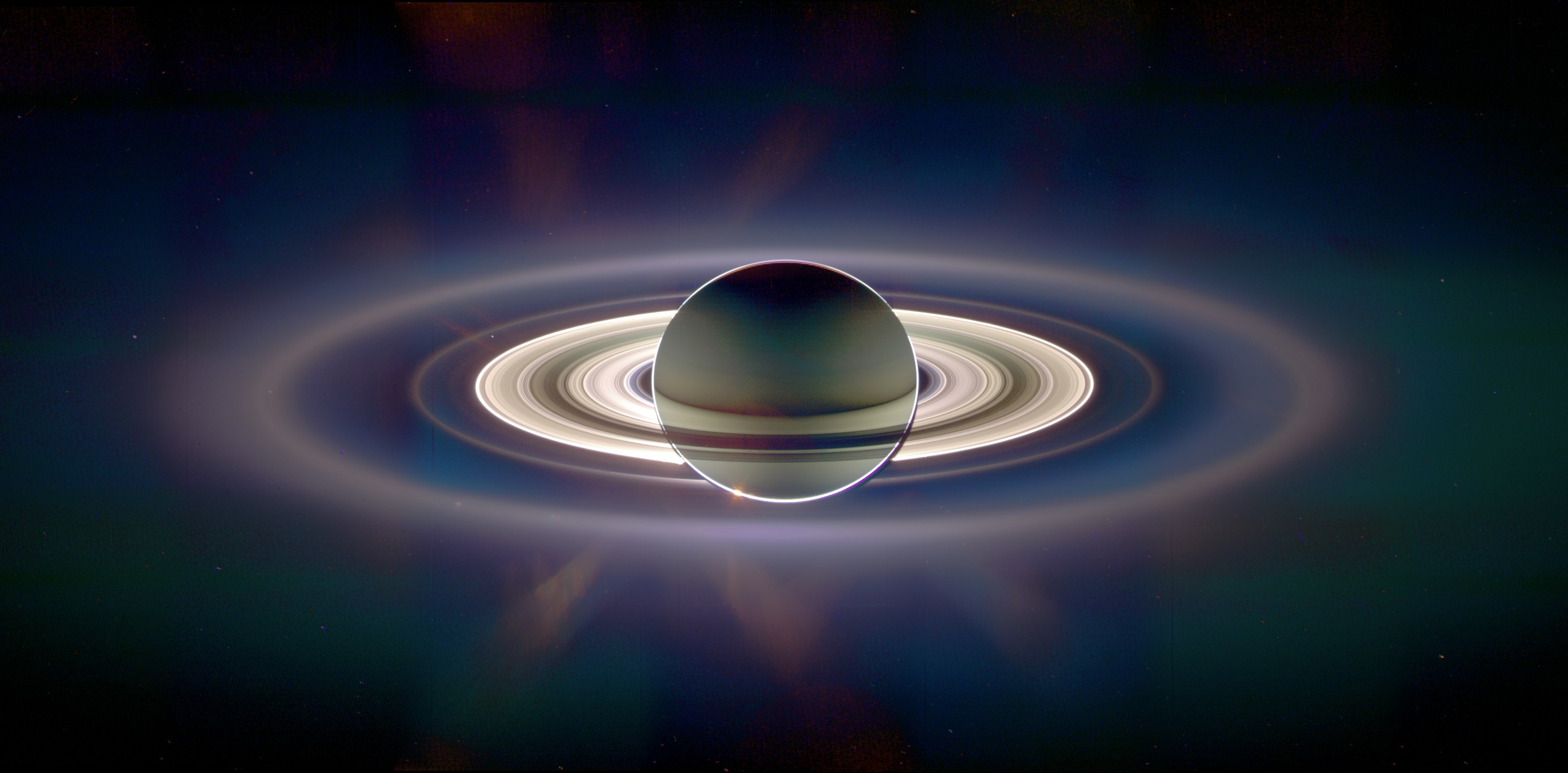
This stunning image of Saturn was captured by the incredible Cassini spacecraft in 2006 as it passed behind the ringed gas giant in the 9th year of its mission. Even more incredible it that the pale-blue dot of the Earth can be seen in this image just above and to the left of the bright, main rings. [Source]
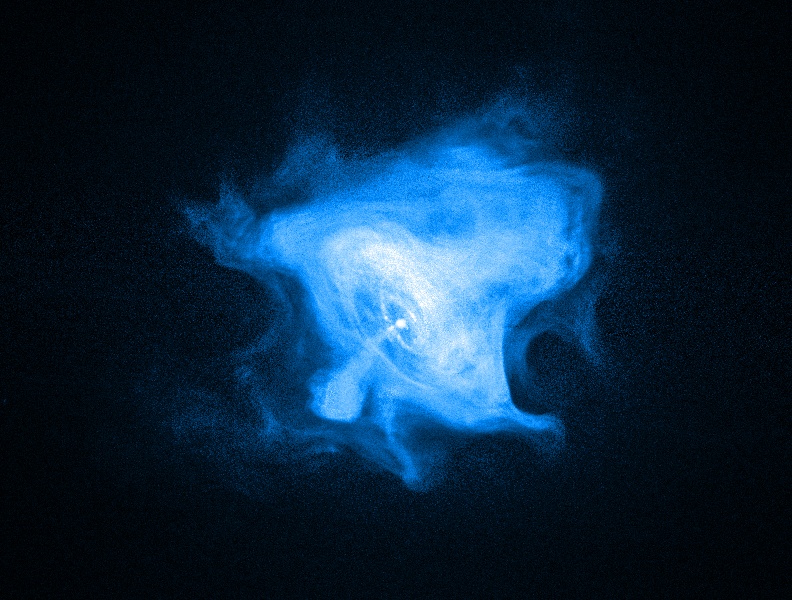
The Crab Pulsar, a city-sized, magnetized neutron star spinning 30 times a second, lies at the center of this remarkable image from the orbiting Chandra Observatory. The deep x-ray image gives the first clear view of the convoluted boundaries of the Crab’s pulsar wind nebula. Like a cosmic dynamo the pulsar powers the x-ray emission. With more mass than the Sun and the density of an atomic nucleus, the spinning pulsar itself is the collapsed core of a massive star. The stellar core collapse resulted in a supernova explosion that was witnessed in the year 1054. [Source]
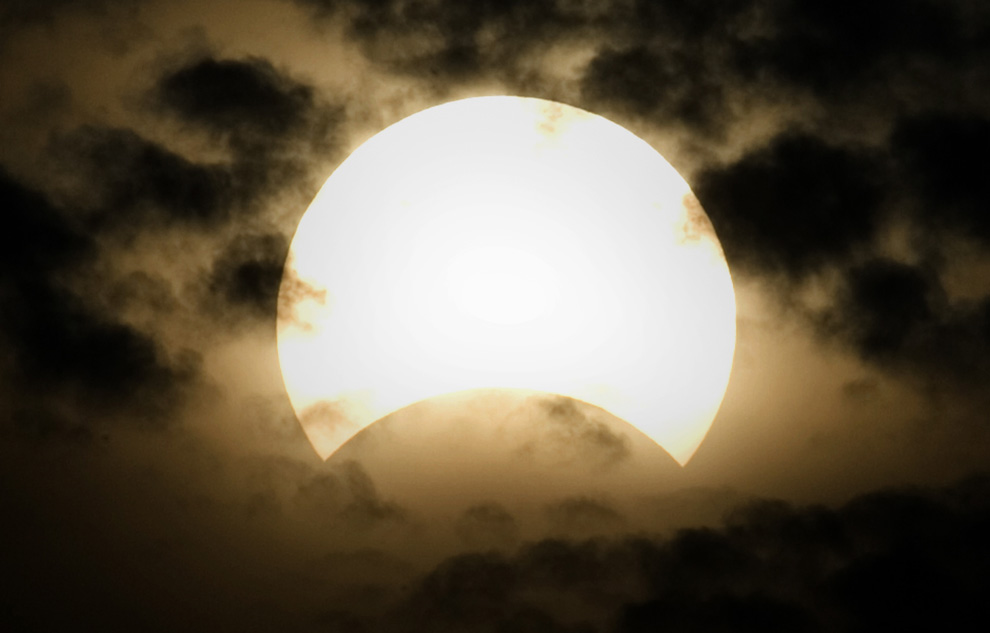
A partial solar eclipse is seen through clouds in Hyderabad, Pakistan on Wednesday, July 22, 2009. [Source]
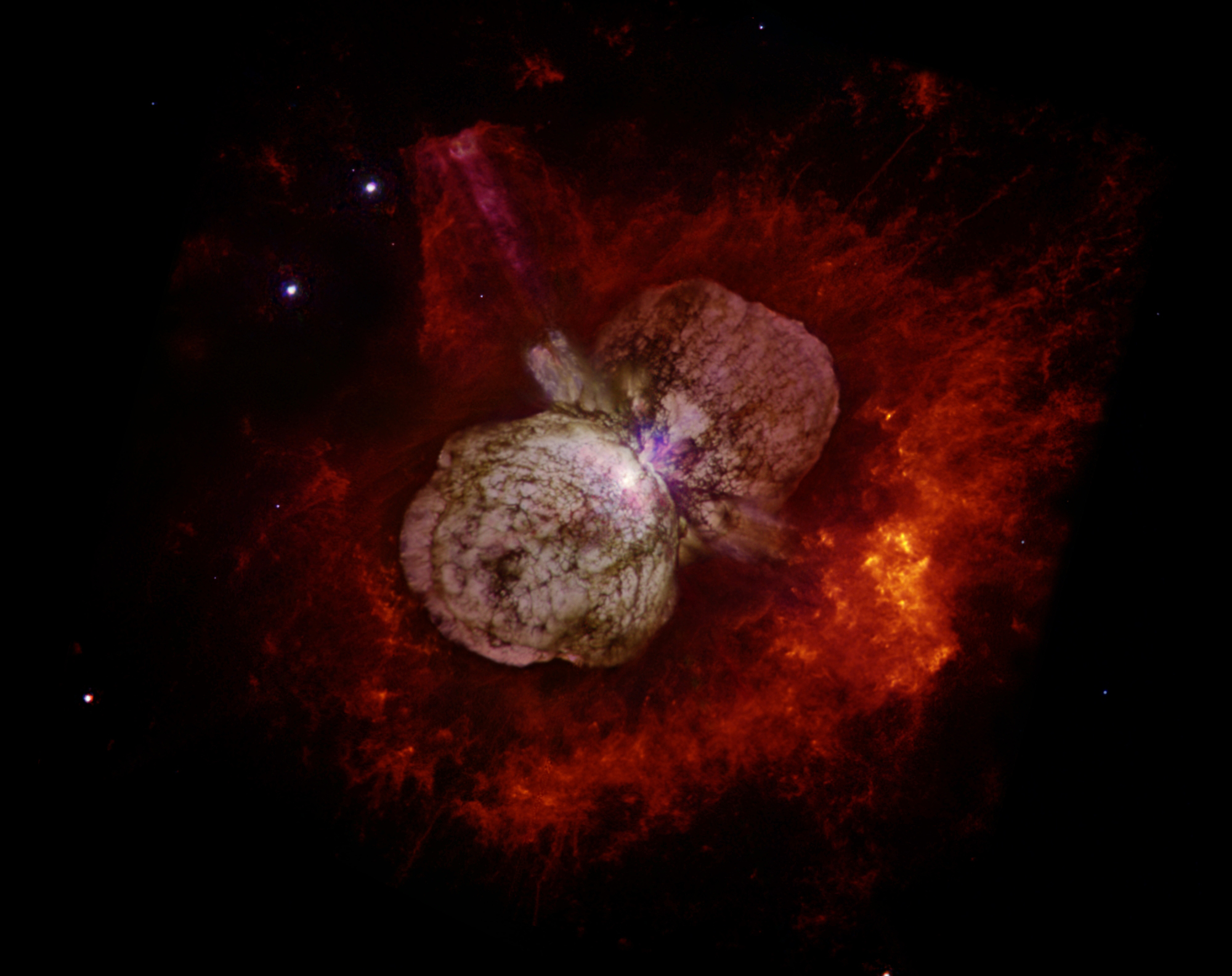
Eta Carinae is a stellar system in the constellation Carina, about 7,500 to 8,000 light-years from the Sun. The system contains at least two stars, one of which is a luminous blue variable star. Its combined luminosity is about four million times that of the Sun and has an estimated system mass in excess of 100 solar masses.
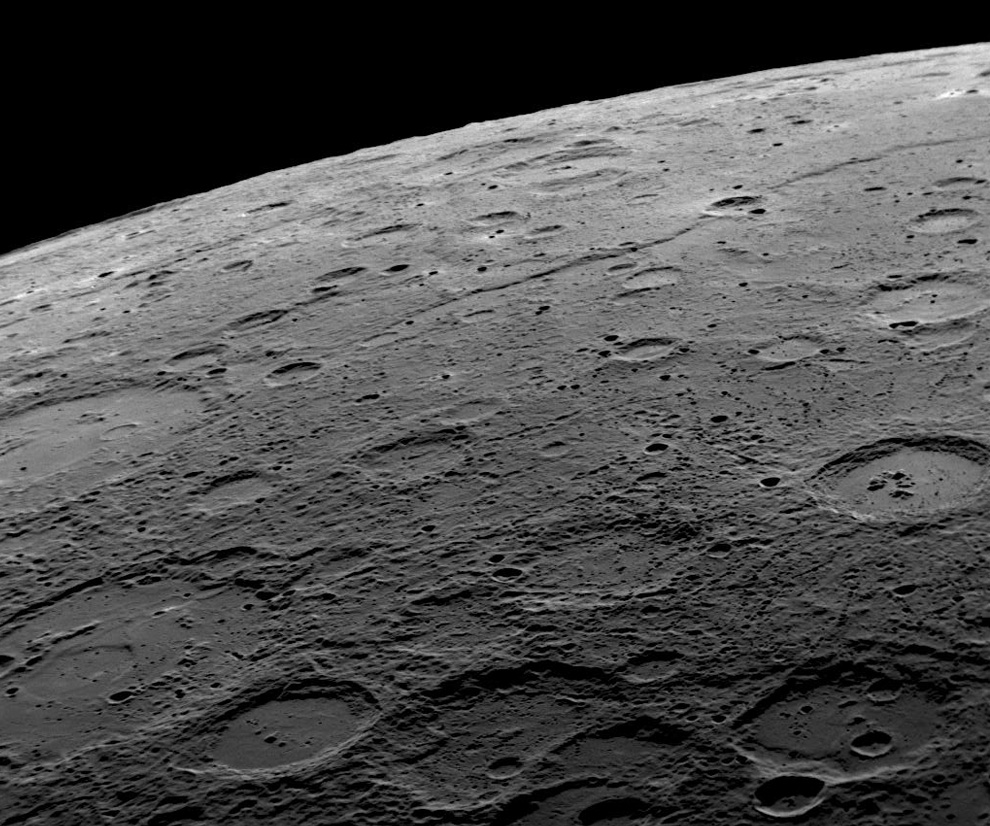
This dramatic NAC image was acquired about 56 minutes prior to MESSENGER’s closest approach during the mission’s October 6, 2008 Mercury flyby. You almost feel like you could reach out and touch it. [Source]
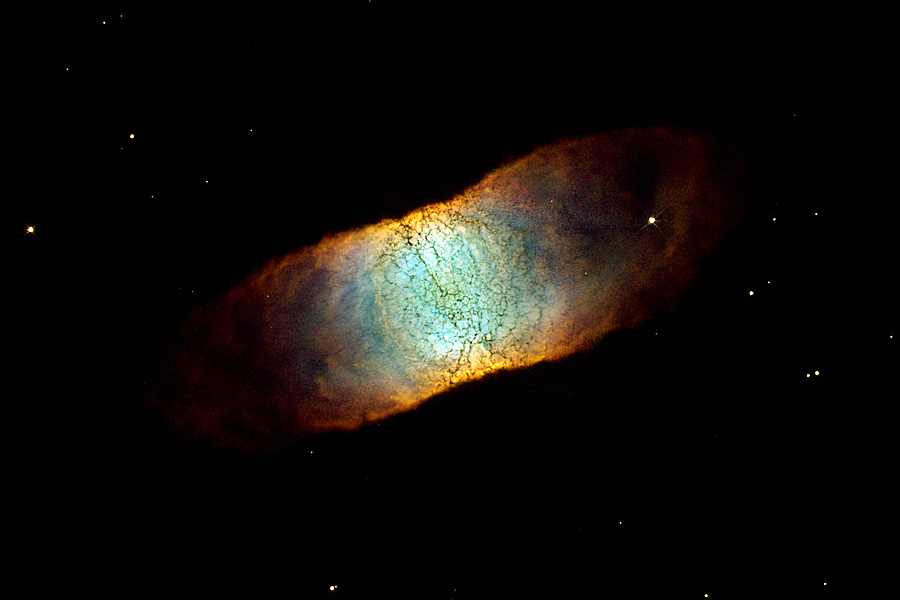
Evidence indicates that IC 4406 is likely a hollow cylinder, with its square appearance the result of our vantage point in viewing the cylinder from the side. Were IC 4406 viewed from the top, it would likely look similar to the Ring Nebula. This representative-color picture is a composite made by combining images taken by the Hubble Space Telescope in 2001 and 2002. [Source]
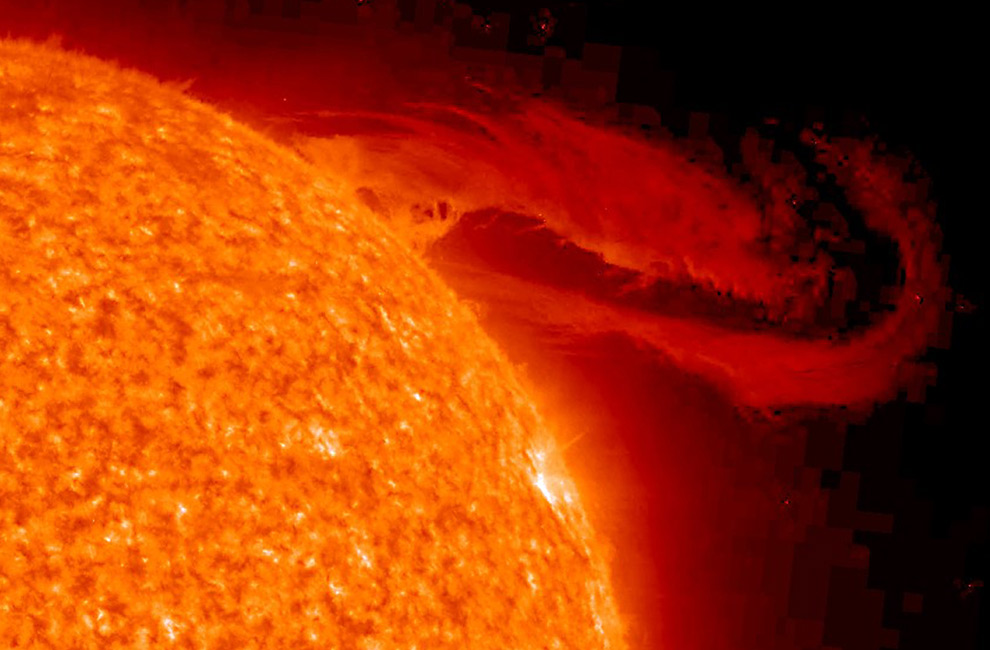
NASA’s STEREO (Ahead) spacecraft observed this visually stunning prominence eruption on Sept. 29, 2008 in the 304 wavelength of extreme UV light. It rose up and cascaded to the right over several hours, appearing something like a flag unfurling, as it broke apart and headed into space. [Source]
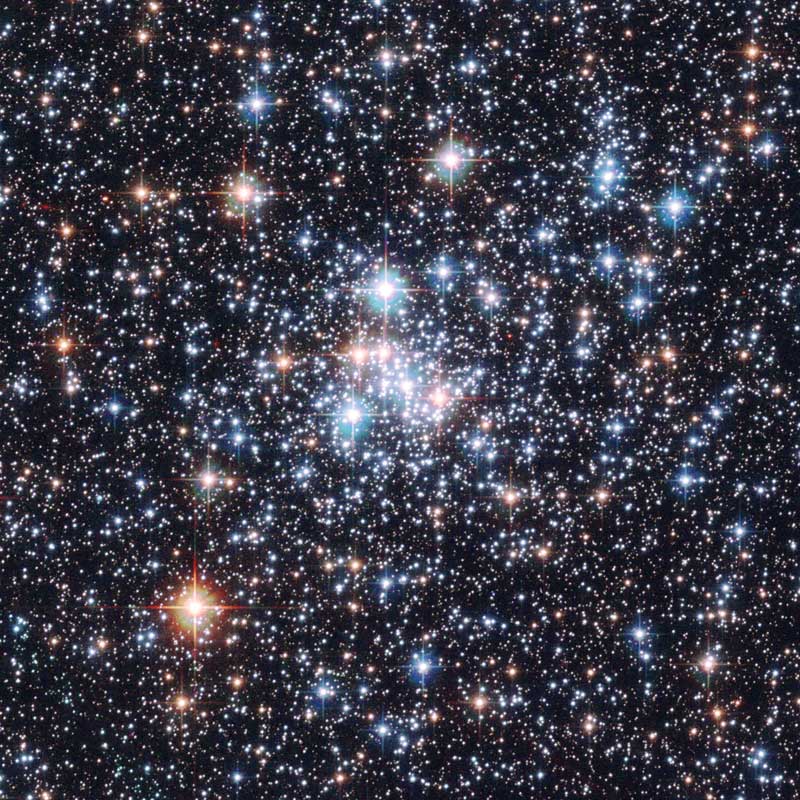
NGC 290 is an open cluster in the Small Magellanic Cloud, which is located in the constellation Tucana.The photogenic cluster, pictured above, was captured recently by the orbiting Hubble Space Telescope. Open clusters of stars are younger, contain few stars, and contain a much higher fraction of blue stars than do globular clusters of stars.
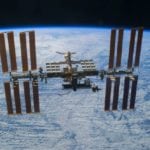
After undocking, the space shuttle Discovery crew got a memorable view of the developing International Space Station (ISS). Pictured orbiting high above Earth, numerous solar panels, trusses, and science modules of the ISS were visible. [Source]
Although liquids freeze and evaporate quickly into the thin atmosphere of Mars, persistent winds may make large sand dunes appear to flow and even drip like a liquid. Visible on the above image right are two flat top mesas in southern Mars, where the season is changing from Spring to Summer. [Source]
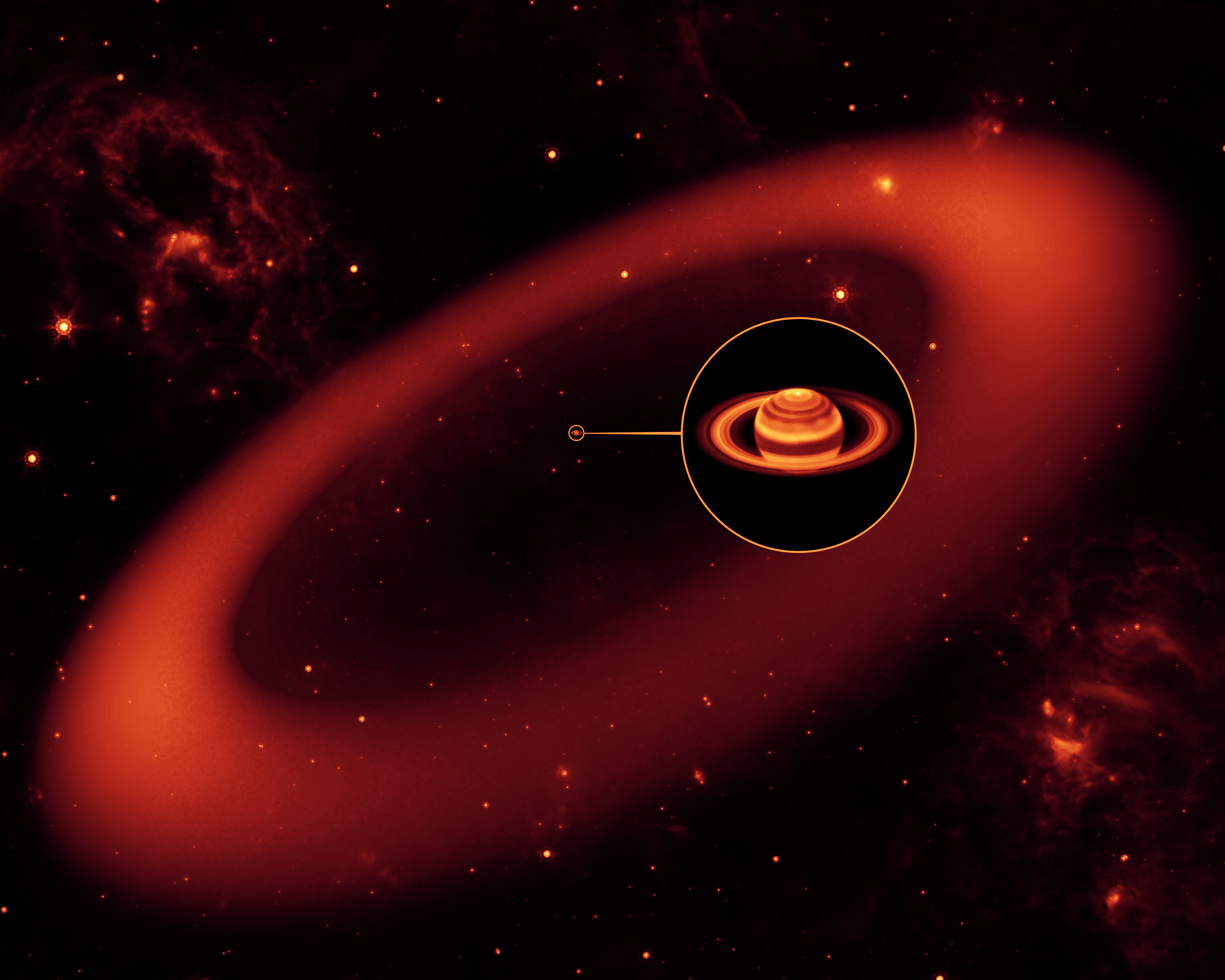
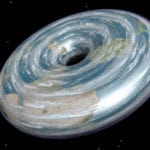
This is a bonus item because it is an artist’s rendition; but it is the only available image so far. On 6 October 2009, the discovery of a tenuous ring of material in the plane of and just interior to the orbit of Phoebe (one of Saturn’s moons) was announced (it has been called the Phoebe ring). It is tilted 27 degrees from Saturn’s equatorial plane (and the other rings) and it is virtually invisible to the naked eye.


No 3 is stunning
beautiful list. keep it up.
wow…amazing
wow!
I’m obsessed with space images, sounds, information. Wish I could have been an astronaut.
Beautiful pics
haha I thought the layout had been changed again when I came on listverse this morning, turns out I was just on the mobile site – very cool design! Anyhoo, love the list especially number 6, it’s just soooo close!
wow these are fantisle
We don’t even know everything on the earth and there is still the space…
Number 6 is amazing.Nice list as usual.
Everybody seems to love #6 but i just can’t get over how Beautiful and amazing #1 is. It’s mind boggling to know its sand dunes when your eyes tell you its water. I love it.
Great list.
Wonderful list… I am in awe of number 9, the crab pulsar…
Wow!!! I am speechless
space is so mysterious and beautiful, i love all the images, my favs are #8 and #5. i found the space station intresting but not beautiful. the sanddunes look fantastic though.
this list and the other list were equally very stunning
I love #3 && 8
wow 3 is fantastic! wish my jewellery box had that much sparkle. excellent list
These are beautiful! Wow!
Beautiful list. I love astronomy, space is a great teacher of humility.
@mandiemurder (5): Maybe we could see the stars together
Wow. Number 3 is like an optical illusion.
This was an excellent list Jfrater. I have been viewing this site from the beginning, and it has always guaranteed excellence. My personal favorite on this list was the bonus, because that ring make Saturn look like a dot. By the way, the new mobile site is beautiful and is easily navigated. Keep up the amazing work.
Speaking of pale blue dots, how can the original Pale Blue Dot photo be left off of two lists now?
http://en.wikipedia.org/wiki/Pale_Blue_Dot
A photo of Earth from 3.7 billion miles away. 99.9% of people wouldn’t even believe such a photo exists.
has anyone seen any of the meteor shower yet? ive only seen one..in cali
@22
wow i can t *****ing believe that pale blue that is earth.. =D
What no black holes!!!!
The thing about black holes is that they are black, so you can’t see them
I’ve always thought that if everyone on the planet studied the virtually infinite scope of the universe, it would be so humbling that there would be very little war.
demirah – There’s no direct photo of a black hole.
number 4 looks like a tiger leaping from the sun… so beautiful <3
Wish I was Dr.Manhattan and teleport to the center of 5. lol. That’d be cool.
I can’t get over how beautiful Saturn is.
@demirah (25): It is impossible at this point for us to directly photograph a black hole. All we would get if we were to try would be a photo of its event horizon and the jets; if it has any active at the time it is photographed.
Great list, Jamie. I do doubt that any substantial photo is going to be available any time soon on that bonus item. My understanding is that they had to observe it in a light spectrum we don’t normally see to get the evidence to prove that it exists.
Image #10 is my favourite.
I used to be a daily visitor to the Astronomy Picture of the Day website, but not recently. I’ve just checked, and the site is still there: http://apod.nasa.gov/apod/
Great list, Jamie! Love the pictures for number 10, 7 and 3. I would absolutely love to visit space and see images like these first hand.
Number 7 is incredible – it looks like organs almost. Number 3 is beautiful, but it’s so overwhelming to see so many stars in just one shot. Now THAT makes you feel small and insignificant.
Another brilliant list, Jamie. The title says it all about these pictures – truly stunning.
Jamie’s lists are the best!They pop up after some boring lists..relief
@Geronimo1618 (36): My thoughts exactly.
My God! It’s full of stars!
Great list. beautiful pics.
i love number 3 and num 10 is pretty cool
WoW !!!!
Amazing. But are theses real images or an artist’s impressions ???
My God! It’s full of stars!
I love space! It’s aesthetically pleasing and shows us new forms and how such bodies take different shapes and sizes, at random parts of the universe (although not really random)…!!!
Beautiful.
I remember reading that if you dropped a small amount of matter from one of those neutron stars on the earth it would just drop straight down through the crust and keep going without a hitch until it hit the core. Then keep going until it hit the other side o.o; I thought it was kinda scary..but cool at the same time.
Another interesting fact is is that neutron stars form if, when the star becomes a supernova, the core has less than three times as much mass as the sun. However if the core has more than three times the mass of the sun it will form a black hole instead.
muuuuuuuuuuuch better than yesterdays list!!!!!!!
“Sir, The possibility of successfully navigating an asteroid field is approximately 3,720 to 1!”
“Never tell me the odds.”
@renegade01 (43):
Not quite. A star with a mass equivalent to the sun, up to about 2 solar masses, will collapse into a white dwarf. A white dwarf is what’s left after a star’s push-pull between its tendency to collapse–and its tendency to expand–fails, ultimately, and gravity wins out, crushing the star down to a body about the size of the earth.
All stars are in a constant state between collapses. Their gravity (dependent upon mass, of course) is collapsing them always—but their outward nuclear energy holds the star, for a time, from *total* collapse. Now, stars begin as collapsing bodies of superheated gas—until they reach the point where the collapse is held in check by the explosive, outward force of fusion and the star begins to shine. The more massive the star, the shorter the period of time that the ultimate collapse is held in check.
Our sun, of course, has been “held” in this state for almost 5 billion years now, and will hold for about 5 billion longer at best. Then, as its fuel exhausts, it will resume its collapse, while shedding its lighter, outer shell into space. This is part of the “swelling” process that will lead it to become a red giant before it fully collapses down to white dwarf stage.
Finally, however, the amount of mass in the is not enough to force further collapse, and it stops at the white dwarf state–a star the size of the earth, slowly dying until it is a dark ember.
A star of slightly higher stellar mass–above the 2 solar mass threshold—will continue this same collapse, since the equilibrium between the two forces is not reached. Gravity is enough to crush the electron shells of each atom in such a star, and it becomes a neutron star—usually shrinking down to the size of a city, we say.
A star of about FIVE solar masses or above, however, has too much mass to halt the collapse even there–and continues to black hole stage–in short, a star with no size—vanishing altogether from the space/time continuum.
The ISS is not visible from much of the globe. I hear that it’s pretty bright from those places from which it’s visible. I’ve never seen it.
No 3 and No 10 are my faves. Kick ass list, Jafe!
i never quite understand the purpose of space exploration.
especially going to the moon and mars and such.
jfkennedy himself said we wanted to go to the moon to prove we are better that the soviet – source :listverse.
technological advancement? i’m sure all those money can be invested in countless other researches and development.
alternative earth? we have countless other remote places on earth currently not habitable.antartica,sahara,underwater,mountain ranges.
i’m sure these places are less extreme than the moon or mars.in fact,they for sure have what scientist are always searching for : oxygen and water. i bet the cost is a lot lower and the possibility a lot higher to create new habitable spots on earth.
to avoid armageddon? scientists know that the probability is almost zero that we’ll get hit by a meteor to the point of extinction. it doesnt seem rational to invest so large in a worry so small.
to snap countless beautiful 5 million dollars photos like these? what, NASA is a hobby-club now?
i guess it’s necessary to give these people jobs and realize the long-time man’s dream of reaching the stars. yeah,right!
let me here your comments on this people!
question me.
Outer space scares me. As does the ocean, the Great Lakes, a pond where I can’t see the bottom, etc. You just never know what’s “out there”…
As DO the ocean…
@ames801 (51): translated: FEAR OF THE UNKNOWN. First rule… know thyself. The rest will fall into place.
@nickname (49): Just to go where no one has gone before, I guess. I’d rather spend millions of dollars on space travel than on horrible wars around the globe. And I don’t think anybody is naive enough to believe that the government would stop space research to feed the hungry.
@damien_karras (52): I’m not fearful of ALL things unknown. I’ve moved to big cities on my own and did well, I’ve had a child on my own (figuratively speaking) and am doing well, I try new things. It’s just the “creatures” that may be lurking in the bottom of the water or out in space. The ones we don’t know about. Make sense?
nickname-
Because it’s really damn cool. That’s why.
@ames801 (54): I know exactly what you mean… I scan my entire bathtub before stepping in.
Photos 6, 2 and 1 are the most impressive. I too love the cosmos, but I particularly enjoy seeing photos of it without any kind of artist renditions.
@damien_karras (56): Are you mocking me??!!
Recently here in the US there has been a lot of discussion about the fesibility of sending aman to Mars. The trip would take approximately six months one way. One suggestion scientists have proposed is that we fly a group of people there to colonize the planet. In other words, this would be a one way mission. If NASA asked you to go, would you do it?
*man The trip would take approximately 6 months.
Sorry about the grammer.